






Abstract
Because it is difficulty to classify level of fabric wrinkle, this paper proposes a fabric winkle level classification model via online sequential extreme learning machine based on improved sine cosine algorithm (SCA). The SCA has excellent global optimization ability, can explore different search spaces, and effectively avoid falling into local optimum. Because the initial population of SCA will have an impact on its optimization speed and quality, the SCA is initialized by differential evolution (DE) to avoid local optimization, and then the output weight and hidden layer bias are optimized; that is, the improved SCA is used to select the optimal parameters of the online sequential extreme learning machine (OSELM) to improve the generalization performance of the algorithm. To verify the performance of the proposed model DE-SCA-OSELM, it will be compared with other algorithms using a fabric wrinkles dataset collected under standard conditions. The experimental results indicate that the proposed model can effectively find the optimal parameter value of OSELM. The average classification accuracy increased by 6.95%, 3.62%, 6.67%, and 3.34%, respectively, compared with the partial algorithms OSELM, SCAELM, RVFL and PSOSVM, which meets expectations.
Keywords
At present, in addition to the style of clothing, the wrinkle resistance of fabric has become a key factor affecting the aesthetics of a garment. Accurate and objective testing and evaluation for wrinkle resistance of fabric can not only guide the rational selection of fabrics, but also save costs and avoid waste of resources.
In the classification process of wrinkle level, the fabric features used for classification are the primary problems, and many researchers have done relevant research. In 1995, Youngjoo Na and Behnam Pourdeyhimi 1 studied the AATCC (American Association of Textile Chemists and Colorists) flatness standard sample using a combination of texture and profilometry. And the results show that the degree of wrinkle can be represented with image grayscale and surface statistical features, gray level co-occurrence matrix (GLCM) and power spectral density. Chang2–4 studied the method of identifying seam wrinkling characteristics by using five shape parameters, fast Fourier transform and artificial intelligence technology; moreover, the method was used to explore the impact of sewing thread tension and stitch length on these five shapes parameters. In 2011, Ravanidi et al. 5 studied the influence of GLCM parameters on the texture features of fabric wrinkle surface. The extracted GLCM parameters include: energy, contrast, correlation, entropy and inverse difference moment. The experimental results declare that: there is a high correlation between the objective evaluation results based on texture features and the subjective evaluation of expert groups. Among the five texture features, the best correlation with subjective vision is the inverse difference moment. Jurgita Domskienė et al. 6 used a pre-set shape model to study the relationship between digital gray intensity and surface wrinkles with uniform sample illumination conditions and filtering procedures, and finally converted the acquired image into a binary image, which is to record the initial state of wrinkles and predict the critical parameters of wrinkles. In 2014, Liu et al. 7 proposed a multi-directional fabric wrinkle measurement method in which the standard deviation coefficients of wavelet decomposition and GLCM were used to characterize fabric wrinkle features. In 2017, John-Eric Dufour et al. 8 put forward measuring wrinkling under various conditions of contrast and loading via isogeometric stereocorrelation.
In terms of the multi-classification problem, considering the risk that the neural network has of over-fitting, it is easy to be affected by the model structure, and it is always falling into the local optimum situation. In 2004, Huang9–11 presented a single hidden layer feedforward neural network (SLFN) extreme learning machine (ELM). ELM has a relatively simple structure, has small parameters to be adjusted, the weight of the hidden layer node is randomly or artificially given, and no update is required, and only output weight needs to be calculated in the learning process. Zhang et al. 12 applied the ELM algorithm to pathological encephalopathy analysis in 2018. Because the input weight and bias are randomly set, which affects the performance of the model on application, thence many optimization algorithms have emerged to improve this problem. In 2016, Zhou et al. 13 proposed the integrated Bagging-based extreme learning machine improved by the particle swarm optimization algorithm, which was used for illumination correction. In 2019, Zhou et al. 14 put forward optimizing ELM with an improved whale optimization algorithm and utilizing it in color difference classification of solid color printing products. The online sequential extreme learning machine proposed by Liang et al 15 is an ELM algorithm that can learn and update output weight with real-time data. Zhou et al. 16 proposed a hybrid online sequential extreme learning machine based on rotating forests, and the algorithm was applied to the illumination correction of printing products. The constrained online sequential extreme learning machine (COSELM) proposed by Gu et al. 17 is a new indoor positioning technique that uses incremental data to modify old models and handle the frequent fluctuations of wireless signals over time.
In 2016, Seyedali Mirjalili 18 proposed a new particle swarm optimization algorithm named the sine cosine algorithm (SCA). The optimization principle of SCA is that when the absolute value of the sine and cosine function is greater than 1, the algorithm can explore the different regions of search space. When the value of the sine and cosine function is between −1 and 1, the algorithm exploited the promising regions. The advantage of SCA is that the sine and cosine function value change can be used to realize the optimized search, which can explore different search spaces and effectively avoid falling into local optimum. It has some advantages: simple model, less adjustment parameters, fast convergence speed and strong global optimization ability. Li et al. 19 proposed a support vector regression algorithm optimized by SCA. Under the experimental proof, we knew that SCA has an advantage in parameter optimization. Mohammed Abd Elaziz et al. 20 proposed the optimized random vector functional link (RVFL) algorithm based on SCA and used it to predict the inhibitory activity of angiotensin-converting enzyme (ACE).
Inspired by the above documents, and combined with the excellent optimization ability of the SCA algorithm and the good classification ability of OSELM, to improve the overall performance of wrinkle classification, the main goal of this paper is to use the improved SCA to optimize the parameters of OSELM, and propose a fabric wrinkle level classification model via OSELM based on an improved sine cosine algorithm, namely DE-SCA-OSELM. The paper presents a more comprehensive performance evaluation on the proposed model. The main contributions are as follows:
A new ELM model was designed to predict the classification of fabric wrinkle level, and the classification accuracy was increased. Due to the random setting of the input weight and hidden layer bias of OSELM, the classification accuracy of the model would be affected and the stability is lacking. To overcome the shortcomings of OSELM, this paper uses an improved SCA algorithm to optimize the output weight and hidden layer bias of OSELM. Analysis of the number of search agents, the number of iterations, the ratio of training set and testing set, the number of hidden layer nodes, the activation function and the parameter a in the SCA to influence the velocity and accuracy of the proposed algorithm. Finally, a relatively optimal combination of parameters was adopted.
The paper is organized as follows: the next section introduces the theoretical knowledge of differential evolution (DE), SCA and OSELM algorithms, and proposes an OSELM optimized by improve SCA with DE. The experimental conditions and data sources and the results of analysis are then discussed. This is followed by a consideration of the validity, stability, and significance of the proposed method’s parameters. Finally, there is a conclusion.
Proposed method (DE-SCA-OSELM)
Online sequential extreme learning machine
OSELM is an incremental learning algorithm, a variant ELM. There are two parts in OSELM: first, in the initialization phase, OSELM estimates the initial output weight matrix
Initialization phase: the subset
The initial output weight matrix is obtained
Online sequential learning phase: when a new data sample is received, suppose there are N1 samples entering the model, we can get something according to the idea of ELM
Therefore, the recurrence relation of online learning can be obtained
finally, set
Differential evolution algorithm
The differential evolution algorithm was first proposed by Storn and Price 21 in 1995. It mainly has three steps including variation, crossover, and selection, which are often used to solve real optimization problems. This algorithm is a kind of group-based adaptive global optimization algorithm, which belongs to a kind of evolutionary algorithm. Sánchez-Monedero et al. 22 conducted a comprehensive evaluation of the combination of sensitivity and precision of the differential evolution extreme learning machine (DEELM) and received very good results. In the process of the DE algorithm, first, two individuals are selected from parent individuals to perform a difference calculation to generate a difference vector. Second, another individual is selected and summed with the difference vector to generate an experimental individual. Then, a crossover operation would be conducted with the parent individual and the corresponding experimental individual to generate a new child individual. Finally, a selection operation is performed between parent and child individual, and the eligible individuals are saved to the next generation group.
Variation
Crossover: for the
Selection: if the fitness value of the test individual is better than that of the target individual, then the test individual replaces the target individual in the next generation; otherwise the target individual would remain.
Sine cosine algorithm
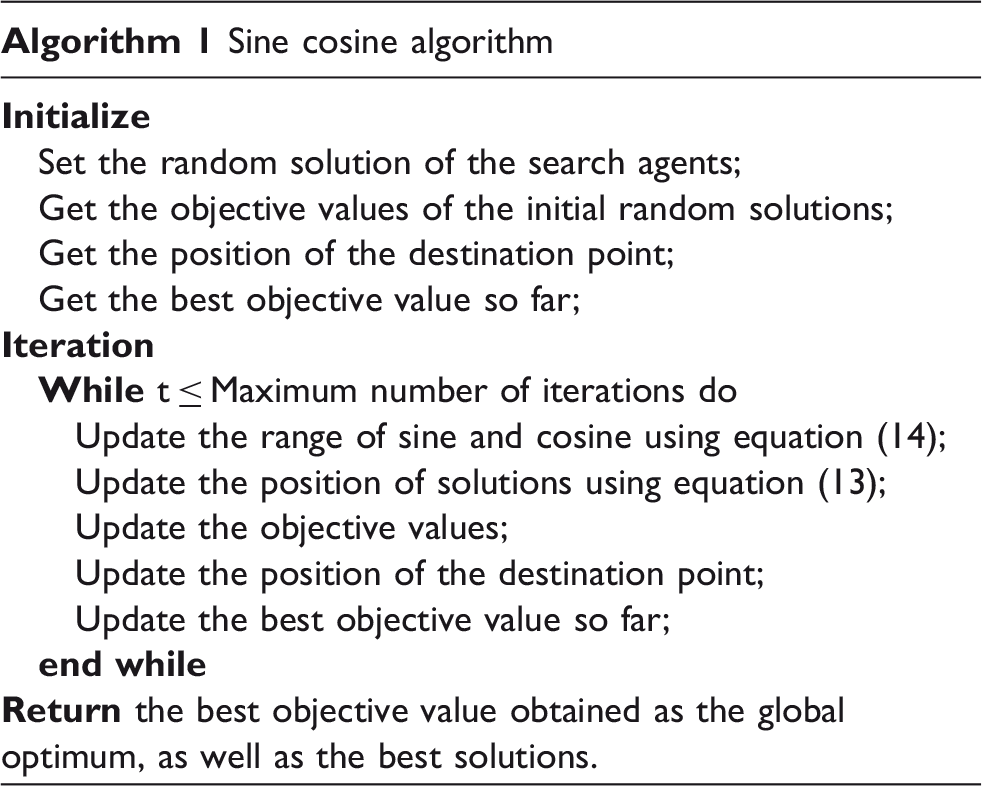
In the SCA, after the position of the individual is initialized, the sine and cosine function is used to update the individual position in subsequent iterations. The flow of the algorithm is shown in Algorithm 1. The specific update equation is
In equation (13), r1, r2, r3 and r4 are the four main parameters of SCA. Where, r1 determines the position or direction of movement at the next iteration; r2 is a random numeric in
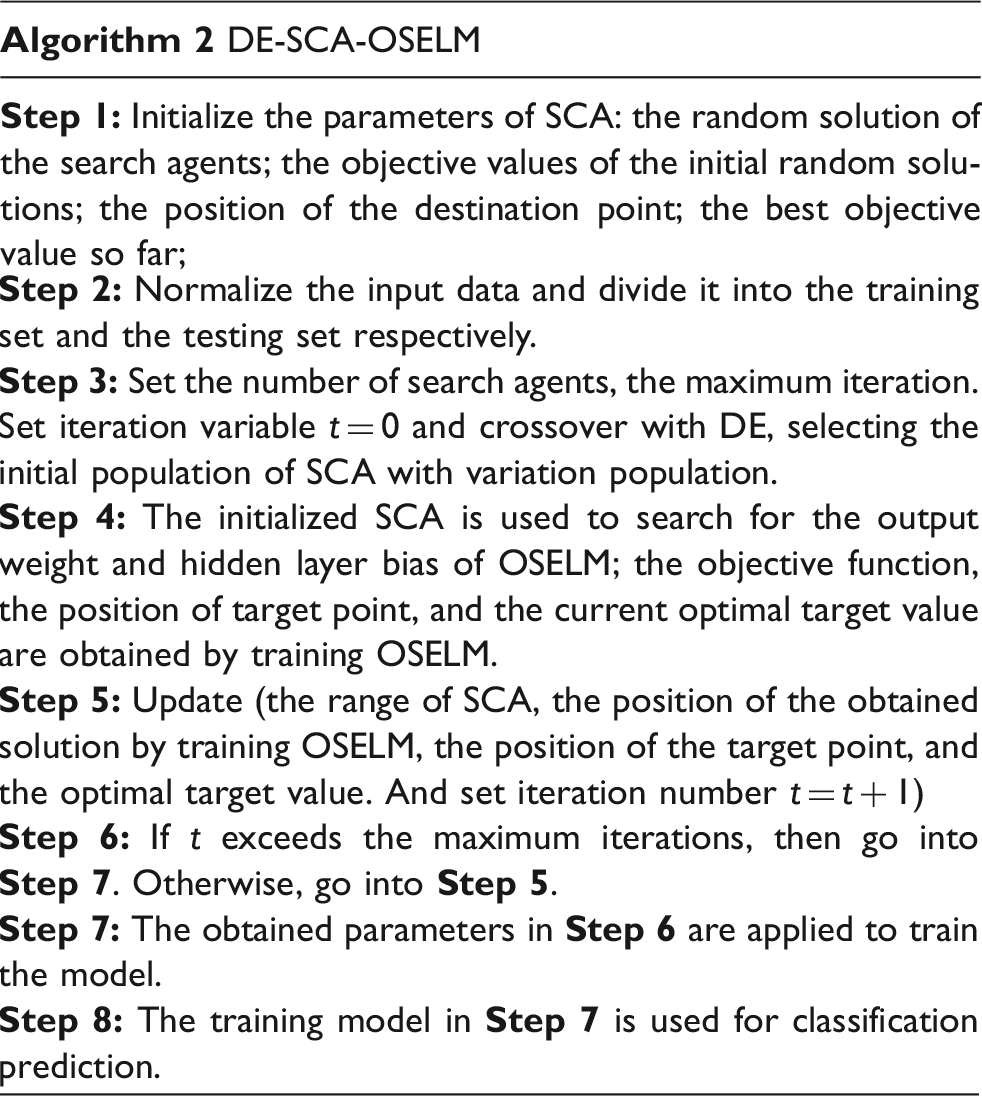
Proposed algorithm and parameter
Initial parameter setting
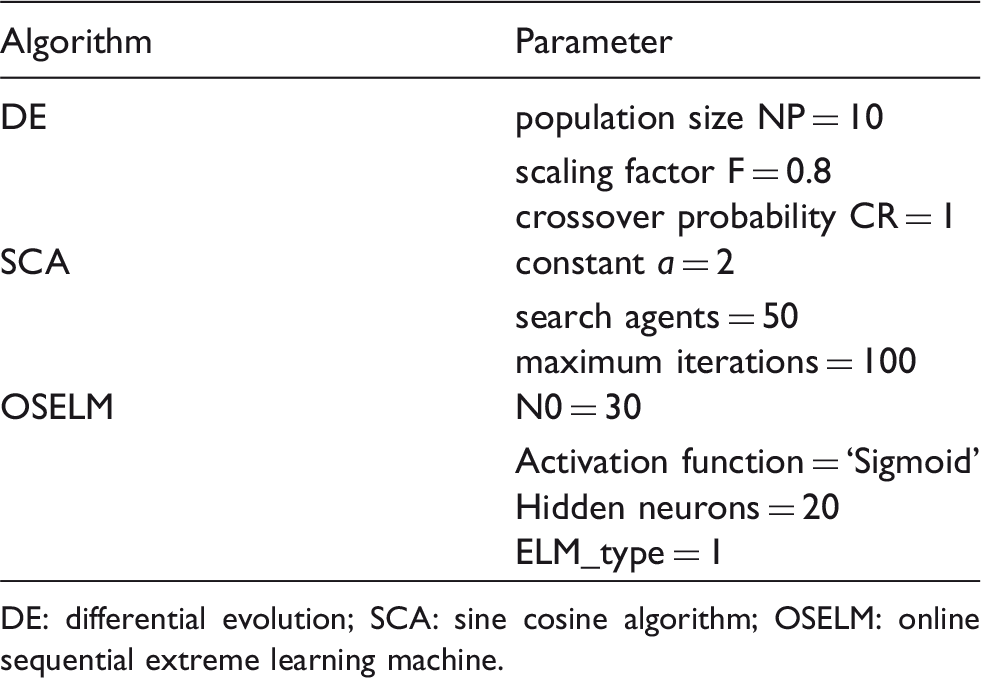
DE: differential evolution; SCA: sine cosine algorithm; OSELM: online sequential extreme learning machine.
Experiment results and analysis
In this section, the parameter settings of the proposed algorithm are discussed. The proposed model is compared with RVFL,23,24 ELM, SCAELM, DEELM, 25 PSOELM, 26 KELM, 27 OSELM, 15 SVM, 28 GridSVM, PSOSVM, 29 and PNN (see Appendix 1). Many related experiments have been done concerning the selection of parameters. The source of the data set is introduced, and the performance of the proposed algorithm DE-SCA-OSELM is evaluated on the collected data set. Iterative analysis and rank sum test are used in the performance evaluation for the proposed algorithm. All computation was carried out in MATLAB environment on a PC with an Intel(R) Pentium(R) i5-2020 M CPU at 2.4 GHz and 4GB memory.
Description of experimental data
To verify the effectiveness of the proposed algorithm in the classification of fabric wrinkle level, the collected data set is verified in this paper. Sample preparation is according to Liu et al.
7
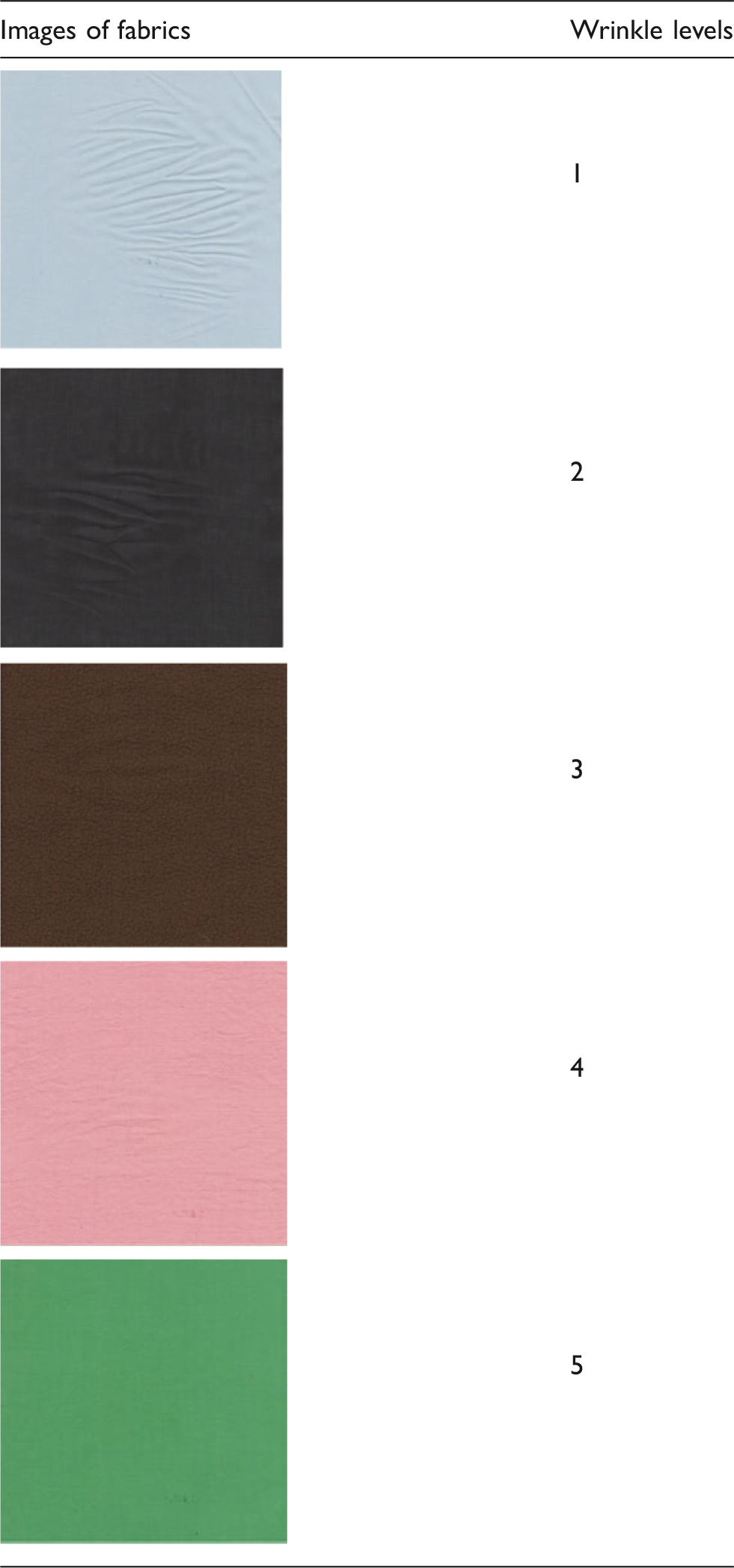
The samples used in this article are mainly used for academic research; sleeving at the same person's arm joints was adopted, and the level is subjectively evaluated by experts, because according to Figure 1 from AATCC 128-2004,
30
for fabric smoothness rating, 5, 4, 3, 2, 1 rating respectively corresponds to WR-5, WR-4, WR-3, WR-2, WR-1 or worse than the WR-1 replicas in AATCC 128-2004. So we used the five levels for this research. The following steps are taken in data extraction: a Canon LIDE210 scanner is used to collect in standard atmospheric pressure environment with a temperature 20℃ ± 2℃ and a relative humidity 65 ± 3%. The fabric used to capture the image is solid color. The specific collection process is as follows:
The solid color fabric is cut into a square of 30 cm × 30 cm in a standard environment, and each piece of material is ironed with a Panasonic·Wanbao NI-G10E electric iron, and placed into a natural state. Under the standard environment, carefully sew each piece of cloth into a cylindrical shape, as shown in Figure 2 and try not to produce excessive wrinkles. Place the sleeve at the same person's arm joints, and sew the cloth on the upper and lower sides of the joint to ensure that the wrinkles are generated in the middle of the sample cloth. The arm is placed on the table and bent naturally for five minutes, and then rested on the table for five minutes; eventually the produced wrinkle is taken to be sampled. The Canon LIDE210 scanner is used to scan the wrinkle samples to obtain image information; when the scanner's brightness, contrast, and resolution are adjusted to the optimal state, the loss of weak wrinkle information is not considered, and image processing is performed on the images (see Figures 3 and 4). Since the edge detection of the grayscale image is clearer and the shadow portion is not treated as an edge, the wrinkle density (WD), the gray-level co-occurrence matrix (GLCM), wavelet analysis (WA) and comprehensive wrinkle index (CWI based on information fusion) are all extracted by the edge image of the grayscale image. Three professional researchers make a subjective judgment to evaluate the wrinkle level, separately forecast and final discussion to determine the wrinkle level (Integer). Then 106 samples of solid color fabrics were collected, and 106 sets data was obtained as the overall data set. The data scatter plot is shown in Figure 5. Detailed information on the characteristics of the evaluated fabric samples is supplied in Table 2. An evaluation of fabric wrinkle level from the researchers is shown in Table 3.
Detailed information on fabric characteristics
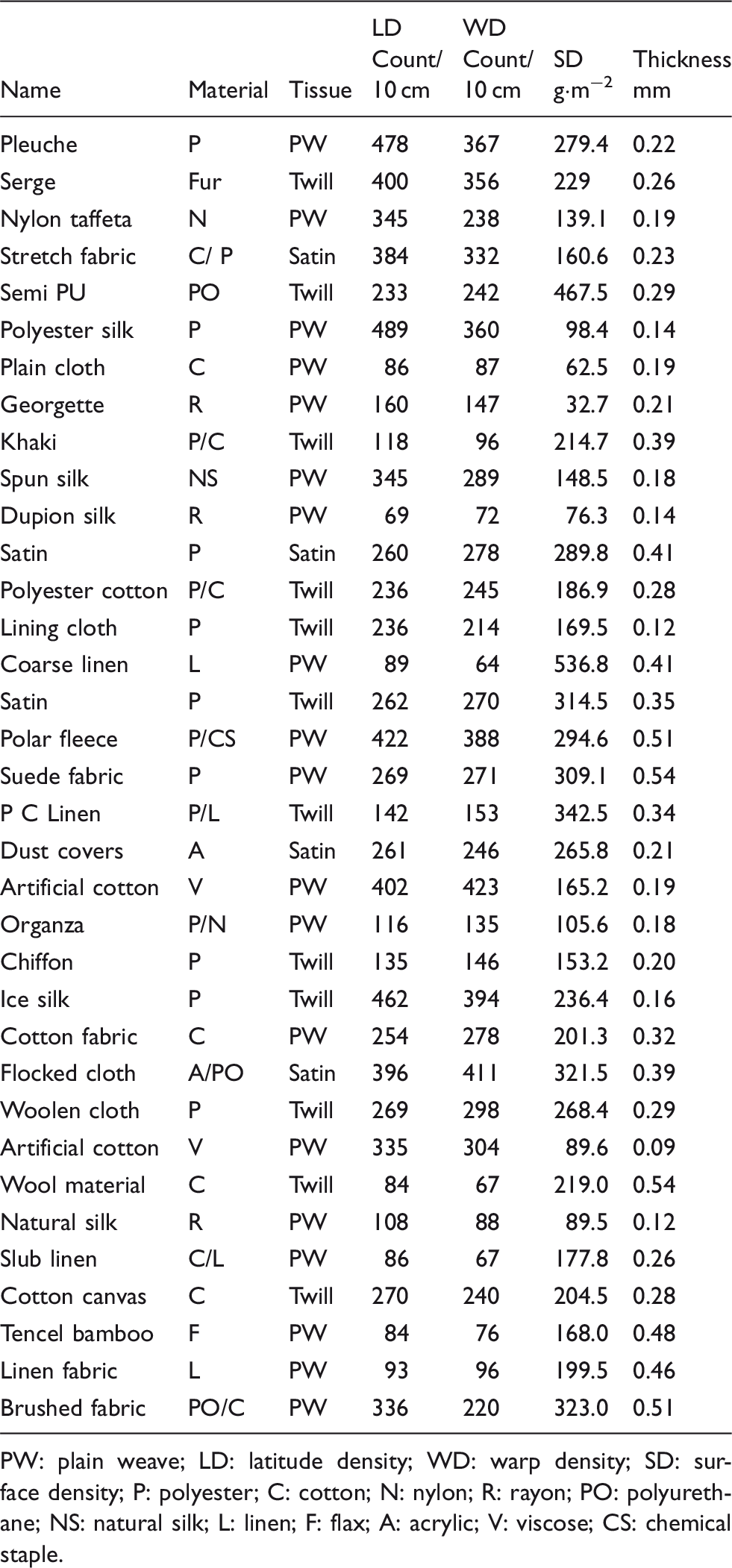
PW: plain weave; LD: latitude density; WD: warp density; SD: surface density; P: polyester; C: cotton; N: nylon; R: rayon; PO: polyurethane; NS: natural silk; L: linen; F: flax; A: acrylic; V: viscose; CS: chemical staple.
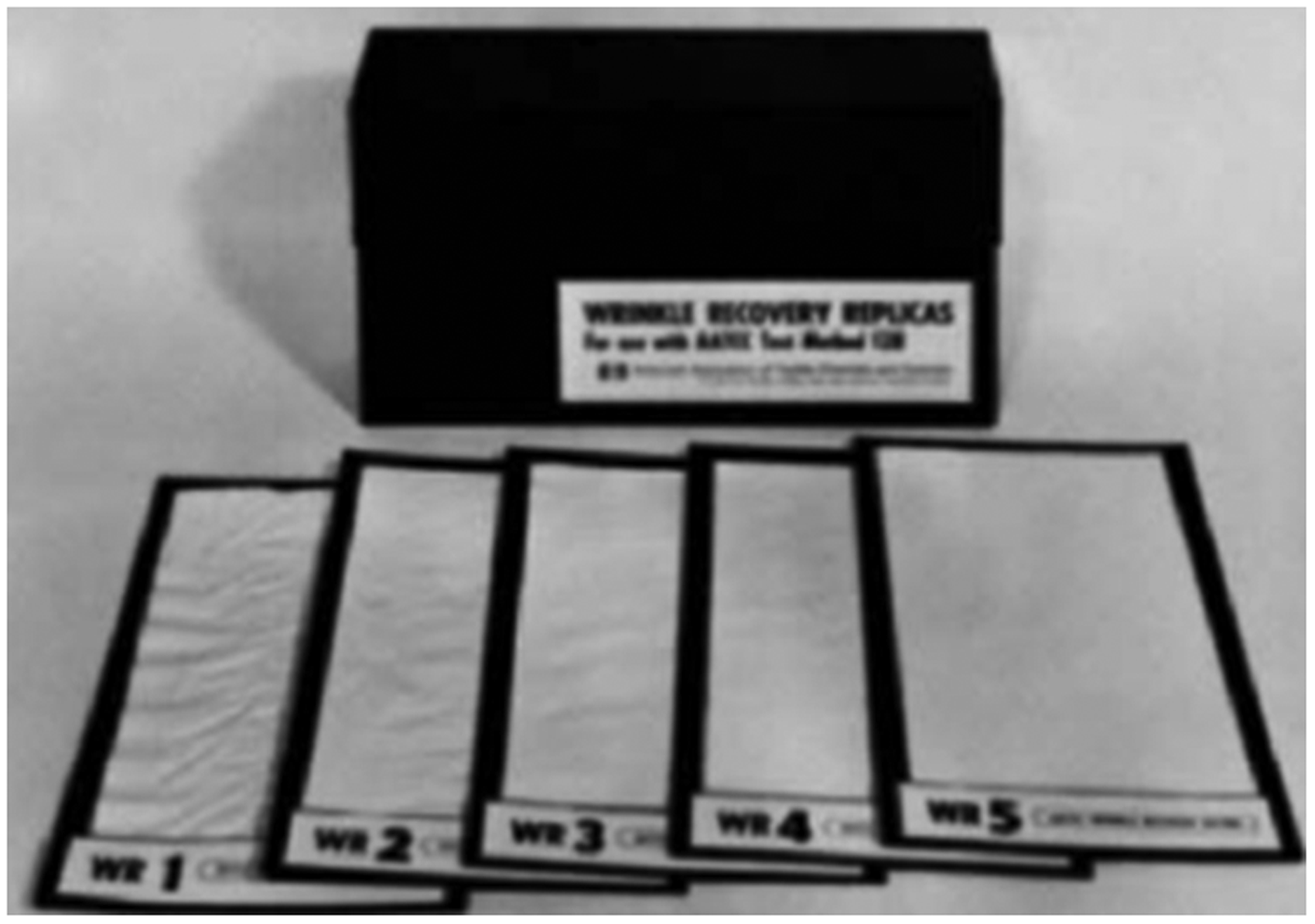
AATCC wrinkle recovery replicas.
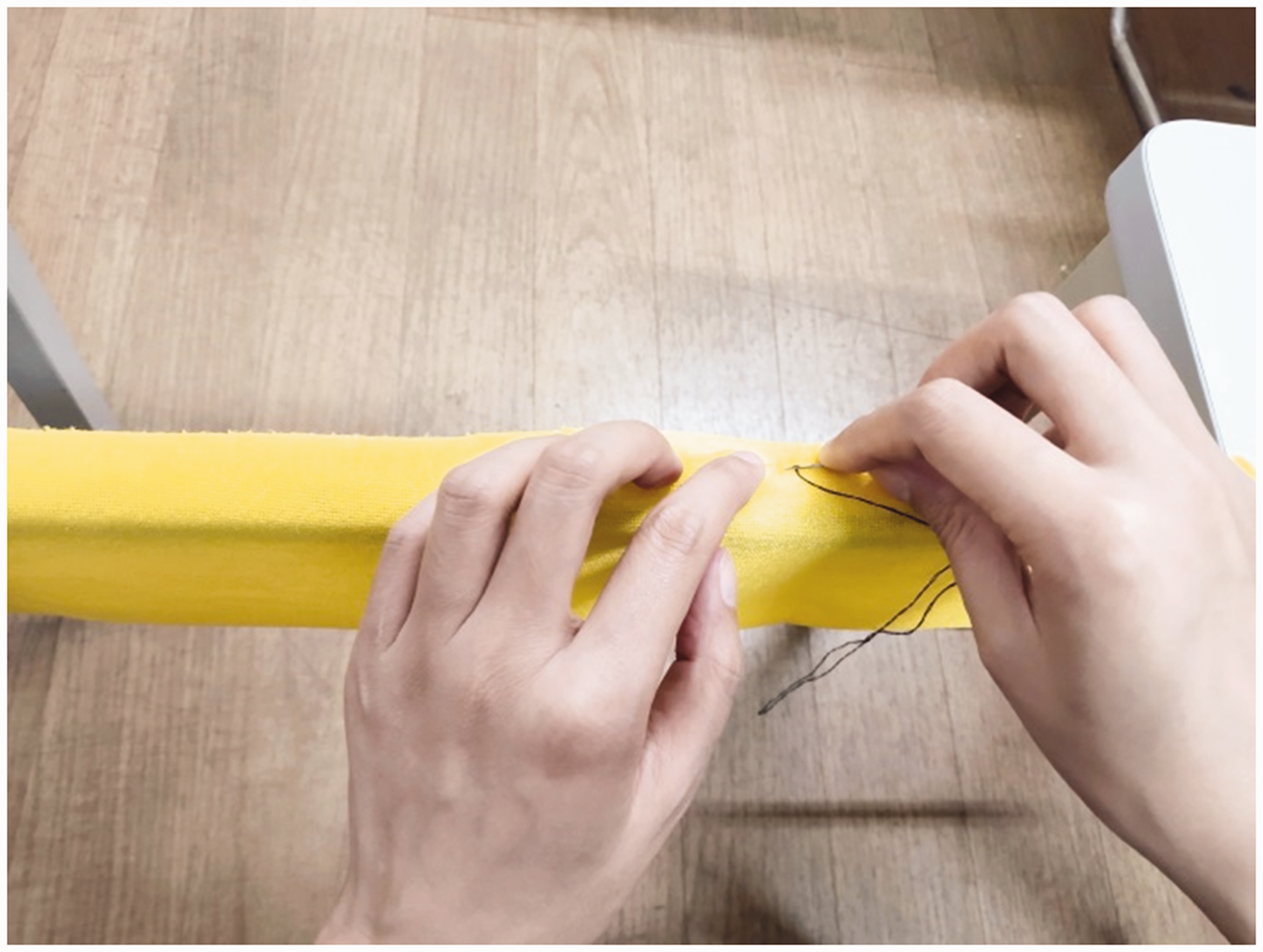
Cylindrical sewn fabric.
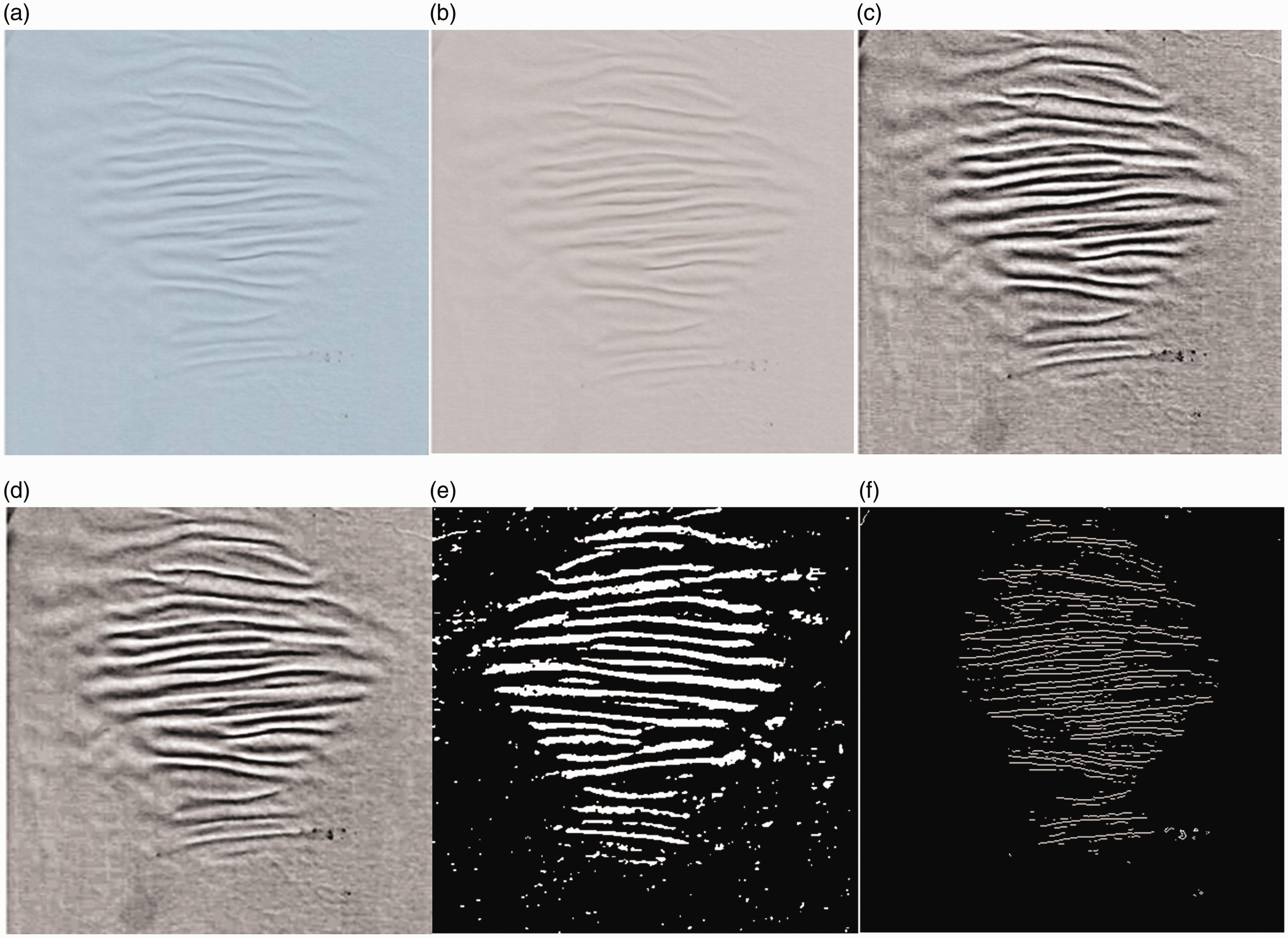
Edge detection of gray image: (a) original image, (b) grayscale image, (c) image enhancement (gray adjustment, the gray value distribution area is widened to increase the image contrast), (d) median filter image, (e) binarized image, and (f) gray image edge detection.
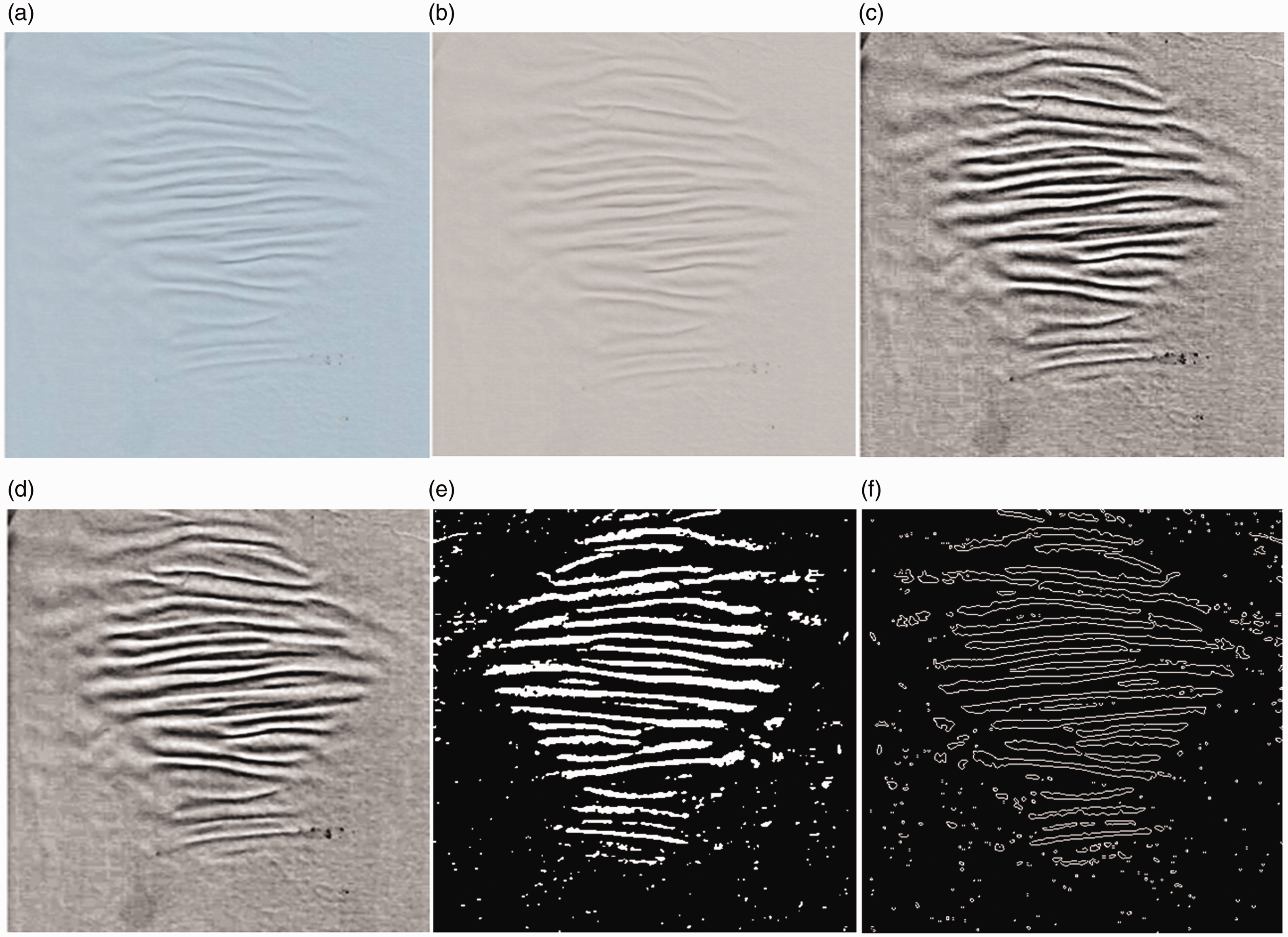
Edge detection of binarized image: (a) original patterns, (b) grayscale image, (c) image enhancement, (d) median filter image, (e) binarized image, and (f) binarized image edge detection.
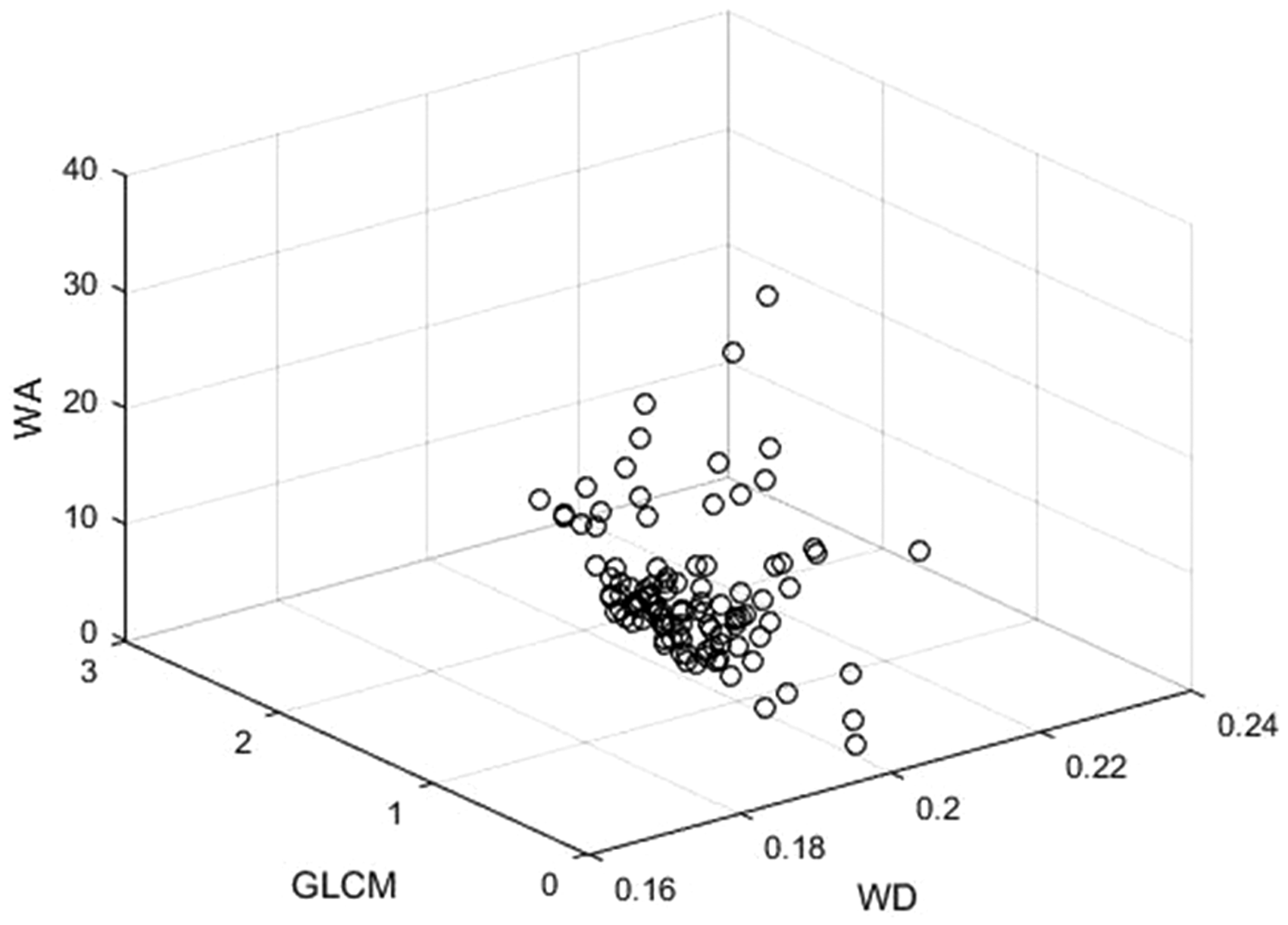
Scatter plot of sample data.
1. The calculation formula of WD is
2. Suppose f(x,y) is a two dimensional image, and its size is
3. Wavelet analysis is from multiresolution, and its main ideology is that the expansion function f(t) is represented as a set of successive approximation expressions, and each of them is in the form of f(t) smoothed; they severally correspond to different resolutions.
4. Information fusion is a complete and accurate comprehensive processing with various information sources. The comprehensive feature based on information fusion is
Parameter setting for SCA of proposed algorithm
The main parameters of SCA are search agent, maximum iteration, and the constant a In the relation between various parameters and accuracy and time, the accuracy is average test accuracy for programs run 10 times, and the time is total time to run programs 10 times. According to equation (14), we know that constant a controls the range of sine and cosine to ensure that the exploration and exploitation can be performed fluently. According to Figure 6(a) and (b), the change of a in [1, 10] will have an effect on accuracy and time. In Figure 6(a), it can be seen that when a equals 2, the accuracy of the proposed model will be optimal, and the accuracy of its two sides is stable. In Figure 6(b), the time will be lowest when a equals 4 or 5, but when a is 2, the time is not very high; a little time is used to compensate for accuracy, which will be worthwhile. Therefore, a equals 2 is the best choice.
Influence on accuracy (a), (c) and (e) and time consumption (b), (d) and (f) by SCA parameters of the proposed method.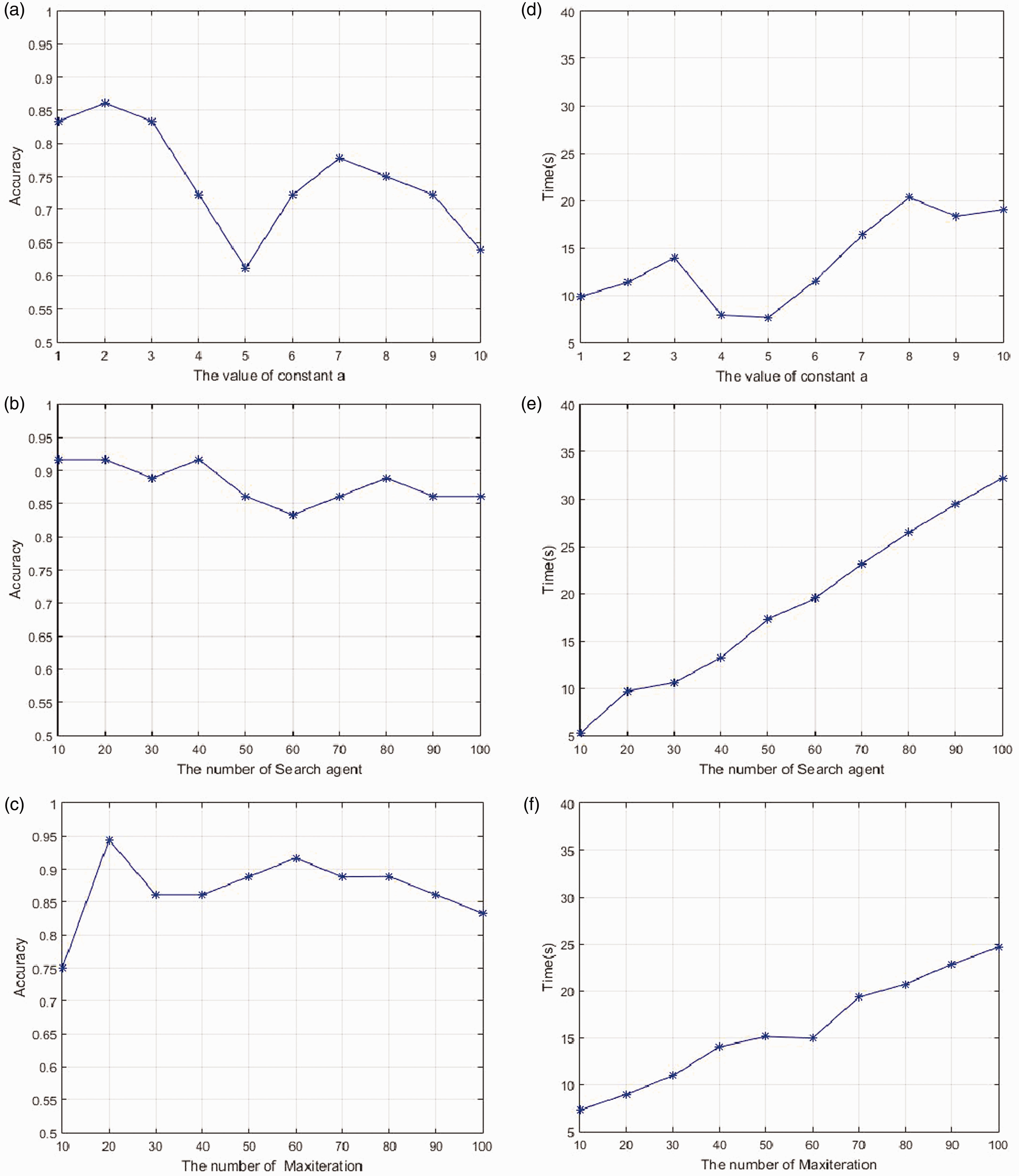
The number of search agents can influence exploration efficiency, which is shown in Figure 6(c) and (d). The influence on accuracy has been reached when the search agent number ranges from 10 to 100. From Figure 6(c), we know that when the search agent number is 10, 20, 30, 40 and 80, there will be a relatively high accuracy. And it can be seen that the time consumption is basically increased with the increase of search agent (Figure 6(d)). When the search agent number is 20, the accuracy is not the highest, but it is relatively high, and the time consumption is relatively low at this time. Therefore, the most suitable number of search agents equals 20.
The maximum number of iterations will also have an impact on the performance of the proposed model. As shown in Figure 6(e) and (f), we have studied the effect of iteration number from 10 to 100 on the accuracy. It can be seen from Figure 6(e) that at 20, 50, 60 and 70, the test accuracy is higher. In terms of time consumption, except for a slight decrease at 60, the overall trend is on the rise. When considering the overall performance, the maximum iteration number is set at 20.
Parameter setting for OSELM of proposed algorithm
In the OSELM algorithm, there are some parameters that need to be set: the number of hidden layer neurons, the type of activation function, block and so on. We explored the influence of parameters on the model. The effect of number of hidden layer neurons is performed under different activation functions. Each number of neurons is calculated under different activation functions, and the corresponding accuracy is the average test accuracy of running the program 10 times; the result is shown in Figure 7. The hidden layer neurons range from 5 to 80, with a step size of 5. As far as the activation function is concerned, the accuracy of the blue sigmoid activation function is generally superior. Considering the influence of the number of hidden layer neurons on the accuracy, the accuracy is highest when the number is between 30 and 40. Therefore, using this comprehensive analysis, the sigmoid activation function and 35 hidden layer neurons are adopted for parameter setting.
Influence on accuracy by hidden layer neurons and activation function.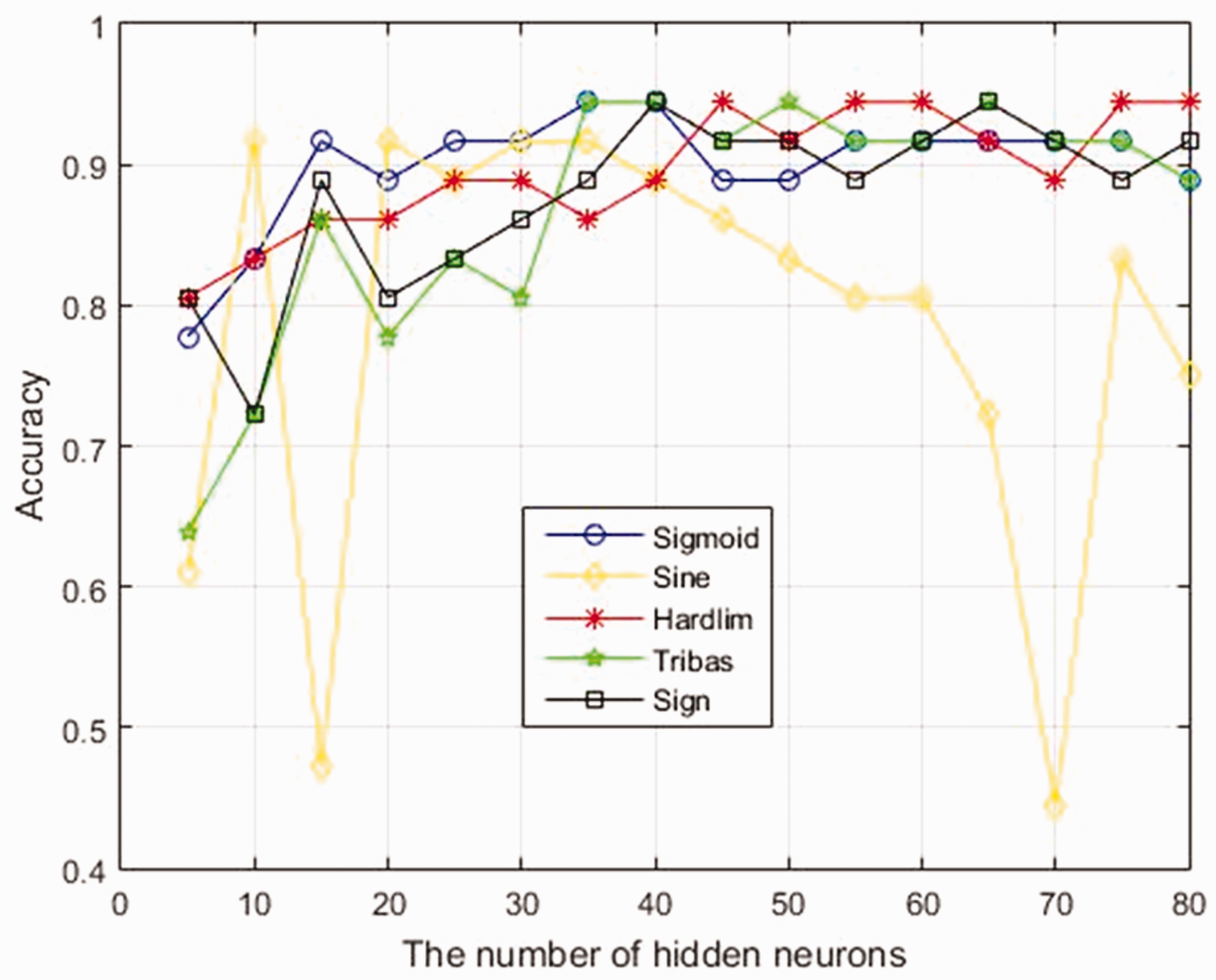
Experimental results and discussion
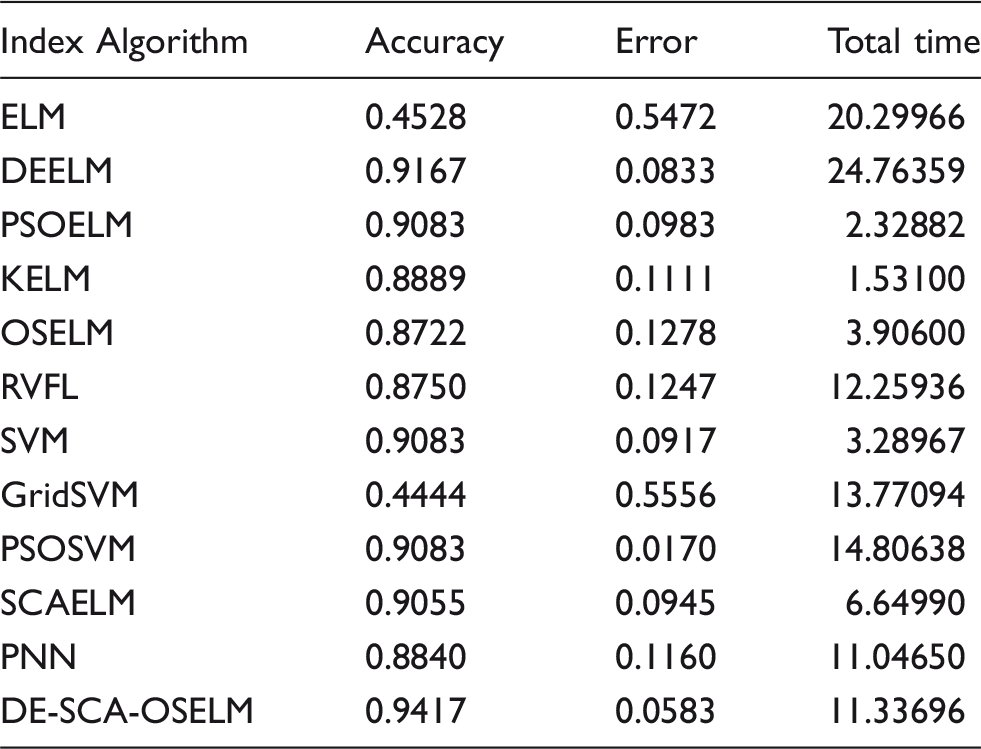
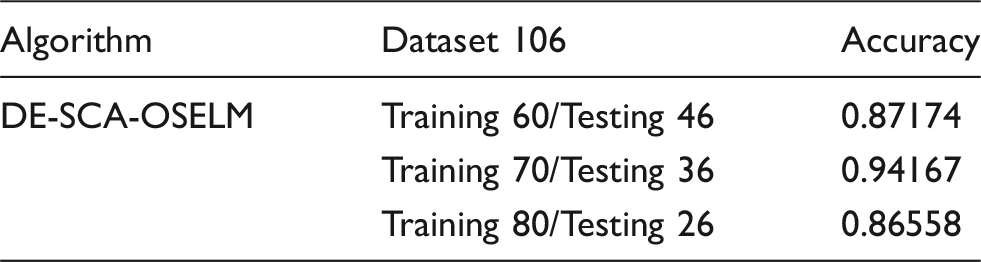
In this paper, the proposed algorithm DE-SCA-OSELM was compared with RVFL, ELM, DEELM, PSOELM, KELM, OSELM, SVM, GridSVM, PSOSVM, and SCAELM algorithms in terms of accuracy, which illustrated the performance of the proposed method in the classification of fabric wrinkle level. To make the experimental results statistically significant, randomly sampled testing with the proposed algorithm and each comparison algorithm was repeated 10 times, and then the average of 10 times was used as a measure. Figure 8 shows the classification of the test set in each algorithm. The average accuracy of each algorithm is relatively high to display the classification. Table 4 shows the classification accuracy of each algorithm test set, the classification error and the total time for 10 repetitions of each algorithm. Although the hold-out from machine learning was used to distribute size of training and testing sets, generally, at least 30% of the data is used as the testing set in the hold-out method. Table 5 shows the effect on average test accuracy of the training set and testing set, the result of experiment showed that the testing and training set size selected in the paper achieved the highest accuracy.
Predicted wrinkle level of test samples of each algorithm. Evaluation of fabric wrinkle level Accuracy, error and total time for each algorithm Accuracy influence by ratio of training set and test set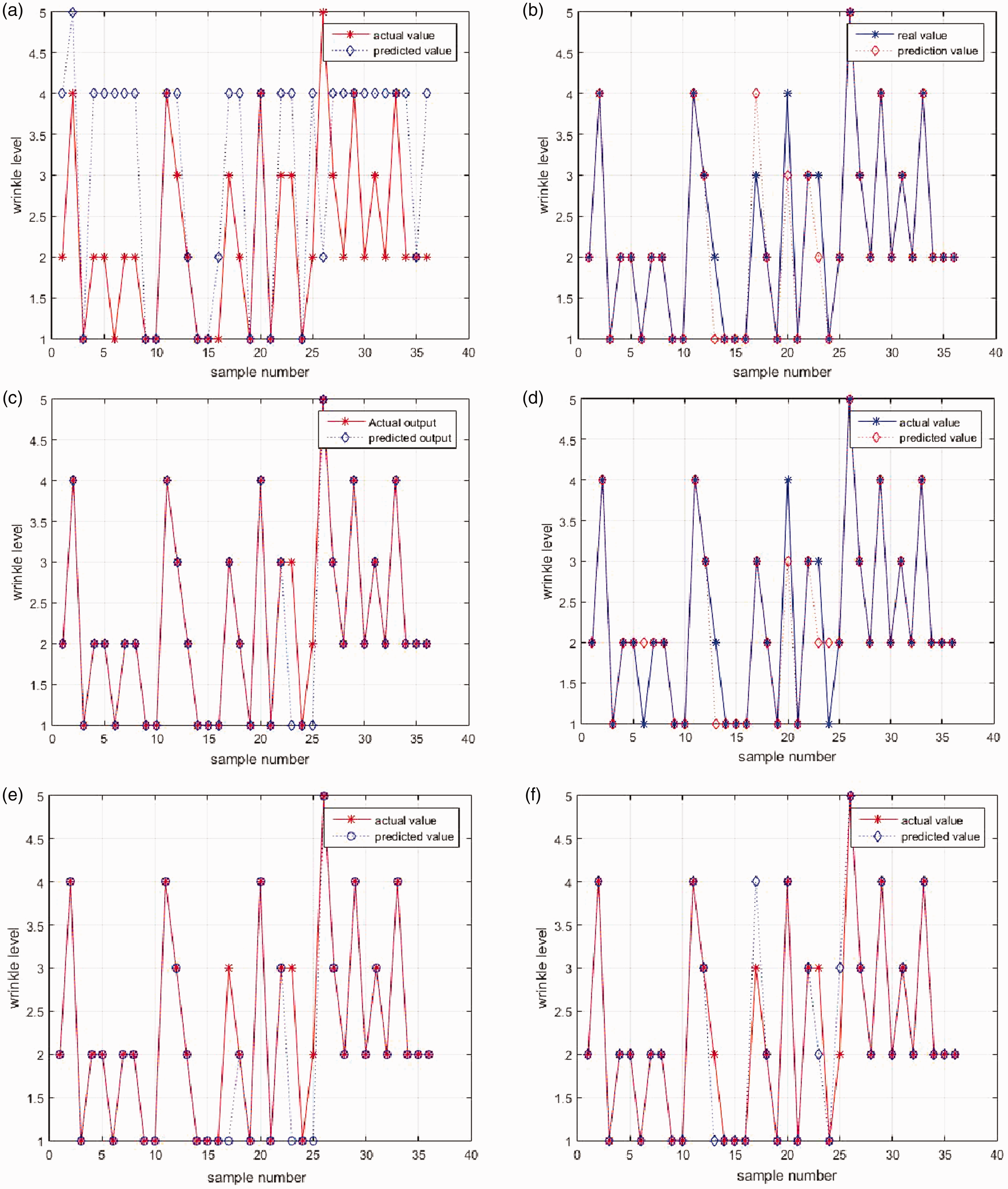
Significance and stability analysis of proposed algorithm
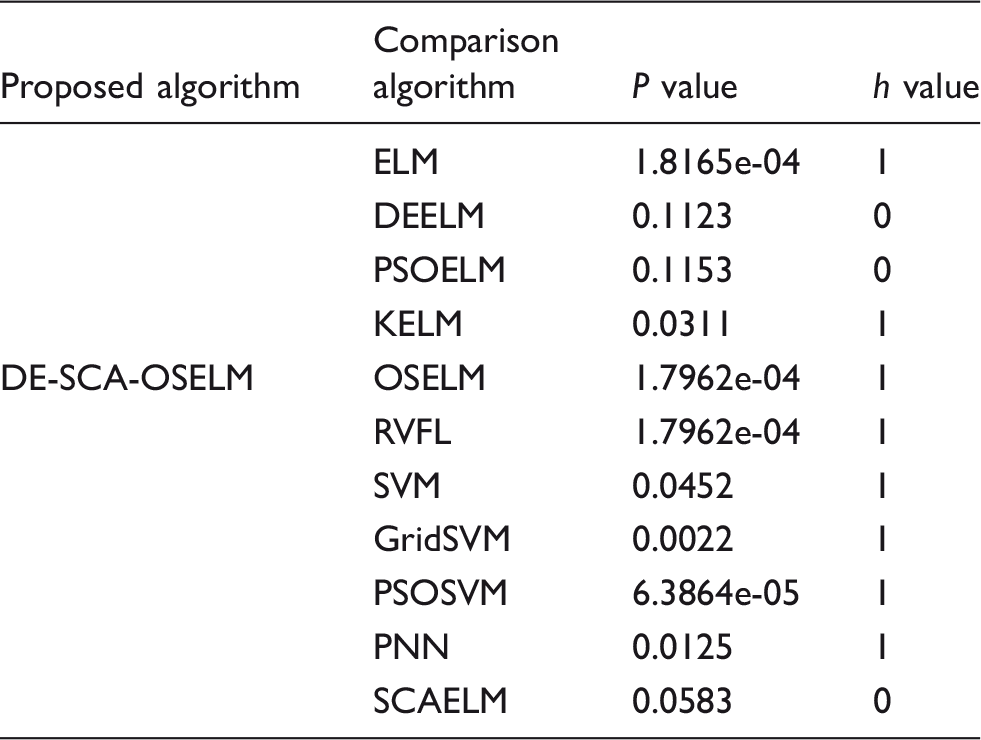
To verify the significance and stability of the proposed DE-SCA-OSELM algorithm, the box plot and the influence of iteration number are used to analyse the stability. The results of the Wilcoxon rank sum test are used for testing significance.
The box plot displays the maximum, minimum, median, and upper and lower quartiles of a data set. Identifying the outliers is the objective of the box plot. Therefore, the box plot has certain advantages in identifying outliers and overall values. The accuracy shown in Figure 9 is the average accuracy of each algorithm run 10 times. It can be seen from the median and the upper and lower quartiles of each box plot that DE-SCA-OSELM has the highest test accuracy distribution, which indicates that the proposed algorithm is more stable and superior to other algorithms in predicting test accuracy.
Box plot of each algorithm (corresponding algorithm from A to L: ELM, DEELM, KELM, PSOELM, OSELM, RVFL, SVM, PSOSVM, GridSVM, SCAELM, DE-SCA-OSELM, PNN).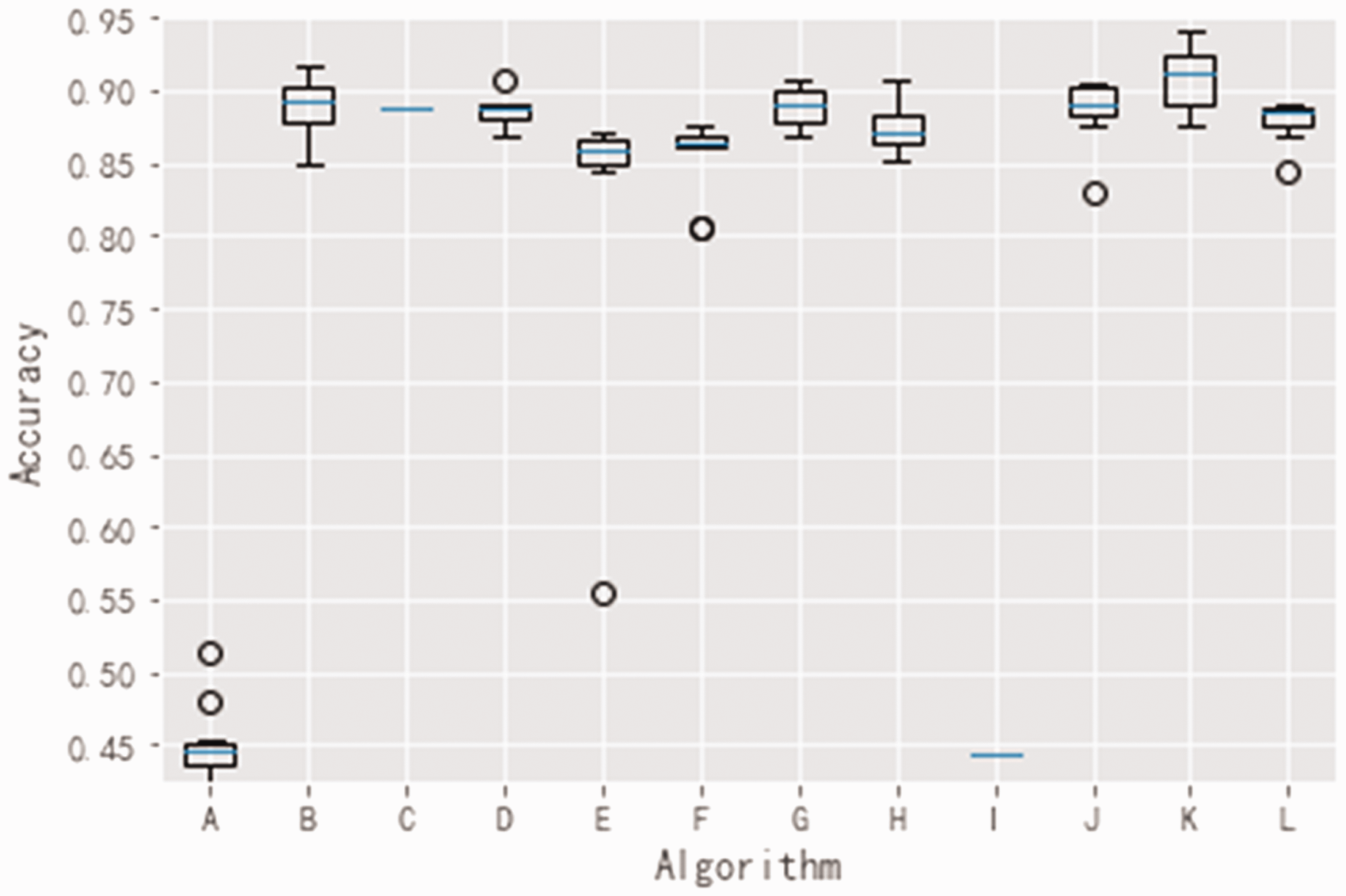
To more intuitively observe the influence of iteration number on test accuracy, the proposed algorithm and some other algorithms are compared in Figure 10. Because the optimal number of iterations discussed above is 20, 20 iterations are selected. We can see that the convergence speed of the proposed algorithm is faster, and its convergence accuracy is the highest. Therefore, the proposed algorithm is advantageous in terms of stability.
Relation between iteration number and accuracy.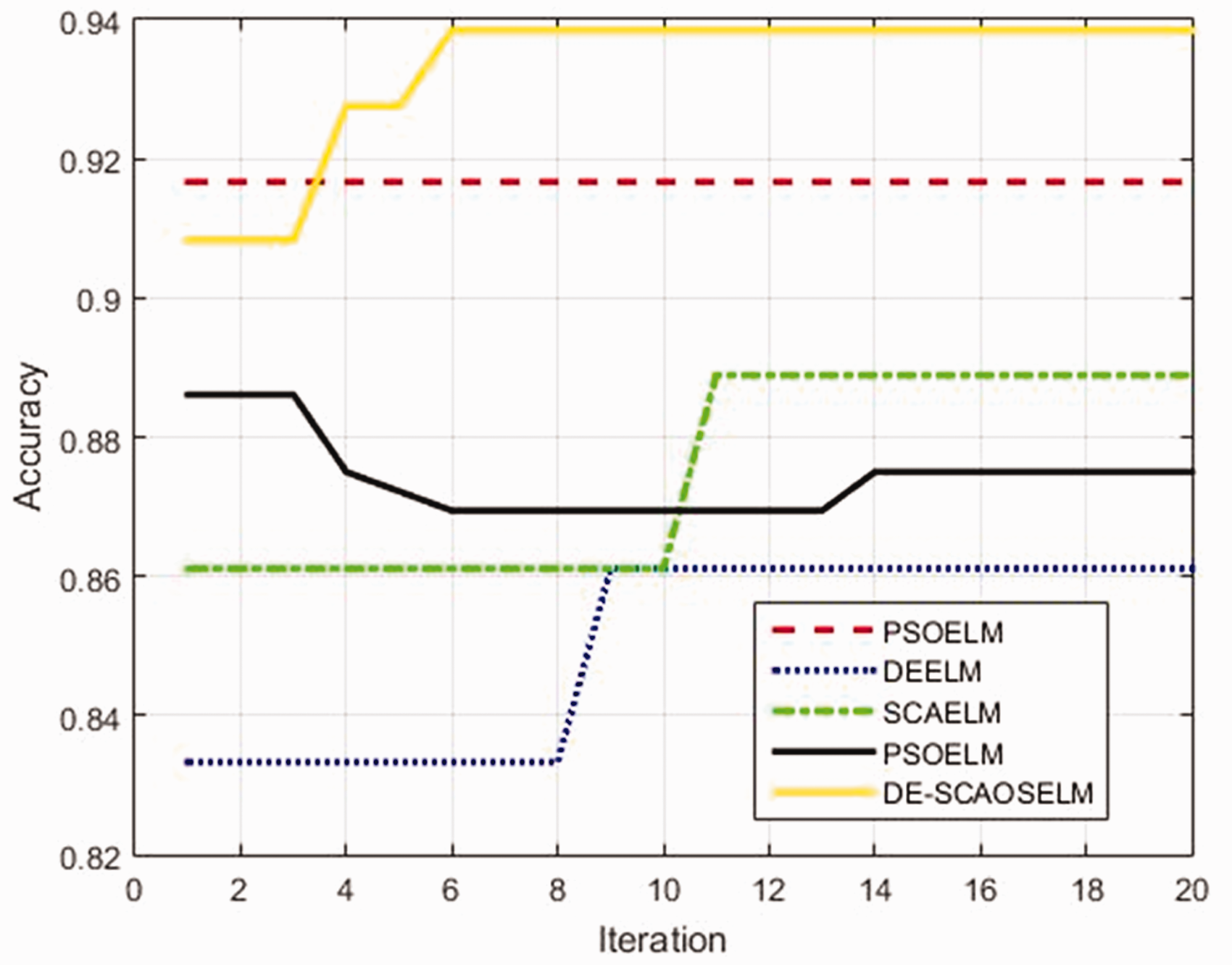
Wilcoxon rank sum test between proposed algorithm and each algorithm
Result of classification errors
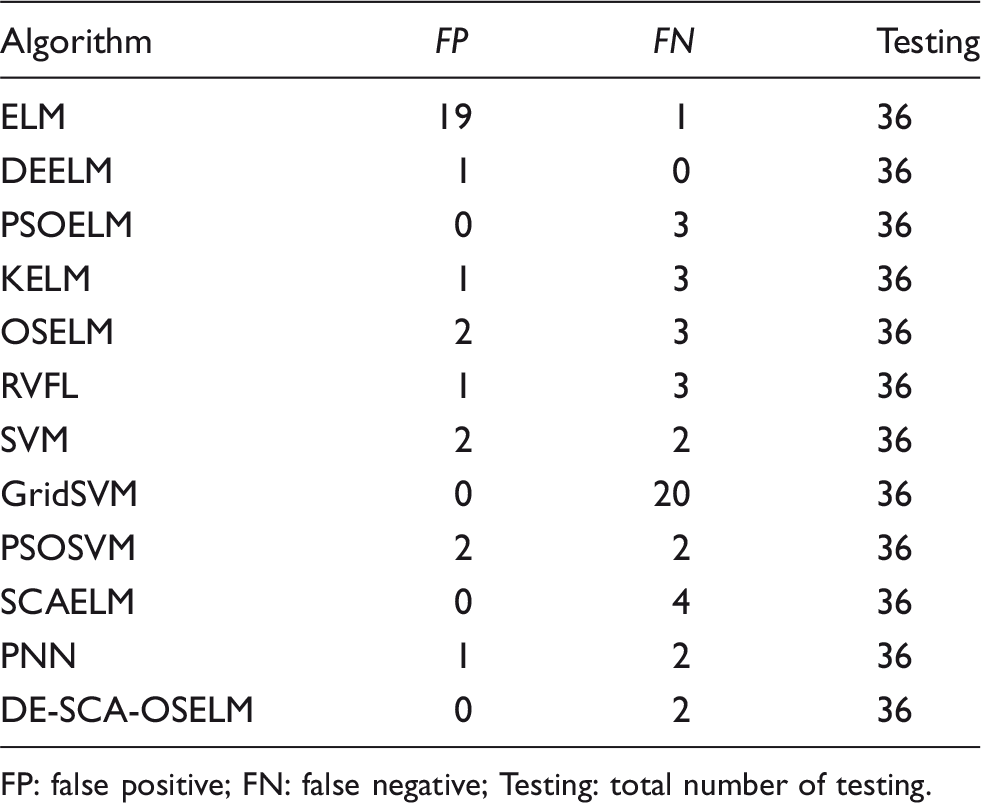
FP: false positive; FN: false negative; Testing: total number of testing.
Conclusion
OSELM has been applied in classification in previous studies. Because the parameter selection of OSELM will have a great impact on its performance, this paper proposed an optimized SCA by DE to select the parameters of the OSELM algorithm, proposed the novel algorithm DE-SCA-OSELM, and applied the algorithm to the classification of fabric wrinkle level. Compared with ELM, SVM, RVFL and other algorithms, the proposed algorithm achieves a good classification effect on fabric wrinkle classification. To check the performance of the proposed algorithm, many experiments have been done in this study. Experiments show that compared with other algorithms, the proposed algorithm has good significance and stability in the application studied.
Footnotes
Declaration of conflicting interests
The authors declared no potential conflicts of interest with respect to the research, authorship, and/or publication of this article.
Funding
The authors disclosed receipt of the following financial support for the research, authorship, and/or publication of this article: This work was supported by NSFC-Zhejiang Joint Fund for the Integration of Industrialization and Informatization (No.U1609205), Zhejiang Provincial Natural Science Foundation of China (No. LY18F030018, LZ20F020003), Science Foundation of Zhejiang Sci-Tech University (No. 18032232-Y) and Zhejiang Top Priority Discipline of Textile Science and Engineering.

Appendix 1
SCAELM: extreme learning machine optimized by sine cosine optimization
PSOELM: extreme learning machine optimized by particle swarm optimization
KELM: kernel extreme learning machine
SVM: support vector machine
GridSVM: support vector machine optimized by Grid
PSOSVM: support vector machine optimized by particle swarm optimization
PNN: probabilistic neural network
ELM: extreme learning machine
DEELM: extreme learning machine optimized by
OSELM: online sequential extreme learning machine
RVFL: random vector functional link network
DE-SCA-OSELM: differential evolution- sine cosine optimization- extreme learning machine