







Abstract
In this study, silver-doped natural mulberry fibers were successfully obtained by the dip-coating technique. Arrays of material consisting of synthetic compounds (organic as well as inorganic) are being utilized to impart antimicrobial functionality to textiles. Therefore, the current study for the first time attempted to establish an innovative class of textiles made up of silver-doped natural mulberry fibers. This fabric will be utilized for the fabrication of antimicrobial socks. The morphology, physicochemical and antibacterial characteristics of Ag-doped mulberry fibers were scanned via X-ray diffraction (XRD), scanning electron microscopy (SEM), electron probe microanalysis, Fourier transform infrared spectroscopy (FTIR) and antibacterial testing. SEM analysis evidently demonstrated uniform distribution of Ag on mulberry fibers and the outcome of XRD and FTIR analyses authenticated assimilation of Ag in the Ag-doped mulberry composite. The Ag-doped mulberry fibers revealed venerable antibacterial action against representative bacterium E. coli. The antibacterial analysis lead to the conclusion that the Ag-doped mulberry fiber textile has an enhanced bactericidal effect owing to the synergism of Ag and mulberry compounds. Moreover, Ag imparted an anti-odor effect on mulberry fiber. These distinctive organic–inorganic fibrous composite socks are antimicrobial, odor free and skin and environment friendly. Thus, this study recommends the use of Ag-doped mulberry fibers as a future material for the preparation of durable antibacterial new generation socks. These composite fibers can also be used as textile material for clothes such as sportswear and for medical purposes; for instance, bedcovers in hospital beds, etc.
Textiles are among the basic necessities of life and are used throughout the globe for diverse purposes on a daily basis. In particular, nowadays natural fiber composites have proven tempting to the textile market; therefore, natural fibers have become exceedingly worthy materials. 1 Natural fibers, such as jute, kenaf, hemp, sisal, etc., are repeatedly being utilized as reinforcing material in polymer matrices. 2 Nevertheless, principally, the use of natural products has appreciably decreased the environmental burden and has facilitated waste removal. Generally, mulberry trees are cultivated for rearing silkworms. Concurrently, the mulberry bark is being exploited for paper making as well as supplements in optical and drug companies and use in fabric factories. 3 On the other hand, thousands of mulberry branches consisting of basts and stalks are simply utilized as firewood or agro-wastes. Nonetheless, there is appropriate information in the literature on mulberry fiber extraction. Qu et al. 4 prepared mulberry fiber with the enzymatic degumming method, whereas Li et al. 5 extracted mulberry fiber via chemical degumming and explored the configuration as well as properties of mulberry fiber. Alternately, other researchers have synthesized mulberry-based nonwoven 6 fabric from mulberry fiber by the soaking method. Mulberry is the most desirable material owing to its fast growth and quick germination even under unfavorable environmental conditions. Mulberry tree derivatives are used in various products because of their outstanding sustainability. Hanji yarn is prepared with mulberry paper utilizing conventional Korean procedures, such as molding, layering and burnishing, to allow potency and elasticity. Finally, mulberry paper is altered into yarn by techniques such as slitting and molding, as well as weaving, under organized environmentally friendly conditions. 7 There are few reports on antibacterial mulberry-based textiles. 4 Hanji, a by-product of mulberry, mostly originating from Asian countries, is an eco-friendly natural fiber that has been traditionally used as paper. Hanji yarns possess eminent properties (such as the quick freshening capability of moisture and sweat, antimicrobial, deodorization, easy coloring ability, etc.). In addition to the aforementioned properties, Hanji yarn is also bio-degradable and retains its original form after repetitive laundering. Taking into account these interesting properties of Hanji, our group preferred mulberry fibers (in particular, Hanji yarn material) for preparation of Ag-doped mulberry (organic–inorganic composite) with the aim to prepare competent new antibacterial fabrics for socks. The silver-doped fabric material possesses incredible potential to reduce intrinsic odors of unclean fabrics due to the presence of bacteria. To overcome aforementioned problems and to achieve a sufficient decrease in laundering along with the raw materials needed to produce silver-enabled textiles, herein we utilized a very cost effective and environmentally friendly method for fabrication of silver-doped mulberry textiles. Since ancient times, Ag has attracted great recognition as a material of choice for the market as it has antibacterial properties. Nevertheless, it (Ag) possesses broad-spectrum antimicrobial potential. In addition, Ag is non-toxic to mammalian tissues. 8 It has long been identified that microbial inhibition occurs when small-scale silver is blended with textiles. Moreover, other uses such as odor reduction and the potential for reduced laundering 9 have also been observed. In view of the distinctive antimicrobial potential of Ag and mulberry fibers, our group in the first instance report mulberry yarn fabric with well-doped Ag using the dip-coating method as a future fabric for socks that is durable, cost effective, and environment and skin friendly. The as-synthesized fabric can also serve as a textile for sportswear, bedding material for patients, etc.; in fact, for all materials that are prone to bacterial infestation.
Material and methods
Materials
Natural Hanji yarn, acquired from the mulberry plant, was purchased from Jirisan Hanji Co. Ltd, South Korea. Silver powder (99% purity) was purchased from Aldrich, USA. The utilized bacteria (Escherichia coli KCCM 13821) were procured from the Korean Culture Centre of Microorganisms (KCCM). All other reagents used for experimental purposes were of analytical grade.
Preparation of Ag-doped mulberry fibers
Hanji fibers derived from mulberry bark were cut into pieces measuring approximately 1 cm × 1 cm (∼mass = 7.5 mg) and were immersed into 20 ml of aqueous suspension of silver salt (10% w/v) having the reducing agent sodium borohydride (0.02 M) for about 30 minutes. The Ag-doped mulberry fibers were washed with distilled water in a separate beaker by dipping the fiber mat to remove unfixed materials. This process was repeated thrice and fresh water was used every time for washing. Subsequently, these composite fibers were dehydrated at 80°C under a vacuum overnight. The percentage of silver with regards to Hanji was determined as follows: % attached = (w – w0)/w0 × 100. Herein “w” indicates the number of silver-doped mulberry fibers and “w0” is the number of plain mulberry Hanji fibers.
Characterization
X-ray diffraction (XRD) analyses of pure mulberry fibers and Ag-doped mulberry fibers were conducted on a Rigaku D/MAX-2500 V/PV with Cu-Kα radiation (40 kV and 200 mA, respectively) at a velocity of 4°/min over the 2θ range of 10°–80°. A scanning electron microscope equipped with energy-dispersive X-ray spectroscopy (EDX) was documented using a field emission scanning electron microscope (S4800, Hitachi) for observing morphological images and the chemical composition of samples. Fourier transform infrared spectroscopy (FTIR) of mulberry fibers and Ag-doped mulberry fibers was performed considering the wave number range of 400–4000 cm−1 in the transmittance mode.
Antibacterial action of Ag-doped mulberry fibers using optical density
The antibacterial activity of Ag-doped mulberry fibers was tested against E. coli using a shaking flask method, as described elsewhere. 10 The investigational test procedure was as follows. About 1 cm × 1 cm of pure sample of Hanji fibers and Ag-doped mulberry fibers were immersed into a flask containing fresh overnight developed E. coli culture. The culture medium consists of tryptone soya suitably complemented with 0.6% yeast extract. Initially, the static culture of E. coli was maintained on agar and freshly developed bacterial culture was inoculated into liquid broth. Following inoculation, the mulberry samples (pure Hanji and Ag-doped fibers) were placed in a rotary shaker incubator at 37°C and 150 rpm. Standard control samples, such as pure E. coli culture and pure liquid broth, were also set aside. Customary culture expansion was supervised with Optical density (OD) (taken by an ultraviolet (UV)-visible spectrophotometer – UV-2550, Shimadzu, Japan), until the OD reached 0.1 at 600 nm at a gap of 3 h over the entire incubation period, which lasted for 15 h. OD600 is preferable to quantify bacteria, as at this wavelength cells are neither destroyed and nor is growth hindered. Also, the antibacterial effect of Ag-doped fibers was monitored after washing cycles. The cultures were examined for contamination as well.
Results
Figure 1 demonstrates XRD spectra of pure mulberry fibers and Ag-doped mulberry fibers. In mulberry fibers, the prominent diffraction peak at 22.7° indicates the presence of cellulose I type, 11 whereas in the spectrum of Ag-doped mulberry fibers, the presence of diffraction peaks at 38.35°, 44.56° and 64.74° confirms the presence of silver particles in composite fibers (Figure 1(b)). Entire diffraction peaks of silver particles were manifested as a face-centered cubic structure (JCPDS- 89-3722).12,13 Therefore, the XRD spectrum confirms the formation of Ag-doped mulberry fibers.
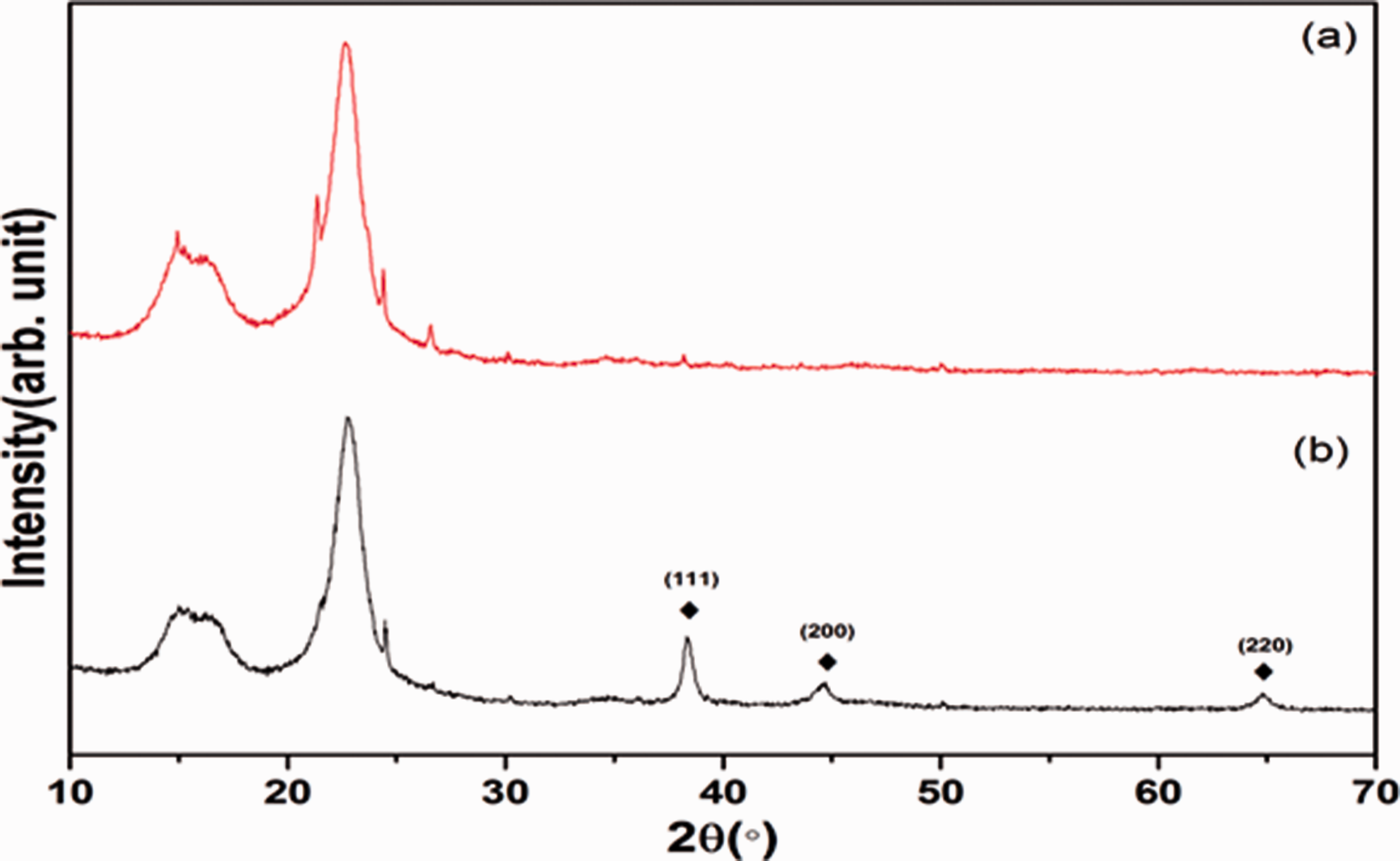
X-ray diffraction spectra of (a) mulberry Hanji and (b) Ag-doped mulberry fibers.
The overall microstructure and distribution of the synthesized samples were further described by scanning electron microscopy (SEM) at small and large resolutions (Figure 2). Pure mulberry fibers showed (Figures 2(a) and (b)) a flat exterior plane containing a diameter in micrometers (15–30 μm). The Ag-doped mulberry fibers revealed highly dispersed silver particles on the paper mulberry surface (Figures 2(c) and (d)). The average size of silver particles was around 2–3 μm.
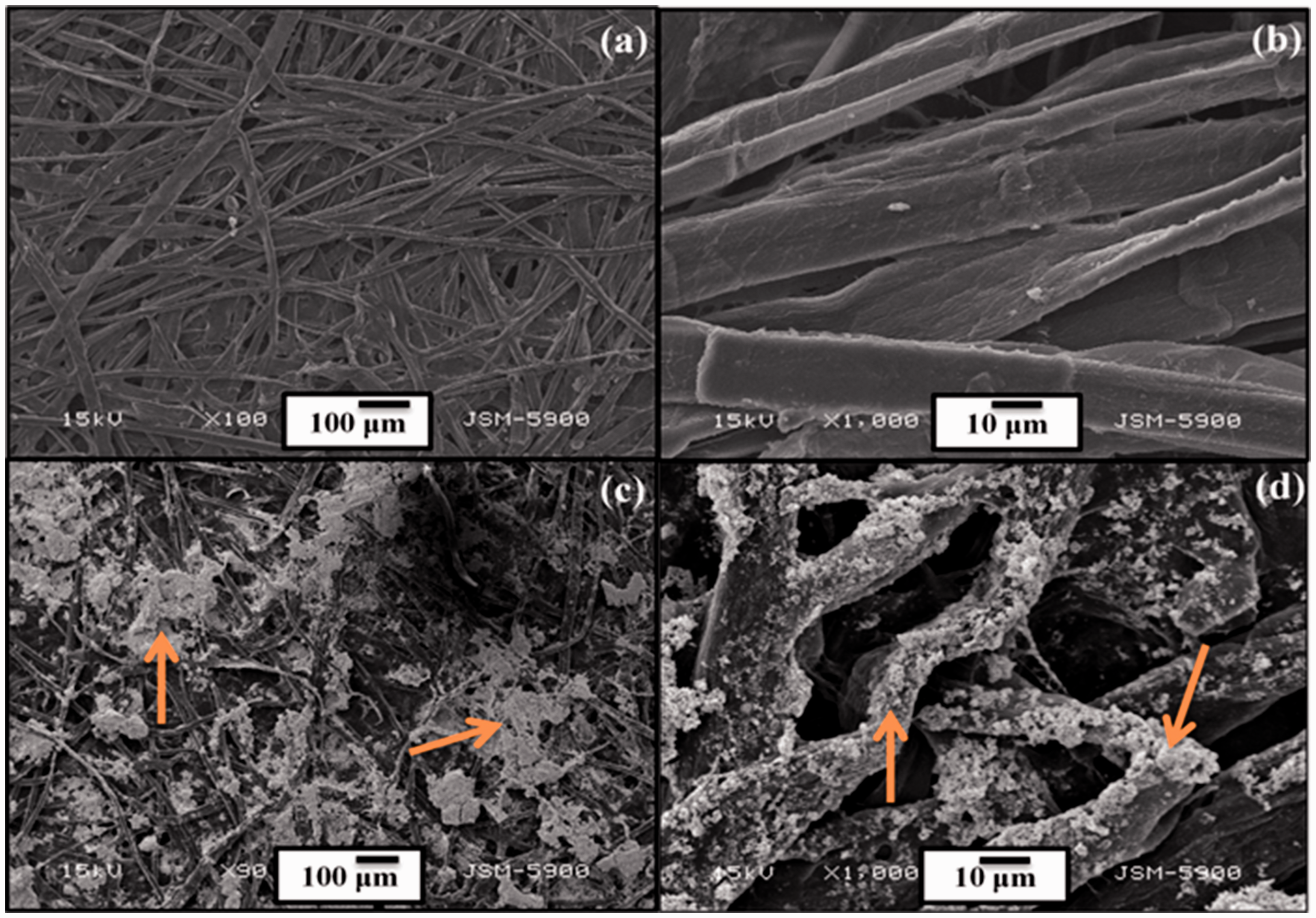
Scanning electron microscopy of (a, b) mulberry Hanji and (c, d) Ag-doped mulberry fibers at different magnifications.
Furthermore, Figure 3 shows the EDX analysis of Ag-doped mulberry fibers. EDX spectra confirmed that composite fibers comprised Ag, C and O; no superfluous elemental contamination was identified. The percentage of silver was approximately 5% in the composite. The formation of the composite was again confirmed by electron probe microanalysis (EPMA) dot-by-dot elemental mapping (Figures 4(b)–(e)). In the present study, the EPMA also undoubtedly shows that the composite fibers possess Ag, C and O elements only.
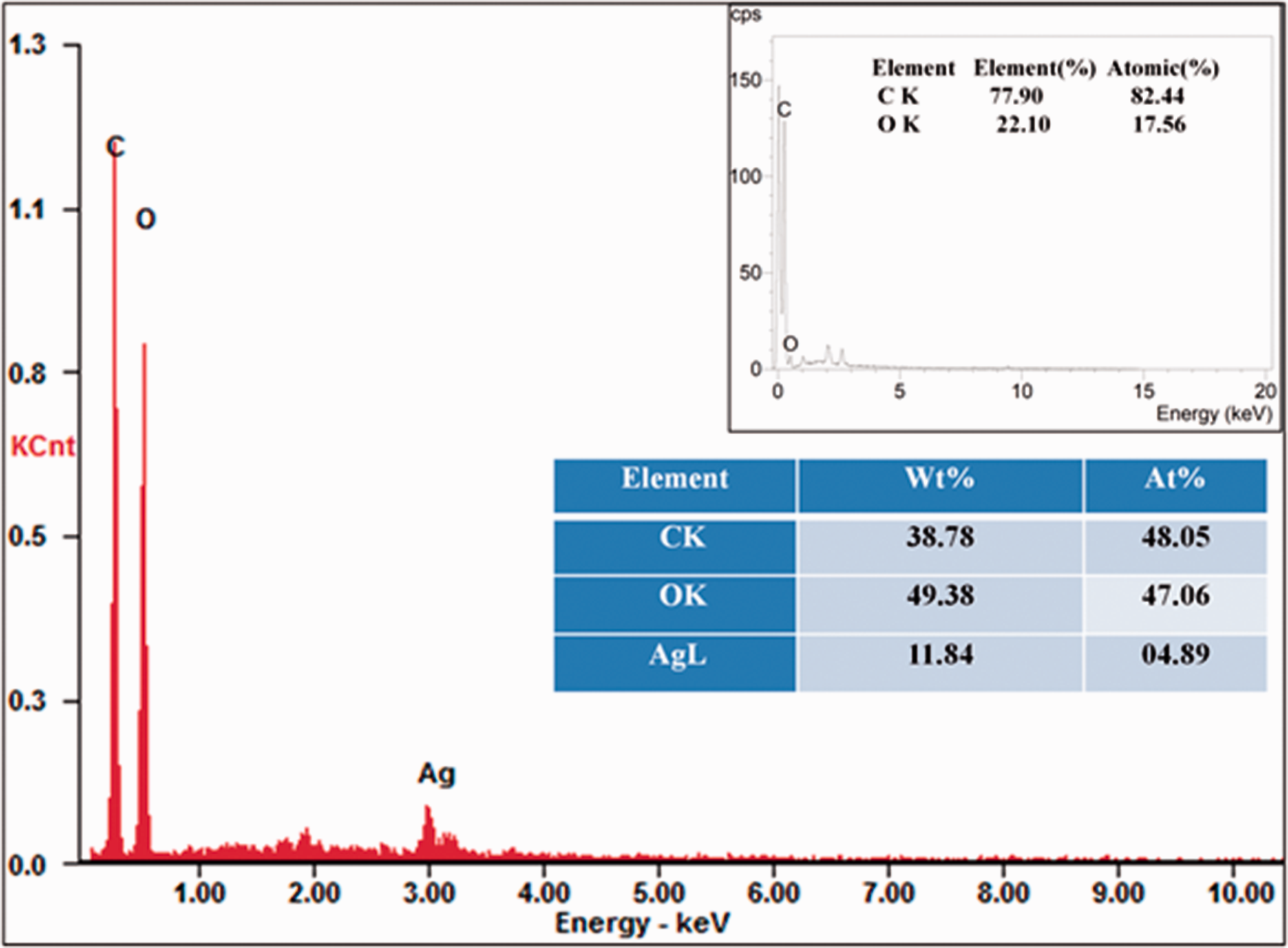
Energy-dispersive X-ray spectroscopy of Ag-doped mulberry fibers; inset depicts mulberry Hanji fibers.
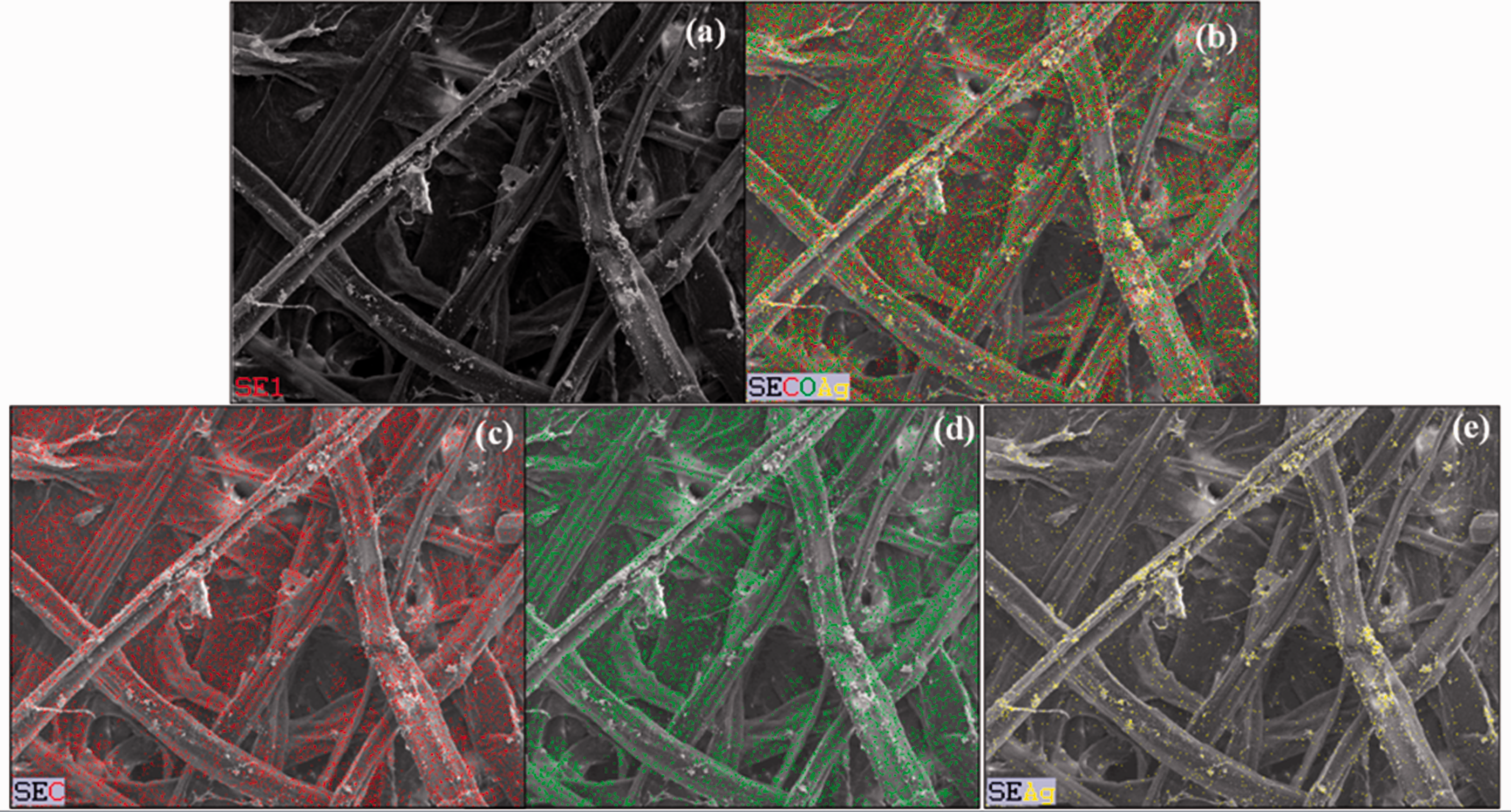
(a) Selected area for electron probe microanalysis of Ag-doped mulberry fibers. (b) Distribution of C, O and Ag in Ag-doped mulberry fibers. (c) Carbon (red color). (d) Oxygen (green color). (e) Silver (yellow color). (Color online only.)
Figure 5 portrays FTIR spectra of mulberry and Ag-doped mulberry. The assimilation bands at 3330 and 2913 cm−1 are linked to the O-H and C-H stretching approach. The group at 1640 cm−1 is allocated to captivated water. The band at 1030 cm−1 corresponds to C-O-C expansion, while the tiny absorption band at 894 cm−1 indicates the occurrence of a C-O bond. These bands are similar to that of cellulose type I. 14 The difference between the two spectra is the intensity of the peaks.
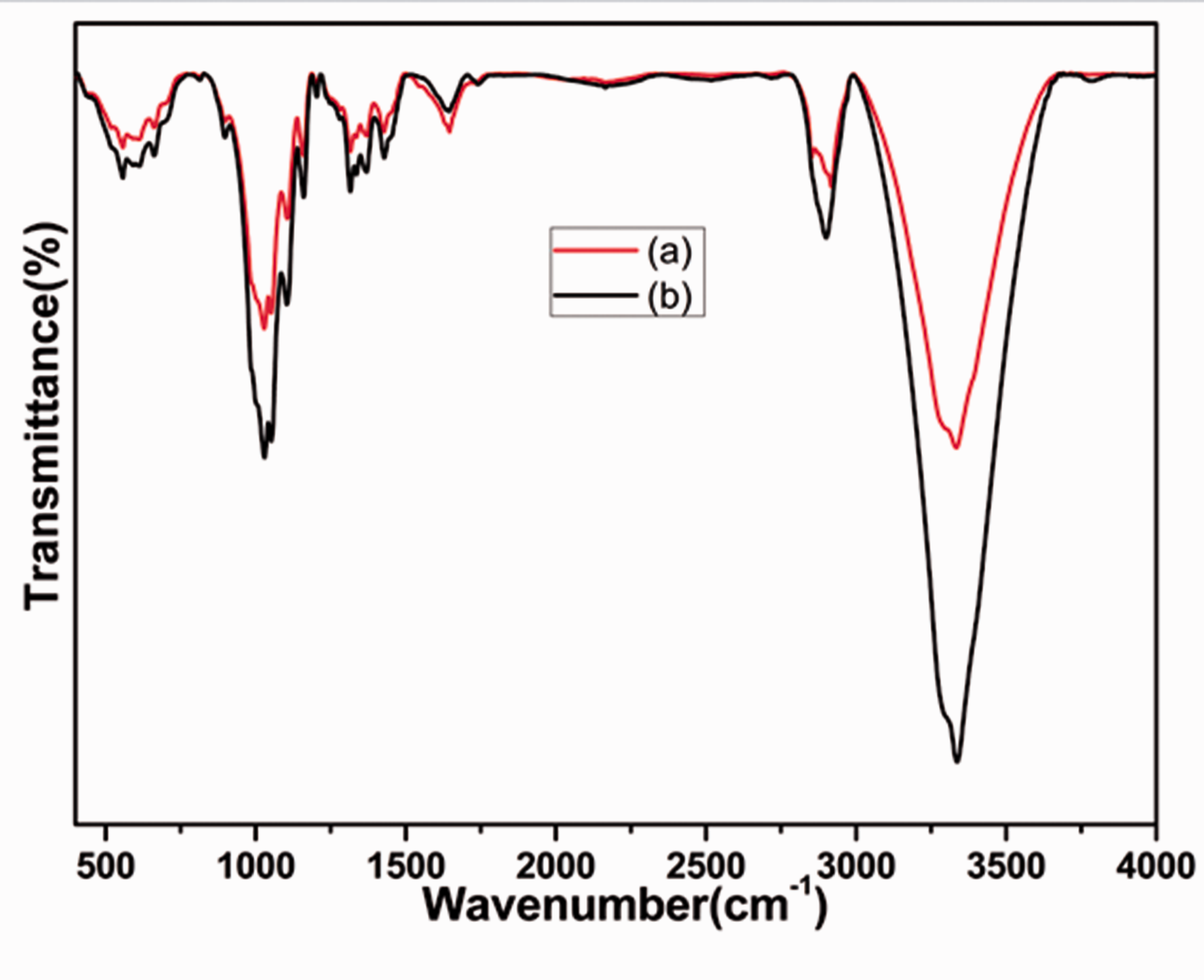
Fourier transform infrared spectra of (a) mulberry Hanji and (b) Ag-doped mulberry fibers.
The absorption peak of Ag-doped mulberry shows a higher intensity, which means that the characteristic absorption peaks of Ag overlapped with the band of mulberry fibers. Ag-Ag metallic bonds have previously been established below 400 cm−1. The peak that can be assigned to vibration of Ag-Ag metallic bonds could not be seen in this graph because the FTIR utilizes mid-infrared rays (4000–400 cm−1) that are not appropriate to measure the vibration rate of metal–metal bonds. 15 The antibacterial property of the Ag-doped mulberry fibers and Hanji fibers ahead of treatment with Ag were measured quantitatively using turbidity or optical density. The results are shown in Figure 6. The bacteriostatic effect of both Ag-treated mulberry fibers and pure Hanji fibers indicated that both samples possess the antibacterial property. The pure E. coli logarithmic phase extended from 3 to 9 h (Figure 6).
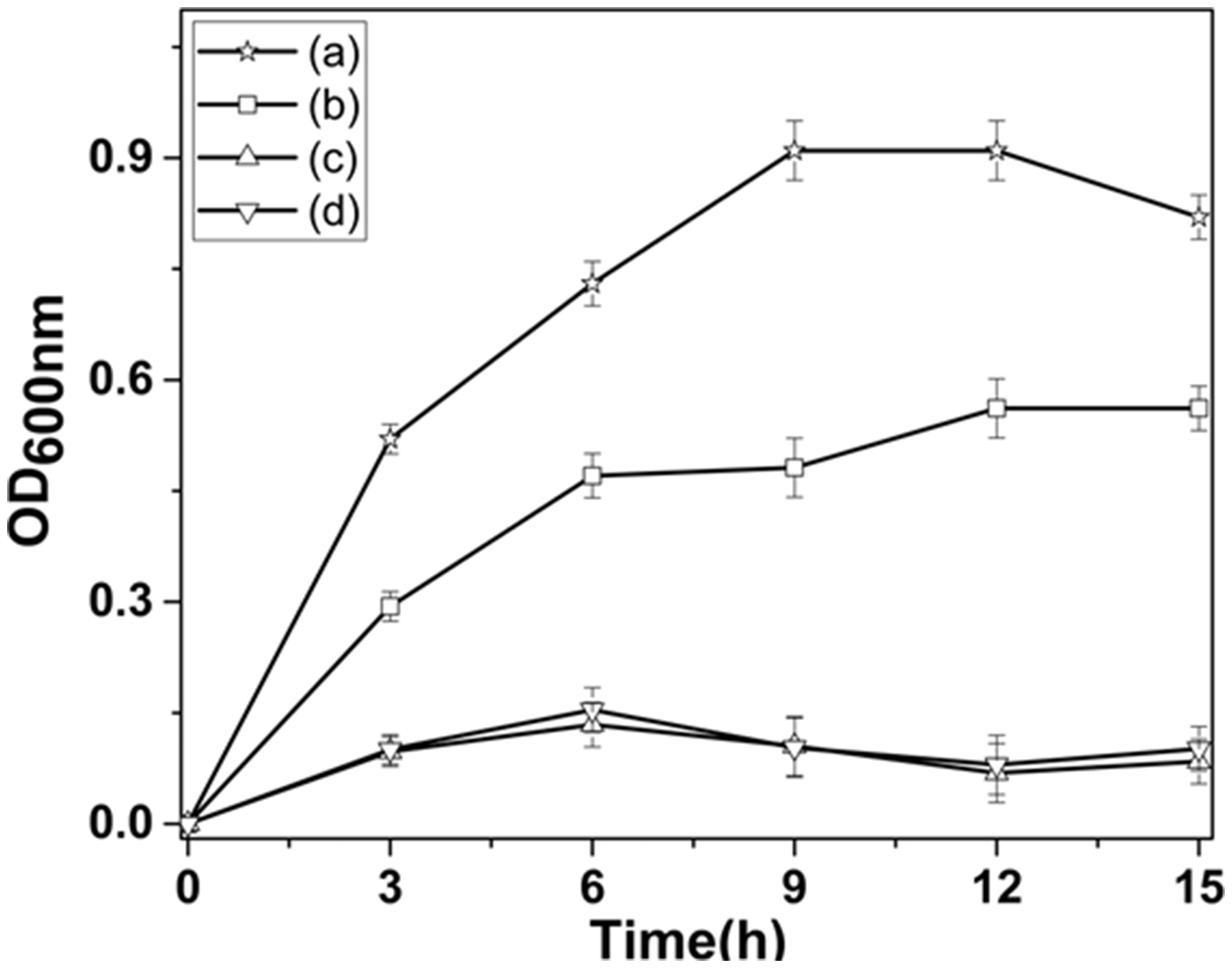
Antibacterial graph of (a) E. coli cells, (b) mulberry Hanji fibers, (c) Ag-doped mulberry fibers and (d) Ag-doped mulberry fibers after washing treatment (thrice).
As shown in Figure 6, the raw mulberry demonstrated moderate antibacterial activity against E. coli. However, the antibacterial effect of Ag-doped mulberry fibers was greater than that of raw Hanji mulberry fibers. In particular, an observable distinction in inhibition of bacterial expansion was observed from 3 to 15 h. More to the point, no change in antibacterial effect of Ag-doped fibers was monitored after washing treatment.
Discussion
Textile materials/fabrics are very important and are utilized in all countries on Earth for a variety of functional requirements. In general, fabrics can be classified into categories such as natural, synthetic or a fusion of both fibers. Although currently synthetic fibers are very much in use, natural fibers are always preferred or admired for numerous reasons, such as being environmentally friendly and durable, possessing excellent absorbency, etc. Conversely, most synthetic fibers are inflammable, do not soak up moisture and cause pollution. Natural cellulosic fibers, viz., cotton, flax, hemp, jute and ramie, are being accepted by attire production companies owing to their diverse beneficial applications. 16 Among the aforementioned natural fabrics, cotton is well accepted due to its exceptional properties; for instance, it is bio-degradable, smooth, compatible with skin and is hygroscopic in nature. On the other hand, cotton fabrics provide an excellent environment for microorganisms to grow, because of their large surface area and ability to retain moisture. 17 To overcome such problems, in this study our group introduced Ag-doped natural mulberry fibers. Earlier, the Korea Institute for Knit Industry depicted temperature conservation studies comparing plain Hanji and silver dust encrusted fibers. 7 Nowadays, numerous antimicrobial methods are accessible for fabric materials and are in use for various textile purposes, such as to prevent the growth of microorganisms and prevent textiles from having an awful odor. In this direction, silver is material of choice. Silver proffers great advantages, such as antimicrobial protection and odor control. 18
In the current research study, we fabricated Ag-doped mulberry composite (5% w/v) by the dip-coating method. SEM described even dispersity of Ag particles on all mulberry fibers. The present Ag-doped mulberry textile demonstrated excellent antibacterial activity. It was proposed by earlier researchers that the bactericidal activity of silver is due to multifaceted means, which included the strong affinity of Ag+ ions toward disulfide (S–S) and sulfhydryl (−SH) groups, which are present in microbial protein walls. 19 Moreover, it has been understood that Ag+ ions disturb the regular metabolism by dislocation of vital metal ions, such as Ca2+ or Zn2+, 20 therefore causing fatality to bacterial cells. On the other hand, it is imperative to note that prevalent silver utilization in food products, therapeutic appliances, garments, makeup, paints, etc., enhances individual contact to Ag toxicity; therefore, it is obligatory to reflect on the management of Ag leaching whilst on the lookout for a potent antimicrobial impact. However, it is reported in the literature that materials achieved via wet impregnation offered ways to limit Ag loading and leaching, at the same time well maintaining antimicrobial action. Furthermore, Ag leaching can be curtailed by chemically reducing silver with NaBH4 from its ionic to its metallic form. Conclusively, these studies clearly point out that Ag particles demonstrate antimicrobial activities without leaching. 21 So, it can be hypothesized that the prominent state of Ag existing on the surface of mulberry fibers is Ag0 in the present study.
Nevertheless, there are also studies in the literature about the antimicrobial action of mulberry3,4,22 due to the presence of various compounds (e.g. flavonoids, triterpenoids, alkaloids, steroids, phenolic compounds, tannins, etc.). 22 Therefore, the excellent bacteriostatic effect herein is ascertained by the synergistic outcome of Ag and mulberry compounds as aforementioned. In addition, the other constituents of mulberry fibers, such as cellulose, hemicelluloses, lignin, gum and wax, 23 also impart and enhance antibacterial potential. This textile material can be used as a foundation material for the fabrication of sportswear, medical cloths, bedding and especially anti-odor socks.
Conclusion
Currently, numerous antimicrobial techniques are possible for textile preparation in order to prevent microorganisms. The undesirable accumulation of micro-foulers is a big problem. An effective anti-foulant should inhibit bio-fouling and prevent the textile from having an unpleasant odor. In this direction, silver is the most selected material; silver-coated textiles are antibacterial in nature. In summary, the present work focuses on the preparation of an antimicrobial organic–inorganic composite. The morphology, physicochemical and antibacterial characteristics of Ag-doped mulberry fibers have been presented. The Ag-doped mulberry fibers showed venerable antibacterial action against representative bacterium E. coli and could be the material of choice for the fabrication of anti-odor textiles.
Footnotes
Declaration of conflicting interests
The author(s) declared no potential conflicts of interest with respect to the research, authorship, and/or publication of this article.
Funding
The authors disclosed receipt of the following financial support for the research, authorship and/or publication of this article: This work was supported by the Deanship of Scientific Research at Princess Nourah bint Abdulrahman University through the Fast-track Research Funding Program.
