







Abstract
There has been much concern about germanium because of its special atomic nuclear structure to generate negative electrons and far-infrared ray. In this study, novel germanium-polyamide6 fibers were prepared by using micro–nano structured germanium particles as a functional component via melt spinning. The effects of germanium concentration on the morphology, mechanical, negative air ion-releasing, and far-infrared radiation properties of the germanium-polyamide6 fibers were systematically investigated. Besides, the antibacterial activity and mechanism of the fibers against Staphylococcus aureus and Escherichia coli were also discussed. Even though the added germanium particles negatively affected the mechanical performance of the fiber, they were distributed well in the polyamide6 substrate when the concentration was increased from 2% to 6%. Increasing the temperature and pressure induced the germanium-polyamide6 fibers to produce more negative air ions and high far-infrared emissivity. The negative air ion-releasing property of the fiber led to antibacterial performance against S. aureus with more than 99% antibacterial rate. The results confirmed the great application potential of germanium in healthcare, medical, home, and apparel textiles.
Negative air ions (NAIs) have attracted wide attention as air vitamins because of their air-purifying, antibacterial, and healthcare functions.1–4 NAIs, including O2−(H2O)n, OH−(H2O)n, and CO4−(H2O)n, are naturally abundant in forest, waterfall, and lake air environments. NAIs can also be generated through air ionization, which is induced by the accumulation of extranuclear electrons from special mineral elements.5,6 Tourmaline, for instance, is a widely used NAI producer because its piezoelectric and thermoelectric properties allow the release of numerous negative electronics. Surrounding air is ionized to produce NAIs when tourmaline is exposed to specific temperature and pressure situations.7,8 Nevertheless, tourmaline is an unrenewable mineral resource and complex composite consisting of more than 15 ingredients. Thus, tracing the real origin component and controlling the production of NAIs are difficult. Recently, the submetallic material germanium has drawn much attention because of its special atomic nuclear structure, in which the extranuclear electron could be stimulated by certain external micro-stress and heat to escape from its electronic orbit and accumulate to ionize air molecules to produce NAIs.9,10 Compared with tourmaline, germanium is composed of single element Ge. Germanium particles with a purity of over 99.9% are easy to extract; hence, their NAI production is easy to control. 11 The unique atomic nuclear structure of germanium also makes it a natural permanent far-infrared radiation (FIR) source to emit far-infrared ray in the wavelength range of 4–14 μm, which can be completely absorbed by the human body and act as a healthcare medicine to promote human microcirculation and enhance human immunity.11–13 Benefiting from the special atomic nuclear structure of germanium and function of NAIs and FIR, germanium is an ideal alternative for tourmaline and shows great application prospect in domestic paints, medical instruments, and textiles. 14 Considering the NAI-releasing and FIR radiation excitation requirement of germanium, the human movement and temperature are an ideal excitation source. Hence, textile fibers are an ideal application area for germanium particles.
In this study, micro-nanostructured germanium particles were used as the spinning ingredient to prepare NAI-releasing and FIR fibers. The germanium particles were initially chemically modified to improve their dispersibility and compatibility in the fiber-forming polymer. Owing to the usage scenario and abrasive resistance of the fiber or textiles, polyamide6 (PA6) was chosen as the fiber substrate. The NAI-releasing and FIR properties of the fiber at varying temperatures and pressures were systematically discussed. The antibacterial application of the fiber was also investigated. This work offers theoretical support for the development of germanium fibers and fabrics, and also promotes the commercialization of germanium particles in healthcare, medical, home, and apparel textiles.
Experimental
Preparation of germanium-PA6 fibers
A certain amount of germanium particles was added to a mixture of absolute alcohol (C2H5OH) and deionized water (H2O). The volume ratio of C2H5OH to H2O was controlled at 3:1, and the pH value of the mixture was adjusted to 4 by glacial acetic acid. The mixture was transferred to a three-necked flask and stirred for 30 min in a water bath at 70°C after 30 min ultrasonic dispersal. Then, 10% of silane coupling agent KH-570 was gradually added into the above three-necked flask, and the water bath temperature was maintained at 70°C with continual magnetic stirring for 2 h. After the reaction was finished, the germanium particles were water washed thrice using a vacuum filtration device and dried at 70°C for 12 h to obtain the premodified germanium. Finally, the premodified germanium particles were mixed with fibroid PA6 chips to prepare the germanium-PA6 fibers via melt spinning using a pilot Dqfh-100 melt spinning machine (Shanghai Dequan Chemical Fiber Equipment Co., Ltd.) equipped with a circular spinneret of 24f 0.3 × 0.9, as Figure 1 illustrates. The specific spinning parameters for germanium-PA6 fibers are given in Table 1. Besides, a spot of dispersants were necessary to improve the dispersibility and compatibility of germanium particles in the PA6 fiber substrate. Consequently, the germanium-PA6 fibers were obtained, in which the concentrations of germanium particles were set at 2, 3, 4, 5, and 6 wt%.
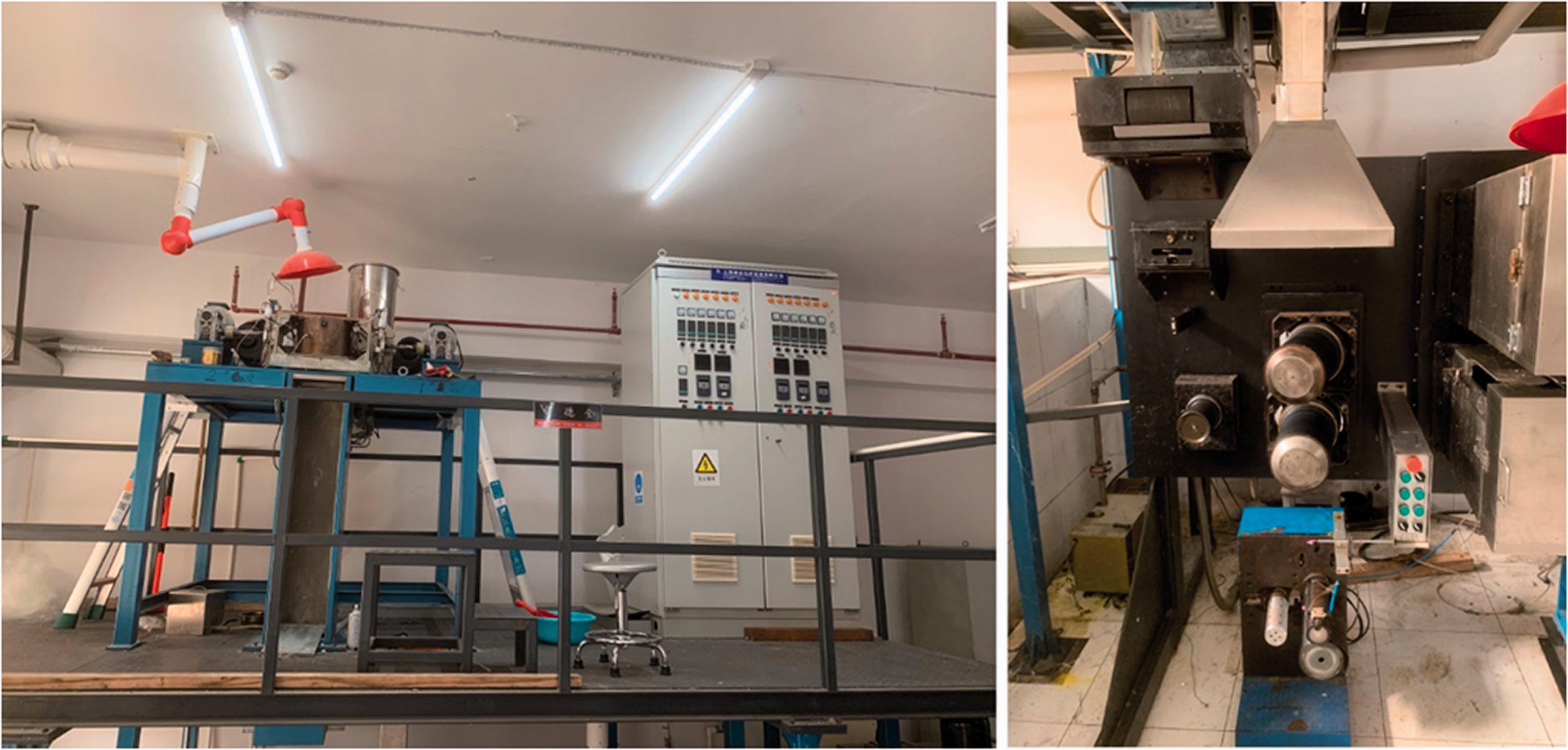
Photo of the used melt spinning machine.
The specific melt spinning parameters for germanium-PA6 fibers.
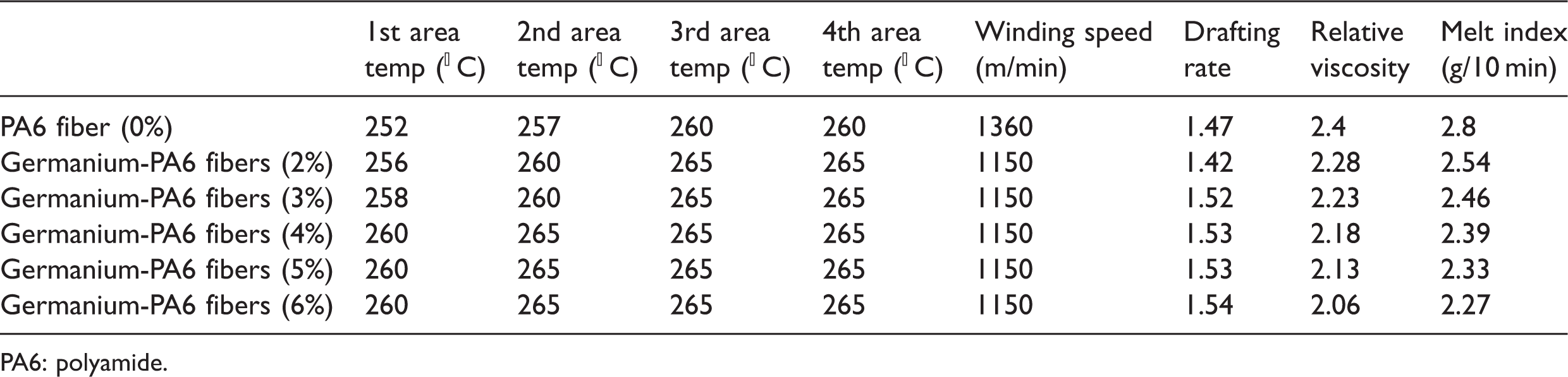
PA6: polyamide.
Characterization
The morphology of the germanium and germanium-PA6 fibers was inspected using a Hitachi SU1510 scanning electron microscopy (SEM) instrument, all of the samples were pretreated under gold spraying before the measurement using MSP-mini magnetron sputter. The particle size distribution (D75) of germanium was recorded using a laser particle analyzer (OMEC LS-POP, China). The mechanical properties (breaking strength and elongation) of the fibers were tested using an YG004D pneumatic computer tensile tester (Changzhou Second Textile Instrument Factory, China) according to the standard of GB T14344-2008, in which each sample was tested three times to get an average result. The normal far-infrared emissivity in the range of 4–14 μm was tested using a SGJ212A far-infrared emissivity tester (Zhejiang Sancraftsman Instrument Co., Ltd.), the specific testing method was referred to GB/T30127-2013, and also the results were averaged three times.
The antibacterial activity of the germanium-PA6 fibers against S. aureus and E. coli, was measured at Fujian Fiber Inspection Center and the evaluation method was referred to AATCC 100-2012.
1
5 In detail, the strains were cultured in phosphate-buffered saline in an incubator overnight at 37°C. A certain amount of each fiber specimen (1 g) was transferred into a flask, and 1 ml of the inoculum (105 cfu/ml) was added on each fiber specimen. After incubation at 37°C for 1 h, 100 ml of a buffer solution at pH 7 was added in each flask and shaken vigorously for 1 min. Then, 1 ml of the solution was diluted 10-fold in the same buffer solution to facilitate counting. The diluted solution was plated on nutrient agar plate and incubated at 37°C for 24 h. The number of surviving bacterial colonies on each plate was counted. The antibacterial rate (R) was calculated using the following equation:

The number of NAIs produced by germanium-PA6 fibers was measured by a double-drum testing apparatus equipped with a WST-08D NAI detector, as illustrated in Figure 2. In detail, the measurement modes are divided into single temperature mode, single pressure mode, as well as parallel temperature and pressure mode. Two hundred meters of germanium-PA6 fibers were required for the NAI measurement.
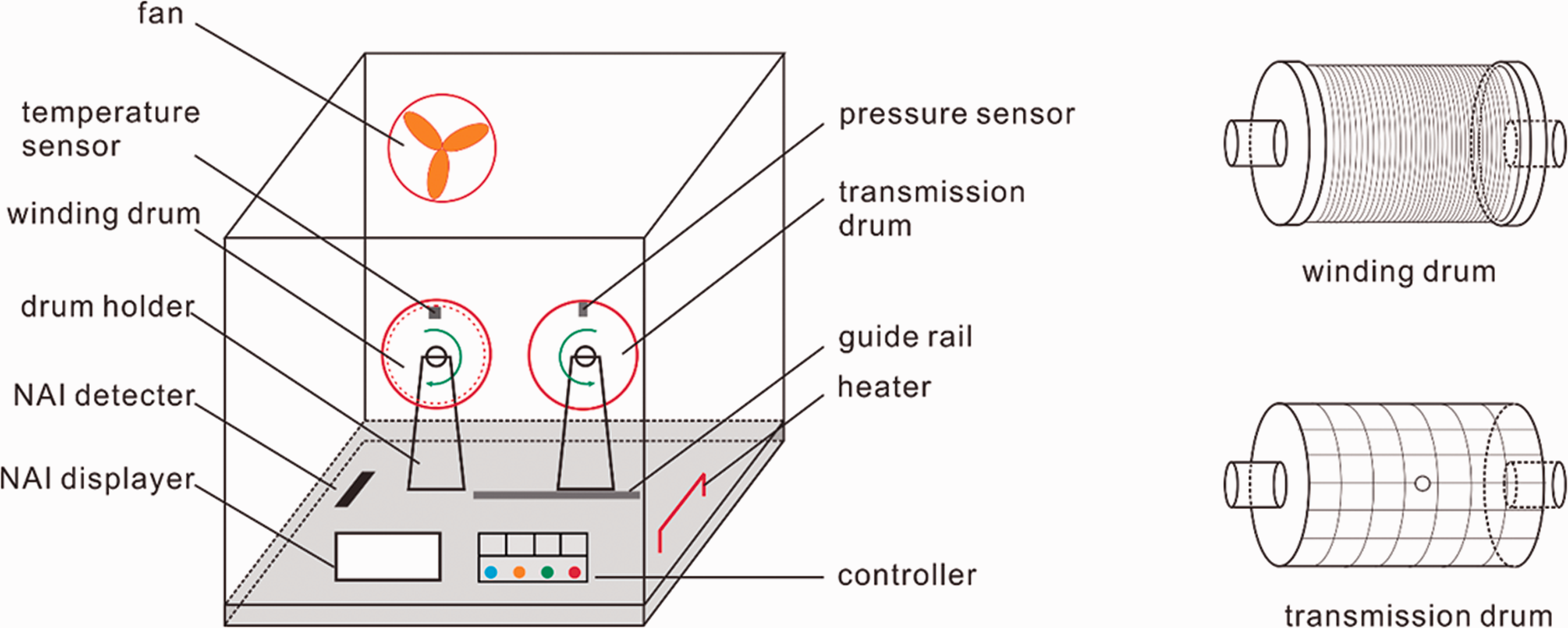
Self-build double-drum negative air ions (NAIs) measuring equipment diagram.
Single pressure mode
The germanium-PA6 fibers were wound evenly to the winding drum, then the transmission drum was controlled to move to the winding drum along to the guide rail and finally get touch to the winding drum. With the rotation of the transmission drum, the winding drum was also driven to rotate because of the frictional force. Thus, an extrusion pressure would be applied to the fiber on the winding drum by the transmission drum and detected by the pressure sensor. The extrusion pressure could be adjusted by controlling the extrusion degree between the winding drum and the transmission drum. In the meantime, the amount of NAIs in the box would be recorded by the NAI detector and displayed in the display panel when the NAI data became stable. When the measurement finished, the fan on the box started to exhaust and change the air in the box for the next test. The test process was repeated three times, and the results were averaged.
Single temperature mode
After the fiber was wound evenly to the winding drum, the heater was activated to heat the air in the box. The temperature sensor that was embedded in the winding drum was used to detect the temperature of the germanium-PA6 fiber on the winding drum. The temperature could be adjusted by controlling the heater. When the temperature was heated to a certain degree, the amount of NAIs in the box would be recorded by the NAI detector and displayed in the display panel when the NAI data became stable. When the measurement finished, the fan on the box started to exhaust and change the air in the box for the next test. The test process was repeated three times, and the results were averaged.
Parallel temperature and pressure mode
Parallel temperature and pressure mode means putting the germanium-PA6 fibers at different pressures and temperature situations at same time to test the NAI concentration. When the fibers that wound on the winding drum were subjected to the extrusion pressure from the transmission drum, the heater was activated to heat temperature. Then, the concentration of NAIs was tested by adjusting the temperature and pressure. The test process was repeated three times, and average results were obtained.
Results and discussion
Morphologies and mechanical properties
The germanium particles with a D75 size of 3.25 μm were chosen to ensure that the germanium-PA6 fibers could be extruded out from the spinneret plate and maintain a relatively high breaking strength. The SEM image and size differential distribution diagram of the germanium particles are displayed in Figure 3, and the surface and cross-sectional images of the prepared five sets of germanium-PA6 fibers with different germanium concentrations added are presented in Figure 4(a–e). The pure PA6 fiber was also prepared for comparison. The germanium particles were distributed well in the five sets of fibers when the germanium concentration was increased from 2 wt% to 6 wt%. In comparison with the pure PA6 fiber, the surface of the germanium-PA6 fibers became increasingly rough with the increase of germanium particles due to the embedded germanium particles that extruded out from the inner part of the fiber. 16 Except for the increasingly coarse fracture surface, more and more microvoids occurred in the cross-section of the germanium-PA6 fibers with the increase in germanium. This result was caused by the negative effect of germanium particles on the molecular orientation and crystallinity degree. 17 Furthermore, as shown in Figure 4(a–e), the increase of germanium led to an uneven diameter for germanium-PA6 fibers, especially when the germanium concentration was increased to 5 wt%–6 wt%. This result may be ascribed to the uneven extrusion of germanium particles from the spinneret plate and uneven melting dilation of the polyamide6 fusant when it was extruded from the spinneret plate. 18 Consequently, the changing morphology of the germanium-PA6 fibers corresponded to the change in mechanical performance. As illustrated in Figure 4(f), the breaking strength and elongation at break of the fibers decreased gradually with the increase in germanium particles because of the negative influence of the germanium particles on the crystallinity of the fiber, especially when the germanium concentration exceeded 4 wt%. In particular, the breaking strength and elongation at break sharply decreased from 3.08 cN/dtex and 25.38% to 2.12 cN/dtex and 15.51%, respectively, when the germanium concentration was increased from 4 wt% to 6 wt%.
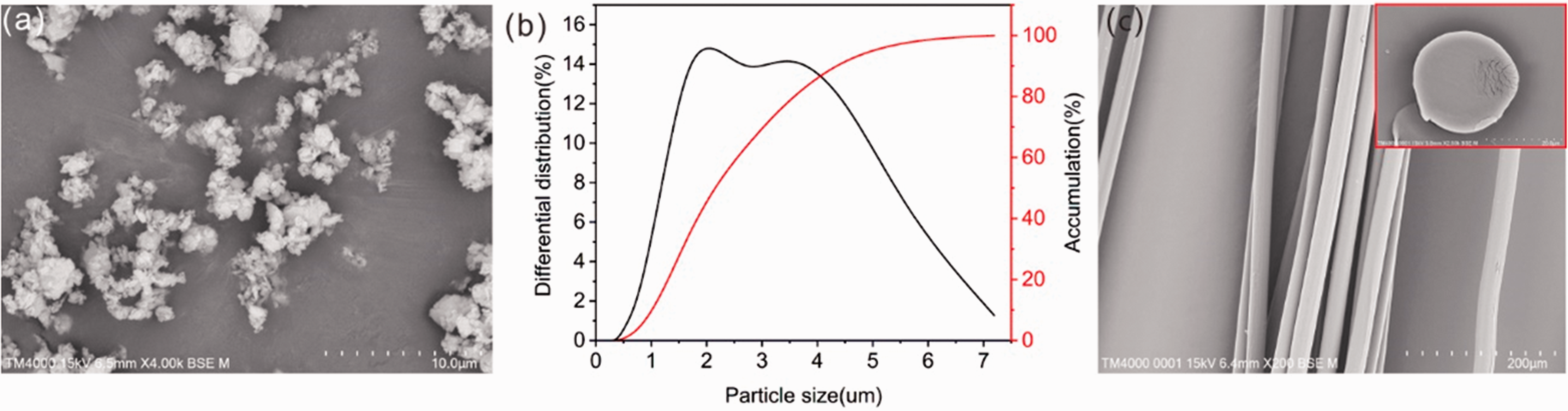
(a) Scanning electron microscopy (SEM) image of germanium particles; (b) diagram of their size differential distribution; (c) SEM image of pure polyamide6 (PA6) fiber.
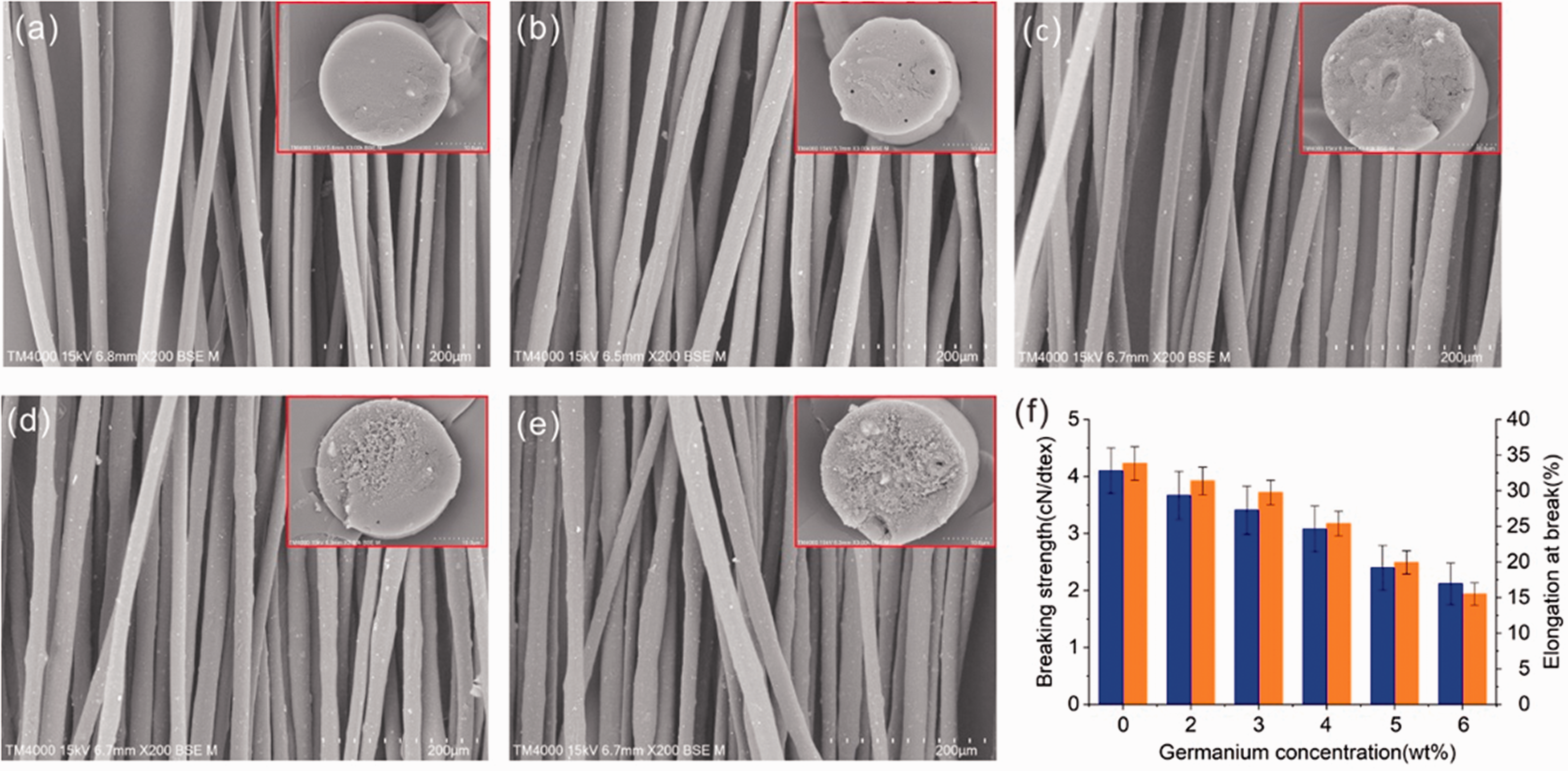
(a–e) Surface and cross-sectional scanning electron microscopy (SEM) images of germanium-polyamide6 (PA6) fibers. Germanium: (a) –2 wt%; (b) 3 wt%; (c) 4 wt%; (d) 5 wt%; (e) 6 wt%; (f) tensile performance.
NAI release property
Figure 5 shows the Gaussian fitting curves of the NAI concentration released by germanium-PA6 fibers under varying temperatures and pressures. As shown in Figure 5(a), increasing temperature facilitated the production of NAIs, and the more germanium contained in the fiber, the more NAI concentration could be created. In particular, the effect of temperature on the NAIs was divided into phases. It increased slightly under 25°C and then increased dramatically in the range of 30–40°C. The reason may be ascribed to the fact that low temperature does not supply enough thermal energy to excite the extranuclear electrons of germanium to break away from its original orbitals, few air ions could be ionized to generate NAIs. Keeping increasing the temperature to 30°C, numerous germanium extranuclear electrons could be excited and moved away from their original electronic orbits, thus plenty of NAIs were generated. However, when the temperature exceeded 45°C, the growth of NAI concentration slowed down again due to the NAI saturation capacity of germanium. 19 The NAI production curves of germanium-PA6 fibers at varying pressures are shown in Figure 5(b). Unlike the effect of varying temperatures on the NAI release property, the growth of NAI concentration showed an approximate linear growth with the increase of pressure applied to germanium-PA6 fibers from 10 N to 30 N, indicating that the stimulation of pressure to the extranuclear electrons of germanium is more sensitive than that of thermo energy, leading to an even growth of NAIs.
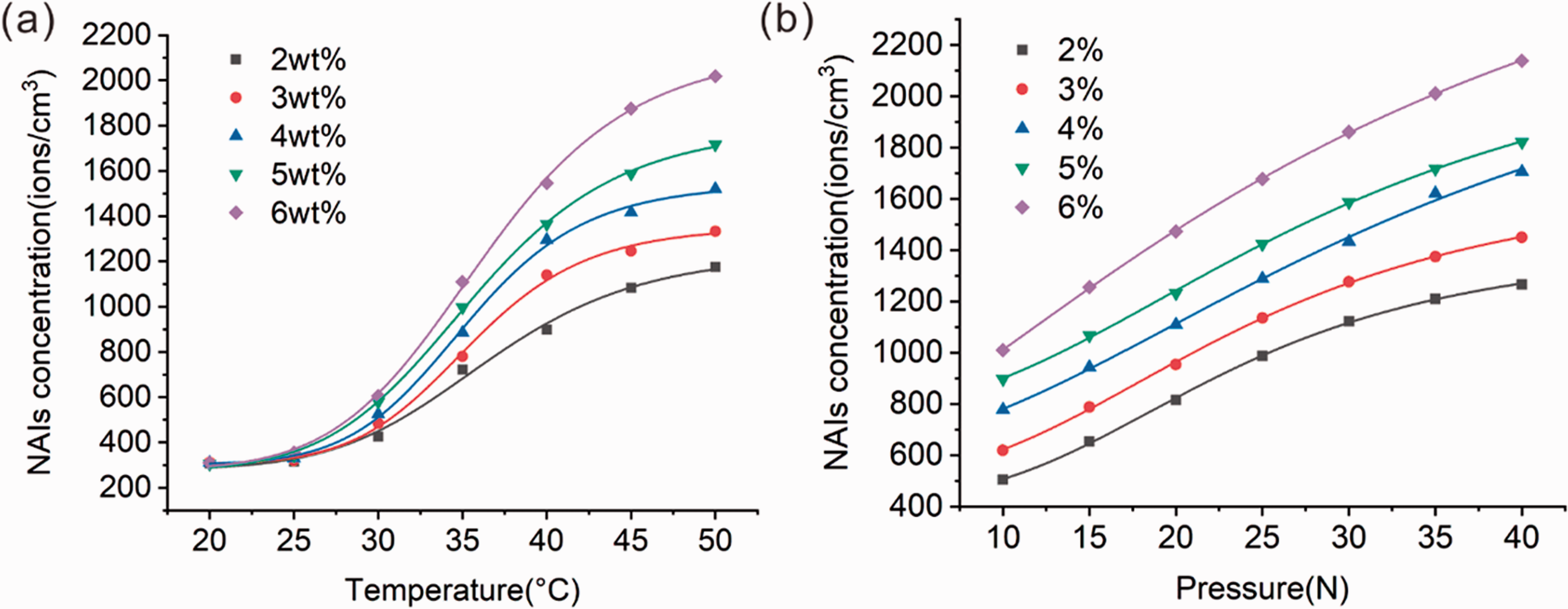
Negative air ion (NAI) release diagram of germanium-polyamide6 (PA6) fibers containing different germanium concentrations in varying temperatures (a) and pressures (b).
In addition to the NAI production of germanium-PA6 fibers under varying temperatures and pressures, respectively, the NAI production of the fibers under varying temperatures and fixed pressure was also recorded. Figure 6 presents the NAI production of the germanium-PA6 fibers in different temperatures by fixing the pressure at 10 N. The growth of NAI concentration was similar to the result shown in Figure 5(b), which increased linearly from the beginning and then slowed down when the temperature exceeded 35°C. Comparing Figure 5 and Figure 6, we can see that although the highest amount of NAIs (2019 and 2138 ions/cm3) could be obtained by increasing the temperature and pressure to 50°C and 40 N, respectively, when the germanium concentration was 6 wt%, considering the human body temperature and movement, the best excitation condition of NAIs for germanium-PA6 fibers were 37°C and 40 N when the fibers were applied in apparel and healthcare textiles. Besides, the values in Figure 6 also indicated that applying temperature and pressure to the germanium-PA6 fibers at same time contributed to the NAI production increasing rapidly to the maximum value.
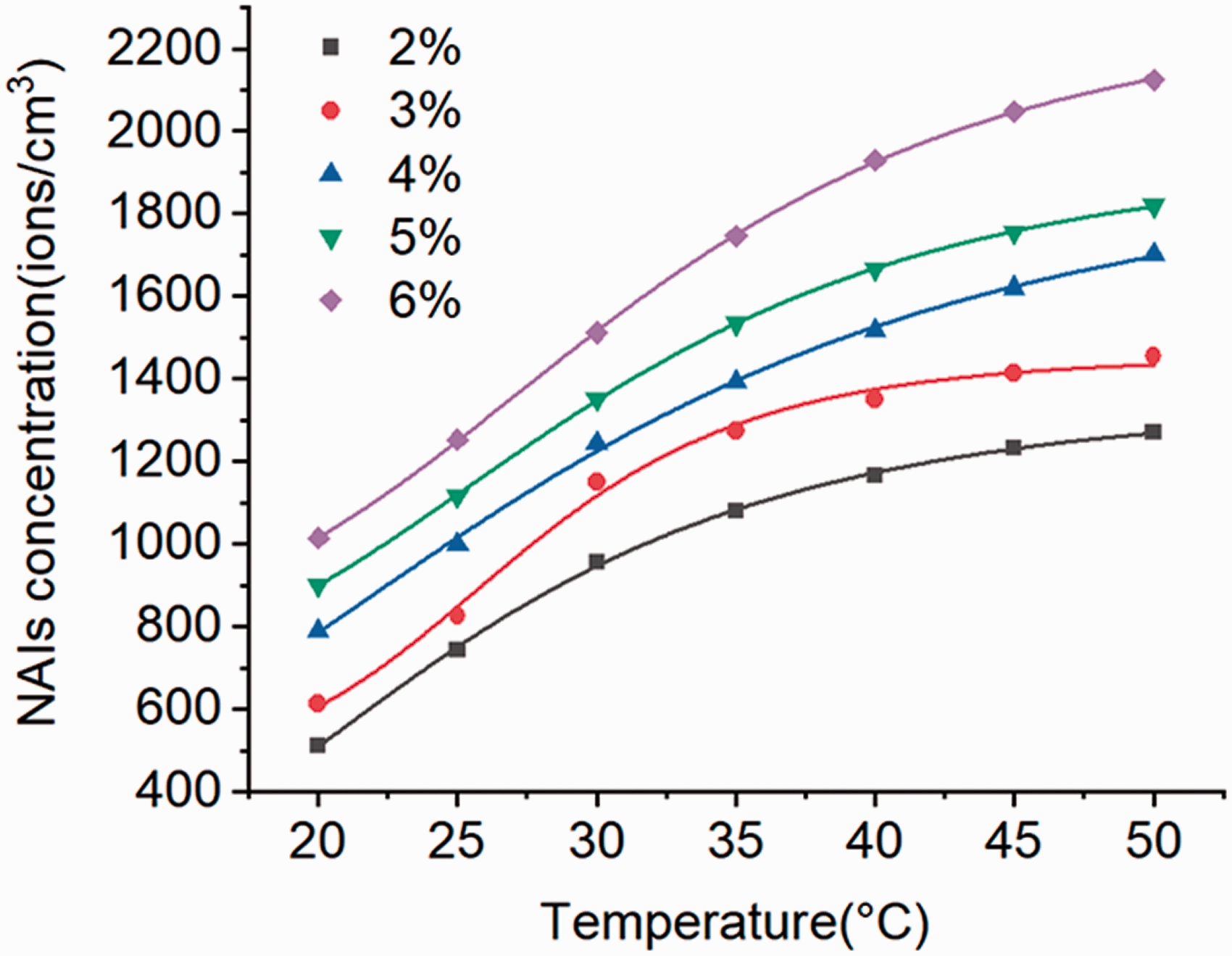
Negative air ion (NAI) release diagram of germanium-polyamide6 (PA6) fibers under varying temperatures when the pressure was fixed at 10 N.
FIR property
The far-infrared emissivity of the germanium-PA6 fibers under varying temperatures and pressures was also investigated, and the results are illustrated in Figure 7. Apparently, although the effect of temperature on the FIR property of the germanium-PA6 fibers is different from that of pressure, all of the far-infrared emissivity values exceeded 0.8 when the germanium-PA6 fibers were during different temperature and pressure situations, demonstrating their FIR property and application potential in healthcare textiles. Similar to the effect of temperature and pressure to the NAI-releasing property, also the far-infrared emissivity increased gradually with the increase of temperature and pressure, and the more germanium was added the higher far-infrared emissivity was recorded. The highest far-infrared emissivity of the fibers could reach as high as 0.94 and 0.96 when the applied temperature and pressure increased to 50°C and 40 N, respectively. Figure 8 revealed the far-infrared emissivity of the germanium-PA6 fibers under different temperatures and the fixed 10 N of the pressure situation. The maximum value of the far-infrared emissivity for each fiber in Figure 8 were obtained at 40°C, which is 5°C lower than that in Figure 7(a), confirming the synergistic effect of temperature and pressure on the FIR property and the application potential of germanium particles in healthcare apparel and home textiles.
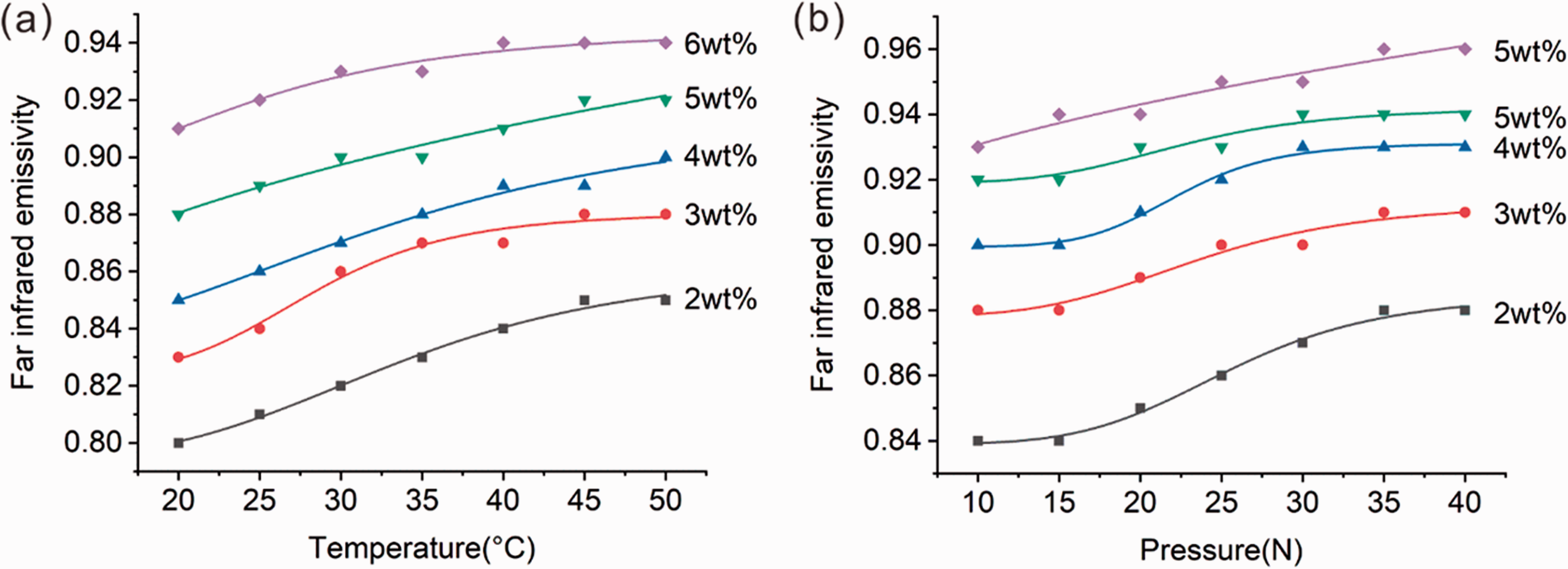
Far-infrared emissivity of germanium-polyamide6 (PA6) fibers contain different germanium concentrations under varying temperatures (a) and pressures (b).
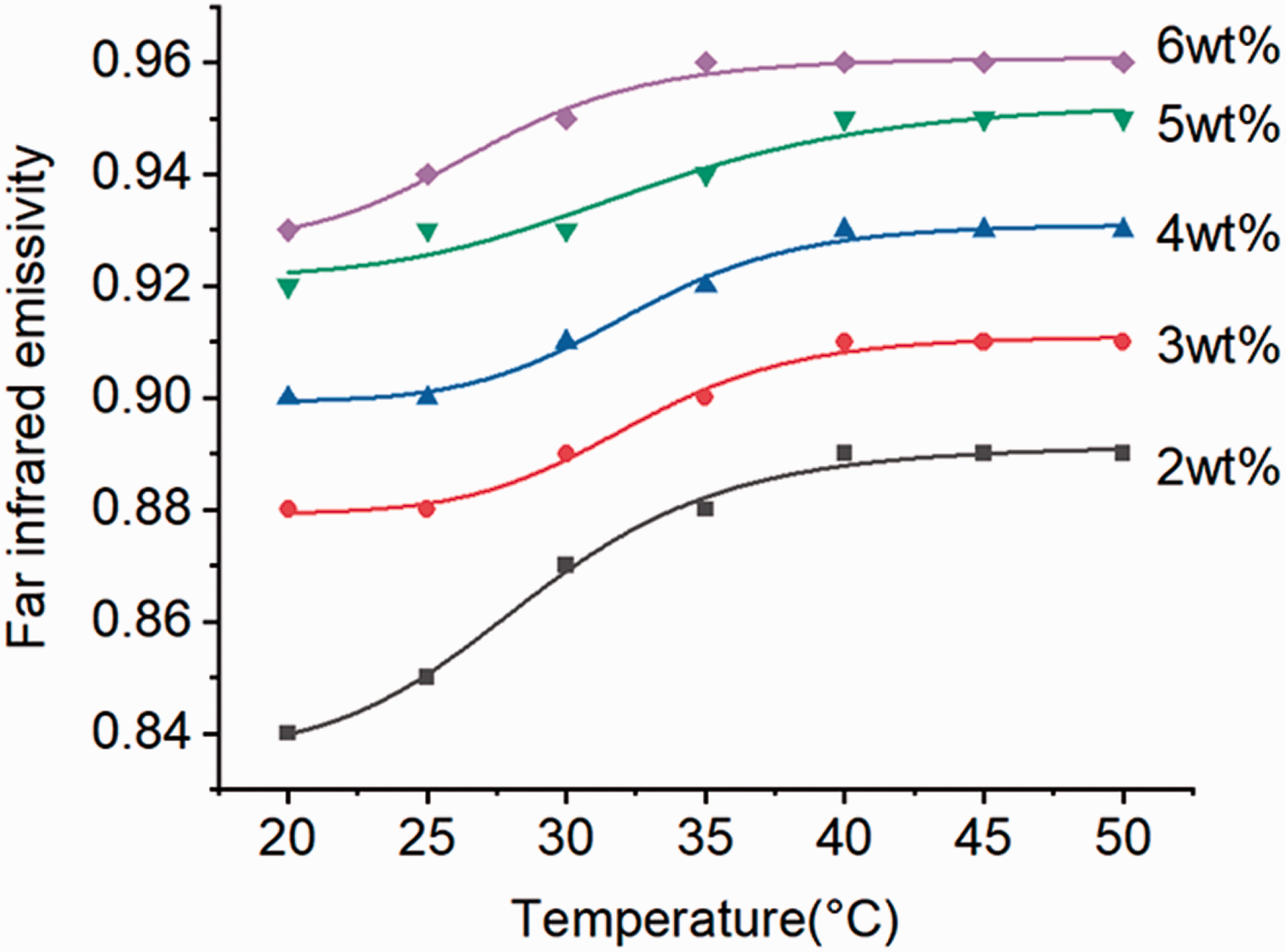
Far-infrared emissivity of germanium-polyamide6 (PA6) fibers under varying temperatures when the pressure was fixed at 10 N.
Antibacterial activity
The antibacterial activity of the germanium-PA6 fibers to S. aureus and E. coli is shown in Table 2. The germanium-PA6 fibers showed ideal antibacterial activity against S. aureus, with antibacterial rates higher than 90%. The more germanium particles added in the fibers, the higher the bacterial reduction of S. aureus. In particular, the antibacterial rate could reach as high as 99.6% when the germanium particle concentration was increased to 6 wt%. However, the germanium-PA6 fibers showed an undesirable antibacterial effect on E. coli. The bacterial reduction rates were less than 45% even though the germanium concentration was increased to 6 wt%. The reason may be attributed to the antibacterial mechanism of the germanium-PA6 fibers. As illustrated in Figure 9, S. aureus is a Gram-positive bacterium. The electronegativity of the NAIs made them easily adsorbed to S. aureus, and neutralize its electropositivity to destroy its biological activity, thus killing most of the S. aureus. However, unlike S. aureus, E. coli belongs to a Gram-negative bacterium, the NAIs would not adsorb to it to destroy its biological activity like S. aureus, especially when the germanium-PA6 fibers had relatively low NAI production. With the increase in germanium particles added in the fibers and the production of NAIs, part of the E. coli cell membrane’s bioelectric potential or the cell protein structure may be destroyed by the accumulated negative NAIs due to its high oxidation reduction, resulting in the death of E. coli.20–22 Consequently, most of the E. coli could survive from the NAIs environment and result in a relatively low antibacterial rate.
Antibacterial activity of germanium-PA6 fibers to S. aureus and E. coli
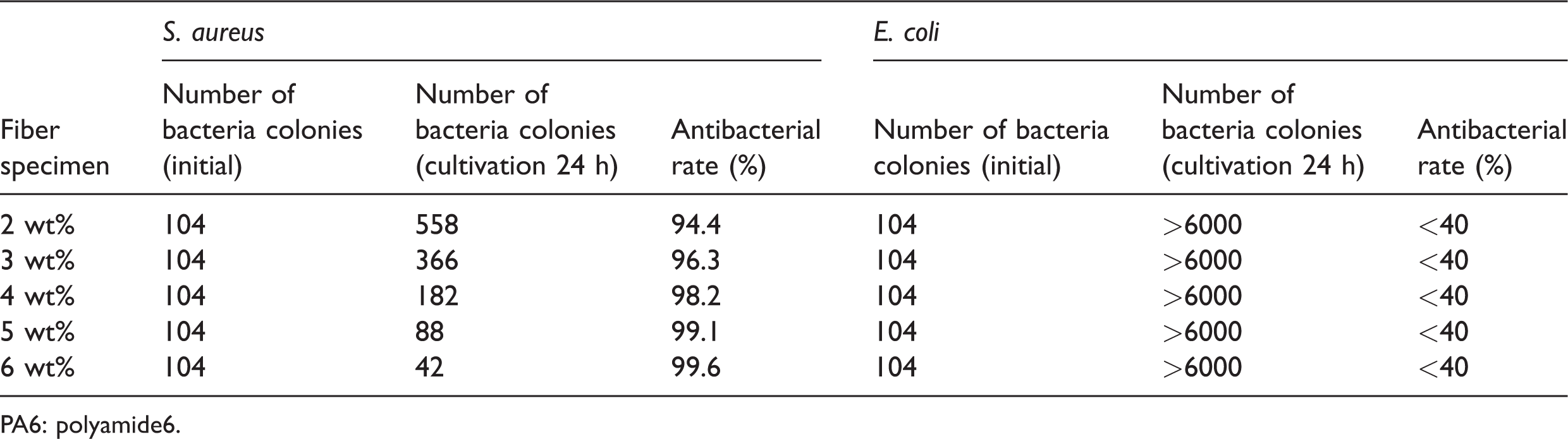
PA6: polyamide6.
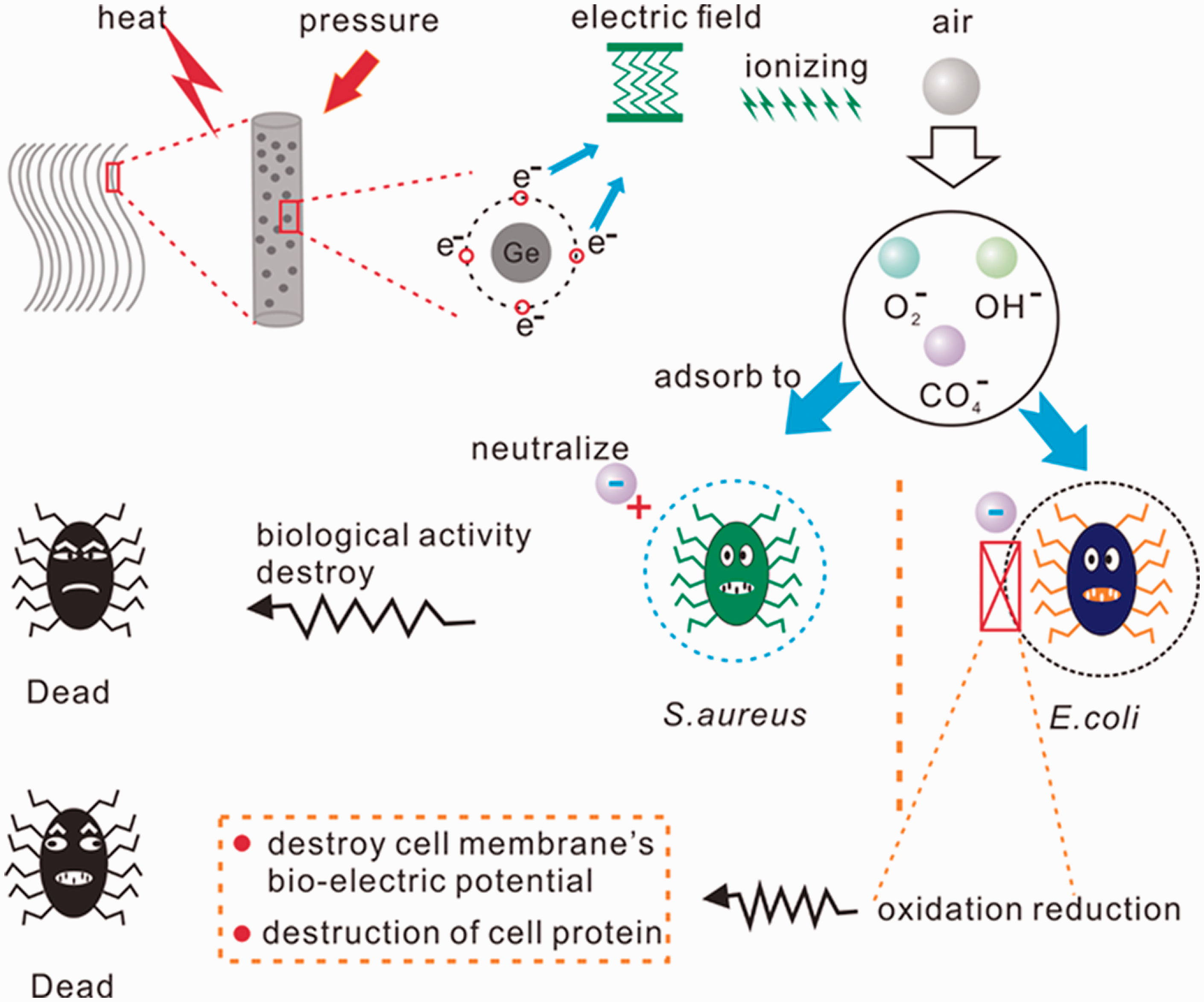
Antibacterial mechanism diagram of germanium-polyamide6 (PA6) fibers against S. aureus and E. coli.
Conclusions
Novel germanium-PA6 fibers with NAI-releasing and FIR properties were prepared via melt spinning by using micro-nano structured germanium particles as a component. The germanium-PA6 fibers showed good morphology and mechanical performance when the ratio of germanium particles was increased from 2 wt% to 6 wt%. Varying the temperature exerted a non-linear effect on the NAI production and it increased dramatically in the range of 30–40°C, whereas the pressure has an approximately linear effect on the NAI production. The highest amount of NAIs (2019 and 2138 ions/cm3) could be obtained by increasing the temperature and pressure to 50°C and 40 N, respectively, when the germanium concentration was 6 wt%. The far-infrared emissivity increased gradually with the increase of temperature and pressure, and the highest far-infrared emissivity could reach as high as 0.94 and 0.96 when the temperature and pressure increased to 50°C and 40 N, respectively. Furthermore, the germanium-PA6 fibers showed antibacterial activity against S. aureus with a 99.6% antibacterial rate when the germanium was fixed at 6%, but exhibited an undesirable antibacterial rate against E. coli of less than 40%. The NAI-releasing, FIR, and antibacterial properties of the germanium-PA6 fibers confirmed the application potential of germanium in antibacterial and healthcare textiles.
Footnotes
Declaration of conflicting interests
The author(s) declare that there is no conflict of interest.
Funding
The author(s) disclosed receipt of the following financial support for the research, authorship, and/or publication of this article: This work was supported by the Transformation Program of Scientific and Technological Achievements of Fuzhou City, China (Grant No. 2020GX-7) and Natural Science Foundation of Fujian Province, China (Grant No. 2020J05173).
