







Abstract
Coating is a commonly used process for the preparation of protective textiles. In this study, the absorbing coated composite material was prepared by a coating process, using plain weave polyester/cotton fabric as the base fabric, PU-2540 polyurethane as the binder, and graphite, bismuth and bismuth oxide as the functional particles. The effects of the content of functional particles and the ratio of functional particles on the dielectric constant, reflection loss, shielding effectiveness, and tensile strength of the single-layer coating composites were studied using the control variable method. The results showed that when the frequency was 1–1000 MHz, the real and imaginary parts of the dielectric constant, the tangential value of the loss angle, and the tensile value increased with the increase of the coating content, and the polarization, loss and attenuation property, and mechanical property of the electromagnetic wave were enhanced. When graphite, bismuth, and bismuth oxide was mixed at the ratio of 9:0:0 in weight, the polarization property was the best. When mixed at the ratio of 6:1:2 in weight, the loss performance and attenuation ability were the best. When mixed at the ratio of 6:3:0 in weight, the absorbing property and mechanical property were the best. When mixed at the ratio of 6:2:1 in weight, the shielding property was the best.
With the rapid development of electronic technology, electromagnetic radiation pollution in human living environments is becoming increasingly serious,1–3 and has become the fourth biggest source of pollution after air pollution, water pollution and noise pollution. 4 Electromagnetic radiation not only affects the normal operation of electronic devices, but also has a serious impact on human health, such as memory loss, irritability, neurological disorders, decreased immunity and other diseases.5,6 In addition, signals of electromagnetic radiation from military equipment tend to lead to information leakage, which can potentially aid enemy reconnaissance. Currently, the most commonly used methods to effectively reduce the harm caused by electromagnetic radiation utilize absorption and reflection of the electromagnetic waves. The purpose of this study is to explore the influence of the content and proportion of graphite, bismuth and bismuth oxide on the absorbing coated plain weave polyester/cotton fabric, and to lay a foundation for the development of practical coated electromagnetic protection composites.
Graphite is one of the allotropes of elemental carbon and has a hexagonal lamellar crystal structure. 7 It is chemically stable and can resist the corrosion of acid, alkali and organic solvents. 8 Due to its special structure, the graphite has the following special properties: high temperature resistance, strong plasticity, good thermal shock resistance and good electrical and thermal conductivity.9,10 In addition, “new” graphite can be obtained by specific methods, such as arranging graphite crystals in a certain direction which can be heated and pressurized to make “directional graphite”. Graphite is one of the earliest wave-absorbing materials, which has been filled in a sandwich of the skin of an aircraft to absorb radar waves. 11 Graphite is one type of electrical-loss type functional particles, and its dielectric constant is large. When used on its own, the impedance-matching characteristic of the wave-absorbing layer is poor, the absorption frequency is narrow, and the absorption performance is weak. Therefore, it is doped with magnetic-loss type absorbents, such as composites of ferrite, elemental metal particles and so on, which help to achieve low density and strong absorption. 12 Shi et al. prepared graphite/iron-based amorphous alloy wave-absorbing composite by coating process. The composite showed an optimal reflection loss of –67.95 dB at the frequency of 15.84 GHz with the sample thickness of 1.6 mm and an effective absorption bandwidth of 5.36 GHz. 12 Liu et al. prepared hollow graphite spheres embedded in porous amorphous carbon matrices, and the composite has the effective absorption bandwidth of 9 GHz (12.76–18 GHz and 8.24–12 GHz), which laid the foundation for designing wide-frequency absorbing material. 13 Meng et al. prepared a graphite/iron/ferrite wave-absorbing composite. The minimum reflection loss can reach –42.1 dB at 4.16 GHz, and the bandwidth of the reflection loss below –10 dB covers 4.4 GHz with a thickness of 2 mm. 14
The position of bismuth (Bi) in the periodic table is within the P region of group VA in the sixth period and it has relatively stable chemical properties. In nature, the most common oxidation state of bismuth is +3. 15 The most common bismuth compounds include bismuth oxide (Bi2O3). The structure of Bi has a quasi-layered structure. Each bismuth atom connects to other three bismuth atoms to form a tri-pyramid structure with a shared apex that allows the bismuth atom to pass through and form a folded bismuth layer, thus increasing the motion range of charge carriers. The density of charge carriers for bismuth affects its magnetoresistance effect, and the smaller the density of charge carriers for bismuth is, the bigger its magnetoresistance effect is, so the material resistance is increased. 16 Bi-Bi has both covalent and metallic bonds: bismuth is a semi-metallic element that has a small amount of overlap between the highest occupied and lowest vacant orbitals, 17 which causes a small number of electrons to flow from the highest occupied orbital to the lowest vacant orbital, leaving an equal number of holes in the highest occupied orbital, so bismuth is electrically conductive. As each bismuth hexahedral crystal cell contains two bismuth atoms and ten valence electrons (similar to many nonmetallic insulators), bismuth also exhibits some nonmetallic character. Bismuth has special physical and chemical properties, such as greater resistance, lower electron mass, stronger anisotropy and longer free path. In addition, bismuth has strong magnetoresistance and maximum Hall effect.
Bismuth oxide (Bi2O3) is a yellow monocline crystal, and one of the most important bismuth compounds. Bismuth oxide has a wide range of applications, such as solar cells, protective coatings, communication engineering, electronic engineering, nuclear radiation protection, 18 antimicrobial medicine, sensors, photocatalysis and other fields,19,20 due to its good dielectric properties, high oxygen fluidity, large energy gap, high refractive index, significant photoconductivity and photoluminescence.21,22 Bismuth oxide has good absorbing properties, but its absorption band is narrow, so it can be used as a dopant and combined with other materials to obtain an ideal absorbing material. When bismuth oxide is added appropriately as a dopant, the uniformity and density will be improved, and the crystallinity will be increased, which will lead to the occurrence of multiple polymers and increase the permeability. Zhao et al. doped Bi2O3 in the NiCuZn/BaTiO3 composite material. The test results showed that Bi2O3 enhanced grain size and reduced pores conspicuously, and in terms of its magnetic properties, Bi2O3 improved saturation magnetization and real permeability; meantime, Bi2O3 increased the dielectric constants. 23 Tohidifar doped additive (B2O3+Bi2O3) and found that the incorporation of optimized amount of additive can give rise to significantly good dielectric properties. Results also indicated that incorporation of 6wt% (B2O3+Bi2O3) into nanocomposite containing 8 wt% MWCNT led to a better electromagnetic shielding than 28 dB. 24 Kumar and Chatterjee prepared hexaferrite by substituting Bi3+(Bi2O3) for Ba, and results showed the microwave (MW) absorbing was enhanced, and reflection loss from –11.3 dB to –35.5 dB. Meantime, the effective absorption bandwidth (90% MW absorbing) was increased to 8.4 GHz. 25
Polyurethane (PU) is highly elastic, scratch resistant and adhesive, so it has been widely applied to different substrates like textiles and has been used for coating and printing of textiles. Coating the elastic fabric with aqueous-based conductive polymers, which is easily applied using current textile processing techniques, is quite interesting from the aspects of processing, performance and cost. 26
In this paper, single-layer coated composites were prepared by using PU-2540 polyurethane as the matrix, graphite, bismuth and bismuth oxide as functional particles, and adopting the coating process on plain weave polyester/cotton fabric.27–29 The influence of the contents and ratio of the graphite, bismuth and bismuth oxide on the electromagnetic properties and mechanical property of composites were studied.
Experimental
Main experimental instruments
For the coating preparation, a single-phase series motor (U400/80, Shanghai Weite Motor Co., LTD) was used to stir the coating. A digital viscometer (SNB-2, Shanghai Hengping Instrument Factory) was used to measure coating viscosity. A coating machine (LTE-S87609, Switzerland Werner Mathis), digital fabric thickness gauge (YG141D, Laizhou Electronic Instrument Co., LTD) and others were used during the coating process.
For testing the electromagnetic and mechanical properties, a dielectric spectrometer (BDS50, German NovocontorlGmbh Company) was used to measure the dielectric constant values, and a vector network analyzer (ZBN40, German Rohde & Schwarz Company) was used to measure reflection loss and shielding effectiveness. A high-precision five-digit half-digital desk multimeter (F8808A, American FLUKE Company) was used to measure the surface resistance value, and a universal tensile testing machine (3369, American INSTRON Company) was used to measure tensile strength.
Main experimental materials and reagents
Main experimental material: polyester/cotton fabric (plain weave fabric), provided by Baoji Changyuan Industry and Trade Co., LTD. The main experimental reagents are shown in Table 1.
Main experimental reagents.
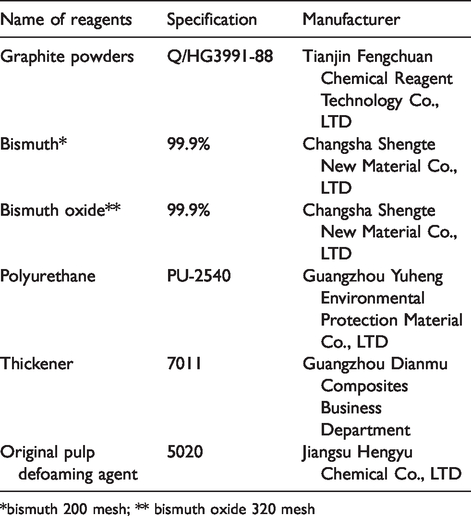
*bismuth 200 mesh; ** bismuth oxide 320 mesh
Preparation of the materials
Preparation of the base fabric
A rectangle of 25 × 50 cm was drawn on the base fabric (the surface density is 963 g/m2, longitude density is 914.4 root/inch, and latitude density is 1920.2 root/inch) for cutting and fixed on the needle plate for later use.
Preparation of the coatings
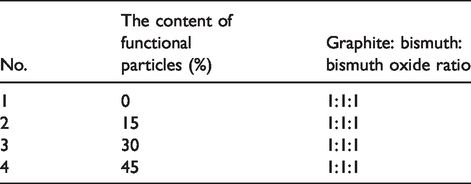
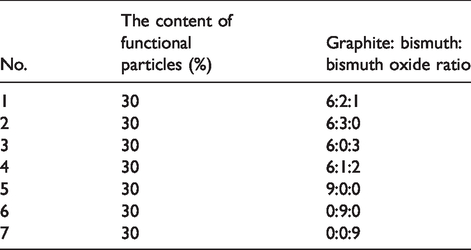
Graphite, bismuth, bismuth oxide and polyurethane were weighed as shown in Tables 2 and 3. A single-phase series motor stirrer blended polyurethane at 60 rpm before adding the graphite, bismuth and bismuth oxide slowly in turn within 30 min. After adding the functional particles, the stirrer speed was increased to 1600 rpm and maintained for 5 min, then moderate thickener and defoaming agent were added.
The specific formulation of different graphite, bismuth and bismuth oxide contents.
The specific formulation of different graphite, bismuth and bismuth ratios.
The coating preparation
The coating preparation scheme and schematic of the sample are shown in Figures 1 and 2. First, the coating machine was prepared. The knife surface of the scraper was facing inside and the coating thickness was adjusted to 1 mm. The advance rate of the scraper was set to 60 cm/min, and the mechanical stroke was set at 35 cm. Then, the coating was poured and presented the shape of a triangle on the cloth. Advancing ingredients were distributed uniformly with a glass rod until the end of the advance of the scraper after the coating machine was started. Next, the coated polyester/cotton fabric was dried in a high-temperature air-blowing drying box at 80°C for 10 min. Finally, the sample was removed and labeled.
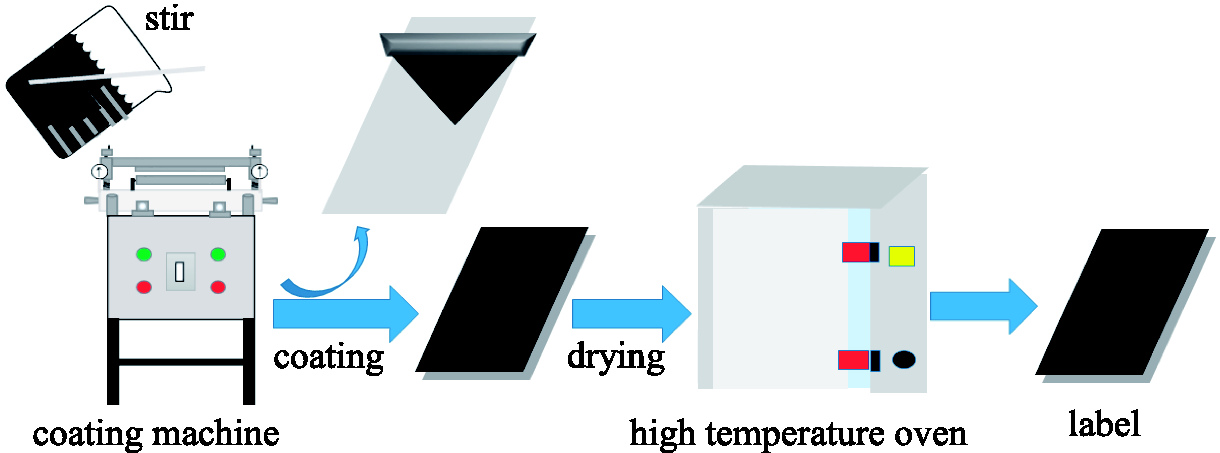
The coating process.
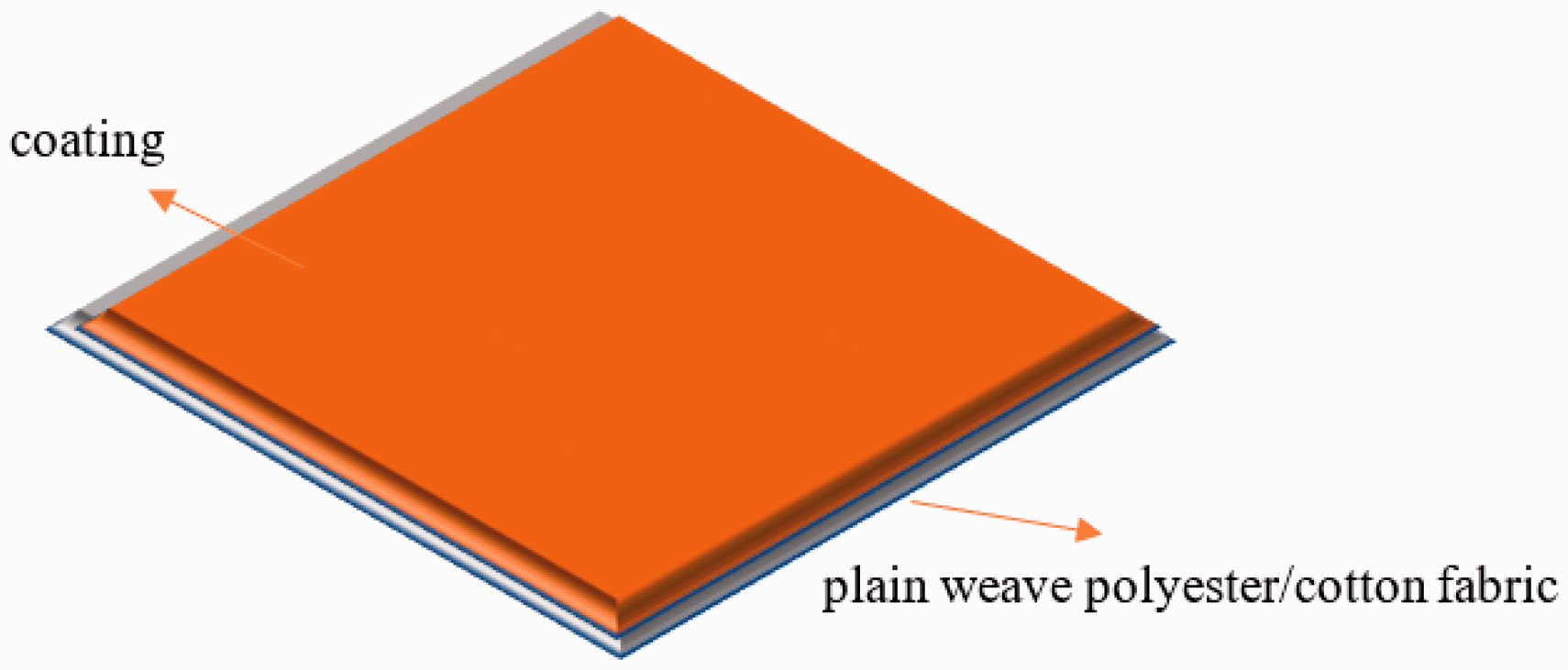
The schematic figure of sample.
Test indexes
The test for the dielectric constant
The dielectric constant is the product of the relative dielectric constant and absolute dielectric constant in vacuum, which is an important electromagnetic parameter of absorbing materials. The samples were tested with reference to the standard SJ20512-1995 “measurement methods for the complex dielectric constant and complex dielectric constant of microwave high-loss solid materials”. 30 In this experiment, a E4991B dielectric spectrometer was used to measure the real and imaginary part of the dielectric constant and loss tangent value of the coated composites. The samples to be tested were cut into smooth squares of 20 × 20 mm. The dielectric spectrometer was opened in advance and preheated for 30 min, the instrument was calibrated, and the thickness of the samples was inputted.
The test for reflection loss
Reflection loss (RL) is a direct parameter to evaluate the absorbing performance of materials. Its value is the ratio of the reflected power Pa of electromagnetic waves incident to the material surface with the same power and polarization mode to the power of reflected waves incident to the metal plate surface Pm, and the unit is dB, which is as shown in equation (1):

Because Pm > Pa, reflection loss is negative, and the smaller the value of RL, the fewer electromagnetic waves are reflected from the surface of the material, i.e. the better the absorbing performance of the coated composite. The samples were tested in accordance with the standard JJF1232-2009 “calibration specification of the reflectometer”. 31 In this experiment, a ZBN40 vector network analyzer was used to measure the reflection loss of the coated composites. The inner diameter of the samples to be tested was 33 mm, and the outer diameter was 76 mm.
The test for shielding effectiveness
Shielding effectiveness is an important indicator of shielding performance, and samples were tested with reference to the standard GJB 6190-2008 “measurement method of the shielding effectiveness for electromagnetic shielding materials”. 32 In this experiment, a ZBN40 vector network analyzer was used to measure the shielding efficiency of the coated composites. Samples to be tested were cut into a circle with a diameter of 133 mm. The vector network analyzer was opened in advance and preheated for 30 min and then the instrument was calibrated, and the samples were placed between the fixtures for testing.
The test for tensile strength
Samples were tested in accordance with standard GB1447283 “standard testing method for tensile properties”. 33 The tensile strength of the coated composites was measured using an INSTRON3369 universal tensile testing machine. Samples were cut into a smooth rectangle of 50 × 180 mm; the clamping distance was 10 cm and the load speed was 100 mm/min.
Results and discussion
The influence of the content of graphite, bismuth and bismuth oxide (the ratio by weight was 1:1:1) on the electromagnetic and mechanical properties of single-layer coated composites
To study the influence of the graphite, bismuth and bismuth oxide contents on the electromagnetic and mechanical properties of single-layer coated composites, the single-layer coated composites with four different contents of the graphite, bismuth, bismuth oxide were prepared by changing the content (the percentages of the total mass relative to the polyurethane were 0%, 15%, 30%, 45%) of the graphite, bismuth, bismuth oxide on the plain weave polyester/cotton fabric. The specific process parameters are shown in Table 4.
The process parameters for different graphite, bismuth and bismuth oxide contents.
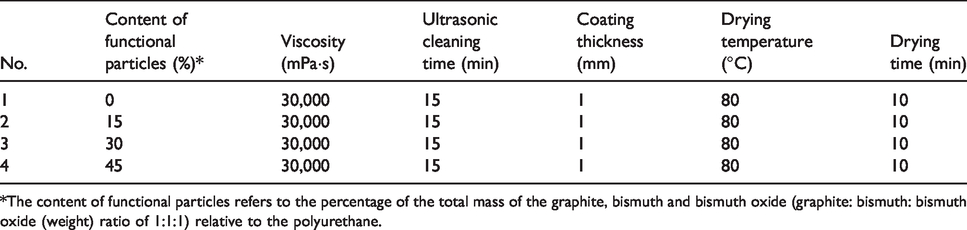
*The content of functional particles refers to the percentage of the total mass of the graphite, bismuth and bismuth oxide (graphite: bismuth: bismuth oxide (weight) ratio of 1:1:1) relative to the polyurethane.
The influence of the content of the graphite, bismuth and bismuth oxide (ratio by weight 1:1:1) on the dielectric properties of single-layer coated composites
The coated fabric samples were prepared, and the dielectric constant of the samples was tested within the frequency range 1–1,000 MHz. Curves for the real and imaginary parts of the dielectric constant and the loss tangent value are shown in Figures 3, 4 and 5, respectively.
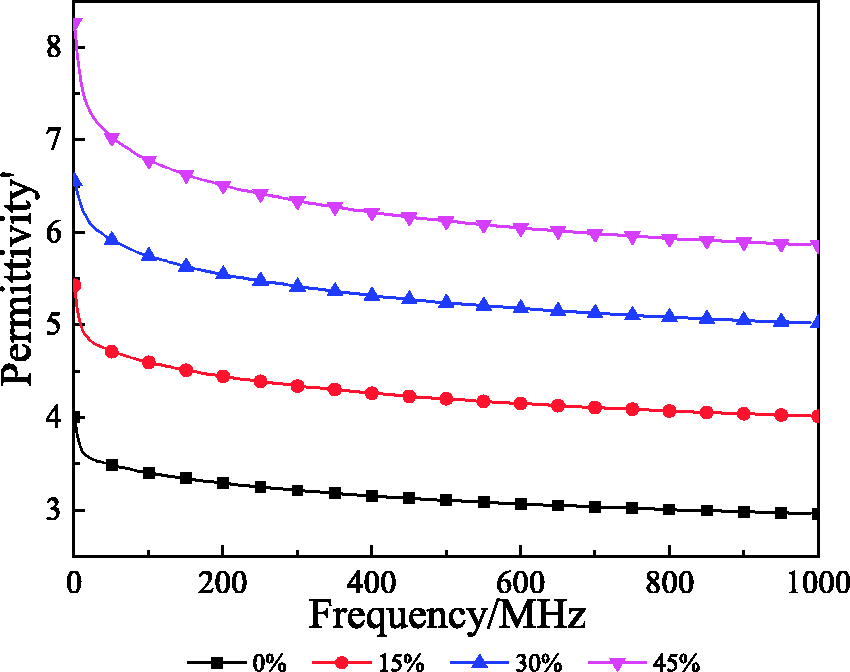
The influence of the content of the graphite, bismuth and bismuth oxide on the real part of the dielectric constant for the single-layer coated composites.
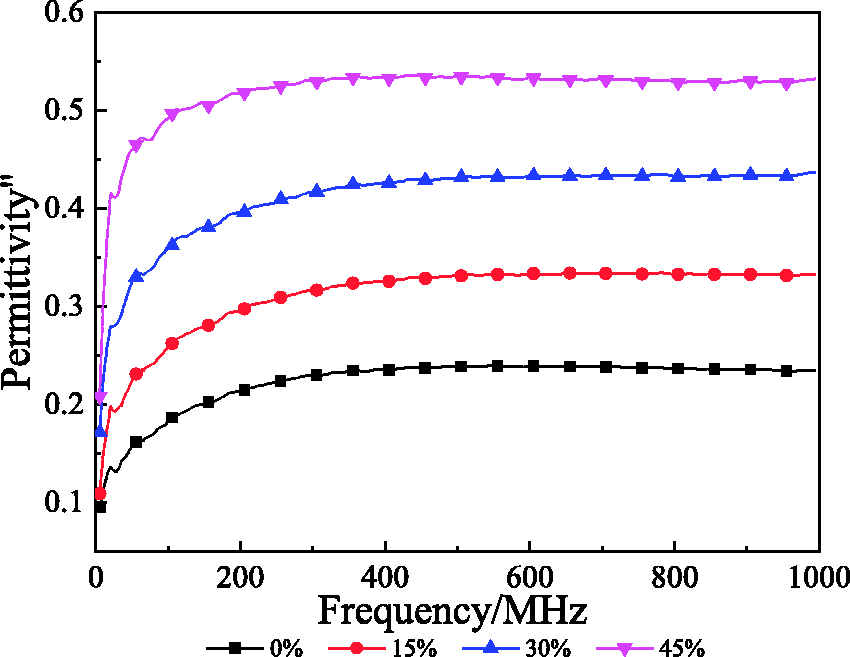
The influence of the content of the graphite, bismuth and bismuth oxide on the imaginary part of the dielectric constant for the single-layer coated composites.
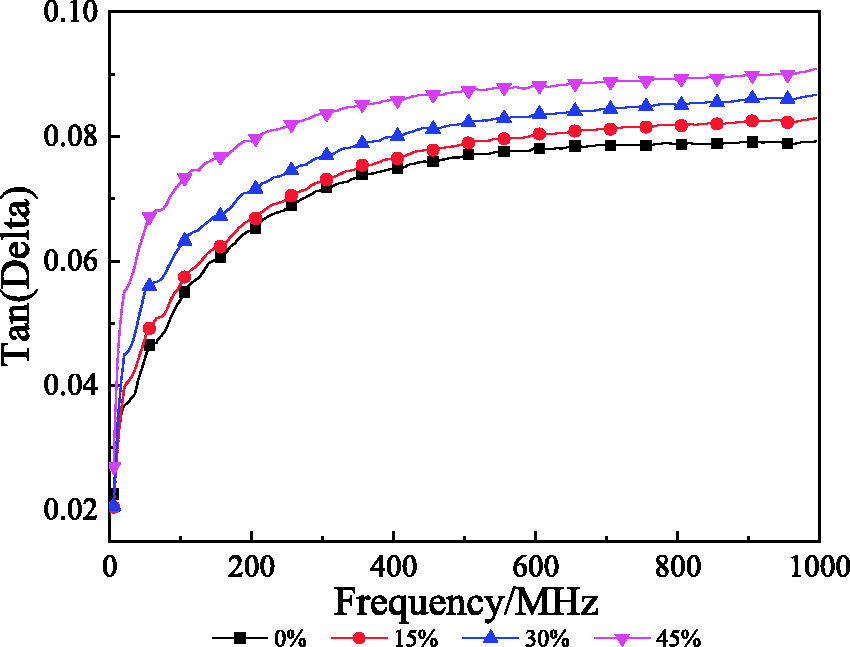
The influence of the content of the graphite, bismuth and bismuth oxide on the loss tangent value for the single-layer coated composites.
Figure 3 shows that, with the increasing frequency of the applied electric field, the real part of the dielectric constant for the four samples decreases, and the polarization ability to electromagnetic waves gradually weakens. In the frequency range 1 MHz < f < 1000 MHz, the real part of the dielectric constant was largest, namely 8.3, and the polarization ability to electromagnetic waves was strongest when the functional particles content was 45% (#4). The values for the other samples decrease in the order 30% (#3), 15% (#2) and 0% (#1). When the content increased from 0% to 45%, the total number of particles in the coating increases, and the electrons, ions and inherent dipoles also increase, so the capacity of storing charges for the single-layer coated composites increases accordingly. At the same time, its polarization capacity gradually increases.
As can be seen from Figure 4, as the frequency increases, the imaginary part of the dielectric constant for the four samples gradually increases, and the loss ability to electromagnetic waves is gradually enhanced. In the frequency range 1 MHz < f < 1000 MHz, the imaginary part of the dielectric constant was largest and the loss ability to electromagnetic waves was strongest when the functional particles content was 45% (#4). The values for the other samples decrease in the order 30% (#3), 15% (#2) and 0% (#1). When the coating thickness was 1 mm, the functional particles content affects the ability of the electromagnetic waves to absorb into the inside of the coated fabric. As the content of the graphite, bismuth and bismuth oxide increases, more particles are in the contact state, the conductive network becomes denser, the current in the coating increases, the eddy current loss becomes greater and the loss to electromagnetic waves is greater.
Figure 5 shows that, as the frequency increases, the loss tangent value for the four samples gradually increases, and the attenuation ability to electromagnetic waves is gradually enhanced. In the frequency range 1–1000 MHz, the loss tangent value was largest, namely 0.09, and the loss ability to electromagnetic waves was strongest when the functional particles content was 45% (#4). As was the case for the real and imaginary parts of the dielectric constants, the values for the other samples decrease in the order 30% (#3), 15% (#2) and 0% (#1). The functional particles content affects the loss tangent value, and the amount of absorbent in the coating changes with changing content, thereby affecting the absorption of electromagnetic waves into the coated fabric. As the content increases, the total number of particles in the coating increases, and the attenuation ability to electromagnetic waves becomes stronger.
The influence of the content of graphite, bismuth and bismuth oxide (ratio by weight 1:1:1) on the wave-absorbing properties of single-layer coated composites
The required coated fabric samples were prepared, and values of reflection loss for the samples were tested in the frequency range 10–3000 MHz. The curve for frequency-reflection loss is shown in Figure 6.
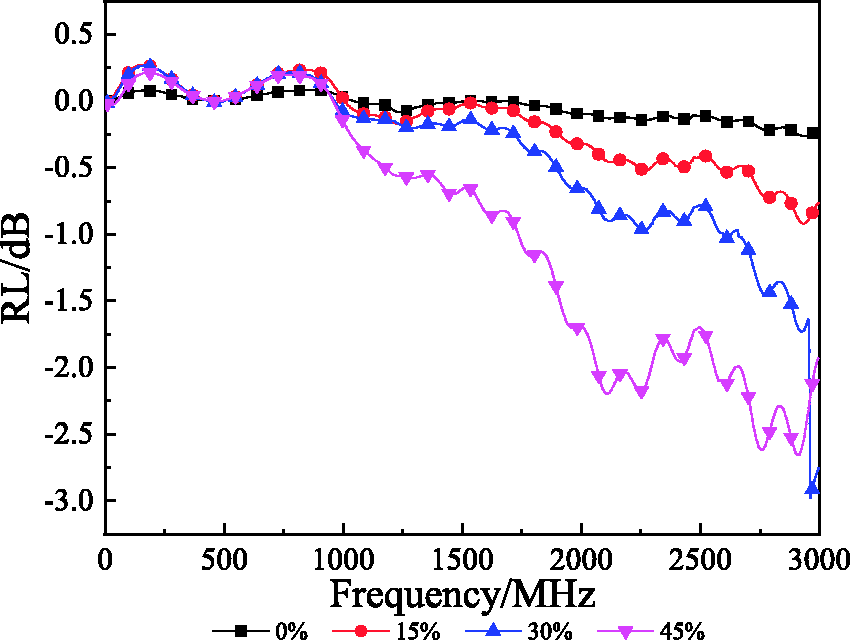
The influence of the content of the graphite, bismuth and bismuth oxide on the reflection loss for the single-layer coated composites.
As seen in Figure 6, as the frequency increases, the reflection loss for the four samples fluctuates slightly, but it generally shows a decreasing trend and the absorbing performance gradually increases. In the frequency range 1000 MHz < f < 3000 MHz, the reflection loss was smallest, namely –2.7 dB at 2913 MHz, and the absorbing performance was best when the functional particles content was 45% (#4). The values for the other samples decrease in the order 30% (#3), 15% (#2) and 0% (#1). As the functional particles content increases, the total particles per unit area increase. When the content was 45%, the single-layer coated composite is in the saturated state and has good wave-absorbing performance.
The influence of the content of the graphite, bismuth and bismuth oxide (ratio by weight 1:1:1) on the shielding properties of single-layer coated composites
The coated fabric samples were prepared, and their shielding efficiency tested in the frequency range 10 MHz < f < 3000 MHz. The curve for frequency-shielding efficiency can be seen in Figure 7.
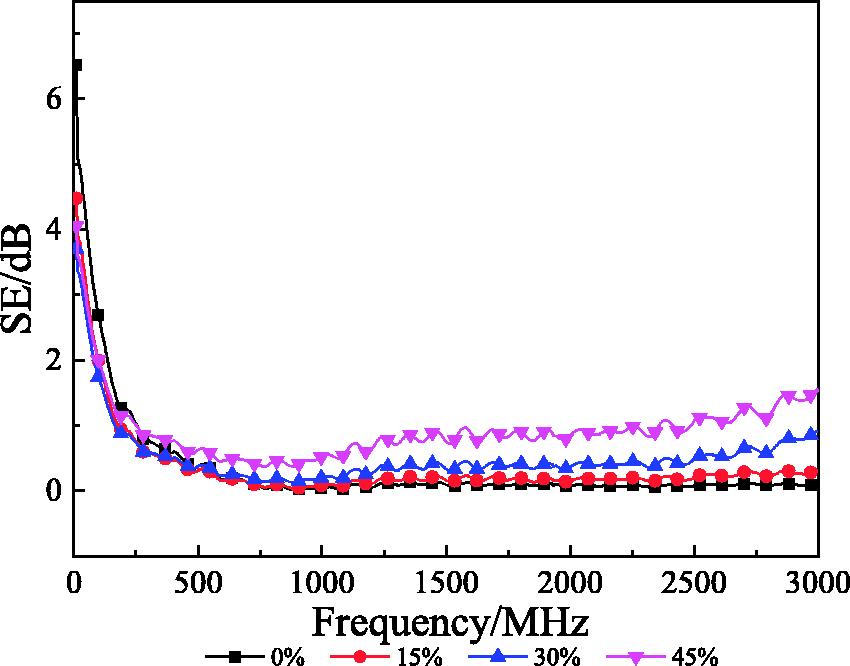
The influence of the content of the graphite, bismuth and bismuth oxide on the shielding efficiency for the single-layer coated composites.
As can be seen from Figure 7, as the frequency increases, the shielding efficiency of the four samples decreases rapidly and then increases gradually, and the shielding attenuation ability to electromagnetic waves weakens at first and is then enhanced. In the frequency range 10–3000 MHz, the shielding efficiency was largest; more exactly, its shielding attenuation ability to electromagnetic waves was strongest when the functional particles content was 45% (4#), and 30% (#3), 15% (#2) and 0% (#1) in turn. The more functional particles content formed a better conductive network to affect the shielding effectiveness of the coated composite; electrons can move freely through the conductive network, leading to a sharp decrease in the surface resistivity of the whole coated composite, and the conductive properties of the coating are enhanced, thus it displays a good shielding performance.
The influence of the content of the graphite, bismuth and bismuth oxide (ratio by weight 1:1:1) on the mechanical properties for the single-layer coated composites
The coated fabric samples were prepared, and their tensile strength was tested. The specific values are shown in Table 5, and curve for displacement-tensile strength is shown in Figure 8. The standard variances of the tensile strength corresponding to different contents of the graphite, bismuth and bismuth oxide are shown in Table 6.
Parameters of the tensile strength corresponding to different contents of the graphite, bismuth and bismuth oxide.

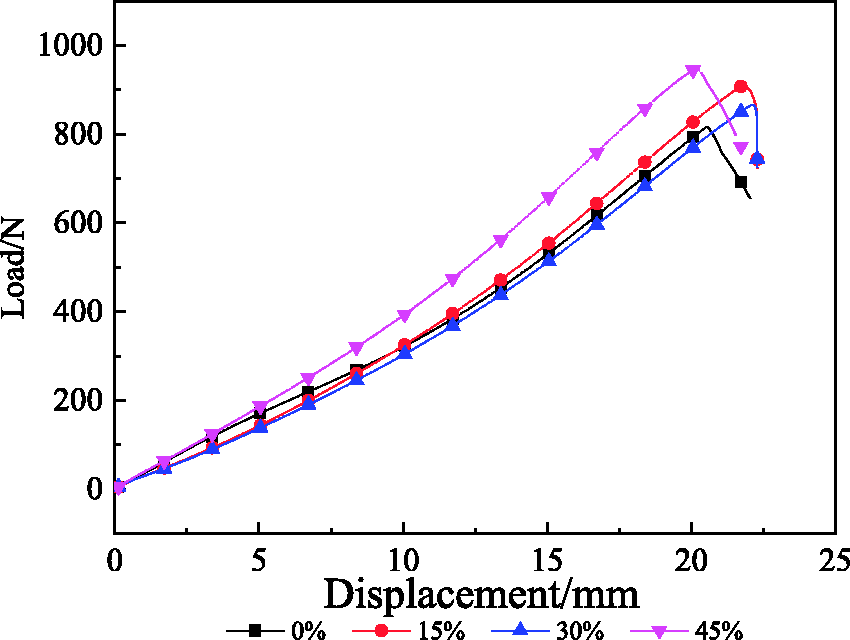
The influence of the content of the graphite, bismuth and bismuth oxide on the tensile strength for the single-layer coated composites
Standard variances of parameters of the tensile strength corresponding to different contents of the graphite, bismuth and bismuth oxide.

It can be seen from Table 5 and Figure 8 that the load was largest when the functional particles content was 45% (#4), namely 951.6 N at displacement of 20.3 mm. It can be seen from Table 6 that the minimum standard variance is 242.0, corresponding to a content of 0% (#1). As the displacement increases, the load increases more noticeably when the functional particles content is 45% (#4). Graphite has good toughness and strong molecular binding force within layers. Under the action of external forces, sliding will occur between layers. Adding graphite was conducive to improving mechanical properties. However, magnetic particles such as Bi agglomerated easily, and with the increase of functional particle content, the distribution in PU tended to be uneven. Therefore, when the graphite, bismuth and bismuth oxide content were 45%, the mechanical properties of the samples are greatly different.
The influence of the ratio of the graphite, bismuth and bismuth oxide (when the percentage of the total mass relative to the of the polyurethane was 30%) on the electromagnetic and mechanical properties of the single-layer coated composites
To study the influence of the weight ratio of the graphite, bismuth and bismuth oxide on the electromagnetic and mechanical properties of the single-layer coated composites, coated composites with seven different ratios were prepared. The specific process parameters are shown in Table 7.
Process parameters of different weight ratios of the graphite, bismuth and bismuth oxide.
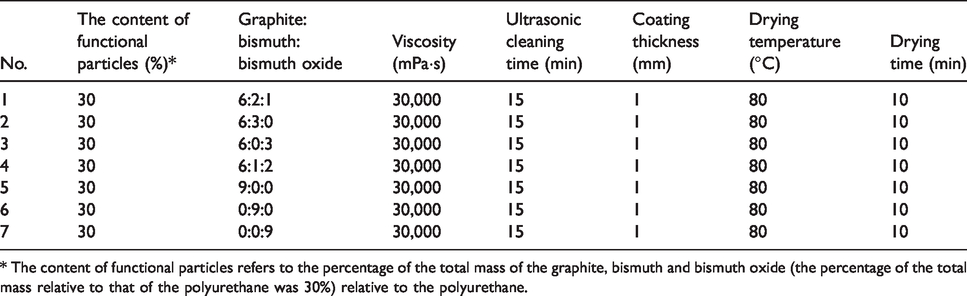
* The content of functional particles refers to the percentage of the total mass of the graphite, bismuth and bismuth oxide (the percentage of the total mass relative to that of the polyurethane was 30%) relative to the polyurethane.
The influence of the ratio of the graphite, bismuth and bismuth oxide (the percentage of the total mass relative to that of the polyurethane was 30%) on the dielectric properties of single-layer coated composites
Samples of the coated fabric were prepared, and the dielectric constants of the samples were measured in the frequency range 1–1000 MHz. The curves for the real and imaginary parts of the dielectric constant and the loss tangent value are drawn in Figures 9, 10 and 11, respectively.
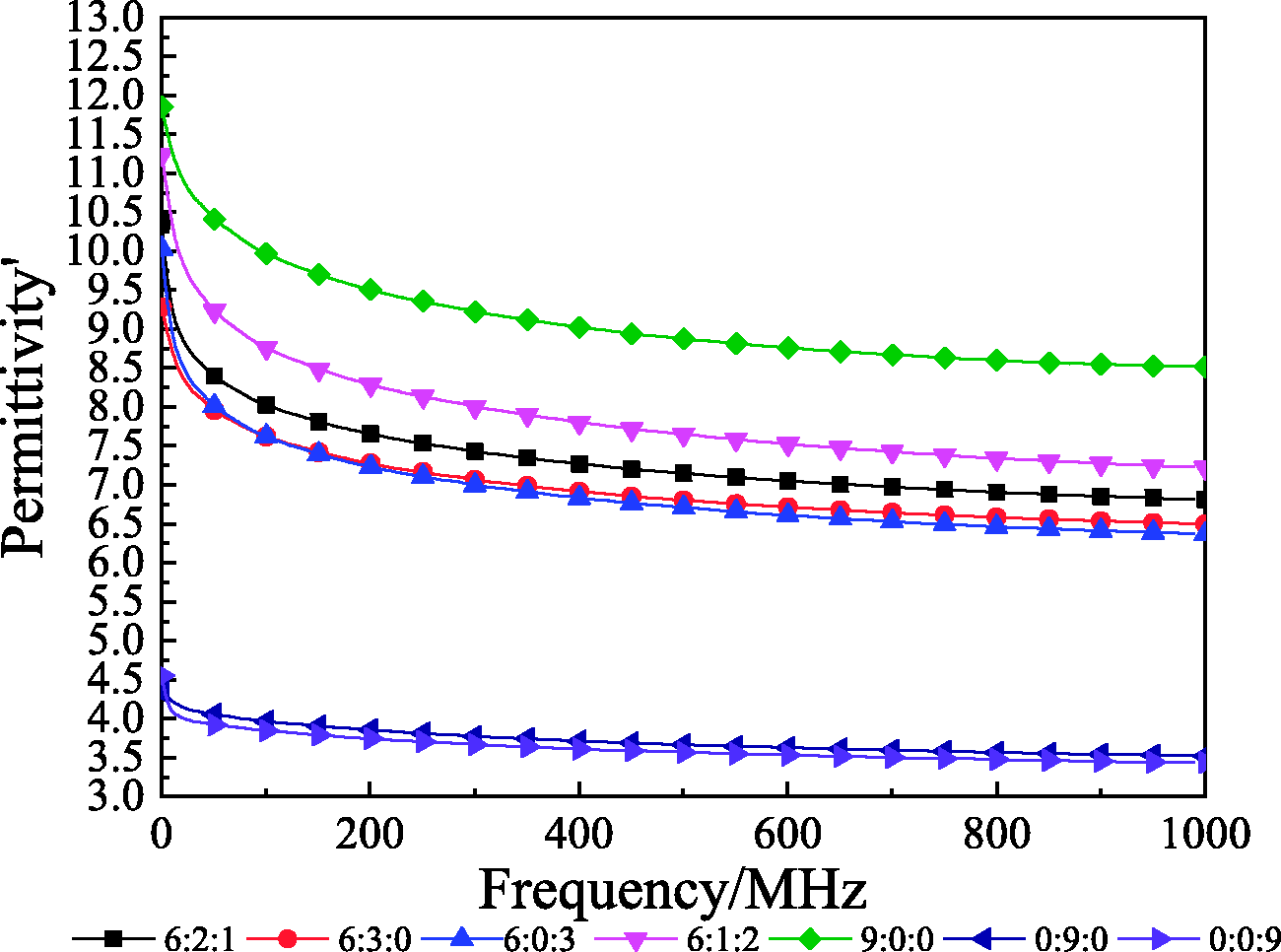
The influence of the ratio of the graphite, bismuth and bismuth oxide on the real part of the dielectric constant for the single-layer coated composites.
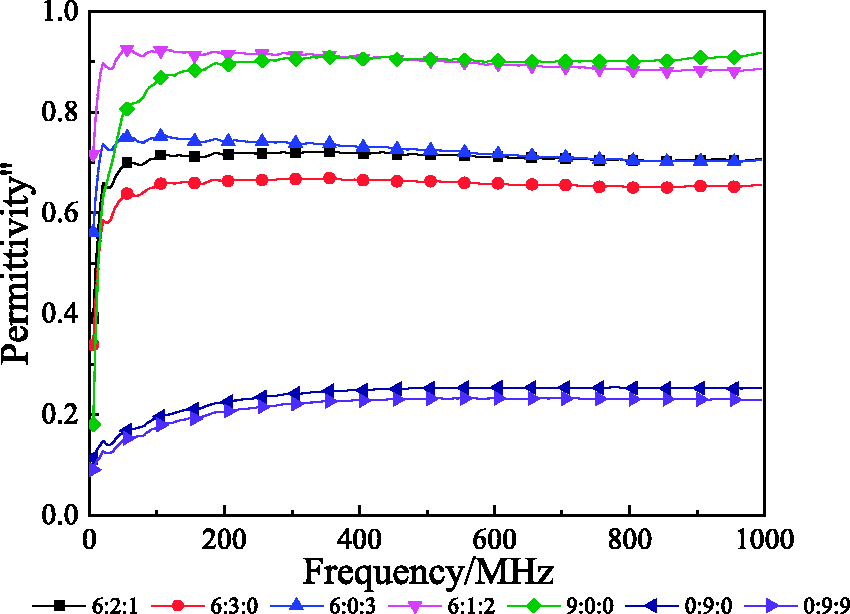
The influence of the ratio of the graphite, bismuth and bismuth oxide on the imaginary part of the dielectric constant for the single-layer coated composites.
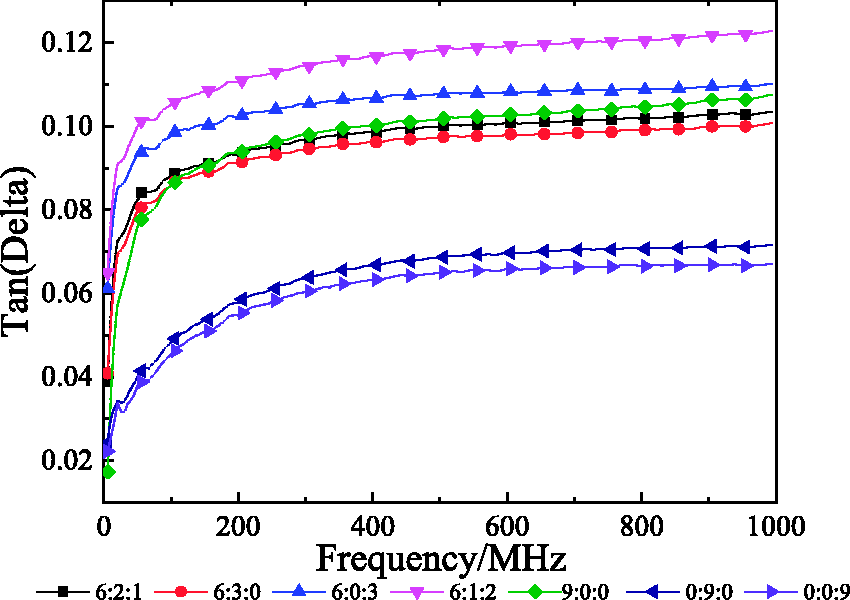
The influence of the ratio of the graphite, bismuth and bismuth oxide on the loss tangent value for the single-layer coated composites.
As can be seen from Figure 9, as the frequency increases, the real part of the dielectric constant for the seven samples gradually decreases, and the polarization ability to electromagnetic waves gradually weakens. In the frequency range 1 MHz < f < 1000 MHz, the real part of the dielectric constant was largest, namely 11.9, and its polarization ability to electromagnetic waves was strongest when the ratio was 9:0:0 (#5). The values for the other samples decrease in the order 6:1:2 (#4), 6:2:1 (#1), 6:3:0 (#2), 6:0:3 (#3), 0:9:0 (#6), 0:0:9 (#7). Therefore, the ratio affects the real part of the dielectric constant for the coated composites. The polarization ability to electromagnetic waves for the single-layer coated composite is strongest when the proportion of graphite is higher.
Figure 10 shows that, as the frequency increases, the imaginary part of the dielectric constant for the seven samples gradually increases, and the loss ability to electromagnetic waves is gradually enhanced. In the frequency range 1 MHz < f < 455.5 MHz, the imaginary part of the dielectric constant decreases in the order 6:1:2 (#4), 9:0:0 (#5), 6:0:3 (#3), 6:2:1 (#1), 6:3:0 (#2), 0:9:0 (#6), 0:0:9 (#7); however, above 455.5 MHz, the values for 9:0:0 (#5) are now higher than for 6:1:2 (#4). The ratio is seen to affect the imaginary part of the dielectric constant for the single-layer coated composites. In the lower frequency range (below 455.5 MHz), the stability of the single-layer coated composite is good when the ratio is 6:1:2 (#4), and the loss ability to electromagnetic waves is enhanced. In the higher frequency range (above 455.5 MHz), the coated composite with a large proportion of graphite has the best loss ability to electromagnetic waves. Graphite is a conductive absorbing material. When the sample is induced by the external magnetic field, the induced current will be generated in the sample, and the induced current will generate a magnetic field opposite to the external magnetic field, thus offsetting the external magnetic field. In the higher frequency range, the electromagnetic wave goes through many times of diffuse reflection, resulting in the attenuation of electromagnetic wave energy in which the graphite plays a major role.
As can be seen from Figure 11, as the frequency increases, the loss tangent value for the seven samples gradually increases, and the attenuation ability to electromagnetic waves is gradually enhanced. In the frequency range 1 MHz < f < 1000 MHz, the loss tangent values decrease in the order 6:1:2 (#4), 6:0:3 (#3), 9:0:0 (#5), 6:2:1 (#1), 6:3:0 (#2), 0:9:0 (#6), 0:0:9 (#7). The ratio affects the loss tangent values of the single-layer coated composite. The single-layer coated composite is in a stable state for a ratio of graphite, bismuth and bismuth oxide of 6:1:2 (#4), enhancing the attenuation ability to electromagnetic waves.
The influence of the ratio of the graphite, bismuth and bismuth oxide (percentage of the total mass relative to polyurethane was 30%) on the wave-absorbing performance of the single-layer coated composites
Samples of the coated fabric were prepared, and the reflection loss values of the samples were measured in the frequency range 10–3000 MHz, and the curve for frequency-reflection loss is shown in Figure 12.
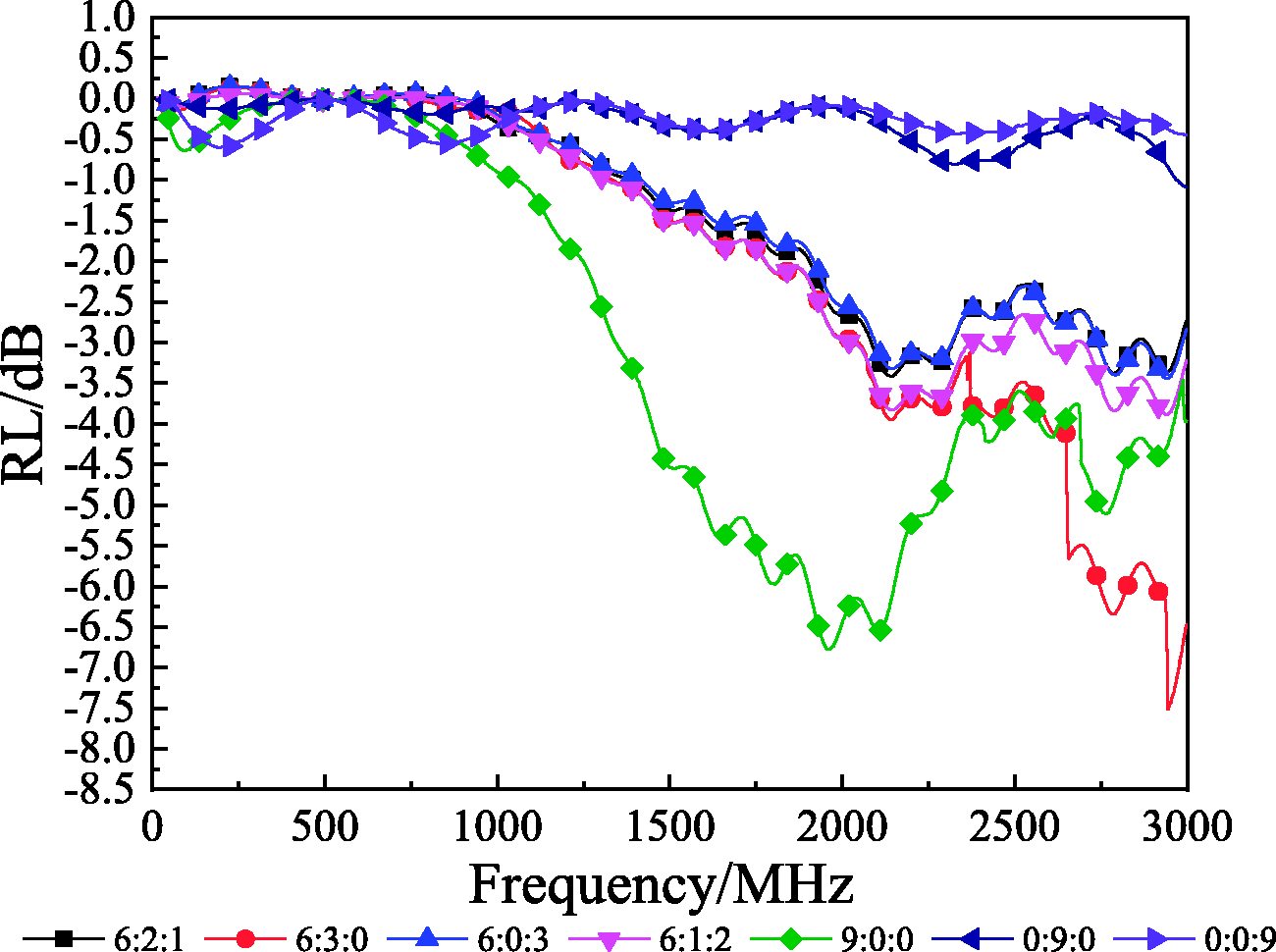
The influence of the ratio of the graphite, bismuth and bismuth oxide on the reflection loss for the single-layer coated composites
As can be seen from Figure 12, as the frequency increases, values of reflection loss for the seven samples fluctuate but show a decreasing trend. Below 2566 MHz, the values of reflection loss tend to increase in the order 9:0:0 (#5), 6:3:0 (#2), 6:1:2 (#4), 6:2:1 (#1), 6:0:3 (#3), 0:9:0 (#6), 0:0:9 (#7). At 1965.5 MHz, the minimum value was –6.8 dB, for the ratio 9:0:0 (#5). In the frequency range 2566.5 MHz < f < 3000 MHz, the values increase in the order 6:3:0 (#2), 9:0:0 (#5), 6:1:2 (#4), 6:0:3 (#3), 6:2:1 (#1), 0:9:0 (#6), 0:0:9 (7#). At 2946.2 MHz, the minimum value was –7.5 dB, for the ratio 6:3:0 (#2). Single-layer coated composites with a large proportion of graphite have the least reflection to electromagnetic waves, which is because the graphite has a good chemical structure and can absorb a large amount of electromagnetic waves, and the reflected electromagnetic waves from the surface of the material are reduced and the composite has the best wave-absorbing performance.
The influence of the ratio of the graphite, bismuth and bismuth oxide (percentage of the total mass relative to that of the polyurethane was 30%) on the shielding properties of single-layer coated composites
Samples of the coated fabric were prepared, and the shielding efficiency of the samples was measured in the frequency range 10 to 3,000 MHz, and the curve for frequency-shielding efficiency is shown in Figure 13.
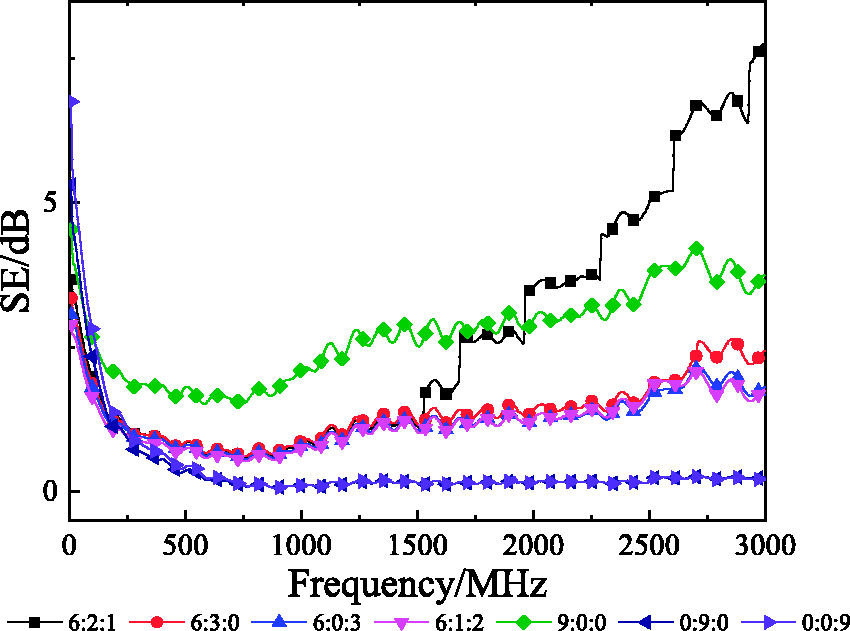
The influence of the ratio of the graphite, bismuth and bismuth oxide on the shielding properties for the single-layer coated composites.
As can be seen from Figure 13, with increasing frequency, the shielding efficiency for the seven samples shows a decreasing trend initially before increasing. More exactly, the shielding attenuation ability to electromagnetic wave grew from weakness to strength. Below 1947.5 MHz, the shielding efficiency tends to reduce in the order 9:0:0 (#5), 6:2:1 (#1), 6:3:0 (#2), 6:0:3 (#3), 6:1:2 (#4), 0:9:0 (#6), 0:0:9 (#7), while in the frequency range 1947.5 MHz < f < 3000 MHz, the shielding efficiency decreases in the order 6:2:1 (#1), 9:0:0 (#5), 6:3:0 (#2), 6:0:3 (#3), 6:1:2 (#4), 0:9:0 (#6), 0:0:9 (#7). In the lower frequency range (below 1947.5 MHz), the shielding performance was best when the proportion of graphite was higher, and the graphite particles were distributed uniformly; in the higher frequency range (above 1947.5 MHz), the shielding performance was best when the ratio is 6:2:1 (1#). In a high applied field frequency, the dielectric properties of bismuth oxide and conductivity of bismuth play a certain role, while high frequency has a certain influence on the structural properties of the graphite, which means that the shielding performance cannot be optimal.
The influence of the ratio of the graphite, bismuth and bismuth oxide (percentage of the total mass relative to polyurethane was 30%) on the mechanical properties of single-layer coated composites
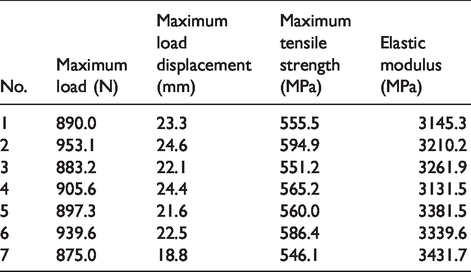
Coated fabric samples were prepared, and their tensile strength was tested. The specific values are shown in Table 8 and the curve for displacement-load value is shown in Figure 14, and the standard variances of parameters of the tensile strength corresponding to different ratios of the graphite, bismuth and bismuth oxide are shown in Table 9.
Parameters of the tensile strength for different ratios of the graphite, bismuth and bismuth oxide.
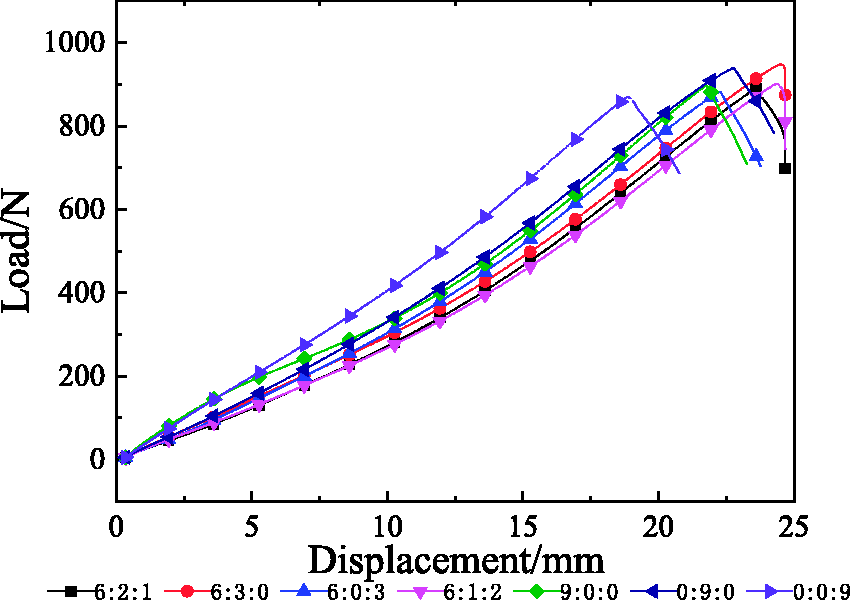
The influence of the ratio of the graphite, bismuth and bismuth oxide on the mechanical properties for the single-layer coated composites.
Standard variance of parameters of the tensile strength corresponding to different ratios of the graphite, bismuth and bismuth oxide.

It can be seen from Table 8 and Figure 14 that among the seven samples, the single-layer coated composite with a ratio of graphite, bismuth and bismuth oxide of 6:3:0 (#2) achieves the largest load, which reached its maximum when the displacement was 24.6 mm and its load was 953.1 N; the composite with a ratio of 0:0:9 (#7) achieves the smallest load, with its maximum at 18.8 mm and 875.0 N. The loads for the single-layer coated composite decrease in the order 6:3:0 (#2), 0:9:0 (#6), 6:1:2 (#4), 9:0:0 (#5), 6:2:1 (#1), 6:0:3 (#3), 0:0:9 (#7). The ratio is seen to affect the tensile strength of the single-layer coated composites. It can be seen from Table 9 that the minimum standard variance was 260.1, for the ratio 9:0:0 (#5). As the displacement increases, the load changes obviously when the ratio of the graphite, bismuth and bismuth oxide is 0:9:0 (#6).
Conclusions
In the frequency range 1 MHz < f < 1000 MHz, the real and imaginary parts of the dielectric constant and loss tangent value of the single-layer coated composite are all largest, and the polarization ability, loss ability and attenuation ability to electromagnetic waves are all strongest when the combined content of the graphite, bismuth and bismuth oxide relative to the polyurethane is 45%. In the frequency range 10 MHz < f < 3000 MHz, the composite has the minimum value of reflection loss when the content is 45%. At 2913.3 MHz the minimum value of –2.7 dB was obtained, and the wave-absorbing performance is the best. At this time, the shielding efficiency is largest, and the shielding performance is best. When the functional particles content was 45%, the load achieved its maximum of 951.6 N, at a displacement of 20.3 mm.
In the frequency range 1 MHz < f < 1000 MHz, the real part of the dielectric constant is largest and the polarization ability to electromagnetic waves is strongest when the ratio of the graphite, bismuth and bismuth oxide is 9:0:0, i.e. all graphite. Below 455.5 MHz, the imaginary part of the dielectric constant is largest when the ratio is 6:1:2. So adding a small amount of bismuth and bismuth oxide can enhance loss ability to electromagnetic waves in low frequency. Between 455.5 MHz and 1000 MHz, the imaginary part of the dielectric constant is largest and the loss ability to electromagnetic waves is strongest when the ratio is 9:0:0. It can be seen that graphite is beneficial to improve the dielectric constant of the single-layer coated composites in high frequency; the loss tangent value is largest and the attenuation ability to electromagnetic waves is strongest when the ratio is 6:1:2.
In the frequency range 10–3000 MHz, the single-layer coated composite has the minimum reflection loss when the ratio of the graphite, bismuth and bismuth oxide is 6:3:0; the minimum reflection loss of –7.5 dB was achieved at 2946.2 MHz. The increase of bismuth is conducive to electromagnetic absorption in the frequency range 10–3000 MHz. In the same frequency range, the single-layer coated composite has the largest shielding efficiency and best shielding performance when the ratio is 6:2:1. The maximum load for the single-layer coated composite was found to be 953.1 N, for the coating with ratio 6:3:0 at a displacement of 24.6 mm.
Footnotes
Declaration of conflicting interests
The authors declare no potential conflicts of interest with respect to the research, authorship and/or publication of this article.
Funding
The authors received the following financial support for the research, authorship, and/or publication of this article: This work was supported by China Postdoctoral Science Foundation Funded Project (2019TQ0181), China Postdoctoral Science Foundation Supported Project (2019M661030), Tianjin Municipal Natural Science Foundation. Item number (18JCZDJC99900), and An Hui Province International Cooperation Research Center of Textile Structure Composites (2021ACTC04).
