







Abstract
Polypyrrole (PPy) has high electrical conductivity, good environmental stability, and reversible electrochemical redox characteristics, which makes PPy responsive to changes in environmental humidity values. In this work, a humidity sensor with a good response to humidity was prepared using in situ polymerization of PPy in filter paper doping with acetic acid. A possible sensing mechanism of conductive polymers is proposed and the conjecture is verified by experiments. The results demonstrated that the PPy/filter paper-based humidity sensor provides an electron migration channel with the capability of detecting the relative humidity. External humidity stimulation can regulate the electrochemical reaction of PPy. The reduction reaction occurs near the water side to generate the nucleophilic product OH–. The PPy system loses electrons to form carrier directional channels, resulting in changes in the output voltage measured between the two electrodes. The PPy/filter paper-based humidity sensor exhibits the moisture dependent voltage response over a wide range from a relative humidity of 11–98%, and a response/recovery time of 43/51 s as it was placed between relative humidity of 33% and 98%. In addition, unlike the traditional sensing mechanism, the voltage sensing mechanism raised here shows self-powered ability with no need for an additional power unit. This provides a new idea for self-powered sensor devices, and this sensor shows good performance in non-contact sensing applications such as breath detection.
In recent years, the development of self-powered intelligent devices has become a great research trend, because the power supply of electronic devices causes a great deal of inconvenience. Intelligent devices utilizing optoelectronics, friction, piezoelectric, 1 thermoelectric and other parameters to generate output signals through energy conversion, including current, 2 voltage, 3 capacitance, 4 and resistance 5 have been reported. Among them, humidity sensors that produce voltage changes induced from humidity changes have also shown great progress.
Humidity sensors are usually constituted with substrates and sensing materials. The basic demand of a suitable substrate for the preparation of humidity sensors is noted as sufficient mechanical properties with a porous structure, allowing the quick absorbtion of moisture molecules in the air.6–8 Filter paper (FP) is one of the most used cellulose materials, which is characterized by abundant hydrogen bonds, ordered mesoporous structure and large surface area. These advantages of FP make it an ideal material for preparing humidity sensors, because of the capability of adsorbing and conducting water molecules from its surface into the inner section. Furthermore, there are many inherent advantages of FP, such as low cost, broad resources, lightweight, and good compatibility. The team of Duan et al. has developed a simple, cost effective, and environmentally friendly multifunctional humidity sensor using traditional printing paper and flexible conductive tape. 9 The humidity sensor exhibits good linearity over a humidity range of 41.1–91.5%. 9 Han et al. used single-walled carbon nanotubes with carboxylic acid function to make a humidity sensor on cellulose paper. 10 Its conductivity decreases linearly with relative humidity up to 75%. 10 Conductive materials were usually used as the sensing materials of humidity sensors. Various conductive materials including polyaniline, 11 polypyrrole (PPy),12,13 and graphene 14 had been reported to be used in manufacturing humidity sensors. In our previous study, PPy was chosen to prepare a self-powered humidity sensor by means of in situ polymerization on polyamine aerogel. The self-powered humidity sensor exhibited a response time and recovery time of 1.1 s and 4.5 s, respectively, when detecting flowing wet air with a relative humidity (RH) of 75%. 15
In this work, a self-powered humidity sensor based on PPy-modified FP was prepared using the method of in situ polymerization. The composite structure of PPy/FP was proved by means of scanning electron microscopy (SEM) and Fourier transform infrared spectrometer (FTIR). The humidity sensing properties of PPy/FP was evaluated using a multipurpose voltmeter. The factors during the preparation process that influenced the humidity response performance were subsequently explored.
Materials and methods
Manufacture of PPy/FP humidity sensor
All of the chemicals were purchased from China Pharmaceutical Group Chemical Reagents Co. Ltd. (Shanghai, China). FP was soaked in the mixture solution of 0.15 ml pyrrole and 15.0 ml distilled water for 60 min; followed by adding 0.25 g ammonium persulfate ((NH4)2S2O8) and 0.03 ml acetic acid at 4°C for another 4 h to allow the sufficient reaction of PPy in the FP. Thereafter, the composite of PPy/FP was taken out and dried at 60°C for 10 h.
In order to improve the conductivity of PPy/FP, sodium chloride (NaCl) or potassium sulfate (K2SO4) was used in the process of sample preparation.
As shown in Figure 1, the humidity sensor was obtained by adhering PPy/FP with the dimension of 2.0 cm × 1.0 cm between the copper-nickel conductive tapes (Zhejiang Feiyi Optoelectronic Energy Technology Co. Ltd., Ningbo, China). One side of the PPy/FP was completely covered by the conductive tape, while the other side was exposed with a length of 0.5 cm for moisture absorbence.
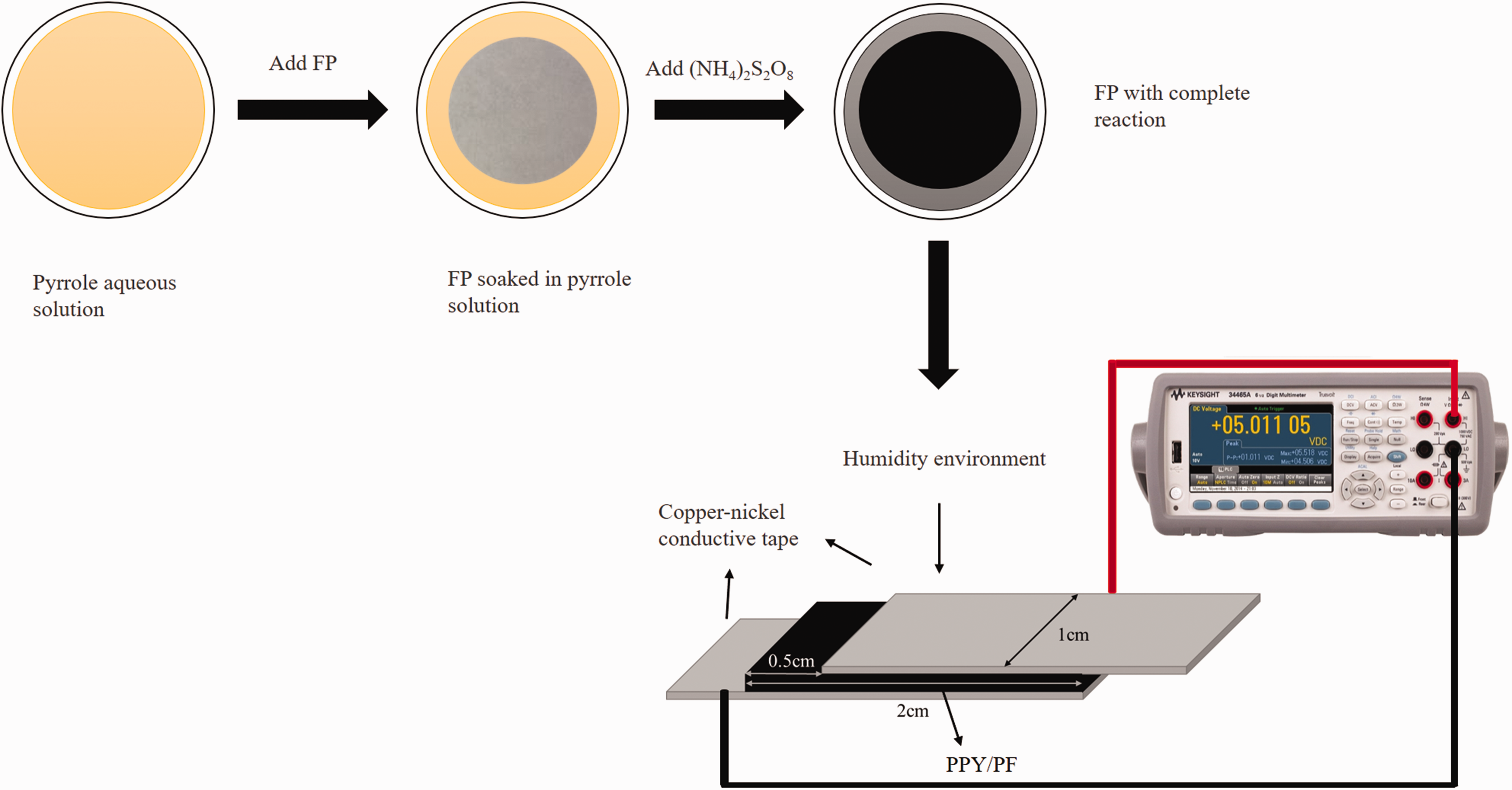
Voltage detection of the PPy/filter paper (FP) humidity sensor.
Microstructure characterization
SEM (SU1510; Hitachi Corporation of Japan) was used to observe the surface and the cross-section of PPy/FP samples. The crystal structure of the sample was determined by X-ray diffusion (XRD; D8 Advance, Bruck) at 40 kV and the changes in physical properties of the sample were investigated. The thermal stability of the sample was determined by thermogravimetric analyzer (TG; Q500, TA) in nitrogen atmosphere. FTIR (Nicolet iS5; Thermo Nicolet Corporation) was used to analyze the functional group structure.
Humidity environment creation and voltage detection
Different saturated salt solutions were used to create the relative humidity environments. There are two effects of ionization and hydration in the saturated salt solution and there are two effects of evaporation and condensation on the surface of the solution, in a dynamic balance. The nature of salt itself determines the humidity value of its saturated solution. At a constant temperature, a salt saturation solution corresponds to a fixed humidity value. Saturations of cesium fluoride (CsF), lithium chloride (LiCl), magnesium chloride (MgCl2), sodium bromide (NaBr), NaCl, and K2SO4 are placed in the sealed container at a constant temperature for 45 min so that the salt, the saline solution, and upper air in the sealed container are balanced in three phases, with RH environments of 4%,11%, 33%, 59%, 75%, and 98%, respectively. Then we used a digital multimeter (34460A Keysight) to test the voltage response of the humidity sensor in different humidity situations.
Results and discussion
Physicochemical characteristics of PPy/FP
The SEM images of FP and PPy/FP are shown in Figure 2(a) and (b). FP consists of a typical cellulose mesh structure with an irregularly smooth surface that absorbs PPy easily. After modification with PPy, the surface of the FP became rough, and there was a significant particle aggregation, which demonstrated the formation of PPy in the inner structure of FP. Figure 2(c) shows the local amplifications of PPy/FP, which show that pyrrole is oxidized by (NH4)2S2O8 to a globular compound. 16 The particles of compound are uniform, the structure is more orderly, and there are gaps among them. The gaps increase the surface area of the humidity sensor as it was in contact with the air, which improves the sensitivity of humidity sensors. Figure 2(d) shows a PPy/FP cross-sectional view, and it can be observed that part of the PPy entered the inner structure of the FP through the void of the fiber mesh. Therefore, it is believed that an electronic migration pathway is formed in the FP, which could further enhance the sensitivity of the humidity sensor. 17

Scanning electron microscopy (SEM) images of samples with a magnification of ×1000, filter paper (FP) (a) and PPy/FP (b); SEM image of PPy/FP on the PPy/FP sample with a magnification of ×20,000 (c); and SEM image of the cross-section of the PPy/FP sample (d).
Physicochemical properties of PPy/FP
As shown in Figure 3(a), the line though the XRD pattern of PPy indicates it is a substance. However, XRD patterns of FP and PPy/FP exhibit the sharp peaks of crystalline diffraction at 2θ = 22.8°, 14.75°, and 16.59°, respectively. This is further evidence of in situ polymerization of PPy in the FP. Moreover, the similar XRD pattern proves that the crystalline structure of FP and PPy does not change during the polymerization process.
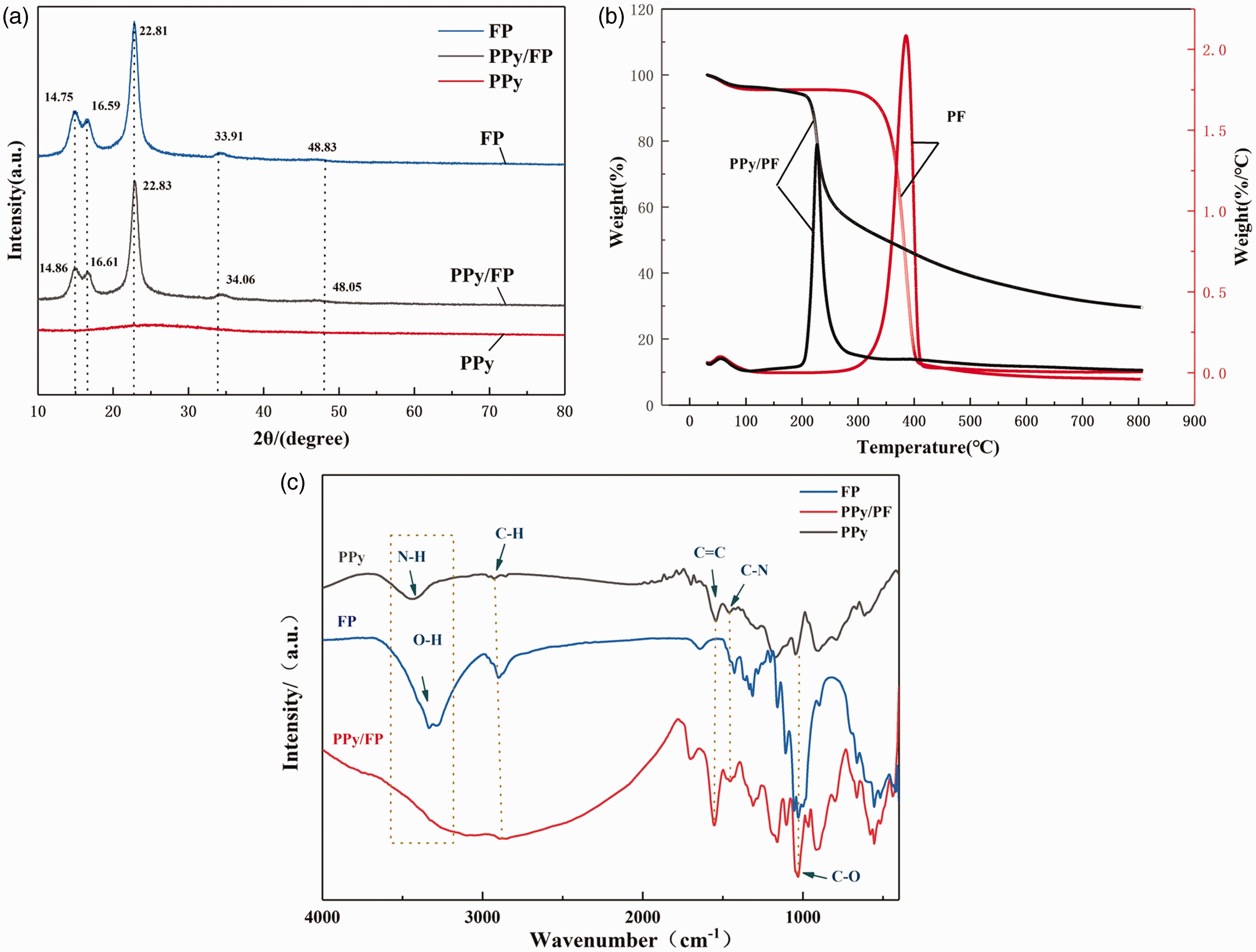
X-ray diffraction (XRD) of filter paper (FP), PPy/FP and PPy (a); thermal weight map of PPy/FP and FP (b); PPy/FP and PPy Fourier transform infrared (FTIR) spectrometer figure (c).
Figure 3(b) shows the TG and DTG curves of PPy/FP and FP, respectively. TG records the change of the weight of the measured sample as the temperature increases. DTG is a curve obtained by the method of the first derivative of the TG curve with respect to temperature, which represents the relationship between the rate of change of mass with time (the rate of weight loss) and temperature. The weight loss is mainly caused by the evaporation of adsorbed water in the composite, as the temperature is below 120°C, both for PPy/FP and FP samples. It is noted that the weight loss of FP mainly occurred in the range of 300–400°C, which is caused by the depolymerization and fracture of the d-glucose chain macromolecule connected by the glucoside bond in cellulose, followed by the fracture of the glucoside bond between adjacent pyranoid rings. In this process, flammable volatile products are produced, resulting in a sharp decline in quality. After the modification with PPy, an extreme weight loss begins at about 200°C, because of the poor thermal stability of PPy and the decomposition of other chemicals that were used in the process of preparation. The functional groups contained in the sample could be characterized by the FTIR spectra, as shown in Figure 3(c), which proved the successful compounding of PPy in the FP matrix. A broad absorption peak between 3430 and 3440 cm−1 was present in the PPy/FP and FP samples due to the OH– vibration of the FP. Obviously, this is beneficial for the hydrophilicity of the FP. Different from the blank FP, obvious vibration peaks existed at 1552 cm−1, corresponding to the skeleton vibrations of the pyrrole ring. Besides, the peak near 1191 cm−1 was the vibration peak of the pyrrole ring. The C–O and C–O–C out-of-plane vibration peaks were at 1053 and 1028 cm−1. This evidence demonstrated that the PPy/FP was successfully prepared and contained a large number of hydrophilic groups (OH–, NH–).
The properties of PPy/FP humidity sensor
In order to determine the maximum stable output voltage of the sensor under different humidity, the 5-min stable voltage output of the PPy/FP humidity sensor was measured at different humidity levels (from RH 11% to RH 98%), as shown in Figure 4(a). The experimental results show that the response voltage is gradually reduced along with the humidity changing from RH 98% to RH 33%. The PPy hardly absorbs enough water molecules as the humidity sensor exposed to the environment with low humidity value, resulting in a smaller potential difference between the front and back sides of the humidity sensor. Figure 4(b) shows the dynamic response curve of the PPy/FP humidity sensor from low humidity (RH 4%) to different humidity (RH 11%, 33%, 59%, 75%, and 98%) and then put back to RH 4% to recover stability. The voltage of the PPy/FP humidity sensor changes rapidly in different humidity environments. With the increase in humidity, the response voltage increases. Figure 4(c) shows the linear relationship between the responsive voltage and the external humidity, and the correlation coefficient of 0.966 indicates the good linear relationship.
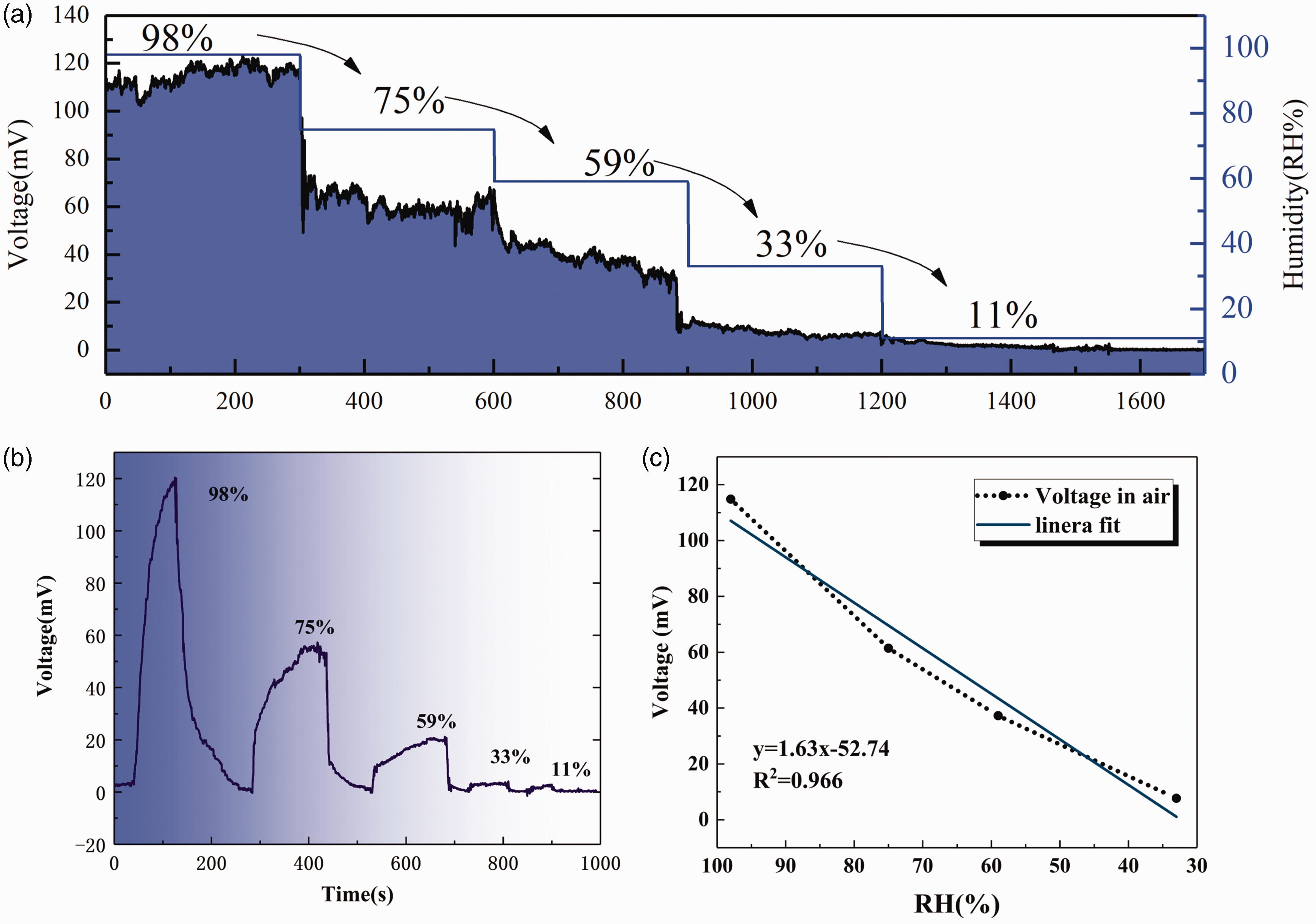
The voltage response of the PPy/filter paper (FP) humidity sensor changes at different humidity stages of relative humidity (RH) of 98%, 75%, 59%, 33% and 11% (a); dynamic response curve of PPy/FP humidity sensor under different humidity (b); the relationship between ambient humidity and voltage output (c)
The response/recovery time of the humidity sensor is defined as the time required for the total output voltage change to achieve 90% absorption (RH 33–98%) and desorption (RH 98–33%), respectively. One of the cycles of the PPy/FP humidity sensor in the RH 33–98–33% changing environment was selected, and the sensor has the response and recovery time of 43 s and 51 s, respectively, as shown in Figure 5(a). The quick response/recovery time of this humidity sensor is mainly caused by the hydrophilic property of FP 18 and the particular conductive structures of PPy. As shown in Figure 5(b), the absorption and desorption processes were repeated for five cycles, and it was found that every single cycle exhibited a similar curve of voltage output. The sensor output voltage was at least 110 mv as it was exposed at RH 98%. Figure 5(c) shows the cycle response recovery time over five cycles. The result shows that characteristic time decreases with the number of cycles. It is because the humidity sensor is switched from low humidity to high humidity several times in a short period of time, and the free electrons generated in the multiple response process have some residual, and the sensor is slightly wetted, which is equivalent to the solvent, the ions are more active. These results demonstrated that the PPy/FP sensor can respond quickly to changes in ambient humidity and has good stability, which has great potential in the fields of ambient humidity detection and human humidity change detection.
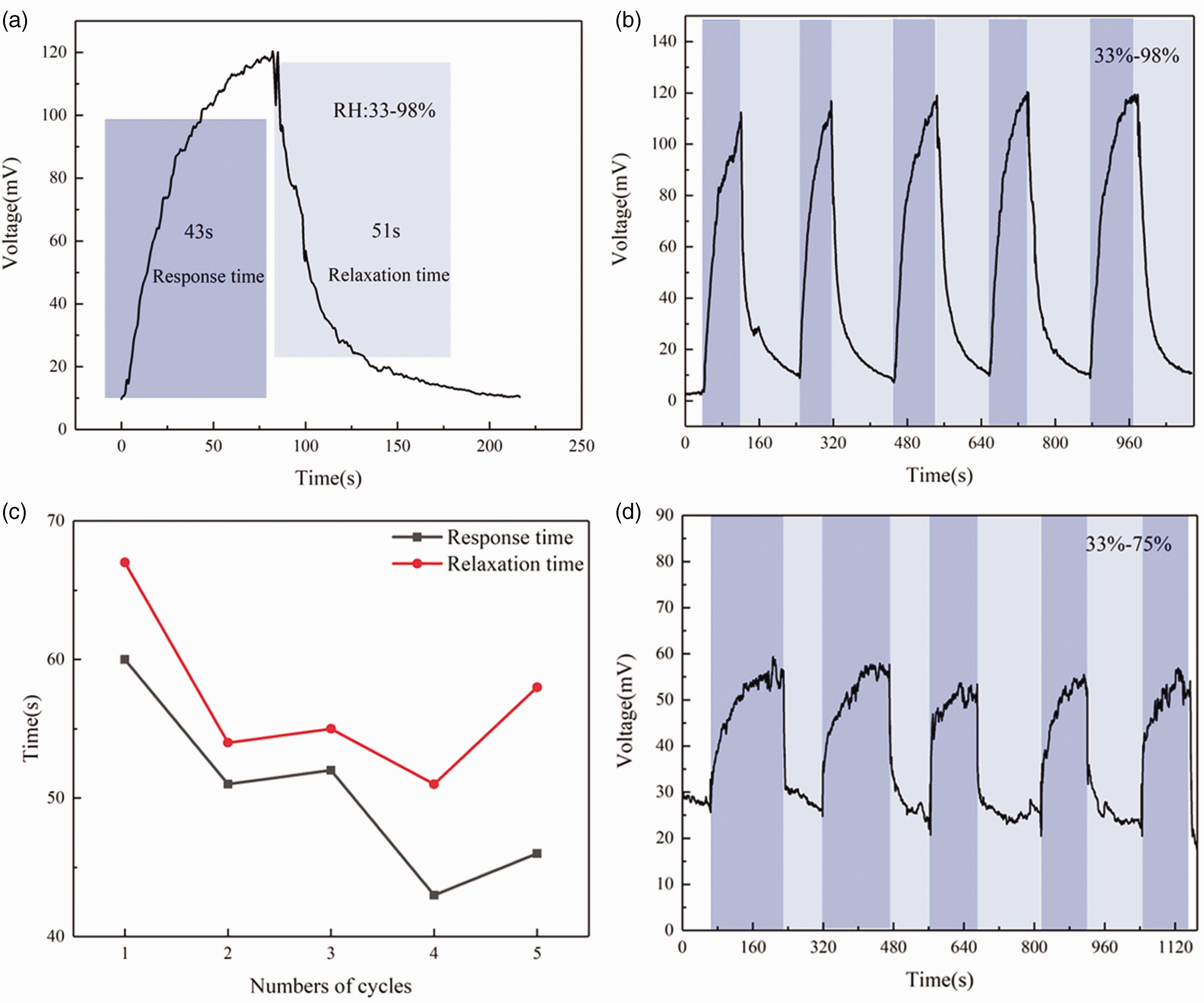
Response and recovery time of PPy/filter paper (FP) humidity sensor in humidity change from 33% to 98% (a); voltage response of PPy/FP humidity sensors over a period of five cycles of humidity change from 33% to 98% (b); PPy/FP humidity sensor responds and recovery time changes in five cycles (c); PPy/FP humidity sensors vary in humidity from 33% to 77% in five cycles in voltage response (d).
On the other hand, as shown in Figure 5(d), as the humidity variation ranges from 33% to 77%, the humidity sensor still exhibits very short humidity response and recovery time over five cycles. However, its maximum response voltage decreases due to the decrease in humidity, confirming the presence of a humidity response gradient. The average response time for the five cycles is 66 s and the recovery time is 59 s. Compared with the humidity change of 98%, the prolongation of recovery and response time was observed. It is mainly caused by the concentration of water molecules in the air decreasing and the low efficiency of OH– production by contact exposed PPy. In general, the humidity sensor responds both quickly to the change in high humidity or low humidity in the air.
For humidity sensors, reaction conditions and production methods have a great influence on their moisture sensitivity. In this work, during the production processes, different salt ions were used to enhance the conductivity of the PPy/FP composite. Doping PPy can increase the conductivity by several orders of magnitude, and a characterization method has been developed using carbon-13 nuclear magnetic resonance ( 13 C NMR) techniques. 19 The NaCl and K2SO4 were doped to PPy during the preparation process. Then the humidity sensor was prepared and the average responsive output voltage was within 5 min under the 98% humidity environment. As shown in Figure 6(a), the voltage response of the humidity sensor increased significantly to about 220 mv, after doping with K2SO4; and slightly increased after doping with NaCl. The addition of salts such as NaCl and K2SO4 is equivalent to the addition of p-type dopants such as electron acceptors, and the ability to conduct electricity has been improved by pulling electrons from the large molecule π-bond of PPy, resulting in the formation of movable carriers, with a stronger voltage response at different humidity levels.20,21 Doping of conductive polymers can introduce a positive charge into the polymer chain through charge transfer between the donor and acceptor. These active positive and negative charges were introduced into the polymer chain, which enhanced conductivity of the conductive polymer. The evidence of the voltage output of K2SO4 being higher than NaCl is mainly caused by the following reasons, such as: (a) K2SO4 not only served as a dopant for in situ polymerization of PPy, but also inhibits the peroxidation of PPy, which shortens the chain length of PPy and affects the interchain conductivity of PPy; (b) anions would be trapped in the matrix of the PPy chain during electropolymerization, and the large size of anions can reduce the molecular interaction of PPy; in this case, PPy sulfate (SO4) can exist in a longer conformation, and the polaron in the polymer is easier to deionize.22,23
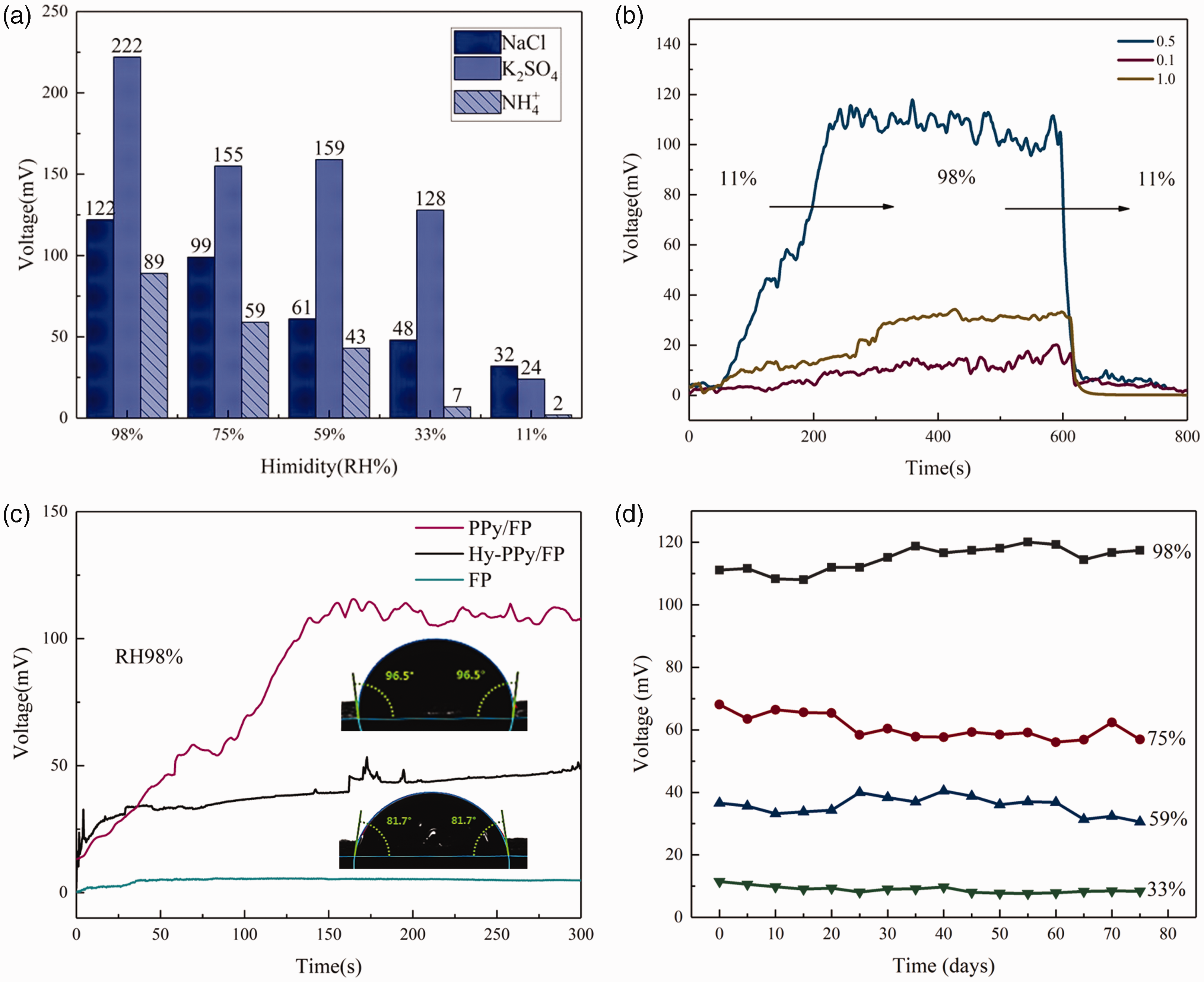
The influence of adding sodium chloride (NaCl) and potassium sulfate (K2SO4) on the voltage output of the humidity sensor in the manufacturing process (a); the humidity sensor voltage output situation after changing electrode spacing to 0.1 cm, 0.5 cm, 1.0 cm (b); voltage response of PPy/filter paper (FP), Hy-PPy/FP, FP at RH98% (c); PPy/FP humidity sensor under different humidity conditions for 75 days voltage output performance (d).
The effect of the size of the electrode spacing on the output voltage is explored by varying the length of the exposed PPy/FP. As shown in Figure 6(b), when the spacing is small, the response of the humidity sensor increased as the electrode spacing increased, but as it continued to increase, the response voltage of the humidity sensor decreased. The reason is that when the electrode spacing is small, the contact area with the water molecules in the air is the main factor that affect the voltage output. However, the larger the area resulted the more efficient the movement of the carriers. As the electrode spacing was too large, the carriers produced by adsorbing water molecules was discontinuous, which results in the poor humidity sensing behavior.
In order to verify the effect of hydrophilicity on humidity sensing, the PPy/FP was applied to the hydrophobic treatment using silicone oil; the sample after hydrophobic treatment was designated as Hy-PPy/FP. The Hy-PPy/FP has a larger contact angle of 96°; while the contact angle of PPy/FP is about 81°, as shown in Figure 6(c). It can also be observed from Figure 6(c) that the voltage response of the Hy-PPy/FP sensor at RH 98% was much lower than the voltage response of the PPy/FP sensor. This phenomenon indicates that the sensing performance of the PPy/FP humidity sensor is related to the conductivity and hydrophilicity of the sensing material.
To explore further the stability of the PPy/FP humidity sensor, it was exposed to natural air for 75 days. The voltage response of the sensor was measured at a fixed time in different humidity environments every 5 days. The results are shown in Figure 6(d), and the voltage response of the sensor was also not significantly different, indicating that the humidity sensor has a good stable performance. The good stability of the humidity sensor is mainly due to the following two reasons: (a) the presence of PPy co-yoke double bonds; (b) PPy can remain stable in the air for a long time.
In order to verify the role of oxygen in the PPy/FP humidity sensor, the prepared PPy/FP doped with K2SO4 humidity sensor was respectively placed in three neck flasks under natural air (about RH 74%) and an environment created by saturated salt solution (RH 98%). After a period of time, oxygen was pumped into the flask. As shown in Figure 7, the results show that the voltage response of the humidity environment created by saturated salt solution shows an increasing trend, because the saturated salt solution can maintain the humidity in the flask. The voltage response under natural air first increases and then decreases. The reason for this phenomenon is that when oxygen is just introduced, more oxygen is involved in the wet sensing process, leading to the intensification of the electrochemical reaction and the voltage response. Over time, as oxygen fills the entire flask, the humidity in the air drops dramatically, leading to a gradual decrease in voltage response. This phenomenon indicates that the humidity sensing process of the PPy/FP humidity sensor is a process involving both oxygen and water molecules.
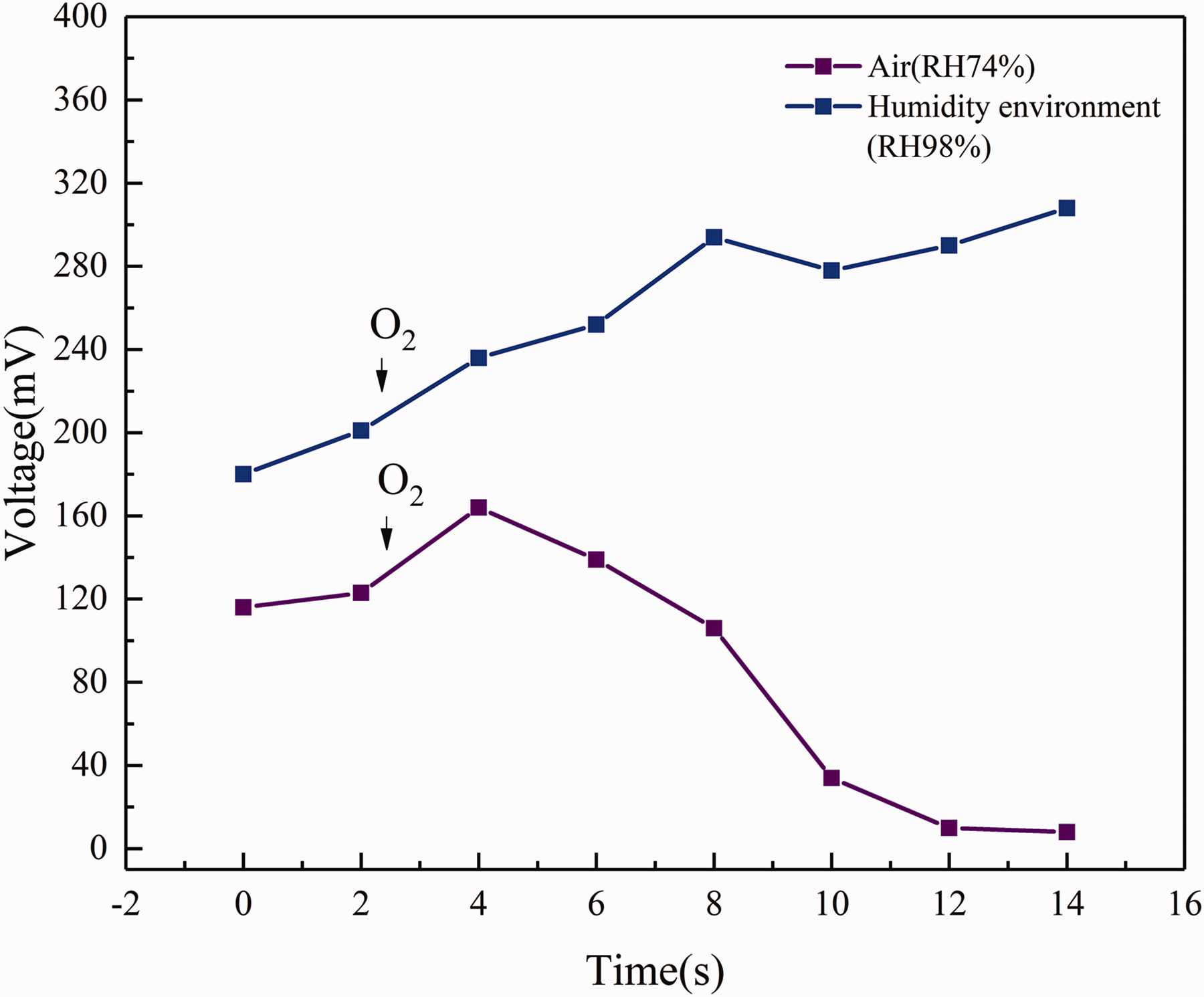
Effect of hyperoxic environment on the voltage response of the PPy/filter paper (FP) humidity sensor.
Response mechanism of PPy/FP humidity sensor
The electrical conductivity of PPy includes two parts: in-chain conduction and interchain conduction. Because PPy has a conjugated structure of alternating C–C and C=C, the π electrons in the conjugated double bond are not localized on carbon atoms, and they can be transferred from one carbon bond to another; that is, they have a tendency to extend to the whole molecular chain, which is the mechanism of conduction in the PPy chain. Interchain conduction needs to overcome the extreme energy difference. Doping treatment can change the distribution of holes or free electrons in semiconductor materials, and increase the number of charge carriers on the molecular chain, which can effectively improve the interchain conduction.
As shown in Figure 8, when the external RH is low, only a few water molecules are adsorbed on the surface of polymer and cellulose, and the coverage of water on the surface is discontinuous. In this case, electron conduction is the main conduction mode, and conductance occurs only through proton ‘jumping’ between adsorption sites.9,24 When the humidity increases, water and oxygen coexist, and the electrochemical reaction occurs with PPy on the side where water molecules are more concentrated, and the nucleophilic product OH– is generated. Due to the loss of the electrons in the system of PPy the carrier directional channel formed. In the case of high humidity, the humidity-sensitive material surface absorption and condensation of water molecules is becoming more and more and forms a continuous layer.25,26 More ions doped into the PPy dissolving to form a water layer are involved in the charge transfer process, and the rapidly increasing voltage response of the humidity sensor. The positive pole of the electrode loses electrons to form a cupric ion (Cu2+). When the humidity changes, the corresponding electron transport will also change, so as to play a role in detecting the humidity of the environment. The electrode reaction is:

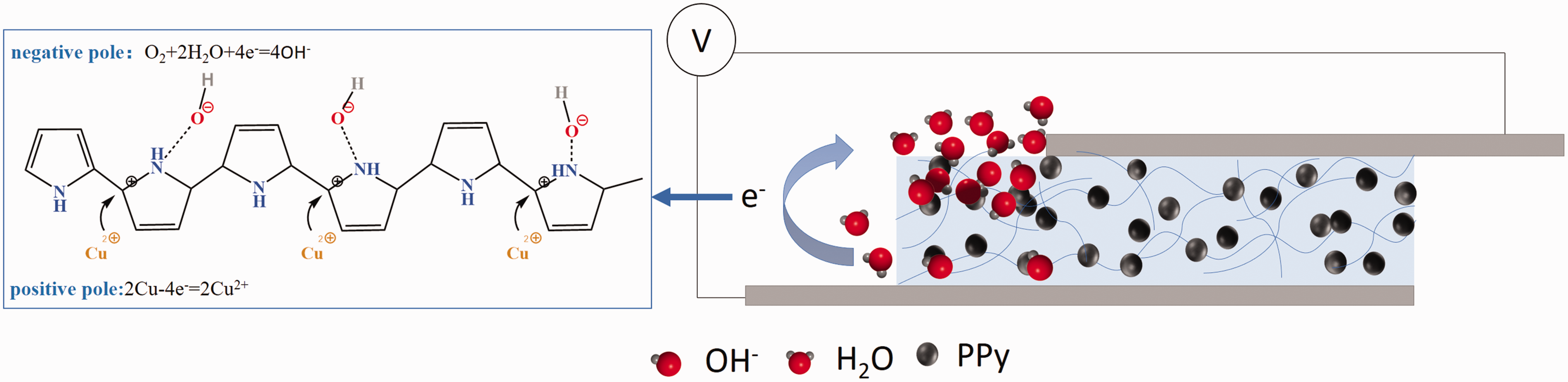
Response mechanism of a PPy/filter paper (FP) humidity sensor.
Table 1 summarizes the performance of the PPy/FP humidity sensor in comparison with other previously reported cellulose-based humidity sensors. It was found that most of the cellulose-based humidity sensors response and recovery time was longer. At the same time, compared with the current and capacitance, the voltage response signal does not require an external power supply. In this work, the preparation of sensors that can respond to changes in humidity in a short time, for some testing humidity change scenarios, such as breathing, and other sports have good detection capability. Therefore, the PPy/FP humidity sensor provides more options for areas that require higher sensitivity, such as rapid detection and electronic skin.
Comparison of cellulose-based humidity sensors
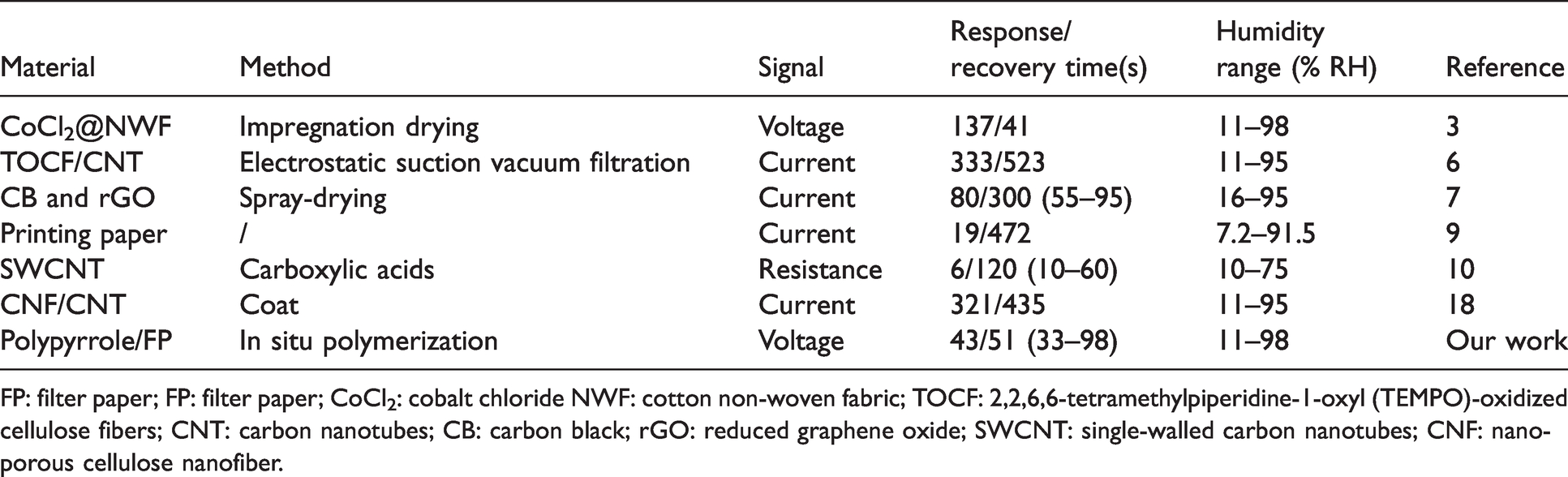
FP: filter paper; FP: filter paper; CoCl2: cobalt chloride NWF: cotton non-woven fabric; TOCF: 2,2,6,6-tetramethylpiperidine-1-oxyl (TEMPO)-oxidized cellulose fibers; CNT: carbon nanotubes; CB: carbon black; rGO: reduced graphene oxide; SWCNT: single-walled carbon nanotubes; CNF: nanoporous cellulose nanofiber.
Applications of the PPy/FP humidity sensor
To test the practical application performance of the humidity sensor, the humidity sensor was connected to the electronic multimeter and exposed to air. As shown in Figure 9(a), a wet finger with rubber gloves was used to close the front and back side of the humidity sensor. It was found that positive voltage and negative voltage was generated, respectively. The reason was that the contact position was a pole where the water molecules were ionized, which is the negative pole of the system. At this time, the voltage was recorded as ‘+’. When the contact position changed, the directional channel of the carrier also changed. The voltage generated due to humidity was displayed as ‘–’. At the same time, it was found that when the position of the contact position electrode was below, the output voltage generated was much smaller than when it was above, which was attributed to the following two reasons: (a) the migration of electrons when the position is lower will be affected by some potential energy; (b) part of the forward migration is not finished yet and the reverse migration cancels it out.
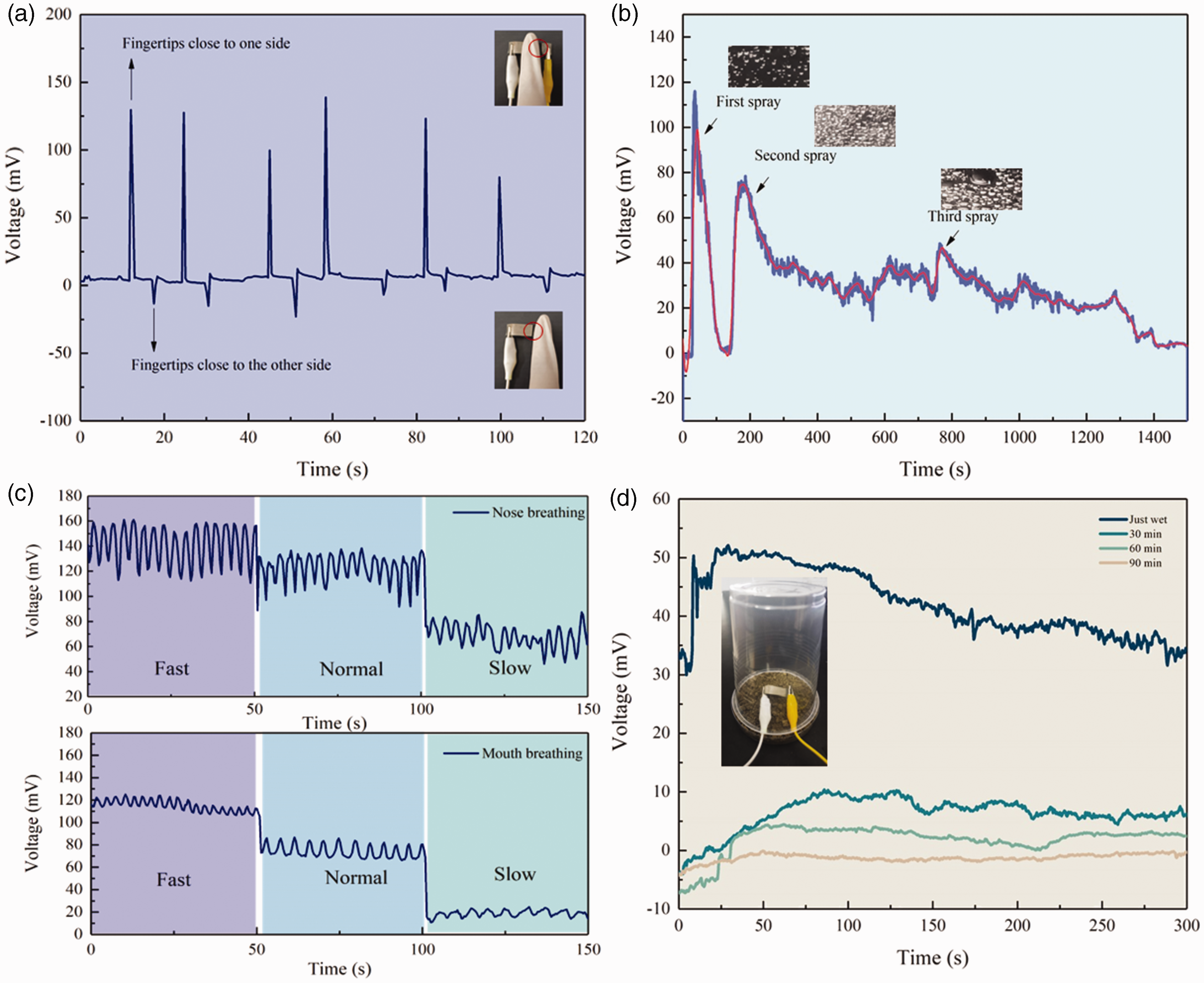
Voltage response when fingers touch different sides of the electrode (a); voltage output of the humidity sensor with 10 cm vertical water spray above the PPy/FP humidity sensor (b); voltage output in three different states of breathing with the nose and breathing with the mouth (c); after wetting the soil and drying it at 60°C for 30 min, 60 min and 90 min, the voltage output of the humidity sensor to its response was obtained (d).
To explore the output and recovery performance of the humidity sensor after being soaked to varying degrees, the humidity sensor was sprayed vertically at 10 cm above the humidity sensor, simulating the wetness of the spray as shown in Figure 9(b), and the voltage output reached 115 mv after the first spray and the output value recovered after approximately 130 s. After the second water spray, the wetting situation increased further, and due to the phenomenon shown in Figure 9(a), the front and back sides of the humidity sensor were positive and negative to each other, and the final output voltage reached 75 mv. The output voltage in the next 8 min dropped to 20 mv and did not change, due to molecules not evaporating in time. The continuous reaction of electrode made it hard to generate the responsive voltage. After the third water spray, the output voltage reduced to about 20 mv after a small increase. After that, the evaporation of water was accelerated by the blast above the humidity sensor, and the voltage output decreased rapidly.
Figure 9(c) shows the voltage response signal generated by monitoring human respiration. Each exhalation and inhalation of the human body brought about a change in the humidity of the surrounding air. This is the point when the PPy/FP humidity sensor was mounted on a mask that can be easily worn to test the body's breathing rate in different states. 27 Five breath states were simulated and recorded by the PPy/FP sensor. The sensor could distinguish the variation of breath type and rate among a nose breath, a mouth breath, a normal breath, a fast breath, and a slow breath. Nose breathing had a higher voltage than mouth breathing due to the more concentrated moisture. After doing exercises, the voltage response of the breath was tested to simulate a fast breath state. With fast breathing, moisture diffused into the air more quickly and the voltage response was high. After a period of time, the breathing returned to normal and the frequency was slowed down, the voltage response of the sensor decreased due to the partial evaporation of the water diffused in the air during breathing. Then, by adjusting the breath to a slow, long state, the voltage response of the sensor was even lower. The reason was moisture carried by the breath escaped quickly. The human body states and different health conditions led to changes in breath frequency. The PPy/FP sensor has potential applications in personal state monitoring.
In Figure 9(d), the application of the PPy/FP humidity sensor for soil moisture detection was explored, and it was found that when the soil was sufficiently wet, its surface moisture increased and the sensor had a voltage response of 50 mv and flattened out after 5 min. The soil was dried in a 60°C oven for 30 min and then the voltage response was tested again. The sensor generated a voltage of up to 10 mv. Dried again for 30 min, the sensor produced a voltage of 5 mv. Then after the third drying, the sensor produced almost no voltage. Experimental results showed that the PPy/FP humidity sensor can be used for soil moisture detection, and has high output voltage, high flexibility, good portability, fast response, and other advantages. It has important applications in the field of environmental humidity detection.
Conclusion
The PPy/FP composite used for the humidity sensor was prepared by in situ polymerization of PPy on FP. The PPy/FP humidity sensor has a quick response/recovery time of 50/57 s, respectively, the characteristics of high stability (more than 75 days). Light weight and soft FP-based sensors make up for the shortcomings of traditional humidity sensors, such as complex structure, large volume and high cost, and provide a new idea for future portable and miniaturized intelligent devices. The voltage and humidity conduction mechanism of conductive polymer was proposed and verified by experiments. External humidity stimulation can regulate the electrochemical reaction of PPy. The reduction reaction occurs near the water side to generate the nucleophilic product OH–. The PPy system loses electrons to form carrier directional channels, resulting in changes in the output voltage measured between the two electrodes. The application experiment proves that the conductive polymer system can be used as an effective and reliable non-contact humidity sensor, which can be easily pasted on the mask and other devices to realize the wearing of wearable devices. The humidity sensor is made into a built-in mask, and wires are connected to both ends of the mask, which is connected to an electrochemical workstation to monitor the breathing conditions of patients in real time. The experimental results of respiratory monitoring show that humidity sensors can accurately detect respiratory differences in different states, which has great potential in human health monitoring, and such battery-like devices that generate responsive voltage may offer new ideas for wet-gas power generation. Furthermore, in this work, it was found that doped salt could promote the sensing performance of humidity sensors, but the law of this promotion was not further explored.
Footnotes
Declaration of conflicting interests
The author(s) declared no potential conflicts of interest with respect to the research, authorship, and/or publication of this article.
Funding
The author(s) disclosed receipt of the following financial support for the research, authorship, and/or publication of this article: This research is funded by Natural Science Foundation of Jiangsu Province, Project funded by China Postdoctoral Science Foundation, jiangsu province postdoctoral science foundation, LVYU Foundation of China Chemical Fiber Association and National Natural Science Foundation of China.
