






Abstract
The scope of this study was to investigate the effect of yarn structure and material type on the thermal and mechanical comfort properties of plain knitted fabrics. A new type of elastic core spun yarn which is called tri-core yarn was introduced. The other yarn structures used were single-core/T400, single-core/lycra, dual-core yarn, and ring-spun yarn. The five types of yarn structure were produced with three material types (100% cotton, blended cotton/modal (50/50%), and blended cotton/tencel (50/50%)) at the same yarn count (10 Ne). Knitted fabrics with a single jersey structure were produced from yarn samples. The mechanical comfort properties including fabric modulus and recovery in wale and course directions were measured. Thermal comfort including air permeability, water vapor permeability, thermal conductivity, and thermal absorptivity were also measured. Full factorial analysis was performed on the test results. It was concluded from the factorial analysis that yarn structure, material type, and two-way interaction had a significant influence on mechanical and thermal comfort except for thermal conductivity, the significance of the material type was exactly P = 0.05. It was concluded that knitted fabric produced from tri-core in the case of blended cotton/tencel obtained the better modulus and elastic recovery in both directions in wales and courses that largely improved the mechanical comfort.
Keywords
At present comfort is considered to be a fundamental property when a textile product is valued. 1 Comfort can be defined as freedom from pain and from discomfort as a neutral state. 2 Comfort can be divided into mechanical comfort and thermal comfort.
Mechanical comfort is the ability of a garment to enable body parts to move easily due to its acceptable suitable stretch, recovery properties, and retention of the original shape over time without any deformation. 3 To impart elastic properties (stretch and recovery) to fabrics (woven or knitted), elastic core spun yarn is the most suitable solution.
Thermal comfort is that condition of mind which expresses satisfaction with the thermal environment (ISO 7730). Human thermal comfort depends on the metabolic rate (internal heat production), the heat loss from the body, and the climatic conditions. Clothing modifies the heat loss and moisture loss from the skin surface, so it plays a vital role in the maintenance of heat balance. 2
Elastic knitted fabrics are popular due to their mechanical and thermal comfort. Various previous studies have reported the dimensional and mechanical properties of elastic knitted fabrics made from single-core/lycra yarn.4–6 Despite this, few works have studied the elastic properties and thermal properties of knitted fabrics produced from single elastic core spun yarns. Senthilkumar and Anbumani 7 studied the dynamic elastic recovery of spandex-plated cotton fabric and spandex core cotton spun fabric. It was found that the spandex-plated cotton fabric had higher dynamic elastic recovery than that of spandex core cotton spun fabric. The spandex-plated cotton fabric was found to be more suitable for the tight-fitting garments meant for sports than the spandex core cotton spun fabric. Manshahia and Das 8 studied the thermo-physiological comfort aspects of compression athletic wear (single jersey knitted) produced from core spun elastane cotton blended yarns with different elastane proportions, elastane stretch and twist multiplier. It was concluded that the fabrics became heavier and thicker, and showed improved thermal resistance, lower air and water permeability and poor moisture management properties, with the increase in the proportion of elastane and level of elastane stretch. It was also determined that higher twist resulted in better air and water vapor permeability but lower thermal resistance and wicking.
Lately, new types of core yarns called dual-core spun yarns have been introduced. Dual-core yarns can be defined as a multicomponent core spun yarn composed of two different core components. The first component is usually lycra, and the second component is a monofilament or multifilament yarn such as PTT, T400, PET, PBT, etc. 9 There are many works that have studied the properties of dual-core spun yarns. Babaarslan et al. 9 investigated the performance characteristics of dual-core spun yarn containing PET/elastane in the core by varying the fineness level of PET filaments and draft levels of elastane filaments. It was found that filament fineness and elastane draft had a significant effect on yarn hairiness, tenacity, and elongation. Furthermore, fatigue behavior in terms of dynamic modulus and strain of PET filament core spun and PET/elastane dual-core spun yarns was determined after cyclic loading. It was found that all the parameters used (elastane draft, filament fineness, and number of cycles) had a significant effect on both dynamic modulus and dynamic strain.
Only two papers have studied the thermal properties and permanent set of knitted fabrics produced from dual-core spun yarns. Fouda and Eldeeb 10 compared the properties of knitted fabrics produced from dual-core yarns with knitted fabrics produced from single-core yarns with three different structures and using different levels of stitch length. The statistical results confirmed that the yarn type had a significant effect on fabric recovery, elasticity, and shrinkage, while it did not have a significant effect on drapability, thermal resistivity, and air permeability. Khalil et al. 11 studied the properties of single jersey knitted fabrics produced from 100% cotton, cotton with additional lycra (full-plated), core, and dual-core yarns with the same loop length. The experimental results confirmed increasing the fabric elasticity and recovery 100% by using dual-core yarns. The thermal absorptivity of core and dual-core samples increased by 27% compared with 100% cotton fabric samples, but water vapor permeability declined by 18% compared to 100% cotton fabric samples. Tri-core spun yarn is the newest generation of core spun yarn and contains three different filament components in the core and is covered with a sheath component. 12 There are only two works that have studied the properties of tri-core yarns. The first work by Elrys et al. 12 studied the physical and mechanical properties of tri-core yarns. The authors studied the effect of yarn structure and yarn count on the properties of types of core spun yarns, including elastic core/T400, elastic core/lycra, dual-core, and tri-core yarns. It was concluded from the factorial analysis that yarn count, yarn structure, and two-way interaction had a significant effect on yarn properties, except for yarn hairiness in which the effect of yarn structure and two-way interaction was not significant. In another study, Elrys et al. 13 introduced the elastic properties after cyclic loading including stress decay, permanent deformation, elastic recovery, and the relaxation rate of tri-core yarns compared with other yarn structures such as conventional ring-spun yarn, single-core/lycra yarn, single-core/T400 yarn, and dual-core yarn at different yarn counts. The results were statistically analyzed using two-way analysis of variance. The results determined that tri-core spun and single-core/T400 yarns had higher values for most of the elastic properties. It was found that yarn count and yarn structure significantly affected stress decay, while the yarn structure significantly affected permanent deformation and elastic recovery.
Despite this new type of tri-core spun yarn attracting the attention of producers, none has perfectly studied knitted fabrics produced from these yarns.
From the previous studies, no study was found in the available literature that investigated the effect of material type and different yarn structures on the mechanical and thermal comfort properties of knitted fabrics produced from them, especially tri-core yarn. Consequently, the aim of this study was to investigate the effect of yarn structure and material type on the thermal and mechanical comfort properties of knitted fabrics produced from the new types of tri-core yarn compared with other yarn structures such as single-core/lycra, single-core/T400, dual-core and conventional ring-spun yarn. Then, samples achieving the optimum comfort would be selected for the end use of this study as a summer T-shirt.
Materials and methods
To achieve the aim of this study five yarn structures (ring-spun yarn, elastic core/lycra yarn, elastic core/T400 yarn, dual-core yarn, and tri-core yarn), in three different material types (cotton, blended cotton/modal (50/50%), and blended cotton/tencel (50/50%)) were produced.
Yarn production
Greek cotton fibers were used and tested by the Uster HVI spectrum device. The measured cotton, modal and tencel fiber properties are given in Tables 1 and 2. The five yarn structures were produced at the same yarn count of 10 Ne (nominal count) and twist multiplier αe of 4.5, with the specifications illustrated in Tables 3–7. Cotton fibers and fiber blends (cotton/modal 50/50% and cotton/tencel 50/50%) were used for producing ring-spun yarns and as a sheath component for single-core/T400, single-core/lycra, dual-core yarn, and tri-core yarn, respectively, and the core components, T400, lycra, (T400/lycra), and (lycra/T400/lycra) the stated core yarns, respectively.
Properties of cotton fibers

Properties of modal and tencel fibers

Yarn specification for producing ring-spun yarn

Yarn specification for producing single-core/lycra yarn

Yarn specification for producing dual-core yarn

Yarn specification for producing single-core/T400 yarn

Yarn specification for producing tri-core yarn

A modified ring spinning machine (Marzoli MP-TN 220, 2010) was used for producing ring and core spun yarns. The technological process of producing single-core yarns is shown in Figure 1. The core component was fed through a feeding device installed on the ring spinning machine, passed the yarn guide and was fed directly into the front roller, while the wrapping fiber strand passed the back, middle and front roller successively. Finally, the wrapping fiber strand met the core in the front roller nip. The control of stretch or pre-draft of the core component was carried out precisely by the speed difference between positively driven feed rollers and the front roller of the drafting arrangement.
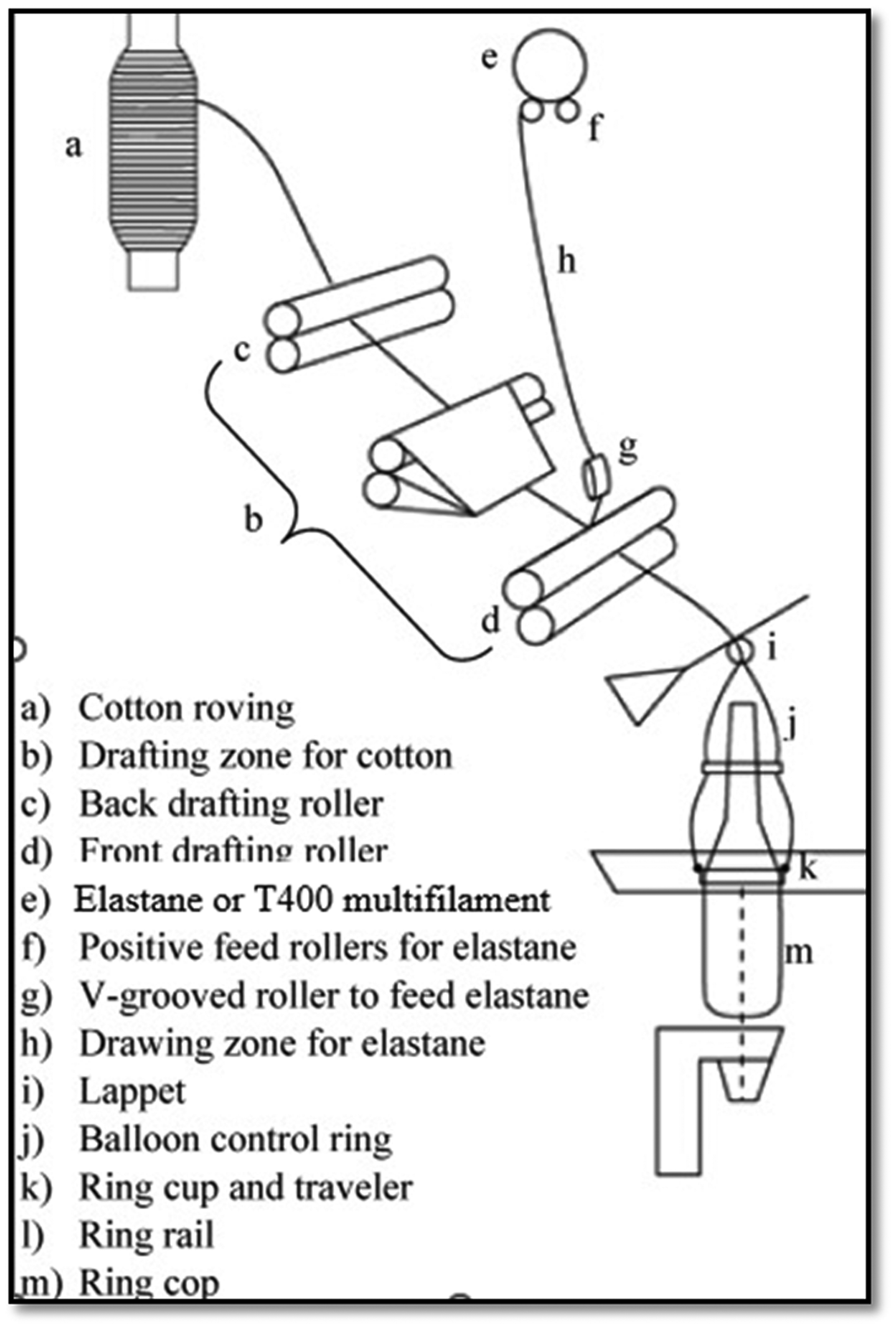
Schematic diagram of modified ring spinning system to produce single-core spun yarn. 14

Schematic diagram of modified ring spinning system to produce dual-core yarn and tri-core spun yarn.
As illustrated in Figures 2 and 3, dual-core yarns were produced by feeding the core components (lycra and T400) separately. In the case of tri-core spun yarn, there were three core filaments (lycra + T400 + lycra), a Schärer Schweiter Mettler (SSM) air covering machine, the yarn processing machine for intermingling was used to interlace the two components of lycra and T400 filaments into a single component by way of compressed air. Then this single component was fed as one filament with the third component ‘lycra’ into the modified ring spinning machine to form a tri-core spun yarn. The properties of the filaments used are given in Table 8. All yarns were produced according to the processing parameters illustrated in Tables 3–7.

Manufacturing of dual and tri- core yarn on the conventional ring spinning frame.
Properties of filaments

Knitted fabric production
Fifteen plain knitted fabrics were produced from the produced yarns according to Tables 3–7 on a Stoll GSM 433.6 flat knitting machine, six cam system and gauge 10 as one roll. The knitted machine gauge was selected according to the following equation (1):
15
The fabrics produced were relaxed for 48 h and finished and dyed in Egyptian textiles for dyeing and finishing in Egypt, according to the flow chart shown in Figure 4, and two images of knitted fabrics produced from tri-core blended (cotton/tencel) and ring-spun blended (cotton/tencel) in addition to the simulation diagram of a single jersey knitted structure illustrated in Figure 5.

Flow chart for knitted fabric finishing and dyeing processes.

(a) Image of sample produced from tri-core blended (cotton/tencel); (b) image of sample produced from ring-spun yarn blended (cotton/tencel) and (c) a single jersey knitted fabric simulation diagram.
Heat setting
Plain knitted fabrics were heat set without any traverse tension on the same width produced on a knitting machine to keep the same fabric specifications. The heat setting of cotton/elastane fabrics was carried out above the glass transition temperature and below the melting temperature of elastane, for a suitable time. 16 Heat setting was performed on a MonFor-Matic heat setting machine (model 4005) using a temperature of 195°C, speed 16 m/s, and time 45 s.
Bleaching
Plain knitted fabrics were semibleached in an exhaustion procedure, the bleaching bath contained 4% hydrogen peroxide 50, 4% caustic soda liquid, 1% Atrawettex, 2% Atralub p100, and 0.4% oxylase wt 250 (wetting agent). Acetic acid (1%) was used for neutralization. The bleaching was carried out at 100°C for 1 h.
Dyeing and drying
The dyeing process was performed using a reactive dye (green) in a bath with pH of 6.5, consisting of 50% solit amesal, 1% ash ALT0, 1% caustic soda liquid, and a 2% acetic acid. The dyeing and finishing process was performed on a Brazzoli S.P.A. machine, model 20030, as follows:
adding salt to the cold for 15 min; dye withdrawal gradually for 20 min; raising the temperature to 60°C for 20 min; boiling using acid to remove any remaining alkali and boiling four times using water to remove any impurities; drying was done at 150°C.
Softening
The finished plain knitted fabric roll was finished with silicone and fatty acid, .and again exposed to heat setting in the same conditions.
Compacting
The finished plain knitted fabric roll was again exposed to heat setting under the temperature of 150°C in the same conditions to keep the same fabric specifications.
Yarn test methods
Before testing the yarns, they were conditioned under standard atmospheric conditions of 20 ± 1°C and 65 ± 2% relative humidity for 48 h according to ASTM 1776. Then, 20 samples of yarns were tested for tensile properties using the Uster Tensorapid 4, according to ASTM D 2256; the test length was 500 mm and the test speed was 5000 mm/min.
The scanning electron microscope (SEM) images of the five structures (ring-spun, elastic core/T400, elastic core/lycra, dual-core, and tri- core yarns) with a yarn count of 10 Ne were performed by a JEOL JSM 6510LV SEM to illustrate the difference between these structures. Before scanning, samples were prepared on stub cleaned with acetone carefully to ensure better scanning. Then the stub was sputtered with gold coating of approximately 10 nm for 100 s in a sputtering chamber. After that, the samples were mounted on a SEM chamber to capture different images for yarn structures at 30 Kv and under different magnification levels ranging from 25x to 200x, as shown in Figures 6 and 7.
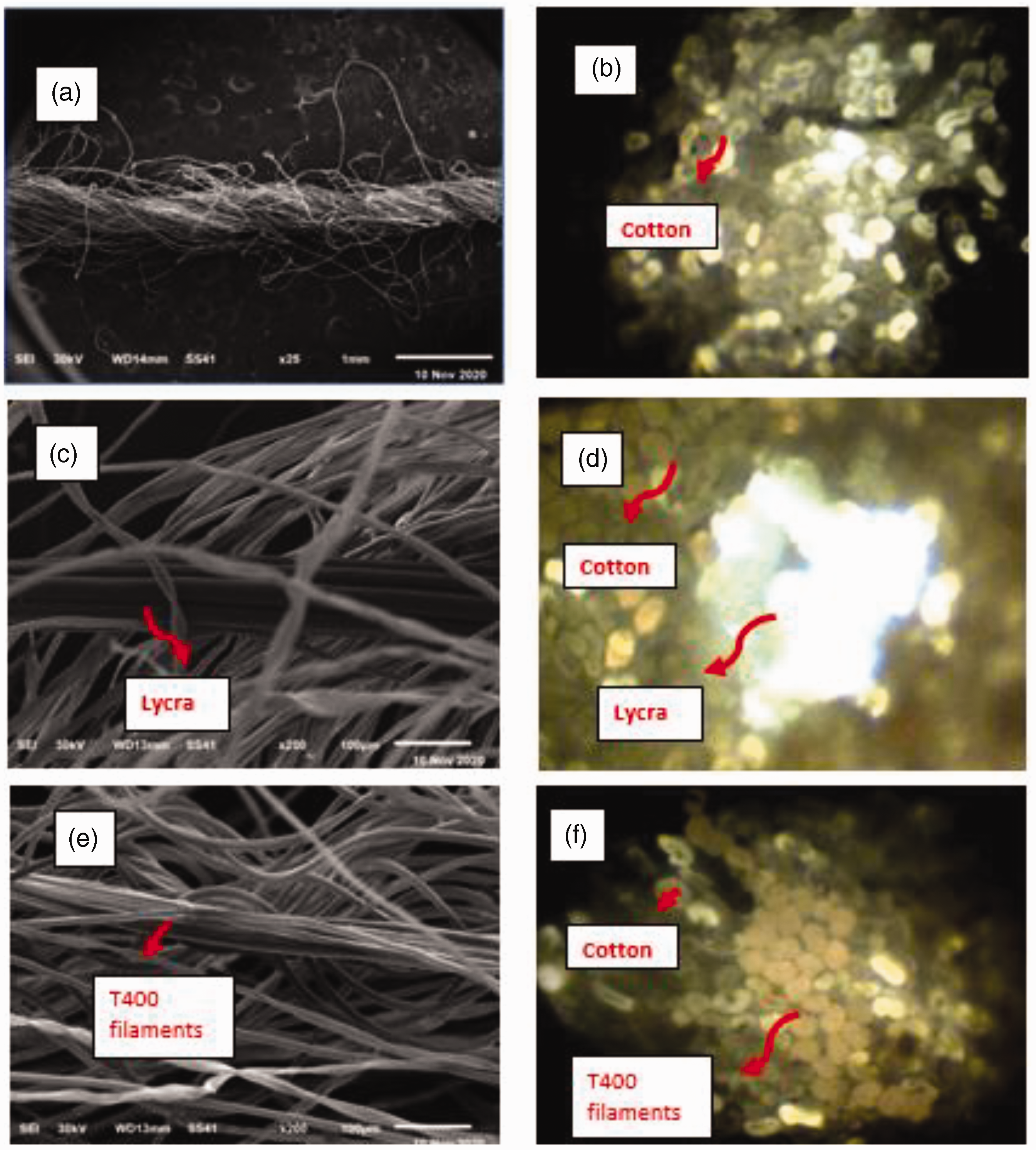
(a) Scanning electron microscope (SEM) images of ring-spun yarn; (b) cross-section of ring-spun yarn; (c) SEM image of single-core/lycra yarn; (d) cross-section of single-core/lycra yarn; (e) SEM image of single-core/T400 yarn and (f) cross-section of single-core/T400 yarn.

(a) Scanning electron microscope (SEM) images of dual-core spun yarn; (b) cross-section of dual-core spun yarn; (c) SEM image for tri-core spun yarn and (d) cross-section of tri-core spun yarn.
Yarn cross-sections were taken for the different five yarn structures produced from cotton using a transmitted light microscope B3 professional series B3-220ASC binocular, as seen in Figures 6 and 7.
Knitted fabric test methods
Before testing the knitted fabrics, they were conditioned under standard atmospheric conditions of 20 ± 1°C and 65 ± 2% relative humidity for 48 h according to ASTM 1776. Then the following tests were performed:
Number of wales and courses per unit length
The fabric number of wales and courses per unit length were measured in accordance with the ASTM test standard D3887-2004, which defines it as the number of wales and courses per inch on the face of the fabric. Counting started with wales, and then the same operation was repeated for the course. This whole procedure was repeated five times from five random places for each specimen and confirmed that places are not closer than 5 cm or less.
Loop length
To determine the loop length, five courses from a 10 × 10 inch2 fabric specimen were unraveled. The length of unraveled courses in mm was measured by means of an industrial scale under a preload to straighten the yarn without stretching. A preload of 10 cN wa generally used for staple spun yarns of up to 65 tex.17–19 Five readings were taken from each specimen. The loop length was calculated by the following equation (2):
Fabric weight
A sensitive digital balance device with an accuracy of two digits was used to measure the weight of the samples, and then the fabric weight in g/m2 was estimated according to ASTM D3887. An average of three readings was taken.
Fabric thickness
The thickness of the fabric samples was measured by using a Thickness Mesdan Lab tester according to ASTM-D 1777. An average of five readings was taken.
Fabric bulk density
The fabric bulk density was calculated according to the following equation (3):
Dimensional stability
The shrinkage in wale and course directions was calculated after washing and drying using a Wascator 5A 40°C tumble dryer (1 wash) according to ISO 6330 and ISO 5077. The average of three readings was taken in both directions. The shrinkage value was defined by the following equation (4):
Skewness
The plain knitted fabric skewness was calculated according to AATCC 179. The knitted sample was marked before washing according to Figure 8. Then the sample was washed using the same method mentioned in the shrinkage measurement. After washing the skewness was calculated by the following equation (5):
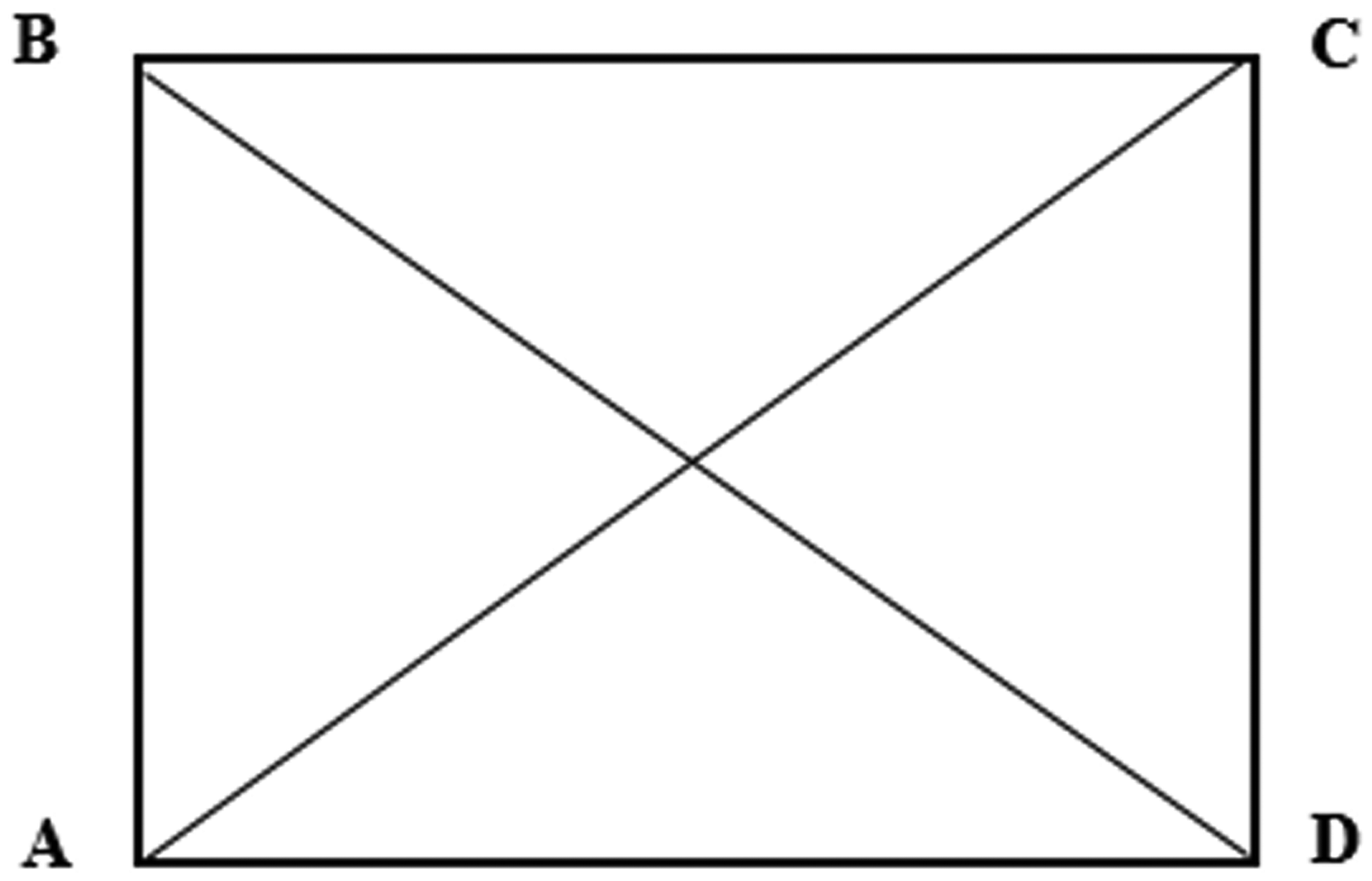
Marking the sample for measuring skewness.
Elastic properties
The plain knitted fabrics were tested by using a Titan 2 machine according to the method BS-4952. At first, 150 mm × 50 mm fabric was cut out from a large piece of fabric in wale and course directions and then the sample fabric (gauge length 100 mm) was fixed with the upper and lower jaws of the Titan 2 machine, and was measured as L1. The rate of extension and retraction of the specimen was set at 500 mm/min. The specimen was cycled twice between zero extension and the specified force (20 N). The force versus extension graph produced the elongation at a specified force on the second cycle and was recorded. The average of three readings was taken for all the elastic parameters.
In the test for the extension recovery, the sample was removed and allowed to relax on a flat and smooth surface and its length L2 was measured after 60 s to see how much of its original length was recovered. The extension recovery was measured according to the following equation (6):
The force (N) at a specified extension (modulus) was determined. Human body movement expands the skin by 10–50% at different parts. 20 The extension value was selected as 30% to determine the force that produced an extension of 30%.
Air permeability
Air permeability was measured by using the FX3300 Tex test instrument in accordance with ASTM_D 737. The average of five readings was measured.
Thermal properties
Thermal conductivity, resistance, and absorptivity were measured using an Alambeta tester according to ISO 8301. Five reading were observed. Relative water vapor permeability and water vapor resistance were measured by the Permetest according to ISO 11092. The average of three readings was determined.
Statistical analysis
Full factorial analysis was performed to specify the significance of the material type and yarn structure on the elastic properties of knitted fabrics produced from them using the MINITAB 18.1.0 software package.
Design of experiments
A two-factor factorial design, which has two factors: (a) material type and (b) yarn structure, with levels (a × b = 3 × 5), in which levels of factor (a) and levels of factor (b) were performed at all combinations of the factor levels investigated the influence of the sheath component and yarn structure on the properties of knitted fabrics.
Data were collected for all possible combinations of the levels of the two factors and n independent replications were taken at each (a × b) treatment combination as shown in Table 9, and the analysis of variance (ANOVA) was used as one of the primary tools for statistical data analysis. 21
Design of experiments for the two-factor factorial design

The
ANOVA of properties of knitted fabrics for the two-factor factorial design is shown in Tables 12, 13 and 14.
Measured properties of produced yarns

Dimensional properties of knitted fabrics

Summary of variance analysis for the two-factor factorial design (dimensional stability properties of knitted fabrics)

Summary of variance analysis for the two-factor factorial design (elastic properties of knitted fabrics)

Results and discussion
Yarn properties
Table 10 illustrates the influence of yarn structure and material type on yarn tenacity and breaking elongation. As can be clearly seen, the average of tenacity for the five yarn structures can be ordered as blended cotton/tencel (19.3) > blended cotton/modal (16.9) > cotton (14.2) cN/tex.
Tri-core obtained the minimum tenacity with the three types of material: cotton, blended cotton/modal, and blended cotton/tencel. This may be due to the presence of elastane in the yarn structure decreasing the yarn tenacity, 10 and there are one or more elastane yarns in dual and tri-core yarns. However, tri-core obtained the higher average of breaking elongation compared with other yarn structures because it contained three elastic components.
The plain knitted fabric properties
Dimensional properties
The dimensional properties of the plain knitted fabric including loop length, number of wales/cm, and number of courses/cm were measured, as illustrated in Table 11. Despite the heat setting, the number of wales per cm was almost seven for 80% of the samples, except for three samples that had six and eight wales per cm. In addition, the number of courses per cm varied from 10 to 16. This may be due to the fabric heat setting being performed only on the width of the fabric, and because of the higher elasticity of the yarns used, the number of courses per cm varied.
Bulk density
Figure 9 illustrates the effect of the yarn structure and material type on the plain knitted fabric bulk density. It can be clearly seen that the bulk density of knitted fabrics produced from yarn structures containing three elastic cores; that is, tri-core yarns, increased compared with knitted fabrics produced from ring-spun yarns in the case of cotton and cotton/modal, while in the case of cotton/tencel the opposite occurred. This may largely affect the thermal comfort properties of knitted fabrics.
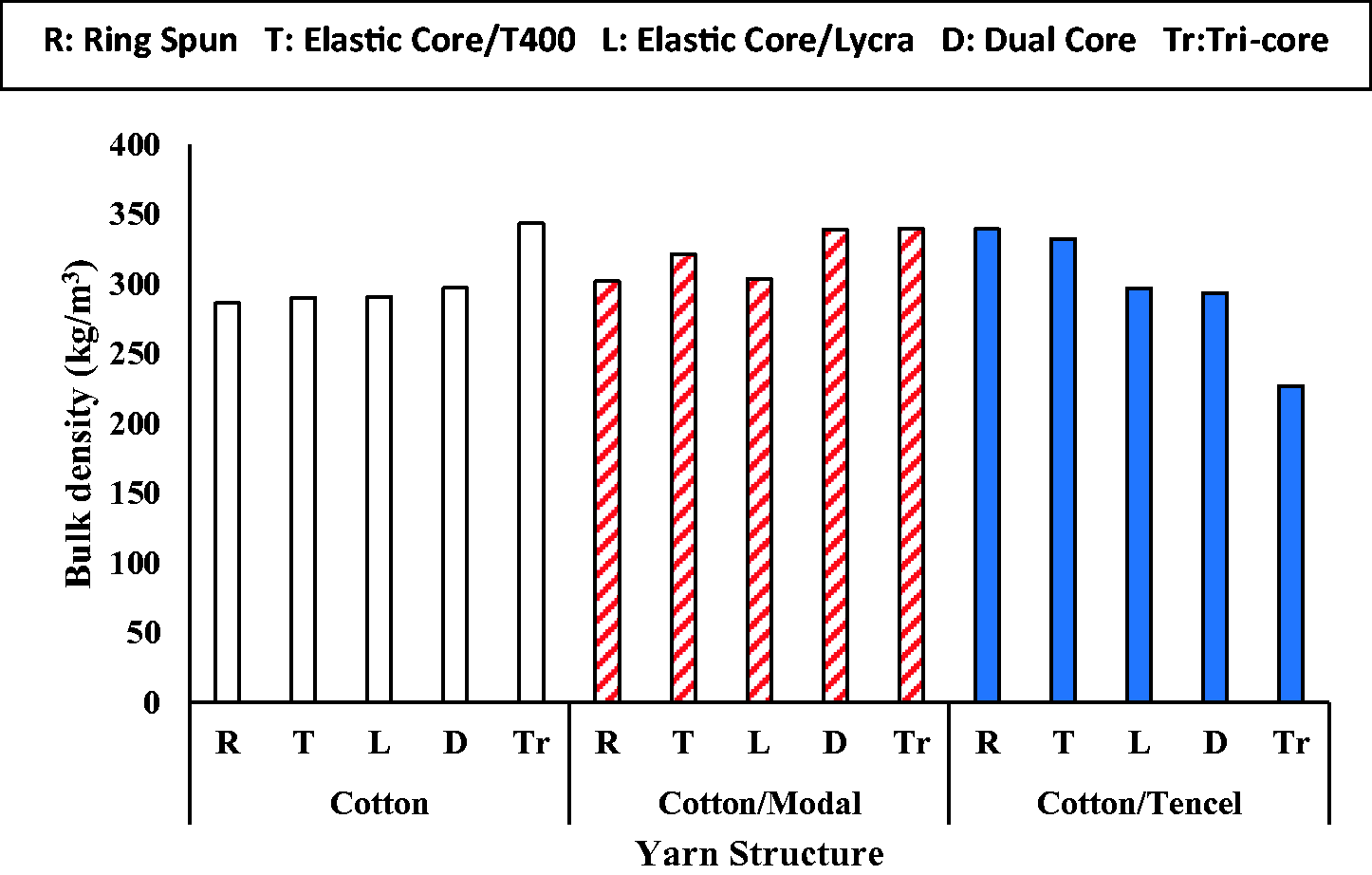
Effect of yarn structure and material type on knitted fabric bulk density.
Stitch density
Stitch density refers to the total number of loops in a measured area of fabric. 22 The stitch density per unit area was calculated by multiplying the wales per unit length by the courses per unit length. Figure 10 illustrates the effect of material type and yarn structure on the plain knitted fabric stitch density. As shown, stitch density increased gradually by increasing the number of elastic cores in the yarn structures as lycra leads to convergence of wales and courses, and the fabric becomes tighter. 23 Knitted fabrics produced from tri-core samples were observed to have a higher stitch density compared with other structures in the case of three materials. It was concluded that the average of five structures for the plain knitted fabric stitch density in the case of cotton and cotton/tencel was almost the same (84.7 stitches/cm2), but in the case of cotton/modal this average was higher (89.8 stitches/cm2).
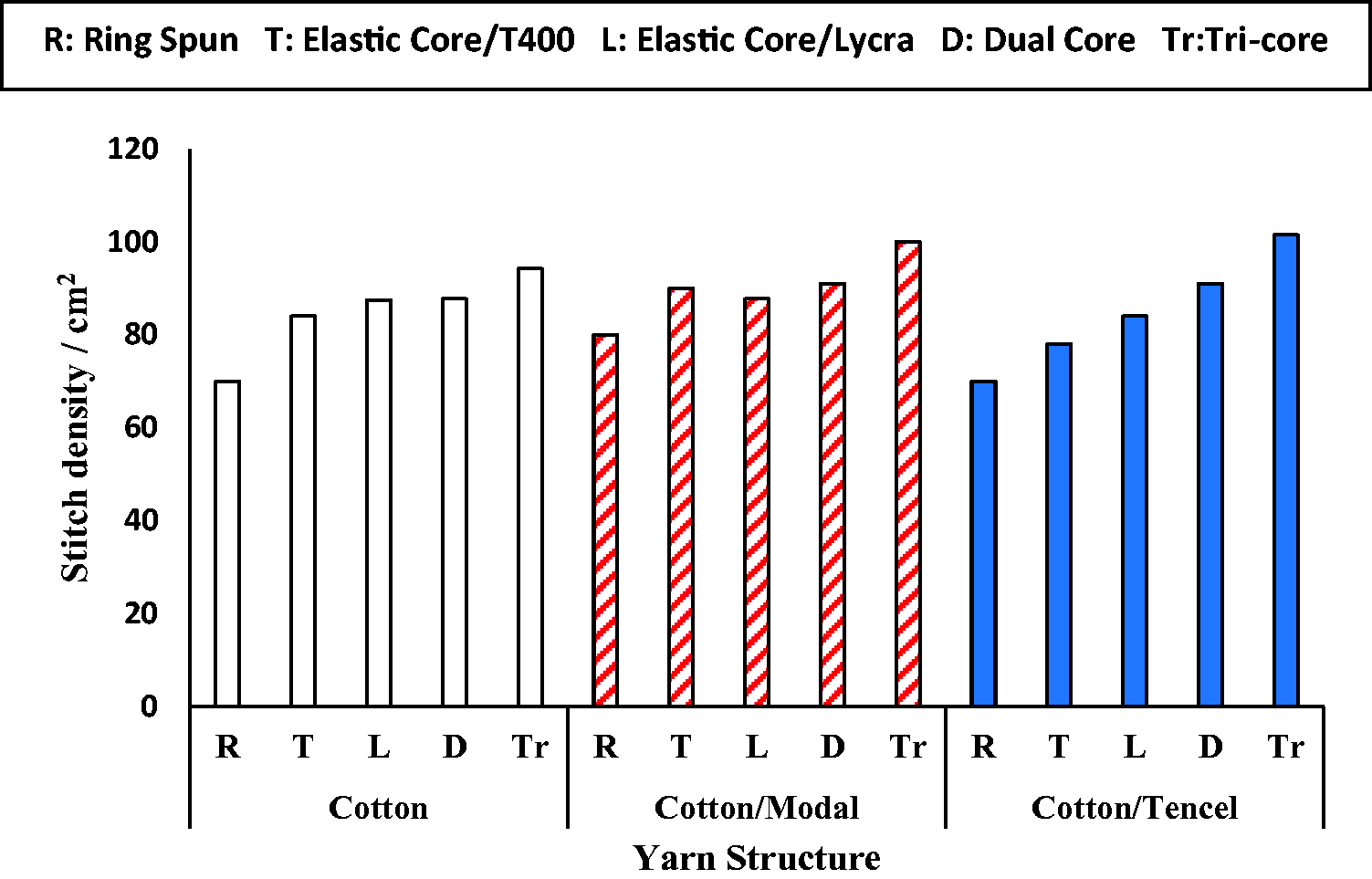
Effect of yarn structure and material type on knitted fabric stitch density.
Dimensional stability properties.
Shrinkage in wale and course directions
Figures 11 and 12 depict the impact of the yarn structure and material type on the plain knitted fabric shrinkage in wale and course directions. It was concluded from statistical analysis that the yarn structure significantly affects fabric shrinkage in both directions. However, material type significantly affects shrinkage only in the course direction, as illustrated in Table 12.
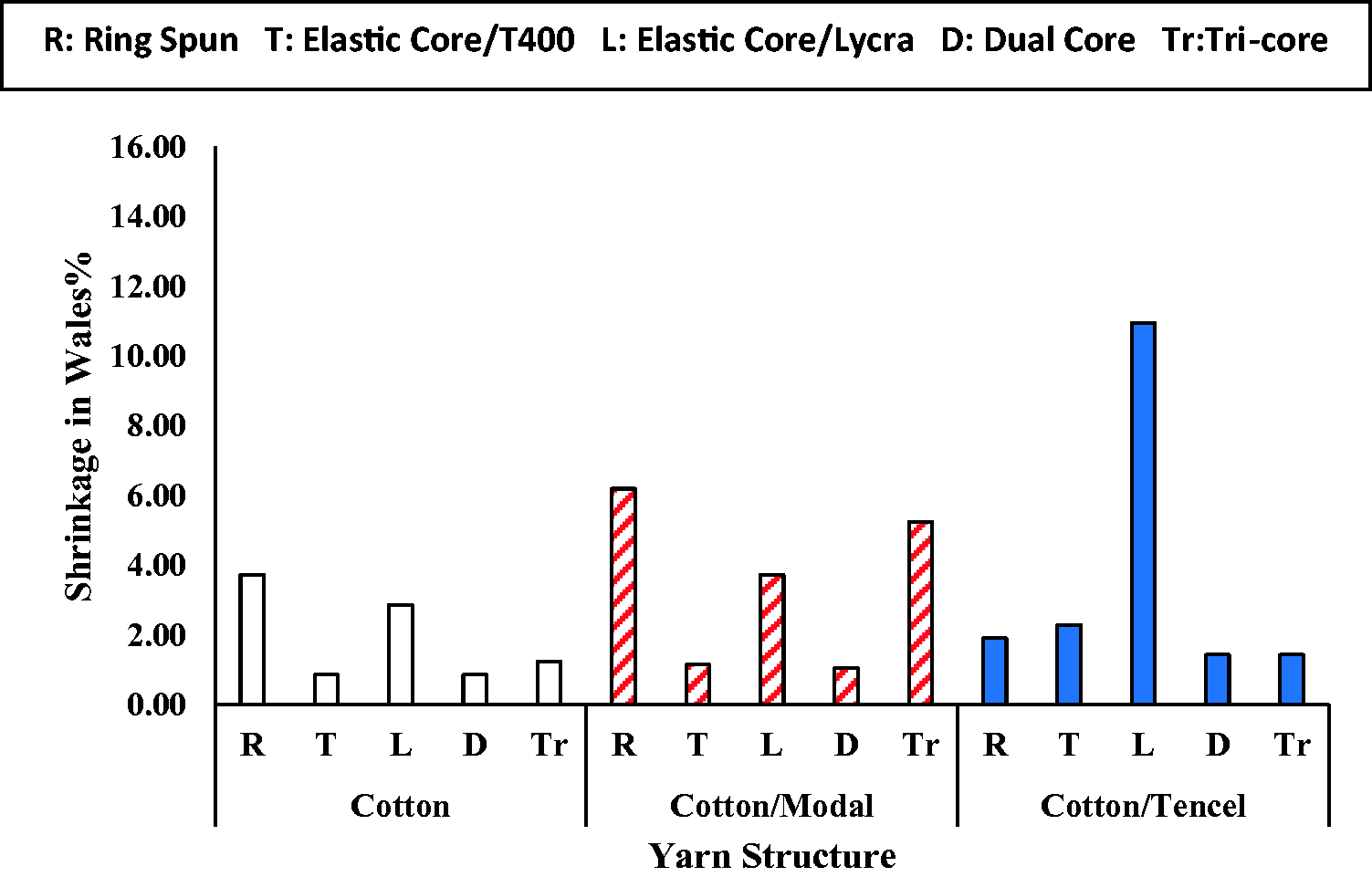
Effect of yarn structure and material type on knitted fabric shrinkage in the wale direction.
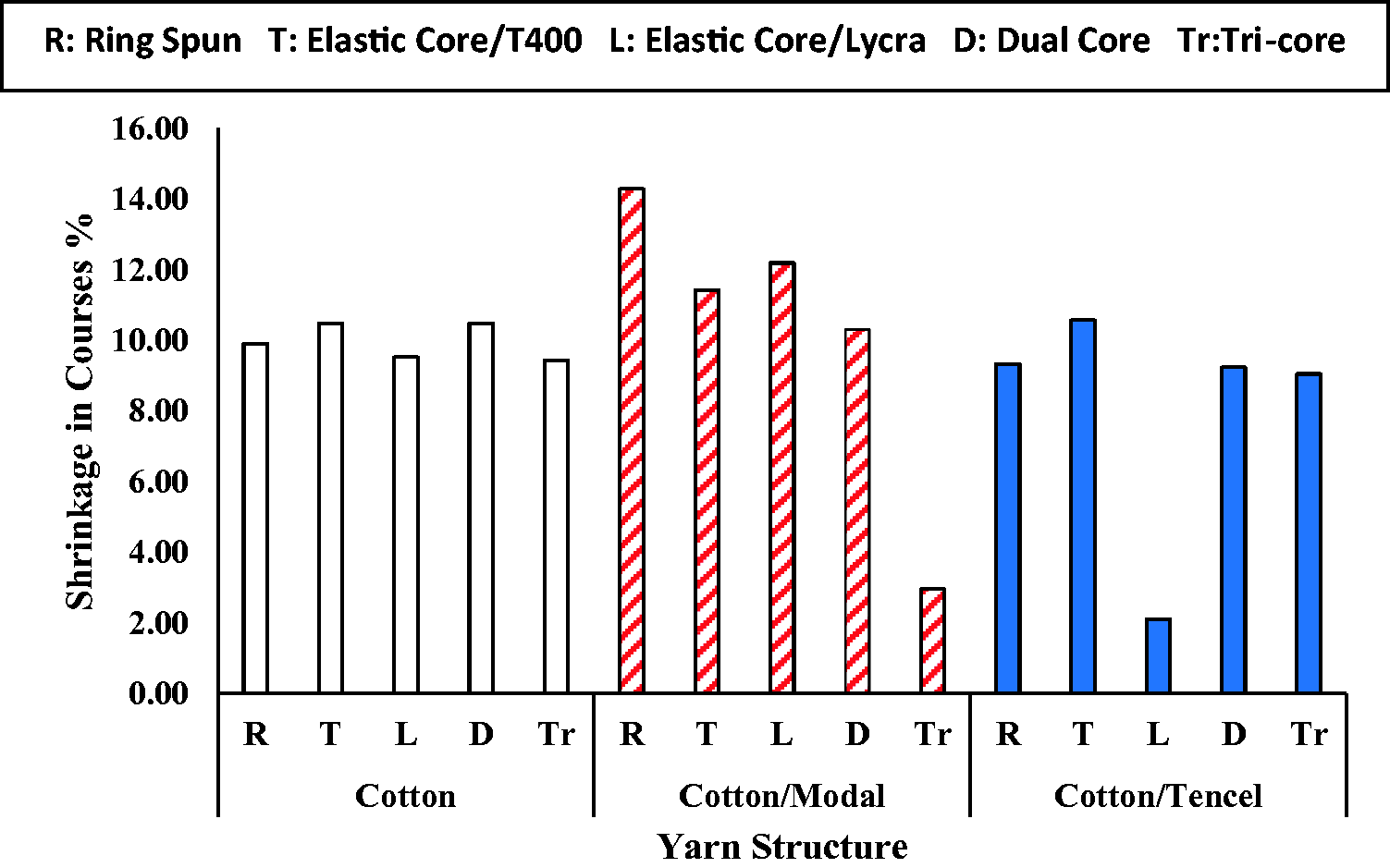
Effect of yarn structure and material type on knitted fabric shrinkage in the course direction.
In the wale direction, the average shrinkage percentage for 100% cotton fabrics produced from the five yarn structures was the lowest followed by cotton/modal and cotton/tencel fabric samples. Samples produced from R yarns had the highest shrinkage in cotton and cotton/modal, while samples produced from L yarns had the highest shrinkage compared with all fabric samples. Samples produced from D yarns were observed to have lower shrinkage for the three types of materials. The plain knitted fabrics produced from T yarns were also observed to have lower shrinkage in the case of cotton and cotton/modal. In the case of cotton/tencel, samples produced from Tr and D yarns achieved the lowest value. It was exciting to note that the plain knitted fabric produced from all the yarn structures achieved shrinkage values less than the standard shrinkage value for knitted fabrics (5%), except for L samples in the case of cotton/tencel.
In the course direction, shrinkage of the plain knitted fabric behaved differently because of the increment of shringage compared with the wale direction. The average shrinkage of samples produced from the five yarn structures was the lowest in the case of cotton/tencel followed by 100% cotton and cotton/modal. The plain knitted fabrics produced from Tr yarns had the lowest shrinkage in the case of 100% cotton and cotton/modal, while samples produced from L yarns were the lowest in the case of cotton/tencel.
Skewness
Skewness is considered a large problem in dimesional stability for cottton knitted fabrics, especially for plain jersey structure. Consequently, the effect of yarn structure and material type was studied and is illustrated in Figure 13. Both yarn structure and material type have a significant effect on knitted fabric skewness (P = 0.000), as shown in Table 12. The average skewness of knitted fabrics produced from the five yarn structures can be ordered as cotton < cotton/modal < cotton/tencel. The plain knitted fabrics produced from Tr yarns had the lowest skewness in both 100% cotton and cotton/modal, and samples produced from T yarns were the lowest in the case of cotton/tencel.
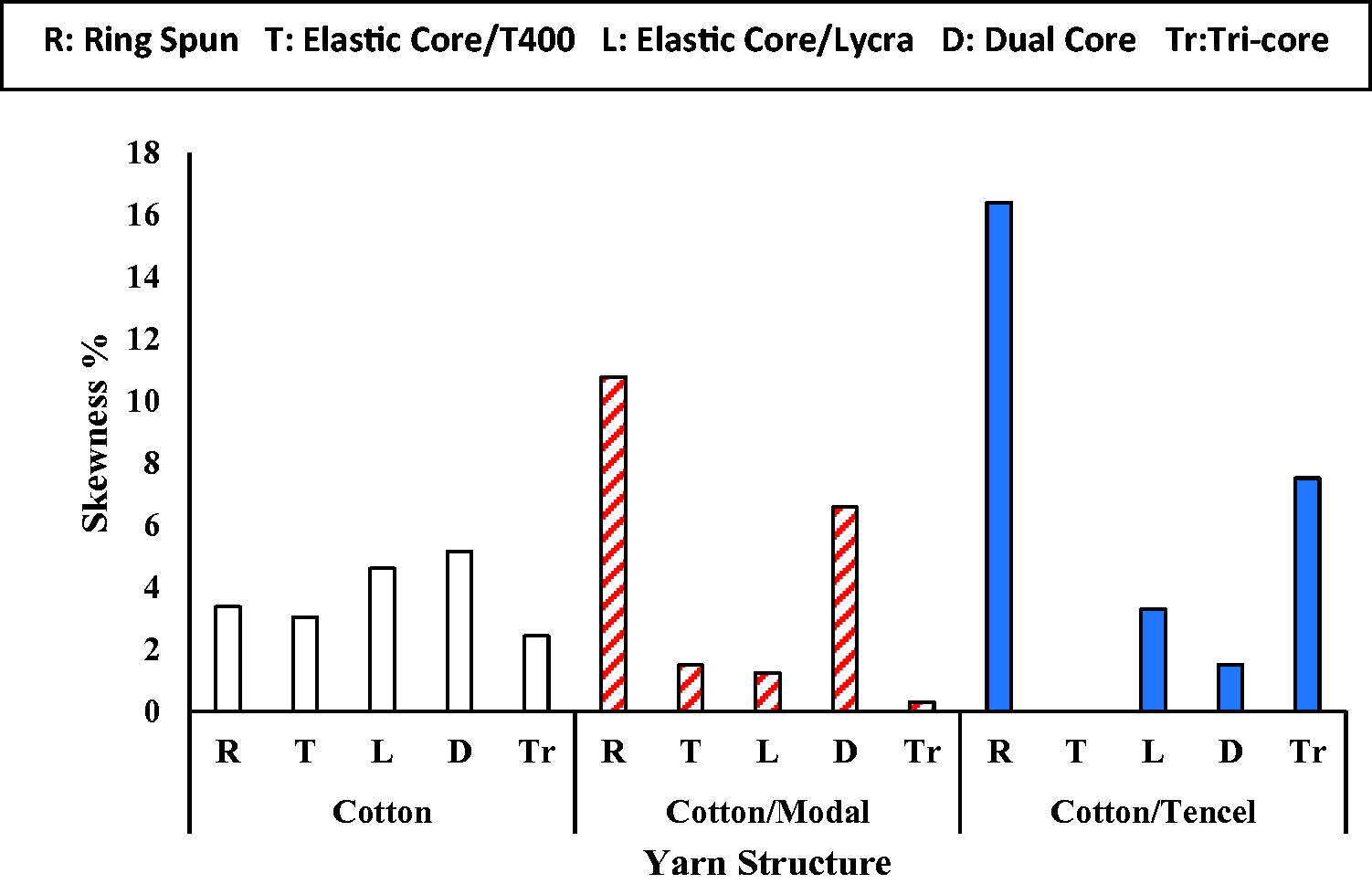
Effect of yarn structure and material type on knitted fabric skewness.
The plain knitted fabrics produced from R yarns had the highest skewness in both cotton/tencel and cotton/modal, while samples produced from D yarns were the highest in the case of 100% cotton. This can be clearly seen in Figure 5, which illustrates the difference in the skewness of knitted fabrics produced from tri-core yarn and ring-spun yarn in the same material. In general, the lowest value of skewness was achieved in the case of samples produced from T yarns in the case of cotton/Tencel, in which skewness was zero.
Elastic properties.
Force at extension 30% in wale and course directions
Figure 14 depicts the impact of yarn structure and material type on the force (N) required to impart an extension of 30% for the plain knitted fabric in the wale and course directions. In other words, this force indicates the modulus of the knitted fabrics. Increasing the value of this force means there is a difficulty in body movement and hence discomfort, what is known as mechanical comfort. Full factorial results confirmed that yarn structure, material type, and two-way interaction have a significant effect on the force at extension of 30% in the wale and course directions (P = 0.000), as seen in Table 13.
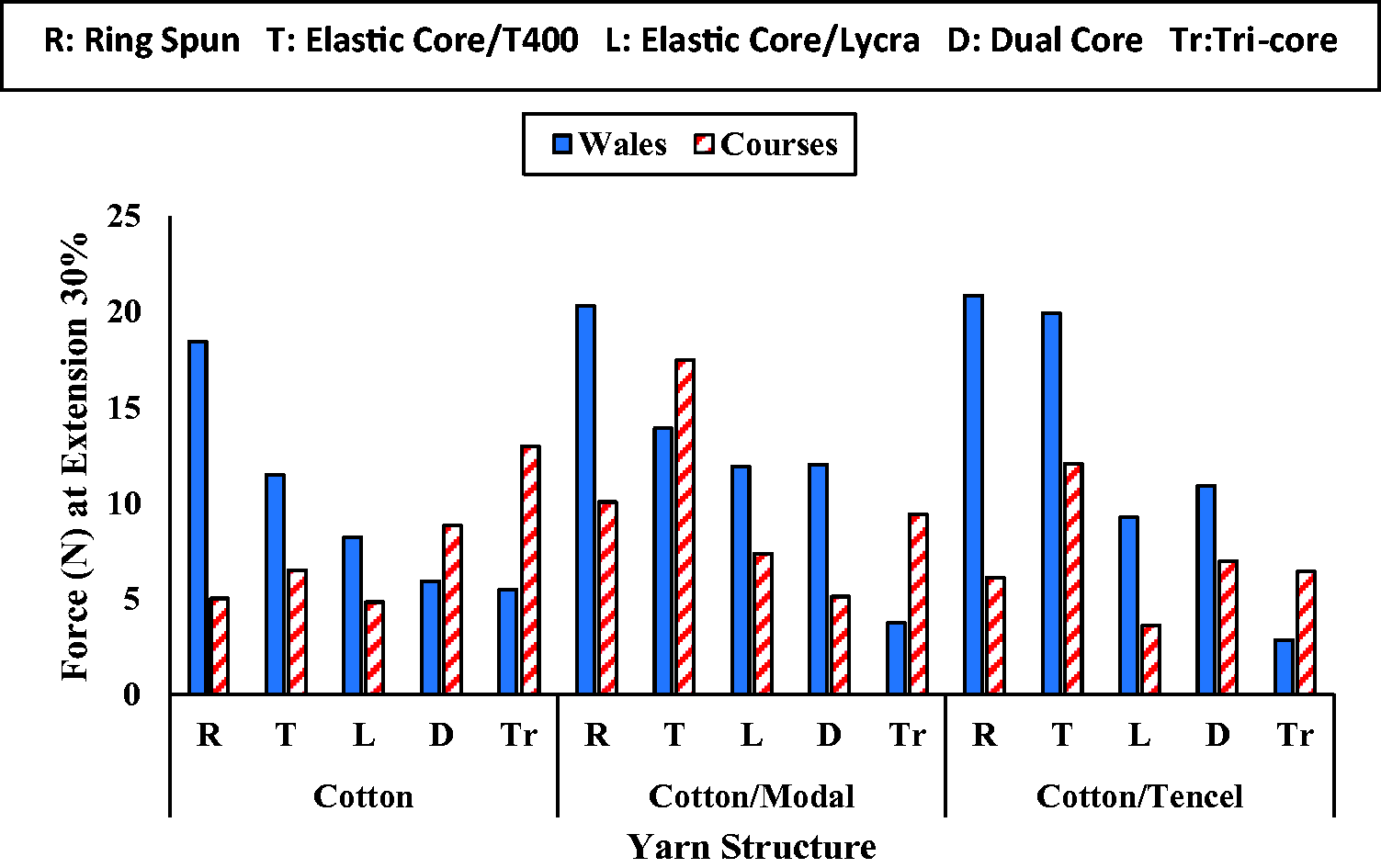
Effect of yarn structure and material type on knitted fabric force at extension of 30% in the wale and course directions.
Regarding the effect of material type in the wale direction, the average of knitted fabric force at an extension of 30% for five yarn structures can be ordered as blended cotton/tencel (12.7) N > blended cotton/modal (12.3) N > cotton (9.9) N.
Considering the effect of the yarn structure, R knitted samples obtained the highest modulus for the three materials (19.9) N, while Tr knitted samples obtained the lowest modulus for the three materials (4) N. This may be due to the increase in the number of elastic cores in the yarns, which resulted in decreasing the modulus of the produced fabrics gradually.
In the course direction, the average of knitted fabric force at an extension of 30% for five yarn structures can be ordered as blended cotton/modal (9.9) N > cotton (7.6) N > blended cotton/tencel (7) N.
With respect to the effect of the yarn structure, knitted fabric produced from elastic core/T400 was the highest modulus (12) N, followed by tri-core (9.6) N, ring-spun (7) N that equaled dual-core and was higher than elastic core/lycra (5.3) N.
T samples were the highest modulus for cotton/modal and cotton/tencel, while D and L samples were the lowest modulus in the case of cotton/modal and cotton/Tencel, respectively.
Extension recovery after 60 s in wale and course directions
Figure 15 illustrates the influence of the yarn structure and material type on extension recovery after 60 s for the plain knitted fabric in the wale and course directions. Full factorial results confirmed that yarn structure, material type, and two-way interaction have a significant effect on extension recovery after 60 s in the wale and course directions (P = 0.000), as seen in Table 13.
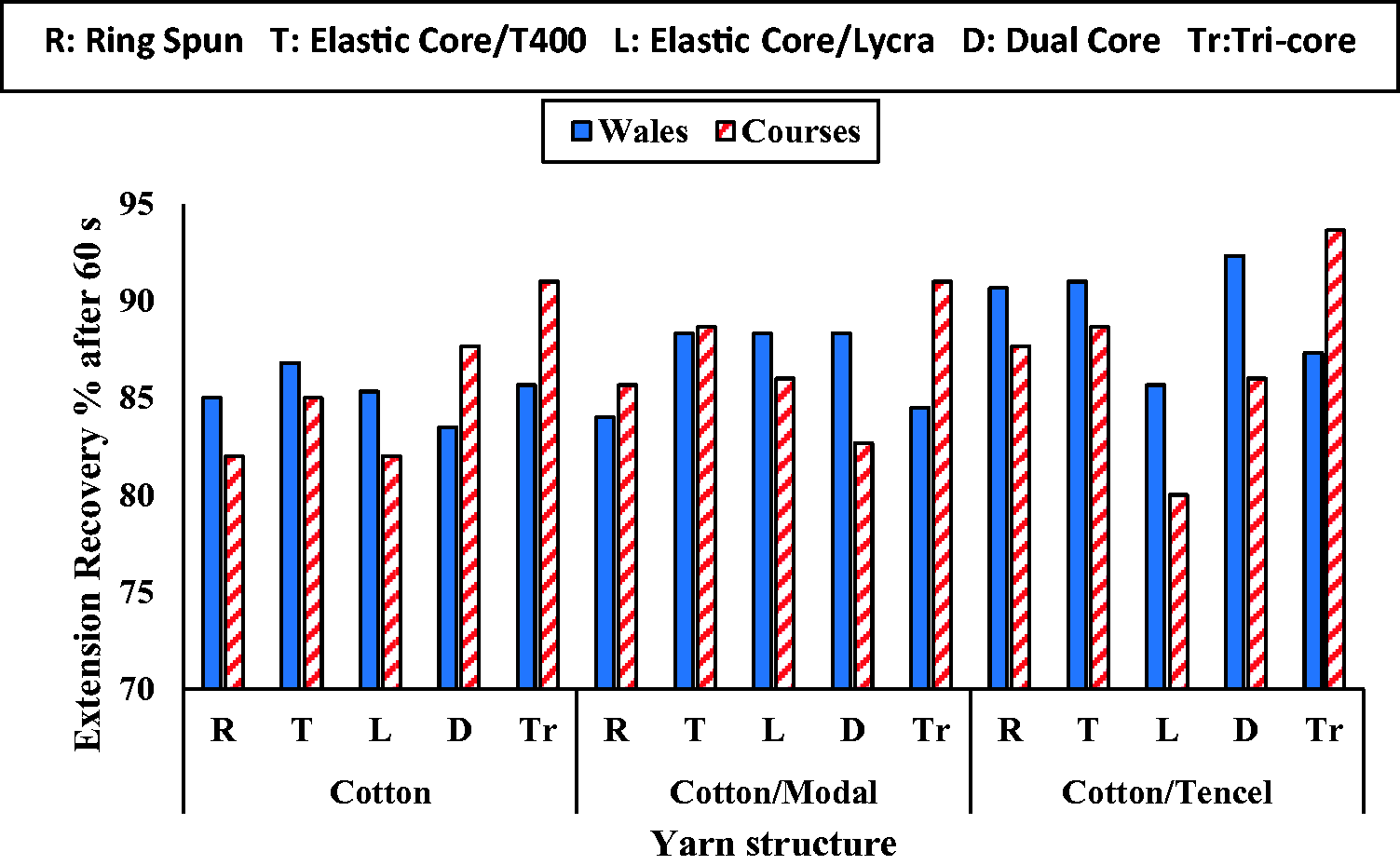
Effect of yarn structure and material type on knitted fabric extension recovery after 60 s in the wale and course directions.
Considering the effect of material type, the average of fabric extension recovery after 60 s for the five yarn structures in the case of blended cotton/tencel (89.4%) was the highest followed by blended cotton/modal (86.7%), and cotton (85.3%), respectively.
As clearly seen in the wale direction, the elastic core/T400 knitted sample was the highest recovery (86.8%) in the case of 100% cotton. Fabrics produced from elastic core/T400, elastic core/lycra, and dual-core yarns achieved higher recovery (88.3%) in the case of blended cotton/modal, and the dual knitted sample was the highest recovery (92.3%) in the case of blended cotton/tencel and for all the samples. This may be due to their containing one more elastic component in the core of the yarn structure. It can be concluded that knitted fabric produced from tri-core yarns in the case of blended cotton/tencel had the better elastic recovery in both directions (87.3, 93.7%) in the wale and course directions, respectively.
Thermal comfort properties.
Air permeability
The influence of yarn structure and material type on the plain knitted fabric air permeability are shown in Figure 16 and assessed for significance using full factorial analysis, the results of which are illustrated in Table 14. The statistical analysis results confirmed that each yarn structure, material type, and interactive effect have a significant effect on knitted fabric air permeability (P = 0.000). It was obvious that the overall trend of air permeability for all materials was a downward trend with increasing the number of elastic cores in the core of yarn structures.
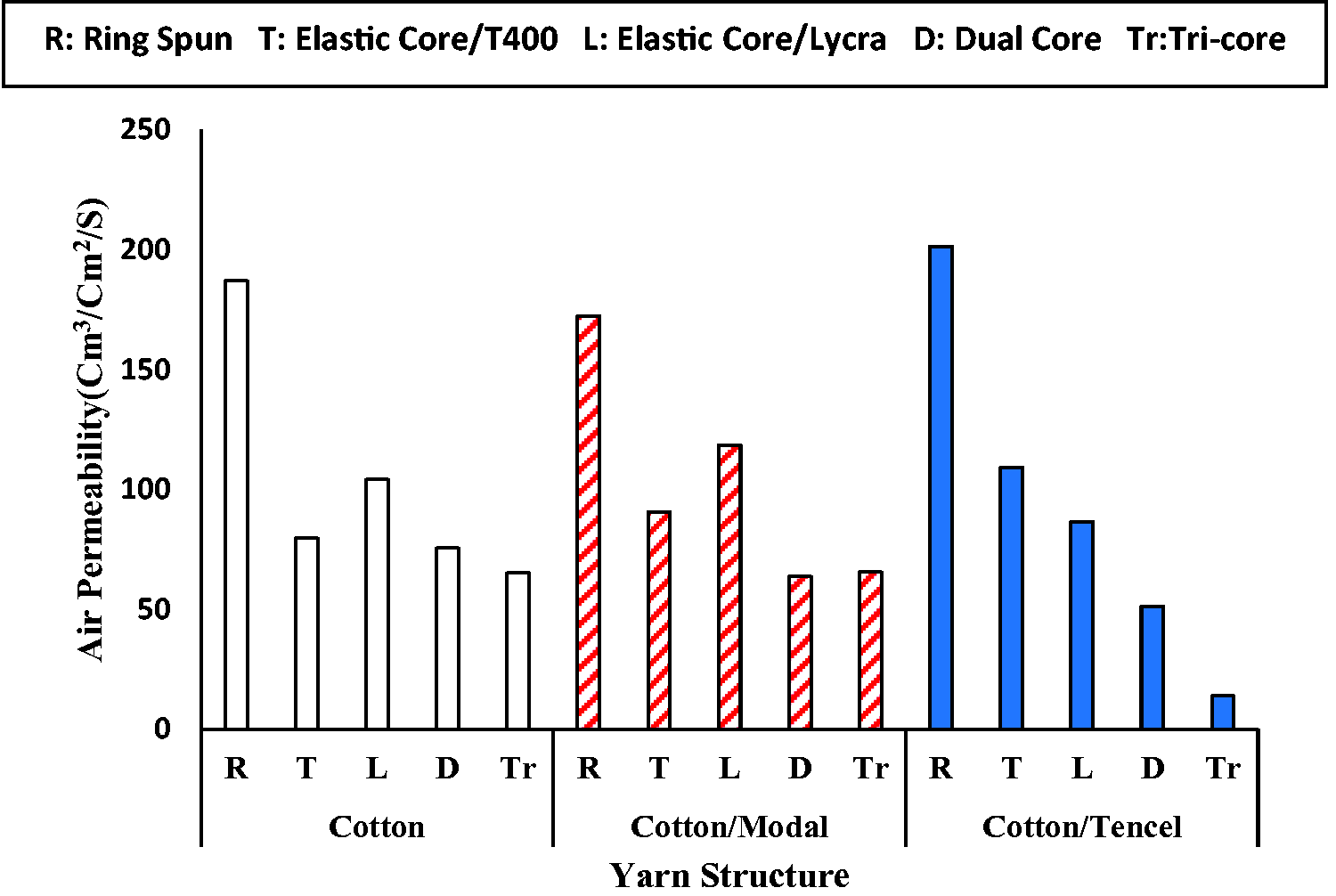
Effect of yarn structure and material type on knitted air permeability.
Summary of variance analysis for the two-factor factorial design (thermal comfort properties of knitted fabrics)

This occurs due to increasing the stitch density of fabrics with increasing the number of elastic cores in the structure, as previously illustrated in Figure 10. The possible reason for these findings containing more than elastic cores in the yarn structures and decreasing the number of fibers on the sheath of yarns, and consequently decreasing the pores allowed air flow through the fabrics. Similar results were found in the previous studies in which the air permeability of knitted fabrics produced from core spun yarns and dual-core yarns decreased. 11 As normally expected, R samples had the maximum air permeability, and Tr samples had the minimum air permeability for the three materials.
Relative water vapor permeability
Water vapor permeability is the ability to transmit vapor out of the body. 24 Figure 17 illustrates the influence of yarn structure and material type on relative water vapor permeability for the plain knitted fabrics. There was a slight increasing trend for relative water vapor permeability with increasing the number of elastic cores in the yarn structure in the case of cotton and cotton/modal, but in the case of cotton/tencel there was a decreasing trend. The same trend was found for the bulk density of knitted fabrics, as seen previously in Figure 9.
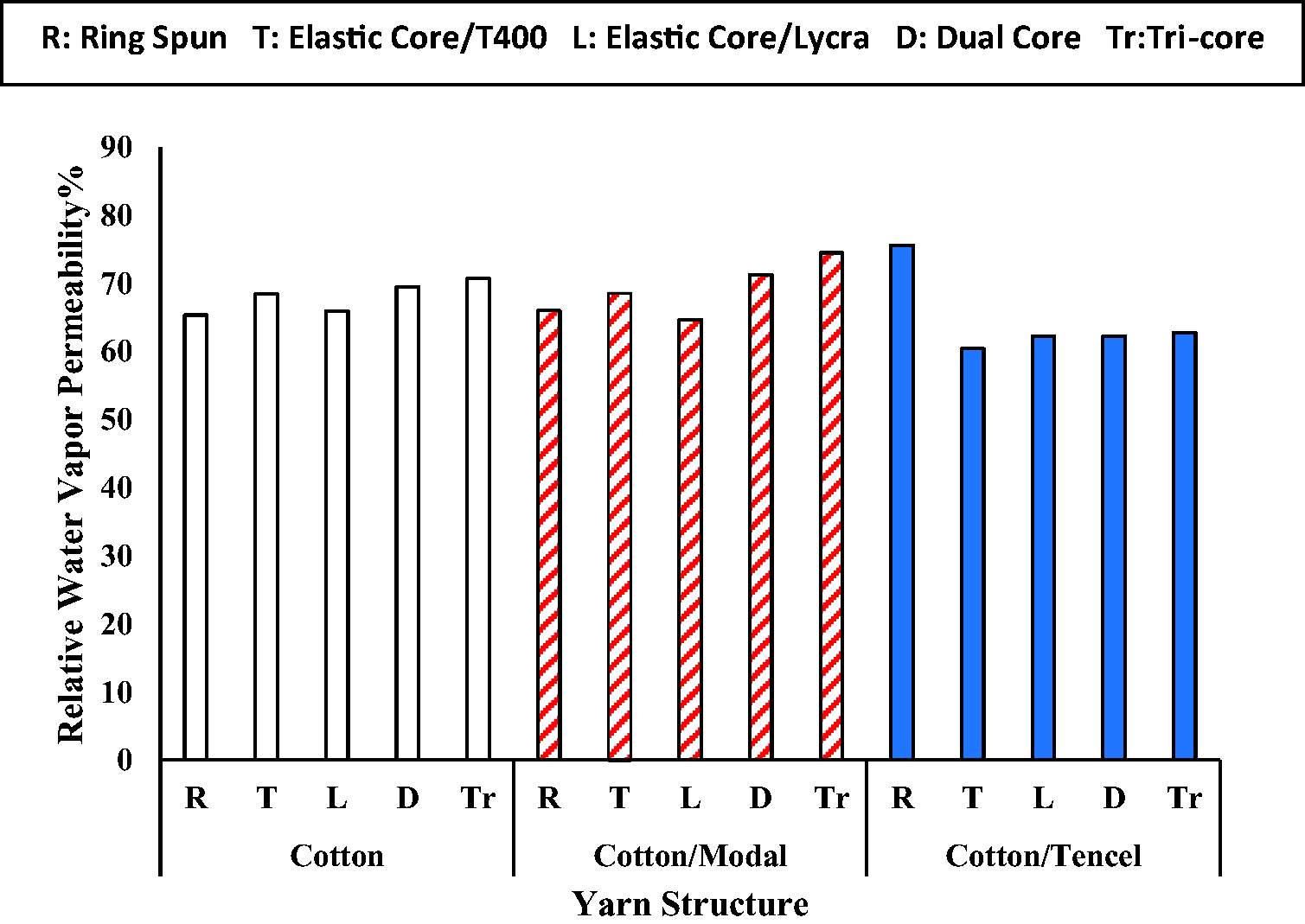
Effect of yarn structure and material type on knitted relative water vapor permeability.
The average of relative water vapor permeability for the five yarn structures can be ordered as cotton/modal (96%) > cotton (68%) > cotton/tencel (64.7%). Tri-core knitted fabrics were the maximum relative water vapor permeability in the case of cotton (70.7%) and cotton/modal (74.5%), and ring-spun knitted fabric was the maximum in the case of cotton/tencel (75.65%) and in all the plain knitted fabrics.
The factorial results showed that there was a significant effect of yarn structure, material type and two-way interaction (yarn structure × material type) on relative water vapor permeability, as illustrated in Table 14.
Thermal conductivity
Thermal conductivity is fundamental to determine the heat transfer through fabrics. Thermal conductivity is an intensive property of material that indicates its ability to conduct the heat. 24 Increasing the value of thermal conductivity for knitted fabrics indicates that these fabrics have the ability to transfer the heat from the human body to outside, and hence give a cool and comfortable feel and vice versa.
Figure 18 explains the effect of yarn structure and material type on the plain knitted fabric thermal conductivity. As obviously shown and like air permeability, there was a declining trend of thermal conductivity with adding more elastic cores to the yarn structure for the three material types.
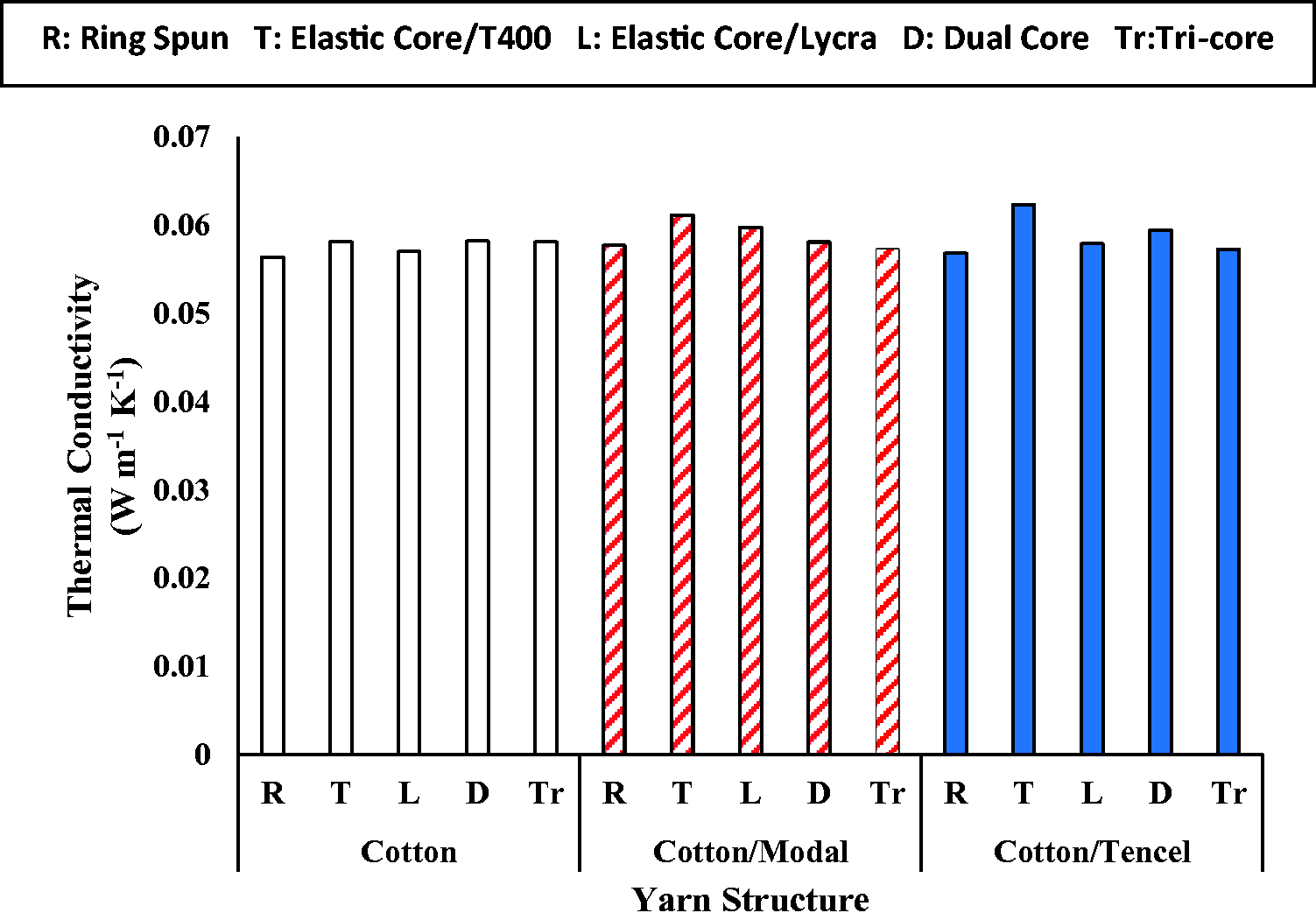
Effect of yarn structure and material type on knitted thermal conductivity.
However, thermal conductivity of elastic knitted samples increased compared with ring-spun samples. This may be due to the increase in stitch density that reflected increasing the amount of fibers and the rate of heat transfer by conduction increasing as well. 23 The average of thermal conductivity for the five yarn structures was the same (0.0587) for the three material types that were assessed by factorial results, in which there was a nonsignificant effect of material type on thermal conductivity exactly equal to P = 0.005. In addition, the full factorial results confirmed that only yarn structure had a significant effect on knitted fabric thermal conductivity, but two-way interaction did not have a significant effect, as illustrated in Table 14.
This accords well with a previous study that indicated that the thermal conductivity of dry fabrics depended on the structure and properties of the yarns or fibers. 25
It was exciting to note that T samples had the maximum thermal conductivity for the three material types. This may be due to the T400 multifilament composed of two types of polyester and the higher thermal conductivity of polyester. 26
Consequently, they are the most suitable for the end use of this study as a summer T-shirt according to thermal conductivity.
Thermal absorptivity
Thermal absorptivity is the objective measurement of the warm/cool feeling of the fabric. Fabrics with a lower thermal absorptivity value have a warm feeling and vice versa. 27 Hes developed an equation to measure the warm/cool feeling of fabric and called it thermal absorptivity of fabric. It was expressed that the thermal absorptivity depends on the thermal conductivity, specific heat, capacity values, and density of the fabric. 28
Figure 19 demonstrates the effect of yarn structure and material type on the plain knitted fabric thermal absorptivity. It can be clearly seen that the thermal absorptivity of knitted fabrics produced from elastic core spun yarns increased more than that produced from ring-spun yarns, and hence give a cool feeling at first touch. T samples were observed to have the maximum thermal absorptivity in the case of cotton/modal and cotton/tencel, and the Tr sample was the maximum in the case of cotton.
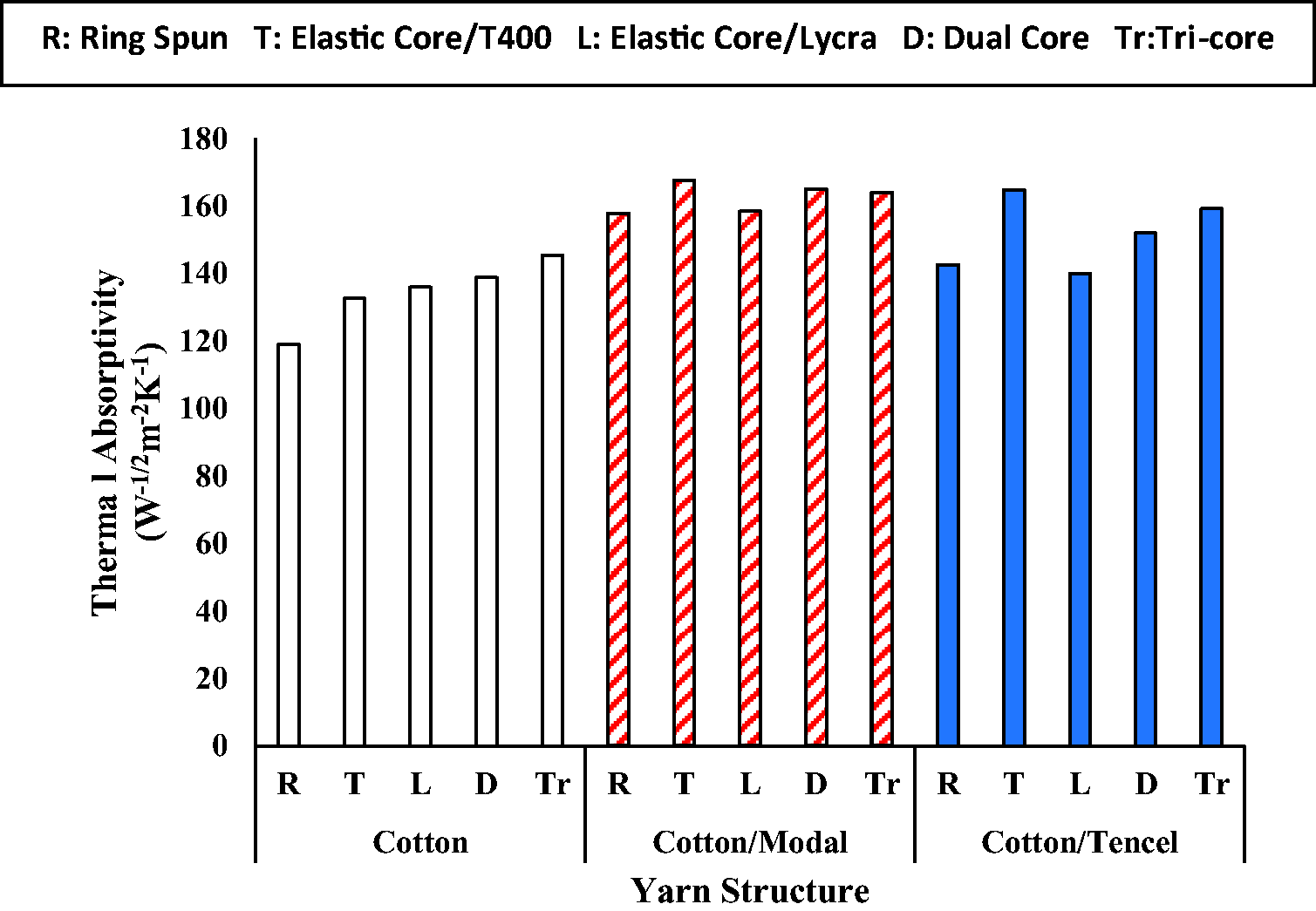
Effect of yarn structure and material type on knitted thermal absorptivity.
Consequently, T samples produced from blended cotton/modal and cotton/tencel are the most suitable for the end use of this study as a summer T-shirt, but in the case of cotton Tr samples are the most suitable.
The full factorial results confirmed that yarn structure, material type, and two-way interaction had a significant effect on thermal absorptivity (P = 0.000), as shown in Table 14.
The average of thermal absorptivity for knitted fabrics produced from blended cotton/modal (162.6) was higher than that of blended cotton/tencel (151.7) and cotton (134.4), respectively. This may be due to increasing the smoothness of these regenerated fibers compared to 100% cotton.
Thermo-physiological property
Thermo-physiological properties are determined by thermal and water vapor resistance. They show the fabric heat transfer capacity and moisture permeable capacity due to the temperature gradient in the vertical direction of the fabric. Thermo-physiological properties are a function of many factors, such as fabric structure, thickness, and composition of yarns. 29 Thermal resistance depends on the thermal conductivity of fibers, thickness of material and arrangement of yarn and fibers. 25
Figures 20 and 21 show the influence of yarn structure and material type on the plain knitted fabric thermal resistance and water vapor resistance. Full factorial results confirmed that yarn structure, material type, and two-way interaction had a significant effect on both thermal resistance and water vapor resistance (P = 0.000), as seen in Table 14.
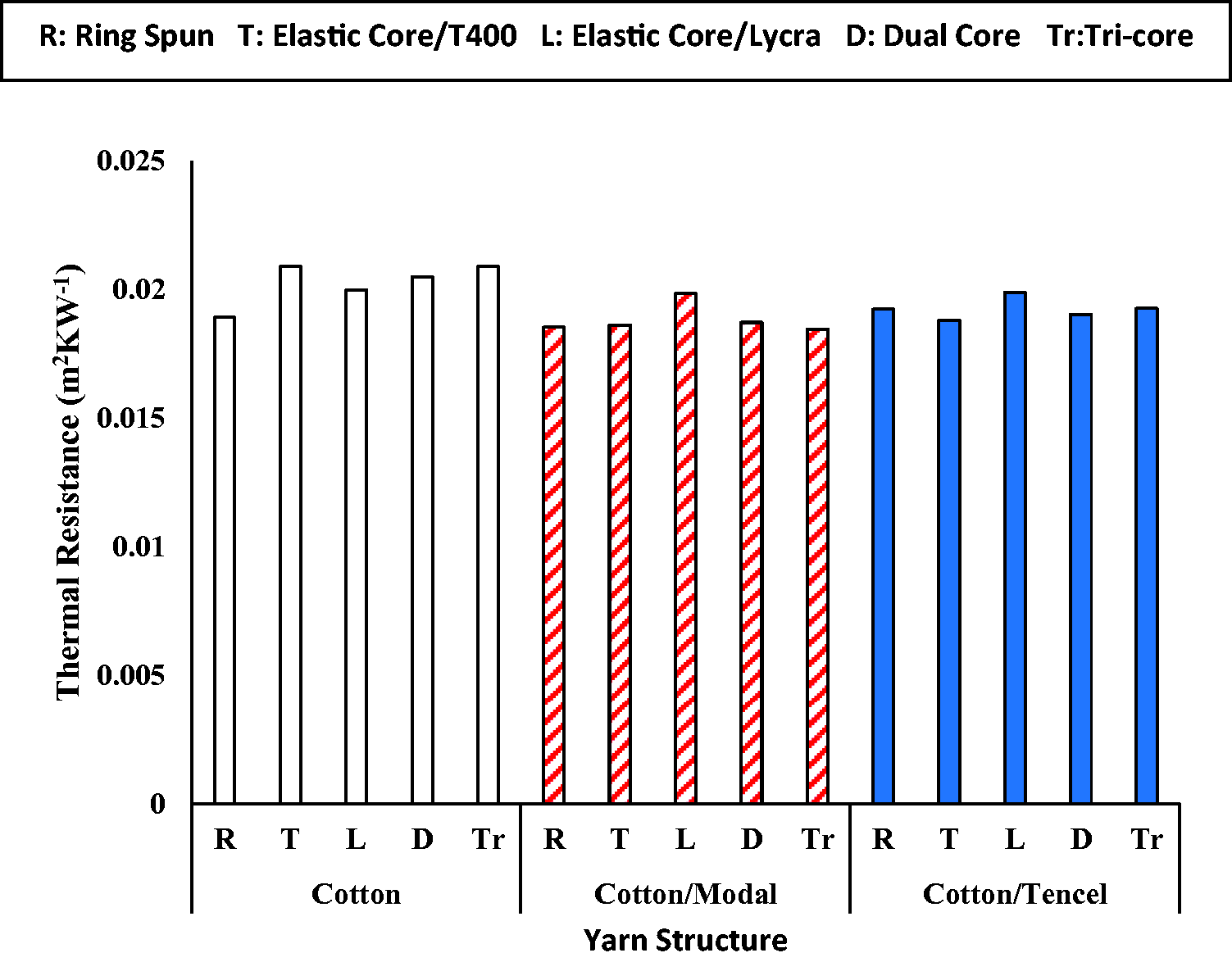
Effect of yarn structure and material type on knitted thermal resistance.
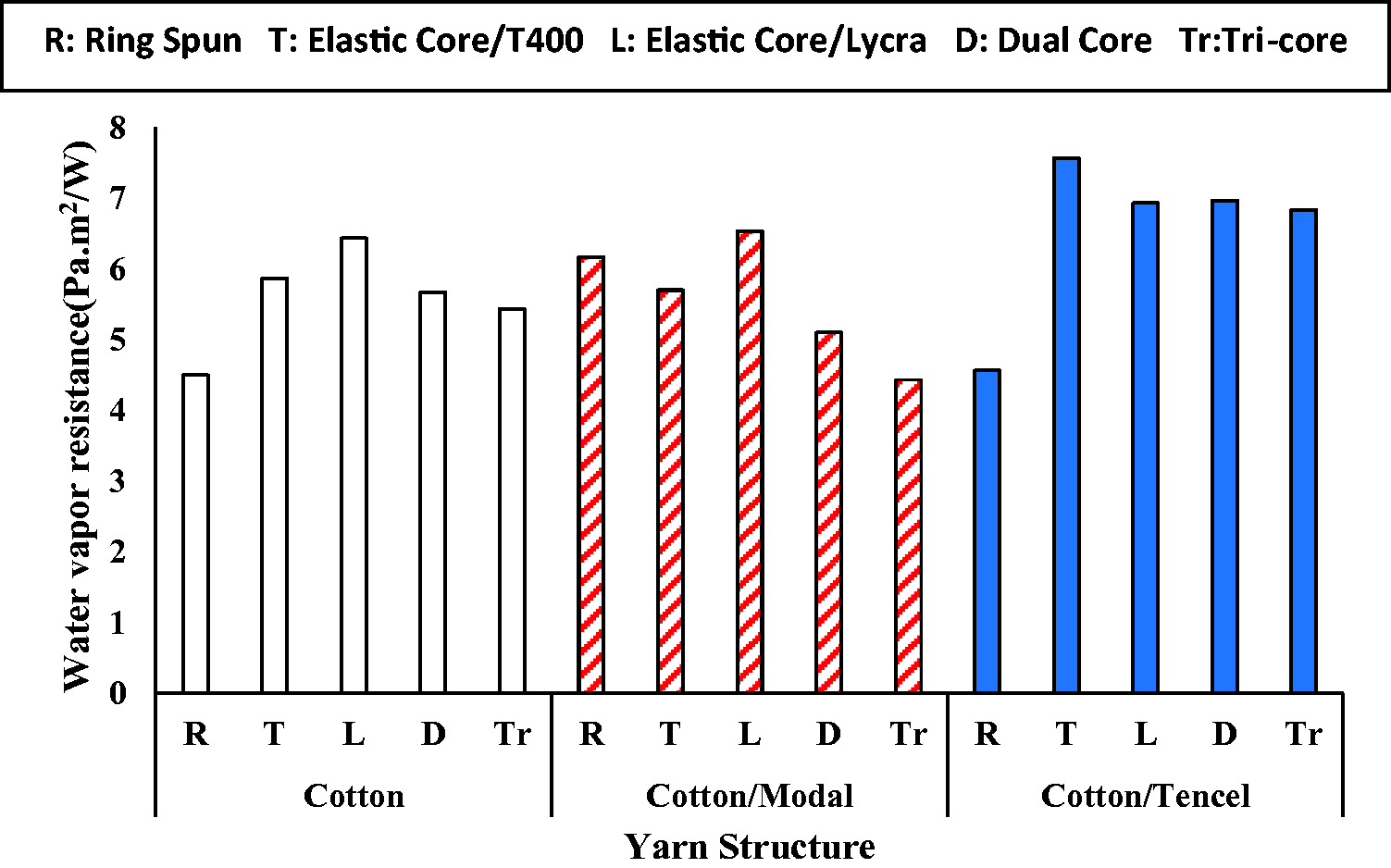
Effect of yarn structure and material type on knitted water vapor resistance.
Considering the influence of material type on thermal resistance, the average of thermal resistance for the five structures was the same for the three material types (0.02). Considering the influence of material type on water vapor resistance, the average of water vapor resistance for the five structures in the case of cotton/tencel (6.6) was higher than that of cotton/modal and cotton, in which they had the same average value (5.6).
It was determined that T and Tr samples were equal and had the maximum thermal resistance in the case of cotton, and the L sample was the maximum in the case of cotton/modal and cotton/tencel. In addition, the L sample had the highest water vapor resistance in the case of cotton and cotton/modal, while T was the highest in the case of cotton/tencel. These samples resist water vapor permeability, and hence result in a feeling of discomfort.
Conclusions
Full factorial analysis was used to analyze the significance of yarn structure including ring-spun, elastic core/T400, elastic core/lycra, dual-core, and tri-core, and material type including cotton, cotton/modal, and cotton/tencel on the mechanical and thermal comfort of the plain knitted fabric. The following conclusions were revealed from the results:
The plain knitted fabric produced from tri-core in the case of blended cotton/tencel obtained the better modulus and elastic recovery in both directions in wales and courses that largely improved the mechanical comfort. The plain knitted fabric produced from ring-spun yarns had the maximum air permeability, and the plain knitted fabric produced from tri-core yarns had the minimum air permeability of the three materials. There was a slight increasing trend for relative water vapor permeability with an increasing number of elastic cores in the yarn structure in the case of cotton and cotton/modal, but in the case of cotton/tencel there was a decreasing trend. The plain knitted fabric produced from elastic core/T400 yarns had the maximum thermal conductivity of the three material types. The plain knitted fabric produced from elastic core/T400 yarns was observed to have the maximum thermal absorptivity in the case of cotton/modal and cotton/tencel, and the plain knitted fabric produced from tri-core yarn was the maximum in the case of cotton. Garment makers looking for highly permeable fabrics should use blended cotton/tencel (50/50%) ring-spun yarns. Sports garment makers looking for better mechanical comfort properties should use blended cotton/tencel (50/50%) tri-core spun yarns.
Footnotes
Future work
There is a plan to produce knitted fabrics from distinguished yarn structures at different specified yarn layout patterns attempting to obtain the distinguished properties in one fabric.
Declaration of conflicting interests
The author(s) declared no potential conflicts of interest with respect to the research, authorship, and/or publication of this article.
Funding
The author(s) received no financial support for the research, authorship, and/or publication of this article.
