







Abstract
Skiers sweat a lot during training, and the sweat will create a wet-cold type environment between the ski suit and the athlete, reducing the wearer’s comfort. In this study, high hygroscopic materials and hydrophobic functional particles were integrated onto the inner fabric of the ski suit by dipping, scraping, spraying and other methods. A kind of fabric with automatic sweat-treating function used for ski suits was developed and the sweat-guiding, sweat-absorbing, sweat-holding, breathing and thermal insulation properties of the samples were tested by using a liquid guiding performance tester, a water content tester, an infrared thermal imager, a thermal plate, an air permeability tester, a moisture permeability tester and other equipment. The results show that the method of changing the hydrophobic properties of different areas of fabric surface and combining and distributing fabrics with different absorbing properties can be used actively to guide the flow direction of sweat on the fabric surface. The samples designed in this study can effectively delay the time for the ski suits to enter the wet-cold type state. Treated samples can effectively protect the insulation layer from being affected by sweat and steam. Before and after sweat absorption, the temperature of the insulation layer of treated samples changes relatively slowly compared with the control group. After finishing, the breathability of the sample decreased, while it still had a good breathability. In conclusion, the automatic sweat-treating fabric developed in this study has good sweat-treating performance.
The successful holding of the 24th Beijing-Zhangjiakou Winter Olympic Games in 2022 triggered a wave of upsurge of ice-snow sports in China. 1 With the continuous improvement of the national economic level, skiing sports are gradually being popularized, and the number of skiing enthusiasts has increased sharply, which directly drives the increase of the market demand for ski suits. During the 2022 Spring Festival, sales of skiing equipment on T-mall increased by more than 180% year on year.
Ice-snow sports have higher and higher requirements for equipment. 2 Ski suits are not only for showing personality, but also for pursuing wearing comfort and freedom of movement. An excellent ski suit can keep the wearer dry and comfortable after a game of strenuous exercise and sweating, ensure enough wind resistance performance to keep the wearer warm during a high-speed sliding, and ensure that the snow will not drill into the clothes or frostbite the skin during falling down.3–5
During the live competition, ski athletes do not wear ski suits for a very long time, just in game time. In this case, athletes do not sweat very much. Even if there is a certain amount of sweat, because the wearing time is not long, the influence of sweat on athletes will be covered up by the pressure, excitement and tension brought about by the competition, which is not easily felt. Hence, athletes are not really very affected by sweating during the live competition.6–12 However, athletes have to train a lot before official competition, and the training process is generally very long; many athletes have to maintain 8–10 hours of training every day. Different from other sports, skiing requires a special low-temperature environment. Training in a low-temperature environment requires ski suits to have a good thermal insulation performance, hence ski suits are usually very thick. 13
Thick ski suits can provide a thick layer of air around the athletes, which can play a good role in insulation. 14 Nevertheless, this thermal insulation function not only protects athletes from the harm of the cold external environment, but also makes the body heat generated by the length of strenuous exercise unable to exchange with the outside smoothly, so that a high temperature layer is formed around the athlete’s skin. In this state, athletes need to sweat a lot in order to regulate their body temperature.
Sweat comes in two main forms, one is liquid sweat and the other is gas sweat. The liquid sweat will be absorbed by the material of the ski suit, and the gas sweat will fill between the athlete’s skin and the fabric of the ski suit. The thermal conductivity of dry air is very low (about 0.023 W/m · K), which gives the air an excellent thermal insulation performance. When the liquid steam mixed into the dry air, the air will become humid, and the thermal conductivity of the humid air is much higher than that of the dry air.15–18 Therefore, the more humid the air, the higher its thermal conductivity is, and the athlete’s body will lose heat and more easily within air with a higher thermal conductivity. Under this circumstance, athletes feel colder, and this state is called a wet-cold state. The wet-cold state can induce immune system diseases such as rheumatoid arthritis and can reduce the body’s immunity, resulting in the occurrence of cases of typhoid fevers or other diseases. Ski athletes have to stay in the ‘wet-cold’ state for a long time during the training process, so it is very important to develop ski suits with good sweat-treating function to protect athletes’ health.16–27
In this study, materials with high moisture absorbing properties were integrated into the fabric of the inner layer of a ski suit through a reasonable design, aiming at developing a kind of ski suit fabric with automatic sweat-treating function. The automatic sweat-treating fabrics can effectively delay the time that the ski suit enters a wet-cold state. This research can promote the development of the ski suit design field and the popularity of ice-snow sports.
Materials and methods
Materials
Fabric used for ski suits is generally composed of an outer layer, an insulation layer and an inner layer. This study focuses on the sweat-treating performance of the inner layer material of the ski suit fabric. The outer layer and the insulation layer materials of the sample in this study are nylon fabric and polyester fiber which are commonly used in the market, and the inner layer material was independently designed.
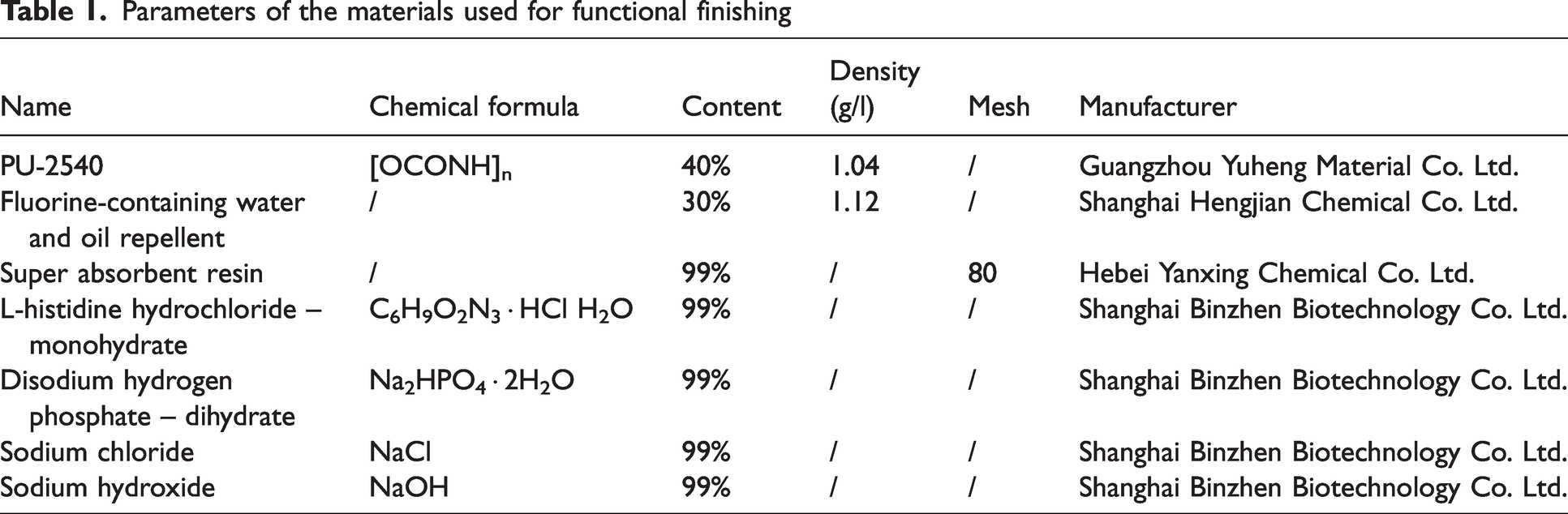
The inner layer material of the sample designed in this study was composed of three parts, which were, respectively, the untreated part, the sweat-guiding part and the sweat-storing part. Coolmax 28 is a kind of polyester fabric with four grooves, which can quickly drain the sweat generated during human activities to the surface of the clothing to evaporate, keeping the skin fresh and comfortable. Coolmax fabric was used for the untreated part, and finished Coolmax fabric was used for the sweat-guiding part. A variety of materials were used for the sweat-storing part to construct a structure similar to the ‘diaper’ structure. The sweat-storing part was divided into three layers: the surface layer, the absorbing core layer and the leak-proof layer. A strong liquid absorbing and liquid transfer capacity and a rapid sweat evaporation promoting capacity were required for the surface layer, so Coolmax fabric was selected for making the surface layer in this study. The absorbing core layer is the key part of the absorbing system of the sweat-storing part, which plays the role of absorbing and storing sweat. In this study, the absorbing core layer material was made of super absorbent fiber (SAF) material and super absorbent resin. The leak-proof layer is located at the bottom layer of the sweat-storing part, which is mainly used to prevent sweat from leaking into the insulation layer. In this study, the leak-proof layer was made of Coolmax fabrics coated with a layer of polyurethane (the polyurethane used in this study was waterborne polyurethane PU-2540, which was commonly used in the preparation of coated fabrics in the textile and garment industry) film.
All samples were pretreated for 24 h at 21°C and 65% relative humidity. A detailed description of the main materials used in this experiment is shown in Table 1, Table 2 and Table 3.
Parameters of the materials used for functional finishing
Parameters of the fabrics
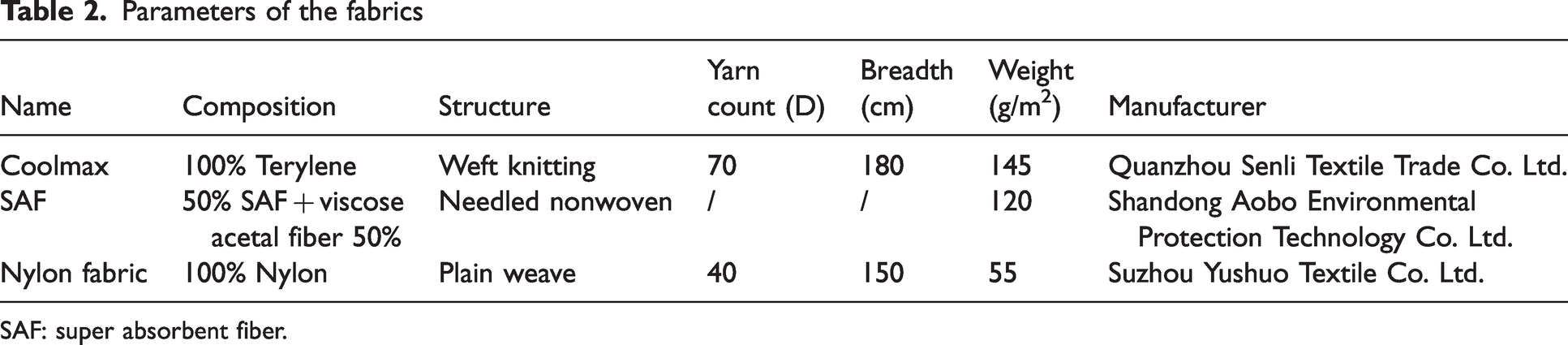
SAF: super absorbent fiber.
Parameters of the materials used for the thermal insulation layer

Design of the automatic sweat-treating fabrics
Affected by the factors such as heavy exercises, blood vessel distributions and organ distributions, the sweating position of the human body has a certain regularity distribution. 29 Studies show that the areas that sweat with a high frequency of the upper body are the chest, underarms, and back spine, as shown in Figure 1(a). These easy-sweating areas are also some highly sensitive areas of the human body. A large amount of sweat accumulation in these parts of the clothing will significantly reduce the wearer’s thermal and wet comfort. The purpose of this study is to transfer the sweat generated by the wearer during training from these easy-sweating and highly sensitive areas in time, and store it in some areas with low influence on the thermal and wet comfort of human body, and then treat it in the following steps.
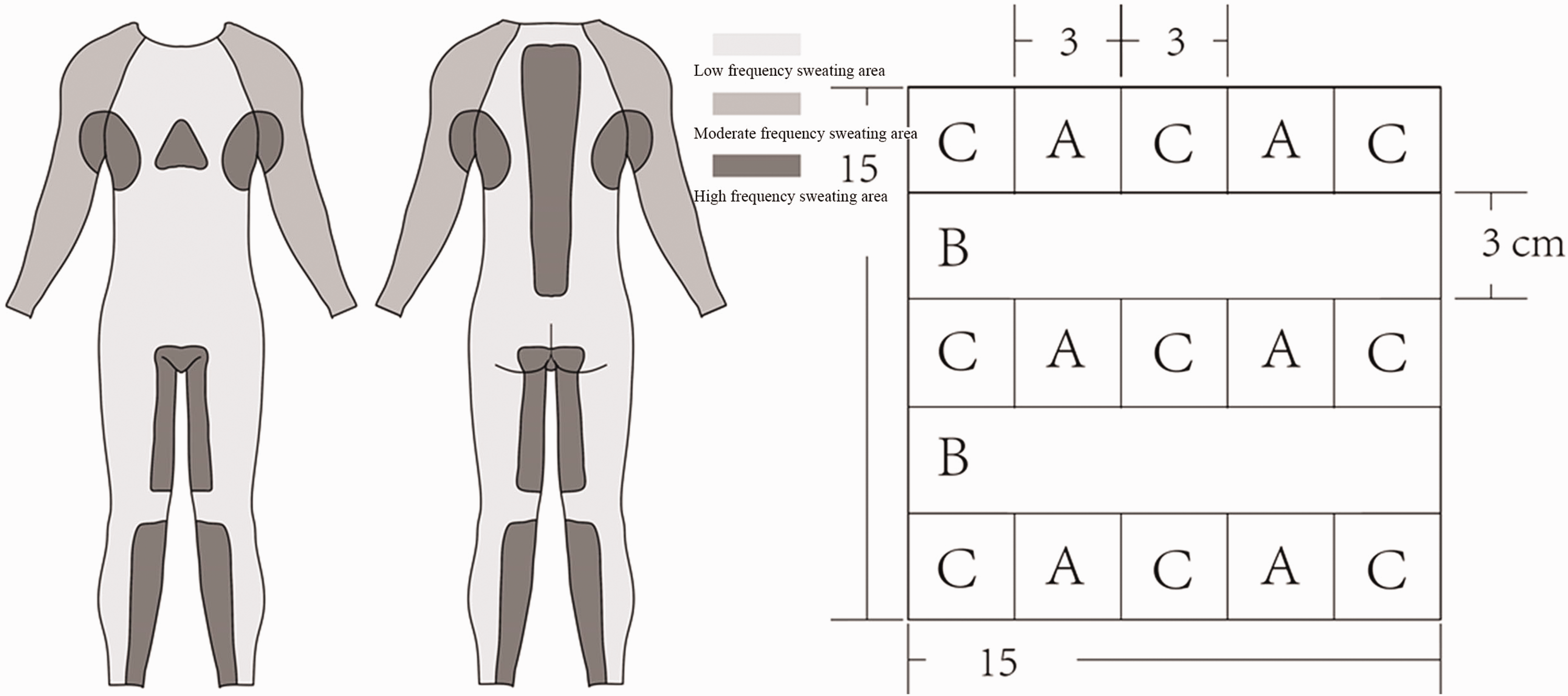
Design of the samples. (a) Distribution of the sweating areas of the human and (b) Distribution of the functional areas.
In this study, the inner layer of the sample was designed in the form of three areas, as shown in Figure 1(b). Area A of the sample in Figure 1(b) is an untreated part, the purpose of the setting of area A is to reduce the effect of the coating treatment on the breathability of the sample. Area B of the sample in Figure 1(b) is a sweat-guiding part, the purpose of the setting of area B is to guide the sweat from areas with high skin sensitivity to the areas with low skin sensitivity by using the principle of sweat having different surface wetting performance on surfaces with different hydrophobicity. Area C of the sample in Figure 1(b) is a sweat-storing part, the purpose of the setting of area C is to prevent large amounts of sweat from penetrating into the insulation layer of the ski suit fabric and therefore reduce the effect of sweat on the wet-cold type clothing microclimate. Two square Coolmax samples of 15 × 15 cm were used to make the upper and lower layers of the inner layer of the sample, and marker lines were marked on the upper base cloth as shown in Figure 1(b).
The preparation process of the sample was as follows:
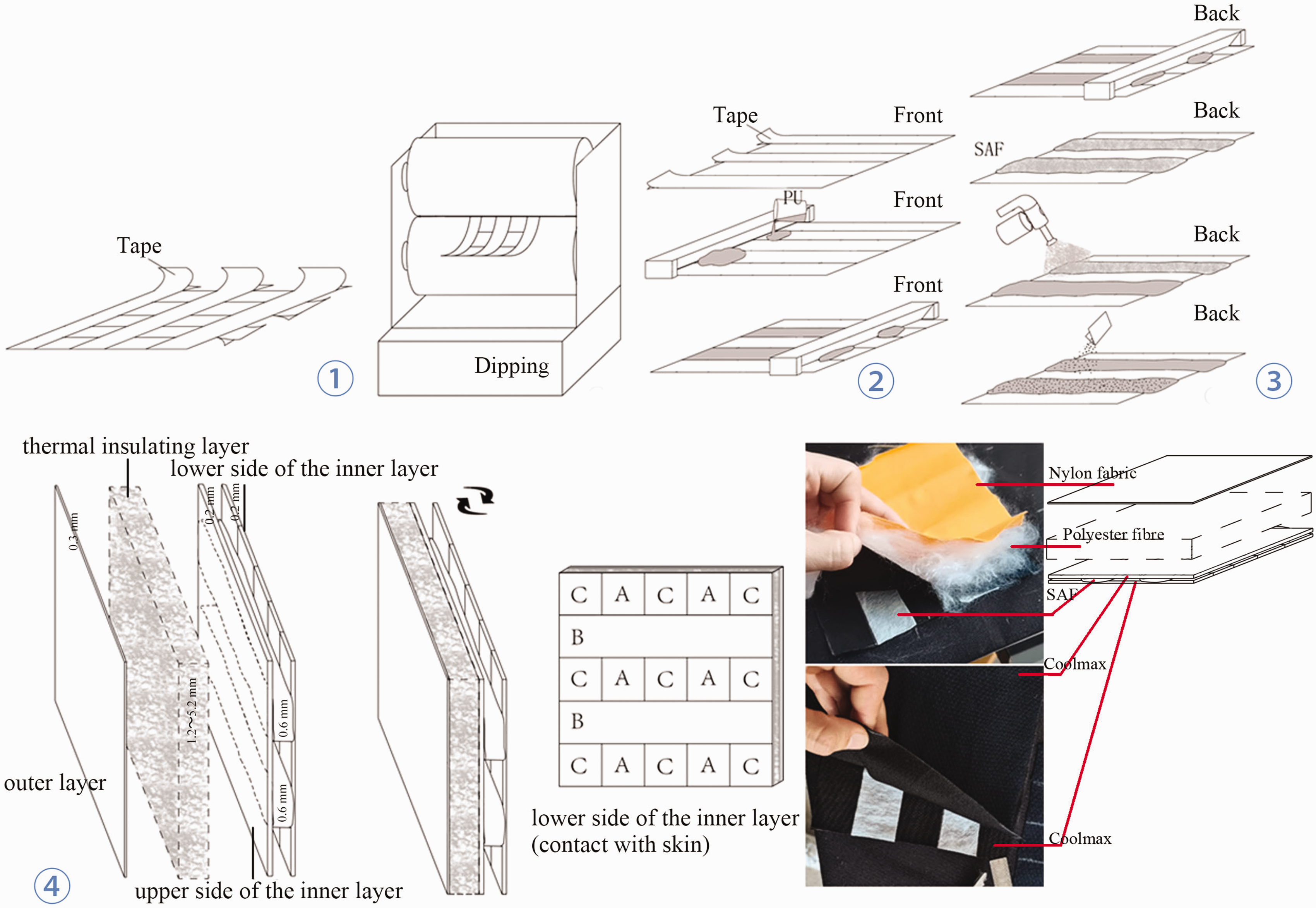
Some tapes of the same size with the marked areas were pasted to the B and C areas on the positive and reverse sides of the base fabrics. The purpose of this step was to avoid areas B and C being affected by the following dipping finish. Then some TG-581 fluorine-containing water and oil repellent was used to finish the sample for giving a water and oil repellent function to the A area of the sample. After the samples went through the drying process, the tapes which were pasted on the samples in the first step were torn off, and then new tapes were used to cover area A and area C of the base fabrics. The purpose of this step was to avoid areas A and C being affected by the following coating process. Then a layer of PU-2540 resin with a thickness of 0.1 mm was coated on the area B of one side of the samples, and then the samples were dried again. A layer of PU-2540 resin with a thickness of 0.1 mm was coated on the other side of the area B of the sample, then a layer of SAF fabrics with the same size as the base fabric (15 × 15 cm) was put on the surface of the sample utilizing the viscosity of the PU-2540 resin. Next, a layer of PU-2540 resin was sprayed on the SAF fabrics, and an appropriate amount of super absorbent resin powders were sowed on the resin. The purpose of this step was to give a sweat-storing function to the sample. After the samples went through the drying process, all the tapes were torn off, and the preparation process of the upper layer of the inner layer of the sample was over. The lower layer and the upper layer of the inner layer of the sample were combined to complete the preparation process of the sample’s inner layer. A layer of polyester fiber with a thickness of about 1.5 cm was put on the upper layer of the inner layer of the sample, and then, a piece of nylon fabric was put over the polyester fiber layer as the outer layer. The purpose of this step was to make up a complete ski suit multi-layer fabric structure (Figure 2).
Preparation process of the samples. The inner layer of the samples in the control groups in this experiment were made by only two pieces of untreated Coolmax fabrics.
Preparation of the artificial sweat
Influenced by various subjective factors, such as the human gender or the physical health conditions, sweat produced by human body is different in acid and alkaline contents. In this study, acidic (pH 5.5) sweat was configured according to the standard GB/T 3922-1995. 30 Every liter of the sweat sample contained 0.5 g C6H9O2N3 · HCl H20, 5 g NaCl, 2.2 g Na2HPO4 · 2H2O, and the acidity and alkalinity of the sweat sample were adjusted to 5.5 (pH) by using NaOH solution with a concentration of 0.1 mol/L. 31
Test method
Sweat-guiding performance test
When the human body sweats a lot, the sweat aggregates into liquid quickly, the sweat of the liquid state will penetrate and flow when it contacts the fabrics. Influenced by the surface energy of the fabric that the sweat comes into contact with, the sweat will penetrate and flow in indefinite directions. In this study, the ability to guide the sweat to penetrate or flow in a specified direction on the surface of the fabric is defined as the sweat-guiding performance. The lower the surface energy of the fabric, the easier the sweat on the surface flows, and conversely, the easier the sweat penetrates into the fabric. Therefore, the sweat behavior on the fabric surface can be manually affected by controlling the surface energy of the fabric.
Test method (Figure 3):
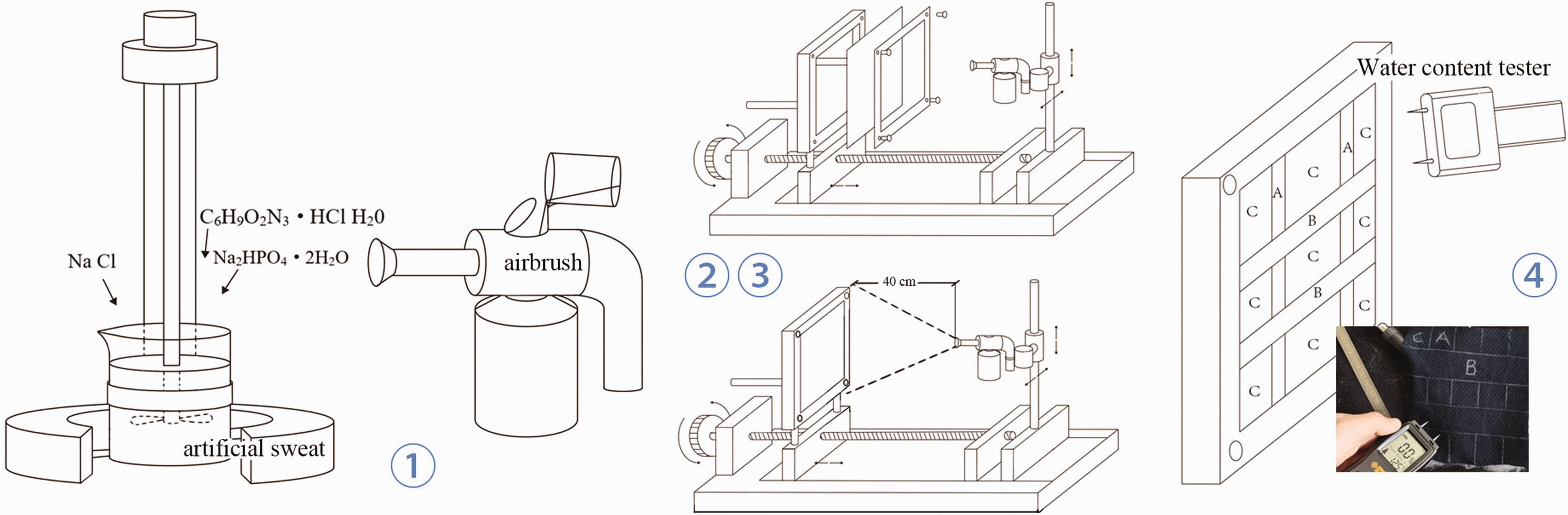
Sweat-guiding performance test.
The artificial sweat was prepared according to the standard, and 200 mL of artificial sweat was added in the airbrush.
The sample was installed on the specimen holder opposite to the front of the airbrush.
The spray gun pressure and spray volume were set to 0.29 MPa and 170 mL/min, then the sample was sprayed once (duration time: 1 s).
The water content of the A, B and C areas of the sample was tested by using a water content tester (measuring range: 0.7%–100%,), and then the experimental data were recorded.
Steps 3 and 4 were repeated nine times, and the interval time of each repetition was 30 s, and the experimental data were recorded. (Each group of experiments was repeated five times, and the average value was defined as the final performance test value.)
Sweat-absorbing and sweat-holding performance test
The sweat-absorbing ratio (SAR) is the multiple ratio between the amount of liquid absorbed by the sample and its original weight after a certain time of contact with sweat. In this experiment, the liquid absorbing performance of the samples was tested according to the standard GB/T 8939-20408, the test method was as follows:
The sample was installed on the specimen holder opposite to the front of the airbrush. The spray gun pressure and spray volume were set to 0.29 MPa and 170 mL/min, and the sample was sprayed for 3 s, then the spraying process was stopped, and the sample was suspended vertically for 1.5 min, and then the mass of the sample (the sample mass before sweat absorption was measured in advance) was measured, and then the SAR of the sample was calculated according to equation (1):

P: SAR
mp2: sample mass after sweat absorption
mp1: sample mass before sweat absorption
3. The moisture content of the insulation layer material after spraying was measured. 4. Step 2 was repeated four times (this was a re-wetting process not needing a fresh fabric), and the experimental data were recorded.
(Each group of experiments was repeated five times, and the average value was defined as the final performance test value.)
The sweat return amount (SRA) refers to the amount of sweat in the sweat-storing layer returning back to the surface layer of the sample under the action of pressure. In this study, after the sweat was absorbed by the sample for a certain time, the amount of liquid sweat returned to the surface layer of the sample under a certain pressure was measured, the test method was as follows:
The sample was installed on the specimen holder opposite to the front of the airbrush. The spray gun pressure and spray volume were set to 0.29 MPa and 170 mL/min, and the sample was sprayed for 3 s, then the spraying process was stopped, and the sample was suspended vertically for 2 min. Five layers of filter paper (ensuring that the filter paper at the top layer was dry) were put on the surface of the sample, at the same time, a load with a weight of 500 g was put on the top of the filter paper. After applying pressure to the filter paper for 1 min, the load was removed, and then the weight of the filter paper was weighed with an e-balance. The SRA of the sample can be expressed by the weight change of filter paper before and after test, and it can be calculated according to equation (2):

m: SRA
mp2: filter paper weight after sweat absorption
mp1: filter paper weight before sweat absorption
5. Step 2 and step 3 were repeated four times, and the experimental data were recorded.
(Each group of experiments was repeated five times, and the average value was defined as the final performance test value.)
Thermal insulation performance test
The thermal insulation performance of the materials will change after the materials absorb liquid.32,33 In this study, the samples before and after sweat absorption were placed on the surface of a hot plate with a temperature of 40°C, and the thermal images of the samples under heat radiation were observed with an infrared thermal imager.
Test method (Figure 4):
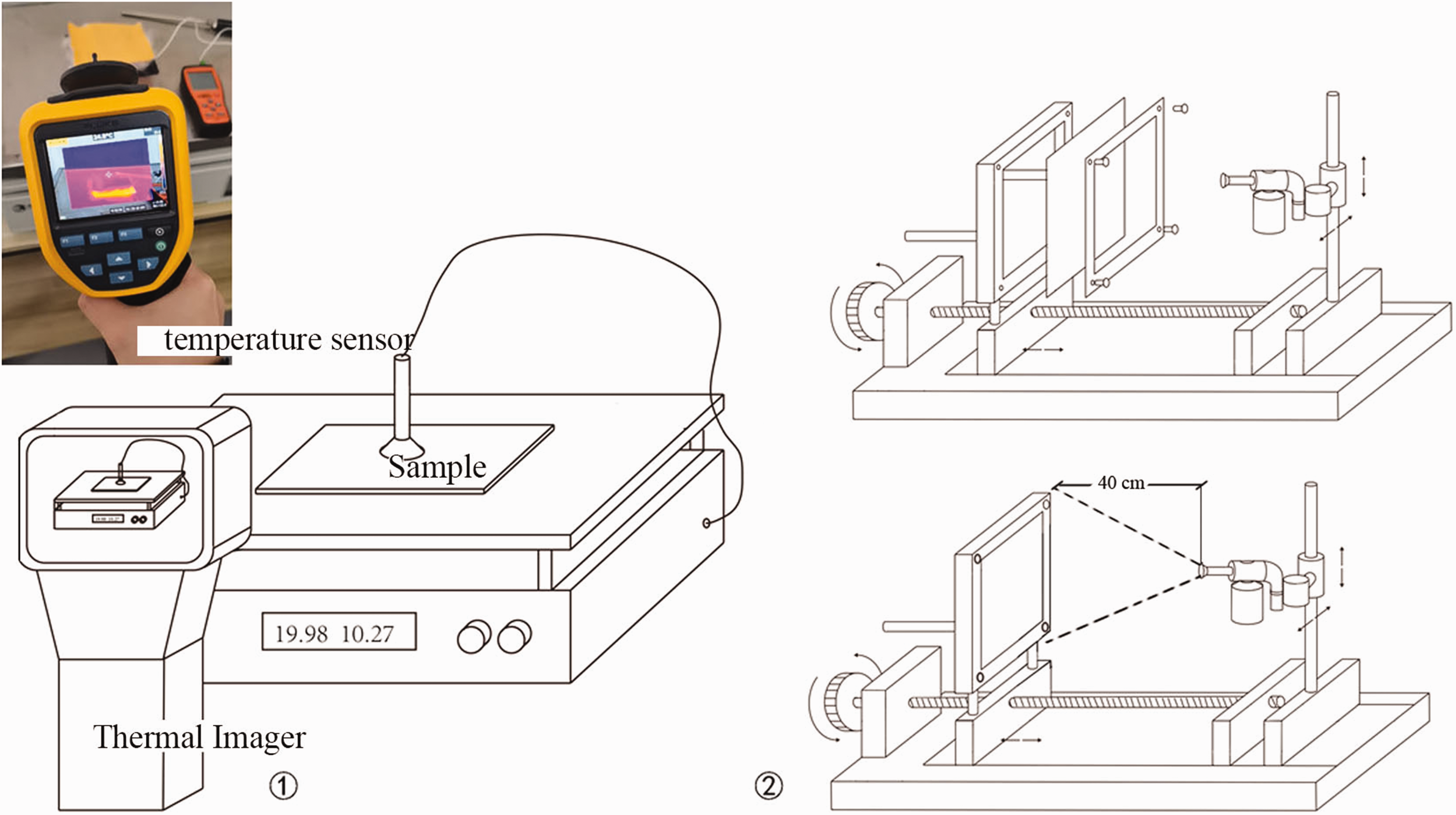
Thermal insulation performance test.
The sample was put onto the sample stage of the hot plate with a temperature of 40°C, and the thermal images of the sample were observed by an infrared thermal imager, and the temperature change of the sample was monitored with a temperature sensor, and the time when the temperature sensor reached 20°C (the room temperature was 5°C) was recorded.
The sample was installed on the specimen holder opposite to the front of the airbrush.
The spray gun pressure and spray volume were set to 0.29 MPa and 170 mL/min, and the sample was sprayed for 10 s, then the spraying process was stopped, and the sample was suspended vertically for 2 min.
The sample after sweat absorption was placed on the hot plate with a temperature of 40°C. The thermal images of the sample were observed by an infrared thermal imager, and the time when the temperature sensor reached 20°C was recorded.
The thermal image changes of the sample before and after sweat absorption were compared to reflect the thermal insulation performance of the sample.
(Each group of experiments was repeated five times, and the average value was defined as the final performance test value.)
Results and discussion
Sweat-guiding performance of the sample
As shown in Table 4, for the control samples, the water content changes in areas A, B and C were basically close, and after seven times of spraying, the water content no longer changed and reached a saturation state. For the treated samples, the variation of water content in area C was basically the same as that in the control groups, while that in areas A and B were significantly lower than that in the control groups. The water content of area A of the treated samples was basically close in the first eight times of test, about 16%, after the ninth time of sweat absorption, it started to rise. Combined with actual observations, the results showed that the sweat-absorbing performance of the treated sample in area A could effectively delay the time of the liquid accumulation in area A, the sweat that originally collected in area A could be guided to flow to area B.
Sweat-guiding performance of the sample
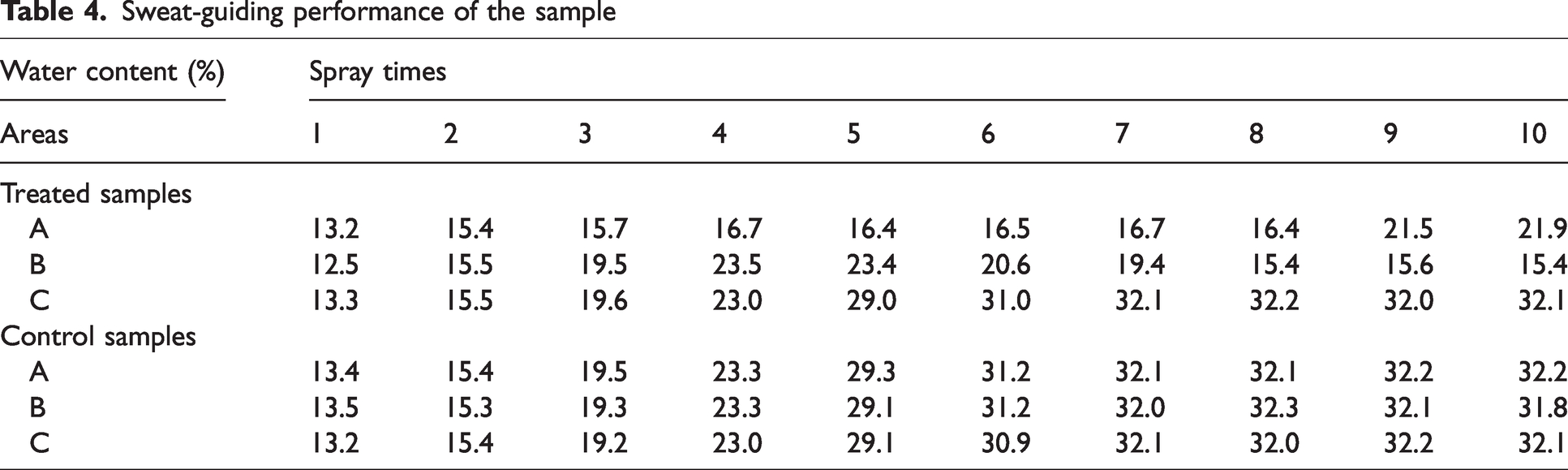
The first four test results of water content in area B were close to those in area C, which indicated that the treated materials in area B needed a certain time to take effect. After the fifth time of spraying, the water content of area B started to decline. The water content of area B remained very low within the range of 10 times of spraying, which indicated that the area B of the sample had an excellent sweat-absorbing performance and could keep the area dry. In conclusion, the method of changing the hydrophobic properties of different areas of the fabric surface and combining and distributing fabrics with different absorbing properties can be used actively to guide the flow direction of sweat on the fabric surface.
Sweat-absorbing and holding properties of the sample
As shown in Table 5, the SAR test results of the control samples and the treated samples were similar, which showed the sweat-absorbing performance of the treated samples were not better than that of the control samples in 15 s length of spraying. Nevertheless, the results of the moisture content index of the insulation layer material showed that the treated samples effectively protected the insulation layer material from being invaded by sweat, hence the filling layer, which played a major role in the thermal insulation performance of the whole sample, provided the wearer with longer protection. In conclusion, the sample designed in this study can effectively delay the time for the ski suit to enter a wet-cold state.
Test results of sweat-absorbing properties of the samples
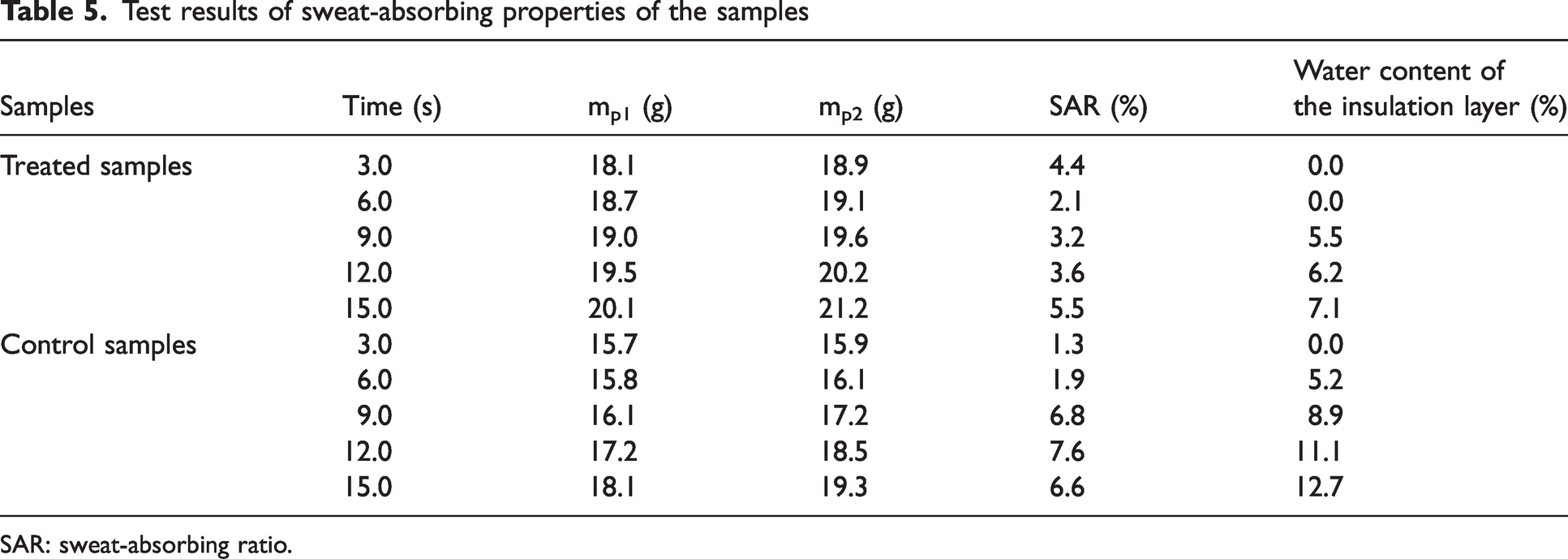
SAR: sweat-absorbing ratio.
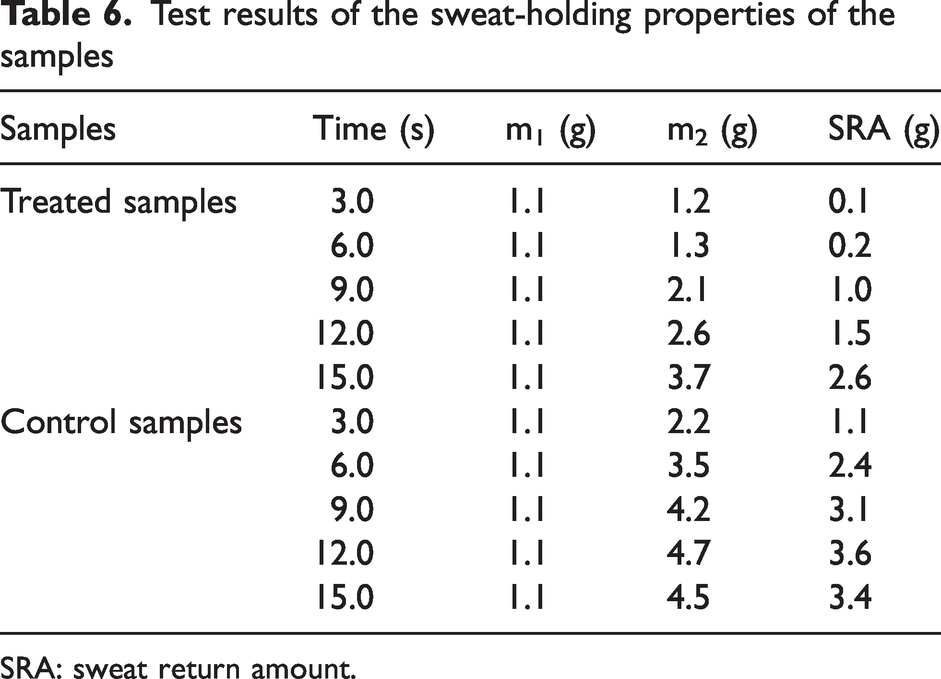
As shown in Table 6, within 6 s of the spraying time, the SRA test results of the control sample increased as the increase of the spraying time, which showed the sweat-holding performance of the control sample, started changing at the beginning of the experiment.
Test results of the sweat-holding properties of the samples
SRA: sweat return amount.
When the spraying time exceeded 9 s, the control samples were completely soaked and the SRA test results stopped changing, which showed the effective sweat-holding time of the control samples was about 6–9 s. For the treated samples, the SRA test results were about 0.1 within 6 s of spraying, which showed the treated samples could keep the clothing dry within 6 s of spraying. When the spraying time exceeded 9 s, the SRA test results of the samples also started to increase, but compared with the control samples, the treated samples could still keep the clothing dry better. When the spraying time exceeded 15 s, the treated samples still had a good sweat-holding performance, which showed the sweat-holding time of the treated samples was over 15 s.
The insulation performance of the sample
As shown in Figure 5, the thermal insulation performance of the control samples changed significantly before and after sweat absorption, while that of the treated samples did not change much.
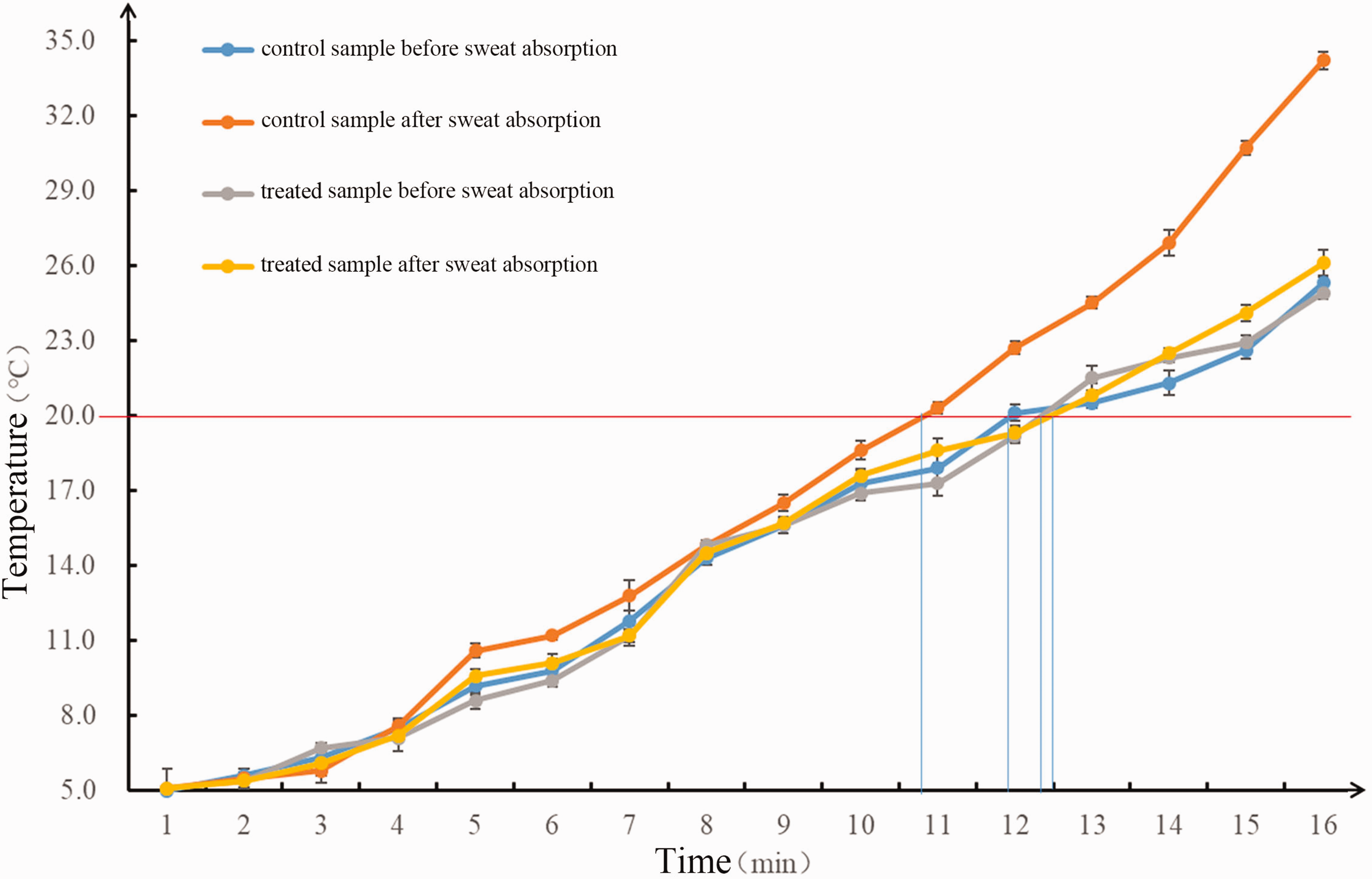
Time required for the sensor to reach 20°C.
As shown in the infrared thermal images (Figure 6), for the control samples, sweat and steam would soon enter the insulation layer, and the thermal conductivity of the insulation layer would be enhanced, and the temperature change would be accelerated. By comparing 2 and 4 in Figure 6, it can be seen that the upper layer of the sample in the control group had been wetted after the temperature of the sample rose to 20°C; however, by comparing 6 and 8 in Figure 6, it can be seen that the upper layer of the treated sample had not been wetted. By comparing 4 and 8 in Figure 6, it can be seen that the treated samples of the insulation layer could effectively protect the insulation layer from the influence of sweat and steam. Before and after sweat absorption, the temperature of the insulation layer of the treated samples changed relatively slowly.
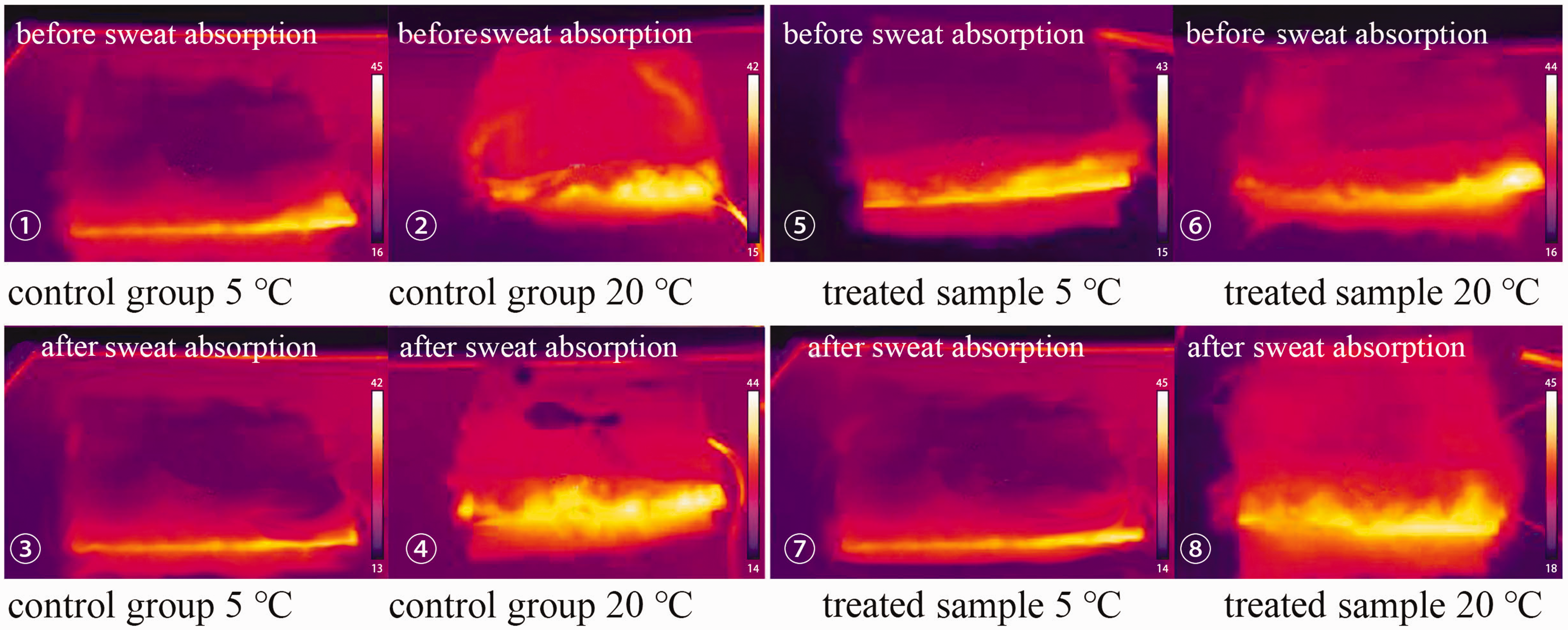
Infrared thermal images of the samples.
Breathability of the sample
Breathability is an important index to evaluate the comfort performance of fabric used for ski suits. In this study, air permeability and moisture permeability were used as the main indexes of breathability of the sample. The air permeability of samples was tested by referring to GB/T5453-1997. 34 The test area of the sample was 20 cm2, and each sample was tested three times to take the average value. The moisture permeability of samples was tested by referring to GB/T 12704.1-2009. 35 The test area of the sample was 7 cm2, and each sample was tested three times to take the average value. The test results are shown in Table 7.
Test results of the breathability of the samples
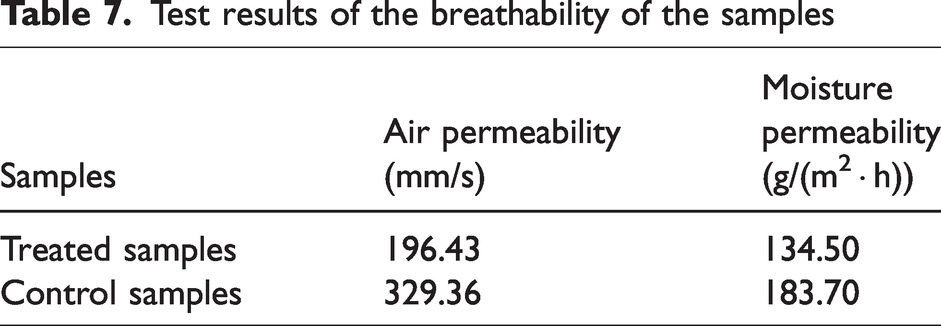
As shown in Table 7, the sample can maintain certain air permeability and moisture permeability while providing good sweat-treating performance. Using the samples prepared in this study to make ski suits can effectively relieve the discomfort of athletes brought by wet-cold conditions. This regional coating method can play a role in isolating sweat while retaining a certain breathability of the fabric. Compared with the traditional full-cover coating, the comfortable performance of the regional coated samples is obviously improved.
Conclusions
The automatic sweat-treating ski suit fabric developed in this study can actively guide the flow direction of sweat on the surface of the fabric, and can also transfer the athlete’s sweat from the sensitive part to the harmless part for storing. The automatic sweat-treating fabrics can effectively delay the time that the ski suit enters a wet-cold state. Compared with the existing fabrics, the automatic sweat-treating fabrics can keep clothing dry better. The automatic sweat-treating ski suit fabric can effectively protect the insulation layer from being affected by sweat and steam. The thermal insulation performance of the sample changes little before and after sweat absorption, which demonstrates that the sample can effectively reduce the wearer’s wet-cold feeling. The automatic sweat-treating ski suit fabric can maintain certain air permeability and moisture permeability while providing good sweat-treating performance. Development of the automatic sweat-treating ski suit fabric can promote the functional diversification of ski suit fabrics, and can make a contribution to the popularity of ice-snow sports.
The automatic sweat-treating ski suit fabric developed in this study can effectively reduce the wet-cold feeling of the ski suit during training, whereas the overall weight of the suit is also increased. The weight increase of the ski suit will increase the physical consumption of the wearers. Therefore, a reasonable location, width and amount of the automatic sweat-treating ski suit fabric should be carefully considered in the following studies to reduce the weight of the ski suit. In addition, the washing and wearing resistance properties of the sample need to be explored further in future studies.
Footnotes
Declaration of conflicting interests
The author(s) declared no potential conflicts of interest with respect to the research, authorship, and/or publication of this article.
Funding
The author(s) disclosed the receipt of the following financial support for the research, authorship, and/or publication of this article:
1. Research on design and performance of intelligent sweat-removing fabric for ski wear. Y412022007.
2. Study on ice repellent property of outer fabric of fire suit.S022020044.
3. Study on fabric, Structure design and performance of ice resistant firefighting clothing. KP40000117.
4. Preparation and properties research of flexible ice-repellent coated fabric. KP1Z202132.
5. Intelligent wear anti-icing protective clothing development. KH10002945.
6. Preparation of flexible ice-repellent coated fabrics. JX22022115.
