







Abstract
In this study, the dyeing properties of a natural dye extracted from the kermes insect on silk were examined. Insect dye at different concentration rates of 5%, 10%, and 15% wt was applied to silk fabrics mordanted with alum [KAl(SO4)2.12H2O] and iron-(II) sulfate [FeSO4.7H2O]. Then, the Nd:YAG laser device was used to investigate the laser radiation effects on the color of the fabric. The dyed fabrics were analyzed by different analytical and technical methods. The RP-HPLC-DAD method was used for the identification of the coloring compounds of fabrics dyed with kermes. The color coordinates and fastness values of rubbing, washing, and light were investigated. Overall, the fastness results were excellent. SEM-EDX was performed for morphological examinations and CIEL*a*b* color values were measured for colorimetric examinations after laser radiation.
Natural colorants have been utilized in textiles, cosmetics, pharmacology, and food since time immemorial.1,2 They keep attracting attention for use in textile dyeing thanks to a variety of surface modification techniques that benefit from their renewable and biodegradable nature.3–5 They may be classified in multiple ways, mainly depending on their hues, biological sources, chemical structures, and applications. 6 While synthetic dyes are petroleum based, natural dyes are of biological origin. Historically, they are generally divided into three categories: plants, minerals, and animals.7,8 Various parts of plants, like roots, nuts, and flowers, are sources of coloring pigments. Mineral dyes are obtained from colored clays and earth oxide to extract red or yellow color. Some dried parts of animals are used as coloring agents, for example insects and Mediterranean shellfish of genera Pura and murex.9–11 Compared with natural dyes, synthetic dyes may give multifarious bright shades, with pretty good color fastness, and may be cost-effective, yet they may lead to various harmful by-products during their manufacturing process.12,13 Insects and metallic oxides are the main characteristics of the animal and mineral realms.14,15 Kermes insects (Kermes vermilio Planchon, Figure 1(a)) are one of the oldest sources of red dyestuff in the world. 16 They are some of the most fascinating and unusual organisms in entomofauna. Species of the scale insect family Kermesidae are limited to the northern hemisphere and they are found in Nearctic, Oriental, and Palearctic regions.17,18 The main coloring compound of the kermes insect, kermesic acid (C16H10O8) (Figure 1(b)), dissolves in hot water to produce a yellowish-red solution.19,20 Kermes, living mainly on Quercus ilex L., has one generation per year, overwintering as the 1st-instar nymph, and males develop through four nymphal stages, while females develop through three. 21 Kermes, lac beetles, Polish cochineal, and cochineal scale have been used for textile dyes and have grown as a commercial dye source since ancient times. 22 Thanks to unique biological adaptations, such as phloem-feeding, surface protection by hard or waxy covering, rapid growth, the telescoping of generations by asexual reproduction, and a variety of life forms, they have remained alive by adapting to a wide range of plants, and multiply explosively under favorable conditions. They have survived topical applications of modern chemical insecticides. 23
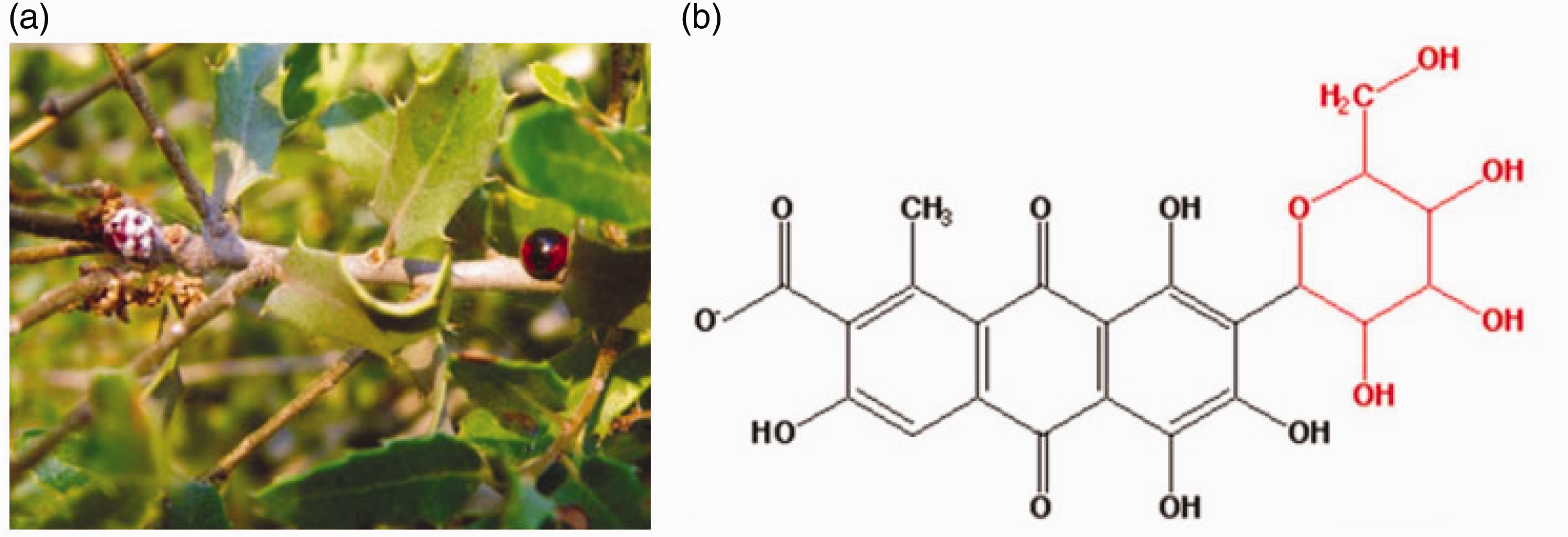
(a) Kermes (Kermes vermilio Planchon) and (b) The structure of kermesic acid.
In the middle ages, kermes, already documented in the early bible chapters, was a very expensive dyestuff and was also often used in combination with red and woad (Isatis tinctoria L.) or indigo to produce purple hues with good durability. 24 Kermes was also used in paintings in antiquity, and sometimes by mixing with indigo.25,26 It is seen that the word kermes comes from the Orient, and means worm. It is called “krmi” in Sanskrit, “kerema” in old Italian, and “Dud il Quirmis” in Arabic. After the conquest of Constantinople (1453), the seashells used in dyeing were prohibited by Fatih Sultan Mehmed (II), and this event increased the significance of kermes dyeing. Following the fall of Istanbul—the most valuable center of dyeing with Tyrian purple—in 1453, it is understood that kermes was the principal scarlet dyestuff. In 1464, Pope Paul II also declared that in the future the robes of cardinals had to be dyed with kermes, and it replaced Tyrian purple completely; therefore Cardinal purple is not a “Tyrian purple” but a kermes. 27
Some of the most valuable antiques in collections worldwide and some historical textile works are silk fabrics dyed with kermes as a natural dye. Two of the principal components of silk are fibroin and sericin. Fibroin has the following molecular formula: Gly-Ala-Gly-Ala-Gly-Ser-Gly-Ala-Ala-Gly-[-Ser-Gly-(Ala-Gly)n-]8-Tyr-. 28 Over the past 50 years, laser technology has increasingly become an established conservation treatment for a range of artifacts, including stone, ceramics, paintings, paper, and textiles, as it supplies a high degree of controllable conservation application, especially for restoring fragile objects effectively and safely.29,30 A laser is a system that transforms light from different wavelengths in the visible, infrared, and ultraviolet regions into chromatic radiation with a wave step that may mobilize enormous heat and energy in a close range. 31 In the textile industry, various laser devices have been operated extensively for fiber modification, effects on color properties, fabric strength properties, color fading effect, surface engraving, fabric fault detection, welded garment production, barcode scanning, laser marking, miscellaneous uses needle, final product, and surface decoration.32,33
In this study, laser radiation was applied to silk fabrics dyed with kermes dye by using various wavelength and energy density combinations of the laser device used for conservation purposes. We investigated how the fabric’s fiber–dyestuff–metal complex composition reacted to the application of laser radiation. The micro and non-destructive analysis methods used in this study should be used in conservation applications to prevent material damage. These analytical techniques combined with use of micro-invasive and nondestructive techniques may be used to identify the type of fiber, metallic mordant, and natural dye constituents for historical textile artifacts.34–36 There are different chromatographic techniques for analyzing natural and synthetic dyes, as their chemical properties and chromatographic behavior differ significantly. 37 HPLC-DAD (High-Performance Liquid Chromatography with diode-array detection) has been widely used for the identification of natural dyes present in historical textiles, art objects, etc.38,39 For the identification of metal salts in dyed fabrics, SEM-EDX (Scanning Electron Microscopy-Energy-Dispersive X-ray Spectroscopy) is an appropriate technique.
Experimental
Insect
Kermes insects (Kermes vermilio Planchon) were purchased from a commercial supplier (Natural Dyes Doğal Boya Hammaddeleri San.ve Dış Tic. Ltd. Şti. Turkey).
Material
Plain weave P 1/1 silk fabrics were used. The fabric area density is 85 g/m2. The warp density per cm of the fabric is 30, and the weft density per cm is 23. The warp yarn count is 144 den, and the double twisted silk yarn is 960(Z), 600(S) T/m. The weft yarn count is 225 den, and the double twisted silk yarn is 960(Z), 520(S) T/m.
Chemicals
A carbon fiber cord was obtained from Electron Microscopy Science (UK) for the SEM instrument. Ultrapure water was obtained from a Milli-Q treatment system (Millipore, Bedford, MA, USA) to prepare the HPLC mobile phase. Potassium aluminum sulfate [KAl(SO4)212.H2O], Iron-(II)-sulfate (FeSO4.7H2O), sodium carbonate (Na2CO3), hydrochloric acid (37% fuming HCl), acetonitrile (MeCN, HPLC gradient grade), trifluoroacetic acid (TFA, HPLC gradient grade), and methanol (MeOH, HPLC gradient grade) were obtained from Merck (Darmstadt, Germany). Uniwet HGA non-ionic wetting agent was obtained from Alfa chemistry. The standard material was obtained from commercial sources and used as reference carminic acid (99.5%) from Sigma (Steinheim, Germany).
Mordanting and dyeing procedure
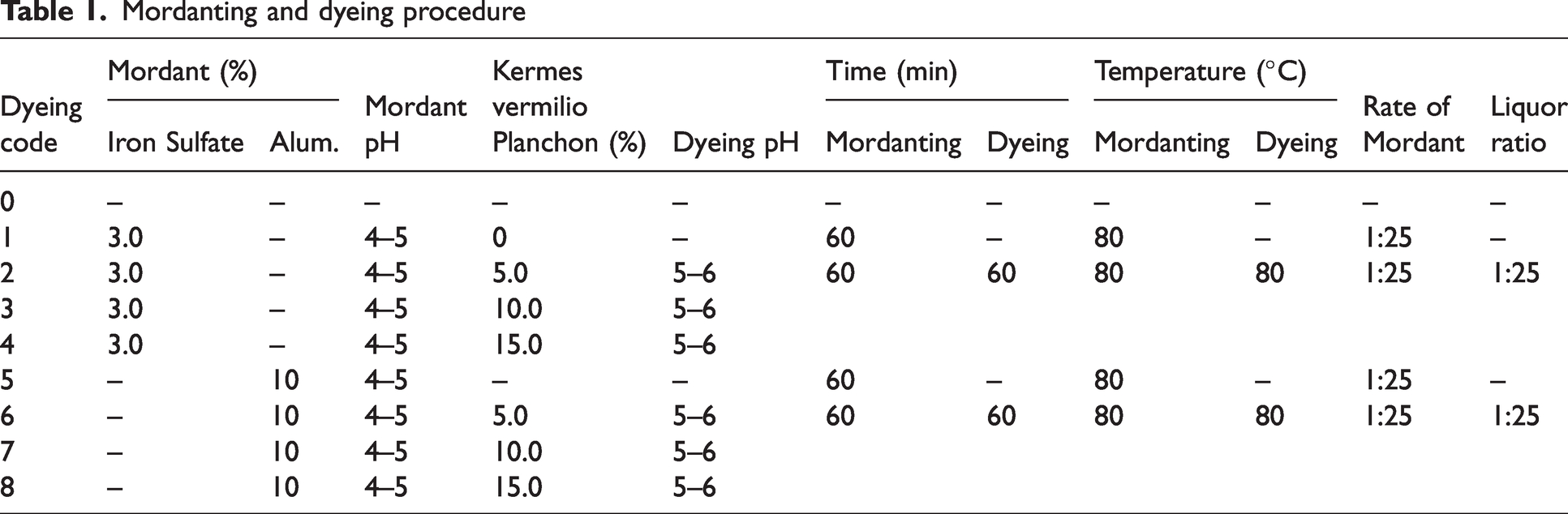
Mordanting was carried out based on the optimal mordant ratios used in the historical process and using the pre-mordant process.40–42 Natural dyeing recipes used were in accordance with the Natural Organic Dye Standard (NODS). 43 The procedure of dyeing and mordanting is shown in Table 1.
Mordanting and dyeing procedure
Laser treatment
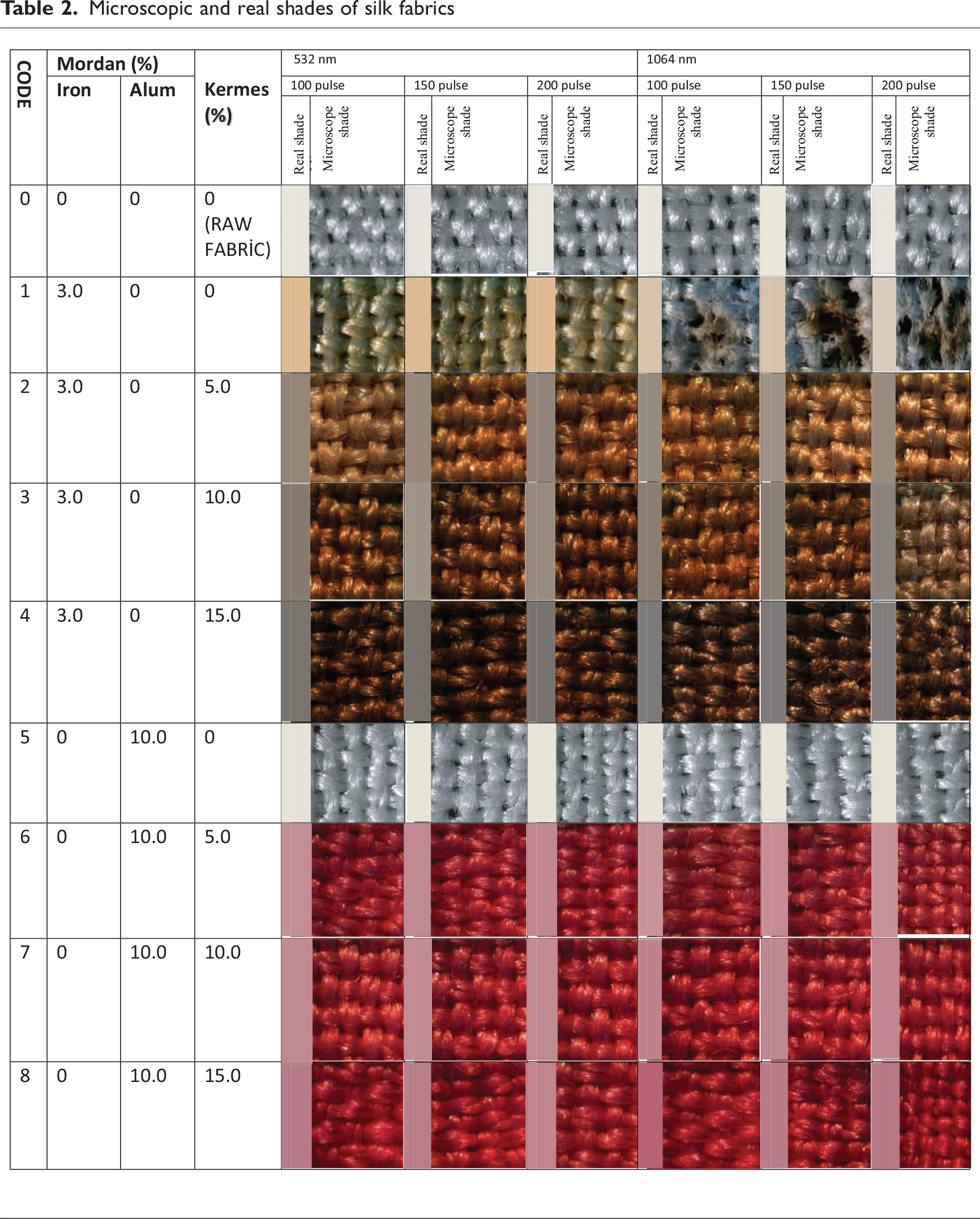
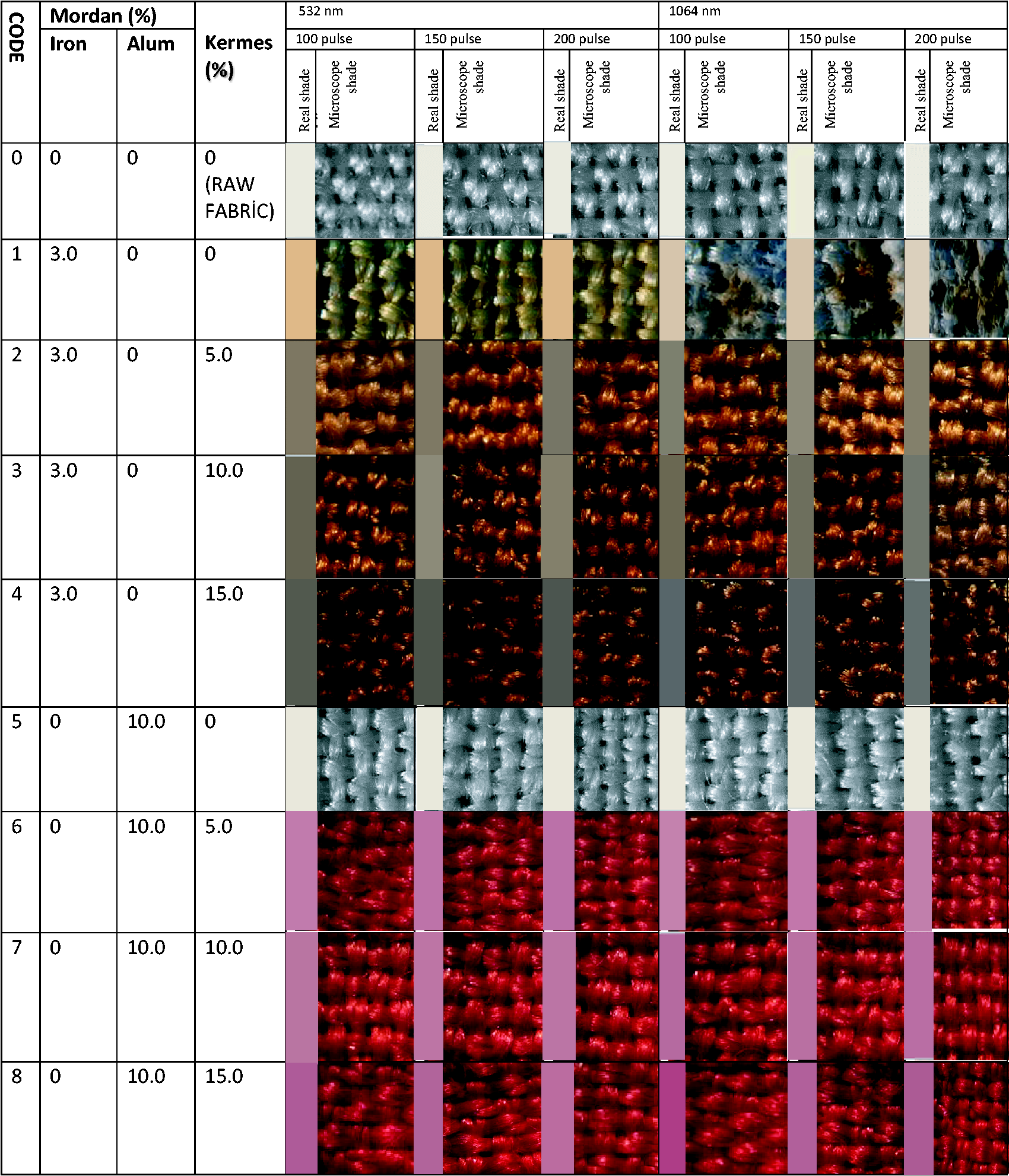
In the experimental study, a commercial Nd:YAG (Neodymium-doped Yttrium Aluminum Garnet: Nd: Y3Al5O12) laser, Thunder Art Laser, from Quanta System, was used. It was operated in Q-Switch mode. The duration of the pulse was e <8 ns. Frequency was 20 Hz, and the beam diameter was 10 mm. The energy of the laser beam may change as follows: for 1064 nm maximum energy 900 mJ, for 532 nm 400 mJ. The effect of the laser on the silk fabrics was investigated under normal atmospheric conditions.44,45 The effects of laser radiation on mordanting and dying samples are shown in Table 2.
Microscopic and real shades of silk fabrics
Optical microscope
Fiber morphology was investigated after laser irradiation using a SZ-PT Olympus industrial (Tokyo, Japan) optical stereo microscope that can fully integrate with digital cameras and image software (OLYMPUS Stream™ software), at a magnification of ×40. As well as microscope shades real shades (L*a*b*) are also presented in Table 2 according to e-paint.co.uk (www.e-paint.co.uk/convert-lab.asp).
Color measurements
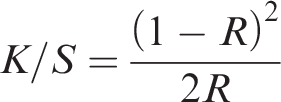
Color properties were measured using the Datacolor Spectraflash SF 600 + (Datacolor International, USA) instrument with specular-included mode and LAV 6.6 mm viewing aperture. Before testing, the machine was calibrated, and the measurement conditions were D65 daylight and 10° standard observer; all measurements were carried out at 20 ± 2°C temperature and 65 ± 2% relative humidity. The Kubelka–Munk equation correlates the absorption function of the substrate (K), the scattering function of the substrate (S), and the reflectance (R) in the visible spectrum (400–700 nm), as given below in Equation 1:
The color difference is expressed as ΔE* and is calculated by Equation 2:

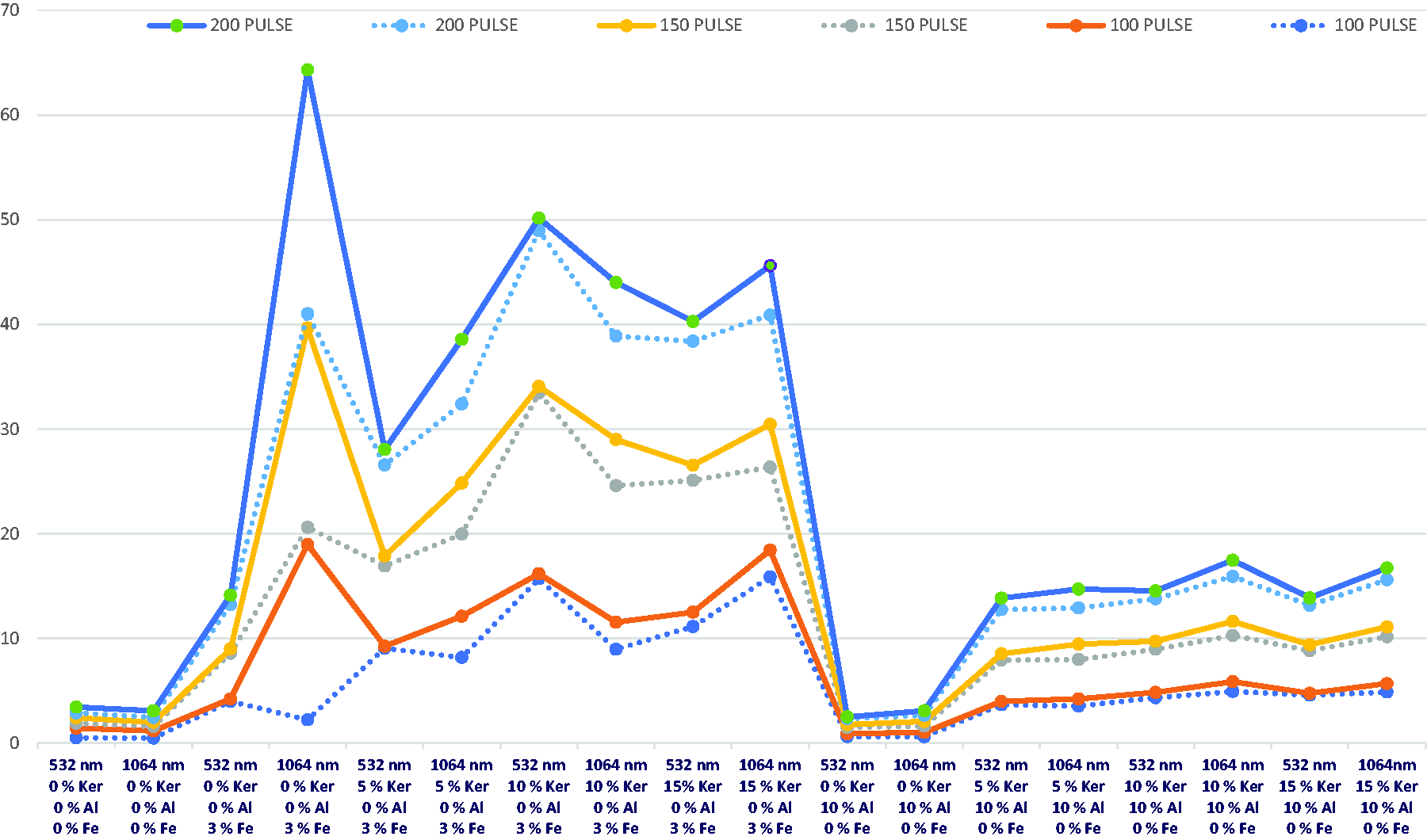
The effect of laser radiation on K/S and ΔE*.
Fastness properties
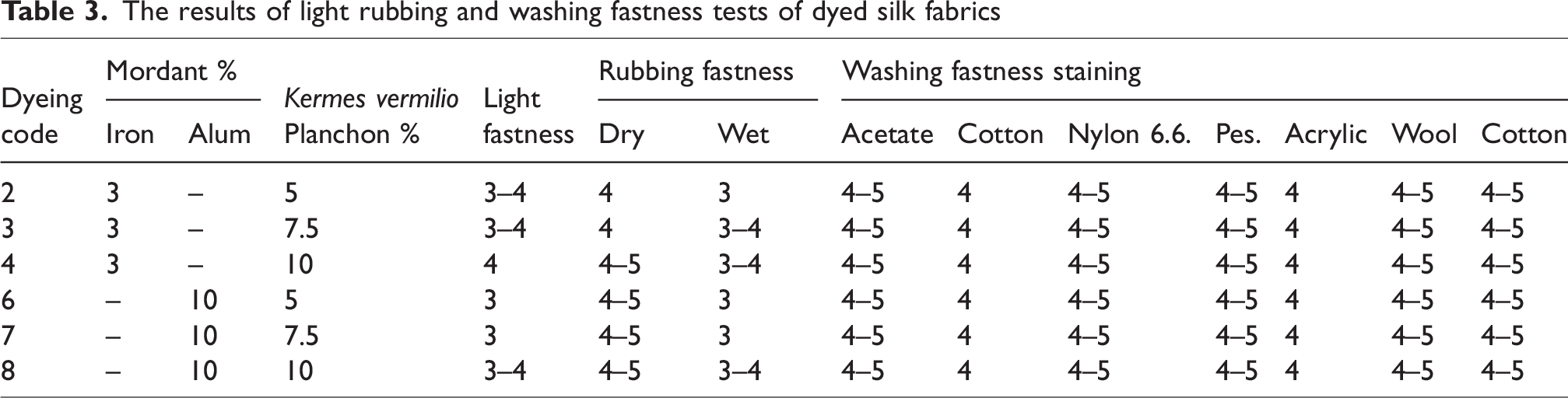
The washing, rubbing, and light fastness tests for dyed fabrics were performed according to ISO105: C06 (A1S), ISO105-X12, and ISO105-B02 standards, respectively. The ISO 105:C06 A1S fastness test was carried out at 40°C for 30 min, containing 10 steel balls. The dyed fabrics were exposed to light for 48 h from a xenon arc lamp (250W).48,49 Fastness properties are given in Table 3.
The results of light rubbing and washing fastness tests of dyed silk fabrics
FTIR analysis
Raw silk fabric, dyed with alum fabric, dyed with iron fabric, and dyed fabrics after laser radiation were analyzed by FT-IR (Fourier Transform Infrared Spectrophotometer). The FT-IR spectra were recorded in the range of 4000–650 cm−1 on a Spectrometer Perkin Elmer Spectrum 100 series (USA) with a universal ATR accessory sampling. FTIR analyses are given in Figure 3.
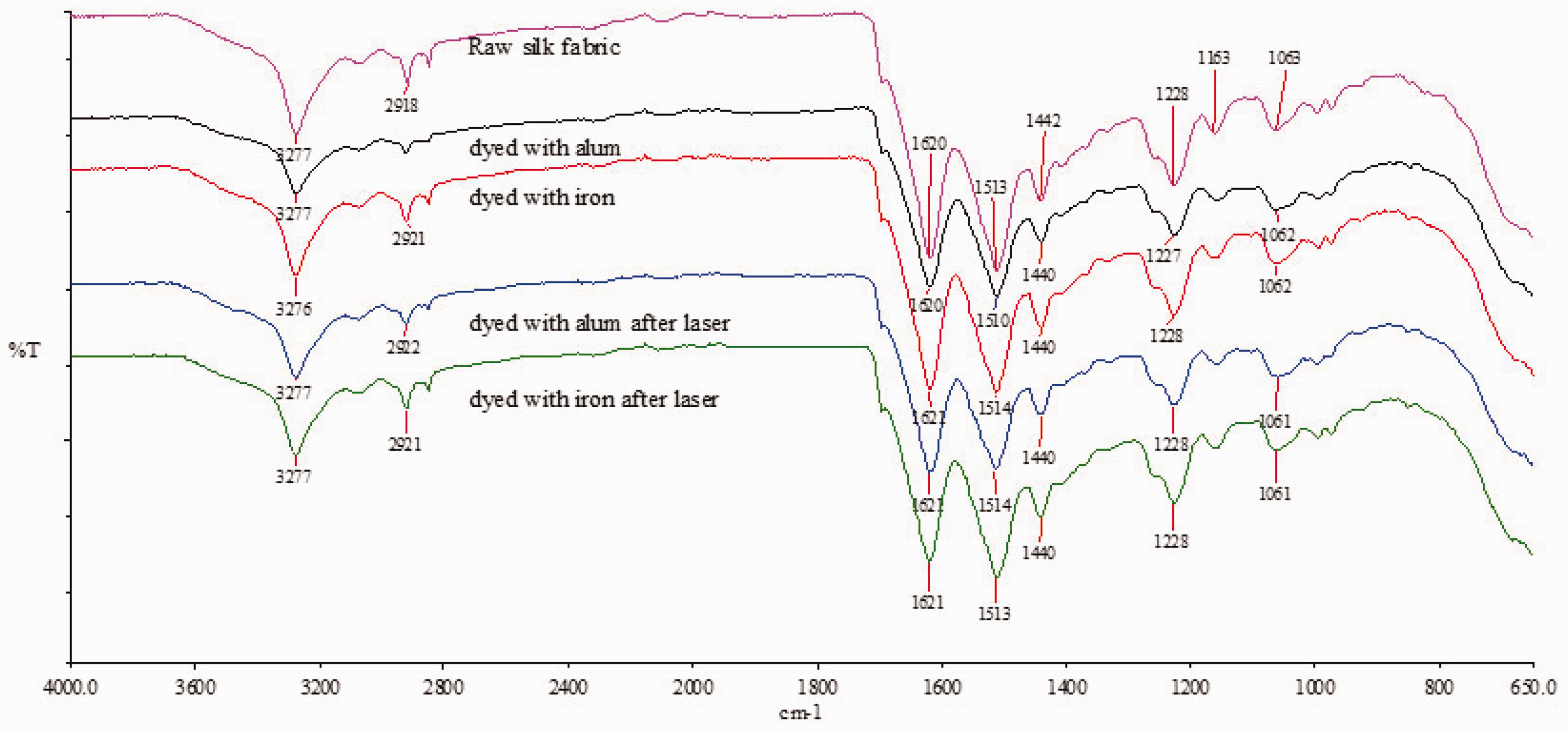
FTIR spectra of silk fabrics.
HPLC-DAD analysis
A chromatographic experiment was carried out by using an Agilent 1200 series system (Agilent Technologies, Hewlett-Packard, Germany) that includes a G1311A gradient delivery pump with a 50 µl loop, a Rheodyne valve (7725i sample injector), a G1322A vacuum degasser and a G1316A thermostatted column compartment; the data were analyzed using an Agilent Chemstation. A Nova-Pak C18 analytical column (3.9 × 150 mm, 4 µm, part number WAT086344; Waters, Ireland) was utilized. The chromatographic system for the identification of natural dyes consisting of A: H2O–0.1% TFA and B: CH3CN–0.1%TFA with a flow rate of 0.5 mL/min, was developed in 2007. 50 Chromatographic separations of the hydrolyzed fabrics were performed using this gradient elution program.51–53 Chromatogram and spectra of the dyed fabric are given in Figure 4.
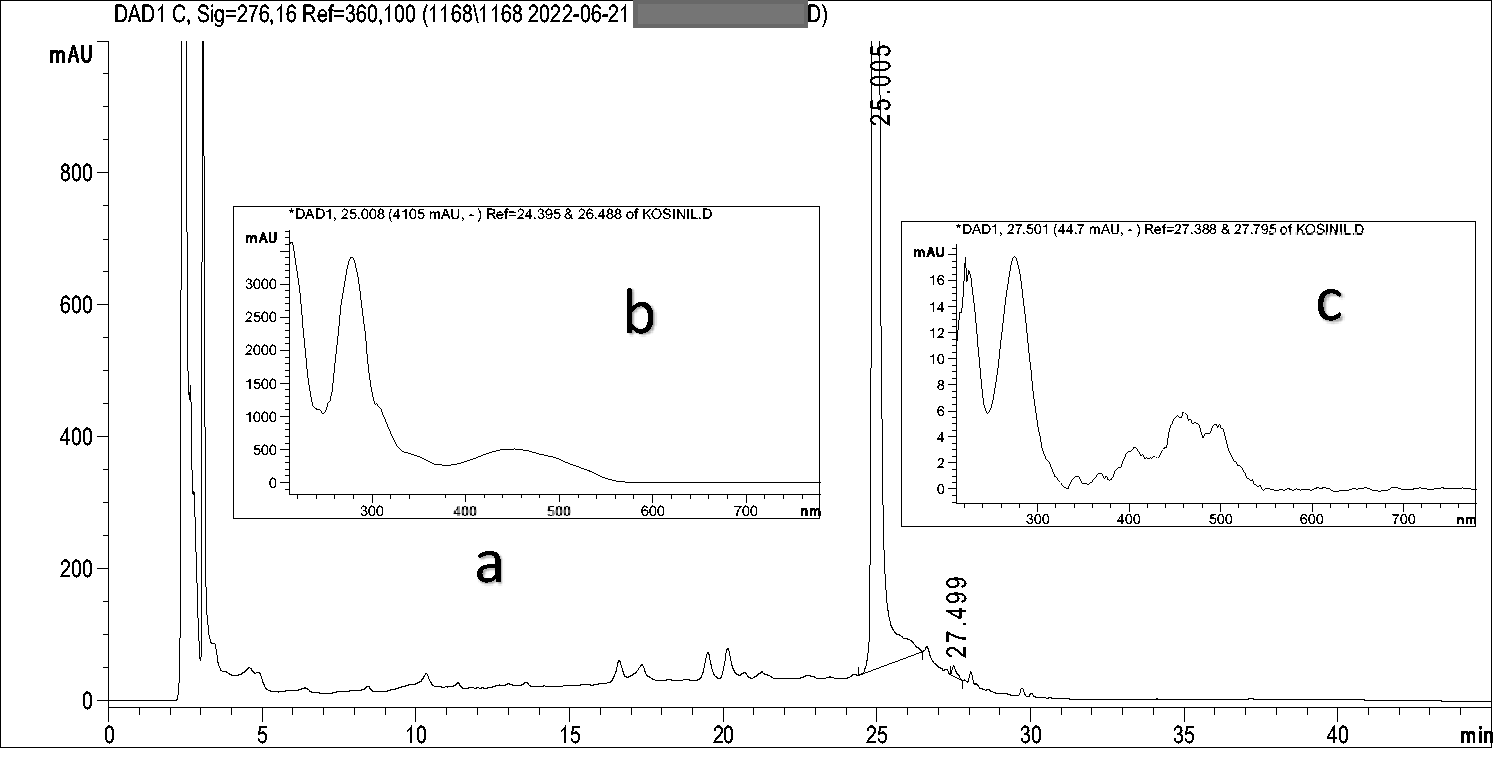
(a) Chromatogram of the dyed fabrics with kermes, (b) spectra of 25.005 RT (kermseic acid) and (c) spectra of 27.499 RT (flavokermesic acid).
SEM-EDX analysis
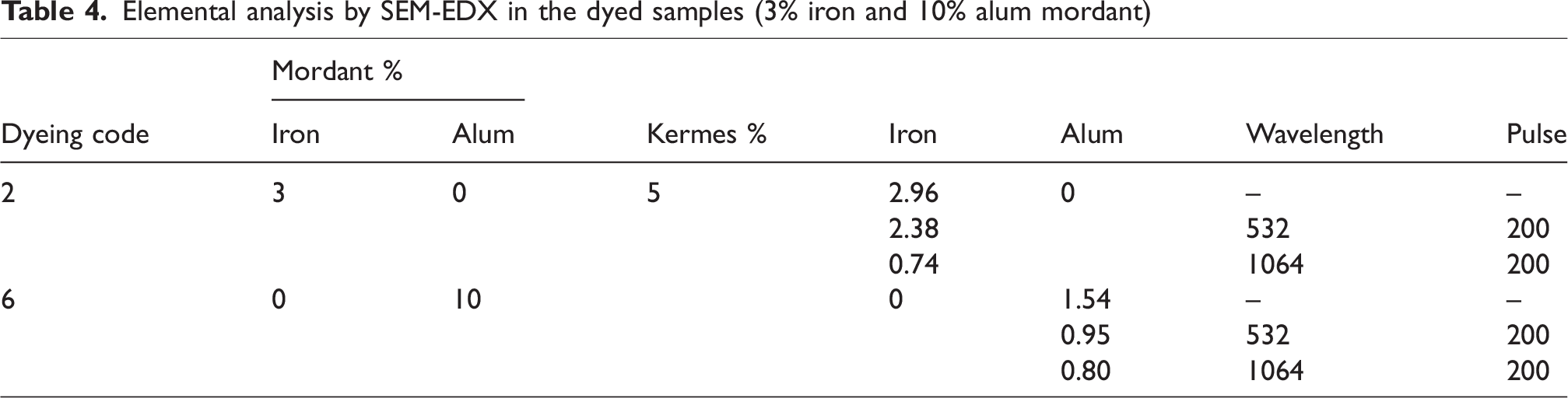
The elemental composition analysis of the fabrics and identification of metal salts in the fabric were performed using a TESCAN Vega 3 SEM (TESCAN, Brno, Czech Republic), equipped with backscattered electron (BSE), secondary electron (SE) detectors, and an energy-dispersive x-ray detection system. Each silk fabric was analyzed by attaching it to a carbon band that did not affect the analysis result, to identify the fiber type and get a good image. The images were obtained at 5 keV energy. 54 The SEM images of the dyed fabrics are shown in Figure 5. Elemental analyses by SEM-EDX in the dyed samples are given in Table 4.
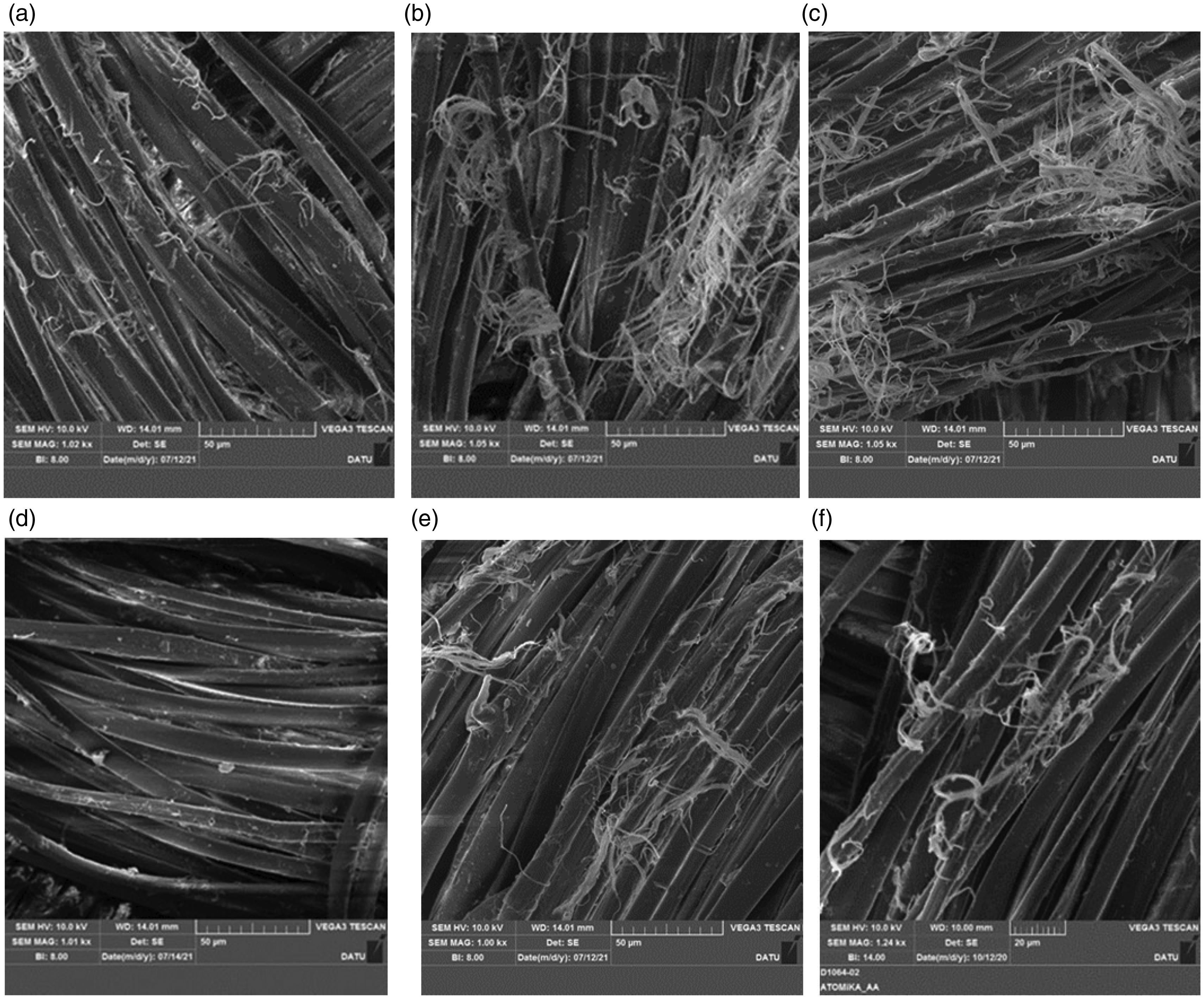
SEM images of dyed fabrics (3% iron and 5% kermes non irritation (a); 3% iron and 5% kermes, 532 nm, 200 pulses (b); 3% iron and 5% kermes, 1064 nm, 200 pulses (c); 10% alum and 5% kermes non irritation (d); 10% alum and 5% kermes 532 nm, 200 pulses (e); 10% alum and 5% kermes 1064 nm 200 pulses (f)).
Elemental analysis by SEM-EDX in the dyed samples (3% iron and 10% alum mordant)
Results and discussion
Using various wavelength and energy density combinations of the laser device utilized for conservation purposes, the properties of a natural dye extracted from the kermes insect (Kermes vermilio Planchon) and the laser radiation effect on the color of dyed fabrics were researched. The dye extract was successfully applied to silk fabrics in different dye concentration ratios with different metallic salts, and excellent results found in terms of color yield and fastness properties. It is important to create extraction conditions and not to use any chemicals in the various extraction techniques to provide the main coloring component safely and at a low cost. The traditional aqueous method for the extraction process was used in the study. This method is very simple, and it has been used globally since ancient times. In order to increase the fixation of natural dyes with fiber, a mordant substance that forms the dye–mordant–fiber complex should be used. The application of metal salts is a common method for improving fastness properties in dyeing with natural colorants. Mordanting was carried out based on the optimal metallic mordant ratios used in the historical process and using the pre-mordant process. For this purpose, pre-mordanting was used on silk fabrics. Initially, the silk fabrics were washed with 10% non-ionic soap in hot tap water at 80°C for 60 min and then dried. Pre-mordanting was performed at 80°C for 60 min with a liquor ratio of 25:1 on all fabrics, and used 10% alum [KAl (SO4)2.12H2O] and 3% iron (II) sulfate (FeSO4.7H2O). Then the pre-mordanted fabrics were dyed with different concentrations of kermes insect dye (5, 10, and 15% wt.) according to historical recipes. After this stage, the dyed-silk fabrics were rinsed with tap water and dried in the open air at room temperature. The dyeings were done according to the Natural Organic Dye Standard (NODS). Mordanting and dyeing procedures are given in Table 1.
In the past, insects were the primary source of natural dyes of animal origin, with red being the most common. The impact of laser radiation on the metallic mordant–dye–fiber complex was examined in this research using various ratios of metallic mordant and pre-mordanting techniques. In addition, the effect of laser radiation on the color was investigated with increasing dye concentrations from 5% to 15% wt. With a system of seven mirrors, the laser beam is directed through a moveable, articulated arm of the laser apparatus, where it can approach the fabric from various angles and distances. In this manner, each fabric was exposed to 100, 150, and 200 pulses at a repetition rate of 20 Hz. The distance between the fabric and the articulate arm was set to 10 cm. Then firstly raw silk fabrics, and secondly mordanted and dyed with kermes silk fabrics were exposed to 100, 150, and 200 pulses of laser radiation at a repetition rate of 20 Hz. In this way, the responses to laser radiation of silk fabrics dyed at different concentrations with different mordant substances were investigated with the same laser parameters. Fiber morphology after laser irradiation was investigated using an optical microscope at 40× magnification. A microscopic examination of silk fabrics is given in Table 2. The fabrics displayed different effects to the radiation, such as destruction and discoloration.
The effect of laser radiation on K/S and ΔE* is given in Figure 2. The coloristic properties of the dyed fabrics were enhanced because of the high concentration of kermes which used alum and iron mordants. K/S values were measured between the wavelengths 300 and 700 nm and calculated by the Kubelka–Munk equation from the reflectance value at the wavelength of maximum adsorption (λmax = 360 nm). It was realized that as dye concentration was raised, the K/S values rose. As a result, the fabrics dyed with 10 and 15% wt. kermes with iron mordants (dyeing code 3, 4) were found to have the highest K/S values at wavelengths of 12.29 and 12.58. However, these values, which were measured as 9.89 and 10.43, decreased for these fabrics after laser radiation application at 1064 nm with 200 pulses, and also, when the undyed fabric was taken as a standard, the color difference (ΔE*) was measured as 5.11 and 4.72. The highest color difference value was measured in 5% wt. dyed silk fabric (dyeing code 2) with iron mordant (ΔE* = 6.18) after laser radiation at 1064 nm wavelength and 200 laser pulses. The color difference value of the fabrics increased when the dye concentration was decreased from 15% wt. to 5% wt. at 1064 nm with 200 pulses of laser radiation. It should be noted that slight discoloration is not accompanied by any fiber breakage or damage in dyed fabrics after application. This slight discoloration can be seen in Figure 2 and the microscopic investigations. Thus the application of laser radiation to dyed silk fabrics appears feasible given the right parameters and proper conditions.
FTIR analyses of silk fabrics are given in Figure 3. In the FTIR analysis, the findings related to the bonds that should be in the structure of the silk fiber were determined. However, no significant difference was observed in the FTIR analyses of dyed fabrics after laser radiation. Dyed fabric was analyzed with HPLC-DAD and the chromatograms and spectra of dyed fabric are given in Figure 4. According to the analysis results, approximately 99% kermesic acid (C16H10O8), which is the main coloring component of the kermes insect, and 1% flavokermesic acid (C16H10O7) were identified in the dyed fabric.
The washing, rubbing, and light fastness values of the dyed fabrics are given in Table 3. The color-change values of the fabrics dyed with kermes after the washing and rubbing fastness tests, in general, were found to be 3+ in grayscale rating. The color fastness values of dyed fabrics to light were found to be good, between 3 and 4 in the blue scale rating. The results of washing fastness tests were moderate or high for all fabrics, between 4 and 5. And also, they have good fastness levels to rubbing, 4–5 dry and the lowest 3–4 wet. In general, natural dyeing of wool and silk fabrics, which are protein based, possesses good fastness values. All of the results’ consequences are at the desired level.
SEM images of dyed fabrics are given in Figure 5. SEM images displayed a trace amount of surface disruption in dyed fabrics. Metal losses were detected in the SEM EDX results from the selected fabrics after laser radiation. Elemental analyses by SEM-EDX in the dyed fabrics are given in Table 4. Alum, iron-mordanted, and dyed silk fabrics were coated with carbon for elemental analysis. The EDX results indicate that 1064 nm laser radiation causes more Fe loss in iron-mordanted fabrics and less Al loss in fabrics dyed with alum mordants, especially in fabrics dyed with high concentration. In the EDX results of silk fabrics alum mordanted at the rate of 10% and dyed 10% wt. kermes (dyeing code 7), the Al element percentage was determined as 1.54 (wt%) on the untreated fabric surface, and after laser radiation this ratio decreased to 0.95 (wt%) at 532 nm and 0.80 (wt%) at 1064 nm on the irritated fabric surface. In the iron mordanted at the rate of 3%n and dyed with 10% wt. kermes fabrics (dyeing code 3), Fe element percentage was determined as 2.96 (wt%) on the untreated surface, and after laser radiation this ratio decreased to 2.38 (wt%) at 532 nm and 0.74 (wt%) at 1064 nm on the irritated surface. It was also determined that the percentage of Fe and Al elements in the dyed fabrics decreased after 1064 nm laser radiation when the number of laser pulses was increased (from 100 to 200).
The uncharged amine (−NH2) groups in the silk fiber make coordinate bonds with the dyestuff and metal complex, and kermesic acid (C16H10O8) formed complexes with fibroin and metal ions [(Fe (II) and Al (II)]. This results in the possible formation of the fiber–mordant–dyestuff complex. The choice of the type of mordant and dye concentration was found to affect the fiber–mordant–dye complex’s reaction to laser irradiation with the same wavelength and energy density. These results reveal that laser radiation used on fabrics with high dye concentrations may cause only a trace amount of damage, and may even be applied without endangering the fabric and without fibrous damage by lowering the energy level at low fluencies, thanks to the adjustable laser device parameters. The study emphasized how important it is to understand the type and quantity of mordant and natural dyestuffs. Textile materials require mordant and dyestuff analysis prior to laser application.
Conclusion
In this present study, various concentrations (10, 15, and 20% wt.) of the kermes insect (Kermes vermilio Planchon) were used with pre-mordanted methods on silk fabrics. Identification of the dyed silk fabrics was carried out by using HPLC-DAD. Applications of laser radiation on undyed, only mordanted and dyed fabrics with kermes have been investigated for the color effect. At 532 nm, no fiber damage or disruption was seen to accompany the slight discoloration. At 1064 nm there was a trace amount of fiber damage and discoloration in only dyed iron-mordanted fabrics. Experimental results revealed that the coloristic properties of the dyed fabrics were enhanced because of the high concentration of kermes, and after laser radiation less color change was recorded on silk fabrics dyed at high concentrations. It is important to emphasize that, especially before the conservation of historical textiles, nondestructive and micro-analysis methods should be used to develop conservation methods. Determination of the type of fiber, metallic mordant, and natural dye constituents used in historical textile artifacts is very important. In this way, the most accurate conservation application can be made for historical textile artifacts. Further research is required to determine the significance of textile color in laser radiation, as this study was done on silk. Through its repeatability for subsequent field studies, this research has contributed to the development of a scientific method for textile conservation that will be useful to conservation sciences the world over. Future applications with various laser technologies in the textile industry may include garment decoration, fiber modification, color effects and, textile conservation.
Footnotes
Declaration of conflicting interests
The author(s) declared no potential conflicts of interest with respect to the research, authorship, and/or publication of this article.
Funding
The author(s) received no financial support for the research, authorship, and/or publication of this article.
