







Abstract
Stress-free two-way shape memory polymers capable of reversible shifting between two distinct shapes offer versatile platforms for the development of future smart devices. However, improving the recovery performance of bidirectional shape memory polymers with good biocompatibility and stimulus temperature remains challenging. Studies have shown that enhancing oriented crystallization can effectively improve shape recovery performance. Herein, we demonstrate a simple approach to enhance the number of nanofibers aligned in the tensile stress direction by controlling the alignment direction of polycaprolactone nanofibers, which promotes the generation of oriented crystallization in the tensile state, thereby achieving a 230.8% improvement in recoverable strain. The optimization of the nanofiber structure offers a generalized method for enhancing the two-way shape memory behavior of semicrystalline polymers.
Keywords
Shape memory materials (SMMs) can respond to changes in the external environment (temperature, force, electromagnetic field, solvent, etc.) by changing their own state parameters (shape, position, strain, etc.) and return to a pre-set state.1,2 SMMs are lightweight and inexpensive and can be easily shaped. 3 In addition, they have a large shape memory strain, making them attractive for a wide range of applications, including textiles,4,5 biomedicine, and aerospace.
SMMs can have one-way or two-way shape memory effects (2W-SMEs), both of which can achieve secondary, tertiary, or multi-level shapes. 6 The one-way shape memory effect is irreversible, and if the sample is to be re-transformed from the recovered shape to the temporary shape, the user needs to apply force to the sample. 7 In contrast, the 2W-SME is reversible, and the sample can be converted between the original shape and the temporary shape without applying force. 8 Two-way SMMs can exhibit a reversible shape memory (RSM) effect, namely the 2W-SME, by simply changing the temperature after one-time stress shaping,9,10 offering broad application prospects in biomedicine, smart textiles, sensors, and actuators.11–14
The most common triggering method for shape memory polymers (SMPs) is thermal stimulation, which is usually achieved by directly heating the material through an increase in external temperature.15,16 However, direct heating has several drawbacks, such as a slow recovery rate and difficult temperature control;17,18 thus, it is not suitable for certain applications, especially in the medical field. 19 Furthermore, most bidirectional SMMs developed to date require high temperatures that are far beyond human body temperature or environmental temperature differences,14,20,21 limiting their applications in wearable devices and biomedicine.
The use of polycaprolactone (PCL)-based SMPs has garnered significant attention due to their numerous benefits, including biocompatibility, biodegradability, and elasticity. PCL is an ideal switching segment for SMPs, as its melting temperature serves as the transition temperature, which can be adjusted from 45°C to 60°C by increasing the molecular weight. This range is particularly useful for in vivo deployment. The ability to produce materials at the nanoscale, which possess distinct properties such as optical, electrical, magnetic, and thermal properties that differ significantly from those of macroscopic materials, has paved the way for the advancement of novel applications in various fields, including medicine, power, energy, and electronics.22–24 Electrospinning is a valuable technique for producing nanofibers with diameters ranging from the nano- to the microscale, owing to its simplicity and low consumption. The high aspect ratio and large surface-area-to-volume ratio of electrospun fibers allow for the controlled production of PCL nanofibrous structures. The shape memory effect and one-dimensional (1D) nanostructure of PCL nanofibers make them excellent candidates for sensor and actuation applications, further extending the potential uses of PCL.25,26 PCL nanofibers fabricated using electrospinning have a high surface-area-to-volume ratio, high porosity, and flexibility,27,28 and can be combined with other materials to form highly efficient bidirectional SMMs. However, the low degree of crosslinking in PCL nanofibers obstructs their orientability under stress, resulting in less oriented crystallization and suboptimal shape recovery.
In this study, PCL was mixed with triallyl isocyanurate (TAIC) and benzophenone (BP) to produce PCL nanofibers by electrospinning, which were then crosslinked by ultraviolet (UV) irradiation. By controlling electrospinning parameters, we achieved both oriented and random alignment of the nanofibers, thereby improving the shape recovery efficiency of the resulting materials. To better understand the mechanical characteristics and shape memory behavior, static and cyclic mechanical tests were performed. Further, a systematic investigation of the effect of the alignment angle (or nanofiber direction) on the mechanical and shape memory properties of the nanofibers was conducted.29,30 This research can provide insights into the practical design of SMPs and expand the scope of their applications.
Materials and methods
Materials and preparation
PCL pellets (P-69021, Tianjin Heowns Biochemical Technology Co., Ltd, China) were added based on the intended material-to-solvent ratio with 2 wt% UV crosslinker (2 wt% TAIC and 2 wt% BP). A mixed solvent of dichloromethane (DCM)/dimethylformamide (DMF) (7:3) was prepared. An electrospinning apparatus was used to create random and aligned PCL nanofibers (NANON-02, MECC Co., Ltd, Japan). For unidirectional PCL nanofibers, a voltage of 15 kV was supplied to the spinneret at a speed of 15 m/min, which was located 75 mm from the collector (Figure 1(a)). With a feed rate of 1 mL/h, the spinneret was moved at a speed of 20 mm/min. Random PCL nanofibers were also manufactured with a collector speed of 3 m/min for comparison. After drying all PCL nanofibers, samples were irradiated with UV light (wavelength: 350–450 nm) for 2, 4, 6, 7, and 8 min to induce the crosslinking of PCL under UV radiation (Figure 1(b)).
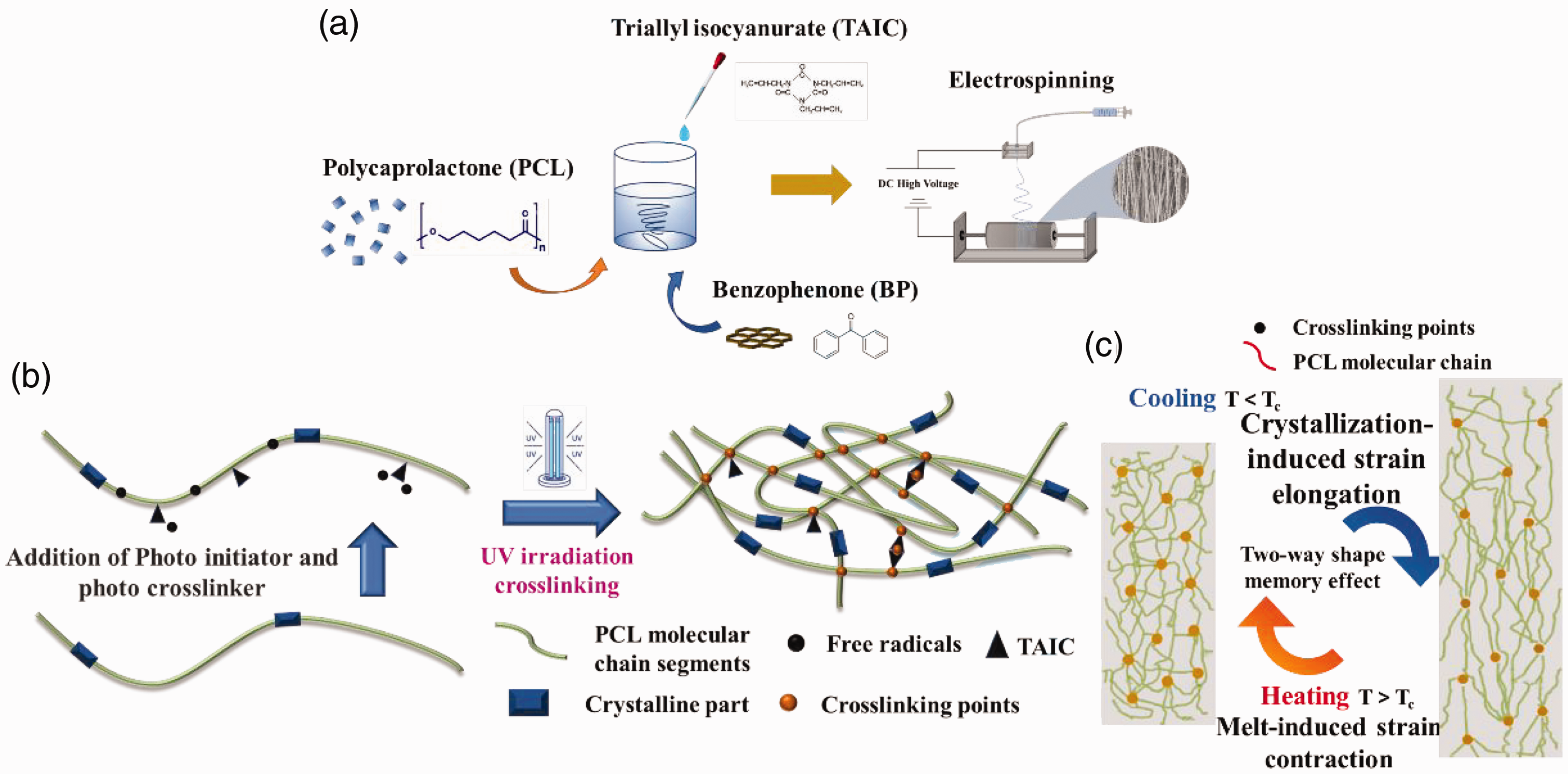
Schematic diagram of the (a) electrospinning and (b) crosslinking processes and (c) the two-way shape memory effect. UV: ultraviolet.
Characterization
The surface morphology of the nanofibers was examined using scanning electron microscopy (SU1510, Hitachi Co., Ltd, Japan).
A differential scanning calorimeter (DSC Q2000, TA Instruments) calibrated with indium was used to determine the thermal behavior of the samples. Each sample (4 mg) was put in an aluminum pan and heated and cooled at a rate of 10°C/min between −10°C and 100°C. Nitrogen was purged at a rate of 30 mL/min, and two cooling and heating cycles were conducted.
Two-dimensional wide-angle X-ray diffraction (2D WAXS; 105 m pixel size; Bruker AXS, Karlsruhe, Germany) was used to examine how the crystalline structure of the samples changed at 15°C and 60°C under various stress levels. A specially made heating/cooling apparatus that used a heating gun and a stream of cooled nitrogen gas was used. For the stabilization of temperature, the samples were left at the intended temperature for 5 min before measurement.
Depending on their orientation and the number of times they received UV radiation, PCL nanofibers were divided into two groups: random (R-0, R-2, R-4, R-6, R-7, and R-8) and aligned (A-0, A-2, A-4, A-6, A-7, and A-8).
Shape memory properties
The specimens were cut into rectangles (10-mm length and 2-mm width). The length direction of the sample was cut at 0° for the aligned nanofibers (nanofiber direction). The shape recovery capabilities of random and aligned PCL nanofibers were examined using a thermomechanical analyzer (DMA 800, TA Instruments Inc., USA).
Cooling/heating for the two-way shape memory process under the stress-free condition was as follows: to prevent buckling, samples were heated to approximately 55°C under pressure (0.01 MPa) before being stretched with 0.1 MPa. The temporary shape was then fixed by cooling the samples to 12°C while keeping the stress at 0.1 MPa. Finally, the samples were reheated to approximately 55°C under the stress-free condition after the tensile stress was reduced to the pretension level (0.01 MPa). Three cooling–heating cycles were performed (Figure 1(c)).
For the two-way shape memory properties under the constant-stress test, the sample was preheated to 55°C under a pretension of 0.01 MPa, an external stress of 0.1 MPa was applied, and then, the constant stress was maintained throughout the test. Consequently, without altering the stress, the sample was heated to 55°C and cooled to 12°C. Three cycles of this process were performed.
Static tensile and mechanical cycle tests
The samples were cut into dumbbell specimens in accordance with the JIS K-6251-7 standard with random nanofiber directions and aligned nanofibers along the tensile direction at 0° (longitudinal), as shown in Figures 2(a) and (b), respectively. According to the ASTM standard D638-14, a static tensile test was conducted on a universal tensile machine (RTC1250A, A&D Co., Ltd, Japan) at room temperature (25°C) at a speed of 1 mm/min (Figure 2(c)).
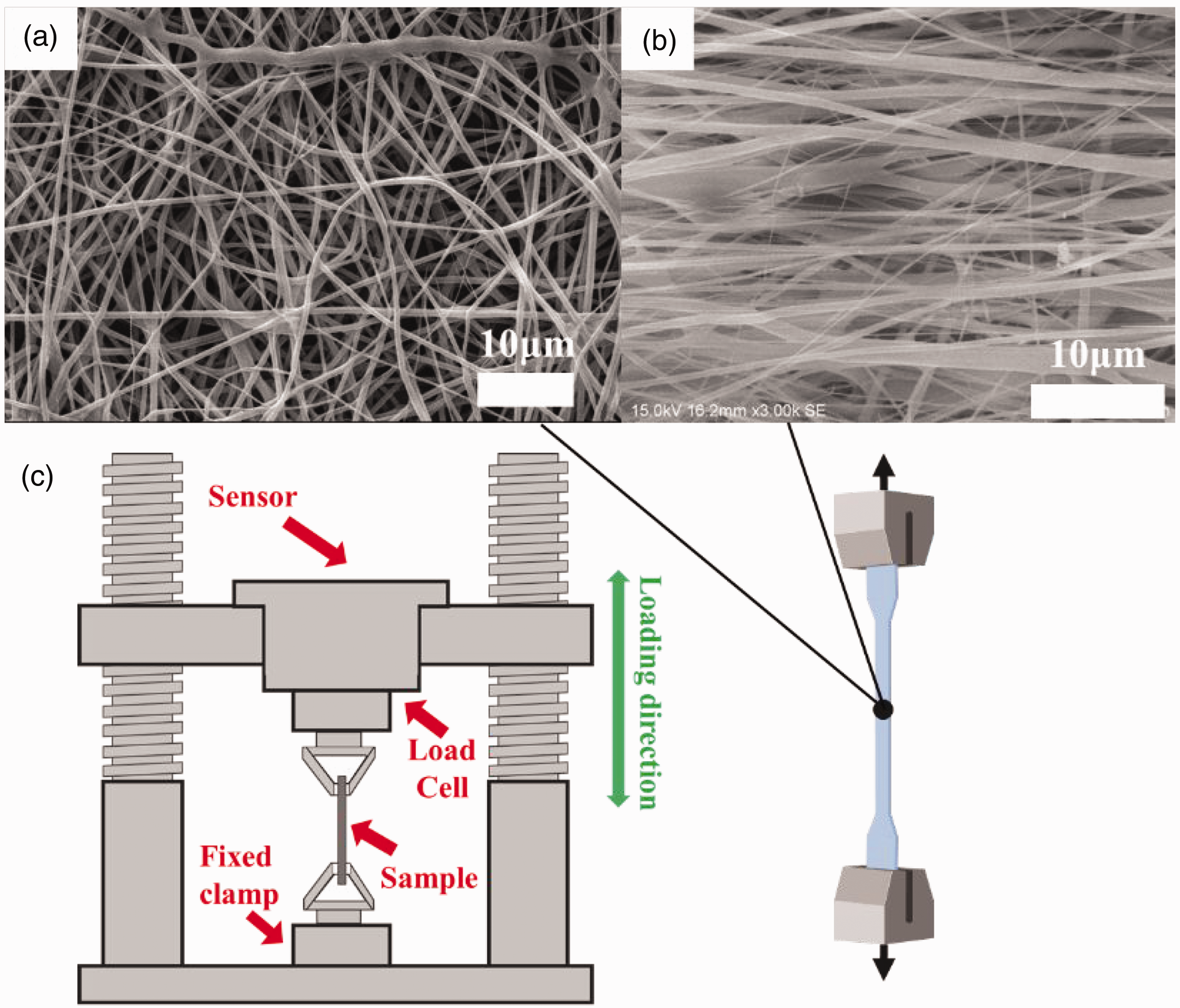
Scanning electron microscopy images of random and aligned PCL nanofibers: (a) random nanofibers; (b) aligned nanofibers at 0° and (c) Schematic diagram of the tensile test.
Mechanical cycle tests under constant strain and stress were performed, respectively, to observe the hysteresis of the developed materials in accordance with ASTM E2714-13 and E606/E606M-19e1 to understand the creep and stress relaxation behaviors of PCL nanofibers. Fifty percent of the maximum stress was designated as the upper limit for the constant-stress cycle test. The maximum strain for the constant-strain cycle test was set at 50% of the maximum strain in the elastic region. At room temperature (25°C), each sample was put through 50 cycles of loading and unloading at a speed of 3 mm/min.
Results and discussion
Morphology and characterization
Two types of samples—random and aligned—with various nanofiber alignments are shown in Figures 2(a) and (b). The random PCL nanofibers formed random nanofiber mats with disordered spatial orientations, producing a wide range of nanofiber angles. In contrast, the aligned nanofibers formed well-aligned PCL nanofiber mats with a main alignment angle of 0° and were uniformly distributed throughout the collector. The diameters of PCL nanofibers, both aligned and random, ranged from 800 nm to 1.9 µm.
The fibers' thermal characteristics were assessed using differential scanning calorimetry (DSC; Figures 3(a) and (b)). For all samples, the measurements revealed a PCL-related melting transition between 45°C and 58°C and a crystallization between 15°C and 30°C. According to the DSC results, the peak maximum of the PCL melting transition (Tm) for each sample was located at 53°C ± 1°C. On the other hand, the PCL crystallization peak (Tc) shifted downward with longer irradiation times.
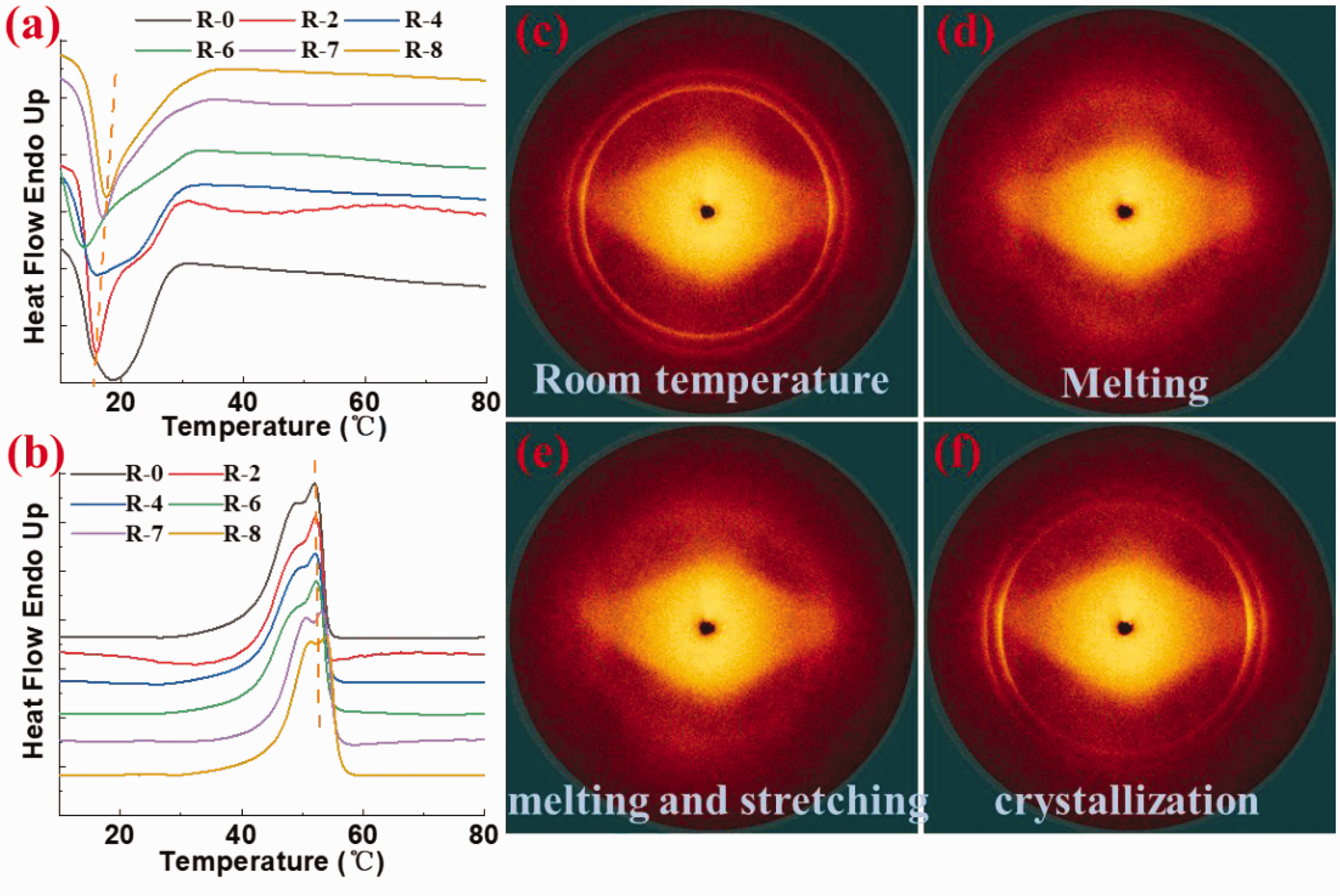
(a), (b) Second heating in the differential scanning calorimetry test for samples at various irradiation times and (c)–(f) Two-dimensional wide-angle X-ray diffraction patterns of R-4 at various conditions.
To clarify the underlying mechanism of the 2W-SME, we used 2D WAXS to characterize microstructural alterations after the heating–cooling cycles (Figures 3(c)–(f)). Firstly, the peaks at 2θ = 21° and 23° are related to the crystals of PCL segments, as shown in Figure 3(a), since they vanish at temperatures higher than 60°C (Figures 3(d) and (e)). Notably, in the stretched samples, the discontinuous Debye–Scherrer rings exhibited a highly directed distribution, which became more pronounced with increasing stress, showing that the preferred orientation of crystal chains was parallel to the direction of stretching (Figure 3(f)).
Static tensile properties
The stress–strain curves of the samples are shown in Figure 4 along with the comparison of their mechanical characteristics at room temperature. As the strain increased and the curve slope stabilized, the stresses of the samples increased quickly in the elastic region and then gradually increased with strain. When the strain reached its maximum, tensile failure occurred, and the stress varied. The breaking-point strains in all samples were greater than 1000%, indicating that the PCL fibers were flexible.
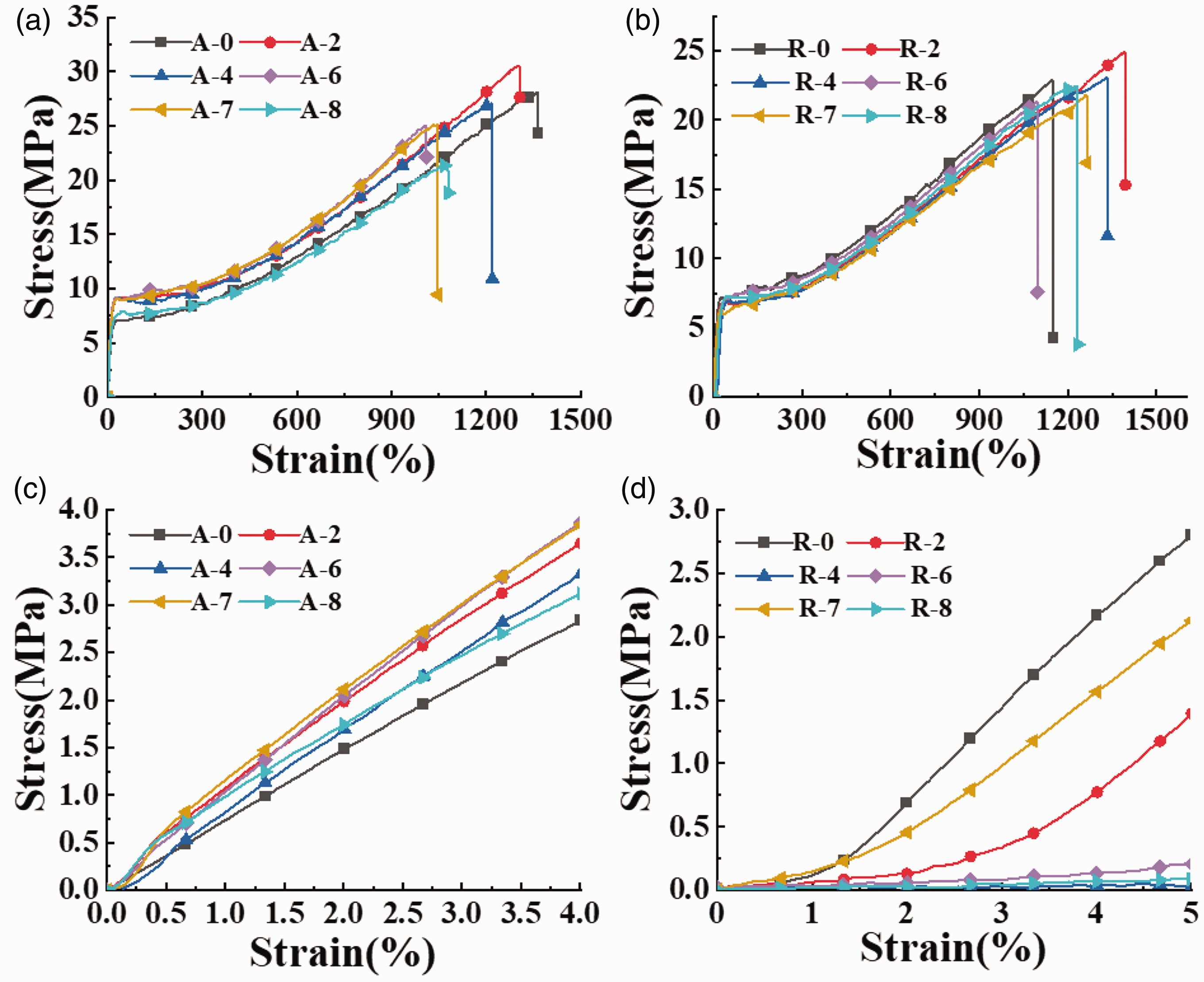
Tensile stress–strain curves of the (a) random structure, (b) aligned structure, and (c), (d) elastic region of the curves.
Figures 4(a) and (b) display the mechanical characteristics of the randomly oriented and perfectly aligned PCL nanofibers. Compared with the randomly oriented PCL nanofibers, the aligned PCL nanofibers had higher elastic moduli and tensile strengths. The elastic modulus and tensile strength of A-0 increased by 578.3% and 22.4%, respectively, compared with those of R-0. The volume of nanofibers along the direction of strain, which bears the majority of the applied load during the tensile process, increased when the fiber orientation (alignment angle) changed from random to aligned, promoting the mechanical properties of the aligned nanofibers. These findings suggest that the mechanical properties of the nanofibers depend significantly on their volume fraction along the tensile direction.
As shown in Figure 5(a), the aligned nanofibers exhibited an elastic moduli of 1.037 and 1.079 MPa at irradiation times of 2 and 7 min, respectively. These values are greater than those of the randomly oriented nanofibers. In addition, the alignment endows the PCL nanofibers with the strength to resist deformation during the tensile process; compared with the random nanofibers, the tensile strengths of A-2 and A-4 increased to 30.26 and 24.61 MPa (25.4% and 4.5%), respectively. Therefore, PCL nanofiber-based materials with electrospun yarn structures offer deformation resistance in a variety of applications.
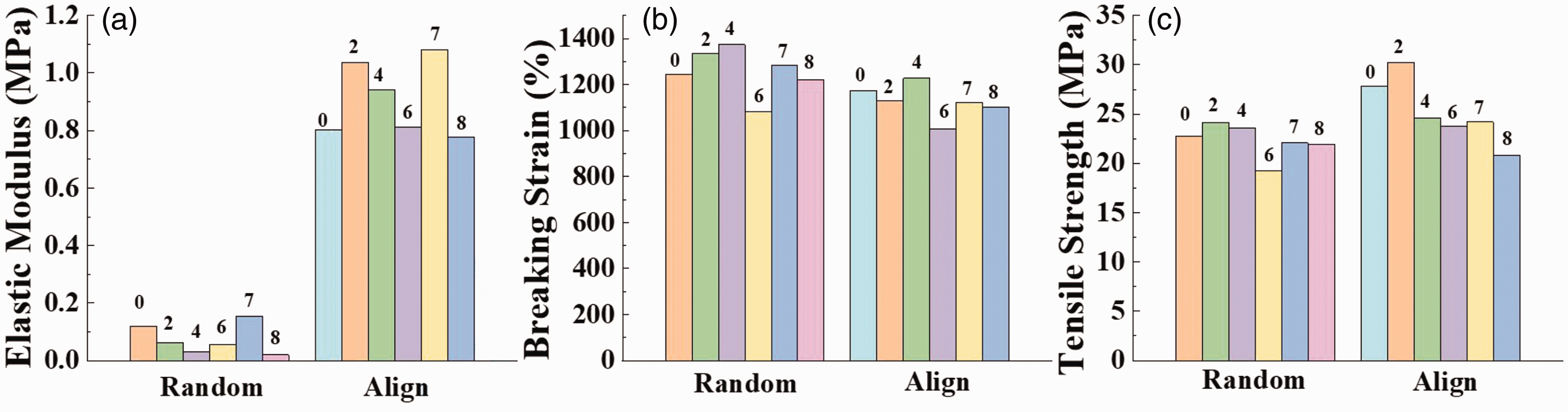
Comparison of the mechanical properties of polycaprolactone nanofibers: (a) elastic modulus; (b) breaking strain and (c) tensile strength.
UV irradiation first increased and then decreased the tensile strengths of the random and aligned PCL nanofibers. The aligned PCL nanofibers maintained a high tensile strength at 25°C (Figure 5(c)). Radiation-induced alterations in the structure of the PCL molecular chains are responsible for the differences in tensile strength among various irradiation times. In the preparation of photo-crosslinked polymers, the irradiation time is typically controlled to achieve optimal performance. An increase in the initial irradiation time can facilitate the crosslinking reaction, thereby enhancing the material's strength. However, with a continued increase in irradiation time, excessive crosslinking may occur, leading to embrittlement or other quality issues and causing a subsequent decrease in strength. Thus, the effect of irradiation time on the strength of photo-crosslinked polymers exhibits an initial increase followed by a subsequent decrease. UV irradiation breaks down the PCL polymer chains, resulting in a decrease in molecular weight and the dissolution of chemical bonds. In addition, the irradiation time and dose affect the mechanical properties of the PCL: longer irradiation times and higher doses result in greater reduction in mechanical performance. Therefore, PCL nanofibers with longer irradiation times are more susceptible to molecular chain damage, resulting in a further decrease in the elastic modulus.
Constant-strain and constant-stress cyclic tests
Figure 6(a) illustrates the stress–strain curves of the random and aligned nanofibers for 50 cycles under constant-strain cyclic loading, which includes loading, relaxation, unloading, and recovery. Hysteresis loops were obtained in all cycles. The modulus of elasticity decreased sharply in the first cycle and then increased gradually in subsequent cycles. The loop of each cycle's stress–strain curve shifted more as the number of cycles increased. Figures 6(b) and (c) illustrate the stress maintaining ratios of the PCL nanofibers with increasing cycle numbers. Compared with the random nanofibers, the stress keeping ratios of the aligned PCL nanofibers decreased gradually and remained above 87% even after 50 cycles, indicating that the tensile stress relaxed gradually. These results indicate that aligned nanofibers have greater dimensional stability and elastic recovery ability during deformation than random nanofibers and that aligned nanofibers affect the remaining strain.
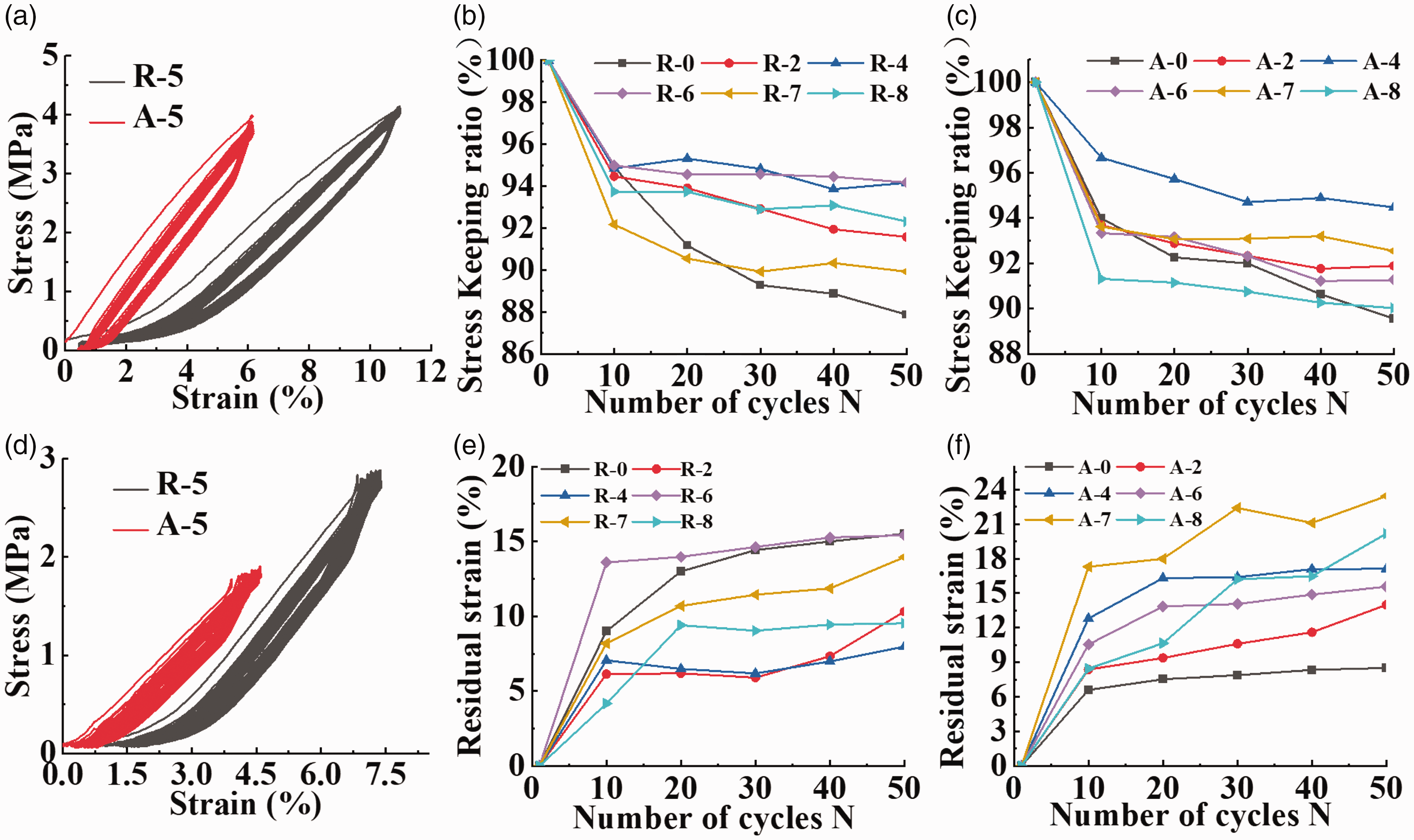
Representative cyclic mechanical testing results under constant strain or stress: (a), (d) stress–strain curves of samples under constant strain or stress with increasing cycle numbers; (b), (c) stress keeping ratios of random and aligned polycaprolactone (PCL) nanofibers under constant strain; (e), (f) residual strains of random and aligned PCL nanofibers under constant stress.
Figure 6(d) shows the stress–strain curves under constant stress; the hysteresis loops shifted gradually as the number of loading cycles increased, whereas the slope in the loops exhibited no observable change during the creep process. The relationship between the cycle number and residual strain of the random and aligned PCL nanofibers is depicted in Figures 6(e) and (f). As the number of loading cycles under constant stress increased, the residual strain decreased slowly and tended to flatten owing to strain hardening.
The creep plots of the samples are shown in Figures 6(e) and (f). For all samples, the strain increased from the beginning, and the hysteresis loops continuously shifted with increasing cyclic test numbers. All samples exhibited substantial creep at room temperature (25°C) (Figure 6(d)). In particular, for R-0 and R-2, more than 86% and 86.1% of the residual strain remained after 50 tensile cycles, respectively, whereas it was approximately 94.9% for A-0.
The aligned nanofibers showed superior creep resistance compared with the random nanofibers because of the improvement in the elastic modulus and microstructure. The creep behavior depends on stress and increases as the axial loading changes from tension to release. Studies have reported that the elastic modulus of PCL nanofibers influences their deformation resistance in the initial part of the tensile process, which affects their creep properties. Our results indicate that the elastic modulus of the aligned nanofibers is higher than that of the random nanofibers; thus, the creep occurs slower in the aligned structure with a smaller slope than that in the random structure.
In A-0, the decrease in the stress keeping ratio between the first and last tensile cycles was 10.45%, which is less than those of the random nanofibers, and a slight increase in the stress keeping ratio was observed after UV irradiation. The higher stress keeping ratio during loading cycles suggests that the aligned PCL nanofibers have a good capacity for strain recovery during deformation, given their lower stress keeping ratio.
Even after 50 cycles, the total stress keeping ratios of the aligned PCL nanofibers were higher than 89%, exceeding the 99% recovery ratio. These results indicate that aligned nanofibers are excellent candidates for reinforcing structures, even under repeated loading cycles. High stress keeping ratios and low residual strains of aligned nanofibers result from their storage modulus and related microstructural improvement during electrospinning. The ability of aligned nanofibers to recover from the deformed strain after unloading is greater than that of random nanofibers in the glassy state, resulting in a higher stress keeping ratio. The issue of long-term stability under cyclic loading is crucial for support structures. The lower stress relaxation and limited creep of the aligned PCL nanofibers indicated that the aligned PCL nanofibers are more resistant to repeated stress and strain than the random PCL nanofibers and therefore may be more suitable for long-term and repeated use.
Two-way shape memory properties under constant conditions
The two-way shape memory properties of PCL under constant stress are shown in Figure 7. The experimental procedure for thermal analysis can be summarized as follows: the sample was initially stretched with 0.01 MPa at 15°C; then, the stress was increased to 0.1 MPa after the sample was heated to 55°C. Consequently, the sample was cooled to 15°C while the constant stress was maintained. The PCL sample exhibited reversible deformation after repeating the heating–cooling cycle between 55°C and 15°C.
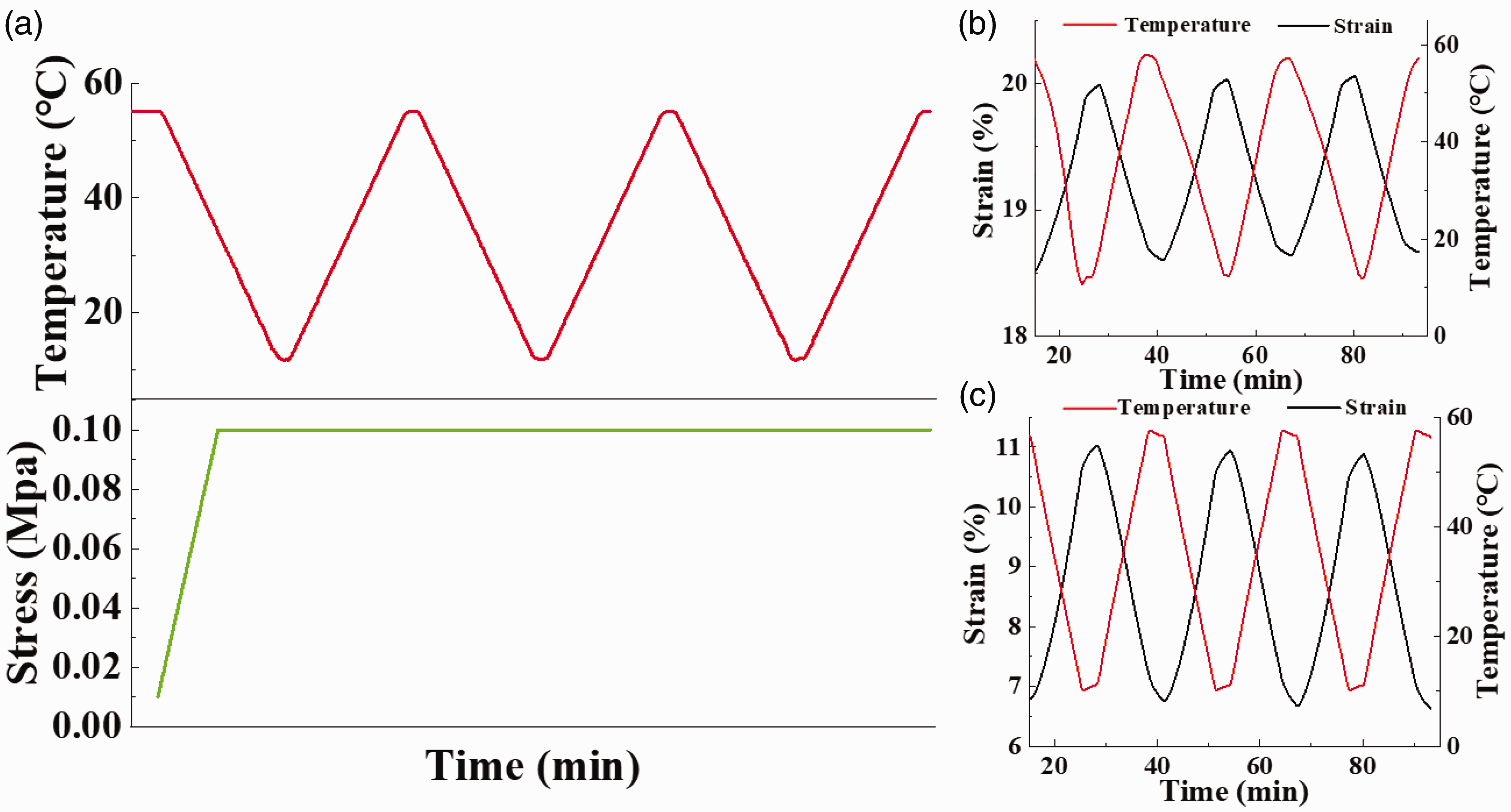
(a) Experimental procedure for measuring two-way shape memory properties under constant load. (b) R-4 and (c) A-4.
The two-way shape memory test curves of R-4 and A-4 are displayed in Figures 7(b) and (c). The 2W-SME was present in all samples. The reversible strains were 4.3% and 1.3%, respectively, for A-4 and R-4. The reversible variable increased 3.3 times as the nanofiber alignment was optimized. Notably, throughout the bidirectional shape recovery process, the reversible variable of the oriented nanofibers was higher than that of the randomly aligned nanofibers.
The stretching of the chain segment-oriented crystal and the melting-induced contraction, which alternate during the cooling and heating cycles, are the fundamental components of the 2W-SME. Due to the external stress at high temperatures, PCL molecular chain segments are oriented. The material eventually begins to crystallize along the directions of the molecular chain segments as it cools, causing it to elongate along the stress direction. Due to the thermodynamic driving force created by the melting transition, the molecular chain segments return to their initial condition during heating (Figure 1(c)). The material contracts and recovers as a result of entropy elasticity. Oriented nanofibers can produce stronger driving forces along the axial direction during shape recovery and can better induce chain segments to orient along the axial direction. Since oriented nanofibers have a higher degree of crystallization than randomly aligned nanofibers under the same stress, they experience more recovery strain during the heating and cooling processes.
We performed 2D WAXS experiments to further characterize the effects of different nanofiber structures on crystallization during heating and cooling. In comparison with the aligned nanofibers A-4 at 0.04 MPa, the applied stress of 0.08 MPa increased the crystallinity of A-4 (Figure 8(b)). In addition, the crystallization orientation of the sample with an aligned structure was significantly more apparent at the same stress condition of 0.04 MPa than that of the random structure.
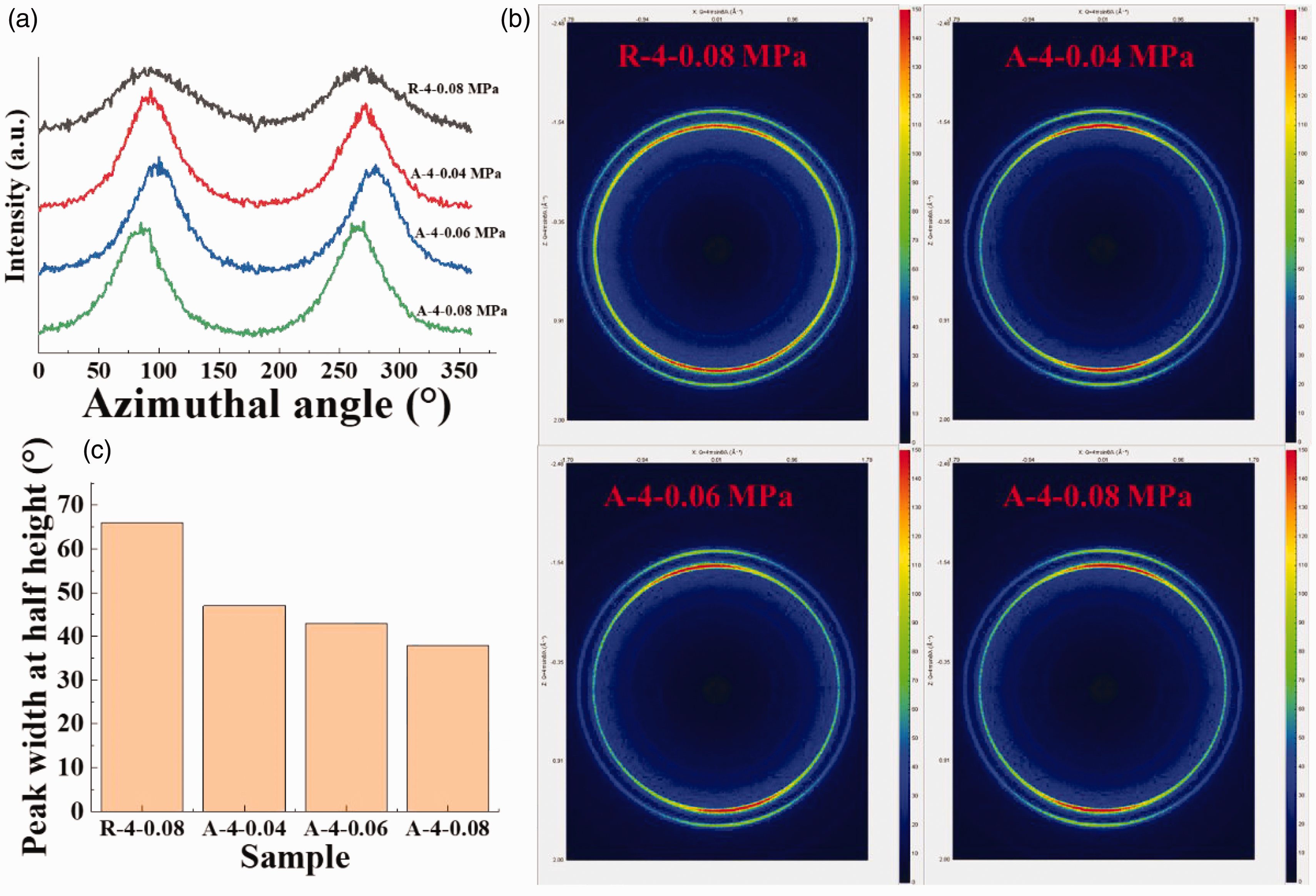
(a) Azimuthal scanning profiles of the samples subjected to cooling under different stresses. (b) Two-dimensional wide-angle X-ray diffraction patterns of samples under stress after cooling and (c) Relationship between peak-width-at-half-height and applied stress.
The 2D WAXS patterns were transformed into 1D WAXS intensity profiles against the scattering angle (2θ) and the azimuthal angle (Figure 8(a)). Figure 8(a) depicts the azimuthal angles for plane reflection at 2θ = 21° for the samples with varying stress levels. The non-stretched sample showed less intensity change with the azimuthal angle than the stretched samples. With the increased stress, the intensity peak became narrower, indicating that a more directed crystalline structure was achieved. In Figure 8(c), the peak-width-at-half-height values of the PCL nanofibers at various stress levels are displayed. Typically, a more aligned crystalline structure is responsible for a smaller peak-width-at-half-height. An increased applied stress resulted in more strain, which increased the crystal orientation and led to a reduced peak-width-at-half-height. Owing to the preferred orientation of polymer chains in the nanofiber structure, excellent two-way actuation behavior may be achieved using high applied stress and an aligned nanofiber structure.
Two-way shape memory properties under the stress-free condition
The reversible shape change behavior of PCL nanofiber samples under stress-free circumstances was examined. Figure 9(a) depicts the strain–stress variations in the experimental procedure for samples as a function of temperature. The specimen was first thermally equilibrated for 5 min at 55°C with a pretension of 0.01 MPa. Then 0.1 MPa was loaded at a rate of 0.02 MPa /min. Secondly, the temperature was lowered to 15°C, and the stress was removed. The temperature was held at 0°C for 1 min. By repeatedly heating (55°C) and cooling (15°C) the sample, the two-way RSM behavior was established.
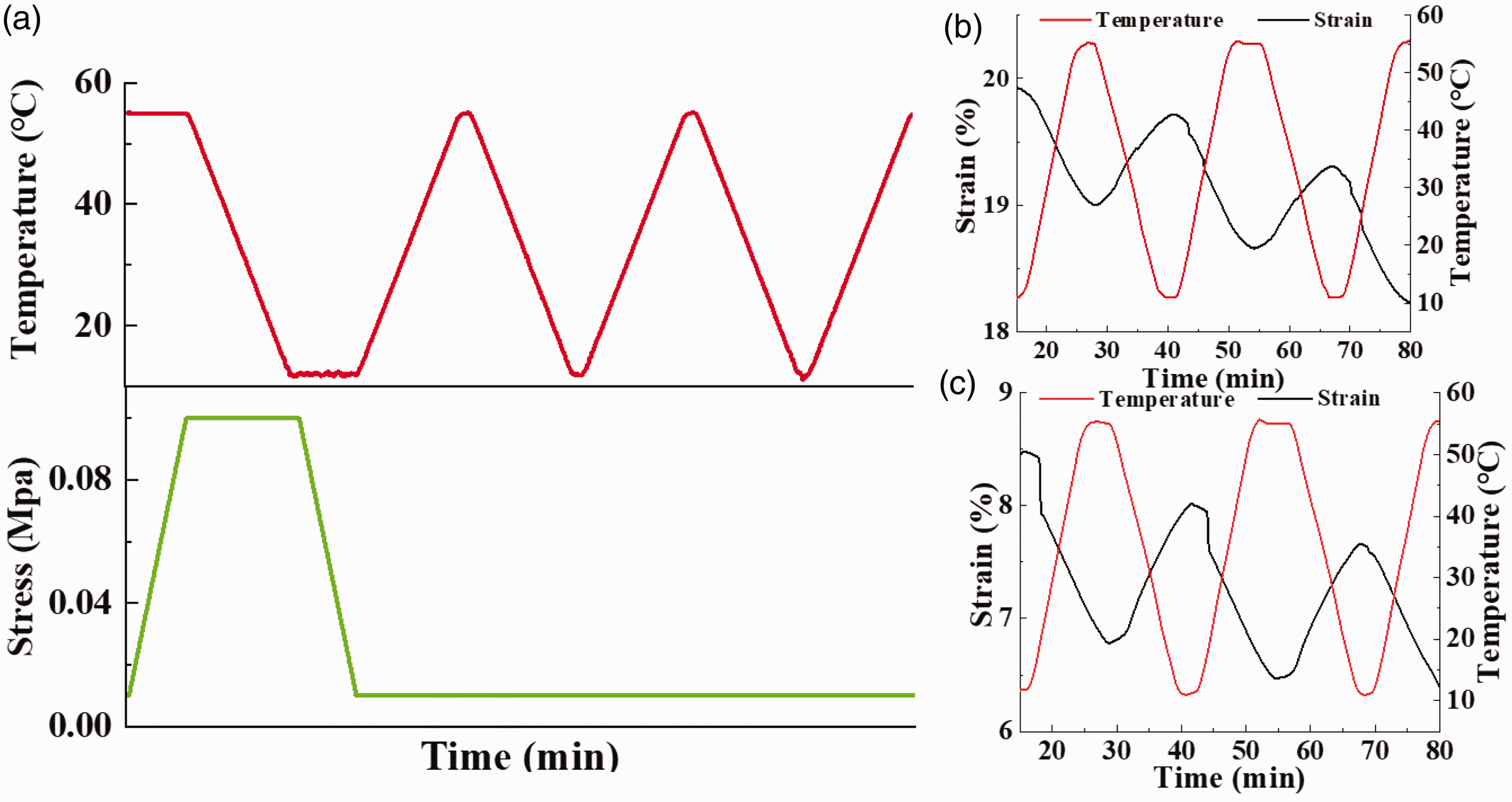
(a) Experimental procedure for measuring two-way shape memory properties under the stress-free condition. (b) R-4 and (c) A-4.
Under constant stress, the applied stress acts on molecular chain segments, forcing them to orient irrespective of molecular chain orientations. In the absence of stress, however, the orientation of molecular chain segments is completed during the fabrication process, and subsequent working processes only result in disorientation. During the heating process, PCL crystals partially melt, and certain chain segments lose their crystal phase fixation, contracting under the influence of entropy elasticity and returning to a thermodynamically stable state. During the cooling process, some chain segments that undergo contraction can orient and recrystallize back to their pre-melting state using unmelted crystals as a template. Throughout the three heating–cooling cycles, the strains of all samples (R-4 and A-4) tended to slightly decrease as the number of cycles increased. Despite this, the directionally aligned PCL nanofibers had a greater reversible recovery strain than the randomly aligned nanofibers. The findings indicate that the orientation control of nanofibers contributes to the applications of smart materials in a variety of environments devoid of stress.
Figure 10 shows photographs of A-4 lifting a weight (15.95 g) at high (60°C) and low (15°C) temperatures. When subjected to external stress, the material contracted when heated above Tm but elongated when cooled below Tc. Consequently, reversible shape change can be achieved by altering the temperature while the stress remains constant.
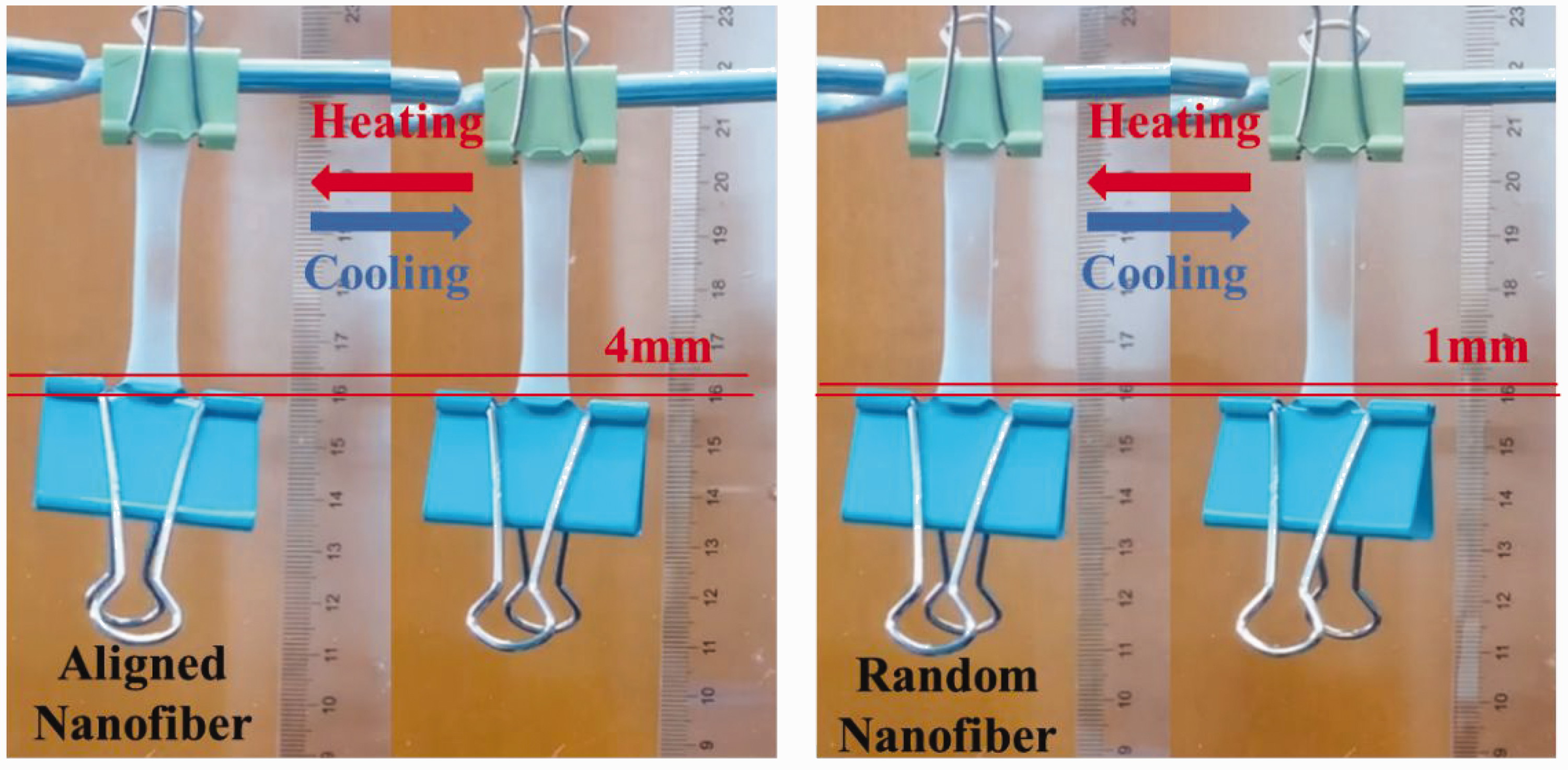
Photographs of the extension and shrinkage of the aligned and random nanofibers.
Conclusion
Using electrospinning technology, random and well-aligned PCL nanofibers were produced in this study. Upon altering the nanofiber alignment degree in aligned PCL nanofibers, we found an optimal nanofiber alignment degree for aligned PCL nanofibers to enhance mechanical properties. The mechanical properties of A-2 (with a nanofiber direction parallel to the strain direction) were superior to those of random nanofibers, including tensile stress (increased by 25.41%) and elastic modulus (increased by 576.97%). Even after 60 tensile cycles, the aligned PCL nanofiber architectures boosted the durability of the produced materials, exhibiting a stress retention rate of over 90%. Compared with random nanofibers, aligned nanofibers had a greater nanofiber volume along the loading direction. Owing to the enhancement of the crystallization orientation, aligned nanofibers increased the 2W-SME. With the ideal structure design, the reversible actuation strain increased to 230.8%. The optimal alignment networks may be reprogrammed and manipulated into increasingly complicated structures, which pave the way for applications in tissue repair, scaffolds, and implantable devices.
Footnotes
Declaration of conflicting interests
The author(s) declared no potential conflicts of interest with respect to the research, authorship, and/or publication of this article.
Funding
The author(s) disclosed receipt of the following financial support for the research, authorship, and/or publication of this article: This work was supported by the State Key Laboratory of Mechanics and Control of Mechanical Structures (Nanjing University of Aeronautics and Astronautics) (grant no. MCMS-E-0221Y01) and the Beijing Scholar Program (RCQJ20303).
