







Abstract
Swimsuits represent an interdisciplinary research field of textiles and clothing, materials, bionics, fluid mechanics, and other disciplines. The aesthetic style, comfort design, speed performance, and additional functions of swimsuits have been studied extensively. However, due to the diversity of research topics, swimsuit-related research is scattered in various research branches. An overview of research progress and frontiers in this whole field is hard to find. Given that a comprehensive application of technologies is required to meet consumers’ increasing demands for more functional and professional sports products, it is necessary to have knowledge of the latest progress in each research area. This study covers the aesthetics, comfort, speed enhancement, and other additional functions of swimsuits, summarizes the research progress in each relevant area, and predicts potential hotspots based on analysis. It is predicted that smart textiles and technologies will be applied more widely to swimsuits for real-time monitoring and instruction, intelligent drag reduction, energy harvesting, etc. With the upgrade of each function, efforts will be needed to maintain the delicate balance between the multiple functions integrated into swimsuits, and a more refined classification will be required to meet the specialized demands of swimmers.
Swimming is a popular sport among all age groups. Compared with sports on land, its physical energy consumption is greater, while the weight and friction on joints are smaller. It has a better fat-burning and shaping effect and helps improve metabolism and cardiorespiratory function. According to different wearing occasions and needs, swimsuits can be divided roughly into two categories: leisure swimsuits and racing swimsuits. The former are worn mainly by amateur swimmers during swimming for leisure purposes and aquatic activities, when aesthetic appearance and comfort are the major concerns, whereas the latter are designed with speed enhancement functions for professional swimmers to wear during competitions and training, when a millisecond is all that counts. With consumers’ increasing demands for functional and professional sports products, designs for speed improvement can also be seen in some leisure swimsuits. It is worth mentioning that wetsuits, which are commonly worn during open water swimming and diving for thermal insulation underwater, are excluded from the research scope of this study considering the variation of research/design focus compared with swimsuits.
The earliest innovations in the swimsuit field occurred in the 1830s, when the material of swimsuits changed from wool and cotton fabrics, which were more absorbent, to silk, and the fit became tighter to facilitate the wearer’s underwater movement. 1 Subsequently, in the 1980s and 1990s, synthetic stretch fabrics such as spandex, nylon, and lycra were introduced into swimsuit design,2,3 which significantly improved the drag-reducing properties and comfort of swimsuits. At the 1992 Barcelona Olympic Games, Speedo launched the S2000 swimsuit, the smooth and tight-fitting material of which promised to reduce water resistance by 15%. In 1999, the International Swimming Federation, FINA (Fédération Internationale de Natation, now known as World Aquatics) authorized the Speedo sharkskin-inspired swimsuit. Thereafter, other swimsuit brands such as Arena, TYR, Asics, etc., also started developing swimsuits with speed enhancement functions. Improvements have been made continuously in surface texture, cutting, and seam design for higher speed.
As more and more world records were broken at the Olympic swimming competitions, research on the drag reduction performance of swimsuits and their mechanism emerged in the academic field.1,4 –9 While debates on “whether high-speed swimsuits should be used in competitions” continued, FINA released new regulations to restrict racing swimsuit design in aspects such as material composition, thickness, permeability, and buoyancy. 10 To comply with FINA regulations, adjustments were made to the speed improvement methods for the new generation of high-speed swimsuits. Compression systems,11 –16 water-repellent fabrics,15 –17 and textured fabric zones are the main technologies used in the latest racing swimsuits.13,15 –17
Besides the speed enhancement performance of swimsuits, aesthetic style and comfort are other important factors for consumers when selecting swimsuits, especially for amateur swimmers. The aesthetic style of swimsuits has changed constantly with socio-economic and cultural development (Ouyang, 2010; Li and Chen, 2019; Hamed, 2020).18 –20 A better knowledge of this development process may be helpful for designers to develop swimsuits that are more in line with current trends and consumer expectations. The wearing comfort of swimsuits is also noteworthy. Swimsuits are tight and conform to the wear’s body, the individual differences in body shape between swimmers,21,22 and the deformation of the body caused by varied movements,23,24 all of which are challenging in the design of swimsuits. In addition to the fundamental requirements, additional functionality, such as protective and monitoring functions, have been added to swimsuit design to meet the diverse needs of swimmers.25 –30
With consumers’ increasing demands for multifunctional and professional sports products, the design of swimsuits should focus not only on one aspect but also on a comprehensive consideration of various factors. Therefore, a review that covers the main research branches of swimsuits will be of great help to researchers and designers in this field. However, through investigation of the existing research, it was found that relevant reviews concentrate mostly on a certain research branch, such as the speed enhancement performance of swimsuits, 31 bio-inspired drag reduction fabrics,32 –34 and the methods of testing swimmers’ passive drag (Scurati et al., 2019) 35 . A review that reflects the research progress and current status of swimsuit-related studies from a holistic perspective could not be found. Moreover, besides swimsuit-related literature commonly covered in reviews, the latest designs and technologies developed by swimsuit brands should also be analyzed to update research progress. This paper was structured according to the main requirements (functions) of swimsuits, which are the main concerns of swimmers when selecting swimsuits. Literature and product inventions that address aesthetics, comfort, speed enhancement performance, and other functions of swimsuits were collected and analyzed, with research gaps identified for each aspect. Finally, predictions of future trends in swimsuit design were made based on the latest outcomes in this field. It is expected that this review could provide researchers and manufacturers with insight into recent trends and noteworthy opportunities in swimsuit design, facilitating technological advancement and application in the future.
Methods
This study was conducted based on a comprehensive review of the literature relevant to swimsuits, aiming to discuss how existing and futuristic design satisfies swimmers’ demands for the aesthetics, comfort, speed enhancement and other functionalities of swimsuits. To further analyze the progress and frontiers of each research branch, the following research subquestions were proposed.
How and why has the aesthetic appearance of swimsuits evolved since their invention? What are the design elements on trend now? What are the main problems faced by swimmers regarding swimsuit comfort? What solutions have been proposed by researchers? What attempts have been made by researchers and brands to create the speed enhancement effect of swimsuits? To what extent can swimmers’ performance be improved? What additional functions of swimsuits have been achieved and what are their limitations? How will swimsuits possibly develop in the future? What features or trends are expected to be seen in swimsuit design?
The answers to the research subquestions are presented in the following five sections of this review, respectively.
Aesthetics
Aesthetics is one of the main concerns for consumers when selecting swimsuits, especially for amateur swimmers who wear swimsuits on casual occasions. For racing swimsuits to be used in competitions, the speed enhancement performance should be primarily considered. While men’s swimsuits, typically swimming trunks and tank suits, 20 have not changed much in appearance over time, women’s swimsuits have experienced continuous development since the 18th century.
The development of women’s swimsuit design can be summarized into three stages, 18 as shown in Figure 1. In the 18th–19th century, women’s swimsuits were designed as bathing gowns in loose style and knee-length for sea bathing or recreational aquatic activities. They were usually made of wool or cotton, which were highly absorbent and became heavy when wet. Additional lead weights might be sewn to the hem to ensure that the dress would not float up. Modesty being the priority concern during this period, both the material and design of women’s swimsuits prohibited ease of movement in water. 36 In the first half of the 20th century, as sports became increasingly popular among female swimmers in Europe and America, a revolutionary trend of one-piece tight-fitting swimsuits was started by swimmer Annette Kellerman. 18 Later, the length of women’s swimsuits was shortened, and a tighter fit was adopted around the waist and bust. Backless swimsuits and split swimsuits appeared, with increased skin exposure on the back of the shoulders and abdomen. In 1946, designer Louis Reard created the bikini, which was one of the most significant inventions in the history of women’s swimsuits. 20 The celebration of the female form in Hollywood movies further promoted the new style, 20 boosting the emergence of swimsuits with more bold and colorful designs in the late 20th century.
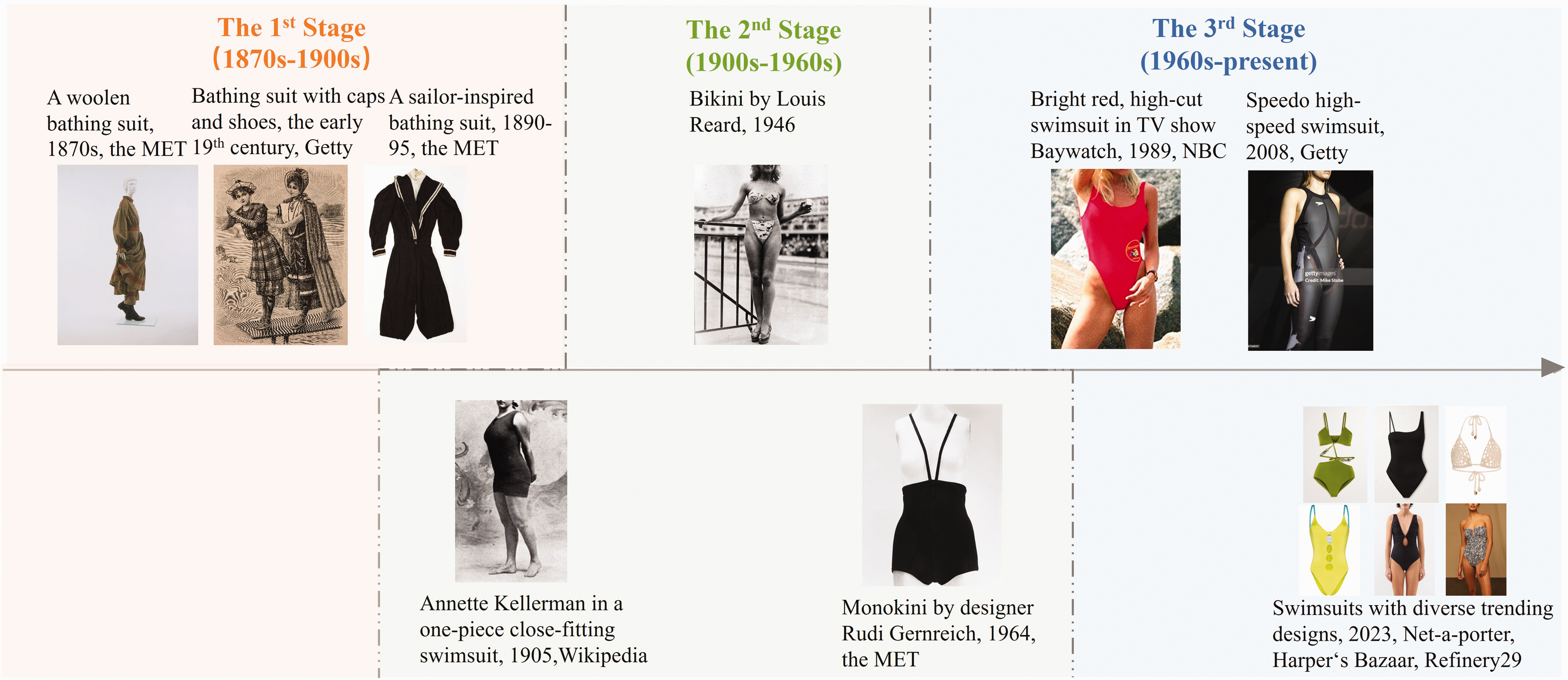
The evolution of swimsuit styles. MET, Metropolitan Museum of Art.
From the 1960s to the present, high-speed swimsuits developed rapidly. Speedo first introduced nylon to swimsuits in 1956 and led the trend in one-piece swimsuits with drag-reduction functions. Thereafter, technological advancements were applied to achieve speed enhancement through tight fitting, textured materials, and simple cuts with minimal seams.
Studies also proved that the trends of swimsuits taking place in Europe had a great impact on Asian countries. In China (Li and Chen, 2019) 19 , bare waist and backless designs were added to the classic one-piece swimsuit. Split swimsuits with necked tops enjoyed great popularity from 1937 to 1939, and then the bustier and bikini types appeared. The combination of Chinese and Western costume culture could also be seen, such as the dudou-like top. 19 The hanging neck, back tie design, and diamond shape were retained, while buttons were added at the lower edge to connect the top and bottom.
It can be seen that the aesthetic style of swimsuits has been changing continuously with the development of social economy and culture. As more rights and equality of women were guaranteed, restrictions on the body coverage and fit of swimsuits were gradually lifted, empowering women to dress to their own demands, whether for practicality or self-expression and appreciation. Nowadays, swimsuits in various styles, such as minimalist, athleisure, and bohemian,37,38 have been embraced both on fashion industry runways and in daily life, with a selective use of trending elements including twists and cutouts, one-shoulder asymmetric silhouette, bright block colors, knitted crochet, ruching, plunging neckline, floral prints, glittery fabrics and so on (see 3rd stage in Figure 1).39,40 Besides swimming and other aquatic activities, swimsuits may also be worn for poolside posing or be incorporated into leisure outfits as bodysuits. 20 More aesthetic designs that cater to the various needs and tastes of the wearer are expected to emerge in the future.
Comfort
Besides aesthetic style, comfort is another primary factor to be considered when choosing swimsuits. According to Qu and Song’s and Branco’s research,21,41 discomfort caused by unsuitable structure, inappropriate size, and improper use of materials has been the problem faced most commonly by consumers. Such defects can significantly affect the wearing experience of swimmers and even damage skin or muscles due to excessive stress and friction. To improve the wearing comfort of swimsuits, researchers have investigated the relationship between comfort and factors including swimsuit design, swimmer body type and body part, swimming style and body movement, as illustrated briefly in Figure 2.
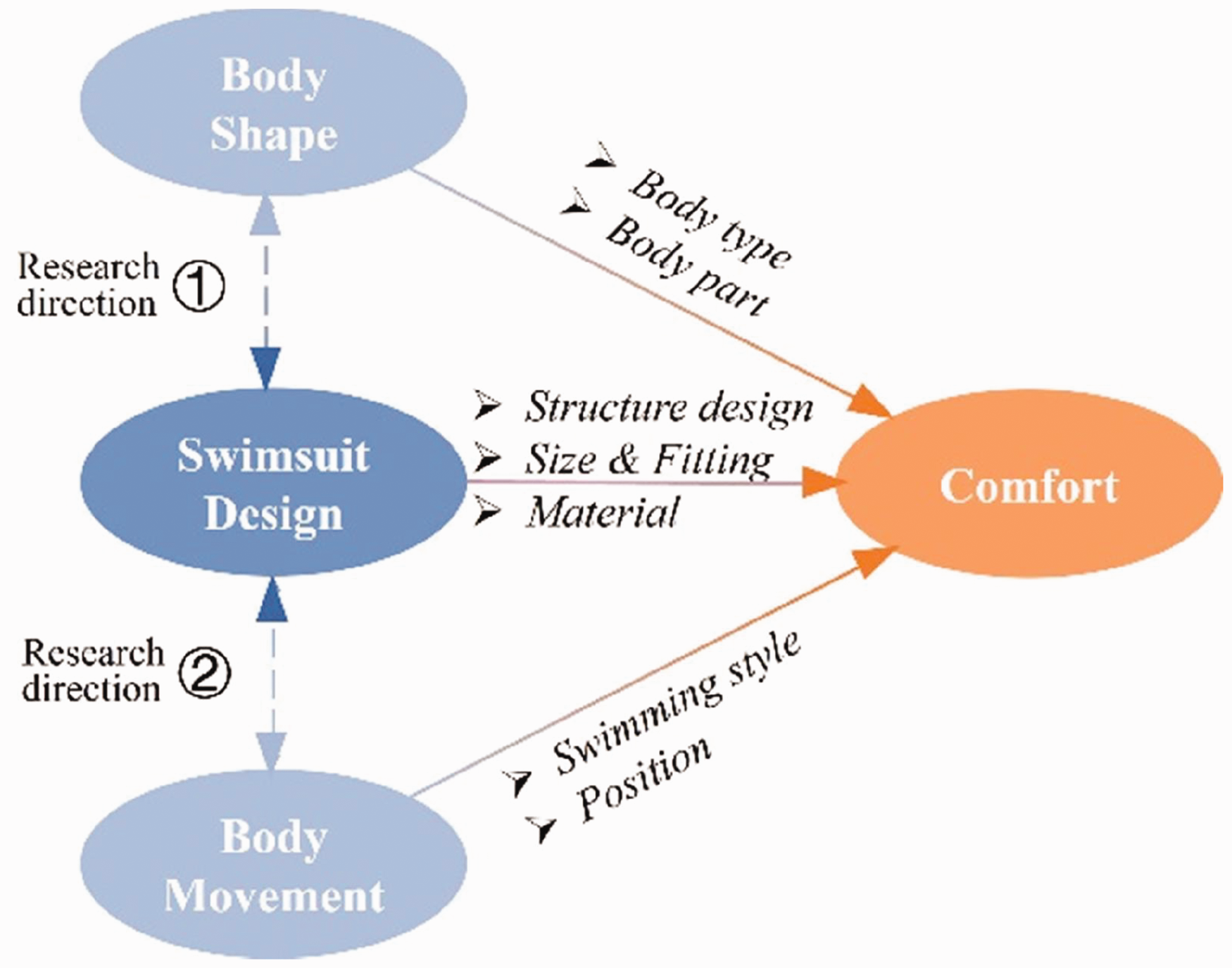
Research directions regarding the comfort design of swimsuits.
Most swimsuits, whether for leisure or competitive use, adopt a close-fitting design to avoid the inconvenience caused by the water that enters the gap between the swimsuit and human skin. However, body curvature varies a lot at different body parts, and the individual difference in body shape is also non-negligible. How to select or design well-fitting swimsuits with consideration of such variation? Researchers have proposed some solutions for both consumers and swimsuit designers (illustrated in Figure 2 as research direction ①).
Noticing the varied body shapes and pressure sensitivities at different body parts, Xu (2016) and Qu (2015) conducted a series of research studies on the local pressure imposed by swimsuits.42,43 According to their test results, pressure at the abdomen, waist, and chest should preferably be kept within the range of 0–0.57 kPa, 0–0.37 kPa, and 0–1.15 kPa, respectively, to achieve local comfort. Swimsuit fabrics containing 20% spandex were recommended for a higher rating of overall comfort. Such criteria could be used for evaluation of local comfort; however, the impact of swimsuit structure should also be considered. From the viewpoint of body type, Branco (2015) proposed a modular design approach for developing swimsuits that could better fit each individual (Figure 3a). 21 The swimsuit was divided into separate areas that covered the chest, belly, and bust. As each area was adjustable in size, the overall fit of the swimsuit could be guaranteed. Han et al. (2020) also noticed the fitting problem of swimsuits caused by individual differences, especially for middle-aged women whose body shapes change rapidly. 22 Three-dimensional (3D) body scanning was applied to develop a new patternmaking method with higher accuracy and a simplified process that enabled automation, with only seven measurements needed (Figure 3b). However, the new approaches in both studies would have been more convincing if the authors had assessed their effectiveness and applicability among a larger number of consumers.
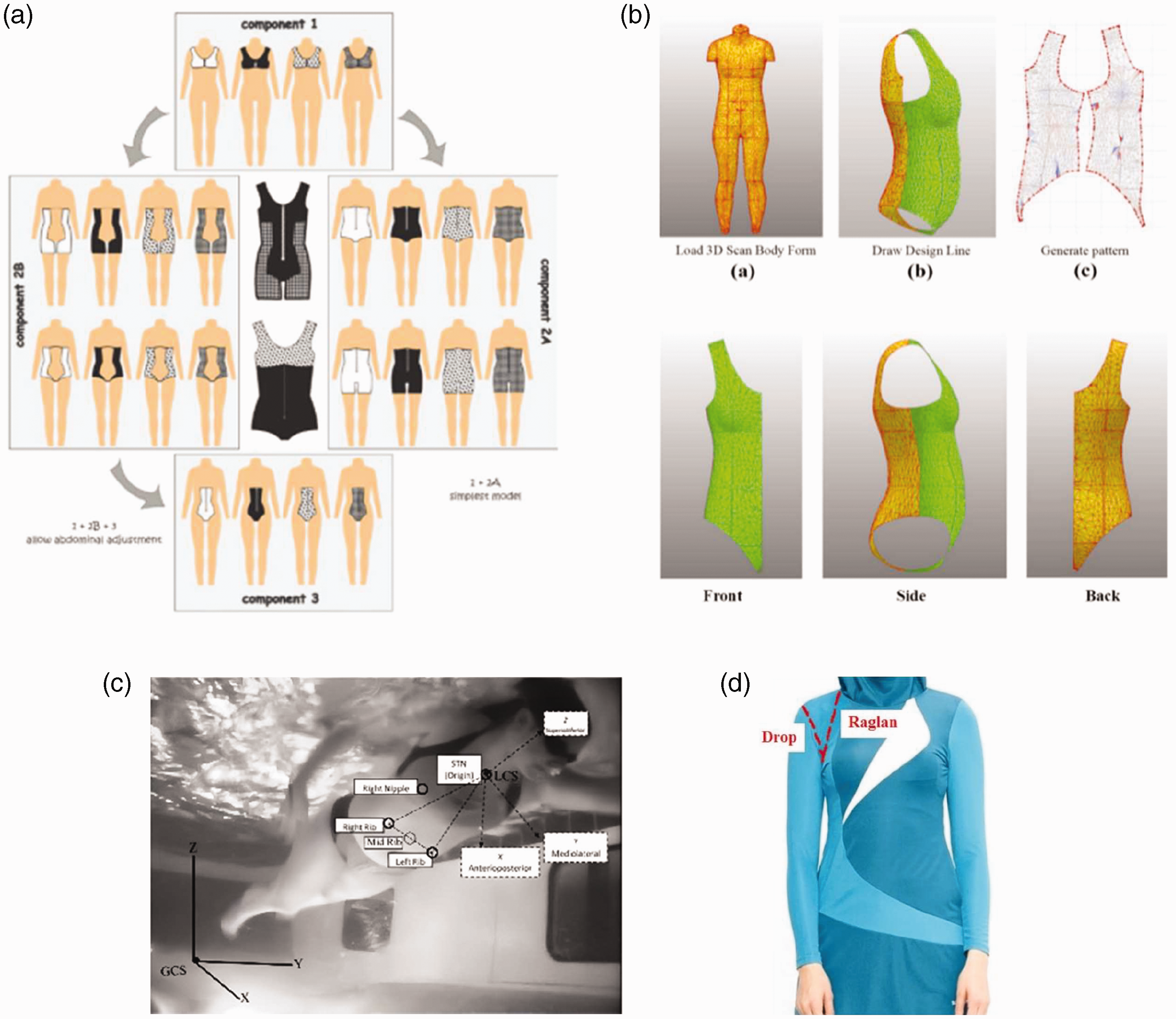
(a) Modular design system of swimsuits. 21 (b) Swimsuit patternmaking method based on 3D scanning. 22 (c) Test on the breast motion during swimming with different breast support designs. 23 and (d) Study on the effect of swimsuit sleeve style on shoulder area comfort. 24 3D, three-dimensional; GCS, geographic coordinate system.
Jiang et al.’s (2022) investigation provided another perspective for research direction ① in Figure 2. 44 With limited product cost, it is impossible for most mass-market brands to provide a swimsuit that fits each individual well, whereas the comfort of swimsuits can still be improved to some extent if consumers could select wisely the swimsuit type that better suits their body shape. According to the swimsuit wearing experience of 3348 Chinese female swimmers of varied body shape types, competitive swimsuits, one-piece swimsuits, and two-piece swimsuits were recommended to hourglass- and pear-shaped swimmers, apple-shaped swimmers, strawberry-shaped or flat-type swimmers, respectively. The chest was identified as the key area that affected overall comfort. The experience-based results could offer insights to both the consumers and swimsuit designers/manufacturers, despite the possible bias caused by the perception of respondents and other impact factors.
Besides the original variation in body shape, body movements during swimming will also cause deformation of skin and muscles, hence affecting wearer comfort. Concerning research direction ②, which refers to the combined impact of swimsuit design and body movement on comfort (Figure 2), both Mills et al. (2015) and Osiani et al. (2019) studied the impact of swimsuit design on the wearer’s comfort in a swimming state, centering on the combined effect of body movement.23,24 Mills et al. (2015) investigated the influence of the breast support design of women’s swimsuits on the comfort of the breast during frontcrawl and breaststroke (Figure 3c). 23 The results showed that, even when wearing a swimsuit, breast displacement was larger than when wearing sports underwear during frontcrawl, indicating that additional support is needed for the breast area of swimsuits to reduce breast displacement and injury during swimming. Osiani et al. explored the impact of sleeve structure on the wearer’s comfort during different phases of frontcrawl swimming (Figure 3d). 24 A raglan style sleeve was recommended to be applied to full-body swimsuits for less restriction on arm movements compared with the drop style sleeve.
In the above studies related to the comfort design of swimsuits, objective and subjective methods have been used to evaluate wearer comfort. The objective method relies mainly on the measurement of displacement, pressure, and other indices, which reflect the movement or stress of a specific body part. For example, recording breast displacement during swimming to compare the support of swimsuits in the breast area, 23 or measuring the tensile variation in the shoulder region with a force sensor to quantify the restriction of swimsuit sleeves on arm movement. 24 For the subjective method, rating scales are used in surveys or wear trials to grade the subjective feelings of the participant. As shown in Jiang et al.’s questionnaire for swimsuit consumers of varied body types, 44 five levels of comfort rating were offered to evaluate their wearing experience of different types of swimsuits. The objective method can eliminate the interference of individual differences in feelings, while the subjective method can be applied to some cases where measurements are hard to conduct due to the experimental conditions. To gain a more comprehensive evaluation, a combined use of objective and subjective methods is expected in future research on swimsuit comfort design.
Moreover, almost all the existing studies on swimsuit comfort used simplified one-piece, two-piece, or full-length swimsuits as test samples, not considering the trending elements such as twists and cutouts, which are very likely to generate impact on the wearing experience of swimsuits. In future research, besides the basic swimsuit types, structures, and materials, it is also necessary to combine them with the current trends in swimsuit design to provide consumers and designers with more updated guidance.
Speed performance
For amateur swimmers, aesthetics and comfort are the main requirements of swimsuits, while for professional and elite swimmers, swimsuits are expected to have an additional function of helping improve swimmer performance. As early as 1992, Speedo launched the S2000 swimsuit at the Barcelona Olympics, which was said to be designed for drag reduction with a tight fitting and smooth swimsuit surface. Speedo drew the attention of the whole world again at the 2008 Beijing Olympics, when American swimmer Michael Phelps won eight gold medals and broke seven world records in a Fastskin swimsuit. As shown in Figure 4, the Fastskin swimsuit was engineered with a textured surface inspired by sharkskin, which could reduce drag by generating micro-vortices in the flow and delaying flow separation.45 –49 Thereafter, Speedo kept updating its Fastskin series with more advanced performance enhancement technologies, and not only Speedo but also other swimsuit brands, such as Arena, TYR, and Asics, all joined in the competition and released racing swimsuits with various designs aiming for higher speed. The advanced technologies applied in their latest swimsuits will be analyzed later.
Verification of overall speed enhancement effect
Early research on racing swimsuits focused mainly on investigating the actual effect on swimmers, from the aspect of drag measurement (active and passive drag, buoyancy) and performance evaluation (velocity, stroke rate, distance per stroke, total time used). Experimental measurements during wearing trials, numerical simulations, and analysis of competition results have been conducted to compare the effects of different swimsuits. As Speedo is the leading brand involved in developing high-tech racing suits, most of this research used the Speedo Fastskin series as the sample for experiments. It was claimed that the Fastskin swimsuit could reduce total drag by 7.5% and save 1–1.5 s per 100 m distance, whereas the experimental results did not completely support this claim. 30
Most research confirmed the overall advantages of high-speed swimsuits, though differences existed between the announced and the measured drag reduction performance. In terms of drag, Benjanuvatra et al. used a towing system to measure passive drag during the gliding phase and active drag during the kicking phase. 4 An average reduction of 7.7% was measured at all towing velocities (1.6 m/s, 2.2 m/s, 2.8 m/s) and depths (on the surface or at the depth of 0.4 m). Mollendorf et al. conducted tests on the Fastskin swimsuits with a wider range of body coverage. 6 Besides the towing method adopted to measure the drag at a constant velocity, a “swim meter” was used for measurement at decelerating velocity after a push-off or dive into the water. A reduction in total drag ranging from 3% for waist-to-knee Fastskin suits to 10% for shoulder-to-knee Fastskin suits was observed, which indicated the benefit of higher body coverage. Studies by Chatard and Wilson’s, and Cortesi et al., both using the towing method,7,50 measured 6.2% and 6.9% reduction in passive drag, respectively, for full-body high-speed swimsuits (from Speedo, Tyr, Arena, Nike, and ASCI) and full-body textile swimsuits without specifications on brand. It could be seen that most studies have gained results of drag reduction that were close to the 7.5% declared by Speedo.
From the aspect of swimming performance, swimmers’ records in swimming trials or competitions were analyzed to investigate the impact of high-speed swimsuits. According to the swimming trials conducted by Chatard and Wilson, 7 average swimming velocity increased by 3.4% with the use of full-body high-speed swimsuits over 25- to 800-m freestyle swimming. The distance per stroke increased while oxygen uptake and blood lactate decreased. Berthelot et al. identified three bursts of rapid evolution in swimming performance by tracking the world’s top ten swimmers. 51 As no other ground-breaking technology was applied, the average increase of 2% in 2000, 2008, and 2009 was regarded to be related to the introduction and advancement of high-speed swimsuits. Foster et al. further analyzed the top 25 performances in each year since 1948. 1 The performance improvement was about 0.9–1.4% in 2000, 1.5–3.5% in 2008, and up to 5.5% in 2009 for men’s freestyle events. Additionally, the speed enhancement effect was observed to be more evident among male than female swimmers, in low-resistance (freestyle and backstroke) rather than high-resistance (breaststroke and butterfly) swimming events, 53 and in short-distance rather than long-distance events, which might be due to the restrictions posed by the high-speed swimsuits on the wearer’s motion, especially in turning posture.1,51 The effect of high-speed swimsuits in speed enhancement was less noticeable than that in drag reduction, yet still could be observed in most studies.
However, there are also a minority of studies that failed to observe the significant advantage of high-speed swimsuits. In Toussaint et al.’s research, 54 although Fastskin swimsuits reduced total active drag by 2% compared with conventional swimsuits, the difference was insignificant. An average 2% increase in swimming velocity could be achieved when wearing a Fastskin swimsuit, but oxygen uptake and blood lactate level increased at the same time, 5 which contrasts with Chatard and Wilson’s findings. 7 Such differences in results might be due to the varying test methods. For example, Toussaint et al. used the MAD (Measure Active Drag) system instead of the towing system that appeared later. 54 Both Robert et al.’s and Chatard and Wilson’s studies adopted freestyle trials.5,7 However, the former assigned 183 m trials at three levels of paces (moderate, moderately hard, and hard) to participants, while the trials used by the latter covered six distances (25, 50, 100, 200, 400, 800 m) with the maximal effort of participants. The difference in test apparel (brand, body coverage, material) and participants (gender, age, skill level) could also impact the results of those trials, especially when the performance advantage of high-speed swimsuits can be minimal as reflected in the time. Overall, the majority of swimming trials and competition records have verified the speed enhancement effect of high-speed swimsuits to varying degrees.
Analysis of specific technologies used for speed enhancement
Textured fabric zones
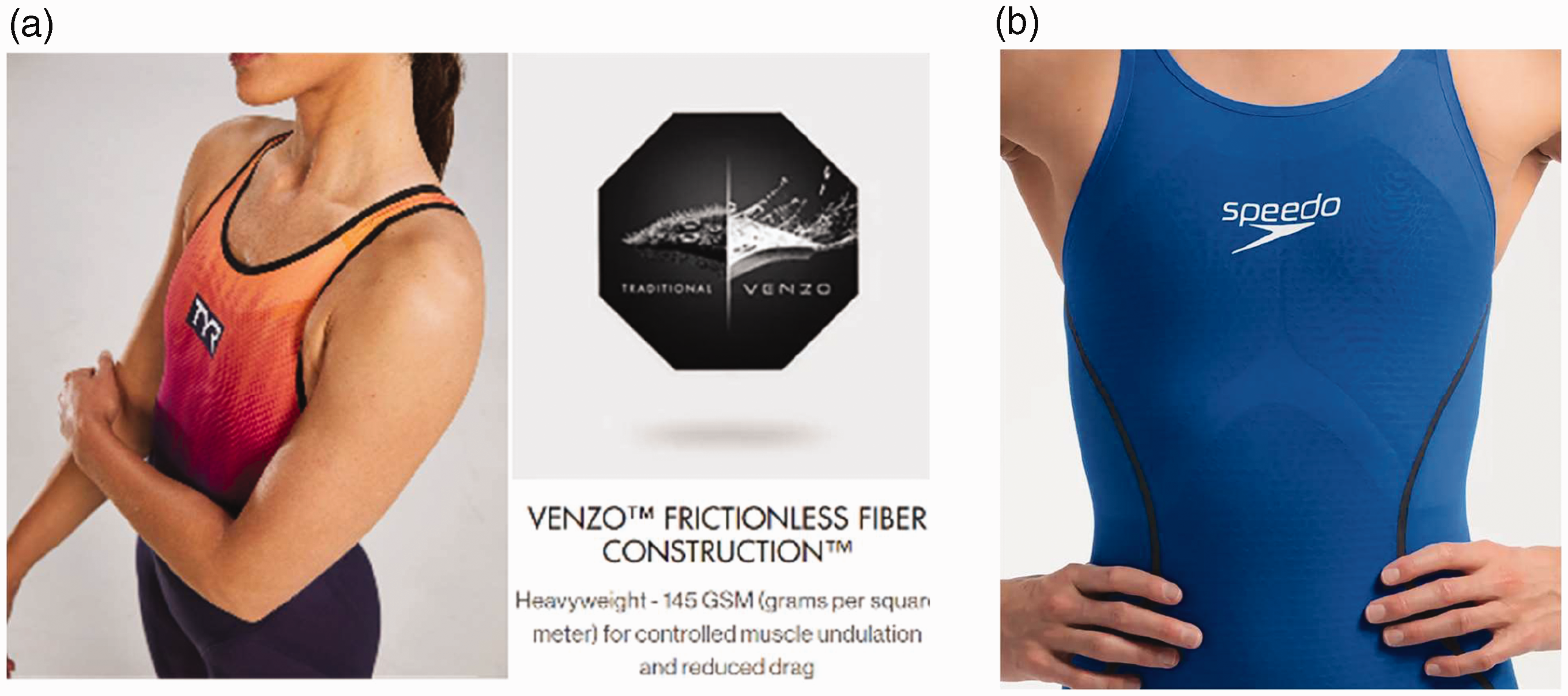
Since Speedo first applied bio-inspired texture fabric in swimsuits, attempts have been made by researchers and swimsuit brands to reduce drag force by surface engineering. Mizuno’s GX-Sonic series adopted a type of grooved fabric named Sonic Light Rebtex UW to minimize drag force, 13 while TYR’s Venzo series (Figure 5a) used ultra-smooth fiber to construct frictionless fabric with microscopic-level smoothness. 17 Such different characteristics of fabric surfaces may be due to the varied placement of fabric on the wearer. Textured fabrics placed before the separation point could create vortices in the boundary layer, delay flow separation, and reduce total drag mainly by the pressure drag. However, for other areas where the laminar flow was attached closely to the body surface, smoother fabric was preferred for lower skin friction drag. Speedo also continued to use fabrics with a certain surface roughness in its updated version of Fastskin swimsuits (Figure 5b), but making the composition and texture comply with the new regulations released by FINA, 10 which limit swimsuit material to “textile fabric” and thickness variation to no more than 50% comparing the thinnest with the thickest point. Considering that the uneven surface at seams might increase skin friction drag, flat bonded seams, taped seams, and ultrasonic flex bonding seams have been adopted by Speedo, Mizuno, and TYR, respectively.
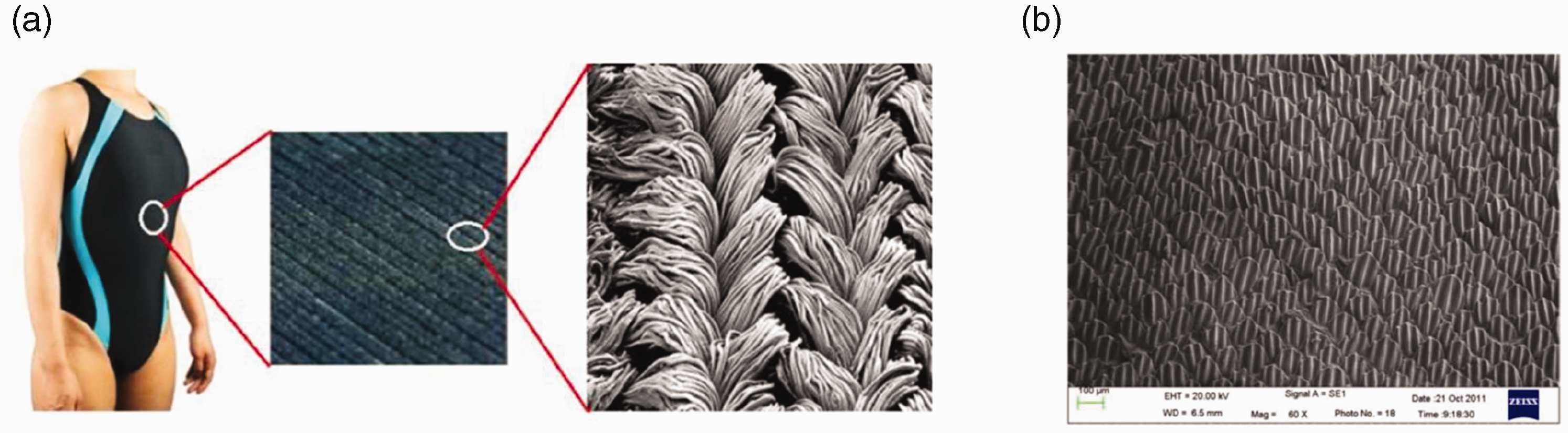
Besides the surface roughness developed by knitted fabric structures, researchers turned to nanoparticle treatment for roughness on a smaller scale (Figure 6). Nanoparticles such as SiO2, ZnO, CuO, Ag, and TiO2 were attached to the fabric surface by adhesive (Nazemi et al., 2018) 55 . When the swimsuit was underwater, water molecules would enter the gaps between the nanoparticles, triggering the boundary layer to change from laminar to turbulent at a lower Reynolds number, thus reducing both pressure drag and total drag (Nazemi et al., 2023). 56 Kong and He (2012) 57 explained the drag reduction mechanism based on the fractal harmonic principle. It was proposed that spraying nanoparticles on plain swimsuit fabrics could help improve their hydrodynamic properties, as the fractal size of treated fabrics was closer to that of water. Nazemi et al. (2023) confirmed the effectiveness of nanoparticle treatment by computational fluid dynamics (CFD) simulation. A slight increase in frictional drag and a decrease in total drag was caused by the silica nanoparticle coating on polyethylene terephthalate (PET) fabric. However, since these studies were based on theoretical calculations or CFD simulations, rather than wind tunnel tests or swimming trials, the actual drag reduction effect of the nanoparticle-treated fabrics still awaits verification. Another noteworthy issue is the durability and other mechanical properties of fabrics. Although research has not yet addressed this aspect, the endurance of fabric properties upon repeated rubbing or washing has been a major challenge for surface chemical treatments, which needs to be covered in the future development of drag reduction swimsuit fabrics.
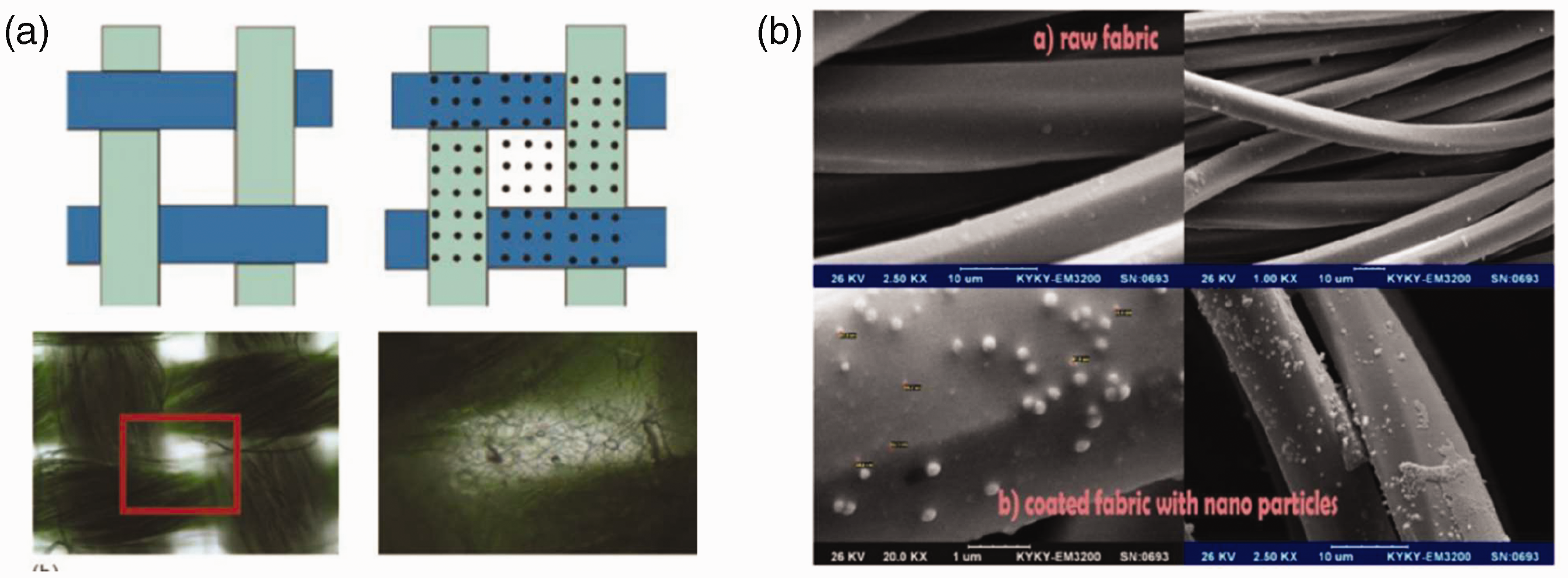
(a) Spraying nanoparticles to change the fractal size of fabric (Kong and He 2012). and (b) SEM image of raw and coated fabric with nanoparticles (Nazemi et al. 2023). SEM, scanning electron microscopy.
Compression systems
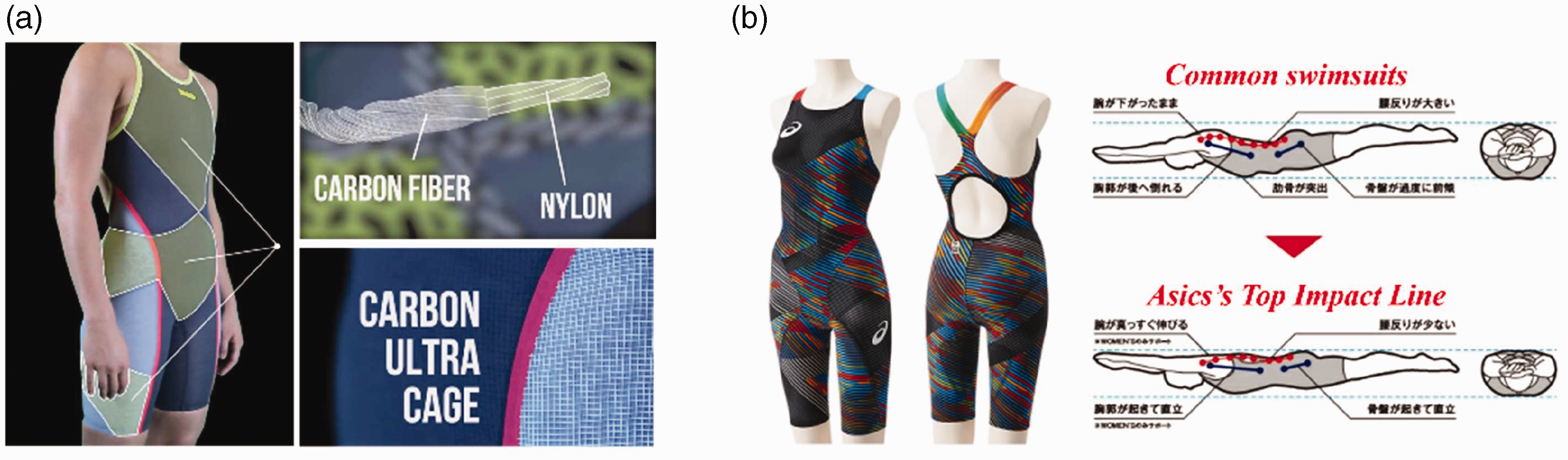
Compression has been used extensively in the latest racing swimsuits for muscle stabilization and body alignment, which reduces the total drag with an optimized streamlined shape and a smaller frontal area in the water. To obtain compression of the large muscle groups, specially designed yarns or fabrics with higher support have been used. For example, Arena’s Powerskin series (Figure 7a) applied carbon-wrapped nylon yarn in the form of cage or bends to achieve a higher level of compression compared with common fabrics, yet with good flexibility and comfort. 11 Asics’s Top Impact Line (Figure 7b) developed STiNGER Tex to provide intelligent compression at different body parts, automatically changing the swimmers’ body to a flatter shape that allows surrounding water to flow smoothly past the swimmer. 12 In the newest Fastskin LZR Pure Valor 2.0 released by Speedo on 16 November 2023, compressive dual layering was placed around the abdominals for greater core stability. 16
Besides compressive panels covering the major parts, taping and bonding have also been applied to connect key muscle groups for power return. Representative designs such as TYR Hamstring SnapBack Taping (Figure 8a) applied to the Shockwave series, which creates a snapback effect and larger propulsion for a larger distance per stroke by compressing the hamstring during the upward kick. 14 Similarly, Mizuno’s Sonic Line X designed for the GX-Sonic series, uses a cross-shaped taping to support kicks and create a sensation of hip lift. 13 The compressive tapes in X or V shapes may also be applied to the abdominals or the crotch area for better control of body rotation and higher stroke efficiency, 58 which can be seen in Arena’s Powerskin Carbon Ultra swimsuit (Figure 8b). Seams may also be used sometimes for a similar supporting function as taping, for example, the ergonomically designed seams of Speedo’s Fastskin LZR Pure Intent 2.0. 15
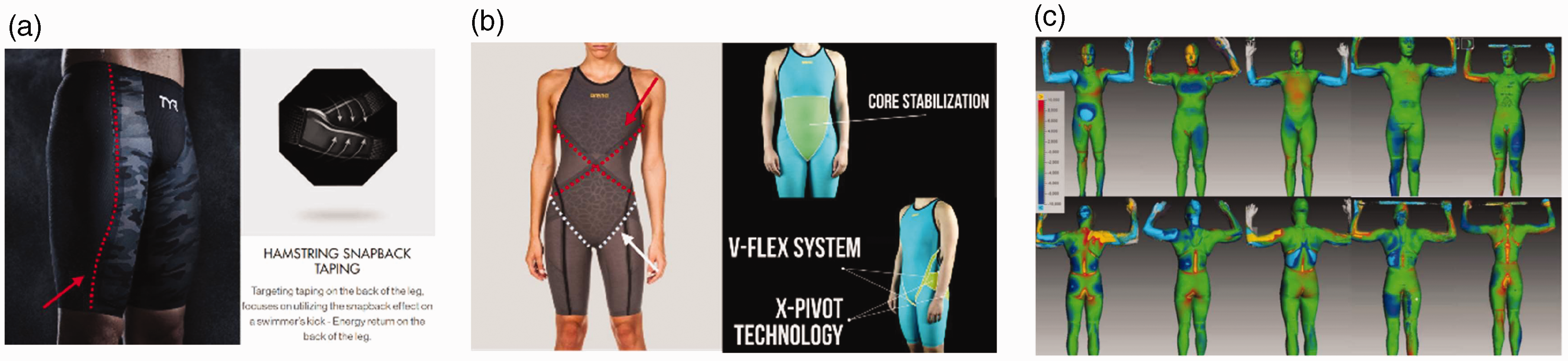
Researchers have dived deeper into the speed enhancement mechanism of swimsuit compression. Van Geer et al. used 3D body scanning and traditional body measurements to investigate the relationship between body deformation and the drag-reduction performance of swimsuits (Figure 8c). 9 Swimsuits with greater compression demonstrated a better drag-reduction effect. From the point of view of energy production, Kainuma et al. proposed that pressure exerted by Speedo swimsuits might inhibit the wearer’s blood circulation, 8 stimulating the glycolytic system to produce ATP rapidly, as aerobic respiration was weakened. Consequently, more explosive power can be gained in skeletal muscle. This hypothesis can explain to some extent why Speedo’s swimsuits are more advantageous in short-distance swimming competitions, but experimental data are still needed for validation.
Water-repellent fabrics and natural lift technology
Almost all the latest racing swimsuits are made from water-repellent fabrics with hydrophobic textile material or coating. To comply with World Aquatics regulations, 10 the water-repellent finishing should not close the overall mesh structure of the base layer and keep the permeability of swimsuit fabric higher than 80 l m−2 s−1. Such fabrics could reduce skin friction drag with a relatively smooth surface, meanwhile creating a natural lift with minimal water penetration. The surface lift technology applied to TYR’s shockwave series was claimed to reduce drag with optimized body position. 17 Since buoyancy has been proven to benefit swimmer performance, with less energy required to stay afloat, the slight yet perceivable lift caused by water-repellent fabric might also help conserve energy for strokes. In addition to testing the hydrophobic properties, it is worth noting that the endurance of these properties should also be evaluated, as swimsuits are commonly used under high-chlorine and fully stretched conditions. Speedo collaborated with Lamoral—a textile finishing company—to develop a new long-lasting water-repellent finish for use in its latest series. The coating was claimed to offer swimmers a weightless feeling with six times more durable water repellency. 59
Additional functions
Protective function
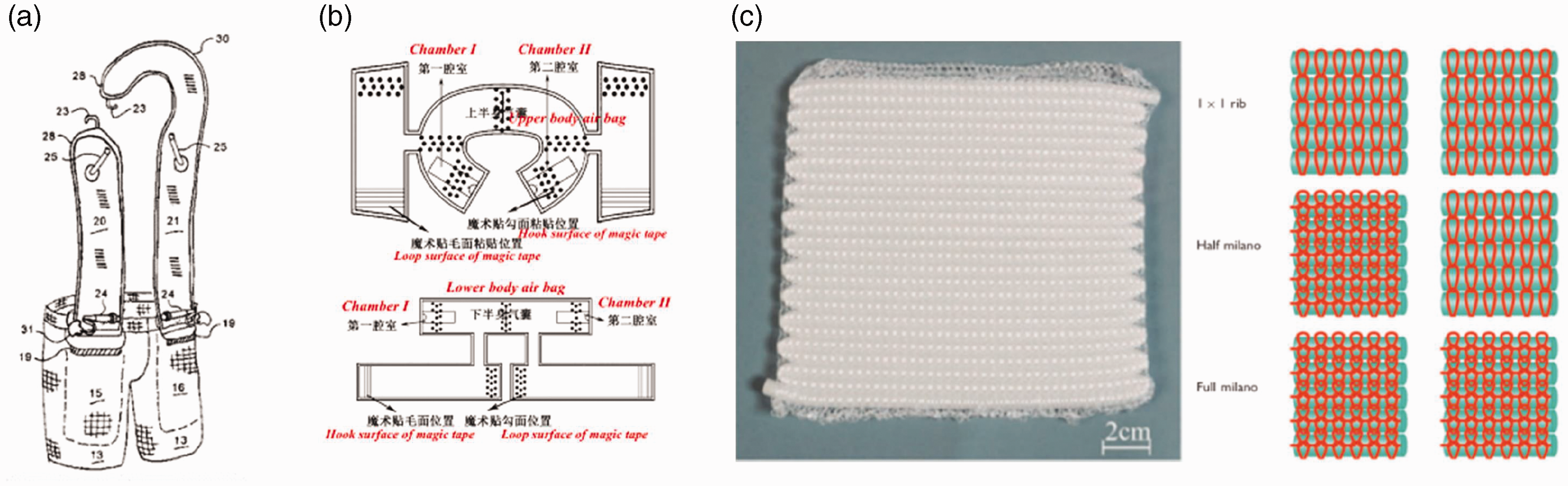
Swimsuits with high buoyancy have been developed for beginners to reduce the risk of drowning. In the early studies, polyethylene foam and compressed carbon dioxide were used to provide buoyancy.60,61 The gas bladders were designed in men’s trunks or as a strip around the neck (see Figure 9), which was foldable in a normal state and performed its protective function once a valve was triggered. 25 An alternative was provided by Fang et al., 26 who utilized the chemical reaction of baking soda and acetic acid to generate gas for buoyancy (Figure 9b). The proper inflation ratio of the bladder on the upper and lower body was determined to guarantee that the wearer’s head could be kept above the water. However, due to the volume of gas bladders, the above-mentioned buoyancy swimsuits would limit body movement. Moreover, accidents may happen with easy damage to the bladder. Li et al. made continuous progress based on currently available buoyancy swimsuits.27,62 PE, PVC, and silicone tubes (with diameters of 1–4 mm), instead of the individual gas bladders, were incorporated into the fabric with inlay knitting technology and used as the buoyancy source. This design offered a more even distribution of buoyancy, hence reducing the risk of drowning caused by bladder damage and enhancing the flexibility and comfort of the wearer. Improvements were also made from the aspect of evaluation. Compression and tensile properties of fabrics with varied inlaid materials and knitted structures were measured to optimize overall functions, not focusing merely on the buoyancy as in the previous research. Studies could be conducted in the future to determine construction and seaming techniques for integrating buoyancy fabrics in swimsuits, and to examine the functionality from the apparel level.
Monitoring function
In 2018, Swim.com, a swimming training platform, and Spire, a company that develops health-monitoring wearable devices, jointly invented a monitor placed on a swimsuit (Figure 10a). The function of this product is similar to that of the Apple Watch and other wrist-worn devices, which can record data including swimming distance, time, number of laps and strokes. It is much cheaper than an Apple Watch and does not require recharging or a turn-on/off operation. It will automatically monitor the swimmer’s motion with simple installation in the belly position of the swimsuit. A similar product was released by swimsuit brand Tyr and smart wearable brand Whoop. The Whoop sensor was held by a pocket on either the ribcage or the thigh for measurement of bodily metrics (heart rate variation, blood oxygen percentage, respiratory rate, etc.), aiming to induce less drag compared with a smart watch. The former has not been commercially available, while the latter has gained very limited feedback from consumers, which might be due to the relatively high price and the fact that similar functionality could be achieved by using a normal swimsuit together with a monitoring device.
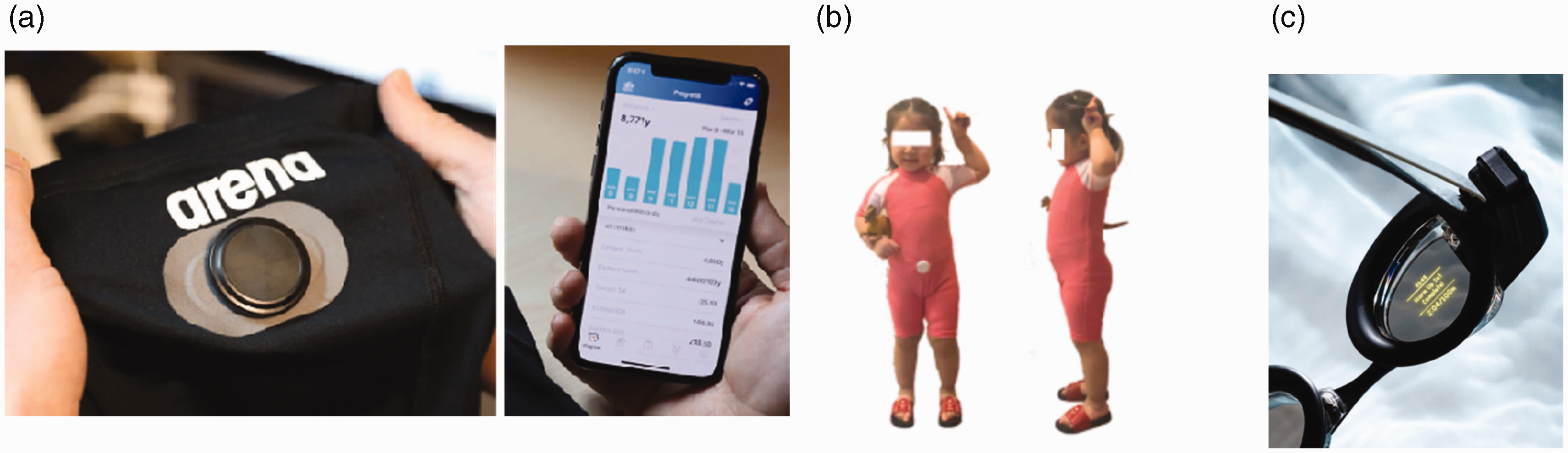
However, there are some occasions when the embedding of a monitoring function in swimsuits/swimming products is necessary. Considering that the child might not keep a monitoring device in place on the wrist during swimming, 29 as well as potentially inaccurate measurements from such devices, Wu developed a swimsuit with a pressure sensor located on the abdomen to monitor a child’s breathing status. An in-time alert would be sent to parents when the respiratory signal is abnormal (Figure 10b). Another notable advance was achieved by smart goggles (Figure 10c) introduced by Form, 30 a sports technology company. With the real-time speed and calorie consumption displayed on the lens, the goggles enabled swimmers to be notified without pauses during training. The head-up display, achieved by the augmented reality display screen and a monitor attached to the goggles, has earned a competitive advantage for smart goggles over smart watches or smart swimsuits with sensors incorporated. Positive feedback appeared in the market from both amateur and professional swimmers. Finis released similar smart goggles in 2021, with a less blocked view by changing the display from the middle to the side of the lens. The cost-efficiency was also improved, as the electronic module was removable and could be reused after the other parts wore out. 63
Such a combination of electronic devices with swimsuits has brought swimsuit design to another level with additional smart functions; however, their compatibility with the basic requirements of swimsuits should be considered. The added components may increase weight and bulk, slow down heat and moisture transport, or induce higher skin friction, which causes discomfort and even distracts from swimmers’ performance. For example, the Whoop sensor on Tyr swimsuit, held by an inner pocket on the ribcage, would cause chafing due to the windmill motion of arms. 64 It has been reported by the users of smart goggles that they could be distracted by the heads-up display during swimming, or even bumped into other swimmers due to the narrower peripheral vision. 65 For professional swimmers, those defects would raise even more concerns. As of 20 December 2023, World Aquatics has approved 11 wearables to be used in competitions for heartrate and glucose monitoring; however, wearables that transmit data and signals to swimmers are strictly banned. 67 Whether to use the monitoring swimsuits and devices in training needs to be considered cautiously, as extra time and effort are required for swimmers to adapt to new apparel. Monitoring swimsuits with wearing experience similar to the normal racing suits might be preferred by professionals.
For the next step of monitoring swimsuit development, the comfort, efficiency, reliability, and cost-effectiveness should be improved comprehensively, not only from the individual aspect of swimsuits or electronics, but also by considering the integration and interaction of the two systems.
Future trends in swimsuit design and research
The first future trend is the wider application of smart textiles and technologies in swimsuits. Speedo has demonstrated its expectation for the development of swimsuits by releasing the design sketch of Fastskin 4.0, which it is claimed will be launched in 2040. 68 The fantastic designs (Figure 11) include bio-engineered 3D printing applied to provide micrometer fit to every muscle, an artificial intelligence live coach that offers guidance to optimize racing performance based on real-time monitoring, dynamic flow zones that automatically change the texture to adapt to the flow conditions for continuous drag reduction, a core reactor that adjusts buoyancy and sharpens streamline shape, intelligent energy harvesting textile that powers itself, an in-built exoskeleton that flexes for explosive energy, adaptive smart lock seal that allows easy assembly and 100% biodegradable and genetically modified fabric.
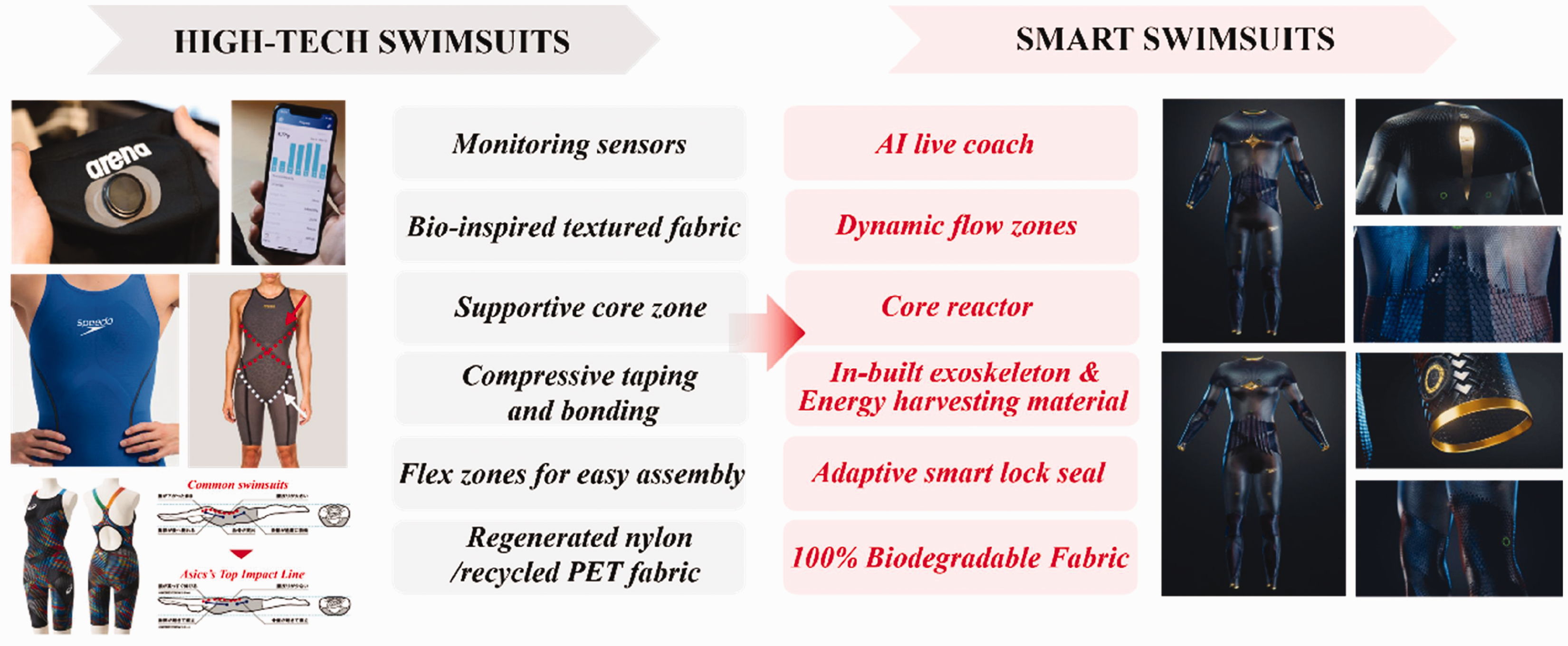
Future development trends of swimsuits.
Although these functions currently appear to be fantasy, most of them can be found in existing technologies. For example, sensors for monitoring swimmers’ physiological and performance indices, bio-inspired textured fabrics targeting drag reduction, a supportive core zone for stroke stability, compressive taping and bonding for power return, flex zones for easy assembly, and recycled nylon fabric for sustainability. 66 Almost all those functions have been covered in the latest swimsuit designs, but an upgrade relying on advanced material development and intelligent data collection, analysis, and response technology is expected in the future to make intelligent swimsuits a reality.
Secondly, with more functions being integrated into swimsuits, the relationship between the different functions of swimsuits will be more delicately balanced. Designs that aim for speed enhancement might be included in leisure swimsuits, while racing swimsuit design should also contribute to a better wearing experience. To achieve such balance, efforts should be put into each of the design detail of swimsuits. For example, improved comfort and stability of straps, fewer wrinkles with the use of non-slip leg grippers (rubber bands at the inner side of the hems), 14 higher flexibility with four-way-stretch swimsuit fabrics, and extended effectiveness of drag reduction fabrics at lower swimming speed.
Moreover, as technologies are being applied to swimsuits for more professional and diversified functions, a more refined classification of swimsuits may be established in the future, especially for racing swimsuits. Factors such as various technologies applied to swimsuits, application scenarios (short-, mid-, or long-distance swimming), and individual differences between swimmers (skill level, body shape, sensitivity to pressure and comfort, etc.) will be taken into account to provide swimmers with the exact swimsuit that meets their demands.
Conclusions
The review explores and summarizes existing primary research related to swimsuits. The main outcomes of the three categories of swimsuits are analyzed, based on which the potential hotspots and future trends for each topic are predicted. The conclusions are as follows:
The aesthetic style of swimsuits has been changing continuously with the development of social economy and culture, from bulky bathing gowns to modern swimsuits that are more flexible and trendier. Swimsuits of diverse styles will be developed to cater to varied application scenarios and the aesthetic preferences of swimmers. The impact of body shapes and body movements has been considered in the comfort design of swimsuits. In future research, a combined use of objective and subjective methods is recommended for a more comprehensive evaluation of comfort. Trending design elements should also be included in the study as one of the impact factors of swimsuit comfort. The speed enhancement performance of high-speed swimsuits has been verified mostly by experiments and elite swimmers’ performance in competitions. Textured fabric zones, compression systems, and water-repellent fabrics with natural lift were the technologies used extensively in the latest swimsuits for speed improvement, although some of the mechanisms have not been validated experimentally.
It was predicted that smart textiles and technologies would be applied more widely to swimsuits for real-time monitoring and instruction, intelligent drag reduction, energy harvesting, etc. With the upgrade of each function, efforts will be needed to keep the delicate balance between the multiple functions integrated into swimsuits, and a more refined classification of swimsuits will need to appear to meet the specialized demands of swimmers.
Footnotes
Declaration of conflicting interests
The author(s) declared no potential conflicts of interest with respect to the research, authorship, and/or publication of this article.
Funding
The author(s) received no financial support for the research, authorship, and/or publication of this article.
