







Abstract
Healthcare medical textiles require local microclimate control over sweat transmission and evaporation. However, existing strategies mainly focus on complicating the preparation process or sacrificing breathability and comfort. Herein, we design a lightweight and scalable knitted fabric featuring a double-layer structure consisting of hydrophilic ultrafine polyester and hydrophobic conventional yarns to achieve high moisture transport. These fabrics displayed an ideal directional water transport ability (one-way moisture transport capacity 718%) and anti-regurgitation compared with common cotton fabric. By distributing pores within the textile structure, these fabrics additionally exhibited beneficial water evaporation and heat dissipation. Simultaneously, the theoretical calculation verified that while the bottom layer has increased fiber density and looping area, fabrics are conductive to unidirectional moisture transport. These findings highlight the potential of variable pore knitted textile for personal sweat management, healthcare comfort regulation, and the relief of global energy issues.
Keywords
Healthcare with effective measures taken to pave the way for personal health protection has recently become highly sought after.1,2 With an increase in the aging population and a demand for high quality of life, 3 healthcare medical textiles with comfort regulation have been developed.4,5 Among them, thermal-wet comfort plays a significant role in personal physiological and mental health, 6 and the contribution rate of human body comfort accounts for about 61.5%. 7 The high temperature places a heavy burden on common people’s daily life, such as commuters and aging people. 8 The elderly are more sensitive to heat-related mortality and morbidity such as cardiovascular, 9 cerebrovascular, and respiratory diseases due to low levels of hyperthermy perception and adaptability. 10 In addition, extreme temperatures would cause bodily harm to outdoor athletes or construction workers, who for a long time are exposed to ultraviolet sunlight, and are at the risk of heat stroke or burns11,12 (Figure 1(c)). Accordingly, thermal management has been described as an indispensable part of medical care and human health. 13 To create a comfortable indoor environment, buildings heating, ventilation, and air conditioning (HVAC) systems become large-scale applications in space cooling and heating at the expense of excessive energy consumption.14,15
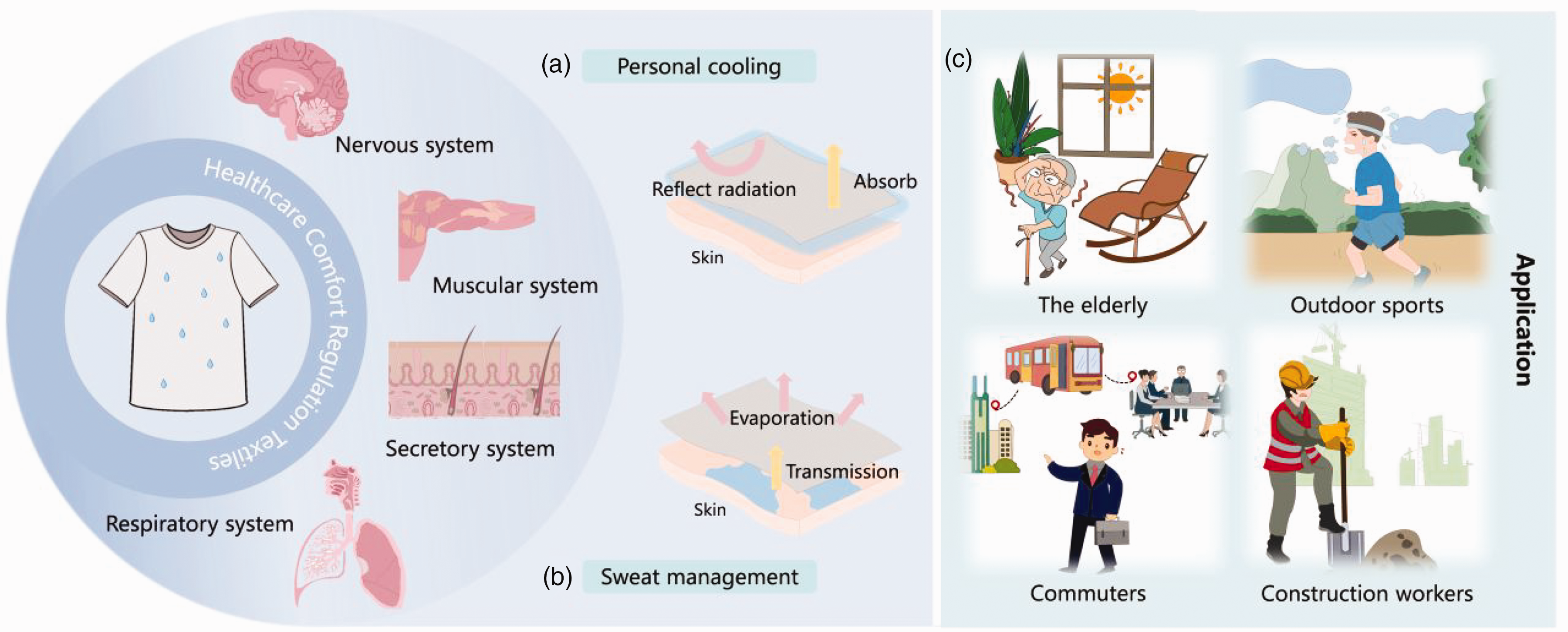
(a) and (b) Thermal management mechanisms for healthcare comfort regulation textiles and (c) application scenarios of sweat management fabrics.
The significant consumption has exacerbated the energy crisis on electricity usage, fuel consumption, and greenhouse emissions. 16 Due to the improvement of public environmental awareness and the pursuit of comfort-health, 17 localized thermoregulation can be an attractive alternative with the potential for enhanced health controllability at the individual level, 18 as well as applicability in wider adaptability to extreme thermal environments. 19 Unlike the centralized space cooling technology, 20 clothes are the extension of the human body, and can be considered as the second skin. 21 When wearing clothes, an inner microclimate region is formed between the clothes and the human body, and clothes act as a barrier for the human body against direct exposure to harsh environments. 22 Textiles demonstrate inherent softness and skin retention, 23 which are compatible with human skin. 24 However, the application of traditional textiles is limited as it is unable to regulate skin temperature in response to environmental or metabolic heat-rate changes. 25
To overcome this limitation, many efforts for textiles with thermal management have been undertaken and reported. 26 Passive radiative cooling is considered as a promising method 27 (Figure 1(a)). The metafabric laminated a titanium dioxide–polylactic acid (TiO2-PLA) composite woven textile with a polytetrafluoroethylene (PTFE) layer, exhibits high mid-infrared (MIR) absorption and efficient cooling capacity. 28 In addition, phase change materials (PCMs) absorb plenty of thermal energy from the human body and ambient environment,29,30 and thereby can be a way for personal cooling. 31 For example, Wang et al. designed a flexible and biocompatible silk fiber-based composite PCM. 32 The composite PCM can regulate human body temperature for a period of time, and maintains shape and thermal stability for 500 cycles. Nevertheless, PCMs suffer from nonadjustable temperature, 33 and the possibility of cryogenic frostbite and invalidity during extreme weather. 34 These problems limit their application in practice.
Primary strategies mainly focus on manipulating heat, which is not sufficient in some humid and hot situations in which sweat is generated on the skin to maintain human body thermal comfort. 13 If sweat is not removed efficiently, people may still feel hot and sticky.35,36 Textiles designed for sweat management, with modified wettability on both sides of the textile, 27 could enhance directional sweat wicking and evaporation for personal cooling37,38 (Figure 1(b)). For instance, inspired by the sweat glands of human skin, Lin et al. reported a high-performance fabric by patterning printed hydrophobic paste, which can achieve directional liquid transport and strong durability. 39 Hu et al. fabricated a hydrophobic/hydrophilic Janus membrane decorated by MXene nanoflakes for efficient moisture transport and heat retention capacity. 40 The complexity of these textiles in practical applications is overlooked, 24 during which pursuits of textiles are highly human–environmental adaptable, 41 and of scalable productivity. 42 Therefore, it is necessary for fabricating textiles in an easy-to-operate technique with outstanding sweat management without sacrificing breathability and comfort. 43
In this work, we demonstrate a lightweight, scalable, and environmentally friendly weft knitted fabric that endows it with skin thermal-wet microenvironment regulation. This single-side fabric is designed with moisture-responsive ultrafine yarns outside and conventional yarns inside dynamically to modulate liquid transmission, moisture evaporation, and air flow through the fibers’ capillary radius difference as a function of additional capillarity. The outside hydrophilic yarns can absorb the sweat transmitted by the inside hydrophobic yarns. The moisture evaporation channels were realized by selectively assembling the variable pores on the inner structure of the fabric. These pores could not only provide the capillary pathway for directional water transport, but also ensure the breathable characteristics of the fabric. In addition, pores exposed to the surface of the fabric can release the sweat from the skin to keep the surface dry, enabling good thermal-wet comfort. The obtained fabric exhibits enhanced one-way moisture transport capacity (OWTC) with an index up to 700% without being chemically treated. The anti-regurgitation propelled by the designed fabric is far superior to common cotton fabric, liberating people from stuffy discomfort. As a result, this approach provides an avenue for healthcare medical textiles with comfort regulation, which is expected to address the increasing challenges without disturbing people’s daily routines.
Experimental details
Materials
Ultrafine hydrophilic polyester (93.3 dtex/384 f, 55.5 dtex/216 f), and conventional hydrophobic polyester (55.5 dtex/24 f) were procured from Qingdao Lianrunxiang Textile Technology Co., Ltd., China. Spandex (20D)/polyester elastic covered yarn (77.8 dtex/36 f) was bought from Zhejiang Huashu Chemical Fiber Co., Ltd., China.
Preparation of variable pore fabrics
The fabric with a single-side plated structure was knitted by two yarns with substantial variance fineness. To facilitate the formation of the hydrophilicity side, ultrafine polyester was selected as the face yarn. Ground yarns included conventional polyester and spandex/polyester covered yarn, leading up to the hydrophobicity side. For fabrication, a SANTONI single-sided electronic jacquard knitting machine with 15 in/1344 needles was employed. The face yarn was fed through the no. 5 knitting feeder to form the fabric’s surface layer, while the ground yarn formed the inner layer by way of the no. 2 knitting feeder. The machine featured a constant tension feeder set at 2.5 cN, with the density in the knitting program adjusted to 11. Post-knitting, the grey cloths underwent pre-shrinking at 150°C. The schematic diagram of the fabrication process is shown in Figure 2(a).
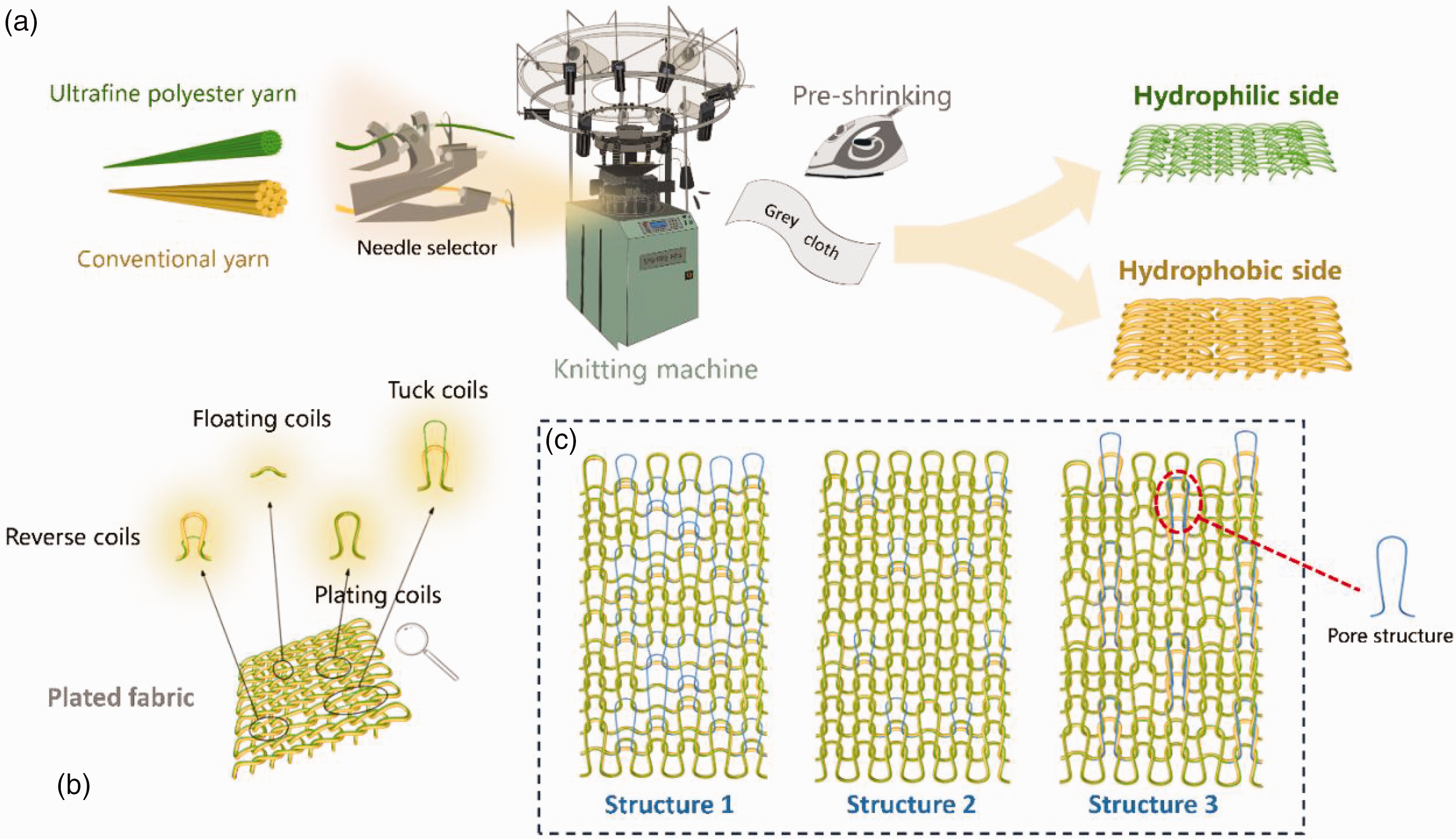
(a) Schematic illustration of the preparation process of the fabric; (b) classification of pore structure and (c) simulation diagrams of three knitted structures.
Aiming for superior heat and moisture exchange ability, variable pores were applied on the basis of the ordinary plated structure. The pore structure is formed by tuck plating, floating plating, and reverse plating (Figure 2(b)). For the incomplete looping of ultrafine yarn, the fabric top side presents concave triangular pores. Conversely, raised floating coils are shaped on the bottom side of the fabric, owing to the shrinkage of ground yarn. Derived from the changeable combination of materials and pore structures (Figure 2(c)), nine single-sided variable pore fabrics were successfully prepared.
Characterization
The morphology and structure of the materials and both sides of the fabric were analyzed using a scanning electron microscope (su1510, Japan). Fabric thickness was tested by a thickness instrument (YG141LA, Ningbo Textile Instrument Factory, China). according to GB/T3820-1997. Fabric weight was measured by a high-precision electronic balance (±0.0001 g) according to ASTM D3776. The mean value of five results were calculated for fabric thickness and weight.
The aperture of the fabric was tested using a capillary flow pore size analyzer (ICFP-1100AX). The fabric overall porosity ε was evaluated from equation (1). Pore parameters of each sample were measured three times and obtained an average:

The water contact angle (WCA) was detected three times by using an optical contact angle device (JC2000DM, Shanghai Zhongchen Digital Technology Equipment Co., Ltd.), and averaged to determine the fabric’s WCA.
Sweat transportation properties
To monitor the liquid moisture transfer properties, a moisture management tester (MMT) (Q290, Xi’an Weierze Instrument Technology Co., Ltd., China) was utilized. Adhering to GB/T 21655.2-2009, the testing solution, resembling synthetic sweat, consisted of 1 liter of distilled water with 9 g of sodium chloride. The water vapor transmission rate (WVTR) was measured by a WVT tester (YG601H-II, China) according to GB/T 12704.1-2009.
Sweat evaporation properties
When wet textiles evaporate, they dissipate heat from the body/cloth combination. 44 Efficient evaporation is adequate for decreasing sweat dampness-cold. To evaluate further coupled heat-moisture properties, it was performed by a silicone heating pad, with a program to control temperature. The sample was cut into a size of 10 cm × 10 cm. Before the test of evaporation performance, 2 g deionized water was sprayed evenly on the samples (Figure 3(a)). The test environment was controlled at a standard ambient temperature of 20 ± 2°C and relative humidity of 65 ± 2%.
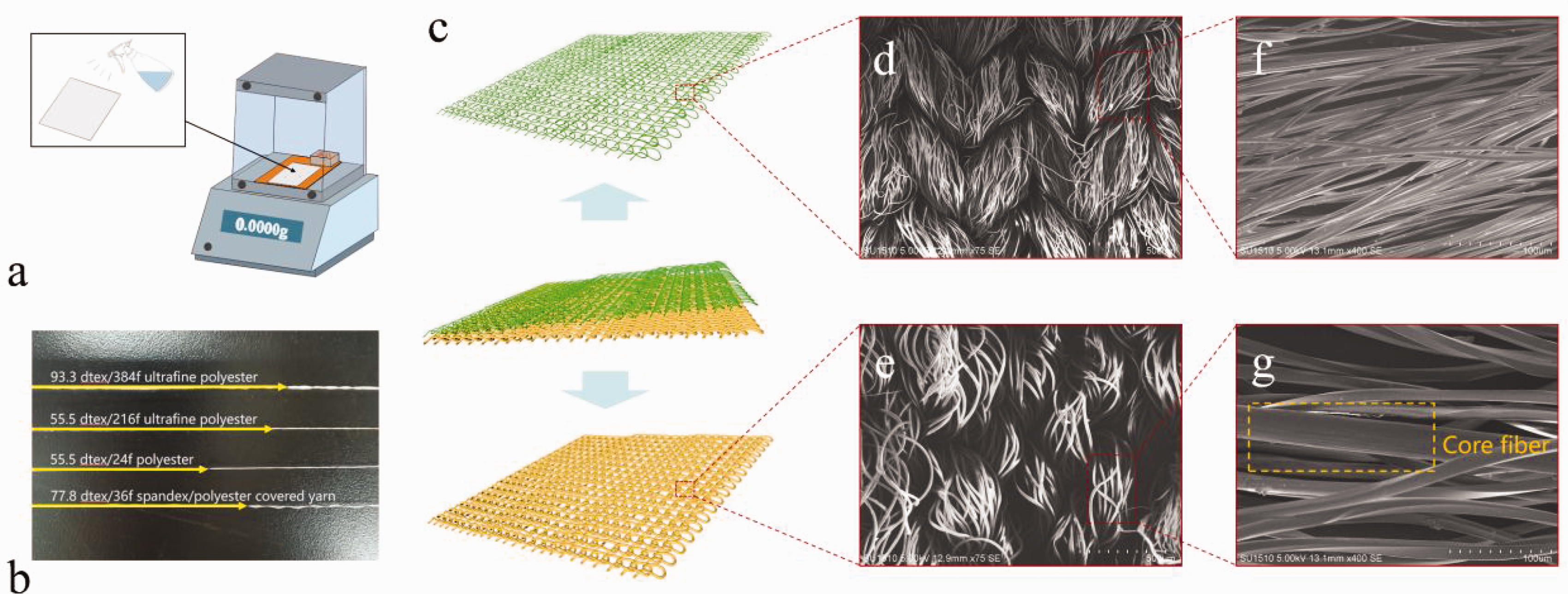
(a) The experimental device diagram of the water evaporation; (b) water transmission test of four yarns; (c) schematic illustration of double-layer pore structure fabrics; (d) ultrafine polyester layer; (e) conventional yarn layer; (f) 55.5 dtex/216 f ultrafine polyester and (g) 77.8 dtex/36 f spandex/polyester elastic covered yarn.
Thermal comfort properties
The textile insulation was characterized by a guard heated plate instrument (YG606D, Changzhou Second Textile Machinery Factory, China). The fabric sample was placed on the test board, and the temperature of the test board was consistently maintained at 36.5°C. Each group of samples was measured three times and average was obtained. In addition, the air permeability of the textile influences the heat released from the human body. It was tested by a YG461E-III fully automatic air permeability meter (Ningbo Textile Instrument Factory, China) according to ISO 9237-1995. The given area was 20 cm2, and the given pressure was 100 Pa. In this test, five readings were recorded from different places of each sample and the average values were calculated.
Results and discussion
Material and structure
At present, the single-side knitted fabric is ordinarily formed by a single material. This property exhibits void of wettability gradient from inside to outside. Accordingly, preference is given to fabric with two types of materials that excel in moisture transfer. Under Laplace’s theorem, additional capillary action is accomplished by fibers’ capillary equivalent radius difference and asymmetrical wettability. 45 This differential capillary effect facilitates liquid adsorption and migration.
In order to confirm the applicability, the water transmission of the yarns was tested. The yellow arrow length represents the water absorption length (Figure 3(b)). Two types of common specification yarns exhibited relative hydrophobicity, and they have a higher fiber density, making them materials for the hydrophobic side of the fabric. On the other hand, two types of ultrafine polyester were selected due to their significantly higher hydrophilicity, and their linear density of single fiber was lower than the others. Apart from these, the ultrafine polyester layer should be applied as the hydrophilic layer on the air continuously to pump the water outward.
Pore structure plays a crucial role in moisture diffusion and thermal conduction. Variable pores were employed in the plated structure, providing multiple channels for moisture movement and heat dissipation. In particular, the pores of structures 1 and 2 are formed by reverse and floating plating. Structure 3 possesses pores by virtue of floating and tuck plating. To study the effect of pores on thermal and wet comfort, different pore numbers and apertures were applied to structures 1 and 2.
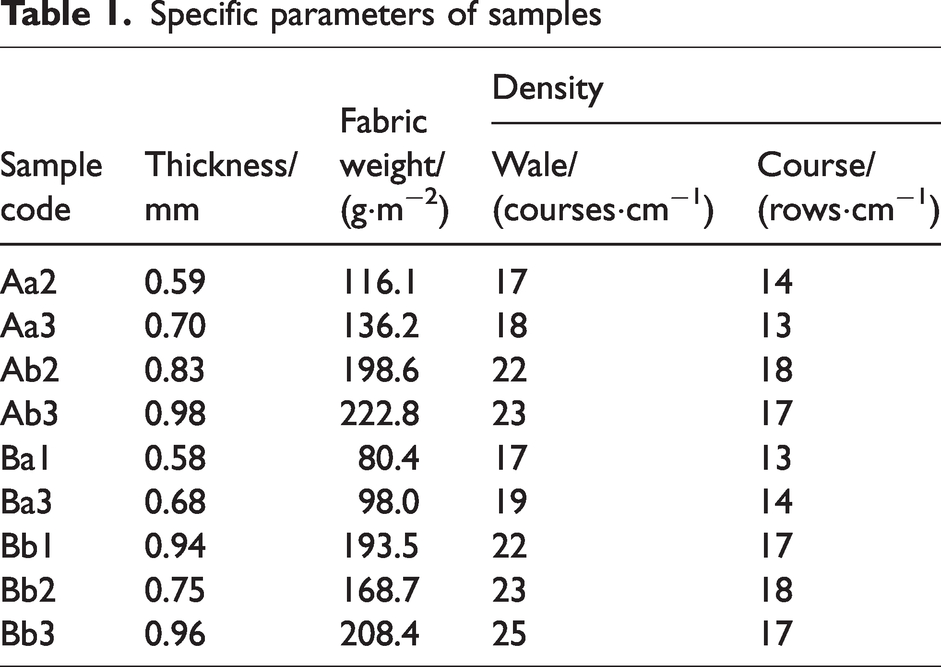
Based on the above considerations, nine single-side variable pore plated fabrics were developed. They are denoted as follows: A, face yarn 93.3 dtex/384 f ultrafine polyester; B, face yarn 55.5 dtex/216 f ultrafine polyester; a, ground yarn 55.5 dtex/24 f polyester; b, ground yarn 77.8 dtex/36 f spandex/polyester elastic covered yarn. Combining the design of structures 1, 2, and 3, nine fabrics are numbered: Aa2, Aa3, Ab2, Ab3, Ba1, Ba3, Bb1, Bb2, and Bb3. The specific parameters of samples are presented in Table 1.
Specific parameters of samples
Morphology and pore characteristics of fabrics
The surface microstructure of materials has a significant impact on the wettability. Figure 3(c) shows the structural characteristics of fabric. Visually, the fiber diameter of ultrafine polyesters is significantly smaller than that of conventional yarns (Figure 3(f) and (g)), which facilitates the formation of differential capillary effects to promote directional moisture transportation. For the hydrophilic layer, ultrafine polyesters with a high aspect ratio are knitted to form a relatively smooth structure. It can be clearly seen from Figure 3(d) that the fabric surface has a distinct pore structure between the yarns, which is associated with its abundant channels for liquid permeation. The hydrophobic side is not a flat plane, but has a certain thickness of concave–convex morphology (Figure 3(e)), which is caused by close arrangement and partial overlap of conventional yarns with larger diameters.
Figure 4(a) represents the pore results of fabrics. A marked decrease can be observed in the mean aperture of fabrics including elastic yarn (Ab, Bb). This can be attributed to spandex thermal contraction. The spandex has many active groups contained in its molecular structure, leading to higher tightness of fabric structure by post-heat. In addition, the porosity of fabrics with ground yarn a (55.5 dtex/24 f polyester) surpass fabrics with yarn b (77.8 dtex/36 f spandex/polyester elastic covered yarn). With uniform ground yarn, the porosity of face yarn B (55.5 dtex/216 f) is greater than A (93.3 dtex/384 f). This demonstrates that low linear density of yarn has a smaller filling area for fabric. Under the same material combination, the porosity of structure 1 > 2 > 3. Compared with pore structure, it gives priority to pore number that affects fabric porosity. Notably, the porosity of Aa2 is slightly above Aa3, which is attributed to the mean aperture effect. Moreover, the order of mean aperture is structure 2 > 3 > 1, indicating that no obvious correlation appears between the two pore characteristics.
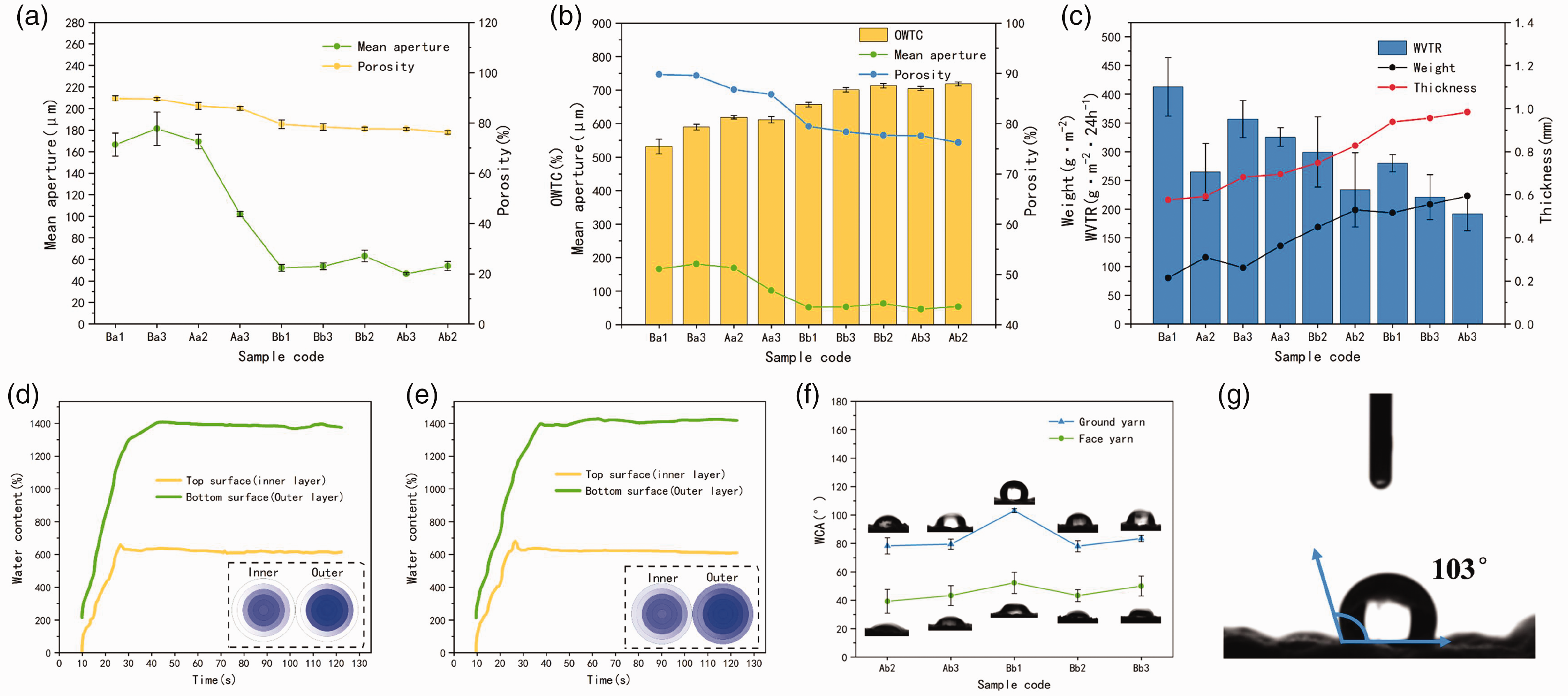
(a) Mean aperture and porosity of samples; (b) one-way water transport capability and porosity of samples; (c) weight, thickness, and water vapor transmission rate of samples; (d) and (e) the curves of the water contents on both sides of fabrics Ab3 and Bb2; (f) water contact angle of samples and (g) water contact angle of fabric Bb1.
Moisture management properties
The OWTC index is defined as the difference in accumulated moisture between the top and bottom fabric surfaces. A higher OWTC score demonstrates superior fabric unidirectional water transport capability. As shown in Figure 4(b), fabrics with ground yarn b (77.8 dtex/36 f spandex/polyester elastic covered yarn) outperform those with ground yarn a (55.5 dtex/24 f polyester), which correlates with the relatively tight arrangement of fibers. According to the differential capillary effect principle, a larger fiber density gap between face and ground yarns results in greater differential pressure between the two fabric layers. 46 The face yarn A with lower fiber density, which creates more density gap than ground yarn, can absorb the liquid and transfer moisture rapidly by wicking. Consequently, it is clear that yarn combination A-b is a preferable choice. Besides materials, the pore structure effect on OWTC index emerges. There exists a negative relationship between OWTC and the porosity ratio from 76.24% to 89.78%. When the fabric pores diminish, the capillary force increases. Aa2 and Bb2 reveal that higher apertures enhance water content on both sides of the fabric, meanwhile speeding up the moisture transport. It can be seen from Figure 4(d) and (e) that at 0–120 s, pores with larger diameter (Bb2) are favorable for water absorption of the top layer, and liquid spreads rapidly to the bottom layer. It is the same for Aa2.
Figure 4(c) displays the water vapor transfer rate of fabric. With the increase of thickness, the fabrics become less permeable to water vapor passage. The higher water vapor transmission rate of Ba1 is due to the overall pores, giving moisture more gaps to pass through the fabric. Similarly, the reason for Ab2 and Ab3 is the same as above. The observed disparity for Aa2 and Ab2 can be explained by textile weight. It can be found that fabrics with raised weight have a shrinkage structure, which contributes to fewer water vapor transport channels.
Directional water transport performance
To demonstrate further the anisotropic wettability of fabrics, apparent WCAs were tested, with both the top and bottom layers shown in Figure 4(f). With the exception of nonelastic fabrics, other fabrics exhibit varying discrepancy of two sides. This result aligns with the OWTC index, further verifying that tighter structure is aiding in water transport. It can be found that fabrics composed of face yarn B are more hydrophobic than A, because of the yarn wettability. In particular, the contact angle of Bb1 was 103° when the water droplet touched the ground yarn side, which is caused by its minimum aperture under the same face yarn (Figure 4(g)). The capillary pressure generated by small pores is high, which caused the water droplet to stay on the hydrophobic side, and increased the wetting time.
In the practical application of single-side variable pore fabric, it necessitates images to detect the water pumping process. A simplified dynamic water-transfer process was established using a 0.1 mL water droplet dyed with 0.1 wt% blue pigment. For comparison, the water droplet was fed downward to contact the skin-facing side (ordinary yarn) and air-facing side (ultrafine yarn), respectively. For conventional cotton fabrics, both sides experience water conduction, wetting the tissue underneath the fabric (Figure 5(a) and (b)). Visually, when the blue water droplet contacted the inner layer of single-side variable pore fabric (Figure 5(c)), the water was rapidly pumped through the inner layer to the outer layer (the plot on the tissue proves that the moisture has been transported). On the contrary, when the outer layer was faced up (Figure 5(d)), the water droplet just spread horizontally on the outer side, without penetrating upward into the inner layer (the tissue remained dry). The schematic diagram of the water propagation condition when water is added in drops from opposite sides is displayed in Figure 5(e). As a result, the single-side variable pore fabrics present a desirable directional water transport property. Moreover, the water transport was blocked when the fabric was turned over, indicating that the fabric could keep the skin side dry and comfortable when the body sweated.
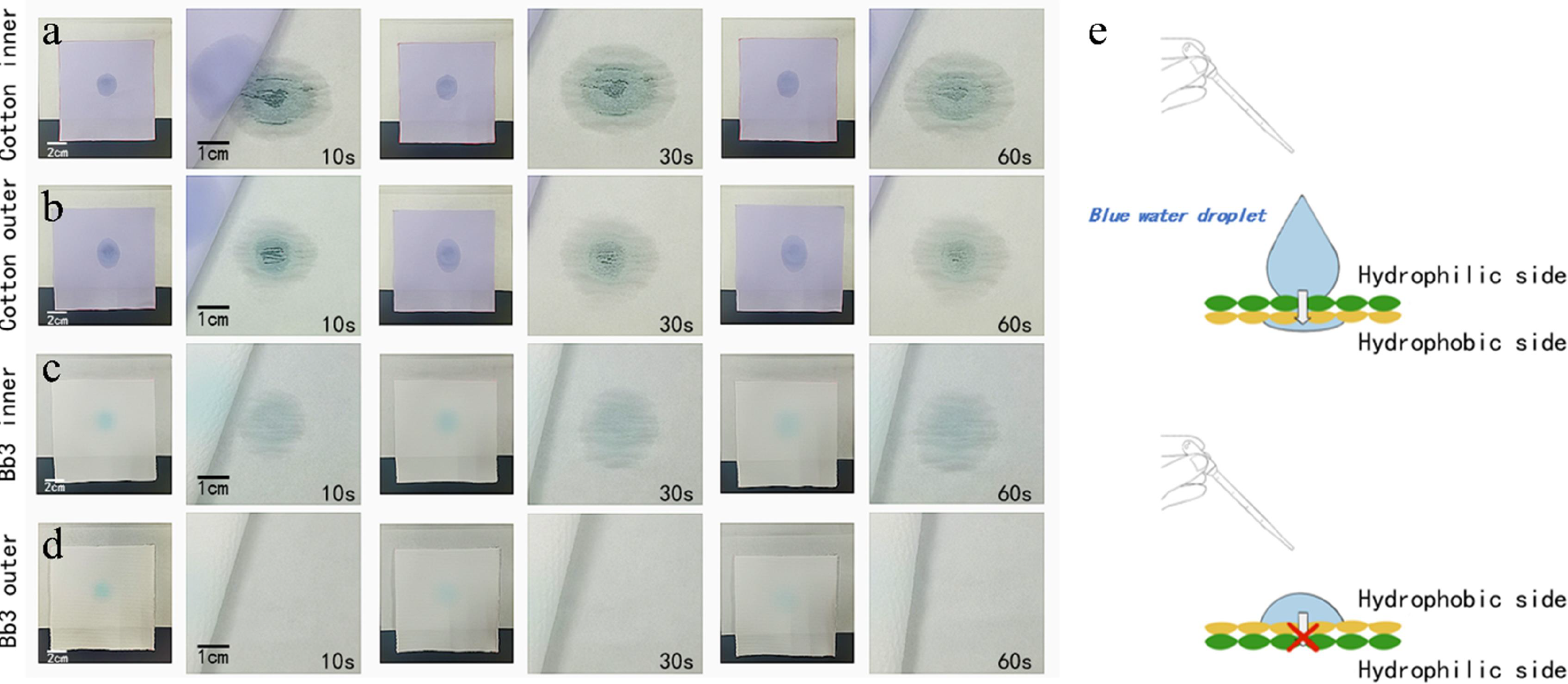
Directional liquid (blue pigment, 0.1 mL) transport behavior from the top view of (a) and (b) the cotton fabric and (c) and (d) the Bb3 sample when the water droplets were dropped on the inner layer and the outer layer and (e) directional water transport mechanism of water droplets within the fabric.
Thermal management performance
In addition to the directional water transport, unimpeded heat dissipation is also demanded for personal drying and cooling. Figure 6(a) represents the results of fabrics’ air permeability and warmth retention. Pores play an important role in air circulation. The higher surface porosity leads to a larger cross-sectional area and increased gas flux. The slight growth of Bb2 and Ab2 is attributed to aperture. There was a significant variation in air permeability among fabrics, with difference exceeding 1000 mm/s, primarily influenced by the ground yarn. Comparatively, the warmth retention shows minimal fluctuation. It was noted that warmth retention grew as the porosity declined, indicating that thermal conductivity dropped. These results confirm that pores can construct abundant heat transfer pathways in the fabric, demonstrating a lower insulation rate. The heating performance of wet samples is shown in Figure 6(b). The temperature of the test board was kept at 36.5°C, which simulated the body surface. The faster the evaporation of the sample increased, the better sweat management capacity of the fabric. Among them, curves of Aa3, Ab2, Ab3, Ba1, and Ba3 have partial overlaps, and show similar evaporation rates. It can be observed that Aa2 exhibited a higher efficient drying performance, indicating that the thinner fabric with large pores can accelerate water evaporation. Correspondingly, the fabrics with material B-b, have an undominant evaporation rate than others. The ground yarn b shrinks, and the fabric has smaller gaps, while the face yarn B has more fiber gaps than A, making it easier to trap water between layers, and demonstrating a lower evaporation rate (Figure 6(c)). The OWTC result of B-b fabric can confirm the above.
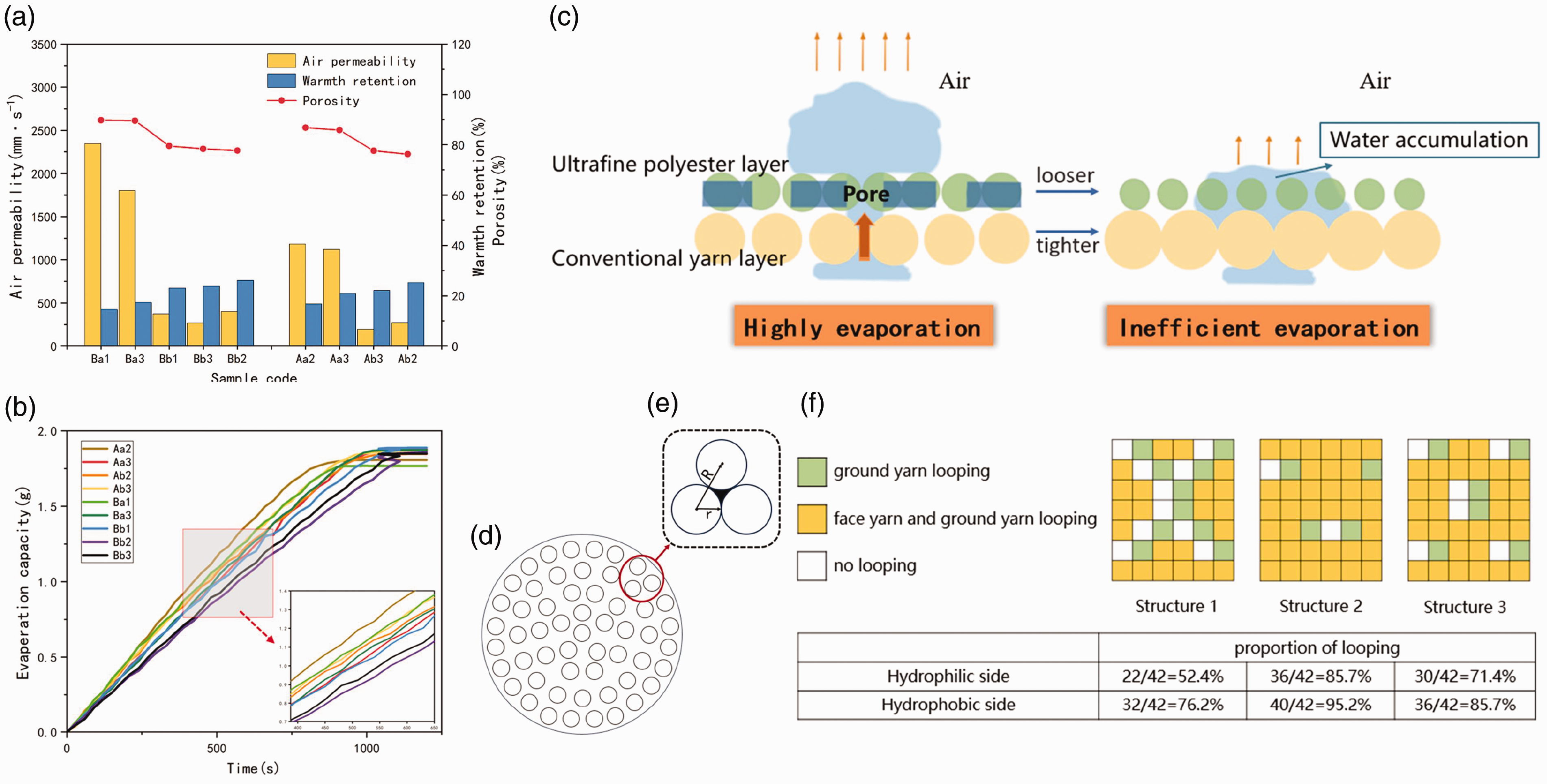
(a) Air permeability, warmth retention and porosity of samples; (b) water evaporation rate of samples; (c) schematic demonstration of moisture-evaporation of fabric; (d) and (e) schematic diagrams of the elementary cells of a cross-section of an ideal yarn and (f) proportion of looping coils on ground yarn and the face yarn side of three structures.
Theoretical model of moisture transport for porous fabric
In order to quantify moisture transport capacity, current studies mostly adopt capillary pressure P to establish the interaction between fluid and solid interfaces. The theoretical derivation of differential capillary pressure ΔP can be based on

The internal structure of yarns can be approximated as fibers with circular cross-sections arranged in parallel (Figure 6(d)). This leads to equation (3), which describes the fiber radius:

The capillary section formed between the circular fibers is approximately triangular, as shown in Figure 6(e). The variation in R with r can be written as

While in the case of elastic yarn, fiber density is taken as ρ
e
and is replaced with

In addition, the effect of pores on fabric water-transport capacity was proved by the above experiments. It is necessary to take the pore structure into account in the capillary pressure calculation. For single-side plated fabric, the structure of the hydrophilic side is tighter than the hydrophobic side. Based on the capillary siphon effect, the water absorbed by the loose layer is transferred to the tight layer. The looping area on both sides has a difference, which affects the tightness of the fabric structure. The looping area can be estimated by the looping proportion of plated structure. Figure 6(f) displays the fabric pattern grid and its corresponding proportion of looping coils.
Refining the classification of pore structure, the final results can be obtained

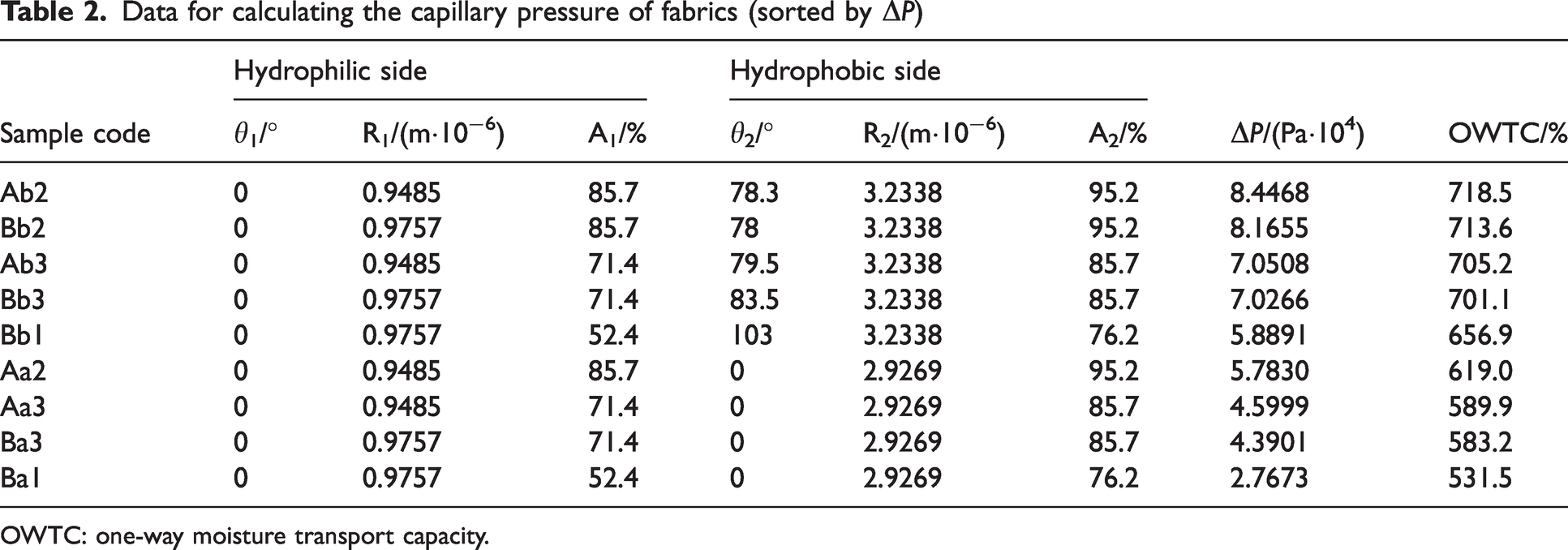
The WCA value is presented in Table 2. The contact angle was regarded as 0° where the fabric surface can fleetly absorb moisture. The WCA of elastic fabric has a negligible difference. To simplify the calculation process, the contact angle on the hydrophilic side of the elastic fabric was also set to 0°.
Data for calculating the capillary pressure of fabrics (sorted by ΔP)
OWTC: one-way moisture transport capacity.
The differential capillary pressure ΔP of nine single-side variable pore fabrics was calculated. The data are presented in Table 2, which reveals that the looping area influenced by pore structure and the capillary equivalent radius of fiber are significant factors for capillary pressure. While the bottom layer has increased fiber density and looping area, fabrics with high ability to store moisture, such as Ab2 and Bb2, are conductive to unidirectional moisture transport. The ΔP obtained by the theoretical model is in accord with the MMT experiment.
Conclusions
In summary, we designed variable pore knitted fabrics with a double-layer structure consisting of hydrophilic ultrafine polyesters and hydrophobic conventional yarns, which provide an effective response to increases in temperature and the resulting sweat that incurs on the human body. These fabrics displayed an ideal directional water transport ability (OWTC 718%), as well as good moisture and air permeability. The bilayer design, with pores on the inner structure of the fabric, prevents reverse osmosis compared with common cotton fabric. In addition, pores applied to fabric structure facilitate water evaporation and heat dissipation. The theoretical calculation results of capillary pressure generated by variable pore fabric further verified that fabrics exhibit high unidirectional moisture transport when hydrophobic spandex/polyester elastic covered yarn (77.8 dtex/36 f) was used on the hydrophobic side of the fabrics, and the hydrophilic side incorporated microfiber polyester (93.3 dtex/384 f). Meanwhile, the factor of fabric thermal-wet management includes the porosity and mean aperture, which altered the looping area on both sides of the fabric. The increased fiber density and looping area used in the bottom layer improved the water content of fabric, facilitating liquid one-way transmission. On the basis of the findings above, this double-layer variable pore structure design that regulates moisture transfer from inside out and thermal management provides a great impact, not only for ordinary people, but also for those with healthcare comfort regulation requirements, such as the elderly and disabled. This developed fabric is expected to be applied in seamless clothing, medical textiles, protective equipment for special people in the future, which can greatly increase the value of clothing, make people’s everyday lives easier, and contribute to the relief of global energy and climate issues.
Footnotes
Acknowledgements
The author(s) acknowledge the National Science Foundation of China (61902150) and the foundation for basic research support from the Postgraduate Research and Practice Innovation Program of Jiangsu Province (1065212032220020).
Data availability
No data were used for the research described in the article.
Declaration of conflicting interests
The author(s) declared no potential conflicts of interest with respect to the research, authorship, and/or publication of this article.
Funding
The author(s) received no financial support for the research, authorship, and/or publication of this article.
