






Abstract
Wearable electronic textiles, which can be integrated in clothing for indoor or outdoor wear, are used for communication, entertainment, health, and safety. In this paper, the application of smart textiles to monitor human health periodically is considered. The purpose of this study is to record the health data of a patient, namely body temperature and heart rate, and to transmit the data wirelessly in order to prevent missing the moment when a patient needs to be treated. The communication and data transmission are provided in two ways: by using the short message service (SMS), for sending text messages to a mobile phone, and by forming a web server, for transmission over the internet. Therefore, an appropriate contact person, who might be an advisor or a doctor, can be informed about the health status of the patient. The developed prototype realizes the communication, relying on the Transmission Control Protocol/Internet Protocol (TCP/IP) together with the IEEE 802.11 standard, and alerts the contact person by sending an SMS message to the contact person’s mobile phone using a Global System for Mobile Communications (GSM) module.
Keywords
Textiles are a permanent feature in our society, and they form an ideal base for wearable monitoring electronics. Integrating electronics within textiles is advantageous, and proves matchless by comparison with other systems, since clothing or textile accessories can be worn close to the skin. With the least influence on the comfort of the wearer, and with the least disruption to the wearer’s day-to-day activities, data measurement that demands close contact with the skin is feasible.1,2
In addition to the commonly used wearable wristbands, other smart textile applications are becoming more common day by day. Therefore, smart textiles are beginning to be employed in the health sector because of their useful and wearable properties. Smart fabrics, which can be used for clothing or footwear to collect body metrics of wearers, have been developed. 3 Bahadır 4 determined suitable sensor locations on a smart garment, designed to detect diseases in a wearer, using acceleration measurements from different parts of the body. An accelerometer was placed on different locations of the garment to measure the respiration rate, heart rate, and muscle tremor. Özdemir and Kılınç 5 developed portable and wearable devices, which were able to measure the temperature of the human body within the woven fabric. Their smart woven fabric sensing architecture can be divided into two parts: a textile platform, in which portable and wearable devices acquire thermal signals, and hardware or software platforms, to which a sensor sends the acquired data, transmitting the signals to vibration motors. Onose et al. 6 gathered non-invasive data at the skin surface, to monitor important physiological signals (body temperature, heart rate, blood pressure, angular acceleration, and inclination when falling) by means of some specific sensors embedded in special textile fabrics. In another study, 7 aspects of research regarding experimental solutions for interactive textiles that could be used to monitor defined vital signs were presented. Guo et al. 8 designed a garment-based sensing system for the long-term monitoring of breathing rhythms. Their system concept was realized in a prototype garment, integrated with coated piezoresistive sensors. Van Langenhove and Hertleer 9 developed textile electrodes that were made of stainless-steel fibers and had a knitted structure for electrocardiogram (ECG) and heart rate measurement. The electrodes were incorporated in a belt to be worn around the thorax. In a study by Loriga et al., 10 conductive and piezoresistive yarns were integrated in a knitted garment and used as sensor and electrode elements to monitor cardiopulmonary activity. Fabric electrodes were realized with a yarn in which a stainless-steel wire was twisted around a cotton-based yarn. Catrysse et al. 11 developed a textile sensor, which they called a Respibelt, to measure respiration. Made of a stainless-steel yarn and knitted in a Lycra-containing belt, the belt could provide an adjustable stretch. Song et al. 12 developed a textile electrode based on a jacquard fabric, with silver covering yarn, which could be manufactured evenly with consistent properties. Convex jacquard woven electrodes using half-removed (50%) warps of the fabric, with a conductive paste, resulted in the most significant ECG signals for physiological monitoring. Sonica et al. 13 developed an elastomeric tape for strain sensor application, which they used to measure changes in the angle of an elbow. In another study, 14 a technology based on the multiaxial warp-knitting technique for the production of bionic-inspired textile reinforcements was developed, and specific force-compliant textile preforms were produced. In addition to these, there is energy-harvesting technology based on piezoelectric polymeric fibers, inorganic piezoelectric fibers, or inorganic nanowires.15 –18
The combination of electronics with textiles offers potential for applications in a variety of scenarios. Clothing provides a suitable platform to monitor physiological signals with textile-integrated sensors and thus supply potentially crucial information to the wearer. 19 Additionally, there is considerable interest in efforts to transmit patient-generated data to health and social care providers, and in finding ways to combine patient-collected and clinical data to inform clinical decisions. 20 For these reasons, in this study, body temperature and heart rate are measured, as an example of smart textile applications. The electronic parts, which measure the body temperature and heart rate, are integrated in the textile. The health data are measured by sensors in analog form and should be converted into a digital signal. Thus, the microcontroller to be utilized should contain an analog-to-digital converter (ADC). In the study, the health information is also sent through the internet and as a short message service (SMS) message. Therefore, the microcontroller must also support serial communication to communicate with Wi-Fi and Global System for Mobile Communications (GSM) modules, to form a web server using the Transmission Control Protocol/Internet Protocol (TCP/IP) and to send SMS notifications in text mode. In these circumstances, Arduino Uno seems to be a suitable microcontroller for the study.
The aim of this study is to measure a patient’s temperature and heart rate using customized fabric, customized hardware, and a customized software application, and to send the data wirelessly as an SMS message to a healthcare professional’s mobile phone and through the internet to the healthcare institution’s web server. For this reason, the ESP8266-01 Wi-Fi module, which is not bulky and which provides a simple interface, was employed. It supports the IEEE 802.11 standard and can be programmed using the Hayes AT command set. The Wi-Fi module is connected to a wireless network in station mode and set up as a web server in multiplex mode. Then, the data are sent to the web server by writing appropriate hypertext markup language (HTML) codes. The SMS notification is realized by programming a GSM module. For the GSM module, the SIM900 is preferred; it is programmed with Hayes AT commands, in the same way as the Wi-Fi module. The GSM module is set to text mode for sending SMS messages to the mobile phone number of the receiver (e.g., a doctor).
Materials and method
Materials
In this study, we used the fabric produced for our previous research. 5 Commonly, 2/2 twill woven fabrics are used for men’s clothing and woven shirts; thus, 2/2 twill woven fabric samples (30 cm × 30 cm) were produced in-house in a weaving workshop, using a CCI automatic sample rapier loom (Evergreen 8900, Taiwan). We used 100% polyester and stainless-steel core yarns with cotton fiber as the sheath material. The specifications of the yarns are given in Table 1. While the electroconductive and polyester yarns were inserted in the order 1 to 7, to obtain enough space between conductive yarns within the fabrics, only polyester yarns were used as warp yarns, to avoid contact with conductive weft yarns. In Figure 1(a), the open parallel structure of the conductive yarns is represented with gray squares and the letter C, whereas the polyester yarns are represented with white squares and the letter P. Both white and gray squares also represent intersection points between warp and weft yarns. Micrographs were taken using an IVYMEN stereomicroscope, at a magnification of 100×. Figure 1(b) is a stereomicrograph of the smart fabric woven with pink warp and weft polyester threads, and with cotton-covered conductive-core weft yarn used for every eighth weft. The warp and weft settings of the woven fabric sample on the loom were 24 cm−1, which was calculated for the loom state. No finishing process was applied to the fabric samples. 5
Specifications of yarns

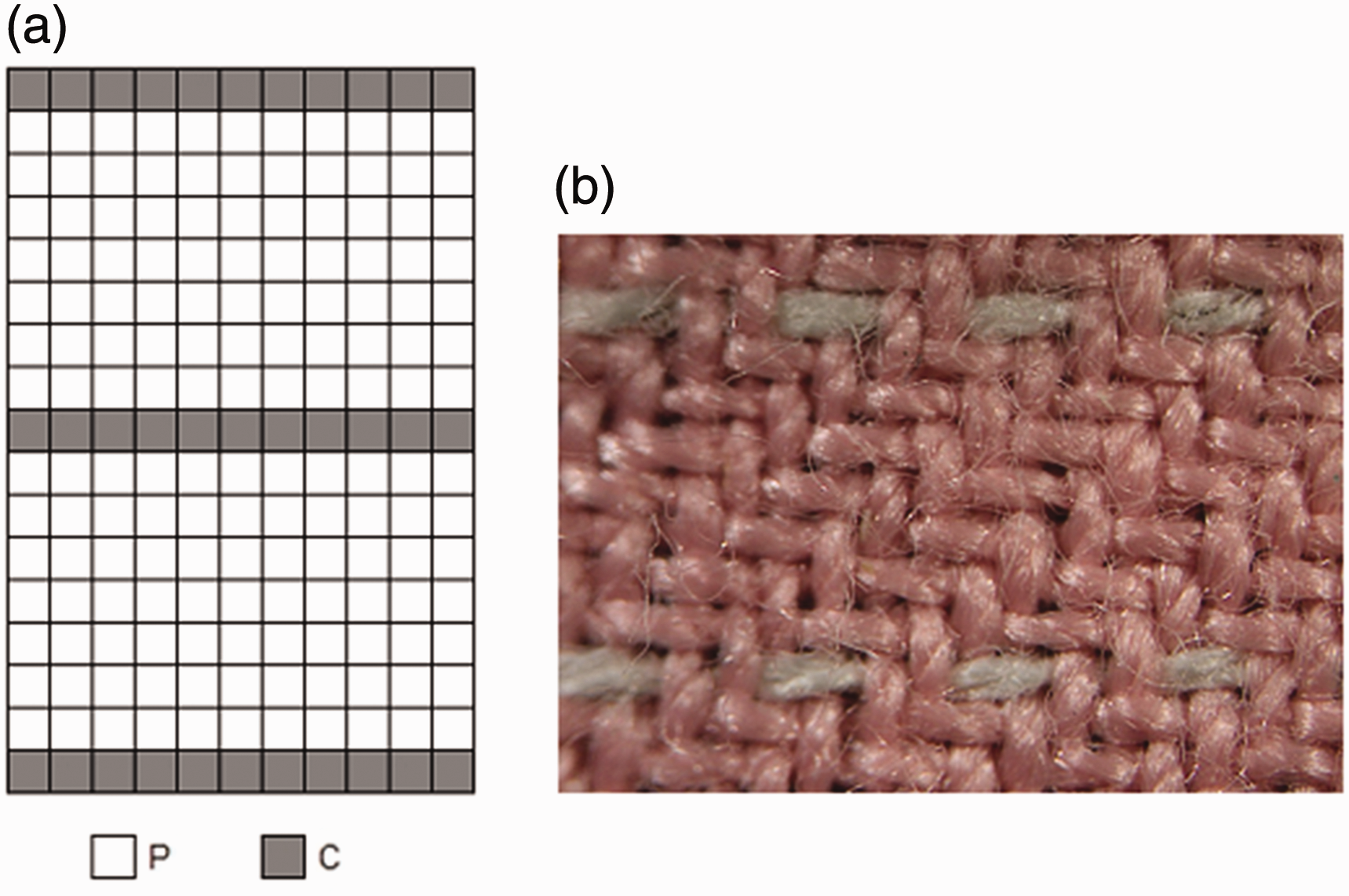
(a) Open parallel structure formed in woven fabrics: gray squares, electroconductive-core yarns; white squares, polyester yarns and (b) Real image of smart woven fabric: pink warp and weft yarns, polyester yarns; cream-colored weft yarns, cotton-covered conductive yarns.
Method
Figure 2 is a photograph of the system realized for this study. The system mainly contains four parts: analog sensors for sensing body temperature and heart rate; a microcontroller for processing the health data and sending this information to the wireless modules; a web server for communication and data transfer over a Wi-Fi module; and a means for SMS notification using a GSM module. The devices shown in Figure 2 are placed on a sample of smart fabric that consists of thin conductors. Data transmission is achieved using these conductors, as reported previously. 5 The sensors are placed on one side of the fabric and their terminals are soldered to the conductors. The microcontroller, which is used to process the data from the sensors, is placed on the other side of the fabric. Finally, the data are transmitted by the web server using the Wi-Fi module and SMS notification is achieved using the GSM module.
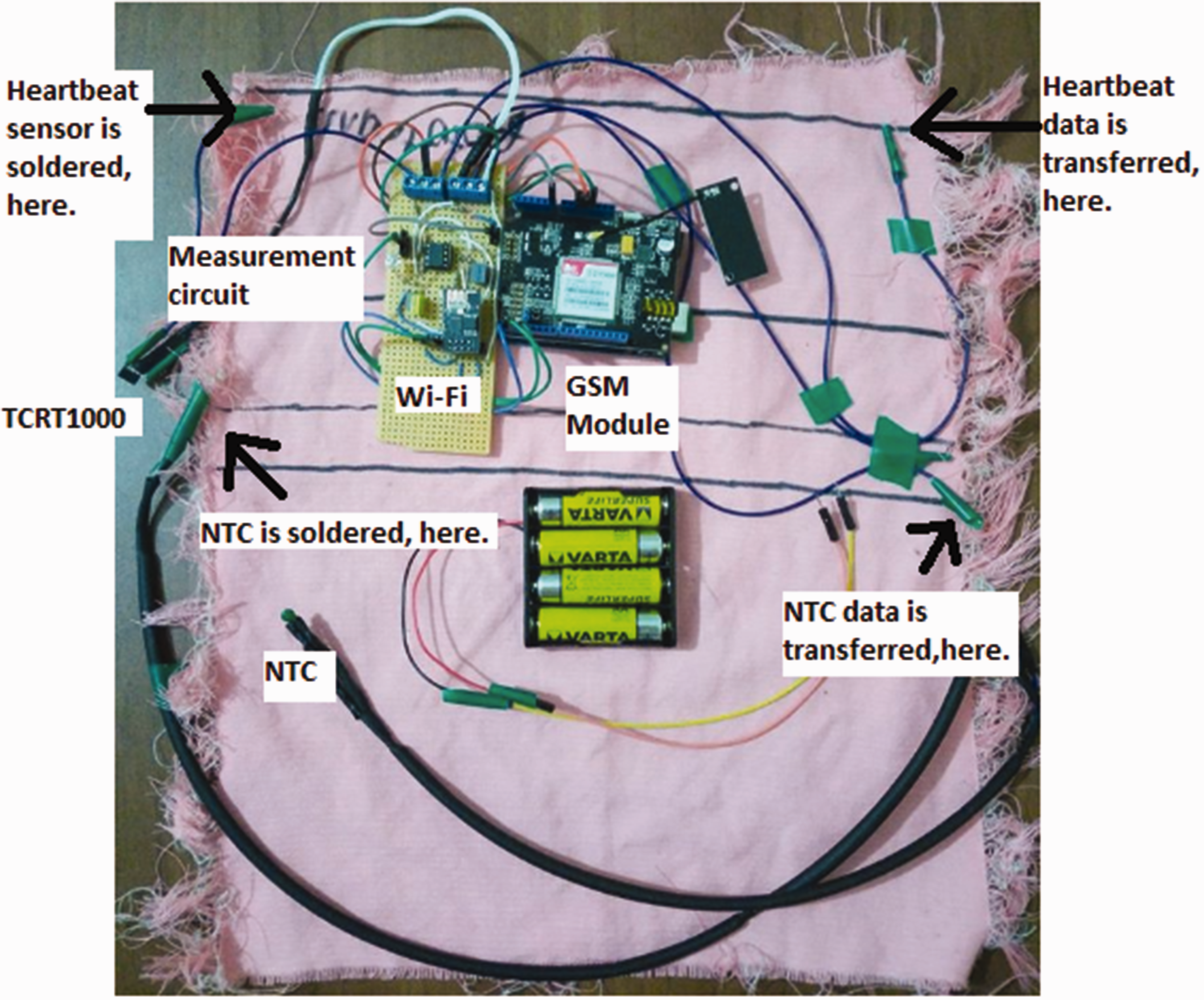
Electronic devices placed on smart fabric sample. NTC: negative temperature coefficient.
The first step in this study is to measure the body temperature and heart rate. A negative temperature coefficient (NTC) thermistor is used as a temperature sensor. As mentioned, the thermistor is placed on one side of the fabric and the microcontroller reads the analog voltage value from the other side of the fabric. The data are converted into a digital signal using the ADC, for processing. Since the NTC thermistor senses the temperature of the region that it contacts, the body temperature can be measured from the head, armpit, or ear.
To measure the heart rate, a TCRT1000 sensor is used. This device is a reflective optical sensor with a transistor output. It consists of an infrared light-emitting diode (LED) and a phototransistor. The light emitted by the LED triggers the phototransistor. This sensor is placed on the skin near to a blood vessel. During the heartbeat, the intensity of the light received by the phototransistor changes according to the amount of the blood in the vessel. Therefore, the phototransistor produces a pulse train in accordance with the heartbeat. The pulses in the pulse train are counted using the microcontroller. The number of pulses in a certain amount of time gives the heart rate. The sensor can be placed over the artery in the wrist or on the tip of the forefinger.
The TCRT1000 sensor was chosen for its reliability and compact design, allowing for seamless integration in fabrics. In our design, the sensor is positioned over an area with optimal blood flow for heart rate detection, such as the chest or wrist. This ensures that the sensor is in continuous contact with the skin, allowing for accurate physiological readings. The attachment method uses conductive threads that connect the sensor to the processing unit, ensuring both flexibility and durability while maintaining signal integrity.
The heartbeats are counted by triggering the detecting sensor for a certain interval of time. The active filter circuit smooths the output voltage of the heartbeat sensor. A comparator circuit block is cascaded to the output of the active filter to obtain the pulse train wave, and pulses are counted for 1 min by the external interrupt port of the microcontroller. The circuit schematics of the filter and the comparator are shown in Figure 3. A second-order active low-pass filter is constructed to obtain a noise-free heartbeat signal. The heartbeat signal is converted into a digital pulse train for the microcontroller using the comparator circuit. The microcontroller counts the heartbeats by utilizing an external interrupt.
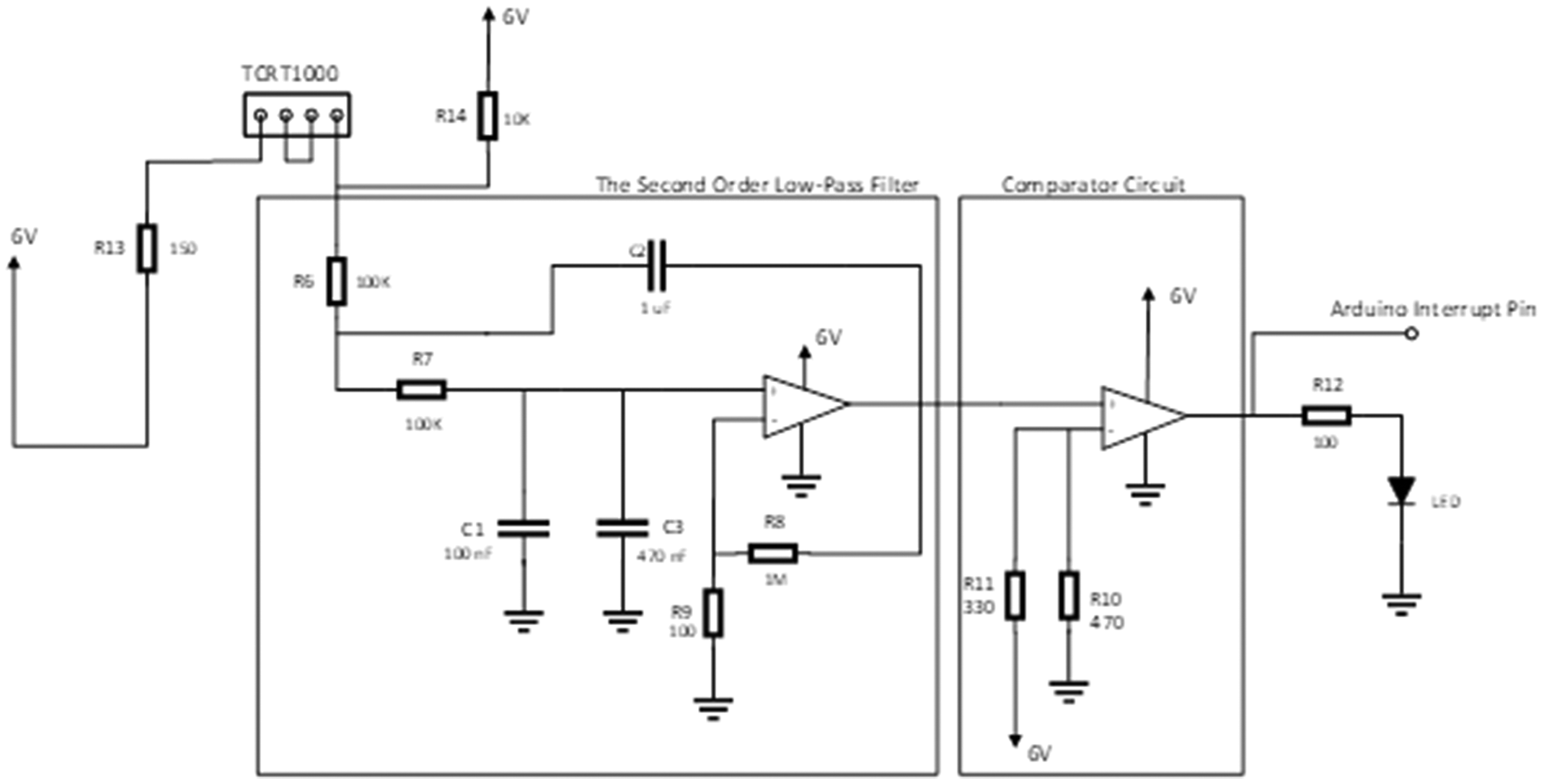
Second-order low-pass filter and comparator circuit for measuring heart rate. LED: light-emitting diode.
In the study, communication with the Wi-Fi module is required. Communication over the internet is provided according to the TCP/IP. A module utilizing the IEEE 802.11 standard should be used to make the connection between the microcontroller and the internet. Figure 4 is a block diagram of the Wi-Fi communication device.
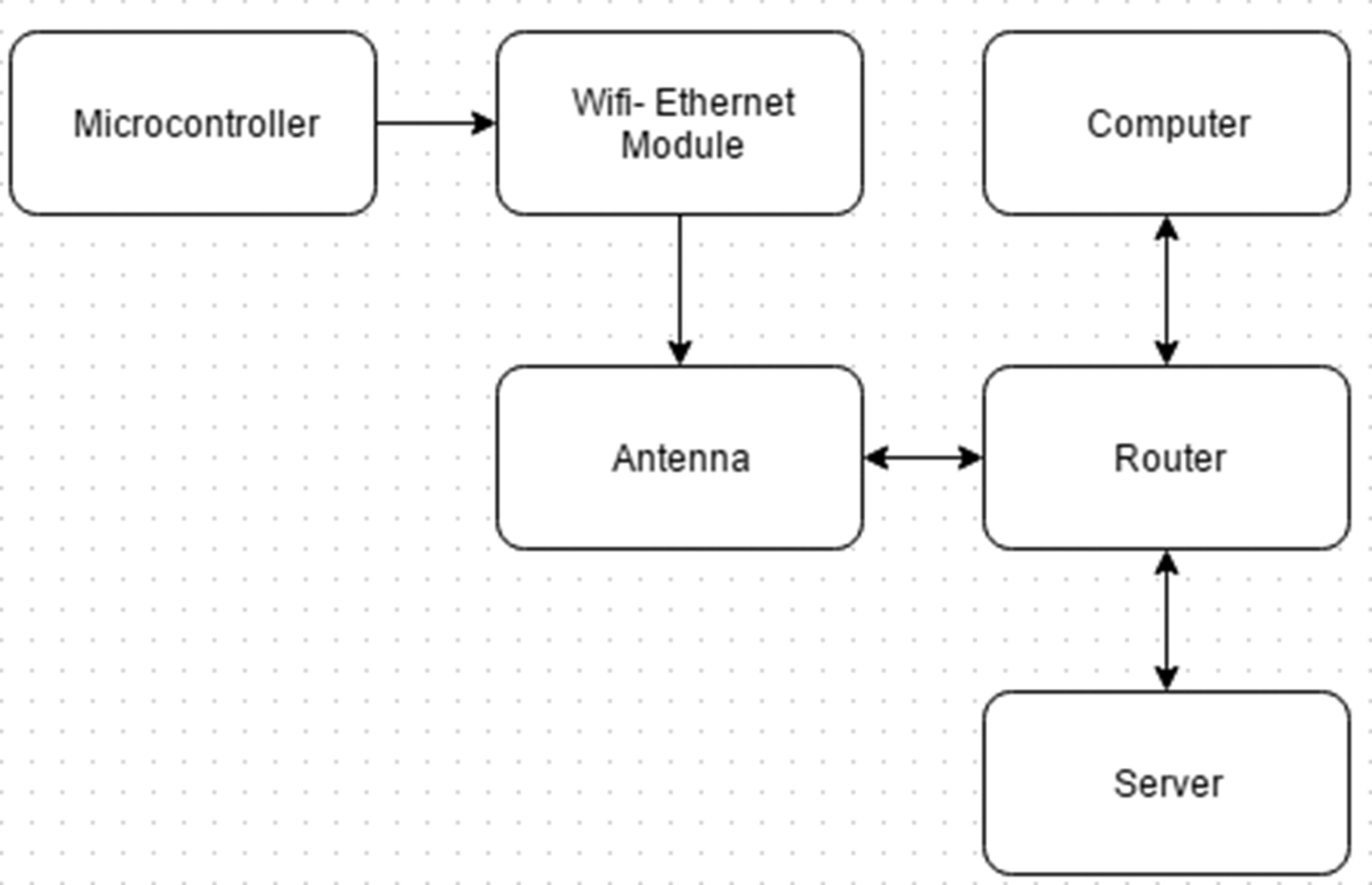
Wi-Fi communication.
In this study, an ESP8266-01 Wi-Fi module is used for web server communication. It is low in cost and small, and it has a simple interface that can be programmed using Hayes AT commands. The voltage levels of the received terminal of the ESP8266-01 module and the transmitter terminal of the Arduino microcontroller are different. Hence, voltage divider circuitry is utilized to facilitate communication between the two units.
The ESP8266-01 Wi-Fi module is programmed for near-field connection to the wireless internet. Then, the web server is detected by utilizing the TCP/IP protocol. The purpose is to send the available health data to the web server. When the Wi-Fi module and the microcontroller are interfaced as required, programming can begin. HTML code must be written for health data transmission to the web server.
SMS messages can be sent using a GSM module. The GSM module is programmed to make a call, send a short message, or giving position information, using Hayes AT commands. For this study, the SIM900 v3.0 is preferred as the GSM module, owing to its suitability for the Arduino Uno microcontroller and its good performance. Sending the SMS text message is very easy with the Hayes AT command set. The SMS notification is sent in text mode; therefore, the GSM module is set in text mode with the command “AT+CMGF=1,” where “1” defines that the GSM module is in text mode, and the module will respond with “OK.” Then, the receiver phone number should be assigned to the GSM module using the command “AT+CMGS=05XXXXXXXXX.” After this, the GSM module responds with “>.” The GSM module waits for the text message to be sent to the receiver phone number. Then, the message should be sent to the GSM module and the module waits for the command “CTRL+Z” to send the message from the GSM module to the receiver number. This command is provided with its ASCII code by the microcontroller as “26,” which is sent in character type to the GSM module.
Several microcontrollers available in the market could be used in this study. The microcontroller needs to have an ADC port to read the output voltage of the temperature sensor because the sensor voltage is read by converting it from an analog to a digital voltage. Hence, the temperature may be measured with an algorithm written and run on the microcontroller. Figure 5 is a flow chart of the temperature measurement.
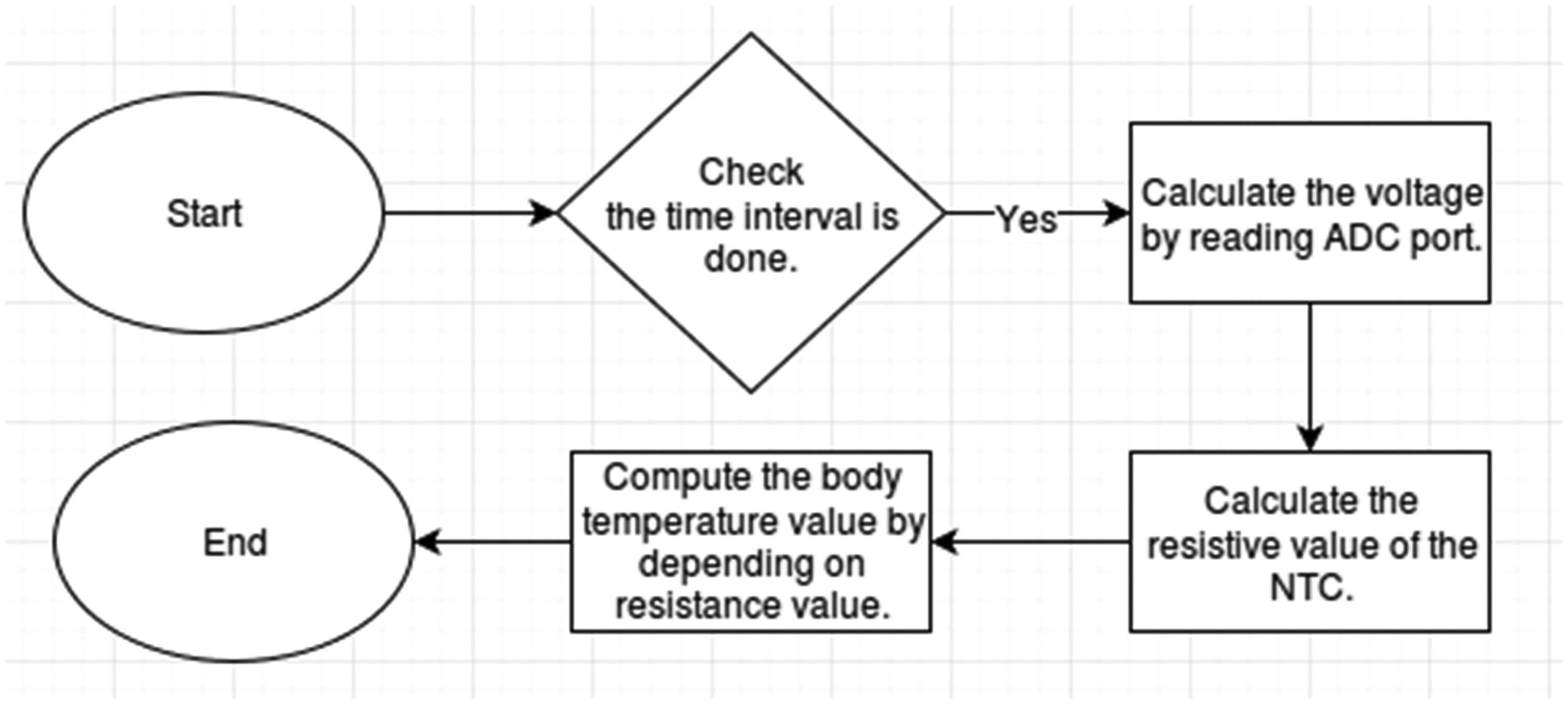
Temperature measurement. ADC: analog-to-digital converter; NTC: negative temperature coefficient.
For temperature measurement, the resistance of the NTC thermistor is used. To this end, the circuit given in Figure 6 was constructed. Since the Arduino microcontroller cannot measure the resistance directly, one needs to employ this kind of circuit. Using the voltage, which is fed to the microcontroller, the resistance is calculated using the formula 10,000 × V/(5 − V) in the program, where V is the voltage applied to the ADC port of the Arduino microcontroller. Therefore, the voltage is converted to resistance: from the voltage, the resistance is determined. Using the datasheet of the NTC thermistor, one can convert the resistance into temperature. A simple Arduino code was written for this conversion, and the values given in Figure 7 were obtained.
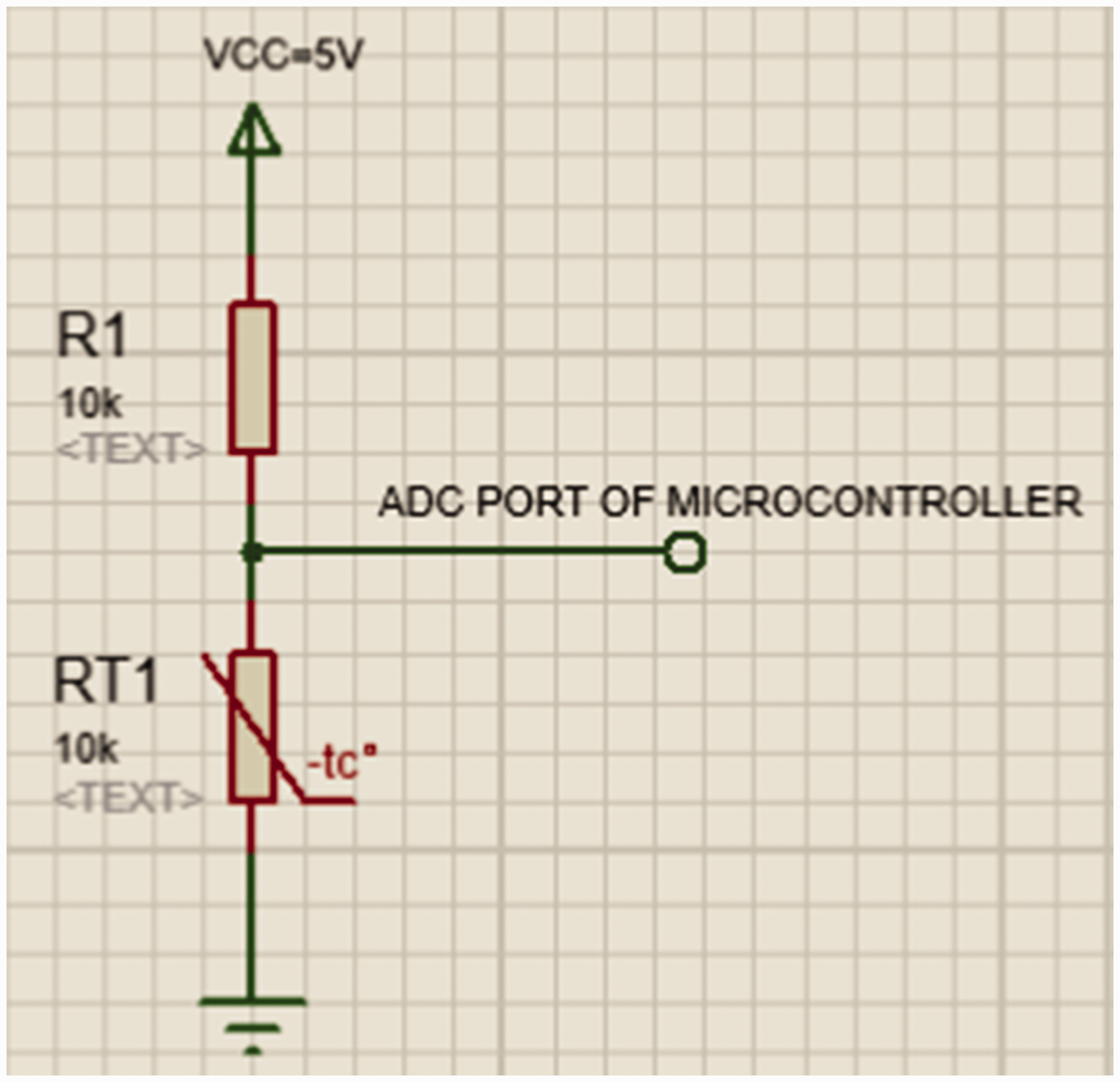
Circuit for determining resistance of negative temperature coefficient thermistor.
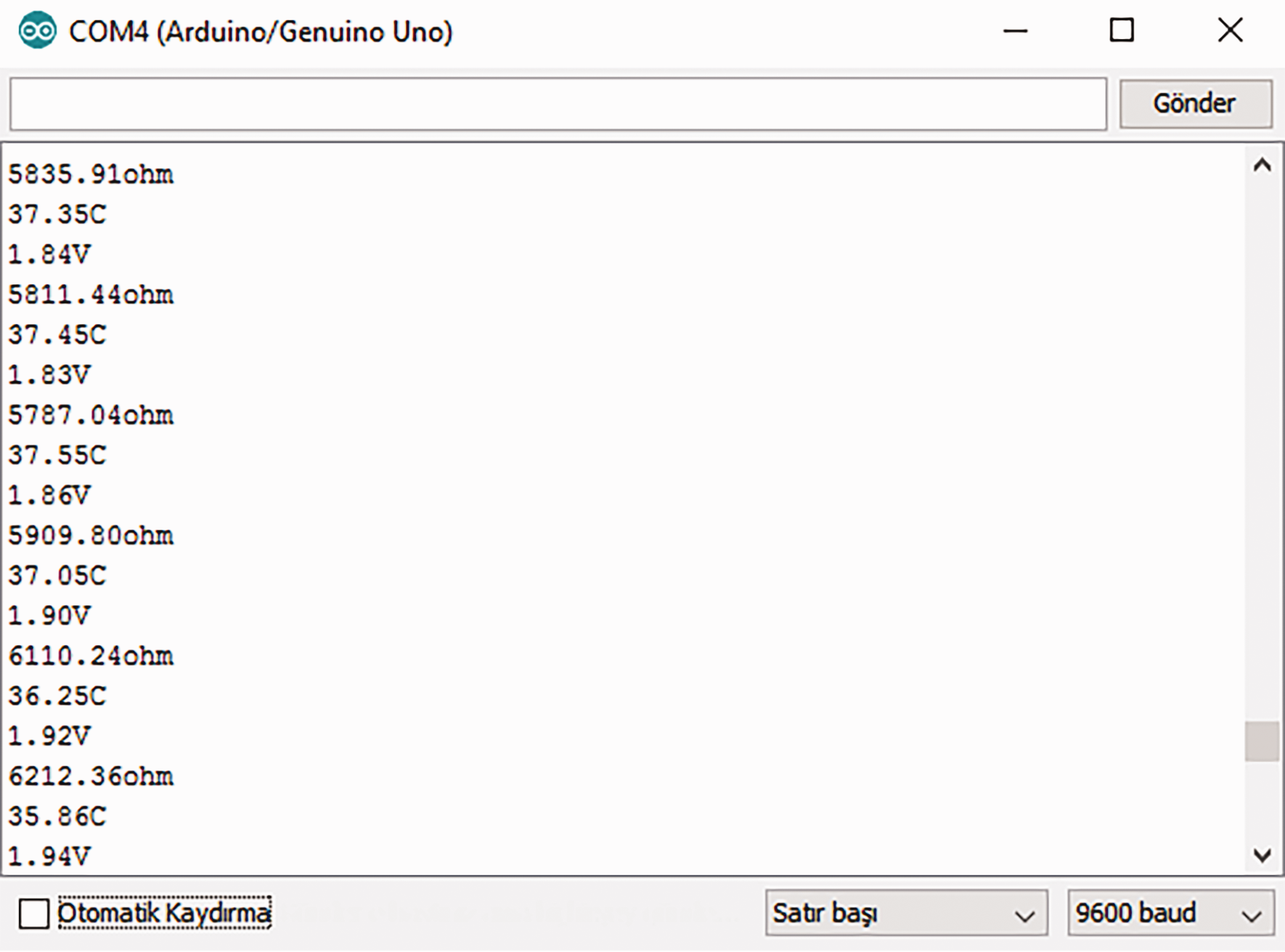
Temperature values corresponding to resistance of NTC, as determined using Arduino code.
The heartbeats are counted using the external interrupt on the change port of the microcontroller. The microcontroller counts the pulses, by sensing the heartbeat for 1 min. The pulse counting process is achieved with an interrupt, using the pulse edge, which is determined by the microcontroller. The pulse counting starts when the external interrupt is enabled and stops 1 min later; this is achieved by setting the time interval to 1 min. Figure 8 is a flow chart of the heartbeat-counting algorithm.
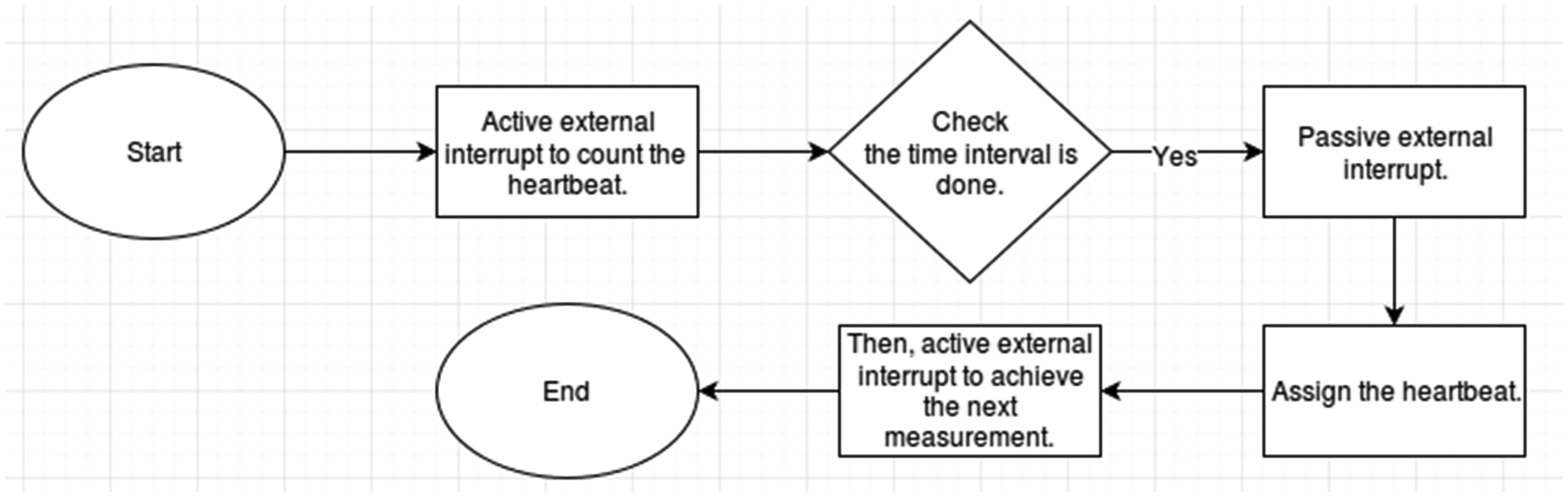
Heartbeat-counting algorithm.
Finally, the text message including the health data is obtained and is sent to the receiver phone number by the GSM module, being commanded using the serial communication. This text message should also be made available to the web server. Hence, the Wi-Fi module should be commanded, using another serial communication port.
Results and discussion
In this study, the health data are transmitted to the web server and are also sent as an SMS notification, as mentioned before. For the web server, communication with the Wi-Fi module is realized using the default serial communication port of the Arduino Uno microcontroller. The baud rate is set as 115,200 for accurate communication between the microcontroller and the Wi-Fi module. The health data can be sent to the web server and can be displayed by using the dynamic IP in the hypertext transfer protocol (HTTP) port. In one of our measurements, the heart rate was measured as 84 beats/min and the body temperature was measured as 37.84°C. Hence, the HTML code, which has 81 characters, would be “1st MeasurementHeartrate:84 bpm Temperature:37.84 C”. The “AT + CIPSEND = 0.81” command must be sent before the HTML code and then the HTML code is be sent to the web server. Figure 9 shows the display of the health data on the web page.
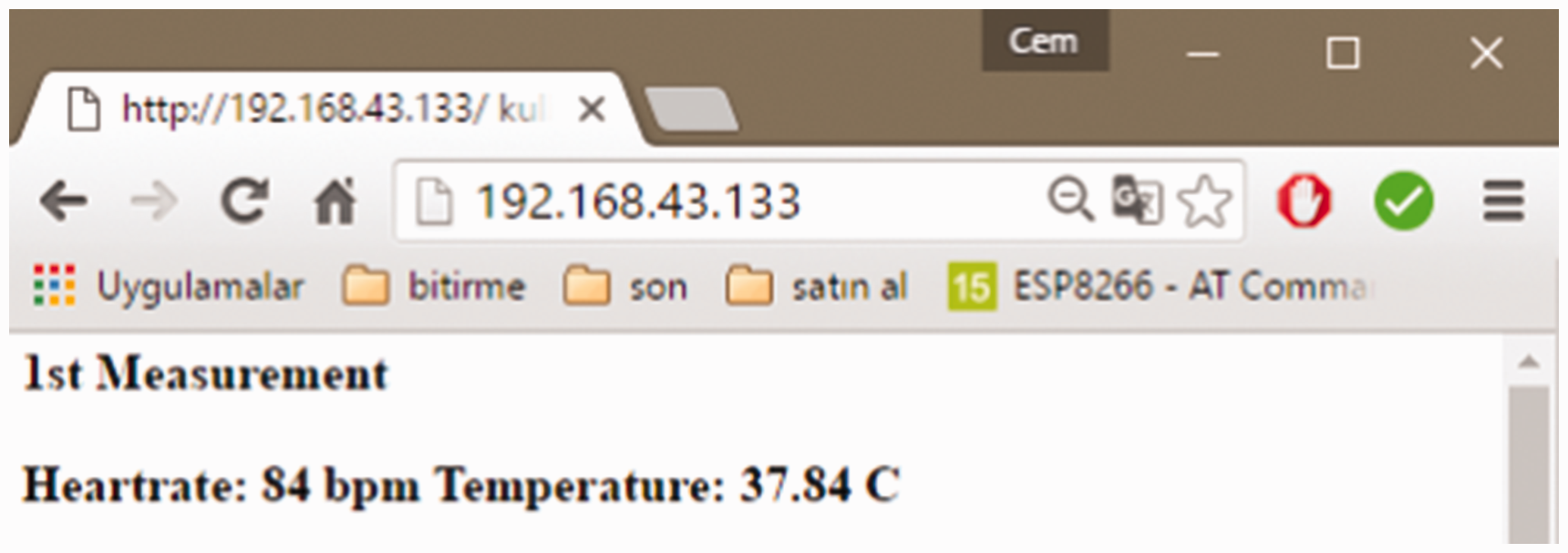
View of health data on web server after transmission of hypertext markup language code. bpm: beats per minute.
The SMS message is sent by programming the serial communication with a 19,200 baud rate. The name of the software serial communication is defined as “gprs.Serial” by the software program, the receiver (RX) terminal is set as 7, and the transmitter (TX) terminal is set as 8. The GSM module is set as text to send the SMS message to the phone number of the receiver mobile. The sent SMS message at the receiver mobile phone is shown in Figure 10.
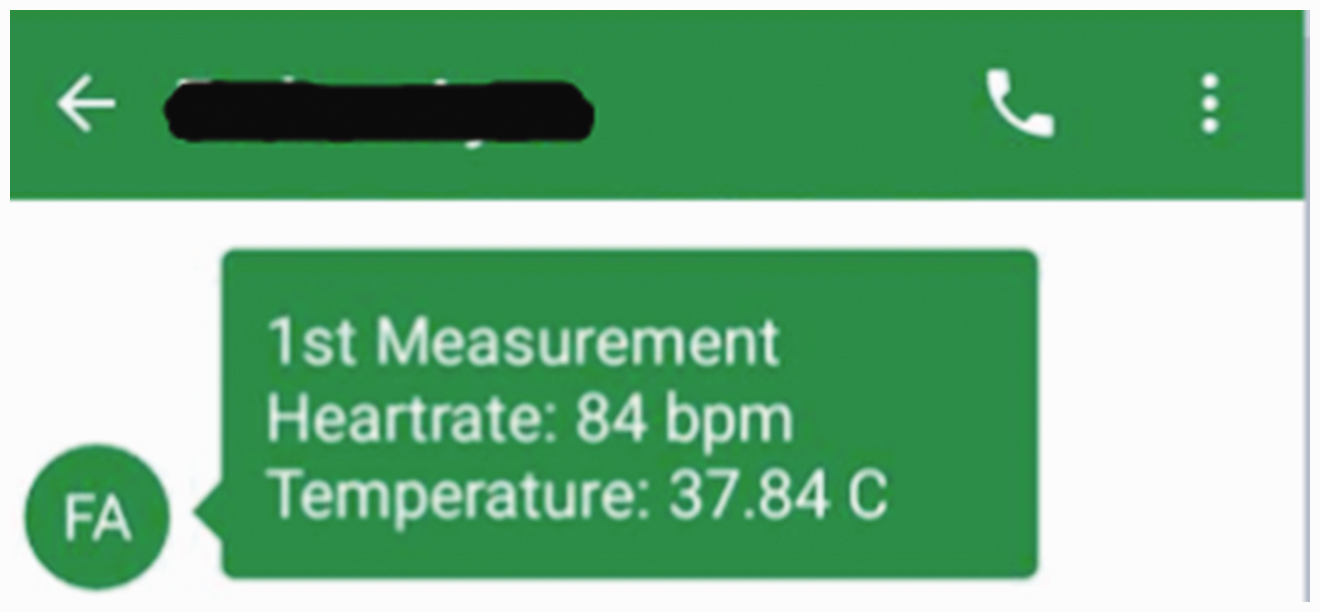
Sent text message displayed by receiver mobile phone. bpm: beats per minute.
Given the prevalence of wearable wristbands capable of monitoring physiological metrics and the necessity for smart garments with similar functionalities—specifically, measuring body temperature and heart rate—the contributions of this research, its distinction from existing technologies, and its innovative outcomes can be expressed as follows.
Firstly, our smart fabric integrates sensors directly into the fabric itself, offering continuous and seamless monitoring of such physiological parameters as body temperature and heart rate. Unlike wristbands, which are often limited to localized monitoring (e.g., wrist pulse), our fabric provides a more holistic approach, covering a broader area of the body. This offers more accurate and stable measurements, especially in scenarios where wristbands might be prone to movement artifacts or discomfort over extended periods of wear.
Secondly, the fabric-based approach introduces advantages in terms of comfort and wearability. Our smart fabrics are designed for long-term use without compromising on comfort or aesthetics, which is a limitation for many existing wristbands. The flexible and breathable nature of the materials used enhances user experience, particularly for applications in sports, healthcare, or everyday wear, where unobtrusive monitoring is essential.
Lastly, our research contributes to the advance of textile-based electronics, showcasing innovations in material integration, durability, and data transmission. We believe that this approach opens up new opportunities for integrating smart functionality in everyday clothing, representing a step beyond wrist-worn wearables.
Innovative aspects of the hardware can be described as follows. The use of an NTC thermistor to measure body temperature offers several innovative advantages. NTC thermistors provide high sensitivity and accuracy because their resistance decreases exponentially with increasing temperature, allowing for precise temperature readings in real time. Their compact size and flexibility make them ideal for integration in wearable devices and smart textiles, ensuring user comfort and seamless monitoring. Furthermore, NTC thermistors are known for their low power consumption, which is crucial in battery-powered devices, allowing for prolonged use without frequent charging. These features, along with their cost-effectiveness and durability, make NTC thermistors a preferred choice for continuous, non-invasive body temperature monitoring, particularly in healthcare applications.
The TCRT1000 sensor offers innovative advantages in measuring heart rate through its reflective optical sensor design. This sensor utilizes an infrared LED and a phototransistor to detect changes in blood volume by measuring the reflected light from blood vessels, which varies with each pulse. One of its key innovations is its non-invasive and compact nature, making it suitable for integration in wearable devices and smart textiles. Its real-time measurement capability allows for continuous heart rate monitoring without discomfort, making it ideal for both clinical and personal health applications. Additionally, the TCRT1000 sensor is cost-effective and energy-efficient, making it highly practical for long-term use in portable health monitoring systems. Its sensitivity to minute changes in blood flow ensures accurate pulse detection, even in low light or varied environmental conditions, enhancing the versatility and reliability of the technology.
The use of the ESP8266-01 Wi-Fi module for body temperature and heartbeat measurements in web server communication offers several innovative advantages. First, the ESP8266-01 module enables real-time, wireless data transmission from wearable devices to a web server, allowing for continuous remote monitoring of a patient’s health metrics. This capability is especially useful in healthcare settings, where timely interventions are critical. The module is compact, energy-efficient, and cost-effective, making it ideal for integration in small wearable systems, such as smart textiles or portable health monitoring devices. By utilizing standard Wi-Fi networks, this eliminates the need for additional infrastructure, providing seamless connectivity with existing systems. Furthermore, the ESP8266-01 supports several communication protocols and can be programmed to send alerts or trigger specific actions based on sensor data, enhancing the functionality of health monitoring systems. This combination of real-time data transmission, cost-effectiveness, and ease of integration significantly elevates the potential for remote health applications and telemedicine.
Transmitting body temperature and heartbeat measurements via the SMS using a GSM module offers several innovative advantages. The use of a GSM module enables reliable communication in remote or low-connectivity areas where internet access may be limited, ensuring that health data can be sent to healthcare providers or caregivers, regardless of location. This approach allows real-time, on-the-go monitoring without the need for a complex network setup, making it ideal for emergency situations or in rural healthcare applications. The GSM module’s ability to use the global cellular network for communication enhances its reach and usability. Additionally, sending health data via the SMS is a straightforward, user-friendly solution that does not require patients or healthcare providers to interact with complex systems or applications. The ease of integration of the GSM module in wearable devices or portable health monitoring systems also ensures cost-effective and scalable remote healthcare solutions.
Conclusion
In this study, patient body temperature and heart rate are measured using an NTC thermistor and a TCRT1000 reflective optical sensor, respectively. The NTC thermistor is utilized for its precise temperature sensitivity, while the TCRT1000 sensor detects heart rate by measuring the variation in reflected infrared light from blood vessels, which changes with each pulse. These sensors are integrated in a fabric embedded with conductive threads that form a connection between the sensors and a microcontroller, which is responsible for data acquisition and processing.
The wearable system is equipped with a Wi-Fi module, enabling the wireless transmission of physiological data, such as body temperature or heart rate, to a remote server. This allows real-time monitoring of the patient’s health status through a web interface, providing healthcare professionals with immediate access to critical health information. Additionally, a GSM module is incorporated in the system, allowing the data to be sent directly to healthcare personnel via the SMS. This dual communication capability ensures that patient health data can be transmitted through both the internet and cellular networks, increasing the reliability and accessibility of the system.
The microcontroller is programmed to manage sensor data collection, transmission protocols, and wireless communication tasks. It processes the sensor inputs, converts them to readable formats, and then transmits the data via Wi-Fi and GSM modules. The integration of custom software and hardware in this wearable system enhances its functionality, making it suitable for continuous, non-invasive monitoring in both clinical and home care settings.
As a result, this smart fabric-based wearable system, combined with the electronic components developed in this study, offers a comprehensive solution for remote health monitoring. The system enables the seamless transmission of patient-generated data to healthcare providers, facilitating timely interventions and improved patient care outcomes.
Footnotes
Declaration of conflicting interests
The author(s) declared no potential conflicts of interest with respect to the research, authorship, and/or publication of this article.
Funding
The author(s) received no financial support for the research, authorship, and/or publication of this article.
