







Abstract
Low-rank coal pyrolysis catalysis is being developed more quickly than ever, and occupies an increasing share in the coal chemical industry field over the past 10 years. The activity and recyclability of catalysts has become one of the main factors limiting low-rank coal pyrolysis development. In this work, nano carbon fiber multilevel nonwovens with a three-dimensional (3D) cavity structure were successfully prepared as a catalyst support to increase the specific surface area and reduce air flow resistance. Manganese oxalate (MnC2O4) was used as a catalyst precursor. The pyrolysis products and their relative contents of coal were tested by pyrolysis–gas chromatography/mass spectrometry (Py-GC/MS). The results indicated that the content of fatty hydrocarbons and derivatives was significantly reduced, and the relative content of compounds containing -N, S was also decreased after adding the catalyst. The content of benzene increased from 2.04% to 4.63%. The relative content of polycyclic aromatic hydrocarbons with 4–6 rings was significantly reduced from 0.55% to 0.17%. Due to their 3D cavity structure, nano carbon fiber multilevel nonwovens contribute to the improvement of tar quality and play an important role in catalytic upgrading of coal pyrolysis tar. The catalyst supported by carbon nanofiber carrier also has good recyclability by burning of the carbon nanofiber.
With the development of human society, global energy consumption is constantly increasing, while traditional resources (primarily coal, oil, and methane) are dwindling at an alarming rate. 1 The resource utilization rate of low-rank coal is very low, with large reserves. Low-rank coal pyrolysis is considered as a clean and effective conversion process for producing gaseous, liquid, and solid fuels, and high-value chemical products. 2 Low-rank coal pyrolysis provides mild conversion of coal volatiles into low-carbon fuels and chemicals to allow cascade utilization of coal resource. Tar is a complex mixture, consisting of more than hundreds of components. Coking is a kind of commercialized coal pyrolysis technology which produces tar. 3 The main source of soil contamination, such as catalyst waste, generated in the coking process is difficult to degrade, 4 and causes a lot of waste. Coal tar from the low-rank coal coking process usually contains a relatively high content of heavy components with boiling points above 360°C (up to 50–70 wt.% of the total tar mass). These heavy products may deposit on pipelines and block downstream equipment, leading to operational problems.5,6 Due to the rich aromatic ring structure of heavy products, the heavy components can be cracked into high-value light aromatic hydrocarbons by adopting catalysts, such as benzene, toluene, ethylbenzene, xylene (p-xylene and o-xylene), and naphthalene (BTEXN). 7 The addition of catalysts during coal pyrolysis can obviously enhance the content of light aromatic hydrocarbons in the tar and improve tar quality, and is one of the promising techniques for upgrading tar. 8 For many years, various types of catalysts—including alkaline, metal-based, zeolite-based, and carbon-based catalysts—have been employed in coal pyrolysis to produce high-quality tar. On account of its security and economic factors, such as activity, cost, sustainability and environmental friendliness, the use of catalysts in coal pyrolysis reactions has gained significant attention. 9 Hierarchical porous carbon materials synthesized by Wang et al. 10 were able to significantly enhance tar quality. The volatile products of pyrolysis passed through char layer, and the heavy components in the tar could be cracked into light components, 4 and the distinctive pore structures of hierarchical porous carbon materials help to partially inhibit coke formation by facilitating the mass transfer of heavy tar. Because of their tunable porosity and surface properties, high specific surface area, variable structural and morphological combinations, easy handling and low production cost, 11 when carbon-based materials are used as catalyst supports, once the catalysts lose their activity, the active phase can be easily recycled.12–14 To further reduce costs, affordable and effective metals, such as iron (Fe), cobalt (Co), nickel (Ni), manganese (Mn), and their compounds, are embedded into carbon-based materials, becoming the focus of wide interest in supported catalysis.
Nanostructured materials (including nanoparticles, nanotubes, and nanofibers) are attractive for catalytic support, due to their high specific surface area, and are greatly promising in these supports.15,16 Electrospinning technology is the simplest method to build a multilevel structure using carbon nanofibers. 17 Nanofibers are formed by jetting and stretching of polymer solutions under the action of a high-voltage electrostatic field, accompanied by the evaporation of the solvent, then a continuous fiber membrane with either an irregular or regular structure is formed on the receiving device.19,20 Subsequently, calcination is employed to convert the catalyst precursor in electrospinning nanofibers into the required active catalyst. 18 The carbon nanofiber nonwovens produced by electrospinning have an extremely high specific surface area and a complex porous structure, 21 which can provide specific adsorption sites for stabilizing catalytic active phases, thus have obvious potential for catalysis in tar upgrading.22,23
In this study, to prepare carbon fiber nonwovens with a complete carbon multistage structure, polyacrylonitrile (PAN) nonwovens were first prepared by wet-laid web, then multilevel nonwoven fabrics were obtained by electrospinning on both sides of PAN wet-laid nonwovens. N, N-dimethylformamide (DMF, solvent), manganese oxalate (MnC2O4, catalyst), and polyacrylonitrile (PAN, carbon fiber precursors) were used as raw materials to prepare electrospinning solutions with different concentrations. Because of the 3D cavity structure and air slip effect, multilevel nonwoven fabrics have a high specific surface area and low resistance pressure drop. After preoxidation and carbonization, carbon nanofiber multilevel nonwoven fabric was successfully prepared, and used to improve the content of light aromatic hydrocarbons in coal pyrolysis volatiles, and improved the tar quality. The pyrolysis products and their relative contents of coal were tested by pyrolysis–gas chromatography/mass spectrometry (Py-GC/MS).
Experimental details
Materials
Pingshuo Coal (PSC) (Mad = 4.1, Ad = 14.11, Vdaf =37.35, Particle Size = 0.15–0.25 mm), PAN (powder, Mw = 150,000) and MnC2O4 (powder, 99%) were purchased from Shanghai McLean Biochemical Technology Co., Ltd; DMF (analytical reagents) were received from Jinbei Fine Chemical Co., Ltd (Tianjin, China). Sulfuric acid (95–98%) and hydrochloric acid (36–38%) were purchased from Laiyang Shuangshuang Chemical Co., Ltd. PAN fiber (6 mm) was purchased from Shandong Jindong Engineering Materials Co., LTD, China. All chemical reagents were analytical grade and used without further purification.
Preparation of nano carbon fiber multilevel nonwovens
PAN wet-laid web nonwoven fabric
The preparation process flow chart of PAN wet-laid web nonwoven fabric is shown in Figure 1. Cation polyacrylamide and polyoxyethylene were used as dispersant to disperse PAN fibers into a fiber suspension. The suspension was formed into a preliminary layer of fabric on the sieve by using wet-laid web technology. After drying, PAN wet-laid web nonwovens were prepared successfully.
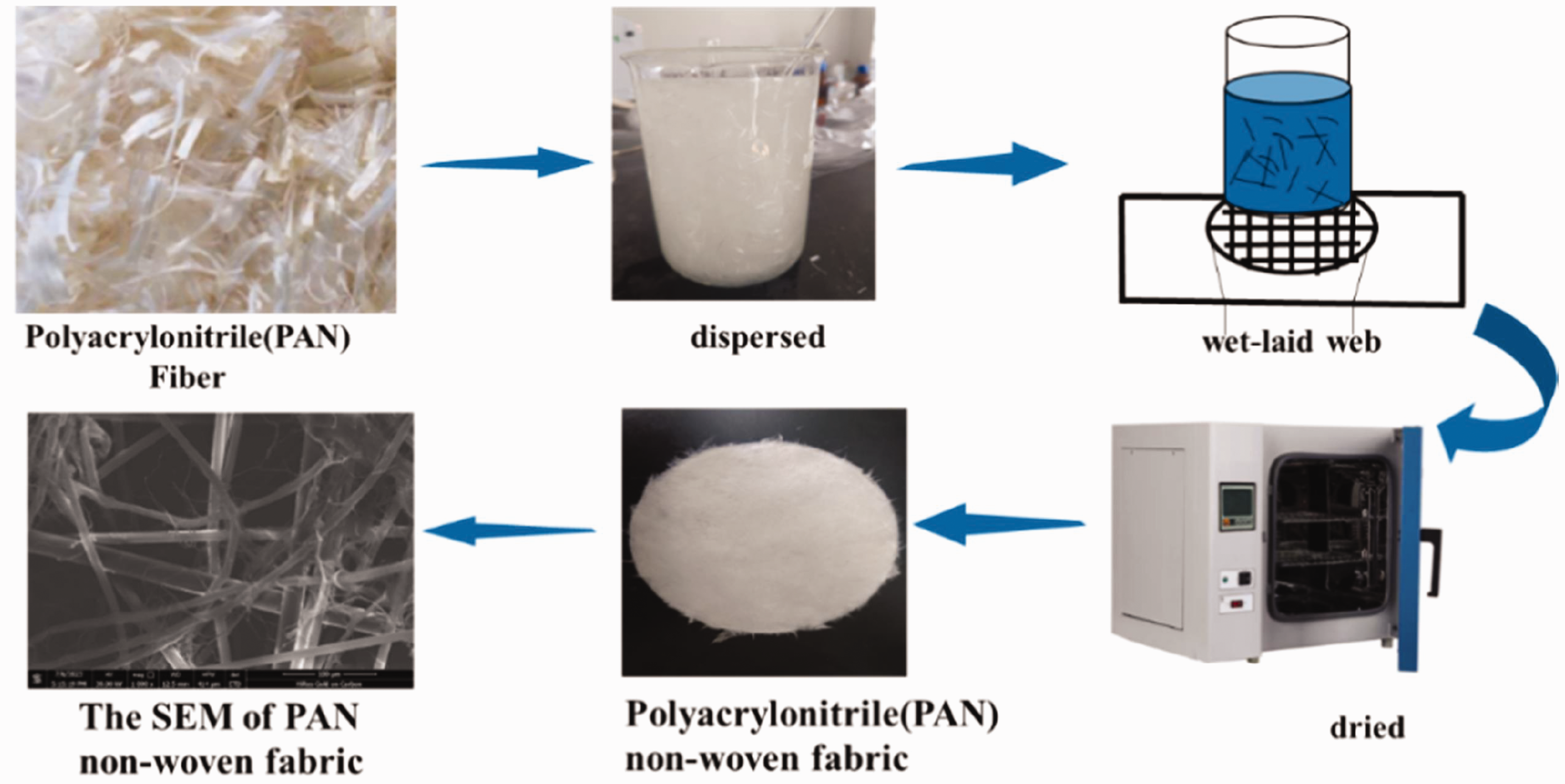
Preparation process flow chart of PAN wet-laid web nonwoven fabric.
Preparation of PAN/MnC2O4 multilevel nonwoven fabric
The preparation process flow chart of multilevel nonwoven fabric is shown in Figure 2. DMF was used as a solvent to dissolve PAN (powder, mass ratio 20%).
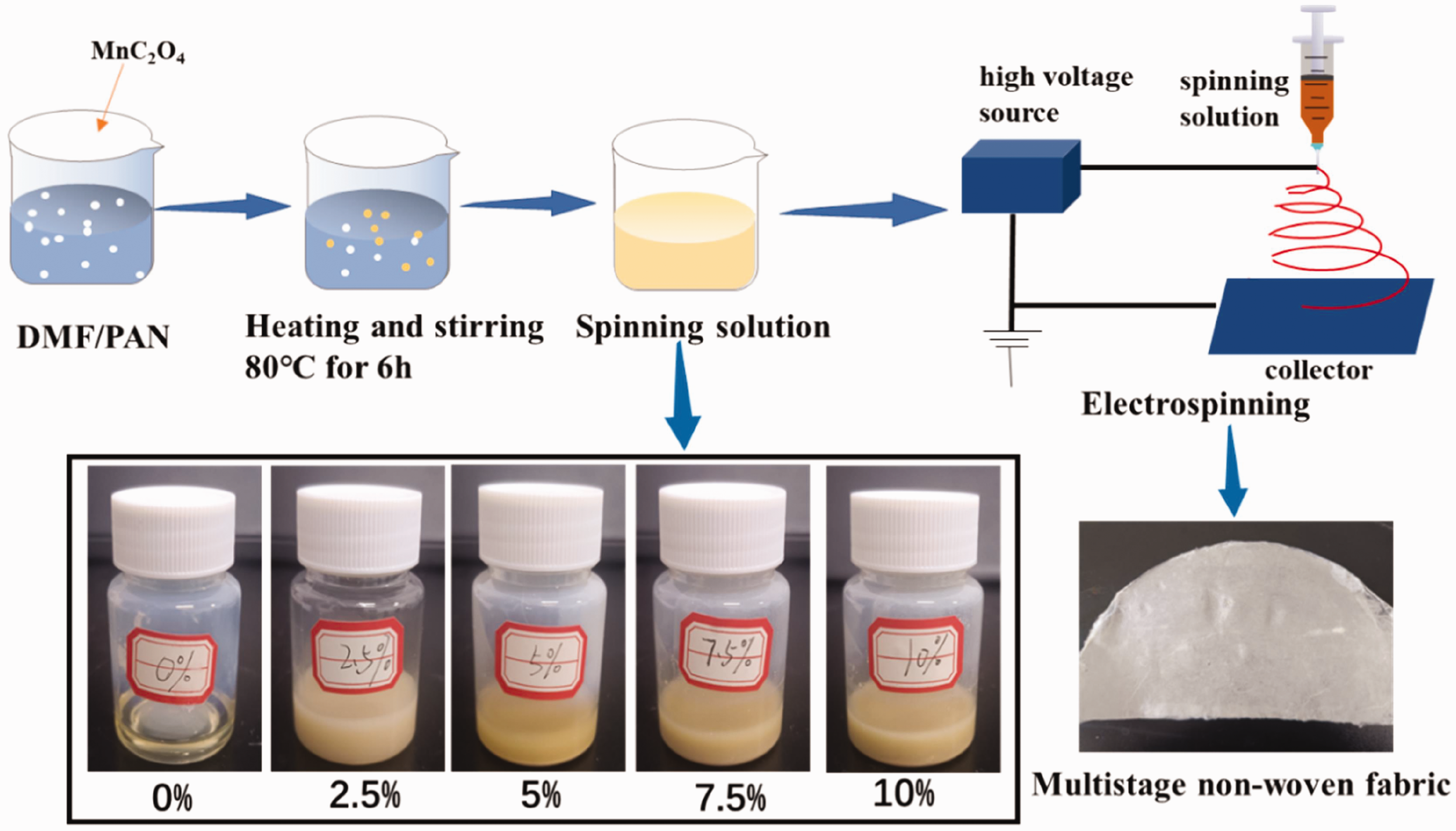
Preparation process flow chart of multilevel nonwoven fabric.
MnC2O4 (powder) was added to the PAN liquor to prepare the electrospinning solutions of different concentrations (0%, 2.5%, 5%, 7.5%, and 10%, relative to the weight of PAN solution). To prepare multilevel nonwoven fabric with a 3D cavity structure, both sides of PAN wet-laid web nonwoven fabric were spun by electrospinning, and the weight of the nonwovens before and after electrospinning was recorded. Electrospinning parameters were: flow rate: 0.3 ml/h, voltage: 10 kV.
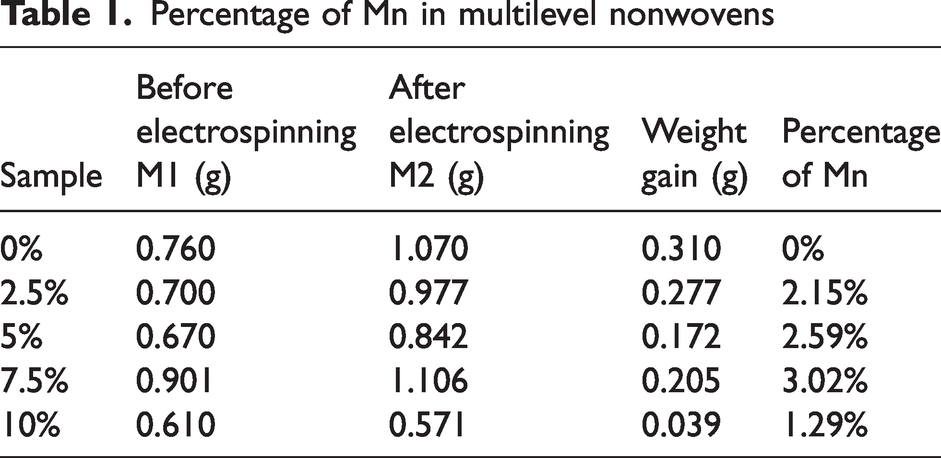
The percentages of Mn element in multilevel nonwoven fabrics (P) were measured using


The percentages of Mn in multilevel nonwovens are listed in Table 1. The percentages of Mn in multilevel nonwovens continued improved as the MnC2O4 concentration increased until 3.02%. Because of the poor solubility of MnC2O4 in DMF, the 10% sample caused the needle to easily clog during electrospinning and had a poor fiber-forming effect, which caused the percentage of Mn reduce to 1.29%.
Percentage of Mn in multilevel nonwovens
Preoxidation and carbonization
To eliminate the effect of PAN-carbonized tar on carbon nanofibers, PAN/MnC2O4 multilevel nonwoven fabric was treated with mixed acid (solution concentration of 8.25 mol/L sulfuric acid, hydrochloric acid mixture). The mixed acid was used to pretreat the nonwoven fabrics in the dosage range of 0.20–0.40 ml/min at room temperature. After treatment, the nonwoven fabrics were heated from 30°C to 260°C with a heating rate of 5°C/min and then kept at 260°C for 120 min. The samples turned brown from white at the end of the preoxidation process. The post-preoxidation samples were carbonized at 800°C under a nitrogen atmosphere for 2 h to prepare the nano carbon fiber multilevel nonwoven fabric.
Characterization techniques
Both Super-Depth-of-Field Microscope (SDM, VHX-5000, China) and Scanning Electron Microscope (SEM, QUANTA-450-FEG, Switzerland, acceleration voltage of 30 kV, all samples gold coated under vacuum conditions before observation) were used to observe the surface morphologies of the samples. Fourier transform infrared (FTIR) spectra were obtained using an FTIR spectrometer (FT-IR, Perkin Elmer, USA) with a scanning range from 4000 to 400 cm−1.
The catalytic performance of nano carbon fiber multilevel nonwoven fabric was tested by using PSC as sample of coal being catalyzed in coal pyrolysis analysis. To analyze the pyrolysis products, the coal pyrolysis catalytic experiment was carried out using a CDS Analytical Pyroprobe 5250. Coal sample and catalyst were loaded into the cracking tube and separated by quartz wool. Helium (99.999%) was used as the carrier gas to purge the pyrolysis vapor into GC/MS (Thermo Fisher Focus gas chromatograph & DSQ II mass spectrometer from the United States). Chromatographic separation was performed using a DB-5MS capillary column at 1:50 split ratio to more easily observe the separation effect. The mass spectrometer was used in an electron impact full-scan mode. The types of compounds were identified through the NIST library data. To simplify the analysis, more than 300 peaks were divided into several groups (mono-aromatics, naphthalenes, polycyclic aromatics (polycyclic aromatic hydrocarbons (PAHs), rings > 2), aliphatic hydrocarbon, phenols, other containing -N, O, S compounds), which were analyzed by relative content analysis based on the area normalization method.
Results and discussion
Surface morphology analysis
The SDM and SEM images of PAN nonwovens and PAN/MnC2O4 multilevel nonwovens with different contents are shown in Figures 3 and 4. As shown in Figure 3, the PAN/MnC2O4 nonwovens were successfully prepared with a clear multilevel structure (Figure 3(a)–(c)) except 10% PAN/MnC2O4 nonwovens (Figure 3(d)). The surface layer of PAN wet nonwovens covered with a layer of nanofiber film prepared by electrospinning is shown in Figure 3(b) and (c).
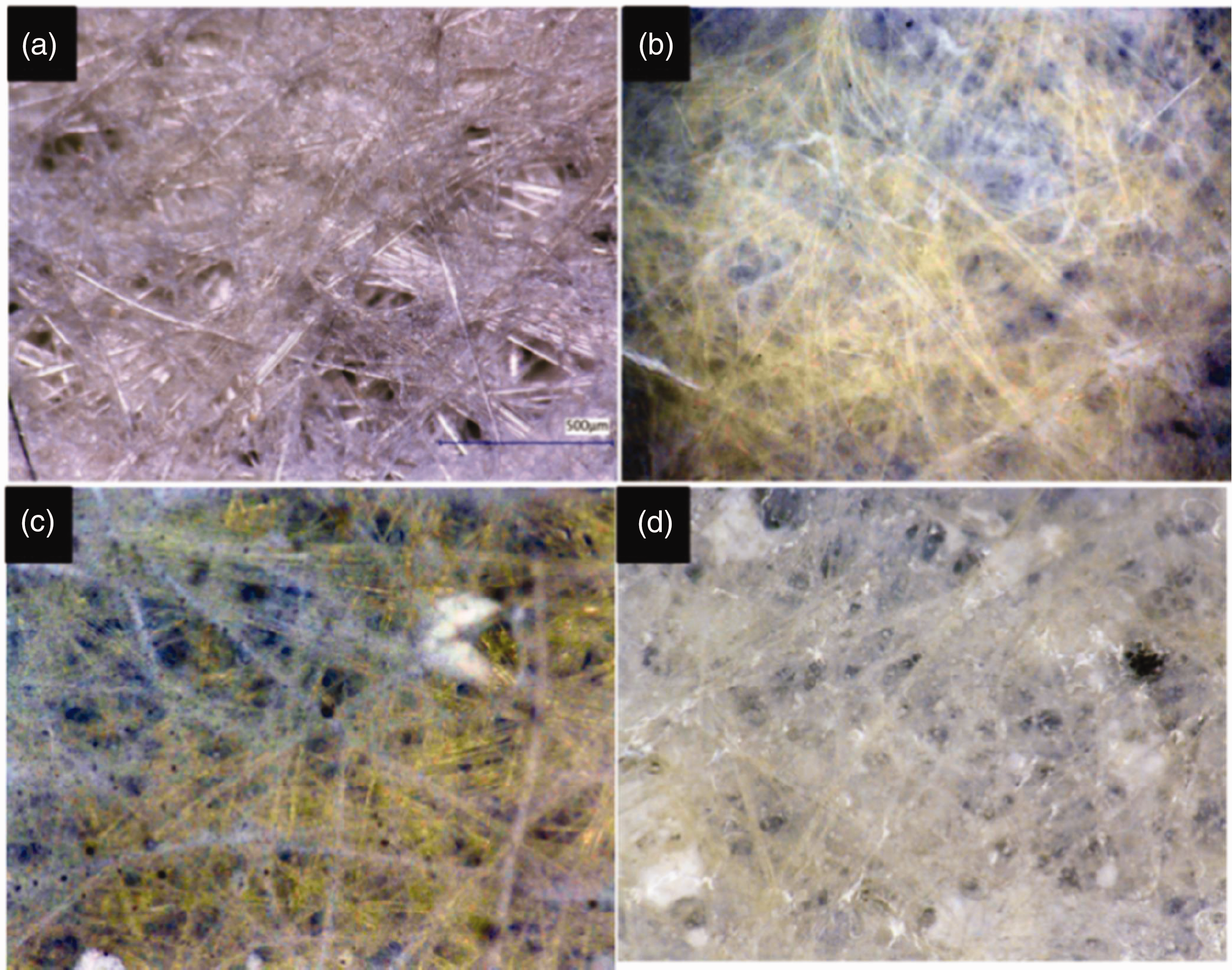
SDM of (a) PAN nonwovens; the multilevel nonwovens of (b) 0%; (c) 5%; (d) 10%.
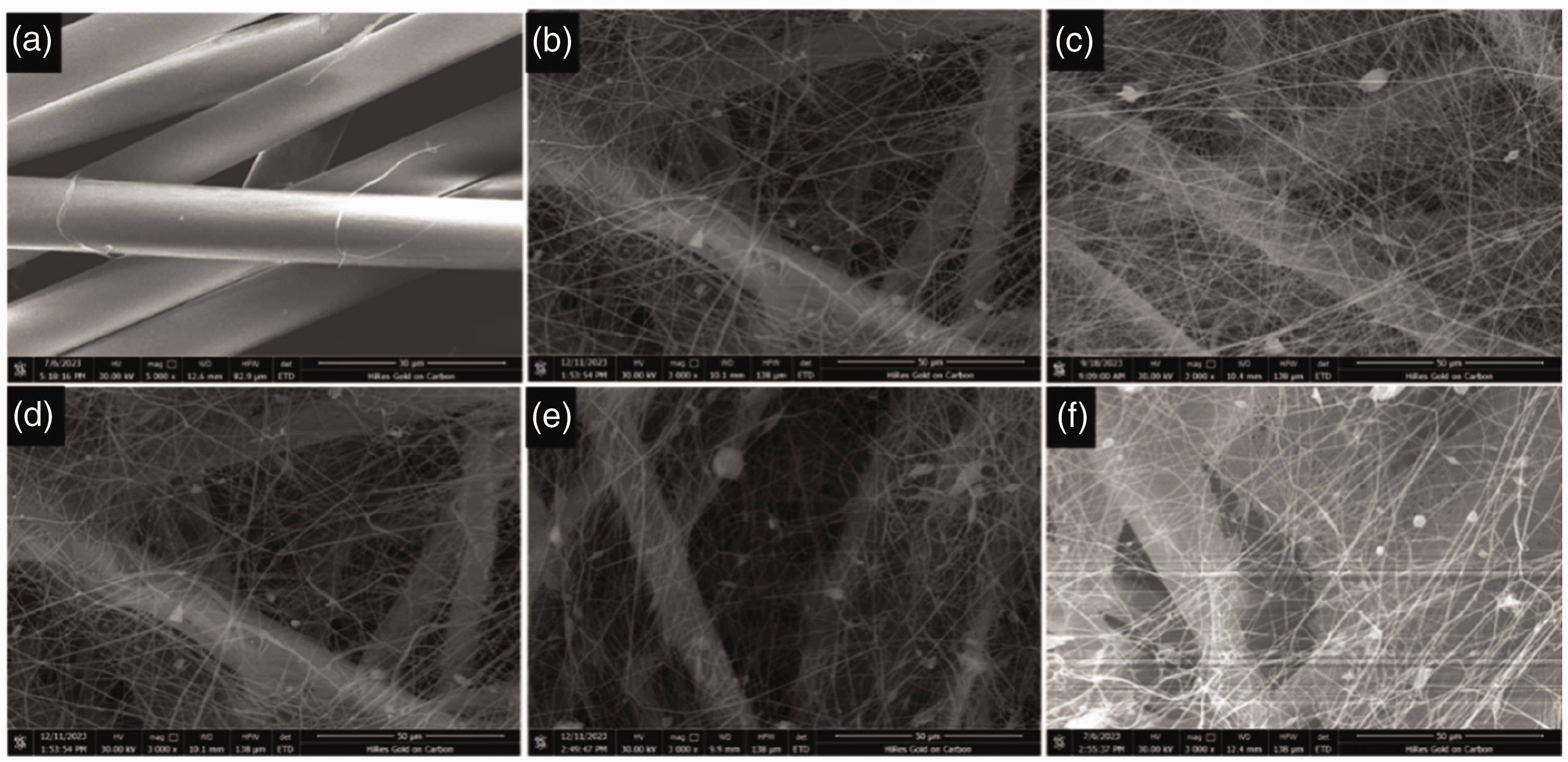
SEM of (a) PAN nonwovens; the multilevel nonwovens of (b) 0%; (c) 2.5%; (d) 5%; (e) 7.5% and (f) 10%.
As shown in Figure 4, the fineness of the electrospun PAN/MnC2O4 fiber reached less than 1 µm. These nanofiber webs and PAN wet-laid web nonwovens formed a multistage structure with 3D cavity structures and porous structures and high specific surface area together. Because of the porous multistage structure, the tar was loaded on the surface and interior of the cavity, extending its residence time, and more active sites and better catalytic activity were provided during the catalytic time.
Element content analysis
The EDS of multilevel nonwovens with different Mn contents are shown in Figure 5. As shown in Figure 5(a–d), carbon was evenly distributed on nonwovens with a high content. Because of the high carbon yield and chemical stability, PAN has been used as well-established carbon precursor substrate material for a long time; concurrently, the matrix stabilizes and the porous structure can prevent collapse during calcination to 800°C.29–31 Manganese also appeared in the multilevel nonwovens, indicating that the catalyst precursor was loaded in the nonwovens successfully. The percentages of Mn in multilevel nonwovens were 0.05%, 0.38%, 0.32%, and 0.37%, respectively. The percentages of Mn in sample 2.5% multilevel nonwoven was the lowest, and it significantly increased in sample 5% multilevel nonwoven. Because of the percentages of Mn in samples 7.5% and 10% multilevel nonwoven did not increase significantly, and the excessive addition of MnC2O4 negatively affects the spinning performance, the 5% solution sample was considered as the appropriate concentration for spinning. The sample 5% multilevel nonwoven was consequently chosen for catalytic upgrading of coal pyrolysis tar.
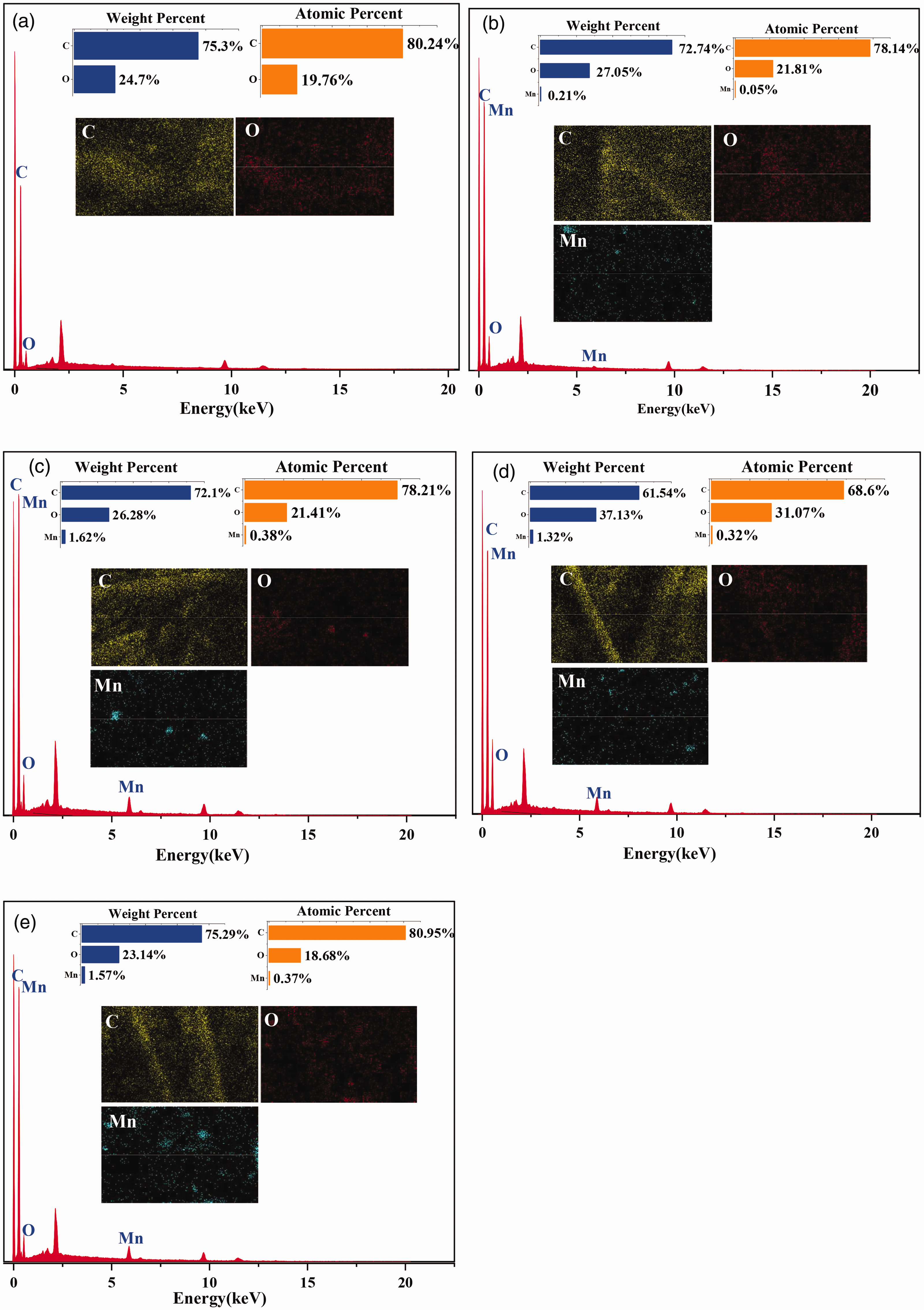
EDS of multilevel nonwovens with different contents: (a) 0%; (b) 2.5%; (c) 5%; (d) 7.5% and (e) 10%.
FTIR spectral analysis
FTIR spectra of the multilevel nonwovens are shown in Figure 6. The spectrum of 0% multilevel nonwovens exhibited characteristic peaks such as absorption band at 2242 cm−1, which corresponded to the C≡N stretching of the acrylonitrile unit in the polymer chain. Other peaks at 2939 cm−1, 1451 cm−1, 1355 cm−1, and 1252 cm−1 corresponded to the vibrations of the aliphatic CH groups (CH, CH2, and CH3).24,25 The peak at 1082 cm−1 could be assigned to the presence of terminal polyvinyl groups, and the peak at 1723 cm−1 indicated the -C=O carbonyl stretching bond. There were also the absorption peak of -OH group at 3310 cm−1 and stretching peaks of C-H at 2939 cm−1. 26 The asymmetric bending of Mn–O and the stretching vibration of O–Mn–O peaked at 535 cm−1, 28 which indicated that manganese oxalate had been successfully loaded onto multilevel nonwovens.
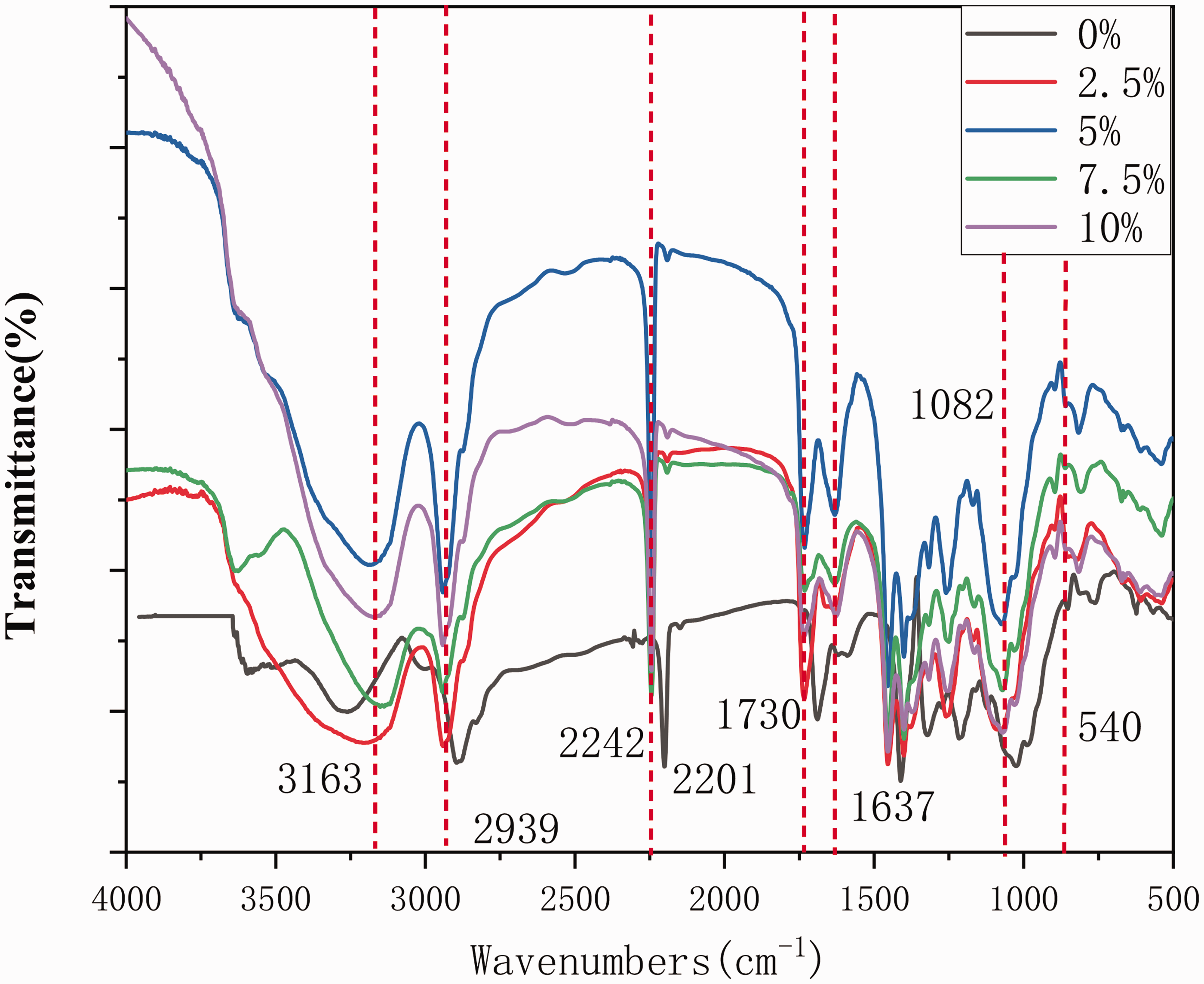
Ftir spectrum of the multilevel nonwovens 0%, 2.5%, 5%, 7.5%, 10%.
Catalytic performance analysis
The sample 5% carbon nanofibers multilevel nonwoven was used as a catalyst to catalyze pyrolysis of PSC to evaluate its catalytic performance using Py-GC/MS. The mass spectrum of coal pyrolysis products is shown in Figure 7; the pyrolysis products were essentially identical before and after adding catalysts. These products were divided into four types: phenols, benzenes and derivatives, PAHs and derivatives, and fatty hydrocarbons (FHs) and derivatives. As shown in Figure 8(a), the content of aliphatic hydrocarbon and derivatives and naphthalene and derivatives (94.7% to 74.6%) decreased significantly, which indicated that the addition of the catalyst caused the fragmentation of large molecular fragments and promoted the formation of small molecular products. The content of compounds containing -N and -S decreased from 7.62% to 4.47%, of which the content of sulfur compounds decreased from 1.78% to 0.11%. The content of benzene and derivatives and PAH and derivatives increased. The increase of phenol content was due to the increase of oxygen-containing functional groups after the addition of catalyst. The addition of catalysts cracked large molecular fragments to promote the formation of small-molecule products, thus had a significant impact on coal pyrolysis.
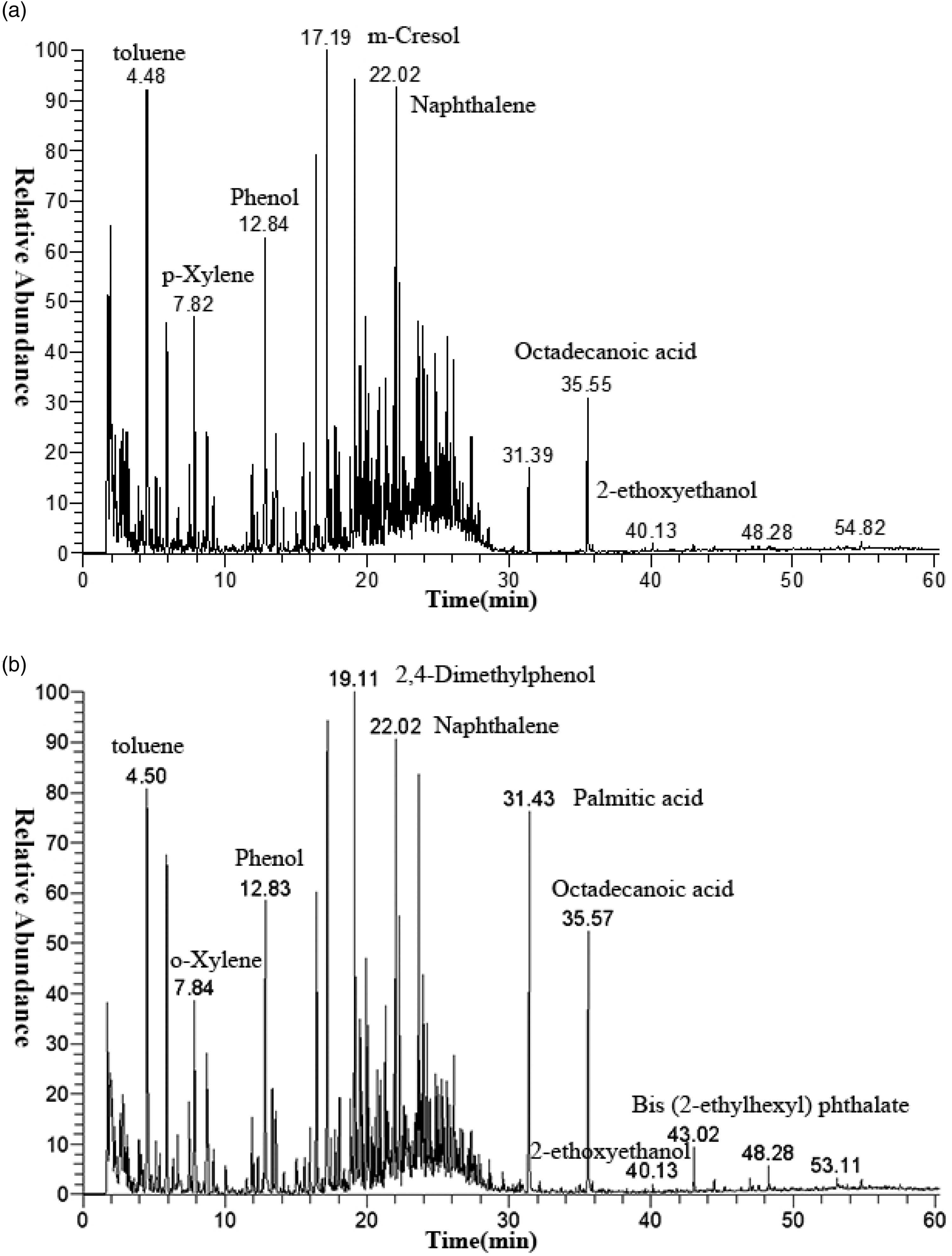
Mass spectrum of coal pyrolysis products, (a) PSC and (b) PSC with catalyst.
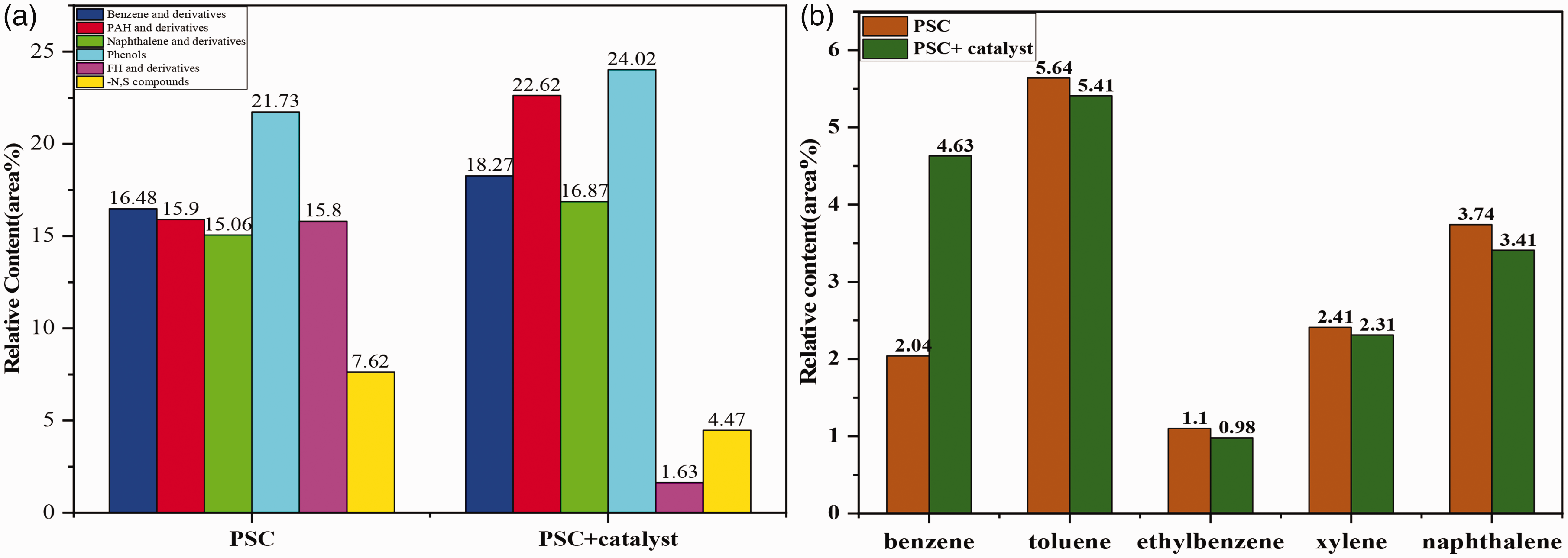
Relative content of (a) different types products and (b) BTEXN.
BTEXN (benzene, toluene, ethylbenzene, xylene, and naphthalene) are aromatic hydrocarbons which have a stable structure, valuable compounds, and can be used as feedstocks in the petrochemical industry as solvents, but are also the basic raw material for many chemical products. The relative content of BTEXN was also discussed (Figure 8(b)). Because the aromatic hydrocarbons with side chains (toluene, ethylbenzene, xylene) were more prone to undergoing cracking reactions, resulting in the production of more stable benzene, the relative content of benzene increased from 2.04% to 4.63%.
It is important to reduce the generation of PAHs during coal pyrolysis, because the higher the ring number of PAHs, the higher the toxicity. The boiling point of PAHs with more than three rings is above 360°C. Most of the PAHs in the environment exist in the form of mixtures, which are harmful to human beings. Some PAHs are strong carcinogens, such as dibenzo[a,h]anthracene and benzo[a]pyrene (toxicity equivalence factor is 1).
Benzene has carcinogenicity and volatility, which emphasizes the need for stringent handling and emission controls in industrial applications. The mitigation strategies include the following.
In situ capture: Integration of adsorbents (such as activated carbon, zeolites) or catalytic converters to trap benzene before release.
Secondary treatments: Proposing post-reaction oxidation (such as catalytic ozonation) to degrade residual benzene into CO2 and H2O. (c) Process optimization: Reducing benzene yield by tuning reaction conditions (such as lower temperature, shorter residence time) while maintaining PAH conversion efficiency.
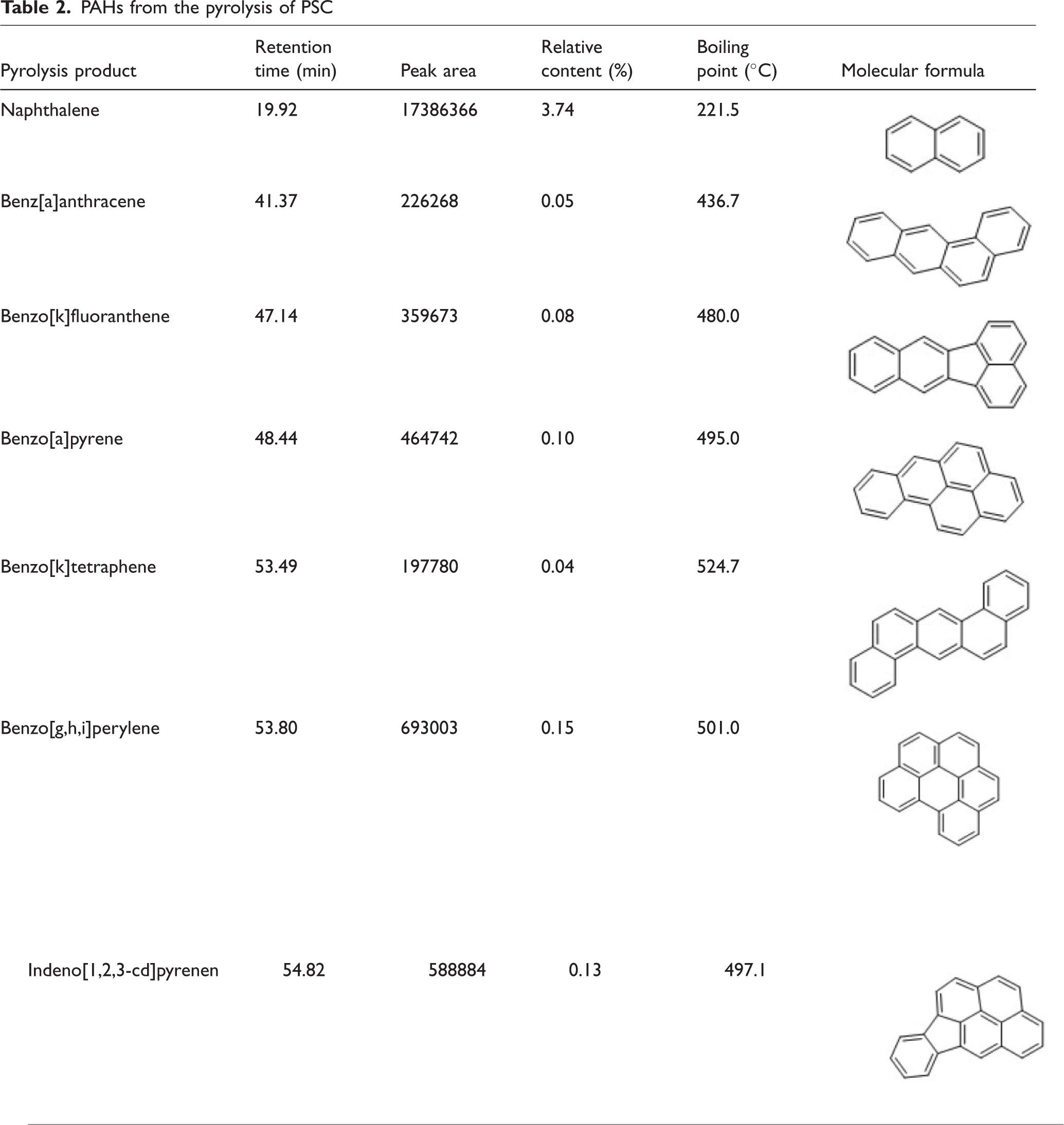
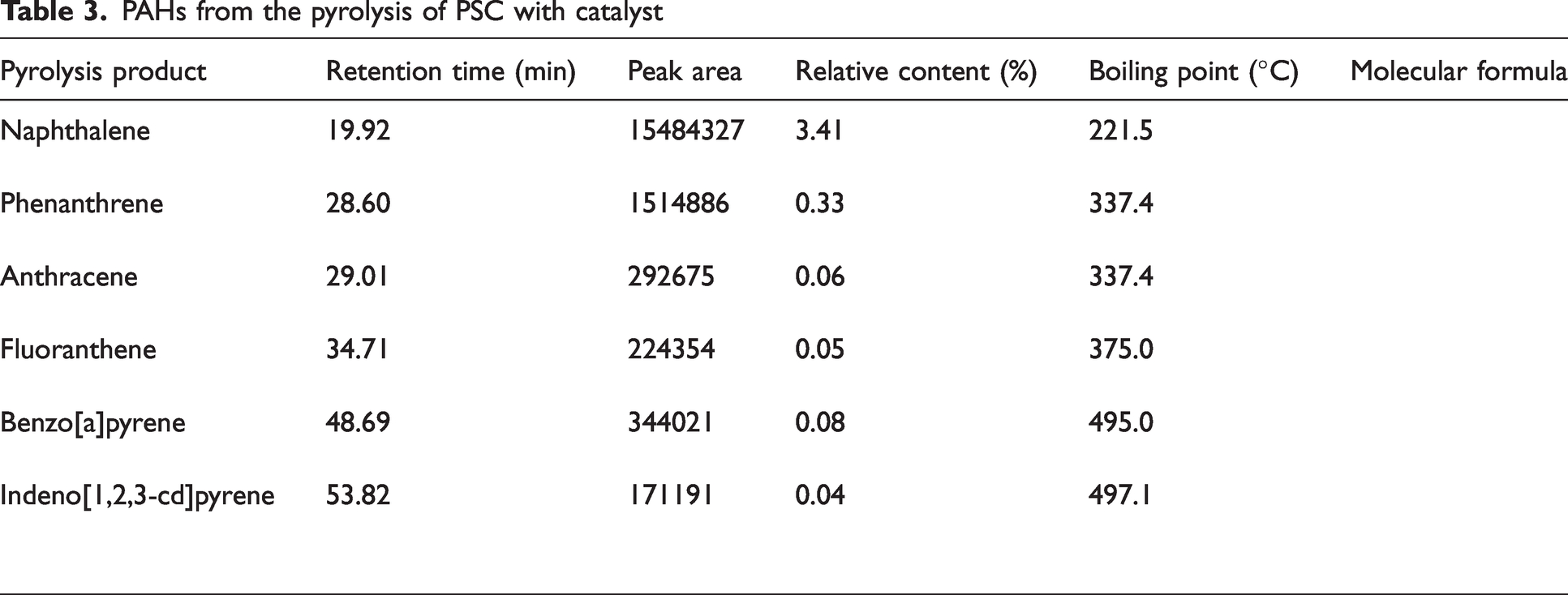
PAHs from the pyrolysis of PSC without and with catalyst are presented in Tables 2 and 3. The relative content of PAHs with 4–6 rings was significantly reduced from 0.55% to 0.17% after adding the catalyst. Phenanthrene and anthracene are isomers, both consisting of three benzene rings. The addition of the catalyst promoted the formation of low molecular weight tricyclic aromatic hydrocarbons, reducing the pollution of PAHs in the environment and the harm to human beings; it also achieved the upgrade of the tar, by reducing the generation of some difficult-to-handle products with high boiling points.
PAHs from the pyrolysis of PSC
PAHs from the pyrolysis of PSC with catalyst
Because of the construction of a 3D cavity structure, the cavities on the nonwovens’ surface could prolong the residence time of the tar, maintaining and promoting the interaction of tar with both the active sites on the nonwovens and the metals in the nonwovens. 32 On the other hand, the calcination of the MnC2O4 precursor produced a series of MnOx nanocrystals. The phase structure changed with the rising calcination temperature in the order of MnC2O4→Mn5O8→Mn3O4→Mn2O3. The Mn4+ and Mn3+ active sites and oxygen vacancies played an important role in improving the catalytic performance. 28
Conclusions
In summary, Mn/nano carbon fiber multilevel nonwovens were successfully prepared in this work. They have a very high practical value because of their low cost and recyclable characteristic. The 5% carbon nanofibers multilevel nonwovens were used as a catalyst. The pyrolysis products of PSC and their relative content were determined by Py-GC/MS. The results indicated that the addition of catalysts obviously decreased the content of FH and derivatives, and compounds containing -N, S also decreased. Furthermore, the content of benzene increased by more than double, which was attributed to the 3D cavity structure and addition of the MnC2O4 precursor. The 3D cavity structures prolonged the residence time of tar. The calcination of the MnC2O4 precursor generated Mn4+ and Mn3+ active sites and oxygen vacancies to promote the pyrolysis reaction.
Thus, carbon nanofiber multilevel nonwovens can play an important role in coal pyrolysis catalysis and contribute to the improvement of tar quality. However, the industrialization and mass production of electrospinning structures are still limited by low efficiency and reproducibility, which are unsuitable for mass production. If carbon nanofibers multilevel nonwovens are applied in the coal chemical industry, the question of how to achieve yield optimization is still an important problem.
Footnotes
Data availability statement
The data supporting the findings of this study are available within the paper.
Declaration of conflicting interests
The author(s) declared no potential conflicts of interest with respect to the research, authorship, and/or publication of this article.
Funding
The author(s) disclosed receipt of the following financial support for the research, authorship, and/or publication of this article: This work was supported by the basic research program of Natural Science in Shaanxi Province (NO.2022JQ-317), National Natural Science Foundation of China (22078224).
