







Abstract
Currently, artificial intelligence (AI) technology offers opportunities to address serious challenges in waste management in the fashion industry. This study systematically reviewed and analyzed literature on AI applications in textile waste management from 2014 to 2024. We aimed to review the intervention effects of AI technologies on textile waste across stages of the fashion industry lifecycle and explore AI’s role in promoting circular supply chains (CSCs). The results show that AI plays a prominent role in four key areas: Enhanced intelligent analysis of market dynamics, optimizing consumer experience-oriented durability design, collaboratively optimizing production processes and inventory management, and advancement of intelligent waste management. Convolutional neural networks are the most widely used AI technology due to their strength in image recognition. However, AI technologies also face limitations such as high data requirements. Future research should attempt to promote improvements in policies, enterprise, and technologies to unleash greater potential for AI in CSCs.
Keywords
Globally, The fashion industry generates approximately 92 million tons of textile waste every year. 1 The root of this issue lies in the predominant reliance on a linear supply chain (SC) model in the contemporary fashion industry. The SC is a nonrecyclable framework in which resources are disposed of at the end of their lifecycle, as the SC lacks a systematic design for material recirculation. This not only exacerbates raw material consumption2,3 but also results in the disposal of a significant amount of potentially reusable textiles, thereby intensifying ecological and resource sustainability pressures. In addressing this issue, the 3R (reduce, reuse, and recycle) principles provide a sustainable framework aimed at minimizing waste while maximizing the lifespan of products and materials through reuse and recycling. 4 This approach not only helps alleviate ecological pressures and reduce the industry’s dependence on virgin resources but also enhances resource efficiency and facilitates the development of circular supply chains (CSCs).5,6 Consequently, governments worldwide have increasingly prioritized the 3R principles to mitigate ecological burdens, actively promoting the transition of textile-related industries toward CSC.7–9
Nevertheless, the transition from traditional SCs to CSCs still faces significant structural barriers. First, the multitiered structure of the fashion industry’s SC results in data fragmentation across different nodes, 10 which not only hinders full lifecycle tracking of products but also severely constrains the traceability and quantitative management of recyclable materials. Second, the current textile recycling system heavily relies on labor-intensive processes, such as fiber composition identification and contaminant removal, both of which incur substantial labor costs and fail to meet the exponentially increasing efficiency demands of CSCs.11,12 Moreover, prolonged exposure to complex and repetitive tasks can lead to decreased concentration and physical fatigue among human workers,13,14 which in turn reduces the accuracy of material classification, increases quality uncertainties, and diminishes the reuse value of materials. This contributes to a vicious cycle of low-quality recycling–low-value utilization–low economic returns.
In this context, artificial intelligence (AI) technology shows promising potential to address current challenges. Compared with traditional labor-intensive work models that rely heavily on human expertise, AI algorithms can identify key patterns in data through automated processing and continuously optimize performance. 15 While accelerating data analysis, AI also reduces error rates and enables seamless cross-stage data integration through technologies such as blockchain, 16 facilitating information sharing and collaborative synchronization. By linking different stages of the SC, AI enhances end-to-end information transparency in SC. This not only overcomes the limitations of traditional textile waste management but also creates transformative opportunities for the deeper implementation of the 3R principles. In terms of reduce, AI algorithms can leverage historical data to predict the optimal production volume for new-season apparel products,17,18 thereby minimizing potential material or product waste. Regarding reuse, advancements in AI-driven image recognition enable the identification of fabric defects,18,19 enhancing quality screening efficiency and optimizing the reuse process. For recycle, optimized AI algorithms combined with spectroscopic technologies can identify various textile fiber compositions, significantly improving sorting efficiency and streamlining classification procedures.20–22 This not only facilitates the efficient execution of material recycling tasks that traditional manual methods struggle to achieve but also expands the market potential for recycled materials, thereby enhancing material value and accelerating resource circularity within the CSC system.23,24
But current research on AI applications in textile waste management remains fragmented, primarily focusing on specific aspects of SC optimization. These include preventing inventory overstock,17,25 reducing overproduction, 26 enhancing postsale services to extend the lifespan of clothing products, 12 and improving the accuracy of textile waste recycling and sorting processes.20–22 However, such studies lack a holistic, system-wide examination of the fashion industry’s full product lifecycle under the CSC model from the perspective of textile waste. This limitation may obscure the complex interconnections between waste-generating stages within the SC. When companies implement AI technologies in isolated segments without fully considering the interactions between upstream and downstream processes, new forms of resource waste may emerge, and data exchange between different stages may be restricted. In such cases, AI technologies may fail to interact effectively across various SC components, leading to the formation of “technological silos.” This fragmentation could hinder the transition from a traditional SC to a CSC by preventing AI from addressing structural barriers. Consequently, companies may adopt short-sighted strategic decisions, ultimately limiting the overall optimization and development of the CSC framework.
This study rigorously adheres to the systematic review methodology in constructing its research framework. Compared with traditional literature reviews, systematic reviews utilize predefined inclusion criteria and structured data extraction processes, which not only facilitate the integration of empirical studies across disciplines but also effectively minimize researcher bias, thereby enhancing the rigor and reliability of the study. 27 Building on this foundation, the study integrates the 3R principles to conduct a multidimensional and cross-sectional analysis of the role of AI technologies in facilitating the transformation toward CSC in the context of textile waste management. The study aims to systematically review the intervention effects of AI technologies on textile waste at various stages of the fashion industry lifecycle, evaluating the effectiveness of AI-driven CSC transitions as reported in existing empirical studies. At the same time, it seeks to uncover the practical limitations of current technological applications, thereby providing evidence-based decision-making insights for stakeholders in the fashion industry to support the systematic transformation toward CSC models.
This study is the first to establish a matrix-based mapping relationship between AI technologies and textile waste issues grounded in the 3R principles, clearly identifying full-cycle technological intervention points spanning reduce, reuse, and recycle. By doing so, it proposes an AI-empowered textile waste solution under the CSC framework for the fashion industry, aiming to address critical gaps and supplement the urgently needed knowledge to advance the CSC transformation within the fashion sector.
Background
Relationship Between the Fashion Industry SC and the Generation of Textile Waste
The traditional fashion industry SC is a linear model with waste as the endpoint, consisting of the major stages: research, design, production, transportation, and retailing.2,18 In addition, consumer decisions regarding the postuse phase of products are closely linked to waste generation, representing one of the key stages influencing the generation of waste after consumer consumption at the end of the SC.1,28 This study focuses on the key generation points of textile waste. Although the transportation stage is an essential component of the SC, it primarily serves the function of spatial product transfer during the transportation and sales phases. Since its core operations do not involve material consumption or product lifecycle-related decisions, 29 it is not considered a causative stage of textile waste in this discussion. The specific business objectives and activities at each stage are illustrated in (Figure 1).
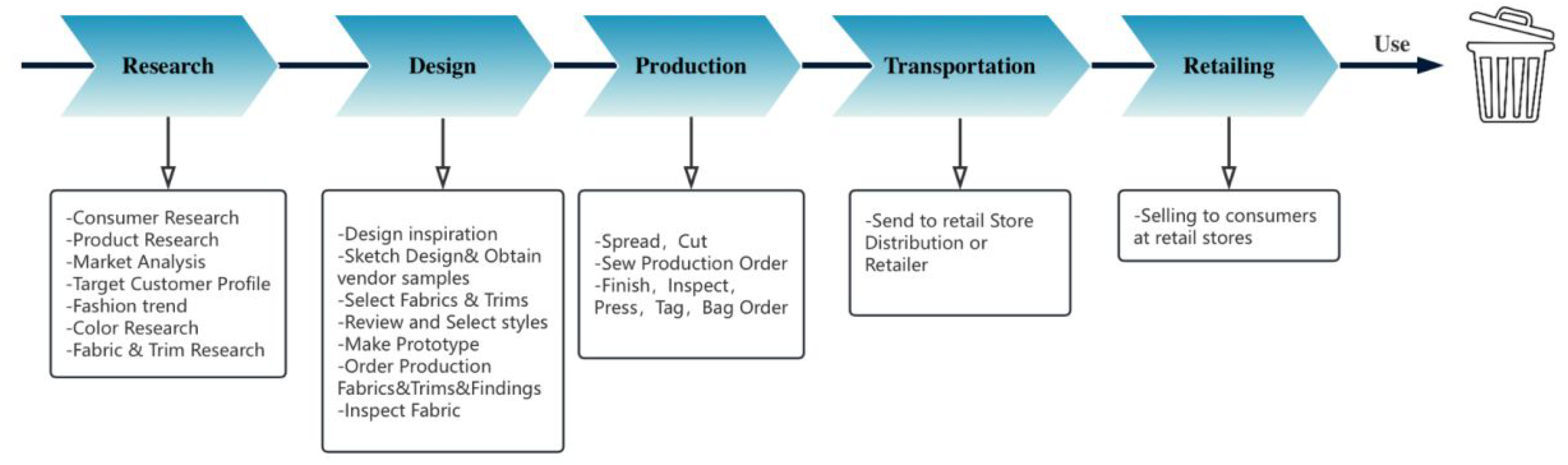
Core stages and operational activities in linear fashion SC.
In this process, decisions and practices across multiple stages may affect the generation of textile waste, with complex and intertwined contributing factors. 29 In this study, based on the dominant causes of waste at each stage of the fashion SC, textile waste is categorized into four types: predictive waste, preparatory-type waste, inventory-stagnation waste, and postuse waste.
Predictive waste refers to the loss caused by overproduction resulting from misjudgment of market data when deciding production quantities. The root cause of this issue can be traced back to the research stage and the preproduction decision-making stage. On the one hand, the inherent limitations of relying on human experience for market research during the research stage affect the accuracy of the data (such as cognitive bias, limited attention, and insufficient time 30 ). On the other hand, in the decision-making stage before production, there is a failure to effectively correct these deviations. Since manual verification of market research data often requires an additional verification cycle of more than two weeks, it not only increases time costs but also risks missing the peak sales season. Under the dual pressure of correcting data deviations and keeping pace with the market, decision-makers are forced to strike a balance between data accuracy and market responsiveness. As a result, production decisions tend to deviate from actual market demand, leading to predictive waste. 29
Preparatory-type waste refers to the waste generated before a product officially enters mass production, during the processes of sample testing, material preparation, and the initial cutting of fabric pieces. These wastes primarily occur during the design, preproduction, and early production stages. In the design stage, design teams typically need to convert two-dimensional drawings into three-dimensional prototype samples and go through multiple rounds of modification to select the final design, thereby providing a standard model for subsequent production. 29 However, as these samples are not intended for sale, they are often discarded in bulk after the end of the production season. 31 In the preproduction stage, on the one hand, companies often adopt preventive strategies such as over-purchasing fabrics to cope with market uncertainty. 32 While this approach can serve as a buffer for potential short-term demand, it can also lead to leftover fabric accumulation, creating a risk of waste.33,34 In addition, the early production stage is also accompanied by notable technical waste, including a large amount of fabric offcuts and cut fabric pieces with defects or imperfections. 35 Due to fixed production patterns, this type of technical waste is often difficult to reduce solely through managerial approaches.
Inventory-stagnation waste refers to waste caused by products that remain stagnant in inventory due to unsold stock or returns, which are forcibly disposed of after missing their intended sales season. This type of waste primarily arises during the sales phase. 29 The main causes can be attributed to two aspects: the inevitable fluctuations of the fashion cycle and the mismatch between actual products and consumer expectations.36–38 First, as the fashion market is highly susceptible to seasonal changes, it is often difficult to accurately grasp the timing of seasonal transitions and product decline phases, which frequently leads to style stagnation and unsold stock. 38 Second, consumers often return products due to dissatisfaction with fit, quality issues, or discontent with style.25,39–41 Although some returned products may have the potential for being sold again, the diversity of return reasons and the use of nonstandard return packaging complicate the process of preparing such items for sale again.25,37 As a result, the cost of reintegrating these items into inventory often exceeds their potential returns, and optimal sales timing is easily missed. 42 Therefore, under such circumstances, some companies choose to proactively destroy unsold garments in order to minimize losses, reduce the risk of brand devaluation, and maintain market competitiveness.25,42
Postuse waste refers to the behavior whereby consumers discard garments due to factors such as garment obsolescence, damage, or unsatisfactory wearing experience. This type of waste primarily occurs in the postconsumption stage and is influenced by multiple factors, including product design, product quality, and consumer preferences. 43 As consumer personalization becomes increasingly reinforced and the demand for rapid garment replacement continues to rise, the frequency of fashion product elimination has increased correspondingly. 44 The key to addressing this issue lies in improving both physical durability and emotional durability of products. Physical durability refers to a garment’s resistance to physical damage during use (such as fabric defects, pilling, and fading), while emotional durability denotes consumers’ emotional connection to the garment and their subjective perception of its usable lifespan (e.g., comfort, style, and uniqueness). 45 Enhancing both types of durability contributes to extending the retention time of products in consumers’ hands, thereby reducing the incidence of premature disposal.
The Ellen MacArthur Foundation quantified the systemic material loss across the full lifecycle of clothing, revealing that raw material losses during the design and production stages reach 12%, while postconsumer clothing disposal accounts for as much as 73%. Together, these two stages constitute the primary contributors to material waste. Among discarded garments, only 13% are repurposed into low-value recycled products such as industrial rags, which are difficult to recycle further and ultimately still end up in landfills. The proportion of high-quality recycling that achieves true closed-loop circulation is less than 1%. 44 Although publicly available data have yet to specify the proportion of material loss at each SC stage, this macrolevel quantification highlights the urgent need for targeted interventions at waste-generating nodes, particularly in preproduction losses and postconsumer disposal.
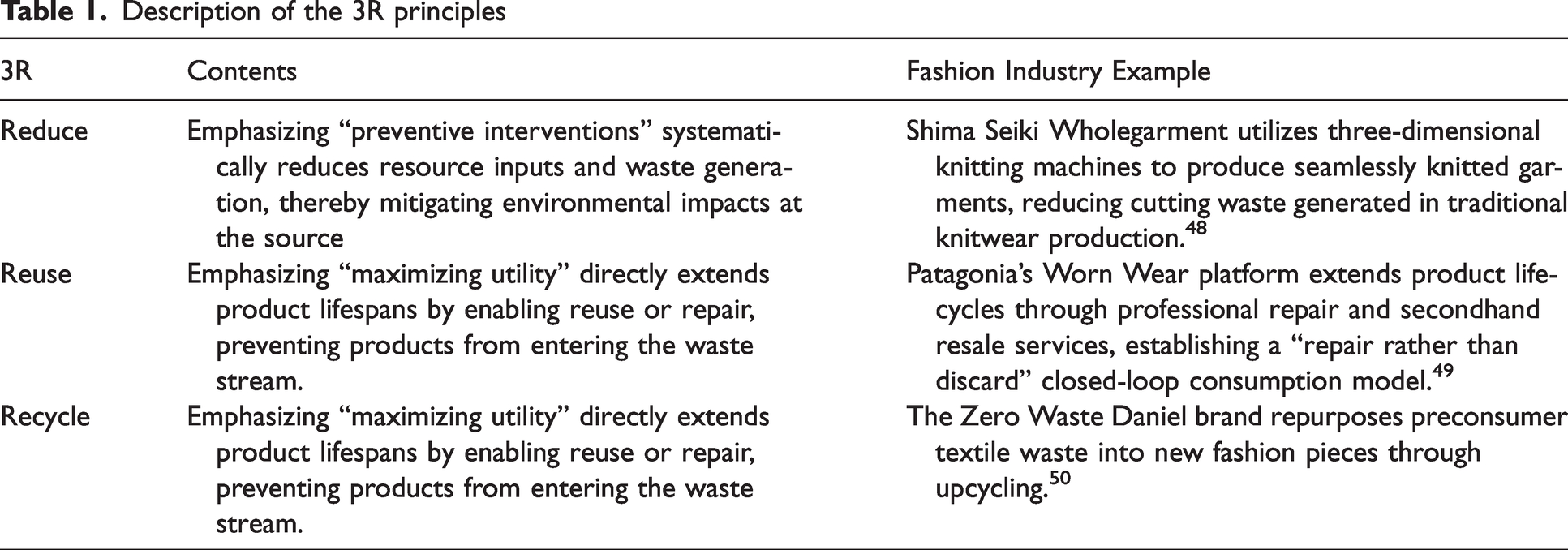
Currently, textile waste is predominantly managed through incineration and landfill disposal globally.1,2 However, the harmful emissions of carbon dioxide, carbon monoxide (CO), methane (CH4), and other pollutants released during transportation and disposal severely contaminate the atmosphere. 3 This approach not only wastes valuable resources but also poses significant risks to the natural environment and human health. Improving the SC and transitioning to a CSC can effectively address these issues. 28 The 3R principles are currently considered one of the most effective standards for evaluating the transition to CSC.5,6,46 These principles aim to positively affect waste management by minimizing waste, reusing materials, and recycling, thus reducing the need for new resource extraction and protecting existing biological resources (Table 1).8,46,47 Therefore, this study adopts the 3R principles as the evaluation standard for promoting the transition to CSC.
Description of the 3R principles
It is important to note that while the establishment of CSC is beneficial for addressing the resource and environmental challenges posed by textile waste, several obstacles hinder its implementation. In addition to the labor, time, and technological challenges associated with preventing waste generation in the SC stage, the classification and processing of discarded products present a major barrier to CSC advancement. For instance, the identification of blended textile fibers remains challenging due to the difficulty of rapid detection, while manual sorting is highly time-consuming and labor-intensive. 51 These factors constrain enterprises’ ability to transition toward CSC. Therefore, it is essential to adopt technology-assisted solutions to facilitate 3R-compliant practices and accelerate the formation of CSC.
Of course, beyond the CSC, the broader SC network structure is the holistic supply chain network (H-SCN). H-SCN is a complex network formed by the interweaving of multiple SCs, encompassing both closed-loop SCs (such as CSCs) and open-loop SCs, aiming to promote resource regeneration, material flow, and value creation.52,53 However, given that textile waste is typically characterized by low value and high heterogeneity, it imposes higher demands on processing efficiency and resource recovery. Therefore, in the short term, adopting closed-loop solutions that can be rapidly implemented is more suitable. Based on this consideration, this study will focus on CSC implementation pathways, providing theoretical support and empirical foundations for enhancing the resilience of H-SCN as cross-industry infrastructure gradually matures in the future.
Common AI Technologies in Waste Management
Although current research on the use of AI to address textile waste remains unsystematic, its mature applications in other waste management domains offer valuable references for the textile context. To establish a framework for AI applications targeting textile waste in the subsequent sections, this paper first reviews representative applications and key technological logics of AI in general waste management, aiming to clarify the potential adaptability of different technological pathways within resource recovery processes.
Traditional waste management systems typically follow a linear process of collection–manual sorting–manual processing–reuse. 20 However, the overall efficiency is often low due to human-related factors such as attention shifts and operator fatigue.13,14 In contrast, AI technologies leverage autonomous learning and automated decision-making to provide efficient solutions for complex scenarios. 15 Currently, AI models have demonstrated significant potential in data-driven classification, prediction, and optimization.38,54,55
Machine learning (ML) serves as a core paradigm for enabling data-driven decision-making in modern AI applications. 56 By analyzing data and learning underlying patterns through algorithms, ML generates generalized models based on statistical inference, aiming to continuously improve task performance without explicit programming.57,58 Among ML approaches, deep learning (DL) enhances complex pattern recognition capabilities through multilevel feature abstraction. 56 ML methodologies are primarily categorized into supervised learning, unsupervised learning, and reinforcement learning.
Supervised learning (SL) relies on labeled data, training models with annotated datasets for classification (e.g., support vector machines (SVM), k-nearest neighbors (KNN), decision tree (DT), logistic regression, naive Bayes, and random forest) or regression tasks (e.g., linear regression, support vector regression (SVR), DT, RF, KNN).25,26 The primary objective is to learn the mapping between inputs and outputs. 59 SL methods exhibit strong applicability to various waste-related datasets. For instance, they have been utilized to predict the volume of medical waste generated by hospitals, 60 develop automated classifiers for medical waste,61,62 classify electronic waste, 63 and identify household waste such as paper and metal. 64 In addition, SL models have been applied to recognize and categorize organic waste, such as fruits and vegetables, to prevent food loss due to landfill disposal. 65 However, when labeled data acquisition is costly, semisupervised learning, leveraging a small amount of labeled data alongside large volumes of unlabeled data, can enhance model performance. 66
Unsupervised learning (UL) has also demonstrated strong capabilities in data exploration. By utilizing unlabeled data to discover hidden patterns, UL is particularly useful for uncovering the intrinsic structure of datasets. 67 Major techniques include clustering (e.g., K-means, DBSCAN, and hierarchical clustering) and dimensionality reduction (e.g., principal component analysis (PCA), t-distributed stochastic neighbor embedding (t-SNE), and locally linear embedding (LLE)). 68 It is suitable for exploring deep relationships within data and extracting new features. 67 Clustering is a commonly used technique in waste management, such as for intelligent allocation and waste collection route planning for garbage vehicles.69,70 In addition, clustering-based approaches have been employed to classify cities dynamically based on demographic, economic, and climatic factors, using historical data from other regions to predict solid waste generation in data-scarce cities. 71
Reinforcement learning (RL) trains models using unlabeled data, relying on environmental feedback through reward signals. By interacting with its surroundings, RL learns optimal strategies to enhance long-term decision-making. 72 Key RL techniques include Q-Learning, policy gradient methods such as proximal policy optimization (PPO), and Deep deterministic policy gradient (DDPG). 67 RL is particularly effective in handling dynamic environments and optimizing long-term objectives, making it well-suited for complex decision-making problems. In waste management, RL has been applied to resource allocation optimization, intelligent scheduling, and automated sorting systems. For example, RL-based models have been developed to optimize pricing and inventory decisions in food retail, balancing supply and demand to minimize perishable food waste. 73 In addition, RL has been used to optimize band selection strategies, enhancing the accuracy of hyperspectral imaging for classifying low-value recyclable materials and thereby mitigating sorting-related waste. 74 Furthermore, RL-driven robotic systems have been designed for disassembling electronic waste, facilitating the recovery of valuable materials from discarded electronics. 75
It is noteworthy that the artificial neural network (ANN), a fundamental method within ML for implementing DL, 56 processes information by simulating signal transmission between neurons. ANNs excel at automatically capturing deep features from complex datasets without the need for manual feature engineering, particularly when trained on large-scale data.76,77 Based on architectural characteristics, several derivative models have emerged, including: the convolutional neural network (CNN), which specializes in extracting spatial features from images; the probabilistic neural network (PNN), known for its fast training speed and support for incremental learning; and the recurrent neural network (RNN), which is particularly effective for processing sequential data such as text and speech.71,78,79 ANNs also exhibit broad applicability in waste management. For instance, they have been used to analyze multivariate data, such as urban population and economic levels, to predict variations in municipal waste generation across different cities. 80 In addition, ANNs have been applied to optimize waste collection routes, reducing collection time while minimizing vehicle emissions. 81
Moreover, evolutionary algorithms (EAs) serve as key optimization-driven methods, adept at addressing high-dimensional, nonlinear, dynamic, and uncertain problems. Core EA techniques include the genetic algorithm (GA), which is widely used for regression and automated programming, and evolutionary programming (EP), which focuses on behavioral evolution. These methods are particularly advantageous in handling unexpected and dynamic uncertainty.82,83 EA holds significant promise in optimizing waste management processes, providing a data-driven decision support framework.56,83
These AI approaches encompass various optimized architectures and innovative variants, allowing for the flexible adoption of single models or the development of hybrid modeling frameworks to achieve task-specific performance optimization in waste management. However, it is essential to recognize the limitations of AI applications in this field. Socioeconomic disparities, infrastructure conditions, and the extent of policy support vary across regions, potentially influencing the deployment and cost-effectiveness of AI systems. In resource-constrained areas, challenges such as data collection difficulties and limited computational power often hinder the practical implementation of AI models. 84
In summary, although AI technologies have demonstrated broad applicability in the field of waste management, the unique structure and complexity of textile waste recovery impose more specialized requirements on AI applications. Building on the aforementioned general technological logics, the following sections will focus on exploring the specific mechanisms through which AI operates across various lifecycle stages of textile waste management, thereby offering intelligent development pathways for CSC systems in the fashion industry.
Methodology
This study employs a systematic review and meta-analysis approach, strictly adhering to the PRISMA guidelines for ensuring the transparency and standardization of data collection. 27 The specific methodology is as follows. First, we established inclusion criteria (IC) and exclusion criteria (EC) based on the research objectives and conducted a database search, screening, and systematic review of relevant literature published up to 31 December 2024. We then extracted data related to the research questions and applied data coding to clarify the interrelationships and underlying connections between the datasets, aiming to evaluate the effectiveness of AI technologies in optimizing textile waste management and promoting CSC development within the fashion industry.
Research questions
This study systematically investigates the effectiveness of AI technologies in optimizing textile waste management and advancing CSC development in the fashion industry by addressing the following research questions.
RQ1: How can AI technologies be applied to reduce textile waste? RQ2: How can AI technologies facilitate the transition to CSCs through their effect at various stages? RQ3: What effects will the application of these AI technologies have across environmental, economic, and social dimensions?
Establishing eligibility criteria
In the preliminary phase, eligibility criteria for paper selection were developed, including IC and EC based on the research objectives, as well as relevant database search strategies. The purpose was to rigorously screen data sources and obtain representative paper of AI technologies addressing waste management issues.
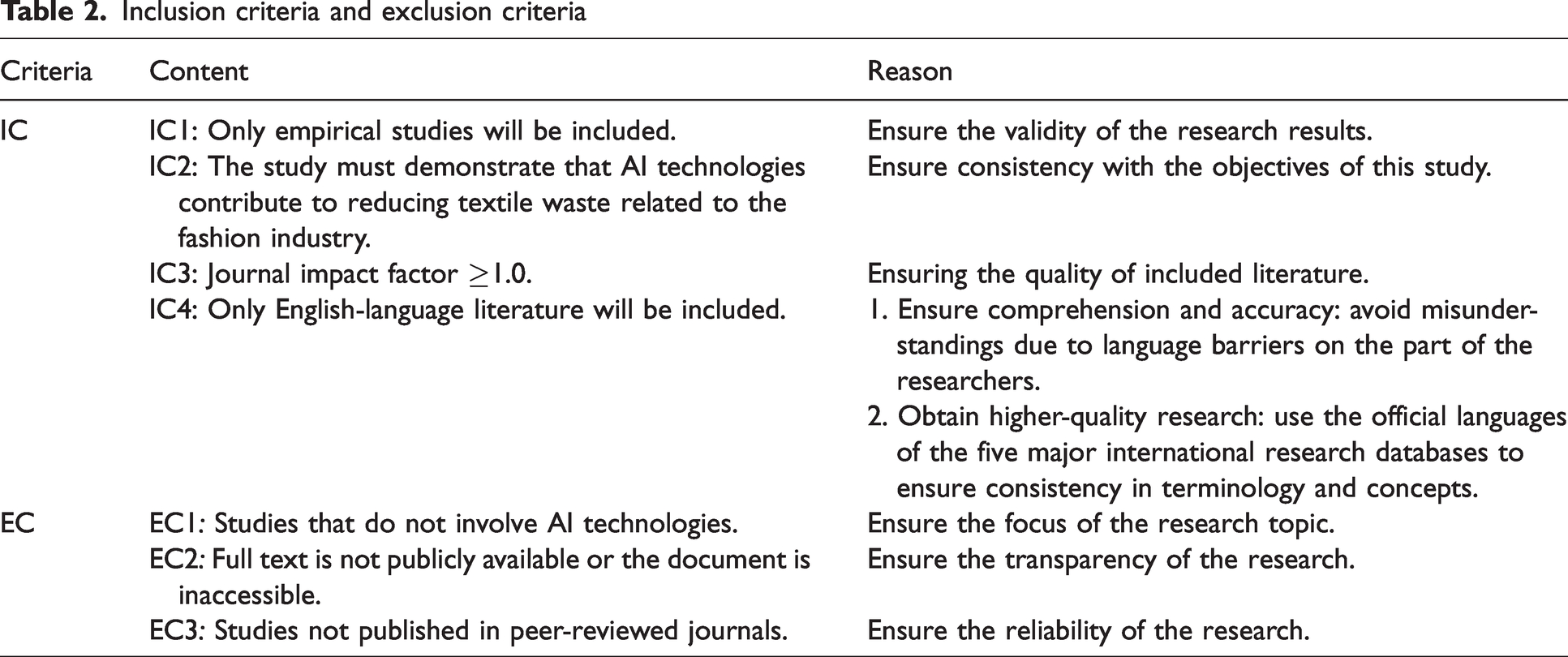
This study strictly adheres to the inclusion criteria IC and EC established based on the research objectives during the article selection process. The IC and EC were formulated with a focus on the relevance of the articles to the research theme, language, research reliability, and publication status. The purpose is to ensure transparency in the literature search process while obtaining more targeted and reliable search results. Since the objective of this study is to systematically review the intervention effects of AI technologies on textile waste across the various stages of the fashion industry lifecycle and to evaluate the effectiveness of AI-driven CSC transformation as reported in existing empirical research, it is therefore essential for this study to explicitly address the role of AI technologies in reducing textile and fashion-related waste. The specific criteria are outlined in Table 2.
Inclusion criteria and exclusion criteria
In terms of the search strategy, this study completed a systematic database search on 19 May 2025. Although AI technologies have attracted sustained academic attention since the 1950s, 85 the implementation strategy of Industry 4.0, which was officially proposed at the 2013 Hannover Messe and includes AI, big data, Internet of things (IoT), and other technologies, explicitly identifies “resource efficiency” as one of the six priority action areas of smart manufacturing, thereby affirming the application potential of AI and related technologies in reducing resource consumption. 86 This not only gives AI technology sustainable significance in the CSC, but also drove active policy responses from various countries in the following year, making 2014 a bridging year for exploring the role of AI technologies in supporting the fashion CSC,87–89 marking the transition of related research into a phase of broad attention and technological validation. Therefore, to precisely capture the cross-disciplinary research dynamics and technological breakthroughs of AI applications in the field of textile waste management, the study limited the literature inclusion period to 2014–2024, ensuring coverage of the most recent technological development trends over the past decade driven jointly by technological and policy forces.
Given the highly interdisciplinary nature of the topic and its relevance to cutting-edge technologies, a multisource complementary strategy was adopted to mitigate the risk of disciplinary bias and literature omission associated with relying on a single database. Accordingly, Scopus, Web of Science, and Google Scholar were selected as the three authoritative databases for constructing the search framework, based on the following criteria:
Scopus, with its extensive multidisciplinary cross-indexing capabilities and content quality review mechanism based on an independent committee,17,90 effectively captures interdisciplinary innovations at the intersection. These two databases complement each other, covering fields ranging from science and engineering to humanities, social sciences, and the arts,17,91,92 thereby providing a highly reliable theoretical foundation for research. In addition, as multiple studies have recognized Google Scholar as the most comprehensive source of scholarly literature,93–96 it is employed as a supplementary database. Its interdisciplinary coverage of diverse literature types, combined with its dynamic citation network tracking, 97 ensures that no relevant frontier research is overlooked. All the aforementioned databases are equipped with standardized search syntax, data export interfaces, and version update records, supporting transparency in search strategies and the reproducibility of results. This alignment with PRISMA methodological standards enhances the rigor of the study, laying a solid foundation for the comprehensiveness and scientific validity of research conclusions.
Implementation process
To ensure the comprehensiveness of the search, the implementation phase begins by establishing keywords and using various combinations of these keywords for searching in two major databases. Data integration and analysis are then conducted based on the publication year, publisher, contributing journals, and the distribution of technology types.
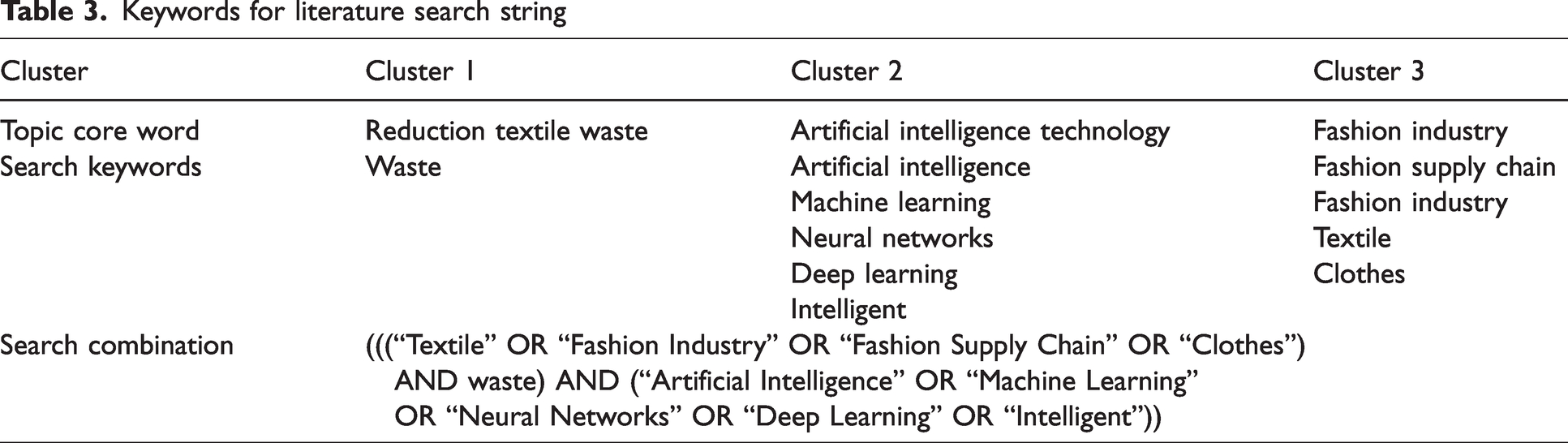
This study identifies “Reduction textile waste,” “Artificial Intelligence Technology,” and “Fashion industry” as the three central thematic keywords based on the research topic, and extends the search outward from these core terms by entering closely related search words in three databases. The search is conducted using the following search string to ensure comprehensiveness: (((“Textile” OR “Fashion Industry” OR “Fashion Supply Chain” OR “Clothes”) AND waste) AND (“Artificial Intelligence” OR “Machine Learning” OR “Neural Networks” OR “Deep Learning” OR “Intelligent”)). In addition, preliminary screening is performed using the built-in filters of the databases according to the inclusion and exclusion criteria to enhance the accuracy of identifying target articles (Table 3).
Keywords for literature search string
After the preliminary data collection, the Convidence automated tool was used to automatically exclude duplicate items based on titles and abstracts. Then, according to the IC and EC, titles and abstracts were reviewed to exclude irrelevant studies. This process was independently conducted by two researchers, followed by a verification step. In case of disagreements, a third researcher intervened, and a consensus was carefully reached. Articles that could not be accessed were excluded, and full-text review was conducted.
The full-text review was still independently conducted by two researchers, followed by verification, and after intervention and discussion with a third researcher, a final consensus was reached. Ultimately, 41 papers relevant to this study were included (Figure 2).
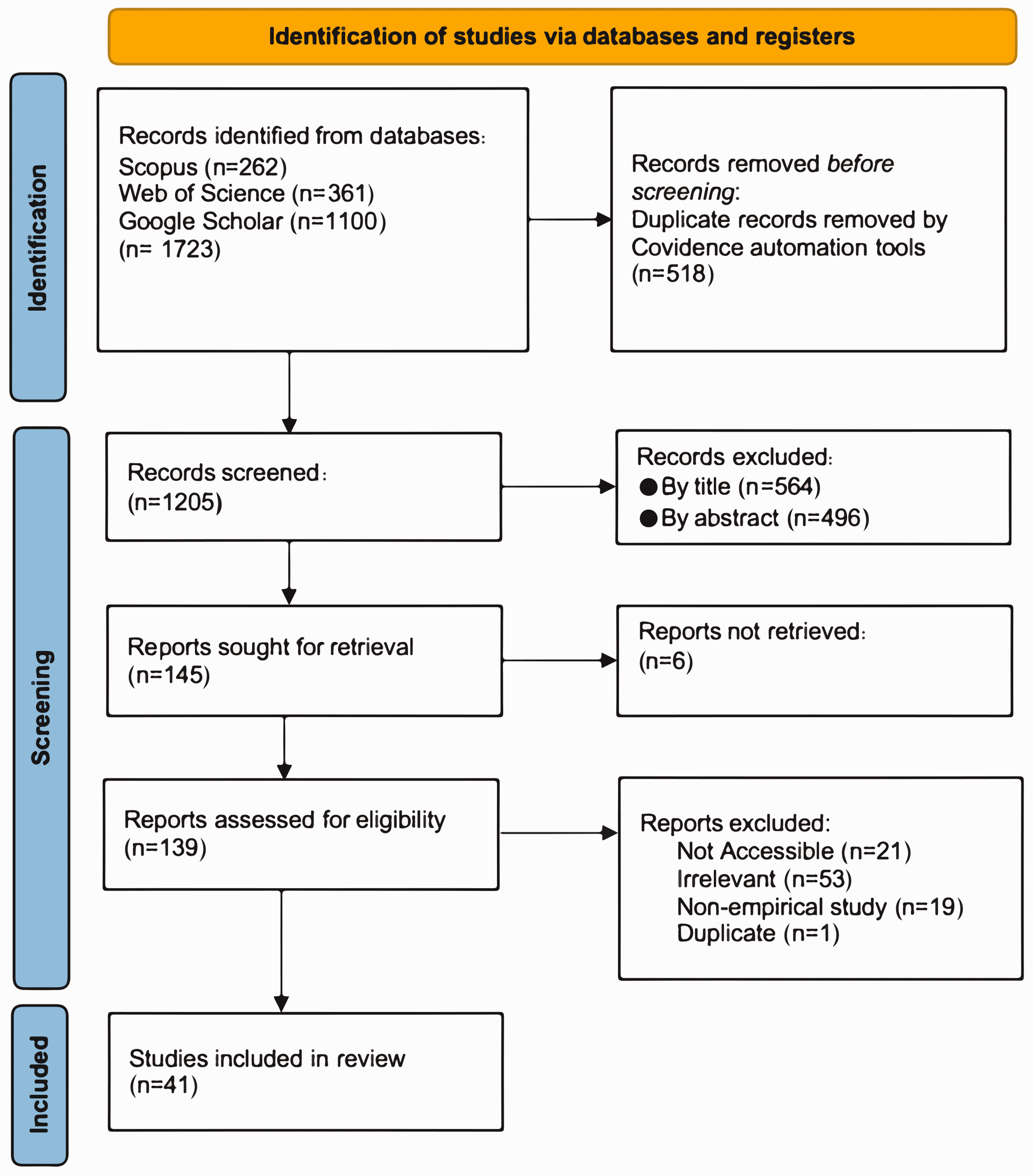
PRISMA 2020 flow diagram for the screening and inclusion.
After completing the full-text review, the extraction of target information was initiated. First, the distribution of publication years of the reviewed articles was statistically examined to facilitate the identification of the development trends and the level of attention regarding the application of AI technologies in the field of fashion textile waste. Figure 3 presents the publication statistics from 2014 to 2024. Between 2014 and 2019, the number of studies addressing AI and fashion industry waste issues was relatively small, which may be attributed to the early stage limitations of technological maturity, insufficient industry attention, and a lack of interdisciplinary collaboration in this field. Since 2020, the volume of publications has begun to increase rapidly, marking an explosive rise in research intensity. This surge may be driven by the promotion of global circular economy policies1,98and breakthroughs in the generalization of AI technologies across multiple fields, 99 reflecting a sustained upward trend in the overall attention given to the role of AI in textile waste management.
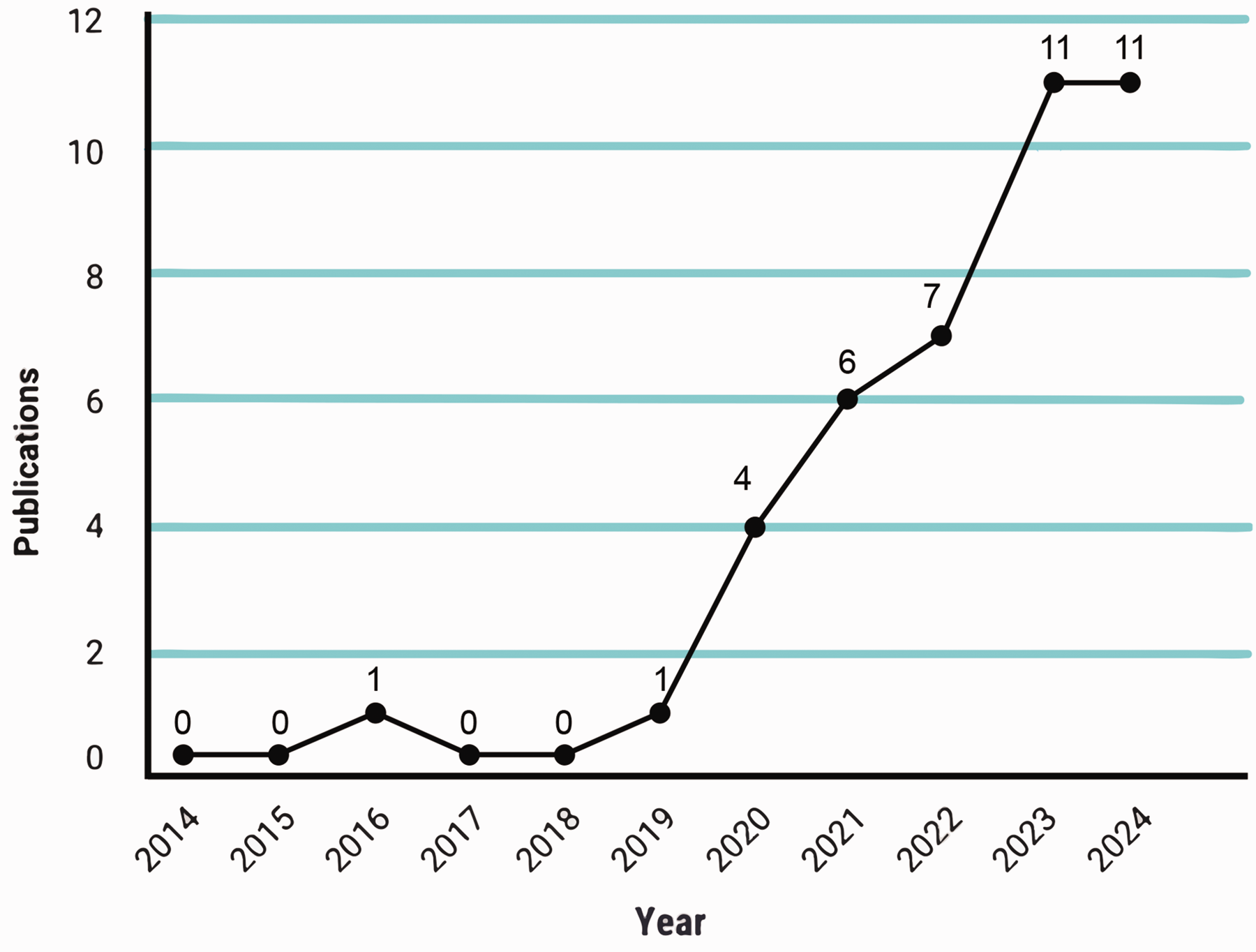
Trends in AI adoption from 2014 to 2024.
Subsequently, the distribution of publishers (Figure 4) and contributing journals (Figure 5) was analyzed, revealing the research hotspots and mainstream academic platforms in the field. It can be seen that Elsevier is the largest academic publisher contributing to this work, providing 24% of the literature. Following closely are IEEE and MDPI, providing 17% and 15% of the literature, respectively, while the remaining publications were distributed among other publishers.
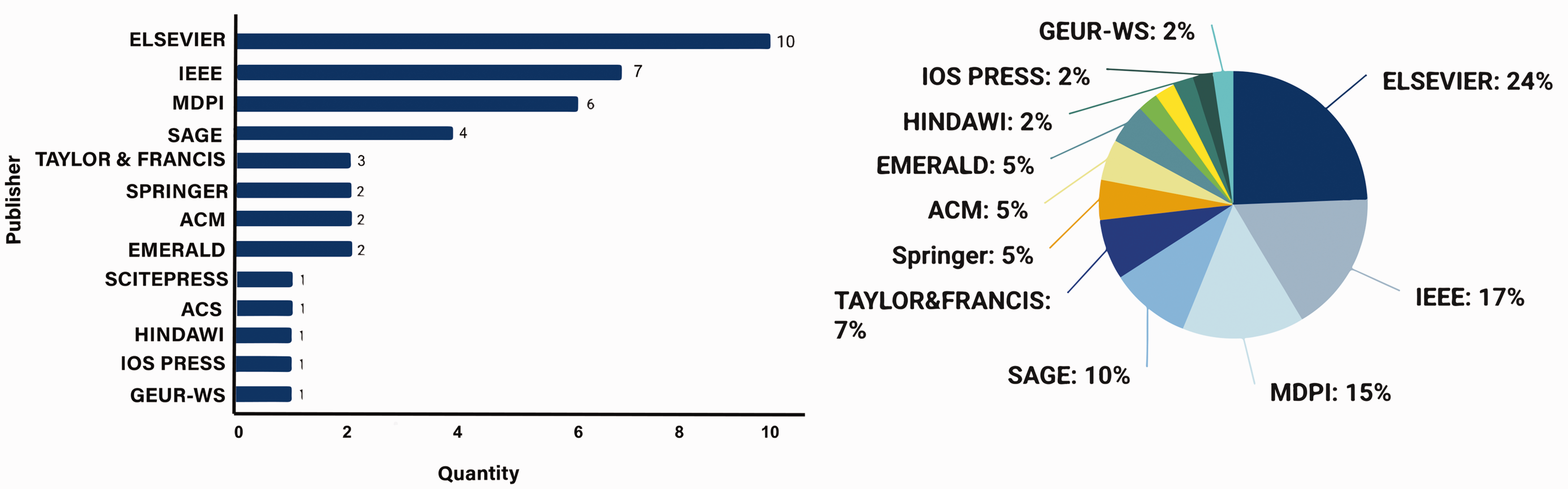
Statistical chart of the number and proportion of literature sources and publishers in the field.
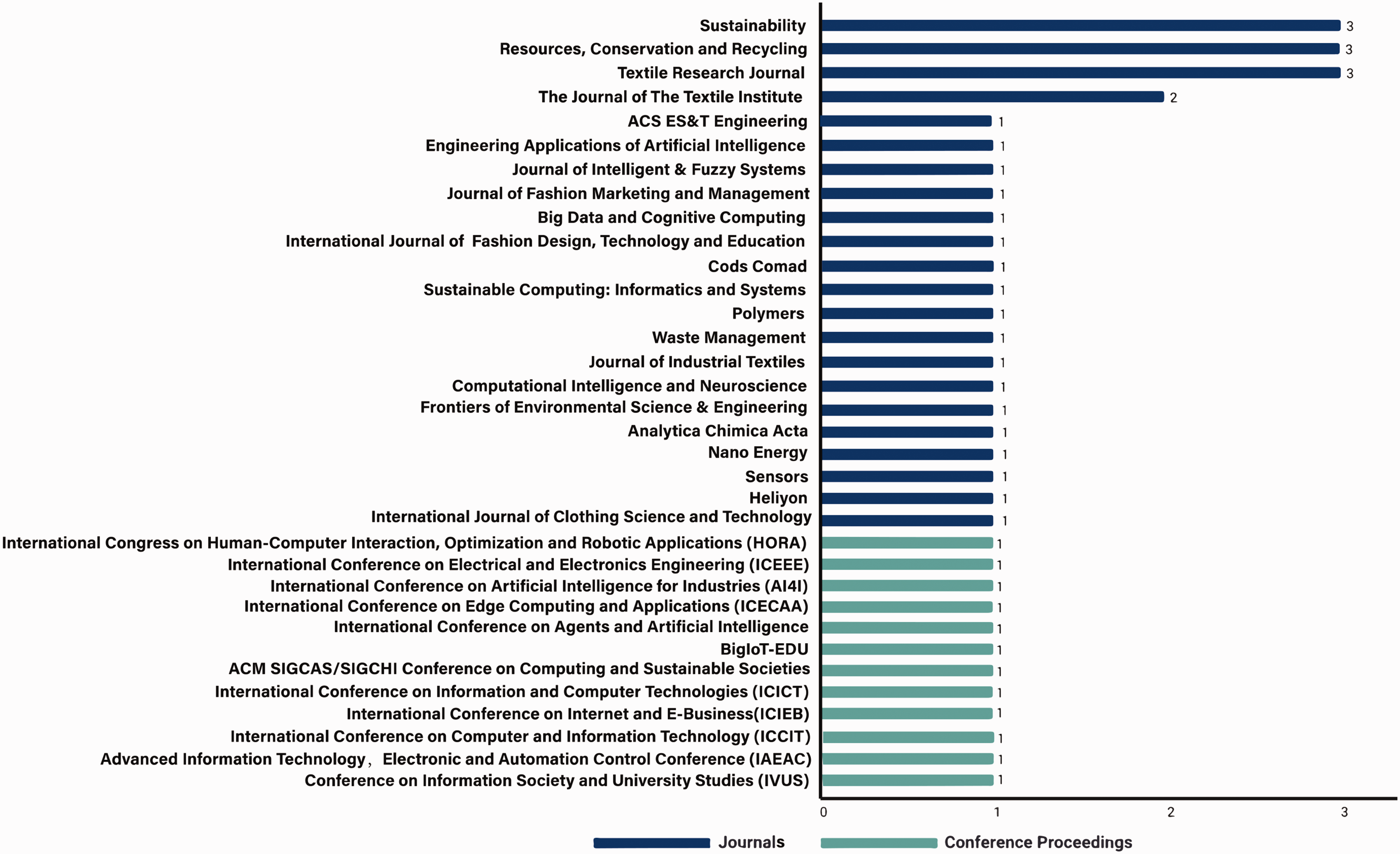
Distribution of literature sources on AI applications in the field of textile waste.
The majority of the literature sources are journal articles, accounting for approximately 71% (n = 29). Among these, Textile Research Journal (n = 3), Sustainability (n = 3), and Resources, Conservation and Recycling (n = 3) made the most significant contributions, each representing 7% of the total literature, highlighting the central role of resource circulation in textile waste management.
The Journal of The Textile Institute (n = 2) follows, accounting for 5%, underscoring the fundamental role of textile science in addressing textile waste issues and reflecting the transition of traditional textile research toward the integration of technological innovation and sustainability. The remaining 18 journals each published a single article, representing 2% each. This dispersed distribution demonstrates the highly interdisciplinary nature of textile waste research, spanning materials science, artificial intelligence, environmental engineering, and social sciences. Conference proceedings constitute approximately 29% (n = 12) of the literature, primarily concentrated in conferences focusing on artificial intelligence and emerging technologies, such as the ACM SIGCAS/SIGCHI Conference on Computing and Sustainable Societies and the International Conference on Artificial Intelligence for Industries. These conferences emphasize cutting-edge technological applications, providing an early-stage platform for the exchange of innovative approaches to textile waste management based on advanced technologies (Figure 5).
According to the distribution of studies supporting the 3R principles (Figure 6), research focused on reduce accounts for approximately 46% (n = 19), primarily aiming to prevent overproduction, development stage waste, and inventory accumulation. Studies supporting recycle (n = 18) make up about 44%, with a focus on improving the classification and processing of textile waste. Reuse represents the smallest proportion, accounting for 10% (n = 4), mainly discussing secondary sharing or donation models for postconsumer clothing.
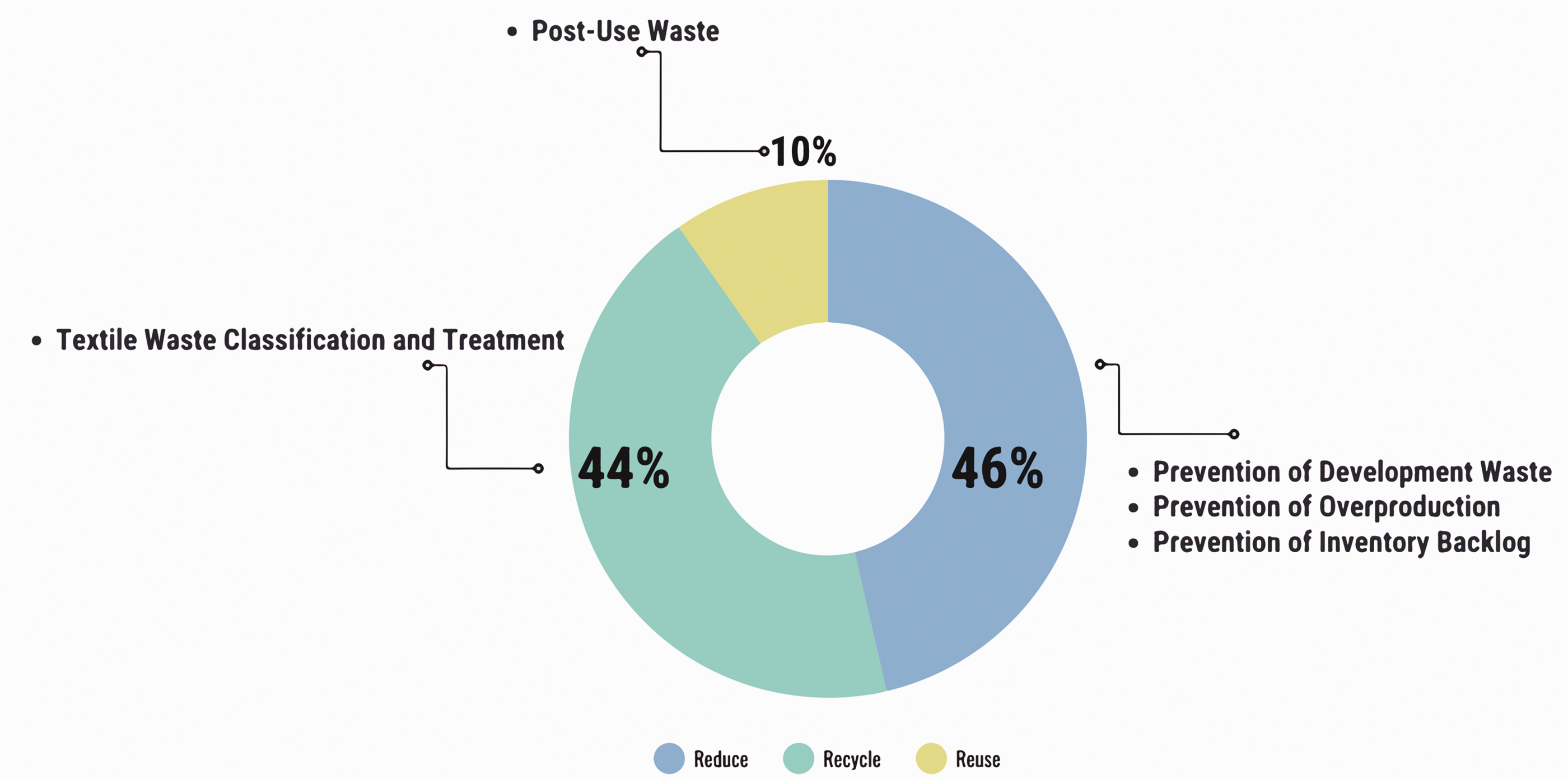
AI applications in textile waste management aligned with 3R principles.
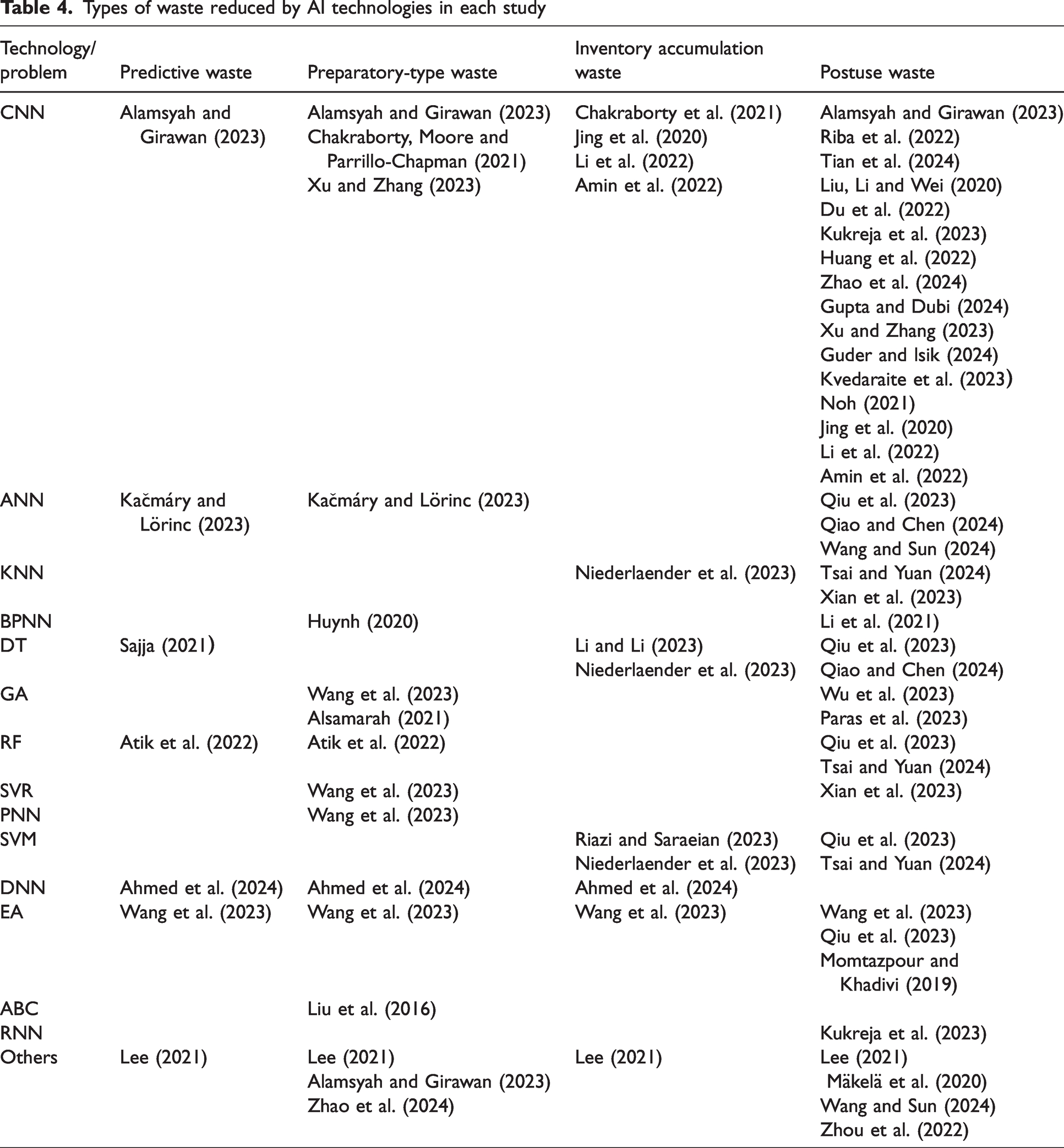
By analyzing the statistical distribution of AI technology applications in relevant literature from 2014 to 2024 (Figure 7), it was found that ANNs, including CNNs, PNNs, backpropagation neural networks (BPNNs), and RNNs, are the most widely applied AI techniques in addressing textile waste-related issues. Among these, CNNs account for the highest proportion (27%), primarily serving as a core tool for textile material classification, as well as planar and three-dimensional defect detection. This highlights CNN’s significant advantages in image recognition, defect detection, and complex spatial feature extraction. Next is the typical supervised learning algorithms DT (11%), which are primarily employed in ensemble combinations to achieve optimization, enabling sales forecasting and the identification of similar waste data. By leveraging historical and external data, they facilitate apparel-related demand prediction and high-dimensional feature recognition of similar datasets. Traditional ANNs account for approximately 9% of applications. Although CNNs are a specialized form of ANNs, their core objectives differ. ANNs have limited effectiveness in image analysis and are mainly used for demand regression analysis based on numerical data such as historical apparel sales and seasonal factors. As illustrated in Figure 7, from 2020 onward, supervised learning methods in traditional ML (such as DT, SVM (7%), RF (5%), KNN (5%), BPNN (4%), SVR (4%), PNN (2%), and RNN, (2%)) have been increasingly applied either independently or in comparative analyses. In addition, evolutionary algorithms GA and artificial bee colony (ABC) have also been applied to cross-stage collaborative optimization in SCs, demonstrating high efficiency particularly in waste sorting parameter tuning and production resource scheduling. Studies that do not mention specific AI algorithms are classified as “other technologies.” The roles of specific technologies in reducing textile waste are presented in the results (Table 4).
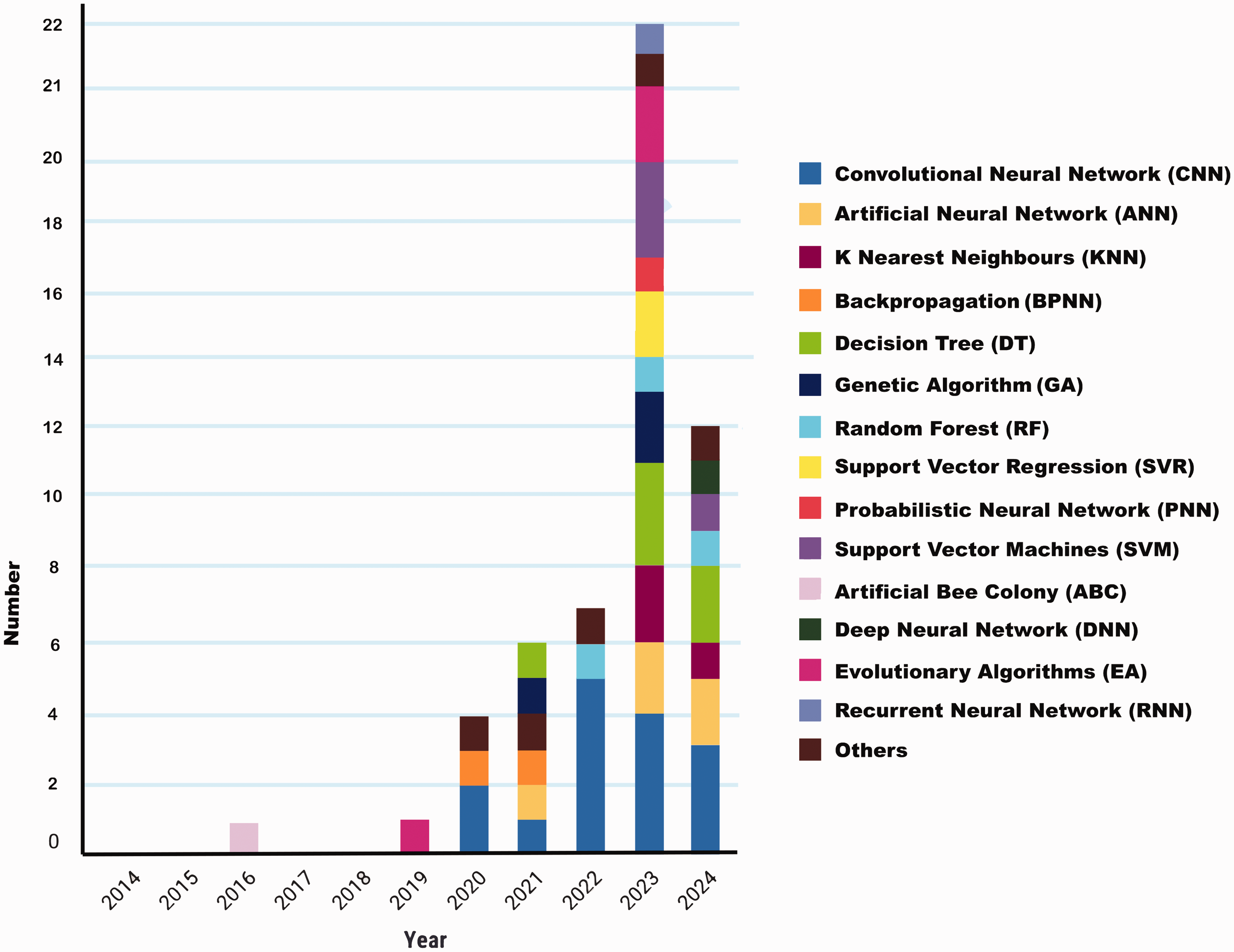
AI technologies involved in the studies.
Types of waste reduced by AI technologies in each study
Results
As shown in Figure 8, analysis of the included literature reveals that the application of AI technology in addressing textile waste issues has extended to the stages of research, design, production, sales, and postuse. Its main functions include enhancing intelligent analysis of market dynamics, optimizing consumer experience-oriented durability design, collaboratively optimizing production processes and inventory management, and achieving intelligence in waste recycling and processing. The application of these technologies effectively optimizes resource utilization efficiency at various stages of the SC, promotes the construction of a closed-loop SC, and facilitates the transformation of the fashion industry’s CSC model. The details are elaborated on in the following.
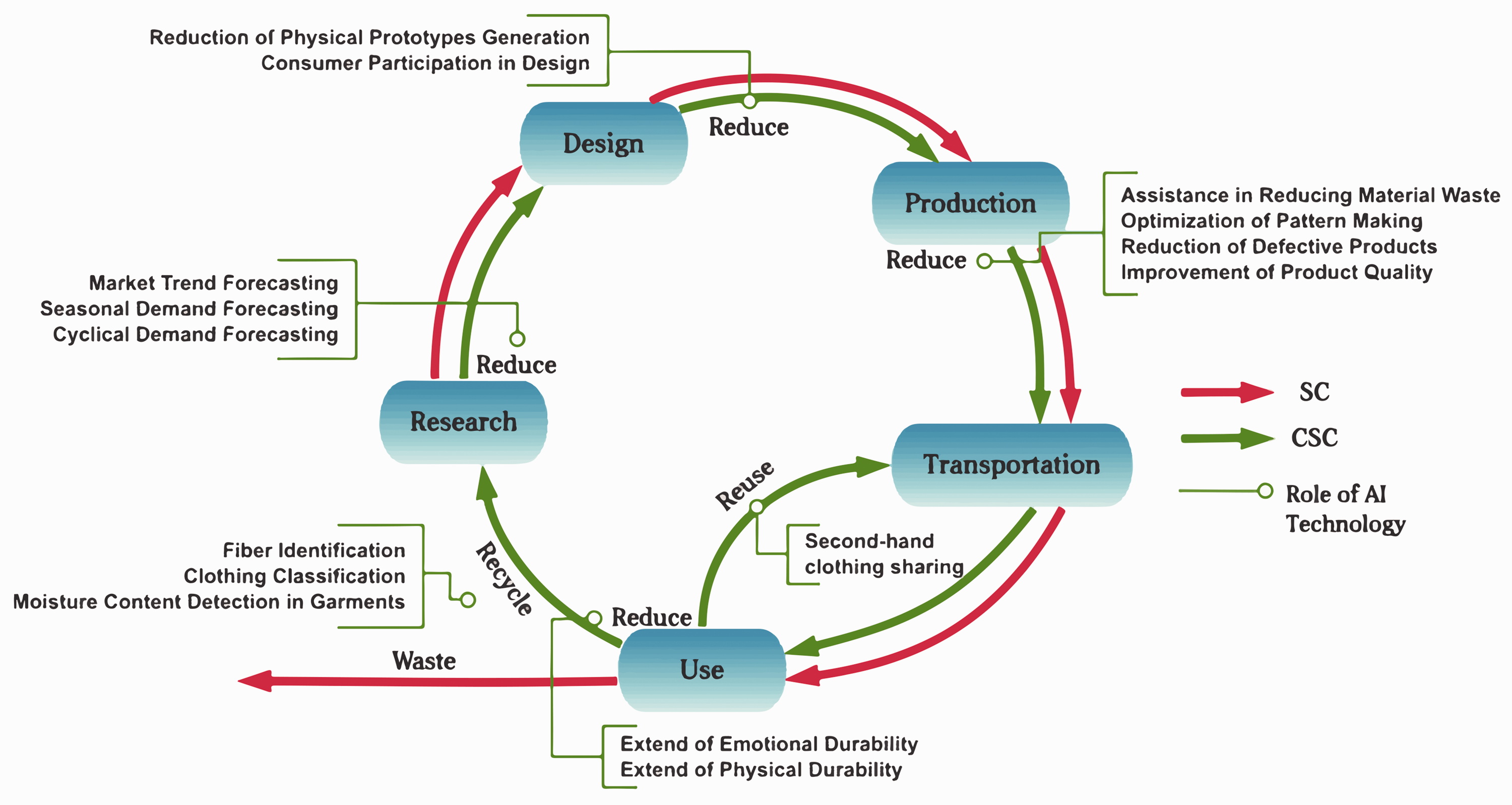
Driving effect of AI technology on CSC.
Enhancing intelligent market dynamics analysis
Market information influences decision-making in product planning for new seasons. 30 However, traditional manual analysis methods are prone to subjective bias, which can reduce the accuracy of analysis. Moreover, due to limitations in time and cost during the pre-production decision-making phase, it is often not feasible to validate data thoroughly, leading to decision-making deviations and resulting in supply-demand mismatches.12,100 In contrast, AI-driven market dynamics analysis is reshaping decision-making paradigms in the fashion industry. In the context of enhancing prediction accuracy through multidimensional data integration, the CNN–natural language processing (NLP) hybrid model can promptly capture consumer feedback regarding product quality and utilize this information as a data signal to optimize model prediction, 12 or use DT to mine hidden product sales patterns. 101
Building on this foundation, some studies have further confirmed that AI technologies can provide references for product sales under the ever-changing fashion cycles and economic trends. For example, RF-based techniques can assist enterprises in formulating supply strategies for fashion downturn periods by forecasting market sales data. 39
DT-based techniques can optimize the identification of key factors influencing sales through multilayered integration and explain individual product prediction results, thereby providing reliable guidance for decision-making on product design and production direction in the upcoming season. 102 In contrast, ANN is effective in capturing the cyclical fluctuations of the fashion market in a timely manner and can be used to predict seasonal demand changes. 103 When responding to shifts in macroeconomic trends, using NLP technology to identify and integrate discussions related to economic trends on the Internet can help simplify the background investigation process of the economic environment of specific products and provide a reference for enterprises to make production decisions in a comprehensive market economic environment.12,104
Industry practices have also validated the effectiveness of AI in market analysis. For example, Heuritech’s time-series forecasting model has been adopted by luxury brands such as Louis Vuitton, Miu Miu, Adidas, and Dior to predict trends based on historical online data, achieving a forecasting accuracy of 90%. 105 Similarly, the Stylumia system has helped companies including H&M, New Balance, and Amazon increase sales velocity by 60% while reducing inventory losses by over 30% through precise demand-side mapping. 106 This optimization of supply-demand balance effectively minimizes resource waste caused by market information discrepancies.
Optimizing consumer experience-oriented durability design
AI technologies establish consumer experience-oriented durability design through two dimensions, physical durability and emotional durability, while achieving source waste reduction via data intelligence in production.
In the context of physical durability enhancement, AI applications primarily focus on optimizing production quality and enhancing user adaptability. Production quality optimization relies on CNN-based analytical models, which extract key insights from extensive user feedback on product quality 12 and accurately detect surface defects in production materials, such as stains or misaligned prints. 18 Enterprises utilize these data-driven insights to substantial references for improving product quality, thereby laying the foundation for enhancing physical durability. In addition, AI-driven user adaptability optimization bridges the gap between digital design and physical products. Xu and Zhang 107 pioneered the application of CNN technology to automatically correct defects in 3D garment rendering, such as seam misalignment and fabric penetration, significantly improving the realism of digital clothing prototypes. Similarly, Li and Li 101 DT-based data mining technology is used to identify human body shape characteristics and derive optimal sizing patterns, improving the precision of garment fit for individual users. In commercial applications, Trendalytics utilizes AI to analyze discussions on fashion products collected from social media platforms, 108 Serkon has developed the ShadeBar technology for high-precision fabric defect detection in targeted tasks, 109 and Mobile Tailor leverages AI-driven 3D modeling for size adjustments, enhancing clothing adaptability for users. These diverse applications collectively validate AI’s advantages in optimizing physical durability.
In terms of emotional durability, AI technology primarily enhances personalization and strengthens emotional connections. Lee 41 applied AI to match consumer behavioral data with individual preferences, enabling real-time product visualization and customization through a 3D virtual interactive interface. This bidirectional interaction mechanism enhances the emotional exclusivity of products. Wang et al. 110 developed ML model integrating GA and SVR to simultaneously analyze user body shape parameters and garment fit data. By dynamically predicting fit and adjusting comfort levels, this approach refines personalized design accuracy and enhances the consumer wearing experience. More forward-looking is that, Zhao et al. 111 developed a DL-powered textile sensor for smart garments, capable of converting array data into images to capture users’ physiological characteristics and behavioral patterns. By processing large volumes of sensor signals, this innovation integrates health monitoring with interactive feedback, endowing functional wearables with emotional companionship value. Commercial implementations further illustrate these advantages. For example, Ralph Lauren’s “Create Your Own” project enables consumers to customize embroidery patterns, color schemes, and garment silhouettes in real time while previewing virtual effects, thereby increasing consumer engagement and product retention. 112 Collectively, these innovative AI applications establish interactive paradigms between products and users, fostering perceptible, responsive, and evolving emotional attachment mechanisms that extend a product’s lifecycle in the minds of consumers.
Collaboratively optimizing production processes and inventory management
In the fashion industry, achieving efficient coordination between production processes and inventory management is key to reducing material waste. AI technologies systematically reduce resource waste and cost burdens through a dual-path optimization approach that involves waste control at the production end and dynamic adjustment at the inventory end. Moreover, AI can predict, prevent, and precisely minimize potential waste before the production stage. Alsamarah et al. 113 applied GA technology from a macrolevel perspective to analyze the relationships between variables such as waste rates in completed orders and the number of fabric layers, thereby developing a GA-based low waste scheduling scheme.
The SVM-based waste prediction model developed by Riazi and Saraeian 114 classifies existing waste-related feature data to identify production stages with a high risk of material loss in advance. This enables fashion industry managers to optimize production parameters and adjust decisions in a timely manner, thereby reducing unnecessary material waste. At the practical level, Polo Ralph Lauren’s partner manufacturer, Duc Hanh Garment, adopted an AI-powered fabric reservation system, which automates the generation of cutting orders and leftover material planning. This implementation reduced fabric waste during the manufacturing stage by 1.95%, keeping the overall fabric waste rate below 2%. 115
Furthermore, BPNN has been shown to detect abnormal tension parameters in knitted production, enabling early warnings of potential defects such as holes. 116 Meanwhile, CNN supports the detection of fabric printing misalignments, 18 dropped stitches, stains, broken yarns, and holes, 117 as well as defect localization on soft fabrics and the identification of small-area flaws. 118 A fabric defect recognition model based on CNN developed by Amin et al. 119 achieved an accuracy of up to 97%. These advancements suggest that defective fabrics can be precisely identified and eliminated before entering the cutting stage, thereby preventing their transformation into defective components, semifinished inventory, and other forms of implicit loss.
In commercial practice, Serkon’s AI-driven Obar technology has improved online fabric defect detection efficiency to 35 meters per minute109 and increased the fabric surface defect detection accuracy to 95%, further demonstrating the effectiveness of AI in minimizing waste at the production stage.
Material waste caused by inventory burdens is also a critical concern for many enterprises. AI technology primarily alleviates inventory burdens through two approaches: suppressing overproduction and reducing ineffective inventory.
Regarding overproduction suppression, ANN support the analysis of seasonal fluctuations in historical sales data, providing a fundamental cyclical reference for production planning. 103 Deep neural network (DNN), as an advanced form of ANN, further extract nonlinear interactions within multivariable sales data, 26 identifying latent inventory impact factors such as promotional activities and regional differences. The RF ensemble method leverages product lifecycle fluctuation data to predict sales turning points in advance, issuing early warnings for decline periods, 38 thereby enabling enterprises to rationally plan production volumes.
To reduce ineffective inventory, consumers employ VR handphone camera tools integrated with AI-based image recognition algorithms for remote body scanning and size measurement, which helps minimize returns due to size mismatches in online shopping. 40 In addition, AI facilitates the standardization of production parameters. The use of PNN assists the design department in evaluating the fit of modeled garments based on target population data. By integrating GA and SVR, 3D garment structure parameters can be optimized, thereby reducing sizing errors caused by inconsistent sizing standards across production units. This strengthens standardized sizing management within enterprises and enables the provision of more accurate sizing for different body types across regions, ultimately mitigating return issues resulting from size discrepancies. For unavoidable returns, such as those triggered by impulse shopping during special occasions, Niederlaender et al. 25 proposed integrating SVM with other ML algorithms to analyze historical sales data and diverse customer purchase behavior patterns. This enables enterprises to predict potential return occurrences in advance, assess inventory risks for upcoming product cycles, and strategize resale plans to prevent garment damage, ultimately reducing sunk inventory costs and limiting excessive inventory accumulation. In commercial practice, major fast-fashion retailers such as H&M and Zara have deployed AI-driven demand forecasting systems to enhance order precision and optimize dynamic inventory management, thereby mitigating financial losses and resource waste caused by inventory burdens. 120
The defect prevention mechanism at the production stage directly reduces the risk of unsellable goods entering inventory, while precise inventory management, in turn, curbs overproduction. This establishes a bidirectional optimization mechanism of “prevention–reduction–recirculation,” fostering the development of a self-reinforcing virtuous cycle.
Advancing the intelligentization of waste management
The management of textile waste has long been a major barrier to the circular development of the fashion industry. 29 Currently, AI technologies offer potential improvements to the handling process through smart sorting, waste processing, and secondary circulation.
In the intelligent sorting stage, CNN technology can support classification under complex conditions such as garment deformation and overlapping, 23 or be applied to clothing classification systems built on grading methods. 121 Zhou et al. 122 developed a computer-vision-based system for recognizing the color of discarded textiles, and Tian et al. 24 further optimized it using CNN algorithms, significantly improving the machine's accuracy in recognizing similar colors, deformations, and occlusions.
In addition, various AI technologies have been proven effective in supporting material and defect recognition tasks during the sorting process. In the context of material identification, Wu et al. 123 proposed an ensemble optimization model based on the integration of multiple DT, which enables the identification of textile materials within a variety of discarded items. Xian et al. 22 employed KNN and SVR algorithms for data classification and regression prediction, demonstrating their effectiveness in detecting material types and enhancing the sorting efficiency of textiles in mixed waste. Mäkelä et al. 124 combined near-infrared (NIR) spectroscopy with image recognition models to estimate the polyester content in textiles, achieving an error margin of less than 4.5%. Qiao and Chen 125 constructed a material classification model using DTs based on collected spectral data and integrated ANN for density estimation, enabling accurate analysis of fabric composition and advancing portable material identification technologies suitable for miniaturized devices.
Moreover, existing studies collectively highlight the advantages of CNN in material recognition tasks. For instance, the combination of CNN with NIR spectroscopy enables qualitative identification of over 14 types of 100% single-fiber and binary blended fiber materials, with recognition accuracy exceeding 90%. This significantly improves the classification of heterogeneous mixtures and complex samples in textile recycling processes.20,21,126–128 Furthermore, in defect identification, BPNN technology can accurately characterize fiber components 129 or detect microscopic defects such as holes and thick places in knitted fabrics with high accuracy. 130 CNNs are capable of precisely localizing fabric surface flaws by leveraging high-resolution images.117,129 Building on this, Amin et al 119 improved the overall recognition accuracy to 97% through classification training. In addition, the RF classifier can identify 12 types of stains or manufacturing defects with an accuracy exceeding 97%; 19 for complex defects such as wrinkles and holes, detection accuracy has reached 99%, 131 effectively replacing manual inspection and assisting downstream classification tasks. The hybrid approach combining CNN and long short-term memory (LSTM) can also automatically determine the appropriate recycling methods for various materials, including mechanical, chemical, upcycling, and downcycling processes. 132 Notably, Tsai and Yuan 133 demonstrated that classifiers such as SVM, RF, KNN, CNN, and ANN all achieve classification accuracies above 90%, each with distinct advantages. Among them, RF exhibited the most stable performance, while ANN’s global attention mechanism improved accuracy by 3.4% over CNN’s local attention mechanism, reaching 96%.
These AI technologies that help intelligent sorting are also used in the industrial practice of textile waste management. The combination of classification and learning algorithms significantly improves the processing efficiency of key links. For example, ReFiberd technology utilizes ML algorithms and hyperspectral imaging systems. Sensors project light onto materials, and AI is used to interpret the reflected light data to accurately identify material types. This process is fully automated, allowing each garment to be analyzed within milliseconds, achieving a level of speed and accuracy beyond human capability. 134 This not only enables efficient material separation but also ensures that materials remain undamaged, thereby promoting high-value recycling of textile waste.
Beyond intelligent sorting, AI technologies contribute to the optimization of waste treatment processes. The study by Qiu et al. 83 demonstrated that in cases where the moisture regain of waste textiles affects conventional machine recognition and sorting, the application of EA effectively enhances the moisture removal efficiency of polyester/viscose blended textile waste. This improvement further increases resource utilization and reduces the complexity of recycling moisture-regained blended textiles. AI-driven advancements have also facilitated the intelligent transformation of waste circulation. In the domain of shared economy innovations, GAs have been successfully applied to optimize clothing reuse systems. 135 Meanwhile, Wang and Sun 136 developed an ANN-NLP integrated platform that achieves two major breakthroughs: first, utilizing NLP to understand user preferences, and second, employing ANN to generate personalized recommendations, significantly improving the efficiency of matching donated clothing and enhancing industry-wide garment reuse rates. In addition, Gupta and Dubey 127 proposed a method of marking textiles with ultraviolet (UV)–visible light, ensuring that information remains identifiable even after washing. This innovation aids in establishing high-precision textile tracking systems, simplifying waste recovery, and optimizing SC cycle management. In commercial applications, Atelier Rforma has developed an automated textile waste cataloging technology that uses ML to identify fiber compositions, extract valuable features from images, and digitize discarded garments for secondary resale in online marketplaces. 137
These technological advancements collectively contribute to a multitiered intelligent waste management system, providing robust technical support for the transformation of the fashion industry toward a CSC model.
Effect of AI on environment, economy, and society
From a macrolevel perspective, the application of AI technology in textile waste management is conducive to promoting systemic changes across environmental, economic, and social dimensions.
In the environmental dimension, AI systematically reduces the generation of textile waste and enhances material recycling rates through demand forecasting, extending product lifespan, and high-accuracy intelligent sorting and recycling. In the short term, this helps to rapidly decrease the volume of textile waste and pollution intensity by preventing waste and optimizing resource utilization, thereby reducing the ecological burden from landfill and incineration. In the long term, through the closed-loop construction of a material recycling data chain, the industry is expected to accelerate its fundamental transformation from linear consumption to a low-carbon circular model.
In the economic dimension, AI technology plays a role in analyzing sales data, reducing overproduction, and optimizing inventory space, which can help synchronize improvements in inventory turnover rates and reduce capital freeze caused by overproduction. This not only aids in compressing certain production costs and inventory risks in the short term but is also conducive to driving the restructuring of the industrial value chain in the long term, fostering emerging industrial chains such as intelligent sorting and recycled material research and development. This contributes to creating sustainable growth points for the CSC, helps enterprises balance environmental pressures and economic benefits, and fundamentally encourages enterprises to proactively join the CSC.
In the social impact dimension, AI technology has significantly reshaped the interaction patterns between consumers and products through emotional connection and intelligent matching mechanisms. In the short term, AI-based personalized recommendation systems encourage consumers to extend product usage periods due to emotional identification. Simultaneously, intelligent matching platforms precisely connect supply and demand, rapidly activating the liquidity of the second-hand market and enhancing the circulation efficiency of idle clothing. This not only lowers the threshold for public participation in sustainable consumption but also, through real-time data feedback, allows consumers to directly witness their contributions to resource conservation, laying a foundation of social acceptance for large-scale circular models. As awareness of sustainable consumption gradually spreads, in the long term, it is expected to establish consumers’ green consumption concepts, forming green lifestyles and deeply reshaping societal understanding of sustainability.
Overall, AI not only provides technical solutions to the problem of textile waste but is also expected to catalyze the evolution of the industry’s structure in coordination with social frameworks in the long term. It serves as a central link in promoting the joint participation of industry and the public in the fashion industry’s transformation toward a CSC. This lays the foundation for establishing a sustainable development paradigm in the fashion industry that is environmentally friendly, economically viable, and socially accepted.
Discussion and conclusion
The contribution of this study lies in its comprehensive examination of the mapping matrix between AI technologies and textile waste issues within the CSC system. Following the PRISMA methodology rigorously, a total of 32 articles were ultimately identified and evaluated through a detailed inclusion process across SCOPUS, Web of Science, and Google Scholar databases.
The review reveals that AI provides a common solution to textile waste issues across the full lifecycle by enhancing the precision of data processing, thereby addressing problems caused by data inaccuracies at various stages of the traditional SC. These include correcting market information bias, narrowing the gap between three-dimensional design and actual garment sizes, compensating for deviations in production and inventory decisions caused by insufficient accuracy of sales data, mitigating the effect of market fluctuations resulting from trend prediction errors, improving the accuracy of data matching in second-hand resource allocation, and enhancing the precision of recycled material classification. Among the various techniques, CNNs are the most widely used, due to their strong performance in image recognition and feature extraction. They efficiently process visual data, thereby significantly improving recognition accuracy and processing efficiency in areas such as garment size comparison, second-hand clothing selection, material image recognition, and recycling classification.
Notably, within the framework of the 3R principles, the distribution of AI technologies is uneven. Research related to “reduce” (46%) is the most discussed, with a strong focus on optimizing resource efficiency at the production stage through AI, reflecting the fashion industry’s urgent need for upstream interventions in textile waste. Studies on “recycle” (44%) concentrate on technological breakthroughs at the waste recovery stage, such as sorting recognition and intelligent resource allocation, indicating an increasing demand for the economic and environmental benefits of high-value resource reuse.
In contrast, studies related to “reuse” account for a relatively small proportion (10%). Existing research is largely limited to second-hand trading platforms and donation models, with a lack of exploration into more advanced reuse scenarios such as repair and rental services. This may be attributed to the high degree of human subjectivity involved in the reuse process, which often relies on creative input, design expertise, and small-scale manual operations, factors that are difficult to standardize. As a result, the technological entry points and research depth of reuse within current AI studies remain relatively limited.
Moreover, we found that although AI technologies demonstrate significant potential in addressing the issue of textile waste in the fashion industry, their application still faces certain limitations (Table 5). These limitations are primarily concentrated in two areas: data acquisition and recognition accuracy. This phenomenon is not the result of a single factor, but rather stems from an imbalance in the development of policies, enterprises, and technologies. In addition, the CSC system in the fashion industry has yet to be standardized, making it difficult for AI applications within this system to be normalized and systematized. Fundamentally, this reveals that the market-oriented application of emerging technologies depends on the support of a mature system architecture and operational processes.
Limitations, potential solutions, and future research directions of AI applied to fashion CSCs
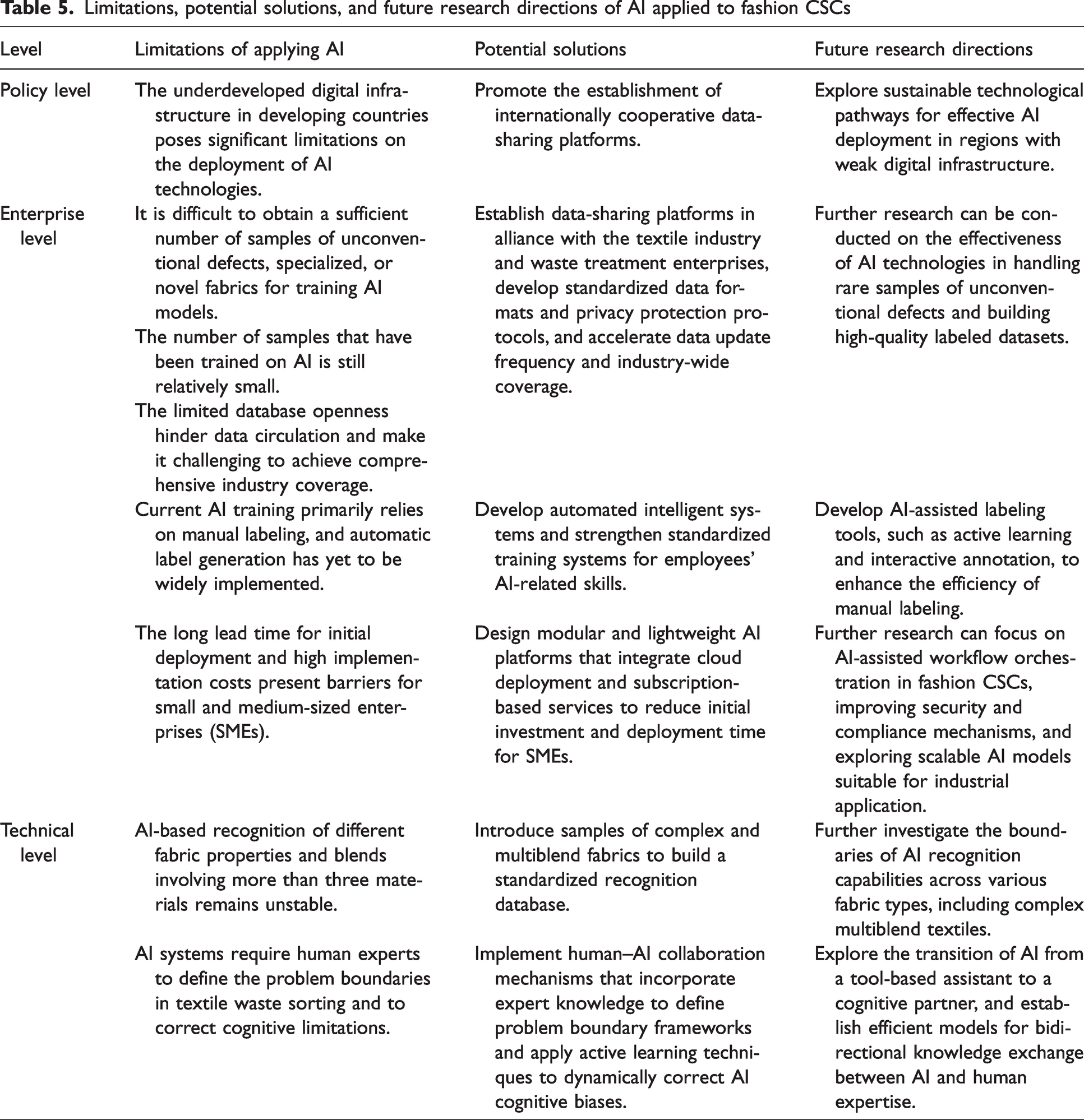
In response to these limitations, this study proposes several potential solutions for the application of AI in the fashion CSC context. Future research could consider developing a conceptual model for an AI-based service system in the textile waste domain, 138 which would help quantify thresholds of technical effectiveness and identify cross-level risk points. More importantly, the CSC in the fashion industry remains at a conceptual stage and lacks end-to-end practical implementation. Future research should promote the complete realization of fashion CSCs, from strategic planning through to operational processes, in order to establish a solid foundation for the deep integration of AI technologies and to enhance their comprehensive application and potential within the fashion CSC.
This study also has its own limitations. While adhering strictly to a systematic methodology to ensure the rigor and terminological consistency of the literature review, the study limited its data sources to Scopus, Web of Science, and Google Scholar, and included only English-language peer-reviewed publications. The language restriction may have excluded localized cases of technological innovation within non-English-speaking academic communities, while the reliance on peer-reviewed sources may overlook critical insights contained in unpublished or gray literature, which may hold valuable but under-disseminated information.
Future research can address these limitations by broadening the scope of data sources to include industry reports, policy documents, and patent databases, as well as incorporating multilingual literature to enhance the comprehensiveness and applicability of findings. This will help ensure a more complete understanding of global technological innovation.
In addition, while this study focused on the 3R principles as the foundation of CSC, the evolving circular economy paradigm increasingly emphasizes the 7R principles: reduce, reuse, recycle, refurbish, repair, remanufacture, and repurpose. The 7R framework allows for more granular circular strategies and offers multiple pathways to strengthen the resilience of CSC systems. Future research could explore how AI technologies can be integrated with the 7R principles to further improve the efficiency and effectiveness of textile waste management, thereby advancing broader sustainability goals.
Footnotes
Data availability
This study is based on publicly available research articles and no new datasets were generated. The analyzed literature is detailed in the references section.
Declaration of conflicting interests
The authors have no relevant financial interests in the subject matter or materials discussed in this manuscript and have no other potential conflicts of interest to disclose.
Funding
The author(s) received no financial support for the research, authorship, and/or publication of this article.
