






Abstract
The pressing demand to operationalize electrokinetic energy (EKE) applications in the weaving department of the textile industry is the motivation behind this large-scale study. In order to solve these problems, this paper introduces three new manners of energy conversion for the proposed electrokinetic phenomena. A novel approach to energy harvest optimization is represented by the first approach, i.e., the modified series–parallel piezo matrix. By appropriately arranging a number of piezoelectric devices in serial and parallel forms, this approach achieves unprecedented efficiency gains. Bidirectional linear generation is a second approach, and it reconsiders how to store energy in one way. This deep learning method achieves remarkable enhancement in energy harvesting and optimization with the aid of mechanical force from both forward and backward motions of weaving procedures. The third approach is a field tuning method referred to as unidirectional nonlinear power extraction force tuning. In order to maximize energy recovery, it focuses on specific instances in the weaving cycle where there is maximum kinetic energy. In conclusion, this project is a pioneering step to optimize utilization of EKE in the weaving section of the textile industry. Data-center efficiency, cost reduction, and sustainability are the primary focus areas. This research's value proposition in a nutshell is the conversion of wasted kinetic energy into useful forms with deep-reaching implications for the power landscape of textile industry and beyond.
Keywords
Optimization of electric power is essential in the dynamic environment of industrial operations to improve efficiency, cost, and responsibility for resource management. 1 The intelligent use of electric power is growing in significance as companies with greater purchasing concern themselves in maintaining both environmentally friendly and efficient operation. Figure 1 depicts an optimized industrial energy flow, where influencing factors are explored and improvement approaches presented. It reflects the complicated relationship between influencing factors of energy optimization in the industry. 2 As a comprehensive strategy, industrial electrical energy optimization is designed to schedule power consuming modes, exploit equipment performance, and minimize energy loss.3,4 State-of-the-art technology such as smart meters, energy-efficient equipment, and data integration was covered. In the industrial sector, the objective of electrical energy optimization is to decrease power waste while enhancing the efficiency of equipment and controlling the pattern of power consumption. The use of big data, LEDs, and other energy-efficient technologies alongside smart meters for easy consumption can empower businesses to have a more comprehensive understanding of their trends in consumption. On the other hand, accentuating areas could be enhanced.5-9
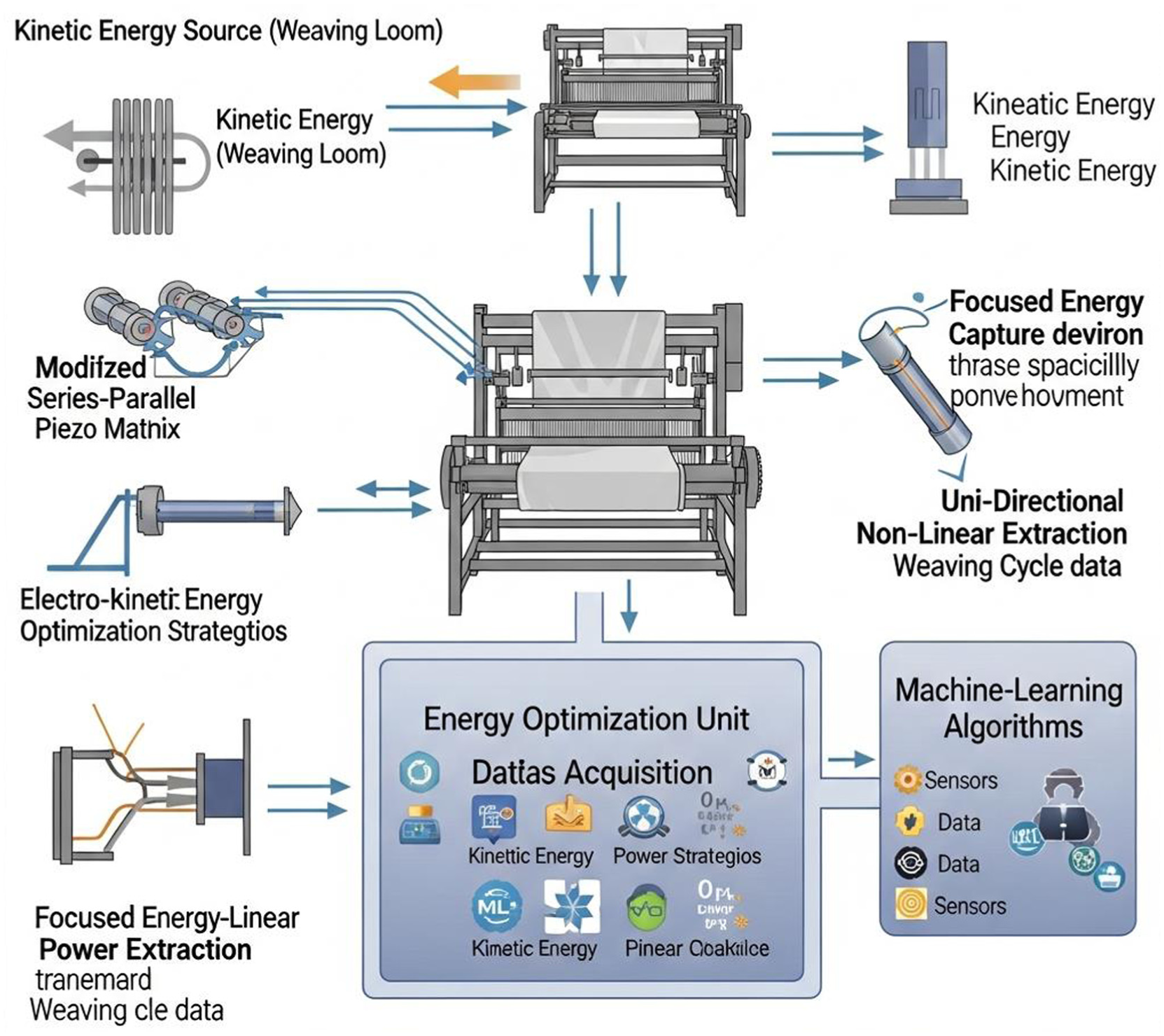
Industrial energy flow optimization: the causality analysis and optimization strategies
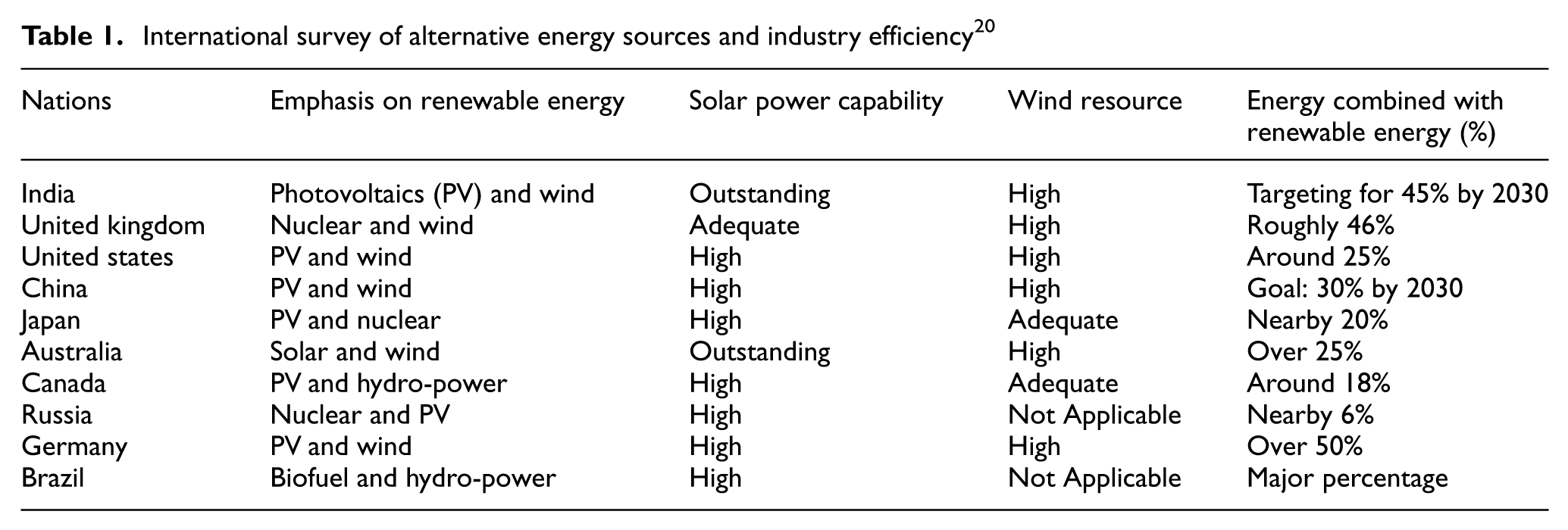
The economic advantages of industrial electrical energy efficiency (EE) are beyond doubt. The cost reduction of using less energy also contributes to enhancing the financial status of an organization.10-13 At the same time, transitioning from fossil fuels to green energy lowers the need for dirty fossil fuels, which is obviously a good thing for both the environment and also the future health of this particular industry. Energy saving in industry is fully synchronized with ecological objectives in the green world of today. Even when they generate their own electricity through renewable sources, such as wind or solar power, industries could do something positive for the environment and reduce their effect on the climate. A high-level diagram of the architecture is depicted in Figure 1. For the area of industrial energy optimization, Table 1 presents an international overview of renewable energy focus and industrial energy optimization. These data can help us understand the factors that influence which source is preferred in different countries. These nations are joining efforts to enhance industrial energy management by concentrating on renewables, hydropower, nuclear, and biofuels.
International survey of alternative energy sources and industry efficiency 20
Deep learning algorithms can enhance electrokinetic energy (EKE) harvesting in the textile industry by predicting vibration patterns and optimizing energy extraction efficiency from weaving machines. Advanced models such as long short-term memory (LSTM) and neural networks analyze loom operating conditions, mechanical vibrations, and electrical outputs in real time. These algorithms help improve power generation stability, adaptive load management, and predictive maintenance of harvesting systems. Machine-learning-assisted monitoring also enables efficient tuning of piezoelectric and nonlinear energy-harvesting mechanisms under varying textile production conditions. Thus, intelligent data-driven optimization significantly improves the reliability and sustainability of self-powered textile manufacturing systems.
The power loom energy achievement is facilitating the goals of emission reductions and sustainability more broadly.14-19 These energy alternatives are key factors in the construction of a more resilient industrial landscape and a healthier, ecologically balanced future. The diversity of approaches, which is affected by elements such as geography and access to resources, reflects a commitment to balancing industrial growth with the principles of protecting the environment, while also serving to accelerate a global movement toward more sustainable industries. In other words, the power usage of textiles is not confined to a single process; instead, it can be distributed across different cycles, with each cycle contributing its own cost to the overall gas consumption. Its huge electric power requirements are defined by the interaction between machinery and heating and by operational complexities.
Research contributions from this paper are as follows.
➢ Track down the kinetic power: Examine the complex and amazing kinetic energy generated by weaving-machine power looms. To measure exactly the remaining work in the loom.
➢ Innovate new approaches and emerging technologies of kinetic energy harvesting: Brainstorm new techniques to scavenge kinetic energy and convert it into electric power. Among these advanced approaches, the integration of piezoelectric materials has been studied.
➢ System integration: Develop a strategy for integrating kinetic harvesting devices into existing power distribution and grid systems. Address the problems associated with synchronization and variability of energy generation.
➢ Performance assessment: Rigorous performance evaluation of the reliability and efficiency of the kinetic energy conversion technologies developed for the weaving power loom. We learn how they can reduce power bills and make the system more reliable.
➢ Economic and environmental effects: Compare the economics and environmental benefits of kinetic energy solutions in a weaving mill.
➢ Thes organization and description of the work are summarized in the following section, which discusses background data analysis and observational data analysis. We then deal with the execution methodology of the proposed research. Next, we develop a comprehensive analysis of experimental source details. Then we present an analysis of comparative results along with inferences and, finally, concluding remarks and future scope are presented.
Preliminary work
An exhaustive review of the field of industrial energy optimization and the challenges that are currently present is presented in this section. It narrows in upon the textiles industry and analyzes exactly how many challenges are furnished in the weave power loom sector to optimize energy utilization. Furthermore, this section discusses the need for power electronics interfaces designed for energy optimization in such power looms for weaving. We also point out the importance of deep learning algorithms to enhance the performance levels of renewable energy sources. The primary data observed at the neighboring power looms in respect of three types of firms, i.e., small, medium, and large, are presented in this section to facilitate the empirical implications. Future directions and remaining research gaps are discussed in the closing part of this section. In order to make the document readable and predictable, each of these parts has a dedicated section.
Investigating and optimizing energy use in the textile industry, data-driven transformations for sustainability
Tahir et al. 17 investigate EE and the environmental complexity of the textile industry in Bangladesh and identify numerous factors that bear on promoting or throttling EE. They demonstrate the purposes behind EE programs and key barriers to implementation in textile companies.
Manikyala Rao and Singh 19 studied the energy performance of the Indian textile industry from raw fabric to finished fabric. The industry is considering energy consumption at every stage of production due to its economic size, employment level running into millions, and as a major textile exporter. The work concentrates on weaving, yarn production, spinning, and drying in order to become more efficient through advanced technology and energy. The report also shows the effect on energy intensity validation of perform, achieve, and trade (PAT) schemes and further encourages adoption of the most sustainable energy utilization practices across various operations in industry. The exploration of weaving sustainability has taught us the following lessons.
Improvement in energy performance due to cogeneration in the textile sector.
There are fluctuations in Indian renewable energy data collection.
Evaluation of greenhouse gases (GHGs) in solar operated weaving industries.
Physics of weaving and the significance of kinetic energy
Saravanan and Albert 20 described the textile energy footprints of textile products regarding energy consumption in the food and textile sectors; the authors focused on textile energy impacts. Their research contributes to the understanding of energy extraction and environmental consequences of textile production. The paper sheds light on sustainability problems and opportunities in the textile industry through energy footprints.
Beeby et al. 22 studied the effect of composite preform weaving parameters on weaving capability based on vibration characteristics. The authors used vibration characteristics to examine the effect of composite preform weaving parameters on weaving capabilities. Their research explores the complex link between weaving parameters and vibration behavior to better understand how weaving circumstances affect composite preform performance during weaving. The study optimizes composite material weaving procedures. The weaving process investigated the following factors:
power loom weaving electricity expenditure;
the importance of EKE in weaving;
efficiency issues and kinetic energy wasted.
Effective kinetic energy
Amarnath et al. 23 created a novel EKE harvester using a vibration rectification mechanism for self-powered applications in railways. This was ground-breaking work. The researchers presented an innovative vibration rectification-based EKE harvester for autonomous railway systems. Self-powered applications and new EKE utilization proved the study's relevance and support sustainable energy alternatives.
Additive manufacturing of laboratory waste into an energy harvester device for self-powered applications described by Dolez 24 epitomizes the frontier research in nano-energy. They used 3D printing to create self-powered energy-harvesting devices out of lab waste. This work aims for sustainability by converting waste into useful resources, which is the demand of this time for self-sustainable development and reflects a major leap toward eco-friendly technology.
Different techniques are utilized to obtain EKE from wind, water, and human motions. Wind turbines, hydropower generators, and piezoelectric devices convert kinetic energy into electricity.
EKE extraction efficiency depends on many factors. These include the moving object's velocity, surface area exposed to kinetic force, extraction system design, climate, and conversion technology.
Increasing EKE efficiency with power electronics interface
Saravanan and Albert 21 used zero-voltage transition strategies to reduce switching losses in a Luo DC–DC converter. Innovative switching mechanisms improve energy conversion efficiency and power losses in DC–DC converters in their research.24,25 They enhance power electronics technology by minimizing switching losses and improving DC–DC converter energy conversion efficiency.
Simple nonlinear current-mode control of a DC–DC Cuk-converter for low-cost industrial applications was proposed by Albert et al. 26 The research enhances the performance/cost ratio of the converter control method for use in industrial applications where cost is a major concern. Several researchers27-30 have proposed optimizations of the DC–DC converter control methods in low-cost industrial applications.
Perspectives on EKE harvesting with power electronics interface
In this paper, a detailed comparative review of EKE harvester is presented in different environments with co-relation to the power electronics interface. The paper investigates the feasibility of storing extracted EKE. The following specific aims are proposed based on preliminary work.
Design a method to amalgamate EKE harvesting systems, i.e., modified piezo matrix system, linear generation system, and nonlinear generation approach for optimal collection and harnessing of wasted energy in weaving power looms.
Develop a novel DC–DC chopper configuration suitable for second-level power conversion in reducing conduction losses and integration into the power system.31-34
Analyze and predict the stability of EKE production compared with traditional renewables with regression machine method.
Integrated EKE harvesting system for power-loom waste are a framework that fuses modified piezo matrix, linear generation, and nonlinear generation technologies to facilitate the efficient gathering and utilization of weaving power-loom waste EKE.
Novel DC–DC chopper circuits tuning the second-stage power conversion 35 have been developed and demonstrated in order to maximize the efficiency of energy extraction for a perfect match with the power system.
EKE production stability is compared with conventional renewable energy sources using regression machine analysis.
Performance benefits from integrating EKE harvesting and electro-kinetic generating systems are evaluated, including energy yield, power conversion efficiency, and energy waste reduction.
Optimization algorithms are developed to optimise kinetic energy harvesting and EKE production for optimal efficiency, including adaptive control mechanisms to adjust to weaving operations and energy consumption.
Deep learning algorithm for EKE harvesting in the textile industry
Recent studies on EKE harvesting in the textile industry have focused on utilizing piezoelectric materials and nonlinear vibration mechanisms to recover wasted mechanical energy from weaving machines. Researchers have reported that piezoelectric energy harvesters integrated with loom structures can effectively convert shuttle and reed vibrations into usable electrical energy for low-power industrial applications. Advanced machine learning and deep learning algorithms, particularly LSTM and neural network models, have recently been applied to predict energy generation under varying loom operating conditions. Several works also explored nonlinear power extraction circuits and hybrid converter topologies to improve voltage stability and harvesting efficiency in dynamic textile environments. Furthermore, intelligent monitoring frameworks using artificial intelligence (AI)-based predictive models have shown promising performance in optimizing energy management and fault detection in weaving systems. These studies indicate that combining high-density piezo-matrices, bidirectional vibration harvesting, and deep-learning-assisted prediction can significantly enhance sustainable energy recovery in modern textile industries.
Materials and methods
Optimizing power loom energy capture and efficiency with kinetic energy harvesting moving elements in weaving power looms may generate kinetic energy. Key components and locations for kinetic energy production are as follows.
The shuttle, which transmits the weft thread over the warp threads, moves rapidly, as illustrated in Figure 2. Piezoelectric or electromagnetic generators may harvest shuttle kinetic energy.
Mechanical drive systems that move harnesses and reeds create kinetic energy. Flywheels and regenerative brakes may collect this loom drive system energy.
As they move up and down, head frames may generate kinetic energy because they govern warp thread movement. Energy may be gathered via piezoelectric or linear generation.
The rollers that wound the woven fabric onto the cloth beam provide kinetic energy. Rotational kinetic energy harvesters, or mechanical devices, may collect this energy.
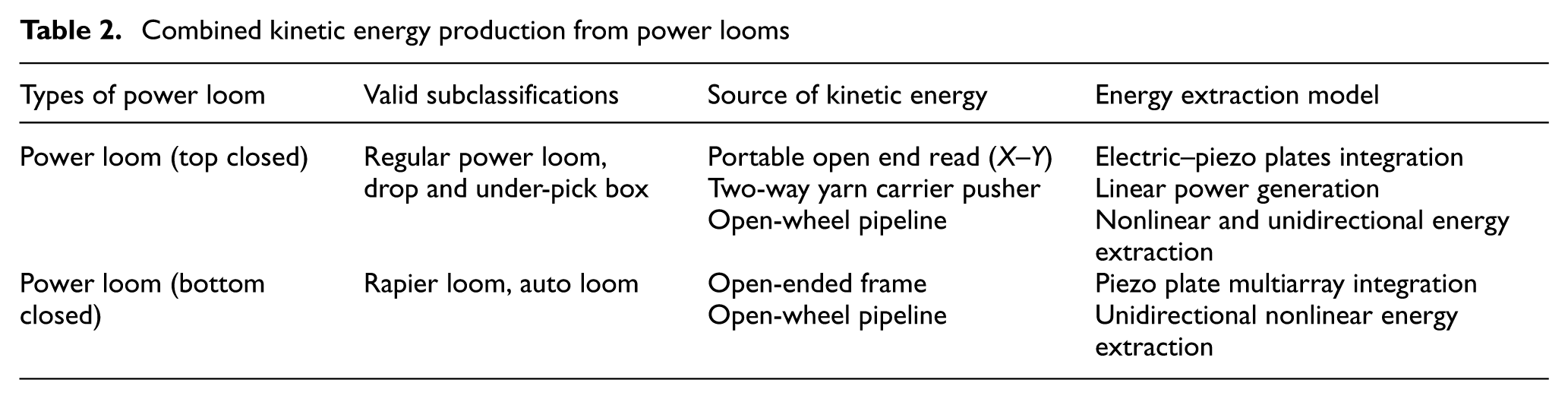
The shedding mechanism creates the shuttle's shed using moving elements. An appropriate system can gather kinetic energy from these pieces. Table 2 presents the bottom and top closed-loop power loom kinetic-energy utilities.
Both warp and weft thread tensioning systems use moving parts that generate kinetic energy. Energy may be harnessed to generate electricity.
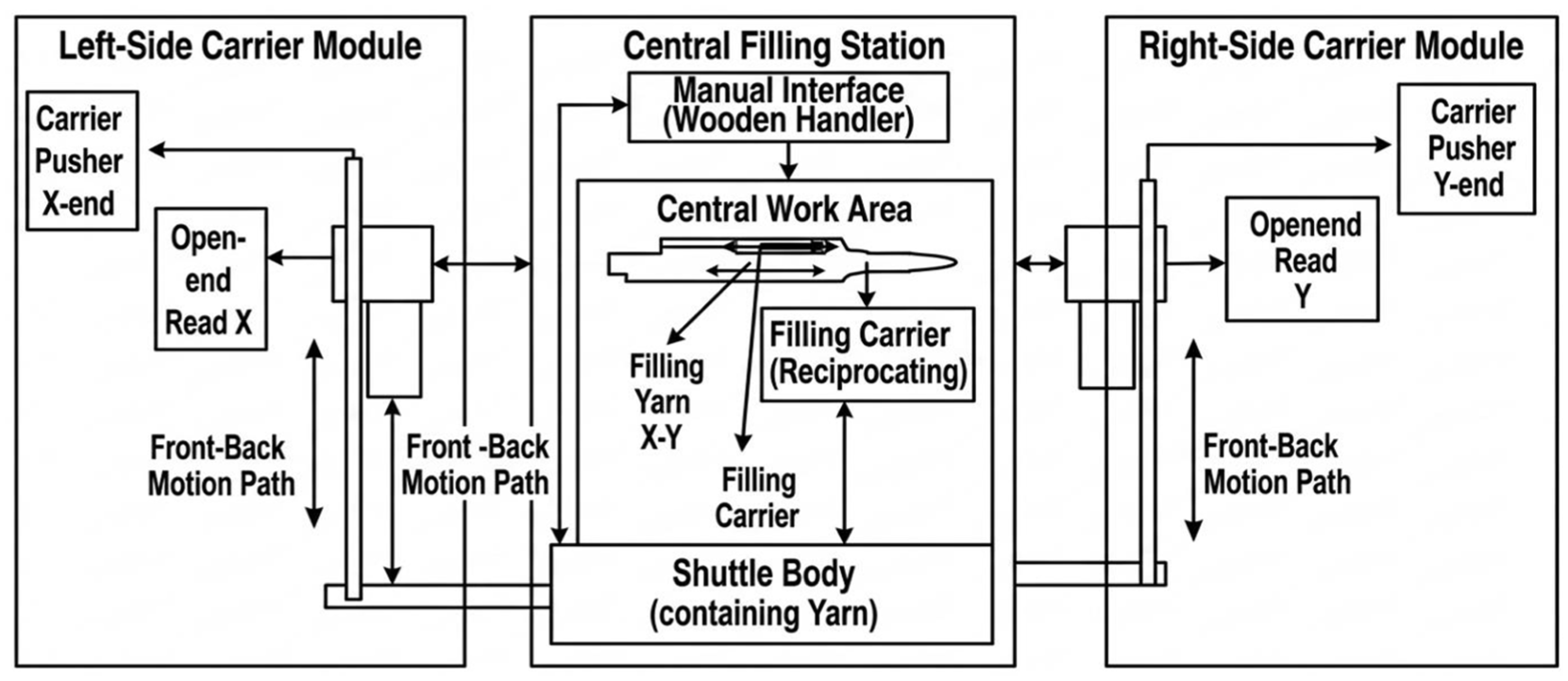
Front view of shuttle moment
Combined kinetic energy production from power looms
The weaving machine frame vibrates and moves during operation. Piezoelectric materials or vibration-based harvesters may create kinetic energy from these motions. Setting the beat-up or changing patterns in the loom may provide kinetic energy for power production in secondary motions. The behavior of piezoelectric material is governed by coupled electromechanical constitutive equations


where S is strain, T is mechanical stress,

where v is velocity of mechanical motion and m is vibrating mass. The mechanical vibration equation is

where m is mass, c is the damping coefficient, k is stiffness, x is the displacement factor, and F(t) is external force from the weaving operation. Voltage is generated via a piezoelectric strain mechanism, and the equation for piezoelectric voltage generation is


where ε is dielectric permeability, T is applied stress, t is piezoelectric thickness, and v is voltage generated from piezoelectric generation. Here Ns is the number of series elements in the modified series–parallel piezo-matrix output, Np is the number of parallel elements in the modified series–parallel piezo-matrix output, and Vp and Ip are voltage per piezo and current per piezo. Based on power loom motion is forward and backward. The harvest electric power output is



The nonlinear power extraction model equation is

where

where η is electromechanical conversion efficiency. The energy conservation efficiency is

The total energy from the piezo-matrix is

where Ep is energy per piezo-element. To extract kinetic energy from these sections, the dynamics of the weaving power loom must be carefully assessed and suitable kinetic energy-harvesting methods chosen for each application. Depending on the kinetic energy source and conversion mechanism, piezoelectric materials, electromagnetic generators, linear generators, and mechanical systems such as flywheels or springs may be used.
Efficient use of kinetic energy in weaving power looms
Kinetic energy might improve weaving power loom efficiency. We explore EKE extraction, power loom models, and selection criteria in this thorough entire research. In addition, we examine piezo plate layout to optimize energy extraction from certain components and discover the full potential of kinetic energy in weaving power looms.
EKE model selection criteria
EKE producers are selected based on their size and mass. Higher-weight components may need various energy extraction techniques for efficiency. Force of the moving object comes from moving objects such as wooden pillars or open-end readers which affect the EKE extraction model's compatibility. Different models are used depending on force magnitude.
Open-end head frame and read piezo plate configuration
In order to collect EKE effectively, an open-end head frame needs around nine piezo plates. The piezo plate structure is as follows: eight 4 × 2 piezo disks enhance energy collection in each piezo plate. For the 4 × 2 piezo plate design shown in Figures 3 and 4, each piezo cell produces 3 V AC, resulting in a total voltage of 24 V. Different setups and EKE input may cause voltage output variability.
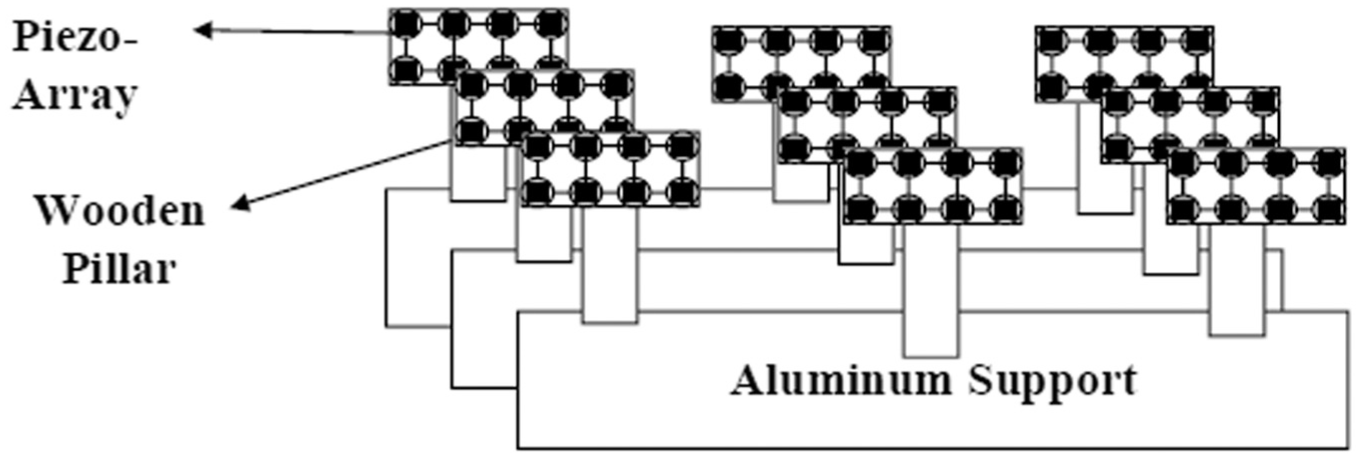
Piezo array integration with open head frame
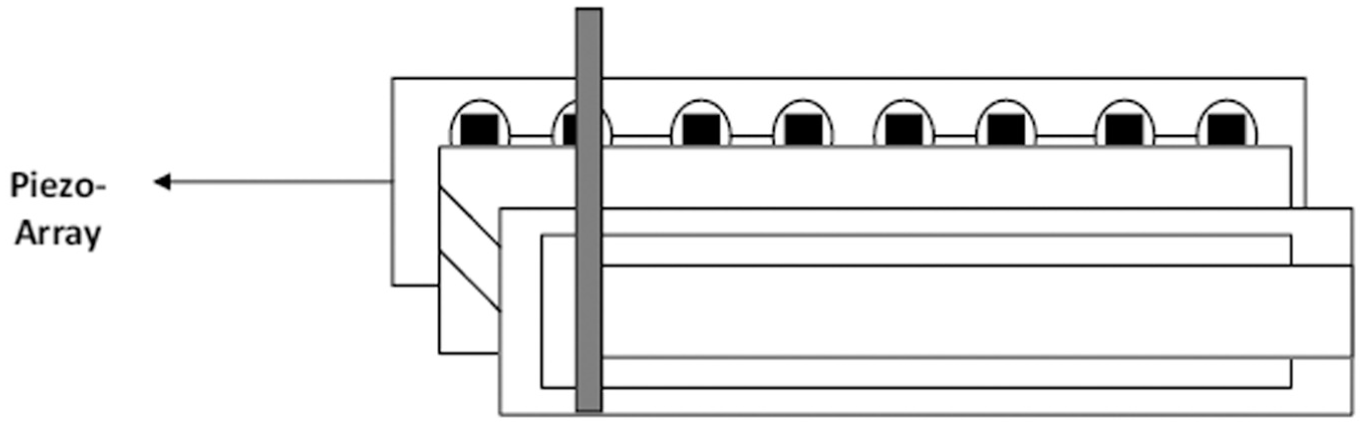
Piezo array integration with open end read (shuttle end)
Unidirectional nonlinear open-wheel power extraction
The majority of power looms use electric motors to weave. These may be three-phase squirrel cage induction or single-phase capacitance motors. This system relies on the electric drive shaft and large open-wheel pipeline as shown in Figure 5. Weaving requires the open-wheel pipeline. It contains weaving components and the production chain process unit. The spinning steel disk at the end of the open-wheel pipeline serves a unique role. It fixes design errors in the power loom's design printing unit but does not weave. Weavers manually spin this disk to identify and rectify design issues.
In order to troubleshoot steel disks, precise electrical input to drives is necessary. An electrical brake switch helps weavers control and analyze their work.
The open-wheel unidirectional nonlinear power extraction paradigm is similar to flywheel energy storage. Its one-way mechanical energy transmission system distinguishes it.
Built for unidirectional mechanical energy transmission and electrical energy extraction, the long open-wheel pipeline is laborious.
An AC or DC generator is strategically placed at the end of the conduit. Keeping the generator smaller than the power loom's electric drives reduces input voltage consumption.
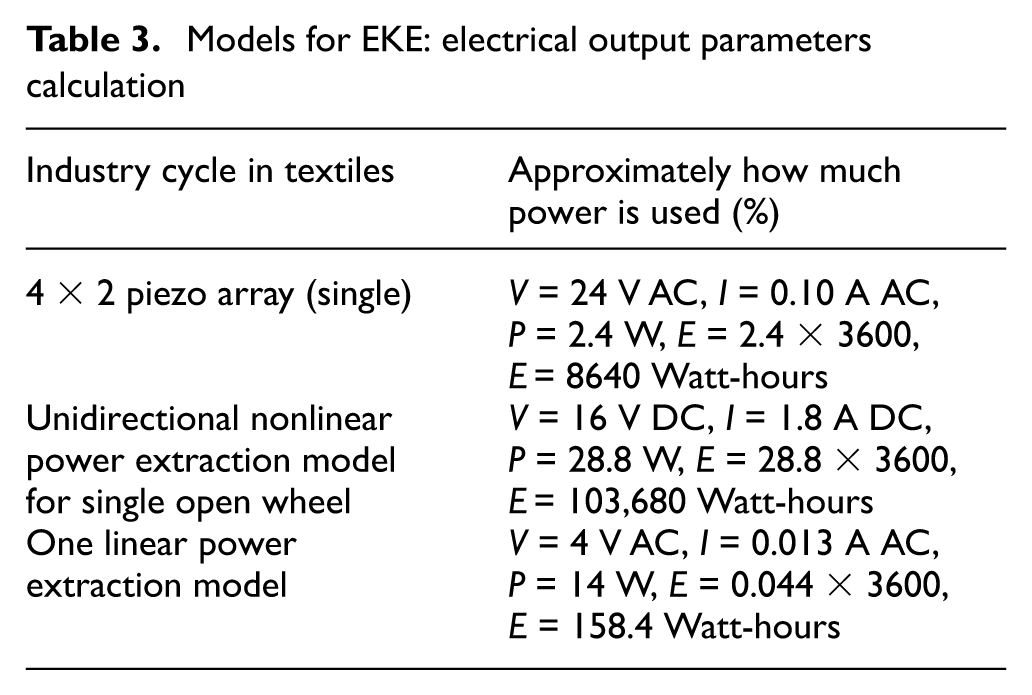
The theoretical output voltage of a generator is typically 12 V DC or AC. Electric drives and Table 3 illustrate how power loom parameters affect the output.
Variations in small-scale power loom enterprises: one electric drive powers one loom, but medium and large firms usually link one electric motor to multiple power loom shafts.
The open-wheel unidirectional nonlinear power extraction concept is adaptable to both bottom and top closed-loop power looms. Bidirectional linear power generation is shown in Figure 6.
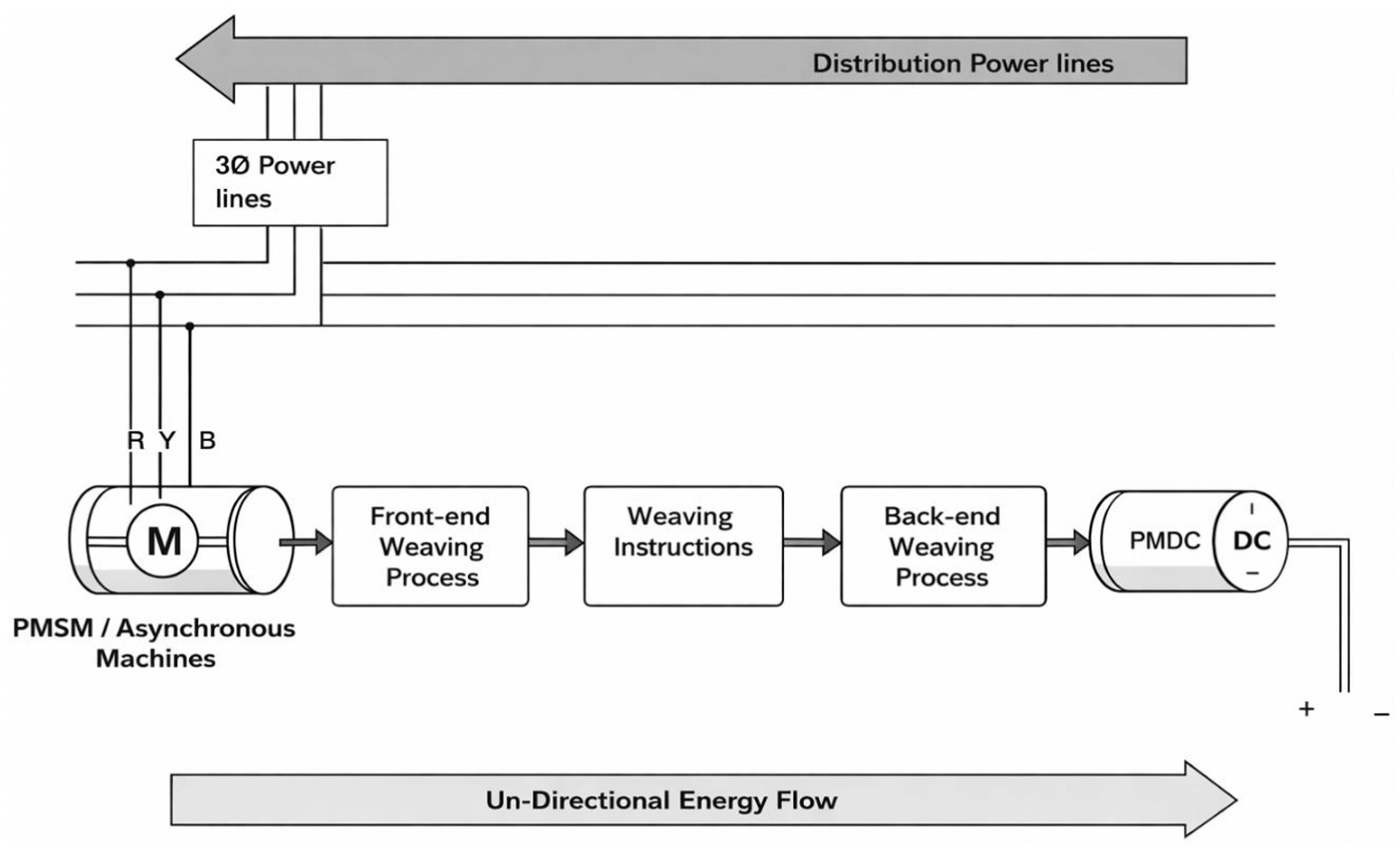
Power loom weaving for open-wheel unidirectional nonlinear energy extraction
Models for EKE: electrical output parameters calculation
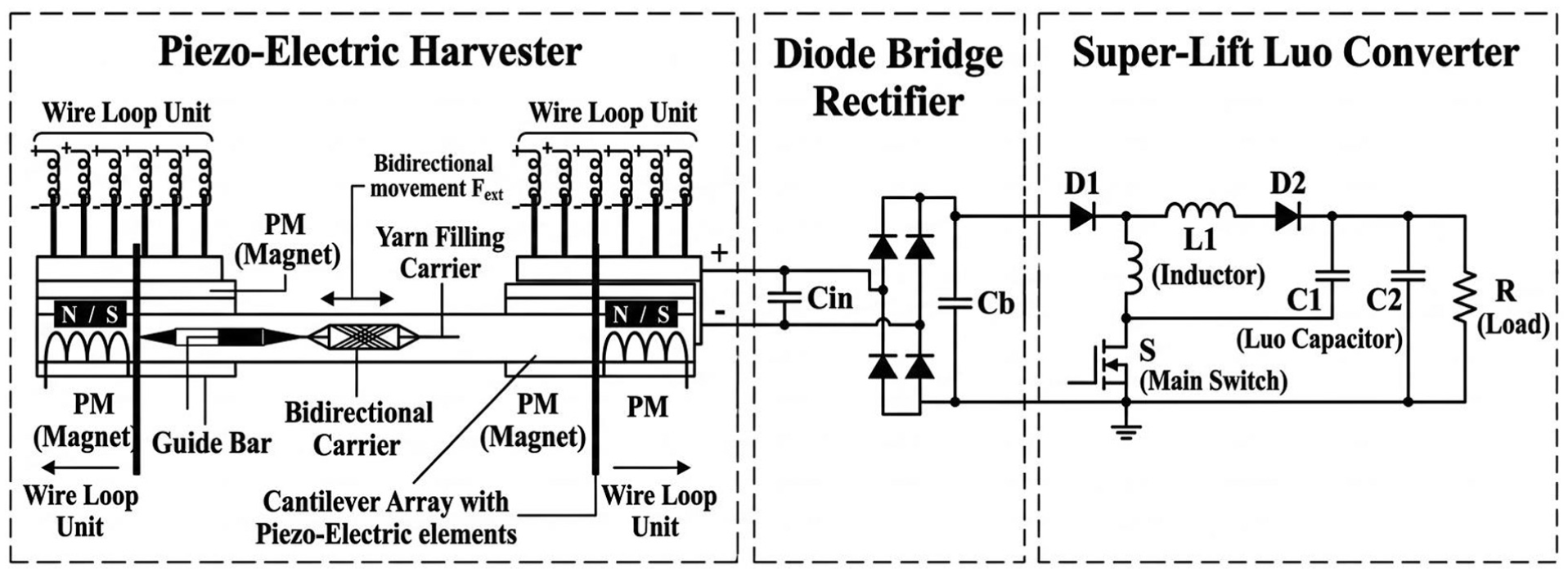
Two-way linear power generation with yarn-filling carrier pusher
Maximizing efficiency in top closed-loop power looms
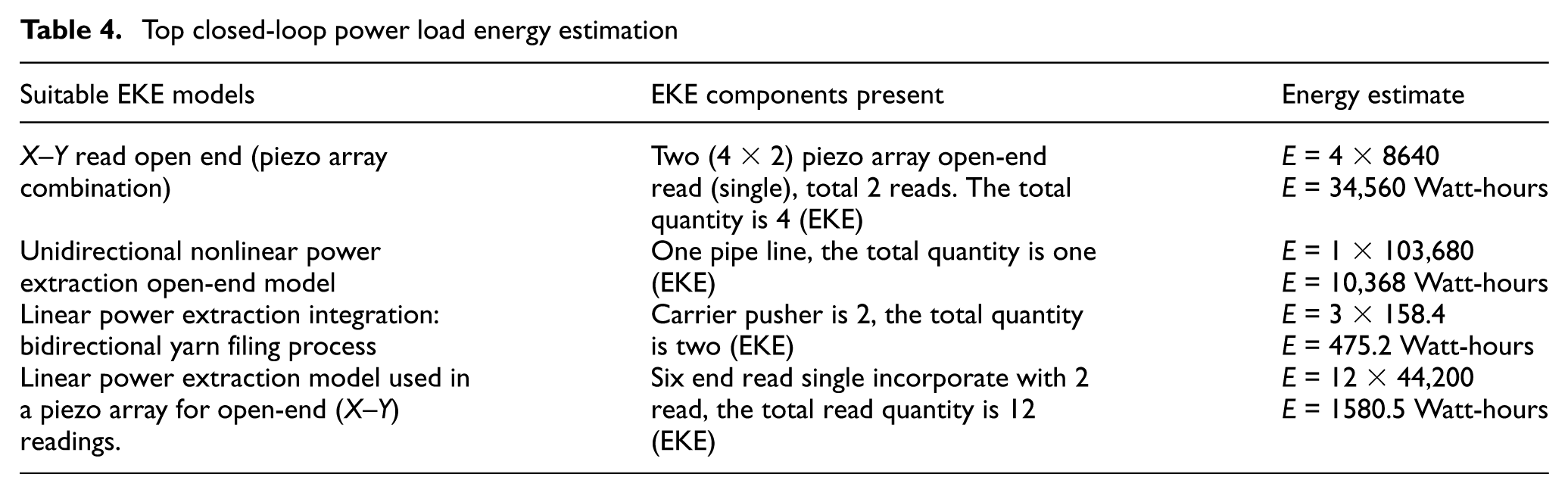
In contrast to the open-wheel unidirectional nonlinear power extraction method, the linear power generation model employs linear motion. The current-carrying coil remains fixed whereas Figures 7 and 8 demonstrate a linear field motion. The linear power generation model is tailored to the unique operating characteristics of top closed-loop power looms. Table 4 presents top closed-loop power loom energy estimate. The linear power-generating model typically produces 3 V AC theoretical output. The model's integration with power loom components produces this voltage output. The model works perfectly with the power loom's bidirectional yarn file carrier pusher, open-end X–Y read, and open-end headframe. By adding the linear power generation model to the top closed-loop power loom, it can collect more electrical energy from linear motion components. This improvement drives weaving energy economy and performance. Table 5 estimates bottom closed-loop power loom energy.
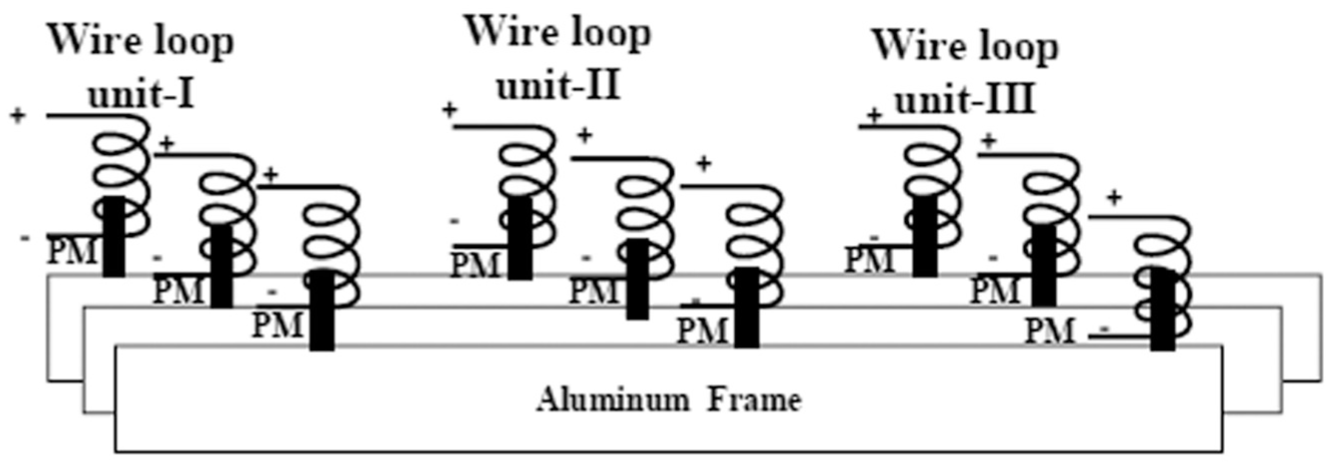
Open-end head frame linear power generation
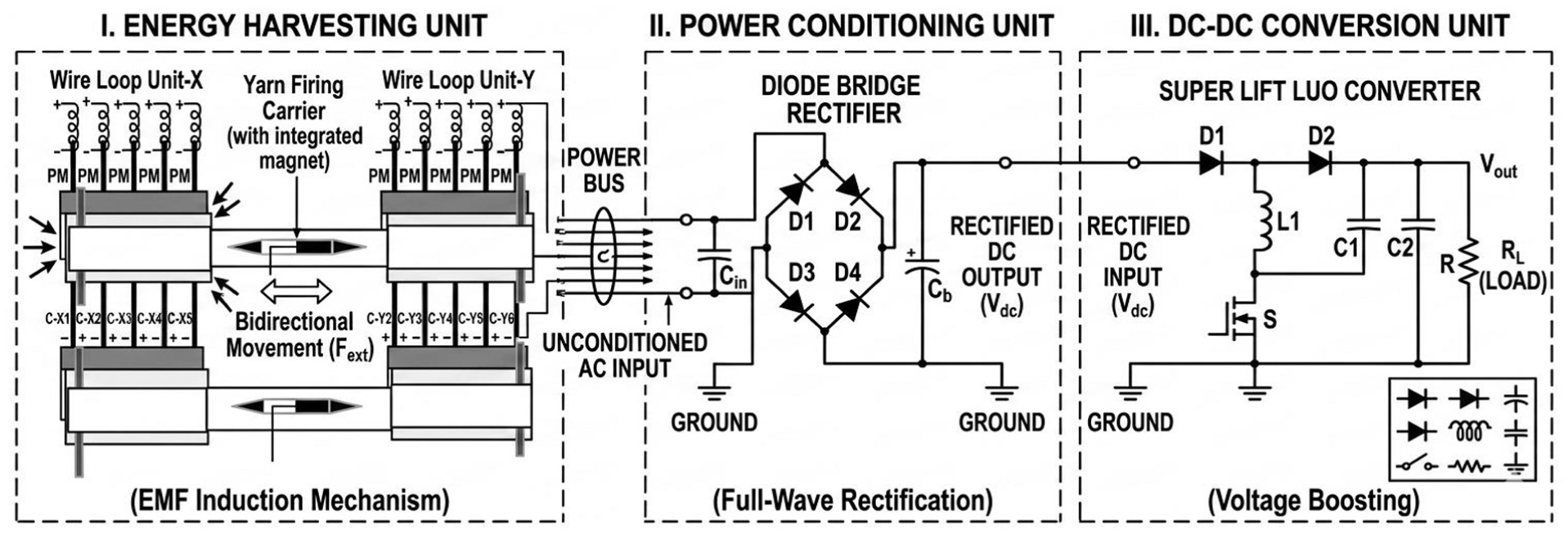
Linear power generation with open end X–Y read
Top closed-loop power load energy estimation
Power loom bottom closed-loop energy estimation
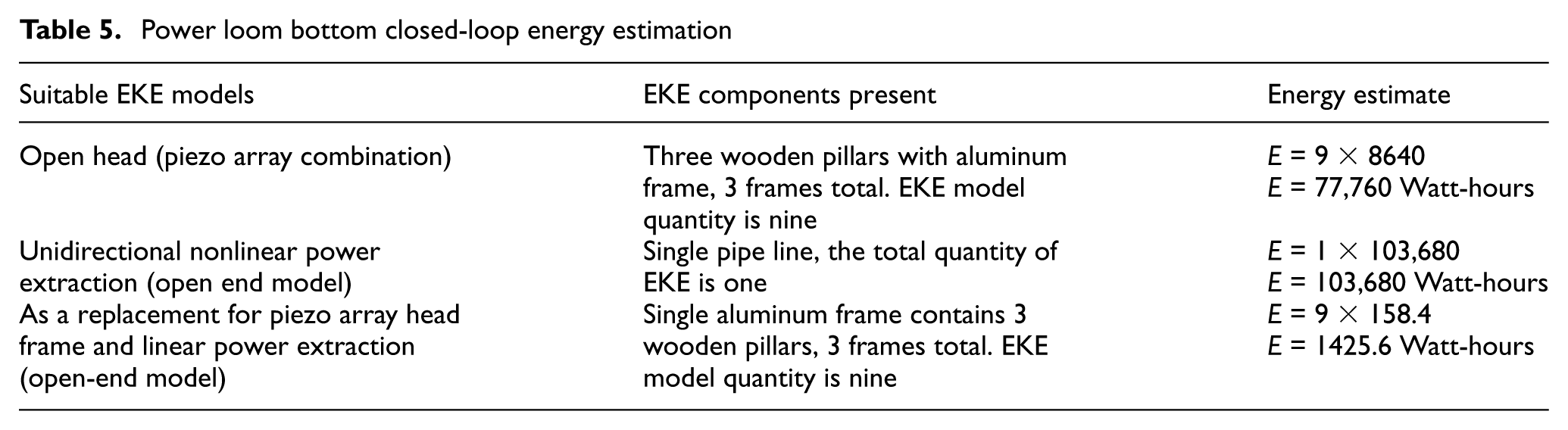
Energy estimation in power loom applications: detailed analysis
This section analyses energy estimation in power loom applications, noting that these estimates depend on several parameters, including the loom's operation time and the EKE extraction models used. The deciding factor is the duration in power loom applications: loom operating hours affect energy estimation. Small-, medium-, and large-scale weaving industries are distinguished as follows. small-scale industries operate for 12 hours a day, limiting energy use. Medium and large-scale weaving industries run 24/7 shifts. This 24/7 operation requires a stronger and more reliable energy source. Figure 9 shows power electronics interface integration with a 4 × 2 piezo array and hardwood pillar. Figure 10 exhibits power electronics interface integration with a 2 × (4 × 2 piezo array) configuration and X-open-end read.
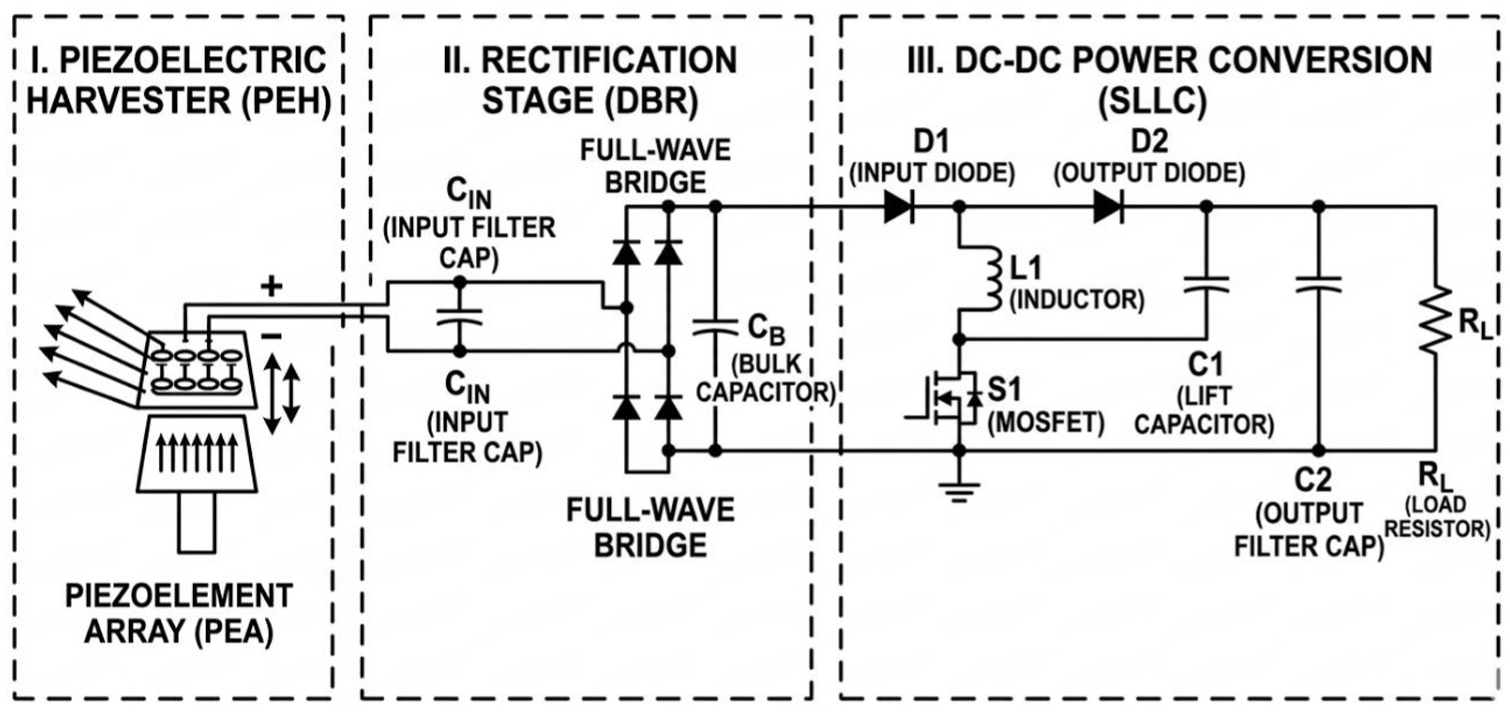
Integrated power electronics interface with 4 × 2 piezo array and wooden pillar
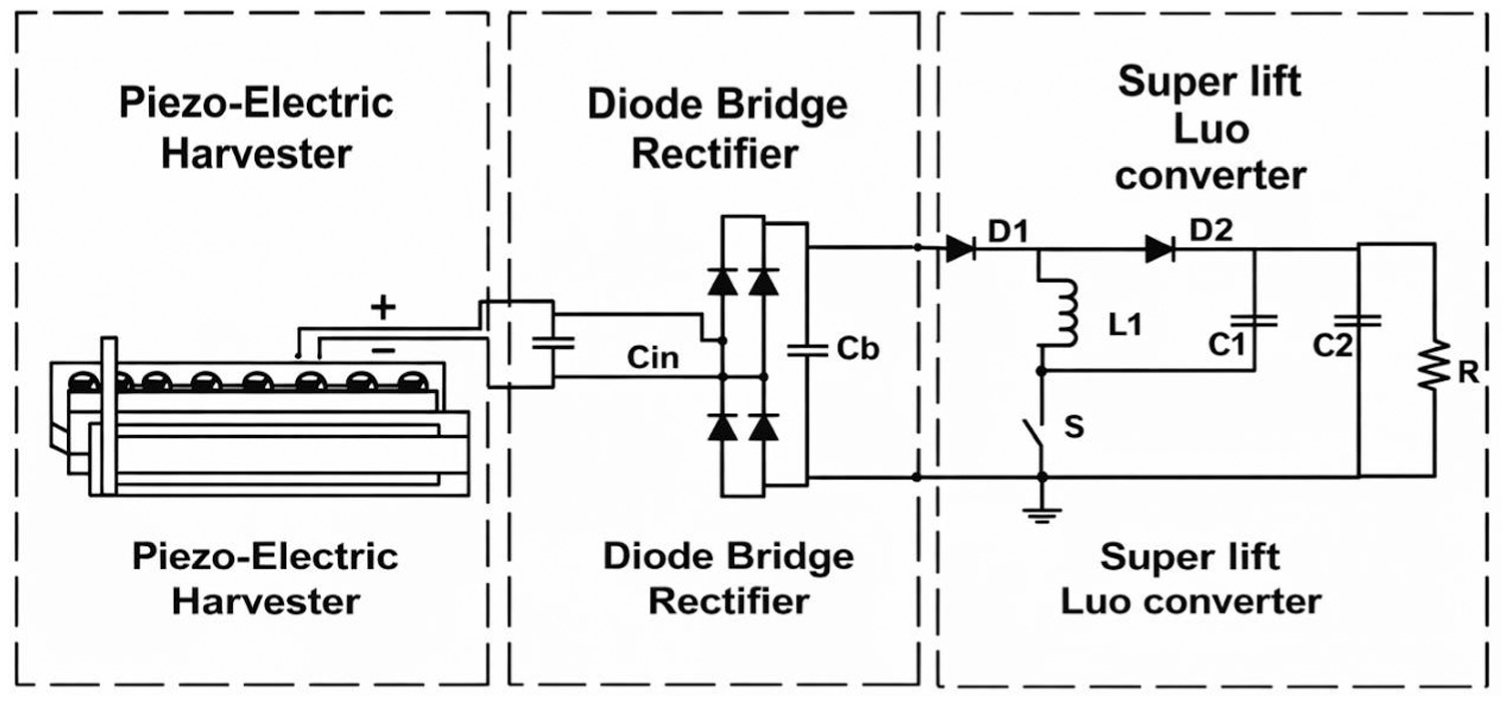
X-open-end read and power electronics interface integration involves a 2 × (4 × 2-piezo array) configuration
The top closed power loom energy estimate uses two EKE extraction models.
Matrix piezo array model. This model integrates 2 × (4 × 2) piezo arrays with open-end read. The key to weaving is that the open-end read travels constantly at 0.3 N, generating kinetic energy. The end of the open-wheel pipe is significantly modified in this variant. A PMDC generator replaces the rotating steel disk. This adaptation changes the energy extraction method, allowing mechanical energy to be directly converted into electrical energy.
Different energy extraction models. Bottom closed power looms energy estimate paradigm examines many EKE extraction models, each with its own characteristics. The open-end head frame is deliberately combined with the piezo array concept to gather EKE in a unique way.
Deep learning algorithm for EKE harvesting in textile industry
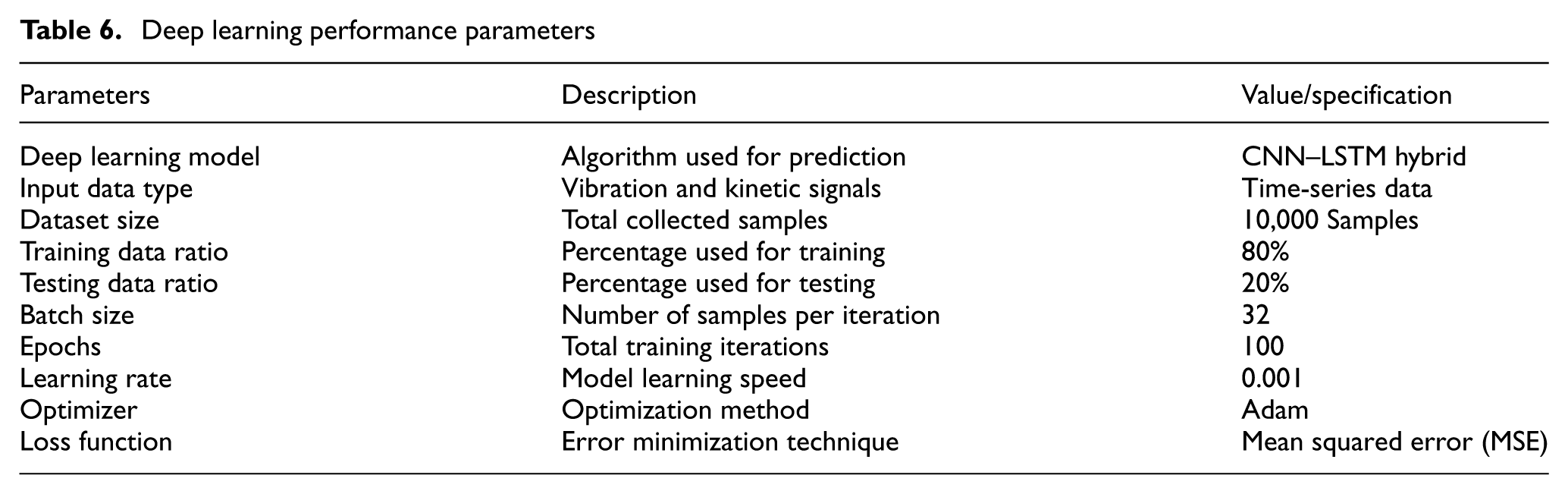
Deep learning algorithms play a significant role in improving EKE harvesting systems in the textile industry. These algorithms analyze vibration, motion, and mechanical stress data generated from textile machinery and wearable fabrics. Convolutional neural network (CNN) and LSTM models are widely used for predicting energy generation efficiency and optimizing harvesting performance. Deep learning techniques also help in fault detection, adaptive power management, and real-time monitoring of electrokinetic devices. Hybrid optimization models integrated with deep learning enhance energy conversion efficiency and reduce power losses in smart textile applications. Thus, deep-learning-based EKE harvesting systems contribute to sustainable energy generation and intelligent textile manufacturing. Table 6 presents the proposed deep learning algorithm parameters.
Deep learning performance parameters
Results and discussion
In this crucial section, the proposed work takes a step from the theoretical to the experimental: we describe the experimental facility used to measure and study the transformation of mechanical energy into electrical energy in a power weaving loom. This experimental work is based on cutting-edge techniques and instrumentation, using sophisticated machines for data collection. In addition, we stress the fact that the nature of deep-learning-based methods has transformed the accuracy and consistency of our experimental observations completely. This section presents an overview of the practical context of our research, bridging theory and practice. It gives insight into our creative and scrupulous method of EKE extraction through weaving.
Experimental modeling and performance evaluation of power loom for optimal extraction of kinetic energy
The three submodels within the test rig each have a unique configuration and interface to power electronics, which enables the submodel to extract EKE in an optimal manner. The matrix piezo array is an adaptable energy extraction device that incorporates these submodels. It is most famous for being able to capture electricity from mechanical vibrations. As a fully adjustable system, the arrangement also includes popular components such as the Open Winding unidirectional nonlinear power generator and Permanent Magnet linear generation.
Two different setups were also used in the experimental stage for matrix piezo array models: open-end head frame and open-end X–Y read. The open-end head frame was carefully fabricated with a mix of aluminum supports and wooden pillars to form a strong structure to provide for energy tapping. One special feature of this configuration is that the wooden pillars, where the interlacing thread process takes place, can move up and down in a continuous manner, therefore producing cyclic Magnetoelectric stress on the matrix piezo array shown in Figure 11. Every open-ended head frame has a T-model matrix piezo array (4 × 2), and nine wooden pillars are placed to enhance the energy removal.
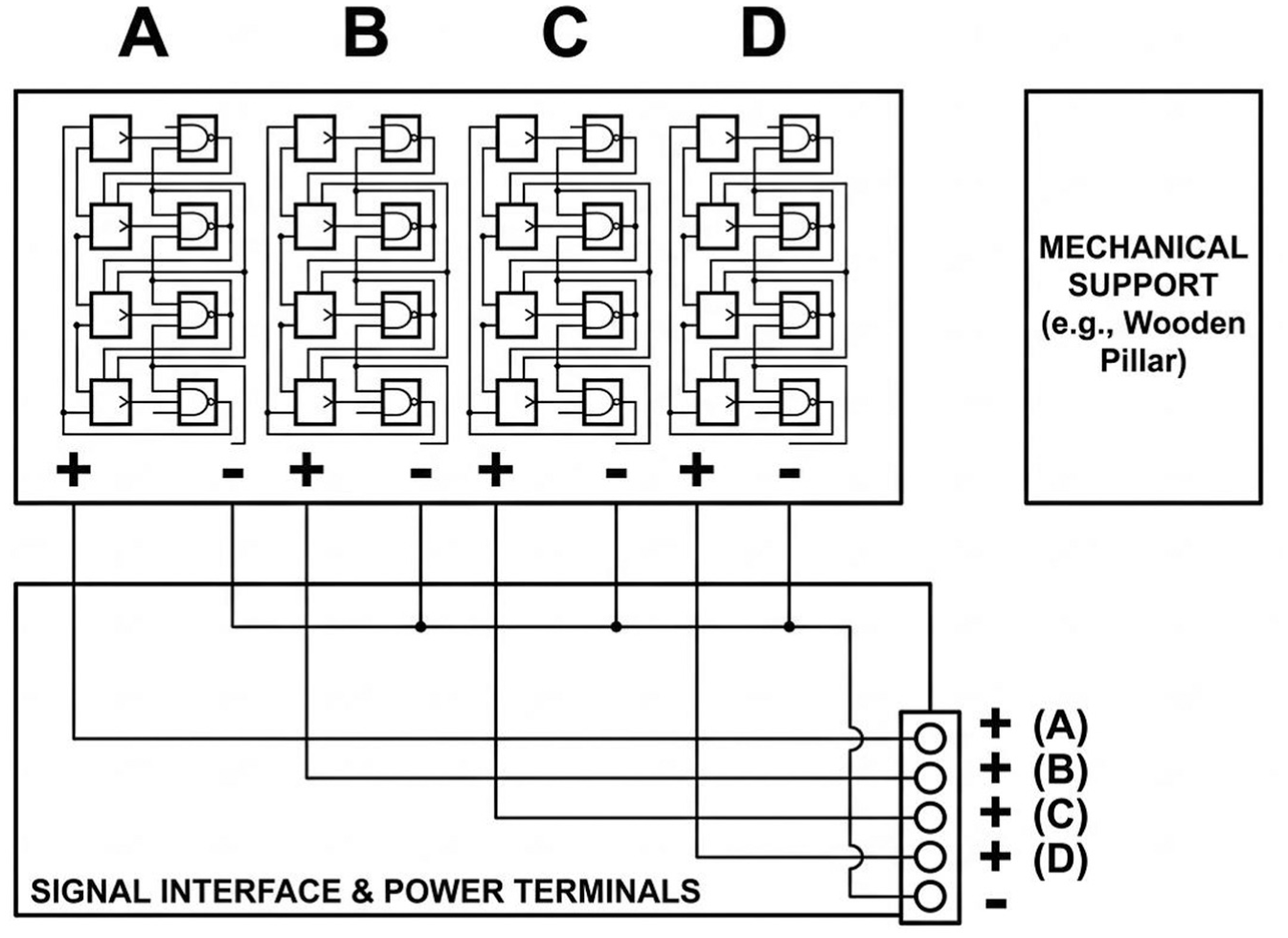
Piezo array model for open-ended head frame using a T-model
A matrix piezo array experiment for kinetic energy harvesting in power looms
During the experimental intervention, we used two different set-up combinations for matrix piezo array models: open-end head frame and open-end X–Y read. A solid piece of work for an energy extraction system, the open-end head-frame was meticulously built with an aluminum brace and hard-loom manning. What sets this particular formation apart is the fact that during weaving, vertical wooden shafts are also being continually moved along with the weft threads. This external configuration results in the matrix piezo array shown in Figure 12 being subjected to a periodic mechanical strain. Each open-end head frame is embedded with one set of 4 × 2 T-model matrix piezoelectric arrays, and nine wooden pillars are arranged in a particular pattern to obtain optimal energy extraction.
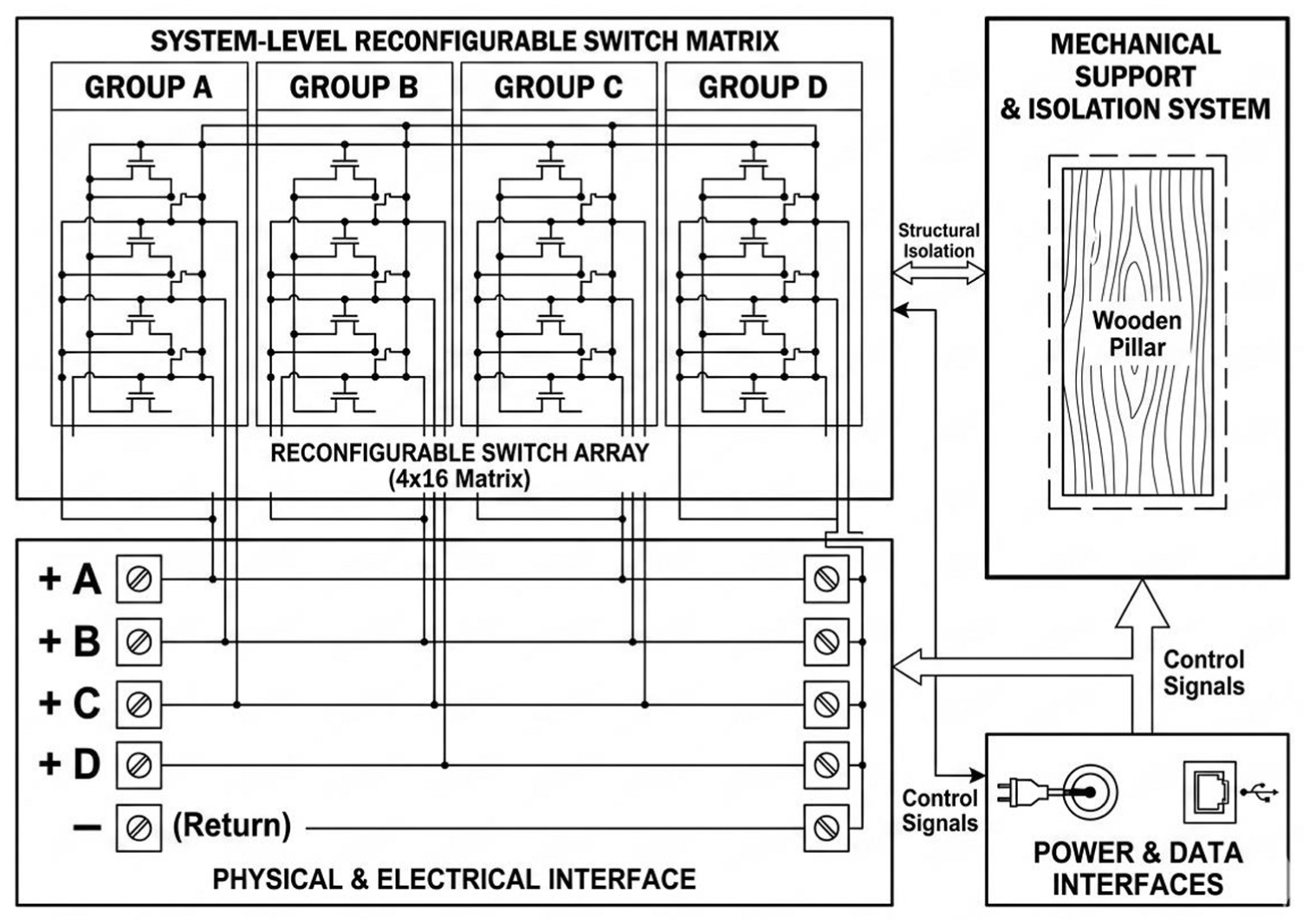
T-model matrix piezo array open-end head frame testing notation
Subjecting the open-end X–Y read-based EKE extraction to the force of two layers of wood pillars allows for its assessment. Figure 13 displays the carefully measured output voltage, which provides useful information about the effectiveness of energy extraction. With the use of these data, the architecture of the open-end X–Y read may be adjusted to achieve maximum energy production. Figures 14 and 15 depict the testing frame for EKE extraction with second-level DC–DC conversion and for open-end X–Y read, respectively. The energy extraction method is built on the push–pull action of the wooden pillars on the matrix piezo plates. The excess energy is discharged from the capacitor and stored in the battery shown in Figure 16 once it reaches its maximum charge capacity. This experimental setup guarantees a steady flow of energy for many uses. As illustrated in Figure 17, this action typically produces an average power output ranging from 0.23 to 0.29 W. The collected energy is then channeled into an energy storing capacitor to be stored.
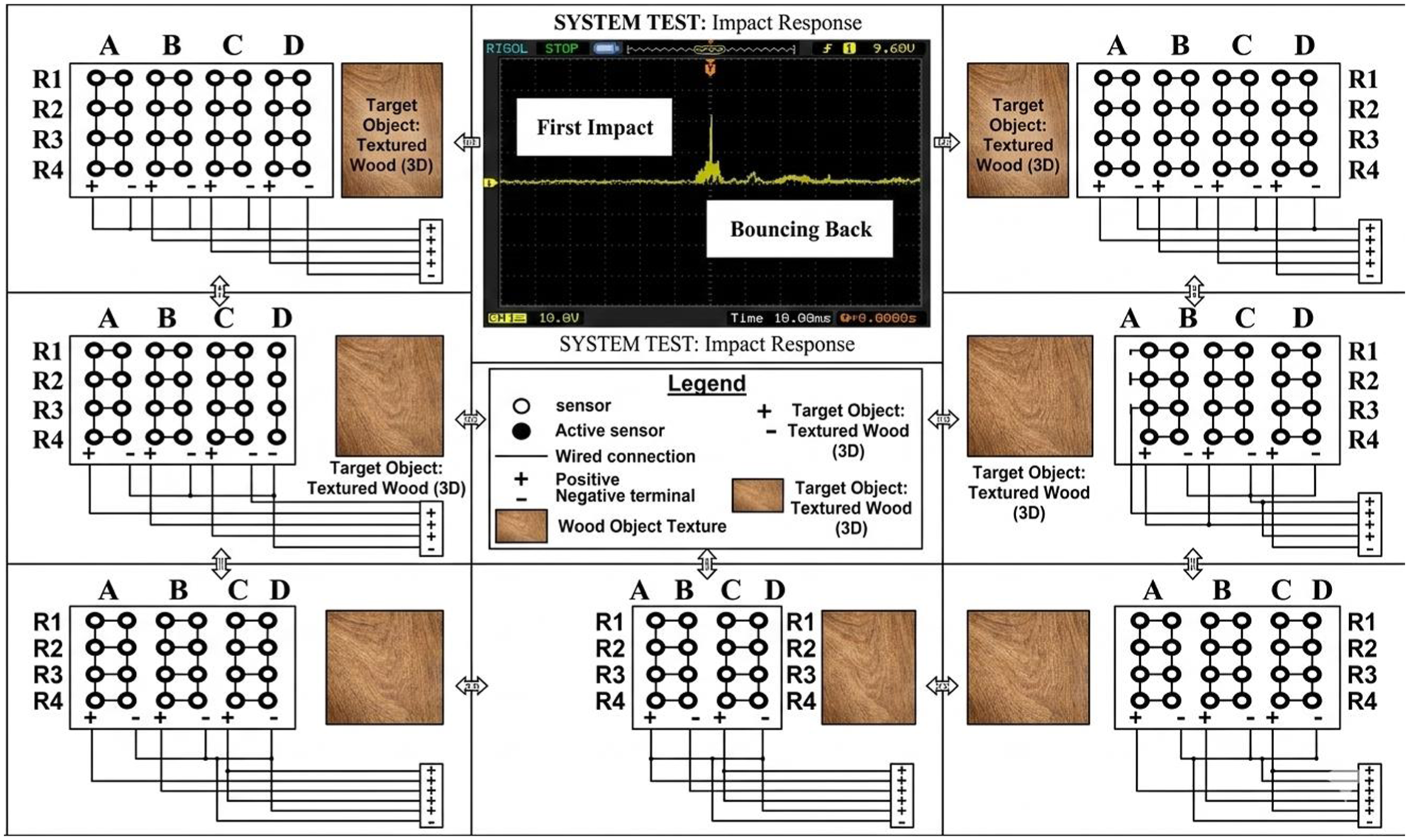
A single wooden pillar’s force on the output voltage
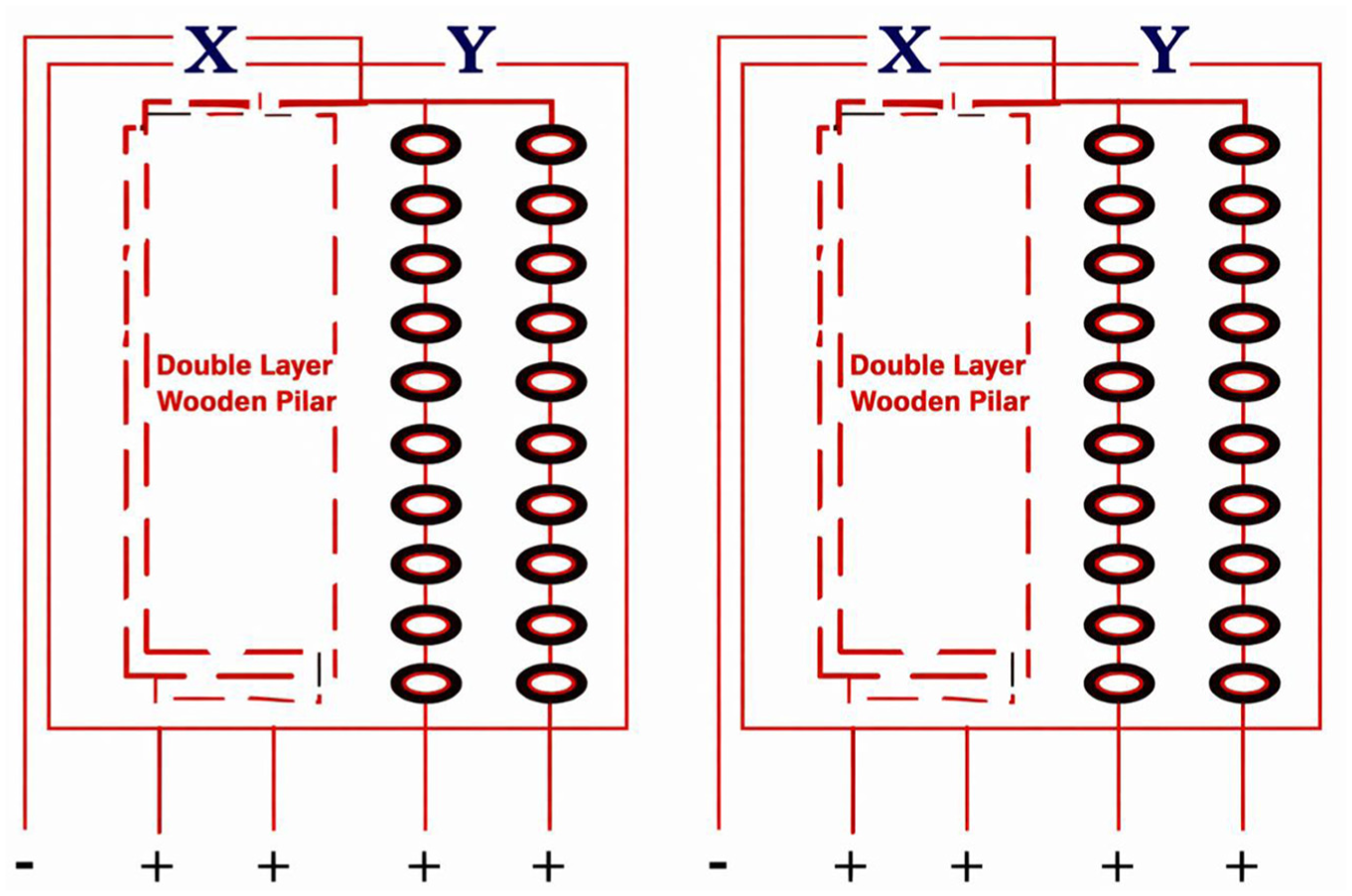
Free-flowing X–Y experimental setup for the reading-based EKE extraction
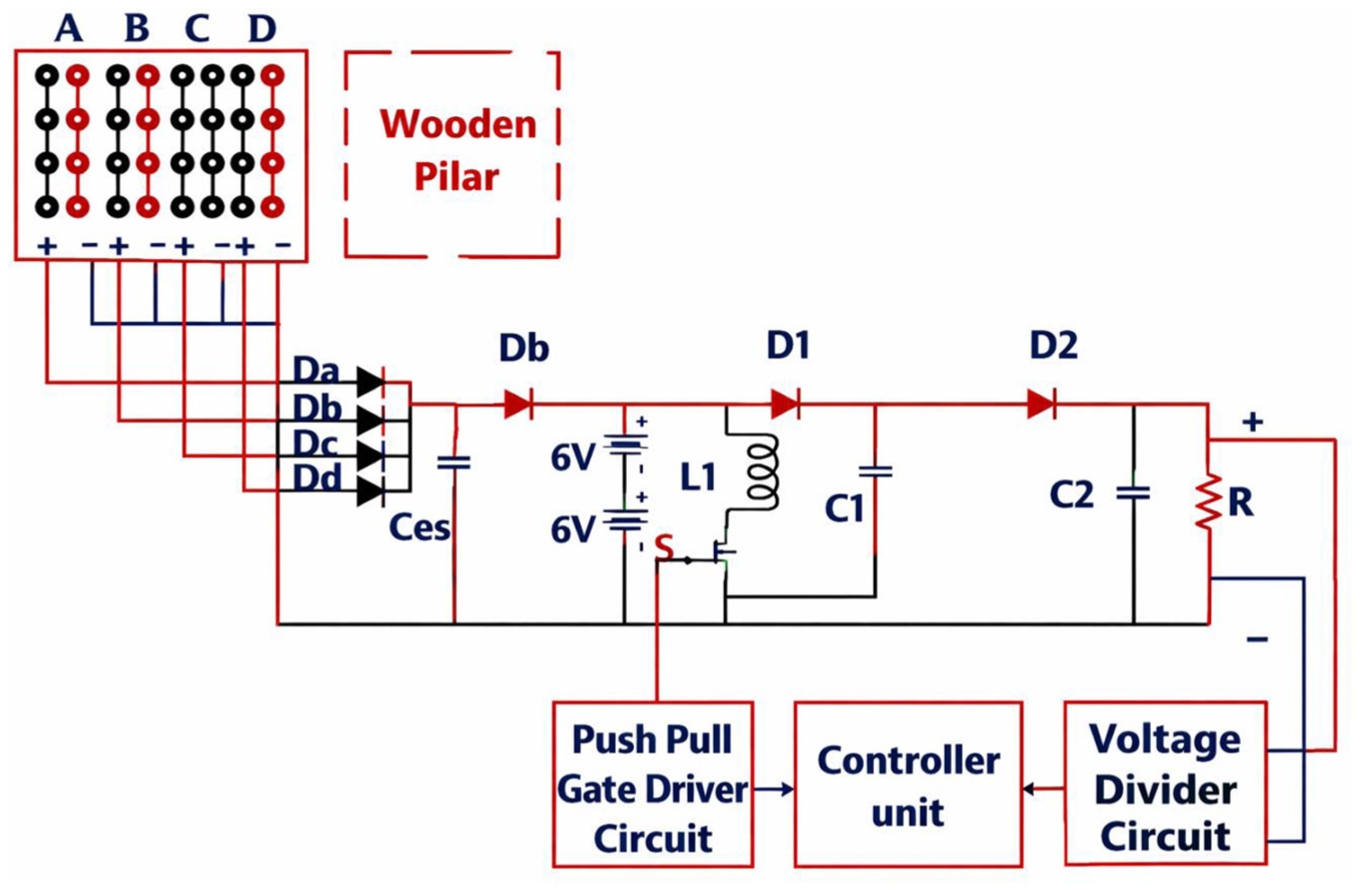
EKE extraction using an open-ended head frame and a second-level DC–DC power converter
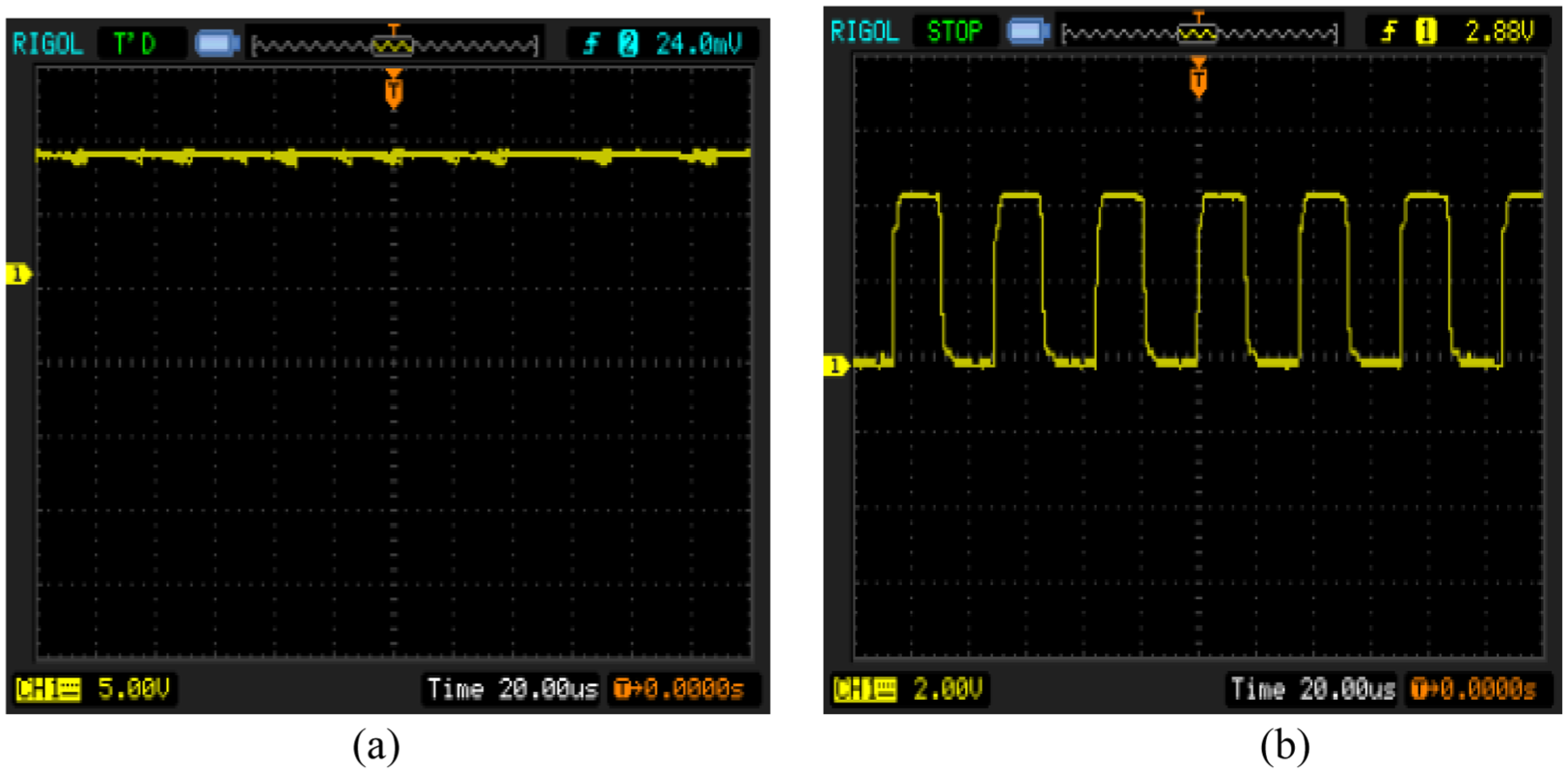
Super-lift Luo converter power switch: (a) battery across voltage; (b) Pulse Width Modulation signal
Output (a) current and (b) voltage super-lift Luo converter
Linear and nonlinear kinetic power loom kinetic energy harvesting experimental analysis
Figure 18 displays the uni/bidirectional linear power extraction. It shows the experimental setup for power production using wire loops with permanent magnets. This strategy is for straight-moving objects. The bottom closed-loop power loom has an open-end head frame for wooden pillar zig–zag motions, whereas the top closed-loop power loom has an open-end X–Y read mechanism for forward and backward movements and yarn filling. An X–Y carrier pusher generates bidirectional linear motions for power production. Instead, nonlinear power production works for top and bottom closed-loop power looms.
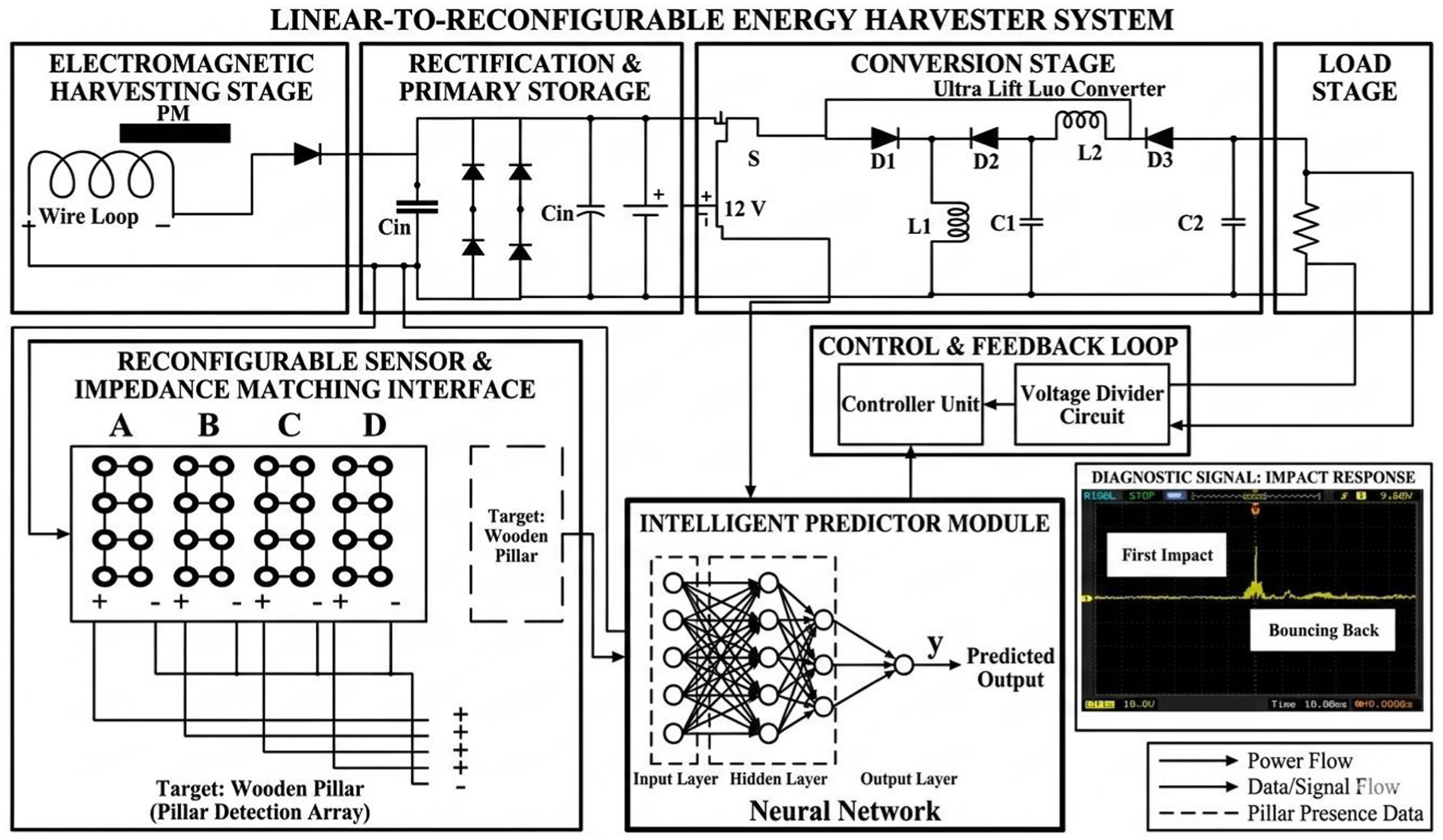
Linear power extraction and bi/unidirectional converter using deep learning algorithms
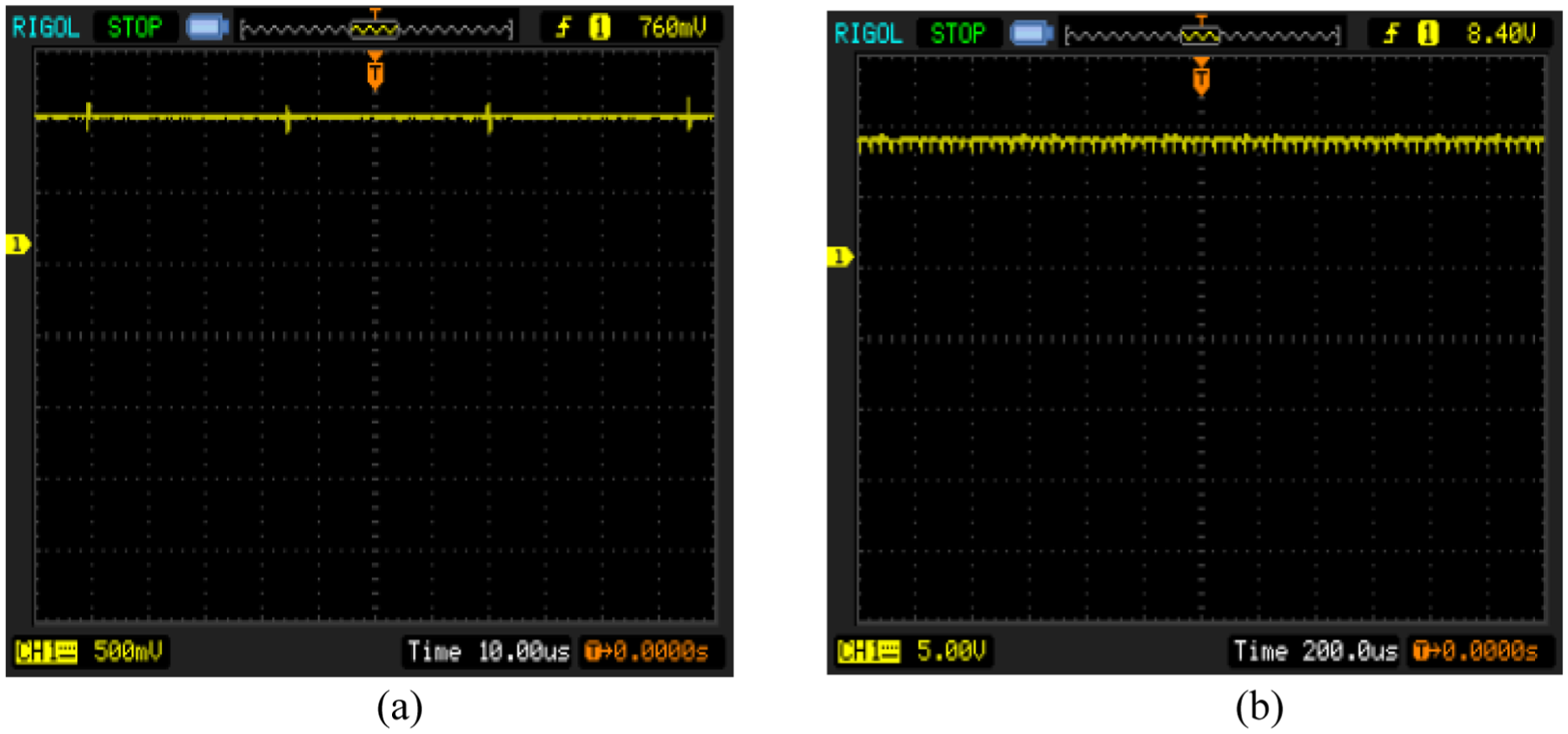
Figure 19(a) shows an open-end wheel for unidirectional nonlinear power extraction in both kinds of power looms. These looms generate electricity as shown in Figures 19(a) and (b). The ultra lift Luo (ULL) converter performs second-level power conversion for the linear and nonlinear EKE extraction models. Figure 20(a) shows the output voltage of the ULL converter, and Figure 20(b) shows its output current. The ULL converter controller optimizes output voltage using feedforward artificial neural network methods. Finally, ULL converter PWM pulse power switch shows the power MOSFET PWM signal. This optimized energy transfer procedure maximizes energy conversion efficiency and minimizes power conversion losses.
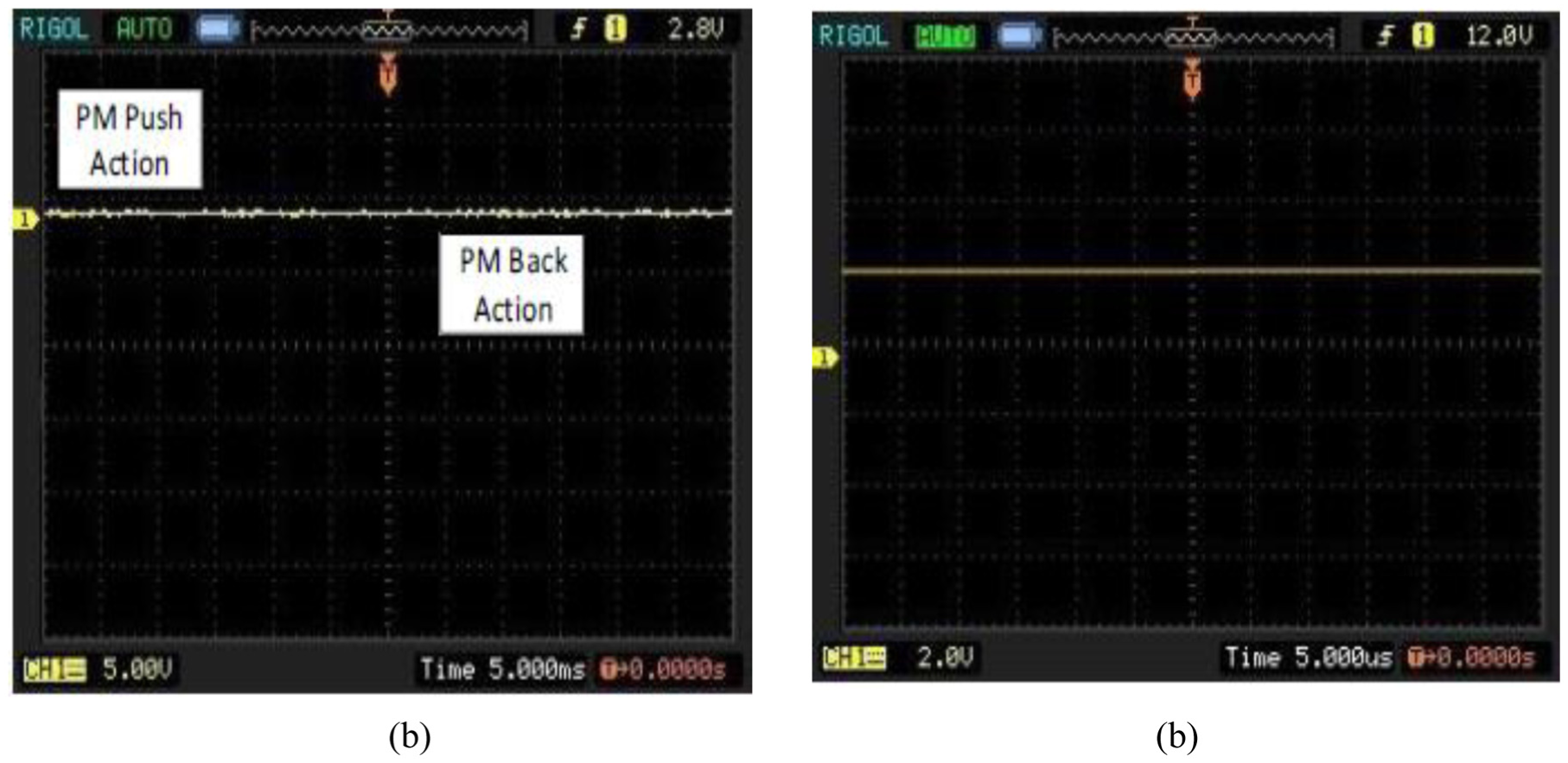
(a) Unidirectional and (b) bidirectional linear power extraction model output voltage
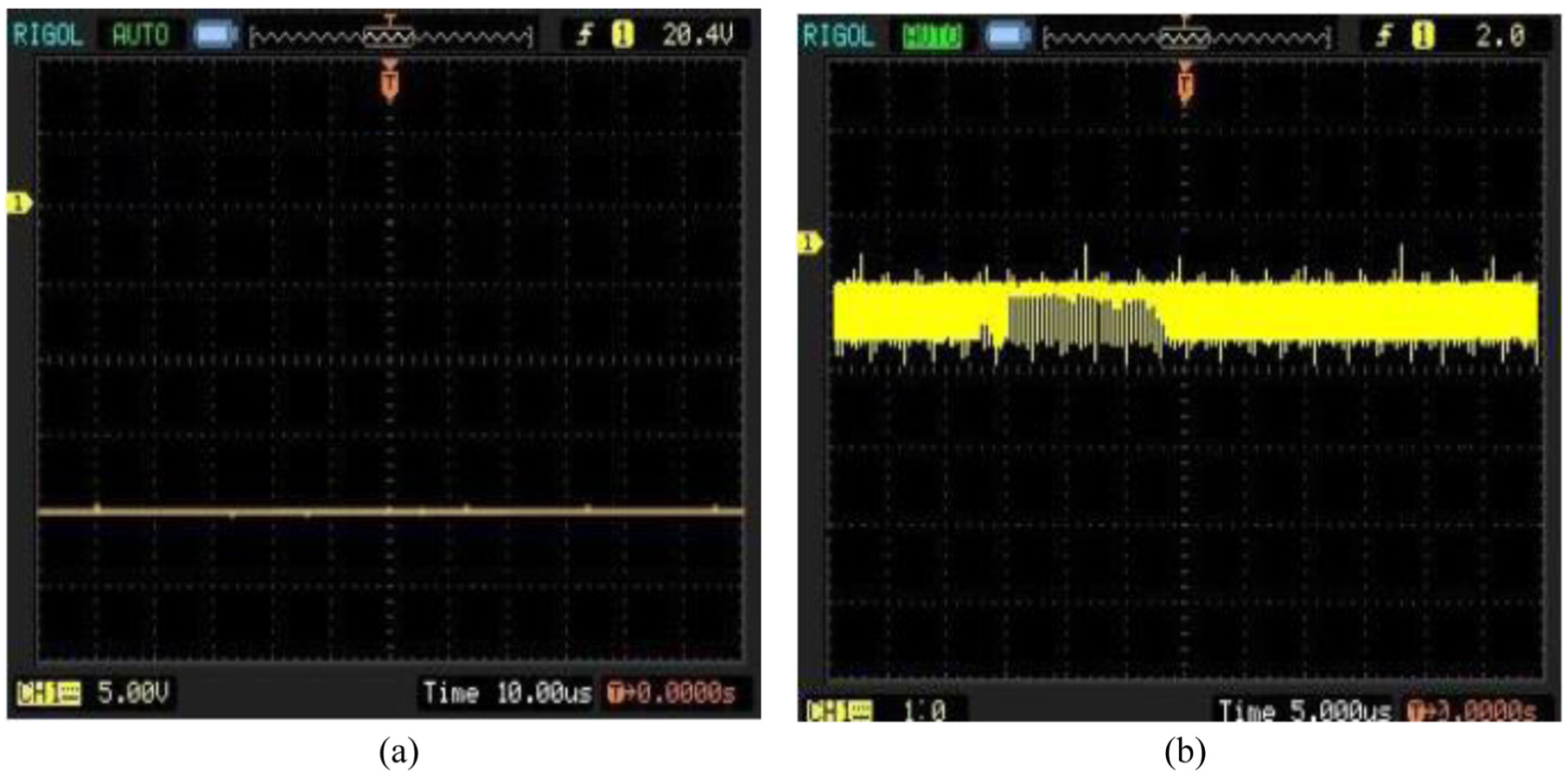
(a) Output voltage and (b) current of the ULL converter
Examination of EKE extraction experiment design
Using open-ended head frames and X–Y read apparatus, the experimental design for EKE extraction details both linear and nonlinear methods, as presented in Table 7. There is a wealth of information on the setup's materials, geometric configurations, and operating settings in the table. In Table 8 we provide details about the next step of power conversion, including the components and metrics for conversion efficiency. Figure 21 provides a visual representation of the physical arrangement of the experimental setup, which helps in understanding the studies of EKE extraction methodology by showing the interconnected components, energy flow, and safety measures. It complements the tables provided. The stability study of the open-end X–Y read-based EKE and the open-end head frame is shown in Figures 22 and 23, respectively. The EKE stability study based on linear and nonlinear generation is presented in Figures 24 and 25, respectively. In Figure 26, we can see the results of the evaluation of the capacity of EKE -based power sources to offset the energy demand of the power loom.
Experimental EKE extraction source design
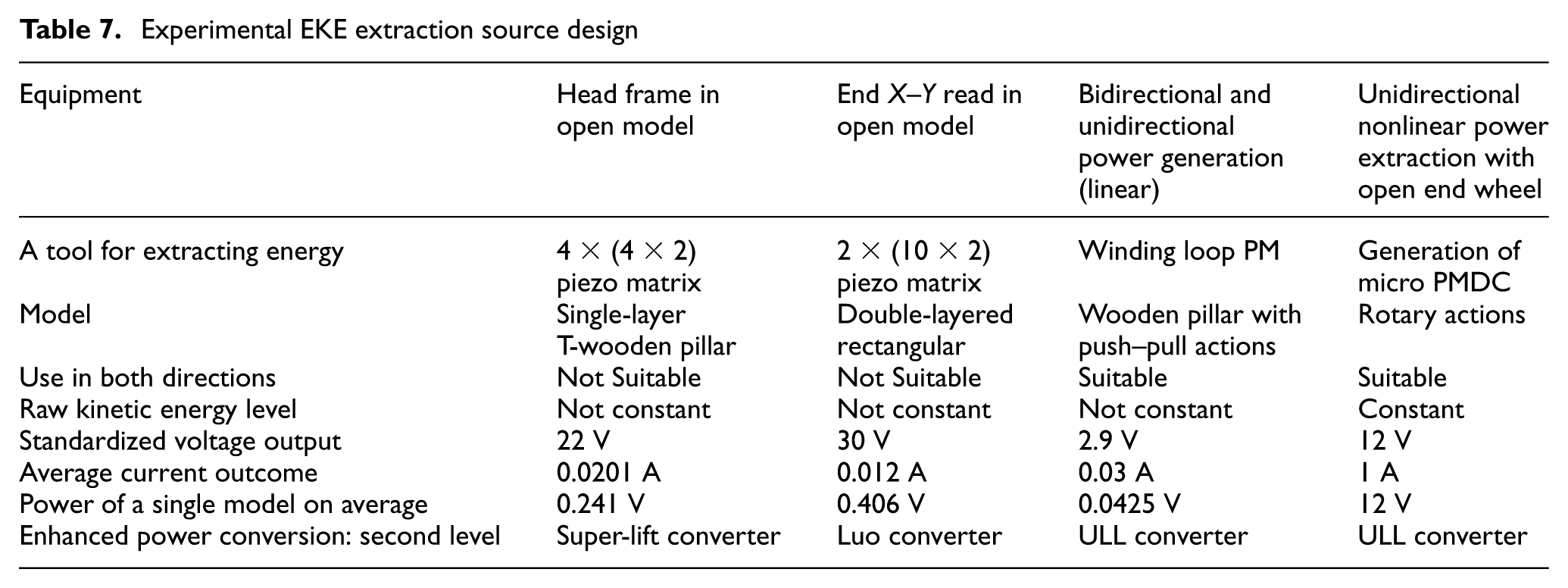
Specifics of the second level of power conversion
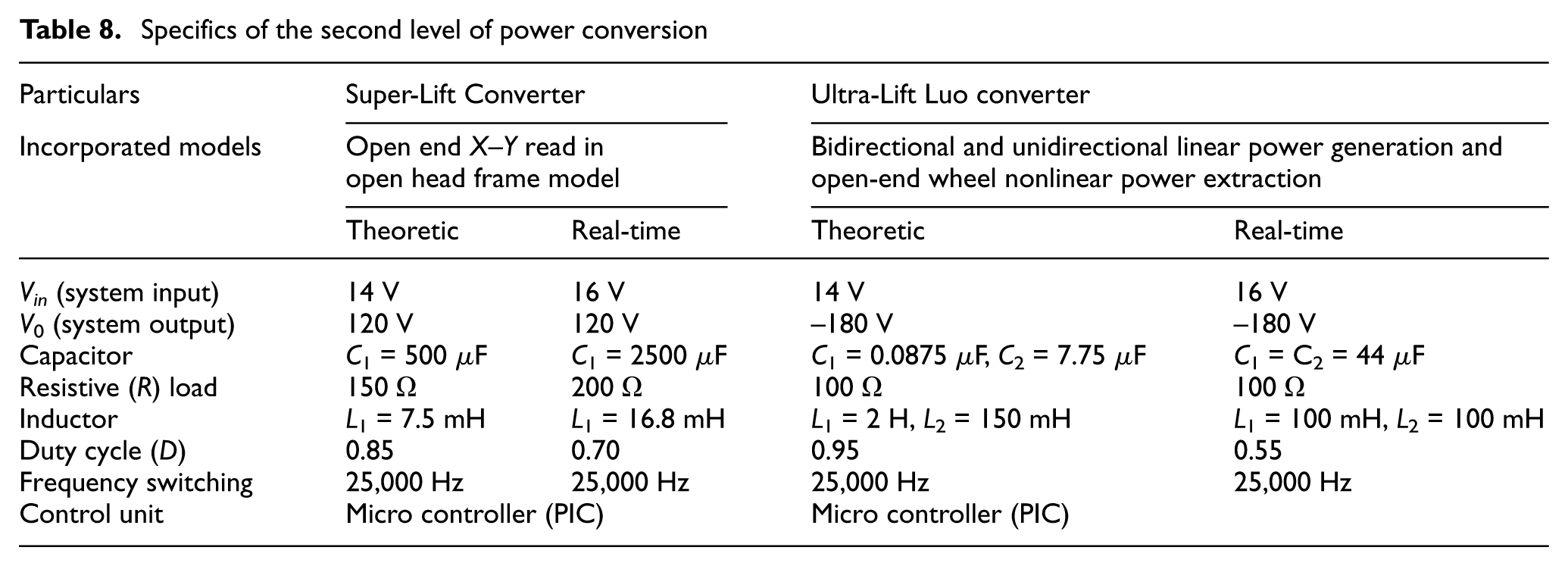
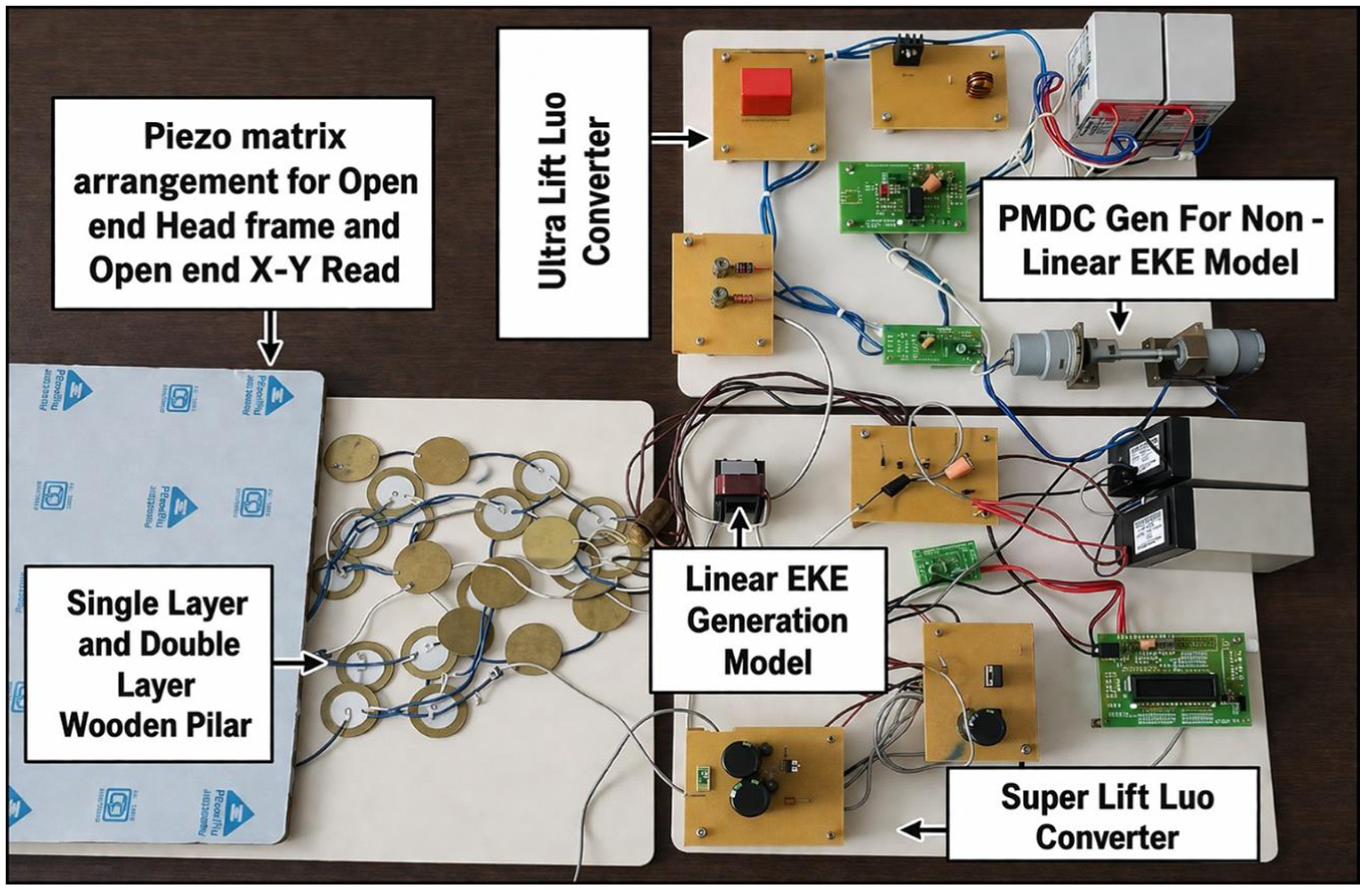
Experimental configuration for the extraction of EKE
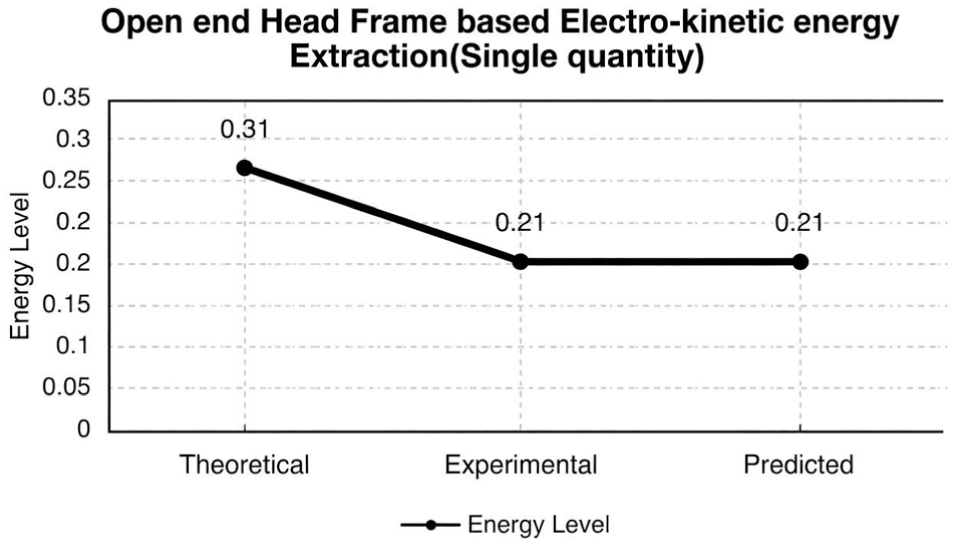
EKE stability investigation using open-end head frames
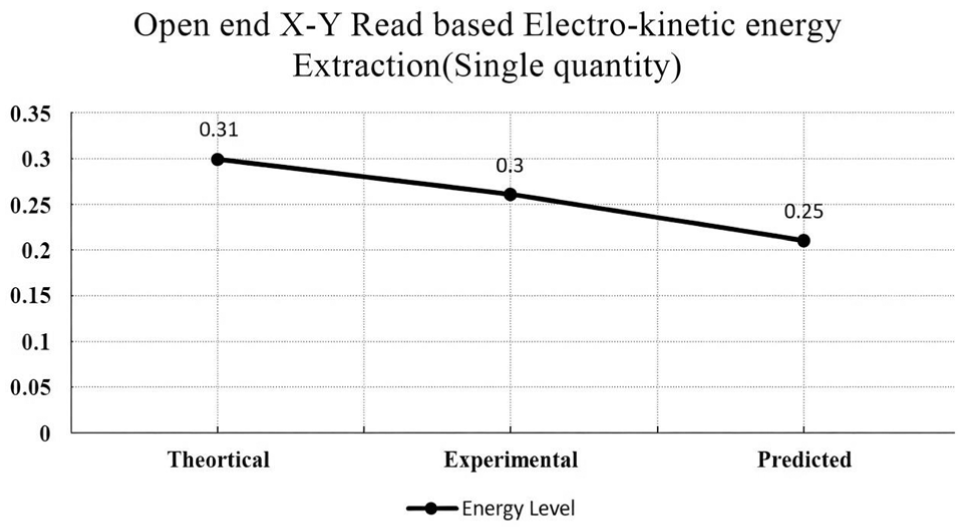
Open-end X–Y read EKE stability analysis
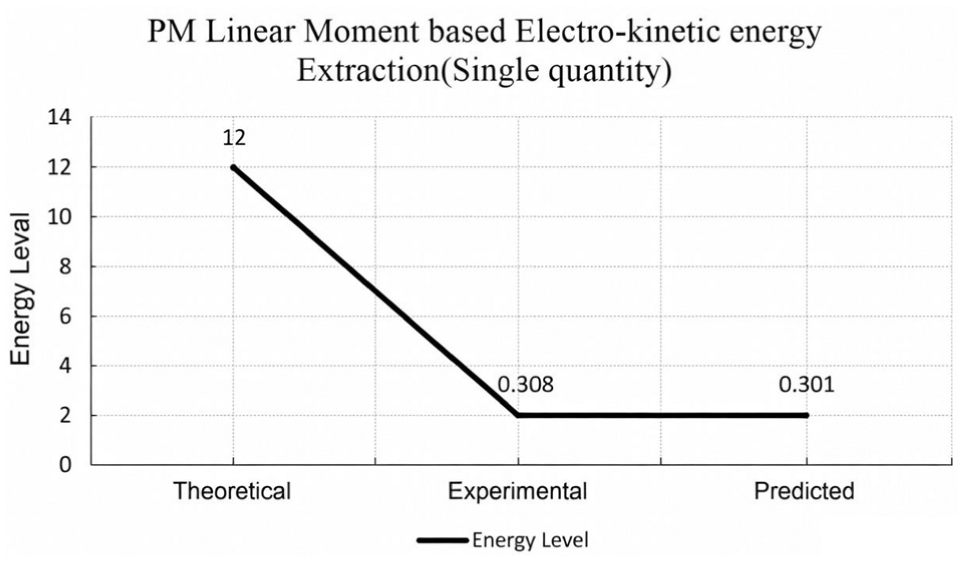
EKE stability investigation using linear generation
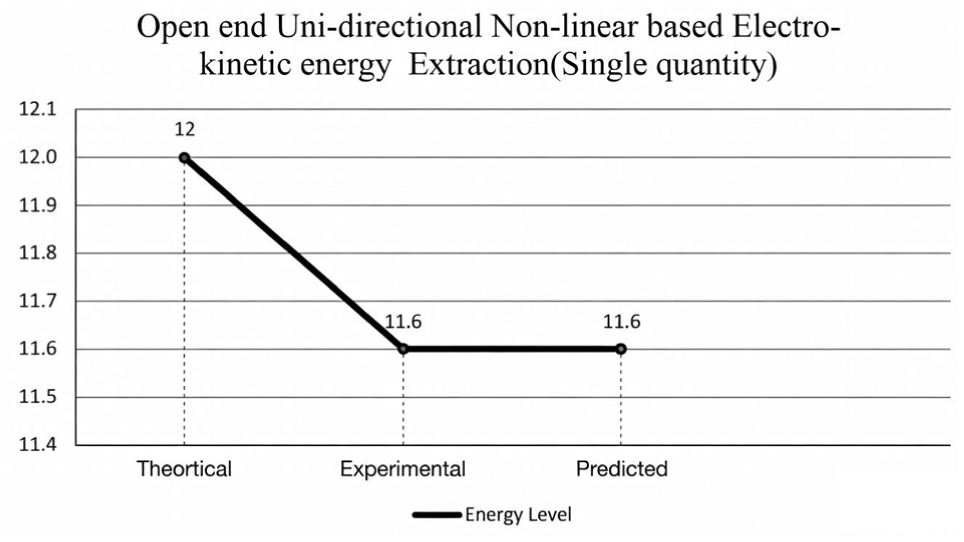
Nonlinear unidirectional generation-based EKE stability analysis
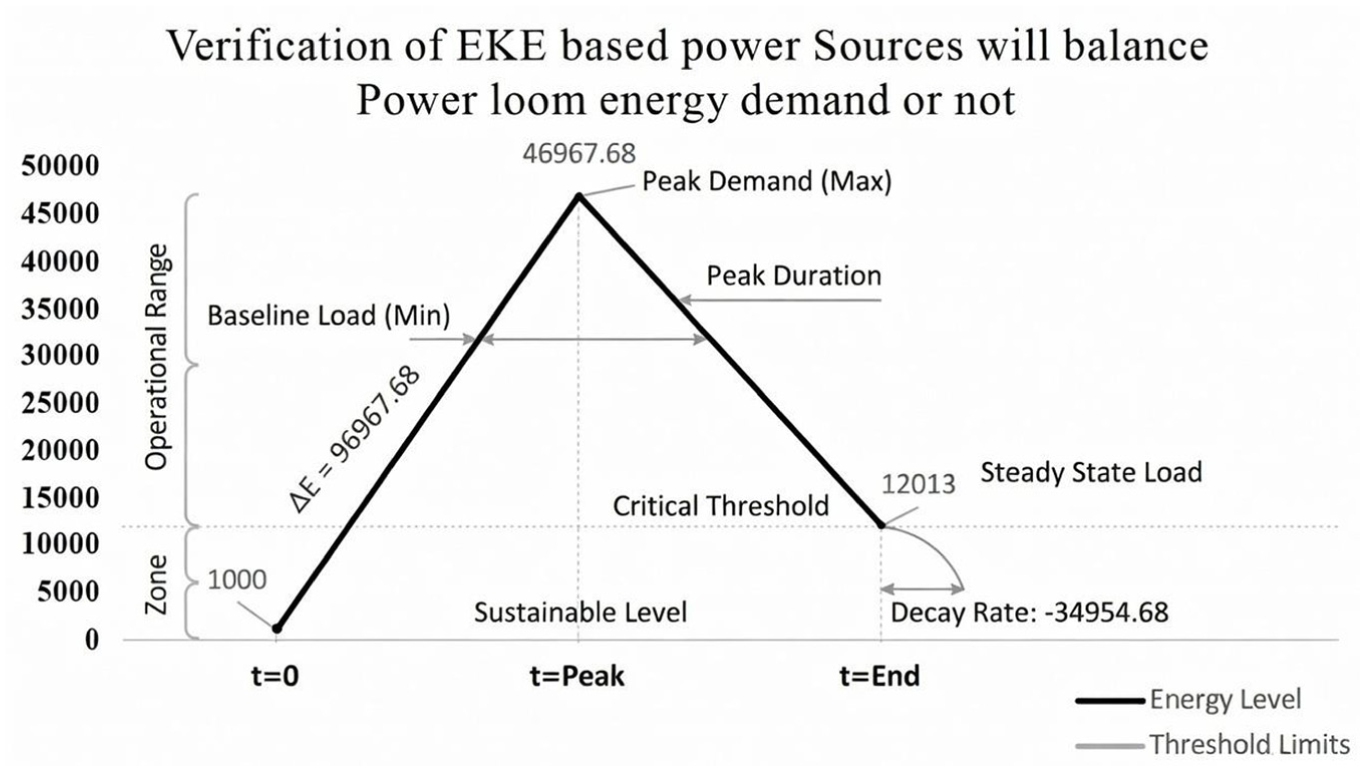
Power loom energy demand offset capacity
Modeling, prediction, and energy estimation for EKE extraction infrastructure
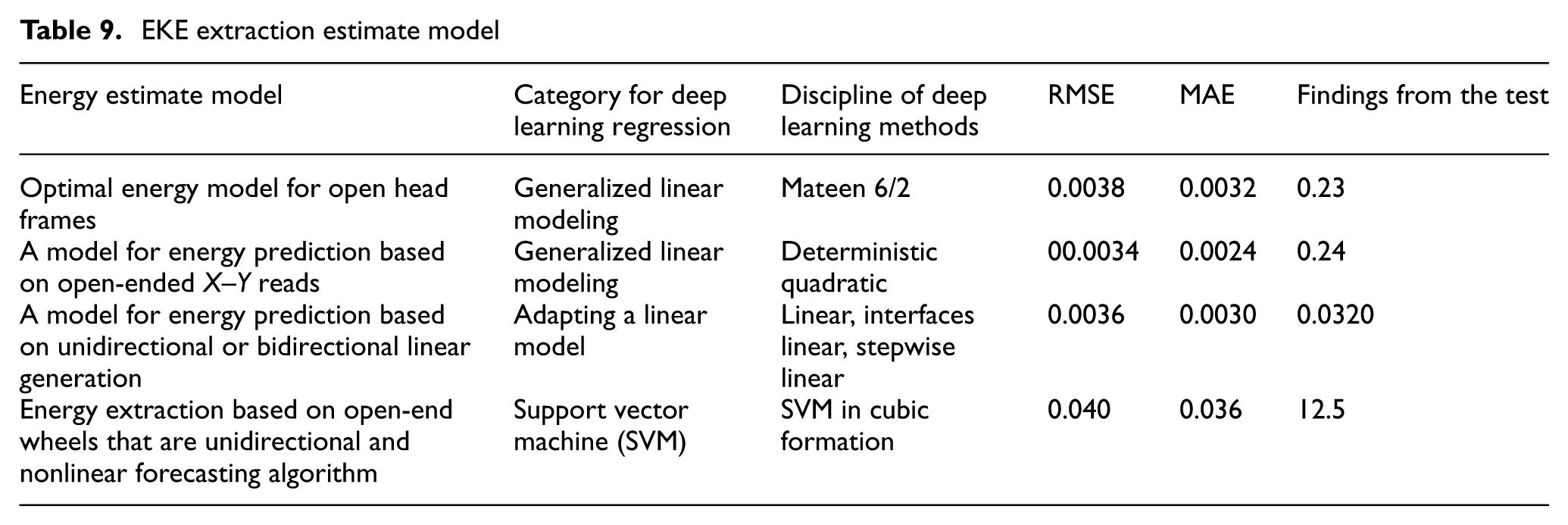
This research aims to evaluate the energy output of open-end head frame, X–Y read, uni/bidirectional linear generation, and open-end wheel unidirectional nonlinear power extraction EKE extraction models. The EKE estimation findings are noted in Table 9.
EKE extraction estimate model
Comparison of existing power-source-based and EKE-based power loom sectors
The outline of suggested methods in theoretical, experimental, and deep learning studies is described here. These visual representations also assess the practicality of an EKE weaving machine without external power sources. Average power loom estimation is as follows: unidirectional, 249 MW; bidirectional, 499 MW; UNPFT nonlinear, 54 MW. Then, the post-converter power is measured in Figure 27: super-lift Luo bidirectional base, 399 MW; and ULL converter nonlinear base, 408 MW. Figure 28 shows a comparison of proposed and existing research.
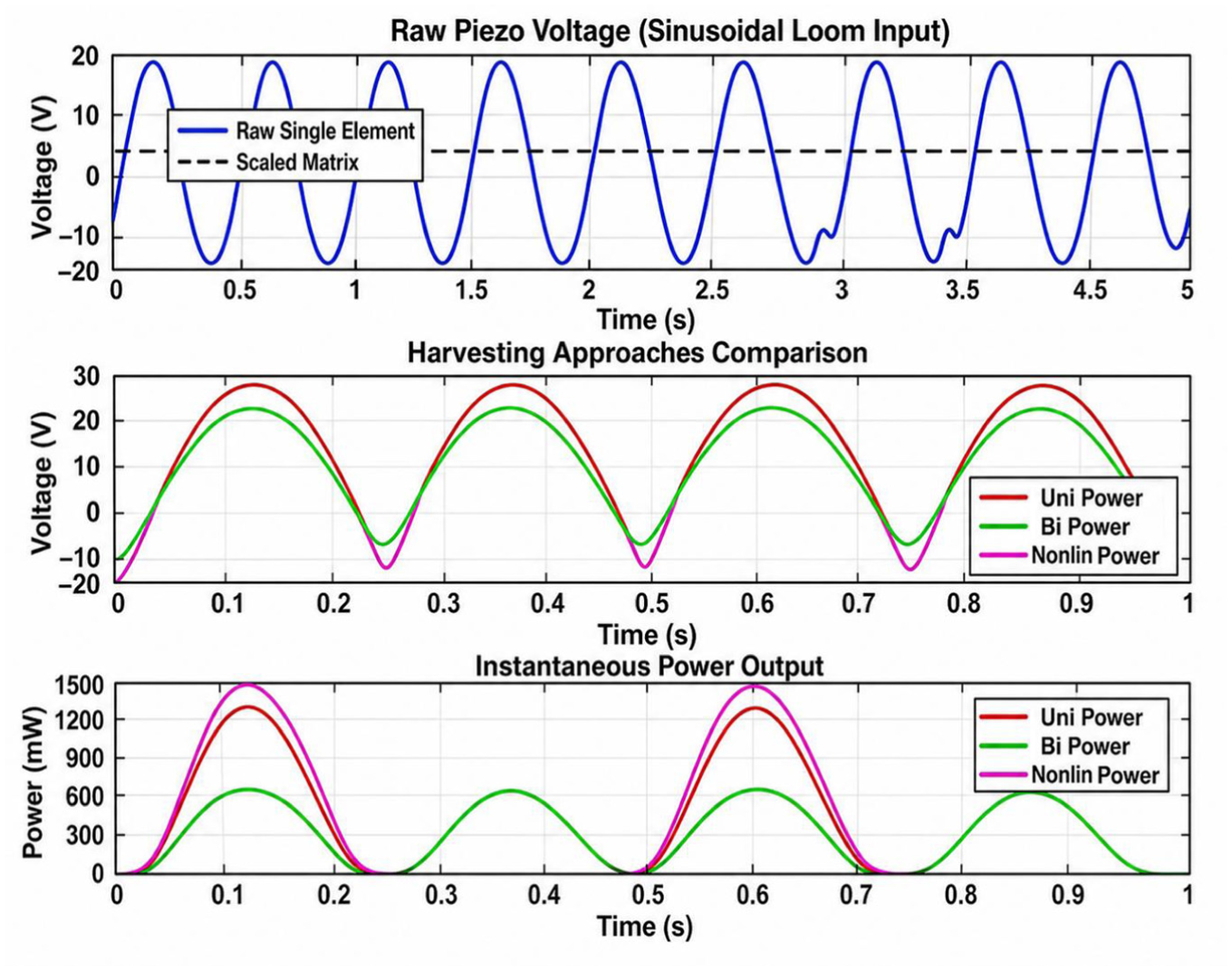
Output: (a) raw piezo-voltage; (b) harvesting approaches; (c) power output
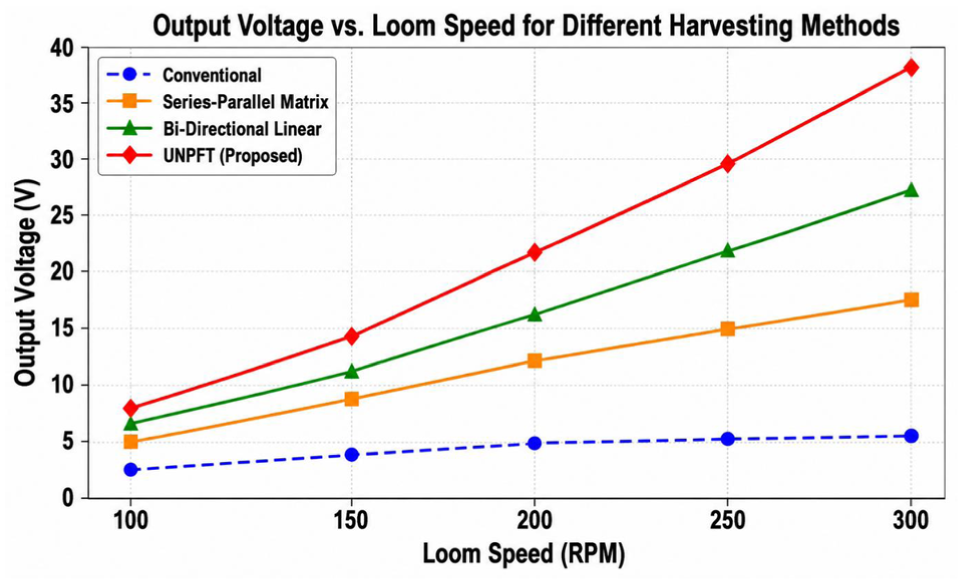
Output voltage versus power loom speed for different harvesting
The current power-source-based power loom sector uses fossil fuels or grid electricity, resulting in high prices and carbon emissions. EKE-based power loom sector reduces energy use and environmental impact by using ambient energy.
Existing power source-based power loom sector uses expensive fuel and energy. EKE-based power loom sector reduces operational costs using free, renewable energy.
Existing power loom sector has a high carbon footprint and pollution from energy source combustion. EKE-based power loom sector generates clean energy.
Power source-based power loom sector has stable energy supply but is fuel price sensitive. Reliability uses ambient energy but provides stability. Centralized energy grids and infrastructure limit scalability in the existing power-source-based power loom sector due to their inability to adapt to local energy sources. In areas with abundant ambient energy, scalability minimizes grid expansion.
Energy-saving and automation benefits in the current power-source-based power loom sector. EKE-based power looms are driven by energy collection, storage, and control innovations.
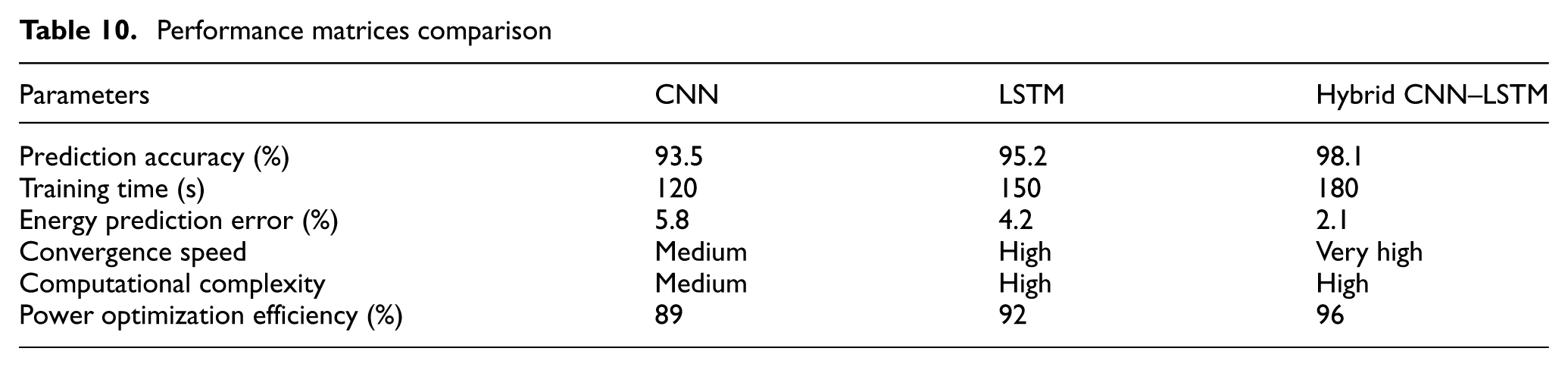
EKE-based power looms represent a sustainable and cost-effective replacement for existing power sources. Location, energy, and technology determine its viability. This comparative research emphasizes cost savings, environmental impact reduction, and scalability of switching to EKE-based power looms. Feasibility depends on location and needs continual technical and infrastructural improvement. Proposed work performance matrices are presented in Table 10.
Performance matrices comparison
Conclusion
There is hope for a more sustainable and energy-efficient textile industry thanks to studies that have focused on weaving power looms that use EKE. This research has helped bring the sector in line with global sustainability goals by demonstrating that EKE technology may significantly reduce energy usage and carbon emissions. Because of their scalability and low cost, EKE technologies are a good fit for weaving operations of all sizes. Future developments in electrokinetic generation are anticipated to increase the advantages even more, guaranteeing a revolutionary effect on the weaving power loom business and a greener textile sector in general. EKE-based weaving power looms have the ability to revolutionize the textile industry with their limitless potential. Some important areas of future focus are as follows: (i) lower power intake using renewable sources; (ii) intelligent weaving unit machines with advances in materials; (iii) energy storage solutions. In addition, strengthened to emphasize future research directions involving the large-scale industrial validation, multisource hybrid harvesting integration, adaptive nonlinear tuning mechanisms, smart energy management systems, and real-time predictive monitoring for textile machinery environments.
Footnotes

Ethics approval statement
Ethical approval does not apply to this article.
Funding
The authors received no financial support for the research, authorship, and/or publication of this article.
Declaration of conflicting interests
The authors declared no potential conflicts of interest with respect to the research, authorship, and/or publication of this article.
Data availability statement
The datasets in this study are available from the corresponding author of the original dataset upon reasonable request.