






Abstract
Titanium dioxide (TiO2) has emerged as one of the most extensively studied nanomaterials for textile functionalization due to its exceptional physicochemical stability, photocatalytic activity, high refractive index, and cost-effectiveness. This review provides a comprehensive and critical overview of the role of TiO2 in enhancing textile performance and functionality. Fundamental aspects related to TiO2 structure, crystalline phases, and photocatalytic mechanisms are discussed to establish the basis of its multifunctional behavior. Various strategies for incorporating TiO2 into natural and synthetic textiles are systematically examined, including nanoparticle synthesis routes, surface modification approaches, and application techniques aimed at improving durability and wash resistance. The functional outcomes enabled by TiO2, such as self-cleaning, ultraviolet protection, antimicrobial activity, electrical conductivity, hydrophobicity, flame retardancy, and thermal regulation, are comparatively evaluated across different textile systems. Furthermore, qualitative performance assessment highlights the strengths, limitations, and durability of TiO2-based textile treatments. Environmental sustainability and economic feasibility are addressed through life cycle and techno-economic considerations, emphasizing energy demand, synthesis pathways, scalability, and cost sensitivity. Overall, the findings indicate that TiO2 offers strong potential for the development of durable, multifunctional, and scalable textile technologies, particularly when energy-efficient synthesis routes and robust immobilization strategies are employed.
Keywords
Nanotechnology, a term originating from the Greek word nanos meaning “dwarf,” refers to the manipulation and regulation of materials at dimensions on the order of one billionth of a unit, forming the basis for scientific and engineering scales such as the nanometer, nanosecond, and nanogram.1,2 As a multidisciplinary field, it spans medicine, pharmaceuticals, electronics, automotive, food, chemistry, and notably textiles. Nanoparticles (NPs) represent a central component of this field, although depending on their use, particles slightly larger than 100 nm may also be included.3-5
Among engineered nanomaterials, titanium dioxide (TiO2) has emerged as one of the most widely produced and utilized NPs worldwide due to its strong oxidation potential, high refractive index, remarkable chemical stability, and broad photocatalytic activity.5-8 Global production statistics further highlight its industrial significance, with large-scale pigment and NP output reported in the United States and China for applications in paints, coatings, solar cells, cement, and cosmetics.9,10
TiO2 exists in three main crystalline polymorphs (anatase, rutile, and brookite), each with distinct structural and physicochemical properties. Anatase, known for its high surface area and suitable band gap, is widely used in photocatalytic processes, including environmental purification and solar-driven reactions. Rutile, the most thermodynamically stable phase, exhibits a high refractive index and is preferred in pigments and high-temperature industrial applications. Brookite, although photocatalytically active, is less commonly used industrially due to synthesis challenges and its transformation into rutile at elevated temperatures.11,12
In the textile industry, TiO2 (typically at the nanoscale) is highly attractive for functionalization because of its optical, electrical, physicochemical, and photocatalytic properties, combined with its nontoxicity and low cost.7,13,14 When deposited on or incorporated into fabrics, TiO2 endows textiles with UV protection, antibacterial activity, deodorizing effects, antidirt and self-cleaning behavior, and even far-infrared (FIR) functionality. These enhanced features make TiO2 one of the most widely studied nanomaterials for advanced and multifunctional textile applications.15,16
Beyond textiles, TiO2 NPs are present in many consumer products such as toothpaste, sunscreens, shaving creams, conditioners, and cosmetics, 17 as well as in food additives where they act as whitening and brightening agents. 18 Their widespread use across industries has led to concerns regarding environmental dispersion and biological uptake, as excessive or uncontrolled release of engineered nanomaterials can affect air, water, soil, and living organisms. 19 Research has shown that TiO2 NPs may exert both beneficial and harmful effects on plants, improving growth in some species while inducing oxidative stress or toxicity in others.20,21 Given their multifunctionality, availability, and performance-enhancing capabilities, TiO2 NPs continue to play a pivotal role in the development of high-performance textiles. Understanding their material characteristics, integration strategies, functional benefits, and potential environmental impacts is essential for guiding future advances in TiO2-based textile technologies.
The objective of this review is to present a comprehensive and up-to-date assessment of titanium dioxide as a multifunctional nanomaterial for textile applications, encompassing its fundamental properties, incorporation strategies, and underlying functional mechanisms. By critically examining recent advances in TiO2-functionalized textiles, this work systematically compares performance across self-cleaning, antimicrobial, ultraviolet (UV)-protective, thermal, electrical, and protective functionalities, with particular emphasis on durability and practical applicability. Environmental and economic considerations are also integrated to evaluate sustainability, scalability, and industrial feasibility. The novelty of this review lies in its holistic perspective, which interlinks material-level mechanisms, textile performance, life-cycle implications, and techno-economic aspects to establish a unified framework for guiding future research and facilitating the industrial implementation of TiO2-based textile technologies.
Definition, physicochemical properties, and photocatalytic mechanism of titanium dioxide
TiO2, alternatively known as titanium (IV) oxide or titania, is a naturally occurring oxide of titanium primarily found in three distinct crystalline forms: anatase, rutile, and brookite. Beyond these, several metastable variants exist, including α-PbO2, baddeleyite, and cotunnite structures.11,22 Commercial production of TiO2 typically involves the extraction of crude titania from mineral sources such as ilmenite, leucoxene ores, and rutile beach sands, followed by either sulfate or chloride synthesis processes. 23
Each of the main crystalline allotropes exhibits unique characteristics relevant to its applications. Anatase is a transparent, colorless tetragonal system, which remains stable at temperatures up to approximately 500°C. It is particularly noted for its strong adsorption and absorption properties, especially under UV irradiation, often presenting with bipyramidal morphology that exposes well-developed (101) faces.24,25 In contrast, rutile is the thermodynamically more stable phase, tolerating temperatures between 700 and 1000°C and adopting a prismatic, needlelike structure. While anatase possesses a band gap of roughly 3.2 eV, rutile’s slightly narrower band gap of approximately 3.0 eV signifies its robust excitation capability under solar radiation, which can lead to enhanced photocurrents. Brookite, being a less common and typically nonphotocatalytic form, is characterized by its orthorhombic crystalline texture.12,26,27
The journey of TiO2 from its initial discovery to its widespread utility is noteworthy. William Gregor first identified black grains of titanium dioxide in Cornwall, England, around the 1790s. Rossi and Barton in the United States commenced extracting TiO2 from various minerals, eventually leading to a dedicated production facility at Niagara Falls by the end of World War I. By the 1930s, the full-scale production of uncoated anatase and rutile pigments was well underway. Its significant refractive index and versatile role were later illuminated by Norwegian chemists Jebsen and Farup in 1960. The contemporary age of TiO2 research commenced with the seminal work of Fujishima and Honda in 1972, demonstrating the photocatalytic splitting of water using rutile titania electrodes under UV light. Concurrently, Frank and Bard broadened their application to the decomposition of aqueous cyanide and sulfide solutions under sunlight. These foundational discoveries propelled TiO2 into a vast array of multidisciplinary fields, including physical, chemical (e.g., plastics, cosmetics, and deodorizing agents), biological (e.g., gene therapy and dental fillings), engineering (e.g., lubricants and stain-resistant coatings), and electronic applications (e.g., semiconductors and solar cells). 22
As an active semiconductor, TiO2 functions as an effective photocatalyst, facilitating chemical reactions without being consumed in the process. 28 The core of its photocatalytic mechanism, particularly under UV illumination, lies in the generation of highly reactive species. 29 When TiO2 absorbs light energy equal to or exceeding its band gap, electrons are promoted from the valence band (VB) to the conduction band (CB), leaving behind positively charged "holes" in the VB. These photogenerated holes are potent oxidizing agents, while the electrons in the CB act as reducing agents.30,31 Subsequently, these charge carriers interact with adsorbed water and oxygen molecules: holes react with water to yield highly oxidative hydroxyl radicals (•OH), and electrons reduce oxygen to form superoxide radical anions (O2•−). 32 These reactive oxygen species (ROS) efficiently degrade a wide spectrum of pollutants, including various stains, unpleasant odors, and harmful microorganisms, transforming them into less-noxious compounds. 33 This mechanism makes nano TiO2 particularly adept at deodorization, capable of breaking down volatile organic compounds such as formaldehyde, ammonia, and sulfur-containing malodorous substances in the air. 34
The photocatalytic efficacy of TiO2 is significantly influenced by its physicochemical attributes, such as its crystallinity, particle shape, size, and specific surface area. 35 While anatase is frequently cited for its superior photocatalytic performance compared to rutile and brookite, primarily due to its distinct band gap, the actual performance can be more nuanced. Despite rutile possessing a narrower band gap, its higher density can increase the likelihood of electron–hole recombination, potentially diminishing its efficiency. 36 Studies on mixed-phase TiO2, such as the P-25 powder (a blend predominantly of anatase with some rutile and amorphous phases), indicate that the amorphous component contributes negligibly to the overall photocatalytic activity. 37 The roles of anatase and rutile in generating active species can also fluctuate depending on the reaction environment, such as the presence of hydrogen peroxide (H2O2). For example, under standard conditions, anatase might exhibit a greater tendency to produce hydroxyl radicals, whereas rutile shows higher activity in the presence of H2O2. 38 This complex interaction suggests that the optimal crystalline phase or combination of phases is contingent on the specific reaction and prevailing conditions. Although the synergistic benefits of combining these structures are often presumed, some research suggests that in certain mixed-phase materials, the different crystallite phases may largely operate independently in their photocatalytic functions. Furthermore, the efficiency of anatase versus rutile can vary considerably depending on the specific reaction type; for instance, rutile has demonstrated higher efficiency in processes such as oxygen liberation from deaerated aqueous silver sulfate solutions.39,40
Figure 1 schematically summarizes the crystalline phases of TiO2, its electronic band structure under UV irradiation, and the resulting photocatalytic surface reactions responsible for pollutant degradation.
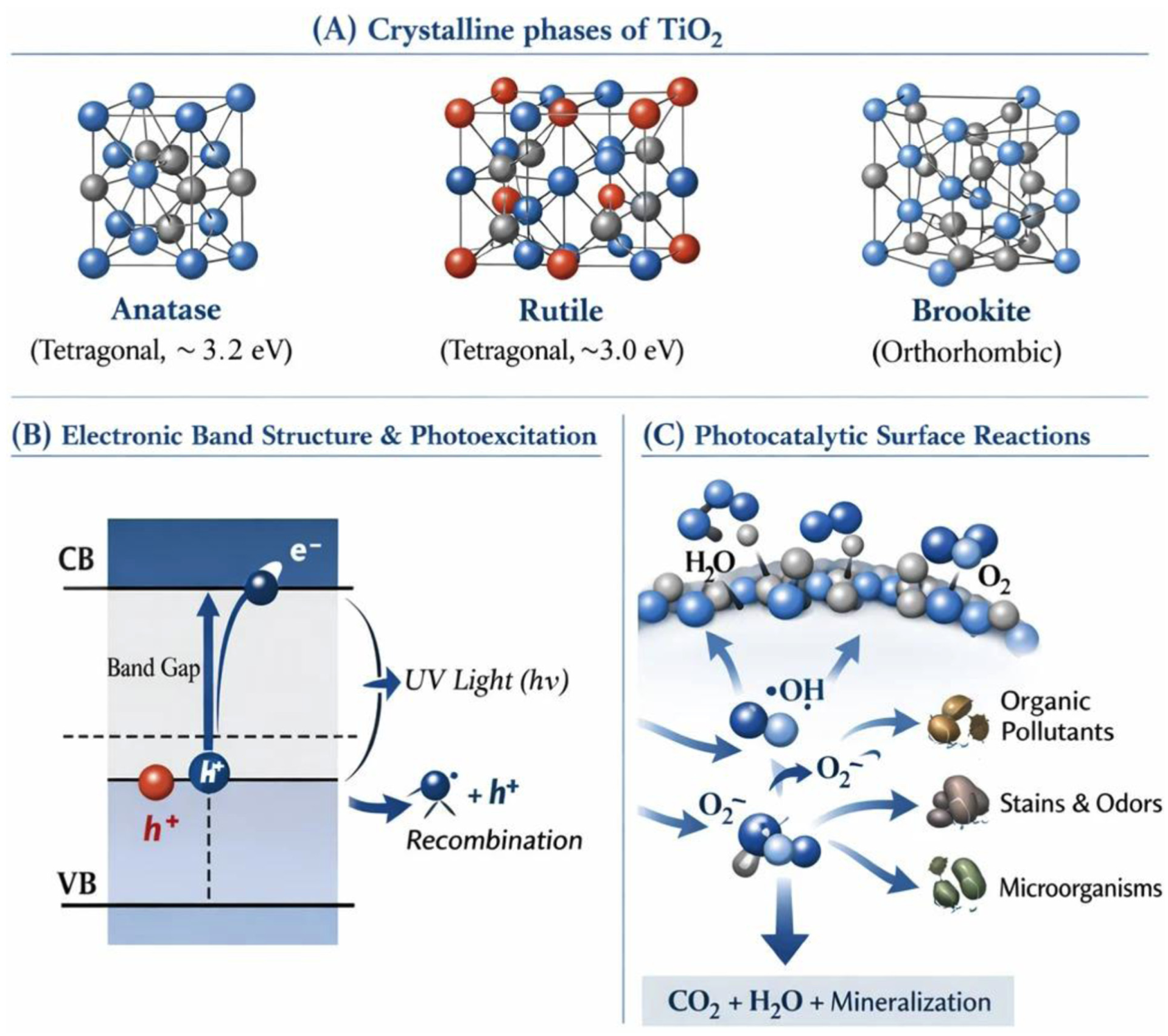
Physicochemical properties and photocatalytic mechanism of TiO2. (A) Crystalline polymorphs of TiO2 (anatase, rutile, and brookite) with their characteristic crystal structures and band-gap energies. (B) Electronic band structure of TiO2 under UV irradiation, showing excitation of electrons from the VB to the CB and generation of photogenerated holes. (C) Photocatalytic surface reactions on TiO2, where charge carriers produce ROS that drive oxidative degradation and mineralization of organic species.
Methods of incorporating TiO2 into textiles
The successful functionalization of textile materials with TiO2 relies on a diverse array of methodologies, encompassing everything from the initial selection and preparation of the textile substrate to the synthesis, modification, and application of the TiO2 NPs themselves. This section details the various approaches employed to effectively integrate TiO2 into textile structures for enhanced performance and functionality. A representative schematic illustrating a chemical crosslinking approach for the durable immobilization of TiO2 NPs onto textile yarns is shown in Figure 2.
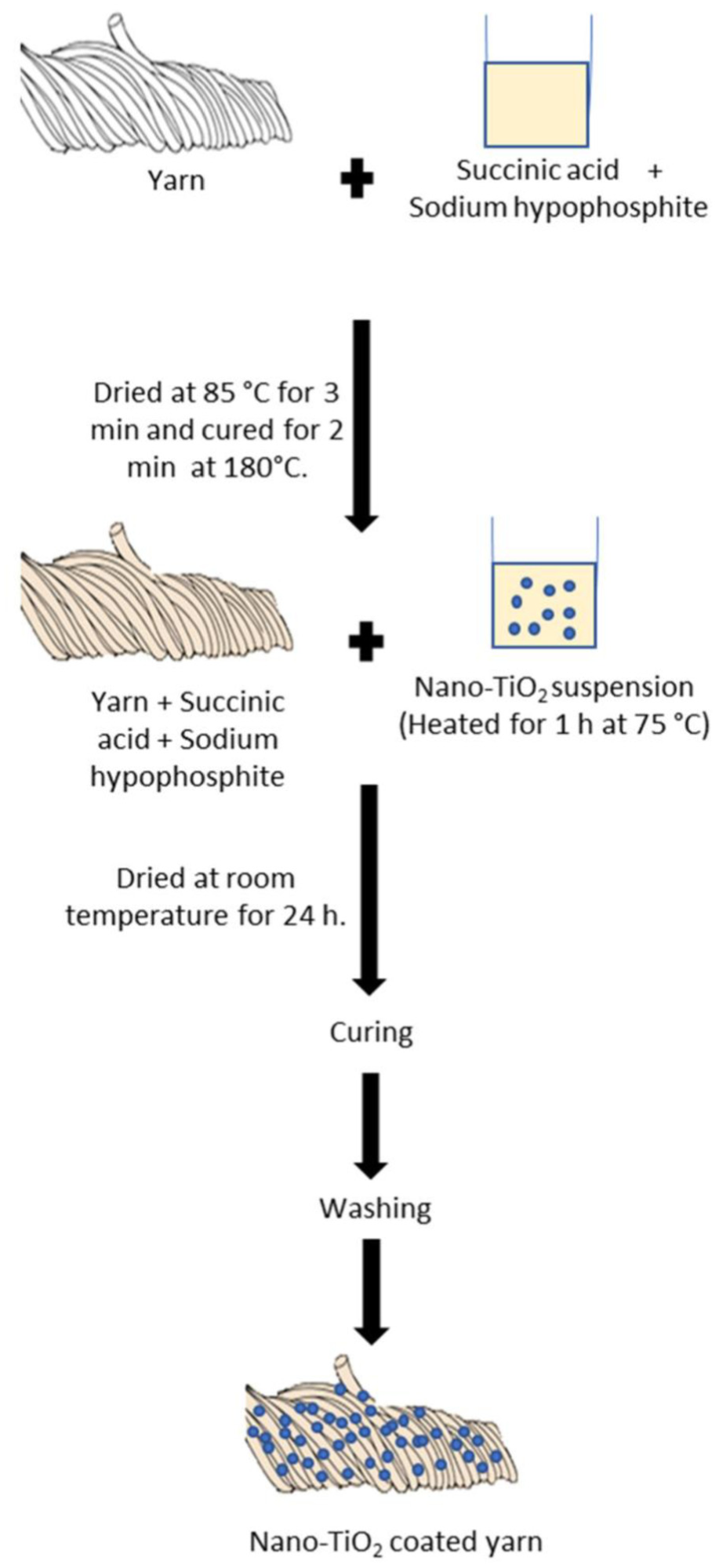
Schematic representation of the preparation process for nano-TiO2-coated yarn using succinic acid and sodium hypophosphite as crosslinking agents. The process involves pretreatment of the yarn, thermal curing, and subsequent deposition of TiO2 NPs. 41
Selection of textile substrates for TiO2 integration
The initial step in incorporating TiO2 involves choosing an appropriate textile substrate. Research demonstrates that TiO2 functionalization can be effectively applied across a broad spectrum of fibrous materials, including both natural and synthetic options. Cotton fibers are by far the most extensively documented and frequently used cellulosic substrates for TiO2 treatments.42-46 Beyond cotton, other natural and regenerated cellulosic fibers, such as viscose, flax, kapok, jute, cellulose acetate, and Juncus effusus, have also been successfully utilized.47-49 Protein-based fibers such as wool50,51 and silk52,53 represent additional natural fiber categories amenable to TiO2 modification. Among synthetic textile fibers, 100% polyester and its blends with cellulosic fibers are highly prevalent choices for TiO2 incorporation.54-57 Furthermore, various other synthetic polymers, including aromatic and aliphatic polyamides,58,59 polypropylene,60,61 and polyacrylonitrile (PAN), 62 have also been explored for this purpose.
Synthesis and preparation techniques for TiO2 NPs
The method by which TiO2 NPs are synthesized is a crucial aspect of their incorporation into textiles. Titanium (IV) isopropoxide and titanium (IV) butoxide are common precursors, though experimental work has also demonstrated success with ammonium hexafluorotitanate, titanium (IV) oxysulfate hydrate, potassium titanium (IV) oxalate, and titanium (III) chloride. The chemical nature of these precursors guides the selection of the most suitable TiO2 NP synthesis route. Predominant methods include the sol–gel technique,54,62-64 hydrothermal65-67 and solvothermal processes,68,69 sonochemical synthesis,70-72 chemical reduction, 61 and plasma-assisted precipitation. 73 Hybrid synthesis approaches, such as combining hydrothermal, sol–gel, or ultrasonic-assisted sol–gel methods, are also employed to achieve specific TiO2 NP characteristics and nano/microstructures. A key advantage of in situ TiO2 NP synthesis (where NPs are formed directly within the textile solution) over ex situ methods is that the textile fibers can act as stabilizing agents, leading to more uniform particle distribution, smaller sizes, and reduced agglomeration. Beyond de novo synthesis, commercially available TiO2 NPs, such as Degussa TiO2 P25 (a well-known anatase/rutile mixture in an approximate 3:1 ratio), are frequently used in textile applications.48,62,74-76
Strategies for modifying TiO2 to enhance textile functionality
To endow TiO2-treated textiles with desired advanced functionalities, such as improved photocatalytic efficiency under UV and visible light (for self-cleaning and antimicrobial activity), enhanced electrical conductivity, hydrophobicity, or flame retardancy, various surface modification strategies are integral to the incorporation process. One primary method involves directly modifying the TiO2 NPs. This includes doping with diverse ions and metals (e.g., Ag, Au, F, Mn, and N),77-80 coupling with different semiconductors (e.g., Bi2WO6, Cu2O, ZnO, and reduced graphene oxide [rGO]) to form heterojunctions,69,76,81 and surface sensitization using specific organic dyes or pigments (e.g., anthocyanins, Rutheniser 535-bisTBA, porphyrin dyes, and C.I. Reactive Blue 21).55,62 A second set of strategies involves the co-incorporation of specialized additives or hybrid compounds to achieve target textile properties. To render textile filaments water-repellent, treatments involving materials such as inorganic–organic hybrid sol–gel agents (for example, hexadecyltrimethoxysilane, octadecyltrimethoxysilane, and dimethyloctadecyl(3-(trimethoxysilyl)propyl)ammonium chloride), alongside siloxanes such as polydimethylsiloxane and octamethyltrisiloxane, and substances including polyvinylsilsesquioxane, stearic acid, poly(hexafluorobutylmethacrylate), and related fluorinated compounds are implemented.55,63,82-85 The inclusion of graphene and rGO improves electrical conductivity and also hydrophobicity.81,86 Flame retardancy is enhanced by integrating TiO2 with substances such as fly ash, hollow glass, and phytic acid,87-89 while UV protection benefits from additives such as benzotriazole and ZnO.71,90 Furthermore, the thermal stability of textile fibers can be synergistically improved by combining TiO2 NPs with SiO2 NPs.75,82,91
Application techniques for depositing TiO2 onto textiles
The direct application of TiO2 NPs to textile substrates is a critical step in their incorporation. Standard continuous textile finishing methods, such as the pad–dry–cure process, are often less suitable for TiO2 due to the need for longer contact times to achieve effective adhesion and the challenges of integrating in situ NP synthesis into such continuous lines. Consequently, immersion-based techniques are the most prevalent methods for depositing TiO2 onto textile materials. This typically involves steeping the textile in a TiO2 sol for a suitable duration under controlled conditions, followed by drying, and sometimes a subsequent curing phase.48,80,83,92,93 Studies indicate that incorporating solvothermal, ultrasonic, or hydrothermal treatments during the immersion phase can significantly affect the resulting TiO2 morphology and boost its deposition efficiency.68,70,94 Beyond simple immersion, other established application strategies include the exhaustion method, 56 various coating techniques such as dip/spin and spin- and dip-coating,55,73,95 knife coating, spray coating,77,87,88 highly precise atomic layer deposition (ALD) and layer-by-layer (LBL) assembly,96,97 and screen printing. 98
Pretreatment methods to enhance TiO2 adherence
To maximize the adsorption capability, improve the wettability, and ensure uniform deposition of TiO2 NPs on textile substrates, various pretreatment methods are applied to both natural and synthetic fibers before TiO2 application. These include alkali treatment, enzymatic processing, plasma surface modification, and surface cationization.48,57,59,74,98,99 A technique such as plasma processing can positively alter the characteristics of fiber surfaces, leading to increased surface irregularity, the formation of oxidized reactive species, and the incorporation of polar functional moieties, including hydroxyl and carboxyl groups. 74 These modifications collectively enhance the chemical activation of the fiber and specific surface area, leading to improved TiO2 attraction and more even NP deposition. Similarly, sonochemical techniques serve as a sustainable pretreatment option, effectively generating hydroxyl groups on polyester fibers. 100
Chemical approaches for durable TiO2 immobilization
Ensuring strong adhesion and long-term durability of TiO2 coatings is paramount for the sustained functional performance of textiles. This is often achieved through targeted chemical modifications applied either directly to the textile substrate or to the TiO2 NPs, or through the judicious use of binders and crosslinking agents.
Textile substrate modification
Methods include the carboxymethylation of the cotton using adipic acid 101 ; the polymerization of dopamine onto cotton to form a polydopamine thin film, followed by in situ reduction for TiO2 NP deposition 101 ; cotton-based composite materials can be produced by employing radiation to initiate graft polymerization of γ-methacryloxypropyl trimethoxysilane onto the cotton fibers 102 ; and treatment involving acrylic acid, which is then subjected to esterification and polymerization processes to form polyacrylic acid, can also be applied to flax fibers. 48
TiO2 NP functionalization
Alternatively, TiO2 NPs can be functionalized before application. This includes treating them with silanes such as 3-(glycidoxypropyl)trimethoxysilane and dimethyloctadecyl(3-(methoxysilyl)propyl)ammonium chloride, 103 or modifying them with an amino-hyperbranched polymer. 65 While silane coupling agents are widely used to enhance the interfacial bonding between TiO2 NPs and textile substrates through the formation of Si–O–Ti and Si–O–cellulose linkages, several limitations should be considered. The hydrolytic stability of silane layers can be affected by environmental conditions such as moisture and pH, potentially leading to gradual degradation of the interfacial bonds over time. In addition, the use of organosilanes may increase processing complexity and cost, particularly for large-scale textile finishing. From a functional perspective, excessive surface coverage by silane layers can partially block active sites on TiO2, reducing photocatalytic efficiency. Environmental concerns related to the release of organosilicon compounds and their long-term persistence have also been raised, although these effects depend strongly on the specific silane chemistry and application conditions. Therefore, while silane modification improves durability, an optimal balance between adhesion, functionality, and sustainability is required.104,105
Use of binders and crosslinking agents
To further enhance immobilization, TiO2 NPs are frequently applied in conjunction with different crosslinking agents or binders. Examples include poly(vinylidene fluoride), or adipic acid,74,106 1,2,3,4–butanetetracarboxylic acid,51,89,101 polydimethylsiloxane, 77 and chloroacetic acid. 101 A notable example involves the application of TiO2 NPs to polyester alongside poly(vinylidene fluoride), with subsequent reinforcement of TiO2 immobilization achieved through grafting with chitosan. 74
The modification of TiO2 NPs using silane coupling agents generally involves hydrolysis of alkoxysilane groups to form silanol (Si–OH) species, followed by condensation reactions with hydroxyl groups present on the TiO2 surface, resulting in the formation of stable Si–O–Ti bonds. Simultaneously, the organofunctional groups of the silane molecule can interact with or react with functional groups on the textile substrate, enabling improved interfacial compatibility and adhesion. This dual reactivity underlies the effectiveness of silane coupling agents as molecular bridges between inorganic NPs and organic fibers. Depending on the surface conditions and silane structure, different bonding configurations (monodentate, bidentate, and tridentate) may form, influencing the stability and density of surface attachment.107,108
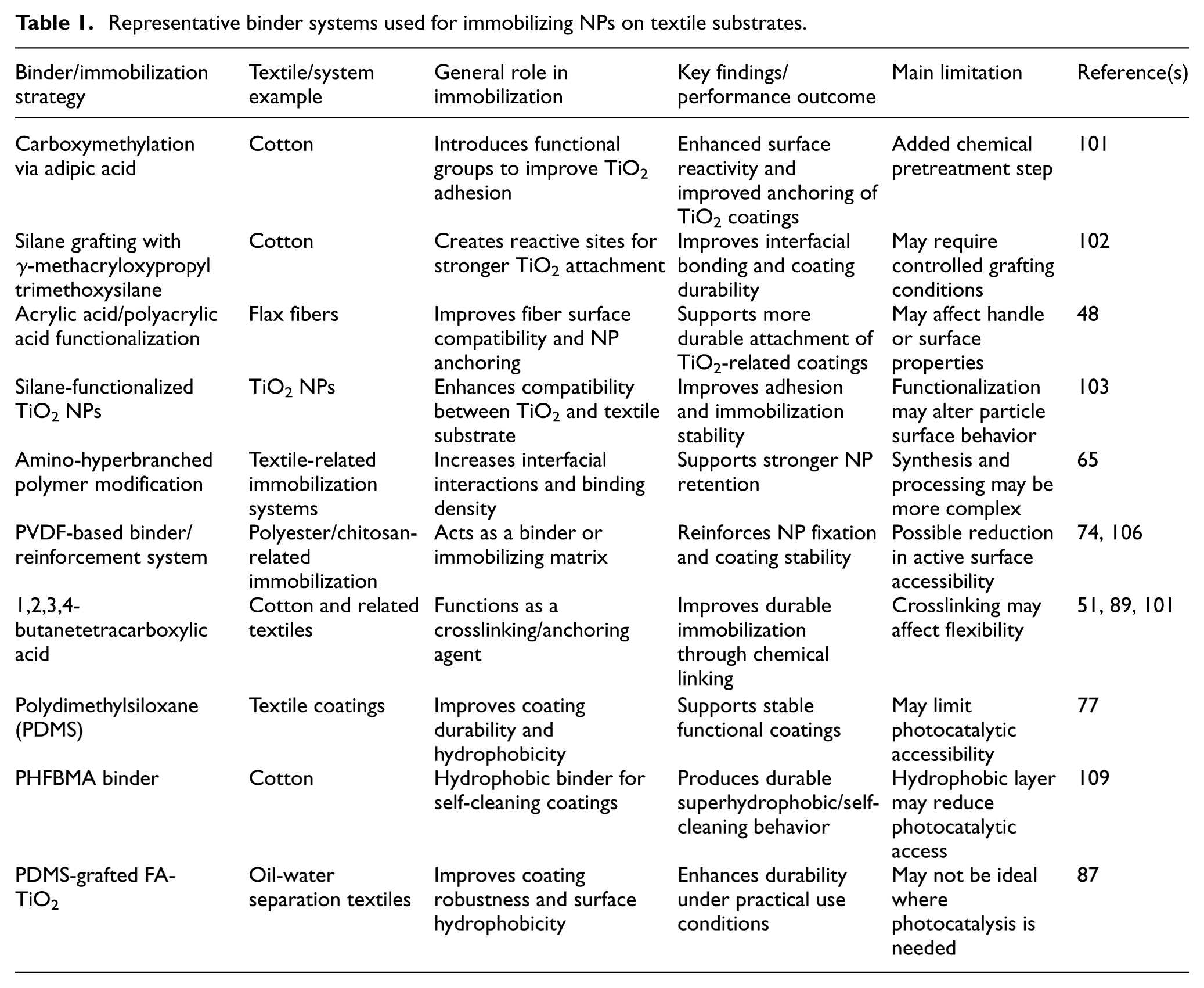
The main strategies for incorporating TiO2 into textile substrates are schematically summarized in Figure 3. A summary of representative binder systems used for immobilizing TiO2 NPs on textile substrates, along with their general roles and reported outcomes, is provided in Table 1.
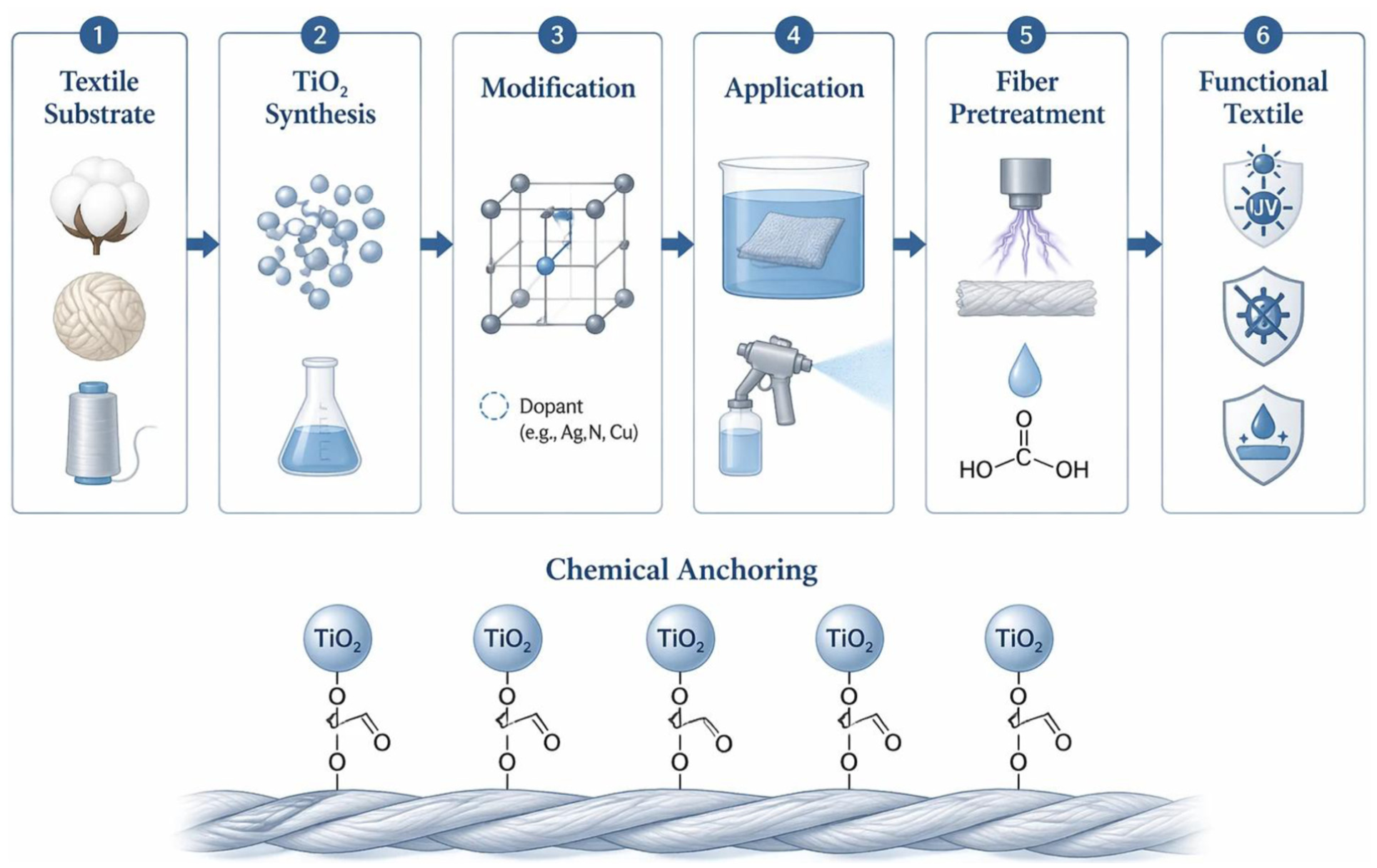
Methods of incorporating TiO2 into textiles.
Representative binder systems used for immobilizing NPs on textile substrates.
Functional enhancements enabled by TiO2
Self-cleaning and photocatalytic textiles
Self-cleaning textiles can generally be grouped into three mechanisms: physical, chemical, and biological self-cleaning. Physical self-cleaning is typically associated with surface structures that reduce particle adhesion and facilitate removal by water or motion. Chemical self-cleaning relies on catalytic or reactive surface processes, such as TiO2-mediated degradation of organic contaminants. Biological self-cleaning refers to surfaces designed to suppress or deactivate microorganisms, thereby reducing biofouling. In TiO2-functionalized textiles, the chemical pathway is the most directly relevant, although surface design can also contribute to physical cleaning behavior.110,111
The self-cleaning performance of TiO2-functionalized textiles is heavily influenced by its crystal phase, dopants, and composite structures. Mixed TiO2 phases, such as anatase-rutile/brookite, enhance photoreduction activity (e.g., CO2 conversion) by improving electron-hole separation and contact efficiency, ensuring stable, recyclable performance. 93
Incorporating dopants, including silver (Ag), F, Cu, Mn, and N, significantly improves visible-light self-cleaning.73,76,77,112 Ag boosts efficiency (e.g., 2.3× faster methylene blue removal) via Schottky barrier formation and plasmon resonance, extending visible light absorption.79,113 Optimal dopant concentration is crucial, as excess can reduce efficiency. 68 For example, N-doped anatase/rutile TiO2 achieved 87% dye discoloration under sunlight. 73
Integrating other semiconductors (e.g., Cu2O, CeO2, ZnO, Bi2WO6, and FeS2) into TiO2 heterojunctions also enhances visible-light performance.58,69,114,115 Cu2O/ TiO2, for instance, showed a Z-scheme mechanism, doubling methylene blue degradation rates through improved visible light absorption and reactive species generation. 69
Nanocarbon materials such as graphene, GO, and g-C3N4 effectively narrow TiO2’s band gap and enhance self-cleaning.112,116,117 rGO with Fe/N-doped TiO2 demonstrated excellent photodegradation due to GO’s high adsorption, π–π interactions, and hydrophobicity. 112 Similarly, g-C3N4–TiO2 composites on PET significantly improved photocatalytic degradation by suppressing electron–hole recombination, exhibiting good repeatability. 117
Dye-sensitized TiO2 presents another avenue for visible-light-driven self-cleaning. Porphyrin-sensitized TiO2 (TPPS/ TiO2) on polyester achieved 65% RhB degradation under visible light (compared with 20% for undoped TiO2), by enabling electron transfer from the excited dye to TiO2. C.I. Reactive Blue 21 also sensitized TiO2 on cotton for RhB degradation, though its limited photostability is a drawback.55,64
While various dopants have been reported to enhance the visible-light activity of TiO2, their effectiveness and suitability depend strongly on the target function and application context. Noble-metal dopants are often associated with enhanced charge separation and additional antimicrobial pathways, but their use may raise concerns related to cost, resource availability, and potential environmental impact. In contrast, nonmetal doping strategies primarily modify the electronic structure of TiO2 to extend light absorption, offering a potentially more sustainable route, although the resulting photocatalytic enhancement can be sensitive to dopant concentration and synthesis conditions. These trade-offs indicate that dopant selection should be guided not only by activity enhancement but also by durability, scalability, and application-specific requirements.
Antibacterial textiles
The antimicrobial activity of TiO2 on textiles relies on its photocatalytic generation of ROS, such as •OH, O2•−, and H2O2, which cause oxidative damage to microbial cells, leading to their death. Small TiO2 particles can penetrate cells, enabling intracellular ROS generation. This effect extends to bacteria, fungi, yeasts, and viruses.118,119 Common bacterial strains tested include Staphylococcus aureus and Escherichia coli, among others. In general, Gram-negative bacteria are more resistant to TiO2 than Gram-positive bacteria due to their protective outer membrane,49,59,91,120 though some studies report the opposite.69,77,81 Such discrepancies likely arise from multiple experimental and material-related variables. Antibacterial performance can be influenced by TiO2 particle size, surface area, crystal phase composition, and the presence of dopants or composite components, all of which affect ROS generation and surface interactions. In addition, variations in bacterial strain, cell wall structure, and physiological state may alter susceptibility. Testing parameters, including light source, irradiation intensity, exposure time, and assessment methodology, can further contribute to inconsistent outcomes. These factors highlight that antibacterial efficacy is not solely determined by Gram classification, but by the interplay between material properties and experimental conditions. Factors enhancing TiO2’s photocatalytic efficiency, such as increased concentration, nanostructure morphology (e.g., nanowires), or surface modification, directly improve its antimicrobial efficacy. For instance, TiO2 nanowires achieved 100% bacterial reduction of E. coli within 15 minutes under visible light. 121
Heterojunctions with various materials (Au,79,122 Cu, 69 Fe, 78 Mn, 77 SiO2, 91 graphene oxide 123 ) are employed to boost antimicrobial activity. Silver (Ag) is particularly effective due to its inherent antimicrobial properties in both light and dark conditions, amplified by increased ROS generation from Ag-doped TiO2 (Schottky barrier, plasmon resonance) and the direct toxic effect of released Ag+ cations. Cotton fabrics treated with TiO2 modified by silver (Ag) demonstrated potent antibacterial effects against S. aureus and E. coli, retaining their effectiveness even after numerous wash cycles. 94
Beyond metallic dopants, biobarrier-forming agents such as chitosan and 3-(trimethoxysilyl)propyl-N, N, N dimethyloctadecyl ammonium chloride (SiQAC) can functionalize TiO2. SiQAC-modified TiO2 nanocomposites can provide synergistic active (photocatalytic ROS) and passive (biobarrier, antiadhesive) antibacterial effects. 103 However, high SiQAC concentrations can reduce TiO2’s photocatalytic activity by covering the NPs, shifting the primary antimicrobial mechanism to the SiQAC’s quaternary ammonium group. 103
For composite systems, performance differences are closely linked to the functional role of the secondary component. Carbon-based additives primarily enhance charge transport and electrical conductivity, which can support photocatalytic efficiency and multifunctional properties such as sensing or shielding. Conductive polymer composites, by comparison, offer advantages in processability and flexibility, enabling better compatibility with textile substrates. However, their stability under repeated washing or prolonged irradiation may differ. As a result, the choice of composite system should be aligned with the intended balance between electrical performance, mechanical robustness, and long-term functional stability.
UV protection
TiO2 is a prominent textile additive for UV protection, effectively blocking both UVA and UVB radiation. Its mechanism involves both UV absorption (due to semiconducting properties) and reflection/scattering (high refractive index),124,125 significantly reducing UV transmission. This protects users and mitigates photochemical degradation and color fading of textile fibers. UV protection is primarily assessed by transmission measurements (280–400 nm) to determine the ultraviolet protection factor (UPF) and UVA/UVB blocking.57,74,97,99,114,126 High UPF values (e.g., 40–50 or >50 with <5% UVA transmission) indicate excellent protection, supported by increased UV absorption and reduced spectral reflectivity.50,95
TiO2 typically exhibits the highest UPF compared with other metal oxides at similar concentrations.74,86 While combining TiO2 with SiO2 can decrease UPF due to an antagonistic effect,75,82 synergistic enhancements are observed with CeO2. 114 The UV-protective performance of TiO2 is enhanced by its crystalline anatase morphology and by increasing its concentration or coating layers.97,99,126
Doping TiO2 with noble metals such as Au and Ag further improves UV protection through enhanced absorption.80,94 However, the inclusion of SiO2 in these noble metal–TiO2 composites can counteract this benefit, reducing the overall UPF.75,82 Substantial UPF increases are also achieved by modifying TiO2 with highly absorbent materials such as graphene, graphene oxide (GO), and organic dyes or pigments.50,64,86 For instance, GO-treated polyester with TiO2 precursors achieved a UPF up to 148.2, 86 and cotton sensitized with C.I. Reactive Blue 21 dye exceeded a UPF of 150. 64 Natural pigments such as melanin, when combined with rutile TiO2 NPs, exhibit synergistic UV protection on wool, with specific melanin/ TiO2 ratios yielding superior UPF values compared with individual treatments. 50 Furthermore, co-applying TiO2 with organic UV absorbers (e.g., benzotriazole derivatives) can enhance both UPF and coating wash durability. 90
Hydrophobicity and superhydrophobicity
The creation of water-repellent (hydrophobic) or extremely water-repellent (superhydrophobic) surfaces necessitates the integration of both chemical compositions that minimize surface energy and textures featuring hierarchical roughness at the microscale and nanoscale, drawing inspiration from structures found in nature, such as the lotus leaf.127,128 Hydrophobic surfaces have a water contact angle (WCA) >90°, while superhydrophobic surfaces exhibit WCA >150°, minimal hysteresis, and a roll-off angle <10°. 127 These surfaces create a low-energy solid–liquid–air interface, facilitating the "lotus effect" or physical self-cleaning as rolling water droplets remove contaminants. 129
While TiO2 alone typically increases textile hydrophilicity, essential for its photocatalytic self-cleaning function, some reports indicate it can impart hydrophobic properties, for instance, through specific deposition methods such as ALD, yielding isopropyl-rich TiO2 coatings.52,57,130 In graphene–TiO2 composites, hydrophobicity is generally attributed to graphene.81,86
For developing superhydrophobic, self-cleaning textiles, TiO2 or TiO2/SiO2 nanocomposites are primarily used to create surface roughness, while separate highly hydrophobic binders (e.g., organosilanes, fluorocarbons, and stearic acid) provide the low surface energy.75,109,131 Two main strategies involve either pretreating fibers with TiO2, then coating with a binder, or modifying TiO2 NPs with the binder in a sol before application. The resulting superhydrophobicity is influenced by TiO2 morphology and concentration, binder chemistry and concentration, and the application method. For example, amorphous TiO2 modified with poly(hexafluorobutyl-methacrylate) (PHFBMA) imparted excellent superhydrophobicity (152.5° WCA) and self-cleaning to cotton because of its micro/nano-roughness and high fluorine content, although excess PHFBMA could disrupt the microstructure. 109
While both physical and photocatalytic self-cleaning are desired, the presence of hydrophobic polymers can sometimes impede TiO2’s photocatalytic activity.103,132 Superhydrophobic TiO2-modified particles, such as polydimethylsiloxane–grafted fly ash–TiO2 (FA-TiO2-PDMS), have also shown promise for robust and durable oil–water separation, maintaining high efficiency over numerous uses. 87
Flame-retardant properties
The incorporation of TiO2 into textiles leads to enhanced fire resistance and elevated thermal stability by operating through a condensed phase mode of action. This process generates a carbon-rich barrier (char) that shields the underlying fibers, limiting the flow of heat, fuel, and oxygen necessary for combustion.47,72,85,133 This effect is bolstered by the anatase-to-rutile transformation at high temperatures, with effectiveness influenced by TiO2 concentration and particle size. Thermal properties are typically evaluated using thermogravimetric (TG) measurements, noting that other composite components can affect degradation.51,89 Increased TiO2 concentration generally improves thermal stability, leading to more carbonization residue, higher degradation temperatures, and slower decomposition.47,72,106
In the pursuit of flame-retardant textiles capable of self-extinguishment, TiO2 is commonly integrated alongside established fire-suppressing agents, including those formulated with elements such as phosphorus, nitrogen, boron, or silicon.51,88,89 For instance, biobased phytic acid (PA) synergistically enhances flame retardancy with TiO2 on wool and silk, increasing the limiting oxygen index (LOI) and promoting a self-extinguishing effect in vertical burning tests. PA’s phosphate groups induce char formation via dehydration, with TiO2 further increasing char residue and significantly suppressing smoke release by forming an intumescent carbon layer.51,89
Similarly, hollow glass microspheres (HGMs) combined with TiO2 on cotton fabric improve thermal stability and flame retardancy. Increased HGM content enhances char residue and reduces flammability (e.g., decreasing burning char length and increasing LOI from 17% to 21%). This is also attributed to a condensed phase mechanism forming a thermal barrier. Beyond flame retardancy, these coatings offer improved thermal and acoustic insulation and UV absorption. 88
Electrical conductivity
Though inherently a semiconductor, TiO2 typically exhibits insulating behavior due to its large energy gap. Augmenting its electrical conductivity necessitates manipulations that elevate charge carrier concentration, facilitate more efficient charge transport, and reduce the energy gap; strategies to achieve this include manipulating temperature, introducing dopants, and applying surface sensitizers. 134
Composites such as graphene/TiO2, polyaniline/TiO2, and polypyrrole/TiO2 in textile applications have been explored for their electrically conductive and antistatic properties. Graphene/TiO2 nanocomposites significantly improve polyester fabric’s electrical conductivity and reduce charge half-life due to graphene’s high electron mobility, which is further enhanced by increasing TiO2 concentration. Conversely, in polyaniline/TiO2/cotton composites, increased TiO2 concentration only slightly improved conductivity, likely due to TiO2 particles obstructing polyaniline’s conductive pathways.86,99
The capacity of dye-sensitized TiO2 to conduct electricity has enabled the development of textile-integrated dye-sensitized solar cells (DSSCs), facilitating their use in the realm of wearable electronic devices.98,135 DSSCs operate by light exciting dye molecules, which then inject electrons into the TiO2 CB. These electrons transfer through TiO2 and an external circuit to a counter electrode, flow into an electrolyte, and regenerate the dye, completing the circuit.136-138 DSSC performance, measured by photoelectric conversion efficiency, is influenced by TiO2 morphology, surface modifications, and the choice of dye, electrolyte, and electrodes.138,139
A critical challenge in manufacturing textile-based DSSCs is the high sintering temperature (around 500°C) required to fix the porous TiO2 layer to the fabric, which is unsuitable for most textiles. 98 Recent advancements include using screen printing to create a low-temperature TiO2 layer on cotton/polyester fabric. A screen-printed silver bottom electrode was followed by screen-printed TiO2 paste, annealed at 150°C, and then dyed. While showing a power conversion efficiency of 2.78%, this was lower than a Kapton-based counterpart, attributed to TiO2 layer damage from fabric deformation during annealing and dyeing. 98
A separate strategy to circumvent TiO2 sintering at lower temperatures involves generating PAN nanofiber mats via electrospinning onto polypropylene nonwoven substrates. These mats undergo carbonization at 500°C, forming a conductive carbon nanofiber framework into which TiO2 is introduced from a water-based solution. Forest fruit tea containing anthocyanins was used as the dye. However, the observed photoelectric conversion efficiency was minimal (0.0001%), indicating that the electrospinning, carbonization, and dip-coating steps require additional refinement. 62
The difference in conductivity enhancement observed for these composite systems can be understood by considering the role of TiO2 within the conductive network. In graphene-based systems, graphene typically forms a continuous conductive framework with high charge mobility, while TiO2 particles can contribute photocatalytic functionality and participate in interfacial charge transfer without significantly disrupting the overall transport pathway. In contrast, conductive polymers such as polyaniline rely on a percolated polymer network for charge transport. The introduction of semiconductor particles into this matrix may partially interrupt these pathways or alter the packing of the polymer chains, which can limit the overall improvement in electrical conductivity. These differences highlight that the effect of TiO2 incorporation depends strongly on how the particles interact with the primary conductive phase. Moreover, many of these conductive textile systems remain at an exploratory research stage, and further work is required to evaluate their stability, scalability, and integration into practical textile devices.
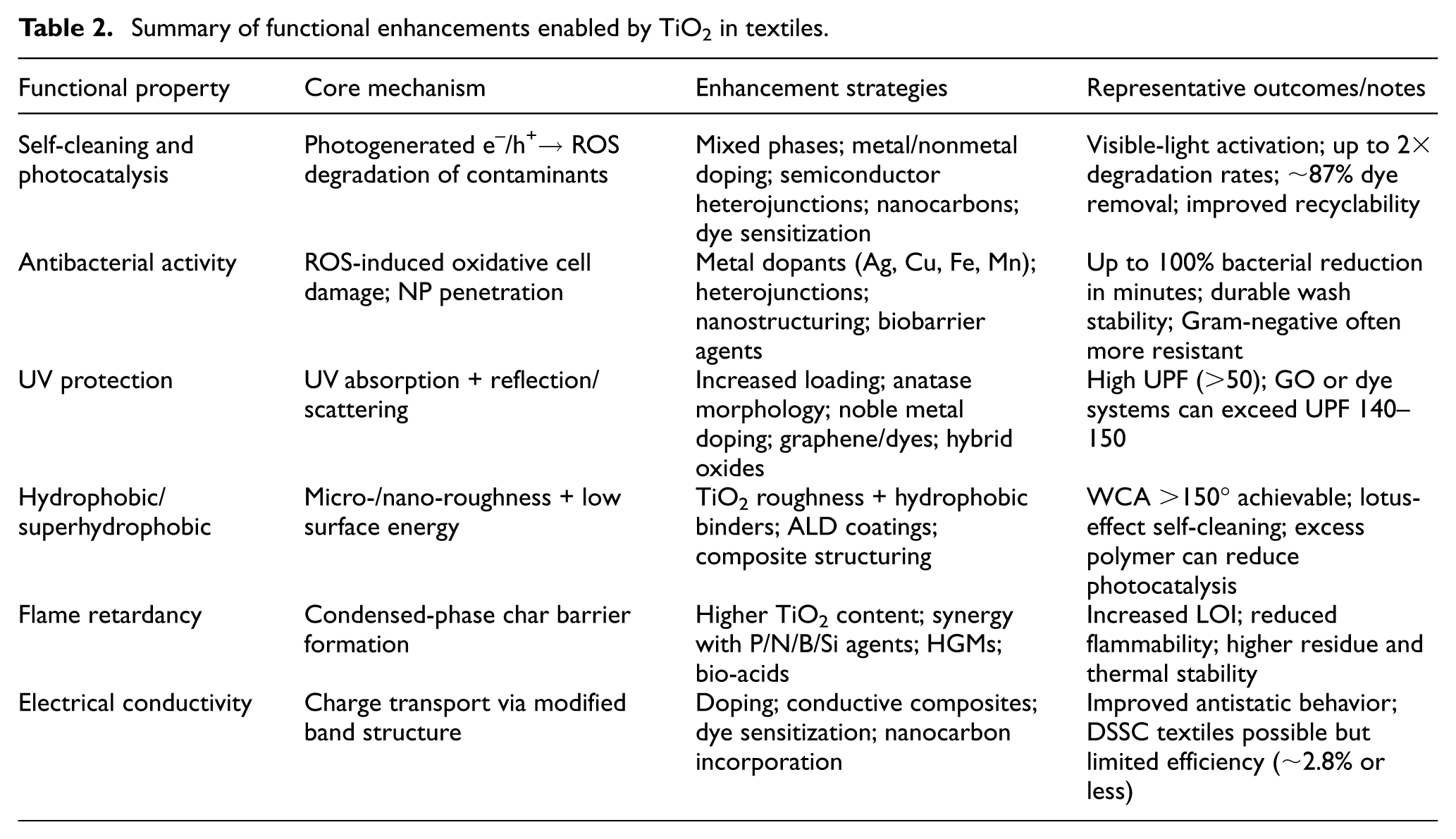
A concise overview of the key functional properties imparted by TiO2 and their enhancement strategies is presented in Table 2.
Summary of functional enhancements enabled by TiO2 in textiles.
Mechanisms and functional enhancements of titanium dioxide in textile applications
Functional mechanisms of TiO2 in textiles
Titanium dioxide provides a wide spectrum of functionalities to textiles primarily due to its semiconductor photocatalytic mechanism. When TiO2 absorbs UV or visible light, depending on its crystalline phase and modifications, electron–hole pairs are generated. These react with oxygen and water on the textile surface to form ROS, including hydroxyl radicals and superoxide ions, which can destroy organic compounds, stains, dyes, pathogens, and airborne pollutants. Additional mechanisms include light scattering and absorption for UV protection, ROS-induced antimicrobial action, and optical reflectivity contributing to thermal regulation. Advances such as doping, heterojunction design, and composite formation have significantly improved charge separation efficiency and visible-light activation.140,141
Antimicrobial and hygiene performance
The antimicrobial performance of TiO2-functional textiles is attributed to ROS activity and, when modified, synergistic ion release. The antimicrobial mechanism of TiO2 NPs under UV irradiation, mediated by the formation of ROS, is schematically illustrated in Figure 4. As illustrated in Figure 4, the antimicrobial activity of TiO2 is primarily associated with its photocatalytic behavior. Upon irradiation, TiO2 absorbs light energy and generates electron–hole pairs, which initiate redox reactions at the particle surface. These reactions lead to the formation of ROS, including superoxide and hydroxyl radicals. The generated species can interact with bacterial cell components, promoting oxidative damage to the cell wall, membrane structures, and intracellular biomolecules. The accumulation of this oxidative stress ultimately disrupts cellular functions and leads to cell inactivation. Curcumin/TiO2 nanocomposites on cotton exhibited high antibacterial efficiency against both Gram-positive and Gram-negative bacteria, retaining effectiveness over 20 washing cycles. 142 Ag-doped TiO2 embedded in a polysiloxane matrix enhanced antimicrobial activity and durability thanks to strong Si–O–Ti bonding. 143
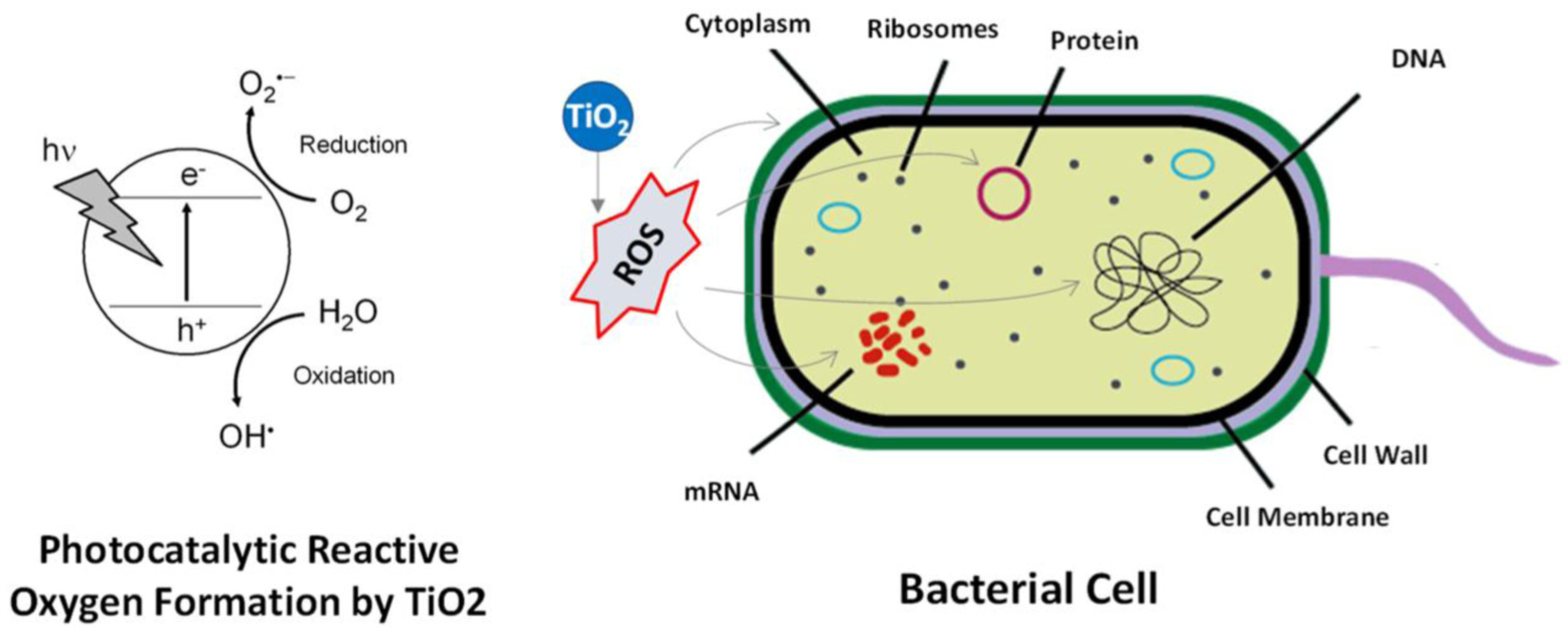
Schematic illustration of the UV light–induced photocatalytic activity of titanium dioxide NPs, showing the generation of ROS that interact with microbial cells and ultimately cause cellular damage and cell death. 145
Large-scale ultrasonic deposition of TiO2 and ZnO NPs demonstrated stable antimicrobial performance even in tropical outdoor conditions, while improving durability relative to untreated cotton. 144 A newly developed chemical coating process achieved >99.99% bacterial reduction and preserved performance after 40 intensive wash cycles, supporting commercial feasibility. 145
UV protection and photostability
TiO2’s high refractive index and UV absorption make it a strong candidate for protective apparel. Electrical-discharge deposition of anatase TiO2 on cotton increased UPF to above 50, and values remained over 40 after repeated washing. 146 Entrapped TiO2 within mesoporous cellulose resulted in UPF >200, categorized as “excellent protection” for consumer safety. 147
Photochemically induced chemiluminescence analysis provides valuable insight into the photo-oxidative stability of wool fabrics subjected to UV radiation. Changes in chemiluminescence intensity reflect the extent of oxidative degradation occurring within the textile structure, while UPF and UV transmittance measurements quantify the ability of the fabrics to attenuate UVA and UVB radiation. The combined evaluation of these parameters highlights the influence of surface modification treatments on both oxidative resistance and UV shielding performance, as illustrated in Figure 5.
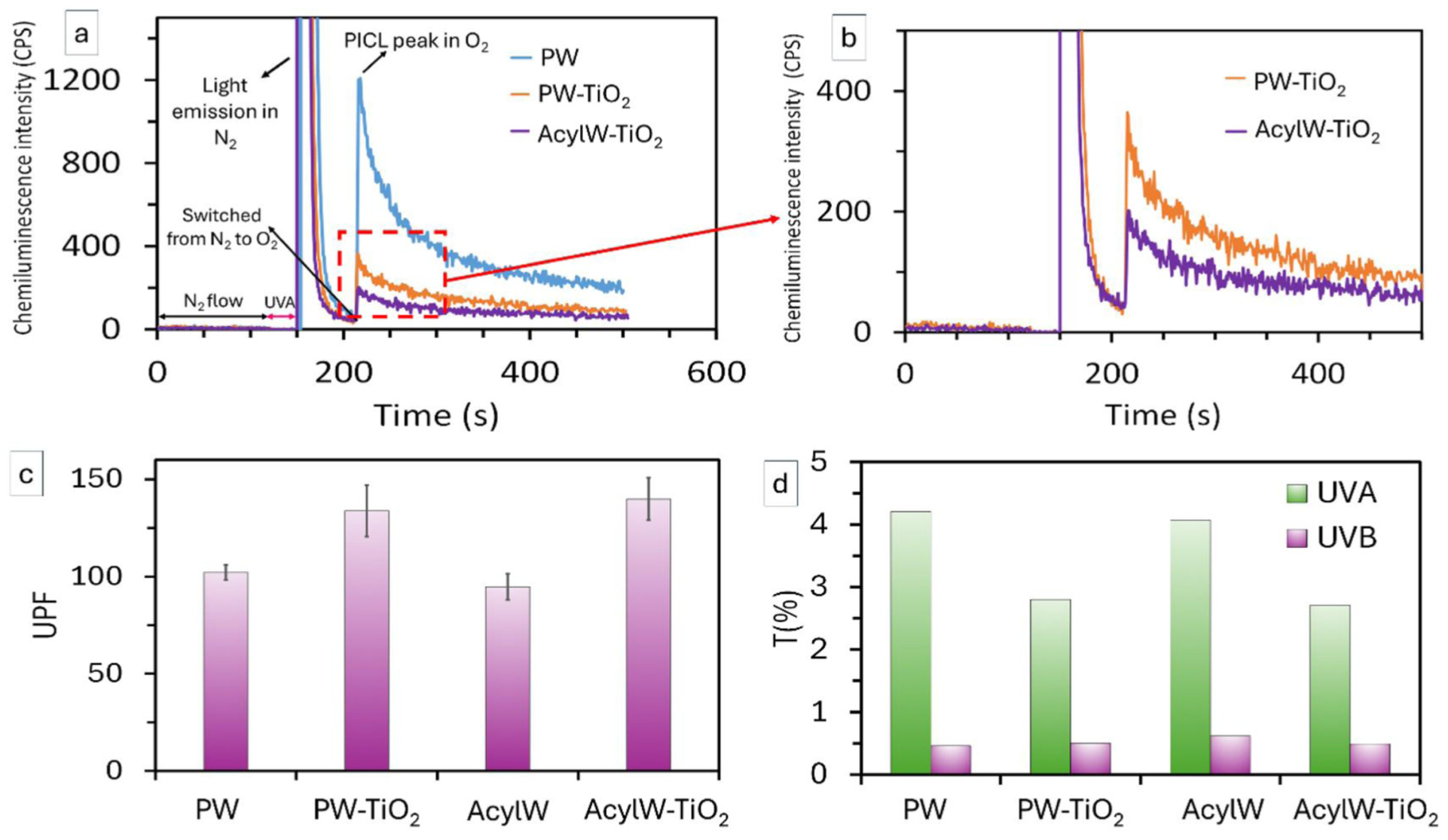
(a) Photochemically induced chemiluminescence spectra of wool fabrics measured in an oxygen atmosphere after exposure to UVA radiation. (b) Comparison of the influence of the acylation treatment on photochemically induced chemiluminescence peak intensity. (c) UPF values of the treated and untreated fabrics. (d) UV transmittance of the fabrics across the UVA and UVB wavelength regions. 148
Hybrid coatings such as ZnO–TiO2 offered added photostability and color fastness, maintaining textile performance even after 300 hours of xenon weathering exposure, indicating suitability for marine and outdoor applications. 149
Mechanical and comfort characteristics
TiO2 integration may modify mechanical behavior depending on the application method and fiber substrate. In knitted acrylic/cotton fabrics, TiO2 enhanced moisture transport, valuable for sportswear, while affecting certain tensile and flexibility properties. 150 Conversely, TiO2 nanofibers embedded in TPU composites improved structural strength while preserving high photocatalytic capability, ensuring compatibility with high-performance wearables. 151
Thermal regulation and radiative cooling
Beyond surface protection, TiO2 contributes to passive thermal comfort via solar reflectivity and infrared emissivity. TiO2 pigment-coated polyester reduced surface temperatures by approximately 4°C under solar exposure, with larger pigment sizes yielding stronger cooling effects. 11 Functional fibers engineered with barklike SA-Al2O3@TiO2 structures achieved temperature drops up to 12°C outdoors and retained cooling performance after prolonged UV irradiation, highlighting their potential for extreme climate clothing. 152
Smart and energy-harvesting applications
TiO2 has enabled emerging multifunctional textiles with active responses. Stainless-steel fabrics functionalized with flowerlike TiO2 structures formed triboelectric nanogenerators capable of generating 110–120 V and powering LEDs, with stable performance after more than 8000 cycles. 153 Luminous Cu/TiO2 textile systems also demonstrated combined air purification and antibacterial effects during gas-phase testing in reactor environments. 154 Overall, these developments highlight the potential of TiO2-functionalized textiles to integrate energy-related functionalities with environmental purification, supporting the development of multifunctional smart textile systems.
Environmental sustainability and wastewater treatment
Immobilizing TiO2 within textile matrices reduces NP release while supporting reusable pollution removal systems. Hydrothermally synthesized TiO2 NPs achieved 97% removal of Rhodamine 6G and 94% removal of Congo Red with TiO2h only a slight efficiency reduction over multiple cycles. 155 A sequential electrooxidation–photocatalysis process using PVDF/TiO2 membranes achieved complete dye discoloration and substantial COD reduction in industrial textile wastewater. 156
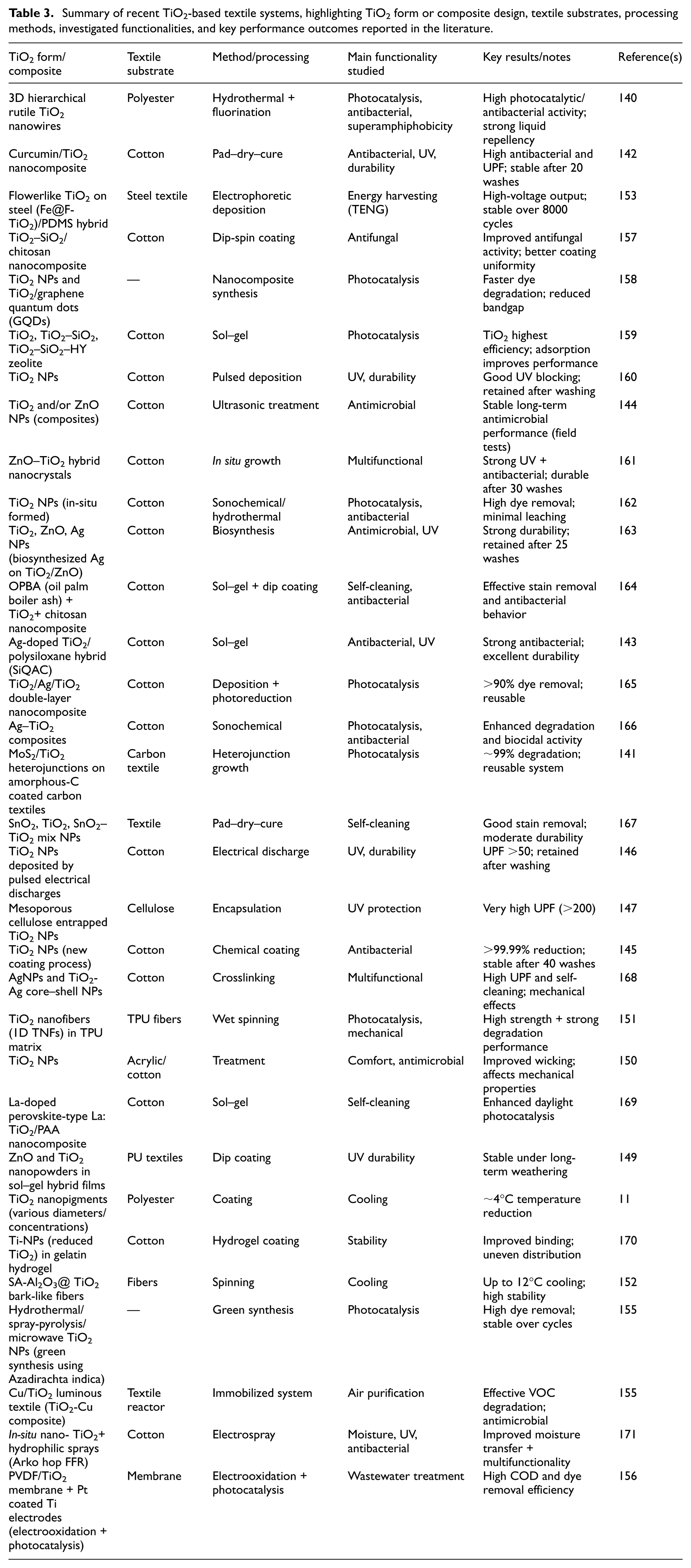
A comparative overview of TiO2 forms, textile substrates, processing strategies, and the resulting functional performances, including photocatalytic, antimicrobial, UV-protective, energy-harvesting, and thermal-regulation behaviors, is presented in Table 3.
Summary of recent TiO2-based textile systems, highlighting TiO2 form or composite design, textile substrates, processing methods, investigated functionalities, and key performance outcomes reported in the literature.
Evaluation of the performance of titanium dioxide in textiles
Across diverse substrates (cotton, polyester, TPU fibers, carbon textiles, and engineered fibers), TiO2 in forms ranging from NPs and nanowires to doped/heterojunction composites consistently imparts multifunctionality. The strongest and most reproducible benefits are photocatalytic degradation of organic contaminants, antimicrobial properties, and UV shielding. Many reports combine TiO2 with co-catalysts or dopants (Ag, La, MoS2, GQDs, ZnO) or embed it in hybrid matrices (SiO2, polysiloxane, hydrogels) to extend activity into visible light and improve adhesion strategies that recur as clear performance enhancers across the dataset.
Photocatalytic and self-cleaning performance
TiO2-based textiles demonstrate robust photocatalytic removal of dyes and stains under appropriate irradiation. Anatase/rutile nanostructures, heterojunctions (e.g., MoS2/TiO2), and composites with carbon or graphene quantum dots show rapid degradation kinetics examples include near-complete Rhodamine B or methylene blue removal within tens of minutes. Immobilized catalysts on textile supports provide practical advantages for recyclability and handling versus powder suspensions. The data indicate that combining TiO2 with adsorption-promoting phases (SiO2, zeolites, activated carbon) often improves overall removal by coupling adsorption and photocatalysis. Nonetheless, performance strongly depends on catalyst architecture, light source (UV versus visible), and test conditions, so interstudy comparisons require normalization of irradiation intensity and pollutant loading.
Antimicrobial activity
Antimicrobial efficacy arises from ROS generation and, when present, metallic co-agents (Ag) that provide additional biocidal mechanisms. Studies report high bacterial reduction rates and durable activity. Examples include curcumin/TiO2 treatments retaining activity after ∼20 washes and chemical nano coatings achieving >99.99% reduction even after 40 intensive launderings. Ag-doped and Ag–TiO2 multilayer systems consistently show enhanced bactericidal performance and reduced charge recombination. Field and large-scale tests confirm antimicrobial benefits in realistic climates, though some methods (e.g., pure TiO2 deposited without co-binders) report limited bactericidal action in specific assays, suggesting that deposition method and matrix chemistry crucially modulate biocidal outcomes.
UV protection and photostability
TiO2 treatments reliably improve UPF values, with some methods delivering UPF >50 or even UPF >200 for mesoporous entrapped systems. The scattering and absorption properties of TiO2 are the primary drivers; addition of ZnO or embedding in protective matrices improves photostability and color fastness under xenon weathering. Overall, the dataset shows strong potential for durable UV protection, particularly where TiO2 is entrapped or chemically bound rather than loosely deposited.
Durability and wash-fastness
Durability is a decisive factor for practical use. Several studies report excellent retention of functionality after many wash cycles (e.g., maintained antimicrobial activity after 30–40 washes, and significant TiO2 retention after 10–20 washes) when coatings employ crosslinkers, hybrid matrices (Si–O–Ti anchoring), or in situ growth into fiber pores. Conversely, simple surface depositions without binding chemistries perform worse. Thus, robust chemical anchoring or physical entrapment emerges as the principal route to longevity. Anchoring strategies for immobilizing TiO2 on textiles can be broadly interpreted according to the nature of the interaction with the fiber surface. Covalent approaches aim to establish stable chemical linkages that enhance resistance to washing and abrasion. Electrostatic assembly relies on charge-based attraction between modified particle surfaces and the substrate, while physical entrapment retains particles within a deposited matrix or fiber structure. The relative effectiveness of these strategies depends on the chemical characteristics of the textile, particularly surface functionality and polarity, which influence the strength and stability of interfacial interactions.
Mechanical properties and comfort trade-offs
Functionalization often changes mechanical and comfort properties: TiO2 can increase stiffness or alter wicking depending on particle loading and binder choice. However, advanced approaches, for instance, incorporating TiO2 nanofibers into TPU or designing hierarchical fiber surfaces, can simultaneously reinforce mechanical strength and preserve comfort. The evaluation suggests that substrate-specific optimization (particle size, loading, binder, deposition technique) is necessary to balance functionality with wearable performance.
Thermal management and radiative cooling
The high reflectance in NIR/SWIR wavelengths of TiO2 translates into measurable cooling: pigment coatings reduced fabric temperature by ≈4°C in some tests, while engineered SA-Al2O3@TiO2 fibers achieved up to 12°C reductions under outdoor conditions. These results underscore the dual role of TiO2 in protection and passive climate control, especially when particle size and macrostructure are tuned for spectral selectivity.
Scalability, environmental, and application considerations
Several reports address scale-up and real-world deployment: ultrasonic and pulsed-discharge deposition methods show promise for industrial coating, and field tests indicate sustained antimicrobial effects. For environmental remediation, immobilized textile photocatalysts and combined electrooxidation–photocatalysis systems achieved high dye/COD removal efficiencies, indicating feasibility for wastewater treatment loops. However, environmental safety (NP leaching), life-cycle impacts, and energy costs for certain combined processes (electrooxidation + photocatalysis) require careful assessment before broad adoption.
In addition to lifecycle considerations, the migration and release of TiO2 NPs during use and laundering represent critical factors influencing environmental exposure. Experimental studies have shown that TiO2-containing textiles can release measurable amounts of particles during washing, although the extent of release strongly depends on the incorporation method. For example, investigations on commercial functional textiles reported low but detectable Ti release (typically below 0.1 wt% per wash cycle) for most UV-protective fabrics, whereas certain antimicrobial coatings exhibited significantly higher release levels under similar conditions. 172
More recent analyses confirm that NP release is governed by parameters such as binding strength, coating morphology, and fabric structure, with loosely deposited coatings showing greater susceptibility to detachment during mechanical agitation and washing.173,174 Quantitative studies further indicate that less than 1% of total Ti content is typically released under controlled conditions, although the fraction of nanoscale particles within the released material can vary significantly depending on the textile system.
Challenges in durability and stability
A key challenge in TiO2-functionalized textiles is achieving durable adhesion of NPs to fiber surfaces. When TiO2 is deposited through simple coating processes, the interaction with the textile substrate is often weak, which may lead to gradual particle detachment during washing or mechanical abrasion. To improve coating stability, different anchoring strategies have been explored. Binder-assisted approaches use polymeric matrices to physically immobilize NPs on the fiber surface, improving wash durability but potentially limiting access to the active TiO2 surface. In contrast, chemical coupling strategies, such as the use of silane coupling agents, aim to create stronger interfacial interactions between TiO2 and the textile substrate. While these approaches can enhance coating stability, achieving an optimal balance between strong adhesion, preserved functional activity, and scalable processing remains an important challenge for practical applications.
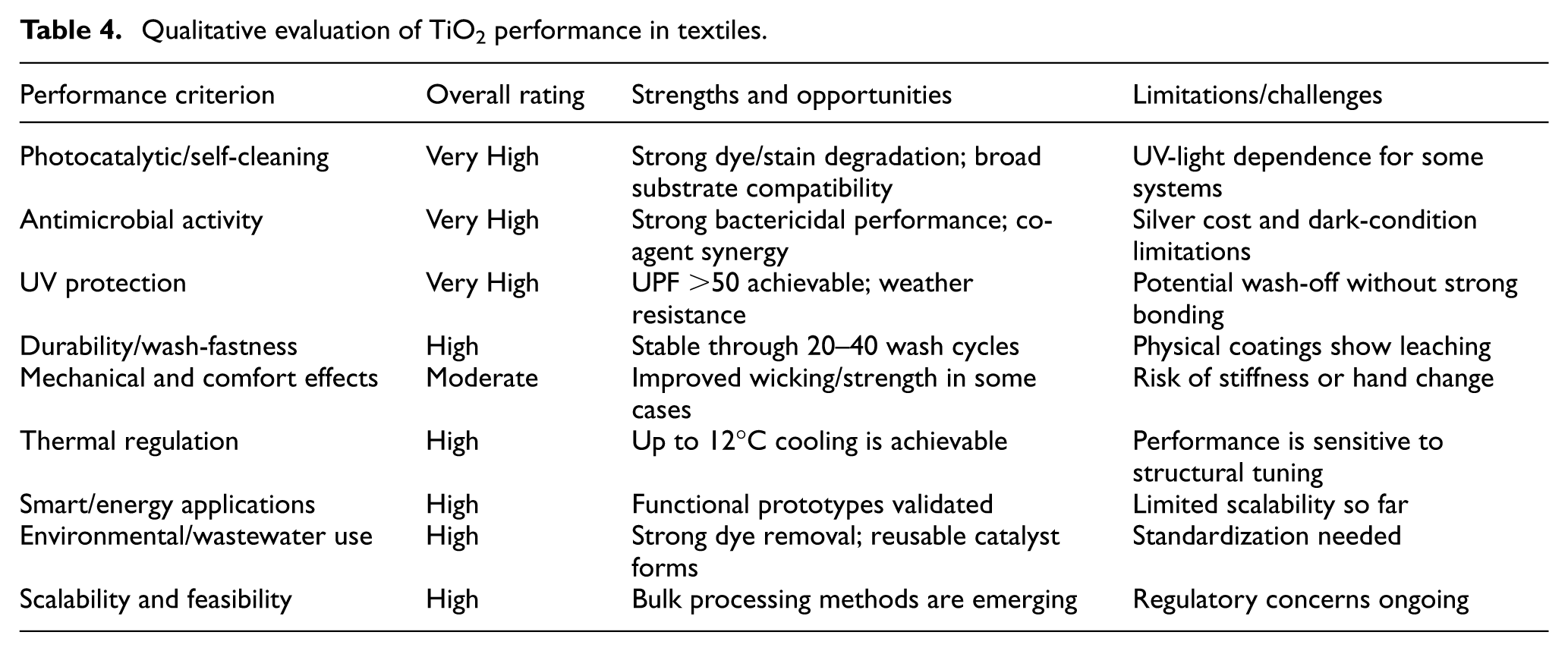
An overview of the qualitative performance of TiO2 in textile applications is summarized in Table 4.
Qualitative evaluation of TiO2 performance in textiles.
A heat-map representation was employed to visually summarize the qualitative performance of TiO2-functionalized textiles across multiple functional criteria (Figure 6). The assigned performance levels are based on a comparative qualitative assessment of the literature, taking into account factors such as reported efficiency, durability, reproducibility, and consistency of functional outcomes across different studies. Rather than representing precise quantitative values, the scoring reflects relative performance trends observed in the reviewed works. A sequential warm color scale was used to illustrate increasing performance levels, ranging from yellow (low) through orange (moderate and high) to deep red (very high).
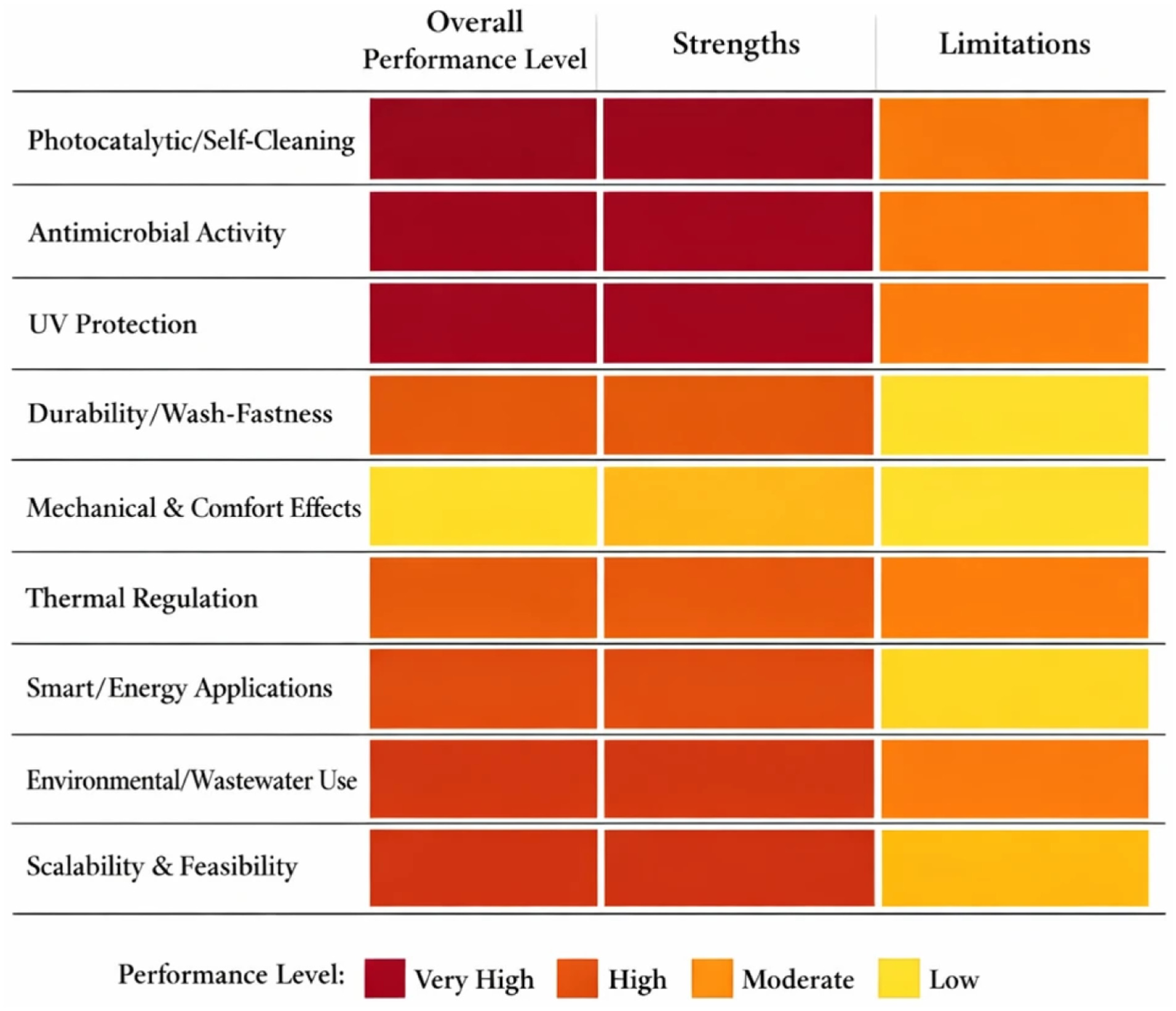
Heat-map visualization of the qualitative performance of TiO2-functionalized textiles. The color intensity represents a semi-quantitative ranking derived from comparative analysis of peer-reviewed studies, based on reported metrics such as photocatalytic efficiency, antibacterial reduction percentages, and durability after repeated washing cycles.
Life cycle and techno-economic
Life cycle assessment of titanium dioxide in textile applications
Life cycle assessment (LCA) is an important approach for evaluating the environmental sustainability of TiO2 used in textile applications, particularly as TiO2 is increasingly employed to impart multifunctional properties such as self-cleaning, UV protection, antimicrobial activity, and thermal regulation (Figure 7). LCA enables the identification of environmental hotspots throughout the life cycle of TiO2, from raw material extraction and NP synthesis to its incorporation into textile substrates. Most studies adopt a cradle-to-gate system boundary and use a functional unit of 1 kg of TiO2 NPs, allowing for comparison between different production routes and providing insight into upstream effects that largely determine the sustainability of TiO2-functionalized textiles. 175
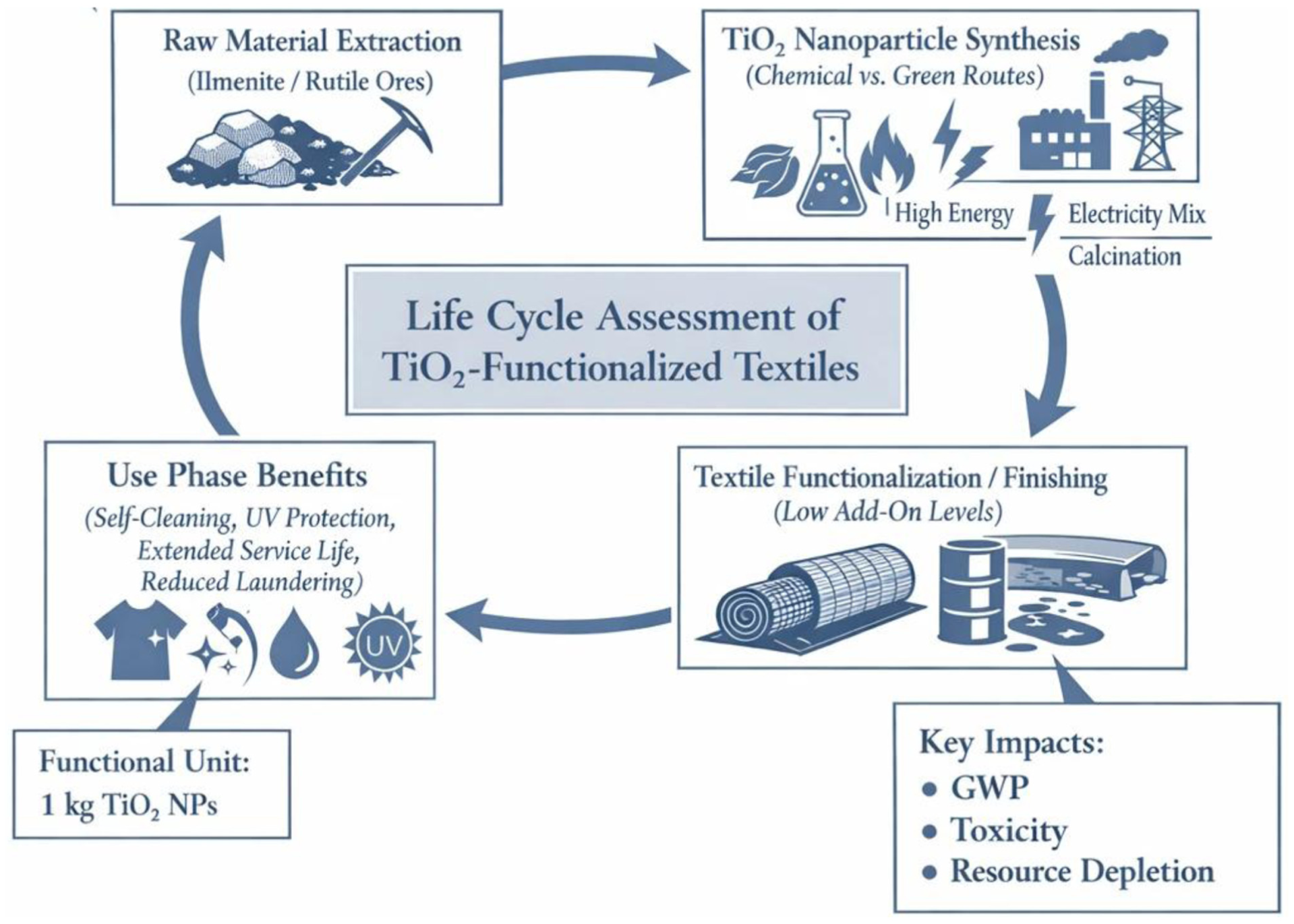
LCA framework for TiO2-functionalized textiles.
Across reported impact categories, energy consumption consistently emerges as the dominant contributor to environmental burden. High-temperature processing steps, including calcination and prolonged thermal treatment, significantly influence global warming potential, fossil resource depletion, and particulate matter formation. 176 Electricity demand, in particular, plays a critical role, with fossil-based energy mixes amplifying climate change and toxicity-related impacts. Although the application of TiO2 onto textiles typically requires relatively low energy input, the environmental profile of the finished textile product remains strongly dependent on the upstream synthesis route of the NPs. 177
Comparative LCA results indicate that alternative low-temperature and green synthesis routes generally exhibit improved environmental performance compared to conventional chemical processes.178,179 Green synthesis approaches, often based on aqueous media and bio-derived reducing agents, reduce the use of hazardous chemicals and lower overall energy demand, resulting in decreased impacts in categories such as climate change, human toxicity, and freshwater ecotoxicity. 180 Nevertheless, even in green synthesis pathways, thermal post-treatment stages remain significant contributors to environmental impacts, indicating that further process optimization is necessary to fully minimize the life cycle footprint of TiO2 production. 181
From a textile life cycle perspective, these findings highlight that the sustainability of TiO2-functionalized textiles is influenced more by the choice of NP synthesis route than by the finishing process itself, as TiO2 is typically applied at low add-on levels. Moreover, current LCA frameworks often exclude potential use-phase benefits associated with TiO2-functionalized textiles, such as extended service life, reduced laundering frequency due to self-cleaning effects, and improved UV protection. Accounting for these functional advantages in future cradle-to-grave assessments may reveal net environmental benefits for TiO2-enabled textiles compared with untreated fabrics.182,183 However, existing studies are limited by the lack of textile-specific functional units, insufficient consideration of nanomaterial release during washing, and omission of end-of-life scenarios. Future LCA studies should therefore integrate durability, wash resistance, and functional longevity into their system boundaries to provide a more comprehensive evaluation of the environmental trade-offs associated with high-performance TiO2-based textile technologies. 184
In addition to production-related impacts, the use phase should also be considered when assessing the environmental profile of TiO2-functionalized textiles. Enhanced self-cleaning performance may decrease the need for frequent laundering, which can lower water, energy, and detergent consumption throughout the product’s lifetime. The extent of this benefit depends on user habits, fabric type, and the durability of the functional coating, but it highlights that use-phase effects can meaningfully influence the overall life-cycle balance.
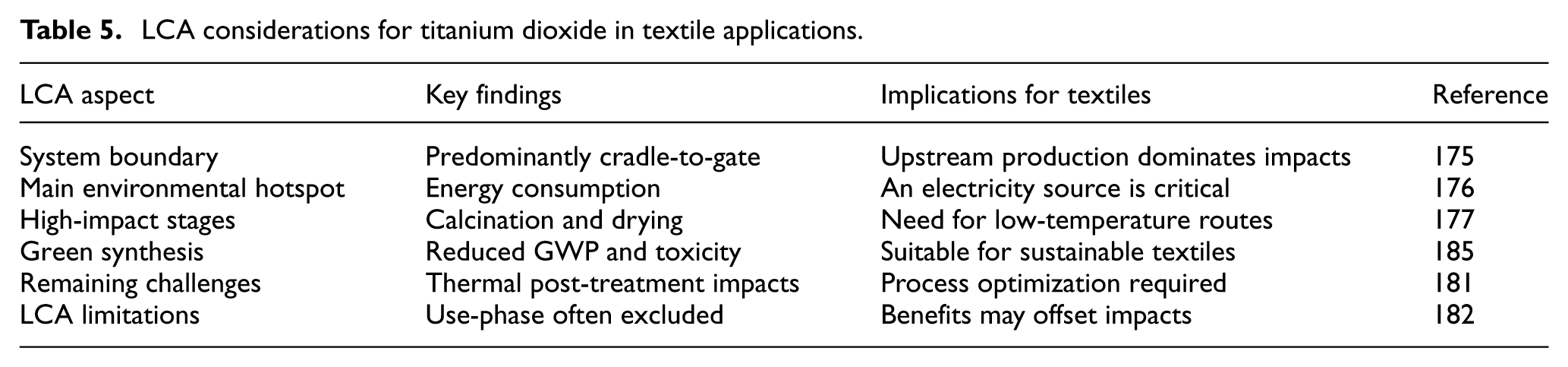
The main LCA findings for titanium dioxide production relevant to textile functionalization, including system boundaries, environmental hotspots, and sustainability challenges, are summarized in Table 5.
LCA considerations for titanium dioxide in textile applications.
Techno-economic aspects of titanium dioxide in textile applications
Techno-economic considerations play a critical role in determining the feasibility of titanium dioxide NPs for large-scale textile applications. While TiO2 offers significant functional advantages such as photocatalytic activity, UV protection, and durability enhancement, its industrial adoption in textiles depends strongly on production cost, energy demand, process scalability, and economic robustness under variable market conditions.
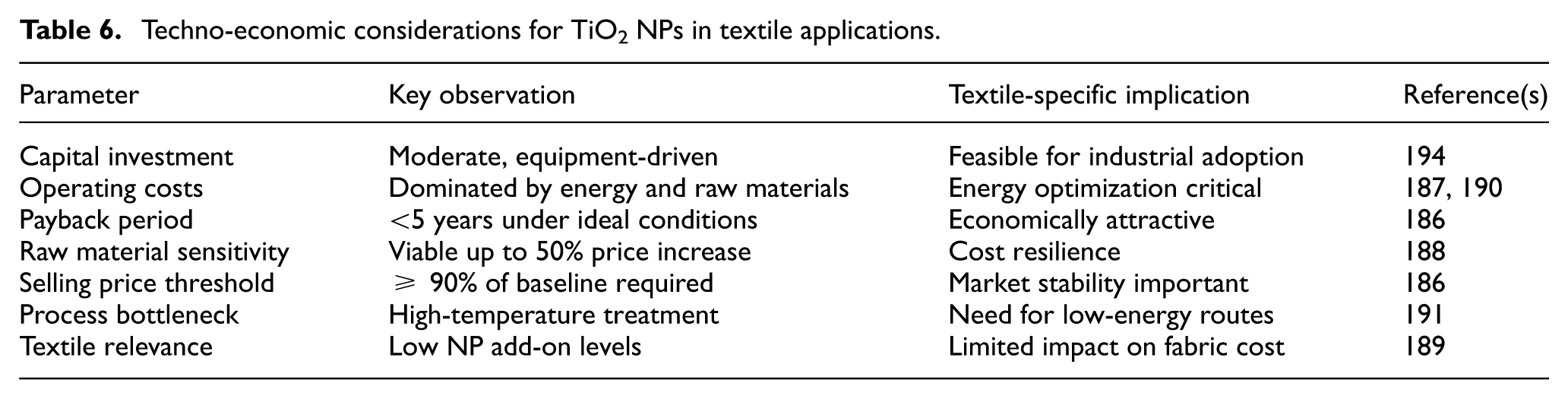
Economic evaluations of TiO2 NP production indicate that synthesis route selection is a key determinant of cost efficiency. Processes based on aqueous chemical routes demonstrate favorable economic performance due to their relatively simple process flow, moderate operating temperatures, and reduced reliance on complex equipment. 186 Capital investment analyses show that total investment costs are largely driven by reactor systems, thermal treatment units, and auxiliary utilities, while operational expenditures are dominated by raw materials, electricity consumption, and labor costs. Under ideal operating conditions, payback periods of fewer than 5 years have been reported, indicating strong economic potential for industrial-scale TiO2 NP production. 187 Sensitivity analyses further reveal that TiO2 NP production remains economically viable under moderate fluctuations in key economic parameters. Variations in raw material prices of up to 50% do not necessarily lead to project failure, although profitability decreases as material costs rise. 188
From a textile application perspective, techno-economic analyses emphasize that TiO2 NPs are typically used at low loading levels, which mitigates their contribution to overall fabric production costs. Consequently, the economic feasibility of TiO2-functionalized textiles depends more on upstream NP production efficiency than on the coating or finishing process itself. 189 Studies evaluating TiO2-based processes in textile-related systems, such as photocatalytic treatments, demonstrate that operational costs are primarily influenced by energy consumption, particularly electricity demand for activation and processing. Optimization of process parameters and energy integration is therefore essential for improving cost-effectiveness at an industrial scale. 190
Despite the favorable economic indicators, several challenges remain for widespread implementation in textiles. High-temperature calcination steps contribute significantly to both energy consumption and operating costs, suggesting that low-temperature or alternative processing strategies could further enhance techno-economic performance. Moreover, current economic assessments often exclude downstream benefits such as extended textile service life, reduced laundering frequency, and added functional value. Incorporating these performance-related benefits into future techno-economic models may improve the overall cost–benefit balance of TiO2-enabled textiles. 191
Overall, available techno-economic evaluations indicate that TiO2 NPs can be produced at an industrial scale with attractive economic prospects, provided that energy use, raw material costs, and market conditions are carefully managed. Continued process optimization and integration of functional performance benefits into economic models will be essential for supporting the long-term commercial adoption of TiO2 in advanced textile applications.192,193
The techno-economic feasibility of incorporating titanium dioxide into textile manufacturing has been evaluated across multiple processing scenarios (Table 6). The key techno-economic factors governing the feasibility of TiO2-functionalized textile systems are schematically illustrated in Figure 8.
Techno-economic considerations for TiO2 NPs in textile applications.
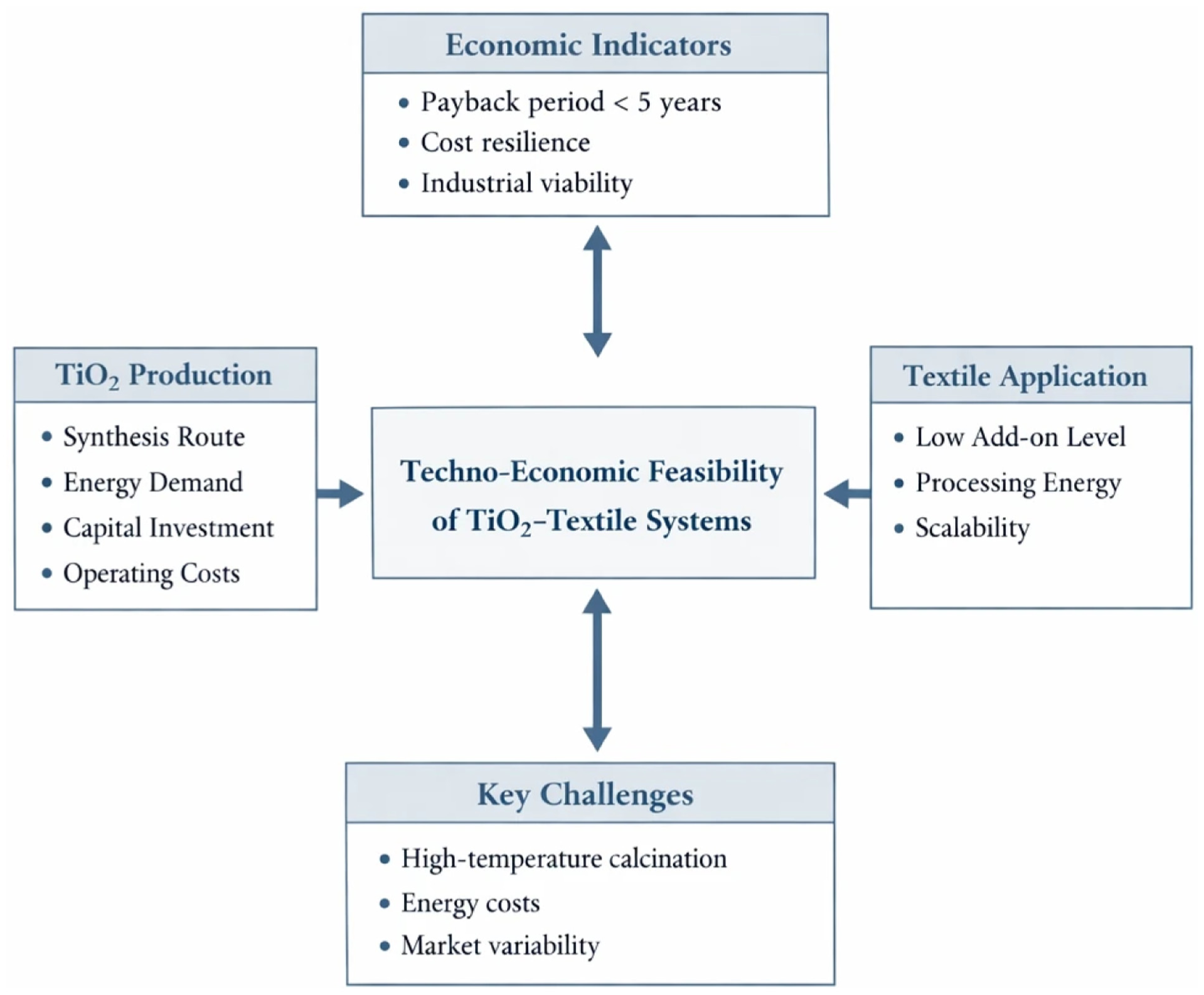
Techno-economic feasibility of TiO2-based textile systems.
Conclusion and outlook
TiO2 has emerged as a highly effective and adaptable nanomaterial for advancing the functionality of textile systems through its unique physicochemical stability, photocatalytic activity, and optical properties. The collective evidence discussed throughout this review demonstrates that TiO2 enables a broad spectrum of textile functionalities, including self-cleaning, antimicrobial protection, UV shielding, thermal regulation, electrical response, and protective performance. These functionalities originate from well-established semiconductor mechanisms, particularly the generation of ROS under light exposure, which drive organic degradation, microbial inactivation, and surface renewal processes. Variations in crystalline phase, particle size, morphology, and surface chemistry strongly influence these effects, with anatase-dominant and engineered hybrid systems generally offering superior functional outcomes under controlled conditions.
Comparative evaluation of TiO2-modified textiles reveals consistently strong performance in self-cleaning, antimicrobial, and UV-protective applications, while emerging functionalities such as flame retardancy, radiative cooling, and smart textile behavior show promising but more variable results. Qualitative performance assessment highlights that photocatalytic efficiency and durability are highly dependent on immobilization strategies, textile substrate type, and post-treatment conditions. Systems employing chemical anchoring, polymer-assisted binding, or in situ NP growth demonstrate markedly improved wash fastness and long-term functional retention compared with physically deposited coatings. These findings emphasize that performance evaluation must consider not only initial efficiency but also durability and real-use stability to accurately assess application potential.
To support better comparability across studies, it would be useful for future research to adopt a consistent set of performance indicators when evaluating durability. Reporting key functional parameters, such as optical protection, antimicrobial performance, or surface wettability, both before and after standardized wash tests would allow clearer assessment of performance retention. Including these measurements within a common testing framework would help future studies align with durability considerations discussed earlier.
Environmental and economic considerations further contextualize the feasibility of TiO2-based textile technologies. Life cycle perspectives indicate that the primary environmental burden arises from NP synthesis stages, particularly energy-intensive thermal treatments, whereas textile finishing contributes comparatively minor impacts due to low material loadings. Techno-economic analyses suggest that TiO2 NP production and textile functionalization can be economically viable at an industrial scale, with sensitivity analyses confirming resilience to moderate fluctuations in raw material prices, market value, and taxation. When coupled with durable performance and extended textile service life, TiO2-functionalized fabrics offer a favorable balance between functional benefit and sustainability.
Future research should focus on addressing several key limitations identified in this review. One important challenge is improving TiO2 activity under visible or low-intensity indoor lighting while maintaining cost efficiency and material stability. Approaches such as nonprecious material modification and heterostructure design may provide pathways to extend photocatalytic performance beyond the UV region.
Durability also remains a critical concern. Performance losses are often associated with weak NP–fiber interactions and repeated laundering, highlighting the need for improved immobilization strategies and surface modification methods that enhance long-term stability.
Finally, the establishment of standardized durability testing and performance evaluation protocols would greatly improve comparability across studies and enable clearer assessment of different TiO2 immobilization strategies for textile applications.
As a practical synthesis of the review, several general considerations can guide the selection of TiO2 form and application strategy depending on the desired performance. When durability is a primary requirement, approaches that promote strong particle–fiber interactions, such as the use of appropriate binders, surface activation, or covalent functionalization, tend to support longer-lasting activity. When photocatalytic or antimicrobial efficiency is prioritized, the choice of crystal structure, potential doping strategy, and surface modification should be aligned with the intended light source, target contaminants, and substrate compatibility. Likewise, selecting an application method involves balancing factors such as processing temperature, chemical compatibility with the textile, scalability, and cost. Presenting these considerations in a unified framework highlights how material selection, deposition route, and post-treatments can be combined to meet different performance goals in a structured and informed manner.
Footnotes
Declaration of conflicting interests
The authors declared no potential conflicts of interest with respect to the research, authorship, and/or publication of this article.
Funding
The authors received no financial support for the research, authorship, and/or publication of this article.

Data availability statement
The data supporting this review’s findings are from previously published studies and are available within the article. No new datasets or software were created for this study.