






Abstract
The demand for high-support sports bras has increased since more women with larger and ptotic breasts engage in physical activity. Inadequate control of multidirectional breast motion can lead to discomfort and soft-tissue strain. This study presents an integrated framework combining four-dimensional (4D) breast scanning, composite fabric engineering, and cup-structure optimization to improve motion control and wearer comfort under running conditions. Ten female participants ran at a speed of 8 km/h while dynamic breast models were captured using a Temporal 3dMD system under bare-breast and bra-wearing conditions. The breast surface was divided into 12 directions at 30° intervals. Direction-specific surface deformation was quantified using Euclidean distance changes relative to the papilla base, and the vibration attenuation rate was calculated to evaluate motion reduction. Key dynamic frames, representing pronounced upper-breast deformation, were used to unfold three-dimensional breast models into two-dimensional full-cup patterns in SolidWorks. Two cup structures, i.e. T-shaped and double-vertical, were combined with two laminated fabrics. Interface pressure was assessed using a Pliance-X system. Under running conditions, the double-vertical cups showed a higher vibration attenuation than the T-shaped cups in most assessed directions, with the clearest differences observed in the upper-breast and upper-lateral regions. The three-layer laminated fabric was associated with higher attenuation values than the two-layer fabric in pairwise comparisons, while pressure and subjective comfort results suggested acceptable pressure levels. Incorporating upper-breast deformation characteristics derived from 4D key-frame data significantly improved full-cup conformity during dynamic motion. The proposed approach offers a transferable methodology for designing high-support sports bras for women with larger and ptotic breasts.
With the increasing participation in sport and fitness activities, the demand for sports bras has risen substantially. Furthermore, a greater awareness of breast health protection during physical activity has led to higher expectations for comfort and functional performance. Women with larger breasts are particularly vulnerable to negative health effects such as shoulder, neck, back, and head pain, which can limit their participation in physical exercise.1,2 Approximately 35% of women have large (700–1200 mL) or hypertrophic (>1200 mL) breasts. 3 These women tend to report greater exercise-induced breast pain and lower participation in vigorous activities than women with smaller breasts. 4
During movement, excessive breast displacement may stretch the Cooper’s ligaments and surrounding connective tissues, contributing to ligament laxity and breast sagging over time. 3 This issue is especially relevant for women with larger breast volumes, whose morphology often includes reduced upper-pole fullness and excessive lower-pole projection, creating a pronounced imbalance in the upper–lower contour. Such morphology presents challenges for achieving an optimal bra fit and for designing cups capable of providing stable upper-breast support. 5 To reduce internal strain within breast tissues, external support must elevate the breast from below to a position of lower internal stress, which constitutes the fundamental biomechanical principle underlying sports bra design for motion control. 6 Bras with insufficient shock absorption and support may contribute to exercise-related breast discomfort and tissue loading. 7 Therefore, for women with fuller breasts, a well-fitted, high-support sports bra is important for limiting breast motion and reducing discomfort during physical activity.
The structure and fabric properties of sports bras are key factors influencing vibration-control performance. A larger cup coverage area increases both the contact interface with the breast and the distribution of the impact loading over a wider region, thereby reducing localized displacement. 8 Cup height has been shown to be a significant factor in vertical motion control, with full-cup designs showing advantages over half-cup designs in reducing vertical displacement. 9 Moreover, incorporating horizontal compression structures across the upper chest can further improve motion control, whereas traditional steel-wire reinforcement, although stabilizing the lower cup, often reduces comfort due to uneven pressure distribution. 5 Current design trends favor softer structural supports to balance stability with wear comfort. Previous dynamic analyses have also emphasized the importance of upper-breast conformity, suggesting that motion in this region requires focused control in high-performance sports bras. 10
Fabric composition also plays a critical role in providing both functional support and thermal comfort. During high-impact exercise, the breast undergoes multidirectional motion, requiring the fabric to provide sufficient elasticity, recovery, and dimensional stability. Commonly used fibers such as polyester, nylon, and spandex offer different combinations of stretch and moisture management. However, changes in spandex content alone have been reported to exert limited influence on vibration reduction, suggesting that multilayer or composite structures may be required to achieve sufficient mechanical support. Laminated functional fabrics—particularly those incorporating thermoplastic polyurethane (TPU) or mesh interlayers—can enhance structural stiffness, elastic recovery, and stability under high-strain conditions. By combining elastic and structure, these composite fabrics may offer a practical strategy for balancing stretchability, rebound, and breathability in compression-based sports garments. 11
Breast movement during walking and running occurs in three dimensions, and breast support can alter breast kinematics across the running gait cycle. 12 Multiplanar breast kinematics also vary across exercise modalities, indicating that support requirements are direction- and activity-dependent. 13 Conventional two-dimensional imaging and marker-based motion capture methods have been widely used to study breast kinematics.14,15 However, these systems only record discrete landmark trajectories and cannot fully describe surface deformation across different breast regions. Since superficial tissues such as the skin and Cooper’s ligaments are directly involved in breast motion and deformation, their strain characteristics can be inferred from surface morphological changes. 16 Breast deformation during running is direction-dependent because impact loading, inertial lag, gravity, and soft-tissue attachment do not act uniformly across the breast surface. Therefore, a directional surface analysis can provide more design-relevant information than a single global displacement value. During locomotion, the breast moves in a complex three-dimensional trajectory, especially in women with larger or less upper-projected breasts. 2 The advent of four-dimensional (4D) scanning has enabled dynamic acquisition of body surface data over time, allowing for a temporal analysis of the deformation patterns. 17 This technology can capture phase-dependent differences between the breast and thorax during running, reflecting real-time oscillation and vertical lag. 18 4D modeling has been used to quantify boundary displacement, upper-breast movement, and temporal deformation, providing a novel tool for transforming biomechanical data into design parameters. 10 Integrating time-resolved 3D models across the movement cycle allows for the extraction of volumetric and shape variations that inform dynamic cup construction and pattern optimization.
Based on this rationale, the present study uses 4D dynamic scanning to quantify direction-specific breast-surface deformation during running, introduces a key-frame-based approach for developing dynamic bra cup patterns, and descriptively compares cup segmentation and laminated fabrics in terms of vibration attenuation, pressure distribution, and perceived comfort. This study intends to provide preliminary evidence for 4D-scan-informed sports bra design rather than population-level efficacy claims.
Methodology
Dynamic breast motion capture and key-frame extraction
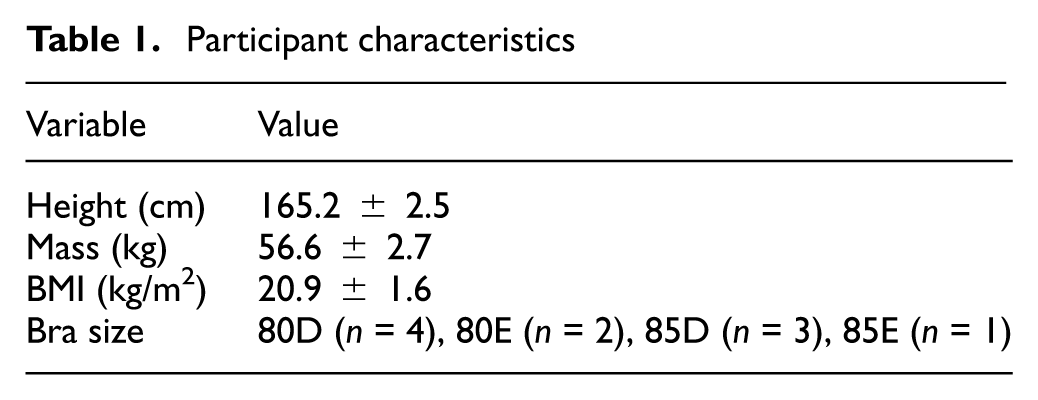
Ten female participants were recruited for this study. All of the participants were 18–30 years old, reported no history of pregnancy, and wore bra sizes of 80D/E or 85D/E (Table 1). The sample size was determined based on the exploratory and prototype-development nature of the study, the time-intensive workflow of 4D dynamic scanning, surface reconstruction, pattern flattening, repeated bra condition testing, and the need to maintain a homogeneous breast-size and morphology group. The sample size was considered appropriate for a within-subject exploratory evaluation because each participant completed bare-breast and bra-wearing trials, and the analysis included bilateral breasts, 12 directional deformation measures, and multiple prototype conditions included in the analysis. However, the limited sample size is acknowledged as a constraint on the generalizability of the findings. Breast motion was recorded during treadmill running. Each participant completed a 30-second run at a speed of 8 km/h in the bare-breast condition. As shown in Figure 1, a Temporal 3dMD full-body scanning system was used to collect both 4D dynamic scans (60 Hz) and 3D static scans, enabling a precise measurement of the breast-surface deformation and three-dimensional morphology during movement. These data provided the basis for subsequent analyses of breast deformation, cup-pattern development, and bra performance evaluation.
Participant characteristics
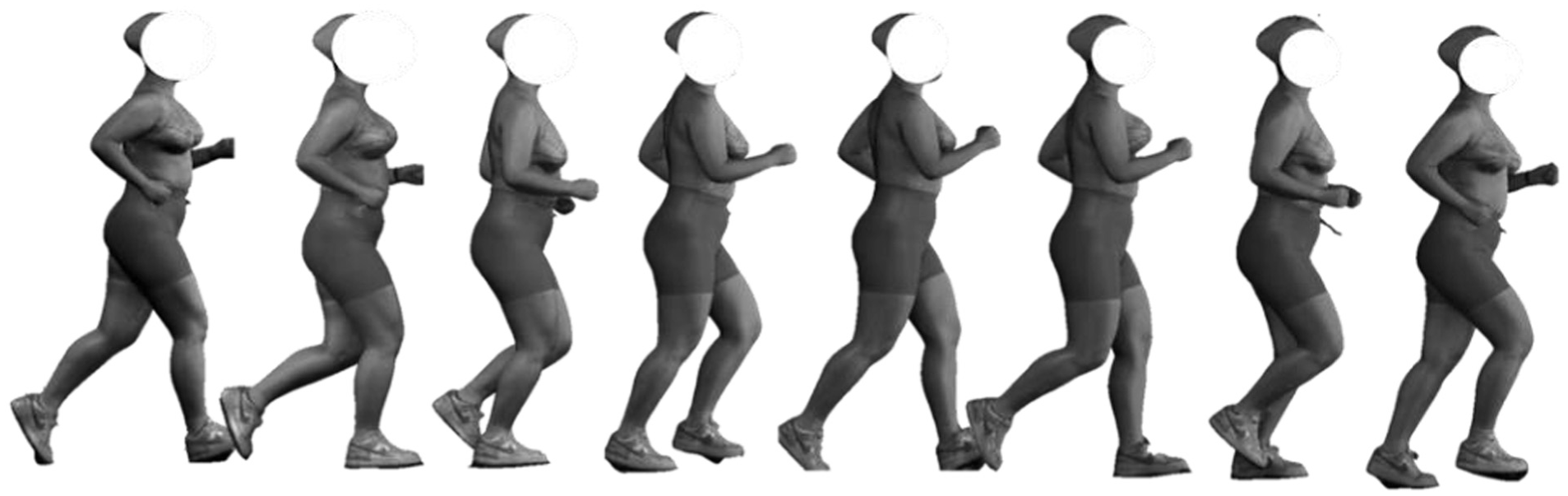
4D dynamic scans.
The breast boundaries were first defined using manual palpation, a clinically guided method widely used to locate soft-tissue anatomical limits in breast morphology research. 19 Trained assessors palpated the superior, medial, lateral, and inframammary margins to identify the natural breast contour, after which surface markers were placed to ensure accurate boundary capture during 4D scanning. This procedure ensured that the subsequent motion analysis reflected the breast-tissue deformation rather than the deformation of the surrounding thoracic regions.
As shown in Figure 2, the breast surface was partitioned into 12 directions by projecting rays at 30° intervals from the papilla base (PB).
20
For each frame, the intersection of the 12 rays with the palpated breast boundary yielded the corresponding surface points

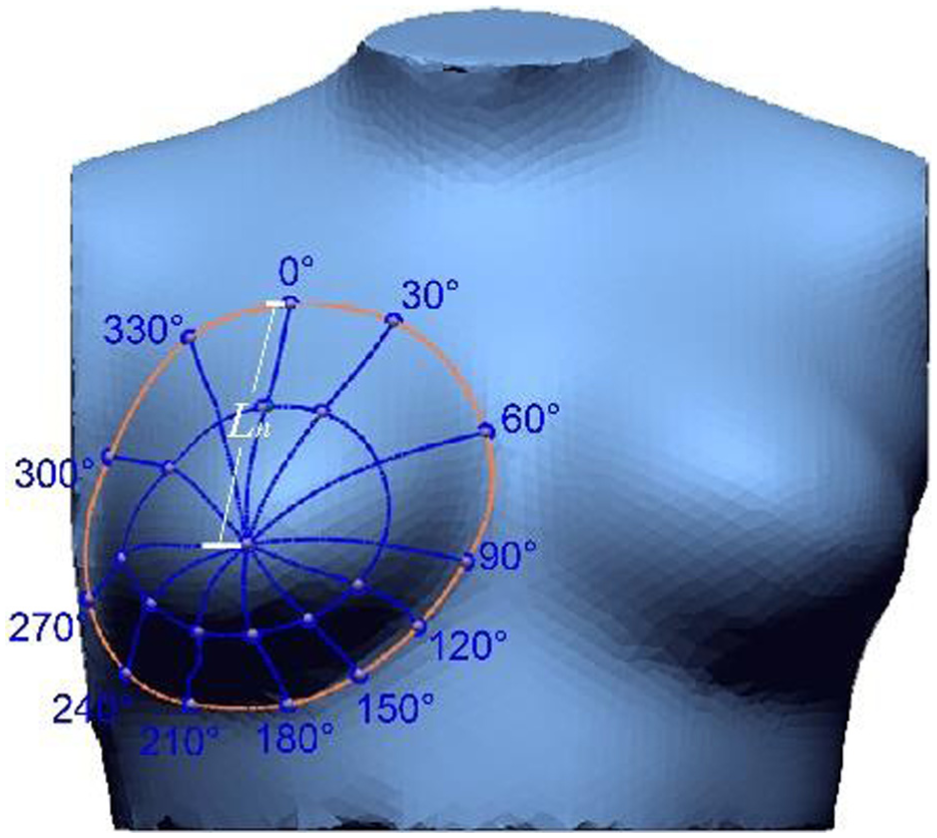
Multidirectional analysis of deformation.
The temporal fluctuations in L were then examined across all 12 directions. The PB-centered local radial system was used to quantify the breast-surface deformation within each frame. Because breast vibrations during running are initiated by foot-ground contact and the subsequent transmission of ground reaction forces through the lower limbs and trunk, key-frame selection was interpreted in relation to the running gait cycle. 21 This gait-cycle-based interpretation was used to identify morphologically meaningful dynamic states for subsequent cup-pattern development.
Dynamic pattern development and material characterization
Surface flattening for a dynamic pattern
Cup-structure optimization was guided by 4D breast models, with the aim of improving upper-breast conformity, especially for fuller breasts with reduced upper-pole projection. Reconstruction and refinement of upper-cup surface segments were performed to enhance fit and support while reducing empty-cup regions and friction risk. The styles used in the experiment included T-shaped segmentation and double-vertical segmentation (Figure 3).
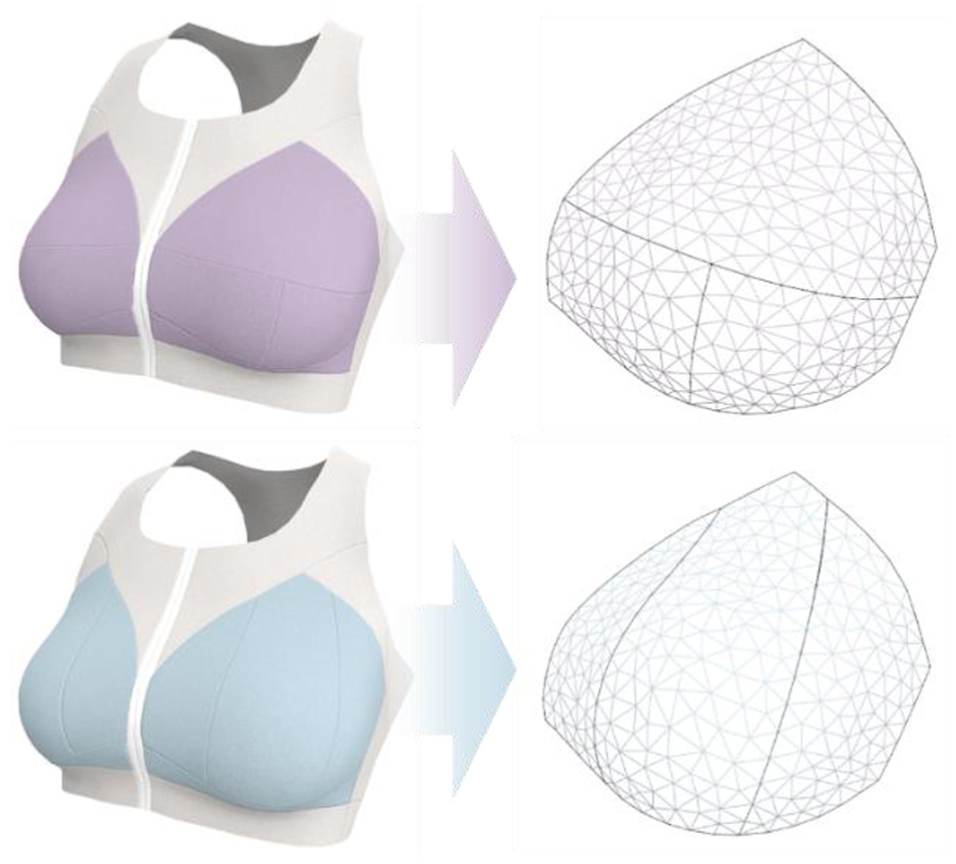
Comparison of the two cup-segmentation designs used in this study: T-shaped cup structure and double-vertical cup structure.
Commercial full-cup bras commonly employ molded seamless cups, double-vertical seams, T-shaped seams, single-diagonal seams, or double-diagonal seams. 5 To allow for a more flexible control of the cup shaping, this study adopted seamed cup structures, which are more suitable for adjusting curvature in full-cup designs. Because the breast protrudes from the chest wall as a semispherical soft-tissue mass centered at the PB, cup segmentation strategies are generally categorized as PB-centered or non-PB-centered. Considering the fuller breasts with reduced upper-pole projection included in this study, T-shaped and double-vertical structures were selected for descriptive comparison.
To generate the cup patterns, 3D to 2D surface flattening was performed. Engineering software such as SolidWorks was used to divide and unfold the breast region of the 4D dynamic key-frame models, rather than relying on traditional static standing models. This approach captured the morphological differences between motion phases. 22 Static surface flattening often fails to represent dynamic breast shape and may result in empty space, uneven pressure, or friction during motion. Incorporating key-frame deformation enabled the cup to be shaped according to dynamic support requirements that aimed at improving conformity and enhancing vibration control. Multiple key frames extracted from the bare-breast running sequence were used to obtain several candidate 2D cup patterns. As shown in Figure 4, each 3D model was segmented in SolidWorks and unfolded into corresponding 2D panels for both the cup and bra body.
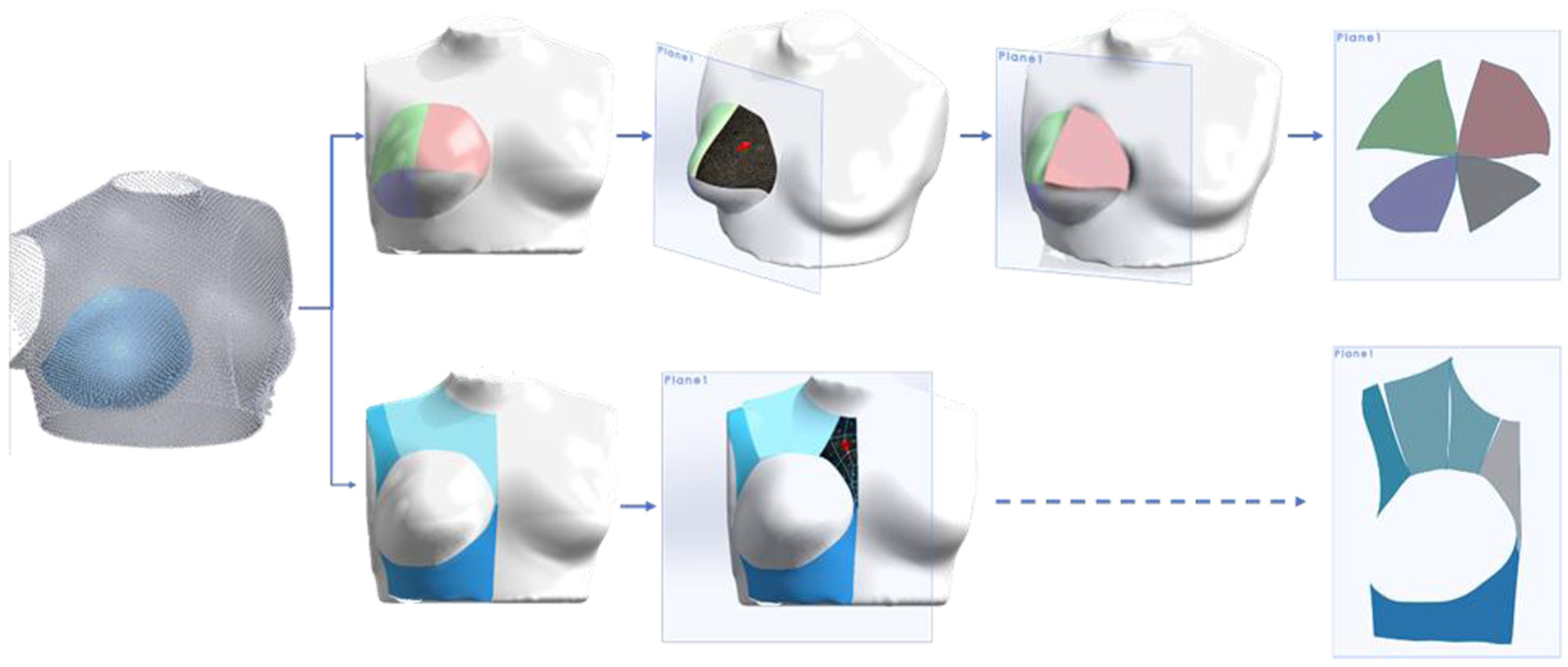
Workflow for converting 3D breast models into 2D dynamic cup patterns.
To evaluate the accuracy of the surface flattening process, four mesh-density settings were tested. The 3D surface area before flattening was compared with the 2D pattern area after surface flattening. The surface flattening error rate γ was calculated as

where S2D is the area of the unfolded pattern and S3D is the original surface area. A higher mesh density generally increased surface flattening accuracy but also increased computational time.23,24
Laminated fabrics and material characterization
Two laminated functional fabrics were developed for this study using a dot-glue bonding process. Three fabrics were prepared for this study: F1, a single-layer knitted fabric used as the control; F2, a two-layer adhesive-laminated fabric; F3, a three-layer dot-glue laminated composite fabric containing an additional polyester mesh interlayer. The knitted base layers used in F1 and F2, as well as the outer and inner knitted layers in F3, were plain knit. In F3, the polyester mesh interlayer was aligned with the warp direction to improve the dimensional stability of the cup panel. The fabric structure and lamination process are illustrated in Figure 5. Their physical properties, including fabric weight (ASTM D3776), thickness (ASTM D1777), air permeability (ASTM D737), Young’s modulus (EN 14704-1), and elastic recovery (ASTM D6614), were evaluated according to international standards.
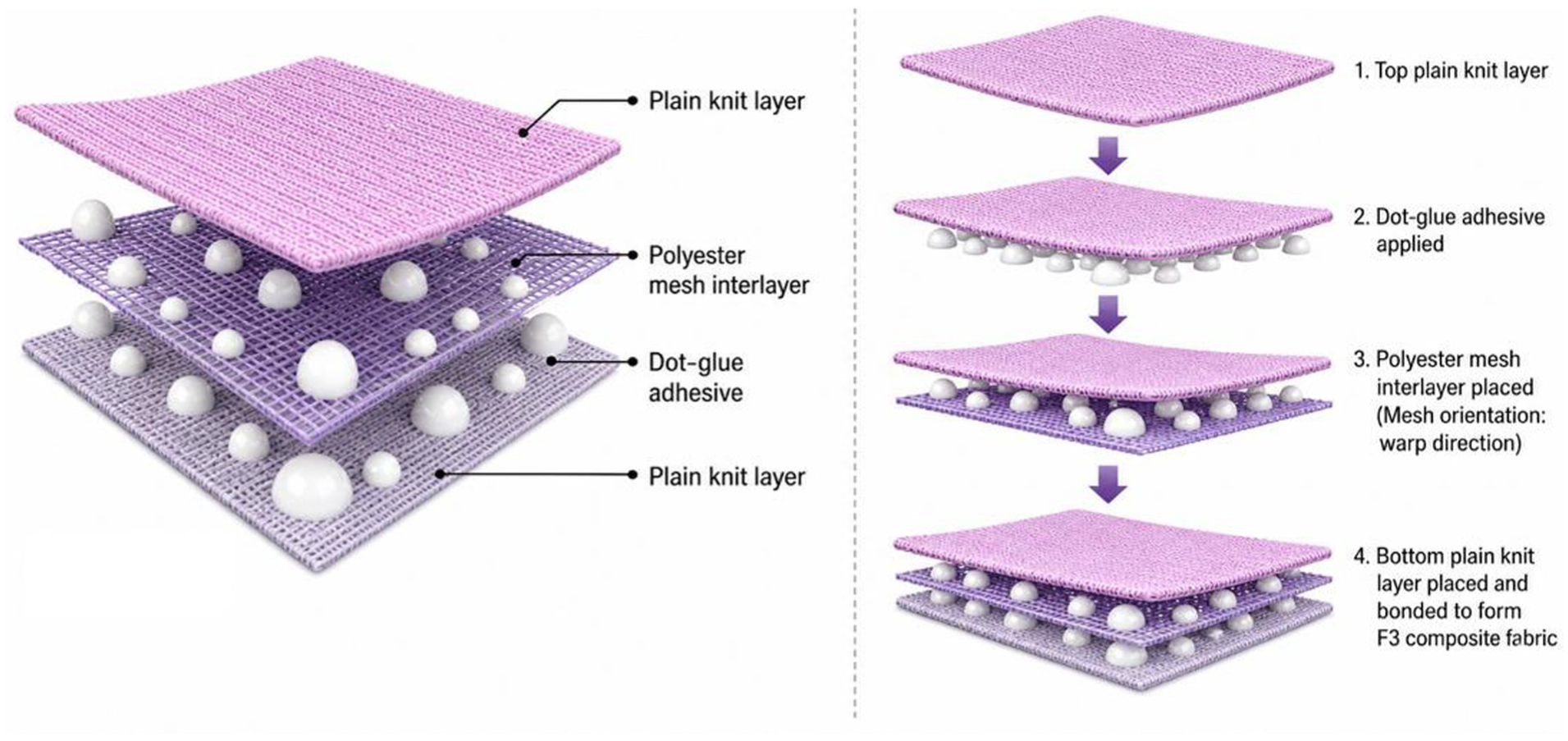
Fabric schematic (left) and F3 composite fabric process schematic (right).
As presented in Table 2, the laminated fabrics (F2 and F3) were substantially heavier and thicker than the single-layer control fabric (F1), indicating that lamination increased structural compactness. F3 had the greatest thickness and weight because of its three-layer dot-glue construction and embedded polyester mesh interlayer. Although air permeability decreased after lamination, all of the fabrics remained above the acceptable threshold for molded-bra materials, suggesting that the laminated structures retained adequate breathability for sports bra use.
Laminated fabrics and material characterization
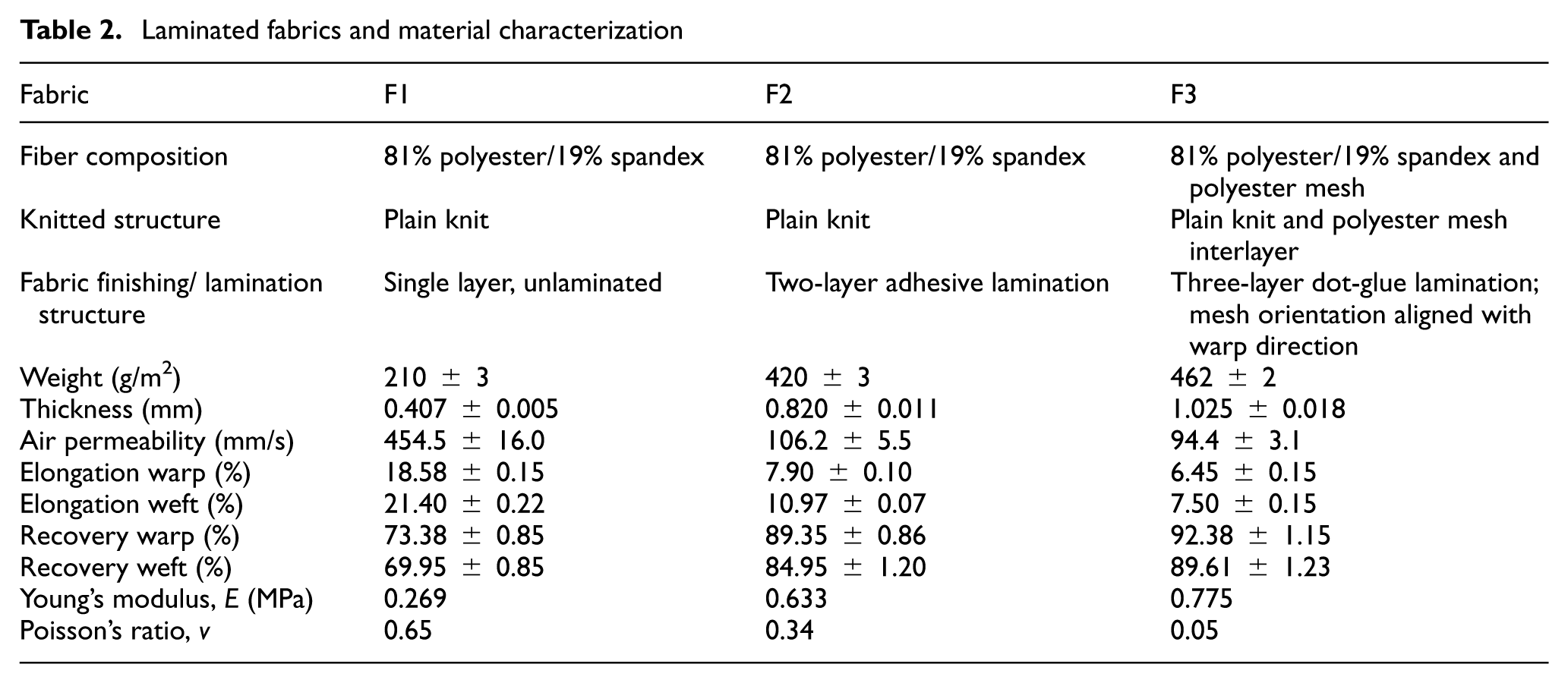
In terms of mechanical performance, Young’s modulus increased progressively from F1 to F3, with F3 showing the highest stiffness (0.775 MPa). F3 also showed the lowest elongation, the highest elastic recovery, and the smallest Poisson’s ratio, indicating stronger shape retention and lower lateral deformation under tensile loading. These characteristics are beneficial for maintaining cup stability and reducing deformation propagation during dynamic breast motion. Since the tensile evaluation was performed on the final laminated fabric system, the reported Young’s modulus represents the effective modulus of the composite fabric rather than that of the isolated polyester mesh layer alone.
Overall, the combined profile of higher modulus, lower elongation, higher recovery, and acceptable air permeability identified F3 as a promising candidate for high-support cup regions, while F2 provided an intermediate balance between support and breathability. Therefore, F2 and F3 were used for the construction of the entire bra prototypes. For all of the prototypes, an additional 8-mm-thick cotton cup insert was incorporated in the cup region. Two cup structures, namely T-shaped and double-vertical, were adopted for prototype development.
Prototype construction and performance evaluation
Vibration attenuation testing of sports bras
Under bra-wearing conditions, the purpose of the analysis was to evaluate the deformation behavior of the reshaped breast form inside the bra. Because the bra reshaped the breast contour and soft-tissue distribution, the breast boundary was re-identified for each bra condition using palpation-based judgment of the supported breast contour. The PB was then used as the center of the radial analysis, and the 12 directions were re-established from the PB under bra-wearing conditions. Each participant completed a running trial on a treadmill at a constant speed of 8 km/h while wearing different prototype bras and performing a bare-breast running trial. The 4D scanning system was used to record breast dynamic motion during a five-minute run for each garment condition. After data processing, the standard deviation (SD) of breast deformation (L) was calculated in 12 directions for the left- and right-hand side breasts. The mean SD values were compared across combinations of fabrics, cup-segmentation structures, and size groups.
As shown in Figure 6, the vibration attenuation performance of each garment was evaluated using the vibration attenuation rate (VAR), which quantifies the reduction in oscillation amplitude and is commonly used in biomechanical vibration studies. 25 To assess the effect of fabric type, cup segmentation, and bra size, all of the prototype bras were tested. Deformation SD values in all 12 directions were obtained for both bare-breast and bra-wearing conditions.
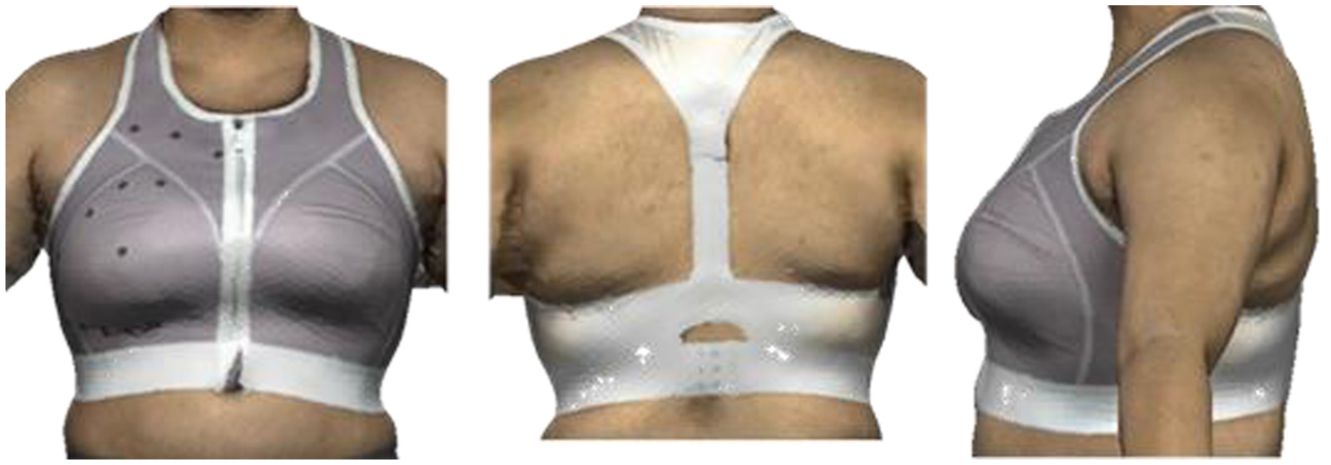
4D scanning for evaluating vibration attenuation of prototype sports bras.
The VAR for each direction was calculated using

where SD0 is the standard deviation of breast deformation in the bare-breast condition and SDn is the corresponding SD while wearing the bra. A higher VAR indicates a greater reduction in deformation variability in that direction.
Pressure testing
Pressure distribution was evaluated using a Pliance-X capacitive pressure-sensor system to assess the load exerted by the sports bras. The system included sensors with a diameter of 10 mm, a thickness of 1 mm, and a precision of ±0.1 kPa. 26 As shown in Figure 7, the measurement sites included the strap, the papilla, the positions that are 5 cm above, below, medial, and lateral to the papilla, and the underband region.
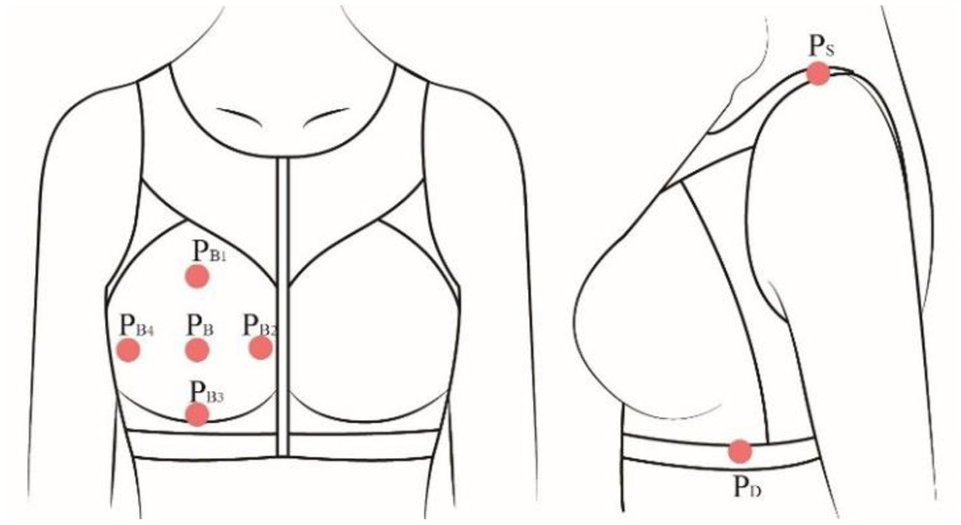
Pressure-measurement locations for evaluating sports bra load distribution.
In addition to the objective pressure measurements, a subjective comfort evaluation was conducted to assess the perceived wearing comfort of the prototype bras. After completing the test under each bra condition, the participants were asked to rate the comfort of three bra regions, namely the cup, underband, and shoulder strap, using a 5-point Likert scale, where 1 is very uncomfortable, 2 is uncomfortable, 3 is neutral, 4 is comfortable, and 5 is very comfortable. A subjective evaluation was included to complement the pressure data because a higher local pressure may contribute to improved support but may also affect perceived comfort. The mean comfort scores of the three regions were calculated for each bra condition and used for descriptive comparisons with the objective pressure results.
Results and discussion
Dynamic breast deformation and cup-pattern development
4D key frames of breast motion
For women with fuller breasts and reduced upper-pole projection, conventional full-cup sports bras often display empty-cup regions, surface friction, and poor upper-breast conformity during motion.2,5,7,27 To address this issue, two dynamic key frames were extracted from the 4D breast models sequence in relation to the upper-breast directions of 0°, 30°, 60°, and 330°, corresponding to phases in which upper-breast deformation was most pronounced (Figure 8). In this study, the running gait cycle was defined from one initial contact of the reference foot to the next initial contact of the same foot. Based on visible foot-ground contact, it was simply divided into four phases: initial contact, contact phase, toe-off, and flight phase.28,29 Figure 8 is normalized using one reference foot; however, breast vibrations during running are driven by alternating impacts from both feet. Therefore, the two major deformation peaks observed in the upper-breast directions can be interpreted as delayed responses to the ipsilateral and contralateral foot-ground contacts.
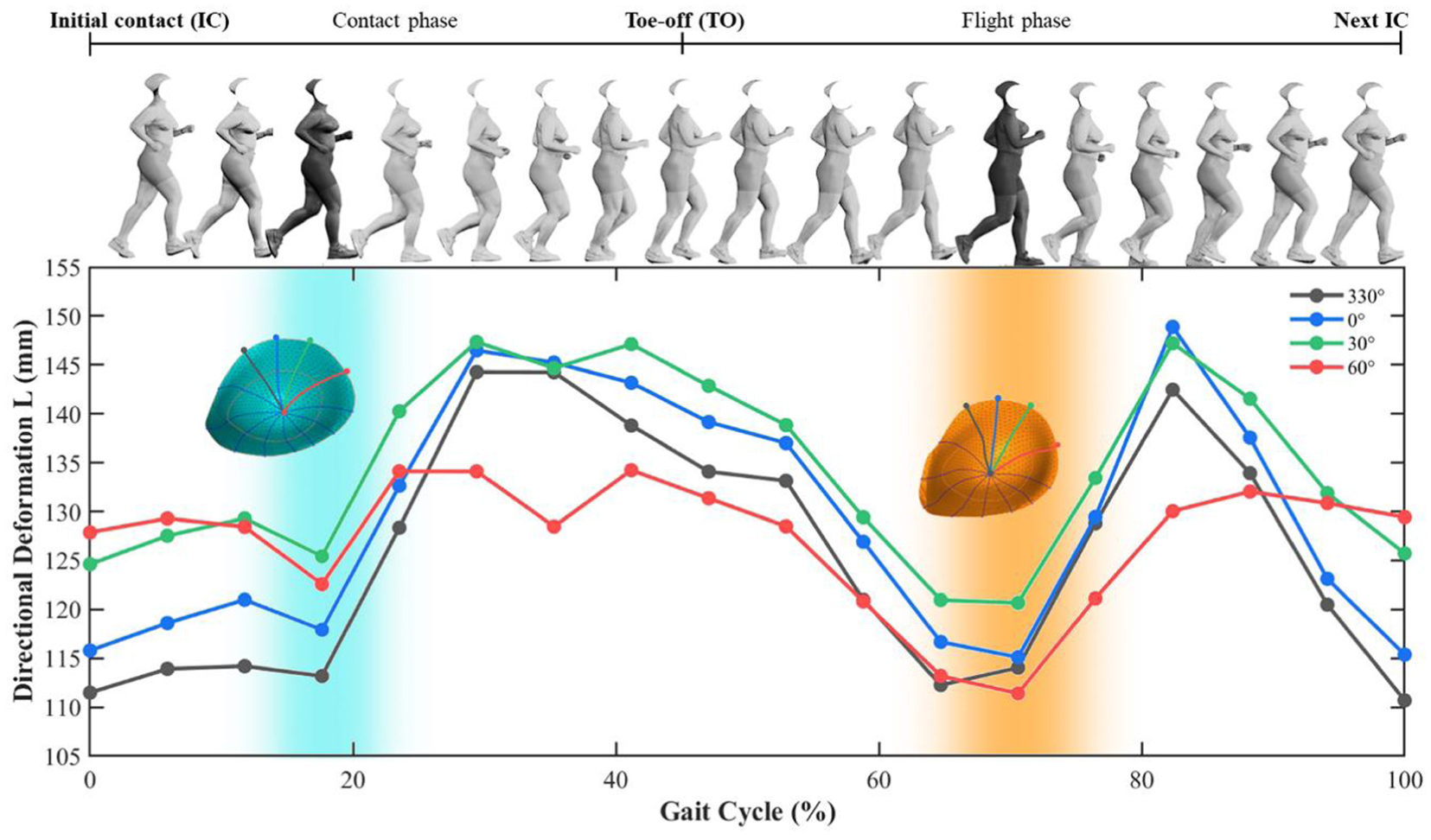
Upper-breast deformation trajectories over a normalized running gait cycle and the selection of representative key frames (0°, 30°, 60°, and 330° directions).
As shown in Figure 8, the selected key frames were mainly located in the contact phase of the running gait cycle. Foot-ground contact generates impact loading, and the resulting ground reaction force is transmitted through the lower limbs and trunk before being expressed as breast vibrations, with a short time lag between torso motion and breast response.15,21 Therefore, the two major deformation peaks in the upper-breast directions can be interpreted as the delayed responses to the left- and right-foot contact events during running.
Surface flattening accuracy
Surface flattening can be defined as the process of determining a 2D pattern from a given 3D freeform surface and establishing a mapping between the 3D and 2D geometries. 30 The accuracy of 3D–2D pattern conversion was evaluated using four mesh-density settings. Higher mesh densities generated more accurate surface flattening results, but also increased the computational time.23,24 Because graded cup sizing typically tolerates a pattern-length variation of 1.5 cm, surface flattening accuracy within ±2% was considered acceptable for maintaining cup geometry without exceeding the grading tolerance. The surface flattening error rate γ for both T-shaped and double-vertical cup segmentations is summarized in Table 3.
Comparison of the surface flattening modes and surface flattening error rates (γ) for T-shaped and double-vertical cup segmentations
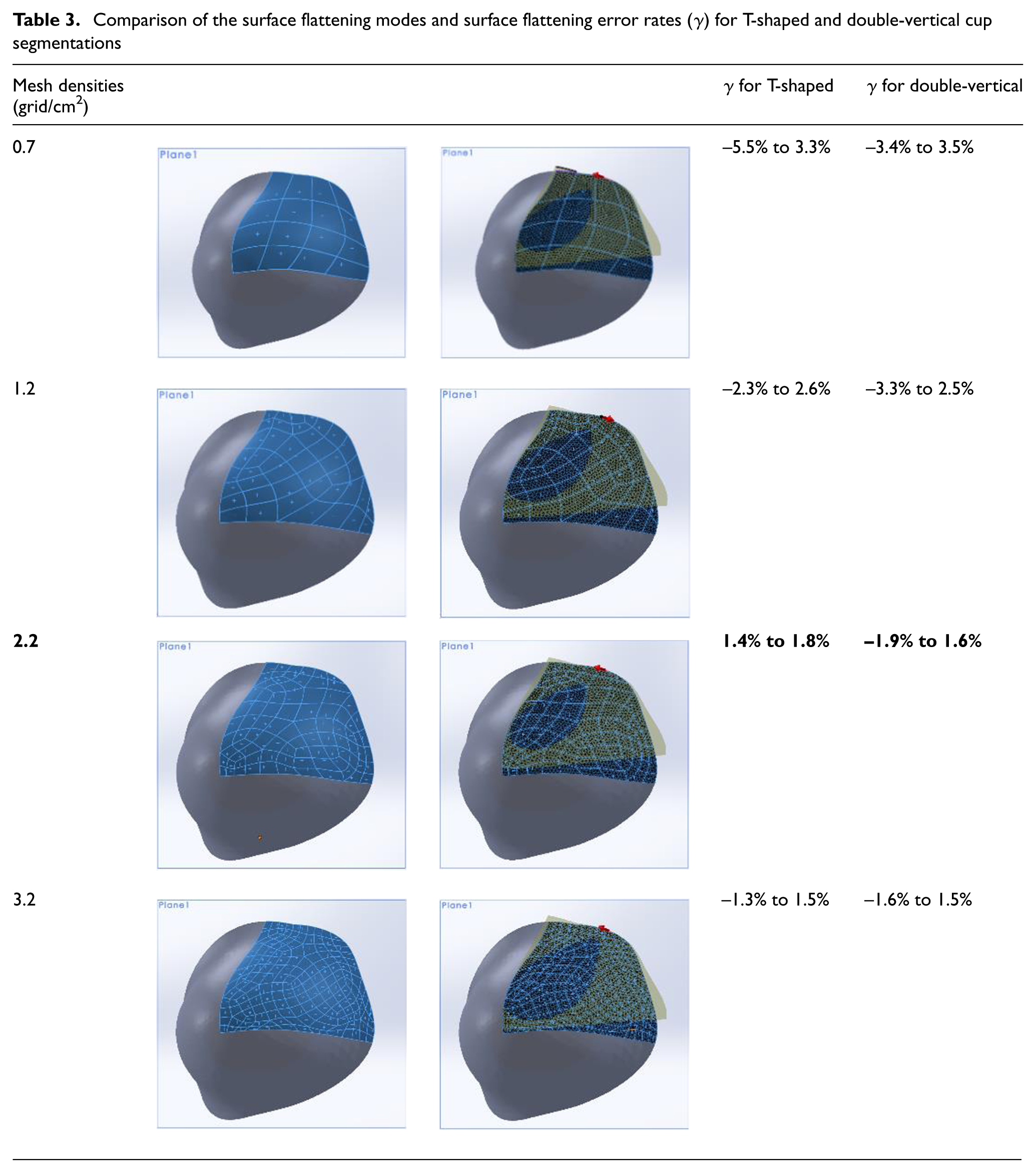
A density of 2.2 grid/cm2 provided the most efficient balance between accuracy and processing time, with surface flattening errors consistently within the ±2% threshold for both segmentation structures. These results indicated that the SolidWorks surface flattening method could accurately reproduce the three-dimensional geometry of the dynamic cups. Therefore, all 3D breast and bra components in this study were unfolded using the 2.2 grid/cm2 setting to support dimensional consistency in the resulting 2D patterns.
Surface flattening for T-shaped and double-vertical cup structures
Traditional 2D cup patterns are derived from static anthropometric measurements, such as bust and underbust circumferences, and generally assume bilateral symmetry. However, this symmetry assumption may not fully reflect individual breast morphology because bilateral differences in breast shape, projection, and dynamic deformation can occur even within the same participant. Although bilateral breast models were included in the present analysis, the current pattern-development framework focused on common upper-breast deformation characteristics across participants rather than side-specific cup construction. Therefore, the optimized patterns should be interpreted as symmetrical prototype designs based on averaged dynamic features, while future studies should further investigate whether asymmetric cup adjustments are required for participants with marked left–right differences. Cup structure strongly influences the distribution of curvature and dart intake. 11 To investigate this effect, T-shaped segmentation (PB-centered horizontal and vertical lines) and double-vertical segmentation (five vertical divisions spaced 2.5 cm apart) were compared. For each key frame, the breast region was segmented and unfolded in SolidWorks, and the resulting 2D panels were imported into AutoCAD for pattern evaluation. Fuller, mildly ptotic breasts showed smaller lower-breast surface ratios and sharper curvature transitions along the upper boundary during running. When the upper boundaries of the dynamic 2D patterns were aligned, a 1–1.2 cm spindle-shaped overlap was consistently observed. This overlap reflected an increase in the upper-breast convexity during motion, producing the well-observed “upper-edge indentation” that static full-cup patterns fail to capture. Commercial full-cup bras, which usually adopt smooth, uniform curvature, therefore tend to mismatch the geometry of fuller breasts in dynamic conditions. Providing horizontal restriction structures along the upper boundary can improve vibration attenuation in sports bras. 5 The dynamic overlap identified in this study supports this design rationale by quantifying the additional curvature needed to stabilize the upper breast.
For T-shaped cups, the upper-breast overlap was directly translated into a reduced dart intake, increasing upper-cup curvature and reducing the tendency for empty-cup formation. For double-vertical cups, the overlap served as the basis for modifying both dart intake and vertical seam shaping, controlling curvature adjustment along the central axis. A dynamic-static comparison for both segmentation methods is presented in Table 4.
Static and dynamic 3D-to-2D surface flattening results for T-shaped and double-vertical cup structures
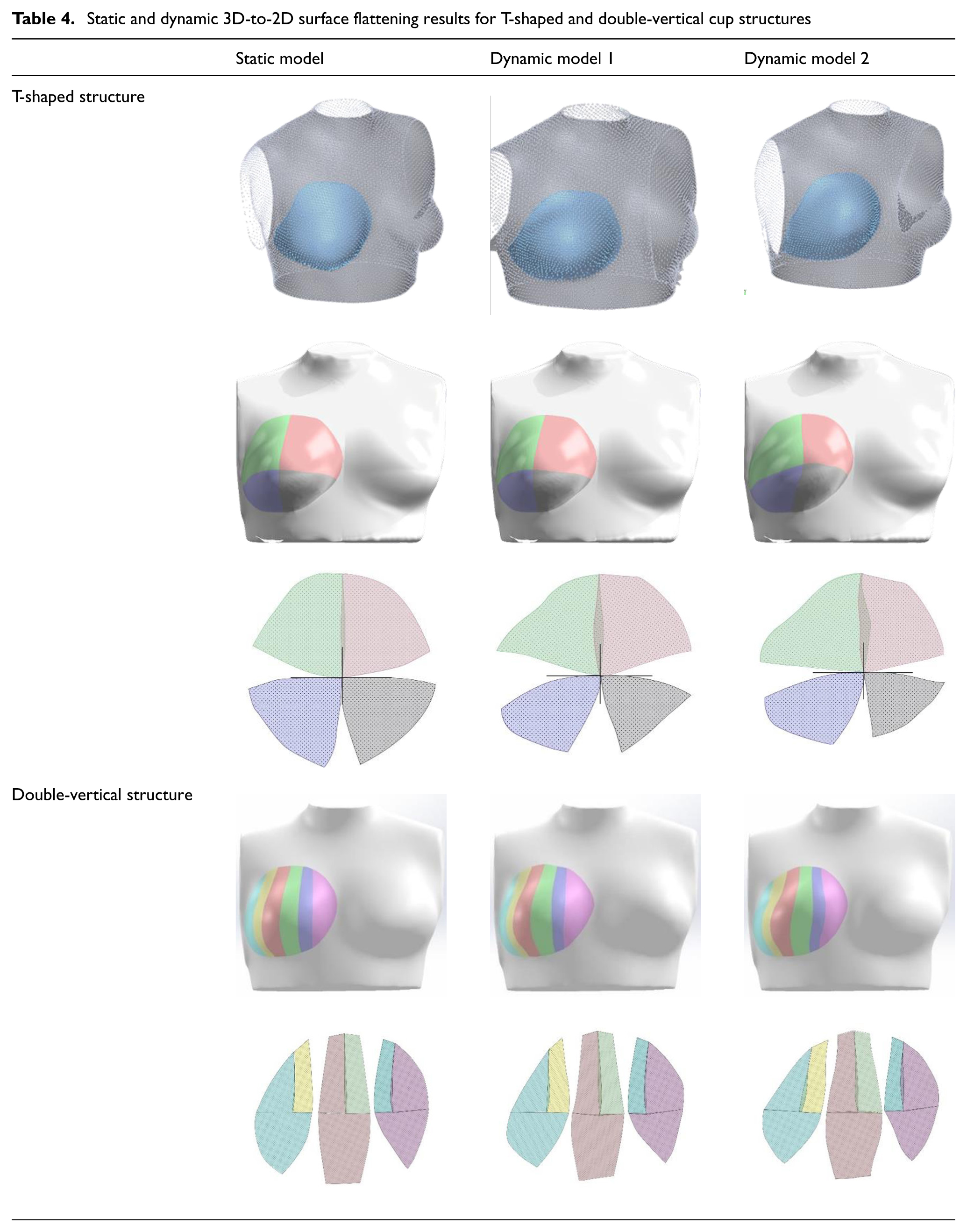
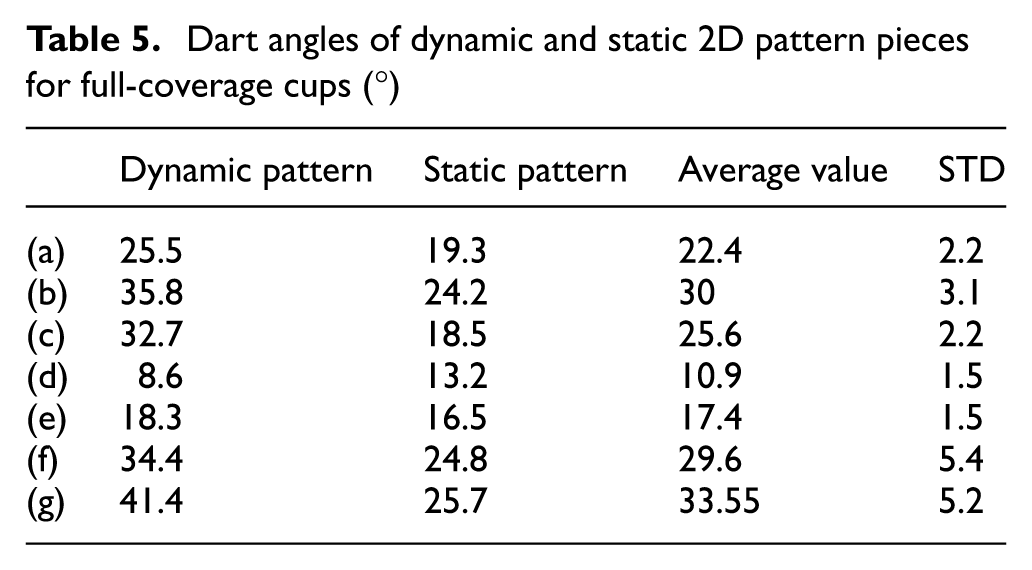
Finally, the average overlap magnitude (1.7 cm), derived from the ten participants, was incorporated into the optimized cup patterns. As shown in Figure 9(a)–(g), seven shaping darts were adjusted based on the angular change between static and dynamic unfolded patterns. The mean dart angles and standard deviations are presented in Table 5.
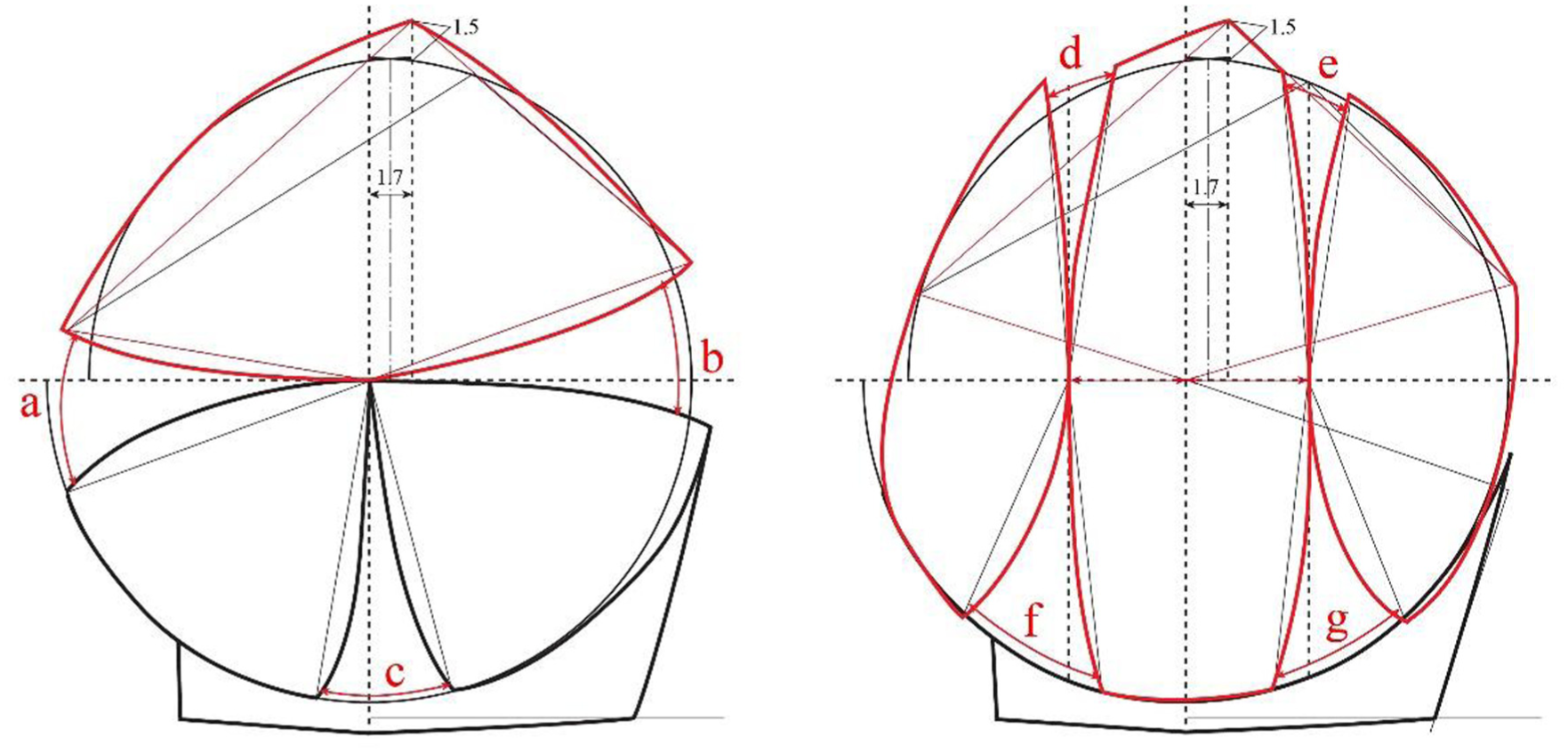
Optimized cup-pattern designs for full-coverage sports bras: T-shaped segmentation (left) and double-vertical segmentation (right).
Dart angles of dynamic and static 2D pattern pieces for full-coverage cups (°)
Compared with patterns generated solely from static breast models, this dynamic-informed method captured deformation across multiple gait phases and was associated with improved dynamic conformity, stability, and upper-cup fit. The optimized patterns, therefore, provide a structural basis for improving support in fuller, mildly ptotic breasts and provide a structural basis for enhancing vibration attenuation in high-support sports bras.
Comparison of sports bra performance
Influence of bra conformity on vibration attenuation
As shown in Table 6, the four experimental prototypes were constructed using two main fabrics (F2 and F3) for the entire bra body, combined with an additional 8-mm-thick cotton cup insert in the cup region. Two cup-structure designs, namely T-shaped and double-vertical structures, were adopted for comparison.
Prototype bras
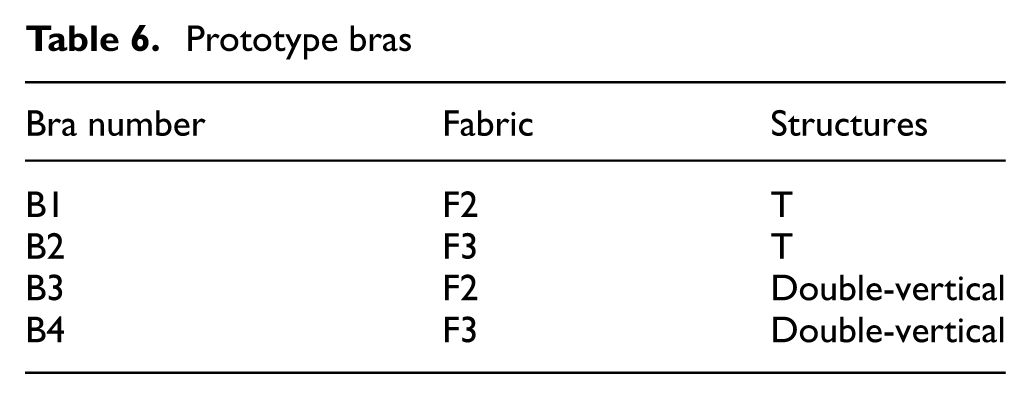
To evaluate the contribution of cup structure to vibration attenuation, sports bras with T-shaped cups (B1 and B2) and double-vertical cups (B3 and B4) were compared (Figure 10). Both structures were tested with F2 and F3. Vibration-support performance was quantified every 30° from 0° to 330°, representing the breast motion vectors across a full gait cycle; higher values indicate stronger support.
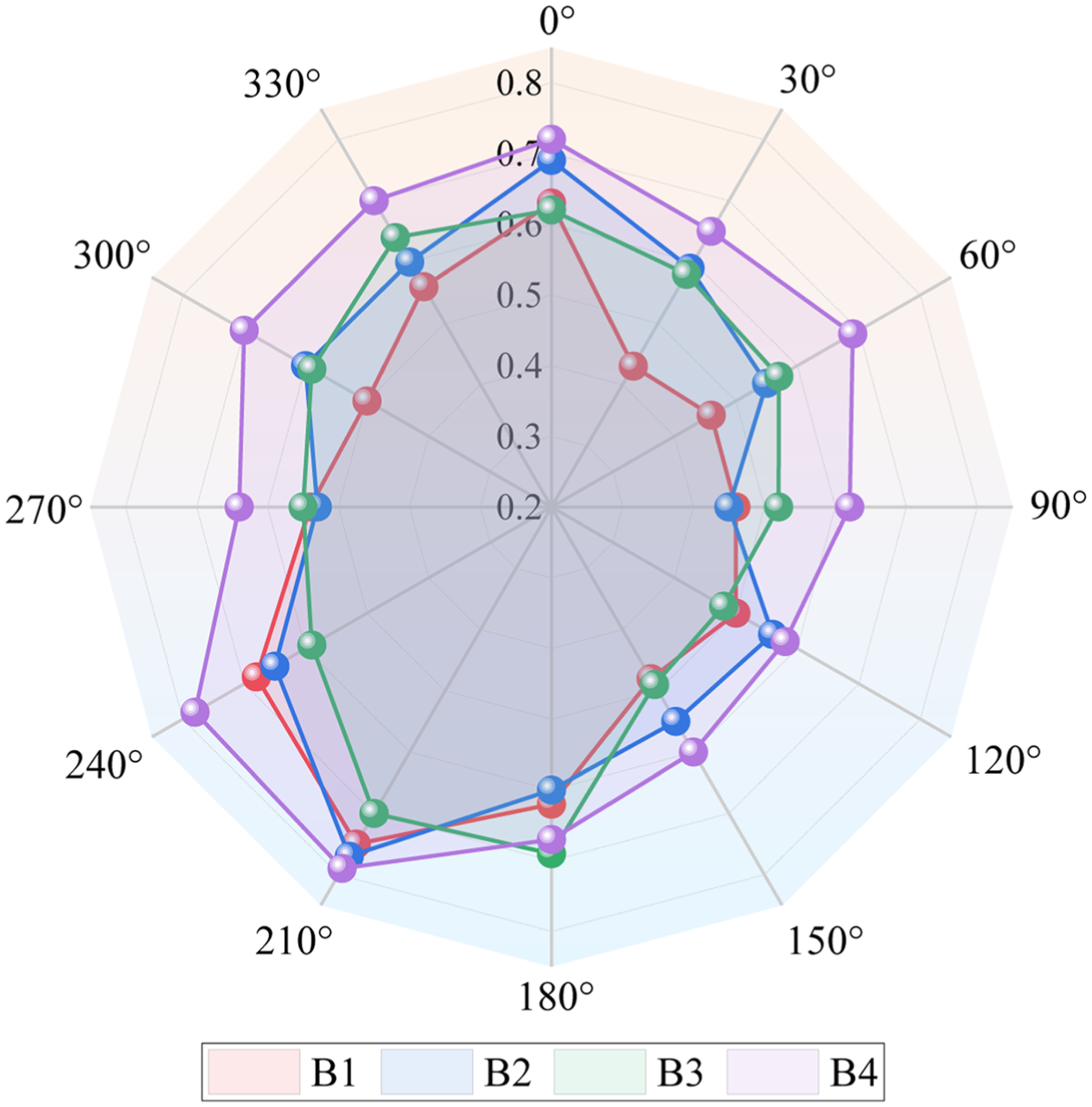
Comparison of the vibration attenuation between T-shaped and double-vertical cup structures.
For bras using the same fabric (F3), B4 showed higher vibration attenuation values than B2 in the anterior and upper-lateral directions—72%, 65%, 69%, 62%, and 58% at 0°, 30°, 60°, 90°, and 120° directions, respectively—compared with 69%, 59%, 55%, 45%, and 56% for B2. A similar trend was observed for F2 fabric (B1 vs. B3), particularly in the 60°–300° region, corresponding to the upper-breast area where dynamic deformation is greatest. In this region, B3 showed higher values than B1.
T-shaped cups showed lower attenuation values in the upper and upper-outer quadrants (330°, 30°–120°), with several values falling below 60%, and a minimum of 45% at 90°. The higher values observed for the double-vertical cups can be attributed to their vertically oriented segmentation, which enhances longitudinal structural stability and improves control over upper-breast and outer-breast movement.
In the lower-side quadrants (180°–270°), structural differences were less pronounced. However, B4 reached 79% and 78% at 210° and 240°, respectively, compared with 77% and 65% for B2. These findings indicate that double-vertical segmentation provides more balanced multidirectional control, reducing displacement across the full motion envelope and improving overall vibration attenuation.
Influence of composite fabrics on vibration attenuation
The study also examined the influence of F2 and F3. The added mesh layer in F3 offers improved elasticity, recovery, and structural compactness. To isolate fabric effects, bras with identical structures and sizes were compared pairwise. For T-shaped cups (B1 vs. B2), bras made with the F3 prototype (B2) showed higher attenuation values, particularly at 30° and 60°, where support rates reached 59% and 55%, compared with 43% and 46% for F2 (B1). Although a few directions showed similar values, F3 generally showed higher support values across most directions. A similar pattern was observed for the double-vertical structure (B3 and B4). With a 270° direction, B4 reached 64%, confirming its enhanced performance during high-amplitude counterswing phases.
Overall, F3 outperformed F2 across the tested structural and size settings, demonstrating stronger multidirectional stabilization. This improvement reflects the mechanical advantages of F3, including its higher Young’s modulus (warp = 0.775 MPa), lower strain rate, smaller elastic recovery difference (δ = 6.45% and β = 92.38%), and enhanced structural compactness due to the added mesh layer. Its low Poisson’s ratio (0.06) indicates minimal lateral deformation, making it more effective for stabilizing breast tissue and limiting deformation propagation. Therefore, F3 may be considered as a promising material option for high-support sports bra prototypes targeting larger breast volumes and multidirectional high-impact motion, although further statistical validation is needed.
Pressure analysis of sports bras
Static pressure values for bras B1–B4 were analyzed to evaluate how fabric composition and cup structure influence applied pressure (Figure 11). Across the measurement sites, the bras made with the three-layer composite fabric (F3) showed higher pressure values than those made with F2 at several locations. This trend was especially notable at upper-breast points PB1 and PB2. For example, PB1 pressures reached 0.62 kPa for B2 and 0.70 kPa for B4, compared with 0.57 kPa for B1 and 0.65 kPa for B3. These results suggest that F3 may provide greater compressive support, consistent with its higher elastic recovery.
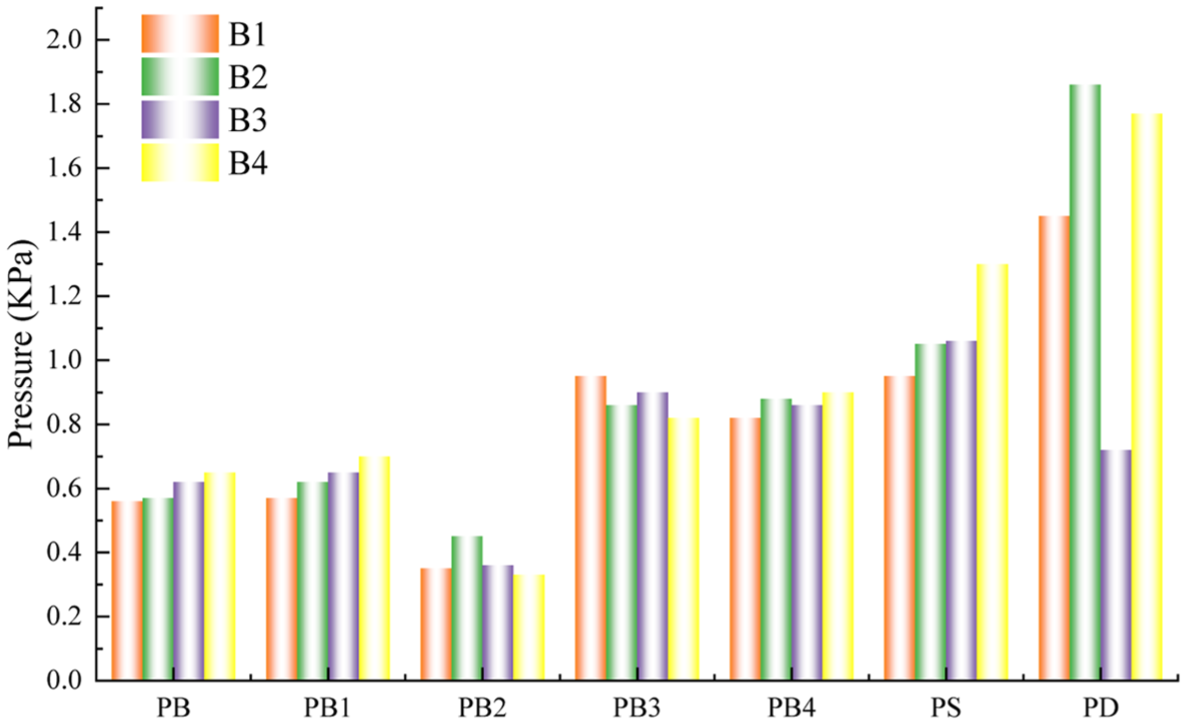
Pressure measurements at marked points on the sports bras.
Cup structure also affected upper-breast pressure. The double-vertical structure produced higher pressure in the upper region: the PB1 values for B3 and B4 were 0.65 kPa and 0.70 kPa, respectively, higher than those of the T-shaped cups (B1 and B2). These values suggest that the optimized patterns may have improved upper-breast conformity and structural support.
A dynamic pressure analysis showed pronounced differences between cup structures (Figure 12). During running, the double-vertical cups (B3 and B4) provided substantially higher and more stable average upper-breast pressure, which were 1.27kPa and 1.39kPa, respectively. These values were higher than those observed for the T-shaped cups. Peak dynamic pressures further highlighted this trend, with B3 and B4 reaching 2.06 kPa and 1.92 kPa, respectively. These results demonstrate that double-vertical segmentation, especially when combined with the F3 fabric system, offers superior dynamic conformity, upper-breast encapsulation, and vibration control.
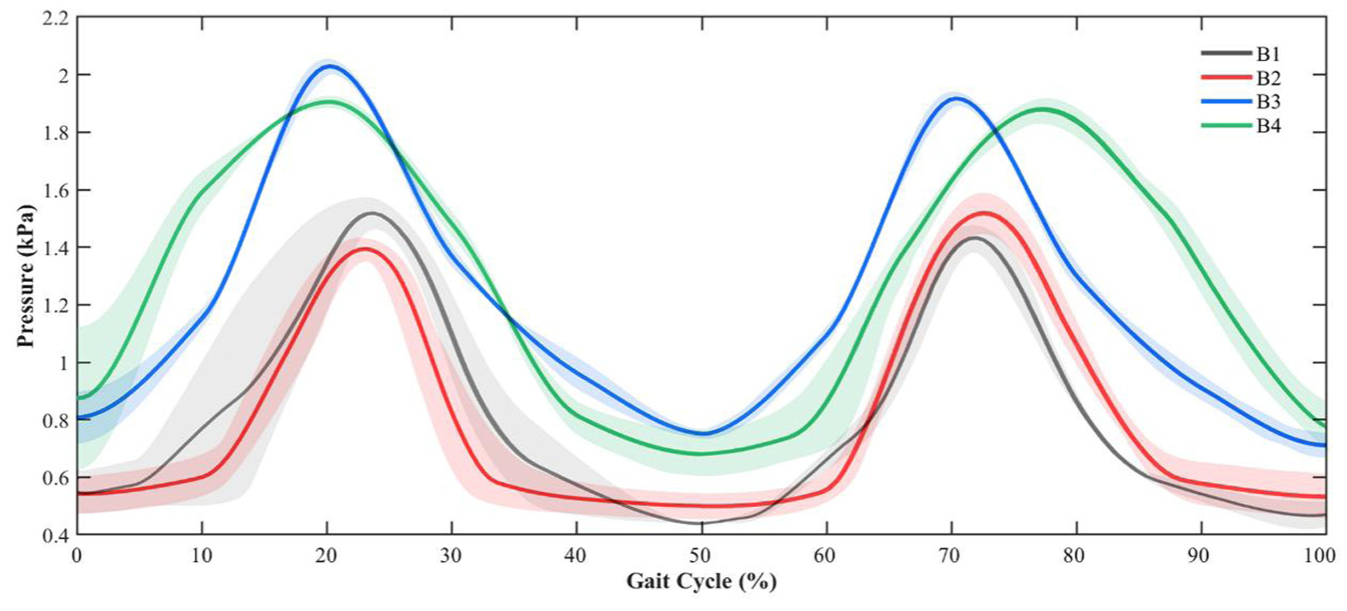
Dynamic pressure curves at PB1 during a running gait cycle.
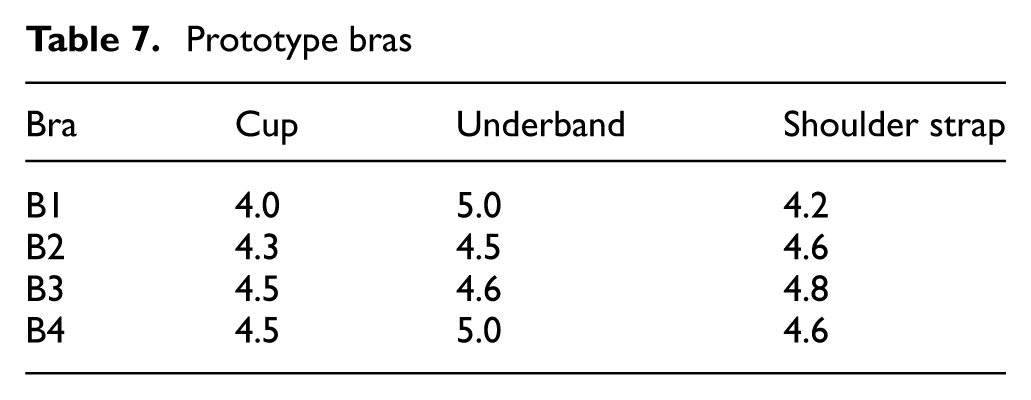
Subjective comfort evaluation provided additional information for interpreting the relationship between pressure and comfort (Table 7). Although some prototypes showed higher local pressure in the upper-breast region, the corresponding comfort ratings remained high, suggesting that the increased pressure level was still acceptable to the participants under the tested conditions. In particular, comfort scores in the underband and shoulder strap regions remained above 4.0, indicating that improved support did not appear to cause marked discomfort. These findings suggest that the better-performing designs may achieve a reasonable support-pressure-comfort balance.
Prototype bras
Overall, among the tested prototypes, the combination of a double-vertical cup structure and the F3 composite fabric showed the most favorable support-pressure-comfort profile, suggesting its potential value as a design strategy for high-support sports bras targeting fuller, mildly ptotic breasts. However, this interpretation should be confirmed in future studies using larger samples with appropriate statistical analysis.
Conclusion
This study developed an integrated framework for optimizing high-support sports bras by combining 4D breast scanning, dynamic pattern engineering, and material optimization. Breast motion during running was quantified using a twelve-direction model based on palpation-defined boundaries and key-frame extraction. This approach enabled a surface-based characterization of multidirectional deformation in fuller breasts with reduced upper-breast projection.
Material testing showed that the three-layer composite fabric F3 exhibited low elongation, high elastic recovery, high Young’s modulus, and a low Poisson’s ratio. These properties were associated with higher vibration attenuation values than those observed for the two-layer composite fabric F2 under the tested running condition. The added elastic mesh layer improved structural stability, while the measured air permeability of the laminated fabric remained above the molded-bra permeability threshold reported in GB/T 5453. Although air permeability decreased after lamination compared with the single-layer control fabric, the F3 composite still retained an acceptable permeability level for sports bra application. These results suggest that quantified mechanical parameters are associated with dynamic support performance and can provide useful guidance for material selection in high-support sports bra design.
Cup structure appeared to play an important role in vibration control. The double-vertical segmentation was associated with higher vibration attenuation rates in the anterior, superior, and superolateral directions, where deformation responses were more pronounced during running. A dynamic pressure analysis also showed increased upper-breast contact pressure, suggesting improved encapsulation and load sharing under the tested condition. These findings indicate that vertical segmentation may help improve upper-breast conformity and vibration control, although further validation is required in larger and more diverse samples.
Dynamic cup patterns derived from four-dimensional key frames revealed upper-boundary overlap that was not observed in the static models used in this study. Incorporating this overlap into pattern optimization was associated with reduced empty-cup regions and improved upper-breast fit during motion. Compared with static-based patterns, the dynamic approach may offer advantages for improving cup conformity and reducing friction under the tested high-impact running condition. These findings support the potential value of using surface-based dynamic breast-shape information in cup-structure design.
Among the tested prototypes, the combination of a double-vertical cup structure and the F3 composite fabric showed the most favorable balance between vibration attenuation and wearer comfort. This study provides preliminary evidence that integrating 4D breast dynamics with material and pattern engineering may support the development of high-support sports bras for women with larger and mildly ptotic breasts.
Despite the effectiveness of the proposed fabric and cup-structure design, several limitations should be acknowledged. First, the sample size was limited and only young females with full and ptotic breast morphology were included. The applicability of the findings to other age groups, breast shapes, and size ranges requires further validation. Second, the experiments focused on a single running speed under controlled laboratory conditions. Breast motion patterns during other high-impact activities and prolonged exercise were not investigated.
In addition, although the Temporal 3dMD system enabled dynamic capture of breast-surface deformation, 4D scanning remains a surface-visibility-based method. For women with larger and mildly ptotic breasts, the inferior breast surface and lower breast boundary are partially obscured in upright dynamic scanning because of breast ptosis and self-occlusion, which could introduce some error into the geometrical evaluation of the lower boundary and local deformation. Previous 3D/4D breast-scanning studies have similarly indicated that incomplete visualization of large, ptotic breasts can affect surface-based measurements. 31 Missing inferior-surface data may introduce uncertainty into the derived dynamic breast models. Such uncertainty may lead to an underestimation or smoothing of the lower-breast surface area, inframammary curvature, and lower-boundary position. Although the main optimization focus of this study was the upper-breast region, a specific sensitivity analysis for inferior-surface occlusion was not performed and should be included in future work.
Future studies should include a larger and more diverse participant cohort to improve the generalizability of the results. Multi-activity protocols and longer duration tests are recommended to examine fatigue-related effects on breast vibration control. Another limitation of this study is that, although bilateral breast models were included in the analysis, the present design framework did not explicitly address possible asymmetry in cup construction. In practice, asymmetric design solutions may be important, particularly for women with marked bilateral differences in breast shape or motion. Therefore, future studies should additionally examine both breasts independently and explore whether side-specific or asymmetric cup designs are required.
Footnotes
Declaration of conflicting interests
The authors declared no potential conflicts of interest with respect to the research, authorship, and/or publication of this article.
Funding
The authors received no financial support for the research, authorship, and/or publication of this article.
Ethics approval and consent to participate
The study was approved by the Ethics Committee of Hong Kong Polytechnic University (approval no. HSEARS20241121003), and written informed consent was obtained from all the participants.
