







Abstract
This article explores several dimensions of the current realities of size in US congregations. Drawing on the Faith Communities Today 2020 national research effort, the differences between various size groupings of congregations are explored. For each of the five size groupings, from under 50 attendees to over 1,500 worshippers, the article highlights survey results showing the benefits and challenges associated with each size cluster and implications for congregational flourishing. The article further examines the twofold dynamic of the rapid decline in smaller congregations and the increased consolidation of a majority of attendees in larger congregations. Using survey data, the article argues that this trend has resulted in considerable growth of the larger communities and rapid decline of the smaller ones.
Size matters, and it is becoming an ever-more important factor across the congregational landscape. It matters for a number of reasons, some of which have long been a part of congregational life and others that recently introduced causes as a result of a changing religious ecology. This article will briefly explore several dimensions of the current realities of congregational size—the differences between various sizes of congregations and the twofold dynamic of the rapid decline in smaller congregations and the increased consolidation of a majority of attendees in larger congregations. This trend results in the considerable growth of the larger communities and rapid decline of the smaller ones.
First, it should come as no surprise that different size congregations have distinctive strengths and aptitudes. This has been true for centuries but it is seldom addressed except by the occasional consultant with a new book that either touts the beauty of small churches or conversely the glories of the megachurch model. Congregations of different sizes within the Faith Communities Today (FACT) study truly look dissimilar, regardless of denominational family, region, location, or other characteristics. These size distinctions are an important consideration when attempting to understand the role these congregations play in the religious reality of the country, therefore their size must be taken into account when trying to understand the religious landscape.
Second, size also matters because the percentage of faith communities at each level of size is changing dramatically and quite rapidly. Not only are the number of small congregations increasing significantly but the characteristics of many of these communities may make it impossible for them to reverse the inevitable course of progression toward extinction. There was a time when congregational size was primarily driven by factors such as the population density of a community, the number of congregations within the religious ecological context, and the occasional charismatic clergyperson. While these factors still play a role, new forces such as age-related generational change, declining birth rates, shifting cultural styles, and consumer market forces have made the question of size even more critical a consideration than it was previously. Because of the rising influence of these factors, the larger-sized congregations have a distinct market advantage and, as such, a greater likelihood of flourishing as strong organizations into the future.
Third, while there has long been a disproportionate distribution of members between larger and smaller faith communities, this proportion balance has dramatically tipped in favor of the larger communities. Additionally, we have yet to see what the full impact of the pandemic will be on this reality, but it will likely exacerbate this trend. Mark Chaves uncovered a century of member consolidation at work in the nation's denominational churches. 1 Using congregational data from the twentieth century for 12 different denominations, he found that those churches at the larger end of the size spectrum were both growing larger over time and also garnering an ever-greater percentage of the worship-attending populations. This growing concentration of worship attendees in the largest churches meant fewer participants for the remaining congregations—often with the greatest loss coming from the medium-sized (100–250) churches who increasingly have become smaller churches. In part, this shift was the result of population migration from rural areas and small towns into more densely populated areas or from formerly populated areas of the country such as the northeast region to the southern and western parts of the nation. Analysis a decade ago by the US Religious Census 2 showed an over-abundance of congregations where there were fewer religious persons, while areas of the country with growing numbers of religious adherents had too few congregations, thus those faith communities tended to become larger.
The FACT research effort, along with the National Congregations Study project, has been documenting the shifting fortunes of different-sized churches over the past two decades. The recent 2020 FACT study of 15,278 congregations is drawn upon here to examine the size characteristics of these congregations and point out the particularly challenging times ahead for the smaller churches in the country. While it will be impossible to unpack all of the variables having an impact on congregational size within this article, we want to at least address the characteristics and implications of these dynamics for congregational life.
A small church with a few dozen members has been, and could still be, organizationally sustainable in small towns and rural areas. Likewise, any number of immigrant storefront congregations or new church plants might be small at a given moment but possess the potential for growth. Many of the small congregations in this study do display a robust spiritual ministry and vitality. These vibrant congregations can be found within the 15,000-plus FACT responses, but their vitality's potential influence is overshadowed by rapidly declining, formerly larger, faith communities with diminished vigor and characteristics that offer little chance of changing the downward trajectory of their likely future.
Contours of the Landscape
Before launching into this exploration though, it is necessary to first describe the size landscape of the present. When considered from the perspective of the country's faith communities, at this moment the United States is a nation of small churches. The median-sized congregation has a worship service attendance of 65 people, a figure that has been in dramatic decline over the past 15 years (Fig. 1). That means half of the roughly 350,000 faith communities in the USA gather 65 or fewer people in worship each week and almost three-quarters (69%) have 100 or less attendees.
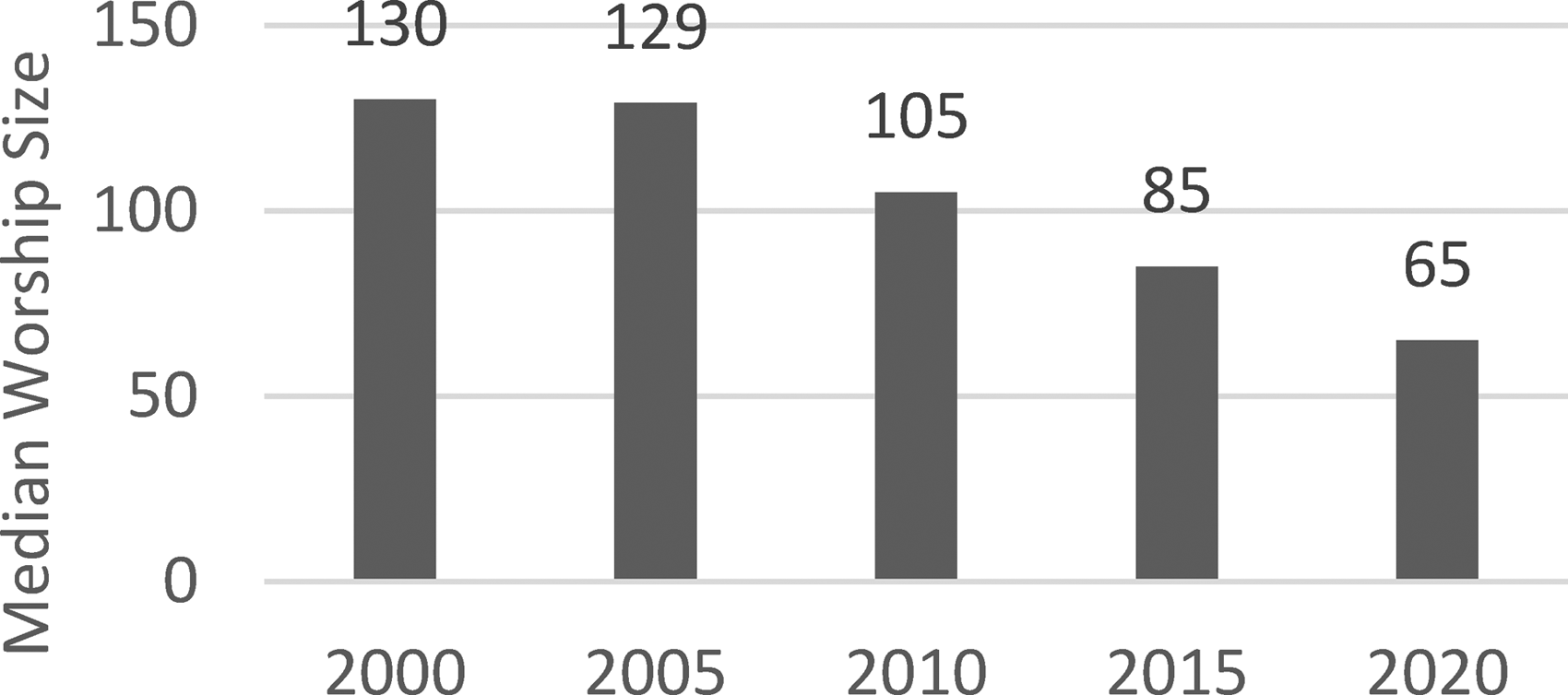
Median Worship Attendance is in Rapid Decline.
The result of this size inequity means that, as Figure 2 shows, 69% of the roughly 350,000 US congregations of all faith traditions have under 100 persons attending weekly, and while not shown in this graphic, just 10% have over 250 in services. This means that around 35,000 congregations in this top 10% are home to approximately 60% of Americans who attend weekly religious services. In other words, a relatively small number of the largest congregations with over 250 people account for a majority of weekly attendees, while the roughly 245,000 small congregations with under 100 worshippers accommodate only 16% of the total US religious attendees.
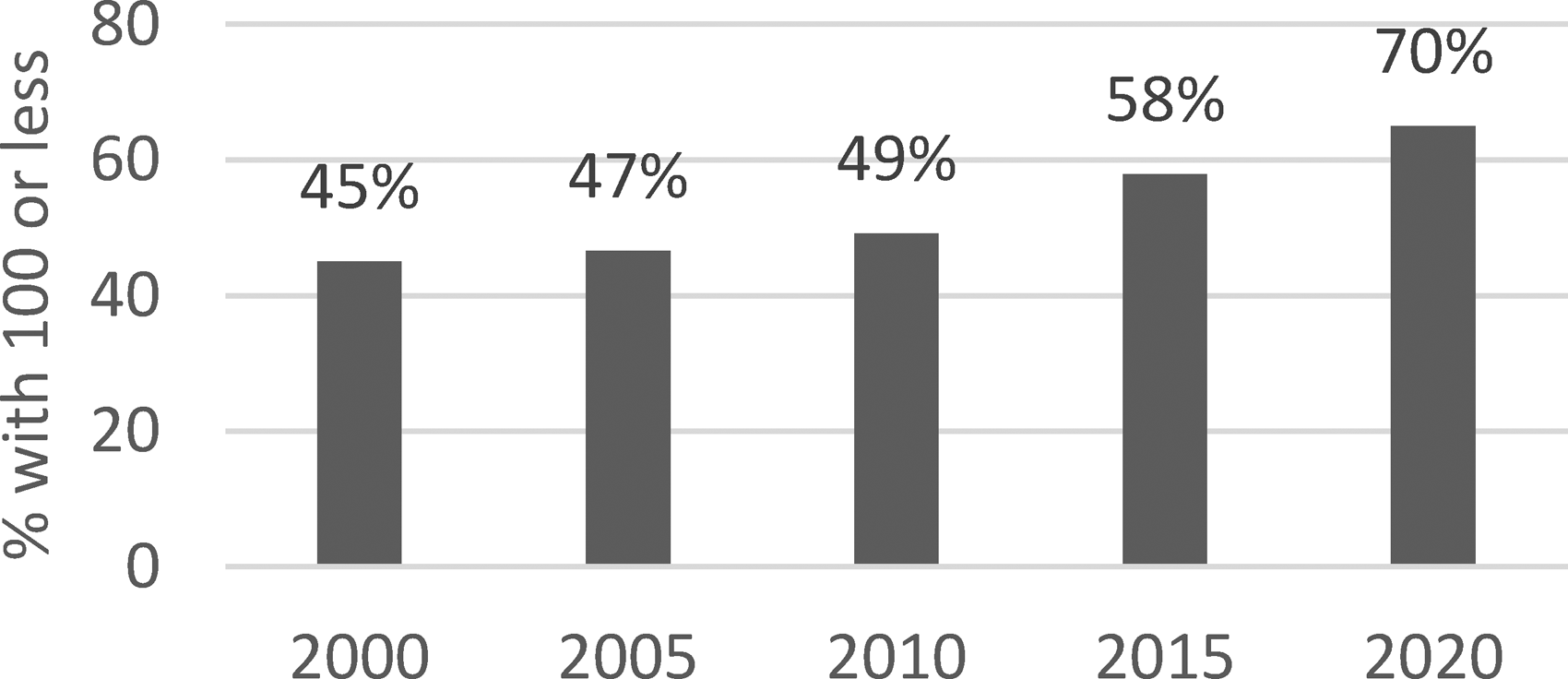
A Majority of Congregations have 100 or Fewer in Worship.
Essentially, small congregations are getting smaller rapidly, decreasing from our 2015 study's median size by 24% in just five years. If that rate of decline were to continue, in another decade the median congregation would be below 30 attendees. While those above 250 worship attenders are getting larger, the largest congregations in our study are growing at the most rapid rate. Although growth isn't the only important variable within the life of a congregation, this inequitable rate of decline and increase does imply a multitude of future challenges.
The size groupings used in this article were created to approximate both significant clustering within the data as well as conventional designations by researchers and church consultants, although these designations do not exactly match Arlin Rothauge's often-used standard. 3 Traditional designations for the under 50 and under 100 categories are often small or family and pastoral-sized, which now interestingly account for a majority of congregations. Those congregations within the 100–250 range are considered medium- or program-sized churches. Above 250 are designated as large or corporate sized, and in some cases, another larger-size marker (we use 500 in attendance) are described as very large or resource-sized congregations. Our current analysis further subdivides this largest category into those congregations above 1,500 in attendance to show additional distinctions that result when accounting for these very large faith communities. Table 1 offers a snapshot of these six size groupings, their percentage of the total number of US congregations, approximate percentage of weekly attendees, and the group's median growth rate over five years.
A Snapshot of Congregational Size Groupings.
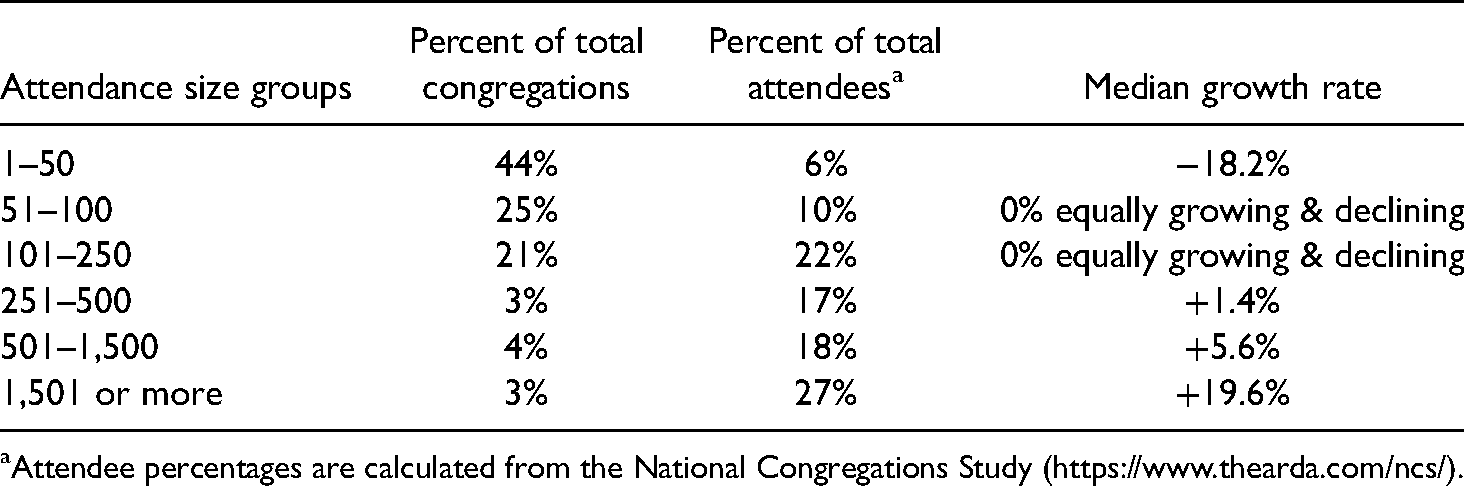
Attendee percentages are calculated from the National Congregations Study (https://www.thearda.com/ncs/).
Figure 3 vividly demonstrates this variable dynamic of growth and decline relative to size. For the smallest congregations (1–50), 65% are in decline with only 21% of these showing growth. The next two size groupings (51–100 and 101–250) are somewhat more balanced with roughly equal numbers of congregations either in decline or growing. It isn't until faith communities rise above the 250 worship attendance mark that an appreciable net growth is evidenced. Likewise, only the largest size grouping of over 1,500 in attendance sees dramatic median growth of nearly 20% in five years for a majority of congregations in the large-size group. Also notice in Figure 3 that relatively few congregations (12%–15%) remain stable (between ±4.9%) no matter what their size—most are either declining or growing across the previous five years.
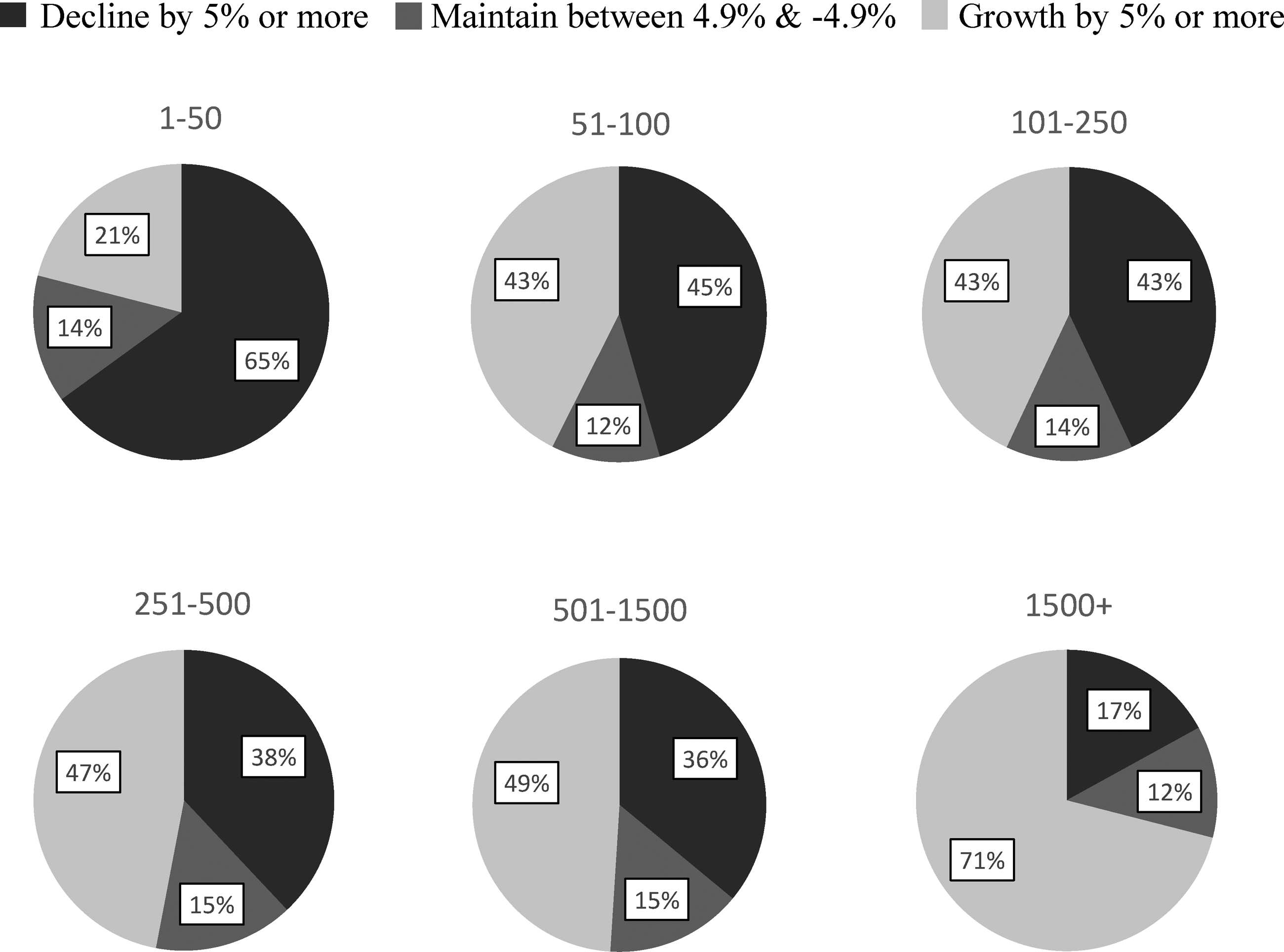
Congregational Size Groups show Different Patterns of Growth and Decline.
Size might be influential but it is not solely determinant of a congregation's well-being. Congregational attender growth or decline is not the only factor related to spiritual vitality and a flourishing ministry. It is important to note that size did not have a statistically significant effect on a number of other variables central to the life of the congregation. Assessments of how much a congregation emphasized practices of personal religiosity, encouraged sharing their faith, stressed living that faith out in daily life, and highlighted the need to attend worship regularly did not vary by size. Congregations of all sizes also affirmed their worship was thought-provoking. Likewise, they uniformly claimed a good fit between the leader and the congregation, and all sizes reported having attendees who were new in the past five years.
Likewise, Figure 4 shows that at least 30% of congregations in each size category exhibited quite positive characteristics and strengths, differing from the norm in more vital and flourishing ways. This is worth keeping in mind even as the average scores for a size group might look less than flattering. It is also important to realize that each of the different size groupings had positive characteristics comparatively, even if, as will be shown below, the general trends on a number of key measures favor the larger congregations. In order to undertake this comparison, this article will highlight certain distinctive traits in each of the six groupings and then draw some conclusions from these results and trends related to size to consider for the future of congregational dynamics.
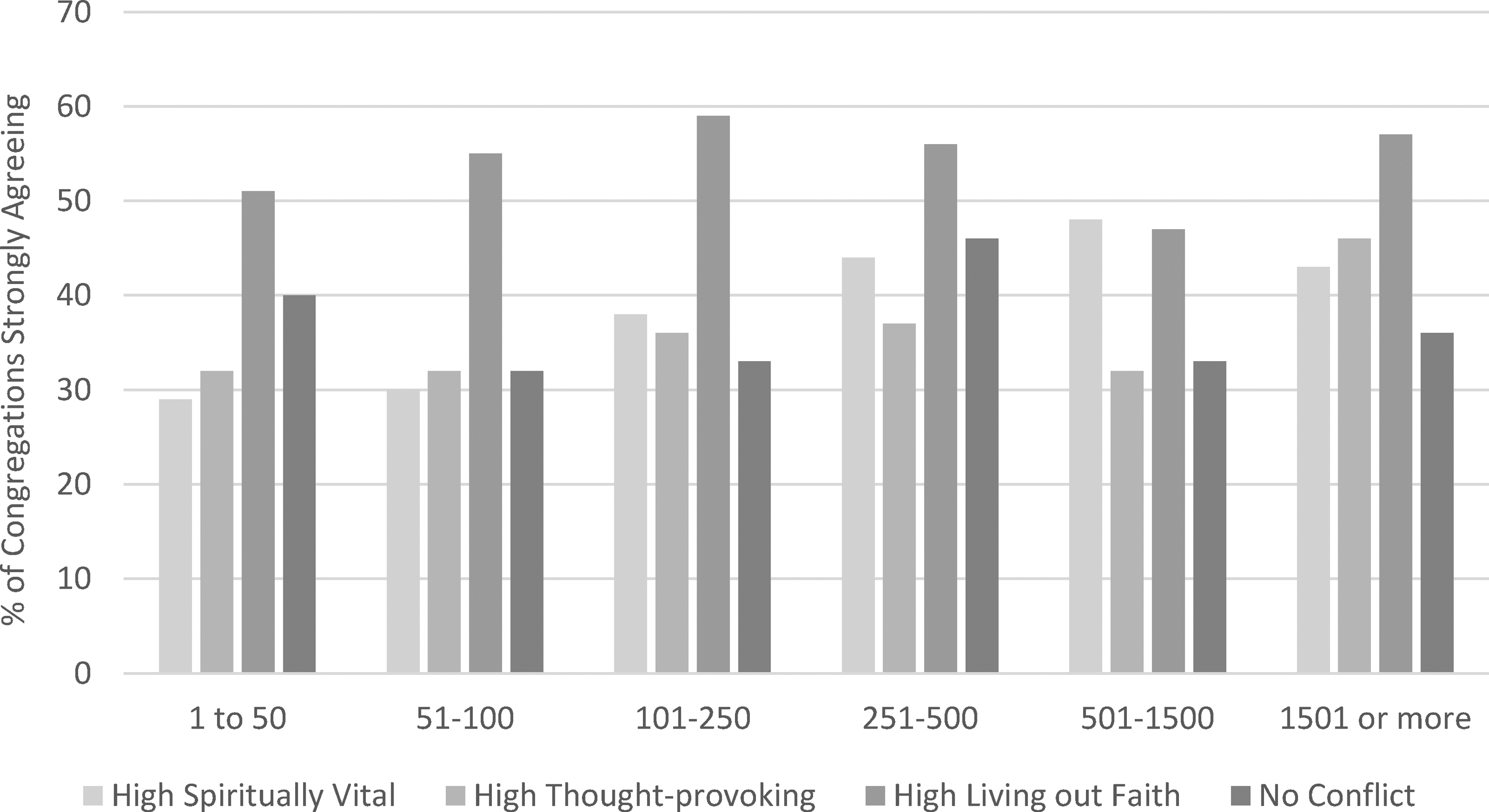
Some Strength can be Seen at Every Size.
Smallest Congregations
Two-thirds of congregations from the FACT study (69%) fell into the 1–50 and 51–100 size categories. There are clearly signs of struggle for congregations in this grouping but also some strengths evident. Foremost among these positive characteristics is the significant level of member commitment. Congregations in this group had a greater percentage of member participation in weekly worship. These members also gave more per person and the congregation claimed a greater amount of the members were volunteers. The smallest communities (1–50) gave the highest percentage of their budget to missions, nearly 14% of expenditures on average. Interestingly, the percentage of the budget spent on staffing costs was lower than other-sized groups, likely due to these smallest congregations being the most likely to have both the most part-time and also unpaid clergy of any group. These congregations were also most likely to have bi-vocational clergy.
At the same time, the smallest congregations were the most organizationally stressed. Their budget expenses per capita were the highest of any size group. These congregations spent the largest percentage of budgets on their buildings. Their sanctuaries were the least full during worship. They had the largest percentage of members over 65 years of age and the smallest percentages of children, youth, and young adults. They were the least likely to have music programs, and least likely to use organs, choirs, or electric guitars in worship. Not only did they have fewer attendees, these congregations also had the lowest reported percentage of members engaged in recruitment, and were less likely to affirm they were looking for new members.
Overall, those congregations with 50 attendees or less were by many accounts under severe organizational stress. Much of the intense member commitment might well be from this faithful remnant doing everything they can to survive. The slightly larger-sized group (51–100) exhibited many of the same symptoms of struggling. Although a somewhat larger percentage of this group showed signs of vitality, they too were clearly challenged in many ways.
Medium-Sized Congregations
Those 101–250 attendee congregations in this medium-sized category representing 21% of the survey sample are indeed in the middle with most of their results. Their founding date on average was more recent than other-sized groups and more likely to be located in the West region, especially the growing mountain west states. These congregations are certain to have a full-time clergy person and additional staff and physical space. They also had a relatively higher percentage of volunteers than larger churches.
This size group's most notable feature is that they score the highest overall on having other groups use their buildings. They were also the highest in having other congregations meet in their building. Likewise, when it came to use by nonprofits, support groups, daycares, or government entities, congregations of this size were most likely, along with the 251–500-sized groups, to open their buildings to the larger community. Interestingly, this access to their physical space did not translate into stronger scores on offering community service activities or affirming they were actively involved in the local community as compared to larger-size groups.
This group was more likely to use the organ and choirs in worship but they were also the highest-scoring size group to use video projection during services. Finally, more than any other group, these medium-sized congregations reported excellent fiscal well-being compared to five years ago. Fully, 68% of these congregations identified their present financial health as good or excellent, far outshining other-sized groups.
Although we saw earlier that equal portions of this group were in decline or growing, it is clear that congregations of this medium size do have some strengths to draw upon. In many ways there are strong forces pulling these congregations in both directions, toward the lower median size but also above 250 attendees where the future possibilities become brighter.
Largest Congregations
This largest congregational group encompasses three distinct sizes: 251–500, 501–1,500, and above 1,500. Congregations of these sizes represent about 10% of congregations but roughly 60% of religious participants. Larger-sized faith communities have distinct advantages in terms of resources, attraction, and prominence; however, they also face certain challenges, as will be seen.
The 251–500 attendee group stood out from the other-sized groups in that it had more reverent and formal worship, while employing increased use of organs and choirs. This group had a high percentage of mainline and older congregations. Likewise, they had lower levels of conflict and were more politically active than other groups. This group also had the highest rate of per capita giving among the largest congregations category.
The 501–1,500-sized groups were most likely to be in the same location in which they were founded and also had some of the oldest founding dates. This group of churches had the highest rate of college graduates among its members and the largest percentage of new immigrants of any size grouping as well as greater racial diversity than any group other than those above 1,500. Interestingly, congregations of this size reported the lowest fiscal health.
Those congregations above 1,500 stood out in many ways besides their significant growth rate. They were most likely to be striving to make the congregation more diverse and in fact were more diverse than other-sized groups. Their memberships were more gender balanced, had a smaller percentage of American-born congregants, and were more likely to be multiracial with at least 20% minority representation. This size group had the lowest per capita costs to operate. They also had challenges such as being the least likely sized group to have female clergy. They had the largest percentage of their budgets going to staff costs and program expenses. These largest congregations further had to combat low levels of member commitment, with the lowest per capita giving and rates of volunteering, and the highest rate of conflict.
Certain characteristics are obviously directly tied to increased congregational size such as annual income and expenditures, the size of the sanctuary, and the fullness of the sanctuary during worship. Increased congregational size above 250 attenders is also strongly related to many other characteristics that are less apparent but perhaps even more significant to the flourishing of the faith communities. Some of these characteristics include a greater percentage of members involved in recruiting new people, increased engagement with and use of all sorts of technology, a greater concern about safety and thus much more likely to implement multiple safety and security procedures, and a greater percentage of young adults with fewer members over the age of 65 when compared to the small and medium-sized groups.
Considerable community service efforts were evidenced throughout the group of largest congregations, as were being actively involved in the community, engaging in joint ecumenical and interfaith worship, fellowship, and community service activities, and opening their space for use by community groups of all kinds. These churches strongly affirmed being involved in the community while also having more community service programs. Likewise, this grouping of largest congregations were the most likely to offer a wide variety of programs for their own membership, having programs of global mission, music, and sports, and special needs ministry, among others.
Do These Size Characteristics Make a Difference?
This article began both with the task of exploring the differences between various sizes of congregations but also with the prospect of shedding some light on the twofold dynamic of the rapid decline in smaller congregations and the increased consolidation of a majority of attendees into the largest congregations. It is clearly evident in the FACT data that each of these size groupings have both stronger and more vibrant, as well as more challenged faith communities. Likewise, each different size grouping has distinctive strengths compared to other sizes such as smaller ones with more intense commitment, medium-sized with a greater willingness to share their building space, and larger ones allowing for greater member diversity.
It is, however, this twin dynamic of smaller-size member decline and larger-size member concentration that both vexes congregational life and poses a challenge for the future of the religious landscape. This national religious context has increasingly seen congregation choices and loyalty influenced by personal lifestyles and political affiliations, consumer market-driven church shopping, charismatic personalities, contemporary music, the incorporation of technology, a greater emphasis on diversity, and engagement in community mission and activism. As such, those congregations above 250 worship attendance in the 2020 survey are more likely to exhibit these and other qualities that appeal in this milieu.
This largest size grouping scores highest on a number of qualities that have been strongly associated with vitality and congregational flourishing, as Figure 5 shows. Not only do congregations in this group strongly assert they are spiritually vital and alive, they are also most likely to affirm having a clear mission and purpose, and have a high commitment to community involvement. Larger congregations offer worship experiences described as both contemporary and innovative, in sanctuaries that are full of people who are more likely to reach out and recruit visitors (Fig. 6).
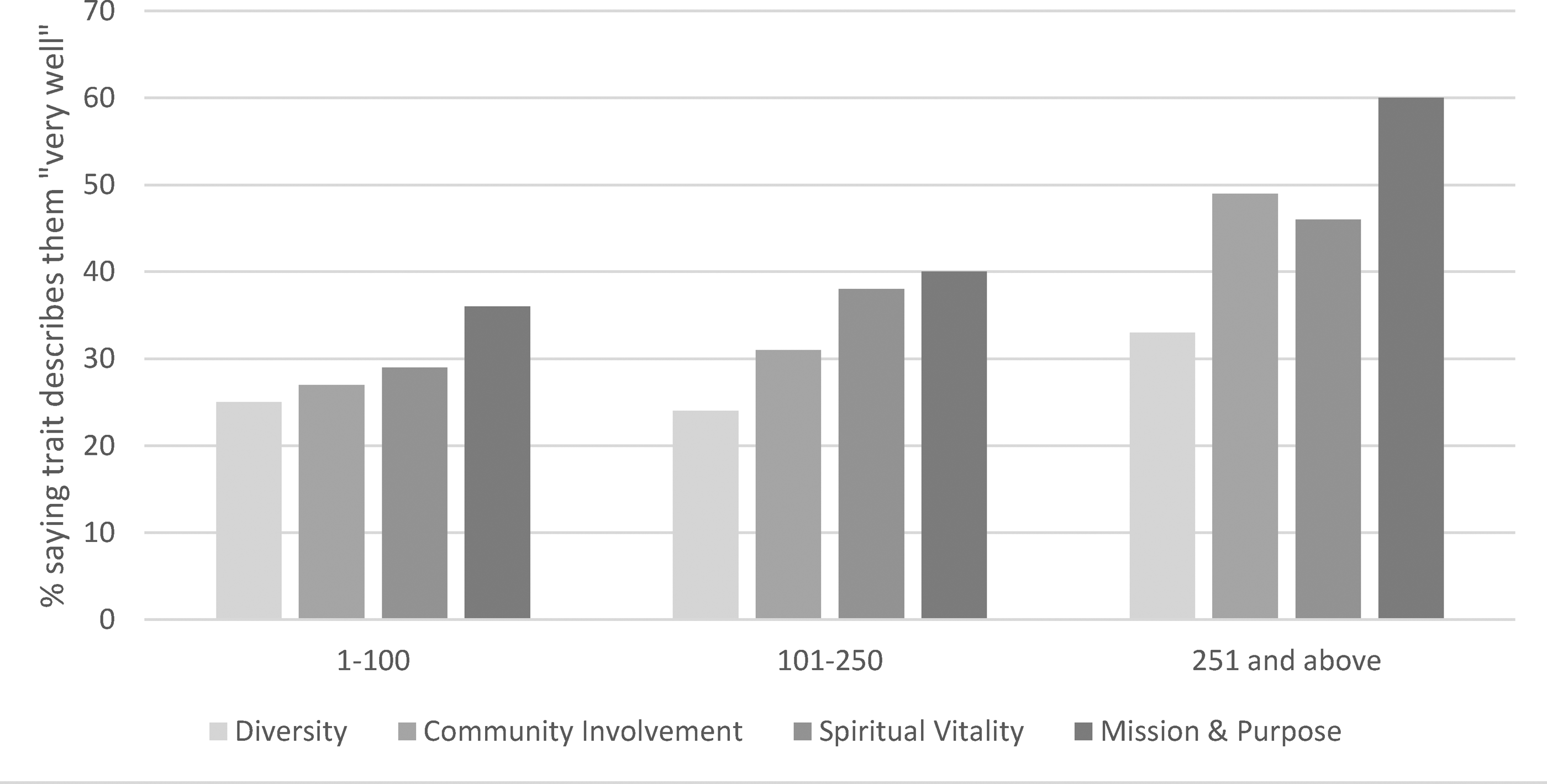
Many Qualities Rise with Size.
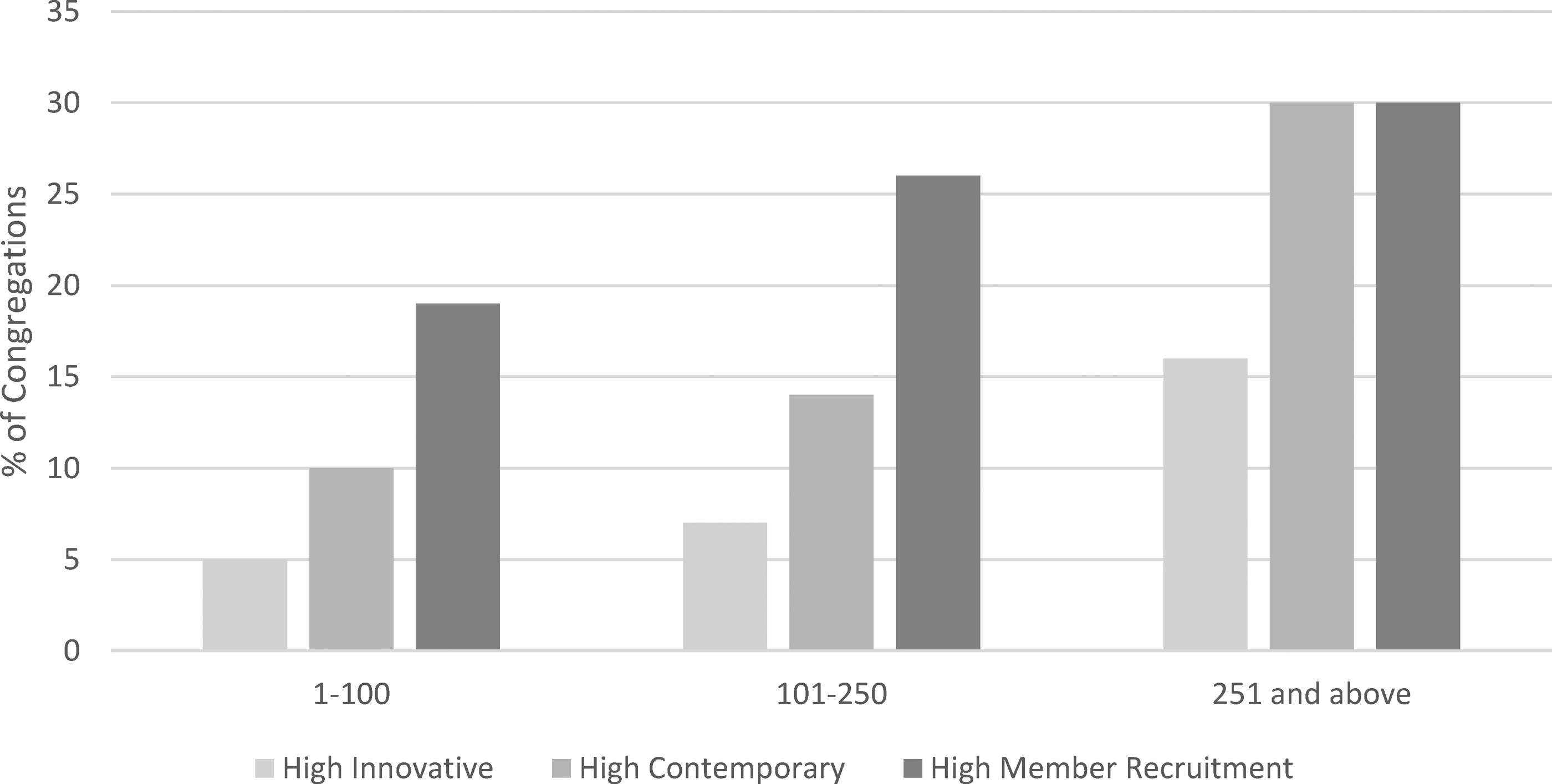
The Larger They Are the Greater the Appeal?
When these traits are combined with increased member diversity, abundant internal programs, and significant monetary, physical, and personnel resources, the attractional appeal of these largest congregations is considerable. The increased gravitational pull of this larger 10% of congregations in part explains why this segment of the religious landscape has become home to an increasingly greater percentage of religious attendees over the past decades.
The other side of this dynamic contains the smallest congregations with the greatest rate of decline. Their most prominent characteristics in terms of size might be contributing to this situation. Consider the optics for a visitor entering for the first time a worship service of 50 people in a three-quarters-empty sanctuary with a part-time clergy person where a large percentage of attendees are over 65 and very few are young adults or families with children (Fig. 7). The service has a modest music program, few sponsored church activities, and there is considerable pressure on members both to volunteer and to give at greater rates than other-sized congregations. This situation is augmented by the smallest-sized congregations being the least willing to change and less likely to be looking for new members or having their people actively recruiting others. None of these characteristics guarantees decline but they are less conducive to that visitor returning or to the vitality and growth of the community in the future.
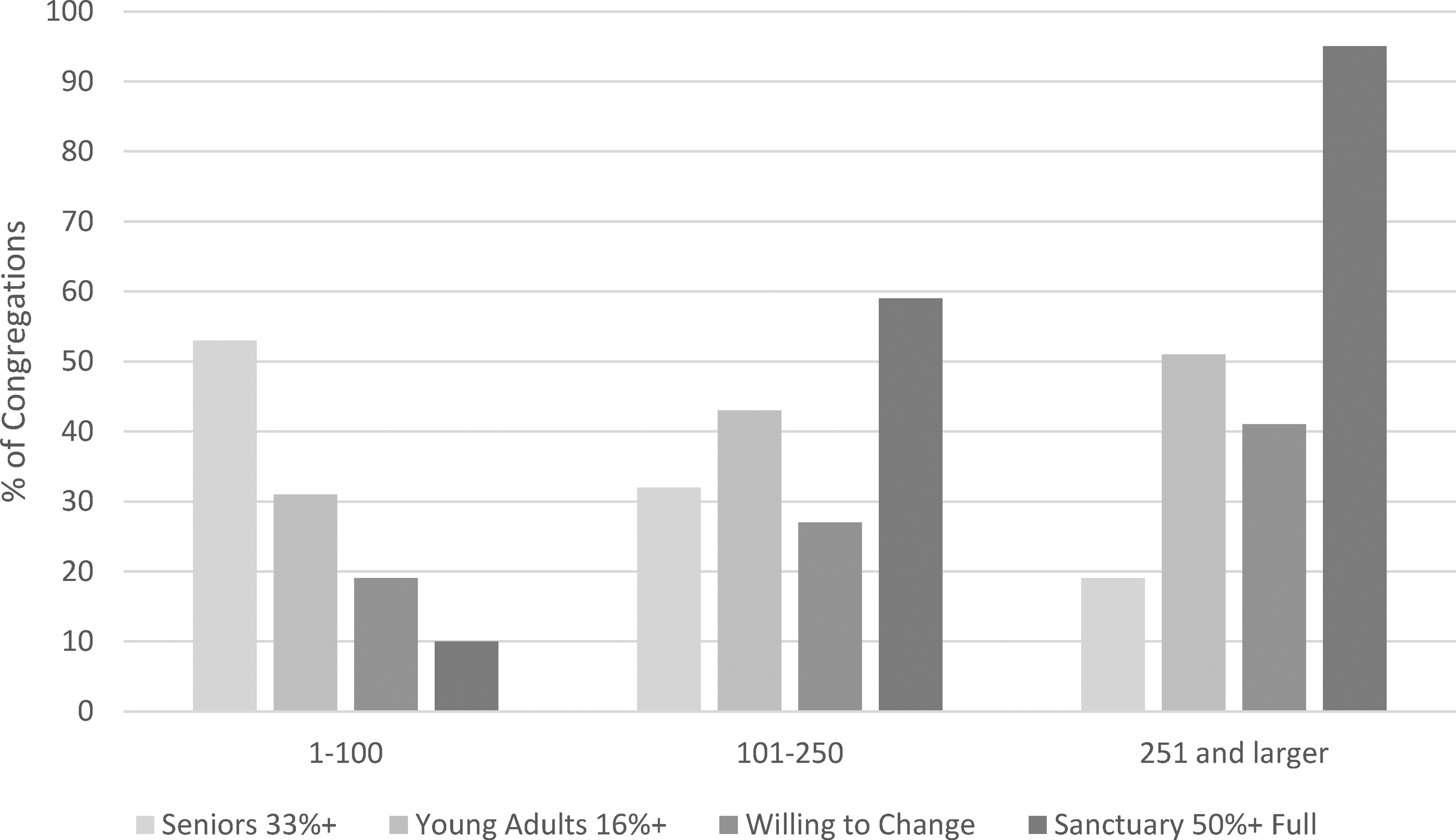
Does the Future Belong to the Largest Congregations?
Size Implications for American Religious Life
These findings related to size are quite disturbing, perhaps equivalent to one's doctor verbalizing a cancer diagnosis. To even suggest that nearly 50% of the country's congregations are in a precarious situation with doubtful future prospects is a rather unpleasant prognosis. However, this is the reality portrayed in the 2020 FACT data from over 15,000 congregations. Imagine a decade from now when tens of thousands of congregations across the country (mostly in the Northeast, the central states, small towns, and rural areas) are closed or near death, while perhaps a third of congregations are thriving and growing ever larger. This possible scenario doesn't even account for the possible lingering effects of the pandemic or the growing ranks of the nonaffiliated. Certainly, there is evidence of pockets of vitality in new church plants, minority-led, and immigrant congregations and in communities with a clear mission and sense of purpose. However, the present congregational situation demands a stark assessment of current worship and ecclesial practices. In such a situation as this, congregations and religious leadership must embrace a willingness to change and an attitude of innovation and adaptation to maintain a vibrant and diversely sized congregational presence in the future.
Footnotes
Declaration of Conflicting Interests
The author declared no potential conflicts of interest with respect to the research, authorship, and/or publication of this article.
Funding
The author received no financial support for the research, authorship, and/or publication of this article other than the denominational partners contributions to support the Faith Communities Today coalition which did this research.
Notes
Author Biography
 national research project and has also conducted seven national studies of megachurches and three national studies of nondenominational churches.