







Abstract
Urban K-12 school systems are struggling with school closures due to widespread enrollment decline, which can spiral into further population loss and overall decline in affected neighborhoods. Analyzing enrollment and population data from Los Angeles Unified School District and Los Angeles County, we argue that the loose coupling of school districts to cities has made it difficult to address the challenges that arise as student enrollment declines. We call on local and state governance to re-couple urban public schools with cities in order to mitigate future economic and social hardships for historically marginalized urban populations.
In the post-pandemic era, many U.S. urban school systems 1 are faced with the challenges that accompany declining enrollment (Sitrin & Mezzacappa, 2024). A variety of factors including declining birth rates and rising housing costs have contributed to enrollment decline. The proliferation of charter and micro schools is also a factor contributing to student population decreases in some urban areas. As enrollment shrinks, several districts have been compelled to shutter schools to reduce costs and improve services to those who remain (Kaput et al., 2024; Peetz, 2024). School closures are typically most likely to occur in economically depressed neighborhoods and can contribute to further deterioration of social and economic conditions (Higgins, 2024b).
In this paper, we analyze how these patterns are affecting public schools in Los Angeles (LA) County, the nation's second largest metropolitan area. Decline in student population in this region has been dramatic over the past 20 years, and demographic trends suggest decline in student population will continue in the years ahead. Urban public school districts are limited in their ability to respond to enrollment decline because they have become “loosely coupled” from the metropolitan areas where they are based. Loose coupling is a concept that has been used to describe systems in which the parts are interdependent but weakly connected. The term has traditionally been used to describe technological design features that allow the parts of a system to function independently. Ideally, a loosely coupled system makes it possible for the parts to support the adaptability and endurability of the system. However, when the concept is applied to schools or an urban social and economic system, loose coupling of schools from the cities where they are based diminishes the likelihood that the system will address the needs of parts that may be in distress (i.e., schools) and that are vital to the operation of the system as a whole.
In education, the concept of loose coupling has been utilized in a number of scholarly studies (Hautala et al., 2017; Ingersoll, 1991; Shen et al., 2017; Spillane & Burch, 2003; Weick, 1976). Most often, it has been used to explain the fragmentation and dysfunction that may manifest in the way various school systems operate and interact. Weick (1976) employed the concept of loose coupling to explain the cause of dysfunction that is common in large urban school systems because often the parts (administration, finance, etc.) fail to adequately support the goals and mission of the whole (especially teaching and learning). In a 1991 revision of the argument, Ingersoll argued that loose coupling was apparent in the lack of alignment between the educational and administrative goals of some school districts (Ingersoll, 1991). Spillane and Burch (2003) added that the multi-dimensionality of instruction and subject matter is what predicates the loose coupling between policy and institutional environments.
In this paper, we borrow the concept of loose coupling to draw attention to the ways in which U.S. cities and their K-12 school systems often fail to operate in an interdependent manner based on shared goals and interests. We define urban school systems as traditional public school (TPS) districts as well as publicly funded charter schools that are located in the fiscal and geographic boundaries of cities (NCES, 2006; Noguera, 2003). Specifically, cities within our definition share characteristics of being urban-intensive or urban emergent (see endnote 1) (Milner, 2012). Throughout this paper, we use the term urban not as a cultural or political reference, but to draw attention to the specific geographic and social boundaries that define the structure of metropolitan areas in most U.S. cities.
Loose coupling has been built into the structure of governance in cities. Typically, an elected school board and an appointed superintendent manage schools separately; the mayor and city council, or in some cases a city manager, manage the affairs of the city. Even in cities such as New York, Chicago, and Boston where the elected mayors hold authority over the public schools, loose coupling is evident. While the mayors of these cities exercise executive authority over key aspects of school district operations (particularly related to security and finance), they rarely require other city departments (e.g., health, parks, recreation, etc.) to work in a coordinated manner to support schools and the children and families they serve.
The prevalence of loose coupling is perplexing when one considers how important schools are to the social and economic infrastructure of cities. The quality of schools has a direct and indirect impact on property values, economic development possibilities, and the health and safety of many communities (Bui & Dougherty, 2017; Carroll & Scherer, 2008; Noguera, 2003). However, it is important to note that loose coupling is a relatively recent phenomenon, a byproduct of historical processes that have produced cleavage in the demographic composition of neighborhoods. In many cities, railroad tracks, rivers, industrial districts, and other physical boundaries have long served to reinforce race and class separations between neighborhoods and schools. In a recent paper, Turner and Greene (2024) explain this history: America's separate and unequal neighborhoods did not evolve naturally or result from unfettered market forces. Rather, they resulted from plans, policies, and practices of racial exclusion and disinvestment that primarily targeted Black people and laid the foundation for the segregation of other people of color. These policies and practices systematically denied Black people access to well-resourced and opportunity-rich neighborhoods while denying the neighborhoods where they and other people of color live access to resources and investments, leaving them with failing schools, inadequate services, physical and environmental blight, and high levels of crime and violence. (p. 1)
The two authors of this paper were raised in urban areas—Seattle and New York, and are graduates of public schools. We experienced the loose coupling we write about in this paper, as students and, for one of us, as parents too. We have seen how loose coupling has contributed to disinvestment and disregard for school systems in cities where civic leaders fail to consider how decline will affect residents who remain dependent upon them. The loose coupling of cities and schools stands in contrast to the strong embrace of professional sports teams, conference centers, and museums, by cities and their affluent residents, who often invest heavily to support and retain multi-billion dollar franchises.
In the following sections we show how a strong embrace of urban schools can offset the effects of school closures fueled by enrollment decline on low-income neighborhoods in LA County. We also offer recommendations to mitigate the effects of school closures on outcomes and opportunities for historically marginalized urban populations.
Background
U.S. cities and their K-12 school systems have not always been loosely coupled. Prior to school desegregation efforts in the 1960s and 1970s, when urban public schools were whiter in composition, public school systems were more integral to the life of cities (Tyack & Cuban, 1996). Although class differentiation and separation were common in school districts—college preparatory schools generally served the affluent, while vocational schools largely served the working class—schools were nonetheless treated as important to civic life. In fact, in many cities they were regarded as equally important to the health and welfare of a city as police and fire departments (Hanford, 2020). However, as large numbers of white residents moved out of U.S. cities in response to urban unrest and court-mandated desegregation in the 1960s and 1970s, public schools became increasingly disconnected from the economic and social life of cities (Gross, 2015).
In many U.S. cities today, there is a stunning difference between the demographic composition of the metropolitan area and the school system. This is especially evident in high wealth cities that are predominantly white (non-Hispanic) such as Seattle, Denver, San Diego, and Minneapolis, where public schools disproportionately serve low-income minority populations, particularly Black, Latino, and immigrant students (see Figure 1). In high poverty cities such as Baltimore, Philadelphia, Buffalo, and St Louis, there is greater correspondence between the composition of schools and the demography of residents. 2 However, even in high poverty cities, signs of decoupling are evident. One clear sign is when economic development efforts fail to include investments in or support for public schools. For example, while Detroit continues to rebound from its bankruptcy filing in 2013 with a globally recognized downtown revitalization (Anderson, 2023), the Detroit Public Schools Community District is contending with dilapidated facilities, rodents, and school closures as a result of declining enrollment (Higgins, 2024a). Similar patterns are evident in Cleveland, Pittsburgh, and, as we will show, Inglewood, CA, a small city experiencing unprecedented economic investment. The International WELL Building Institute (2021) predicted this pattern, using data on K-12 public schools facility funding to conclude that the United States underinvests in school buildings by $85bn annually, leaving districts “unprepared to provide adequate and equitable school facilities.”
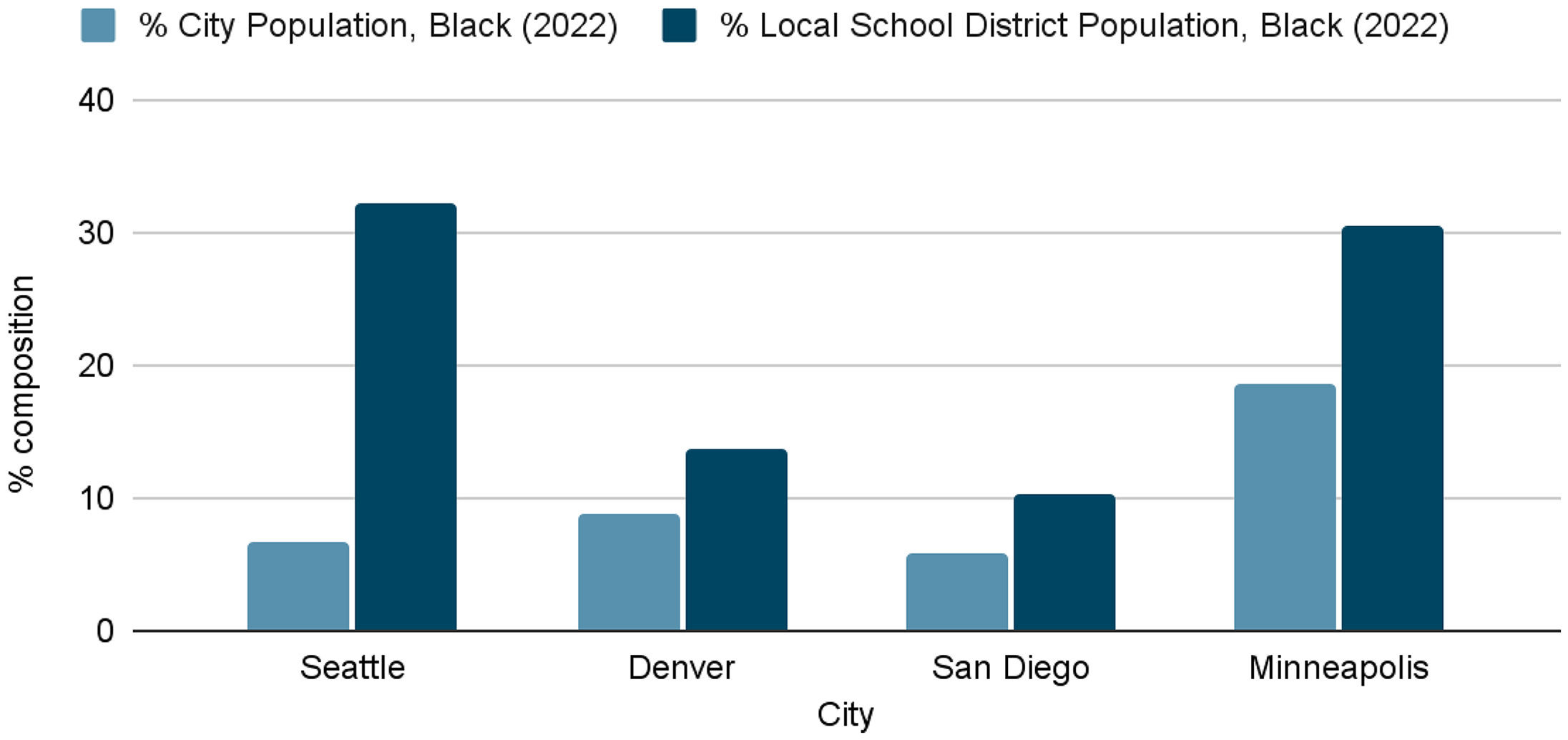
Citywide demographic composition compared to local school district composition in predominantly white U.S. cities. Note. Data drawn from public U.S. government data via data USA, a collaborative project by Deloitte, Datawheel, and Dr Cesar Hidalgo. Data USA (2022).
As the previous paragraph shows, cities may fail to prioritize investments in urban public schools investments when efforts to revitalize or spur economic development are launched. This is especially concerning because public schools, like public transportation and public hospitals, typically serve low-income residents who have disproportionately less access to alternatives (Duggan et al., 2023; Robertson et al., 2022; USAFacts, 2023; US Census Bureau, 2019). The deprioritization of educational investment is also evident in cities under mayoral control, where mayors control the appointment of superintendents or chancellors. In cities like these (e.g., New York, Chicago, Boston), elected officials can still underutilize city resources that would otherwise support or uplift their schools (Henig & Rich, 2020; Wong & Shen, 2013).
The great irony is that school systems remain vital to the health and wellbeing of cities, in part because they are generally accessible to all, including refugees, the homeless, and the impoverished. They provide working parents with a place to keep their children while they work, and they produce many of the future workers the city will rely upon. Realtors have known for some time that public perceptions of the quality of public schools have tremendous bearing on property values (Gorman, 2023). Additionally, the COVID-19 pandemic revealed how important public schools are to the economy of cities and society generally. As schools closed, large numbers of parents were compelled to work while simultaneously managing the needs of their children who participated in virtual learning from home (Parker et al., 2020). The experience proved to be frustrating and difficult for many, leading to widespread calls for schools to reopen (Goldstein & Taylor, 2021). However, as federal relief funds dry up this fall, urban public schools are once again a low policy priority, even though they continue to play a critical role in the social infrastructure and economic health of all cities.
The loose coupling of urban schools from the cities where they are located now poses a major challenge to school systems as they cope with steady and substantial decline in student enrollment. Since the pandemic, public schools throughout the United States have experienced losses in the number of students served, and in cities, the decline has been dramatic (see Figure 2) (Burtis & Goulas, 2023; Dee, 2023b; Dee & Murphy, 2021; Musaddiq et al., 2022). This paper explores the factors that are contributing to enrollment loss to distinguish between the factors that can be controlled through policy and governance and those that cannot. By focusing on the factors that can be controlled in the context of loose coupling, we believe it may be possible to avoid further decline in the quality of urban public education.
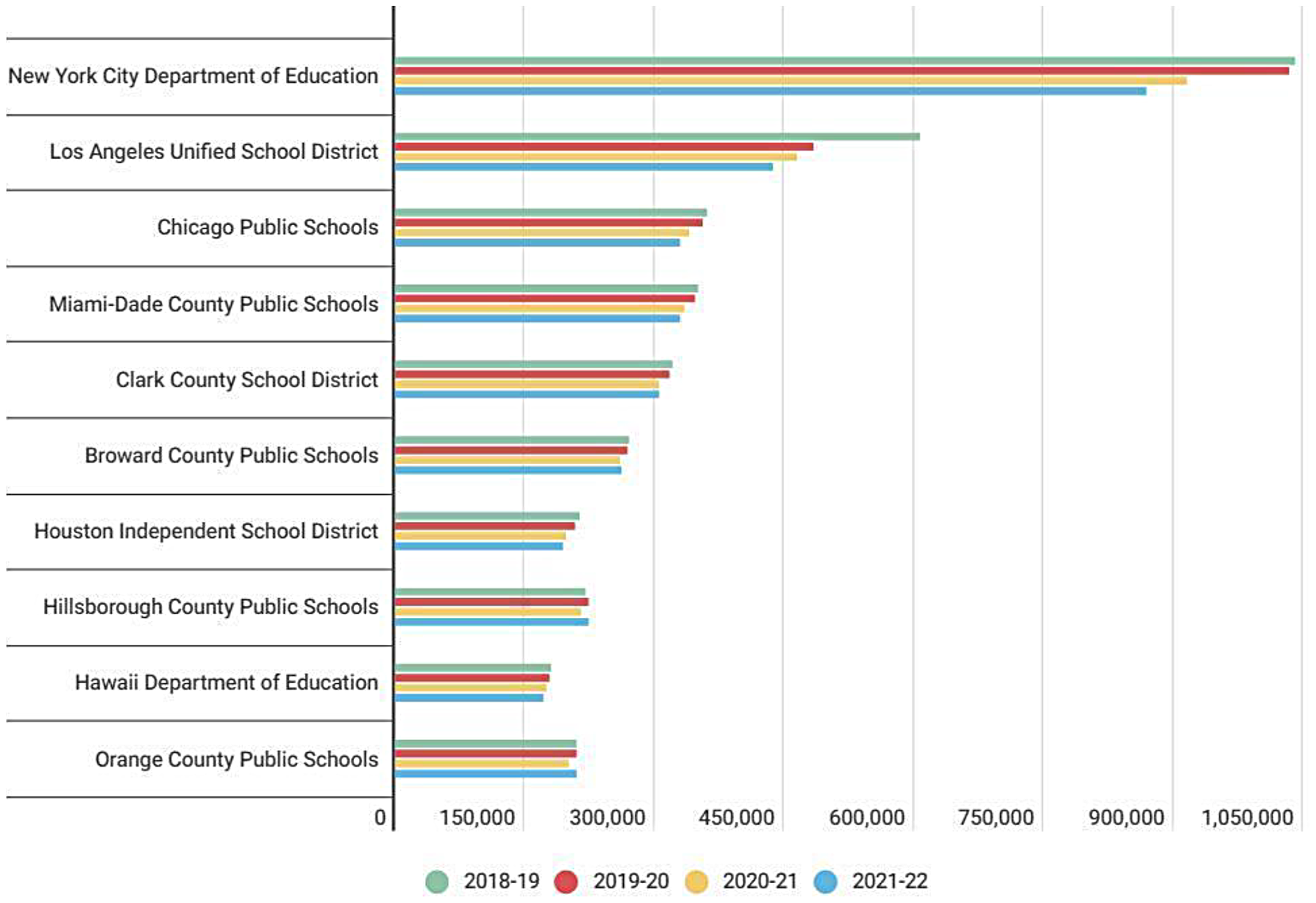
Pre-pandemic and current enrollment of the United States’ largest districts. Note. Reprinted from Rock (2023).
Enrollment Decline in Urban Schools
Many recent articles attribute today's enrollment loss to declining birth rates and lower rates of immigration. However, it is clear that a variety of factors are contributing to enrollment decline in many urban districts. A recent article in Chalkbeat pointed out that 1,600 students have left the public schools for charter schools, private schools, and home-schooling (Harris, 2024; Zimmerman, 2025). Results from a recent New York City Department of Education survey found that 40% of parents cited a desire for more rigorous instruction, while one in four respondents cited concerns about safety. Enrollment in New York City has declined from 1.1 million students as recently as 2015, to just over 800,000 students now. Patterns suggest that the decline is not temporary. Many schools throughout the United States are simultaneously dealing with losses in enrollment and an increase in chronic absenteeism related to the after-effects of the COVID-19 pandemic. Urban schools must contend with the added challenges caused by rising housing costs, gentrification, and the proliferation of charter schools (Anderson, 2023; Lafortune & Prunty, 2023a; Pearman, 2019a).
Enrollment loss is now recognized as a long-term trend, rather than a temporary shift. This is especially the case in impoverished urban U.S. locales. As a recent report revealed, “Schools that were identified by their states as chronically low performing were more than twice as likely to experience sizable enrollment declines as other public schools” (Goulas, 2024). Most of these are public schools in low-income, urban areas. There is growing evidence that this trend will be experienced first in public schools that are located in high-poverty neighborhoods, particularly those where Black residents are concentrated (Blad & Najarro, 2023; Pearman & Marie Greene, 2022; Redelmeier, 2023). In a recent ProPublica article, McGillis (2024) examined how declining enrollment is playing out in Rochester, New York. The district expects to close 11 of its 45 schools in the next 2 years, and it is forecasting that most of these schools will be in Rochester's Black neighborhoods (McGillis, 2024). Rochester is not an isolated case, as Hahnel and Pearman (2023) found that “closures are far more common for schools that serve higher proportions of Black students.”
In this paper, we explore how this trend will shape cities and schools and what can be done by policymakers to address this unfolding transformation. Nationally, nearly 40% of large urban districts have reported significant declines in enrollment (Burtis & Goulas, 2023; Pitts & Makori, 2022). For many districts, enrollment loss, combined with a significant increase in chronic absenteeism and the expiration of COVID-19 federal relief funds, 3 have contributed to major financial and educational challenges (Mervosh & Paris, 2024; U.S. Department of Education, 2021). These factors will make the financial outlook for many urban school districts increasingly precarious in the years ahead (Pitts & Makori, 2022).
LA County as a Case Analysis
Past research has shown that school closures frequently contribute to further population loss and overall decline in affected neighborhoods (Kim, 2024; Stanford, 2024). In this paper, we analyze data from the Los Angeles Unified School District (LAUSD) and LA County, the nation's second largest school district and largest metropolitan area, to make sense of the factors that appear to contribute to enrollment decline. We also examine trends in Inglewood, CA; a small, low-income city in LA County that has been under state control since 2012. Although Inglewood is in the midst of unprecedented economic growth with new sports arenas, concert halls, and transportation systems, schools throughout the district have been closing at a dramatic pace due to the steady loss of students. We use Inglewood as a case to illustrate how the loose coupling of schools from their cities harms the interests of its most vulnerable residents, and to explore what can be done to mitigate the effects of these trends.
Between 2013 and 2023, public school enrollment throughout the nation fell by 2% (Manhattan Institute, 2024), a historic decline. For the first two decades of the 2000s, public school enrollment rose steadily in most, but not in all parts of the country. However, since the widespread school closures brought on by the COVID-19 pandemic in 2020, public school enrollment has been in decline and the greatest losses are evident in America's largest cities. Since 2020, enrollment in urban areas has declined by 5%, and in cities such as New York, San Francisco, San Antonio, Chicago, and Los Angeles, the drop has been substantially greater (Rock, 2023; Rubin, 2024). In the 78 largest urban school districts, all but eight have experienced significant decline in enrollment, and 22 of these districts have lost 10% or more since 2018 (Council of the Great City Schools, 2021).
In California, enrollment decline was a concern for several large urban school districts long before the pandemic. The 2022–2023 academic year was the state's sixth consecutive decrease in student population. Enrollment in the state's public schools dropped from 6,228,235 to 5,852,500 during that period. Existing data from multiple sources suggests that these patterns will continue (see Figure 3), and nearly 40% of the state's expected decline is projected to occur in LA County. The county experienced a 10% decrease in public school enrollment since the 2019–2020 school year, continuing a downward trend that has persisted over the last two decades (Dee, 2022; Stokes, 2022a, 2022b). Prior to the pandemic enrollment decline in California was attributed to lower birth rates. However, it is now clear that rising housing costs have contributed to the migration of families with children out of areas where rents and property values have been high (Warren & Lafortune, 2020).
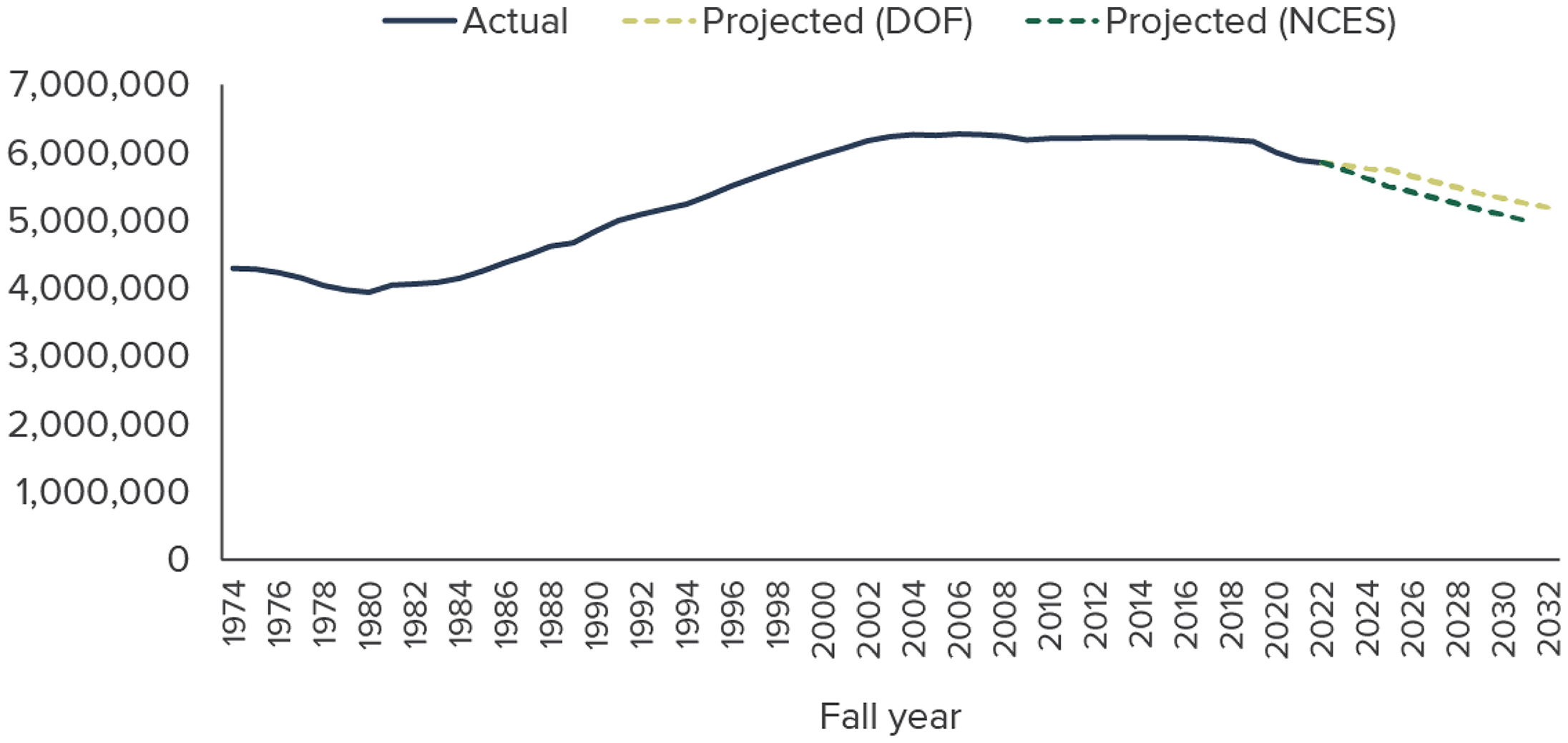
California K-12 enrollment trends (Lafortune & Prunty, 2023b). Note. Reprinted from Lafortune and Prunty (2023b).
Closer look at the patterns of enrollment loss reveals that the decline is not uniform across census tracts and schools. While some schools, even within the same district, have experienced steep declines over the last few years, others have shown enrollment increases (see Appendix A). Charter schools in LA County have also experienced enrollment loss, but available evidence suggests that the decline has not been as great (Lafortune & Prunty, 2023a). The greatest enrollment losses in the county have occurred at schools in LA County's high poverty areas. In South Los Angeles, an area where nearly one in four residents is in a household below the poverty line, five out of eight high schools saw student enrollment loss of 8% or greater between 2018–2019 and 2022–2023 (see Appendix A) (Ed-Data, n.d.-b; Hondagneu-Sotelo & Pastor, n.d.). Crenshaw Senior High, once a sports powerhouse, lost 31.3% of its student population during the same period (see Appendix A).
Despite the complexity, assessing the factors that appear to contribute to enrollment decline is essential if the state is to assist schools to plan effectively for the future. The LAUSD, the largest school district in the county and the second largest in the country, is projected to lose 30% of its enrollment by the 2030–2031 academic year (Sequeira, 2022). In 2015–2016, LAUSD enrollment was 639,337 (Seshadri, 2023), but by 2022–2023, the most recent year that enrollment data is available, that number had dipped to 429,349 (LAUSD, n.d.) (see Figure 4). Over the last two decades, Inglewood Unified School District (IUSD) has declined from an enrollment of 18,000 to just under 7,000 students today (Mackey, 2024). Amid this continuous enrollment loss, the district has had numerous school closures in the most vulnerable and economically marginalized communities (Turner & Ramos, 2024).
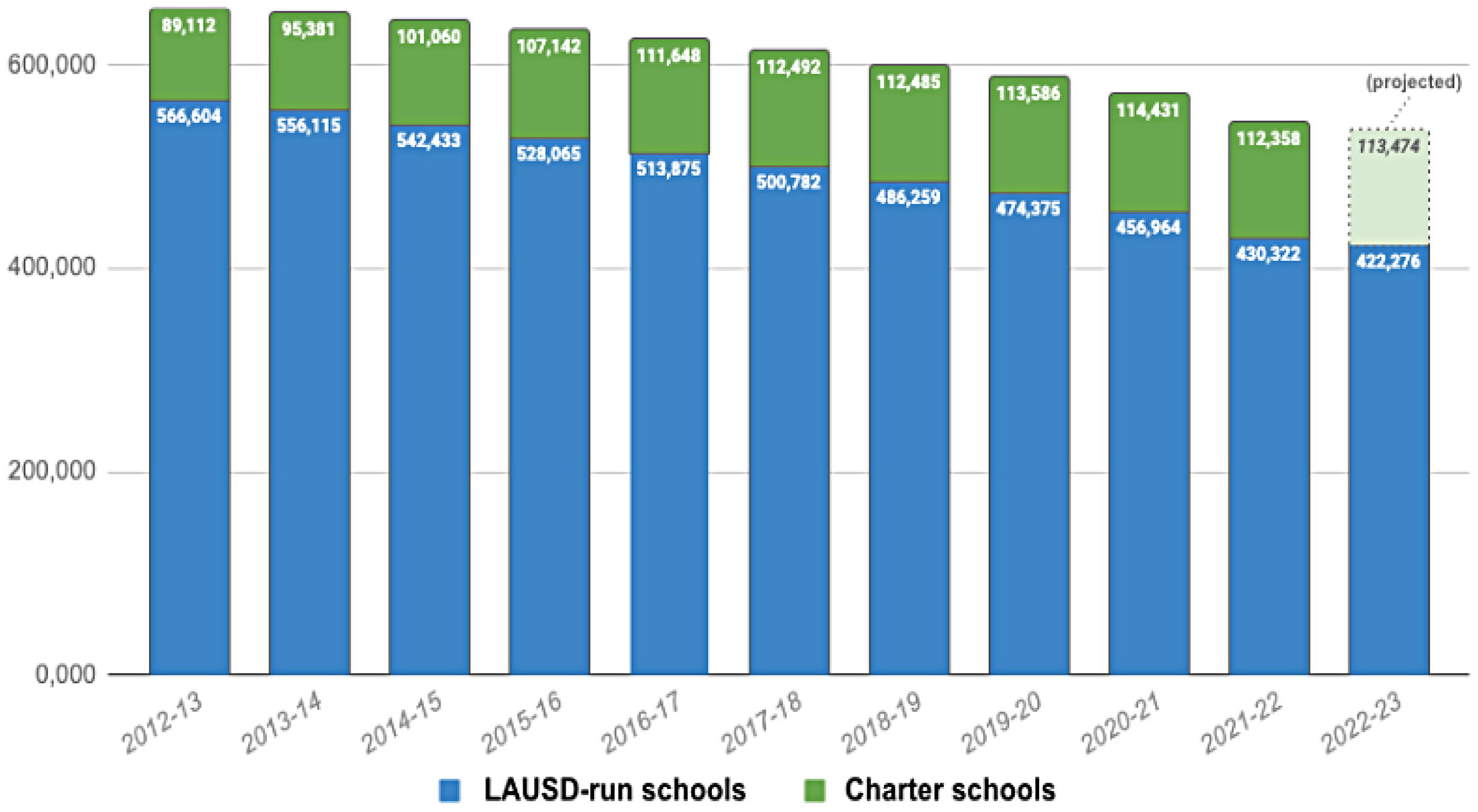
Los Angeles public school enrollment. Note. Reprinted from Stokes (2022b).
To address the complexity of factors influencing student enrollment, this paper focuses on two research questions to guide this analysis:
In LA County, which schools are experiencing the greatest declines in enrollment? To what extent do patterns emerge based on school type and student characteristics (socioeconomic, racial)? What factors explain enrollment loss, and what if anything can policy makers do to mitigate the effects of enrollment loss in order to lessen the deterioration of the public school system?
It is important to acknowledge that some of the data on school enrollment may not be accurate. This is because over 47,000 students in LA County are housing insecure or homeless (Blume, 2024). These students are often difficult to count because they typically change schools frequently. To offset the data limitations, we draw upon other sources of data to help explain public school enrollment decline in LA County.
Positionality
Both authors in this study are cis men of color who reside in Los Angeles, CA. Both authors are and have been deeply involved in community-based research projects in Los Angeles and surrounding cities. Through this community-oriented work with local populations of color, both authors approached this article with stories from local leaders, parents, and other residents on how the decline in Los Angeles’ population has impacted different neighborhoods. The authors’ work in the city also created a familiarity with LA County enrollment trends through organizations such as the Los Angeles County Office of Education (LACOE), whom both scholars maintain relationships with.
While our positionality as deeply immersed Los Angeles-based scholars strengthened our understanding of local area trends, we recognize the limitations as it relates to applying our Los Angeles analysis to other major U.S. cities. As we discuss throughout the paper, many data trends indicate similarities between large U.S. cities such as population decline, enrollment loss, and loosely coupled governance structures. However, our geographical positionality limits our ability to recognize and address cultural differences that could be contributing to population decline or enrollment on a city to city basis. As we present an array of possible explanations for enrollment decline amid loose coupling, we encourage our colleagues from across the country to engage in a discussion on how inter-city cultural or structural differences could help to predict the future of K-12 urban education.
Methods
Our methods were designed around the following research questions:
In LA County, which schools are experiencing the greatest declines in enrollment? To what extent do patterns emerge based on school type and student characteristics (socioeconomic, racial)? What factors explain enrollment loss, and what if anything can policy makers do to mitigate the effects of enrollment loss in order to lessen the deterioration of the public school system?
Using a descriptive research design, our study explores the patterns in school enrollment decline and their intersection with demographic, economic, and policy contexts in LA County. We draw from multiple longitudinal data sources to synthesize population and enrollment patterns across the county, including the following publicly available data sources:
Social Explorer's American Community Survey (ACS) 5-Year Tract Data (2016–2021) Los Angeles County Office of Education (LACOE) traditional public school (TPS) enrollment data (2019–2023) Los Angeles County Office of Education (LACOE) charter school enrollment data (2019–2023) California Department of Finance, E-7. California Population Estimates, with Components of Change and Crude Rates, July 1, 1900–2021 via the Public Policy Institute of California (Johnson, 2023b)
In addition, our study uses multiple sources of data obtained through the authors’ communications with LACOE, including data on school closures that occurred in LA County between 2020 and 2022, as well as a table showing TPS and charter enrollment changes in LA County disaggregated by school.
Data Collection and Analysis
To investigate the factors that help to explain LA County's enrollment decline, we first analyzed population tract data for under-18 populations on Social Explorer, specifically looking for the rates of change in the population under the age of 18 in LA County across the ACS 5 year tract data (2016–2021). We then compared this tract data with enrollment data obtained from the LACOE, using their enrollment data from the 2019–2020 school year through the 2022–2023 school year to analyze enrollment trends throughout the pandemic. We also examined LACOE enrollment data from 2020 through 2022, the period during which LACOE's schools were closed due to County-wide quarantine regulations. As we examined the data, we looked for patterns among census tracts to identify schools that experienced the greatest decreases in enrollment, a necessary context toward understanding the racialization of enrollment decline. We compared the LACOE data with data from the U.S. Census to determine which census tracts experienced significant changes in the school-age population (children under-18) between 2016 and 2021. We also analyzed publicly available LA County data on birth rates, migration patterns, parochial school enrollment, charter school enrollment, and homeschool enrollment to identify where school-age population losses were greatest.
Finding: Population Patterns Not Aligned with Enrollment Trends in LA County
Using Social Explorer, we found that LA County's population patterns do not consistently align with areas where there have been gains or losses in school enrollment (Change of Less Than 18 Years from 2016 to 2021, n.d.). In all of the 80 TPS districts in LA County, only four saw an enrollment increase from 2019 to 2023: El Segundo Unified (0.29%), Antelope Valley Union High (1.02%), Downey Unified (1.29%), and Gorman Joint (12.16%) (Los Angeles County Office of Education, n.d.). Together, these four districts contain approximately 4.2% of the county's 2022–2023 student population, or 47,253 students. Closer analysis of the four districts with enrollment increases revealed that population fluctuations have been mixed; each district contained schools with increasing enrollments and others with declining enrollments for students. Additionally, despite increased overall district enrollment, three of the districts had one school closure that could be attributed to shifts in the population (El Segundo Unified, Downey Unified, Gorman Joint). The overwhelming majority of districts in the county, 76 of the county's 80 districts, have experienced enrollment decline. Some were experiencing decline prior to the pandemic, while others experienced the greatest decrease during or after the pandemic (Ward, 2024). In most cases, we found an overall loss of population in the census tract corresponded to a loss of student population. However, there were a number of census tracts with high poverty rates that experienced a disproportionate rate of enrollment loss. We will return to this finding later in the paper.
Additionally, our analysis of county-wide enrollment patterns for the period from 2016 to 2021 revealed several communities where decline in enrollment in TPSs was commensurate with enrollment decline in charter schools. For example, the district with the highest percentage of charter enrollment, Baldwin Park Unified School District (BPUSD), lost nearly 85% of its charter school population, dropping to 480 students in the 2022–2023 academic year from 3,185 in 2019–2020. This compares with enrollment decline of over 4,500 students (30%) in the local school district during the same timeframe (Ed-Data, n.d.-a). It is important to note that BPUSD experienced a significant population loss in nearly all of its census tracts, and has lost 18% of the population under the age of 18 during the period 2016–2021. Different patterns with respect to charter school enrollment are evident in other parts of the county. For example, in Pomona Unified School District, charter enrollment increased from 783 students in 2019–2020 to 1,980 in 2022–2023 (153% increase), the greatest percentage gain in LA County.
It is important to note that in the areas with the greatest increase in charter school enrollment, we also found widespread population loss for children under 18 during the period 2016–2021. However, we also know from analyzing trends over time that changes in the population of census tracts do not consistently correspond with shifts in district or school enrollment. In general, the communities experiencing the greatest declines in public school enrollment are also experiencing the greatest decline in population. Our review of census data revealed that population loss was greatest for families with children (Change of Family Households from 2016 to 2021, n.d.; Wamsley, 2023).
Finding: Evidence of Charter Schools, Parochial Schools, and Micro Schools as Factors of Enrollment Decline in LA County
Amid the proliferation of charter schools in several cities, many TPSs have faced declining enrollment and closures. Although charter schools are technically public schools in that they receive most of their funding from the state, they were designed to serve as an alternative to TPSs (Kahlenberg & Potter, 2015). Critics have long argued that the competition for students is unfair because many charter schools select their students and often screen out students who are more challenging to serve (e.g., children with special needs or behavior problems). There is also evidence that in many cities, charter schools serve a population that is better off financially than those served by TPSs (Noguera & Syeed, 2020). Advocates for charter schools have long argued that the proliferation of charter schools would create a competition that would force under-performing public schools to either close or improve in order to retain students (Figlio et al., 2024). There is little evidence that competition for students has prompted improvement in TPSs. In fact, in some cities, as charter schools have opened, public schools have been closed due to lost enrollment. In many cities, charter schools are most likely to be established in low-income communities that have been served by public schools regarded as poor in quality. In many cases, these schools are located in Black communities (Frankenberg et al., 2010). As a result of this strategy, charter schools in cities like Rochester, Pittsburgh, Philadelphia, and Inglewood enroll a disproportionate number of Black students.
Charter school enrollment in LA County has increased by over 15,000 students since the 2014–2015 school year. However, the COVID-19 pandemic disrupted six consecutive years of enrollment increase. Since the pandemic, LA County's charter enrollment decreased by 3.6% from 2019–2020 to 2022–2023 (Ed-Data, n.d.-b). The county's charter school enrollment decline defies national trends (Veney, 2023). It is important to note that even if LA County's charter school enrollment rebounds, it would not be enough to offset the overall decline in TPS populations. Veney explains: The overall rise in charter enrollment does not tell the full story. Only a fraction of the 1.5 million students who left district schools [since 2021] went to a charter school, in part because of restrictive policies in many states that limit the number of charter school seats. The rest, presumably, have left public education entirely, opting for homeschooling, microschools and private schools instead. (Veney, 2023)
D'Souza (2023) points out that some of the decline in charter school enrollment can be explained by students who aged out of the school system over the course of the pandemic. In LA County, charter school enrollment has declined but not as drastically as that of TPSs (Ed-Data, n.d.-b). Additionally, LAUSD has taken steps to reduce the possibility that families will move their children from TPSs to charter schools by making it more difficult for charter schools to utilize district facilities, even when district schools are under-enrolled. In March of 2024, the LAUSD school board adopted Proposition 39 which prevents charter schools from sharing facilities with schools it deems vulnerable. The new policy applies to 350 of the district's 770 schools (Sheshadri, 2024).
In their policy report, Prunty and Lafortune (2023) found that California's K-12 private school enrollment rose by over 35,000 students over the course of the pandemic, increasing its share of state enrollment by a percentage point to 8.8 as of 2022. The report notes that the term “private” includes both homeschools and larger private schools. California's trend coincided with a national increase in private school enrollment. The rise was notable because of the significant increase in the number of Black students reported to have enrolled in private or micro school arrangements. According to the report: “Amidst the pandemic, homeschooling rates in African American households increased dramatically, rising from 3% in the spring of 2020 to 16% during the fall of the same year” (Eggleston & Fields, 2021). For Hispanic families, homeschooling increased from 2% to 9% between 2019 and 2021 (Balingit & Rabinowitz, 2021). In his study of enrollment trends, Dee (2023a) reports that “private school enrollment was 4 percent higher while homeschool enrollment was 30 percent higher” from 2019–2020 to 2021–2022.
It is possible that the number of homeschoolers may be even higher than reports suggest. In a recent analysis of homeschooling trends, two reporters from EdSource speculated: Another possibility, hard to prove, is that some families are homeschooling without filing an affidavit with the state as required. Some school districts that check with families who don’t return to school in the fall may anecdotally know if the situation exists, but the state doesn’t collect data beyond what families provide. (Fensterwald & Willis, 2023)
Interestingly, LA County's enrollment decline includes data on enrollment in parochial schools. The report shows that the Roman Catholic Archdiocese of Los Angeles reported a 2 year increase in student enrollment (Campa, 2023). However, this increase has been eclipsed by an 8.9% enrollment decline over the last 10 years, which Campa (2023) attributes to “pandemic shutdowns, hardships and layoffs [that] stung many of the school system's working-class families—70% of whom are low-income—forcing parents to pull their children out.”
While it remains difficult to precisely estimate homeschooling numbers in the county, it is possible that it can explain at least some of the decline in LA County's TPSs. Collecting precise data on homeschooling and enrollment at the growing number of micro schools is difficult but there is evidence that such schools proliferated during the pandemic. Micro schools are typically operated by parents who may or may not have a teaching credential. Nationally, there are now approximately 95,000 micro schools. How many operate in California and LA County in particular is difficult to determine, however it is a trend that must be monitored.
Discussion: A Perfect Storm Leads to a Precipitous Decline
Cities across the United States are faced with a perfect storm of trends that are transforming their composition. The combination of a declining birth rate, a reduction in the number of immigrants entering the country, and rising housing costs has resulted in fewer school-aged children in many cities. Eventually, the entire society and economy will be dramatically impacted by these demographic patterns, but in some respects, schools are experiencing the impact first. Two years ago, local newspapers in San Francisco reported that there are now more dogs than children in the city (Sismaet, 2022).
Simultaneously, gentrification across U.S. cities has brought wealthier households, who either do not have children or who enroll their children in private schools, to inner city areas. While the impact of gentrification on schools has been the subject of considerable research (Pearman, 2019b), relatively few empirical studies on how this process has contributed to enrollment decline have so far been conducted or published.
According to the most recent data, the number of births in the United States has decreased 3% since 2022 (U.S. Centers for Disease Control and Prevention, 2024). From 2014 to 2022 the birth rate dropped by 2% each year (National Center for Health Statistics, 2024). At present, the birth rate is at an all-time low of 1.6 births per woman over the course of a lifetime; a rate that is far below that needed to keep the U.S. population at replacement levels (Schaefer, 2024). If these trends continue, economists predict the United States will soon face social security insolvency, slower economic growth due to a shortage of workers, and a smaller and older workforce (Reznik et al., 2005).
Every state except for North Dakota has experienced a decline in its birth rate since 2010 (Pew, 2022). At 10.7%, California currently has its lowest birth rate in over a century (Johnson, 2023b). Birth rate decline has been especially pronounced in LA County, which saw a 20% decline in births from 2016 to 2021 (Castleman, 2023b; Gonzalez, 2023). Forecasts project that the number of children under 18 in LA County will dip to less than 1.5 million by 2060; a 35% decrease from 2021 population estimates (Population Reference Bureau, 2021a, 2021b).
It is important to point out how declining birth rates interact with two related trends: rising housing costs and the decline in immigrants. Both trends are contributing to the loss of families with children in urban areas, especially Los Angeles. In a recent paper, Castleman writes: “L.A. County, the state's largest, is expected to lose far more people in total numbers than any other county [in the state]. The county is forecast to lose a higher proportion of its population than all but six others—all of which currently have under 50,000 residents” (Castleman, 2023b). Castleman (2023b) acknowledges the impact of declining birth rates, but also points out that rising housing costs in California generally, and Los Angeles particularly (see Figure 5), has contributed to the phenomenon now referred to in the media as the “California exodus” (Castleman & Ahn, 2024). On this point, Castleman writes: “During the final year of the two-year span, from July 2021 to July 2022, California lost about 211,000 people, according to data from the state Department of Finance. More than half—113,048—were from Los Angeles County, the most populous of California's 58 counties” (Castleman, 2023a).
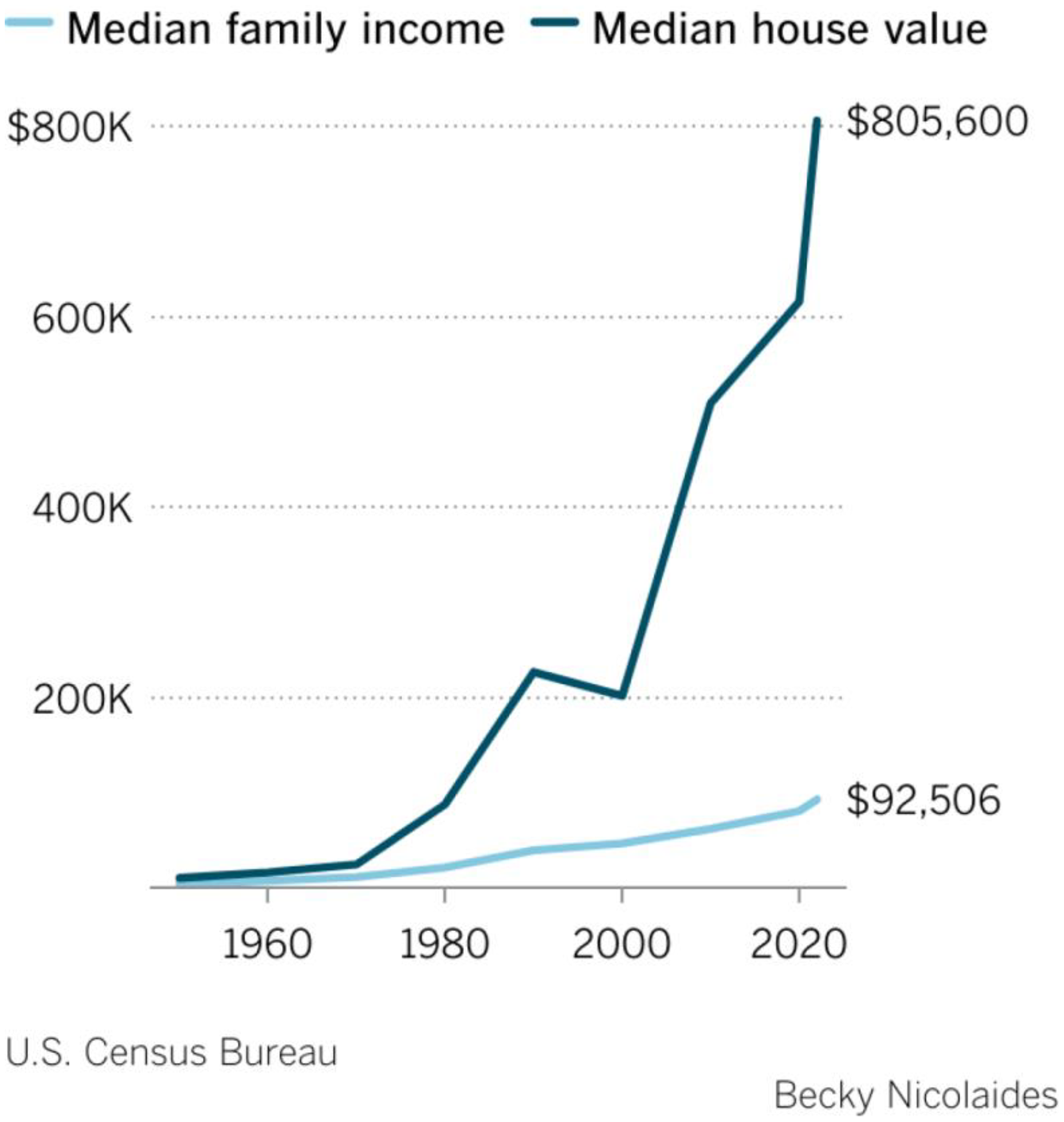
Change in Los Angeles County median house value compared to median family income, 1955 to present. Note. Reprinted from Nicolaides (2023).
For years, the United States was one of few wealthy nations that managed to avoid challenges created by low birth rates because it allowed a steady flow of immigrants to enter the country. Many of the new immigrants brought children with them, and immigrants typically have more children than the general population (The Annie E. Casey Foundation, 2019). However, this trend has been reversed in recent years due to reductions in legal immigration to the United States. The number of immigrants entering California has fallen far below the state's “average annual rate of 140,000 [immigrants] before the pandemic” (Parvini, 2022). Although Los Angeles steadily welcomes around 1,000 immigrants per week (Cowan & Jordan, 2023), increasingly, relatively few arrive with school-age children. The rate of immigrant arrivals to LA County has slowed considerably since 2016 when approximately 8,000 immigrants moved to the County (California Immigrant Data Portal, n.d.; Newton, 2023).
Increases in the cost of housing is also a factor contributing to enrollment decline in urban schools. As the chart below shows, increases in the cost of housing in LA County have been dramatic. While all groups are affected by the increase, families with children have borne the brunt because of the lack of availability of affordable, multi-room, housing.
The combination of increased housing prices, lower rates of immigration, and high cost of living has accelerated California's population decline, and the impacts are greatest in urban areas like LA County. Johnson (2023a) points out that even as new housing units have been constructed, 53 of the state's 73 cities have lost population. He also points out that much of the new housing is not affordable and situated in large buildings that cannot easily accommodate families with school-age children. A statewide survey by the Public Policy Institute of California found that 74% of families with children prefer to live in single-family homes rather than apartment buildings (Johnson, 2023a). Unless actions are taken to increase the supply of affordable single-family dwellings, it appears likely that population loss will continue across LA County.
Continued decline in the school-age population will have profound implications for schools. As the number of children under 18 in LA County continues to decline, school districts will come under pressure to close schools they can no longer afford to keep open (Lafortune et al., 2023; Peetz, 2024). Per pupil enrollment is the major factor used to determine school funding, so continued population decline is likely to contribute to other financial challenges as well. A policy brief from the Public Policy Institute of California contained this ominous warning related to the decline in enrollment the phenomenon: Declining student enrollment is leading to a loss of revenue in many California school districts. On a per-student basis, under enrolled schools are simply more expensive to maintain. To address ongoing budget shortfalls and align services with student enrollment, many districts have consolidated or shuttered schools, and others are contemplating doing so. (Lafortune et al., 2023)
Inglewood: A Deteriorating School System in a Booming City
The trends evident in LA County and LAUSD mirror that of its smaller neighbor, Inglewood. We include a discussion of Inglewood because it reflects an extreme example of loose coupling between a school system and the city where it is based. As we mentioned previously in this paper, IUSD has been under state control since 2012. However, rather than leading to stability or improvement, the school system has continued to decline, both in size and overall quality.
As Figure 6 shows, Inglewood has experienced a steady decline in the number of students served by its public schools. As is true in several other cities, factors such as rising housing costs and the subsequent gentrification of the city, as well as the proliferation of charter schools, have all contributed to the loss of students. However, charter school enrollment in Inglewood has also decreased by approximately 1,000 students since 2019. Although the rate of decrease has been less precipitous than that experienced by TPSs which lost approximately 2,000 students during the same period (Ed-Data, n.d.-c), there appear to be a variety of factors contributing to the loss of students. These factors include rapid gentrification in the housing market, and frustration from parents over the quality of education provided.
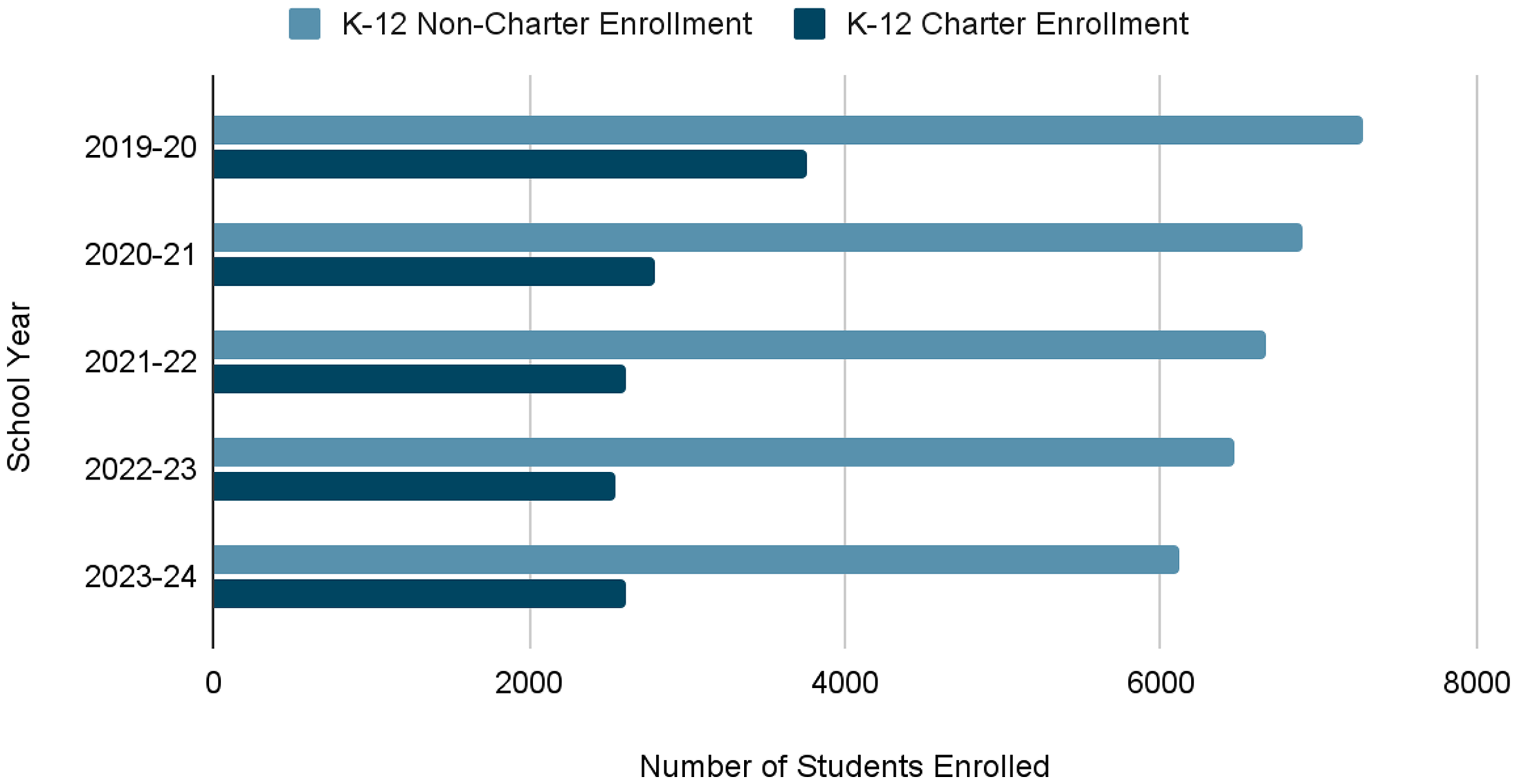
Inglewood Unified School District public enrollment. Note. Data Drawn from Ed-Data (n.d.-c).
Recently, district leaders cited declining enrollment as the reason for closing five schools at the end of the 2024–2025 school year (Turner & Ramos, 2024). Over the last 5 years, Inglewood has been forced to close eight schools because of loss in enrollment (Turner & Ramos, 2024). With a poverty rate close to that of South Los Angeles (World Population Review, 2024), IUSD's school closure could be a telling sign of what enrollment decline will do to other economically disadvantaged urban areas in LA County.
Unlike South Los Angeles, Inglewood is experiencing a spur of economic investment brought about by the construction of new sports arenas, hotels, concert halls, and a metro line that will transport visitors from LAX airport to various locations in Inglewood. Economic growth has led to rising housing costs and the arrival of wealthier residents, most of whom are white. Gentrification has displaced long-term, low-income residents, many of whom have been Black (Sonksen, 2018). As is true in most cities, the City of Inglewood has no jurisdiction over the school system. For this reason, despite the infusion of new tax revenue into the city's coffers, IUSD continues to experience cuts in services and programs (Torres, 2016), and its schools continue to flounder and lose students despite being under state control with management delegated to the LACOE. State receivership is expected to continue until the district pays off a $29m debt owed to the state (Inglewood USD, n.d.; Merino, 2023). During the period of state control the school district has cycled through eight superintendents and County-appointed administrators (Inglewood USD, n.d.; Merino, 2023). It is important to note that though the justification for placing the district under state receivership was financial mismanagement, the state has neither been able to bring financial stability to the district, nor staunch the exit of students.
Inglewood provides the clearest example of the decoupling of school systems from cities and how this adversely impacts educational opportunities for its most disadvantaged residents. As is true in South Los Angeles, Inglewood's Black population has been declining steadily for the past 30 years, and gradually it has become a predominantly Latino city (World Population Review, 2024). According to the 2020 census, 51% of residents are Latino, and 59% of the school population is comprised of Latino children (Ed-Data, n.d.-c), and 37% of the student population is Black (Ed-Data, n.d.-c). Additionally, 16% of Black residents are in households with incomes below the poverty line, and the rapidly growing Latino population has a nearly identical poverty rate of 15% (World Population Review, 2024). The white population of Inglewood is now 5%, but with property rates rising it is expected that the white population will grow in the years ahead. As the Black population has declined, the status of remaining Black residents has deteriorated, and the academic performance of Black students has languished (Johnson, 2023b).
The city is still led by a Black mayor, and several of the positions in city government are held by Black individuals. However, the school district has been led by a variety of individuals from different racial and ethnic backgrounds over the last 10 years.
Cities like Los Angeles and its smaller neighbor Inglewood, where student enrollment decrease has been dramatic, offer lessons to other cities that will be confronted with the need to close schools as enrollment continues to decline. In both cities, enrollment decline has been greatest at schools serving a disproportionate number of Black students (see Appendix B), and this is a trend that we can anticipate will occur in other cities. We believe the loose coupling of urban school systems from the cities where they are based, and the historic disinvestment at schools that serve Black communities, has contributed to the current pattern and has made it more difficult for policy makers to respond effectively to the challenges created by enrollment decline.
When faced with the prospect that public schools in their community will close due to low enrollment, Black residents have often resisted through grassroots efforts, notably through forms of public protest like walkouts and speaking out at school board or city council meetings (Buras, 2015; Ewing, 2018; Morris et al., 2022; Nuamah, 2020). Opposition to school closures has occurred in Inglewood for some time, mirroring nationwide trends of popular support for local public schools, even those that are under-performing (Gordon, 2022). Some Black residents have accused the school district of a “conspiracy” to close schools in their neighborhoods as part of an effort to push them out of the city entirely (Bowlus, 2024). Whether or not such a conspiracy exists is in some respects irrelevant. The fact that state control of the school system has not led to improvement—either with respect to the financial state of the district or in the academic quality of its schools, and that teachers in Inglewood are the lowest paid in LA County, are often cited as evidence that local officials and the state are engaged in an effort to destroy public education in their city. Many Black residents have pointed out that the deterioration of the school system has occurred even as the city has experienced a remarkable economic revival, as Bowlus (2024) writes: The arrival of SoFi Stadium and the Intuit Dome, together worth more than $7 Billion, were warmly greeted by Inglewood Mayor James Butts. Critics say his coordination with current IUSD Administrator Morris has created an environment where corporations are embraced publicly to the detriment of the city's residents. One of the Inglewood schools slated for closure, Morningside High School, is less than a mile from the sports complex that houses SoFi and Intuit. Last year, the district agreed to sell land adjacent to Morningside and Clyde Woodworth Elementary. “We can easily connect the dots in Inglewood, right?” Dixon said. Mayor Butts “Has a relationship with corporations. We know that Mayor Butts and Administrator Morris were hand in hand during press conferences.”
As student enrollment continues to decline in urban areas and schools located in Black communities are disproportionately targeted for closure, evidence suggests that Black communities will resist school closures through collective action and individual agency (Ewing, 2018; Morris et al., 2022). Many of these communities view strong and stable public schools as important to the health of their neighborhoods, so they seek improvement rather than closure as a solution—a key point given that school closures are “emblematic of a larger spatial and racial reimagining of U.S. cities that dispossesses and displaces black neighborhoods” (Pearman & Marie Greene, 2022, p. 233). In many cases, they regard efforts to shut down their schools as further evidence of the disregard they have experienced for years.
Recommendations: From Loose Coupling to a Warm Embrace of Urban Schools
Declining enrollment will continue for the foreseeable future, and its impact is likely to be greatest on urban schools. State and federal governments cannot afford to simply watch as schools in low-income areas, particularly Black communities, are closed. Schools, like pharmacies, grocery stores, parks, and recreation areas, are vital to the health of an urban neighborhood (Noguera, 2003). It would be unwise for policy makers to allow more cities to decline in a manner that Robert Putnam (2015) characterized as where the American Dream has died. Given the numerous factors that indicate long-term declining enrollment, both in Los Angeles and in other cities nationwide, districts must consider adopting a strategic approach to the downsizing of urban schools in an effort to facilitate improvement even as they shrink. It will not be easy, but there are policy measures that can be taken which are more likely to facilitate such an outcome than simply allowing them to follow the trends now evident in Rochester and Inglewood.
Financing California's Urban Public Schools Amid Declining Enrollment
Presently, the funding that school districts receive from states is largely determined by average daily attendance (ADA), which is calculated as the sum of days that a student attended school divided by the number of total days in the school year (EdSource, n.d.). In California, most districts receive 90% of their total funding through ADA and the local control funding formula (LCFF); a state policy designed to provide greater funding to districts serving a greater percentage of disadvantaged students (Johnson, 2023c). Declining enrollment is occurring at a time when poverty rates in California are increasing. In Los Angeles, homelessness has increased by 9% in the current academic year, and the city's 15.5% poverty rate remains the highest in the state (Bohn et al., 2024; Yee, 2023). This means that at a time when the district is expected to lose thousands of dollars for every student it loses or is chronically absent (U.S. News & World Report, n.d.), they will also have to expend more resources on the students they have to mitigate some of the effects of poverty. Furthermore, English learners, homeless students, students with special needs, and students in foster care, often require more resources to address their learning needs (Warren & Lafortune, 2020). Although the addition of 4 year olds under the state's new transitional kindergarten (TK) initiative has temporarily offset losses in enrollment (California Department of Education, 2023; D'Souza, 2021), the costs associated with equipping classrooms for TK programs have been significant (Rix, 2024), and the boost in enrollment will be short-lived given long term population trends.
Changing California's K-12 funding structure to increase per-pupil spending
Over the last 20 years, California has made progress in increasing funding for its schools, and urban districts like Los Angeles and San Diego have benefited (Fensterwald, 2023). Urban districts such as Oakland, West Contra Costa, Stockton, and San Francisco are already under financial duress as enrollment continues to decline and budget deficits force the districts to consider school closures and layoffs. Moreover, despite a concerted effort to increase school funding over the last 10 years, the state still ranks 33rd in per pupil spending. The only way California could get closer to the national average in funding and counter the loss in funding that is occurring as enrollment declines would be to substantially increase per-pupil spending (Bryan-Gooden & Hester, 2018; Warren & Lafortune, 2020). However, with the state contending with significant budget deficits, such increases are unlikely in the immediate future.
Other states are faced with similar financial challenges. One short-term measure that states could take to address the immediate financial challenges that will accompany declining enrollment is to change the way ADA is used to determine funding for schools (Peter G. Peterson Foundation, 2023). Some states use a funding formula based on a 3 year average of enrollment to determine allocations. This reduces the immediate impact of chronic absenteeism and shrinking enrollment by providing school districts with more time to plan strategically for a system that will have fewer students and potentially, fewer schools (Bruno & Kim, 2024). Most urban districts would receive more funding from such a change (Hahnel & Baumgardner, 2022), though it remains to be seen if additional time will allow for a smoother transition to a smaller system. To this end, the California State Assembly passed Senate Bill 98 in 2024, a bill that makes local educational agencies (LEAs) eligible to receive extra funding to offset any shortfalls occurring from declining enrollment. LEAs can receive this funding if they submit enrollment data and show efforts to reduce chronic absenteeism (LCFF). The California Department of Education estimates that offsetting these otherwise lost funds could result in more than $3.5bn in additional funding each year for schools across the state (California State Legislature, 2024).
Federal government supplemental funding to address declining enrollment
Additionally, the federal government could provide supplemental funding to urban districts to offset the financial challenges that will accompany declining enrollment. Although Congress has increased Title I funding to double over the last 10 years, it has not committed to targeting funding through Concentration Grants which would ensure that increases are directed to districts with the greatest needs (Hyslop & Shackleford, 2023). In 2022, the Biden administration proposed adding $8bn as part of a renewed commitment to Title I (Meltzer & Belsha, 2024). Unlike the allocations that were received for COVID relief, these funds would need to be permanent, and would ensure that additional resources were directed toward school districts that serve large numbers of impoverished students. Writing about the importance of targeting increases in funding to schools in high poverty areas, Hyslop and Shackleford (2023) argue: The research is clear: Education funding matters. Better-resourced schools tend to produce better student outcomes, including higher academic achievement and graduation rates… districts with higher poverty rates, more students of color and more English learners receive less funding from state and local sources than districts that serve fewer of these students. Title I can help fill these gaps and, ideally, provide districts with the extra funding they deserve—but only if the formulas target funds to those with the greatest needs (2023).
It would also be helpful if the government provided guidance on how funds should be used to have the greatest impact on academic achievement during a period of declining enrollment.
These measures could be helpful, but additional federal and state funding is unlikely to soften the impact of declining enrollment unless it is combined with strategic local actions. For example, as additional funding becomes available it should be utilized to implement measures that have proven to be effective. A recent study by the Learning Policy Institute has found that community schools—those equipped with after school, preschool, and a variety of social services—are able to mitigate some of the effects of poverty and reduce chronic absenteeism (Germain et al., 2024). Such support systems make it possible for schools that serve high concentrations of impoverished children to have adequate resources to meet their needs.
Maintaining school quality amid declining enrollment at the local level
Additionally, urban districts could take strategic measures to reduce the likelihood that shrinkage will lead to a decline in quality but instead serve as a means to create better school options. For example, there are five high schools located within 5 miles of each other in South Los Angeles, all of which are severely under-enrolled and regarded as under-performing. It will eventually be necessary to close some of these schools because the district is not able to provide sufficient academic and social resources in schools with such small populations. Knowing that tough choices will have to be made, the district could begin planning now to create one or two large comprehensive high schools to serve South Los Angeles that could offer a broad range of academic programs, sports, and needed social services. Such a model already exists in Watts, a low-income neighborhood in Los Angeles that is served by King-Drew Science Magnet High School. Although all of the students at the school are from minority, low-income backgrounds, the school graduates over 90% of the students it serves and sends more of its Black students to the University of California than any other high school in the state (King/Drew Magnet High School, n.d.; Landsberg, 2005). A similar school could be created in South Los Angeles. The vacated schools could be developed into housing for teachers and staff, many of whom presently are unable to afford housing near their jobs.
Such measures would make it more likely that urban schools could attract and retain students. Many of the parents who abandoned TPSs for charter schools, homeschooling, or private schools during the pandemic did so because of their belief that TPSs fell short in meeting the academic and emotional needs of their children (Newberry, 2022). In many cases, their concerns were not unwarranted. To lure Black families and others back to TPSs it will be essential for districts to ensure that high-quality education options and adequate social support is available at district schools (Enoch-Stevens et al., 2023; Howard, 2024; Jones & Ellis, 2023).
Conclusion
Due to a confluence of factors—declining birth rates, rising housing and living costs, a reduction in immigration, and increased access to non-traditional forms of schooling—enrollment will continue to decline in public schools throughout the nation. In many cases, urban public schools will experience the declines and the difficulties that accompany them before they are felt elsewhere. As we’ve shown in Los Angeles and Inglewood, schools in Black neighborhoods are likely to feel the brunt of this decline, and if action is not taken it will eventually result in large numbers of school closures and opposition from affected communities.
Given how important schools are to the health of a community (Noguera, 2003), community protest is understandable. States have the opportunity to take a proactive response to lessen the adverse effects of enrollment decline. The history of loose coupling in urban areas will undoubtedly make it more difficult to address these challenges at the local level. This is why we believe the best way to counter loose coupling is to remind state and city leaders why public schools are vital to our collective future.
While cities must take the lead in responding to the problems that accompany declining enrollment, states and the federal government also bear responsibility for correcting a history of disinvestment and neglect in urban school systems. In most U.S. cities, white flight and unjust state funding policies resulted in urban public schools becoming under-resourced and in many cases, undesirable. Today, urban schools receive $2,100 less per pupil than suburban schools, and $4,000 less than rural schools (EdBuild, 2019) throughout the nation. Within cities, schools that serve low-income minority students receive $1,321 less on average per student than schools that predominantly serve white students (Bellan, 2019).
Survey research shows that Black people in the United States have not been oblivious to these trends. Despite the promise of equal educational opportunity that accompanied the Brown decision, a majority of Black Americans recognize that racial inequality in educational opportunities remains deeply entrenched (Casey & Levesque, 2018). A 2017 study found that 64% of African Americans, 45% of Latinos, and 40% of Native Americans agree with the statement that “children in my racial or ethnic group don’t have the same chances to get a quality education as white children” (National Public Radio et al., 2017). Frustrated and seeking better options, many Black and Latino parents with the means have moved from cities or turned to charter schools, and more recently micro schools, in an attempt to obtain better educational opportunities for their children.
The alternative to loose coupling can be characterized as a warm embrace; a deliberate effort to support urban schools by maintaining quality even as enrollment declines. This strategy is evident to some degree in Tulsa, OK. For several years, the mayor's office has led an effort to raise funds to support community schools and ensure that a variety of social services are available at every school. Additionally, Booker T. Washington, the leading public high school in the city and state, attracts broad community support and manages to provide high-quality education. The school is racially integrated (31% white, 28% Black, 22% Latino), sends the vast majority of its students to college, and receives a 10 out of 10 score on the Great Schools rating (Great Schools.org, 2023). It is widely referred to as “Booker Free” because parents contend that it offers an education that is as good as that provided by any private school (Niche, 2024).
We do not offer Tulsa as a model that other urban districts should necessarily emulate. Each city faces its own unique conditions, challenges, and opportunities to build community-engaged supports (Velez et al., 2024). Moreover, any perusal of Tulsa's data will reveal that many of its elementary schools remain segregated and under-performing. However, the efforts undertaken by the city, local foundations, and non-profits to support the school system and its students represent the kinds of strategies that will be required in other cities to address the effects of declining enrollment, a development likely to produce profound changes not only for urban schools, but for American society as a whole.
Footnotes
Acknowledgments
We thank Dr Julie Marsh and Dr Patricia Burch for their feedback on a preliminary draft of this manuscript.
Declaration of Conflicting Interests
The authors declared no potential conflicts of interest with respect to the research, authorship, and/or publication of this article.
Ethical Approval and Informed Consent Statements
This article draws data from publicly available population agencies and educational entities. As such, our article does not contain any primary studies with human or animal participants.
Funding
The authors received no financial support for the research, authorship, and/or publication of this article.
Data Availability Statement
This article draws data from publicly available population agencies and educational entities, primarily Social Explorer and the Los Angeles County Office of Education.

Notes
Author Biographies
Alvin Makori is a PhD candidate in Urban Education Policy at the University of Southern California, as well as a research assistant at the USC EdPolicy Hub. His work investigates how historically marginalized K-12 students and families navigate through major learning disruptions, notably neighborhood change.
Pedro Noguera is the Emery Stoops and Joyce King Stoops Dean of the Rossier School of Education and a Distinguished Professor of Education at the University of Southern California. A sociologist, his research focuses on the ways in which schools are influenced by social and economic conditions, as well as by demographic trends in local, regional and global contexts.