







Abstract
Using the dialogue-based formative intervention model to conceptualize adult-facilitated, peer-based discussions as a student-centered, listening-forward method of instruction and facilitation of social and emotional learning, we examine termination sessions of an intervention with 18 early adolescent Black girls from a low-socioeconomic, urban community to describe outcomes from participants’ perspectives and development of social and emotional competencies. Thematic analysis reveals participants’ reflections surrounding physical and emotional safety, stereotypical representations of and the sexualization of women in media, and the creative and affirming potential of safe spaces. We describe implications for delivering transformative social and emotional learning within urban educational settings.
Keywords
Introduction
Through recent decades, scholarship on social and emotional learning (SEL) and urban education has experienced a process of conceptualization, critique, and reconceptualization to increase their utility for serving the needs of students from historically marginalized communities (Jagers et al., 2019; Milner, 2012; Welsh & Swain, 2020; Young et al., 2025). SEL is defined as: The process through which all young people and adults acquire and apply the knowledge, skills, and attitudes to develop healthy identities, manage emotions and achieve personal and collective goals, feel and show empathy for others, establish and maintain supportive relationships, and make responsible and caring decisions. (Jagers et al., 2021, p. 13)
Therefore, SEL researchers have focused on the acquisition of skills associated with managing interpersonal relationships and making decisions (Jagers et al., 2019, 2021). Alternatively, urban education researchers have emphasized the need for focusing on contexts defined by large, dense populations and influenced by legacies of discrimination, oppression, and inequitable distribution of resources, and identifying the ways these influence schools, classrooms, teachers, and students (i.e., urban educational contexts; Milner, 2012; Welsh & Swain, 2020; Young et al., 2025).
More recently, scholars have integrated SEL within urban educational contexts, defining the skills required for navigating this context and identifying ways to change the context to be a healthier environment for students from historically marginalized communities (El Mallah, 2022; Goldin et al., 2025; Griffin et al., 2022; Harris et al., 2022; Legette et al., 2022; Warren et al., 2022; White et al., 2024; Williams & Jagers, 2022). To this end, they have described Black boys’ expression of emotions (Harris et al., 2022) and management of race-related stress in urban schools (Griffin et al., 2022). They have described teachers’ dispositions in relationship to Black male students (Warren et al., 2022), teacher self-efficacy in SEL (White et al., 2024), advocating for training in SEL and trauma-informed practices in urban schools (Goldin et al., 2025; Legette et al., 2022). However, none has focused on the perspectives and experiences of Black girls who attend urban schools.
To move the field forward, scholars created the transformative SEL (T-SEL) framework to conceptualize authentic partnerships between stakeholders that address power imbalances and create learning environments characterized by collaboration, trusting relationships, intellectual rigor, and meaningful evaluation (El Mallah, 2022; Jagers et al., 2021). Moreover, they identified a research agenda that emphasizes collaboration between schools and university-based researchers through research-practice partnerships (RPP; Williams & Jagers, 2022).
The current study contributes to this research agenda and extends the joint conversation between urban education and SEL researchers. First, we describe SEL and provide a critique and reconceptualization of SEL within urban educational settings. Then, we address a conceptual gap by using the dialogue-based formative intervention for transformative social and emotional learning (D-BFI for T-SEL; Pollock, under review) to integrate SEL with social learning theories, which have historically paid greater attention to the role of context in learning. Finally, we explore the outcomes of a dialogue-based intervention with early adolescent Black girls attending an urban charter school. Specifically, we address an empirical gap by foregrounding their perspectives and experiences in our research questions and analysis.
Conceptualization of SEL
Education researchers have outlined best practices and core competencies surrounding desirable outcomes, programming, instructional methods, and curricula involved in SEL (Blewitt et al., 2024; Cipriano et al., 2024; Durlak et al., 2011; Jagers et al., 2019). Specifically, desirable outcomes of SEL programs include five core competencies, including self-awareness, self-management, social awareness, relationship skills, and responsible decision-making (Jagers et al., 2019; 2021). Moreover, the implementation of universal, school-based SEL programs is often associated with increases in social and emotional skills, positive attitudes toward self and others, positive social behavior, and academic performance and decreases in conduct problems and emotional distress (Cipriano et al., 2024; Durlak et al., 2011), and preliminary evidence indicates school-based SEL programs are associated with a reduction in stress levels among students (e.g., lower levels of cortisol and cardiovascular reactivity; Blewitt et al., 2024).
Essential elements of effective SEL programming, instructional methods, and curricula include a sequenced and targeted approach to skill development, use of active learning strategies, a focus on personal and social skills (Durlak et al., 2011), development of adult competencies (Jagers et al., 2021; Legette et al., 2022; Soutter & Timmerman, 2022), and consideration of students’ lived experiences (Mahfouz & Anthony-Stevens, 2020; McCall et al., 2022). However, current SEL models often rely on teacher/adult-centered methods (e.g., didactic teaching, focus on definitions of concepts and personal characteristics; Durlak et al., 2011), and the failure to incorporate students’ thoughts and experiences likely also fails to facilitate adequate skills and/or the ability to use these skills when deemed necessary (Simmons, 2021).
Critiques of SEL Within Urban Educational Settings
Educational settings are conceptualized as urban when they are situated in large, dense metropolitan areas that make it difficult to distribute necessary resources (Milner, 2012). Urban communities are often shaped by economic, social, and educational policies that marginalize and provide barriers to success for low-income students and students of racial and ethnic minority groups (Welsh & Swain, 2020). Alternatively, urban communities have been the sources of Black cultural contributions and sites of resistance to hegemonic norms (Wilson & McMillian, 2025).
Though evidence of the effectiveness of SEL in urban educational settings is limited (Cipriano et al., 2024; Durlak et al., 2011), teacher/adult-centered methods can be somewhat effective in facilitating the development of the skills, attitudes, and behaviors listed above (El Mallah, 2022). Importantly, these methods are only effective when used within a larger toolbox of methods and exclusive reliance on adult-centered methods fails to elicit and incorporate students’, particularly Black girls’, thoughts and experiences (Mahfouz & Anthony-Stevens, 2020; McCall et al., 2022). Additionally, researchers have expressed concerns surrounding the failure of traditional SEL programming to account for social, contextual, and environmental demands within urban communities that often require higher levels of self-management and impose additional requirements on students based on their social identities (Simmons, 2021).
For Black girls, the social context includes intersectional (i.e., racialized and gendered) stereotypes that dehumanize Black women and girls through hypersexualized images (Galán et al., 2022). For instance, the Jezebel archetype, a common way Black women are portrayed in the media, describes Black women as promiscuous and manipulative, using their sexual appeal to gain things, such as money and status, from men (Collins, 2002). Environmental demands can include increased vulnerability in their interactions with men and boys, who expect them to fulfill this hypersexual schema (Carter Andrews et al., 2019), and result in them often becoming the targets of sex-traffickers’ recruitment strategies (Galán et al., 2022; Kruger et al., 2013, 2016).
Additionally, within urban schools and classrooms, concerns have centered around Black girls’ increased risk for exclusionary discipline measures that likely occur when teachers act on the influences of white mainstream norms of femininity and stereotypical portrayals of Black women (Carter Andrews et al., 2019; Galán et al., 2022; Hines-Datiri & Carter Andrews, 2020). Seen as Jezebels, as well as other common Black woman stereotypes like loud, rude, and mature, Black girls’ normative and developmentally appropriate behavior is viewed negatively as overly sexual and manipulative, aggressive, and controlling (Collins, 2002). They are also viewed as more mature and, therefore, not in need of protection (Carter Andrews et al., 2019). Moreover, these biased perceptions of Black girls’ normal adolescent behavior by teachers have led to their overrepresentation in exclusionary discipline practices (i.e., suspensions, expulsions, and referrals to law enforcement; Carter Andrews et al., 2019; Hines-Datiri & Carter Andrews, 2020; Galán et al., 2022) Ultimately, these policies push Black girls away from educational opportunities and make them the focus of law enforcement personnel who fail to view them as victims (Hines-Datiri & Carter Andrews, 2020). Moreover, viewed through the lens of adultification, they have a greater likelihood of incarceration (Carter Andrews et al., 2019; Galán et al., 2022; Winn, 2021).
Despite racialized and gendered experiences within educational settings (Carter Andrews et al., 2019; Galán et al., 2022), Black girlhood is defined by individual experiences and perspectives (Brown, 2023), joyful expression, and historical connections (Wilson & McMillian, 2025). They demonstrate agency in self-definition (Brown, 2022, 2023), an increasing ability to manage interpersonal interactions (Pollock et al., 2022), and hopeful resistance to hegemonic norms (Goldin et al., 2025; McGee et al., 2025). They are supported by a tradition of storytelling that supports intergenerational relationships (Wilson & McMillian, 2025), a strong sense of community, and a shared history of resistance to oppression and marginalization, much of which has occurred in urban centers (Wilson & McMillian, 2025). This leads us to reconceptualize SEL within urban educational settings.
Reconceptualization of SEL Within Urban Educational Settings
Researchers have called for redefining successful outcomes in urban settings, including SEL for school personnel, and connecting SEL with citizenship education. First, redefining successful outcomes includes addressing problems with the content validity of common measurement tools and assumptions of the conceptual equivalence across groups of participants on the outcomes being measured and using participant-centered methods to extend current definitions of SEL competencies and identify new ones (e.g., cultural frame switching and code-switching; El Mallah, 2022).
Second, including SEL for school personnel affirms the role of student–teacher relationships in transformative SEL (Jagers et al., 2021; Legette et al., 2022; Morris, 2022; Soutter & Timmerman, 2022; Warren et al., 2022). Negative student–teacher relationships often lead to students feeling disconnected from school, developing negative attitudes toward learning, and exhibiting decreased academic performance. For Black students, negative student–teacher relationships can also include racial discrimination that is manifested in unequal grading patterns, lowered expectations (Carter Andrews et al., 2019; Legette et al., 2022), and a greater number of disciplinary referrals and exclusionary disciplinary measures (Hines-Datiri & Carter Andrews, 2020; Legette et al., 2022; Warren et al., 2022). In contrast, positive student–teacher relationships lead to a greater sense of belonging, increased participation in school, and increased academic performance (Carter Andrews et al., 2019; Legette et al., 2022; Morris, 2022). For Black girls, Black female teachers can often become “othermothers” (i.e., women who adopt a parenting type of role to care for others’ children), and adults in schools can become warm demanders (i.e., adults who maintain high expectations and provide constructive criticism and support for academic success; Carter Andrews et al., 2019).
To promote more positive student–teacher relationships for Black students in urban schools, researchers have proposed teacher training that includes developing adult SEL competencies (Jagers et al., 2021; Legette et al., 2022; Soutter & Timmerman, 2022; Warren et al., 2022; White et al., 2024). This can include critical self-reflection to facilitate their identity development and awareness of their positionality within an unequally structured society (Legette et al., 2022; Soutter & Timmerman, 2022; Warren et al., 2022). This also can include a critical social analysis to identify systemic patterns of marginalization and oppression that affect students in urban educational settings (Legette et al., 2022; Soutter & Timmerman, 2022). Developing critical self-reflection and social analysis should encourage cultural humility and facilitate cultural competence to work towards making urban schools safe places for students from marginalized communities and increase their sense of belonging and engagement (Soutter & Timmerman, 2022; Warren et al., 2022). Finally, development of adult SEL competencies should nurturing a sense of agency and efficacy surrounding their role in shaping the lives of the students in their classrooms, particularly those from marginalized communities (Warren et al., 2022; White et al., 2024), and in making decisions that will lead to more positive student–teacher relationships and more equitable outcomes among students (Legette et al., 2022; Soutter & Timmerman, 2022).
Third, connecting SEL with citizenship education is essential but requires an expanded and more critical notion of citizenship. The type of citizenship that was originally envisioned conceptualized individual and interpersonal SEL competencies related to becoming personally responsible and participating members of a democracy within the social sphere that already exists (i.e., personally responsible citizenship; Jagers et al., 2019). However, personally responsible citizenship has largely failed to conceptualize the need for changing the existing social sphere, which centers and rewards Eurocentricity (Mahfouz & Anthony-Stephens, 2020; McCall et al., 2022). In contrast, transformative citizenship conceptualized the need for changing the existing social sphere and added competencies related to critical self-analysis, cultural humility, critical social analysis (i.e., discerning and evaluating unequitable systems and practices), and engaging in collaborative problem solving, resistance, and co-creation of something new (Jagers et al., 2019). This notion of transformative citizenship builds on traditions of Black social movements that emphasize historical understanding and storytelling (Wilson & McMillian, 2025; Winn, 2021), working to eradicate anti-Black logics (i.e., race erasure and evasion), racist pedagogies, and unjust practices in schools (Carter Andrews & Cosby, 2021; Winn, 2021), and reimagining and enacting a more equitable and joyful future for Black students (Coles, 2023; Winn, 2021; 2022).
The mechanisms of the T-SEL framework are not yet well-specified, and teachers continue to have to engage in “stretching” or rethinking and adapting SEL frameworks, curricula, instructional practices, and student–teacher relationships that continue to exhibit a conformist approach to students from minoritized communities of color (Rosario-Ramos et al., 2022). One starting point could include adopting Winn's (2021) five pedagogical stances: history matters, race matters, justice matters, language matters, and futures matters. However, full conceptualization and implementation of the T-SEL framework within urban schools remains part of the proposed research agenda (El Mallah, 2022; Williams & Jagers, 2022). Finally, researchers agree that participatory and student-led approaches, such as project-based learning and youth participatory action research, represent the most effective methods for facilitating transformative SEL (Jagers et al., 2019; 2021; McCall et al., 2022; Williams & Jagers, 2022). However, they remain open to additional approaches that leverage academic content and provide adequate scaffolding to support young people in fostering the curiosity to examine issues relevant to them (Jagers et al., 2021).
The current study adds to the reconceptualization of SEL in urban educational settings by examining the outcomes of a dialogue-based formative intervention with early adolescent Black girls attending an urban public school. Specifically, we use the D-BFI for T-SEL to explore the outcomes from participants’ perspectives, consider the T-SEL competencies represented in the ways they describe these outcomes, and connect these with the use of adult-facilitated, peer-based discussions as the primary method of instruction (Pollock, under review).
Conceptual Framework
The framework for a D-BFI for T-SEL (Pollock, under review) provides an interdisciplinary framework for facilitating transformative SEL among adolescents. The contributing frameworks share ontological assumptions of individual and collective agency and axiological commitments to equity-focused, student-centered methods, collaborative research, and participant-driven outcomes (Jagers et al., 2019; Nastasi et al., 2004; Sannino et al., 2016; Vygotsky, 1978). Moreover, the D-BFI for T-SEL narrows the application of these ontological assumptions and axiological commitments to the use of dialogue-based methods, such as group discussions. It conceptualizes learning processes occurring within dialogic interactions with adults and among peers and developmental outcomes that include a greater understanding of the topic/issue and their relationship to it.
Adult-facilitated peer-based discussions focused on real-life topics and complex social issues provide a participatory, culture-specific approach to facilitating cognitive, social, and emotional development (Pollock, under review). For Black girls, this approach is consistent with Afrocentric approaches that value pan-African values and norms (Asante, 1991), and intersectional approaches that make evident the social construction of race and gender and resist the preferential treatment of boys over girls (Brown, 2022; 2023; Collins, 2002). In contrast to the teacher/adult-centered methods prevalent in current SEL models (Durlak et al., 2011), student-centered, listening-forward methods, such as discussions, provide more developmentally appropriate and effective methods for SEL among youth (Bogdan & Biklen, 2007). Student-centered methods of instruction prioritize students’ voices and involvement and are indicated as methods of facilitating T-SEL (Jagers et al., 2021). However, in this study, we extended this further by explicitly stating to participants that we were there to listen to their perspectives and learn about their experiences (i.e., listening forward). This is particularly important for facilitating SEL among Black girls because intentionally eliciting and incorporating their thoughts and experiences into the learning process changes the content to be more culturally congruent and personally relatable (Garner et al., 2014; Mahfouz & Anthony-Stephens, 2020), which creates a sense of belonging and facilitates individual and collective agency (Jagers et al., 2019; 2021; Mahfouz & Anthony-Stevens, 2020; McCall et al., 2022). Importantly, experiencing a sense of belonging and agency is likely to lead to greater internalization of personal values, the development of counternarratives, and changes in attitudes and behaviors (Asante, 1991).
More specifically, for adolescent Black girls, a culture-specific approach includes opportunities for discussions of intersectional-contextual factors with which they cope (Galán et al., 2022). These factors include, for example, gendered and sexualized stereotypes, expectations of conformity to European notions of femininity, and interactions with school personnel that are more likely to lead to harsh disciplinary measures for them than their white peers (Morris, 2018). In their communities, intersectional-contextual factors include a greater likelihood of being targeted for recruitment into sex trafficking, engaging with law enforcement, and entering the juvenile justice system. Alternatively, this also includes gendered racial socialization messages that lead to more positive body images and higher self-esteem, promote cultural pride, and instill a sense of academic self-efficacy (Galán et al., 2022).
The authors of the T-SEL framework have identified focal constructs for T-SEL associated with each SEL competency, namely self-awareness, self-management, social awareness, relationship skills, and responsible decision-making (Jagers et al., 2019). Specifically, focusing on identity as a component of self-awareness centers an important developmental process associated with adolescence, recognizes the realities of intersecting social identities, and aims to foster healthy and integrated personal and collective identities (Jagers et al., 2019; 2021). Focusing on agency as a component of self-management positions students as active in their own developmental processes, promoting their own well-being, and working for social change. Focusing on belonging as a component of social awareness foregrounds its importance for students’ social and emotional well-being, school engagement, academic self-efficacy, academic motivation, and school satisfaction and the continuing need to create more accepting and inclusive educational environments (Jagers et al., 2019, 2021). Focusing on collaborative problem solving as a component of relationship skills positions an awareness of the self and others, cultural competence and fluency, communication, conflict resolution, and developing shared goals as a complex skill set that can be applied to addressing pressing problems and finding innovative solutions (Jagers et al., 2021). Finally, focusing on curiosity as a component of responsible decision-making combines affective and cognitive aspects of motivation to attend to instruction, engage in learning activities, and pursue new experiences (Jagers et al., 2021).
The D-BFI for T-SEL conceptualizes these SEL competencies developing from dialogic interactions occurring within adult-facilitated peer-based discussions (Pollock, under review). However, until now, the D-BFI for T-SEL has not been applied directly to data collected using dialogue-based data collection methods. The current study utilizes the D-BFI for T-SEL to understand the outcomes of a discussion-based SEL intervention from participants’ perspectives and considers the T-SEL competencies evident in these.
Current Study
The current exploratory study took place within a participatory, culture-specific intervention (Nastasi et al., 2004) focused on transformative SEL (Jagers et al., 2019) that primarily consisted of a series of eight adult-facilitated, peer-based discussions (i.e., seven exploratory and one reflective discussion). These discussions occurred after the formal school day within an after-school program at an urban, charter K–8 school. For researchers in urban education, these adult-facilitated, peer-based discussions represent a student-centered, listening-forward method of instruction and facilitation of SEL that can lead to transformative outcomes for students from marginalized urban communities.
The data set for the current study is from the termination session of the intervention. Since this was the termination session, the questions posed by adult facilitators were more retrospective rather than exploratory, focusing on helping participants reflect on their experiences with the discussions. Specifically, the research questions for this study are:
Methods
Study Design
The D-BFI for T-SEL and its contributing framework, the participatory culture-specific intervention model, guided collaborative researcher-participant relationships, interactive data collection methods, and a 4-year relationship between a research team and a local public charter school (Pollock, under review; Nastasi et al., 2004). Additionally, the D-BFI for T-SEL and Vygotskian social learning theories guided the development of the curriculum, specifically the selection of personally relevant topics and complex social issues as the topics of discussion and the choice of adult-facilitated, peer-based discussions as a method of student-centered, listening-forward instruction and data collection in which participants are invited to identify and transform their understanding of complex social issues (Kruger et al., 2013; Sannino et al., 2016; Vygotsky, 1978). Importantly, adult-facilitated discussions can allow for exploration of a variety of topics from various perspectives, while peer-based discussions provide a developmentally informed approach to interactions with early adolescent participants (Bogdan & Biklen, 2007). Finally, for Black girls, encouragement to construct counternarratives is consistent with Afrocentric approaches to education (Asante, 1991), and encouragement to construct personalized explanations of intersecting identities in relationship to complex social issues is consistent with intersectional approaches (Brown, 2022; Collins, 2002).
This study focuses on one intervention that occurred within this 4-year relationship. Eight discussions were preceded and followed by individual interviews. Together, the discussions and interviews comprised one intervention focused on SEL. This study focuses on participants’ discussions during the termination session. Individual interviews are analyzed and reported in a separate manuscript (Pollock et al., 2022).
All the girls in fifth, sixth, and seventh grades were invited to participate in the intervention (i.e., criterion-based, non-probability sampling; Schensul & LeCompte, 2013). Those who chose to and were able to participate signed assent forms, and their parents provided consent. A series of eight 90-min sessions, occurring after the formal school day, were centered around adult-facilitated, peer-based discussions, and broadly focused on developing critical thinking, decision-making skills, and more trusting and supportive peer relationships. Additional activities were included to allow for art-based and creative expression (Asante, 1991). The topics were identified in advance by the research team based on their experiences with previous participants from similar backgrounds (Kruger et al., 2016; Kruger et al., 2013) and their interaction to date with this group of participants.
The sessions were structured and sequenced (Bogdan & Biklen, 2007; Durlak et al., 2011) and guided by the D-BFI for T-SEL (Pollock, under review) and our curriculum. We focused on belonging (i.e., social awareness competency; Jagers et al., 2019, 2021) during the Introduction session and throughout the rest of the sessions. We focused on collaborative problem solving and curiosity (i.e., relationship skills and responsible decision-making competencies; Jagers et al., 2019, 2021) during the Decision making and Coping sessions, during which participants learned the IDEA model (
Setting
Data collection took place at a K–8 charter school during the 2014–2015 school year. During this school year, 66% of the school leaders, more than 80% of the teaching staff, and approximately 98% of the students identified as Black/African American. The school was characterized by a commitment to academic excellence, project-based learning, and a family school model (i.e., small class sizes and teachers staying with the same group of students for at least 2 years). Finally, the school was in a large metropolitan center that fit Milner's (2012) definition of urban intensive, though this metropolitan center was also a majority Black city with a history rooted in Black social movements (Wilson & McMillian, 2025).
Consistent with the city's history, the mission of this charter school also included an Afrocentric approach to education. This meant school staff were committed to a positive and historically centered portrayal of Black culture and identity for all students (Asante, 1991; Harris & Kruger, 2020). This also meant a student-centered approach to promoting cognitive, social, and emotional learning and development, inclusive of critical thinking, particularly surrounding current events that affect the urban Black community and structural constraints that affect forward movement (i.e., transformative citizenship; Harris & Kruger, 2020; Welsh & Swain, 2020). Our research team aimed to support this mission by providing a student-centered, listening-forward way to affirm the history of the Black community within Africa and the United States and develop participants’ thinking about real-world issues, in particular, discussing negative and stereotypical portrayals of Black women and girls within the stratified social and historical contexts from which they have developed (Asante, 1991; Wilson & McMillian, 2025).
While we acknowledge that the data for the current study were collected over a decade ago, we contend that the need for transformative social and emotional learning among Black girls remains urgent. The findings of this study are still relevant, especially given the current social and political context marked by anti-Blackness in schools (Carter Andrews & Cosby, 2021; Coles, 2023; Wilson & McMillian, 2025), and increasing attacks on racial and social justice in public education (Jayakumar, 2022), the need to extend SEL to include social awareness and trauma-informed practices (Goldin et al., 2025; White et al., 2024), and the need to integrate sociopolitical awareness into equity-focused educational practices (Johnson, 2025; Winn, 2021). Moreover, the D-BFI for TSEL enables us to focus on the role of the method of data collection/instruction, adult-facilitated, peer-based discussions, which can be adapted to facilitate T-SEL within changing sociocultural contexts.
Participants
Overall, 21 early adolescent girls participated in the intervention (i.e., series of discussions and additional activities). All participants self-identified as Black or African American. The participants knew each other well, with many of them having gone to school together for 3 to 5 years prior to the school year in which these data were collected (Harris & Kruger, 2020). The current study focused on the termination session of the intervention and included the students in attendance on that day. This included a total of 18 participants in fifth grade (n = 8) and sixth and seventh grades (n = 10).
Positionality Statement
Rebekah Pollock is a female qualitative and mixed-methods researcher of European descent and former secondary school teacher. As a secondary teacher of students from a variety of backgrounds, she found that attending to SEL in her classes led to more positive relationships with students and a more motivating learning environment (Soutter & Timmerman, 2022). She also found that engaging in her own process of social and emotional development required that she acknowledge the biases she held and the ways these likely caused her to speak and act in a way that marginalized some students (Legette et al., 2022; Soutter & Timmerman, 2022). She also actively sought ways to make her curriculum and course resources more representative and inclusive (Jagers et al., 2019). As a researcher, she continues to engage in critical self-reflection, though her positionality has likely influenced her understanding of the data and the conclusions that have been drawn.
Taylor McGee is a Black, female critical mixed-methodologist, who uses strengths-based theoretical and methodological approaches to her research. Coming from a similar background (culture and context) as the participants, she related to familiar perspectives and feelings shared by the participants that she had at that age, which prompted self-reflection on her own process of social-emotional development. Additionally, as the director of culture-specific education and SEL programming, she has engaged in critical reflection and scholarship and has used those to inform the ways in which she understands and engages with Black youths. She acknowledges her deep commitment to Black youth, their success, and joy has influenced her approach to the data, its interpretation, stated conclusions, and implications.
Michelle Tobar is a Latino, female clinical research coordinator. As someone who identified as a female, she was able to identify and relate to the participants’ responses through this lens. Her shared experiences with the participants assisted her analysis, specifically in recognizing SEL development, peer relationships, and self-esteem. As an ethnic minority, she acknowledged the differences in her own experience from the participants. This led her to engage and reference literature that focused on Black youth experiences to guide her analysis. She continues to approach research through an inclusive and critical perspective to reduce biases and highlight the participants’ unique experiences.
Ann Cale Kruger is a female of European descent who grew up in the South during the Civil Rights movement of the 1960s. She currently lives in the same city as the participants but occupies a position of privilege there based on age, race, education, and social class. She has over three decades of experience conducting research in Title I urban schools serving students of color in the South. Acknowledging her position as an outsider/researcher, she collaborates with diverse scientists, especially those who share the race/ethnicity of the participants. She practices ongoing reflection on her social position and its influence on research questions, methods, analysis, and conclusions.
Data Collection
Participants were divided into two groups. One group consisted of fifth-grade students (n = 8) and the other consisted of sixth- and seventh-grade students (n = 10). Table 1 lists the participants who participated in each discussion group. The discussions were led by two graduate-level research assistants, both Black women, and transcribed into process notes (Schensul & LeCompte, 2013) by two additional graduate-level research assistants, both women of European descent. We acknowledge that process notes are limited compared to full, verbatim transcripts from audio recording. However, our process notes provided a comprehensive record of what the facilitator and participants said, along with a record of nonverbal interactions, maintaining a sense of confidentiality and trust within the group that would not have been possible with audio or video recording. To maintain confidentiality, participants were assigned letters in the process notes, and pseudonyms are used in this manuscript. The facilitator and process note taker remained with the same group of students through all eight sessions.
Discussion Groups and Participants.
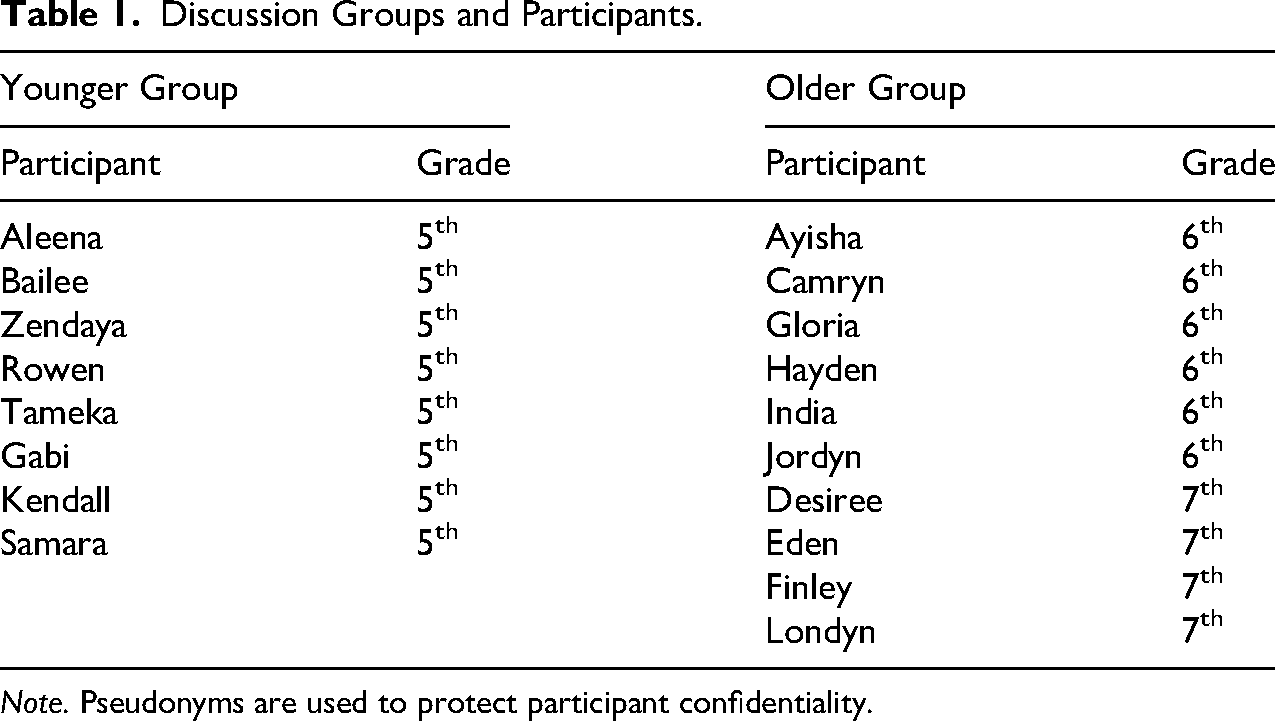
Note. Pseudonyms are used to protect participant confidentiality.
To maintain some consistency across the two discussion groups, our curriculum provided facilitators with shared objectives and skills to focus on. The curriculum also allowed facilitators flexibility to adapt to the girls’ interests and responses, sometimes changing how questions were worded or the order in which they were asked. The research questions for the current study were centered around evaluating the outcomes of the intervention in terms of what the participants felt they had gained. Accordingly, we selected for analysis the data generated during the termination session. Moreover, only the sixth- and seventh-grade group of participants completed the written reflections and drawings. Therefore, the final data set for this study consisted of two sets of process notes of their group discussions, one from the fifth-grade discussion and one from the sixth- and seventh-grade session, and written reflections and drawings from the sixth- and seventh-grade session.
Analysis
A team of four graduate-level research assistants (one Black woman, one Latina woman, one Black man, and one woman of European descent) who were overseen by two faculty members (a woman and a man, both of European descent), conducted the analysis. Our conceptual framework focused on discussions as a student-centered and listening-forward approach to T-SEL among Black girls (Kruger et al., 2013; Pollock, under review). Therefore, we continued this listening-forward approach throughout the analysis through the use of constructivist thematic analysis (Saldaña, 2016). First, we transcribed the drawings for qualitative analysis (Schensul & LeCompte, 2013). Then, we conducted a constructivist thematic analysis across multiple types of data (Schensul & LeCompte, 2013). This inductive approach included a series of rounds in which we alternated between working independently and together during weekly team meetings.
We began by identifying our unit of analysis, a single response from an individual participant, and we divided up the various sources of data accordingly (Saldaña, 2016). Then, we used a consensus approach to develop an initial set of inductive codes (Richards & Hemphill, 2018; Saldaña, 2016). Our consensus approach consisted of independently reading through the data and assigning codes to each excerpt. Then, we met to compare codes across researchers and discuss discrepancies until we reached a consensus (Richards & Hemphill, 2018). Then, we used pattern coding to arrange our codes into five categories based on shared meaning, create operational definitions, and identify quotes that illustrated each definition (Saldaña, 2016). Finally, we identified a theme representative of each definition and collection of excerpts (Richards & Hemphill, 2018).
Throughout data collection (for the participants, a form of instruction) and analysis, we worked within a diverse team inclusive of researchers from ethnic-racial backgrounds like those of the participants. This allowed for a collaborative approach to research, cultural awareness, and a consensus approach to resolving disagreements. These are consistent with the D-BFI for T-SEL and an Afrocentric approach to education research (Asante, 1991; Pollock, under review). The inclusion of process notes, written reflections, and drawings allowed for an explanatory triangulation of data sources, in which we used each source to explain and extend the meaning identified in the others (Richards & Hemphill, 2018). Therefore, the result of our analysis was five themes supported by multiple sources of data (Schensul & LeCompte, 2013). These included: “In Need of Protection,” “The Power of a Plan,” “Stereotypical Representations of Women,” “The Sexualization of Women for Profit,” and “The Creative and Affirming Potential of Safe Spaces” (see Table 2).
Inductive Themes, Definitions, and Illustrative Exchanges.
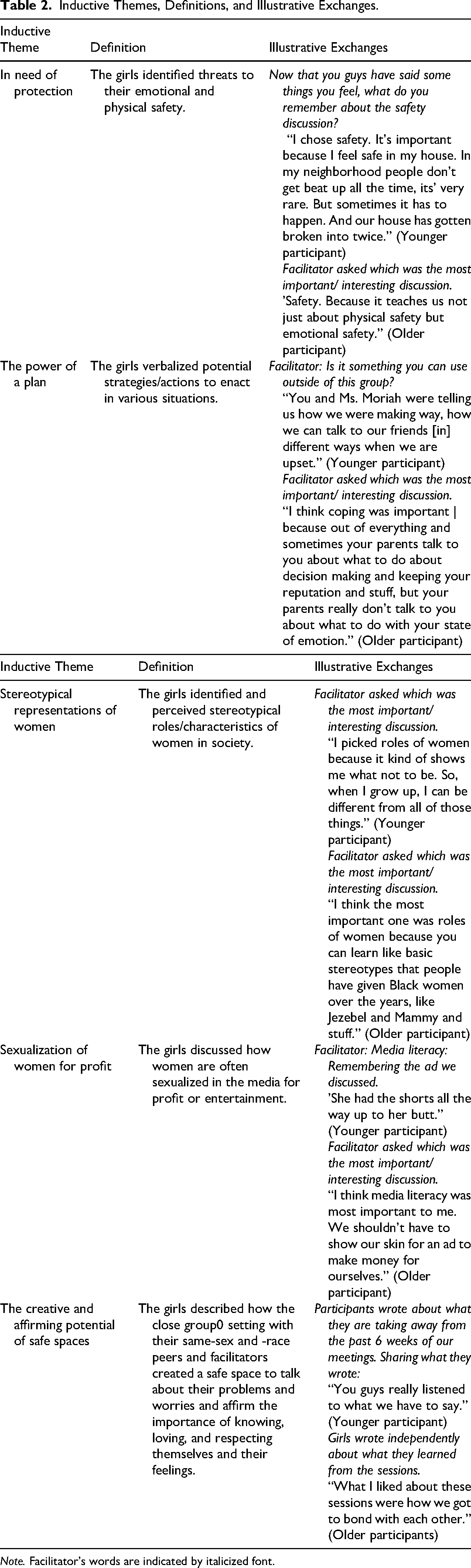
Note. Facilitator's words are indicated by italicized font.
Findings
This study has focused on final, reflective sessions with two groups of early adolescent Black girls from an urban charter school. Last in a series of eight, we were interested in examining these sessions to explore outcomes of the intervention from participants’ perspectives. Data collection included two different groups of participants that shared a general focus but communicated in different ways. Specifically, the younger group engaged in a discussion, and the older group completed written reflections and drawings in addition to engaging in a discussion. Therefore, we will present the themes that emerged across both groups and delineate the ways each group of participants discussed, wrote about, and illustrated these themes. Finally, we include quotes, selected from across participants, that are illustrative of various aspects of the themes.
Theme 1: In Need of Protection
The In Need of Protection theme was defined as the girls’ identification of threats to their emotional and physical safety. Some younger participants identified safety as the most important/interesting session, and they connected their need for protection with real-life situations in which they felt physically or emotionally unsafe. In relation to physical safety, they indicated feeling safe in their homes, but also mentioned having their homes broken into. For example, Tameka said, “I chose safety. It's important because I feel safe in my house. In my neighborhood people don't get beat up all the time, it's very rare. But sometimes it has to happen. And our house has gotten broken into twice.” They also described unsafe situations occurring while walking around or taking public transportation. For example, Gabi said, “Like [the facilitator] said, sometimes when she ride Marta she can feel unsafe. And I ride Marta too. And my mom, when she come home, she get off work at 11 o’clock so she comes home around 12.” Furthermore, they connected their social positioning as girls with a heightened concern for physical safety. For example, Aleena said, “I like to walk places with my brother…and I sometimes want to go somewhere, and my mom says no go get your brother because you’re a girl.” Finally, they discerned between physical and emotional safety, associating a lack of emotional safety with bullying to leads to not feeling good about oneself.
Older participants also identified safety as an important topic/issue, although they primarily identified threats to their safety in their written narratives and drawings. Finley indicated it was helpful to talk about physical and emotional safety “because it teaches us not just about physical safety but emotional safety.” Additionally, Eden wrote about boys who try “to make you do something that you don't feel comfortable with,” and others used their drawings to illustrate the threat of older men as they walk around outside. For example, several participants’ drawings next to the “Safety” prompt included a car and/or a gender neutral or male-appearing figure in it calling out to a female-appearing figure. Next to this type of drawing, Camryn wrote, “Hey, little girl! You want some candy?” Eden wrote, “Hey girl, do you want a ride?” And India wrote, “You want to smoke?” Finally, police were also included as a threat to their physical and emotional safety when Finley wrote “police = bad guy” next to the safety prompt.
Older participants also used their drawings to illustrate threats within interpersonal conflict characterized by verbal and physical aggression. Moreover, these drawings tended to include gender neutral or female-appearing figures. For example, next to the decision-making and safety prompts, several participants drew two figures together with quote bubbles that included words and phrases. Finley wrote, “butthead” and “you bow.” Camryn wrote, “It's not my fault you’re too short” and “Hey! Give me my money back, you jerk.” Similarly, other participants drew figures that also had angry faces and aggressive postures, revealing threats within interpersonal conflict through physical aggression.
Finally, older participants used their drawings to illustrate threats posed by parents and school. For example, Jordyn's drawing next to the coping prompt included two female appearing figures and the quote, “thanx mom (sarcasm).” India wrote next to the coping prompt, “I cope with my h.w. even though I don't want to.”
Theme 2: The Power of a Plan
The Power of a Plan theme was defined as the girls' verbalizing potential action and strategies to enact in various situations. Some younger participants identified decision-making and safety as the most important/interesting sessions. They remembered the steps of the IDEA (decision-making) strategy the facilitators taught them. They also verbalized their own plans related to real-life situations. Tameka connected decision making and safety with her dad's advice, “My dad said if you make one mistake it can ruin your whole life. The bad decisions, they can ruin your whole life. It's actually important for you to make your own decision.” Others connected decision-making and safety with alternative ways to handle interpersonal interactions. Aleena said, “[The facilitators] were telling us…how we can talk to our friends [in] different ways when we are upset.” Additionally, Rowen said, “When we get mad at somebody, and we want to fight them we can sometimes go to that person and tell them we don't like what they did or something like that. Or we could tell a grown up about it.”
Some older participants identified decision making, safety, and coping as the most important/interesting sessions They connected these with strategies and actions to enact in various situations. Collectively, they remembered the steps of the IDEA (decision making) strategy, and Desiree connected use of it with situations involving “danger” and “conflict.” Other older participants connected the coping and decision-making sessions with having a strategy for handling emotions. For example, Hayden said, “…sometimes your parents talk to you about what to do about decision making and keeping your reputation and stuff, but your parents really don't talk to you about what to do with your state of emotion.”
Older participants also referred to potential actions and strategies in their written narratives and drawings. They referred to strategies for making better decisions, which Camryn referred to as “constructive decision-making.” They also wrote about learning the IDEA acronym and how to use it to make better decisions. Moreover, they used their drawings to illustrate the role of the IDEA in helping them with making decisions, with many participants writing the IDEA acronym next to the decision-making prompt.
Older participants also referred to specific strategies/actions for handling potentially dangerous situations with boys/men. Eden wrote about learning “to be aware of your surroundings.” To illustrate potential strategies, many drew a female appearing figure outside a car with the words, “Just keep walking” (Desiree), “no thanx” (Camryn), and “Nope, I don't really like communicating with strangers” (Eden). Similarly, India wrote, “no thanks,” next to the drawing that showed a figure being offered a cigarette or blunt.
Theme 3: Stereotypical Representations of Women
The Stereotypical Representations of Women theme was defined as the girls identifying and perceiving stereotypical roles/characteristics of women in society. Some younger participants identified the roles of women as the most important/interesting session and referred to this to identify and describe stereotypical representations of women, more specifically Black women. For example, Rowen said, “What I learned was about characteristics like Jezebel, Mammy, and Sapphire.” Moreover, they provided examples, such as the Madea character, Nicki Minaj, the women featured on The Real Housewives of Atlanta, and the characters in Empire. Finally, they used these as examples of what they do not want to be. For example, Tameka said, “I picked roles of women because it kind of shows me what not to be. So, when I grow up, I can be different from all of those things.”
Some older participants identified the roles of women as the most important/interesting session because it allowed them to learn about stereotypes, including the ones that have been given to Black women, and the ways they are associated with women being treated differently. For example, Londyn said, “I think the most important one was roles of women because you can learn like basic stereotypes that people have given Black women over the years, like Jezebel and Mammy and stuff.” and Camryn said, “…and the fact that women get different attention is kind of interesting.” They also indicated greater awareness of them in the media after the session and considering who they were in relationship to stereotypical portrayals of Black women.
Older participants also identified and perceived stereotypical roles/characteristics of women in their written narratives and drawings. For example, Camryn wrote about learning about “the various negative stereotypes placed on women, especially of black[sic] nationality.” More specifically, they pointed out that these include depictions of Black women as obnoxious and/or rude. Moreover, they used their drawings to illustrate various stereotypes, often drawing two or three scenes that included female appearing figures. One type of scene included figures with large behinds, cropped shirt, or bold eyelashes and defined lips; a stripper pole; and money. Another type of scene included a figure with a baby, and Londyn wrote “Mammy” next to this. A third type of scene included a figure with arms raised and bent at the elbow, and Ayisha wrote “grrr” next to this. Desiree illustrated this through word pairs—“Jezebel and Nicki Minaj,” “Mami[sic] and maid,” and “matriarch and Madea.” India drew a figure with an outfit with a longer shirt, sleeves, and pants and wrote, “I make sure I look professional.” Next to this figure was one with a crop top and the words, “I don't.”
Alternatively, older participants rejected stereotypical representations of Black women for themselves. During the discussion, Desiree said, “Mine was roles of women also, because like it's very interesting how people try to categorize women in general. And I don't fit under any of these, so….” Additionally, Hayden wrote about learning “that you don't have to live your life based on the world's stereotypes because everyone has the right to lead their own lives.”
Theme 4: The Sexualization of Women for Profit
The Sexualization of Women for Profit theme was defined as the girls discussing how women are often sexualized in the media for profit or entertainment. Some younger participants identified images and media literacy as the most important/interesting sessions. Moreover, they connected their discussion of the sexualization of women for profit with examples from multiple types of media. For example, Tameka referred to song lyrics, saying, “Oh! How you look, like in the music. Like one he got a stripper and the other one she was so beautiful.” Others connected this with examples from a magazine advertisement, with Samara saying, “She had the shorts all the way up to her butt.” Others offered alternatives to the way the photo could have been taken, suggesting alternative positioning of the model, or just taking a photo of the item being advertised. Finally, Bailee connected this with an example from social media, saying, “Just like on YouTube when they be having ads and they be showing how they be having implants and making their face different. Because people didn't think she was attractive. She was 15.”
Some older participants also identified media literacy as the most important/interesting session, although they differed in their reactions to portrayals of women in the media. Gloria reacted more positively, saying, “I like recording how media puts women and how people see them. It shows beauty on the outside and not beauty on the inside.” In contrast, India reacted more negatively, saying, “We shouldn't have to show our skin for an ad to make money for ourselves.”
Theme 5: The Creative and Affirming Potential of Safe Spaces
The Creative and Affirming Potential of Safe Spaces theme was defined as the girls describing how the close group setting with their same-sex and -race peers and facilitators created a safe space to talk about their problems and worries and affirm the importance of knowing, loving, and respecting themselves and their feelings. Younger participants referred to the sessions collectively to describe the role of the facilitators in creating a safe space. For example, Tameka said, “You guys [the facilitators] really listened to what we have to say. You listened so much and every time we have a meeting, I tell my mom. She says y’all are great.” Additionally, some younger participants identified safety and roles of women as the most important/interesting sessions and connected these with self-affirmation. For example, Tameka connected this with knowing herself, saying, “I picked roles of women because it kind of shows me what not to be. So, when I grow up, I can be different from all of those things.” Zendaya connected this with emotional safety, saying, “… feeling safe mentally is making sure you don't hate yourself and making sure you like yourself and stuff.” Finally, when the facilitator asked participants to write something nice about each member, Kendall said, “but we aren't allowed to talk about what happens in Girls’ Group.” This provided the facilitator the opportunity to clarify what was meant by maintaining confidentiality, an important aspect of creating a safe space.
Older participants also referred to the sessions collectively and focused on the role of the sessions in allowing participants to bond with each other. For example, Camryn said, “What I liked about these sessions were how we got to bond with each other.” They also connected participation with self-affirmation. For example, Hayden said, “We learned plenty of things based on girl empowerment.” Moreover, for future topics, they suggested focusing on self-esteem because they observed many girls struggle with this at their age. For example, Hayden said, “Somebody could say something and then for like months you could be down.”
Discussion
In this study, we focused on the termination session of a D-BFI for T-SEL with two groups of early adolescent Black girls from an urban charter school (Pollock, under review). The termination session was the last in a series of eight sessions and, therefore, reflective in nature. Consistent with the D-BFI for T-SEL framework, we were interested in examining these discussions to explore outcomes of the intervention from participants’ perspectives (Pollock, under review). To this end, thematic analysis revealed five themes surrounding physical and emotional safety, stereotypical representations of and the sexualization of women in media, and the creative and affirming potential of safe spaces. Positioning these findings within the D-BFI for T-SEL allowed us to connect the method, adult-facilitated peer-based discussions, with these outcomes and discuss potential implications.
Student-Centered, Listening-Forward Facilitation of Transformative SEL
For urban education researchers, adult-facilitated, peer-based discussions represented a student-centered, listening-forward method of instruction and facilitation of T-SEL with two groups of early adolescent Black/African American girls from a low-socioeconomic urban community (Pollock, under review). Moreover, within the framework for a D-BFI for T-SEL, our findings represent developmental outcomes from dialogic interactions that occurred within these discussions in terms of transformative SEL competencies. Our findings suggest this method of facilitating T-SEL allowed for critical environmental analysis for self-awareness and self-management, critical self and contextual analysis for self-awareness and self-management, acquisition of strategies for responsible decision making and self-management, and creation of a safe space for the development of SEL competencies. Moreover, these likely represent important components of delivering transformative SEL within urban educational settings.
Critical environmental analysis for self-awareness and self-management
Participants identified threats to their emotional and physical safety and stated their resistance to these threats. In a previous study by Kruger et al. (2016) with early adolescent Black girls from a low-socioeconomic urban community, participants reported situations in which they felt physically and emotionally unsafe. However, the participants in Kruger and colleagues’ study did not use these terms specifically or attempt to distinguish between different types of safety. Within the termination session we examined, participants specifically referred to physical safety and emotional safety and stated they found it helpful to be able to distinguish between the two types of safety. Importantly, this language was provided to them by the facilitators during a previous discussion session. This suggests that the definitions, terminology, and examples provided a way for participants to think about different types of safety.
Physical safety represented a particular concern. Specifically, the participants in this study described boys who tried to make them do something they were not comfortable with and solicitations from older boys or men in cars as threats to their safety. Further, they referred to police as the bad guys. Previous research confirms a sociopolitical context that leads to physical environments characterized by greater vulnerability for Black girls through higher levels of male predation and solicitation of Black girls for sexually exploitative purposes (Carter Andrews et al., 2019; Galán et al., 2022). Moreover, while previous research documents the role of gendered racial socialization messages in facilitating resilience and resistance (Galán et al., 2022), our participants revealed an awareness of the need to determine the safety of their immediate environment by identifying threatening others. Though the transformative SEL framework includes a critical social analysis as an essential construct (Jagers et al., 2019), we posit the need for an additional construct, a critical environmental analysis, to conceptualize the need to discern the safety of one's immediate environment and act accordingly.
Additionally, within the framework for a D-BFI for T-SEL (Pollock, under review), physical safety and emotional safety represent important concepts associated with increased emotional intelligence. Participants’ identification of threats and discussion of potential strategies/actions represent agency in their intentions to shape the course of their own lives (Jagers et al., 2021). This suggests the development of self-awareness and self-management competencies from discussion-based instructional approaches. Put together, adult-facilitated, peer-based discussions may have allowed for a critical environmental analysis required for the development of self-awareness and self-management.
Critical self and contextual analysis for self-awareness and self-management
Participants also interpreted emotional safety, or a lack thereof, within the context of multiple themes. For our participants, emotional safety represented a less tangible concept than physical safety. Specifically, they associated a lack of emotional safety with bullying and not feeling good about yourself, whereas they associated emotional safety as not hating yourself and liking yourself. Previous research has revealed the availability of stereotypical and unidimensional representations of Black women for adolescent Black girls as they experience identity development (Galán et al., 2022; McGee et al., 2025). In the current study, participants’ discussions of stereotypical representations of women revealed their ability to critique pre-existing negative and stereotypical representations of Black women. In the original transformative SEL framework, a contributing framework to the D-BFI for T-SEL (Pollock, under review), stereotypes are associated with the self-awareness and self-management constructs through discussions of social identity and agency in resisting the ways these can dehumanize, support their marginalization, and lead to lower academic, social, and emotional outcomes through stereotype threat and discriminatory practices (Jagers et al., 2019, 2021). The findings from the current study extend this understanding to reveal the importance of critical discussions with early adolescent Black girls surrounding sociohistorical stereotypes of Black women and girls, their origins, and the ways they can influence thoughts and actions (i.e., a critical contextual analysis).
Therefore, development of a more nuanced understanding of multi-dimensional and intersecting social identities (i.e., self-awareness) and a greater ability make personal choices (i.e., self-management) can occur within critical discussions of complex social issues (i.e., Pollock, under review). Broadly, this suggests connections between the core competencies, self-awareness, self-management, and a critical contextual analysis. Put together, adult-facilitated, peer-based discussions may have allowed for a critical analysis of the sociocultural context required for the development of self-awareness and self-management.
Acquisition of strategies for responsible decision-making and self-management
Participants used the language provided to them by the facilitators to outline an action plan for making decisions. When prompted, they repeated the steps represented in the IDEA acronym, and one participant provided a scenario to illustrate the process. Participants also recognized the need to make decisions within situations in which they felt physically unsafe, and they identified various situations in which they could apply this. For early adolescent Black girls from an economically challenged urban community, these cognitive skills become increasingly important for making higher stakes and more complex decisions (Harris & Kruger, 2020).
Surprisingly, participants also associated the IDEA acronym with managing emotions. While this acronym was intended to provide a cognitive, rather than emotional, approach to situations, researchers have identified the role of emotional intelligence in decision making, specifically, the role of regulating emotions in achieving desired outcomes (Jagers et al., 2021). Participants reported feeling greater support from parents in making decisions surrounding the maintenance of a reputation rather than managing their emotions. This parental concern with reputation is consistent with previous research that has revealed a sociocultural environment in which standards of beauty and professionalism are still centered around Eurocentric norms (Galán et al., 2022).
Black women and girls are judged more harshly based on hair texture and styles and choices of dress that may deviate from Eurocentric norms (Galán et al., 2022; McGee et al., 2025). Among school personnel, judgments biased toward Eurocentric norms can also lead to lowering of academic standards and course offerings for Black girls even though they report a desire for support in being academically successful (Onyeka-Crawford et al., 2017). Thus, participants’ parents were likely focused on preparing them to be successful in their current environment, which is defined by race- and gender-based inequities (Galán et al., 2022). However, participants stated the need for guidance in managing emotions and implicitly recognized the role of managing emotions in making decisions within situations in which they might feel emotionally unsafe. This adds to the call for SEL among school personnel (Legette et al., 2022; Soutter & Timmerman, 2022; Warren et al., 2022).
Finally, participants extended decision-making to include future concerns. Specifically, they talked about discerning who they are now and choosing who they want to become in the future in relation to stereotypical representations of Black women and girls. Previous studies have revealed the prevalence of stereotypical representations of Black women in the social and cultural worlds around them (Galán et al., 2022), and the role of increased awareness of the social world and media in identity development during adolescence (McGee et al., 2025).
To summarize, IDEA represents concrete steps for making decisions that involve predicting multiple possibilities and evaluating potential outcomes. Our participants described its potential for use within situations that pose threats to their physical and emotional safety and for future concerns that require more long-term thinking. IDEA represents a strategy for making decisions, controlling impulses, evaluating options, connecting choices with outcomes, and working toward goals. Moreover, interpreted within the framework for a D-BFI for T-SEL, our findings suggest participants acquired and practiced this strategy through the discussions within the intervention (Pollock, under review). More broadly, this suggests connections between the core competencies (i.e., responsible decision making and self-management) and their development from discussion-based instructional approaches. Put together, adult-facilitated, peer-based discussions may have allowed for the acquisition of strategies for responsible decision making and self-management (Pollock, under review; Jagers et al., 2019).
Creation of a safe space for the development of SEL competencies
Development of SEL competencies occurs within relationships with adults and peers (Duchesneau, 2020; Jagers et al., 2019, 2021). Previous research among adolescent Black girls from low-income urban communities has also revealed a lack of trusting and supportive relationships with adults and peers (Kruger et al., 2013). However, in the current study, participants described a safe space. Importantly, their criteria for a safe space included adults who listened to them and opportunities to bond with peers. Moreover, they associated a safe space with liking yourself and feeling empowered. This suggested connections between physical and emotional safety and their experiences with a group characterized by both.
The findings from the current study affirm the importance of creating safe spaces. Moreover, this reveals the value participants placed on adults listening to them to form trusting relationships with them and the value they placed on bonding with peers. In this study, interpreted within the framework for a D-BFI for T-SEL, our findings suggest that this trust and bonding developed within the discussions (Pollock, under review). More broadly, this suggests social awareness (i.e., a sense of belonging) is central to the development of other SEL competencies (i.e., self-awareness, self-management, relationship skills, and decision-making). Altogether, adult-facilitated, peer-based discussions may have allowed for the creation of a safe space for the development of all SEL competencies.
Limitations and Future Directions
The current study has inquired about early adolescent Black girls’ experiences with adult-facilitated peer-based discussions for transformative SEL. Moreover, the framework for a D-BFI for T-SEL (Pollock, under review) has allowed us to identify ways to extend the original T-SEL framework and conceptualize outcomes in terms of the development of transformative SEL competencies from adult-facilitated peer-based discussions. However, some limitations remain.
First, the findings from this intervention revealed a heightened awareness among this group of early adolescent Black girls of the need to make decisions about a range of concerns (e.g., whether to accept solicitations from men and boys, what to wear, which parent to spend holidays with), within a range of situations (e.g., interpersonal interactions, preparing for school, family situations). Additionally, this intervention revealed the criteria used by this group of participants when making decisions (e.g., maintenance of physical safety, other's perceptions of them, and personal preference; Pollock et al., 2022). Though, we are limited to this group of participants’ perspectives and experiences, which may not be shared by other groups of early adolescent Black girls. Additional research is needed to understand the concerns of, situations in, and criteria used by other groups of similar participants when it comes to making decisions.
Second, the participants in this study placed great importance on having adults listen to them. This is an explicit goal of a D-BFI for T-SEL (Pollock, under review). However, our understanding of exactly how to provide this within transformative SEL remains limited. Additional research is needed to identify what makes early adolescent Black girls feel heard and the characteristics and strategies adults can develop to provide this.
Implications
A theoretical contribution of this study is the value of adults who listen to adolescent Black girls. In this study, these were the adult researchers who facilitated discussion and recorded the process notes. Although, this also could include school personnel, adult role models, trusted authority figures, and parents/guardians. Additional research that reveals the characteristics and strategies adults who work with early adolescent Black girls can develop to make them feel heard could lead to the development of guidelines for these adults in developing these characteristics and skills. This could represent an important component of adult SEL (Legette et al., 2022; Soutter & Timmerman, 2022). Moreover, adults who make early adolescent girls feel heard are likely in a better position to model and support them in developing healthy communication skills. Additional research can lead to the development of guidelines for this.
The participants in this study described strategies they had developed for maintaining their safety when they felt threatened. This is consistent with previous studies that describe early adolescent Black girls’ commitment to preserve their safety within interpersonal interactions that make them feel unsafe (Pollock et al., 2022). Additionally, during this termination session, they used the language provided by the facilitators to discern between physical and emotional safety, connected this with real-life situations, and attributed their ability to do this to their participation in the discussions. Therefore, a methodological insight from this study is that facilitation of transformative SEL with early adolescent Black girls could benefit from explicit instruction of concepts, such as physical and emotional safety, and opportunities to connect these concepts with real-life situations and strategies already in their repertoires.
Finally, the IDEA acronym represents a practical takeaway from this study. Participants referred to the IDEA acronym as a useful tool for making immediate and long-term decisions related to physical and emotional safety. Therefore, this provides a concrete and practical tool for situations that require rapid processing, such as high stakes interpersonal interactions with men that potentially pose a threat to their safety, and situations that allow for more processing, such as choices associated with which classes they take and the ways these influence potential career trajectories. This could be developed into a practical tool for use by school personnel.
Conclusion
In this study of the outcomes of a D-BFI for T-SEL with Black girls (Pollock, under review), we aimed to join and extend the merging conversations between urban education and SEL researchers surrounding transformative SEL among students within urban educational contexts (El Mallah, 2022; Griffin et al., 2022; Harris et al., 2022; Legette et al., 2022; Warren et al., 2022; Williams & Jagers, 2022). Importantly, this allowed us to position these Black girls’ SEL within the demands of the urban context and identify two additional T-SEL constructs, critical environmental analysis and critical self and contextual analysis, required for the development of self-awareness and self-management (Jagers et al., 2021). Moreover, as education researchers, we centered our discussion of the findings on the role of discussion-based methods and the implications for educators and other practitioners who work with Black girls. Contextualizing the role of the urban context in SEL requires addressing the historical and present-day inequities, stereotypical representations, and lack of safety embedded within the context (Milner, 2012; Welsh & Swain, 2020). It is precisely these structural and sociopolitical realities that demand Black girls engage in critical self, environmental, and contextual analyses as a means of survival, resistance, and self-actualization (Galán et al., 2022; Simmons, 2021), and our findings reveal discussion-based methods can be an effective way to implement T-SEL and encourage the development of these competencies.
The capacity for critical environmental analysis and critical self and contextual analysis are consistent with Afrocentric education's focus on facilitating personal and counternarratives (Asante, 1991). However, as SEL gains national visibility, it has also become a site of cultural and political debate. In the current sociopolitical climate, characterized by movements to ban culturally responsive education, SEL is often co-opted to support color-evasive practices that sideline questions of power, race, and systemic injustice and ignore the realities of Black girls and other marginalized youth within urban communities (Jayakumar, 2022; Simmons, 2021). Therefore, we argue that any robust SEL framework implemented within urban settings must explicitly engage with the social, political, and environmental conditions shaping the lives of marginalized youth (Galán et al., 2022; Simmons, 2021). Dialogue-based formative interventions offer a pathway toward reclaiming SEL as a critical and justice-centered practice that equips marginalized youth with the tools not only to understand themselves but also to navigate, challenge, and ultimately reshape the environments they find themselves in.
Therefore, to extend the conversation even further, future scholarship can build on these findings to inform the further development and implementation of culturally grounded T-SEL that resists reductive and decontextualized models. Specifically, researchers can examine how specific aspects of discussion-based methods provide a student-centered, listening-forward method of implementing T-SEL in general and, more specifically, the ways these provide space for important T-SEL constructs, including critical environmental analyses and critical self and contextual analysis. Then, they can examine ways practitioners, such as counselors and teachers can listen to early adolescent Black girls as they are implementing T-SEL to be more responsive their needs interests and needs. Finally, researchers can advocate for policies that prioritize T-SEL, with its demonstrated effectiveness for Black girls and other youth growing up in urban communities, rather than restrict its implementation.
Footnotes
Declaration of Conflicting Interests
The authors declared no potential conflicts of interest with respect to the research, authorship, and/or publication of this article.
Funding
The authors received no financial support for the research, authorship, and/or publication of this article.
