







Abstract
This paper explores the co-production of urban entrepreneurialism by examining the work of civil society groups in producing mobile models of slum entrepreneurialism. While slums and slum activists have been largely absent from accounts of urban entrepreneurialism, they increasingly play important roles in co-constituting mobile entrepreneurial models and in producing and valuing particular forms of entrepreneurial subjectivity. A focus on the co-production of entrepreneurialism requires attention to both the mobile models that constitute relations between different groups, from states and donors to activists and residents, and the local contexts and histories that shape, translate and differently enact entrepreneurialism. The paper concludes by highlighting three implications for research on urban entrepreneurialism.
Introduction
There is a wide-ranging debate on how ideologies of urban entrepreneurialism have led to critical shifts in how cities are managed. However, there has been little consideration of the place of slums and slum activists in the co-production of urban entrepreneurialism. While much of the debate on urban entrepreneurialism remains focused on policy élites, I examine how civil society groups produce particular models of entrepreneurialism that are shaped and used by states and international institutions. The informal settlement emerges not simply as a space excluded from or resistant to entrepreneurial strategies, but as a key frontier in the production of contemporary urban entrepreneurialism. I argue for greater attention to the co-production of entrepreneurialism and discuss two key characteristics.
First, the bringing together of ostensibly distinct actors—ranging, for example, from the World Bank and policy consultants, to companies, local states and civil society activists—in the shared production of entrepreneurialism. While there are important differences in power and resource between these actors, civil society groups can be crucial here, and not just in enacting mainstream agendas but in actively producing models of entrepreneurialism that can be made mobile. A focus on co-produced entrepreneurialism requires attending to the mobile models that enter into relations between civil society groups, states and international institutions. Secondly, entrepreneurialism is co-produced by actors that share a broad focus on market inclusion but which nonetheless often exceed the confines of entrepreneurialism—for example, in the solidarities of civil society groups. This requires attention to the local contexts and histories that help to shape, translate and spill beyond different forms of entrepreneurialism.
A focus on co-produced entrepreneurialism does not mean shifting attention away from key actors like policy-makers and consultants, but it does entail greater attention to more ‘ordinary’ spaces and groups in the city. Although informal settlements and cities in the global South more generally have rarely been the focus of debates on urban entrepreneurialism, consideration of the place of these ordinary spaces demands a rethinking of the techniques and scope of contemporary urban entrepreneurialism. It is often the case that policy and civil society forms of travelling urbanism are located on a shared terrain of urban entrepreneurial development, to the point that any division between élite and ordinary urbanism is in many cases untenable. This is not simply a shared discursive terrain, but a shared ideology: market inclusion and active, thrifty subjects are installed as the most effective means of urban development, as truth-claims that disavow other perspectives such as radical political economic transformation, and which celebrate the few over the many. It is this shared ideological resonance that holds common across multiple expressions of urban entrepreneurialism, whether economic (for example, financially disciplined and business savvy residents), social (for example, the privileging of a few ‘active’ and ‘do-it-yourself’ residents over the, so the implication goes, unorganised and passive neighbourhood/city at large), or political (for example, self-managed forms of local development that enact shifts in responsibility from the state to community-based groups).
In the first section, I review debates on urban entrepreneurialism and consider the place of informal settlements and civil society organisations in relation to them. I then examine the production of a mobile civil society model of urban entrepreneurialism in relation to an unlikely site, that of slum toilets. The final section examines a model of microfinance within a set of civil society organisations. Here, I highlight collectivist practices that exceed the borders of entrepreneurial models, even while they are dependent on them. These two empirical contexts—sanitation and microfinance—are connected not just by a particular group of Indian civil society organisations, but by a conception of poverty as socioeconomic potential and the poor as entrepreneurial subjects. As models, they function as co-constitutive infrastructures of entrepreneurial urbanism.
The paper is informed by fieldwork conducted over a decade in urban India and especially in Mumbai. This extended temporal perspective allows reflection on the travelling and translation of particular models of civil society entrepreneurialism over time. The empirical material discussed emerges from fieldwork conducted in three phases: October 2009 and May 2010, which provided interview data used in the discussion of toilet block models; 1 November 2005 and May 2006 on sanitation in various informal settlements and which also feeds into the discussion of toilet block models; and between September 2001 and March 2002 on civil society organisations in India and which provides interview and participant observation data used in the discussion of microfinance.
Entrepreneurial Urbanism
As MacLeod and Jones (2011, p. 2444) have recently written in this journal, entrepreneurialism has been a central part of a ‘new urban politics’ that has dominated North American and western European urban policy since the 1980s, characterised by three key processes: first, seemingly “immobilised cities” aggressively competing to attract increasingly mobile sources of capital investment; secondly, the growing influence of the private sector in urban policy; and, thirdly, a shift from a distributional politics of taxation aimed at collective consumption and public-sector investment “in favour of commitments to lower the taxes of business and wealthy entrepreneurs and to generate growth per se” (see Harvey, 1989; Hall and Hubbard, 1998; Jessop, 1997; Ward, 2011). MacLeod and Jones (2011, p. 2456) show that the continuance of entrepreneurialism has not been secured by privatism alone, or by city marketing and high-profile art, architecture and sports events, or by its important morphing into new travelling models such as the ‘creative class’ thesis (Florida, 2005; Peck, 2005) or business improvement districts (Ward, 2006). Its sustenance has also often relied on a violent politics of displacement in which the poor, “classified as ‘undeserving’, ‘detritus’ or ‘quality-of-life offenders’”, have been subject to the defensive or downright vengeful seizure of urban space in the proliferation of gated enclaves, gentrification and revanchism (Smith, 2002; Swanson, 2007; MacLeod, 2002; Lees et al., 2010; Wacquant, 2007).
Yet if strategies of entrepreneurial urbanism have often cast the urban poor as outcasts who need to be removed from particular city spaces, there has also been an important focus in entrepreneurial approaches to reform and include the poor under particular conditions. This is a strand of entrepreneurial urbanism that foregrounds the ‘potential’ of the poor as entrepreneurial subjects and the symbolic recasting of poverty as social and economic capital. There have been important discussions of the sorts of subjectivities that strategies of entrepreneurialism seek to engender, but the reference point tends to be the middle class rather than the poor. Writing about the popularity of the ‘creative city’ thesis, Peck notes how cities across the globe
have paid handsomely to hear about the new credo of creativity, to learn how to attract and nurture creative workers, and to evaluate the latest ‘hipsterization strategies’ of established creative capitals like Austin, TX or wannabes like Tampa Bay (Peck, 2005, p. 740).
Writing about the Malaysian Multimedia Supercorridor, Bunnell and Coe (2005: 837) argue that the demand for high-skilled labour “appeared to necessitate citizen-subjects who were enterprising, entrepreneurial, creative and, above all perhaps, innovative”. Entrepreneurial forms of urban governance tend to promote particular kinds of ‘acceptable’ subjectivities. For example, Binnie and Skeggs (2004) have shown how only narrow forms of gay lifestyle are promoted in entrepreneurial gentrification projects in Manchester’s Gay Village. Part of the success of entrepreneurial strategies lies in their capacity to capture not just economic trajectories but highly selective interpretations of the active social.
There have also been important attempts to stretch the literature on urban entrepreneurialism by showing its production through the politics of ethno-cultural identities. For example, Chatterjee’s (2011) account of contemporary urban governance in Ahmedabad demonstrates the confluence of a sometimes violent Hindutva ethno-religiosity and growing private power in the increasingly élite redevelopment of the city. ‘New urban politics’ in Ahmedabad, argues Chatterjee (2011, p. 2587), is “an interplay of ethnocentrism, entrepreneurialism and technocracy dialectically embedded through performance and [planning and policy] documentation”. For Desai (2011), Hindu nationalism, identity, the promotion of regional Gujarati and civic pride are folded together in the politico-corporate production of an ideal of entrepreneurial Ahmedabad. This is an identification predicated on violence against Muslims, which is of course denied in the inverted portrayal of Ahmedabad as “historical, vibrant, scintillating, multicultural, and lively” (Desai, 2011, p. 44).
As these different accounts indicate, it is virtually impossible, as Hall and Hubbard (1998) argued, to suggest a narrow definition of the entrepreneurial city. This is a product of the multiple and often simultaneously economic, social, cultural and political ways in which entrepreneurialism operates, travels and is translated across cities. Yet the targeting of poverty, especially informal poverty, as part of entrepreneurial urbanism, is largely absent from these accounts. The focus has tended to be on policy and corporate élites, including policy discourses, city management strategies, forms and imaginaries of place-marketing, or the work of influential travelling consultants. While there are important reasons for this focus given that these are spaces and actors where a great deal of the ideological production of entrepreneurialism emerges, there are important sites and actors that actively co-produce and make these ideologies work. As Aiwha Ong (2011) has argued, techniques and models of entrepreneurialism extend to all manner of groups and spaces, including NGOs, activists, workers’ organisations and aesthetic/cultural production, many of which are co-opted because they fit with the technologies of a broadly entrepreneurial script for the future.
Civil society groups are often key, both to the framing of an urban poor that performs a marketised subjectivity and to a representation of poverty as potential new markets. In this context, the slum of the global South emerges as a key frontier in the articulation of contemporary urban entrepreneurialism. Slums, as the World Bank would have it, are ‘growth areas’ for new markets, from mobile phones and food sachets to community health insurance and water entrepreneurs. One important development in recent years has been the attempted extension of entrepreneurialism to the domain of urban informality, a shift that has entailed an increasing focus on the financial disciplining and marketisation of the urban informal poor.
The Informal Entrepreneur
One in three urbanites now live within some kind of informal housing settlement (UN Habitat, 2003; Davis, 2006). While informal settlements remain predominantly and stubbornly understood by states and international institutions as outcast spaces of the modern capitalist city, or as simply a cheap labour force, they are also increasingly viewed as an immense set of untapped markets and potential capitalist subjects. In part, this builds on the long history of romanticising the entrepreneurial flair of slum residents, a history that has existed in parallel with how slums are more often understood through Victorian motifs of despair, crime, dirt and collapse. As Jeremy Seabrook (1996), amongst others, has argued, against the backdrop of despair there has always been an alternative view that conceives the slum as inventive, entrepreneurial and as a space of courage and endurance. This notably includes John Turner’s (1966, 1976) highly influential work on squatter housing which had such influence at the World Bank and elsewhere. Turner’s cost-effective self-managed urbanism, suggests Mike Davis (2006, p. 71), emerged from his being “mesmerized” by the squatters’ “creative genius”. This tradition of emphasising the creative capacities of self-managed community slum housing continues (for example, see Mitlin and Satterthwaite’s excellent 2004 collection, Empowering Squatter Citizen), but in the past decade a distorted and more narrowly economist version of this view has been shaped in significant part by the influential arguments of Hernando de Soto (for example, 2001). De Soto’s argument is that informal housing represents a deep pool of ‘dead capital’ in the form of economic and legal security, housing markets and surplus generation, potential future exchange and investment (including in new businesses) and the social capital associated with formalised status. These arguments have had significant influence on the World Bank in particular, despite the risks of certain forms of formalisation, especially around individual tenure, pricing out the poor (for example, Neuwirth, 2006; Briggs, 2011). The argument here is an old one cast in a new terrain: if only everything else (states, legal frameworks and regulations, local élites) got out of the way, slums and their inhabitants would be able to realise their market—and, by extension, so the argument implies, their social and cultural—potential.
As Goldman (2011, p. 560) has argued, the World Bank/de Soto approach holds the state responsible for economic stagnation because of its supposed inability to “nurture freedom of investment and the entrepreneurial spirit amongst the whole population, right down to the ready-to-be-unleashed ‘poor’”. The idea that the poor lack economic know-how or creative capacities is itself an extraordinary blind spot in these narratives—we only need to consider how different kinds of informal urban economies, publics and modes of improvisation operate to refute such a claim (e.g. Simone, 2008; Pieterse, 2008). However, what is important here is how this particular formulation of entrepreneurialism functions. For Goldman (2011), writing about the Indian state in particular, rather than ‘unleashing’ the market capacities of the poor, the result has been a new way of organising urban life based on speculation and liquidation. In his account, entrepreneurialism takes the form of a dominant logic of speculative urbanism that is not restricted to business and policy élites, but that extends to informal residents, land brokers and international financial institutions, and where everyone becomes
speculators of one sort or another, taking extreme risks and gambling on when government agents or land brokers (or violent nativist organizations) will tag their possessions next for acquisition (Goldman, 2011, p. 570).
In the context of informality, urban entrepreneurialism takes as its focus a reconstituted urban subject and a re-imaging of poverty-as-potential. This is most visibly illustrated in the case of microfinance. Microfinance, even though it does not represent a proportionately large amount of global ‘development’ spending and investment, has come to be understood as a global solution to urban (and rural) poverty. Again, the World Bank has played an important communicative role here. As Ananya Roy (2010) has shown, the mainstreaming of microfinance has taken place in large part through the work of the World Bank’s Consultative Group to Assist the Poor (CGAP), founded in 1995. CGAP centralises technologies of financial engineering, notably in managing risk through connecting microfinance funds and financial institutions globally, or through infrastructures that allow the biometric scanning and monitoring of microfinance entrepreneurs to facilitate financial transactions. For Roy (2010), CGAP is central to a global apparatus that extends finance into new domains through the production of what she calls ‘poverty capital’, both a market and a space of constructed visibility that make legible new technofinancial subjects. This is a subjectivity of monitoring and managing debt and financial discipline, and an apparatus espousing regimes of truth that require constant work and defence through a disparate set of professionals, discourses, financial and technological mechanisms that manage and monitor poverty in the production of new markets. It also entails, in Roy’s terms, a ‘neo-liberal populism’ that celebrates poor people’s agency, seeks to inculcate marketised behaviour and extends beyond organisations like CGAP to include non-governmental and non-profit organisations.
Katharine Rankin (2001) shows how microcredit has come to be vigorously promoted in Nepal by agencies like the World Bank as a model aimed at women and embodying a neo-liberal social citizenship, pointing in particular to how women undergo a training in financial discipline, review one another’s proposed enterprises and savings, and collectively guarantee one another’s loans. Financial discipline is introduced through peer pressure rooted in ‘solidarity’ (or ‘borrower’) groups, as well as through differentials such as caste, ethnicity and class. Yet not all accounts attribute this discipline to particular forms of formal organisation. In some accounts of the role of microfinance in urban informality, this discipline is instead seen to be a determinant of particular forms of poverty itself. For instance, in Lall et al.’s research on savings and informality in Bhopal, entrepreneurial thrift is perplexingly attributed to migrants over non-migrants
A possible reason why migrants do better is that they may be more entrepreneurial than native slum-dwellers, as reflected by their decision to move between cities or regions in search of better opportunities (Lall et al., 2006, p. 1034).
Indeed, it may be this very ontological association of slum resident with entrepreneurial energy that connects these two techniques—on housing capital and on microfinance—as ideological efforts to transform spaces of poverty from an exploited proletariat to emerging markets that will be embraced by financially disciplined subjects. They are techniques growing in popularity across informal settlements in the global South and they indicate the need to rethink our conception of urban entrepreneurialism in at least two ways. First, and most obviously, we need to give consideration to the role of the ever-expanding realm of urban informality, understood in entrepreneurial efforts as a new frontier for markets. This does more than extend the geographical scope of entrepreneurialism—it demands critical examination of a range of often neglected techniques, including microfinance or marketisation via individual squatter tenure, through which entrepreneurialism is produced globally. Secondly, we need an appreciation of the ways in which different actors—including community peer support groups and non-governmental organisations (NGOs)—come together to produce and value entrepreneurial subjects. Key elements here are the techniques (approaches and practices) and models (representations and formal arrangements) that are developed and put into circulation by civil society groups, whether of microfinance or housing and infrastructure redevelopment, and which are historically and spatially entangled with policy and donor agendas.
In what follows, I will first discuss the production of a particular model of social and economic entrepreneurialism in the context of urban informality by highlighting perhaps the most unlikely informal frontier: slum toilets. Secondly, I examine the role of civil society activists by considering the question of microfinance. I argue that the models civil society organisations develop play important roles in the co-constitution of particular regimes of urban entrepreneurialism. These two instances are connected not just by the sorts of actors involved—a set of connected civil society groups operating in urban India—but by their occupation of a shared ideological terrain of urban development: the privileging of partnership, participation, empowerment and cost-recovery in a trajectory of urban entrepreneurialism that promotes the thrift of the few over the implied passivity of the many, generates new forms of marketisation and values particular forms of the financially disciplined subject. However, I also seek to show that, in attending to the work of civil society groups, there is often an important excess to the confines of entrepreneurialism: a set of solidarities, commitments to collective improvement and forms of mutual support that cannot be subsumed into market and financial processes. While it would be too far-reaching and hopeful to call this excess post-capitalist (Gibson and Graham, 2006), it is a material and affective realm that holds out the possibility of more mutual and collective forms of urban development.
Celebrating Slum Entrepreneurialism: Toilets on the Move
In 2007, the toilet block in Figure 1 was awarded the prestigious Deutsche Bank Urban Age (DBUA) Award. The toilet block is based in Khotwadi, a well-established informal settlement in west Mumbai. The DBUA award is designed to encourage citizens to take initiatives to improve their cities and runs alongside the Urban Age project, a joint initiative of the London School of Economics and Deutsche Bank’s Alfred Herrhausen Society. Describing why the award was given for this toilet block, Deutsche Bank wrote that the project
is a striking example of the poor helping themselves, and gives the lie to the stereotypical depiction of slum dwellers as helpless or indolent victims (Deutsche Bank, 2007, no pagination).
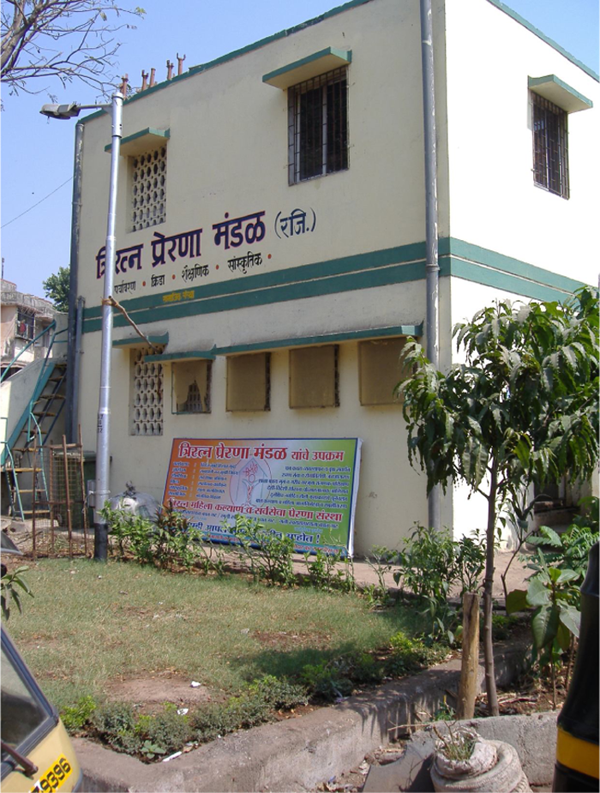
The Triratana Prerana Mandal toilet block, Khotwadi, Mumbai. Photo: author.
The award is far more than just prestige—US$100 000 was given to the community-based organisation that runs the block, Triratana Prerana Mandal (TPM, ‘triratana’ means three jewels, and for the activists refers to education, sports and culture), that have subsequently used the award to help fund the construction of a large community sports centre along the road from the toilet block (Figure 2).
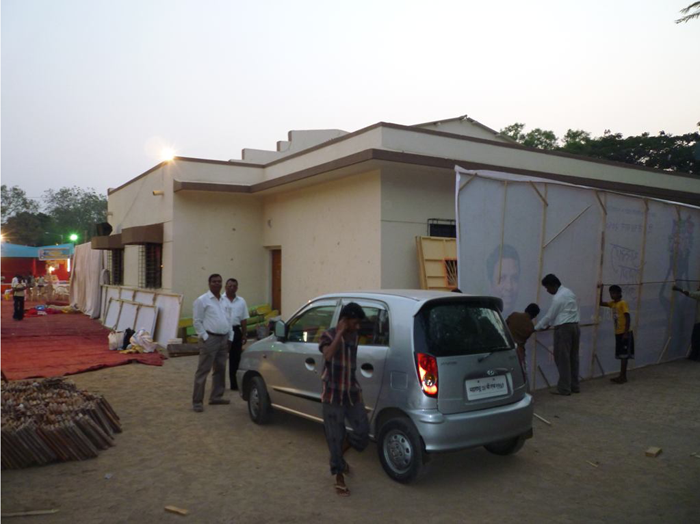
Sports centre built using DBUA funding. Photo: author.
This is an award for citizen entrepreneurialism that refuses to wait for the state but instead takes matters –the most fundamental of matters—into its own management. Suketu Mehta, author of the celebrated 2004 book on Mumbai, Maximum City, and one of the Urban Age judges, described the toilet project as
an ingenious as well as indigenous solution that needed very little investment and could be replicated in slum colonies around the world (Mehta, 2011, p. 155).
The award was given not just because TPM has built a well-maintained, clean block in the neighbourhood, but because the toilet block has become an unlikely focal point for a range of social activities. For example, 200 students from around the local area attend basic computer classes at the block (upstairs from the toilets), paying around Rs750 for a three-month class. More recently, the block has attained solar hot water, set up a biogas plant, started rainwater harvesting and ground water through boring—all through new city and state environmental funding schemes. The practice of the sustainable eco-city becomes embodied in a slum toilet block and tied to generating capital through waste—a striking contrast to the pervasive representation of slums-as-waste amongst not just élites, but more generally in India: “our aim is 0 per cent garbage”, one TPM activist said. “We are making money [from user charges] and reinvesting it”, he went on, in everything from a gymnasium and computer or dance classes, to a plant nursery behind the toilet and of course the running of the toilet itself. They have gained international funds for equipment, women’s empowerment and sustainable development. Indeed, one prominent Mumbai activist claimed that TPM were running the block like a ‘big business’. The success of the block is a reminder of the sorts of narratives and politics élite groups want to hear about sanitation—not the messy, dirty politics of the daily grind, but the shining and seemingly harmless success stories that fit with élite aspirations to build more entrepreneurial cities. The granting of the award is, of course, a laudable effort to support a remarkable local success story and to highlight the astonishingly neglected and vital issues around slum sanitation. No one could or should dispute this. Yet it is also important to reflect critically on the logic and ideological contexts and consequences of celebrating success stories based on ingenious examples of the poor helping themselves.
Such celebrations of ordinary entrepreneurial urbanism in India connect with more pervasive attempts to code Indian urban culture. For example, Ananya Roy points to how the conservative Mumbai NGO Bombay First celebrates elements of Indian urban life as entrepreneurial
Bombay First celebrates Mumbai as a centre of global finance. But it also celebrates another type of entrepreneurialism: Mumbai’s taxi drivers: ‘The taxi driver: You don’t need GPS with him around. He knows every nook and cranny of the city’. Here, then, is a narrative of Asian creativity, resilience, and ultimately success (Roy, 2011, p. 265).
2
What holds in common across these different depictions of entrepreneurialism is an emphasis on risk-taking initiative that celebrates the few over the many and that foregrounds a market-delivered success. What’s missing in these portrayals, of course, is critical reflection on the politics and historical contexts of these forms of entrepreneurialism. Romanticising the self-taught Mumbai taxi driver, for instance, ignores how this indulgence can only take place when the stigmatising and targeting of especially north Indian taxi drivers in the city is ignored, especially by the exclusive ethno-chauvinist and regionalist right-wing Hindu party, the Shiv Sena.
The TPM block emerges in part from a form of activist urbanism that seeks to subvert depictions of the poor as wasteful and instead embrace the knowledgeable potential of the urban poor. Consider the opening of a similar, large toilet block called Prasadsan Palace in the nearby city of Pune. At the time of construction in the early 2000s, this was an unusually large toilet block for the city’s slums, with 66 toilets, two caretakers living upstairs, four commodes for the elderly and the sick, a washing area in the male and female sections, and a children’s area decorated with Western cartoon characters. Here, there was a deliberate effort in the very naming of the toilet block—tongue-in-cheek to be sure—to invert the idea of the slum as a site of waste to slum-waste as a symbol of achievement and potential (see Appadurai, 2002). This was particularly pronounced in the opening of the toilet block, which accompanied an inaugural festival, with music and dancing and the attendance of politicians, including then Municipal Commissioner Ratnakar Gaikwad. The activists who were in part responsible for the construction of this toilet block—a group based largely in Mumbai called ‘the Alliance’—were also involved in the early stages of the TPM award-wining toilet project. The Alliance is an influential civil society tripartite consisting of the Society for the Promotion of Area Resource Centres (SPARC, a small group of Mumbai-based professionals), the National Slum Dwellers Federation (NSDF, a national Indian network of slum activists, historically predominantly male) and Mahila Milan (‘Women Together’, a predominantly savings and loans collective).
If we go back a few years further still, to the mid 1990s, we find other similar examples. For example, the Alliance became linked at that time with a group of activists in Hyderabad known as Integrated Rural Development Services (IRDS) around a project of toilet construction in slums. Following the initial contact around street children in the early 1990s, the links were developed in earnest with a project of toilet construction in 1996. The Alliance described this process at the time
As usual, the [NSDF] federation was looking for a community willing to become path beaters. The Jagjeevan Ram Co-operative (known as the tyre slum) volunteered. 70 families chipped in money and labour, NSDF helped plan and the city’s first community-built toilet block began. City officials watched and discussions are now on to find other areas for toilet building. The exchanges, training and other learning strategies are why this happened. Now, 28 toilets have been built in Hyderabad: two 5-seaters and one 10-seater at Ambedkar Nagar, and an 8-seater at Yousuf Bazaar (NSDF/MM/SPARC 1997: 26).
The early success with toilet block construction led to a plan to extend the scheme to constructing 100 toilet blocks across Andhra Pradesh using this model of self-managed learning, where the state shifts to the background and civil society groups contribute designs, labour, maintenance and construction/running costs. Now, these three moments of toilet construction and celebration—TPM in Mumbai, Prasadsan Palace in Pune in the early 2000s and the projects in Hyderabad starting in the mid 1990s—are selective to be sure, but they highlight the existence of a loosely connected field of urban interreferencing (Roy and Ong, 2011) through mobile entrepreneurial activism. Yet this kind of self-managed urbanism is not constituted by activists alone.
The Urban Age award may choose to celebrate the work of slum entrepreneurs managing their own development, but there is a far more entangled story of how these projects reach completion. In relation to the TPM block, at least three issues are important. First, in contrast to the claim that the block requires little investment, it is a very expensive affair. Not only was each family required to pay Rs500 upfront for the toilet block (a not insubstantial Rs50 per family for 10 months), users continue to pay for the privilege of using the block (around Rs150–200 per year) and the TPM has until recently struggled to pay the electricity and water bills and to ensure an adequate water supply. Nor was the block designed by the community-at-large. In practice, the committee (nine people, almost all men despite the acute gender sensitivity of sanitation in informal settlements) discussed designs, chose one and then informed the community.
Secondly, in contrast to the narrative of slum dwellers acting on their own, there was in practice significant involvement from the state in at least three ways. First, there was the involvement of more progressively minded officials at the BrihanMumbai Municipal Corporation (BMC) working on solid waste management, who helped to get TPM organised around sanitation and supported them through advice on design, raising local awareness and maintenance. Secondly, there was the involvement of the controversial Slum Sanitation Programme (SSP), a joint World Bank–state programme that funds toilet construction through the municipal state in collaboration with civil society groups using the principle of cost-recovery, whereby users contribute to the costs of production and maintenance. The Alliance has become the key NGO partner in the SSP, building in part on the reputation it developed amongst states and the World Bank through its work in toilet construction in Pune and elsewhere in India (McFarlane, 2008).
In Mumbai, the institutionally pluralist (Sanyal and Mukhija, 2001) approach to sanitation delivery that emerged in earnest through the SSP from the late 1990s not only scales back the role of the state to create space for NGOs—who are supposed to help organise community-based organisations (CBOs)—and private contractors who work on construction, more importantly it shifts responsibility from the state to NGOs and, especially, CBOs who are charged with maintenance. One senior municipal corporation engineer argued that, while in the SSP the relationship between NGOs and building contractors has often been slow to develop, partly due to the lack of experience these groups have in working together, the principle of switching from a prior supply-based approach to sanitation to the SSP’s demand-based approach
is the crux of everything. Because changing from our old system by providing the facilities and maintaining by us, facilities to be used by them—changing this to demand-based and CBO-oriented operation and maintenance, that is done because of these non-government organisations and software [social] activities of it. No doubt about that. That is the backbone of the whole programme.
However, the same engineer acknowledged that the shift of responsibility to community organisations inevitably rewards more active, self-managed CBOs over neighbourhoods where this is less the case
Where CBO is strong and really working, they use this place [the toilet block] for doing some social work. Out of that, they get something. They use that money for maintenance. But there are some CBOs that are not so active, they are now facing problem.
The shift to institutional pluralism not only scales back the responsibilities of the state and reallocates it to communities (and see Sharma and Bhide, 2005), it endorses a model of unequal geographical distribution of sanitation based on active, thrifty CBOs like TPM and, at the same time, supports a culture of blame directed at ‘unorganised’ slum residents who—as this ideology would posit—lack the entrepreneurial energy to do it themselves. Rather than emerging separately through undoubtedly energetic, committed and talented self-managed activists, the TPM toilet project model has to be understood as co-produced through the interaction between travelling activist models and the shift to demand-based ‘partnership’ forms of slum toilet provision in the SSP promoted by the state and the World Bank as a means for transferring responsibility and costs to motivated CBOs.
The final form of state involvement is the lower key influence of political parties in the identity politics of sanitation around Khotwadi’s toilet blocks, where TPM is based. In Khotwadi, political relations respond to residents’ needs and demands on an on-going basis through local political representatives who seek to nurture and consolidate patron–client relations and vote banks. A key site in the daily maintenance of sanitation in Khotwadi is the shakha (office) of the Shiv Sena Hindu-fundamentalist and ethnically chauvinistic party, which operates as a ‘complaint space’ for sanitation-related issues, from blocked drains to faults within blocks. Here, the Shiv Sena municipal councillor runs a system of written complaint-making and has organised a supervisor to meet these.
The TPM block is, to be sure, quite removed from the Shiv Sena itself. Indeed, the links between TPM and the Shiv Sena are not necessarily smooth, partly because TPM comprises of a number of Dalits (lower-caste groups often stigmatised as ‘untouchables’) and the Shiv Sena is not seen to be empathetic to Dalits. In addition, the instances of exclusion for the shakka due to religion or place of origin and based on links to the wider party and identity politics of Mumbai were very rare in the research. One exception was an interview in 2010 with one resident, Farida, 3 and her 13-year-old daughter, about the TPM toilet block, during which the daughter interrupted to complain that water from the block is not given to people deemed not ‘native’ to Maharashtra: “They give water for free to Marathis. They won’t give to people from UP (Uttar Pradesh)”. It is, though, highly unlikely that the male caretaker would deny water to people from UP given that he was Muslim. The TPM activists pride themselves on inclusiveness and there is no evidence of people being excluded from TPM’s toilet on the basis of identity, but the daughter’s remark reflects the live and unavoidable association of regional identity and access to sanitation in Khotwadi.
Given that basic infrastructures like toilets and drainage are produced through different kinds of links to the state, celebrating the entrepreneurialism of activists runs the risk not only of marginalising these kinds of important political contexts and the consequences for different social groups, but of lending them unwitting support. As with a great deal of the romanticising of the entrepreneurial thrift of Mumbai slum residents—a process that reaches its zenith in discourses around Dharavi, the soon to be controversially ‘developed’ (demolished and gentrified) slum in the heart of the city, a major manufacturing area for leather goods, pottery, food and a vast array of other commodities—the political and ideological contexts through which entrepreneurialism emerges are too often ignored.
Thirdly, a celebration of activist entrepreneurialism can manifest as a neglect of the seemingly ‘non-entrepreneurial’. By definition, rewarding slum entrepreneurialism involves valuing particular interventions and supporting them—in the case of TPM, with US$100 000—while others languish. For example, one resident referred to one block not linked to either the Shiv Sena or to active community groups like TPM as “anaath” (‘orphan’), pointing out that the municipal cleaner tends to it only infrequently, that residents themselves were not prepared to improve it and that the local councillor was non-responsive to requests to maintain the block. Others were referred to as lawaris (‘abandoned’), including those where unsuccessful attempts had been made by local residents to raise money for maintenance. While the DBUA surely has to be welcomed for distinguishing and supporting the TPM group and local residents, it also serves to entrench this unequal emphasis on some blocks and residents over others. It is in this sense that an activist model and an international group of experts co-produce a particular form of symbolic and material socioeconomic entrepreneurialism. My argument here is not with the award to TPM, but with the ideological context that dictates that awards must be given to particular kinds of groups and spaces—successful, well-organised, active, flourishing—rather than to other social groups that may in fact be in more need.
Celebrating entrepreneurialism fits comfortably with an ideology that shifts attention from the responsibilities of the state to provide decent sanitary conditions to the expectation that communities should manage and pay for basic services themselves, or be blamed—sometimes in the most derisory terms—for not doing so. One sub-engineer at the Maintenance Department of the BMC in H-west ward put this familiar view in interview in 2010 in this way
You know how people living in slums are. They are illiterate. They have no civic sense. So solid waste is put down the toilets and they get blocked. Doors and A.C. roofs get destroyed because children throw stones. People do mischief and don’t maintain properly. They don’t maintain gently. There is rough handling. People throw bottles into the toilet after drinking. They pay tax they say, so BMC has to maintain. Inspection chamber covers are damaged or stolen. In slum colony, what do you expect?
A focus on instances of self-managed entrepreneurialism such as that by the DBUA can help to tackle this kind of image of despair, but it does not tackle its ideological basis: that slums, with some exceptions, can be understood through ideas of absence around ‘civic sense’, ‘proper’ behaviour, literacy and respect for property. In contrast, it can be used to reinforce that ideological basis.
The history of slum activist entrepreneurialism is an entangled history that connects civil society models of toilet construction (such as the Alliance’s work in Mumbai, Pune and Hyderabad), state agendas and prejudices, and international discourses that reward self-management, celebrate success and neglect the rest. This is an entrepreneurial terrain where state, World Bank and civil society groups coalesce around buzzwords like ‘partnership’, ‘participation’ and ‘empowerment’. There has been a growing emphasis by international and national development agencies on ‘community-driven’ sanitation initiatives (UN Habitat, 2003) that centres on “community mobilization” to “create support and ownership” within settlements (UN Millennium Project, 2005, pp. 1–2), with a concomitant focus on charging users in order to reduce subsidies. As Mike Davis (2006, p. 141) puts it in his discussion of toilets as “cash-points”, “pay toilets are a growth industry throughout Third World slums”.
In this context, urban informality is seen as a kind of social and economic capital and both the poor and sanitation as potentially entrepreneurial. There has been an intensifying emphasis amongst international élites not just on social entrepreneurialism, but on the potential links between social and economic entrepreneurialism. For example, Tova Solo, an urban specialist with the World Bank’s Water and Sanitation Division, argued that a loosely regulated market of small-business entrepreneurs in the water and sanitation sector in lower-income cities could meet sanitation needs more effectively, flexibly and inclusively than monopolistic state-run subsidised systems. Drawing on a range of examples, such as private providers of toilets blocks in Bangladesh running a “brisk business”, Solo (1999, pp. 121, 129) argued for a “new paradigm” in water and sanitation that shifted the focus from “price caps, subsidy issues and quality control to one of encouraging competition and sharing information”. We are witnessing the early stages of a shift from toilets as fundamental citizen rights to gradually marketised commodities whose success depends on the entrepreneurial capacities of civil society groups and small companies: even bodily waste is not a limit-point to capital.
What emerges are ideological articulations of development discourses, urban governance strategies, civil society models and local political contexts and histories that co-constitute a multifaceted entrepreneurial urbanism. They are co-constituted because these models of toilet management, based on discourses of active self-management and cost recovery, enrol a range of sites and actors through which they travel: civil society activists, toilet block architectures and forms of management, international donors, the state and others. A set of important mobilities cross-cut and become intertwined with one another, from the models of toilet block construction favoured by the Alliance and its partners, to the mobility of capital and discourses of self-management that travel and are translated between the World Bank and the Indian state through, for example, the Slum Sanitation Programme (SSP) that laid a foundation for the construction of the TPM toilet block. Given this confluence, a key challenge here is to examine how politics in the Indian city is produced, in part, through, as Roy (2011b, p. 327) has put it, “world-wide networks of social movements, development finance, and poverty entrepreneurship”. This involves unpacking the politics of what Roy (2009) elsewhere calls modes of ‘civic governmentality’, or through what James Ferguson and Akhil Gupta, tracing international forms of conduct that not only constitute contemporary development strategies, but which can blur the lines between sectors and networks to the extent that it can be difficult to see in a development initiative like the SSP where, for instance, the World Bank ‘stops’ and the state or NGO ‘starts’, call ‘transnational governmentality’
These include not only new strategies of discipline and regulation, exemplified by the WTO and the structural adjustment programs implemented by the IMF, but also transnational alliances forged by activists and grassroots organizations and the proliferation of voluntary organizations supported by complex networks of international and transnational funding and personnel (Ferguson and Gupta, 2002, p. 990).
These forms of co-production need not, however, by tightly controlled and delimited—they can also operate through what Aiwha Ong describes as a looser
symbiosis of neoliberal calculations and social activism [which] engenders a complex urban scene of multiple motivations, coalitions and borrowings that both destabilize and form new configurations of urban society (Ong, 2011, p. 21).
The model of the large travelling toilet block, with its symbolic opening exhibitions, community-centred rhetoric and cost-recovery only becomes successful as a mobile entrepreneurial urbanism through these entangled geographies. For example, the Alliance is part of a larger constellation of civil society organisations known as Slum/Shack Dwellers International (SDI), a translocal assemblage of NGOs and CBOs working on sanitation and housing in slums in over 20 countries. Indeed, the Alliance is the core group of this organisation, a key site in the propagation of models of urban intervention that have travelled translocally. The movement espouses a range of models and techniques that its leaders describe as indispensable to a development process driven by the urban poor: daily savings schemes, exhibitions of model house and toilet blocks, the enumeration of poor people’s settlements, training programmes of peer exchanges and a variety of others. Yet the success of these models and techniques lies not just in their undoubted creativity, but in their chiming with mainstream development approaches.
SDI has become remarkably popular with international donors. The Gates Foundation, for instance, allocated US$10 million to SDI in 2007. A Gates Foundation Program Officer, Melanie Walker, remarked at the time on the parallels between the Bill Gates and SDI stories. Indeed, the investment itself was portrayed as an entrepreneurial act—as a ‘bet’ that would generate many further funds through state–SDI partnerships
We’re basically betting on their track record and integrity … We expect our $10 million to be matched several times over by governments and previously unhelpful municipalities (Peirce, 2007, no pagination).
SDI leaders reflected this entrepreneurial spirit. Joel Bolnick, an SDI director from Cape Town, suggested that the money would transform the poor “from being beneficiaries into partners” (Peirce, 2007), while Rose Molokoane, an SDI board member, said that the grant would give slum dwellers “the opportunity to do things themselves” (SDI, n.d.). This discourse resonates with a wide range of organisations. For instance, Anil Kumar, Head of Microfinance at Barclays Bank, worked with the Alliance in Mumbai on toilet blocks and draws on that experience and other civil society models to argue for the need for a combination of free market and subsidy-based urban solutions to poverty where the poor make cost contributions (Kumar, 2008).
As important as the work of policy and corporate élites in propagating co-produced urban entrepreneurialism is, the models that civil society activists propose and put into circulation play a crucial constitutive role. The next section will briefly explore a key underpinning model of SDI’s work that helps to enable the funding of, amongst other things, toilet block projects. This is SDI’s own brand of microfinance, or what it more typically refers to as ‘daily savings’. Importantly, however, it would be a mistake straightforwardly to conflate the work of SDI and more mainstream organisations like the World Bank. Despite their co-presence within and production of a mobile ideological terrain of relational entrepreneurialism, as the TPM example shows there is always an excess—i.e. a deviation from logics of entrepreneurialism—that accompanies the work of these and many other civil society activists that enables important forms of solidarity, sociality, support and security that cannot be captured by social or economic entrepreneurialism alone.
In and beyond Entrepreneurial Subjects: Microfinance
Microfinance is a key technique of contemporary urban entrepreneurialism and SDI is an important actor in how that is taken forward in relation to urban informality. While the Alliance and SDI attribute significant weight to savings in their work, it is a relatively straightforward activity, as I saw when I first encountered it during doctoral research in 2002 through a popular Mahila Milan leader at the time, Lackshmi Naidu, a resident of Byculla in central Mumbai where much of the Alliance’s early work began. Lackshmi went from being a street leader to a local leader, and had been on many national and international exchanges through the work of SDI. Leaving her home at around 7.30 a.m. with the aim of catching people before they left for work, she covered around 50 homes and clearly had a good rapport with the people she visited. Most collections were deposits (of around Rs10); around a quarter contributed to loans for household repairs and business contributions (from cookery to carpentry to textiles). There were some repayments for crisis loans, including one for a stomach operation. The payments were stored in a polyester bag and recorded in a small A5 book. Later, when Lackshmi delivered the money to the Byculla NSDF centre, this information was copied into a manual ledger and then onto computer by two young girls operating the savings and loans section.
Variants of this process are daily repeated across the Alliance’s partner groups in India and in SDI cities, and form the basis of a range of other activities in those cities. For example, Jula, a Mahila Milan activist in Bangalore, described how the group’s work over time developed to include the training of women in activities like manufacturing candles or envelope covers. When daily savings—alongside self-managed toilet block models—were picked up in Hyderabad amongst a group of activists from the Integrated Rural Development Services (IRDS) in the late 1990s, the impetus came from, in the words of then Executive Director David Sukamar, “SPARCs learning” (where ‘SPARC’ is often used to refer to the ‘Alliance’). While there was some disagreement about where the emphasis on savings came from—another IRDS activist argued that savings had been in place prior to meeting the Alliance, and contact only catalysed it—the exchange had the effect of generating a set of Mahila Milan groups organised around daily savings for emergencies, children’s education and health, and housing and infrastructure improvements. Some of the women spoke of how they were hoping to use savings to contribute to starting small businesses from home such as selling food or clothes. This is not to say, however, that the movement of the Alliance’s model was somehow without hesitance. For instance, one IRDS activist said that in JJ Nagar people initially did not want to donate their own personal funds towards housing and infrastructure beyond that which they already pay. “People expect to get things provided”, he said, reflecting the ideological emphasis in the Alliance and amongst its network in India for a culture of self-organising. There was also suspicion amongst some of the activists from Mumbai due to the colloquial reputation of Mumbai as the ‘big business’ city and of Mumbaikers as canny, fast dealing and even unscrupulous.
Describing the significance of daily savings, SDI president Jockin Arputham said
It’s not individual savings, it’s a collective saving, it’s a communication system … I can ask the leader ‘who is pregnant, who is expecting?’. They know what is happening, who is being beaten by their husband, who has alcohol problems and so on … so I don’t have to go to the computer to see who is having problems with repayments.
He went on to describe this system as one of “social control”
If one woman [in a savings group] has a problem, there will be a meeting of one hundred women … The whole system is social networking … it is complete trust and social control. … If one woman takes a Rs100 loan, everyone else will know about it and what it is for, like if it is a business loan. If the following day she has a blouse, everyone will know.
Another SDI leader similarly described savings as an “immediate lending facility that is knowledgeable about each family’s needs and capacities” (Boonyabancha, 2001, p. 14).
Daily savings is a system of social monitoring that seeks to inculcate financial and social discipline, frugality and new prospects of market inclusion—for instance, in providing funds for existing and new businesses. However, it would be a mistake to residualise the subjectivity of ‘savers’ or reduce this particular form of civic governmentality as an entrepreneurial casting of poverty-as-capital alone. Daily savings also reflect an ethic of collective commitment to social development through improvements in welfare. Savings co-operatives are often sites of peer support for women, including sensitive issues like violence in the home. In Yarad Nagar, East Bangalore, Mahila Milan women spoke of the benefit savings had brought to funding their children’s education. In Hyderabad, after some initial difficulties with accountability—in the early days, the Mahila Milan leader was removed because funds were going missing—the collectives led to the fostering of strong friendships amongst groups of women that had proved important in times of difficulty or in negotiations with authorities. Some added that the police and other authorities are more likely to listen to them because they are organised and have backing. The ID cards they had recently acquired through their collective work were also proving helpful in these negotiations. One woman spoke of the benefit gained from an eye camera that resulted from the collective lobbying of local health services. In Bangalore, Jula said that savings had helped to engender trust, pointing out, for instance, that occasionally someone would leave their donation with a neighbour if they leave for work before the Mahila Milan collector arrives.
Arjun Appadurai (2002, p. 33) argues that “in the life of the Alliance, savings has a profound ideological, even salvational, status”. He goes on to say that
The architect of the Alliance philosophy of savings is the NSDF’s Jockin, who has used savings as a principal tool for mobilization in India and as an entry point to relationship building in South Africa, Cambodia, and Thailand. He sees daily savings as the bedrock of all federation activities; indeed, it is not an exaggeration to say that in Jockin’s organizational exhortations, wherever he goes, federation equals savings … [It is] something far deeper than a simple mechanism for meeting daily monetary needs and sharing resources among the poor. Seen by them as something akin to a spiritual practice, daily savings—and its spread—is conceived as the key to the local and global success of the federation model (Appadurai, 2002, p. 33).
Saving, he continues, operates not just as a financial discipline but as a “moral discipline” that “builds a certain kind of political fortitude and commitment to the collective good” (Appadurai, 2002, p. 34). While this activist variant of daily savings entails strong elements of financial discipline and the market teleology of mainstream microfinance—save to buy housing, build infrastructure or start businesses—it nonetheless exceeds the confines of entrepreneurial poverty capital alone to promote important collective solidarities and support.
The two processes—financial disciplining and marketisation on the one hand and socially progressive collective support on the other—are mutually constitutive. Yet they are nonetheless distinct, indicating the need for a conception of co-produced entrepreneurialism attuned both to the ideologies and practices that produce its different manifestations, and to the agencies and characteristics that exceed that ideological terrain. These excesses are, of course, themselves limited. For example, there is a reticence to adopt oppositional and radical political strategies that SDI considers failures of the Left’s past, a position that explains in part the staggering success of SDI and the Alliance in attracting funding from states and international institutions. Yet if these excesses do not go as far as constituting post-capitalist urbanisms, they do enact practices of urban development based not just on the ‘active’ few over the ‘passive’ many, but of a mutually supportive repertoire of collectivised urbanism.
Conclusions
Urban entrepreneurialism as we have come to know it, is a far-reaching ideology for urban management characterised by three central elements: competition between cities to attract increasingly mobile sources of capital investment; the powerful influence of market ideologies over the trajectory and substance of urban development; and a side-lining of distributional politics in favour of growth and wealth generation. Yet it is also more than this. It is the attempted production of a particular kind of city and urban poor that conform to a risk-taking, self-managed and non-oppositional practice and that work towards market inclusion and financial discipline. We see it in the influential pronouncement of de Soto’s ‘dead capital’ in relation to the housing of the urban informal poor, in the global consensus in urban development around microfinance as a technique of neo-liberal populism that casts poverty as capital, in the celebration and circulation of particular models of self-managed slum toilet blocks and in the activism of high-profile savings-based movements. The fact that these models and techniques operate, often simultaneously, in economic, social and political domains is in part what makes this ideology as strong as it is. The stories of risk-taking self-managed minorities—cast implicitly against inactive recipient majorities—have become central to narratives of successful social, economic and political development. A key challenge for research on contemporary entrepreneurialism lies in identifying these and other techniques and models through which it is differently co-produced; at stake here is not just a wider geographical scope, but the morphing of entrepreneurialism through new urban terrains.
While debates on entrepreneurialism have tended to focus, for good reason, on the work of policy and corporate élites, governance and discourses alone, the work of civil society organisations and local residents can propagate models and techniques that co-produce entrepreneurialism as a dominant logic of contemporary urban development. However, it would be a mistake to conflate these different actors, as if there are no differences of substance between them. The agency of respective groups is not exhausted by particular relations in time and space, such as those between the World Bank, the Mumbai municipality and the Alliance in the Slum Sanitation Programme, to take just one instance. There are other forces and agendas that inhere within these myriad actors that exceed the confines of entrepreneurialism—even whilst being dependent on them—and produce other possibilities for collective action and social welfare. The community computer and sports activities that emerge from the TPM toilet project and the collective support of Mahila Milan groups, are examples of more hopeful and generative possibilities. As ideologies of entrepreneurialism expand and are reshaped globally, there is a need for a dialectical approach to grasping this contradiction between simultaneously deepening dominant logics and exceeding them.
In closing, I want to highlight three implications for researching urban entrepreneurialism. First, there is a need to attend to the specific relationalities of variants of entrepreneurialism, which means both the relations themselves—the connections between groups—and the differences that exceed those relations but which are nonetheless connected to them. These relations often constitute new techniques and models of urban entrepreneurialism—techniques of microfinance or individual squatter rights for new markets, or models of self-managed cost-recovery ‘community’ toilets, for instance—that require a reconsideration of the nature and operation of urban entrepreneurialism. A key research challenge is mapping and contesting these techniques and models. While some capacities and practices enter into the co-production of entrepreneurialism, these and other capacities can also provide the scope for different possibilities beyond entrepreneurial formulations. Writing these entrepreneurial forms entails close attention, then, to multiple political directions. For example, as Ananya Roy (2011a, p. 266) has pointed out, organisations like SPARC champion solidarity and participation, but they also insist that “the poor must make peace with the world-class city”. She highlights how SPARC leaders accept, for instance, that displacement of the urban poor is inevitable as part of urban development such as improved rail infrastructure and that, by accepting the “dominant narrative of the poor as encroachers”, SPARC “reinforces rather than challenges the hegemonic icon of the world-class city” as part of the calculative practices of political entrepreneurialism (Roy, 2011a, p. 267; and see Ong, 2011). Examining these relations reveals complex fields of civil governmentality that both produce and may offer resources to contest entrepreneurial ideology.
Secondly, a focus on co-produced entrepreneurialism entails investigation of the cross-cutting mobilities that constitute this multifaceted ideological terrain, from the mobility of particular forms of slum activism such as models of daily savings or toilet block construction, to discourses and policies such as those around cost-recovery that resonate with a dominant consensus to view basic services as commodities rather than fundamental state responsibilities. These mobilities often move at different speeds and through difference routes, from the speed of discourse formation and agreements in civil society translocal exchanges or conferences involving policy-makers and civil society groups, to the particular temporalities of sanitation projects or daily savings routines. A key challenge here is identifying the spaces–times in which these mobilities become entangled in influential ways, whether the high-profile Deutsche Bank award to the TPM toilet block project, a toilet-opening festival involving activists and politicians or a huge donation of money from the Gates Foundation to SDI or from the World Bank to the Alliance in the Slum Sanitation Programme. This requires a focus both on the mobilities that are travelling in particular forms of co-produced entrepreneurialism and the local contexts and histories through which they travel—for instance, the local political contexts that enter into the production and management of toilet blocks like those in Khotwadi (for example, McCann and Ward, 2011).
Thirdly, there are methodological implications. Urban policy mobility debates have opened a number of important methodological challenges for urban research (for example, Cochrane and Ward, 2012; McCann and Ward, 2011; Peck and Theodore, 2010). How, for example, to research mobility when different sites and actors—from the policy-makers themselves to ordinary residents—are all potentially part of the research? Some of the emerging debates here are making important interventions in this respect, and trace the shifts and tensions between traditional ethnography, mobile or multi-sited ethnography, interviewing and discourse analysis (for example, see Environment and Planning A, 44(1): theme issue on Researching Policy Mobilities). There are a wide range of possible methodologies and methods that might be important here, from approaches as different as actor-network theory (for example, see Law, 2004, on ‘method assemblage’), textual analysis or even participatory approaches or visual methodologies that seek to trace or represent mobilities, connections, distinctions and emergent possibilities. An important methodological challenge here—one which extends to critical urban research more generally—is in following not just successful mobile entrepreneurial models and techniques, but in examining how and why these mobilities fail. Co-production is not always successful. For instance, Shannon May (2011) provides an example of the sort of subjects that ‘eco-urban development’ in China seeks to create: turning subsistence farmers into market producers and urbanised wage workers. Yet the rural farmers that feature in May’s account are lost to much of this, confused by the promises of ecological and sustainable development, and the practices that they are often forced to dispense with in the name of eco-urbanism. As part of a critical urban agenda, it is important that research methodologies are able to grapple not only with those practices that exceed entrepreneurial forms, but moments of failure that reveal fissures and weaknesses in efforts to governmentalise urban presents and futures.
Footnotes
Acknowledgements
The author is grateful to Tim Bunnell for organising this Special Issue and the excellent conference in Singapore from which it emerged. The paper has benefited a great deal from three referee reports, editorial suggestions from Urban Studies and from conversations with Gordon MacLeod. The discussion of toilets in urban India emerges in part from a collaborative research project involving Renu Desai (CEPT University, Ahmedabad), Steve Graham (Newcastle University) and the present author.
Notes
Funding Statement
The research upon which this paper is based was funded by the UK’s Economic and Social Research Council (RES-062-23-1669).