







Abstract
Nostalgia has historically been negatively characterised by desire to reconnect with an idealised past lost to the ‘destructive’ forces of modernity, but studies across the social sciences have recently sought to re-appraise the creative and embodied significance of individuals’ recollections. This paper contributes to this developing debate by empirically exploring the value of individual remembering in relation to the urban material landscape. First, drawing on recently collected go-along data from long-term residents of two UK cities, Birmingham and Coventry, it is argued that nostalgia could be considered a more progressive force in urban life, especially amongst residents in cities that have undergone and are undergoing physical change as a consequence of ‘official’ attempts to reconstruct, regenerate and/or repackage particular urban spaces; developing a richer understanding of the interplay between official and unofficial nostalgias can better inform planning decisions that are more likely to be socially acceptable and supported by local communities. Second, though there are clear advantages of developing a fuller theoretical and methodological consideration of urban nostalgia, this paper then uses go-along data to demonstrate that much remains to be learnt from exploring how the material urban environment can encourage and/or limit individual efforts to keep potentially distressing aspects of their past concealed.
Keywords
Introduction
Although nostalgia has historically been characterised by feelings of loss, or a sense of yearning for an idealised and/or romanticised past in opposition to modernity, there is emerging evidence of how nostalgia has a crucial role in shaping people’s identities across different cultures (see, for example, Routledge et al., 2013). Batcho (2013: 173), for example, suggests that longing for the past may help people to maintain a sense of emotional continuity in a ‘rapidly shifting landscape of their personal and social lives’. For some, therefore, nostalgia is undergoing a resurgence as research across the social sciences has begun to re-appraise the wider importance of individuals’ recollections as a critical, creative and embodied force (Bonnett, 2006: 26). Yet Bonnett and Alexander (2013) also point out that, to date, relatively limited urban geographical literature has empirically explored the possibilities of how residents’ nostalgic recollections shape the way they continue to engage with the urban landscape (though see Jarvis and Bonnett, 2013; Muzaini, 2015).
This paper therefore makes two contributions to this field. The first is that it offers a conceptualisation of nostalgia as a more progressive force in urban life, especially amongst residents in cities that have undergone and are undergoing rapid physical change as a consequence of ‘official’ attempts to radically reconstruct, regenerate and repackage urban spaces. Bonnett and Alexander (2013) have explored the mutually sustaining relationship between official and unofficial nostalgias in their exploration of residents’ ongoing place attachment following urban transformation in Newcastle, UK. Building on this work, this paper draws on recently collected ‘go-along’ (Kusenbach, 2003) data from long-term residents of two UK cities, Birmingham and Coventry, to argue that ‘walking and talking’ about the urban environment can also highlight the interplay between official and unofficial nostalgias in ways that might help better inform more socially acceptable planning decisions (see also Fenster and Misgav, 2014; Till, 2012).
There is an inevitable temptation, perhaps, to suggest that any critical engagement with nostalgia involves a general disregard for modernity, and that memory is somehow superior to and distinct from nostalgia, which has been interpreted as being illogical, imprecise and ineffective at drawing lessons from the past to apply to the present (Bonnett and Alexander, 2013). And whilst some might contend that sentimental yearnings for a lost past involves the ‘abdication of memory’ (Lasch, 1991), we suggest that the relationship between remembering and nostalgia is more intertwined: if memory, according to Lasch (1991: 83), ‘draws hope and comfort from the past’, then it contains nostalgic content. Conversely, as Bonnett and Alexander (2013: 2) state, if memory is stripped of its longings and connections, then its critical capacity is also vanquished.
Although there is a vibrant literature on urban memory, there has, as Muzaini (2015) recently points out in his discussion of individuals’ experiences of the Second World War in Malaysia, rather less disciplinary interrogation of what happens when one forgets. Whereas considerable attention has focused on what Forty (1999) calls the ‘art of forgetting’ in relation to collective forms of (urban) forgetting (see also Connerton, 2007, 2009), there remains much to learn about how the urban landscape continues to influence the individual experiencing of urban space. The paper’s second contribution, therefore, is to use the Birmingham and Coventry go-along data to highlight how aspects of the urban environment can encourage and/or limit individual efforts to manage ‘unsettling ghosts’ of the past (for example, Anderson and Huddlestone, 2012; Muzaini, 2015).
Methods
City selection
The instances of remembering and forgetting represented here relate to the narratives of those long-term residents who experienced the mid-20th century attempts at post-Second World War reconstruction, and the more recent regeneration efforts in Birmingham and Coventry. Before the Second World War, both Coventry and Birmingham had city centres made up of a high-density grouping of industrial workshops and factories intermingled with businesses, offices and shops all overlain on a largely medieval/late-medieval street pattern (see Gould and Gould, 2015; Sutcliffe and Smith, 1974).
Both cities suffered extensive bomb damage and substantial losses of life; 1 though, as with other places, official attempts at reconstruction were presented as an ‘opportunity’ to create more ordered city centres away from the vestiges of the pre-war city. These visions were implemented through the safe separation of pedestrians from the dangers of motorised traffic through the construction of inner ring roads, subways, and spaces dedicated to shopping, industry, civic/cultural and recreational activities (see Adams, 2011; Gould and Gould, 2015; Hubbard et al., 2003, 2004; Larkham, 2007) (Figure 1). 2 Post-war reconstruction in Birmingham – Britain’s ‘second’ city – was guided by (Sir) Herbert Manzoni, the City Engineer and Surveyor (from 1935 to 1963) but, unlike Coventry and most other bomb-damaged cities, no overall city-wide post-war plan for redevelopment was formally approved. Despite this, the scale of modernisation, public and private, municipally funded and developer-led, was far more extensive in Birmingham than in some other British cities, to the extent that by the early 1970s the reconstructed city became internationally renowned as a symbol of transatlantic modernity (Sutcliffe and Smith, 1974).
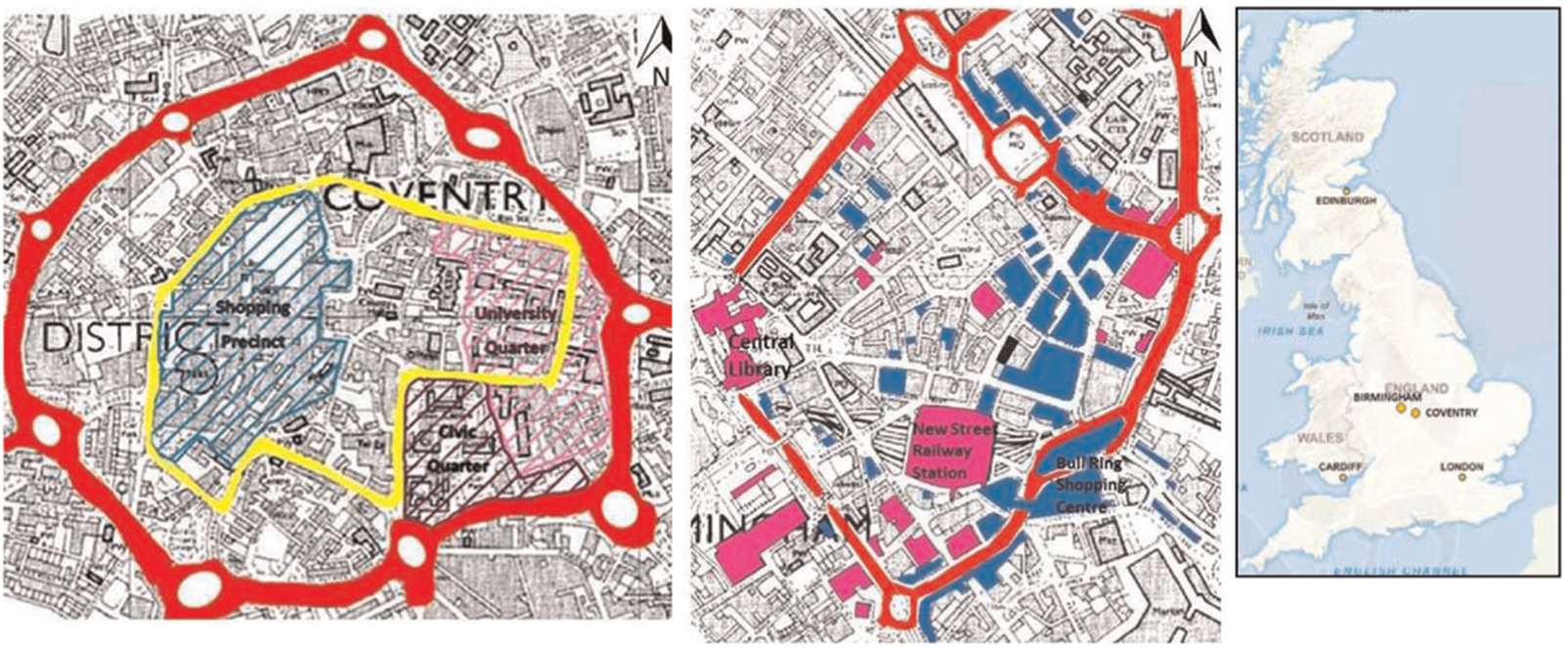
Coventry city centre redevelopment (from c. 1948 onwards) (left). This shows the inner ring road, the shopping precincts, University Quarter and the Civic Quarter. Birmingham City centre redevelopment 1945–c. 1974 (right).
Since the emergence of the mid- to late-20th century historic preservation movement in the industrialised West – and condemnation of modernising urban planners and their apparently insensitive destruction of the historic built form – the state, developers and preservationists have forged consensual partnership-led governance arrangements (Healey, 2010). Following de-industrialisation and the subsequent economic recession of the 1970s–1980s − forces which had devastating impact on the cities’ sizeable industrial bases – both cities have had to respond to development pressure. In Birmingham, notable post-war developments have subsequently been demolished, threatened with demolition or significantly modified. Whilst much of Coventry’s post-war built form remains, parts of the city centre have been regenerated and plans formulated for more. Notwithstanding these changes, the following section details how the post-war landscape continues to stimulate feelings of emotional attachment for certain residents.
Data collection
An adapted go-along method (Kusenbach, 2003) was used to elicit rich data from long-term Birmingham and Coventry residents. As with other recent studies that use go-alongs as a method to capture individuals’ embodied experiences of place (see Anderson, 2004; Bergeron et al., 2014; Degen and Rose, 2012; Jones and Evans, 2012; Muzaini, 2015), walking and talking can intimately capture people’s feelings about place, and act as a powerful way of communicating about (urban) memories. As Bergeron et al. (2014) point out, the go-along method offers an innovative way for residents to recount powerful stories and offers rich potential for further application in urban research.
Twenty-two in-depth go-along interviews – lasting an average of 66 minutes – were conducted with 13 Birmingham and nine Coventry residents. Participants were contacted through a selection of local organisations including local history societies which were asked to provide details of long-term residents who would be willing to participate in this research. The average age of Coventry go-along respondents was 76; for Birmingham the average age was 70. Ten interviewees were female and 12 were male. Respondents were encouraged to choose the routes of the go-alongs and, whilst the routes taken varied, this approach allowed interviewees to provide insights about their shopping (and sometimes working) environments and preferred paths.
A ‘hands-off’ approach was adopted for go-alongs, though interviewees were also asked, where they felt comfortable, to report on their feelings, attachments and experiences when the walks encountered certain elements of the post-war built form (Figure 2). Most residents provided a wealth of largely spontaneous recollections of the physical aspects of the cities (buildings, landmarks and memorials), where they worked, type(s) of occupation, how they travelled to work, frequency and type of shopping expeditions, the sounds, sights and smells encountered, trips to the cinema, pubs and so on. The go-alongs therefore also led to numerous ‘in-the-moment’ occurrences where ‘memory returned’ (Muzaini, 2015). The interviews were recorded and transcribed; transcripts were manually coded and subjected to systematic qualitative analysis with codes drawn from the terms used by respondents’ narratives.
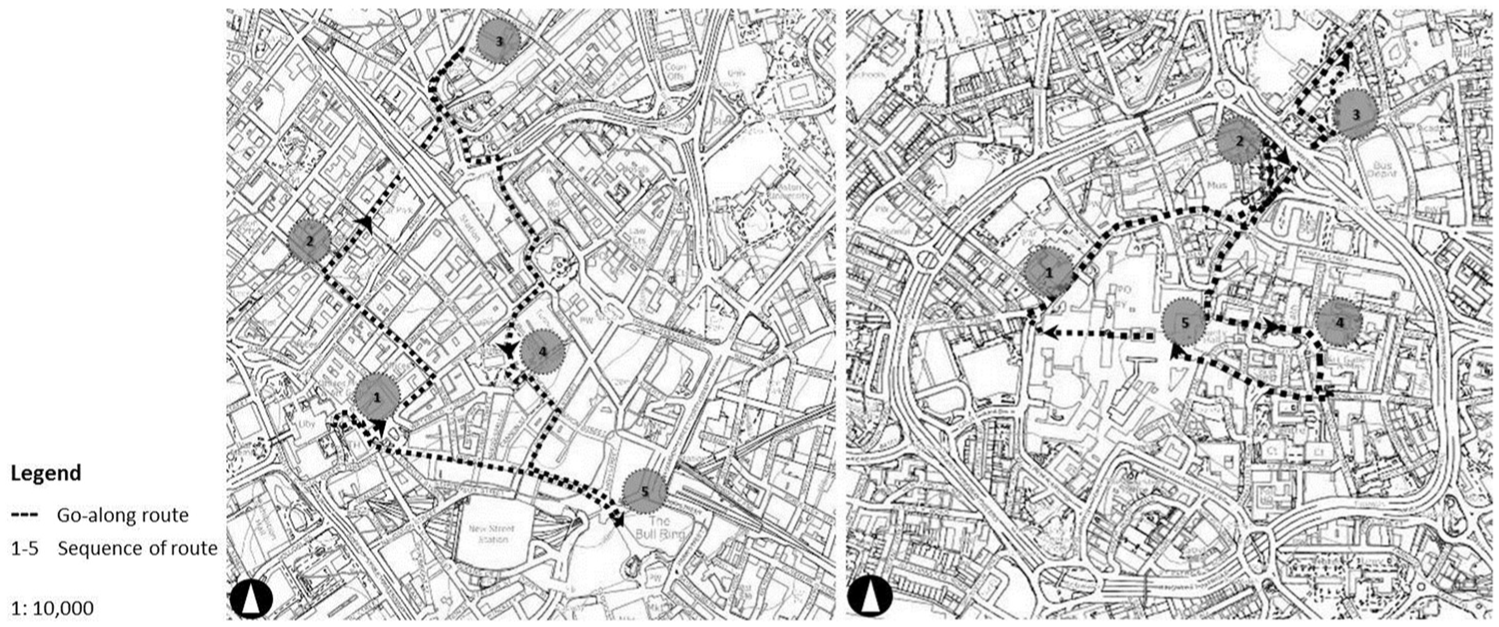
Example of Birmingham (left) and Coventry (right) go-along routes.
This paper makes no claim that the perspectives of a relatively small pool of respondents from white working class/middle class backgrounds should be taken as being wholly representative of the cities’ diverse populations (although it should be remembered that the populations were much less diverse in the 1940s and 1950s). One might also question the extent to which the go-along provides a suitable method for capturing the recollections of long-term respondents because of the inability of some elderly interviewees to walk for protracted periods of time. Ethical questions also arise about how one might deal with the potentially adverse memories of place and the difficult history of the impact of the bombing. Despite these concerns, however, with the exception of one resident (see below), all interviewees reported that they were generally keen to discuss and share their personal experiences. Respondents were also given further opportunity to reflect and expand on their reminiscences during a more relaxed post-walk discussion, whilst the research contact was maintained with respondents as talks were arranged with selected local history groups and societies from which the sample was drawn. 3
The following section introduces the concept of nostalgia and reviews how individual recollections of the material landscape can be invoked in ways that clash, but also coalesce, with official nostalgias. The final section draws on empirical data from long-term Coventry and Birmingham residents to demonstrate how individuals’ reflections of certain urban spaces can also exert an influence on current (and future) behaviour.
Nostalgia and urban materiality
Situating urban nostalgia
Nostalgia, as Boym (2001: xiii) points out, is a ‘sentiment’ of bittersweet ‘loss and displacement’, a ‘romance with one’s own fantasy’ (see also Davis, 1979). It is arguable, however, that this romanticism has ensured that the term continues to be viewed unsympathetically by some psychologists, historians, sociologists, (human) geographers and urban theorists, to whom it is a regressive desire for re-enchantment of an idealised past lost to destructive forces of urban modernity and progress (Pickering and Keightley, 2006: 919; see also Lasch, 1991); a form of imagining that distorts the past as a historical ‘fact’; being ideologically mobilised to sinister ends by repressive nationalist regimes; a commercially exploitable concept; and a tool employed by national heritage programmes and elite attempts to selectively manipulate aspects of the urban environment (see Batcho, 2013; Loveday, 2014). Others warn that alternative, post-colonial, or even banal memories may be suppressed as a consequence of ‘uncontentious’ official attempts to memorialise and refashion elements of the (urban) past (Farmer and Pendlebury, 2013: 265; see also Boym, 2001; Huyssen, 2003; Legg 2007, 2011; Meusburger et al., 2011). Massey (1994: 149), for example, is suspicious of the creation of overly sentimental, ‘place-bound’ ‘false nostalgias’ in a post-modern era characterised by new communications technologies which, for some at least, have undermined the relevance of social propinquity (see also Harvey, 1989).
Whilst there are multiple forces at play in their critical assessments of nostalgia, Pickering and Keightley (2006: 935) suggest that the term cannot be reduced to official attempts to repackage the (urban) past; instead, they argue that certain media of communication (cinematography and music, for example) can carry powerful ‘sensuous charges’ which help connect individuals to the promise of a lost past. Some authors, for example, have provided nuanced interpretations of how individual memories can be important to ‘one’s sense of time and place’ (see Rose-Redwood et al., 2008: 161), with Boym (2001: xiv) suggesting that nostalgia acts as a restorative mechanism for individuals during times of ‘accelerated rhythms and historical upheavals’. Boym also makes a distinction between immutable official versions of the past which refuse ‘to surrender to the irreversibility of time’ (2001: 15), and the ‘reflective [individual] nostalgias’ that challenge, or exceed, authorised histories. Similar messages emerge in Dubois’s (2014) recent anthropological account of memory, where individuals’ dynamic and making sense of the past, as recorded in oral histories and popular protests, stand in contrast to the way in which the past is acknowledged in official sites of memorialisation. Other work also documents how productive nostalgias can emerge in direct opposition to the rational attempts to ‘erase memory from the city’ (Crinson, 2005: 195), through the modernisation or repackaging of certain urban sites (Legg, 2005: 499; see also Fenster and Misgav, 2014). Although these examples clearly demonstrate the creative and constitutive components of individual nostalgias, we also argue, like Bonnett and Alexander (2013), that further exploration into the ambiguous nature of remembering is also needed in order to move beyond the general tendency of separating elitist and popular interpretations of nostalgia.
Progressive urban nostalgias
Rather than argue that certain nostalgias can be ‘reflective’ or ‘productive’, this paper suggests that it may be more useful to explore how these tendencies are interwoven. As Bodnar (1992) pointed out in his discussion of the Vietnam Veterans Memorial in Washington, DC, there is an enduring struggle between what he called ‘official’ and ‘vernacular’ memory, and between advocates of various political sentiments. Writing in the context of the contested politics of urban regeneration, Barnes et al. (2006: 335) contend that, whilst elderly residents criticised official attempts to rejuvenate the industrial district of Port Kembla, in Wollongong, for failing to adequately address existing problems of social marginalisation, some individuals’ sense of place was multiple, negotiated and, at times, in alignment with official regeneration narratives. This is a point recently developed by Bonnett and Alexander (2013: 3) and others, who suggest that, despite continued suspicion levelled at nostalgia among certain urban theorists, future theoretical and methodological attention should focus on understanding the complex interchange between forms of individual counter-remembering and official forms of memory in constructive ways.
Recent psychological and sociological studies have explored how nostalgia might be considered as a multifaceted phenomenon. For example, substantial empirical work investigating the relationships between nostalgia and psychological wellbeing demonstrates how nostalgically tinged remembrances contain a sense of loss and yearning, but also comprise a rich source of optimism, creativity, identity and ‘social connectedness’ (Cheung et al., 2013: 1488; see also Hepper et al., 2014). Although older age is often associated with cognitive and physical decline as well as diminishing social connections, Routledge et al. (2013) suggest that older individuals’ frequent engagement with recollections of young adulthood can act as a catalyst for successful aging. Or, as Ricoeur (1999, 2004) points out, remembering can help individuals to reconcile elements of the past (see also Wildschut et al., 2010). Whilst Iyer and Jetten (2011) acknowledge that there are clear physical, emotional and practical constraints which might hinder an individual’s ability to engage with episodes of their past, nostalgia, for some at least, is loaded with ‘imaginative possibilities’ (Loveday, 2014: 726) and can have powerful transformational qualities (Seremetakis, 1994: 4). Such an approach, as Till (2012: 4) suggests, might assist planners and policy makers in considering future ‘sustainable [urban] transformations’ (see also Fenster and Misgav, 2014). The following case studies demonstrate how, alongside the multiple forms of conflict, individual nostalgias can coalesce with state-sanctioned forms of urban redevelopment, regeneration and conservation.
Untameable multi-sensory memories
It would certainly be difficult to argue against these interpretations of how memory is fundamental to the ‘creativity and imagination’ of individuals (Jones, 2011: 875); however, Ricoeur (1994) also reminds us that forgetting can be freighted with positive possibilities. Whereas considerable work has systematically reviewed how forgetting occurs in the context of collective memories (e.g. Connerton, 2007, 2009), as Nietzsche (1989) suggests, forgetting involves the myriad ways through which undesirable personal reminiscences are separated from conscious thought. Individual forgetting, therefore, may be adopted in various ways: by evading or managing conversations about traumatic personal memories (Switzer and MacDowell, 2009); by repressing, altering/removing physical reminders of the past (Bell, 1997); or by adopting avoidance tactics in order to suppress nostalgic recollections (see Iyer and Jetten, 2011). Moreover, as Muzaini (2015: 105) suggests, if memories, formed mentally, can be transferred to material artefacts, monuments and buildings and so on – to be kept for posterity (see, for instance, Forty, 1999) then the removal, alteration, destruction or avoidance of these objects could be taken as attempts to relegate negative remembrances to oblivion.
Even when personal recollections might be consciously subdued, Seremetakis (1994: 4) points out that certain memories incorporate ‘bodily experiences’ and/or ‘bodily practices’ (see also Connerton, 1989). Or, as Rose and Tolia-Kelly (2012: 5) suggest, individuals’ multi-sensory engagement with places, can stimulate ‘ecologies of seeing, feeling and perceiving’ (see also DeSilvey and Edensor, 2013; Light and Young, 2014; Low, 2013). In their discussion of go-alongs as a method to capture individuals’ embodied experience of urban spaces, Degen and Rose (2012) demonstrate how residents’ once suppressed recollections of how places looked, smelled and sounded in the past were provoked in unusual ways. Seen in this way, therefore, certain individual memories are ‘more than representational’ (Lorimer, 2005); they are shaped from an untameable blend of the cognitive (e.g. recollections) and affective (e.g. feelings and emotions) (Thrift, 2008), capable of stimulating recollections of the material environment that might have been consciously relegated to history; here memory has the ability to ‘strike back’ (Anderson and Huddlestone, 2012). Although some studies continue to shine much-needed light on people’s embodied engagement with different sites (for example, Anderson, 2004; Wylie, 2009), as Muzaini (2015) points out, more empirical work is still required to explore how multi-sensory encounters with material surroundings can provoke unexpected, or even uninvited, reflections of place. To this end, therefore, the paper now turns its attention on the diverse ways in which Coventry and Birmingham residents recollect the post-war rebuilding and the recent efforts at regeneration.
Materialising urban nostalgia
Bittersweet nostalgias
Birmingham’s post-war city centre rebuilding was rapid, confusing and disruptive, particularly during the 1960s; modernist ‘totems’ were constructed (Parker and Long, 2004), including a Central Library, the Rotunda and Smallbrook Ringway office developments, an inner ring road, and the Bull Ring Shopping Centre – the UK’s first indoor shopping centre, straddling the inner ring road (Figure 3). This was an internal expert-driven and paternalist approach to replanning, following a tradition established in the city from the late-Victorian Chamberlain period. Recent academic and practice accounts have re-assessed Birmingham’s sweeping approach to reconstruction for exemplifying the limitations of paternalistic ‘utopian planning’ (Adams, 2011; Parker and Long, 2004) which created a modern city not necessarily suitable for the different needs of increasingly diverse contemporary city centre users (Birmingham City Council, 2011). It is perhaps unsurprising, therefore, given how reconstruction was a rather un-coordinated affair, that negatively tinged yearnings for the ‘bygone days’ (Davis, 1979), before the onset of post-war rebuilding, were recorded by the majority of older Birmingham go-along respondents. Interviewees tended to talk rather contemptuously about the scale of the ‘blocky’ ‘concrete’-feel individual buildings and the rapid approach to rebuilding of familiar landmarks and sites of social spaces particularly during the 1960s; for some, this was a ‘very confusing’ time (Jenny, born 1943), whilst the resultant built form was not necessarily ‘in keeping’ with elements of the Victorian city with which certain older interviewees had identified as children/young adults: It was just a shock to see such concrete monstrosities in the ’60s; awful buildings [with] no feel to them at all! The city used to be our play ground – we were living in Broad Street, and we grew up with town people, and we used to meet the same people to go socialising, meet in Lyons tea shop, [but] they decided to put up these dreadful new buildings. (Iris, born 1934)
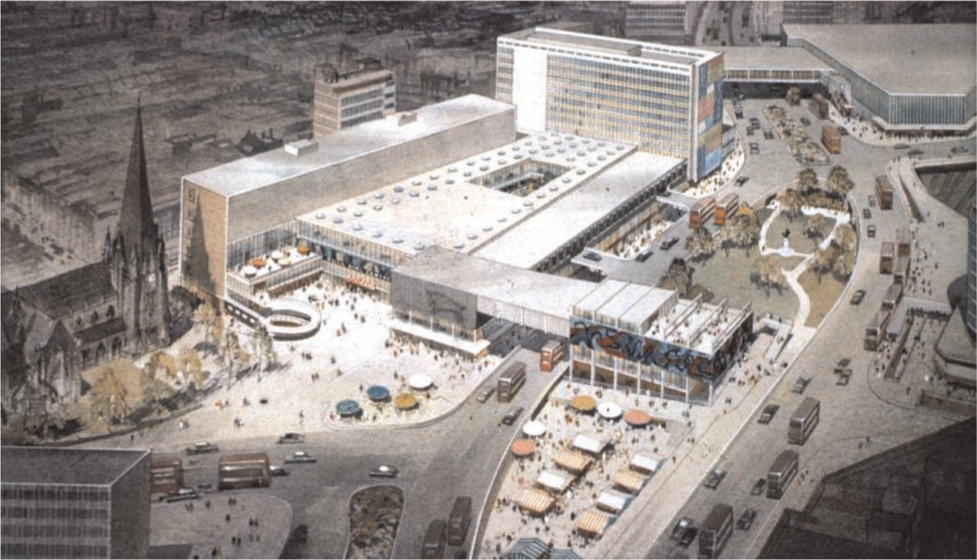
Bull Ring Shopping Centre.
Some female residents, for example, also reported their dissatisfaction with the ‘modern’ visions of the future city and the design of the Bull Ring Shopping Centre (built in 1964), which some found difficult to use, for example to ‘get prams and children up to the top floor’ (Dorothy, born 1945); despite the fact that access ramps, stairs and escalators had been incorporated to help shoppers negotiate the different levels. Although these stories could be interpreted as being a regressive response to the intensification of late modernity (e.g. Pickering and Keightley, 2006), the go-alongs also presented an opportunity, especially amongst those respondents who were in their late teens or early- to mid-20s at the time of rebuilding, to reconnect with the optimism that they had felt during the 1960s (Hepper et al., 2014).
Optimistic recollections
Whilst all of the go-alongs evinced mixed feelings, the ‘bitter’ of these narratives, was arguably less potent than the ‘sweet’ (for example, Cheung et al., 2013; Hepper et al., 2014; Routledge et al., 2013). Specific landmark features, or ‘mnemonic devices’ (Meusburger, 2011: 8) of the new urban landscape encouraged optimistic reflection amongst most respondents: Stan, for example, invoked a particularly enthusiastic experience of how the newly reconstructed Birmingham provided exciting spaces for meeting friends, when he worked in the city centre during the 1960s: In the ’60s, when I was 17, it was all very exciting, of course, because you had no concept of history, of things being knocked down and lost [there was] just lots of bustle in the city […] [I remember] Smallbrook Ringway being built [and] talk about ring roads and all the wonderful things it would bring [laughs]. In our lunch hour me and my mates would often walk into the Bull Ring Centre […] It’d be a new and interesting place, you know, to meet-up […] It was something of wonder because there were lots of interesting things, so it was all very exciting. (Stan, born 1947)
The reconstruction of Coventry’s heavily bomb-damaged city centre began in earnest during the early–mid 1950s and the ‘bold’ ideas for rebuilding owe much to the work of Donald Gibson (1908–1991), the pioneering City Architect (from 1938–1954) who, along with the City Council, oversaw the layout and creation of the Upper and Lower Precinct shopping centre, the pedestrianisation of the main shopping street, and the arcading of the shops and elevated walkways. In their study of residents’ experiences of living through the post-war rebuilding of Coventry, Hubbard et al. (2003, 2004) have illustrated how there was a certain level of disconnection between the intentions of architects and planners to create distance from the real and perceived vicissitudes of the pre-war city and older residents’ feelings of ‘loss’ of pre-war character. Disparaging narratives also came from those go-along respondents who lamented the practical difficulty with negotiating the upper and lower levels of the precincts (Tony, born 1936); most interviewees, however, tended to report more positive nostalgic recollections of young adulthood and spoke fondly about their feelings of curiosity and ‘adventure’ (Raymond, born, 1937) in living, working and socialising in ‘their’ new city. Connecting to Connerton’s (1989: 8) point that elements of the townscape can produce social relations, and Cheung et al.’s (2014) argument that sociality is a fundamental feature of individual nostalgias, John A (born 1937) colourfully encapsulated this sense of ‘excitement’: Although I don’t remember much about the blitz, I know it affected everybody and it’s a shame that that happened; mind you, I don’t know how much would have disappeared as a result of the rebuilding! But for a lot of the older generation, they weren’t very pleased with the reconstruction! But, thinking back, for us, the young ones, I guess, it really was a new and exciting thing. (John A, born 1937)
Bringing into view the narratives of these residents therefore lends some support to the argument widely promulgated in official accounts which document how reconstruction was entirely justifiable for both cities, not least because of the substantial growth in the population of young adults experienced during the first half of the 20th century (see Gutschow, 2013; Sutcliffe and Smith, 1974). Whilst acknowledging that in older adulthood, nostalgia may focus more on self-defining moments of one’s youth, and hence may account for the romantically inflected memories coming from some respondents (Hepper et al., 2014), it could also be argued that most residents’ remembrances were progressive and, moreover, intimately bound together with their ‘mnemonic imagination’ (Keightley and Pickering, 2012) of how they continue to identify with ‘their’ cities.
Ghosts of the urban past
Unpredictable remembrances
In Birmingham, notable post-war developments have been threatened with demolition, demolished or significantly modified – both physically and symbolically – whilst there have been official attempts to create more visually appealing post-industrial commercial, office and retail spaces for consumers, tourists and investors (Hall and Hubbard, 2014: 292–293; see also HRH Prince Charles, 1989). Within the line of Birmingham’s inner ring road, the ‘dysfunctional’ (see Parker and Long, 2004) Bull Ring Shopping Centre has been demolished (in 2000) and replaced by a new ‘Bullring’ mall (opened in 2003), whilst the Birmingham Post and Mail building has been demolished (in 2002) and the NatWest Bank and Central Library are under threat of imminent demolition (see Clawley, 2011, for a discussion of the significance of these buildings and their architect, John Madin) (Figure 4).
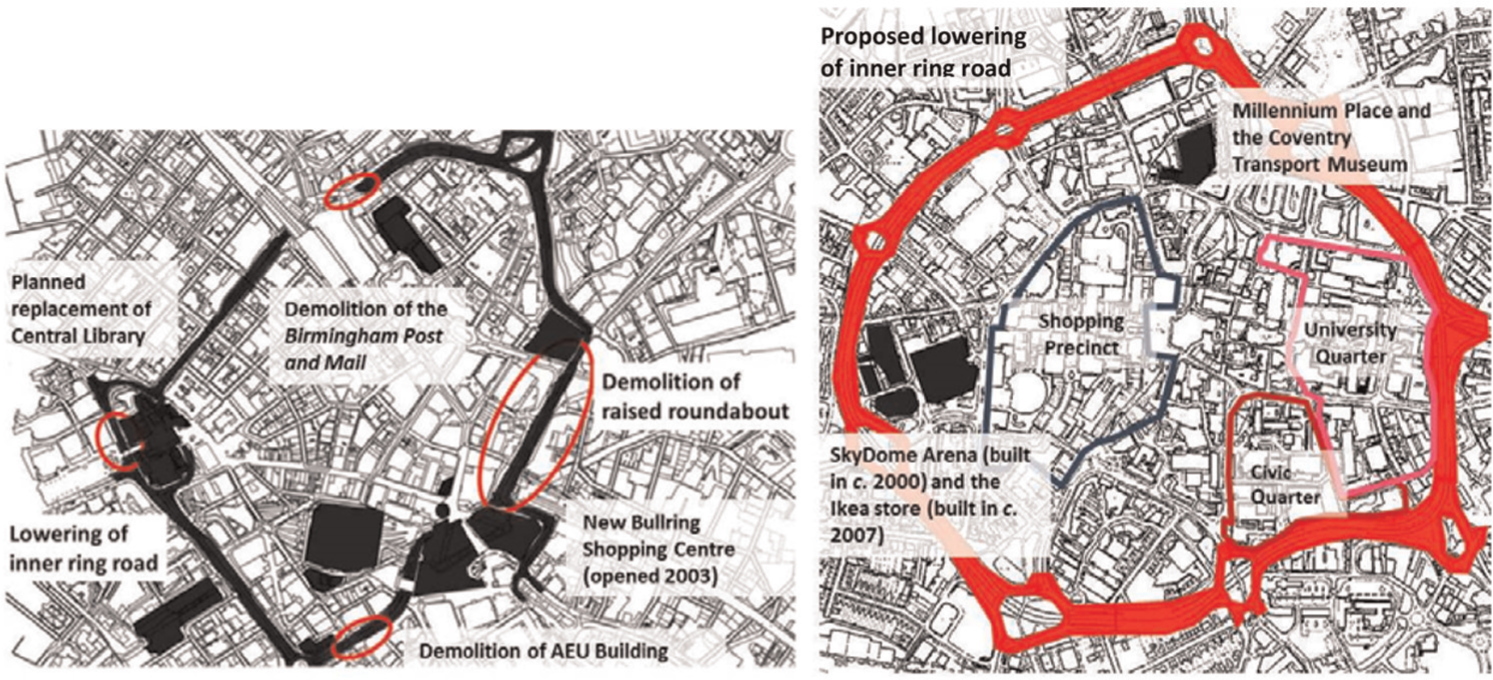
Recent alterations to central Birmingham (left) and Coventry (right).
Several residents spoke excitedly about the wider regeneration (and conservation) attempts to revitalise Birmingham’s post-war landscape and to valorise Birmingham’s industrial legacy as the ‘workshop of the world’ (Birmingham City Council, 2011: 32). For Maggie (born 1937), these efforts have ‘really helped restore the city to its former [Victorian] glory – wonderful!’, following years of economic recession and general decline of the physical environment. Several go-alongs, however, tended to provoke unpredictable memories that arguably transcended recent official attempts to either alter or even conserve the townscape; in this sense, respondents’ narratives ‘escape’ any official efforts to reshape/repackage urban space (Light and Young, 2014). These narratives were perhaps most marked when respondents recalled their experiences of the latest Bullring shopping centre. This new development, as described by the Bullring Company – established under the auspices of Hammerson, Henderson and Land Securities – provides ‘an attractive series of malls, covered streets […] young fashions’ and a ‘cluster of brands’ (see www.visitbirmingham.com), and aligns with the City Council’s ambition of ‘improving the retail offer for the young’ (Birmingham City Council, 2011: 9). The Bullring’s design involved reinstating the pre-war connection between High Street and Digbeth, by removing the ‘elevated roadway, underpasses and access stairs’ associated with the 1964 shopping centre (Spring, 2003: 1). Despite this, most older respondents suggested that their association with this space stands in sharp contrast to the Bull Ring market area of the 1950s (Figure 5) where they used to regularly socialise with family and friends.
This [the latest Bullring] is what is so different; I remember that you used come round the corner of New Street and the ground would gradually slope away towards St Martin’s Church. I remember that the Market Hall was on the right […] we always used to come here as a family here in the ’50s. I remember going to Oswald Bailey’s [clothing outlet] to buy a coat with my parents; I have long since thrown away the coat – [but] it wore very, very well. This area was scruffy in the ’50s, but it was our scruffy. (Jenny, born 1943)
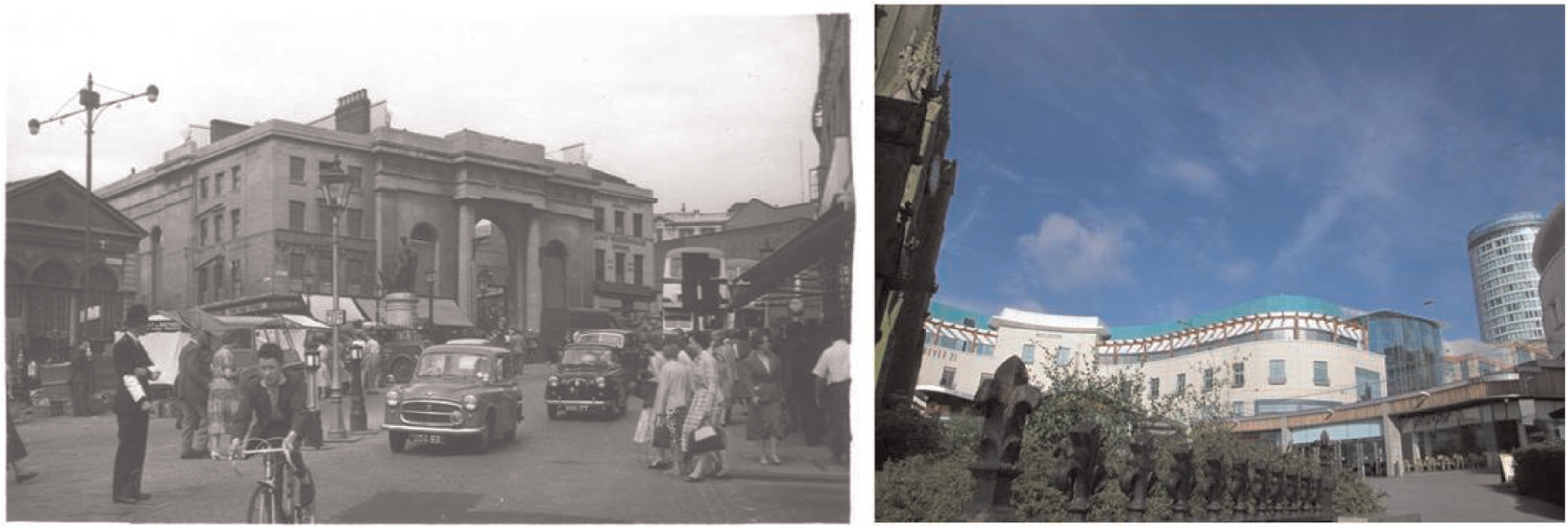
The Bull Ring area in the early 1950s and the bomb-damaged Market Hall (left).
Coventry is facing similar pressures for redevelopment of what certain academic, practice and popular accounts have come to regard as a well-intentioned, but ultimately ‘limited’, attempt to implement a unified architectural concept, and criticised for having negatively impacted on the city’s economic situation and the overall quality and experience of the environment (see Gould and Gould, 2015; Hubbard et al., 2003, 2004). However, substantial features of the city’s post-war built form have also been ‘creatively preserved’ through state protection and remain largely as Gibson (and his colleagues) intended, despite recent regeneration initiatives. The threat (as some interpret it) of radical redevelopment during the early 2000s led to the Lower Precinct becoming nationally protected in the early 1990s; a message that has been reaffirmed in the City Council’s position that ‘all [future planning] proposals should […] sustain and reinforce special character and conserve […] Coventry’s ground-breaking post-war reconstruction’ (Coventry City Council, 2012: 110). Some residents spoke proudly of Donald Gibson’s ideas for specific retail and civic spaces and the overall preservation of the city’s reconstruction-era architecture: for Dave, the precincts have ‘really stood the test of time’ (Dave, born 1941) (Figure 6).
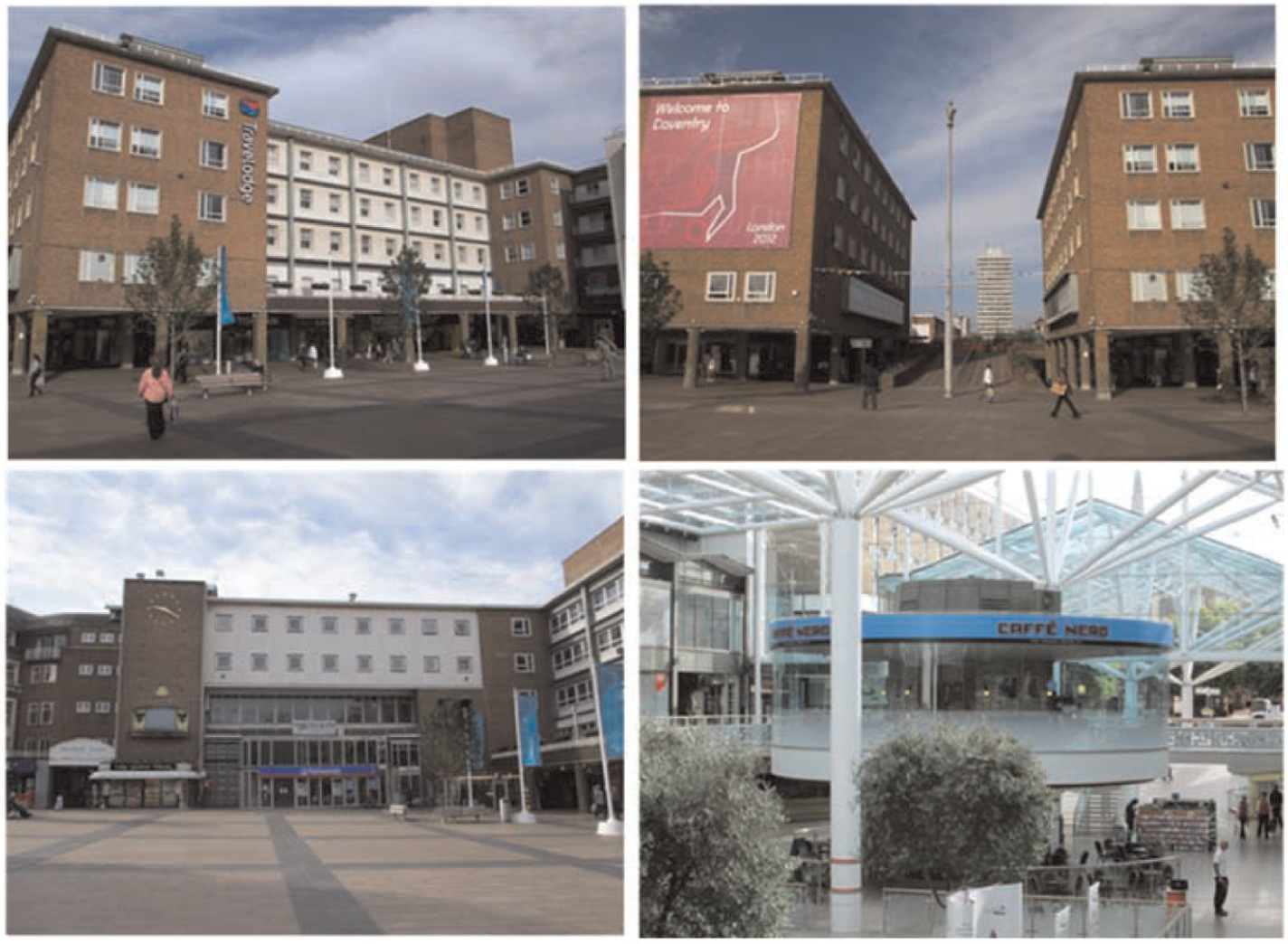
Retention of Coventry’s post-war city centre: Hotel Leofric (top left); the entrance to the Upper Precinct (top right); the Rotunda cafe as refurbished in the now-covered Lower Precinct (lower right); Broadgate House (lower left).
The largely sympathetic attitude of respondents of both cities’ attempts at regeneration and conservation appears, at least in part, to encourage their interest in continuing to use ‘their’ cities as spaces for shopping, meeting friends and entertainment. And yet, as Bonnett and Alexander (2013) demonstrate in their discussion of former residents’ attitudes to the conserved aspects of Newcastle’s pre-war (and post-war) heritage, nostalgic feelings of renewed civic pride are not always uncritical. Some Coventry interviewees, for example, were concerned about how, in their view, the post-war development ‘really holds the city back’ (Philip, born 1938) from responding to the impact of the late-20th century recession and the more recent post-2008 economic downturn; here Philip suggested the city centre ‘needs to get bigger and better shops’. Echoing Ricoeur’s (1999) point that memory can be used by individuals to reconcile aspects of the past, most respondents suggested that they have ‘learnt to live with’ the legacy of city’s post-war rebuilding (John H, born 1931). Hugh, for example, provided a particularly telling recollection of how ‘Coventry people’ have a rather ambivalent relationship with the preservation of aspects of the city’s post-war core: For the time, the City Council did a very good job [with the reconstruction], as the size of the mainly young population increased with the manufacturing and the old medieval town would not have supported the population and traffic [but] I think most Coventry people I know have sort of come to accept the precincts; I have never heard people say: ‘oh this is fantastic’. If anything, the city centre has sort of grown with them and all around them. (Hugh, born 1940)
Unsettling multi-sensory memories
The legacy of Coventry’s wartime destruction also continues to be employed by national and local civic ‘elites’ as a resource in their quest for international reconciliation (Goebel, 2011: 183). This is exemplified by its new and old cathedrals, the University of Coventry’s Centre for the Study of Forgiveness and Reconciliation and the city’s ‘special’ relationship with other bombed European cities, including Dresden, Kiel, Caen, Lidice, Belgrade, Arnhem and Warsaw (see Gutschow, 2013). Resonating with Ricoeur’s (1999: 10) point that ‘to keep alive the memory of suffering’ through individual remembering acts as an important function of present and future reconciliation, several interviewees spoke of how they continue to identify with Coventry’s significance as an internationally recognised ‘commemorative cosmopolis’ (Goebel, 2011: 168). Rather than being ensnared in a ‘place bound’ nostalgia (e.g. Massey, 1994), the go-alongs helped to stimulate residents’ recollections of other places such as Birmingham and other war-damaged and post-war reconstructed cities in the UK and Europe (see also Degen and Rose, 2012). Or, as Rose and Tolia-Kelly (2012: 5) suggest, (urban) materiality can be ‘temporally and spatially unfixed’ through engagement. During one go-along, for example, Barry spoke openly about the enduing ‘friendship link’ shared between Coventry and Dresden (Figure 7); whilst walking past the ‘modern’ Cathedral, he proceeded to talk of the importance of maintaining the historical and geographical ‘bond’ between the two war-ravaged cities: I went to Dresden recently; the people in Dresden talked to me very nicely, and they think Coventry had it as bad as they did, but I don’t think we did, compared to them. I suppose from about ’47 or ’48 […] we just accepted it, really; we knew that we would get bread, butter and jam […] I can’t remember going without and hungry – not like those in Dresden, terrible, really. But the people in Dresden were talking to me like I was their next door neighbour – it’s good to see that kind of special bond kept, you know! (Barry, born 1937)
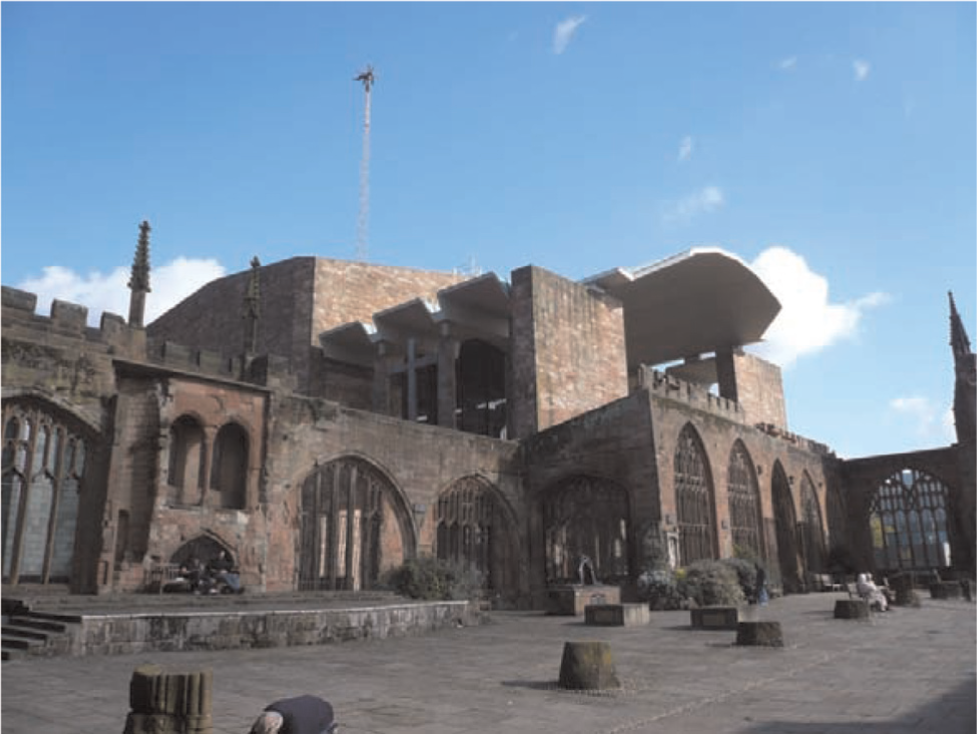
Coventry Cathedral: an international symbol of regeneration and reconciliation.
Whilst physical sites undoubtedly exercise a ‘memorial function’ (Ricoeur, 2004: 43), nostalgia, as Seremetakis (1994) contends, also involves individuals’ multi-sensual engagement with places. Similarly, DeSilvey and Edensor (2013) suggest that people’s engagement with urban spaces can ‘release’ perceptual recollections in unforeseen ways that will exceed the design intentions of particular (urban) places/sites. For some individuals, however, walking and talking about the architecture also provoked some rather unsettling ‘ghosts’ of not just the post-war years, but also the more recent past (Bell, 1997: 827). In Birmingham, for example, during one go-along, Malcolm, a student at night school during the early 1970s, was immediately struck by a passing siren outside Snow Hill Railway station. On hearing this, Malcolm recounted the time when the Mulberry Bush Pub, situated at the base of the Rotunda, was bombed by the IRA attack of November 1974 (where it is estimated that around 180 people were injured and over 20 people lost their lives).
The sound of that siren reminds me, actually! I went to college night school and one night you never heard any so many sirens in all of your life! That was of course was the Birmingham pub bombings; it was horrible to hear so many sirens! […] Although, that bombing was a great turning point for the fortunes of the Rotunda; it sort of cemented local opinion really towards retaining it. But I never want to hear sirens like that again. (Malcolm, born 1947)
Sensorial recollections also stimulated negative emotions for others, too. Whilst standing at the base of Birmingham’s Rotunda and looking down towards St Martin’s Church and into the (new) Bullring, Dorothy’s recollection points towards the blending of auditory, ocular and olfactory senses (Low, 2013); it also demonstrate how absent sites can awaken unusual, and in this case, adverse affective reflections of loss and sadness. On the one hand, Dorothy’s narrative relates to Boym’s (2001: 8) idea that nostalgia involves ‘a mourning for the impossibility of mythical return’, but her account also points to one ‘coping’ strategy she uses to manage adverse memories by avoiding coming into contact with certain places that may elicit the emergence of unsolicited negative memories about the breakdown of her marriage.
The Bull Ring [shopping centre] was horrible! This area used to be a narrow cobbled street that led to the church stall, carts; I remember as a child them pulling the buildings down. Then they put in new [pedestrian] subways that weren’t very nice; in fact, this walk actually reminds me of why I don’t come into town very often now! I remember going down steps under a dark horrible and smelly tunnel […] and I used to meet my ex-husband on the train and through our courtship […] all that around here next to New Street station had to be demolished too to build a huge great shopping centre; that was quite sad because we used to meet here when we were courting, you know […] but those were happier times, then, before my divorce! (Dorothy, born 1945)
Her recollection also problematises the idea of identifying or foretelling which material object can encourage recollection, whilst also highlighting how aspects of the submerged past hold the potential to rupture the immediate experiencing of urban space ‘without intentional solicitation’ (Anderson, 2004: 9). These recollections might be interpreted as being embedded in an individual’s consciousness, as if ‘haunting’ an individual’s existence (see DeSilvey and Edensor, 2013). As Legg (2007: 458) succinctly points out, such accounts are indicative of how the ‘agency’ of non-humans – buildings, infrastructure and even absent artefacts – can ‘seep into, and provoke, memory’ in unforeseen and unpredictable ways.
Conclusions
This paper makes two main contributions to the ongoing re-appraisal of urban nostalgia. First, it argues that instead of interpreting nostalgia as being inherently regressive and in opposition to the forces of reconstruction and modernity, bringing into view empirical data collected via a series of go-alongs from long-term residents of two UK cities, Birmingham and Coventry, reveals something of the multi-layered nature of the term. Both Birmingham and Coventry respondents, like those former Newcastle residents who contributed to Bonnett and Alexander’s (2013) recent study, reported narratives which were not simply sentimental; they combined a loss of the city’s material form as a consequence of reconstruction (especially amongst older residents), but also a certain sense of enthusiasm about the types of opportunities which post-war modernity might bring to ‘their’ cities, together with a perceived longing for future redevelopment schemes to be more sympathetic to the way in which residents identify with particular urban spaces. For certain Coventry residents, however, their individual memories arguably highlight a disconnection between ‘coming to terms’ with the everyday elements of a largely unchanged and an officially preserved post-war townscape. Despite this, Coventry’s international significance as an official symbol of post-war reconciliation continues to stimulate people’s imaginative connection with the city and other places.
This comparative approach, informed by the use of a go-along method, proved particularly useful in eliciting perhaps previously unspoken narratives about the potential of individuals’ urban nostalgias; these are accounts which might remain hidden beneath an embedded academic (and practice) convention of uncovering meaning from data through forms of representation (Lorimer, 2005). And yet, there was no substantive evidence emerging from the go-alongs that these residents would feel emboldened to become more involved in shaping future planning or regeneration initiatives. However, as Fenster and Misgav (2014) point out that, approaches which recognise the diversity of individuals’ memories offer important, yet hitherto untapped, ways to influence how planners and other decision-makers use residents’ memories in creating future healthy urban regeneration schemes (see also Till, 2012).
Second, this paper has explored the ways in which the past informs individuals’ present-day subjectivities provide a richer interpretation of human engagement and experience of (urban) space. It therefore contributes to the broader arguments informed by recent non-representational work in parts of the social sciences (e.g. Thrift, 2008) regarding the interaction between materiality, memory/forgetting and affect. This paper therefore sheds fresh empirical light on how multi-sensory nostalgic remembrances can interrupt everyday experiencing of urban space in ways that can also affect current and even future behaviour (see also Light and Young, 2014; Muzaini, 2015). Transferring this approach into practice raises methodological, practical and ethical challenges. When tasked with resuscitating long-buried individual memories as a corrective to potentially marginalising official discourse, planners, developers and conservationists should also consider the implications of dealing with unsolicited and potentially undesirable recollections emerging from those individuals wishing to forget. As a corollary to this, however, our relatively small sample drew on the perspectives of white middle-class residents; therefore, there is further scope to expand this approach in ways that might consider how the memories of urban space are brought to bear according to racial, gender, socio-economic positioning and/or physical ability.
Footnotes
Acknowledgements
The authors would like to thank the anonymous referees for their helpful suggestions. Thanks should also go to all the respondents who agreed to contribute to the study and to Dr Monica Degen, Dr Phil Jones and Professor Alastair Bonnett for their advice on the development of this paper.
Funding
This research received no specific grant from any funding agency in the public, commercial, or not-for-profit sectors.