







Abstract
Social scientists have documented the harm associated with manufactured home community (MHC) redevelopment, however, relatively few studies consider the extent to which popular sociocultural beliefs about “trailers” and “trailer parks” shape policy decisions in ways that exacerbate, rather than alleviate the challenges they face. Drawing on ethnographic data collected over a period of 28 months (2011–2016), we present a case study of a community mapping project in Lincoln, Nebraska to examine the influence of dominant cultural beliefs that consider MHCs to be inherently poor, unsafe, and unhealthy on housing policy and programs. Our analysis reveals three key dynamics: (1) data were often interpreted in ways that confirmed preexisting biases among non-MHC stakeholders; (2) there was a sizable disconnect between the lived experiences of MHC residents and the assumptions embedded in broader policy and service systems; and (3) prevailing narratives framed the long-term decline of MHCs as inevitable, rather than the result of under regulation, systemic disinvestment, and corporate malpractice. This case study highlights how well-intentioned policy initiatives driven by objective data can unintentionally reproduce the disparities they aim to address when they are shaped by unexamined sociocultural beliefs and biases.
Introduction
Manufactured and mobile homes (MHs) provide an important source of affordable housing in the US, serving over 20 million American residents (Clennin et al., 2025). Due to lower production and placement costs for MHs compared to conventional housing, consumer costs are substantially reduced, positioning MHs as the predominant form of unsubsidized affordable housing in the US (Dawkins, 2025; Sullivan et al., 2022). This is a particularly important source of housing in light of the growing housing affordability crisis that has made homeownership increasingly difficult for many households, especially those with low- or middle-incomes (Lee et al., 2022). Despite the potential to ease housing shortages and provide an affordable solution for already vulnerable populations, MH owners and residents face a range of challenges that affect their long-term viability and appeal as a low-cost housing option (Clennin et al., 2025; Durst and Sullivan, 2019; Sullivan, 2017a). Manufactured homes are often subject to policies and land use regulations that affect their financing, location, vulnerability to hazards, and the quality of services to their communities, undermining their affordability and sustainability (Clennin et al., 2025; Dawkins and Koebel, 2009; Herbert et al., 2024; Sullivan et al., 2022). Furthermore, researchers have noted that manufactured home communities (MHCs) and their residents face stigma including concerns about crime, safety, and appearance of MHCs with presumed effects on nearby property values, claiming that these negative stereotypes lead to local regulations that reject or resist MHC development (Atiles et al., 1998; Beamish et al., 2001; McCarty and Hepworth, 2013).
In the US, public officials and policymakers rely heavily on geospatial data based on census tracts and zip codes, as examples, to identify and map areas with poor health outcomes (Krieger, 2006). Many public health surveys and studies regard these geospatial units as synonymous with “neighborhoods” or “communities” (Osypuk and Galea, 2007). The use of these discrete geographical units as communities is a departure from its traditional conceptualization across the social sciences. In contrast to municipalities, or cities, whose legal boundaries are set by the state and are defined by their heterogeneity, communities are typically described using more abstract language that stresses shared values, beliefs, and interests among a group of people over definite borders (e.g., Anderson, 1983; Redfield, 1956).
The continued reliance on geospatial data in public health, urban policy, and planning demands inquiry into how these data may reaffirm unconscious stereotypes and exacerbate existing inequalities among marginalized populations. While we acknowledge that such data, as with any abstracted model, cannot be expected to account for all variation between households, we nevertheless question to what extent dependence on these geospatial units of measurement affects how policymakers and public health officials understand the patterning of health, wealth, and other social characteristics across diverse urban communities. This article posits that non-MHC resident stakeholders’ a priori assumptions regarding health and safety conditions and deterioration in MHCs affect how geospatial data is used, interpreted, and translated into policy or programming. To address this claim, we present an ethnographic case study from a multiyear anthropological research project with manufactured and mobile home owners in Lincoln, Nebraska, which includes four communities scheduled for closure, as well as nonresident stakeholders involved in project, planning, and redevelopment efforts in these communities. The objective of this study was to better understand the symbolic and material consequences of “trailer trash” stigmas (see, Kusenbach 2020) in relation to the planned redevelopment of Lincoln’s remaining MHCs by 2040. As we show, negative stereotypes can affect how urban planners, policymakers, and health officials, among others, normalize present conditions and reduced outcomes in MHCs, which in turn offers justification for community closures and resident displacement.
Background
The limited scholarly and political attention to MHCs is at odds with their importance in the context of the worsening affordable housing crisis in the US and worldwide. Although MH owners are recognized as “homeowners” by the US Census Bureau, several categorical differences set MHCs apart from typical urban neighborhoods (see, Lamb et al., 2023). Zoning ordinances in many US municipalities restrict MH owners to private, for-profit MHCs in which residents own their homes but not the land upon which their homes are sited (Becker and Rickert, 2019; Dawkins and Koebel 2009; Flippen 1974; Geisler and Mitsuda, 1987; Mandelker, 2016). Moreover, in most MHCs, residents rent the land on which their homes are placed, incurring an additional cost that reduces their affordability compared with traditional home rentals (Durst and Sullivan, 2019), and leaves them vulnerable to eviction through community closure (Sullivan, 2017a).
Although the quality and aesthetics of MHs have improved in recent decades, public perceptions continue to portray MHs as low-quality housing (Beamish et al., 2001; Durst and Sullivan, 2019; Herbert at al., 2024). Concerns that integrating MHs into communities will lead to declines in safety and nearby property values have been voiced by residents, policymakers, developers, and nonprofits (Beamish et al., 2001), although these fears appear to be exaggerated or unfounded (Atiles et al., 1998; McCarty and Hepworth, 2013). One barrier to increasing the acceptance of MHs as part of affordable housing strategies is public perception of this type of housing. These negative opinions about MHs and MHCs also extend to their residents who face housing stigma. Views of MH residents as undesirable have continued since the early 20th century when the Great Depression forced poor families from conventional housing into trailers, leading to class-based prejudice (Atiles et al., 1998). These prejudices have persisted with commonly held beliefs that MH residents were poor, uneducated, immoral, and irresponsible drifters that were unlikely to contribute to society (Atiles et al., 1998; Kulkin, 1977; Beamish et al., 2001; Kusenbach, 2020). Harmful assumptions about MH residents not only impact their interpersonal interactions and sense of community belonging (Kusenbach, 2020), they can also negatively influence policies and regulations that govern non-traditional housing (Beamish et al., 2001; Dawkins and Koebel, 2009; Herbert at al., 2024; Kulkin, 1977).
The present case study demonstrates this reciprocal relationship between housing stigma and policy by reporting on a community health mapping project in Lincoln, Nebraska that did more to reaffirm officials’ negative opinions regarding MHCs than it did to motivate efforts that might improve conditions in these communities, despite relying heavily on objective geospatial data to inform their decisions. Under Lincoln’s municipal zoning code, mobile home courts are a non-conforming land use that requires a special permit to operate; prior to 1969, MHCs were restricted to commercial and industrial districts and prohibited from residential zoning districts. In Lincoln, MH owners are relegated to MHCs, which are only authorized under a special permit and have no distinct zoning classification; where individual park operators enact further limits on the age, condition, and type of MHs allowed in the community (City of Lincoln, 2024). Under this arrangement, park operators are recognized as the “real” property owners whose “quasi-governmental power” over MHC residents (Miller and Evko, 1985; see also, Schmitz, 2004) can result in extrajudicial and/or no cause evictions (Clark, 2017; Desmond, 2016; Formanack, 2018), home repossession (NCLC, 2014), and community closures (Sullivan, 2014, 2017b, 2018). Last, the spatial marginalization of MHCs to less-desirable areas, such as polluted industrial-commercial districts or along the urban periphery located far from public transportation, community services, and employment centers further contributes to the sense of separation between these communities and other residential neighborhoods (Chernoff, 1983; MacTavish, 2007; Pierce et al., 2018; Sullivan et al., 2022).
In the aftermath of the 2007–2008 subprime mortgage market collapse and subsequent global financial crisis, Lincoln (pop. 294,929) emerged as one of the few national “recession winners” (Wagner, 2019). Buoyed by a strong public sector and the state’s agriculture-based economy, the Nebraska state capitol received several accolades in the early 2010s, including highest well-being (Witters, 2013), happiness (Olberding, 2013), caring (Lincoln Area Development Partnership (Lincoln Partners), 2024), and the lowest national unemployment rate from 2013 to 2015, accompanied by a spate of urban revitalization projects and the launch of the citywide “Life is Right in Lincoln” branding campaign. Amidst the civic excitement, several nonprofit and public sector entities sought to capitalize on Lincoln’s post-recession momentum, bringing several of the city’s lowest-income neighborhoods under increased public attention and scrutiny.
Among the most influential organizations in Lincoln’s public health and nonprofit landscape, the Lincoln Community Health Endowment (CHE) funds health-related projects throughout Lincoln (Lincoln Community Health Endowment, 2024a). In 2015, in partnership with the Lincoln-Lancaster County Health Department, launched its Place Matters mapping project. Signaling a shift in the endowment’s healthcare-centered mission toward a broader interest in health interrelated with other social issues such as housing poverty, education, behaviors, and so on, Place Matters was designed to visualize health disparities across Lincoln’s neighborhoods and to identify priority census tracts. With its interactive maps and annual public updates, Place Matters has emerged as the evidence base guiding CHE’s grant priorities and funding decisions. As a result, CHE’s Place Matters maps function as both a diagnostic tool and strategic framework for identifying areas with the greatest health disparities.
The widespread use of census tracts as proxies for neighborhoods in public health and urban planning has been critiqued for imposing arbitrary boundaries that might well reveal the existence of population disparities, but fail to capture the cause or scale of such disparities (Formanack et al., 2023; Kramer and Hogue, 2009; O’Campo 2003). As we illustrate, while CHE’s Place Matters initiative aptly highlights disparities across neighborhoods and communities, its reliance on geospatial data obscures the historic, social, and cultural realities that produced such inequities. This article offers nuanced insights that reveal how sociocultural biases may affect how quantitative geospatial data are interpreted, and consequently, influence program and policy decisions that impact urban MHC residents.
Research methods
The data used in this study was collected as part of a larger multiyear anthropological research project focused on justifications for MHC closures and resident displacement following the 2007–2008 subprime mortgage crisis (Formanack, 2018). Multiple theoretical frameworks informed this project, including critical materiality (e.g., Hodder 2012), ruination studies (e.g., Stoler, 2013), and architectural anthropology (e.g., Stender et al., 2021). Ethnographic fieldwork for this research occurred over a period of 28 months from 2011 to 2016 in Lincoln, Nebraska, including 12 months in which one author, Formanack, rented a MH at Crown Court MHC (in 2015). Data was collected by Formanack through participant observation, semi-structured interviews, and surveys. This data was used in the present study to illustrate deteriorating conditions and social disparities in MHCs and examine non-MHC stakeholders’ a priori assumptions about health and safety conditions in MHCs, and the impacts of these assumptions on policy and programming decisions.
Participant observation
Hundreds of hours of participant observation were conducted at the Crown Court leasing office where Formanack volunteered from February-December 2015 and in June 2016, and at secondary research sites including city and county department offices, public engagement events, and stakeholder meetings focused on issues pertaining to affordable housing and public health. Fieldnotes and photographs were taken over the duration of the study.
As a volunteer in the leasing office, Formanack observed interactions between MHC residents and staff, met and recruited interview participants, and was given access to resident records as part of a yearlong digitization project for Crown Court, including residents’ water complaints and bills referenced in this study. Participating in public events provided insight into the perceptions and assumptions about MHCs expressed by non-resident stakeholders, including representatives from nonprofit networks and state and city governments. Information about policies and programs related to health and safety conditions at MHCs were also discussed at these events.
Semi-structured interviews
Individuals with experience residing in or working with MHCs were recruited using convenience and snowball sampling to participate in semi-structured interviews. Initial interview participants were identified by Formanack through volunteer work at Crown Court and participation in local events and public forums on topics impacting MHCs and MH owners. Interviews were conducted with 16 Crown Court staff members, five elected policymakers and municipal staff, six staff members of Lincoln housing-related nonprofit organizations, and four other stakeholders from industries that work with MHCs.
Semi-structured interviews consisted of approximately 10 questions about the following themes: knowledge of and previous experience working with MH residents and in MHCs; attitudes towards MHs and MH residents; health and safety concerns in MHCs; and the future viability of MHCs in Lincoln. While the focus of the questions was consistent across all interviews, specific questions were personalized for individual participants depending on their position or relationship with MHCs (e.g., questions asked of elected officials were geared toward policy decisions while staff members were asked about park-specific experiences). Informal follow-up interviews with non-resident MHC stakeholders were conducted where permissible in 2016.
Surveys
Perceptions of MH ownership, and the safety, affordability, and future viability of MHCs were evaluated through an open-ended questionnaire administered to 23 non-resident MHC stakeholders in 2016–2017. Participants were recruited through convenience sampling during two public research presentations on topics related to MHCs.
Findings and discussion
With an ethnographic case study as its central analytic, this article asks to what extent public perceptions of MHs contribute to the normalization of current disparities between MHCs and neighboring communities, and shape the outcomes of projects affecting policy and funding decisions such as the 2015 CHE Place Matters mapping project. Guided by the initial Place Matters priorities—poverty and health—our analysis centers on three main themes: (1) bias confirmation in interpretations of objective data; (2) a disconnect between the lived experiences in MHCs and broader policy and support systems; and (3) the self-reinforcing perception that MHC decline is inevitable.
Bias confirmation
“I believe Lincoln should be incredibly proud of what we are doing,” remarked the CEO of Bryan Medical Center, Kimberly A. Russel, at the June 2015 CHE annual meeting. “But of course, no one’s resting on our laurels. We are continuing to try to do more for our community, and today’s conversation,” she continued, “I believe, will take us another few steps forward.” Speaking to the standing room-only audience of elected officials, state and city employees, nonprofit staff and community health advocates, Russel noted in her opening address how: It’s an awfully good sign when you walk into a room and there’s all this buzz going on, and lots of conversation. We hope that you’ll be talking, if not before the meeting then certainly by the time the meeting concludes, about all these maps that are around the room.
The spacious reception hall was decorated with large colorful maps, each measuring a range of health, poverty, and wellness-related indicators (Figure 1). Several maps were included in the CHE annual report, of which numerous copies had been left at each table for attendees to take with them (Lincoln Community Health Endowment, 2024b). In addition to reflecting the theme of the 2015 annual meeting, Place Matters, these maps also marked a new direction for CHE and its programming and funding priorities moving forward.

Screen capture from the CHE Place Matters Annual Report to the Community 2014–2015, accessed via YouTube (https://www.youtube.com/watch?v=CIbDp_eE4LQ), 15 February 2024.
“So, why did we pick maps?” Lori Seibel, CHE’s President and CEO, asked the audience rhetorically. “Maps,” she explained, if you think about it, are very, very personal documents. Time and time again, I’ve asked people when they’ve looked at these maps what they look at first. Almost one hundred percent of the time they say, “where I live”, or they’ll say, “where I used to live or where I want to live”, […] Maps connect you to a place, connect you to a purpose in this city, and that’s why maps can tell stories that a bar graph or a number chart just really can’t.
Later, Formanack struck up an informal conversation with two other women seated at the same table, both employees at the Nebraska Department of Health and Human Services (DHHS). Formanack introduced herself as a researcher studying MHCs, admitting to the women that she had done exactly as Seibel had said, immediately finding the MHC where she was living on each of the different maps. One of the women excitedly asked Formanack if she knew about the two MHCs that had been declared “substandard and blighted” a few years prior.
“Crown Court, I think?” 1 her coworker asked, to which the first woman nodded in response. “Yes, that’s the one,” she said. “It’s good that they’ve closed down that one— ” Formanack interrupted her, informing both women that Crown Court, one of Nebraska’s largest MHCs, had not closed; it was the same MHC where Formanack was currently renting a home and conducting field research. Unperturbed, the first woman shrugged and replied, “Well, then it must have went away, and now it’s back,” suggesting that a 200+ unit section of the MHC had been closed and reopened in less than three years. These women’s comments typify public and political sentiment toward these neighborhoods in Lincoln, particularly among policymakers, public and nonprofit employees, and affordable housing advocates, that all the remaining MHCs would be redeveloped within the next 5–10 years. These expectations circulated informally, as the brief ethnographic vignette above illustrates, as well as formally through official planning documents such as the Lincoln/Lancaster County 2040 Comprehensive Plan (LPlan 2040, 2016), which omits MHs and MHCs entirely.
Not unlike public health and urban planning agencies across the US, CHE’s Place Matters maps relied heavily on census tract-level data, as Seibel explained, to take information. We’re trying to take data and we’re trying to develop solutions. We want to be pointed in the right direction. We want to get personal with the city so that we can make big changes … We’re looking to use these maps to help guide us in the right direction.
However, as the preceding ethnographic vignette with the DHHS staff illustrates, these maps and the communities they represented were invariably interpreted through a sociocultural lens that sees MHCs as “high-risk” across numerous economic, health, and safety measures.
Inconsistencies between how the Place Matters map data were interpreted between MHCs and other neighborhoods were also noticed by some project leaders at CHE. During an informal interview with CHE staff in July 2015, about a month after Place Matters’ public unveiling, one staff member told Formanack that certain MHCs had been troubling their team since the mapping project began. The initial maps identified three locations that the endowment and its stakeholders decided to target as high-priority areas; this included an historic industrial neighborhood a mile west of Lincoln’s revitalizing downtown district that encompasses several of the city’s oldest and smallest MHCs: “I have to admit, they said, when we were first doing the mapping project and looking at these areas, someone would say, well, there’s a mobile home park there. But we never thought about it beyond that.”
Moreover, this staff person added that while the two non-MHC areas had been extensively discussed during stakeholder meetings with specific program ideas suggested, conversations about the third area that included MHCs had been vague and generalized. While CHE and its partners were interested in knowing what factors contributed to higher rates of poverty, unemployment, and lower overall resident health and wellbeing in the more traditional residential neighborhoods, the mere presence of MHCs seemed to both indicate and explain the same in the third area. Although the Place Matters team had some previous experience operating in MHCs or with MH residents, a major theme that developed in this initial interview was that more information was needed. It was decided that the CHE team would bring up MHCs at the next stakeholder meeting, which was described as an “unbiased” setting, “then, we’ll just sit back and listen to what everyone has to say.”
The widespread belief held by many Lincoln officials that MHCs had no viable future is reflected in the city’s long-range planning documents and in their own words. Described to Formanack as an “all boats rise together” strategy by a former member of the Lincoln City Council, Lincoln’s long-range planning emphasizes housing variety as a strategy to support the development of “complete neighborhoods” that are diverse across multiple axes (LPlan 2040, 2021). However, in addition to the total absence of MHs in Lincoln’s comprehensive and long-range planning, its current zoning policies spatially exclude MHs from most neighborhoods and instead concentrate them in private, for-profit communities. Furthermore, the lack of a specific MH zone means that all Lincoln MHCs operate as non-conforming land uses under a special permit, which makes it easier for these communities to be closed and redeveloped than if a MH zoning designation existed. Taken together, Lincoln’s zoning ordinances reflect policymakers’ broader attitudes regarding MH as socially, culturally, and economically devalued even though it serves a critical role within the city’s larger affordable housing stock.
Disconnect with lived experiences
Poverty rates in MHCs are higher on average than other residential neighborhoods (Baker et al., 2011; Brooks and Mueller, 2019; MacTavish, 2007). The ambiguous legal and financial status of MH owners’ “halfway homeownership” (Sullivan, 2014) represents a notable departure from conventional wisdom that associates the “American dream” of homeownership with middle-class status and economic stability (Berlant, 2011; Jefferson, 2013). Although many MH owners invest a significant amount of their personal wealth into their homes, not unlike conventional homeowners, the rapid asset depreciation most MHs sited in land-lease communities experience negates much of the positive economic benefits of homeownership (Aman and Yarnal, 2010; Brooks and Mueller, 2019; Formanack, 2020; Hart et al., 2002; Salamon and MacTavish, 2017), especially for Black, Indigenous, and Latinx MH owners (Shapiro 2019). Consequently, this produces an atypical urban sociospatial overlap of areas where rates of poverty and homeownership are higher than average.
The mapping data revealed higher rates of poverty in MHCs which neither surprised nor concerned most of the CHE board, its staff, and its network of partner agencies. Over 90% (n = 21) of the nonprofit staffers surveyed for this research responded to the question “For what reasons do you believe an individual or family chooses to live in a mobile home?” with some variation of “affordability,” which is consistent with similar studies conducted among mobile-homeowners and non-resident stakeholders (see, Durst and Sullivan, 2019). A few city and nonprofit employees even insisted that MHCs accounted for the majority of Lincoln’s impoverished neighborhoods, as one nonprofit director involved in the Place Matters project argued: They have identified, like, where all the poverty is in the city, and what you’ll see—The red spots are mostly mobile home, trailer parks. One of them is… actually where you [Formanack] live, just a big, red area. So, to me, how does that benefit anybody? And again, we have to be very careful, because this could be a political hot mess. I mean, it could blow up, telling people where they should live and kicking people out on the street. But how is it helping anybody, how is it, again, I keep going back to the whole individual, like, building your own personal wealth. I guess I just can’t see the benefits of just allowing mobile homes [pause] continuing to kind of keep that going.
Notably, several CHE board members were surprised when the Place Matters maps revealed a pocket of concentrated poverty in an established residential neighborhood in south Lincoln, which comprises an estimated 60% of Lincoln’s total area but only has one of its 18 MHCs. Yet, when the Place Matters map data found similar poverty rates between MHC and non-MHC neighborhoods, only in the latter was it considered unexpected.
Given the widespread negative perceptions of MHCs and MH residents, this disconnect may stem, at least in part, from the limited experience that those tasked with making decisions in the Place Matters project have with these communities. As CHE staff observed following the Place Matters project launch, few non-resident stakeholders had enough firsthand experience with MHCs to suggest targeted programming that accounted for private land-lease park operations and the regulatory apparatus for these communities. Of nonprofit staff surveyed, only 35% (n = 8) had either lived in MH (20%) or had family or friends who did (13%). However, 65% (n = 15) reported having visited one of Lincoln’s MHCs, mostly in relation to work. Formanack heard from numerous nonprofit staff, affordable housing advocates, and health and city officials about their experiences being confronted by angry park operators, and in some cases forcibly escorted off the property, for trying to collect data from MHC residents or organize programs in the parks. Without any positive, or even banal, experiences in these neighborhoods to draw from, it is reasonable to conclude that many non-resident stakeholders held negative beliefs toward MHCs as a consequence of either negative personal interactions or popular sociocultural attitudes regarding “trailers” and “trailer parks.” Such perceptions can then be compounded by the use of geospatial data in projects like Place Matters to reinforce unfavorable views about the inclusion of MHCs as part of a comprehensive affordable housing solution.
Inevitable decline
Although geospatial data may highlight some of the unique features of urban MHCs through certain relationships, such as that of homeownership and poverty, in the present case study, it is not so much what these geospatial data revealed, but rather how the maps generated from these data for the Place Matters project were interpreted by public officials and policymakers that interests us. Oftentimes deteriorating and substandard infrastructural and environmental conditions in the MHCs were normalized by non-resident stakeholders as an inevitable feature of MHs and MH ownership, and not a consequence of corporate malfeasance and municipal neglect that had been decades in the making. Rather than invest in improving park conditions through enforcing existing regulations, revising zoning ordinances, or engaging MHC residents directly, many non-resident stakeholders instead used this logic to argue that there were no viable solutions except the wholesale closure and redevelopment of all of Lincoln’s remaining MHCs.
The policy decisions resulting from this disconnect between public perceptions of MHCs and lived experiences of MHC residents and staff can have damaging impacts on these communities, illustrated by the crumbling water infrastructure at Crown Court. During an informal interview, a Crown Court staff person told Formanack, “Do not repeat this to any of the residents, but the water main has been broken.” Using a napkin, she sketched out the issue. “Like, there’s a piece to this part” —she pointed to a T-section— “where it’s connected to the city [lines] that is broken.” However, Crown Court’s residents, Formanack included, were already well aware that there were problems with the water and sewer lines. In her fieldnotes, Formanack recorded at least seven instances over the year she lived in Crown Court when her water was shut off to repair a broken water main elsewhere in the park; several other entries and field photos note the water-logged surface evidence of a failed patch in the water or sewer lines bubbling up (see Figure 2).
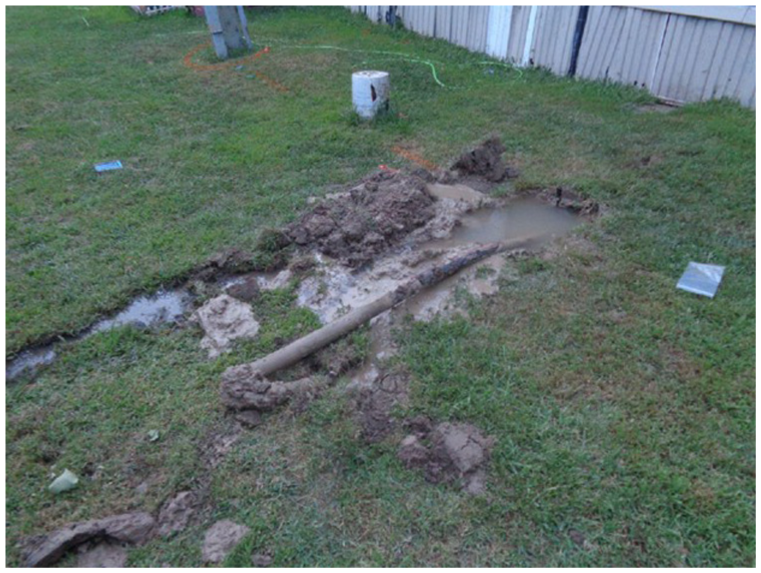
Exposed water and sewer lines following a rupture in the underground utilities at Crown Court MHC in July 2015.
Water concerns have been a major issue, as well as a political target, for Lincoln’s MHCs since the first citywide ordinances regulating “accredited trailer camps” went into effect in 1950, prompted by health and sanitation concerns. Water has remained a major challenge at Crown Court MHC since it opened in the early 1970s. However, in 2011 it was Crown Court’s out-of-state corporate owners, not city regulators, who brought the issue to the Lincoln Planning Commission and City Council. Five years after Lincoln officials had approved a redevelopment plan that would close two nearby communities due to poor water and sanitation, Crown Court’s operators adopted the same approach by commissioning a Blight Study of their own properties. The Nebraska Mobile Home Landlord and Tenant Act explicitly states that MHC owners are responsible for maintaining private utilities and protecting “the health, safety, aesthetic value, or welfare of mobile home tenants in the park” (Nebraska Legislature, 1984 and 1988), the Planning Commission “commended” Crown Court’s owners on their “foresight” to have their properties declared blighted and substandard for future development. Both redevelopment plans, which would see the closure of four MHCs if passed, including significant portions of Crown Court, described the underground utilities in these communities as “severely impacted by corrosive soils,” with one adding that, “Although the City does not maintain records on the private system … it is generally understood that the private water system [in the MHC] is in poor condition and is not suitable for public water main use.”
Unlike most small communities (<50 homesites), large MHCs like Crown Court are typically serviced by private utilities that connect to municipal systems. This private infrastructure is maintained by park management, which in turn bills residents monthly for water and sewer. In 2016, two Crown Court households provided Formanack with monthly water statements that were compared to the average cost citywide, which showed these residents paying over twice as much per month for water and sewer service than the Lincoln city average. Furthermore, from 2010 to 2016, water and sewage rates increased much more quickly in Crown Court MHC than Lincoln on average. Together, these increases suggest widespread corrosion and leakage in the private water and sewer lines, offering support for the claims made by Crown Court staff to Formanack. For instance, Crown Court’s lead maintenance man recalled one summer when he had to patch over 100 breaks in the park’s underground water infrastructure. The original iron pipes, installed in 1961 and 1972, are “basically gone,” he explained in an informal conversation at the Crown Court leasing office in 2015, with only the repair patches and caked-on rust remaining to prevent future breaks.
By 2015, it seemed almost everyone was aware that Crown Court’s underground utilities were in a state of deep disrepair, from the owners and residents to policymakers and other stakeholders. Yet, few seemed willing to fault either the park operators’ negligence or the City’s regulatory oversight as contributing factors to present degraded conditions. For instance, when Crown Court’s Blight Report was presented to the Planning Commission, whenever the question of whether park management was at fault for having failed to maintain their private infrastructure or whether the blight declaration sought by the park’s owners would benefit the residents, the representative from Urban Development either demurred (“we can find those conditions in lots of places”), made unfounded guesses (“there are newer mobile home parks in Lincoln and their infrastructure is perhaps better designed”), or admitted not knowing the answer to the commission’s questions.
An appraiser in the Office of the Lancaster County Assessor, a former MHC owner and operator, offered the following insight into the regulatory failures that normalized such widespread deterioration in MHC private utilities: Lincoln’s just blind to it. They don’t care about them [MHCs] and they’d like them to be developed and have them go away. But that’s not going to happen. Actually, I do think that’s going to happen. I do think that the cost will just get to be prohibitive and it will get so bad that at some point somebody’s going to scream about [a specific MHC]. And they’re going to have to shut it down. It’s a health issue.
Although poor water quality as a “health issue” was consistently cited as justification for MHC closure and redevelopment, little effort was made to address the root cause of this issue: municipal benign neglect and corporate malfeasance.
“We asked for a Blight Study because we wanted to prove how bad the homes, how bad the infrastructure was, so that we could get free money for upgrades,” admitted one former district manager: You do a Blight Study so that the City can say, “Okay, look, gotta replace this sewer line, gotta replace the water line.” So, reading the Blight Study, you’ll find out that it has nothing to do with what everybody’s really thinking. The problem is, once you do a Blight Study now everybody’s under the impression that it [the infrastructure] sucks, which is true. But the reason they did it had nothing to do with truly believing the infrastructure was horrible. It had everything to do with trying to find money so that they could get the city to give them money to do upgrades to make the parks fancier and nicer.
Such ambivalence toward, or acceptance of, worsening conditions in MHCs serves as a reminder that data can be used to tell many different stories, not all of which will find a receptive audience. One nonprofit staff person described feeling as though “every door was closed” where MHCs were concerned, and recalled hearing “weird” and “strange” responses from policymakers and nonprofits whenever she brought up the topic of MHCs during board meetings. She suspected, similar to what Formanack heard from the DHHS employees at the Place Matters inaugural event, that many community members believed that all of Lincoln’s remaining MHCs would be phased out and redeveloped in the next couple of decades. In other words, in Lincoln the fact that MHC closures were inevitable was common knowledge with evidential support, no matter how the data was interpreted.
The Place Matters mapping project sought to “make Lincoln the healthiest city in the US,” and as of 2024 its online interactive maps include several health-specific measures, such as prenatal care, access to healthy food, medically underserved areas, and life expectancy (Lincoln Community Health Endowment, 2024b). However, as these case data from Lincoln MHCs illustrate, when it comes to urban manufactured home parks, policymakers’ and public officials’ preexisting assumptions concerning “trailer parks” can affect how such data is interpreted and used. That is, when existing conditions seemingly validate unconscious, or what Chernoff (1983) refers to as “whispered,” desires to redevelop these communities, then such data is acknowledged and accepted. While CHE’s mapping project intended to better understand Lincoln as a place, what it did not consider was what decision-makers already thought they knew about some of the city’s most vulnerable communities and residents.
Conclusion
As the data presented here illustrate, mapping projects and public health campaigns, such as CHE’s Place Matters project, that rely on geospatial measures intersect powerfully with a priori assumptions about marginalized places like urban MHCs. Restrictions on the placement of MHCs erect legal, material, and social boundaries where poverty and health disparities are marked, disparities that geospatial units of measurement may reveal. However, we argue that the uncritical use of geospatial data, and similar measures, can consciously or unconsciously reify policymakers’ beliefs that MHCs should be closed and redeveloped. Furthermore, as we have shown, wherever substandard conditions might be attributed, either wholly or in part, to municipal neglect and corporate malpractice, such associations are often dismissed or ignored using the same logic that has normalized blight in MHCs as natural and inevitable.
As this case demonstrates, initiatives like Place Matters that rely heavily on geospatial mapping risk reproducing damaging stereotypes regarding MHCs when they are used to justify their exclusion from public projects, future programming, and funding priorities. Manufactured homeowners’ reduced social, economic, and health outcomes are often not the focus of community improvement initiatives because nonresident stakeholder beliefs about MHCs and MH residents are normalized and accepted as inevitable, views that in turn inform planning and policy decisions. The repeated insistence that MHCs were beyond repair and would inevitably close and be redeveloped was reflected in their absence in Place Matters discussions as well as their exclusion from Lincoln-Lancaster County long-range planning. If MHC deterioration is unavoidable, then it would be ineffective, inefficient, and illogical to focus policy initiatives and allocate resources toward improving areas that will soon cease to exist, thus perpetuating the cycle of neglect that results in ever-worsening conditions in these communities. Though Lincoln policymakers proudly embraced an “all boats rise together” planning philosophy, in practice, it appeared that some boats (read: MHCs) were constructed with holes by design.
Dominant sociocultural attitudes toward marginalized places and peoples can be reproduced as objective knowledge through the uncritical use of geospatial data; with this in mind, we do not mean to disparage the intentions of any person or organization cited as a case instance in this article. The vast majority of Lincoln’s public servants and officials, nonprofit workers, and philanthropic organizations acted in good faith and with the best intentions toward improving the health, economic, and social wellbeing of all Lincoln’s residents, including its MH population. Rather than cast aspersions on these advocates’ intentions, our goal in this article is to highlight how techniques meant to generate “objective” spatial knowledge often fail to account for the existence of moral or cultural borders that recreate such disparities.
Policy reform that supports MHCs and residents is an important step to improve public opinion and conditions for MH residents. We echo other researchers’ calls for changes to zoning and regulations that hinder MH use and reinforce disparities, for example, zoning and financing reform (Herbert et al., 2024), promoting more affordable MH tenure types (Durst and Sullivan, 2019; Sullivan, 2017a), opportunity to purchase policies (Gilgoff, 2023), and addressing policy barriers that hinder protection against and recovery from natural hazards (Casanova et al., 2023).While changes to policies and regulations that marginalize MHCs and MH owners are essential, this cannot be achieved without first addressing the implicit bias of policymakers. Our findings suggest that one pathway to destigmatization may be through increased community participation in planning and policy decisions. This is supported by Sullivan’s (2021) ethnographic work, which demonstrated that MHC resident involvement in regulatory processes through self-advocacy and partnership with external advocacy organizations can influence local decisions about closure and redevelopment.
Additionally, evidence suggests that familiarity with MHs is related to increased willingness to consider this housing option (Herbert et al., 2024), therefore, education about MHs that refute common misconceptions may provide another pathway to dismantling stereotypes and improving MH acceptance. A 2024 study identified the education of stakeholders, including policymakers, as a top barrier to overcoming bias about MHCs and their residents. The authors noted that efforts to familiarize local government officials with the benefits of MHs were often necessary to obtain the approval or zoning changes needed for MHC development (Herbert and Reed, 2024). This suggests that a holistic approach is needed, including community education, investment in MHCs and their infrastructure, and inclusion of those with lived experience in public policy decisions such as the Place Matters program to support sustainability and long-term affordability for MH residents. Taken together, policy reform, public education, and shifting generational perceptions suggest that dismantling stigma is not only possible but necessary to secure MH as a key component of future affordable housing strategies.
Footnotes
Acknowledgements
We are grateful to the Crown Court residents and community stakeholders who shared their time, knowledge, and experiences as part of this project. We appreciate the work of the special issue editors, the editorial team, and the anonymous reviewers for their helpful feedback and support. We would also like to thank Richard Bender for contributing to the initial analysis, interpretation, and presentation of the data that shaped this article.

Funding
The authors disclosed receipt of the following financial support for the research, authorship, and/or publication of this article: National Science Foundation, Directorate for Social, Behavioral and Economic Sciences, Division of Social and Economic Sciences, Grant No. 1421510 and University of Colorado Boulder, Graduate School, Wenner-Gren Foundation Grant No. 8826.
Declaration of conflicting interests
The authors declared no potential conflicts of interest with respect to the research, authorship, and/or publication of this article.
Data availability statement
The datasets generated during and/or analyzed during the current study are not publicly available due to privacy requirements in the study’s approved IRB protocol, but are available from the corresponding author on reasonable request.*