






Abstract
Historic preservation and equity goals often conflict in urban neighborhoods, creating policy dilemmas where heritage conservation may either support or undermine community stability and affordable housing. This article addresses three questions: How do preservation-equity dynamics vary across different urban contexts? What neighborhood types emerge when areas are clustered by preservation and market conditions? What context-specific strategies might promote both heritage conservation and social equity? Using Chicago as a case study, we apply k-medoids clustering analysis to eight variables measuring potentially significant historic resources, preservation designations, affordability, income, racial composition, demolition rates, and displacement vulnerability across census tracts. The analysis reveals six distinct neighborhood types, each with different preservation challenges and opportunities. Key findings expose systematic inequities in heritage recognition: affluent neighborhoods demonstrate “curated heritage” where preservation operates selectively alongside luxury redevelopment, while neighborhoods with the oldest housing stock—predominantly Hispanic and Black communities—achieve minimal preservation recognition despite rich architectural resources. Preservation rates correlate strongly with income and racial composition rather than building age or architectural significance, indicating that current preservation frameworks systematically devalue certain communities’ cultural heritage. Effective preservation-equity policy requires context-specific strategies rather than universal approaches: recognition and community engagement in under-served neighborhoods with significant historic resources; targeted subsidies and anti-displacement measures in gentrifying areas; and inclusive density policies in already-preserved affluent neighborhoods.
Introduction
Researchers have long debated the challenge of furthering equity in historic preservation practice (Arlotta and Avrami, 2020; Minner, 2016; Wells, 2021). If equity is defined as fair access to resources, opportunities, and decision-making power, then the goals of historic preservation and equity are often in tension. Preservation promotes equity when it supports the valuation of significant historic resources in all communities, helps stabilize neighborhoods by preserving cultural heritage, and maintains older affordable housing stock (Avrami, 2016; Cheong, 2021; Hayden, 1988). But preservation undermines equity when certain neighborhoods’ cultural heritage is ignored, needed housing supply is blocked, or property value increases displace longtime residents without adequate protection. This article addresses these challenges through three interrelated research questions: First, how do preservation-equity dynamics vary across different urban contexts? Second, what neighborhood types emerge when areas are clustered by preservation and market conditions? And third, what context-specific strategies might promote both heritage conservation and social equity? We argue that effective preservation-equity policy requires understanding neighborhood contexts where preservation operates, not universal approaches.
To answer these questions, we develop an analytical framework through cluster analysis that identifies distinct neighborhood typologies based on how historic preservation status varies with demographics, housing costs, demolition rates, and displacement vulnerability (Garfinkle-Castro et al., 2020; Gregory et al., 2021). Using Chicago as a case study, our analysis reveals six neighborhood types, each with different preservation challenges and opportunities. The methodology can be replicated for other cities to develop context-specific preservation-equity strategies. Chicago serves as a particularly suitable context due to its pronounced character as a “city of neighborhoods” with clearly delineated boundaries, reinforced by major streets, rail lines, and waterways, that reflect a history of racial segregation through restrictive covenants and redlining (Hirsch, 2021; Sampson, 2012; Talen and Anselin, 2022). Neighborhoods vary dramatically in racial composition, income, housing stock age, and preservation status, creating systematic variation for analyzing preservation-equity dynamics across contexts (Bae et al., 2024; Bennett, 2019; Moore, 2016). Chicago’s historic preservation landscape exemplifies how preservation policies can simultaneously protect architectural heritage while reinforcing inequality. Chicago’s landmarks predominantly protect high-style architecture in affluent areas (Bluestone, 1994; Sprinkle, 2014). While the Chicago Historic Resources Survey (1995) attempted to broaden preservation’s scope, statistical disparities persist: predominantly White Lincoln Park (80% white, median income US$134,000) contains 502 National Register properties, while Grand Boulevard (87% Black, median income US$43,000) has only nine, despite its rich architectural heritage. 1
Literature review
Historic preservation plays a multifaceted role in urban development, with research revealing complex impacts on neighborhood affordability, demographics, and cultural identity. Preservation initiatives can catalyze economic revitalization through tax credits, adaptive reuse, and property value stabilization, while simultaneously creating pathways for affordable housing through cost-effective rehabilitation of existing structures. However, these same mechanisms can, under certain market conditions, contribute to demographic shifts including displacement of low-income residents and racial turnover. Importantly, research suggests these outcomes are not predetermined; contexts where preservation is implemented with explicit equity goals and community involvement often demonstrate how heritage conservation can be leveraged for inclusive development (Meeks and Murphy, 2016).
U.S. preservation framework
U.S. preservation operates through two primary mechanisms that differ fundamentally in their protections. The National Register of Historic Places (established 1966) is honorific—it recognizes significance and provides access to federal tax incentives (but only to income-producing properties like rentals) but does not restrict property owners’ rights and properties can be demolished. A second mechanism, local landmark designation, does provide protection. Chicago’s landmark ordinance (1968) requires design review for alterations and demolitions, though frameworks vary across municipalities. The Chicago Historic Resources Survey (CHRS, 1995) provides another level of protection, assigning ratings (“Red,” “Orange,” “Yellow”) and giving Red/Orange properties 90-day demolition delays.
Preservation as an affordability strategy
The equity of historic preservation is assessed, in part, by its impact on housing affordability. The federal Historic Preservation Tax Credit (HTC) is one policy tool available for maintaining affordability, incentivizing the rehabilitation or creation of 185,525 affordable rental units across the U.S. between 1977 and 2021 (N McDonald, 2023). Research by Ryberg-Webster and Kinahan (2017) documented over US$3.25 billion invested in neighborhood rehabilitation projects across six legacy cities from 2000 to 2010, with 57% occurring in low-income areas, resulting in thousands of housing units including both market-rate and affordable options. Note that when reporting preservation program impacts, distinctions exist between “affordable housing units” created through preservation and “units in affordable neighborhoods.” The National Park Service has reported both measures, which represent very different outcomes for equity.
A crucial intersection between preservation and affordability occurs through maintaining naturally occurring affordable housing (NOAH), which comprises approximately 75% of U.S. affordable housing stock (Kling et al., 2021). NOAH consists of unsubsidized rental housing that remains affordable to low- and moderate-income households, typically due to age, condition, or location. NOAH is appealing because it offers an opportunity to tap the private sector to deliver affordability, without relying on scarce government or philanthropic resources. However, this creates tension between affordability and housing quality, since older buildings may be affordable precisely because they require maintenance. Efforts to preserve lower-density NOAH units such as workers’ cottages can conflict with new, denser housing aimed at increasing housing supply and improving affordability. Here the question is whether preserving existing affordable housing at low densities prevents construction of higher-density affordable housing that could serve more households.
Adaptive reuse of historic buildings represents another preservation-affordability strategy, typically costing one-half to two-thirds as much as new construction (HUD, 2013; Walk-Morris, 2021). Ward and Schwam (2022) identified 2300 underutilized commercial properties in LA County that could produce 72,000–113,000 housing units, while a nationwide study found 778 older commercial buildings converted to apartments between 2010 and 2020, with 65% aimed at low- to middle-income renters (Ciuntu, 2020).
Preservation and displacement dynamics
A fundamental tension emerges when preservation restricts new development or adaptive reuse in places where housing is in high demand, potentially contributing to rising costs, gentrification, and displacement. Preservation approaches vary significantly in their protective mechanisms and outcomes. National Register designation is primarily honorific, providing federal tax incentives while leaving development decisions to property owners, with one Philadelphia study finding demolition rates in National Register districts similar to unregistered areas (Kinahan et al., 2021). The National Register recognizes properties significant under four criteria: A (association with historic events), B (association with significant persons), C (architectural or design significance), and D (archeological importance). While designation has historically emphasized architectural criteria, recent efforts by the National Park Service and many municipalities have expanded the listing of places with diverse cultural narratives. Local landmark designation involves stronger protections but additional permit requirements and development limits. Schaeffer and Millerick’s (1991) seminal study found that National Register designation had positive effects on property values while Chicago Landmark designation had negative effects, suggesting that economic impacts depend significantly on the restrictions imposed (Clark and Herrin, 1997).
Research on preservation’s impact on property values and demographics reveals mixed empirical results (Been et al., 2016; Chapple et al., 2021; Choi, 2025; Noonan and Krupka, 2011; Oba and Noonan, 2020; Zahirovic-Herbert and Chatterjee, 2012).Case studies demonstrate how preservation can stimulate gentrification or act as a stabilizing force, depending on context. Grevstad-Nordbrock and Vojnovic’s (2019, 2025) research on Chicago historic districts revealed dramatic demographic changes following designation over approximately two decades, with one area seeing Hispanic population fall from 27% to 2% and per capita income increase by 795% compared to 35% citywide. This transformation occurred as historic designation became a marketing tool that attracted higher-income residents while displacing the existing Latino community. Anderson and Sternberg (2013) and Sternberg and Anderson (2014) documented different gentrification trajectories in two Chicago neighborhoods with National Register designation. In Bronzeville, redevelopment focused on “Black Metropolis” nostalgia, targeting middle-class Black residents and displacing lower-income residents through intra-racial gentrification (Betancur and Smith, 2016). Pilsen, marketed as a Mexican village with cultural attractions, experienced a 25% decline in its Latino population, accompanied by a 24% increase in its White population between 2000 and 2010. However, McCabe and Ellen’s (2016) New York City study showed that preservation did not always cause displacement, finding that while socioeconomic status increased after historic designation, there was little evidence of racial composition changes or rent increases.
Equity-centered preservation approaches
Equity-focused preservation frameworks have emerged to provide guidance for practitioners seeking to balance historic conservation with community stability. The City of Austin’s Equity-Based Preservation Plan (Austin Planning Department, 2024) represents a comprehensive approach that centers diversity and cultural heritage while focusing preservation efforts on preventing displacement and promoting environmental sustainability. Similarly, Landmarks Illinois established the Relevancy Project, with an equity preservation framework that emphasizes community engagement and careful consideration of whose heritage is represented in designated properties (BC McDonald, 2023). While the resulting guidebook—produced over 14 months by a diverse task force considering 130 interviewee responses to preservation issues—is intended to influence local and governmental practices, its application is not legally mandated.
Case studies demonstrate positive effects when equity is an explicit goal of historic preservation. Successful examples include Seattle’s Chinatown-International District, where preservation protected against demolition and the Bush Hotel was converted into 95 low-income housing units (Ryberg-Webster, 2019), and Savannah’s Victorian District, where 300 affordable apartments were constructed to ensure existing residents could remain (American Planning Association, 2014; Payne, 2022). Successful strategies have included community land trusts, inclusionary zoning requirements, tax increment financing with affordability provisions, and formalized community benefit agreements ensuring existing residents can remain.
A neighborhood-based preservation typology
To answer our research questions—how preservation-equity dynamics vary across contexts, what neighborhood types emerge from this variation, and what strategies might promote both goals—we develop a typological approach that acknowledges contextual variations. These varying preservation equity strategies, empirical outcomes, and case study examples show that the relationship between preservation and equity is complex. A nuanced framework that acknowledges contextual variations across neighborhoods might offer some conceptual clarity. In the remainder of this article, we demonstrate a typological approach that we believe offers a promising method for better understanding these diverse experiences—and developing targeted policy responses.
Urban typologies have been employed across disciplines, with classifications based on social interaction (Hunter, 1974; Kusenbach, 2008), historical development (Rohe and Gates, 1985), physical form (Sandalack et al., 2013; Trudeau, 2013), street patterns (Southworth and Owens, 1993), social mix (Talen and Lee, 2018), or residential mobility (Coulton et al., 2012). Despite this extensive typological tradition, preservation-specific classifications remain scarce. One exception is Choi’s (2025) research on “neighborhood trajectories,” which uses clustering to identify six neighborhood types and analyzes their intersection with historic district designation, finding that historic districts are associated with socioeconomic “upward transitions” and that lower-income neighborhoods have less stability than affluent ones.
Our preservation-equity typology differs from Choi’s by factoring historic preservation variables into our clustering algorithm, allowing us to identify neighborhood categories specifically relevant to preservation policy, and providing a framework for contextualized strategies that promote equity while valuing historic assets. Our clusters are based on the following neighborhood dimensions.
Historic resources and representation
Neighborhoods vary in their levels of potentially significant historic resources and official recognition through designation mechanisms. We examine three primary designations: National Register of Historic Places (federal recognition with limited protections and optional tax incentives), Chicago Landmark designation (stronger protections through review of alterations or demolition), and Chicago Historic Resources Survey ratings (“Red” or “Orange” properties receive 90-day demolition delays during which they are evaluated for Landmark status). We analyze these designations alongside pre-1940 building stock to identify neighborhoods with potentially significant historic assets that remain vulnerable.
Economic conditions
Affordability levels indicate neighborhoods at risk of gentrification or displacement, while income levels reflect neighborhood wealth and capacity for preservation advocacy and investment. Income inequality suggests stark contrasts in housing conditions and divergent interests regarding preservation benefits, with homeowners potentially welcoming property value increases while renters face displacement risks.
Racial and ethnic diversity
In Chicago, entrenched segregation has shaped neighborhood development patterns for generations. The city’s history of racialized housing discrimination through restrictive covenants, redlining, and disinvestment continues to influence which communities can access historic preservation resources. Preservation rates correlate strongly with income and racial composition rather than building age or architectural significance, indicating that current preservation frameworks systematically devalue certain communities’ cultural heritage through mechanisms including lack of survey resources directed to lower-income neighborhoods, professional bias toward high-style architecture over vernacular building types, and administrative barriers to community-initiated designation.
Change and stability indicators
Demolition rates signal potential loss of historic buildings and can indicate either luxury redevelopment causing displacement or systemic disinvestment leading to abandonment. Varying levels of gentrification and displacement measure neighborhood stability, with preservation having the capacity to either stabilize neighborhoods through retaining historic fabric with resident input or accelerate displacement through property value increases.
Data and method
Like other Chicago researchers, we use the census tract as a proxy for neighborhood. While imperfect, it is the only scale at which consistent and detailed socio-economic information is collected. We build our typology by factoring the neighborhood dimensions discussed above that, we postulate, have an impact on preservation and equity, including both what is needed to maintain equity and what is needed to address inequity. The eight dimensions, measured using tract-level variables, are listed in Table 1.
Variables and measures.
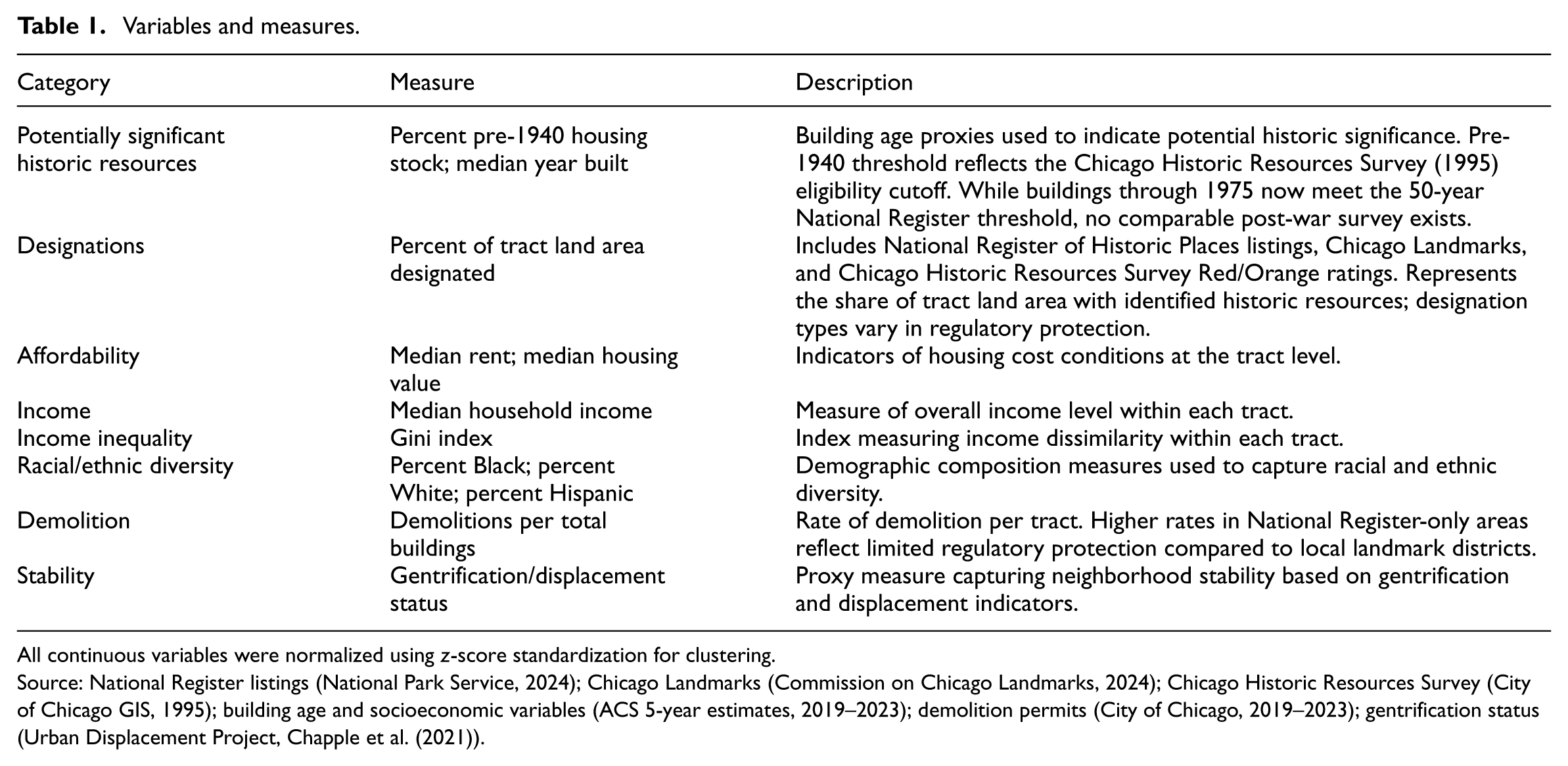
All continuous variables were normalized using z-score standardization for clustering.
Source: National Register listings (National Park Service, 2024); Chicago Landmarks (Commission on Chicago Landmarks, 2024); Chicago Historic Resources Survey (City of Chicago GIS, 1995); building age and socioeconomic variables (ACS 5-year estimates, 2019–2023); demolition permits (City of Chicago, 2019–2023); gentrification status (Urban Displacement Project, Chapple et al. (2021)).
We apply k-medoids clustering to the first seven variables, a method that minimizes the sum of distances from observations to a representative center. This algorithm is preferable to k-means because the cluster center represents an actual neighborhood rather than a composite, making results more interpretable and less sensitive to outliers (Anselin, 2024). Using an elbow plot to identify the optimal number of clusters, we selected K = 6, where the rate of within-cluster dissimilarity decrease sharply slowed, indicating the ideal balance between parsimony and explanatory power. For the eighth dimension (stability), we overlay the resulting clusters with gentrification and displacement tract measures from the Urban Displacement Project, which categorizes neighborhoods into nine types ranging from low income/susceptible to displacement to stable/advanced exclusive (Chapple et al., 2021). 2
Results: Six neighborhood types
The cluster analysis produced six distinct neighborhood types that reveal systematic patterns in how historic preservation intersects with income, race, and housing market dynamics across Chicago. These patterns expose significant inequities in heritage recognition that extend far beyond the age or architectural significance of buildings. The mapped clusters and factor loads are shown in Figure 1 and Table 2. Table 3 adds the Urban Displacement Project data associated with each type. Figure 2 shows representative images of the cluster medoids. It is important to note that not all investment or property value increases constitute displacement. We distinguish between stable investment that benefits existing residents versus changes that force displacement. Our typology includes stable low-income neighborhoods (Cluster 1) not experiencing gentrification pressure, and we interpret displacement categories to avoid conflating all market activity with negative outcomes.
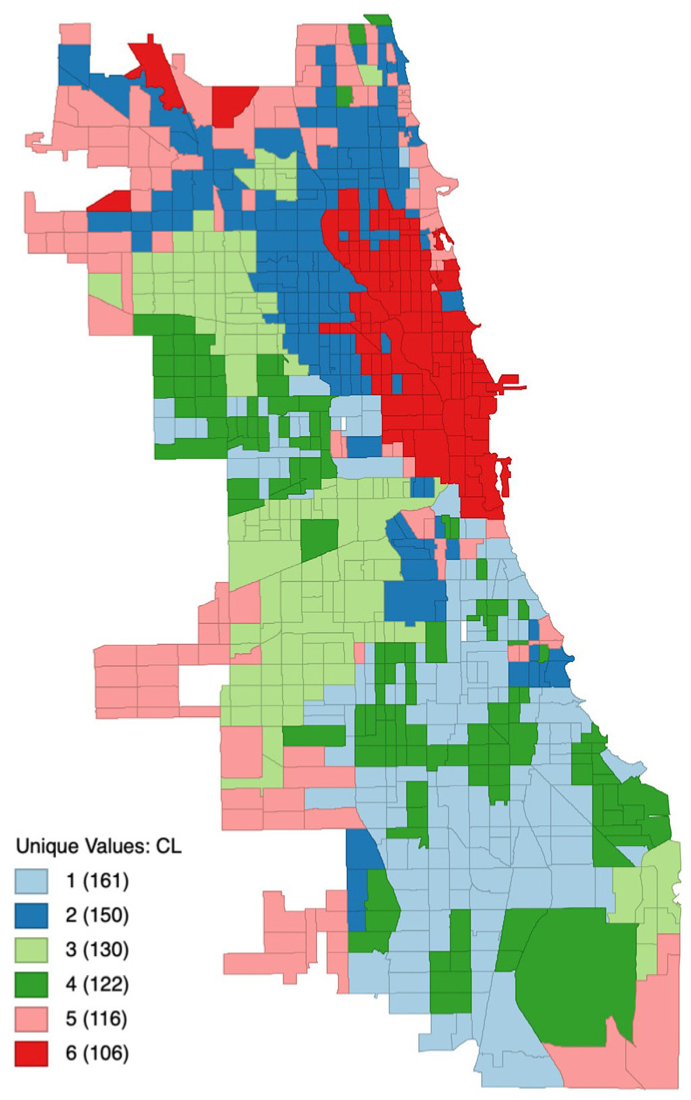
Preservation-equity clusters.
Cluster variable loadings.
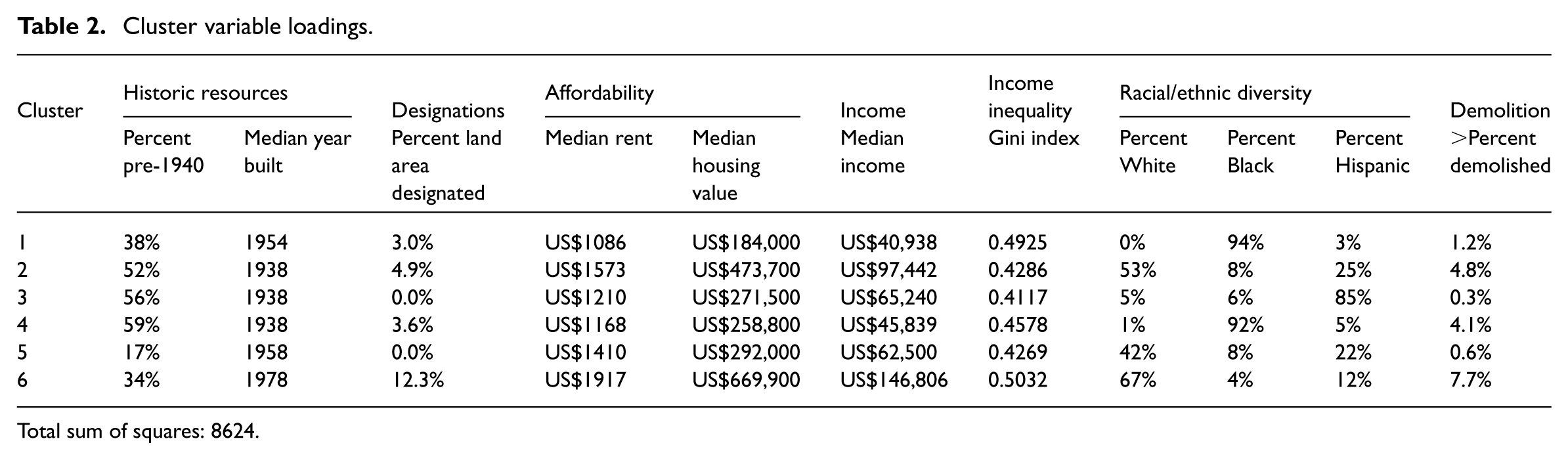
Total sum of squares: 8624.
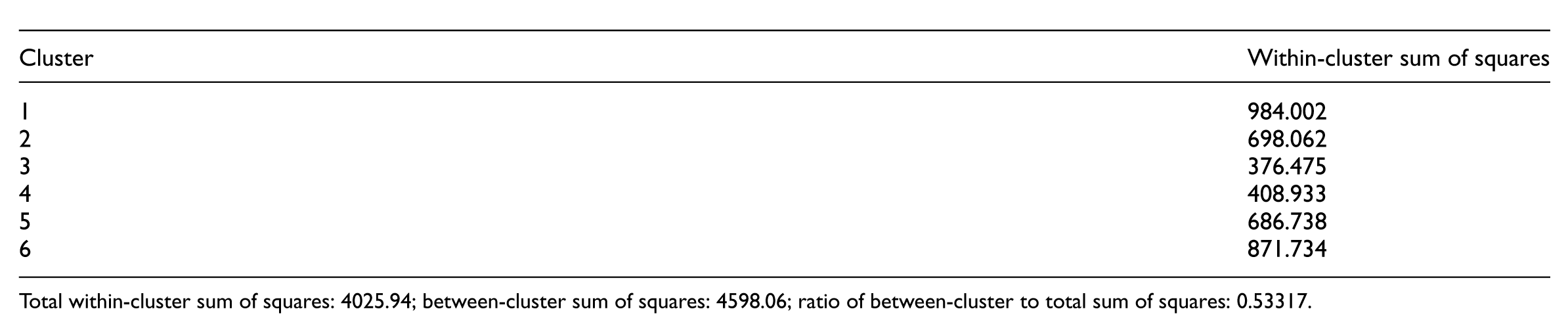
Total within-cluster sum of squares: 4025.94; between-cluster sum of squares: 4598.06; ratio of between-cluster to total sum of squares: 0.53317.
Urban displacement project data associated with each neighborhood type.
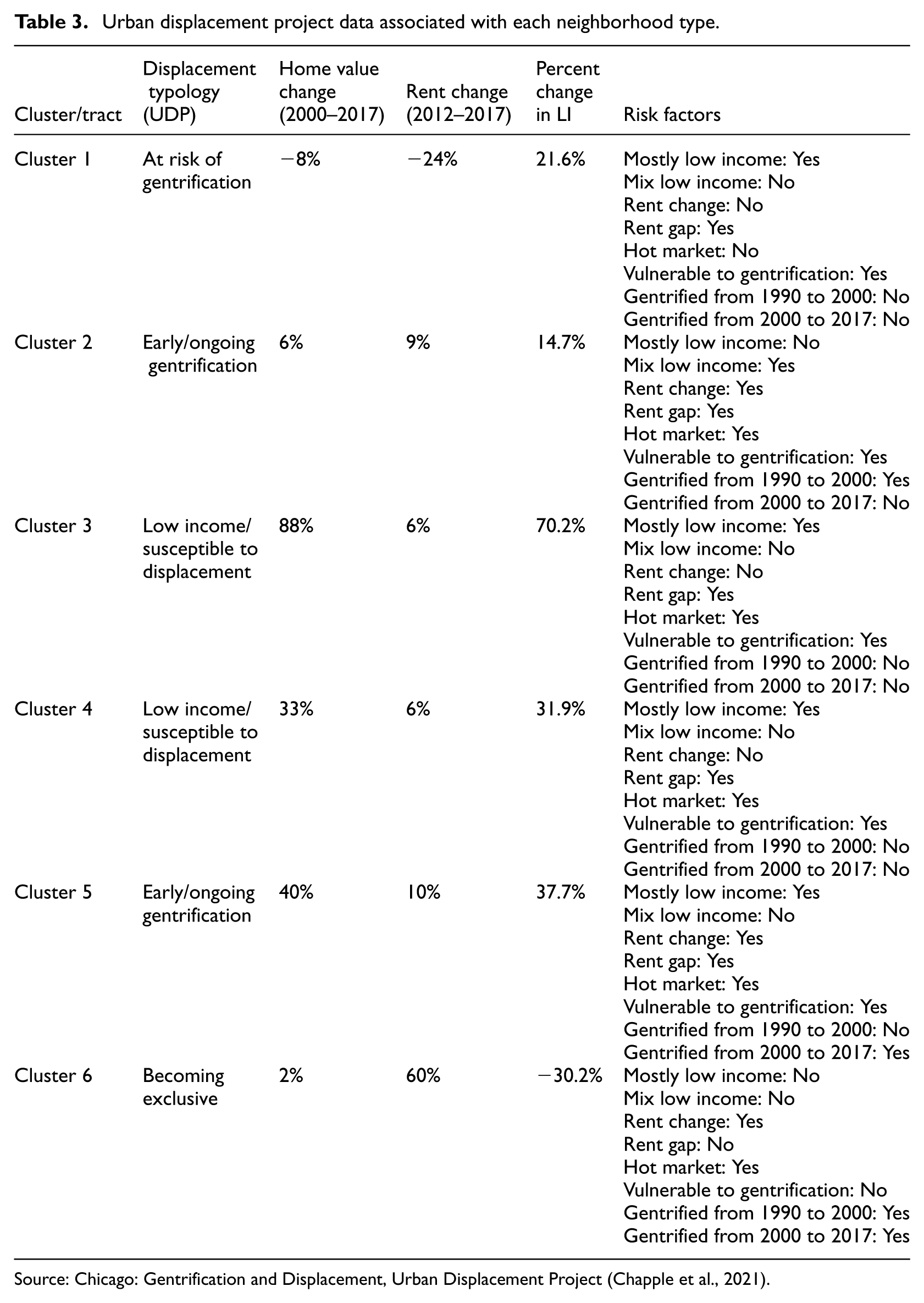
Source: Chicago: Gentrification and Displacement, Urban Displacement Project (Chapple et al., 2021).
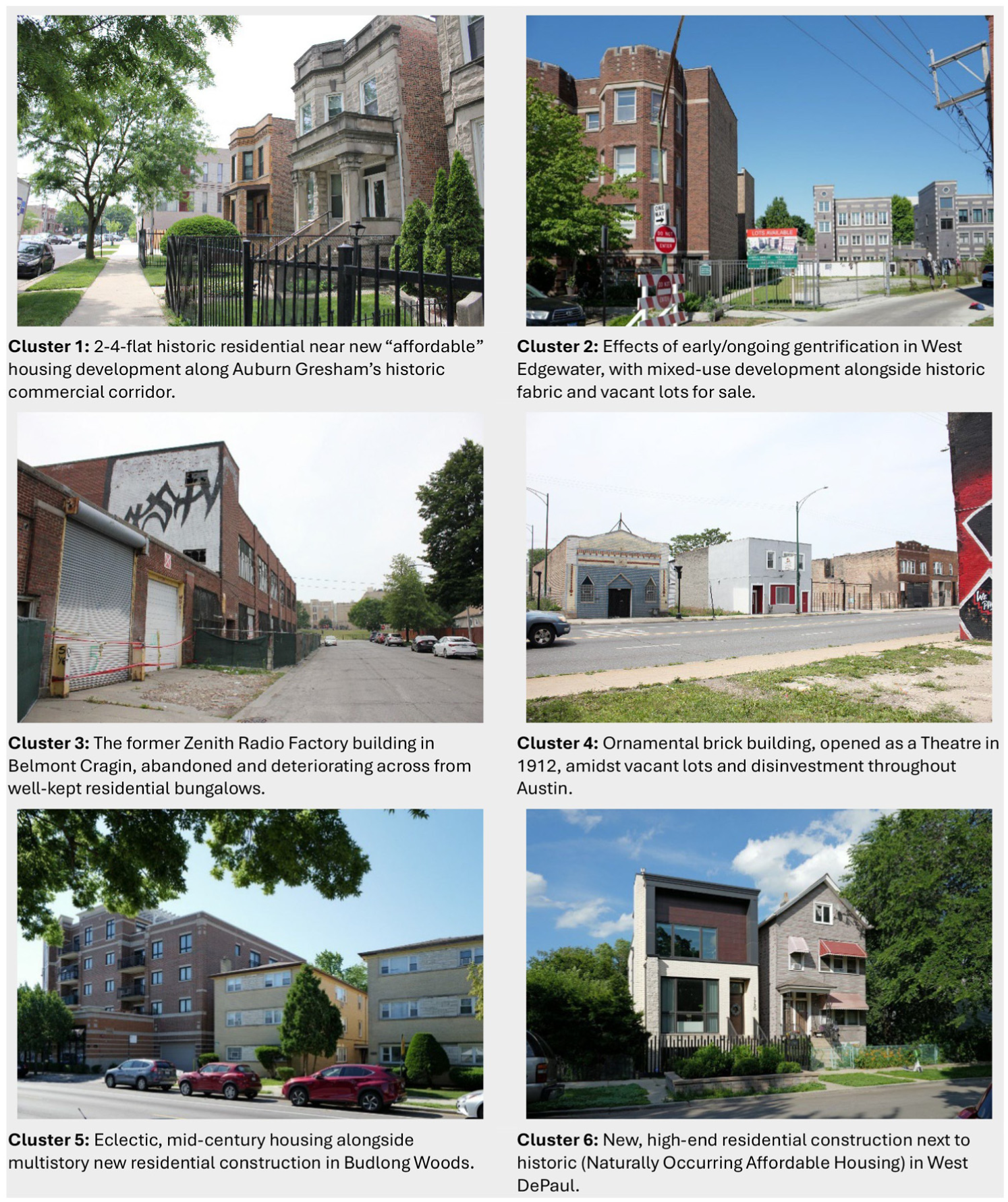
Representative street scenes from each neighborhood cluster (medoid).
Clusters with higher median incomes consistently show higher preservation rates, with the most affluent neighborhoods achieving the highest preservation despite lower-income communities having substantial historic resources. This pattern holds across all income levels, revealing systematic barriers to heritage recognition in economically disadvantaged areas. The relationship between building age and preservation status reveals striking inequities. Hispanic Enclaves and Black Historic Corridors contain the oldest housing stock yet achieve modest preservation rates, while Affluent Curated Heritage areas with much newer housing maintain the highest preservation rates. This counterintuitive pattern suggests preservation decisions prioritize affluent community preferences over objective historical significance. Preservation access varies dramatically across racial compositions. Predominantly White neighborhoods achieve the highest preservation rates, while predominantly Hispanic and Black neighborhoods show much lower rates despite having older and potentially more architecturally significant building stock. High-value neighborhoods demonstrate a “curated heritage” approach where preservation and demolition operate simultaneously. Affluent areas exhibit both high preservation rates and substantial demolition activity, suggesting selective heritage valuation that serves affluent residents’ interests while facilitating continued redevelopment and exclusivity.
Detailed cluster descriptions
Cluster 1: Black heritage anchors in disinvested areas
These predominantly Black neighborhoods (95% Black) with the lowest median income (US$40,938) and property values (US$184,000) have achieved modest but meaningful preservation (3%) focused on culturally significant civic and religious structures. The housing stock consists primarily of multi-unit buildings (two to six units). Despite economic constraints, these communities demonstrate how preservation can occur outside affluent frameworks, though at a smaller scale than in wealthier areas. Low demolition rates (1%) indicate housing stability. The representative neighborhood is classified as “At Risk of Gentrification,” but recent trends do not reflect active displacement: home values declined (−8%), rents decreased significantly (−24%), and low-income households increased (22%). The immediate displacement threat remains low absent major market shifts.
Cluster 2: Diverse historic districts in mid-gentrification
These economically stable neighborhoods (US$97,442 median income, US$473,700 property values) are racially mixed (53% White, 25% Hispanic, 8% Black) and achieve meaningful preservation (5%), exceeding that of predominantly non-White neighborhoods with comparable historic resources. Preservation coexists with redevelopment (5% demolition). The representative neighborhood for this cluster is classified as experiencing “Early/Ongoing Gentrification,” with moderate home value appreciation (6%) and rent increases (9%) from 2012 to 2017. The 15% increase in low-income households amid rising costs signals vulnerability, demonstrating how preservation can function within gentrifying contexts while potentially contributing to housing cost increases.
Cluster 3: Hispanic enclaves with untapped historic potential
Despite containing the oldest housing stock (median year 1938, 61% pre-1940 buildings), these Hispanic-majority neighborhoods (54% Hispanic) achieve only modest preservation (4%), creating a striking disconnect between historic resources and formal recognition. Economic indicators are moderate (US$74,886 income, US$395,200 property values), but market pressures are intense. The representative neighborhood is classified as “Low Income/Susceptible to Displacement,” with extreme home value appreciation (88% from 2000 to 2017) and rising rents (6%). A 70% increase in low-income households heightens vulnerability, exposing these areas to displacement that threatens both residents and historic resources. The concept of the rent gap—the disparity between actual ground rent and potential ground rent under higher and better use—helps explain how preservation can inadvertently contribute to displacement pressure (Smith, 1979, 1996).
Cluster 4: Black historic corridors under market pressure
These predominantly Black neighborhoods (92% Black) contain extensive potentially significant historic resources (median year 1938, 59% pre-1940 buildings) and slightly higher preservation rates (4%) than Cluster 1. Higher property values (US$258,800) and demolition rates (4%) indicate greater redevelopment pressure. Classified as “Low Income/Susceptible to Displacement,” these areas have experienced significant home value appreciation (33%), modest rent increases (6%), and a growing low-income population (32%). While not yet gentrified, rising property values and active demolition (4%) suggest increasing risk to historically significant buildings.
Cluster 5: New-build diverse communities with preservation gaps
With the newest housing stock (median year 1951, 31% pre-1940 buildings) and negligible preservation recognition (0.1%), these moderate-income (US$85,825), diverse communities (60% White, 25% Hispanic) demonstrate the under-recognition of post-war architecture, despite its National Register eligibility. The representative neighborhood is classified as “Early/Ongoing Gentrification,” with significant home value appreciation (40% from 2000 to 2017) and rent increases (10%). A 38% increase in low-income households amid rising costs underscores vulnerability in areas where heritage recognition lags behind neighborhood change.
Cluster 6: Affluent curated heritage districts
These affluent communities (US$146,806 median income, US$669,900 property values), predominantly White (67%), exhibit “curated heritage,” combining high preservation rates (12%), alongside substantial demolition (8%) and newer housing (median year 1978). Classified as “Becoming Exclusive,” these areas show moderate home value growth (2% from 2000 to 2017) but dramatic rent increases (60% from 2012 to 2017) and a substantial 30% decrease in low-income households, indicating completed displacement. 3 The high preservation rate (12%) in these exclusive communities demonstrates how selective historic designation reinforces exclusivity rather than broad-based conservation. Chicago’s Sheffield Historic District exemplifies these pressures (Landmarks Illinois, 2025; Preservation Chicago, 2024).
Discussion
The overarching goal of equitable, affordable, livable neighborhoods may be broadly shared, but whether and how historic preservation serves that goal varies by context. Research shows that historic building types—smaller lot sizes, mid-rise apartment forms, finer-grained street patterns—can support density, walkability, and affordability in ways that new construction often does not. Yet where those same buildings are deteriorating, costly to rehabilitate, or situated in neighborhoods facing acute housing pressure, preservation may compete directly with the need for new affordable units. And where historic character is being replaced by large, undifferentiated apartment buildings with little architectural or social diversity, the losses extend beyond esthetics to the conditions that support neighborhood well-being. The question, then, is not whether to preserve but how to identify where preservation serves equity and community stability—and where it does not—and to make those tradeoffs legible to the communities most affected.
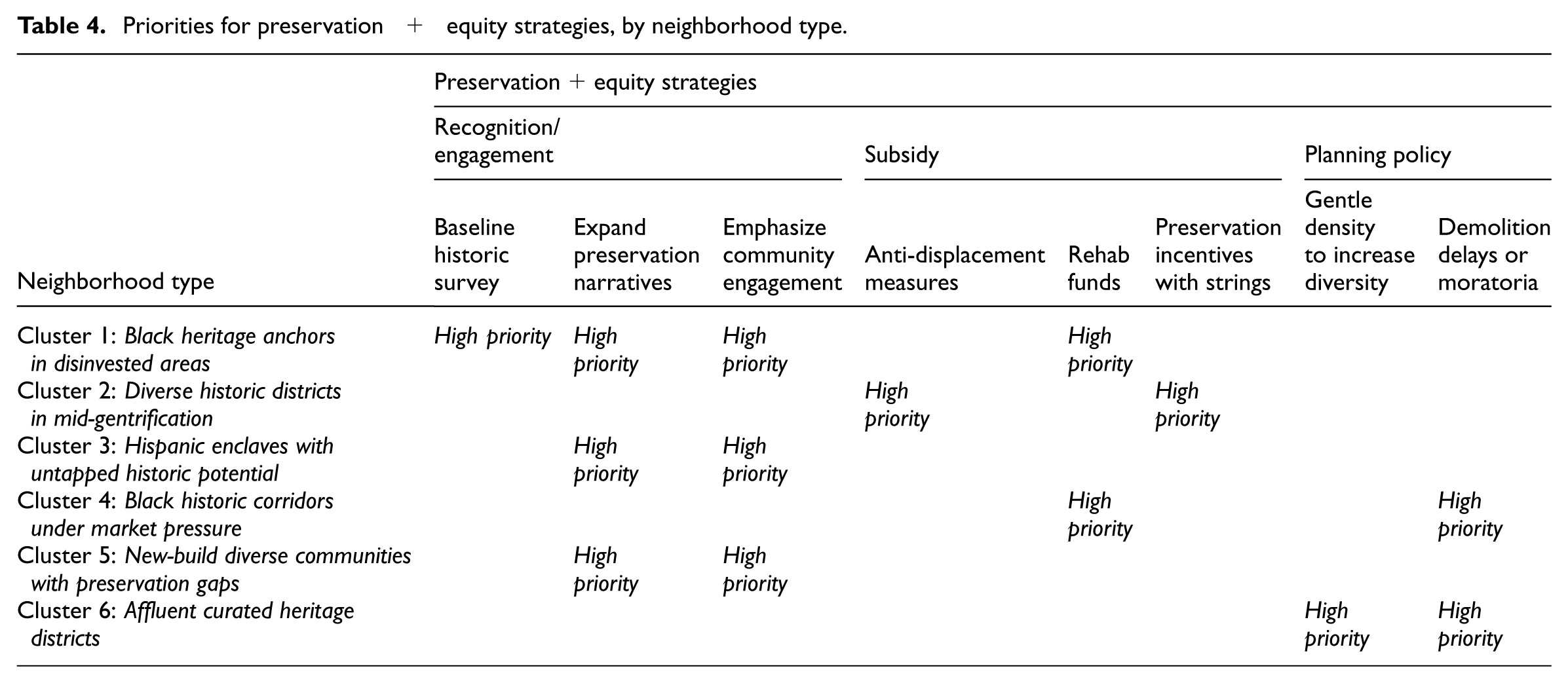
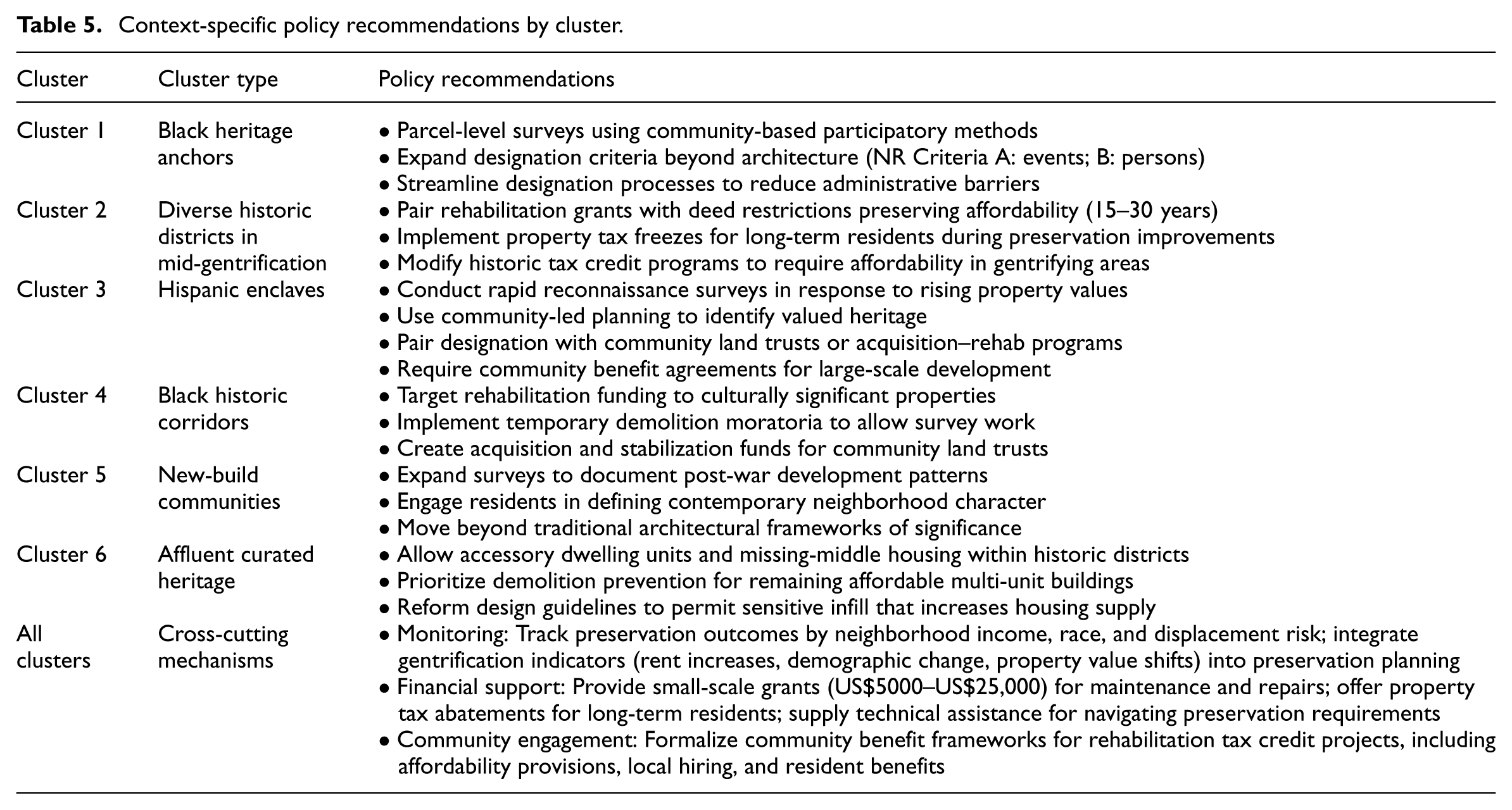
The strategies are summarized in Tables 4 and 5. Table 4 presents broad policy options and how they might be prioritized differently depending on neighborhood type, recognizing that some strategies—such as the need to track demolition, to monitor speculative investment and its impact on displacement, or to keep tabs on racial and economic exclusion that might be linked to preservation—apply to every type. Table 4 is an alternative way of thinking about trade-offs and emphasis, meant as a point of discussion and debate rather than a policy blueprint. The key takeaway is that the preservation-equity challenge, dependent on context, requires making choices about what can or should be prioritized.
Priorities for preservation + equity strategies, by neighborhood type.
Context-specific policy recommendations by cluster.
The preservation strategies in Table 4 are grouped into three main categories. First is recognition and engagement, ranging from the need to perform a baseline survey of historic and cultural resources, to the need to expand preservation narratives to include a wider range of recognized resources, such as worker housing, civil rights sites, and vernacular buildings. Community engagement requires broadening who participates in decisions about the built environment. The cluster typology developed here offers one tool for structuring conversations about what assets exist, what pressures are at work, and what strategies are available, so that communities can make more informed collective decisions.
A second set of strategies concerns direct government subsidy to support equitable preservation. This might include anti-displacement measures such as rent stabilization or property-tax relief for long-time residents. But these are also neighborhoods that need preservation support, such as funding for rehabilitation. In some neighborhoods, preservation incentives should come with protections for maintaining affordability.
A third category are planning policies that impact preservation and equity via land use policy, perhaps by zoning for “gentle density” to encourage housing type diversity in already gentrified and well-preserved neighborhoods, or by limiting demolition either through delay or moratoria.
Table 5 provides more detail on cluster-specific preservation strategies. Cluster 1 (Black Heritage Anchors in Disinvested Areas) would benefit from greater focus on recognition of potentially significant historic resources through baseline historic surveys and expanding preservation narratives to include currently under-recognized sites. While the National Park Service and many municipalities have made expanded thematic coverage a priority for two decades, accelerating and deepening these initiatives requires specific mechanisms: dedicated survey funding directed to under-surveyed neighborhoods, partnerships with community organizations and universities to conduct documentation, and streamlined designation processes that reduce administrative barriers for community-nominated properties. Comprehensive surveys could document significant vernacular architecture—we recommend reconnaissance-level surveys as an initial step to identify potentially significant resources, with intensive surveys prioritized for areas identified as having high concentrations of significance. In addition, there is a need in this neighborhood type to foster community engagement that is inclusive and that builds capacity for neighborhood preservation planning. The relatively stable market conditions create a window of opportunity for community-driven preservation efforts that can build on existing cultural preservation without triggering displacement pressures.
The priorities in Cluster 2 (Diverse Historic Districts in Mid-Gentrification) are more directed at the need for subsidy to address the gentrification pressures that this neighborhood type experiences. With home value appreciation and significant rent increases, these racially integrated areas face the challenge of maintaining their diversity while preserving historic character. At the same time, there is a need to preserve historic resources which are in danger of deteriorating. In an area that is relatively integrated but gentrifying, the priority should be preserving sites, with a strong emphasis on making sure that preservation work does not exacerbate gentrification. This is particularly crucial given increases in low-income households who may be vulnerable to displacement, as preservation potentially adds to neighborhood desirability and housing costs. Financial support mechanisms must avoid the “substantial rehabilitation” thresholds that price out lower-income property owners. Small-scale grant programs (US$5000–US$25,000) for essential maintenance and repairs can support preservation without triggering major affordability impacts. Property tax abatement programs can offset the costs of historic designation for long-term residents. Technical assistance programs can help property owners navigate preservation requirements and access available incentives.
For Cluster 3 (Hispanic Enclaves with Untapped Historic Potential), there is an urgent need to expand preservation narratives as well as emphasize community engagement. Despite containing the oldest housing stock, these Latino-majority neighborhoods have achieved only modest preservation recognition. This neighborhood type might benefit from greater support for cultural recognition efforts that are community led, particularly given the extraordinary property value increases that signal rapidly intensifying market pressures. Protecting affordability and monitoring gentrification pressure will also be needed, triggering the need for subsidy and policy efforts. Monitoring gentrification and displacement requires tracking specific indicators including rent increases, demographic shifts, property value changes, and displacement metrics. Implementation could occur through partnerships with organizations that have developed systematic monitoring frameworks. The increase in low-income households amid these dramatic market changes creates urgency for preservation strategies that can protect both cultural heritage and community stability. But first, this neighborhood type is in need of recognition and community support for preservation before market transformation overwhelms community assets.
The main priority in Cluster 4 (Black Historic Corridors Under Market Pressure) is to protect historic fabric and address demolition pressure. With extensive historic resources and rising property values creating speculative interest, these neighborhoods face high demolition rates. The emphasis here might be on subsidy in the form of rehab funds to stimulate preservation of valued sites, and at the same time finding ways to limit the demolition of historically or culturally significant properties. A demolition freeze would allow the neighborhood time to assess the level of a site’s historical or cultural significance while market pressures build. This temporary freeze differs from the ongoing design review that local landmark designation triggers—it provides time for survey and community planning before development pressure overwhelms potentially significant properties. England’s Localism Act (2011) offers a relevant model: when owners plan to sell buildings that further social well-being (pubs, shops, community centers), communities receive up to six months to raise funds and bid on these “assets of community value” (UK Parliament, 2022).
Cluster 5 (New-Build Diverse Communities with Preservation Gaps) has the same priorities as cluster 3 – recognition and community engagement – but here the preservation needs might be less obvious, as these areas have newer housing and a diverse population that might have conflicting ideas about preservation. With negligible preservation recognition and ongoing gentrification, neighborhood identity in preservation terms might be somewhat precarious, raising the need to build capacity for preservation efforts. Residents from varied backgrounds will need to be engaged in defining what cultural significance and historic heritage means and what role it plays in the future of the neighborhood, particularly as these areas represent post-war development patterns that traditional preservation frameworks may not adequately address.
Neighborhoods in Cluster 6 (Affluent Curated Heritage Districts) are wealthy, White, and already gentrified, with significant decreases in low-income households. There is significant demolition pressure for the remaining historic properties, although there is already high recognition and landmark protection for many sites. Here the emphasis is to stem demolition while also encouraging neighborhood density that is compatible with historic properties. Demolition prevention is needed especially for older multi-family properties as they retain some level of affordability in otherwise exclusive neighborhoods. Encouraging gentle density through accessory dwelling units (ADUs) and “missing middle” housing is needed to open these well-preserved but exclusive areas to greater economic and racial diversity. While design review in many Chicago historic districts already includes provisions for compatible new construction and infill, implementation varies and advocacy for density within historic contexts remains politically contentious.
Conclusion
The complex relationship between preservation and equity creates a fraught political and policy landscape in which preservationists are pitted against affordable housing proponents, and pro-density activists struggle against enforcers of “neighborhood character.” Addressing these complexities requires a nuanced policy framework that accounts for contextual variations across neighborhoods.
This is not to say that shared standards do not exist. An overarching goal remains, regardless of context, that an equitable approach to preservation requires the benefits and costs of preservation to be equitably shared and mitigated. Preservation can promote social equity when it supports the valuation of historic resources in all types of communities, mitigates the environmental and economic consequences of new construction, and maintains older, often NOAH stock.
However, to effectively guide policy responses, the preservation-equity relationship must be understood through a framework that recognizes neighborhood-level variation. Our cluster analysis of eight preservation and equity variables reveals six distinct neighborhood types in Chicago, each with different preservation challenges and opportunities. These findings expose how preservation decisions are driven not by historical significance or architectural age but by a preservation culture that systematically neglects certain types of vernacular architecture and cultural heritage.
Affluent neighborhoods exhibit “curated heritage” where preservation and demolition operate selectively to serve market interests, while neighborhoods with the oldest housing stock—predominantly Hispanic and Black communities—achieve minimal preservation recognition despite rich architectural resources. White and racially mixed neighborhoods consistently achieve the highest preservation rates, translating to uneven distribution of preservation benefits across Chicago’s diverse communities.
Policy implications point toward context-specific strategies: recognition and community engagement in under-served neighborhoods with significant historic resources; targeted subsidies and anti-displacement measures in gentrifying areas experiencing preservation-driven market pressures; and planning policies promoting inclusive density in already-preserved affluent neighborhoods. Rather than one-size-fits-all approaches, effective preservation-equity policy requires data-informed strategies tailored to specific neighborhood contexts.
Moving forward, equity must be the animating principle in all neighborhood planning that touches the built environment—including but not limited to preservation decisions. This means recognizing that historic buildings and the scales of development they represent can be powerful tools for achieving density, affordability, and walkability, but only when deliberately leveraged toward those ends and secured for existing communities rather than incoming capital. It also means acknowledging when rehabilitation costs, structural conditions, or housing need make new construction the more equitable choice. While this study focuses on Chicago, the typological framework offers a replicable methodology for other cities to develop context-specific preservation-equity strategies. The preservation field’s challenge is not choosing between heritage conservation and social equity but developing frameworks and strategies that can achieve both goals simultaneously. Neighborhood-specific approaches informed by robust understanding of local conditions and community needs seem essential for that purpose. Future research should examine how these neighborhood types evolve over time and test whether tailored interventions produce more equitable preservation outcomes than traditional one-size-fits-all approaches.
Footnotes

Funding
The authors received no financial support for the research, authorship, and/or publication of this article.
Declaration of conflicting interests
The authors declared no potential conflicts of interest with respect to the research, authorship, and/or publication of this article.