






Abstract
The study examines if African American adolescents’ academic self-esteem moderates relations between negative youth experiences and academic achievement. Grounded in a PVEST perspective, the study collected responses from 364 Black adolescents (69% girls) in a southern, urban city. The primary finding in the study confirmed the hypothesis that students who report more negative youth experiences would also report lesser achievement and that negative relations would be buffered by the presence of Academic Self-Esteem. The study also outlines sex differences as Black males appear to be more vulnerable to negative youth experiences. Despite reporting more encounters with neighborhood-based discrimination, Black males appear to benefit academically when negative experiences are coupled with high academic self-esteem. The highest achievement in our sample was reported by students with high academic self-esteem who also reported higher instances of negative youth experiences. Intervention efforts and suggestions for future directions are discussed.
I, too, sing America
I am the darker brother.
They send me to eat in the kitchen
When company comes, But I laugh, And I eat well,
And grow strong.
Tomorrow,
I’ll be at the table
When company comes,
Nobody’ll dare
Say to me,
“Eat in the kitchen,”
Then.
Besides,
They’ll see how beautiful I am
And be ashamed—
I, too, am America.
Langston Hughes
1
In esteemed literary work by Langston Hughes, the poem “I, too, sing America” tells the plight of a subjugated male who bides his time strengthening himself in hopes of eventually demonstrating the talent that was too often ignored in society. Despite the poem being originally published in the early-20th century, recent protests continue to demonstrate that Black males and females in America are still being sent to symbolically “eat in the kitchen.” Racial disharmony, prejudice, systemic barriers, and inequitable treatment continue to impede Black American hopes for equity, especially amongst Black youth who find themselves at the front lines of protests and activism. For this next generation of scholars, positive developmental outcomes are confounded as exposure to negative youth experiences indirectly influences cognitive and socioemotional development outcomes for Black adolescents (Coll et al., 1996; Spencer, 2006). In fact, implications of negative race-based experiences for Black youth have been shown to result in a number of maladaptive outcomes, including but not limited to, psychological distress, development of internalizing disorders (depression/anxiety), aggressive behaviors, heightened feelings of hopelessness, increased substance dependency, and poor academic outcomes (Cunningham, 1999; Cunningham et al., 2013; Jones et al., 2020). We label these negative race-based experiences as negative youth experiences, which are often experienced differently for males and females. For instance, Gaylord-Harden et al. (2018) characterize African American males as one of the most vulnerable racial groups in the United States because of heightened stereotypes associated with their educational and neighborhood experiences. Cunningham et al. (2018) found that males reported more negative youth experiences and that racial identity’s buffering impact differed for males and females. As exposure to negative youth experiences increased, boys with high racial identity also reported greater general beliefs about aggression. These findings suggest a need to examine how negative youth experiences are associated with academic outcomes.
Academic struggles for Black students begin long before choosing to withdraw from public education. For instance, Black and White students demonstrate similar academic performance at the start of the 1st grade, but Black students gradually begin to perform at lower rates; a gap that increases steadily until there is a measurable difference in mathematics and reading by the fourth grade (Entwisle & Alexander, 1990; Swanson et al., 2003). A potential explanation exists in additional research showing that Black youth have significantly more negative, than positive, experiences during their childhood such as teacher biases, suspicions of criminality, and expectations of adult-like behaviors that lead to adverse outcomes during adolescence (Gaylord-Harden et al., 2018; Hunt et al., 2017; Jones et al., 2020). These continuously experienced negative youth experiences from childhood to adolescence in the school and community contexts suggest that experiences during the second decade of life are associated with desires to achieve academically or the consequential removal of Black students from academic settings (Hood et al., 2017; Smalls et al., 2007). A question remains as to whether the identity of being a scholar can thwart these challenges. Thus, the purpose of the manuscript is to examine if academic self-esteem serves as a buffer between negative youth experiences and academic achievement in African American adolescents.
Youth Experiences
For Black adolescents, it has been long stated that negative youth experiences (i.e., microaggressions, harassment, and suspicion of criminality) are typical parts of youth and that these experiences impede on academic achievement (Cunningham, 1999; Cunningham et al., 2018; Witherspoon, Daniels et al., 2016). For reference, Smalls et al. (2007) sought to explore how discriminatory neighborhood experiences are associated with academic engagement in African American adolescents. The study found that while adolescents’ experiences with racial discrimination were not frequent, the majority of respondents described experiences with the phenomenon at some point in their development. Cogburn et al. (2011) report that Black adolescents in middle school who endorsed negative youth experiences were treated more harshly than their peers, which led to mental health challenges and low self-esteem. These experiences reported by Black adolescents suggest that discrimination may be chronic and, unfortunately, a normative part of daily life. Thus, for Black adolescents, exposure to negative youth experiences may influence how adolescents make meaning of their presence in relation to the world around them (Cogburn et al., 2011; Coll et al., 1996; Smalls et al., 2007; Spencer et al., 1997; Spencer, 1999; Witherspoon, Daniels et al., 2016).
The adverse effects stemming from perceived negative experiences tend to greatly affect Black adolescents and have been shown to negatively impact positive developmental outcomes (Cunningham, 1999; Cunningham et al., 2013). Further findings suggest that these experiences do not occur in unfamiliar settings, but often, near home. For example, within the very settings that Black children call their “communities,” Black adolescents are susceptible to negative self-evaluation and perceived discrimination through experiences with minor hassles and exposure to racially prejudiced attitudes (Coll et al., 1996; Spencer, 1999). These negative youth experiences vary greatly, ranging in settings such as stores and public venues that Black teens frequent, and may include slights and insults associated with their racial/ethnic background from police officers, vigilant store clerks. Fisher et al. (2000), detailed perceptions of discriminatory community experiences for multiethnic adolescents in urban settings. The researchers found that while teenagers of African American, Hispanic, and South Asian ethnicities all experience instances of negative youth experiences, teenagers of African American and Hispanic ethnicities are more greatly implicated by the prejudiced interactions (e.g., inequitable treatment in school settings, perceived interactions that suggest lower intelligence, being hassled by store personnel).
From a phenomenological variant of ecological systems theory (PVEST) perspective (Spencer, 1999, 2006), negative youth experiences are associated with how adolescents view themselves and impact life outcomes. Because exposure to discrimination and race-related stressors are typical experiences in which most Black youth are exposed, Black adolescents search for contexts that affirm their place in society (Cunningham et al., 2018; Spencer, 2006; Swanson et al., 2003). The lived negative youth experiences from childhood to adolescence lay a foundation for youth to contemplate the context that is supportive of their positive development.
For Black adolescents, negative youth experiences in the form of racially discriminatory messaging received in the community are associated with not valuing one’s scholarly identity, resulting in decreased academic performance (Seaton & Iida, 2019). Conversely, Black students exposed to negative youth experiences (e.g., suspicions of criminality, harassment, and microaggressions) and who have an identity of being a scholar may view academic achievement as a pathway out of challenges. Thus, their academic self-esteem may serve as a buffer to the negative youth experiences.
Academic Performance
As suggested by Gaylord-Harden et al. (2018) researchers should move in the direction of positive youth outcomes. While relations between perceived discrimination and a reduction in academic achievement have been previously established (Neblett et al., 2006, 2009; Smalls et al., 2007), more research is needed that focuses on positive directions toward academic performance (Cunningham et al., 2018). Additional research findings have identified sex differences in the effects of negative youth experiences for Black students, suggesting greater implications for Black boys; including claims that Black boys demonstrate lesser academic achievement than their female counterparts as a result of negative youth experiences in the form of tumultuous community-based experiences (Cunningham, 1999; Neblett et al., 2009). These findings indicate sex differences as boys have been shown to face more discriminatory experiences within community settings than girls (Noguera, 2003; Seaton et al., 2010). Additionally, negative youth experiences in the form of discrimination are associated with reduced general self-esteem (Yip et al., 2019). While the research on negative youth experiences associations with general self-esteem is clear, there remains a gap in the literature on the linkage between negative experiences and relations with the academic domain of self-esteem.
Academic Self-Esteem
The notion of African American students not engaging in academic pursuits is complex. For example, when Black college students include educational success into their identity, they have positive academic outcomes (Harper & Davis, 2012). For adolescents, student’s academic self-esteem (ASE) is the most pertinent domain to assess as students who have clearly defined their identity may be less likely to be molded by the negative opinions of others (Rivas-Drake et al., 2014; Spencer et al., 2001). Previous research defines academic self-esteem as the positive or negative personal interpretation of one’s competency in academic tasks (Wilhite, 1990). Academic self-esteem has multiple aliases (academic self-concept, academic self-efficacy, etc.) throughout literature, though all titles suggest that academic self-esteem is strongly connected to increases in academic performance (Burnett et al., 2020; Hope et al., 2020). Self-esteem was historically evaluated as a globalized index, indicating that an individual’s self-esteem was stabilized across all contexts and in all endeavors (Mboya, 1986).
Cunningham and Swanson (2010) discuss the notion of educational resilience, which is linked to domain-specific aspects of self-esteem. Their findings support classic work by Mboya (1986) who examined 211 Black adolescents’ relations between global self-esteem and academic outcomes. Results from the study indicated that student performance in academic competencies is not significantly correlated to the individual’s globalized self-esteem, but rather, that self-esteem in academics has a direct relation to school performance. For these reasons, our study focuses on the impact of academic self-esteem (ASE) solely. The role of academic self-esteem on academic achievement outcomes has been examined for Black populations, often signifying increased grade point averages for students who view themselves highly (Burnett et al., 2020; Chavous et al., 2008; Cokley et al., 2012; Cunningham & Swanson, 2010; Witherspoon et al., 1997).
The academic self-esteem dimension is associated with educational outcomes and may determine whether Black students remain in schools despite negative youth experiences in communities and schools (Cunningham & Swanson, 2010). Thus, there is a critical need to identify how the academic domain of self-esteem may increase academic outcomes and potentially combat negative youth experiences that undermine student performance. Specifically, experiences that Black youth face in school and community contexts may adversely affect academic performance and lower desires to attain secondary education. The extant literature clearly demonstrates a link between negative community experiences and academic outcomes (Neblett et al., 2006, 2009; Seaton et al., 2008; Smalls et al., 2007; Witherspoon, Seaton et al., 2016). Our study seeks to improve the outcomes of Black students by evaluating the hypothesis that the relations between perceived negative youth experiences will have an inverse relation to academic outcomes; however, academic self-esteem will moderate this relation. As academic self-esteem increases, the relation between negative youth experiences and academic outcomes decreases. Conversely, as academic self-esteem decreases, more variation occurs between the relations of the main effect.
We use Spencer, Dupree and Hartmann’s (1997) phenomenological variant of ecological systems theory (PVEST, Spencer, 2006) as the study’s conceptual template. As a developmental model that encourages researchers to understand how individuals make meaning of their experiences, a PVEST perspective allows us to examine the net balance between the risk and protective factors associated with growing up as Black American adolescents. PVEST affords an opportunity to examine how Black American adolescents’ perceptions of their experiences are associated with how they perceive themselves as scholars, which impacts their academic achievement outcomes.
Methods
Participants
The participants were a part of a larger study. The project (the Teen Experiences Project, TEP) explored social-, academic-, and achievement experiences in African American adolescents (13–18) in a large southern United States’ city. The data from the study were collected during the 2014 to 15 school year. Given our focus on Black adolescents, only students who self-identified as Black were included in the analysis. The sample used in the present analysis totaled 364 participants (Mage = 15.93, SD = 1.56). A little over two-thirds of the sample (69%) self-identified as girls.
Materials
The primary outcome variable was academic achievement, which is defined as student’s self-reported grades and academic future expectations. The independent variable was negative youth experiences. The moderator variable was academic self-esteem. Demographic variables were also included (e.g., age, sex, & grade-level).
Academic Achievement
The study uses two markers of student-reported variables to assess outcomes: (1) self-reported grade point average (GPA) and (2) future expectations of academic outcomes (AFE). GPA has historically been an indicator of student performance and has been widely used in research on academics and education (Zimmerman et al., 2002). In the current study, students were asked to self-report their grades by selecting the response that most closely resembled their academic performance. Selected responses ranged from mostly F (0), mostly D (1), and continued in half-mark increments (1.5—about half Cs and Ds, 2—Mostly C, etc.) to mostly A (4). The second variable measure to assess students’ academic achievement was academic future expectations, specifically, the level of education that the student intends on completing.
Academic future expectations were reported by one question; “how long do you think you will be in school?” The question has been used in studies with Black populations and has adequate construct validity (Trask-Tate & Cunningham, 2010). The two variables were combined into a single academic achievement construct because GPA and AFE were positively correlated (r = .28, p ≤ .001) and that a single achievement construct would help account for the greater variance for an achievement construct as well as save degrees of freedom in the data analyses.
Negative Youth Experiences
Negative youth experiences were assessed by a Youth Experiences measure that captured student perceptions of neighborhood-based discrimination and petty hassles attributed to race. The Youth Experiences Measure is revised from the Black Males Experiences Measure (Cunningham & Spencer, 1996) and originally included both positive and negative students’ perceptions associated with their community context, including comments that were specific for Black male experiences. In the revised measure, all questions are gender neutral so that items are applicable to participants across the gender spectrum. The negative perceptions scale, which is the only construct used in the paper, asks participants to select responses most aligned with experiences in public places that may indicate the presence of bias (e.g. When you are hanging out (like in the park, playground, street corner, etc.) how often do police/security guards stop you to ask what you are doing? Do people tend to lock their car doors when you pass?). Participants were asked to select the frequency that these experiences occur from Never (1) to Always (5). A principal component analysis was conducted to determine how items in the measure could be separated into subscales. The analysis found three distinct subscales: suspicions of criminality, harassment, and microaggressions. We examined the subscales in relation to the other variables and found that the subscales did not yield statistically significant differences from the overall scale. Thus, we used the overall scale. The revised scale has adequate psychometric properties for both male and female participants and has been used in multiple studies involving Black youth (Corprew & Cunningham, 2012; Cunningham et al., 2013; Foney & Cunningham, 2002) and is an adequate measure of perceived community-based discrimination. The Cronbach’s alpha for the perceived negative community construct was .93.
Academic Self-Esteem
The moderator variable is Academic Self-Esteem (ASE). Academic Self-Esteem is measured by an academic subscale of the Hare Self-Esteem measure (Hare, 1996). Adolescents were instructed to complete 10 items and select responses most aligned with their beliefs on a 4-point scale ranging from Strongly Disagree (1) or Strongly Agree (4) The subscale is used to examine participants’ beliefs about self in academic-related tasks (e.g., “School is harder for me than most people”, “I am usually proud of my report card”) (Hare, 1996). The construct is a subscale of the Hare Self-esteem measure that examines Global Self-esteem, Academic Self-esteem, Home Self-esteem, and Peer Self-esteem. The measure has been used with diverse groups of racial- and ethnic- minority adolescents and has strong psychometric reports (Hare 1977, 1996). The Academic Self-Esteem was reliable with the current sample (α = .73).
Demographics
Students self-reported age, grade level, and sex. The possible range of student ages were 13 to 18. Student grade levels ranged from grades 9 to 12. Student sex were coded 0 for males and 1 for females.
Procedures
Members from the research team visited homeroom classes to explain the aims of the study and pass out informed parental consents. Students were incentivized with refreshments to turn in their informed parental consent by a set deadline, which led to the recruitment of 80% of the school’s population. Assent was also collected from the participants prior to the survey administration. Students completed their survey during classroom time. In addition to the constructs used in the study, the survey also included student reports about school, identity, family, and friends. The entire survey took approximately 45 minutes to complete. At least one African American male and female graduate student was present at each time of data collection. To control for reading comprehension, a graduate student read each question aloud, participants completed the survey, and other research assistants monitored the participants and answered questions as needed.
Results
Data were examined for missing values. No participants missed entire sections, however, individual items were missing at random. We used the maximum likelihood estimation to replace missing values (Schafer & Olsen, 1998). The results are presented in 2 parts. Descriptive statistics and correlational analyses are presented. Then regression analyses to test the hypothesis are presented. These regressions have a focus on sex and age differences to examine demographic variables’ association with predictors and outcomes.
Descriptive Statistics
With a focus on student perceptions of factors related to achievement outcomes, participants reported on negative youth experiences in the community, academic self-esteem (ASE), academic future expectations (AFE), and self-reported grades. In accounts of youth experiences, participants gave responses on a 35-question inventory that assessed negative youth experiences in community-based settings (Cunningham & Spencer, 1996). The responses ranged from never (1) to always (5). Responses in the middle were said to occur sometimes and were coded as 3. As referenced in Table 1, the total sample reported negative youth experiences at the almost never mark (M = 1.70, SD = 0.60).
Zero-Order Correlations, Means, and Standard Deviations of all Study Variables (N = 364).
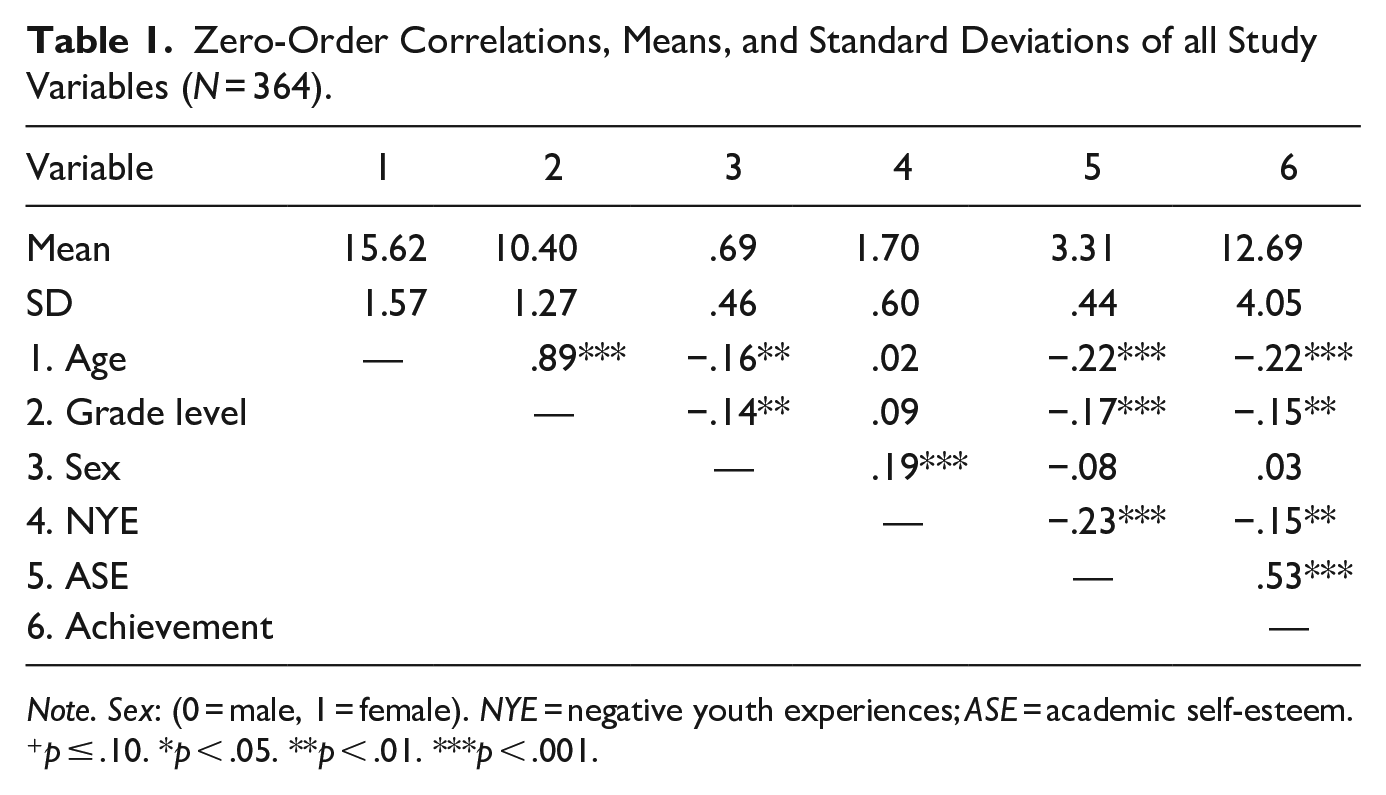
Note. Sex: (0 = male, 1 = female). NYE = negative youth experiences; ASE = academic self-esteem.
+p ≤ .10. *p < .05. **p < .01. ***p < .001.
Academic self-esteem (ASE) was assessed through 10-questions that focused on student beliefs of their academic ability. Using a 5-point Likert scale format, participants in the sample selected the accuracy of statements on the self in school, ranging from strongly disagree (1) to strongly agree (5). Student responses were reported as (M = 3.31, SD = 0.44) and indicate a range of reported ASE within the study’s sample.
Academic Future Expectations were reported by one question; “how long do you think you will be in school?” Responses were presented in Likert-scale format, the options ranging from planning to quit school ASAP (1) to college and graduate or professional school (5). Participants in the study generally reported higher academic future expectations (M = 4.35, SD = 0.72). Over 92% of respondents (n = 340) indicated desires to obtain at least a college degree.
Academic grades were also reported by a single question. Students were asked to self-report their grades by selecting the response that most closely resembled their academic performance. Selected responses ranged from mostly D (1) and continued in half mark increments (1.5—about half Cs and Ds, 2—Mostly C, etc.) to mostly A (4). The overall average suggests that students in the sample scored about average or about half B and half C (M = 2.88, SD = 0.72). Approximately 52% of the sample reported grades of mostly B and above (n = 194).
As reported earlier, AFE and GPA were combined to develop an Achievement construct. The possible range of responses was from a low of 1 to a high of 20. The mean for this construct was 12.96 with an SD of 4.05, which indicated that students reported average achievement scores.
Correlation Analysis
To evaluate the research question of factors associated with student achievement zero-order correlations were conducted between each variable in the study (see Table 1). Demographic information was examined with independent, dependent, and moderator (ASE) variables. Relations between the participants’ sex, age, ASE, student perceptions of negative youth experiences, the created achievement construct (grades and AFE) were as follows:
Sex
A statistically significant relationship was found between negative youth experiences and sex, as boys reported significantly more experiences (r = −.24, p ≤ .001.). There was also a significant relation between girls and achievement. Girls in the sample reported higher achievement scores and greater desires for educational attainment (r = .22, p ≤ .001.) than boys.
Age and grade level
A negative relation was found between academic self-esteem and age (r = −.20, p ≤ .001.), suggesting that younger students in the sample had higher academic self-esteem than older children. A similar correlation was seen for academic self-esteem and grade level (r = −.17, p ≤ .001). There was a statistically significant relation between age and achievement (r = −.18, p ≤ .001.), indicating that students who were younger tended to have higher grades and future academic expectations. Grade level was correlated with achievement in the same direction (r = −.15, p ≤ .01).
Youth experiences
Boys in the study reported more negative youth experiences than girls (t(362) = 4.79, p ≤ .001). Negative youth experiences were inversely related to every academic measure in the study, including academic self-esteem (r = −.23, p ≤ .001). In fact, as indicated in the Supplemental Materials, boys reported significantly higher negative youth experiences than girls for most individual items in the measure. For example, boys reported being suspected of doing more negative things within their community and school contexts than girls. Interestingly, there were no statistically significant differences in negative experiences of shopping in stores. These experiences were equally reported as negative by both boys and girls.
Regression Analyses
The present study has one main hypothesis that is tested through the regression analyses. The hypothesis states that students who report more negative youth experiences will report lower academic achievement (the combined variable of academic future expectations, AFE and grade point averages, GPA) and posits that academic self-esteem can be a protective factor for negative youth experiences. To examine this hypothesis, hierarchical stepwise regression analyses were used to examine the moderation effects of academic self-esteem (ASE) on the academic achievement construct. The combined achievement construct allowed for us to examine moderation effects of ASE on three-way interactions between experiences, sex, on academic achievement (grade point average and academic future expectations). In doing so, Step 1 of the regression analysis included sex, ASE, and negative youth experiences. Step 2 included examined two-way interactions including academic self-esteem by sex, negative youth experiences by sex, and academic self-esteem by negative youth experiences. In the final step, student experiences were run with sex, and academic self-esteem to test variables on achievement outcomes. The model demonstrated some statistically significant findings in three-way interactions. Significant findings are discussed below.
Sex × ASE
As indicated in Figure 1 with the achievement model as the dependent variable, there were statistically significant in three-way interactions between sex, academic self-esteem (ASE), and negative youth experiences. In step 1, negative youth experiences were not found to be a significant contributor. However, both sex (β (364) = .19, p < .001) and ASE (β (364) = .49, p < .001) were significant contributors to the overall model, accounting for almost 32% of the variance. In step 2, two-way interactions between negative youth experiences × sex (NYE × Sex) and academic self-esteem x negative youth experiences (ASE × NYE) were not found to significantly contribute to the achievement construct. Step 3 demonstrated that the three-way interaction between sex × academic self-esteem x negative youth experiences was a significant contributor to the overall model (β (364) = .40, p < .05, ΔR2 = .33), accounting for an additional 1% of the variance.
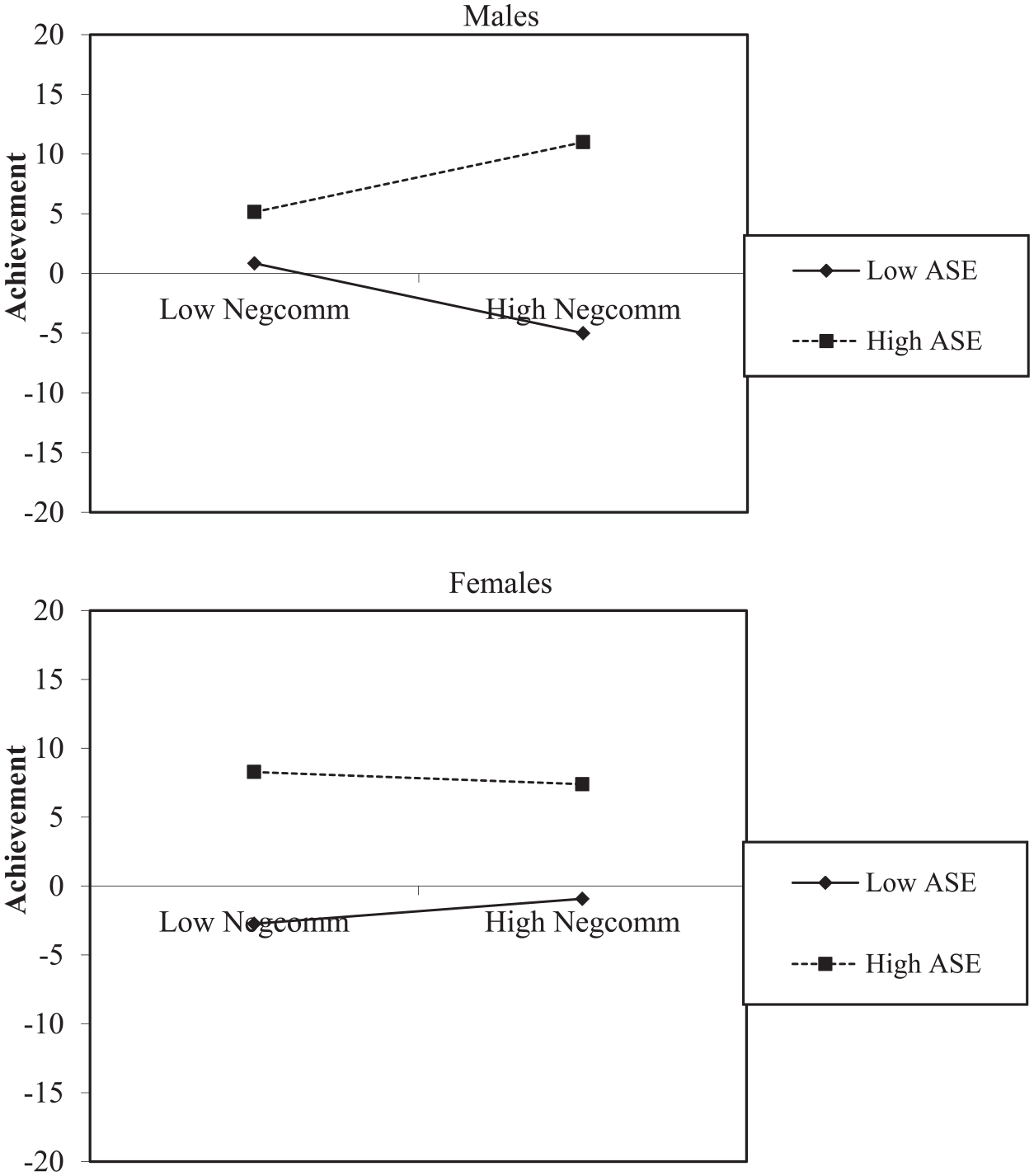
A Three-way interaction of sex × negative youth experiences × academic self-esteem on achievement (males and females).
When examined in Figure 1, the interaction indicates sex differences between boys and girls. Male students with high ASE had high achievement when negative youth experiences increased. Conversely, male students with low ASE had lower achievement levels when negative youth experiences increased. For girls, negative youth experiences did not impact achievement when ASE was high or low. However, the analysis of the simple slope for this regression was not statistically significant.
Age
The next step was to examine age, as it was a statistically significant contributor in each step of the original regression analysis. The age variable replaced sex and regressions examined moderation effects of academic self-esteem (ASE) on three-way interactions between student experiences, age, on academic achievement (grade point average and academic future expectations). One regression was run; Step 1 of the regression analysis included age, academic self-esteem, and student perceptions of negative youth experiences. Step 2 included examined two-way interactions involving academic self-esteem by age (ASE × age) and student experiences by age (e.g., NYE × Age). In the final step, student experiences were run with age, and academic self-esteem to test variables on outcomes (i.e., Age × ASE × NYE). The model demonstrated one statistically significant finding in three-way interactions. There was a statistically significant interaction between age, negative youth experiences, and academic self-esteem with achievement as the outcome. Specifically, in step 1 of the model, while negative youth experiences were not statistically significant, ASE (β (364) = .50, p < .001) and Age (β (364) = −.11, p < .05) significantly contributed to the model, accounting for 30 percent of the variance. In Step 2, neither the interaction between NYE × Age, Age × ASE, nor ASE x Negative Youth Experiences were significant contributors to the overall model. In the last step, the three-way interaction between Age, ASE, and Negative Youth Experiences was a statistically significant contributor to the overall model (β (364) = 1.04, p < .05). As seen in Figure 2, students of all ages performed better academically and had higher academic achievement expectations when they also reported high academic self-esteem. Additionally, and a counter to our hypothesis, we see that both older and younger students who report high negative youth experiences and high ASE also tend to perform better than their peers with high ASE and fewer negative youth experiences. Lastly, the interaction demonstrates that the ASE differences between younger and older students. Achievement outcomes vary contingent on community experience, ASE, and age. As ASE increases, achievement increases regardless of community experiences. However, for students who report lower ASE, more negative youth experiences make these students more vulnerable to poor achievement outcomes. Students with low ASE and low negative youth experiences, perform better as they become older, but their achievement is still markedly lower than that of their higher ASE peers.
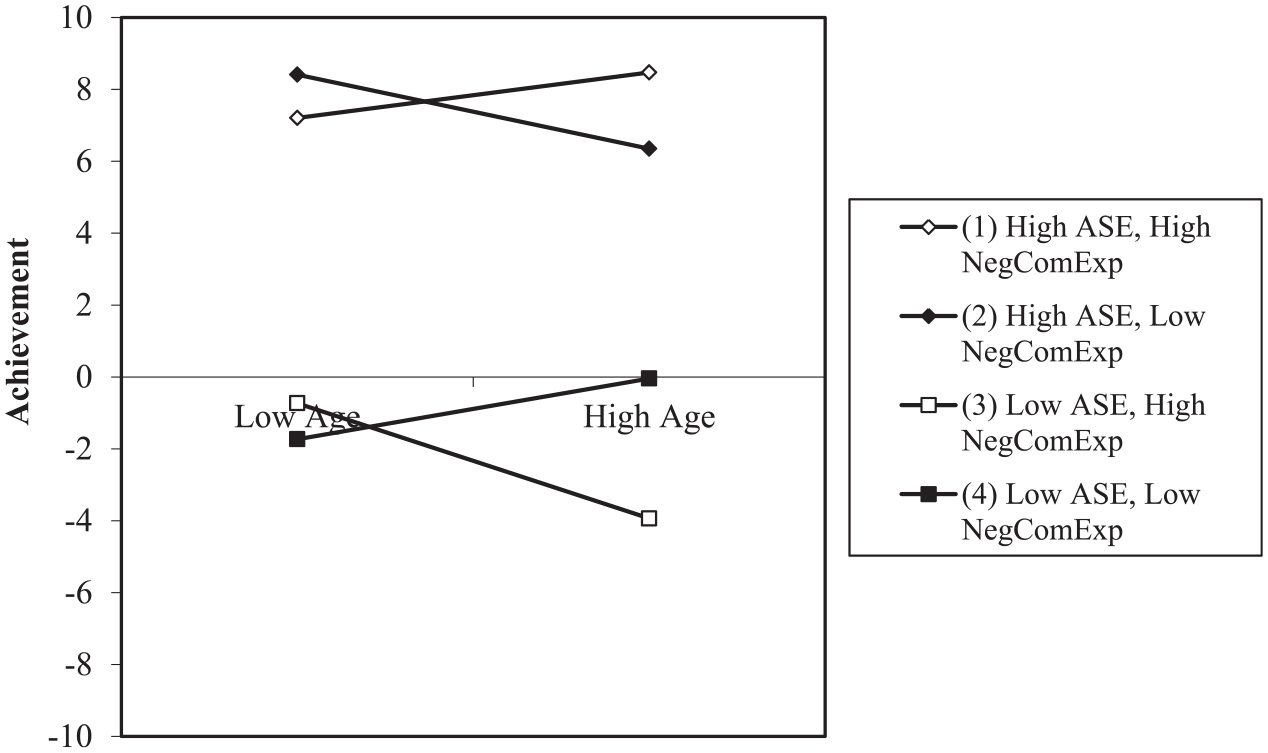
A three-way interaction of age × negative youth experiences × academic self-esteem on achievement.
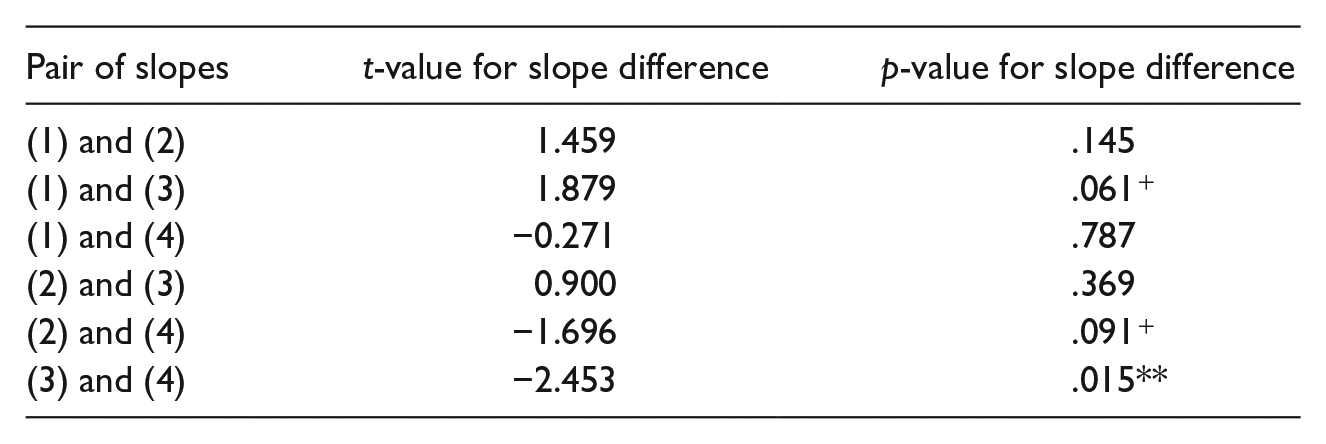
As indicated in Figure 2, the results suggest that there is a difference in performance based on the academic self-esteem that students report. Older students with higher ASE and high negative experiences appear to use school as a means of exiting tumultuous community experiences, whereas older students who report lower ASE seem to have withdrawn from school as indicated by reduced academic achievement. Another trend level significance was found between students with high ASE and low negative youth experiences and low ASE and low negative youth experiences (t = −1.70, p = .09). Though both groups of students report reduced encounters with negative experiences in the community, those individuals with higher ASE perform worst as they get older. Conversely, those students with lower ASE report better achievement when they get older. The simple slopes analysis was found to be statistically significant in the interaction. The t-values for the slopes between older and younger students who reported high negative youth experiences and low academic self-esteem and students with low negative youth experiences and low academic self-esteem (t = −2.45, p < .05). Trend level t-values were also found between students with high negative youth experiences and high ASE and low ASE and high negative community experience (t = 1.88, p = .06). The same analysis was conducted for students in higher and lower grade levels. The overall model was statistically significant. However, the simple slopes analyses were not.
In sum, males and older students who reported high ASE performed better overall on the achievement variable when they reported increases in negative youth experiences. These findings are not consistent with the literature from previous studies suggesting that negative experiences in the community have inverse relations with achievement outcomes (Neblett et al., 2006, 2009; Smalls et al., 2007). From a PVEST perspective, ASE may serve as a motivator in exposure to challenging community experiences. However, having low ASE and high negative youth experiences are associated with vulnerable achievement levels.
Discussion
The purpose of the current study was to examine how negative experiences in the community environment relate to achievement for Black American students. In doing so, we sought to clarify whether the presence of academic self-esteem would serve as a protective factor against negative youth experiences and result in improved achievement. The current study used a PVEST perspective to expand the literature by providing student-centered factors of resilience (academic self-esteem) that may promote positive academic outcomes for Black students.
The primary finding in the study confirmed the hypothesis that students who report more negative youth experiences would also report lesser achievement and that negative relations would be buffered by the presence of ASE. However, this is the case only if ASE is high. For students who have strong identities as scholars (reporting high academic self-esteem; ASE), student achievement (grade point averages and academic future expectations, how far they want to go in college) increased. Students in our sample who reported high ASE and greater perceived negative youth experiences tended to report the highest achievement of all students. The finding suggests that when students engage with negative experiences in the community, those experiences serve as fuel to apply themselves more rigorously to coursework as a means of escaping these settings. This finding is consistent with a PVEST perspective (Spencer, 2006; Spencer et al., 1997). As students make meaning of their experiences, they may become active participants in their academic plight.
The story, however, is complicated. For older students with high reports of academic self-esteem, they may see themselves as scholars; so, when they are exposed to negative youth experiences, they may be motivated to use academic achievement as a pathway to cope with situations. Conversely, older students with low reports of academic self-esteem and who are exposed to challenging community experiences react in similar ways that reported in the extant literature (e.g., Neblett et al., 2006, 2009; Smalls et al., 2007) and they may become vulnerable to have lower academic achievement outcomes.
Secondly, the analysis by sex suggests that this phenomenon is most pertinent for Black males. This study confirmed data from previous literature suggesting that Black males have more turbulent experiences in the community than their female counterparts (Neblett et al., 2009; Noguera, 2003; Seaton et al., 2010; Brittian et al., 2013). Our findings also suggest a factor of resilience as only males in the sample reported increased performance when negative youth experiences were high.
Overall, using a PVEST perspective, the findings offer continued support that negative youth experiences may be a driving force for achievement when students see themselves as scholars, especially as students are ending their K-12 tenure and considering options after high school. When using students’ reports of their experiences, we give researchers the opportunity to understand experiences from the students’ perspective. In doing so, we give voice to why some adolescents achieve despite challenges and why some may be vulnerable to the same experiences.
Implications and Future Research
The current study was novel in its key findings, adding another component to the literature on negative youth experiences and academic outcomes. The present study shared similar findings with previous studies suggesting that students who report high instances of negative youth experiences report lower academic achievement outcomes than students who have lesser negative experiences (Neblett et al., 2006, 2009; Smalls et al., 2007) and that ASE has been shown to correlate with increased performance in Black students (Chavous et al., 2008; Cokley et al., 2012; Witherspoon et al., 1997). To extend those findings, the present study shows that for students who report high academic self-esteem, extraneous factors in the environment do not hold as much barring on student performance. Factors previously found to be detrimental to student performance (e.g., negative youth experiences) may even boost the performance of students who have high academic self-esteem. These findings hold implications for parents, teachers, school-based stakeholders, and school psychologists who seek to enhance the academic performance of Black students.
This is a subject area that should be examined further to better understand how a strong academic identity may minimize the harmful effects of negative environments and serve to promote academic achievement and college attendance. Future research should examine factors that promote academic self-esteem development and programming that can be successfully implemented in the school and home context. In developing ASE, successful programming may be able to reel students into school who have previously turned off school as a place where they see themselves as belonging. This is especially pertinent for older adolescent males, who in our study were exceptionally vulnerable to negative youth experiences when ASE was low. Additionally, teachers may be better able to facilitate the success of Black students who come into schools with negative experiences in their communities if they are knowledgeable about contextual factors in the community. This understanding is of critical importance to informing teachers about neighborhood experiences through school and community partnerships. Due to age, grade level, and sex differences found in the study, future research should consider examining the longitudinal data of students to better understand how the factors play out over time.
Limitations
The study is not without limitations. The measures draw upon students’ current perception at one timepoint. The chronic nature of negative youth experiences and fluctuating academic self-esteem in adolescence makes it possible that cohort effects were in play and more longitudinal research may better to speak to the difference in the relationship between achievement and age. Additionally, the negative youth experiences measure was originally constructed for use with male populations. While the measure used in our study was adapted for use with Black male and female adolescents, the measure only examined the perception of negative youth experiences and did not account for stress and associated distress. Future studies involving associated feelings may help better explain differential findings between males and females. The study is also cross-sectional; so, causal inferences cannot be made. The participants were from a southern region of the U.S. and negative youth experiences may differ in other geographic locations. Finally, the sample consisted of more females than males. While females represented the majority population in the school, more effort is needed to include the experiences of males.
Conclusion
Although the study has limitations, they are not fatal flaws. In sum, the study’s findings outline the importance of academic self-esteem, demonstrating that in the presence of negative youth experiences, high academic self-esteem can be a contributor to resilience and foster greater achievement in Black youth. Findings have implications for Black student outcomes, especially in those who are raised in the presence of negative community settings. In alignment with a PVEST perspective, adolescents cannot help where they grow up, but results lean toward resilience pathways based on the adolescent’s identity as a scholar.
The study also outlines sex differences as Black males appear to be more vulnerable to negative youth experiences. Despite reporting more encounters with neighborhood-based discrimination, Black males appear to benefit academically when negative experiences are coupled with a high academic self-esteem. The highest achievement in our sample was reported by students with high academic self-esteem who also reported higher instances of negative youth experiences. These findings may be pertinent for parents, teachers, school-based stakeholders, and school psychologists of Black American youth who seek to boost the academic performance of students. Specifically, by focusing on factors that increase academic self-esteem, the identity of a scholar will buffer against outside factors in the student’s environment.
Future research should examine the importance of the school context and academic self-esteem as it relates to lifelong learning. Participants in the present sample were Black adolescents in high-school settings (9th–12th grade); therefore, future studies should seek to gain qualitative perspectives of students (particularly successful students with high instances of negative youth experiences) to better the phenomenon and resilience factors. To gain an accurate depiction of when academic self-esteem begins to impact achievement outcomes, earlier educational experiences must be considered. For example, students who reported lower ASE may have turned off school as a place for self-esteem due to earlier negative experiences in the school context. To combat this, implications may include school initiatives in early education to establish academic self-esteem. Action research may also evaluate interventions for students in later stages of their education aimed at reengaging students in the school process and late development of academic self-esteem. Most teachers want the best for their students, but they may not know how to engage students who have a legacy of bad experiences. The current results indicate that students who see themselves as scholars can make meaning of their school and negative community experiences and use achievement as a way forward. The present study highlights resilience in students growing up in a southern state and identifies ASE as a key factor in promoting academic outcomes.
Supplemental Material
sj-docx-1-yas-10.1177_0044118X211063919 – Supplemental material for Academic Self-esteem as a Buffer Between Negative Youth Experiences and Academic Achievement in African American Adolescents
Supplemental material, sj-docx-1-yas-10.1177_0044118X211063919 for Academic Self-esteem as a Buffer Between Negative Youth Experiences and Academic Achievement in African American Adolescents by Jarrad D. Hodge and Michael Cunningham in Youth & Society
Footnotes
Declaration of Conflicting Interests
The author(s) declared no potential conflicts of interest with respect to the research, authorship, and/or publication of this article.
Funding
The author(s) disclosed receipt of the following financial support for the research, authorship, and/or publication of this article: The authors received funding from Tulane University’s Carol Lavin Bernick Faculty Grant to support the writing of this article.

Supplemental Material
Supplemental material for this article is available online.
Notes
Author Biographies
References
Supplementary Material
Please find the following supplemental material available below.
For Open Access articles published under a Creative Commons License, all supplemental material carries the same license as the article it is associated with.
For non-Open Access articles published, all supplemental material carries a non-exclusive license, and permission requests for re-use of supplemental material or any part of supplemental material shall be sent directly to the copyright owner as specified in the copyright notice associated with the article.
