






Abstract
Rural adolescents are at risk for firearm-related injury and death. In response, professional organizations have called for communication between adolescents, parents, and providers about firearms. A shared understanding of firearms between providers and families can facilitate effectiveness of health interventions. However, few studies engage adolescents in identifying their perception of common firearm terminology. The current study aimed to understand how adolescents in rural communities defined firearm-related terms including firearm, carrying, and handling, and differences in terms based on prior firearm training. Data were from a mixed methods community-based participatory study of 93 adolescents from rural Washington state. Thematic qualitative coding identified themes for firearm (gun, weapon, projectile, and tool), carrying (on you/your person, transportation, and holding), and handling (actively using, safe use, and holding) and differences between those with prior firearms training. Findings provide insight into perceptions of firearm-related terms for adolescents, an often-neglected voice, and inform rural policy and prevention efforts.
Introduction
Firearm-involved injury among United States (US) adolescents has increased over time and is now the leading cause of death in this age group (i.e., 13–18 years old; Goldstick et al., 2022; The Society for Adolescent Health and Medicine, 2020). Handgun carrying is a key precursor of firearm violence and related injury (Dong et al., 2019), making it a relevant target for prevention efforts. Recent research indicates handgun carrying is on the rise among adolescents. Carey and Coley (2022) compared historical cohorts of adolescents and found recent cohorts (2015–2019) were 41% more likely to carry a handgun in the past year compared to older cohorts (2002–2006). However, handgun carrying literature has traditionally focused on urban adolescents, to the point where “very little is known about firearm carrying in rural contexts” (Culyba, 2020, p. 383). In response, a recent and growing body of research on rural adolescents indicates they have higher rates of carrying (Carey & Coley, 2022) with steeper increases over time (Schleimer et al., 2023), are more likely to have a firearm in the home (Bottiani et al., 2021), and earlier access to firearms (Rowhani-Rahbar et al., 2020)—all known risk factors for injury. This is also illustrated when comparing firearm-related deaths among rural adolescents. Rural adolescents are twice as likely to experience firearm-involved death by suicide than their urban counterparts (Nance et al., 2010). Although recent research has started to identify effective community-based prevention approaches (e.g., Rowhani-Rahbar et al., 2023), few firearm injury prevention programs have been developed in rural areas and for adolescents.
Youth-focused organizations have advocated for approaches to reduce firearm-related harm. In 2012, the American Academy of Pediatrics published a policy statement, reaffirmed in 2021, with key recommendations including providing health information and counseling to parents around firearm-related injury (American Academy of Pediatrics, 2021; Council on Injury, Violence, and Poison Prevention Executive Committee et al., 2012). Building from a 2005 publication, a renewed call was made for harm reduction and prevention in a 2020 Society for Adolescent Health and Medicine position paper (Duke et al., 2005; The Society for Adolescent Health and Medicine, 2020). These position and recommendation statements centered around engaging adolescents and parents in screening, counseling, and outreach. A frequent thread in these calls to action is talking with adolescents and their families about firearms, making common language a critical, yet overlooked, factor for development and implementation of prevention and intervention efforts (Haasz et al., 2022). Interventions targeting rural families show efficacy in increasing safe storage practices within the household (Grossman et al., 2012). However, there is limited information from adolescents on understanding of firearm-related terms, especially from those living in rural areas. To address this, the current study sought to identify how adolescents in rural communities understand and make sense of firearm-related terms of firearm, carrying, and handling.
Need for Common Firearm Language
A shared understanding of firearm and related terminology, or a common language, is a critical starting point in firearm injury prevention. Betz et al. (2021) provided recommendations for a common language around firearms and firearm ownership, for example, using the word “firearm” rather than “gun” as it has a more neutral connotation. Terminology and language may vary considerably among youth across different geographies, communities, and cultures. Understanding and leveraging shared language among groups, such as rural adolescents, is important for effectiveness of firearm-injury prevention programming.
Use of a common language has several benefits including standardization and consistency in (a) health communication (e.g., tailoring language), (b) measurement (e.g., epidemiological surveillance), (c) prevention and intervention delivery (e.g., tailoring interventions to culture), and (d) advocacy efforts (e.g., use of preferred language to garner support; Blanchard et al., 2021; Boine et al., 2022; Haasz et al., 2022). Health communication materials are more successful when relevant to their intended audience (Kreuter & Wray, 2003), and the choice of language can impact perceived relevance (Farrow et al., 2018). Within the firearm literature, there are inconsistent conceptualizations of terms such as “carrying” and “handling” (Chavez et al., 2022). Although other terms, such as “firearm,” have a shared conceptualization among researchers and policymakers, it may not translate to audiences for intervention. Specifically, adolescents may hold differing definitions from those of researchers. As a result, current measures used to capture firearm behaviors may have issues of validity if they don’t align with understanding within the intended population (Schmidt et al., 2019). Understanding rural adolescents’ conceptualizations also holds implications for measurement and surveillance of important predictors of injury such as carrying or handling.
Individuals in rural communities may engage with firearms differently than those in urban areas due to prevalence of firearms and intended use or motivation for ownership. In addition to higher rates of ownership and household availability in rural communities, hunting is cited as an important reason for ownership. Activities using firearms (e.g., hunting and shooting sports) are more prevalent in rural communities (U.S. Census Bureau, 2018). Such regionally embedded activities likely bring a shared terminology and meaning among those who engage in them (Moreland et al., 2013). Boine et al. (2020) referred to hunting as an activity with clear cultural ties and a history of ritual using “language impenetrable to non-hunters” (p. 2). Understanding the culture and meaning ascribed to firearm-related terminology is critical to making meaningful connections with such groups.
In addition to activities, opinions and preferences may differ. Prior studies of rural communities found strong support for retaining legal rights to firearms for hunting and shooting sports (Jennissen et al., 2021) but lower levels of support for safe storage requirements (Smith, 2002). This suggests a disconnect between safety recommendations and preferences of rural adults who are often the access point to firearms for adolescents. This disconnect may be driven by a mismatch between firearm-related terminology used by health professionals and the meaning rural individuals ascribed to them. The use of specific words can lead to affective responses, which can influence attitudes and behaviors (Farrow et al., 2018). In the absence of shared terminology, health providers may be less comfortable discussing firearms (Haasz et al., 2022). Therefore, interventions in which firearm-related communications are tailored to rural contexts may be more effective at engaging rural adults and, as a result, impactful in reducing firearm-related injury (Marino et al., 2018). Effective communication, including terminology, for discussing issues related to firearm safety among different groups is needed (Branas et al., 2017).
Development or adaptation of firearm injury prevention efforts for rural adolescents requires formative research. Formative research includes gathering information from an intended audience to inform message creation (Atkin & Freimuth, 2001) and can influence campaign success (Noar, 2006). Health communication interventions can effectively impact health attitudes and behaviors (Anker et al., 2016; Willoughby & Noar, 2022), including firearm injury prevention efforts (e.g., safe storage; Fuzzell et al., 2022; Roberto et al., 2000). Despite adolescents being negatively impacted by firearm injury, their voice and perspective are often ignored in formative research on topics such as firearm-related health communications (Jennissen et al., 2021).
Existing Firearm Terminology
Looking at conceptualization of existing firearm terminology by researchers and policymakers is a useful starting point. Among common terms, the word “firearm” is one with a standard federal definition:
The term “firearm” means (A) any weapon (including a starter gun) which will or is designed to or may readily be converted to expel a projectile by the action of an explosive; (B) the frame or receiver of any such weapon; (C) any firearm muffler or firearm silencer; or (D) any destructive device. (Crimes and Criminal Procedure, 1998)
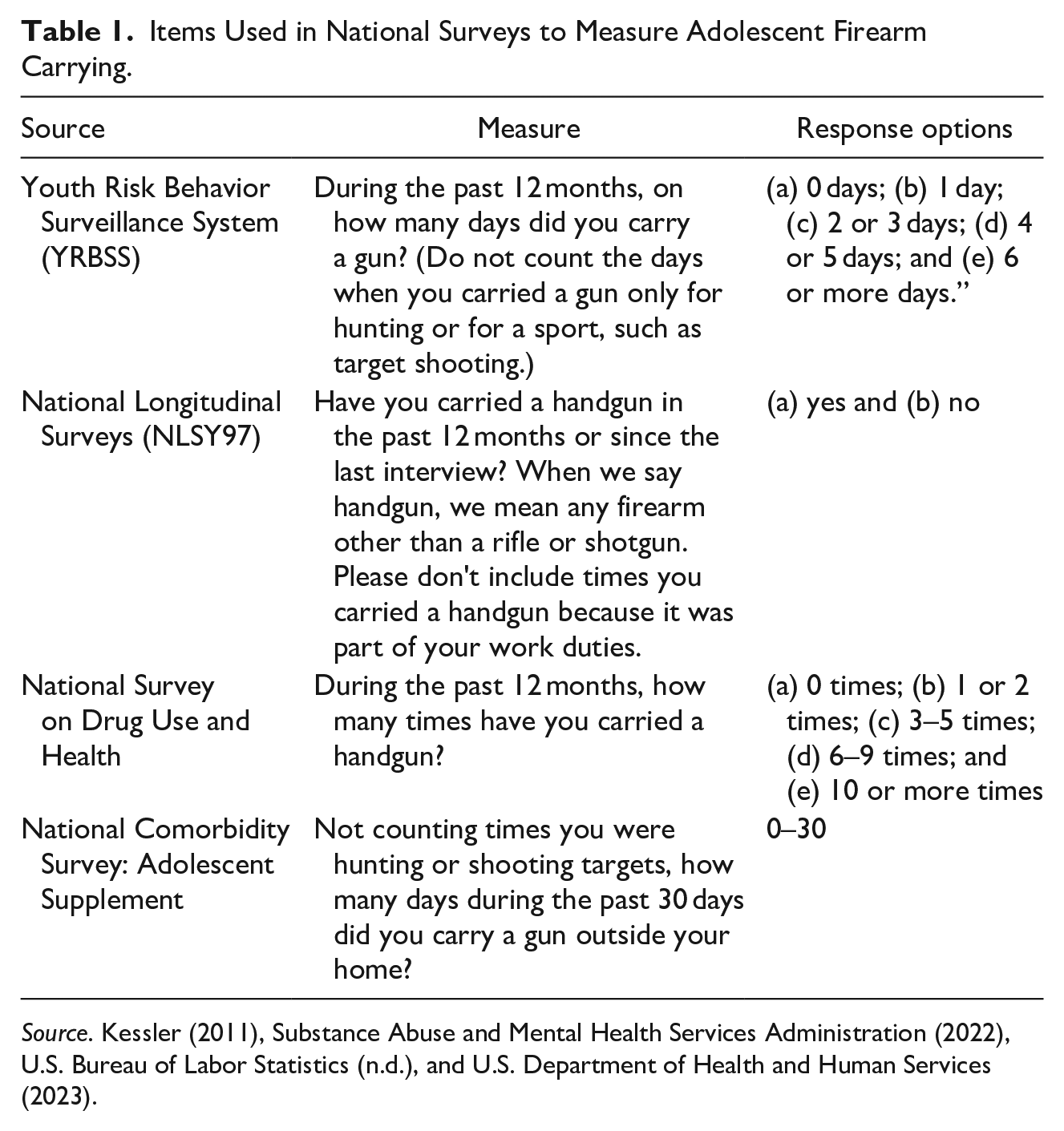
As mentioned previously, “carrying” is a common construct measured but rarely conceptualized. Table 1 identifies measures used in national surveys to capture adolescent firearm carrying. These measures have an implied, and sometimes explicit, reference to carrying outside of hunting, sport, or work contexts. Although rarely conceptualized, some investigators have provided examples of carrying behaviors, with references to “bringing a gun to school” (Ngo et al., 2019, p. 812) or carrying outside of the home including in one’s car (Sokol et al., 2020). Given the centrality of the term carrying to firearm-related research, policy, and injury prevention it is critical to understand adolescents’ meaning of this word.
Items Used in National Surveys to Measure Adolescent Firearm Carrying.
Compared to “carrying,” the term “handling” is less frequently referenced and measured. Prior studies mentioning handling used examples such as “playing with a found gun” (Ngo et al., 2019, p. 812) while a measure of handling from a representative sample of California adolescents asked about holding a firearm “in your own hand” (Miller, 2004, p. 164). This may reflect an implied meaning for “handling” as having a firearm in one’s hand. Other studies use the terms “carrying” and “handling” interchangeably. For example, a scoping review combined the terms carriage, handling, and use in their findings (Ngo et al., 2019). The inconsistencies in use of terms “carrying” and “handling” hold implications for researchers in synthesizing, advancing, and applying knowledge gained related to firearms research. This is especially important for work informing developmental tailoring in firearm injury prevention and intervention efforts targeting adolescents. Ultimately, it is unclear how rural adolescents define terms of firearm, carrying, and handling. Uncovering such understanding is an important first step in future prevention efforts.
Current Study
The aim of the current study was to understand how rural adolescents ascribed meaning to the terms firearm, carrying, and handling. Using qualitative data, research question #1 (RQ1) asked what common themes emerged among rural adolescents’ definitions of these terms. Research question #1a (RQ1a) explored differences in terminology based on adolescents who have and have not received prior firearms training. Training is likely an important factor in the development of individual definitions and use of firearm-related terms as many training courses have and use their own preferred terminology. Research question #2 (RQ2) asked what overlap and co-occurrence of themes exists across firearm-related terms. In addition to understanding adolescents’ conceptualizations, it will be important to identify how terms are used with one another.
Materials and Methods
Data were from a mixed-methods, community-based participatory study to understand the cultural context of firearms in rural settings. Adolescents between the ages of 12 and 19 years old were recruited from Washington State University’s 4-H Youth Development program (N = 93) to participate in a survey followed by a semi-structured interview or focus group. This age range aligns with the 4-H age categories of Intermediate (11–13 years old) and Senior (14–18 years old) which are determined by age on October 1 of the current 4-H “year.” Data for the current study were from the survey’s open-ended questions. All study methods were approved by the Institutional Review Board (IRB) at Washington State University (#18478) and a tribal research permit was obtained for data collected on tribal land or from enrolled tribal members. Written parent or guardian consent and adolescent assent was obtained prior to data collection.
Adolescents were, on average, 15.7 years old (SD = 1.7) on date of survey completion, 53% identified as female (n= 49), and 84% (n = 78) identified as White, 10% (n = 9) multi-racial, 2% (n = 2) Black, 2% (n = 2) American Indian/Alaska Native, and 1% each Asian and Hispanic/Latinx. Adolescents could select more than one race/ethnicity. Most (97.8%; n = 91) lived with a parent/step-parent/guardian. Approximately half (47%; n = 44) were enrolled in 4-H Shooting Sports, a program to promote youth development and safe and responsible use of firearms. All adolescents lived in a rural area, defined as any category more rural than “Large Central Metro” using the National Center for Health Statistics (2017) Urban-Rural Classification Scheme.
Measures
Items in the current study included three open-ended prompts of “How do you define the word ‘firearm’/‘carrying’/‘handling’?” Prior firearms training was captured with an item asking “Has a family member, other adult, or organization trained you in safe use (e.g., muzzle awareness, ensuring range is clear before firing)?” with response options including “No, I did not receive training,” “Yes, I received training for handguns,” “Yes, I received training for long guns,” and “Yes, I received training for handguns and long guns.” Responses were dichotomized to capture no training and any training.
Analytic Plan
Responses were open coded by the first and seventh authors. After an initial review of all responses, coders reviewed and added descriptive label(s) to one or more groupings of words, preferably using adolescents’ own words (i.e., in vivo coding). There were no a priori codes. Coders worked independently, then met to discuss incongruencies and achieve 100% consensus. Multiple codes could be applied (i.e., simultaneous coding). Trustworthiness, or criteria with which to judge qualitative research quality (Cypress, 2017), was assured through investigator triangulation, data saturation, and completing an audit trail (Merriam & Tisdell, 2015). Investigator triangulation included using multiple investigators to confirm thematic findings where the first and seventh authors identified themes and the second and tenth authors reviewed themes for verification and triangulation. The second and tenth authors were 4-H professionals who led Shooting Sports clubs. Their familiarity with Shooting Sports and rural youth provided additional context (e.g., clarification of terminology). Data saturation was achieved through project team check-ins during data collection to confirm no new topics were emerging. Finally, project members maintained an audit trail capturing procedures and decisions made during data collection. One audit trail example is the connection between a survey question (“How do you define the word firearm?”), adolescent response (“A weapon that is considered a gun.”), initial code (weapon), and final theme (weapon, gun).
Analyses were conducted using MAXQDA 2022 software to code open-ended responses and to describe codes (e.g., number, percentage, and co-occurrence) overall, by question, and by respondent (using Code Statistics, Simple Code Configuration, Code Patterns, and Code Co-Occurrence Model features). The terminology of “code” is used when referring to data analysis and “theme” for results and discussion. To compare prevalence of themes between those who had and had not previously received training (RQ1a), we conducted a Fisher’s Exact Test (FET), appropriate for small sample sizes. Due to limitations of FET (i.e., assumptions that marginal totals are fixed; Warner, 2013) and the exploratory nature of the current study, we conducted two-tailed tests and evaluated significance as p < .10.
Results
For each term, three to four main themes emerged. Table 2 lists the themes for each term, number of coded segments, and percentage of total coded segments for the term.
Themes for Terms of Firearm, Carrying, and Handling.
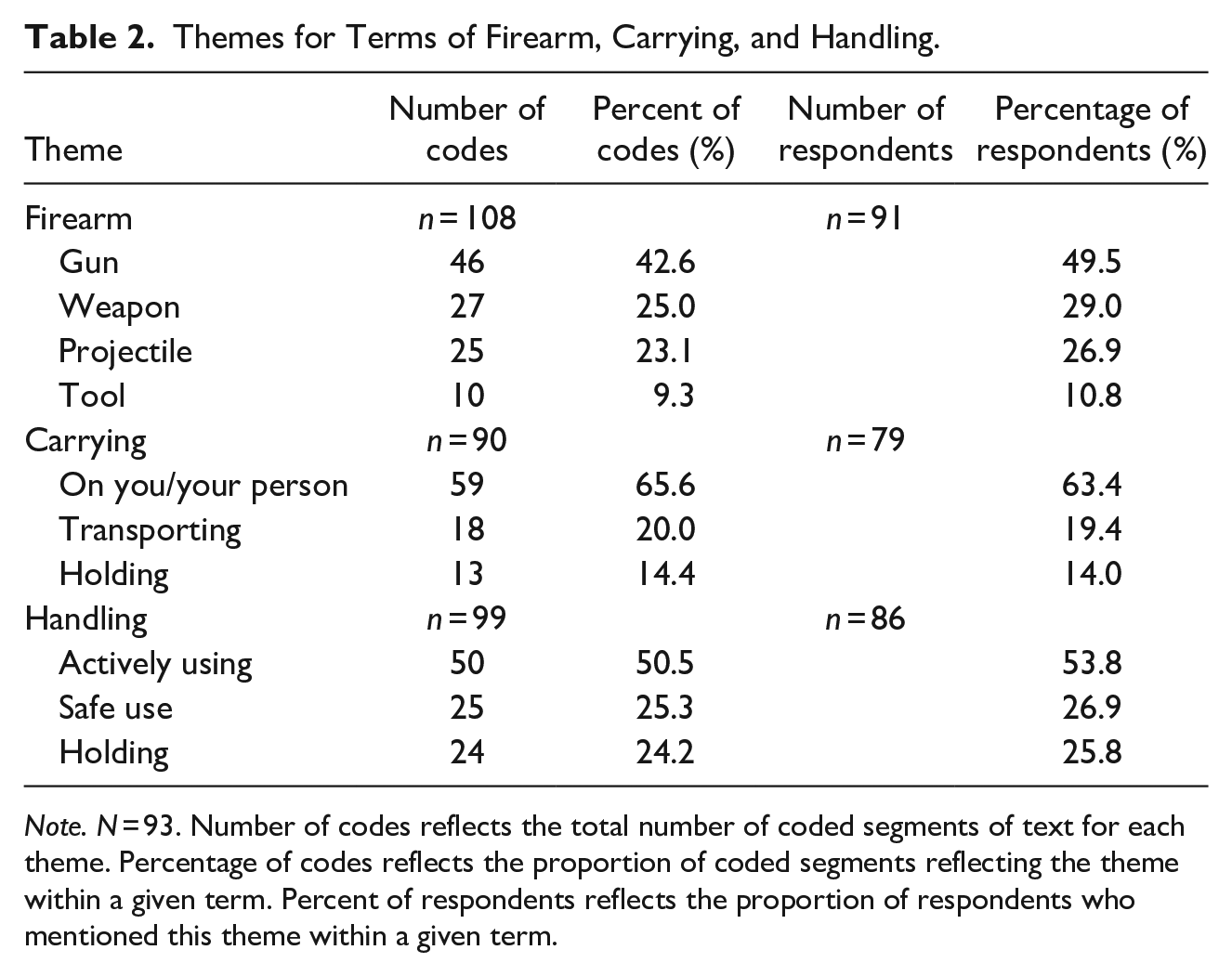
Note. N = 93. Number of codes reflects the total number of coded segments of text for each theme. Percentage of codes reflects the proportion of coded segments reflecting the theme within a given term. Percent of respondents reflects the proportion of respondents who mentioned this theme within a given term.
Firearm
For the term firearm, four themes emerged including: gun, weapon, projectile, and tool. Almost half (49.5%) of respondents referred to a firearm as a “gun.” Some individuals identified were specific such as “rifle” or “handgun” while others broadly referred to “any guns.” “Weapon” was the second most frequently mentioned theme (33.0%). Some individuals (n = 9) paired weapon with a word like unsafe, dangerous, deadly, or harmful, such as in this response, “A dangerous weapon that can do harm but can also be fun if used correctly and safely.” About a quarter (26.9%) referred to a firearm as a projectile, as in an “item that uses a spark/gunpowder to “shoot” an object. Such as a bullet or shell.” Finally, 10.8% of participants referred to a firearm as a “tool,” with some referring to its use, like this response of “a tool used for protection, destruction, practice, etc.” The purpose of using a firearm for protection was most often mentioned in reference to a firearm as a “tool” (5.4%) or “weapon” (6.4%).
Some (16.5%) adolescents bridged multiple themes in their response. One adolescent said a firearm is “Usually a gun, but a weapon that will shoot ammunition when fired.” This response included themes of gun, weapon, and projectile. When looking across groups based on training experience (see Table 3), there was a statistical association for the theme “gun” such that adolescents with no training were more likely to use the term than those with any training (63.2% vs. 38.2%). Although not statistically significant, adolescents with any training were more likely to use the terms projectile (25.8% vs. 10.5%) or tool (10.1% vs. 5.3%).
Themes for Terms of Firearm, Carrying, and Handling by Prior Training Experience.
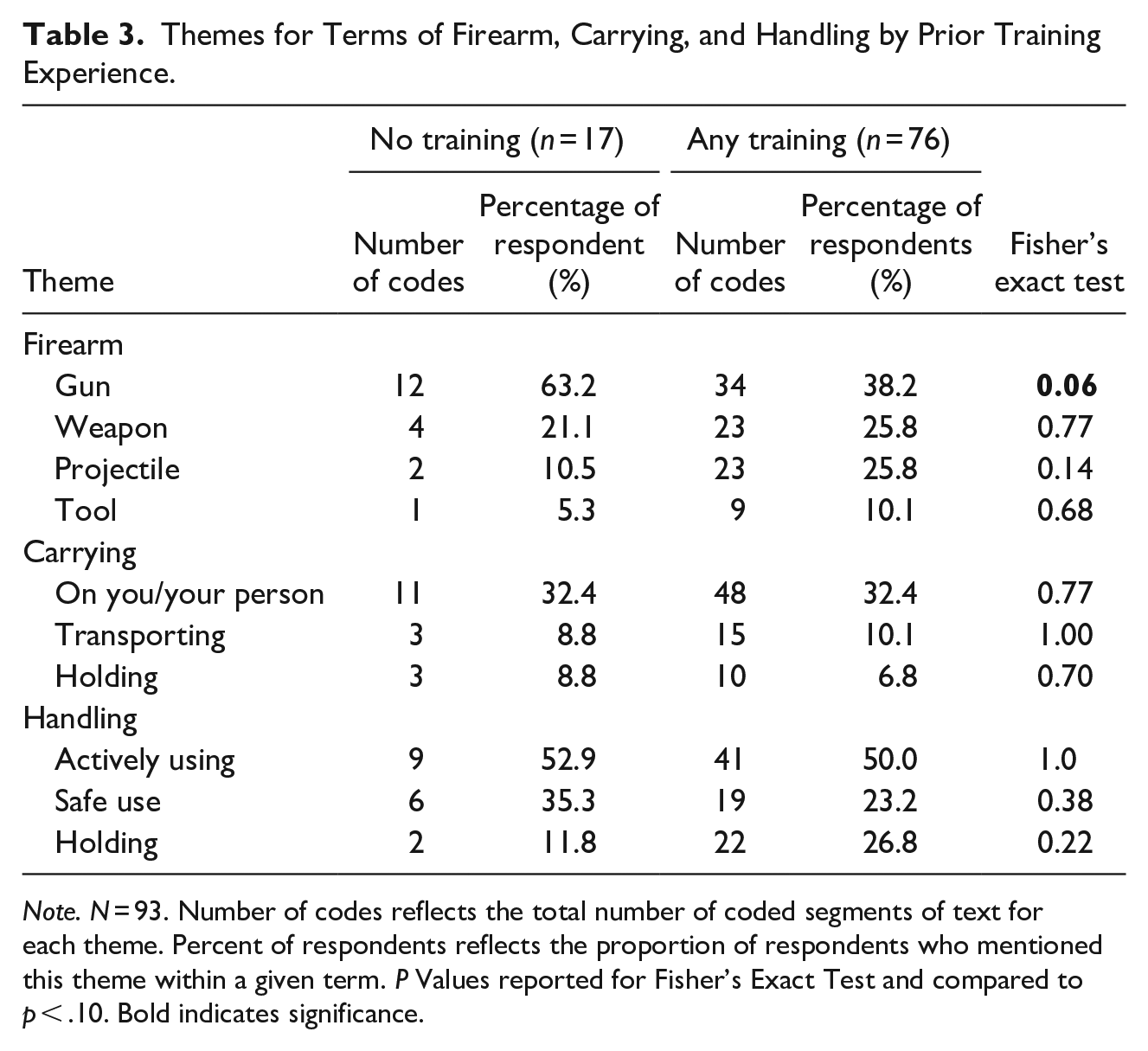
Note. N = 93. Number of codes reflects the total number of coded segments of text for each theme. Percent of respondents reflects the proportion of respondents who mentioned this theme within a given term. P Values reported for Fisher’s Exact Test and compared to p < .10. Bold indicates significance.
Carrying
For the term carrying, three themes emerged including: “on you/your person,” “transporting,” and “holding.” More than half (63.4%) of adolescents referred to carrying as “on you” or “on your person.” One adolescent stated “I define the word carrying a firearm as being in possession of a [sic] operational firearm (not broken). This includes holding in your hands, on a strap around your back/shoulder, in a holding pouch on your belt, etc.” This definition demonstrates a focus on the person. One fifth (19.4%) of adolescents mentioned “transporting” as carrying. Transporting included references to “in your vehicle,” “bringing with you,” and “moving” or “going somewhere” with a firearm. Finally, 14.4% referenced “holding” as carrying, and often holding in your hands or arms with one adolescent specifying to “physically pick up a firearm.” Although a smaller group, 7.5% of adolescents provided a response that did not rise to the level of a theme including responses such as “I don’t know” or “to own a firearm” or no response at all.
Some (13.9%) adolescents mentioned multiple themes in their response, such as one who said, “Carrying means “packing heat” and can be either concealed or open (though laws depend on location and situation). To “carry” means to have a firearm of some sort on your person or in your vehicle.” This adolescent’s definition was broader than others and included being on your person and transporting as well as elements of conceal and open carry, which were mentioned four times but overall not prevalent enough to emerge as a theme. No statistical associations emerged when comparing those with no training to those with any training (see Table 3). Descriptively, transporting was mentioned by 8.8% of those with no training and 10.1% of those with any training, while holding was mentioned by 8.8% of those with no training and 6.8% of those with any training.
Handling
For the term handling, three themes emerged including “actively using,” “safe use,” and “holding.” Just over half of adolescents (53.8%) referred to handling as “actively using” or interacting with a firearm in some way such as firing, cleaning, loading, or unloading. The other two themes of “safe use” and “holding” were mentioned by about a quarter (26.9% and 25.8% respectively) of adolescents. “Safe use” included general references to how a firearm was being used (e.g., “. . .being safe about it”) as well as examples such as “caring for / being responsible for the care of and safe storage.” Similar to carrying, the theme of holding referred to a firearm “in hand or open to see to the eye.” In this example, “open” could refer to open carry where one can see the firearm or open action, indicating the firearm is not loaded.
Again, some (15.1%) adolescents mentioned multiple themes in their response, such as one who said “. . .handling is transporting safely, taking care of and having good muzzle control of the firearm at all times while making sure it is empty and the action is open.” This definition included themes of safe use (e.g., good muzzle control) and actively using (e.g., taking care of). The other main combination of themes included active use and holding, such as in the response of “how someone treats the gun when they are using it or have it in hand.” No statistical associations emerged among themes for those with and without prior training. Descriptively, a greater proportion of adolescents with any training mentioned holding compared to those with no training (26.8% vs. 11.8%). On the other hand, a greater proportion of adolescents with no training mentioned safe use compared to those with any training (35.3% vs. 23.2%).
Theme Co-Occurrence
Research question 2 sought to identify overlap and co-occurrence of themes across firearm-related terms among adolescents. There was overlap in themes, with holding emerging as a theme for both carrying and handling. For both terms, holding referred to holding a firearm within your/one’s hands. It was more frequently mentioned by adolescents in reference to the term handling (25.8%) as compared to the term carrying (14.0%).
There was co-occurrence among adolescents in what themes were most often mentioned across terms. The strongest co-occurrence was between the most frequently mentioned themes, including between gun (response to firearm), on you/your person (response to carrying), and actively using (response to handling). This combination of themes was aligned with 13.9% (n = 13) of adolescents. These co-occurrences are illustrated in Figure 1 which depicts the number of participants who responded with any given pair of themes. Thicker lines indicate more frequent co-occurrence, with the number of co-occurrences indicated on the line. The total number of themes is indicated in parentheses next to each theme. Theme co-occurrences point to the multi-dimensionality of adolescent conceptualizations.
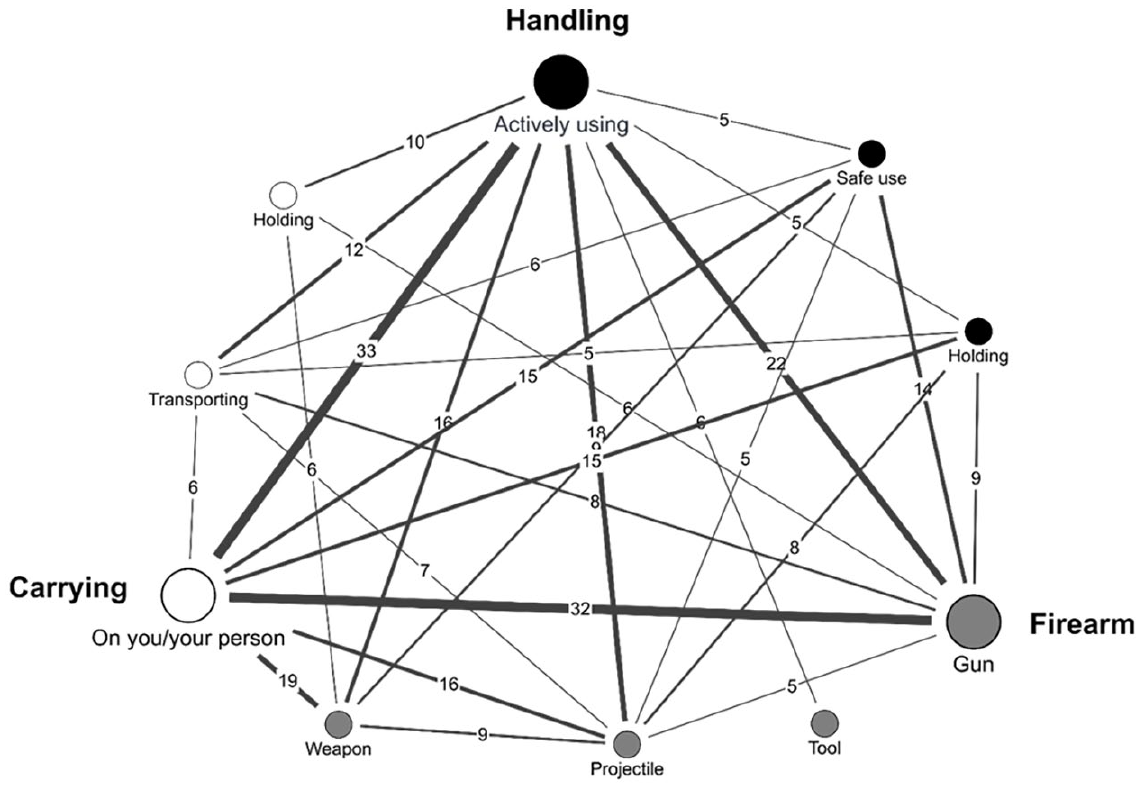
Theme co-occurrence model. Gray circles refer to the term firearm, white circles refer to the term carrying, and black circles to the term handling. Large circles represent the most frequently mentioned theme. Only those associations with five or more co-occurrences are visualized.
Discussion
As firearm-involved injury is the leading cause of death among U.S. adolescents (Goldstick et al., 2022) and firearm carrying is increasing among adolescents in rural areas (Carey & Coley, 2022), there is a need to further our understanding of the best ways to communicate about firearm safety and injury prevention. We conducted a qualitative assessment of data from rural teens in Washington state to better understand how they define firearm-related terms of firearm, carrying, and handling.
The Importance of Terminology
The federal definition of firearm includes the words weapon and projectile (Crimes and Criminal Procedure, 1998). Of note, it mentions gun but only when specifying that a weapon includes a starter gun. The terms weapon and projectile aligned with themes present in the current study. However, the term “gun” was the most prevalent theme among rural adolescents in our sample. This mirrors available qualitative research from urban settings where “gun” is the terminology most often mentioned in direct participant quotes (Black & Hausman, 2008; Freed et al., 2001; Mateu-Gelabert, 2002).
Adolescents in the current study generally viewed carrying as having a firearm on you or your person. Few examples, and even fewer definitions, are provided in the literature for carrying. Those mentioned are often broader than what rural adolescents mentioned of carrying on one’s person and refer to transporting a firearm to a location including in a car. In the current study, transporting was a less frequently mentioned theme. Prior research has also used carrying and handling interchangeably. This aligned with the current study where the theme of holding emerged for both carrying and handling. However, adolescents most frequently defined handling as actively using. Looking at the co-occurrence of themes provides context for how rural adolescents are using terms together. For example, safe use was a theme associated with handling and most often mentioned alongside gun (firearm theme) and on you/your person (handling theme), although less frequently mentioned with handling by adolescents with firearms training. Weapon was mentioned most often alongside on you/your person (carrying theme) and actively using (handling theme). Although co-occurrence is between any two themes, it illustrates associations and patterns of themes used together. Since the term handling is less frequently mentioned in research or literature, these associations inform our understanding of how handling is perceived in relationship to other commonly used terms. It also points to the need to clarify these related but distinct terms, rather than use them interchangeably. When looking across training experience, only one statistical association between individual themes and prior training emerged.
Call for Common Language
What emerged from themes in the current study is a continuum of terms used to distinguish where the firearm is in relation to an individual. This type of continuum holds implications for injury prevention efforts. Handling is when the firearm is closest to the person, often physically held in the hands and actively used. Carrying, distinct from handling, is when the firearm is within reach of the person, often on the person. Transporting, although not an explicit question in the current study, emerged as moving a firearm, often in a vehicle. Across these three terms, the firearm goes from immediately available (i.e., in the hand) to in one’s vicinity (e.g., transporting). This is an important distinction as there are different safety protocols for firearms carried on a person versus those transported in a car. Additionally, developing consistent definitions of these terms means they may serve as behavioral indictors for risk of firearm-related injury and therefore serve as targets for prevention efforts.
Use of a common language for firearm-related terminology holds implications for health interventions as well as measurement in epidemiological surveillance and firearms research. The meaning adolescents prescribe to common words or phrases in research and by providers is an excellent starting point for the development of interventions. In our research, we found that more than half of adolescents referred to handling, which was understood to be actively using or interacting with a firearm. Only one theme (i.e., gun) was different between those with any versus no prior training. In the current study, training was broadly asked and likely captured formal and informal training. Those with prior training may be more likely to use specific language. For example, the National 4-H Shooting Sports website uses terminology of firearm such as in their stated goal of “engaging youth in the safe, responsible use of firearms and archery equipment” (2023, p. 3). Such findings may highlight areas to address in interventions for different populations (e.g., training and no training). Evidence-based training may be an important component of a harm reduction strategy for firearm injury prevention. Despite many firearm injury prevention implications suggesting collaborating with hunter education and firearm training programs, few programs have been rigorously evaluated (Rowhani-Rahbar et al., 2018).
In clinical settings, the American Academy of Pediatrics recommends providers discuss firearm safety at pediatric well-visits, but this is not always done (Haasz et al., 2022). This may be due to issues of terminology. Previous research suggested confusion around what safety means related to firearms and how it can be enhanced (Wexler et al., 2023). Law enforcement and military members are viewed as more credible messengers when it comes to providing information related to firearm safety for suicide prevention (Anestis et al., 2021). In addition to paying attention to the source in health communication interventions related to firearm safety, our work has implications for the importance of word choice. In the current study, “carrying” included transporting while handling did not. This finding suggests there may be a need to discuss safety in different ways for different terms.
A common language holds implications for measurement of firearm-related constructs. National surveillance surveys including items related to adolescent firearm behaviors and perceptions provide little, if any, guidance on what constitutes carrying a handgun. Findings from the current study suggest, absent from a common definition, adolescents are blending terms of carrying and handling and have varying specificity of the scope of these terms. Ultimately, this brings up issues of construct validity. If researchers, practitioners, and policy-makers lack consistent definitions, it is unclear whether there is a mismatch between the researcher and audience and, if so, what implications should be taken from research findings. Matching prevention and intervention efforts with the culture and definitions of adolescents and their communities has the potential for greater impact in addressing firearm-related injury and death among this group. To understand these conceptualizations, qualitative and/or mixed methods research approaches are necessary.
Importance of Adolescent Voice
Compared to quantitative studies, qualitative studies can provide rich, in-depth descriptive information on human behavior. A scoping review of adolescent firearm carrying pointed to how qualitative studies highlighted key distinctions in adolescents’ reasons for carrying a firearm that did not emerge from quantitative studies (Oliphant et al., 2019). Culyba (2020) advocates for advancing our understanding of rural adolescent firearm behaviors by asking “What setting-specific strategies are most efficacious in reducing handgun carrying and firearm-related injury?” (p. 384). To answer such questions, qualitative data are needed to understand the unique features of rural settings for adolescents. The current study sought to understand how adolescents define commonly used firearm related terminology. Future research would benefit from understanding if these commonly used terms are also those most commonly used among adolescents themselves.
Additionally, researchers have an ethical responsibility to allow for adolescent participation in research impacting them (Caskey & Rosenthal, 2005). We advocate for adolescent voice as a critical element of firearm research and intervention efforts. Adolescents can be partners in research and community-level prevention efforts, bringing lived experience and local expertise to more effectively address issues directly impacting them, like safe storage and adolescent access to firearms in times of behavioral health crisis (Betz et al., 2021; Jones et al., 2021).
Limitations
The intent of qualitative data is to provide rich description rather than broad generalization. Within the current study, we used open-ended questions within an online survey to understand terminology meaning. One limitation is that using survey data did not allow for follow-up to gather rich description. As a result, many responses were brief and some were off topic or did not provide insight into adolescents’ understanding (e.g., defining holding as “to hold a gun?”). Despite this, the current study provided a glimpse into rural adolescents understanding of common firearm-related terminology. We recommend future studies expand on findings by replicating with other adolescents and allowing for identification of firearm terminology to understand alignment with commonly used terms such as those in the current study.
Conclusion
Rural adolescents are at elevated risk for firearm-related risk factors, injury, and death. Firearm injury prevention approaches advocate for provider engagement with rural adolescents and family members around firearms but often miss the role of rural culture and shared terminology. Findings from the current qualitative study provide insight into the perceptions of firearm-related terms for adolescents, an often-neglected voice, and can inform policy and prevention efforts to address or correct perceptions that are tailored to rural adolescent audiences. When looking across qualitative themes present in the current study for the terms firearm, carrying, and handling, a continuum emerges. This continuum depicts how accessible the firearm is from being in the hand (i.e., handling), to on one’s person (i.e., carrying), and in one’s car (i.e., transporting). Matching rural adolescents’ behavioral descriptions of these terms with injury prevention and intervention health communication efforts may be more efficacious. Future studies should use theory and research to develop health communication interventions designed with rural adolescents to increase safe firearm storage practices and reduce firearm injury and death.
Footnotes
Acknowledgements
None.
Data Availability Statement
Data are not available. Some data are under ownership of the Native American tribe and reservation on which they were collected. The data that support the findings of this study are available from the corresponding author, upon reasonable request.
Declaration of Conflicting Interests
The author(s) declared no potential conflicts of interest with respect to the research, authorship, and/or publication of this article.
Funding
The author(s) disclosed receipt of the following financial support for the research, authorship, and/or publication of this article: This project was supported by the Centers for Disease Control and Prevention of the U.S. Department of Health and Human Services under Grant R01CE003299. The contents are those of the authors and do not necessarily represent the official views of, nor an endorsement, by CDC/HHS, or the U.S. Government.
