







Abstract
Little attention has been paid to the gender difference in youth time use pre- and post-COVID-19 in Southeast Asia. This study applied data from two cohorts of youth (aged 16–21) in 2016 (pre-COVID-19) and 2023 (post-COVID-19) from a cross-national survey to examine youth time use in the Philippines and Indonesia. Gender, cohort and national differences were explored in the organization of youth’s lives – specifically how they allocate time across 11 domains covering aspects of daily routines, study, labor, and religious activities. Bivariate analysis suggests youth from the post-COVID-19 cohort spent significantly less time sleeping and more time on religious activities. In the pooled two-country sample, regression analysis highlights the persistently gendered time allocation pre- and post-COVID-19, that females spent more time on housework, more time studying outside of school, while males spent more time on family economic activities. The detailed results suggest nuanced processes differentiating the two country samples.
Introduction
Time is a precious commodity, and how youth spend time is an important factor influencing their psychosocial and mental health (Fredricks & Eccles, 2010) and human capital outcomes (Caparrós Ruiz, 2017; Heckman & Masterov, 2007; Hsin, 2007). Time use as social behavior can be conceptualized as “learning environments” or ”microsystems” for children and young people (Whiting, 1980; Wolf et al., 2015). Time-use activities are often linked to values and power relationships within households, schools, workplaces, and communities (Vogler et al., 2009; Zick, 2010). Time spent on a particular activity is a socialization process, where individuals interact with and between various social systems and where certain knowledge and skill sets are generated and learned (Bronfenbrenner & Morris, 2007; Larson & Verma, 1999). Time spent on activities, such as sleep, physical activities, cognitive activities and leisure, can generate significant impacts on mental and physical health development (Ferrar et al., 2013; Hsin, 2007). Spending more time with peers may facilitate emotional and social competencies that differ from spending more time on household chores, which in itself also requires a set of distinct skills and knowledge (Sigelman & Rider, 2015; Whiting, 1980). Likewise, children and young people spending more time completing schoolwork may develop higher levels of professional, literacy, and knowledge skills than those who spend more time performing caregiving duties.
With the worldwide spread of COVID-19 since 2020, changing lifestyles and working modes have influenced the time use of children and young people. During the pandemic, children decreased their time spent on studies and sports compared to the period before the pandemic (Boruchowicz et al., 2022; Hoehn-Velasco et al., 2022; Post et al., 2022). A gender gap also emerged during COVID-19. For young females, the time spent on childcare and housework increased, while the time dedicated to paid work decreased attributed to the lockdown measures, in contrast to the time use patterns observed in young males (Banati et al., 2020; Williams et al., 2022), suggesting it is more than the lockdown at play.
To date, few studies have examined how youth time use varies across and amongst low-and middle-income countries (LMICs), where significant discrepancies exist in socioeconomic development, cultural practices and gender norms (Bornstein et al., 2012; Hsin, 2007). This study seeks a broader understanding of gender differences in youth time use with data from the Philippines and Indonesia. It further examines differences of pre- and post-COVID-19 cohorts as well as the cross-national context.
Gender and Contextual Differences in Time Use
The study draws on the ecocultural and social cultural theoretical perspectives in understanding youth time use (Bronfenbrenner, 1979; Bronfenbrenner & Morris, 2007; Weisner, 2002). The ecocultural theory argues that children’s daily routines and activities are shaped by cultural pathways, with culture being reflected in everyday experiences (Weisner, 2002). The ecocultural environment, which includes family, schools, neighborhoods, and peer groups at the innermost level, and cultural, economic, and political systems at the outer levels, shapes children’s activities and development (Hu & Mu, 2020). Studies on children and young people’s daily lives have found gender differences in time use, with girls involved more in household chores, caregiving duties, and educational activities, while boys engage more in “market work” or economical activities and more leisure activities (Hsin, 2007; Hu & Mu, 2020; Jordan et al., 2018; Khanna & Thomas, 2024; Newman et al., 2007; Nguyen et al., 2022). It is well-established that unpaid domestic work translates to gendered opportunity costs in employment and financial security (e.g., Stratton, 2012). In addition to traditional gender norms and institutional factors (Giménez-Nadal et al., 2019; Hedges et al., 2019) as well as family socioeconomic factors (Di Palma & Gallo, 2019; Dovis et al., 2021) in explaining the gender differences, biological factors play a part as girls often enter puberty earlier than boys, leading to changes in role expectations that influence time use allocation for some societies (Vogler et al., 2009).
Contextual differences also matter. Women and men may allocate time on tasks more equally in countries with greater gender equality, while in countries with traditional gender norms, tasks are allocated more traditionally, resulting in gender gaps in paid and unpaid work (Blau et al., 2020). A study on the gender gap in time allocation across Europe concludes that compared to the 2000s, the gender gaps for both paid and unpaid work in the 2010s decreased in most countries, with a more egalitarian distribution of leisure time, and this may be attributed to the institutional and social norms. The study also suggests that countries with improved family support policies and a greater presence of women in political positions tend to exhibit greater gender equality in the labor market (Campaña et al., 2023). Additionally, a cross-national study from Europe (Finland, Spain, and the United Kingdom) on children’s time use confirms their cross-cultural hypothesis, which suggested that cultural norms, family values and parenting ideologies in different societies may cause variations (Gracia et al., 2020).
The Context in Indonesia and the Philippines
Indonesia and the Philippines are two Southeast Asian LMICs, sharing similar economic development levels and social contexts as the origin countries of transnational labor migration. In both countries, the estimated labor force participation rates of female youth were significantly lower than those of males (Indonesia: female: 38.4%, male: 52.9%; the Philippines: female: 26.2%, male: 41.4% in 2023; International Labour Organization, 2024). In contrast, the tertiary enrollment rates were higher for female youth than males in both countries (Indonesia: female: 50%, male: 40%; the Philippines: female: 51%, male: 38% in 2023; World Bank Group, 2025). Gender disparities persist in upper secondary school dropout rates, with the recent data from the World Inequality Database on Education (WIDE) suggesting male youth exhibit higher dropout rates than females in both countries (female: 16%–8%; male: 33%–14%, in Indonesia (2023) and the Philippines (2022), respectively; UNESCO World Inequality Database on Education (WIDE), 2025).
Despite their geographic proximity, the two countries exhibit important differences in religious composition and gender norms. In Indonesia, about 87% of the population is Muslim, followed by 7.4% identifying as Christian (US Department of State, 2023). Gender norms in Indonesia are influenced by religious and patriarchal systems (Qanti et al., 2022; Wijers, 2019). Gender equality in Indonesia is worse than in its neighboring countries, and Indonesian women still do not have full legal equality (Miranti et al., 2022). Mothers are considered the main caregivers in the family, and are less involved in the labor market (Cameron, 2023; Dommaraju & Tan, 2024). Indonesian girls are expected to stay closer to their homes, start helping their mothers with household chores, and begin to curtail their neighborhood activities around the age of 10 (Smith-Hefner, 2019). Meanwhile, boys are expected to dedicate more time to religious studies and attend religious activities regularly with the men, and boys have more autonomy to spend time outside the home, engaging in outdoor work and spending time on leisure activities with friends (Smith-Hefner, 2019).
In contrast in the Philippines, 78.8% of the population self-identifies as Roman Catholic with 14.8% as other denominations of Christianity, and only 6.4% as Muslim (Philippine Statistics Authority, 2023). In the Philippine tradition, a father is expected to be breadwinner, while mothers are often regarded as the Reyna ng Tahanan (“Queen of the Home”; Rahman, 2019). Mothers control the finances, act as religious mentors, and discipline the children. Parents provide equal opportunities to their children regardless of their sex (Cruz I, 2012; Quetulio-Navarra et al., 2017; Rahman, 2019). The law in the Philippines entitles women to the same rights as men, such as the right to inherit, sell and own property (Rahman, 2019). Yet, some traditional gender divisions still exist in the Philippines. For example, females are expected to do house chores, care for siblings, and prepare meals, while males spend more time with friends on leisure activities (Angeles, 2001; Prieto-Carolino & Mamauag, 2019).
COVID-19 and the Change in Time Use
During the COVID-19 pandemic, lockdowns altered work modes and opportunities and impacted people’s mental and physical health. Studies focused on the gender inequality in time use during COVID-19 conclude that, in both developed and developing countries, although men also experienced time pressure during the pandemic, women spent more time on childcare and housework and less time on paid work and leisure activities (Aguiar et al., 2021; Banati et al., 2020; Gerold et al., 2024; Hoehn-Velasco et al., 2022; Wang et al., 2024).
During COVID-19, the suspension of in-person classes during the pandemic led to a significant reduction in study time and an increase in free time (Boruchowicz et al., 2022; Hoehn-Velasco et al., 2022). One study from Chile shows that gender stereotypes persist in free time usage with girls engaged more in arts and crafts, socialization with friends, and domestic chores, whereas boys were more likely to spend time on video games and outdoor activities (Díaz et al., 2022). Phone-based surveys during the pandemic with youth aged 16 to 26 in Kenya, found that males spent more time on paid work and less time on domestic work than females (Williams et al., 2022).
During the pandemic, Indonesia and the Philippines implemented long and strict lockdowns, with schools and firms closed, and working people and school-age children staying at home, leading to learning losses and a reduction of working hours (Cho et al., 2021; World Bank, 2021; World Health Organization, 2020). In the current study, by applying two cohort samples from a longitudinal dataset, we investigate (1) the gender differences in youth time use in Indonesia and the Philippines; (2) whether there are any national differences in the gendered patterns of youth time use; (3) any evidence of changing patterns across pre- and post-COVID-19 samples.
Method
Data and Sample
Data are drawn from the Child Health and Migrant Parents in South-East Asia (CHAMPSEA) project. CHAMPSEA is a longitudinal mixed-methods project that surveyed children and other household members in four Southeast Asian countries with varying degrees of development: Indonesia, the Philippines, Thailand, and Vietnam. The baseline survey (Wave 1, 2008) employed a three-stage sampling strategy drawing on public health surveillance methods (Byass et al., 2002; Wilson et al., 2006), to identify children within qualifying households in high out-migration communities in two provinces within four study countries (Graham & Jordan, 2011). While the resultant samples are not nationally representative, replication is possible following strict protocols (Adams, 2011). Two cohorts of children were recruited at Wave 1: the younger child cohort (aged 3, 4, 5) and the older child cohort (aged 9, 10, 11). Households with and without current migrant parents were interviewed. In 2016, Wave 2 data collection of the two study countries was conducted by following up both Wave 1 younger cohort (follow-up rate: Indonesia: 93.10%; Philippines: 73.45%) and older cohort (follow-up rate: Indonesia:93.19%; Philippines: 78.00%). In 2023, Wave 3 data collection followed up on the Wave 1 younger child cohort (Wave 2 to Wave 3 follow-up rate: Indonesia: 86.83%; Philippines: 86.14%).
We applied the data of two cohorts of youth aged 16 to 21: (1) the Wave 1 older child cohort at Wave 2 in 2016 (2016 cohort [pre-COVID-19]; Indonesia: N = 401; the Philippines: N = 335); and (2) the Wave 1 younger child cohort at Wave 3 in 2023 (2023 cohort [post-COVID-19]; the Philippines: N = 299; Indonesia: N = 288). For the selected cohort, two questionnaires were collected for each recruited household – a household questionnaire answered by the household’s responsible adults and a young adult questionnaire answered by the young adults themselves. The young adult questionnaire provides subjective data from the children’s perspectives (Ben-Arieh, 2005; Fattore et al., 2016), and ethical considerations have been fully addressed (Gross-Manos et al., 2021). The survey was conducted face-to-face in the research sites. The key information (i.e., time use, youth characteristics) was extracted from the young adult questionnaire, while information on household characteristics was from the household questionnaire.
Measures
We explore how the youth’s gender, youth characteristics and family characteristics are associated with the organization of their daily lives across 11 items covering the daily time use. The outcome variables include time use in (1) sleeping; (2) eating; (3) general leisure (includes TV, internet, doing nothing, seeing friends); (4) religious activities outside of school (includes praying); (5) at school/college/university; (6) studying outside of school or university/homework; (7) local travel (including travel to school/university, work or leisure activities); (8) caring for others (younger siblings or other family members); (9) domestic tasks (fetching water, firewood, cleaning, cooking, washing, shopping);(10) tasks for family economic activity (e.g., family farm, cattle herding, fishing, food stall, other family business); and (11) paid work (i.e., activities for pay outside household or for someone not in the household). The time spent on each item is recorded in minutes per day. All outcomes are continuous variables and are transferred into log form for analysis (Jordan et al., 2018).
The key independent variable is gender (0 = male, 1 = female). Control variables include youth characteristics, such as age, self-rated health, and mental health; and family characteristics, incorporating family structure change, family wealth, household migration status, years of schooling for father and mother, numbers of younger and older siblings. The analytical age range is 16 to 20 years for the 2016 cohort and 17 to 21 years for the 2023 cohort in both countries. Self-rated health is a categorical variable (1 = poor health, 2 = average health, 3 = good health). Mental health is measured by a 20-item Self-Reporting Questionnaire (SRQ; Beusenberg & Orley, 1994). The SRQ-20 comprises a series of dichotomous (yes/no) questions probing for symptoms commonly associated with mental health issues, encompassing both somatic complaints and direct queries about emotional states. In alignment with prior research (De Silva et al., 2007; Graham et al., 2015), a cut-off score of eight was employed to dichotomize the sample. Individuals with scores higher than eight were categorized into “poor mental health” (0 = good mental health, 1 = poor mental health). Family structure change which reflects whether the youth experienced parental divorce and/or death of parent (s) (1 = yes, 0 = no). For country-specific analysis, an asset-based measure of relative household wealth was used to classify households by wealth quintile (low = first and second; medium = third and fourth; high = fifth) within each country sample (1 = low, 2 = middle, 3 = high). Considering the difference in socioeconomic development, the wealth quintile may not be comparable between the two countries. To control the between-country variation of wealth levels, for the analysis with the combined two-country sample, we followed the sample approach as Jordan and Graham (2012) to re-generate the wealth quintile based on the pooled samples. Household migration status is a categorical variable: 0 = non-migrant household, 1 = migrant households if one of parents or both are migrants. Years of schooling for father and mother, and the numbers of younger and older sibling(s) are all continuous variables.
Analysis
First, within each country, bivariate analysis by wave was conducted depending on the nature of the independent variables – χ2 test for binary/categorical variables and t-test for continuous variables. Second, Ordinary Least Squares (OLS) regression was applied to examine the gender differences in youth time use among the 2016 and 2023 cohorts within each country. We further pooled the 2016 cohort and 2023 cohort separately for each country to examine the cohort gender differences before and after COVID-19. Third, we pooled the Philippines and Indonesia data for each wave and applied the interaction between gender and country in each wave. We further pooled data from both countries across both waves, with the key interest being the three-way interaction among gender, country and time, to investigate if the cohort differences of gender on youth time use varies across the two study countries.
Results
Sample Characteristics
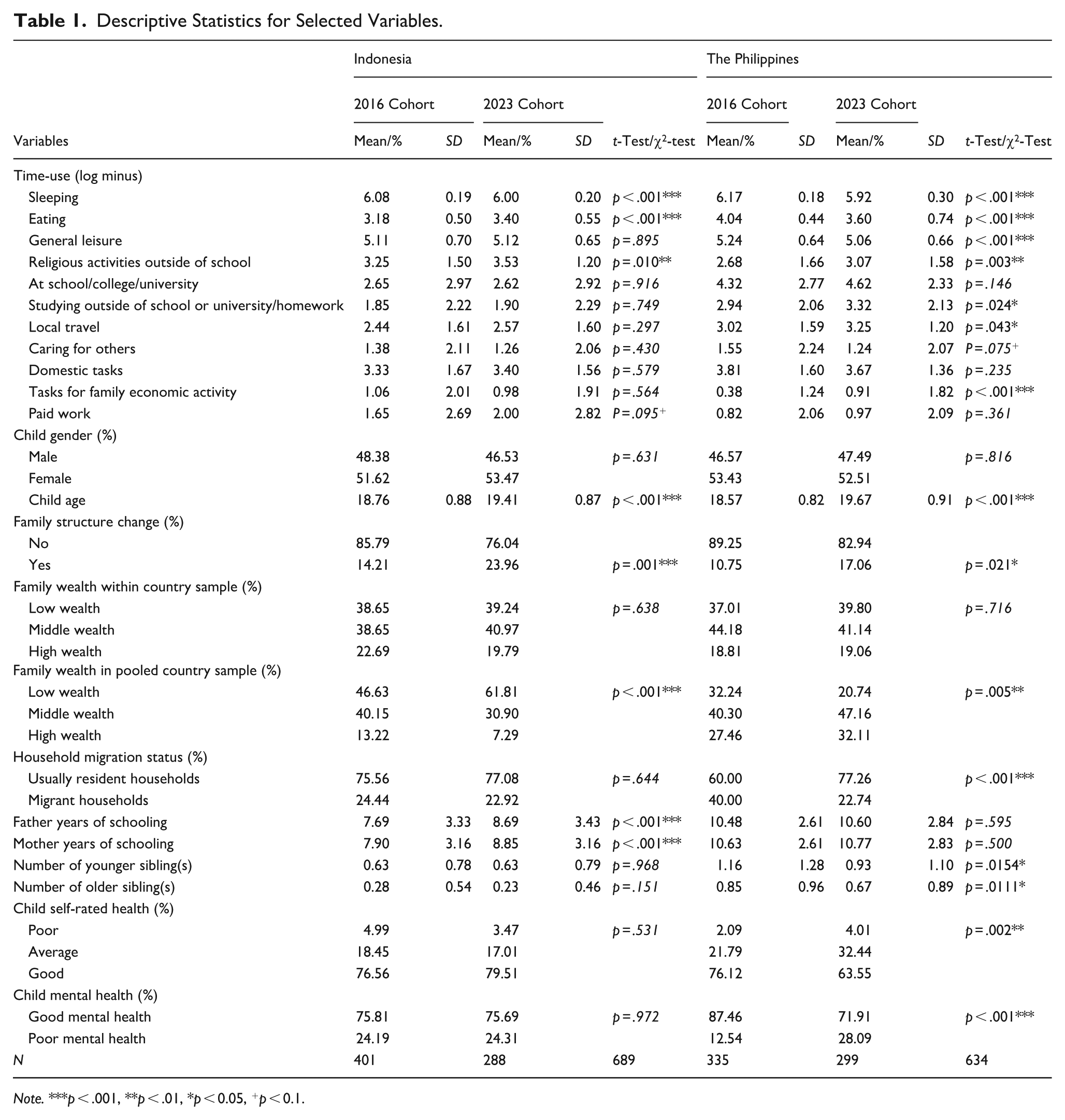
Table 1 shows the descriptive statistics of youth time use, youth characteristics, and family characteristics. In both countries, compared to the 2016 cohort, the 2023 cohort had significantly shorter sleeping time (Indonesia: p < .001; the Philippines: p < .001); the time spent on religious activities (Indonesia: p =.010; the Philippines: p =.003) was significantly higher among the 2023 cohort. Country specifically, Indonesian youth of the 2023 cohort spent significantly more time on eating (p < .001) than the 2016 cohort, and the cohort difference on paid work was marginal (p = .095). In the Philippines sample, compared to the 2016 cohort, the 2023 cohort youth spent significantly less time on general leisure (p < .001) and eating (p < .001), while significantly more time was allocated to outside-school study (p = .024), local travel (p = .043), and tasks for family economic activity (p < .001).
Descriptive Statistics for Selected Variables.
Note. ***p < .001, **p < .01, *p < 0.05, +p < 0.1.
The gender distribution in both countries was almost equal, with no significant difference between waves. The 2023 cohort was slightly older, and the family structure change was more prevalent in both countries. There was no significant difference regarding country-specific family wealth distribution between waves. In the Indonesian sample, the average years of both fathers’ and mothers’ education among the 2023 cohort were higher, while no such pattern was observed in the Philippines sample. The distribution of household migration status was similar in the two countries for the 2023 cohort. In Indonesia, around three-quarters of the sample had non-migrant parents for both cohorts, while in the Philippines, the proportion of non-migrant households significantly increased from 60% for the 2016 cohort to 77.26% for the 2023 cohort.
Regarding self-rated health and mental health, the pattern for Indonesian youth was relatively stable, with the majority reporting good physical health and good mental health. However, for Filipino youth, although the majority still report good physical and mental health, in the 2023 cohort, the proportion of those in poor physical health (p = .002) and poor mental health (p < .001) was significantly higher, compared to the 2016 cohort.
Regression Analysis
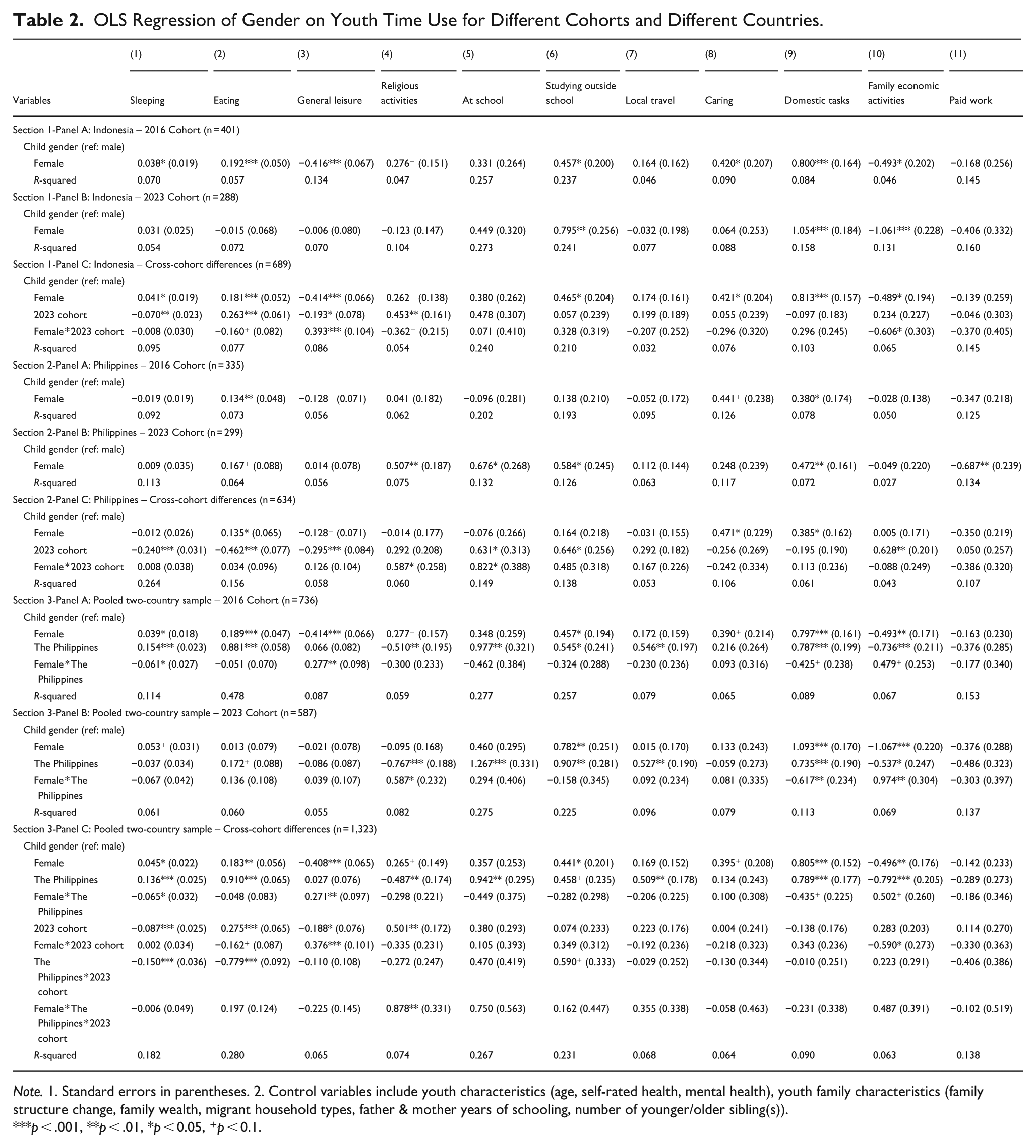
Table 2 presents the regression models to examine the role of gender in youth time use in Indonesia (Section 1), the Philippines (Section 2), as well as in the pooled two-country sample (Section 3). For each section, Panel A is the result of the 2016 cohort, Panel B is about the 2023 youth cohort, and Panel C combines both cohorts to explore the cross-cohort differences.
OLS Regression of Gender on Youth Time Use for Different Cohorts and Different Countries.
Note. 1. Standard errors in parentheses. 2. Control variables include youth characteristics (age, self-rated health, mental health), youth family characteristics (family structure change, family wealth, migrant household types, father & mother years of schooling, number of younger/older sibling(s)).
p < .001, **p < .01, *p < 0.05, +p < 0.1.
Section 1 – Indonesia
Panel A presents the results of the 2016 cohort in Indonesia. It highlights that, female youth were more likely to spend longer time on sleeping (p < .05), eating (p < .001), studying outside school (p < .05), caring (p < .05s), domestic tasks (p < .001) and less time on general leisure (p < .001) and family economic activities (p < .05). There were no gender differences in terms of time spent in religious activities, studying at school, local travel or paid work. Panel B suggests that, for the post-COVID-19 cohort, females still spent less time on family economic activities (p < .001) than males, and they allocated more time to studying outside school (p < .01) and domestic tasks (p < .001) than males.
By combining samples of both cohorts (Panel C), we observed the main effect of gender across several time allocation items. Overall, compared to male youth, Indonesian female youth spent more time on daily life (sleeping: p < .05; eating: p < .001), studying outside school (p < .05), housework (caring: p < .05; domestic tasks: p < .001), and significantly less time on general leisure (p < .001) and family economic activities (p < .05). There was also a main effect of time. Compared to the 2016 cohort, youth from the 2023 cohort spent significantly less time sleeping (p < .01) and general leisure (p < .05), and more time on eating (p < .001) and religious activities (p < .01). In addition, the findings indicate a reduced gender effects overtime in time spent on general leisure (gender main effect: B = −0.414, p < .001; interaction: B = 0.393, p < .001). While the 2016 cohort females spent significantly less time on general leisure, we observe a narrowing gap in the 2023 cohort (Figure 1a). Meanwhile, time use on family economic activities (gender main effect: B = −0.489, p < .05; interaction: B = −0.606, p < .05) became more strongly associated with gender. For both cohorts, females spent less time on this item than males, and the gap was enlarging in the 2023 cohort (Figure 1b).
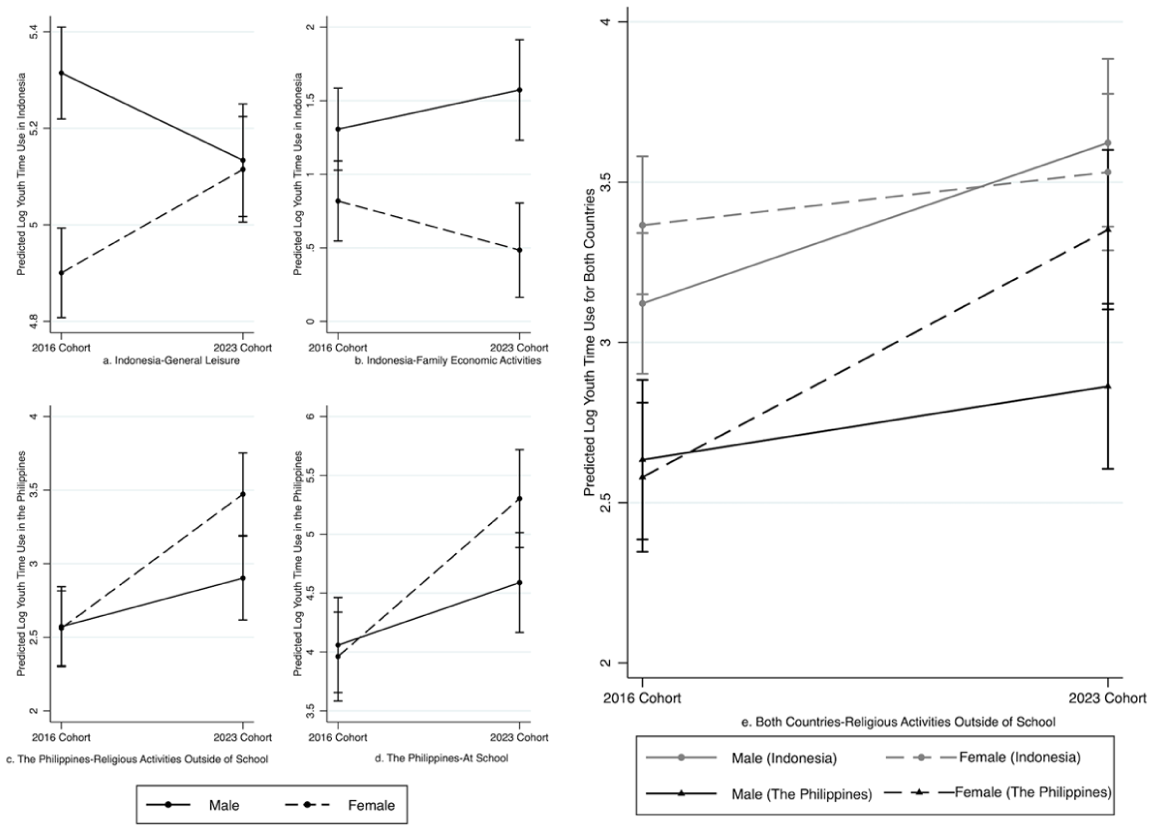
Cross-cohort differences in youth time use in Indonesia, the Philippines and the pooled two-country sample.
Section 2 – The Philippines
For the 2016 cohort (Panel A), females spent more time on eating (p < .01) and domestic tasks (p < .05) than males. The patterns of other time allocations were slightly different 7 years later. For the 2023 cohort (Panel B), while females still spent longer hours on domestic tasks (p < .01), they tended to spend longer time on religious activities (p < .01), study at school (p < .05) and outside school (p < .05), and spent significantly less time on paid work (p < .01) compared to their male counterparts.
When combining the data from the two cohorts (Panel C), we found that the main effect of gender and time in the Philippines sample. Females reported longer time on eating (p < .05), and housework (caring: p < .05; domestic tasks: p < .05). Multivariate analysis suggests that youth of the 2023 cohort spent less time on sleeping (p < .001), general leisure (p < .001), eating (p < .001) and more time at school (p < .05) and studying outside school (p < .05), as well as family economic activities (p < .01). A significant cohort difference by gender was identified in time allocated to religious activities (interaction: p < .05), and at school (interaction: p < .05), though no significant main effects of gender were observed on the two items. Taking together the findings from prior panels, for both items, there was no gender difference in the 2016 cohort (Panel A), yet female youth in the 2023 cohort spent significantly more time on religious activities and at school (Panel B). Based on the significant interaction results from Panel C, Figure 1c and d illustrate the significantly enlarged gender gap in time allocated to religious activities and the changing pattern of time at school, respectively.
Section 3 – Cross-national Differences
The cross-national comparison of both cohorts between Indonesia and the Philippines was applied to better understand the trend during this time of significant change. In the pooled sample of the 2016 cohort (Panel A), a significant gender main effect was observed. Female youth spent more time on daily life (sleeping: p < .05; eating: p < .001), studying outside school (p < .05), domestic tasks (p < .001), and significantly less time on general leisure (p < .001) and family economic activities (p < .01). The main effect of the country was also observed. Compared to the Indonesian sample, Filipino youth spent more time on daily life (sleeping: p < .001; eating: p < .001), study (at school: p < .01; outside school: p < .05), local travel (p < .01), and domestic tasks (p < .001). Meanwhile, Filipino youth allocated significantly less time to religious activities (p < .01) and family economic activities (p < .01) than Indonesian youth. Additionally, there was a significant interaction between gender and country (sleeping: p < .05; general leisure: p < .01). The gendered pattern of sleeping was significantly different in the two countries, with Indonesian female youth spending more time sleeping than males, while the Filipino situation was the opposite (Figure 2a). Though in general, male youth spent more time on general leisure, the gender gap in the Philippines was smaller than in Indonesia (Figure 2b).
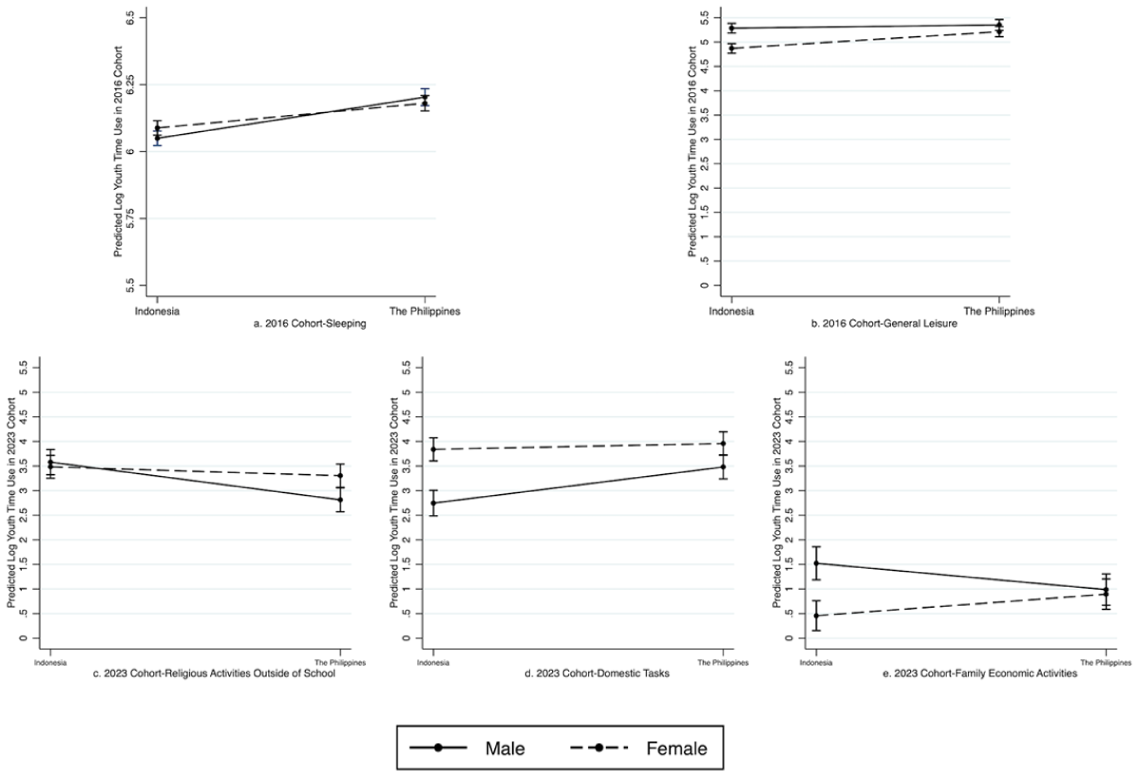
Cross-national differences in youth time use for the 2016 cohort and the 2023 cohort.
Panel B presents that in the pooled 2023 cohort sample. The gender main effect was identified on fewer time use items compared to the 2016 cohort, yet the pattern was stable. Female youth spent more time studying outside school (p < .01), domestic tasks (p < .001), and significantly less time on family economic activities (p < .001). Regarding the main effect of country, similar to the findings from the 2016 cohort, the Filipino youth allocated significantly more time to study (at school: p < .001; outside school: p < .01), local travel (p < .01), and domestic tasks (p < .001), and less time on religious activities (p < .001), and family economic activities (p < .05).
Significant cross-national difference was identified in this wave as well, but on different time use items. As regards religious activities (interaction: p < .05), the Filipino females spent significantly more time than males, while the gender difference among the Indonesian youth was slim (Figure 2c). While in general females spent more time on domestic tasks and less time on family economic activities, the gender gaps in time use on domestic tasks (Figure 2d, interaction: p < .01) and family economic activities (Figure 2e, interaction: p < .01) in the Philippines were smaller than those in Indonesia.
Furthermore, in Panel C, a three-way interaction (gender * time * country) was introduced to see if there was any cross-national difference in the cross-cohort difference of gender on youth time use. A significant three-way interaction was identified in the time used on religious activities (interaction: p < .01). Overall, there was an increasing trend in the time allocated to religious activities from the 2016 to 2023 cohort in both countries, and the Indonesian youth spent significantly longer time on religious activities. While the gender gap was narrowing in Indonesia, it was enlarging in the Philippines between the two waves with the Filipino female youth spending significantly longer time on religious activities than males in the 2023 cohort (Figure 1e).
Discussion
This study applied data from youth of two cohorts in two Southeast Asian countries – Indonesia and the Philippines – to explore the pre- and post-COVID-19 trend of gender differences in youth time use. It is one of the few attempts to uncover the holistic dynamics of youth life by investigating diversified aspects of time use, including daily life, study, religious activities, leisure, domestic tasks, and economic activities. In addition to offering snapshots of the gender gaps in time allocation within each study country at the two time points, the cross-cohort and cross-national comparison analyses shed light on the trends of gendered youth time use and contextual differences.
General Trends of Youth Time Use Before and After COVID-19
Notably, there are commonalities in the features of time use across the two cohorts based on descriptive and bivariate analysis (see Table 1). The sleep time was significantly decreased in both countries, which echoes the finding from a systematic review and meta-analysis on the impact of COVID-19 on children’s and adolescents’ sleep, highlighting the quality of sleep during the pandemic may have possible longer impacts (Sharma et al., 2021). Another visible trend was that the time allocated to religious activities was significantly increased in the post-COVID-19 cohort. The pandemic caused significant unexpected challenges in individuals’ lives. Studies during the pandemic suggested that youth’s religious affiliation was a crucial protective factor of their mental health (e.g., Dyer et al., 2023; Gang & Torres, 2022). The significantly longer hours of participation in religious activities may reveal the self-help practices of youth to support their well-being.
In addition to the general trend, the post-COVID-19 cohort shows country-specific shifts in time allocation compared to the pre-COVID-19 cohort (see Table 1). There was a decrease in time spent on general leisure and eating, and an increase in time spent on local travel, study outside of school and family economic activities post-COVID-19 in the Philippines. In Indonesia, there was an increase in time allocated to eating, though it was still less than that in the Philippines. The findings suggest potential changes in daily routines and priorities due to the pandemic and may reflect potential shifts in responsibilities and activities in response to the changed circumstances (Luong et al., 2023).
Persistent Gendered Labor Division Before and After COVID-19
There was a persistent gender difference in youth time use on labor before and after COVID-19. Results from the pooled two-country sample suggest that male youth allocated significantly longer time to family economic activity and less time to domestic tasks than girls in both cohorts. Country-specific analysis suggests that, for both cohorts in the two study countries, the persistent, significant gendered pattern was observed only on one item: female youth spending more time on domestic tasks than males. In addition, in Indonesia, males spent more time on family economic activities in both cohorts, and the gender gap in family economic activities was widening post-COVID-19.
The persistent gendered labor division is consistent with the OECD’s Social Institutions and Gender Index (SIGI) report (2024), classification of both countries with high gender discrimination. The gender disparities in time allocation patterns among youth can be understood through the lens of societal expectations regarding the division of labor, responsibilities, and activities based on gender. According to a cross-national report on urban adult men and women from Indonesia, the Philippines, and Vietnam, there was a shared belief that certain tasks were more suitable for one gender over the other (Investing in Women, 2019), which may explain the clear gender distinction of labor duty. The finding sheds light on the persistent (and potentially widening) barriers for young females to be involved in economic activities during the adulthood transition. We observe the persistent gendered division in family economic activities in Indonesia, but not in the Philippines. This may be because the Filipino youth in our sample spent significantly less time overall on family economic activities, and the variation by gender in time use might be minimal compared to Indonesian youth (see Section 3 in Table 2). Furthermore, according to the gender development index (GDI) of the United Nations Development Programme (UNDP), the gender inequality in Indonesia has been worse than that of the Philippines over the past few decades (United Nations Development Programme [UNDP], 2025).
Though it is unclear how housework may influence child development from a theoretical perspective, prior empirical evidence from Chinese adolescents indicates that the time spent on housework is negatively associated with academic performance and cognitive test scores (Hu & Mu, 2020), suggesting a relative opportunity cost of domestic housework (Hu & Mu, 2020). Our study offers further evidence of the deeply ingrained gendered division of labor which is concerning, especially considering the deteriorating attitudes towards women’s economic rights over the past decade (OECD, 2024), and the gendered impact of COVID-19 on the labor market (Aguiar et al., 2021). As potential future parents, how the youth in our sample behave under social norms may not only influence themselves but also future generations. Evidence suggests that a greater proportion of housework performed by mothers during childhood is related to persistence in gender inequality in their children’s future families (Giménez-Nadal et al., 2019). These gender norms are perpetuated directly to sons through a lower amount of housework performed and indirectly to daughters through the choice of a partner that replicates their father role model.
Narrowing Gaps in Daily Routines and Studying Longer as Female Youth’s Way Out
Other than the persistent and enlarging gender barriers in time use, we detect some positive aspects for female youth. First, there were a few narrowing gender gaps between the pre- and post-COVID-19 cohorts. For example, the gap in daily routines (e.g., general leisure) was decreasing in Indonesia. A prior study conducted in central Java, Indonesia, revealed that boys spent significantly more time on leisure than girls (Hsin, 2007), which was consistent with our finding in the 2016 cohort. The findings of the 2023 cohort and the cross-cohort analysis add new evidence of a narrowing gap (see Figure 1a).
Second, female youth from Indonesia of both cohorts and from the Philippines of the post-COVID-19 cohort spent significantly longer times studying outside school than males. Filipino female youth from the post-COVID-19 cohort also spent more time at school. This is consistent with findings from China, revealing that school-aged girls spend more time on homework (Hu & Mu, 2020). On the one hand, this may be because girls are expected to work harder with higher academic achievement to secure their opportunity for higher education. On the other hand, it aligns with the policy initiatives in both countries to promote inclusive education. In Indonesia, significant achievements have been made under policy agendas to improve the coverage and the quality of education since the 2000s (World Bank, 2020). In the Philippines, female students were over-represented in higher education (Lee, 2016). In 2017, the Universal Access to Quality Tertiary Education Act was enacted (Cano et al., 2023) to promote inclusive access to college and universities.
No Universal Pattern of Youth Time Use in Southeast Asia
The study provides both conceptual and empirical evidence on cross-national differences of youth time use in Southeast Asia, with consideration of the cross-cultural differences (Gracia et al., 2020). Cross-national differences in the association between gender and youth time use were identified in both cohorts (pre-COVID-19: sleeping, general leisure; post-COVID-19: religious activities, domestic tasks, and family economic activity). The heterogeneity found among time use patterns across the study countries demonstrates that there is no simple or universal pattern of time use among youth in developing contexts. This may partially be due to the trends of changing gender roles and social norms having country-specific features (OECD, 2024). The larger gender gap of domestic tasks and family economic activity in Indonesia than in the Philippines was consistent with the OECD’s SIGI report (2024), indicating both countries had worrisome scores in the “discrimination in the family” dimension, but the situation in Indonesia was worse (Indonesia: 80; the Philippines: 57).
Moreover, the gender gap in time allocation on religious activities across the two waves was different. The religious contexts of the two countries are distinct. In our sample, all the Indonesian households self-identified as Muslim, while in the Philippines sample, the distribution of religion was around 85% Catholic, 10% Christian, and 5% others. Muslims have more restricted daily rituals of prayer than Catholics and Christians, which may lead to a higher level of youth time spent on religious activities in Indonesia than in the Philippines. With the crisis and stress caused by COVID-19, people may seek spiritual guidance to cope with their fears (Szałachowski & Tuszyńska-Bogucka, 2021). Our finding suggests this might be more important for Filipino female youth. This echoes prior studies indicating females score higher in religious coping (Hvidtjørn et al., 2014), especially in the context of COVID-19 (Francis et al., 2021).
This study is not without limitations. First, the data on time use was collected by asking respondents about the average time use for each activity, rather than in time-diary form, and recall bias might occur. Future research may consider collecting time-diary data, which will facilitate analysis of daily activity sequence (Zhou et al., 2025). Second, due to the nature of cross-sectional data, the findings should be interpreted with caution as associational rather than causal. Future studies with suitable panel data could explore the causal effects of youth time use across genders. Third, attrition analysis suggested that for both cohorts of the Indonesian sample, there were no significant differences in youth age, gender, household economic status, and parental migration status between the follow-up and dropout households. For the Philippines, the 2016 cohort showed gender-selective attrition, with females more likely to be retained, and the 2023 cohort retained youth from more economically disadvantaged backgrounds. Thus, nonresponse bias should be considered in interpreting the results, as the findings may slightly overestimate gender disparities in the Philippines, with girls overrepresented in the 2016 cohort sample, and more economically disadvantaged families with the potential of more traditional gender norms were overrepresented 2023 cohort. Fourth, despite the rigorous implementation of a sentinel site sampling strategy, this longitudinal community-based study is only representative at the community level. Therefore, considering the relatively small sample size, cautious interpretation is needed when generalizing the findings of this study to other contexts.
Despite the limitations, this study contributes empirical evidence to inform current debates and scholarship about youth time use in developing contexts. The findings echo the ecocultural and sociocultural theoretical perspectives that emphasize the importance of cultural norms and expectations in shaping gender roles and behaviors (Bronfenbrenner, 1979; Bronfenbrenner & Morris, 2007; Weisner, 2002). The findings suggest that time use is a highly nuanced and gendered process, and time use data is suitable to investigate gender inequality in LMICs in Southeast Asia (Zhou et al., 2025). The study contributes to the understanding of cross-national differences in youth time use, and it highlights the influence of societal norms, cultural expectations, and structural inequalities that shape the daily activities and responsibilities of youth within different social contexts.
These patterns may be influenced by cultural beliefs and societal norms about the roles and capabilities of males and females. The study carries implications for social policies and programs that aim to improve human capital outcomes for youth living in the developing world. It suggests the need for policies and interventions that address gender disparities in time allocation and support youth in balancing their activities and responsibilities. This study highlights that the understanding of the impact of external factors, such as COVID-19, on youth time use, may inform strategies to promote well-being and effective time management among youth in different contexts. Overall, the study provides insights into the complexities of youth time use in Southeast Asia, emphasizing the importance of considering gender dynamics and socio-economic factors in understanding how youth engage with their daily activities.
Concluding Remarks
To summarize, using youth time use in two Southeast Asian countries as an entry point, this study investigates changes in youth’s daily life organization before and after COVID-19 by revealing the gendered pattern. First, we observed a persistent gendered labor division across cohorts in both countries, with female youth spending more time on domestic work. In addition, Indonesian male youth were more involved in family economic activities than females before and after COVID-19. Future research should examine how this gendered opportunity for domestic versus family economic employment coupled with increased social consequences of marital breakdown may translate into future inequalities in economic security. Second, female youth received equal education opportunities at school and studied longer hours outside of school, especially after COVID-19. Third, bivariate analysis indicates that compared to the pre-COVID-19 cohort, youth time spent in religious activities significantly increased in both countries among the post-COVID-19 cohort. Three-way interaction analysis in the pooled two-country sample reveals this is especially true among Filipino female youth, suggesting religion as a crucial protective factor for youth during the global crisis. The study underscores gendered time use among Southeast Asian youth and the impact of COVID-19, emphasizing the absence of a universal youth time use pattern and the importance of interpreting evolving trends within each country’s context.
Footnotes
Acknowledgements
The authors’ thanks go to participants in the CHAMPSEA project and to the rest of the research team. Additionally, an earlier version of this article was presented at the 2024 Population Association of America (PAA) in Columbus, Ohio, USA. The authors would also like to thank the conference organizers and delegates for comments on the earlier draft.

Ethical Considerations
The CHAMPSEA project received ethical approval from the universities and research institutions that were involved in the project, including the University of St. Andrews, the National University of Singapore, the University of Hong Kong and all local institutions in the study countries.
Consent to Participate
The purpose of the project was explained, and consent was obtained from all participants.
Funding
The authors disclosed receipt of the following financial support for the research, authorship, and/or publication of this article: The authors acknowledge the funding support received from Hong Kong Research Grants Council through its General Research Fund (Project no. 17606815 & 17614118) and Research Impact Fund (R7028-21); Singapore Ministry of Education Academic Research Fund Tier 2 (MOE2015-T2-1-008); Wellcome Trust UK (GR079946/B/06/Z & GR079946/Z/06/Z).
Declaration of Conflicting Interests
The authors declared no potential conflicts of interest with respect to the research, authorship, and/or publication of this article.
Data Availability Statement
The data that support the findings of this study are available from the corresponding author, upon reasonable request.*