






Abstract
Prior research shows that adolescents with higher levels of legal cynicism are more likely to experience arrest in young adulthood, yet less is known about how different forms of childhood disadvantage shape legal cynicism and later criminal legal system involvement. This study examines whether childhood risks operate through distinct developmental pathways linking early adversity to arrest in young adulthood. Using longitudinal, nationally representative data, we employed path analysis to examine associations between childhood parental incarceration, adverse childhood experiences (ACEs), and race with arrest in young adulthood as mediated through adolescent police stops and legal cynicism. Parental incarceration and identifying as Black/African American directly predicted arrest in young adulthood. Cumulative ACEs and identifying as Black/African American indirectly predicted young adult arrest through increased adolescent police stops and subsequent legal cynicism. Parental incarceration operated through a distinct pathway, directly predicting young adult arrest and shaping adolescent legal cynicism independently of police contact.
Keywords
Introduction
Young adults, ages 18 to 24, account for more than a fifth of all adult arrests in the United States (U.S.) (OJJDP, 2021). This period of the life course is marked by heightened developmental vulnerability as individuals navigate the transition into adult social roles while contending with increased exposure to both formal and informal social controls. Importantly, arrests during this period are consequential: early adulthood criminal legal system involvement has been linked to long-term adverse health, economic, and social outcomes (Doherty et al., 2021). For these reasons, scholars have increasingly emphasized the need to understand how individuals arrive at the point of early adult criminal legal contact, which—according to both a social learning perspective (Bandura & Walters, 1977; Patterson et al., 2002) and a life course developmental perspective (Hoffmann, 2010; Sampson & Laub, 2017)—are likely a product of childhood and adolescent influences.
Legal cynicism is one mechanism of particular interest in the study of crime in young adulthood because it plays a dual role: it reflects earlier structural and interpersonal experiences with the criminal legal system while also predicting later involvement with the criminal legal system. Notably, legal cynicism is often embedded within the social and cultural contexts of individual communities—reflecting broader social conditions and structural or institutional inequity. In this way, the current study treats legal cynicism not simply as an individual attitude, but as a developmental orientation shaped by structural racism, institutional surveillance, and community-level legal socialization.
While legal cynicism during adolescence is a robust predictor of arrest in young adulthood (Anderson & Henrich, 2025), it is unclear how legal cynicism in adolescence is developed in the first place. Understanding whether specific childhood conditions (e.g., ACEs and parental incarceration) shape legal cynicism could have strong implications for preventing criminal legal system involvement in young adulthood.
A growing body of work highlights several key risk factors for criminal legal system involvement (e.g., exposure to ACEs generally [Graf et al., 2021], parental incarceration specifically [Kjellstrand et al., 2018], being stopped by police in adolescence [McGlynn-Wright et al., 2022], and having higher levels of legal cynicism [Anderson & Henrich, 2025]). Despite this work, research to date has not sufficiently explored how these risk factors interact to influence adult legal system outcomes, an understanding that is critical for prevention efforts.
Recent work by Clark et al. (2023) provides an important foundation. Using data from the Future of Families and Child Wellbeing Study (FFCWS), they found that race, parental incarceration, and ACEs all directly predicted adolescent police stops, and that both parental incarceration and race directly predicted legal cynicism. However, ACEs did not directly predict legal cynicism but exerted an indirect effect through police stops. These findings suggest legal cynicism does not emerge uniformly from all adverse experiences; rather, its development depends on the type and timing of exposures.
The current study extends this line of research into early adulthood to examine whether the same childhood factors that predict adolescent police contact and legal cynicism subsequently predict adult arrests, and crucially, whether legal cynicism functions as a key mechanism in this process. Understanding these mechanisms is essential for identifying points of intervention that may interrupt trajectories toward involvement in the criminal legal system.
Background
Legal cynicism refers to a cultural orientation in which individuals view the law and its agents as illegitimate, unresponsive, or ineffective (Sampson & Bartusch, 1998). This orientation is not merely an attitudinal stance since it reflects deeper social processes rooted in neighborhood context, institutional interactions, structural inequality, and familial socialization. Legal cynicism has been shown to predict a wide range of outcomes, including reduced cooperation with law enforcement, lower collective efficacy, increased violence, and heightened system contact (Anderson & Henrich, 2025; Hagan et al., 2020; Kirk & Matsuda, 2011; Kirk & Papachristos, 2011). Given its centrality in shaping behavioral and legal trajectories, scholars increasingly conceptualize legal cynicism as a key mechanism linking early disadvantage to later criminal legal system involvement.
The concept of legal cynicism is strongly associated with both self-reported offending and formal system involvement (Anderson & Henrich, 2025; Hagan et al., 2020; Kirk & Matsuda, 2011; Kirk & Papachristos, 2011; Tyler, 2006). Youth and young adults who hold cynical views about the law are less likely to perceive legal authorities as legitimate and less likely to view rules as binding (Tyler, 2006). As a result, legal cynicism erodes internal motivations to comply with the law, increases tolerance for deviance, and may contribute to retaliatory or self-protective forms of violence (Kirk & Papachristos, 2011). Prior work suggests that legal cynicism predicts arrest and violent offending even after accounting for neighborhood conditions and individual behavior (Hagan et al., 2020; Kirk & Matsuda, 2011). Anderson and Henrich (2025) extended this research into early adulthood, demonstrating that adolescent legal cynicism is a robust predictor of adult arrest. Despite this well-documented link, less research has examined how legal cynicism is produced, and whether early childhood conditions shape it in ways that subsequently influence criminal legal system involvement. This mechanism-oriented approach is central to the current study.
Development of Legal Cynicism
It is important to reiterate that legal cynicism develops within individuals based on the socio-cultural contexts that have shaped their childhood and adolescence. The most consistent predictor of legal cynicism across adolescent and adult samples is police contact (Brunson & Weitzer, 2008; Hofer et al., 2019; Jackson et al., 2020; Rosenbaum et al., 2005; Weisburd et al., 2022), which is more prevalent in certain communities and therefore has a stronger impact on these communities (K. Foster et al., 2022). Both direct and vicarious experiences with police, especially when perceived as intrusive or unfair, erode perceptions of legitimacy, and fuel legal cynicism (Geller & Fagan, 2019; Jackson et al., 2020; Rosenbaum et al., 2005). These effects appear particularly strong among Black/African American and Hispanic youth, who not only experience police stops at higher rates but also encounter more coercive and disrespectful contact (K. Foster et al., 2022). Experiences during the young adult developmental stage shape emerging identities, perceptions of authority, and internalized norms about fairness and justice. Research using FFCWS data shows that police stops predict significant increases in legal cynicism even when controlling for delinquency (Jackson et al., 2020).
Although police contact is central, it is not the only source of legal cynicism. Familial experiences, particularly those involving exposure to the criminal legal system, may also shape children’s developing legal orientations. Wolfe et al. (2017) demonstrated that parental attitudes toward legality, legitimacy, and police behavior can significantly influence children’s own attitudes. Children learn not only through direct experience but also through vicarious exposure to family narratives, parental behavior, and the legal challenges faced by caregivers. Yet this area remains underdeveloped, especially in U.S. research. Few studies have examined the role of familial adversity or parental system involvement in shaping early legal socialization processes.
ACEs—which include abuse, neglect, household substance use, parental mental illness, parental interpersonal violence, and parental incarceration—are strongly associated with behavioral problems, delinquency, school disciplinary actions, and justice system contact (Graf et al., 2021; Hunt et al., 2017; Jones & Pierce, 2020). Youth with high ACE scores are more likely to engage in behaviors that draw police attention resulting in a greater likelihood of police stops (Jackson et al., 2022). However, research examining the link between ACEs and legal cynicism is limited. Testa and Jackson (2022) found ACEs increased the likelihood of reporting unfair police treatment, but they did not disentangle the unique effect of parental incarceration from other ACEs, nor did they test mechanisms into adulthood. Building on this gap, Clark et al. (2023) showed that ACEs indirectly predicted legal cynicism through police stops, but did not have a direct effect on legal cynicism.
Though parental incarceration is often included as an ACE, mounting evidence suggests unique pathways exist through which this particular ACE influences certain outcomes. Children with incarcerated parents are uniquely exposed to institutional surveillance, stigmatization, and the realities of the criminal legal system (H. Foster & Hagan, 2013; Murray & Murray, 2010). They may witness firsthand the consequences of policing and punishment, and they often hear narratives of legal injustice from incarcerated parents. Clark et al. (2023) demonstrated that parental incarceration directly predicted adolescent legal cynicism, while other ACEs did not. Anderson and Henrich (2025) found paternal incarceration predicted both adolescent legal cynicism and later adult arrest. Yet, because their study did not include cumulative ACEs, it remains unclear whether paternal incarceration is simply a marker of broader household adversity or a uniquely influential experience. For this reason, the current study treats parental incarceration separately from the cumulative ACE measure in order to assess whether it operates as a distinct developmental risk factor rather than simply as one component of broader childhood adversity.
Finally, race is among the strongest predictors of both police stops and legal cynicism. Black/African American youth experience disproportionately high rates of police contact—including stops, searches, and intrusive questioning—even when controlling for individual behavior (K. Foster et al., 2022; Geller, 2021). These disproportionate encounters contribute to higher levels of legal cynicism through both direct experiences and vicarious community experiences with racialized policing. Legal cynicism among Black/African American communities is rooted not only in personal encounters but also in historical and structural legacies of racial discrimination within the criminal legal system (Alexander, 2020; Shedd, 2015). As Hagan et al. (2020) note, these structural conditions contribute to a “cultural schema of injustice,” shaping how individuals interpret legal authority. Thus, race is not merely a demographic predictor but a structural lens that shapes experiences with policing, the development of cynicism, and subsequent legal outcomes.
Integrating These Pathways
Drawing together these lines of research, this study builds on Clark et al. (2023) to examine whether the processes linking parental incarceration, ACEs, and race to adolescent police stops and legal cynicism extend into early adulthood. Legal cynicism serves as a theoretically grounded mechanism through which early disadvantage may translate into later criminal legal system involvement. Importantly, prior research has tended to focus on isolated pathways, such as the effect of ACEs on delinquency, the effect of police stops on legal cynicism, or the effect of legal cynicism on crime. Far fewer studies examine these processes in combination, despite evidence that structural disadvantage, familial adversity, and police contact often co-occur and may reinforce one another.
An integrated developmental framework suggests the processes examined here unfold across three linked stages. First, childhood risks and structural location shape early exposure to adversity, instability, and the criminal legal system. In the current study, these conditions are captured through cumulative ACEs, parental incarceration, and identifying as Black/African American. Second, these early conditions shape adolescent mechanisms that may increase later system involvement, particularly direct police contact, and the development of legal cynicism. Childhood adversity may heighten the likelihood of police stops through behavioral, familial, and environmental pathways, while parental incarceration may also shape legal orientations more directly through institutional surveillance, stigma, and family narratives about the law. Race, as a structural position rather than a simple demographic characteristic, shapes exposure to policing, the meaning of police contact, and expectations of fairness, and discrimination. Third, once formed, legal cynicism may become a durable orientation that influences how young people interpret legal authority and navigate subsequent encounters with the criminal legal system, thereby increasing the likelihood of arrest in young adulthood.
What has been missing from prior research is a model that traces these interconnected processes simultaneously across childhood, adolescence, and early adulthood. Prior studies have tended to isolate one part of this sequence, such as the effect of ACEs on delinquency, the effect of police stops on legal cynicism, or the effect of legal cynicism on later offending or arrest. The current study brings these strands together in a single developmental framework by examining how multiple forms of childhood disadvantage shape adolescent police contact and legal cynicism, and how these processes, in turn, are associated with arrest in young adulthood. In doing so, the study moves beyond documenting individual associations to clarify how early disadvantage may become linked to later criminal legal system involvement through distinct but related developmental pathways. Specifically, we pose the following research questions (RQ):
1. Does experiencing parental incarceration as a child impact the prevalence of young adulthood arrests while controlling for demographic characteristics and child behavior? Is this mediated through being stopped by police and experiencing legal cynicism as a youth?
2. Does experiencing other ACEs as a child impact the prevalence of young adulthood arrests while controlling for demographic characteristics and child behavior? Is this mediated through being stopped by police and experiencing legal cynicism as a youth?
3. Does identifying as Black/African American impact the prevalence of young adulthood arrests while controlling for demographic characteristics and child behavior? Is this mediated through being stopped by police and experiencing legal cynicism as a youth?
Figure 1 illustrates the integrated developmental framework guiding the current study and the hypothesized pathways examined in the analysis.
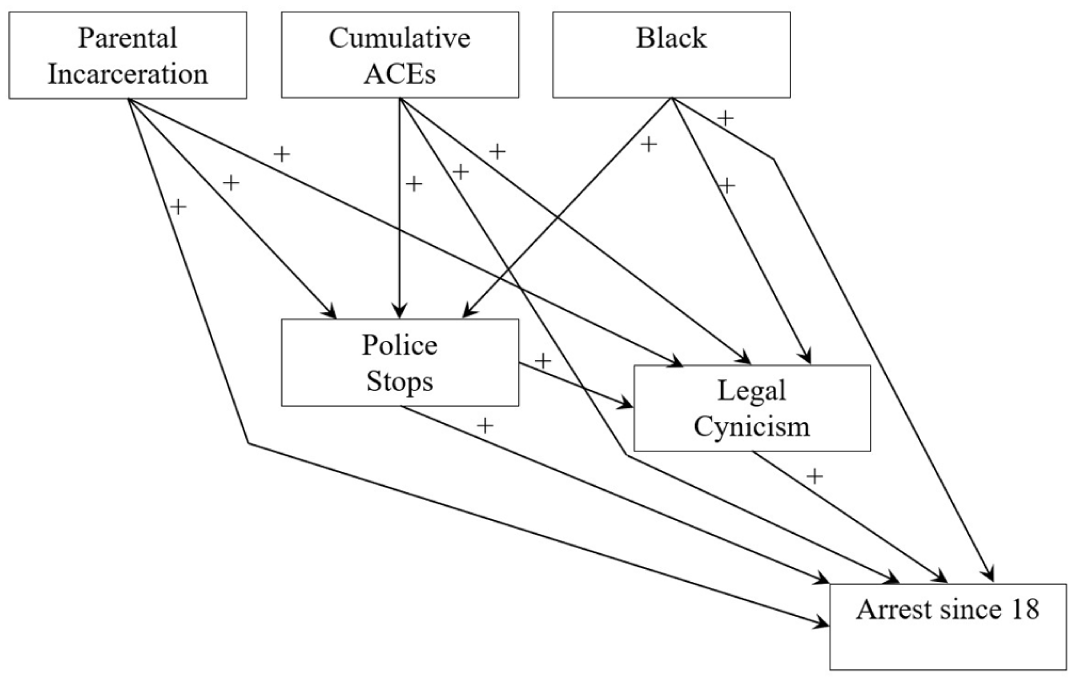
Empirical model.
Data and Method
Sample
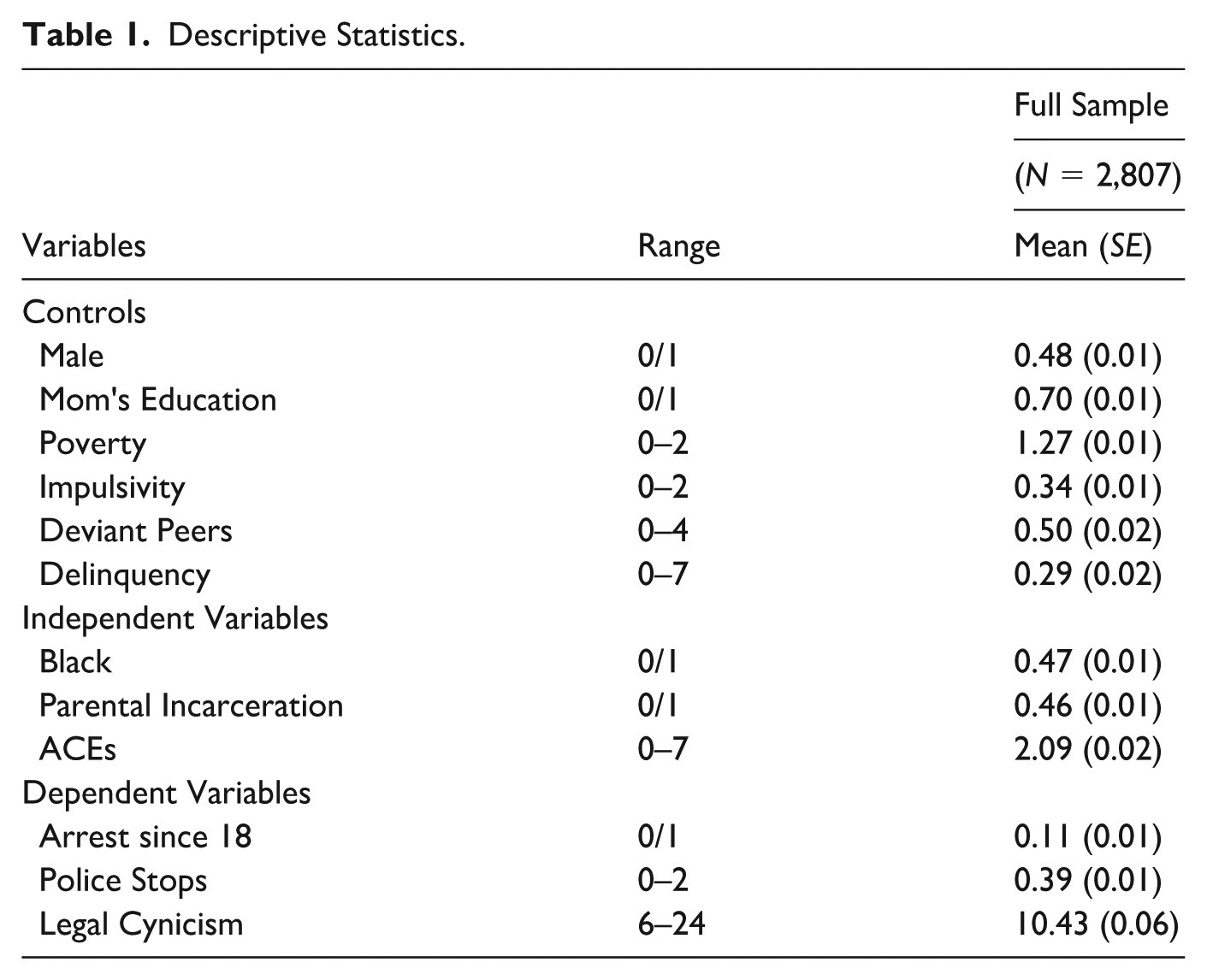
The current study uses the FFCWS data set. Briefly, the FFCWS is a panel study with seven waves of data collection. The initial sampling frame for the FFCWS was U.S. cities with 200,000 or more residents, from which 20 cities were chosen using a stratified random selection method. The sample began with 4,700 children born between 1998 and 2000. Shortly after each child’s birth, an initial interview with the mother occurred at the hospital, with follow-up surveys (phone interviews and in-home assessments) at approximately 1, 3, 5, 9, 15, and 22 years of age (FFCWS, 2025; Reichman et al., 2001). The study utilized an approximately three-to-one sample of unwed to wed births, and parents in the sample tended to have lower incomes and educational attainment compared to the broader U.S. population (Jones & Pierce, 2020). In the current study, the dependent variables are drawn from years 15 and 22, with independent, and control variables coming from various waves, as described below. We limited our sample to only individuals who participated in the year 22 wave of data collection, resulting in a final analytic sample of 2,807 individuals. 1 The final weighted and regression-adjusted sample is representative of urban births between 1998 and 2000 in U.S. cities with 200,000+ populations (Geller & Fagan, 2019). Descriptive statistics for the study variables can be found in Table 1.
Descriptive Statistics.
Measures
Dependent Variables
In the current study we examine three dependent variables: “arrest since 18,” “number of police stops,” and “legal cynicism.” Arrest since 18 is based on a question from the year 22 interviews that asked respondents if they had been arrested before age 18, after age 18, or both before and after age 18. To focus on arrests in adulthood and aid in time ordering in the analytical model, we recoded the variable such that 1 = arrested after age 18, or before and after age 18, and 0 = not arrested after age 18.
Number of police stops is derived from a year 15 interview question wherein the respondent was asked how many times they had ever been stopped by the police. Because answers skewed heavily towards 0, for the purposes of the interpretability and stability of the mediation model, we transformed this question into an ordered categorical item, where 0 = never stopped by the police (74.6% of the sample), 1 = stopped once by the police (11.9%), and 2 = stopped more than once by the police (13.5%). We focused on directly experiencing police stops versus witnessing police stops because this direct measure is particularly impactful for shaping legal cynicism in youths (Geller & Fagan, 2019). We focused on direct police stops as a parsimonious indicator of police contact that remains conceptually distinct from adolescents’ evaluative perceptions of police encounters, such as perceived fairness or procedural justice, which are more closely aligned with legal cynicism itself.
Legal cynicism is measured by combining six items from the year 15 interviews. These measures capture the teens’ perceptions of the police and the law (Kirk & Papachristos, 2011; Sampson & Bartusch, 1998) and have been used in prior research with the FFCWS dataset (Geller & Fagan, 2019; Jackson et al., 2020). Respondents answered on a 4-point Likert scale indicating their agreement with the following statements: “Laws were made to be broken”; “The police create more problems than they solve”; “If I fight with somebody, it’s nobody else’s business”; “There are no right or wrong ways to make money”; “I have a great deal of respect for the police”; and “It’s okay to do anything you want.” Responses for these six items were combined into an additive scale (range = 6–24, alpha = .66) with higher scores indicating greater legal cynicism. This scale is only slightly skewed and approximates a normal distribution (skewness = 0.717, kurtosis = 0.374).
Independent Variables
There are three independent variables in the current study: race, parental incarceration, and ACEs. Race is represented by Black, which indicates the respondent self identified as Black/African American at year 15 (1 = youth does identify as Black/African American, 0 = youth does not identify as Black/African American). Parental incarceration is a constructed variable from the year 9 interviews that records whether the respondent’s mother, father, or both reported ever being incarcerated up to that point. We modeled parental incarceration separately from the cumulative ACE measure because prior research and theory suggest it may shape legal socialization and later criminal legal system involvement through distinctive pathways tied to institutional surveillance, stigma, and family exposure to the legal system. In the analytic sample, 46% of the respondents had experienced parental incarceration by year 9.
Cumulative ACEs combines multiple measures from multiple waves. Following prior research on ACEs (e.g., see Felitti et al., 2019; Hunt et al., 2017; Jones & Pierce, 2020), we examined seven categories of ACEs in the present analysis: physical neglect, emotional neglect, physical abuse, emotional abuse, parental substance use, parental anxiety, and/or depression, and parental interpersonal violence. These different types of ACEs were ultimately combined in a 0–7 measure of cumulative ACEs. Measures of physical and emotional neglect and physical and emotional abuse come from the year 9 interviews, which asked primary caregiver about events that had ever happened to the focal child. Four measures of physical neglect asked about leaving the child home alone even when an adult was needed, not providing the child with needed food, not taking the child to a doctor or hospital when needed, and being so drunk/high that they couldn’t take care of the child. A single item addressing emotional neglect asked if the parent was ever so absorbed in their own problems that they could not express love to the child. Three measures of physical abuse asked if the parent had ever shaken the child; hit them on the bottom with an object; or slapped the child on the hand, arm, or leg. Lastly, five measures of emotional abuse asked if the parent had ever shouted, yelled, or screamed at the child; swore or cursed at the child; said they would send the child away or kick them out of the house; threatened to spank or hit the child but not actually do it; or called the child “dumb or lazy or some other name like that.” All abuse and neglect measures were dichotomized, and for the constructs with more than one item, responses were summed, and then dichotomized again (1 = ever happened).
Parental substance use combines four constructed measures from the year 3 interviews assessing whether the focal child’s mother or father meets the criteria for alcohol and/or drug dependence based on the Composite International Diagnostic Interview (CIDI) (Kessler et al., 1998). All four measures were combined to indicate whether the focal child’s mother or father or both met the CIDI criteria for alcohol and/or drug dependence at year 3.
Parental anxiety and depression combines 8 measures from the year 1 and 3 interviews that record whether the focal child’s mother, father, or both met the CIDI criteria for generalized anxiety disorder or major depressive disorder (conservative). These measures were combined into a single dichotomous variable (0/1), with 1 indicating that the mother, father, or both met the criteria for general anxiety disorder and/or major depressive disorder (conservative) at years 1 and/or 3.
Parental interpersonal violence combined measures from the year 3, 5, and 9 interviews assessing physical, emotional, and sexual violence experienced by the focal child’s mother. Physical violence items asked whether the mother was kicked, slapped, or hit with a fist or object. Emotional violence asked whether the mother’s partner tried to keep them from seeing or talking with friends and family, tried to prevent them from going to work or school, or withheld or took money. Sexual abuse was measured with a single item asking whether the mother’s partner had tried to make them have sex or engage in sexual acts. If the focal child’s mother reported any of these types of physical, emotional, or sexual abuse at years 3, 5, or 9, parental interpersonal violence was recorded as yes.
Controls
Several control variables are included in our path analysis. Male represents biological sex as reported by parents at the baseline interview. Mom’s education is mom’s self-reported highest level of education (0 = less than high school, 1 = high school and above) and was collected at the year 1 interview. Family wealth compared to federal poverty levels at year 1 is represented by poverty (0 = 0–99% of poverty level, 1 = 100–199%, 2 = 200%+). Impulsivity—used to proxy for self-control, which is an important variable to predict criminal behavior (Gottfredson & Hirschi, 2022)—is a single measure from the year 15 interviews in which the parent was asked whether the child is “impulsive or acts without thinking” (0 = not true, 1 = sometimes true, 2 = often true).
We also control for deviant peers, an important correlate of crime and delinquency (Warr, 2002). This measure combines four items from the year 15 interview asking whether the respondent’s friends had committed several delinquent acts in the past year. These acts include deliberately damaging property that didn’t belong to them, stealing something worth more or less than $50, and selling marijuana or other drugs (alpha = .72). Finally, delinquency also comes from the year 15 interviews based on seven items asking whether the respondent had committed numerous delinquent acts in the past year. These acts include painting graffiti or signs on private property or public spaces, deliberately damaging property that didn’t belong to them, taking something from a store without paying for it, stealing something worth more or less than $50, selling marijuana or other drugs, and going into a house or building to steal something (alpha = .68).
Analytic Strategy
In the current study we utilize the Mplus software to examine the relationships between the key variables: parental incarceration, cumulative ACEs, Black, police stops, legal cynicism, and arrest since 18. As the current study is chiefly concerned with mediation, path analysis is the appropriate method. Through path analysis with direct and indirect effects, we are able to estimate the relationships among childhood risks, adolescent mechanisms, and young adult arrest within a single model, and can thus better consider developmental pathways (Strohacker et al., 2022). This approach also allows us to evaluate whether parental incarceration, cumulative ACEs, and identifying as Black/African American are associated with arrest in young adulthood directly and indirectly through adolescent police stops and legal cynicism, thereby addressing all three research questions in a common analytic framework.
More specifically, the model estimates whether each focal childhood risk factor is associated with young adult arrest directly, whether it is associated with arrest indirectly through police stops, and whether police stops, and legal cynicism operate as linked developmental mechanisms connecting childhood risk to adult criminal legal system involvement.
This approach improves on traditional regression models in which potential mediators are treated only as covariates (Baron & Kenny, 1986). By modeling all the relationships simultaneously, path analysis provides a more appropriate framework for examining the direct and indirect associations proposed in the current study. Mplus also provides modification indices that can identify additional pathways or correlations that may improve model fit, though any such modifications must be interpreted cautiously and in light of theory. Figure 1 presents the set of relationships modeled in the path analysis.
Results
Table 2 presents direct effect results only for the path model run in Mplus. Goodness of fit is determined by several statistics, with three that are commonly checked being the root mean square error of approximation (RMSEA), the Comparative Fit Index (CFI), and the Tucker Lewis Index (TFI) (Tankebe, 2012). Good model fit is considered evidence that the specified model reproduces the relationships as they exist in population of interest. A good fitting model is generally indicated by an RMSEA < 0.06, a CFI > 0.95, and a TLI > 0.95 (Hu & Bentler, 1999). The model presented in Table 2 represents the best fitting model for the data. Of note, the modification indices don’t suggest any paths or correlations that could be added to improve model fit.
The Direct Effects of Parental Incarceration, Cumulative ACEs, and Black on Arrest Since 18, Police Stops, and Legal Cynicism.
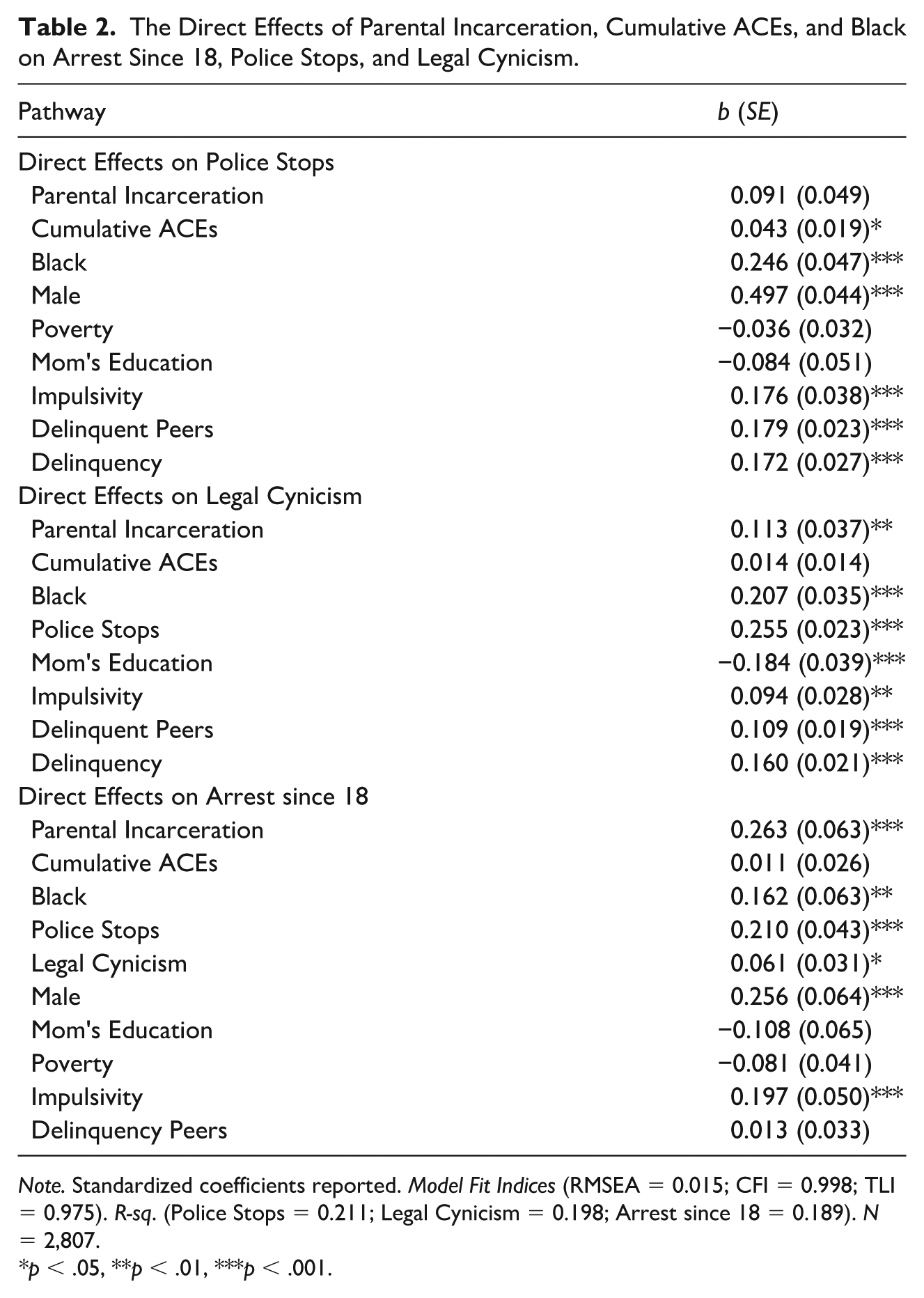
Note. Standardized coefficients reported. Model Fit Indices (RMSEA = 0.015; CFI = 0.998; TLI = 0.975). R-sq. (Police Stops = 0.211; Legal Cynicism = 0.198; Arrest since 18 = 0.189). N = 2,807.
p < .05, **p < .01, ***p < .001.
Table 2 contains standardized coefficients, r-squared values, and model fit statistics for the full model. Among the independent variables, cumulative ACEs (RQ2) and Black (RQ3) have statistically significant effects on police stops. Parental incarceration (RQ1) and Black (RQ3) have statistically significant effects on legal cynicism. Parental incarceration and Black have statistically significant effects on arrest since 18. All effects were in the expected, positive direction. Taken together, parental incarceration (RQ1) exerted a direct effect on adult arrest and a separate effect on legal cynicism, suggesting an attitudinal rather than contact-driven mechanism via police stops.
Table 3 looks at the indirect effects specified in the model. Cumulative ACEs (RQ2) and Black (RQ3) both have statistically significant indirect effects on arrest since 18 through police stops. Also, cumulative ACEs (RQ2) and Black (RQ3) have statistically significant indirect effects on legal cynicism through police stops. Lastly, police stops have a statistically significant indirect effect on arrest since 18 through legal cynicism. While few of the individual indirect paths are significant, the total indirect effects for the three independent variables on arrest since 18 are statistically significant. This can occur for several reasons, including weak effects of individual paths obscuring an overall significant indirect effect. One way to check if the total indirect effects are truly significant is through bootstrapping. When the same model is run with this bootstrapping method and focuses on confidence intervals rather than the significance of p-values, the results suggest the total indirect effects of cumulative ACEs and Black on arrest since 18 are robust, while the parental incarceration indirect effect is not as robust. Specifically, the confidence interval for the indirect cumulative ACEs effect is from 0.000 (rounded) to 0.026, and the confidence interval for the indirect Black effect is from 0.035 to 0.122. Since zero is not in the confidence interval, this is evidence that these are meaningful total indirect effects. As a whole, these models suggest parental incarceration influences adult arrest primarily through a direct pathway, with limited evidence of indirect effects operating through adolescent legal cynicism.
The Indirect Effects of Parental Incarceration, Cumulative ACEs, Black, and Legal Cynicism on Arrest Since 18.
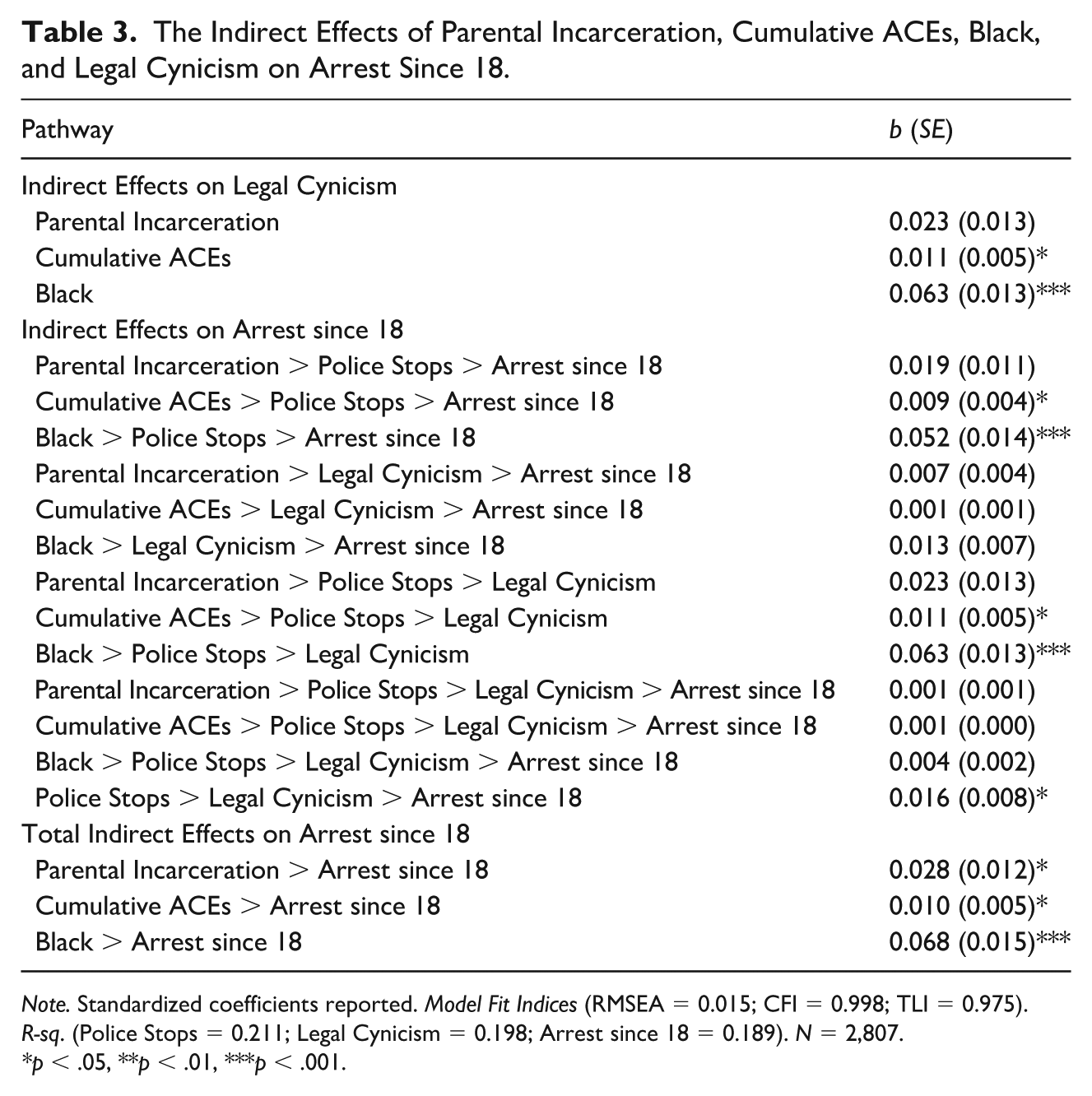
Note. Standardized coefficients reported. Model Fit Indices (RMSEA = 0.015; CFI = 0.998; TLI = 0.975). R-sq. (Police Stops = 0.211; Legal Cynicism = 0.198; Arrest since 18 = 0.189). N = 2,807.
p < .05, **p < .01, ***p < .001.
In sum, the findings provide clear answers to all three research questions. For RQ1, parental incarceration was directly associated with arrest in young adulthood, but its effects were not robustly mediated through adolescent police stops and legal cynicism. For RQ2, cumulative ACEs were not directly associated with arrest in young adulthood, but they were indirectly associated with arrest through increased police stops and subsequent legal cynicism. 2 For RQ3, identifying as Black/African American was associated with arrest in young adulthood both directly and indirectly through adolescent police stops and legal cynicism.
Discussion
This study used path analysis and nationally representative data to explore how childhood factors—specifically experiencing ACEs, experiencing parental incarceration, and race—impact adolescent factors such as being stopped by police and developing legal cynicism, and how these, in turn, influence likelihood of arrest in young adulthood. By utilizing this unique longitudinal data set, this study was the first (to our knowledge) to move beyond direct effects to illuminate these mechanisms of criminal justice involvement, particularly highlighting how systemic exposure to the legal system shapes legal attitudes and, in turn, arrest in young adulthood. Understanding these mechanisms is crucial to preventing arrest in young adulthood and mitigating the long-term adverse health, economic, and social outcomes associated with such arrests (Doherty et al., 2021).
Consistent with prior research, the findings demonstrate that legal cynicism functions as a key developmental mechanism connecting early-life disadvantage to later arrest. Importantly, however, the results also show that not all forms of childhood adversity operate through the same pathways. Whereas cumulative ACEs primarily influence adult arrest indirectly through adolescent police stops and subsequent legal cynicism, parental incarceration follows a distinct pattern exerting a direct effect on adult arrest and shaping legal cynicism independently of police contact. Identifying as Black/African American was associated with both direct and indirect pathways to arrest, underscoring the central role of structural racial inequality in shaping legal system exposure across the life course.
Pathways to Adolescent Outcomes
Consistent with Clark et al. (2023), cumulative ACEs and identifying as Black/African American were directly associated with adolescent police stops, and both exerted indirect effects on legal cynicism through police contact. These findings support prior work demonstrating that exposure to adversity increases the likelihood of police contact during adolescence and that police contact, in turn, erodes perceptions of legal legitimacy. In contrast, cumulative ACEs did not directly predict legal cynicism, reinforcing the argument that legal cynicism is not a uniform response to adversity but rather emerges through specific institutional encounters.
Parental incarceration followed a different trajectory. In line with prior research, parental incarceration directly predicted adolescent legal cynicism but was not associated with increased police contact. This pattern suggests that parental incarceration shapes adolescents’ legal orientations through mechanisms other than direct police exposure, likely including vicarious legal socialization, institutional surveillance of families, and parental narratives about the justice system. Together, these findings highlight the importance of distinguishing between behavioral exposure pathways (such as police contact) and attitudinal socialization pathways when examining the development of legal cynicism.
Pathways to Adult Arrest
The primary contribution of this study is its extension of these developmental processes into early adulthood. While prior work has demonstrated that adolescent legal cynicism predicts adult arrest, the present analysis clarifies how childhood disadvantage becomes linked to adult outcomes through multiple, distinct pathways.
Cumulative ACEs did not directly predict arrest in young adulthood; instead, their influence operated indirectly through increased police contact in adolescence and the subsequent development of legal cynicism. This serial pathway underscores the role of institutional encounters in translating early adversity into later system involvement. In contrast, parental incarceration directly predicted adult arrest and also contributed to legal cynicism but did not increase adolescent police contact. This pattern suggests that parental incarceration operates as a unique form of structural exposure that embeds children within the criminal legal system in ways that persist into adulthood, independent of adolescent police encounters.
Identifying as Black/African American was associated with both direct and indirect pathways to arrest, including increased police stops, elevated legal cynicism, and higher arrest risk in young adulthood. These findings are consistent with extensive evidence documenting racialized policing practices and cumulative disadvantage across the life course (e.g., see Alexander, 2020; Jordan & Freiburger, 2015; Laurencin & Walker, 2020; Shedd, 2015). Importantly, race functioned not merely as a demographic characteristic but as a structural position shaping exposure to policing, the interpretation of legal authority, and subsequent criminal legal system involvement.
Implications for Theory and Prevention
It has long been understood that individuals involved in the criminal legal system are more likely to have high levels of ACEs than individuals out of the criminal legal system (Reavis et al., 2013). Our study demonstrates that parental incarceration operates differently from other adverse events. Parental incarceration was directly predictive of arrest at age 18, an effect not observed for the cumulative ACE score.
These findings have important implications for both theory and policy. From a theoretical perspective, the results reinforce legal cynicism as a durable legal orientation shaped by early structural and institutional experiences and consequential for adult criminal legal system involvement. More broadly, these findings suggest that legal cynicism develops within social contexts marked by structural racism, institutional surveillance, and community-level legal socialization rather than emerging solely from isolated individual experiences. At the same time, the study demonstrates that legal cynicism is produced through multiple pathways, depending on the nature of childhood adversity. ACEs primarily influence legal cynicism indirectly through police contact, whereas parental incarceration exerts a more direct influence on legal orientations and adult arrest outcomes.
From a prevention standpoint, these distinctions matter. Interventions aimed broadly at mitigating ACEs—such as economic supports (Courtin et al., 2019), mental health services (Lorenc et al., 2020), and family-based prevention programs (Brennan et al., 2020)—remain critical and may reduce later criminal legal system involvement by limiting adolescent police contact. However, the findings also suggest that children experiencing parental incarceration represent a distinct population whose risk pathways are not fully addressed by general ACEs prevention strategies. Parental incarceration appears to embed children within the criminal legal system in ways that shape legal attitudes and increase arrest risk well into adulthood.
Despite the growing number of children affected by parental incarceration, few interventions directly target this population. The Parenting Inside Out program is the only targeted intervention for this population that has been rigorously tested using a large-scale experimental design (Loper et al., 2019). Parenting Inside Out was shown to improve outcomes for the parent (decreased likelihood of involvement in criminal activity after reentry/re-arrest, decreased parent stress and depressed mood) and for the parent–child relationship (Eddy et al., 2013, 2022). However, Parenting Inside Out was only studied in one randomized controlled trial in a predominantly White population in Oregon, and the children were not the focal point of the study. Therefore, more research needs to be conducted on Parenting Inside Out and/or other targeted interventions to test whether these parenting supports have the potential to have long-term positive impacts on children, especially given the current study’s findings suggesting that children experiencing parental incarceration have a unique pathway to adult outcomes. Future research should also investigate which school- or community-based interventions could best support children experiencing parental incarceration.
In our model, identifying as Black/African American was significantly predictive of all adolescent and adult outcomes, both directly and indirectly. This finding was unsurprising given the plethora of evidence that Black/African American communities have experienced centuries of historical and structural racism with significant implications today (Alexander, 2020; Shedd, 2015). Structural racism particularly affects the criminal legal system, where racial biases result in Black/African American individuals being more likely to experience biased police stops, racial profiling, and inequitable sentencing (Jordan & Freiburger, 2015; Laurencin & Walker, 2020). These disproportionate experiences contribute to increased cynicism in the system that has not worked for their community (Brunson & Weitzer, 2008; Geller & Fagan, 2019; Shedd, 2015; Slocum & Wiley, 2018).
Given our model showed identifying as Black/African American directly and indirectly (through adolescent police stops and the development of legal cynicism) increased the likelihood of young adult arrest, our study reiterates the need to address structural racism within our society (Alexander, 2020; Purnell, 2022). Admittedly, resolving structural racism is complex, and scholars often debate how to achieve this ambition; however, researchers, activists, and policy makers should work collaboratively to identify solutions to this complex and centuries-long crisis.
Limitations
Several limitations should be noted. First, although this study leverages longitudinal data and temporal ordering to examine developmental pathways, the analyses rely on observational data, which limits the ability to make definitive causal claims. Unmeasured confounding may remain, particularly with respect to race and neighborhood context, policing practices, or other institutional exposures that were not directly captured in the model. In addition, the outcome measure of arrest is based on self-report at age 22 and may be subject to recall error or underreporting. While prior research suggests self-reported arrest measures are reasonably reliable, especially in longitudinal studies, future work would benefit from linking survey data to official criminal justice records to further validate these findings.
Second, some measurement decisions warrant caution. The legal cynicism scale demonstrated modest internal consistency, which is consistent with prior studies using similar attitudinal measures (Geller & Fagan, 2019; Jackson et al., 2020), but nonetheless suggests some measurement error. Legal cynicism is a multifaceted construct that may be shaped by a wider range of experiences than those captured here, including neighborhood-level processes and vicarious exposure to policing beyond the family. Additionally, police stops were measured conservatively and did not capture the qualitative nature of police encounters, such as perceived fairness, intrusiveness, or procedural justice. Although we made this choice to preserve a clearer distinction between direct police contact and the attitudinal construct of legal cynicism, future research should examine how qualitative dimensions of police encounters further shape legal cynicism and later criminal legal system involvement. In addition, because the current study focused on direct police stops, future research should more fully examine how witnessed or other vicarious forms of police contact may also contribute to the development of legal cynicism. Future research should also incorporate more detailed measures of police contact and legal socialization across adolescence and early adulthood to better isolate the mechanisms linking early adversity to later criminal legal system involvement.
Furthermore, this study is limited to only examining the impacts of parental incarceration before age 9. This focus was intended to establish a temporal sequence of events from childhood through adolescence and into adulthood. That said, experiencing parental incarceration after age 9 likely also has important implications for child well-being and adult outcomes. Future research should examine the impact of parental incarceration at various stages of childhood.
Conclusion
This study advances our understanding of how early disadvantage becomes linked to arrest in young adulthood. By distinguishing between behavioral exposure pathways and attitudinal socialization pathways, the findings clarify the mechanisms through which ACEs, parental incarceration, and race shape legal cynicism and arrest risk. Furthermore, the findings suggest that parental incarceration impacts children differently than other adverse childhood experiences. Research, policy, and practice efforts aimed at reducing criminal legal system involvement should attend not only to early adversity broadly, but also to the specific institutional and familial experiences that shape how individuals come to view and interact with the law.
Footnotes
Acknowledgements
We express sincere gratitude to the participants of the study and the FFCWS principal investigators who oversaw data collection making this work possible. We also express gratitude to Michelle Nicolson for editorial support.

Ethical Considerations
Data was collected by the FFCWS team and received ethical approval through the Princeton Institutional Review Board. The authors of this manuscript used the FFCWS de-identified publicly available data.
Funding
The authors disclosed receipt of the following financial support for the research, authorship, and/or publication of this article: Research reported in this publication was supported by the Eunice Kennedy Shriver National Institute of Child Health and Human Development (NICHD) of the National Institutes of Health under award numbers R01HD036916, R01HD039135, and R01HD040421, as well as a consortium of private foundations. The content is solely the responsibility of the authors and does not necessarily represent the official views of the National Institutes of Health.
Declaration of Conflicting Interests
The authors declared no potential conflicts of interest with respect to the research, authorship, and/or publication of this article.