






Abstract
Introduction
This study aimed to explore parental needs related to feeding difficulties in preterm infants by analyzing keywords and discourse trends from the mobile Internet and social networking services (SNS).
Methods
Data were collected from online news, blogs, and SNS platforms in South Korea between January 2020 and December 2024. Text mining, semantic network analysis, and LDA topic modeling were conducted using TEXTOM and NetMiner.
Results
A total of 3,904 documents were analyzed. Five major topics were identified: (1) adaptation to early feeding, (2) recognition of feeding problems, (3) medical issues and welfare support, (4) repeated failures and misinformation, and (5) therapeutic interventions.
Conclusion
The findings suggest that parental needs regarding preterm infant feeding difficulties require professional training and multidisciplinary support systems.
What Do We Already Know About This Topic?
Prior studies have shown that parents of preterm infants with feeding difficulties encounter significant caregiving challenges and often go through repeated trial and error when searching for accurate online information.
How Does Your Research Contribute to the Field?
This study highlights parental challenges, information-seeking behaviours, and the demand for professional consultation related to difficulties in preterm infants. By analysing caregivers’ needs through big data keyword analysis, the findings capture current trends and provide insights that can inform clinically relevant interventions tailored to parents’ actual needs.
What Are Your Research’s Implications Toward Theory, Practice, or Policy?
The findings can serve as foundational evidence for developing tailored consultation and education programs for parents of preterm infants, establishing reliable information-delivery systems, and designing intervention strategies that enhance emotional support.
Introduction
In South Korea, preterm births account for approximately 9–10% of all neonatal births and have shown a gradual increase.1,2 Although advances in neonatal intensive care technology has improved the survival rates of premature infants, they remain at risk for a range of challenges, including cardiopulmonary problems, infections, neurological issues, and oral feeding difficulties.2,3 Consequently, systematic parental education and the development of continuous support systems have become priority tasks for healthcare providers, specialists, and related institutions. 4
Oral feeding is a complex sensorimotor behaviour requiring the coordinated functioning of the oral, pharyngeal, laryngeal, and esophageal subsystems. 5 Premature infants often struggle to achieve the necessary balance among sucking, swallowing, and breathing because of the immaturity of their respiratory and neurological systems, making safe oral feeding particularly difficult. 5 Before discharge, these infants must acquire oral feeding skills, yet for some, feeding problems may persist into childhood and beyond.4,5 Oral feeding is therefore critical not only for the short-term benefits, such as weight gain and adequate nutrition,, but also for long-term growth and development across the lifetime. 6
Providing safe oral feeding to premature infants, however, remains challenging. First, mothers frequently experience confusion, fear, and guilt following sudden preterm delivery, along with anxiety about their infant’s uncertain future. These emotions contribute to frustration and reduced confidence in their ability to feed their child. 7 Second, the physiological immaturity of the newborn, coupled with hospitalization in intensive care, makes direct feeding difficult, and even indirect feeding through breast pumping involves burdens related to transportation and storage. 8 For parents to successfully provide oral feeding after discharge, structured education is essential. However, as a result of limited access to reliable information, parents may not recognize the importance of oral feeding. Even when they are motivated, they often lack the knowledge and practical skills to manage feeding challenges effectively. 9
Feeding difficulties in premature infants are not limited to functional problems, but simultaneously involve parental emotional burden and educational needs. In one longitudinal study of children born prematurely, parents reported affective instability during feeding, the challenge of obtaining accurate information ‘on their own,’ and the technical difficulties of feeding. 10 Similarly, research has shown that mothers of low birth weight infants have specific educational needs related to feeding techniques, monitoring, and growth assessment. 8 Collectively, these findings highlight parents’ strong demand for customized, skills-based education that addresses both their emotional concerns and practical challenges.
Recently, the widespread use of smart media has accelerated the dissemination of information through the mobile Internet and social networking service (SNS). SNS platforms, which connect individuals, groups, and society in real-time capability and acceleration, it spreads issues faster than any other medium. 11 Parents of premature infants increasingly rely on these platforms for information about feeding difficulties and child-rearing more broadly. 10 However, the abundance of indiscriminate parenting information available online forces parents to spend considerable time identifying accurate resources, and misinformation often compels them to rely on trial and error, further complicating caregiving. 8 This underscores the need to examine search trends and the language used in online discussions related to feeding difficulties in premature infants.
Semantic network analysis is a new form of content analysis that applies automated tools to unstructured data by referring to the act of exploring and utilizing meanings hidden within text. 12 Semantic network analysis is not simply a technique for listing keywords by frequency, but rather a method that visualizes text from big data sources as semantic networks to analyse which topics are most relevant and have connected relationships. 12 In other words, it involves identifying the hidden intentions of authors from written text word sets and explores what specific words co-occur with other words through analytical work. 13 The use of semantic network analysis techniques is deemed appropriate for understanding search trends related to feeding difficulties among parents of premature infants. However, most studies using semantic network analysis have been limited to prior research, and studies using semantic network analysis on the mobile Internet and SNS are difficult to find. Therefore, analysing mobile Internet and SNS search terms related to feeding difficulties in premature infants through semantic networks would enable the identification of relationships between words and the extraction of core concepts, thereby confirming realistic problems related to feeding difficulties in premature infants.13,14
This study aimed to identify and analyse key keywords appearing on the mobile internet and SNS to better understand parental needs related to feeding difficulties in premature infants. Furthermore, the study sought to suggest subject areas for follow-up nursing interventions after discharge, with the goal of supporting parents in the early detection of feeding problems and in ensuring appropriate nutrition for their infants.
Methods
Study Design
The reporting of this study follows the SRQR (Standards for Reporting Qualitative Research) guidelines. 15 This study employed content analysis using text network analysis and topic modeling to examine search terms, network structure, and parental needs related to feeding difficulties in premature infants on the mobile Internet and SNS. The goal was to identify key characteristics and major topics within the data.
Study Subjects
The study analyzed big data obtained from mobile Internet sources and SNS platforms. The titles and main texts of the collected data were reviewed by the research team to establish the inclusion and exclusion criteria. Inclusion criteria were content related to feeding, swallowing deglutition, or nutrition deficiency in premature infants. Exclusion criteria were materials not directly related to feeding or those concerning healthy full-term infants. However, data concerning preterm infants with feeding or swallowing difficulties were included.
Data Collection
Latent Dirichlet Allocation (LDA) topic modeling was performed based on data collected from both online news outlets and SNS platforms, with reference to prior research on topic-social network models. 11
Data were collected from major internet portals in South Korea, including Naver (web, blog, news, café, Knowledge IN), Daum (web, Tistory, news, café, Knowledge IN), Google, Facebook, Twitter, and YouTube. Mobile internet data were collected using Big Kinds, an article database provided by the Korea Press Foundation, to gather news articles containing the keywords ‘premature infants and ‘feeding*'. Instead of a traditional interview guide, a structured data collection protocol was used. The keywords used in the protocol were validated by a panel of two nursing professors and one clinical expert to ensure content validity. The time period was set differently according to the research purpose, and the media outlets for article extraction were designated as 11 national daily newspapers (Kyunghyang Shinmun, Kookmin Ilbo, Naeil Shinmun, Dong-A Ilbo, Munhwa Ilbo, Seoul Shinmun, Segye Ilbo, Chosun Ilbo, JoongAng Ilbo, Hankyoreh, Hankook Ilbo), 11 medical and health daily publications (Young Doctor, Korean Medical Association News, Medical Newspaper, Medical Times, Health Chosun, Medi Pana News, Daily Medi, Medical Observer, HealthiNews, Medical Report, Komedi), and five broadcasting companies (KBS, MBC, OBS, SBS, YTN).
The data collection period for this study was the most recent five years, from January 1, 2020, to December 31, 2024. Data were collected using web crawling techniques with the Beautiful Soup library in Python 3.10 (Python Software Foundation, Wilmington, DE, USA). Instead of a traditional interview guide, a structured data collection and extraction guide was developed. The keywords and extraction criteria were validated through multiple rounds of consensus-building meetings by the aforementioned expert panel to ensure clinical relevance and methodological rigor. Data collection continued until data saturation was achieved, ensuring that the 3,904 documents provided a stable distribution of keywords and that no new significant topics emerged. Five standardized data fields—titles, descriptions, URLs, publication dates, and platform metadata—were systematically extracted and saved in MS Office Excel (Microsoft, Redmond, WA, USA) files, where each row represented one document.
Data Analysis
This study collected and refined data through the mobile internet and SNS to identify changes in parental needs regarding feeding difficulties in premature infants. Search keywords for data extraction were selected by prioritizing general terms in the relevant domain, and data were then selected through consultation between domain experts and researchers, considering the purpose of the data and relevance of the searched keywords. The research data utilized TEXTOM, 16 developed by IMC Co., Ltd., a big data analysis organization, as the foundation, with Python, Excel, and Node XL selected as the analytical tools. Textom is an analytical tool that automatically collects and refines data from Internet portal sites by channel, and processes the data up to matrix production. The search keywords used in this study included “preterm infant” “premature infant”, “feeding difficulty”, “feeding disorder”, “dysphagia”, and “low birth weight” which were combined using Boolean operators during data collection with Textom.
After collecting the data through text mining, all unnecessary characters were manually removed using Notepad++ for refinement. Subsequently, the refinement process was completed by removing all duplicate data based on the content using Textom. Text mining, semantic network analysis, network visualization analysis, and sentiment analysis were performed using the NetMiner software. Text mining is a technique for extracting information or knowledge from unstructured text data. By calculating both the frequency and term frequency-inverse document frequency (TF-IDF) of the extracted words, important keywords were derived, and their meanings were analyzed. Furthermore, semantic network analysis was used to examine the interrelationships among important keywords by identifying the connection strength and centrality values between words, clustering to generate word groups, and then utilizing Node XL to visualize the networks between groups. Finally, sentiment analysis employed natural language processing (NLP) techniques to examine subjective aspects of the text, such as attitudes, opinions, and sentiments. To ensure the validity of the findings, the research team comprised experts with extensive clinical and academic backgrounds. The members included a pediatric nursing scholar with 20 years of experience, a specialist in long-term preterm infant management, and a researcher proficient in LDA topic modeling. This synergy between deep clinical insight and methodological expertise minimized interpretive bias, facilitating an objective and iterative theme derivation process.
Ethical Considerations
The study protocol was reviewed and approved by the Konkuk University Institutional Review Board (approval number: KKUIRB-202502-E-045).The requirement for written informed consent was waived as the research involved the collection and analysis of publicly available, de-identified data from various internet and social media platforms, ensuring the anonymity of the participants.
Results
Association Keywords Analysis
Data were collected between January 1, 2020, and December 31, 2024, using “preterm infants”, “feeding difficulty”, “feeding disorder”, and “dysphagia” as central keywords. A total of 505 online news articles, 3,288 SNS posts, and 111 YouTube videos were obtained (Figure 1). Data were secured through web crawling, and automated collection procedures were performed according to the search conditions and formats specific to each platform. Systematic data collection and analysis protocol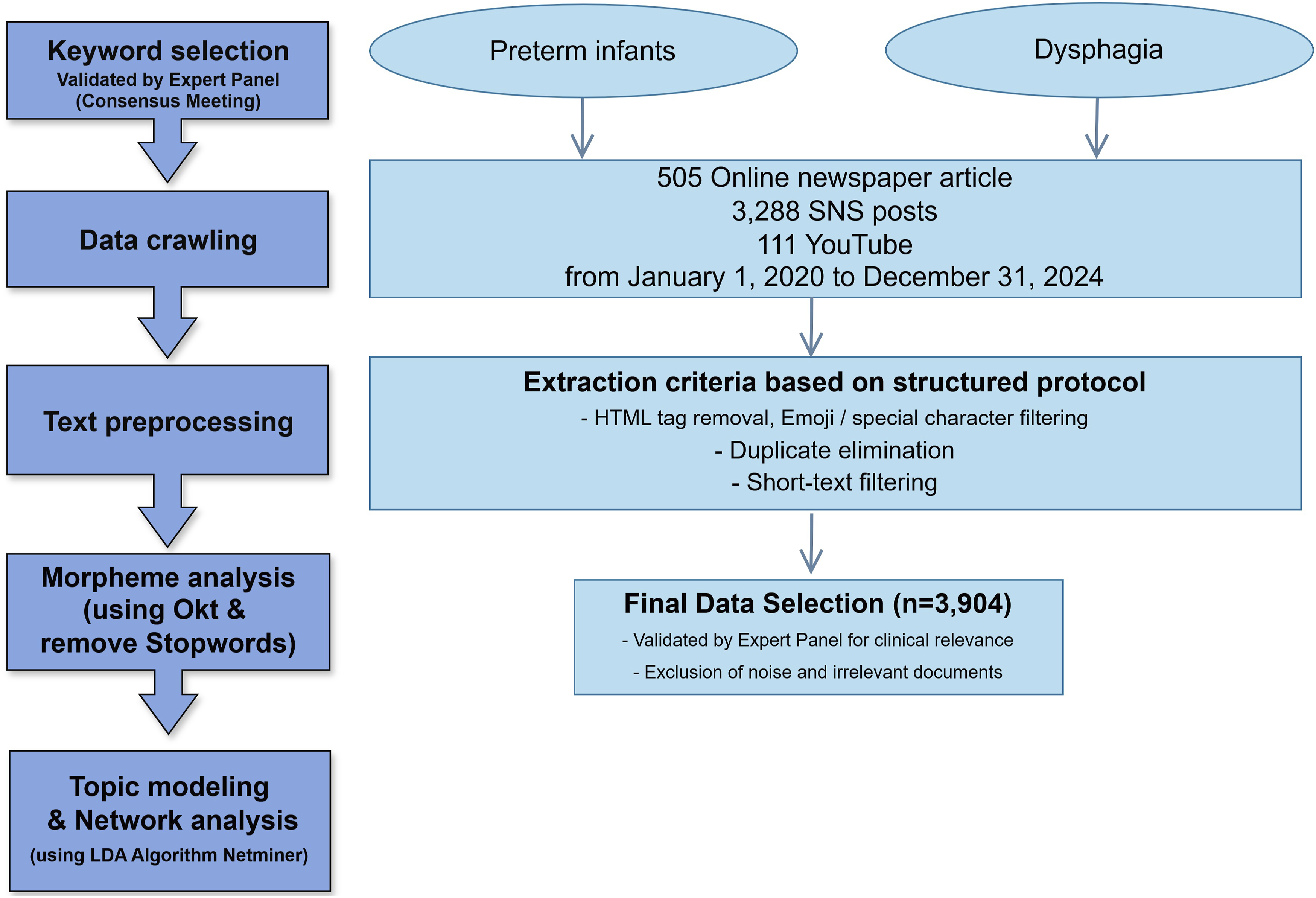
The raw data were refined through several preprocessing steps, including the removal of HTML tags, special characters, and emojis, elimination of duplicate documents, and filtering of very short sentences. Meaningful words, primarily nouns and compound nouns, were extracted using the Open Korean Text (OKT) morphological analyzer, while general stop words that did not contribute to meaning were excluded.
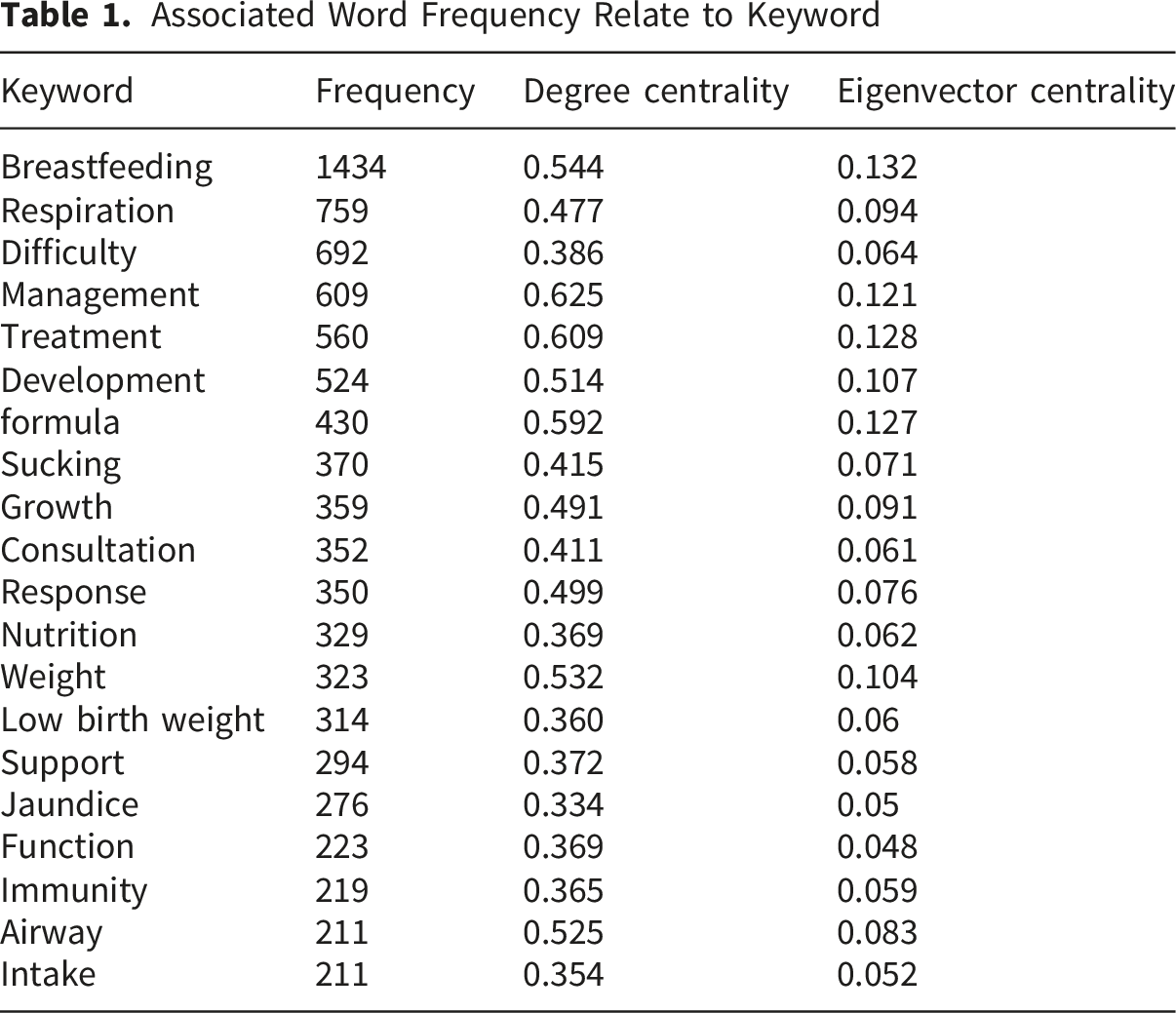
Associated Word Frequency Relate to Keyword
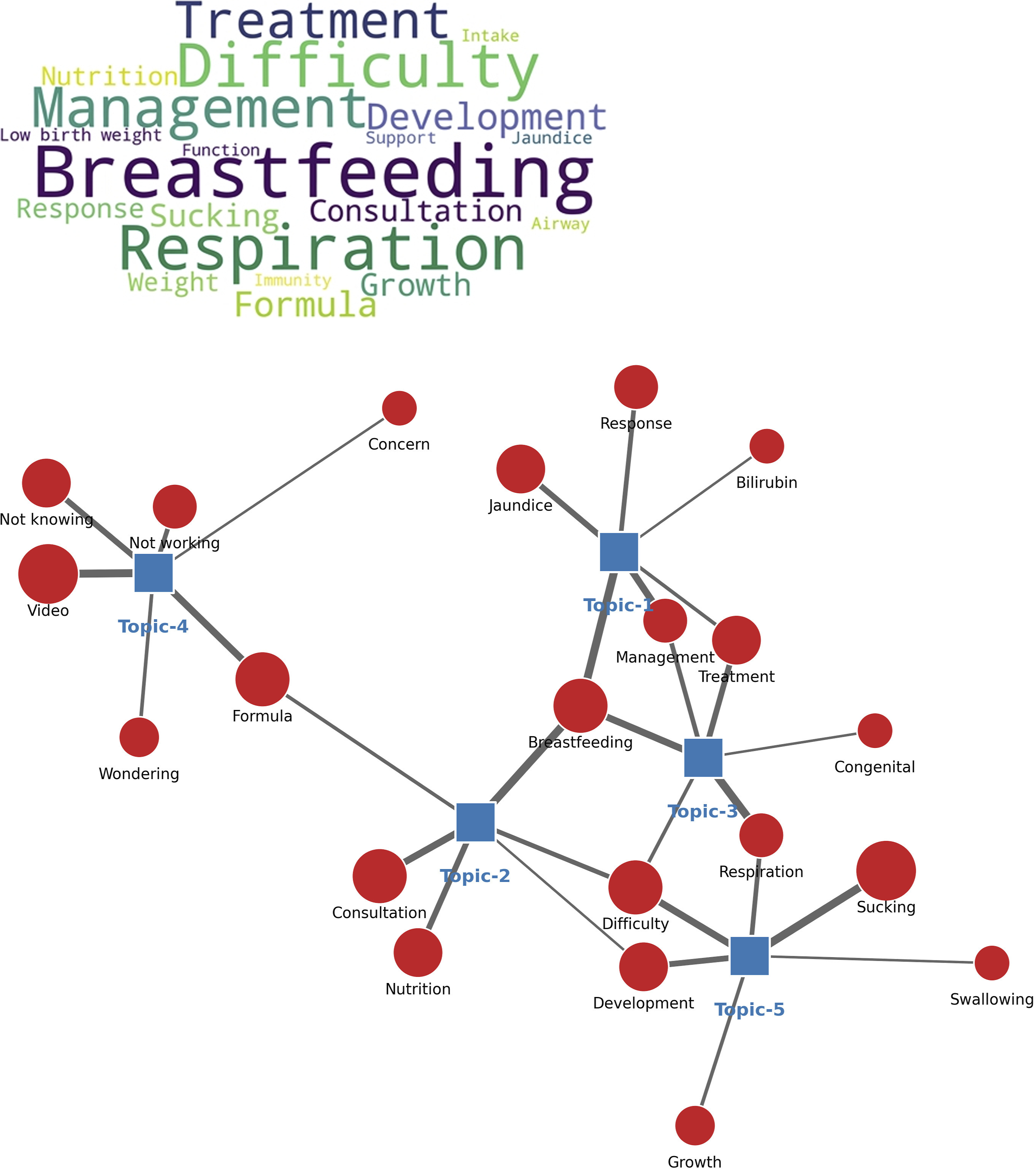
Network visualization of LDA topics and associated keywords regarding parental needs.
Sentiment Analysis
1) Topic 1. Initial feeding adaptation and physical response
Main keywords: ‘Breastfeeding,’ ‘Management,’ ‘Jaundice,’ ‘Response,’ ‘Treatment,’ ‘Bilirubin,’ ‘Difficulty,’ ‘Growth,’ ‘Function,’ and ‘Specific.’
In the early parenting period, parents faced practical feeding challenges influenced by infants’ physical and medical conditions. For example, neonatal jaundice and serum bilirubin levels directly affected feeding method selection, and infants’ physiological responses varied depending on adaptation. Parents continuously monitoring feeding adequacy, growth, and developmental, while attempting various strategies to support adaptation. ‘Neonatal jaundice commonly occurs during the breastfeeding process, and because serum bilirubin levels are associated with feeding continuation and significantly influence early adaptation, parents must exercise caution in feeding method selection and management.’ ‘When feeding adaptation is not smooth, various physical responses such as stool color changes, hiccups, and poor weight gain may occur, requiring careful parental observation and early intervention.’ 2) Topic 2. Recognition of feeding problems and professional consultation
Main keywords: ‘Breastfeeding’ ‘Consultation,’ ‘Nutrition,’ ‘Difficulty,’ ‘Formula,’ ‘Development,’ ‘Management,’ ‘Low birth weight,’ ‘Treatment’ and ‘Intake.’
Parents who recognized problems related to feeding and nutrition intake sought solutions through consultation with healthcare professionals and specialists. Breastfeeding continuation, transition to formula, nutrition balance, and growth assessment are major concerns. Anxiety regarding developmental indicators promote diagnosis and evaluation in medical institutions. This process was interpreted as an attempt by parents to secure the legitimacy of their parenting methods and alleviate anxiety through objective indicators.
Slow weight gain, referring to weight progression below expected growth trajectories for corrected age, and feeding difficulties often triggered parental concern. Previous reports indicate that when slow weight gain or feeding difficulties are observed in infants during the feeding process, parents reconsider the feeding method itself, including continuation of breastfeeding or transition to formula.’ ‘Anxiety about low birth weight or developmental indicator delays serve as a key driving force that leads parents to objectively verify their infant's nutritional status and growth development through consultation with healthcare professionals and seek tailored management strategies.’ 3) Topic 3. Medical issues and welfare support linkage
Main keywords: ‘Respiration,’ ‘Breastfeeding,’ ‘Treatment,’ ‘Management,’ ‘Difficulty,’ ‘Congenital,’ ‘Weight,’ ‘Support,’ ‘Response’ and ‘Low birth weight.’
Parental concerns extended from basic feeding problems to broader medical and structural issues, including respiratory difficulties, congenital disorders, and low birth weight. These challenges emphasized the need for systematic treatment and management. During this process, connections are made with institutional resources such as healthcare services, welfare support, and infant health screening systems, leading to a transition to medical-centered care. Previous Literature indicates that infants presenting with combined respiratory and gastrointestinal symptoms frequently experience feeding difficulties, which may contribute to growth and developmental delays. In such cases, respiratory distress or complex gastrointestinal problems can lead to medical conditions requiring interdisciplinary collaboration and individualized treatment approaches beyond routine feeding management. Furthermore, parents of low birth weight infants often receive support not only for medical treatment but also for daily caregiving supported by welfare resources, including formula assistance, diaper support services, and home-based feeding support programs. These findings suggest that feeding difficulties in vulnerable infants extend beyond isolated feeding problems and involve complex medical and social care needs, highlighting the importance of integrated healthcare and community support systems. 4) Topic 4. Confusion from repeated failures and misinformation
Main keywords: ‘Video,’ ‘Formula,’ ‘Not knowing,’ ‘Not working,’ ‘Wondering,’ ‘Concern,’ ‘Anxiety,’ ‘Feeding,’ ‘Body weight’ and ‘Support.’
When improvements in care were not achieved despite medical and professional interventions, or when repeated failures occurred, parents were more likely to experience higher levels of anxiety when reviewing informal sources of information. They collect information from online videos, informal communities, and SNS-based peer experiences for problem solving, which sometimes intensifies conflict and confusion amidst information overload referring to excessive and fragmented health-related content, and misinformation, defined as inaccurate or non-evidence-based feeding information. ‘Parents who repeatedly experience failures due to poor feeding often struggle to find videos or online information in search of appropriate feeding positions.’ ‘When the infant could not consume the formula properly, parents sought solutions by first referring to online reviews and community experiences rather than professional consultation.’ 5)Topic 5. Therapeutic intervention targeting oral motor function
Oral motor function, defined as the coordinated neuromuscular processes required for effective sucking, swallowing, and breathing during feeding, emerged as a focus of therapeutic intervention.
Main keywords: ‘Sucking,’ ‘Difficulty,’ ‘Development,’ ‘Respiration,’ ‘Growth,’ ‘Swallowing,’ ‘Treatment,’ ‘Reflex, ‘’Breastfeeding’ and ‘Pacifier.’
The coordination of sucking, swallowing, and breathing, which are oral motor functions, is reassessed, and therapeutic intervention is required when functional immaturity or developmental delays occur. ‘Parents attempted to support the development of these feeding-related functions, including sucking coordination, oral muscle control, and feeding endurance, through repeated practice and caregiver-guided strategies such as pacifier use and therapist-recommended feeding exercises. This can be interpreted as treatment-centered intensive care.
Infants with swallowing difficulties often receive dysphagia therapy recommended by healthcare professionals. In this context, parents support functional improvement through caregiver-assisted swallowing practice and oral stimulation as part of home-based feeding management. In addition, pacifier use has been suggested in clinical practice as a supportive strategy to promote oral motor coordination and facilitate sucking, breathing, and swallowing development in premature infants.
Discussion
This study analyzed core keywords and network structures related to parental needs regarding feeding difficulties in premature infants, deriving five major themes: (1) initial feeding adaptation and physical response; (2) recognition of feeding problems and professional consultation, (3) medical issues and welfare support linkages, (4) repeated failure experiences referring to persistent difficulties with including with breastfeeding, oral feeding attempts, or feeding tolerance, and informal information seeking, and (5) therapeutic interventions focused on oral motor function.
First, parents expressed strong concern over physical responses such as immaturity in sucking-swallowing-breathing coordination and jaundice during the initial feeding process. These findings reflect that while oral feeding skills in premature infants mature gradually, considerable difficulties are encountered in early stages, 18 and is consistent with the point that immaturity in oral motor development in premature infants directly affects early feeding adaptation. 5 Since immaturity in swallowing function in premature infants can affect not only short-term feeding failure but also long-term growth and development, 19 initial feeding adaptation problems suggest that they are not merely temporary difficulties, but developmental tasks requiring early assessment and intervention.
Second, parents who recognized feeding problems actively sought professional consultation, driven by anxiety over growth, developmental milestones, and nutrition status. Similar to the findings of Kumar and Mallick 20 experiences of feeding failure heightened demands for healthcare professional intervention. In particular, the emphasis on keywords such as ‘low birth weight,’ ‘Nutrition,’ and ‘Development’ in this study indicates that parents are not limited to the success or failure of feeding but are concerned about long-term growth and neurodevelopmental issues, as in prior studies targeting parents of premature infants. 21 Therefore, early feeding function assessment and establishment of professional intervention systems that reflect parental needs can become a core nursing strategy that supports long-term development beyond simply providing nursing care for nutrition intake in premature infants.
Third, parental concerns have expanded over time from basic difficulties regarding feeding skills, to medical and structural issues such as respiratory imbalance, congenital disorders, and low birth weight in infants. Song et al 22 emphasized that feeding difficulties in preterm infants are closely related not only to neurological immaturity, but also to respiratory-swallowing coordination problems, which can affect long-term growth and development. In particular, it has been reported that premature infants with congenital heart disease or chronic respiratory diseases have greater difficulty in maintaining breastfeeding and higher risks of delayed weight gain and complications. 19 In these situations, parental needs expand beyond simple feeding guidelines for therapeutic management, regular developmental assessments, infant health screening systems, and welfare support linkages. Kumar and Mallick 20 pointed out that the stress experienced by parents in neonatal intensive care unit environments is easily overlooked and raised the necessity for healthcare professionals to provide not only physical care but also social and emotional support. Therefore, keywords such as ‘Respiration,’ ‘Low birth weight,’ and ‘Congenital’ derived from this topic demonstrate that parents urgently demand medical-centered care and institutional resource connections beyond simply the success or failure of feeding.
Fourth, repeated feeding failure experiences and informal information seeking demonstrate that as feeding failures accumulate, parents experience emotional anxiety, self-blame, and helplessness; to alleviate these feelings, they depend on informal information networks, such as SNS, communities, and video materials. The emotional burden is intensified for parents of premature infants as a result of uncertainty and failure experiences in the process of learning feeding. 20 Moreover, when parents do not receive formal education about feeding problems, they supplement information through informal channels, and indiscriminate parenting information from these sources actually intensifies parenting stress and confusion, causing conflicts amid information overload. 21 This clearly demonstrates the duality of online parenting information regarding information accessibility and error possibilities. Therefore, clinical settings and healthcare systems must reduce the risks arising from dependence on informal information by providing verified educational materials and systematic consultation systems that parents trust.
Finally, oral motor function emerged as the most critical task in feeding premature infants. Coordination of sucking, swallowing, and breathing underpins both physiological stability and growth development progress. 22 Amaizu et al 19 reported that suck-swallow-breathe coordination develops gradually during the maturation process of oral feeding skills, and pointed out that functional immaturity in premature infants can lead to repeated feeding failures. Moreover, oral sensory stimulation is important for the development of the Central Pattern Generator in premature infants, and therapeutic interventions such as swallowing training and non-nutritive sucking exercises can be effective in promoting development. 22 Indeed, Liao et al 23 demonstrated that functional characteristics of premature infants can be quantitatively assessed through non-nutritive sucking waveform analysis, and Loeb et al 24 reported that oral sensory training has positive effects on subsequent speech motor development. This evidence explains the phenomenon in which parents attempt to strengthen basic functions and provide repeated education by employing various strategies such as pacifier use, dysphagia rehabilitation, and swallowing training. Therefore, the keywords ‘Sucking,’ ‘Swallowing,’ ‘Respiration,’ and ‘Treatment’' that emerged from this topic demonstrate that both parents and healthcare professionals urgently demand treatment-centered intensive care for the long-term development of premature infants.
The findings of this study demonstrate that the needs of parents of premature infants related to feeding difficulties are expanding beyond basic feeding skills instructions to professional care that supports long-term growth and development. Moreover, the dependence on informal information networks amid repeated failures further highlights the necessity for reliable education and systematic consultation systems. Given these findings, continuous education and consultation in neonatal intensive care units and communities are essential for alleviating parental anxiety and promoting infant development. Therapeutic interventions for oral motor function development are connected not only to short-term feeding success but also to long-term language and motor development. Therefore, to meet the needs of the parents, developing specialists specializing in feeding difficulty interventions and establishing multidisciplinary support systems beyond the general nursing staff should be considered core tasks. Since parental needs regarding feeding difficulties in premature infants urgently require the strengthening of professional interventions, efforts to systematically train personnel with professional competencies in clinical settings and educational institutions are required, which can contribute to achieving the ultimate goal of not only improving the survival rates of premature infants, but also supporting long-term growth and development. This study has several limitations. First, since the data were collected from internet and social media platforms, the findings may be subject to selection bias. Second, the analysis relies on digital discourse rather than direct clinical observations; thus, the results reflect parental perceptions rather than clinical diagnoses. Third, although the data collection protocol was validated by experts, it was not pilot-tested in a formal clinical setting, which may be a limitation of this digital big data analysis. Lastly, future research involving multidisciplinary collaboration with medical professionals is necessary to validate these parental needs against clinical guidelines.
Conclusion
This study analyzed big data from the mobile Internet sources and SNS to analyse the core keywords and network structures of parental needs regarding feeding difficulties in premature infants. Five key themes emerged: initial feeding adaptation and physical response; recognition of feeding problems and professional consultation; medical issues and welfare support linkage; repeated failure experiences and informal information seeking; and therapeutic interventions focused on oral motor function. These findings highlight not only the physical and psychological challenges faced by parents but also their information-seeking behaviours and demand for professional guidance, underscoring the need for clinical approaches that reflect parents’ actual needs.
These findings can be utilized as foundational data for developing tailored consultation and education programs for parents of premature infants, reliable information-provision systems, and intervention strategies to strengthen emotional support. In particular, the finding that repeated failure experiences and informal information-seeking emerged as important needs emphasizes that institutional mechanisms should be established to enable parents to more easily access professional-centered systematic information and multidisciplinary support. Therefore, this study scientifically identified parental needs regarding feeding difficulties in premature infants and presented directions for strengthening clinical practices and policy-level support systems.
However, several limitations should be acknowledged. Because the analysis was based on online data, participant characteristics could not be specified, and differences from actual clinical needs may exist. Furthermore, the analyzed data were limited to specific time periods and platforms, requiring caution in generalization. Future research should conduct quantitative surveys and in-depth interviews to verify parental needs from multiple perspectives and evaluate the effectiveness of practical intervention programs linked to various professional groups, including healthcare professionals, rehabilitation specialists, and social workers. Through this approach, the parental needs of those experiencing feeding difficulties with premature infants can be more precisely reflected, and this is expected to contribute to the establishment of parental support systems at the clinical practice and policy levels.
Supplemental Material
Supplemental material - A Topic Modeling Analysis of Parental Needs for Preterm Infant Feeding Difficulties Using Internet and Social Media Keywords
Supplemental material for A Topic Modeling Analysis of Parental Needs for Preterm Infant Feeding Difficulties Using Internet and Social Media Keywords by Eun sun Ji, Yoon Chung Chung and Yun Sun Noh, Hui Seon Park in INQUIRY: The Journal of Health Care Organization, Provision, and Financing.
Footnotes
Acknowledgements
We would like to thank the nursing experts who validated the keywords and data collection protocol for this study.
Ethical Considerations
This study was approved by the Konkuk University Institutional Review Board (approval number: KKUIRB-202502-E-045).
Consent to Participate
The requirement for informed consent was waived by the Institutional Review Board because this study analyzed publicly available internet and social media data that did not contain personal identifiers.
Author Contributions
Eun Sun Ji: conceptualization, methodology, funding acquisition, project administration and supervision. Yoon Chung Chung: investigation, data curation and writing original draft. Yun Sun Noh: resources, software and analysis. Hui Seon Park: analysis, visualization, editing and submission.
Funding
The authors disclosed receipt of the following financial support for the research, authorship, and/or publication of this article: This work was supported by the National Research Foundation of Korea (NRF) grant funded by the Korea government (MSIT) (RS-2024-00359947).
Declaration of Conflicting Interests
The authors declared no potential conflicts of interest with respect to the research, authorship, and/or publication of this article.
Data Availability Statement
The data utilized in this study is available upon reasonable request from the corresponding author.
Supplemental Material
Supplemental material for this article is available online.
References
Supplementary Material
Please find the following supplemental material available below.
For Open Access articles published under a Creative Commons License, all supplemental material carries the same license as the article it is associated with.
For non-Open Access articles published, all supplemental material carries a non-exclusive license, and permission requests for re-use of supplemental material or any part of supplemental material shall be sent directly to the copyright owner as specified in the copyright notice associated with the article.
