






Abstract
Introduction
Digital technologies have become integral to everyday life; however, older adults’ engagement remains uneven. This study aimed to explore how older adults interpret digital technologies and make sense of their digital experiences, with particular attention to how these experiences relate to well-being in later life.
Methods
This qualitative study adopted a phenomenological orientation. Semi-structured, face-to-face interviews were conducted with 22 adults aged 65 and over in Türkiye. Participants were selected using maximum variation and snowball sampling strategies to ensure diversity. Data were analyzed using an inductive thematic approach.
Results
Five interrelated themes were identified: meanings attributed to digital, digital experiences (facilitators and barriers), impacts on well-being, coping and adaptation strategies, and needs in digital processes. Digital engagement was experienced as both enabling and constraining. Facilitating experiences supported social connection, daily functioning, and health-related practices, while barriers included limited digital literacy, economic constraints, and experiences of ageism. These experiences generated cognitive, behavioral, and emotional impacts, ranging from autonomy, engagement, and satisfaction to fear, withdrawal, dependence, and reduced confidence. Importantly, emotional responses functioned as mechanisms shaping patterns of engagement or avoidance. Participants adopted both self-directed and support-seeking coping strategies and emphasized educational, technical, and social needs for meaningful digital participation.
Conclusion
Digital engagement in later life is a dynamic process shaped by structural, emotional, and social factors. Digital inclusion should be addressed as a determinant of well-being, requiring integrated approaches that combine digital literacy training, age-friendly design, and socially supportive environments.
Introduction
According to United Nations projections, the global population aged 65 and older is expected to reach 1.6 billion by 2050, accounting for 16% of the world’s population. 1 In Türkiye, older adults already represent more than 10% of the population, and this proportion continues to rise. 2 In parallel, digital technologies—including smartphones, mobile applications, online service platforms, and e-health systems—have become embedded in essential domains such as healthcare access, financial management, public services, and social communication. In this study, the term “digital” refers to these everyday technologies that mediate access to services, communication, and health-related resources. In parallel, digital technologies have become embedded in essential domains, including healthcare access, financial management, public services, and social communication. 3 As a result, digital participation increasingly functions as a determinant of autonomy, connectedness, and functional independence in later life.
Digital technologies have rapidly transformed everyday life, reshaping communication, service delivery, and social participation. However, this transformation does not affect all age groups equally, creating distinctive challenges and opportunities for older adults.4,5 As populations age globally, digital transformation increasingly intersects with later-life experiences, raising critical questions about how digital engagement influences access to services, autonomy, and well-being in older adulthood.6,7
Digital engagement is closely intertwined with well-being, particularly through its role in enabling access to health and social services, supporting self-management, and enhancing autonomy in increasingly digitalized systems. From a holistic perspective, digital inclusion can enhance psychological well-being by fostering competence and reducing anxiety, support social well-being by sustaining interpersonal relationships and community belonging, 8 and promote functional well-being by facilitating access to health information and daily-life management. 9 Conversely, limited digital participation may contribute to social isolation, restricted access to healthcare and public services, and reduced autonomy, thereby reinforcing inequalities in health-related outcomes. Thus, digital technologies are not merely tools but increasingly shape the conditions under which older adults experience ageing.
However, digital participation is unevenly distributed. The digital divide encompasses inequalities in access to infrastructure, digital skills, meaningful usage, and outcomes derived from digital engagement. 10 For older adults, these disparities are not only technical but also social and cultural. Structural inequalities, limited prior exposure to digital systems, and age-related stereotypes may constrain digital confidence and engagement.11,12 These constraints directly affect the ways in which digital technologies contribute—or fail to contribute—to well-being. Recent scoping and systematic reviews have highlighted that digital engagement in later life is strongly associated with access to services, health management, and social participation, while also revealing persistent inequalities in digital access and outcomes.13,14 These inequalities are particularly critical in the context of increasingly digitalized healthcare systems, where limited digital engagement may restrict access to essential services and deepen health disparities.
Ageism further shapes digital experiences in later life. Stereotypes portraying older adults as technologically incompetent or resistant to innovation may discourage engagement and influence the design of digital systems.15,16 These processes often intersect with gender, education, and income disparities, producing layered vulnerabilities,17,18 An intersectional perspective therefore underscores that digital engagement and its implications for well-being are not uniform across older populations.
Although prior research has extensively examined structural barriers and skill deficits, 14 fewer studies have explored how older adults themselves interpret digital technologies and how these interpretations relate to their emotional and psychological states. Understanding how older adults define “digital,” how they emotionally respond to digital engagement, and how they integrate these experiences into their daily lives is crucial for linking digital participation to well-being outcomes. Such understanding aligns with the WHO’s Decade of Healthy Ageing, which emphasizes digital inclusion as a contributor to active and healthy ageing. 3
Ageing brings along many physical, emotional, cognitive, and psychological changes. 19 When effective policies are established for this period, older adults can spend this period in a healthier, more active, and more productive way. 20 Research is required to guide the social policies and trainings to be developed for older adults in order to allow older adults to follow the advances in digital technology and to keep up with these advances and thus protect their physical and mental health. In this context, digital engagement is not only a matter of inclusion but also a determinant of access to services, autonomy, and health-related inequalities.
This study aims to understand older adults’ perceptions of digital and digital-related experiences. The study sought to answer the main research question, “What do digital and digital technology-related experiences mean for older adults?”, and the following sub-questions were examined: 1) How do older adults conceptualize “digital” and digitalisation in the context of their everyday lives? 2) What barriers and enablers do older adults encounter across different levels of the digital divide (access, skills, usage, and outcomes)? 3) How do socio-demographic factors (e.g., gender, education, income) and social attitudes (e.g., ageism) shape older adults’ digital experiences and coping strategies? What meanings and emotional responses do older adults attribute to digital engagement, and how do these influence their adaptation strategies?
The present study adopts an inductive approach to explore older adults’ experiences with digital technologies, allowing meanings to emerge from participants’ own accounts. Rather than being driven by a predefined theoretical framework, the analysis remains grounded in participants’ narratives and lived experiences. To support interpretation, concepts related to the digital divide and socio-gerontechnology are considered in a flexible and interpretive manner. These perspectives are not used to structure or predetermine the analysis; instead, they provide a contextual lens for understanding how participants’ experiences relate to broader socio-technical processes. In particular, these concepts help situate individual experiences within wider issues of access to services, autonomy in navigating increasingly digitalized systems, and potential inequalities in health-related outcomes. This approach enables a deeper interpretation of participants’ accounts while preserving the inductive nature of the analysis and ensuring that participants’ voices remain central.
Methods
Design
In this study, a phenomenological orientation was adopted to explore how older adults interpreted and made sense of their digital experiences in everyday life. Phenomenology seeks to understand the meanings embedded within lived experiences and how individuals construct these experiences subjectively. 21 While the analysis involved an inductive thematic organization of the data, the interpretive process remained grounded in participants lived meanings and subjective experiences related to digital engagement. This approach enabled both phenomenological depth and analytical flexibility.
Participants
Participants were recruited through purposive and snowball sampling strategies. The study was conducted in Türkiye in urban and semi-urban residential settings between [November-January, 2025]. Initial participants were identified through community networks, including local neighbourhood contacts and social circles of the researchers. Subsequently, participants were asked to refer other eligible individuals who met the inclusion criteria, allowing for diversification of the sample. Inclusion criteria were: (1) being aged 65 years or older, (2) residing in Türkiye, (3) having at least minimal experience with or exposure to digital technologies (e.g., mobile phone use, television-based digital services, or interaction with digital platforms). Individuals with severe cognitive impairment or communication difficulties that would prevent meaningful participation were excluded. Participants were recruited from urban and rural contexts, and variation in socio-demographic characteristics (e.g., gender, education level, and employment status) was intentionally sought to enhance diversity and support transferability. Variation in participants’ urban and semi-urban living contexts was intentionally considered to enhance diversity in the sample, as these contexts may influence factors such as family support, access to digital infrastructure, economic resources, access to healthcare and public services, and the practical use of digital technologies in everyday life.
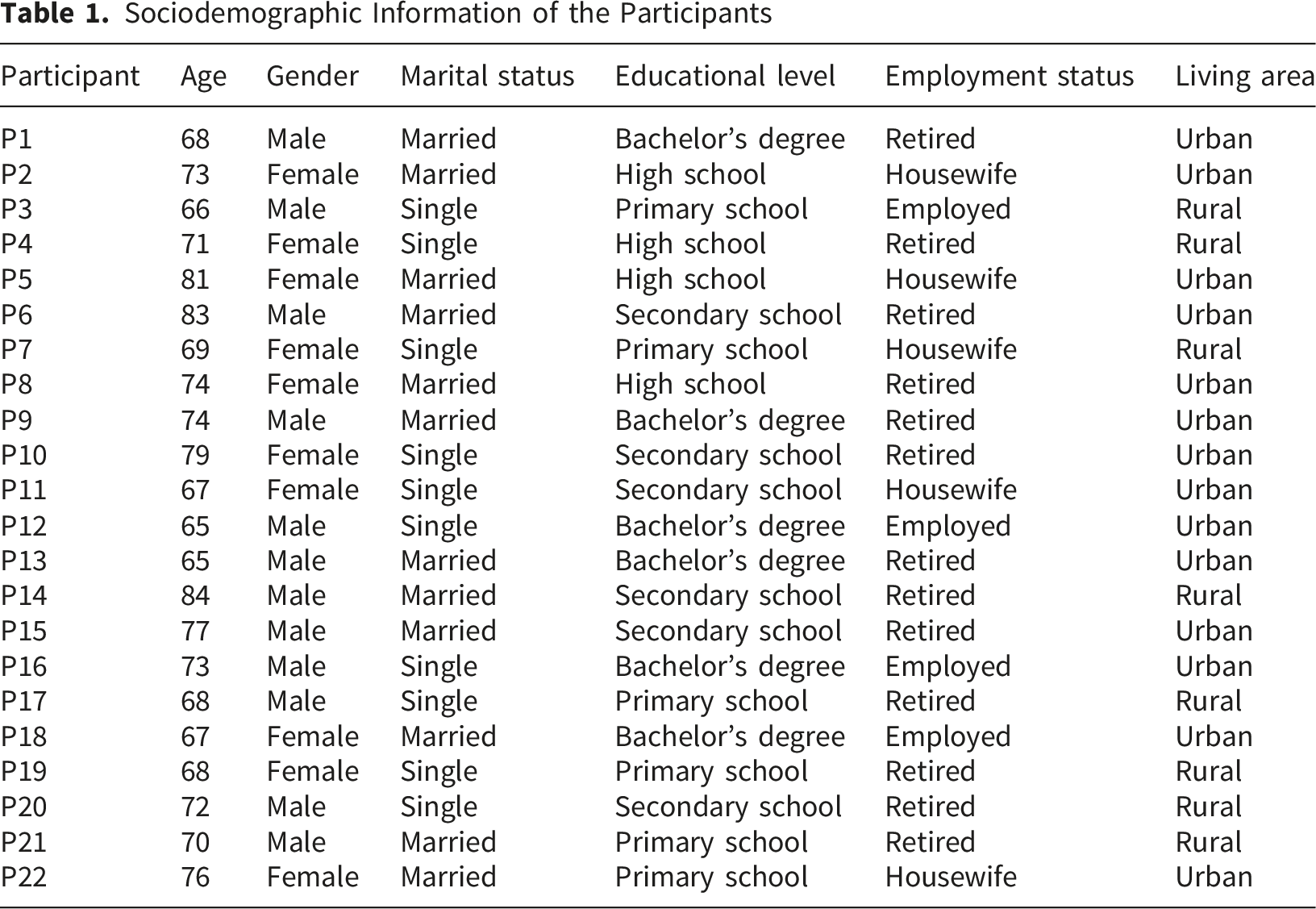
Sociodemographic Information of the Participants
Data Collection Tool
The data were collected using a semi-structured interview form developed by the researchers, consisting of seven main questions addressing the sub-questions of the study. During development, the relevant literature was reviewed and a matrix aligning the study purpose, research questions, and draft interview questions was constructed to ensure content relevance. Ten open-ended, non-directive draft questions were prepared and organized according to interview flow.
The draft form was reviewed by the research team and two psychological counsellors specializing in ageing. Based on their feedback, the guide was refined to eight main questions, with one alternative question and two probe questions added to the fourth and seventh items. A pilot interview was conducted with a 71-year-old retired male participant (excluded from the main sample) to assess clarity and duration. As no revisions were required, the interview form was finalized. The final guide included eight main questions, two alternative prompts, and probe questions. The complete interview guide is provided as a Supplementary File 1 to ensure transparency and replicability.
Data Collection Process
The interviews were conducted by GY, a member of the research team. The researcher holds a PhD degree in Guidance and Psychological Counseling and was working as a Research Assistant Dr. At the time of the study. The researcher’s research focuses on microaggressions toward older adults and the psychology of ageing.
All interviews were conducted face-to-face at participants’ homes upon request. No prior relationship existed between the interviewer and the participants before data collection, and only the inter-viewer and participant were present during each session. Field notes were taken concurrently to support and enrich the subsequent data analysis. Written informed consent was obtained prior to the interviews, and participants permitted audio recording. Interviews lasted approximately 23 minutes on average. One participant declined audio recording; in this case, detailed notes were taken and verified immediately after the interview. All recordings were transcribed verbatim and anonymized (P1, P2, etc.). Identifiable information was removed during transcription. Audio files and transcripts were stored on a password-protected device accessible only to the research team.
Data Analysis
Although themes were identified inductively, the analysis was guided by a phenomenological orientation focusing on how participants interpreted, emotionally experienced, and attributed meaning to digital engagement in later life. Rather than merely categorizing experiences, the analysis sought to understand the interconnected meanings, emotional responses, and adaptation processes embedded within participants’ narratives.
The analysis was conducted in five interconnected stages 22 : 1) familiarization with the data (multiple readings of transcripts), 2) open coding (generating initial codes inductively), 3) categorization (grouping codes into meaningful clusters), 4) theme development (refining categories into themes aligned with research questions), and 5) reporting (selecting illustrative quotations and linking findings to theory). All interviews were transcribed verbatim and anonymized (P1, P2, etc.). A total of 36 pages of qualitative data were compiled for analysis. Data saturation was monitored throughout the process and determined when no new codes or themes emerged after the last four interviews (P19–P22), which aligns with phenomenological research standards emphasizing depth.
To ensure rigor and minimize bias, coding was carried out independently by two researchers for the entire dataset. Both researchers performed multiple readings of all transcripts, generated initial codes separately, and then compared their coding outputs. Discrepancies were resolved through iterative discussions until full consensus was achieved, following best practices in qualitative reliability. 23 Upon completion of data collection, transcriptions were verified through member checking to ensure data accuracy. During theme generation, Miles and Huberman’s criteria for internal homogeneity (coherence among codes within a theme) and external heterogeneity (clear differentiation across themes) were applied. 24 For external validation, two experts in gerontology were consulted at the final stage of analysis to review the coding framework and thematic structure for accuracy and relevance. Their feedback was incorporated into the refinement of themes, thereby strengthening the credibility and confirmability of findings. 23 For reporting, illustrative quotations were selected to represent each theme, and the relationship between codes and themes was continuously checked to ensure conceptual clarity. Themes were structured according to the revised research questions and interpreted within the theoretical lenses adopted in this study.
Trustworthiness and Credibility
To ensure trustworthiness, the study adhered to Lincoln and Guba’s four criteria: credibility, transferability, dependability, and confirmability. 23 Credibility was achieved by involving three researchers throughout the process, conducting independent coding of the entire dataset, and obtaining external validation from two gerontology experts who reviewed the coding framework and thematic structure for accuracy. Transferability was supported through detailed descriptions of the research context and participant characteristics, with demographic diversity presented in Table 1, allowing readers to assess applicability to other settings. Dependability was ensured by maintaining an audit trail documenting analytic decisions and theme development. Confirmability was strengthened through reflexive journaling and consensus-building discussions among researchers to acknowledge and critically reflect on potential biases. The relationships between codes and themes were continuously examined to ensure internal consistency and clear differentiation among themes. Findings were presented with direct quotations from participants to enhance transparency and illustrate the interpretive process.
This study has followed the EQUATOR guideline, specifically the consolidated criteria for reporting qualitative research (COREQ) 25 checklist (Supplemental File 2).
The Role of Researchers
In phenomenological research, bracketing is essential to address researcher preconceptions. 26 Prior to data collection, the researchers documented their assumptions regarding older adults and digital engagement in reflexive journals. These included expectations about potential hesitation toward digital technologies and challenges in adaptation. Throughout the research process, these assumptions were critically examined and reflected upon. The researchers engaged in ongoing reflexive practices to remain aware of their influence on data interpretation, rather than attempting to eliminate it entirely. All stages of the study—from data collection to analysis and reporting—were conducted in accordance with ethical principles, with particular attention to transparency, reflexivity, and the integrity of the interpretive process.
Results
The findings are presented through five interrelated themes that capture how older adults conceptualize digital technologies, experience digital engagement, respond to its impacts on well-being, develop coping and adaptation strategies, and articulate their needs within broader processes of digital inclusion and exclusion.
Theme 1: Meanings Attributed to Digital
Participants attributed both positive and ambivalent meanings to digital technologies, framing them as tools of convenience, speed, communication, and independence, while also associating them with disruption and uncertainty.
Digital was often constructed as enabling independence and efficiency. Participants described digital technologies as facilitating an “easy life” (P4), and allowing tasks to be completed “rapidly” (P7), emphasizing their role in simplifying everyday activities. At the same time, digital was perceived as expanding social connectivity, enabling communication across geographical distances.
However, these meanings were not uniformly positive. Some participants described digital technologies as destabilizing established routines and transforming traditional ways of living, at times characterizing them as creating “chaos” (P9).
These contrasting meanings indicate that digital technologies were not experienced merely as technical tools but as socially and emotionally loaded phenomena shaping participants’ perceptions of autonomy, participation, and adaptation to contemporary life. Participants who associated digital technologies with convenience, communication, and independence appeared more willing to engage with digital environments, whereas those who perceived digitalization as disruptive or chaotic expressed greater hesitation and emotional distancing. In this sense, meanings attributed to digital technologies functioned not only as personal interpretations but also as mechanisms influencing patterns of engagement and exclusion.
Theme 2: Digital Experiences: Facilitators and Barriers
Participants’ digital experiences were characterized by a dynamic interplay between facilitating and challenging conditions, shaped by access to resources, prior knowledge, and social environments.
Facilitating experiences included “maintaining social connections” (P3), “managing daily tasks” (P1), and “supporting health-related practices” (P20). Participants frequently described using digital tools for “communication” (P17), “online appointments” (P14), and “accessing health information” (P6), highlighting the role of digital engagement in everyday functioning and health management. These facilitating experiences suggest that digital technologies were often perceived as practical resources supporting autonomy, continuity in daily life, and participation in increasingly digitalized service environments. In particular, participants associated successful digital engagement with greater independence in managing health-related and social responsibilities.For example, one participant explained how digital technologies supported health-related practices: …the biggest challenge for us, the older adults, is health issues. We often use digital when scheduling online appointments, setting medication reminders, and following exercises and nutrition information from videos. This allows us to manage circumstances related to our health more easily. (P9)
This illustrates how digital technologies can extend older adults’ capacity for self-management and independence, particularly in relation to healthcare access. At the same time, participants reported multiple barriers, including limited technological knowledge, economic constraints, and experiences of ageism. Some described “having access to devices but lacking the skills to use them effectively” (P16), while others emphasized “financial limitations” (P2) or “discouraging social attitudes” (P20). Participants’ accounts further revealed that these barriers were not experienced as isolated technical difficulties but as interconnected structural and emotional challenges influencing confidence, participation, and access to digitalized services. Experiences of limited competence, financial restriction, and discouraging social attitudes often reinforced feelings of inadequacy and hesitancy toward digital engagement. These challenges reflect structural and social dimensions of the digital divide, shaping unequal opportunities for digital engagement.
Taken together, participants’ digital experiences reflected an ongoing negotiation between opportunities for inclusion and risks of exclusion. While supportive experiences strengthened autonomy and participation, challenging experiences frequently contributed to emotional distancing, dependence on others, and unequal access to digital resources and services.
Theme 3: Impacts of Digital Engagement on Well-Being
Importantly, participants’ digital experiences translated into distinct cognitive, behavioral, and emotional impacts that directly shaped their sense of well-being. Challenging experiences often resulted in “avoidance” (P4, P6), “dependence on others” (P7), and “reduced confidence” (P5), whereas positive experiences fostered “autonomy” (P22), “engagement” (P19), and “satisfaction” (P18). These findings suggest that digital engagement was experienced not merely as a technological activity but as a process closely connected to participants’ self-perceptions, relational autonomy, and emotional well-being.
Cognitively, participants developed self-perceptions of inadequacy, difference, or dependence, particularly when comparing themselves with younger generations. These perceptions often undermined their sense of competence and contributed to reduced confidence in navigating digital environments. As one participant reflected: “…The youth do these things very easily, but I can’t learn as fast; I guess our generation is different.” (P5). Similarly, another participant expressed a sense of limitation linked to age: “…Sometimes I feel like I will never learn how to use these devices; it is too late for people at my age.” (P2). Dependence on others also emerged as a key cognitive and relational outcome, affecting participants’ sense of autonomy: “…Everything has become digital, so I am dependent on my children…” (P7). These cognitive perceptions appeared to shape how participants positioned themselves within increasingly digitalized environments, influencing both their confidence and willingness to participate independently.
Behaviorally, these cognitive perceptions translated into different patterns of engagement, including avoidance, distancing, resistance, and help-seeking. For some participants, fear of making mistakes led to withdrawal from digital environments: “…I don’t want to get involved; anyway, I am afraid that I will get into trouble.” (P6). Others described deliberate distancing or resistance: “I keep away from digital stuffs… I try to keep distance away from them as much as possible.” (P4). At the same time, some participants adopted help-seeking behaviors as a way to cope with digital demands, relying on family members or close social networks: “I need to make a transaction at the bank… I ask my granddaughter to come and handle it.” (P8). This indicates that behavioral responses were closely intertwined with emotional and cognitive experiences, reflecting ongoing negotiations between autonomy, dependence, and adaptation.
Emotionally, digital engagement produced a wide spectrum of responses, including helplessness, disappointment, anger, fear, loneliness, and happiness. These emotional experiences were central to participants’ well-being and were closely tied to their sense of inclusion or exclusion within digital environments. For example, one participant described how digital difficulties led to feelings of helplessness: “Sometimes, when I wish to download an application, I find myself unable to do so without seeking assistance from someone, leaving me with a sense of helplessness.” (P1). Feelings of exclusion and loneliness were also evident: “It feels like everyone is just hanging out online while I am totally out of the loop. I am feeling pretty lonely right now.” (P6). In contrast, successful engagement with digital technologies generated positive emotional outcomes, reinforcing well-being and a sense of achievement: “I figured out how to do video calls… This totally makes me happy.” (P10). Positive emotional experiences appeared to strengthen participants’ confidence and motivation, increasing their willingness to remain engaged with digital environments.
Importantly, these emotional responses did not remain isolated experiences but functioned as mechanisms shaping subsequent behavior. Negative emotions such as fear, frustration, and perceived inadequacy often led to withdrawal, avoidance, and reduced engagement, thereby limiting opportunities for participation and reinforcing digital exclusion. Conversely, positive experiences fostered confidence, motivation, and a greater willingness to engage, supporting ongoing adaptation and inclusion.
Taken together, these findings indicate that digital engagement is closely intertwined with well-being, operating through interconnected cognitive, behavioral, and emotional processes. These processes shape not only how older adults interact with digital technologies but also how they experience autonomy, inclusion, and quality of life in increasingly digitalized contexts. Rather than functioning as isolated reactions, cognitive perceptions, emotional responses, and behavioral adaptations appeared to reinforce one another, creating cyclical patterns that either facilitated digital inclusion or contributed to ongoing exclusion.
Theme 4: Coping and Adaptation Strategies
Participants developed a range of strategies to navigate digital challenges, which can be understood as part of broader adaptation processes. These strategies reflected participants’ efforts not only to manage technological demands but also to preserve autonomy, maintain participation in everyday life, and reduce feelings of exclusion within increasingly digitalized environments. Self-directed strategies included “gradual learning” (P9), “trial-and-error” (P7), “establishing routines” (P3), and “using guidelines” (P14), reflecting efforts to maintain autonomy. Participants described learning step by step and experimenting with devices to understand their functions. Self-directed adaptation strategies often appeared to strengthen participants’ sense of competence and control, supporting more active engagement with digital technologies.
In contrast, support-seeking strategies involved relying on “family members” (P2), “social networks” (P3), or “formal training opportunities” (P22). Participants frequently sought assistance from children, neighbours, or professionals, and some attended structured training programs to improve their digital skills. These support mechanisms functioned not only as practical resources but also as relational forms of encouragement that facilitated continued participation in digital environments. One participant illustrated how multiple strategies, including formal training and practical application, were combined in everyday life: Last year, I attended a technology course organized by the municipality, where I learned how to use the internet. I am a farmer, and drones can spread seeds in the field. This is a great technology. A training session for this technology was held in another city, and I attended that as well. I then started using it in my own work, and some of my employees also received this training. (P22)
This example demonstrates how structured learning opportunities, when combined with personal motivation and contextual relevance, can support active adaptation and integration of digital technologies into daily practices. It also suggests that adaptation was more likely when digital technologies were perceived as meaningful, applicable, and connected to participants’ existing social and occupational roles.
These strategies played a crucial role in shaping whether participants adapted to digital environments or remained excluded. While self-directed learning often strengthened confidence and independence, reliance on external support sometimes reinforced dependency, particularly when access to support was limited. Taken together, coping and adaptation strategies appeared to function as dynamic processes through which participants negotiated autonomy, dependence, inclusion, and participation in everyday digital life.
Theme 5: Needs in Digital Processes
Participants identified a range of needs emerging from their digital experiences, reflecting educational, technical, and social dimensions. These needs were closely linked to the challenges and impacts described in earlier themes and highlight the conditions required for more inclusive digital engagement. Participants’ accounts suggested that these needs extended beyond individual skill deficits and reflected broader expectations regarding accessibility, support, and meaningful participation in digitalized environments.
Educational needs focused on practical and accessible digital literacy training, particularly oriented toward everyday use. Participants emphasized the importance of learning “how” and “why” to use digital technologies (P1), as well as developing practical skills applicable to daily life (P8). Concerns about internet safety were also prominent, with participants highlighting the need for greater awareness and protection against risks such as fraud and misinformation (P9). Educational support appeared particularly important in reducing fear, strengthening confidence, and enabling more independent engagement with digital systems.
Technical needs included simplified device interfaces, clearer instructions, and more user-friendly systems. Participants frequently referred to difficulties in navigating complex technologies, suggesting that existing designs do not adequately accommodate age-related changes or learning processes. These findings indicate that digital exclusion was associated not only with users’ competencies but also with the accessibility and usability of technological systems themselves.
Social needs were equally prominent, including emotional support, encouragement, and opportunities for intergenerational interaction. Participants highlighted that learning digital skills is not solely a technical process but also a social one, requiring trust and supportive environments. This was reflected in participants’ emphasis on the need for “encouragement” and “guidance” (P7). Supportive social relationships appeared to function as important facilitators of adaptation, helping participants remain engaged despite feelings of uncertainty or inadequacy.
Taken together, these needs point not only to individual-level challenges but also to broader structural gaps in digital inclusion efforts. Addressing these needs requires integrated approaches that combine education, user-centered technological design, and socially supportive learning environments. Overall, participants’ needs reflected the interconnected nature of digital inclusion, suggesting that meaningful participation in digital life depends on the interaction between individual capacities, accessible technologies, and supportive social contexts.
Pattern of Digital Experiences
Findings suggest that digital engagement operates as an interconnected process rather than a set of isolated experiences. Figure 1 shows the themes related to digital experiences based on the participants’ responses and the correlations between the sub-themes and codes, if any, with a holistic approach. Pattern of themes, sub-themes, and codes that make up the digital experiences of older adults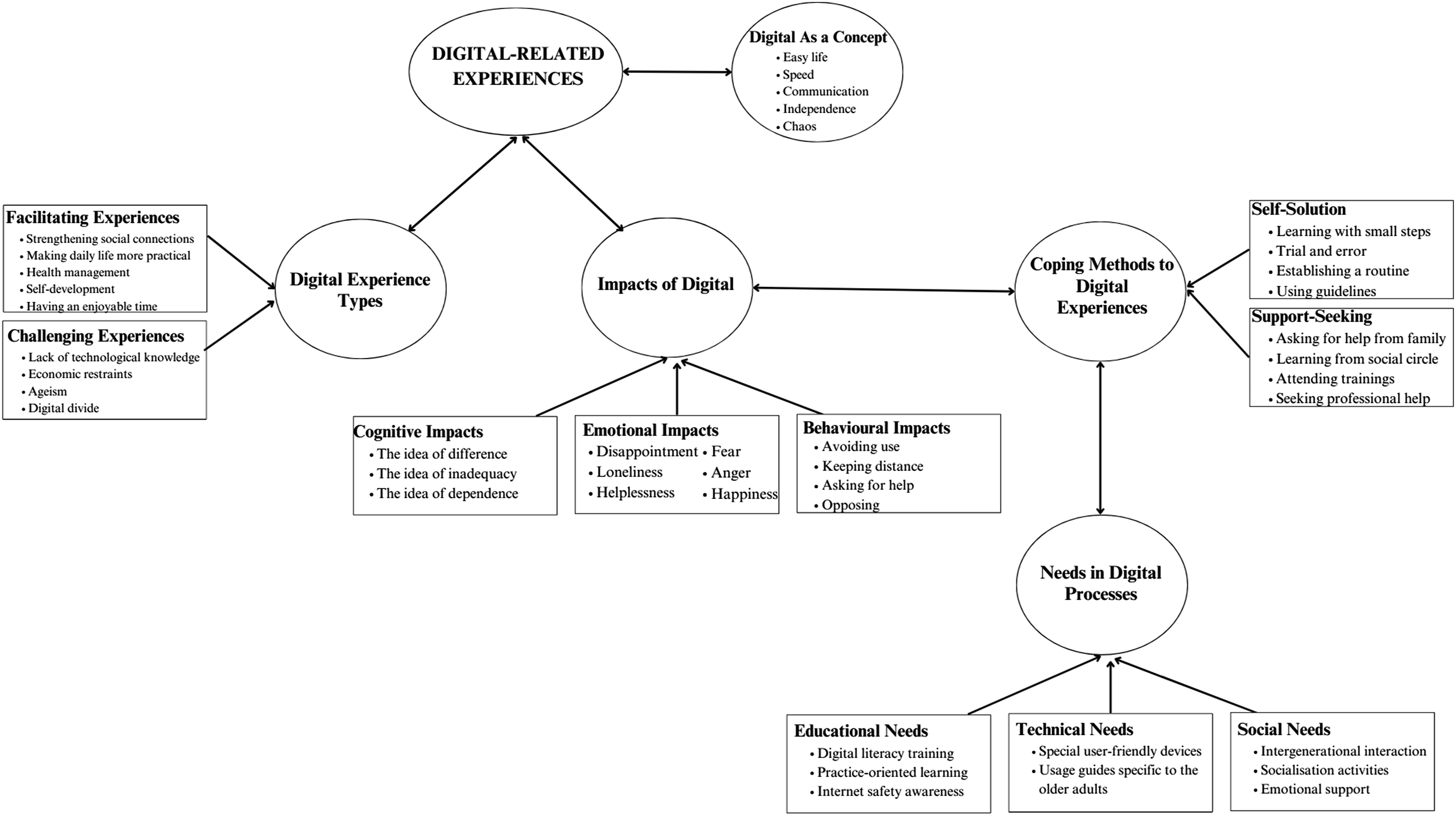
When Figure 1, which illustrates the pattern of older adults’ perceptions of their digital and digital-related experiences, was examined, it became evident that participants reported two main types of experiences: facilitating and challenging. These variations were closely linked to the meanings they attributed to the concept of digital, such as ease, speed, or chaos. Depending on these experiences, participants were affected in multiple ways—behaviorally, cognitively, and emotionally—resulting in reactions like avoidance, feelings of inadequacy, or even happiness. During the process, older adults developed different coping strategies, ranging from self-directed problem-solving to seeking social support, while expressing diverse needs in educational, technical, and social domains. As shown in Figure 1, participants’ conceptualizations of digital influenced the nature of their experiences, which in turn shaped cognitive, behavioral, and emotional impacts. These impacts informed coping strategies and generated specific educational, technical, and social needs, demonstrating an interlinked process rather than isolated themes.
Discussion
This study revealed that participants described digital technology as providing convenience across multiple domains of daily life, including maintaining social connections, managing health and daily affairs independently, and engaging in meaningful leisure activities. These facilitating aspects align with the WHO’s Healthy Ageing framework emphasizing functional ability as a core component of well-being. 3 Consistent with previous research,27,28 participants actively utilized digital tools to strengthen social ties and support self-development. These findings further suggest that digital engagement was experienced not only as a functional resource but also as a means of sustaining autonomy, participation, and continuity in everyday life.
A more nuanced interpretation of these findings emerges when differentiating between types and levels of digital technologies. Participants primarily referred to everyday, user-level tools such as smartphones, communication applications, and online service platforms (e.g., appointment systems, banking interfaces). These tools were associated with facilitating daily functioning and supporting health-related self-management. In contrast, more complex or system-level digital infrastructures—such as multi-step e-government platforms or integrated e-health systems—were often experienced as challenging. Difficulties extended beyond access to issues of navigation, comprehension, and trust. This distinction highlights that the digital divide operates differently across types of technologies, with simpler tools enabling autonomy, while more complex systems may reinforce dependence and exclusion.13,29 Importantly, these findings indicate that digital exclusion is shaped not only by access to technologies but also by the usability, perceived complexity, and emotional accessibility of digital systems.
Despite these facilitating aspects, participants encountered barriers across multiple levels of the digital divide. Economic constraints reflected first-level divides, limited digital literacy indicated second-level divides, and reduced confidence in achieving meaningful outcomes represented third-level divides. 29 These findings are consistent with prior research demonstrating that access alone is insufficient to ensure meaningful digital participation.10,30 The findings also demonstrate that structural inequalities and subjective experiences interacted dynamically, influencing not only technological participation but also participants’ confidence, autonomy, and willingness to remain engaged with digital environments.
Beyond confirming prior work, this study contributes by revealing how structural barriers interact with emotional responses and internalized ageism to shape patterns of digital engagement. The findings indicate that digital exclusion is not solely a matter of access or skills but is also mediated by emotional and identity-related processes. In particular, internalized ageism emerged as a key mechanism influencing engagement. Participants who perceived themselves as “too old” or “incapable” were more likely to withdraw from digital environments, even when access was available. Emotional responses such as fear, frustration, and inadequacy functioned as mechanisms translating structural barriers into behavioral outcomes, including avoidance and dependence. This integrated perspective extends existing literature by demonstrating how emotional and cognitive processes mediate digital inclusion in later life.14,31 In this sense, digital engagement appeared to operate as a cyclical process in which repeated negative experiences reinforced emotional withdrawal and dependence, whereas supportive and successful experiences strengthened confidence, adaptation, and continued participation.
Situating these findings within the Turkish context provides additional insight. Türkiye has undergone rapid digitalization in public and health services, including centralized e-government platforms and digital appointment systems (e.g., MHRS). While these developments increase efficiency, they also shift access toward digital channels, potentially disadvantaging older adults with limited digital literacy. Compared to Western European contexts, where institutional digital support systems are more established, participants in this study relied more heavily on informal networks such as family members and community-based resources. This reflects both cultural norms emphasizing interdependence and structural gaps in formal support mechanisms.32,33 These findings further suggest that adaptation to digital systems is shaped not only by individual competencies but also by the availability of supportive relational and institutional environments.
Ageism emerged as a central barrier, consistent with prior studies.34,35 However, this study extends existing literature by demonstrating how ageist perceptions are internalized and directly shape self-efficacy, engagement, and well-being outcomes. The findings therefore indicate that ageism functions not only as a social attitude but also as an internalized psychological process influencing participation, confidence, and digital adaptation in later life.
Digital experiences were closely linked to well-being through cognitive, behavioral, and emotional processes. Consistent with previous research,8,36 participants reported negative emotional outcomes such as loneliness, fear, and helplessness. At the same time, positive experiences generated confidence and a sense of achievement, highlighting the dual role of digital engagement in shaping well-being. These findings can also be interpreted through a socio-gerontechnology perspective, which conceptualizes digital engagement as a relational and context-dependent process. From this perspective, technology use is co-constructed through interactions between individuals, social networks, and institutional structures. Participants’ reliance on family support, their engagement with community-based training, and their experiences of ageism illustrate how digital practices are socially embedded. This perspective suggests that promoting digital inclusion requires not only improving individual skills but also addressing the broader social and institutional conditions that shape engagement.14,37 Taken together, the findings suggest that digital engagement in later life operates as a dynamic and relational process shaped by the interaction of structural conditions, emotional responses, social support, and self-perceptions of competence. Facilitating experiences appeared to strengthen confidence, autonomy, and willingness to participate in digital environments, whereas repeated negative experiences often reinforced fear, dependence, and withdrawal. In this sense, digital exclusion emerged not simply as a lack of access or skills, but as an evolving process produced through the interplay of technological, emotional, and social factors. Understanding digital participation through this integrated perspective may help explain why access alone is insufficient for achieving meaningful and sustainable digital inclusion among older adults.
Digital Implications for Practice and Policy
Digital literacy emerges not only as a technical skill but as a key determinant of participation, autonomy, and well-being in later life. The findings suggest that digital inclusion initiatives should move beyond generic skill-building models and instead prioritize context-sensitive, practice-oriented approaches tailored to older adults’ everyday needs. In particular, training programs should focus on meaningful use-cases such as health management, digital communication, and financial transactions, thereby linking digital competencies directly to daily functioning and quality of life. 38
Importantly, the findings indicate that healthcare systems are increasingly dependent on digital infrastructures, positioning digital literacy as a prerequisite for accessing services. Participants’ reliance on online appointment systems, medication tracking, and health-related information platforms demonstrates that limited digital engagement may translate directly into healthcare inequalities. This suggests that digital exclusion should be considered a public health issue rather than merely a technological gap. Accordingly, health institutions should adopt inclusive service models, including assisted digital services, hybrid access systems, and guided support mechanisms, to ensure equitable access for older adults.14,39
Beyond formal service systems, intergenerational and community-based approaches emerge as critical mechanisms for sustainable digital inclusion. The findings highlight that digital learning is not solely an individual cognitive process but is socially embedded, relying on trust, encouragement, and relational support. Intergenerational learning initiatives and community-based programs have the potential to simultaneously enhance digital competence and reduce social isolation, while also challenging ageist stereotypes.11,40
From a policy perspective, the results point to the need for multi-level interventions involving healthcare systems, municipalities, community organizations, and technology developers. Municipalities are particularly well-positioned to deliver accessible and context-specific training programs, while also strengthening local digital infrastructures. At the same time, technology developers and service providers should adopt age-friendly design principles that account for cognitive, sensory, and usability needs associated with ageing.
Finally, addressing digital inequalities requires moving beyond access-based solutions toward integrated strategies that simultaneously target structural barriers, social attitudes, and emotional dimensions of digital engagement. Without addressing these interconnected factors, policy interventions risk reinforcing dependency rather than fostering autonomy. Aligning these efforts with broader frameworks such as the WHO’s Decade of Healthy Ageing (2021–2030) will be essential for positioning digital inclusion as a core component of health, social participation, and well-being in later life. 3
Limitations
This study has several limitations. First, the sample reflects a specific socio-cultural and geographical context, which may limit the transferability of the findings. Participants were primarily recruited through community networks, which may introduce selection bias, particularly toward individuals with stronger social connections. Second, while the findings include insights related to health-related digital practices, the study was not exclusively focused on health. Rather, it examined digital engagement as a broader everyday phenomenon encompassing social participation, daily routines, and practical life management. As such, health-related interpretations should be understood within this wider context of everyday digital use. Third, the study did not systematically differentiate between types and complexity levels of digital technologies, which may influence the depth of analysis regarding digital tool use. Future research should examine domain-specific digital engagement (e.g., healthcare, finance, education) in greater detail.
Conclusions
Digital engagement among older adults is a multifaceted process shaped by structural conditions, emotional responses, and social dynamics. While digital technologies support autonomy, social connection, and health management, they also introduce barriers related to digital literacy, economic access, and ageism. Emotional responses such as fear, frustration, and confidence function as key mechanisms influencing engagement or withdrawal. Digital inclusion should therefore be understood not only as a technical issue but also as a psychological and social process. Promoting inclusive digital ageing requires integrated approaches combining digital literacy training, age-friendly design, and supportive social environments. Intergenerational and community-based initiatives can enhance both competence and confidence. Positioning digital inclusion as a determinant of well-being is essential for reducing inequalities and supporting active ageing in increasingly digitalized societies.
Supplemental Material
Supplemental Material - “Easy Life or Chaos?”: Older Adults’ Digital Experiences, Well-Being, and Patterns of Engagement: A Qualitative Study
Supplemental Material for “Easy Life or Chaos?”: Older Adults’ Digital Experiences, Well-Being, and Patterns of Engagement: A Qualitative Study by Hanife Akgül, Gülşah Yıldırım and Mustafa Mayda in INQUIRY: The Journal of Health Care Organization, Provision, and Financing.
Supplemental Material
Supplemental Material - “Easy Life or Chaos?”: Older Adults’ Digital Experiences, Well-Being, and Patterns of Engagement: A Qualitative Study
Supplemental Material for “Easy Life or Chaos?”: Older Adults’ Digital Experiences, Well-Being, and Patterns of Engagement: A Qualitative Study by Hanife Akgül, Gülşah Yıldırım and Mustafa Mayda in INQUIRY: The Journal of Health Care Organization, Provision, and Financing.
Footnotes
Acknowledgements
The authors acknowledge the participants for dedicating their time and sharing their experiences for others to learn from.

Ethical Considerations
Ethical approval for the study was granted by Çanakkale Onsekiz Mart University. The reference number is 17/68. (Date: 05.12.2024).
Consent to Participate
Written informed consent was obtained from all participants prior to participation in the study.
Author contributions
All authors contributed equally to the study process.
Funding
The authors received no financial support for the research, authorship, and/or publication of this article.
Declaration of conflicting interests
The authors declared no potential conflicts of interest with respect to the research, authorship, and/or publication of this article.
Data Availability Statement
The participants in this study did not provide written consent for their data to be shared publicly; supporting data are therefore unavailable.
Supplemental Material
Supplemental material for this article is available online.
References
Supplementary Material
Please find the following supplemental material available below.
For Open Access articles published under a Creative Commons License, all supplemental material carries the same license as the article it is associated with.
For non-Open Access articles published, all supplemental material carries a non-exclusive license, and permission requests for re-use of supplemental material or any part of supplemental material shall be sent directly to the copyright owner as specified in the copyright notice associated with the article.
