






Abstract
Introduction
Most studies of nursing interns in Saudi Arabia have focused on students’ perspectives, often neglecting the experiences of supervisors, who play a critical role in guiding and supporting interns. To address this gap, the present study explored the motivations, challenges, and strategies related to nursing student supervision in hospital settings.
Methods
This qualitative descriptive study utilized in-depth, semi-structured interviews with ten supervisors working in Taif Health Cluster hospitals in Saudi Arabia to explore the experiences of nursing student supervisors during internships. Thematic analysis was employed to identify core themes and insights.
Results
Three overarching themes were identified: motivations for supervisory roles, factors influencing performance, and strategies to improve supervisory quality. Through the lens of self-determination theory, these findings suggest that supporting supervisors’ autonomy, competence, and relatedness can strengthen motivation and improve the quality of internship supervision.
Conclusion
Strengthening university–hospital collaboration, revising training plans, and ensuring sufficient facilities and incentives are critical to sustaining supervisors’ motivation and effectiveness. Addressing these challenges can enhance supervision quality and prepare competent, confident, and committed nursing graduates.
Keywords
Introduction
Nursing internship programs are valuable for bridging the gap between theory and practice, enhancing clinical competency, and preparing students for professional roles.1,2 Furthermore, they improve students’ self-confidence, independence, and readiness for practice. 3 However, challenges exist, including insufficient support, workload issues, and transition shock. 4 In addition, the internship experience can be improved by addressing issues such as pre-internship preparation, support with caseloads, and understanding care rationale. 3 Despite these challenges, internships are considered effective at facilitating the socialization process, improving clinical skills, and strengthening professional commitment. 1 To optimize the internship experience, it is recommended that these challenges be addressed through better planning, support systems, and curriculum design.1,4 Continuous assessment of skills and clinical competencies is also essential to ensure effective professional roles and enhance patient safety.
The effectiveness of internship programs is closely tied to the presence of skilled clinical supervisors who serve not only as educators but also as mentors and role models. Clinical supervision plays a crucial role in nursing education and practice, impacting both individual and organizational outcomes. The findings of a mixed-methods systematic review conducted by Martin et al showed that healthcare professionals believed that adequate clinical supervision could mitigate the risk of burnout, facilitate staff retention, and improve the work environment. 5 In contrast, inadequate clinical supervision can lead to stress and burnout. Regular, scheduled supervision can also significantly improve nurse performance, 6 reduce burnout, and enhance staff retention. 5 Proper supervision also supports the development of nursing students’ professional identities 7 and fosters a positive learning environment. 8 However, most supervisors lack adequate preparation for their role. 9 Successful clinical supervision requires structured, committed approaches. 10 Regular, scheduled supervision activities can significantly improve nurse performance. 6 These findings underscore the importance of investing in high-quality supervision practices in healthcare organizations.
In Saudi Arabia, nursing students undertake their internships through supervised clinical practices designed to develop competencies in bedside care, strengthen practical skills, and meet professional standards. The Saudi Commission for Health Specialties (SCFHS) plays a pivotal role in overseeing this process, ensuring that students effectively apply their knowledge in clinical settings and are adequately prepared for the demands of a rapidly evolving healthcare environment. 11 Within nursing internship programs, the evaluation of clinical performance is a key element in ensuring that students transition effectively from learners to competent practitioners. To improve internship programs, healthcare organizations should consider implementing continuous educational and mentorship programs, providing clear job descriptions, and fostering better collaboration between hospitals and colleges. 12 Supervisors play a crucial role in guiding students to bridge the gap between theory and practice. While several studies have explored the internship program from the nurse student perspective,11,13-20 no study has yet explored the perspectives and experiences of nursing supervisors in Saudi Arabian hospitals. What remains unknown is how supervisors themselves experience, navigate, and make sense of their role within a Saudi healthcare system undergoing rapid transformation through Vision 2030 reforms — where Saudization targets and evolving workforce demands place additional pressures on clinical educators. The organizational structure of Saudi hospitals, hierarchical clinical roles, and cultural expectations around mentorship and professional authority all shape supervision in ways that have yet to be empirically explored from the supervisors’ perspective. Addressing this gap is conceptually significant: understanding supervisors’ motivations and barriers is essential for designing effective support systems and improving the quality of nursing internship programs in this context. Therefore, this study aims to explore the experiences of nursing internship supervisors in Taif City hospitals, focusing on their motivations, challenges, and views on improving supervision quality.
Methods
Study Design
This study employed a qualitative descriptive design, using in-depth interviews to explore the experiences of nursing intern supervisors during their internships. This approach was chosen because qualitative research is particularly well-suited to capturing individual experiences, thereby offering rich insights into participants’ perspectives and lived realities. This study was conducted and reported in accordance with the Consolidated Criteria for Reporting Qualitative Research (COREQ) guidelines. 19
Setting and Sample
The study was conducted within the Taif Health Cluster in Saudi Arabia, which encompasses four large hospitals, each of which serves distinct healthcare needs within the region. A purposive sampling technique was employed to select the participants. All nurses supervising internship students in hospitals within the Taif Health Cluster were invited to participate. Participants were approached directly by (JA and FA) through in-person contact at each hospital within the Taif Health Cluster. Those who expressed willingness to participate were then provided with full study information, after which an interview time and location were arranged at their convenience. All eligible supervisors who were approached agreed to participate, and no eligible participant declined. The inclusion criteria required participants to be nurses who had been supervising internship nursing students for more than six months and were willing to participate. Additionally, participants were required to be proficient in Arabic and/or English to facilitate effective communication during the interviews. Eligible participants could include both Saudi and non-Saudi nationals with diverse professional backgrounds, qualifications, and levels of seniority. Exclusion criteria included nurses who were not assigned a supervisory role for internship students at the time of the study, those with fewer than 6 months of supervisory experience, and those unable to communicate in Arabic or English.
Data Collection
Data were collected using in-depth semi-structured interviews from May 23, 2023, to September 2023. All interviews were conducted by two researchers (JA and FA), both of whom have experience in qualitative interviewing and analysis. Participants were contacted through visits at their workplace, and those who agreed to take part were scheduled for interviews at a time and place convenient for them. Data for this study were collected through face-to-face interviews with participants in the workplace setting. Prior to data collection, the interview guide was pilot-tested with two nursing supervisors who were not included in the main study; minor refinements to the wording of questions were made to improve clarity. They were also assured that their participation was voluntary and that confidentiality would be strictly maintained throughout the study.
Each interview lasted an average of 30–45 minutes. Participants were also given the option of withdrawing from the study at any time if they chose to do so. The interviews included open-ended questions designed to explore the experiences and perspectives of the nursing student supervisors, such as “What are the difficulties faced during the internship?”, “What motivates you to work with internship students?”, and “What are your needs as a trainer of internship students?” These initial questions served as a starting point to encourage participants to share their insights and experiences in detail. As the interviews progressed, follow-up questions were posed to investigate specific topics more deeply or clarify points raised by the participants.
Data Analysis
A thematic analysis was employed to analyze the collected data. The audio recordings of the interviews were transcribed verbatim, and thematic analysis was conducted following the framework of Braun and Clarke. 20 Data saturation was achieved when no new themes or insights emerged from the transcripts. Saturation was assessed iteratively: after each transcript was analyzed, the emerging codes were compared with those from preceding interviews, and data collection continued until two consecutive interviews yielded no new codes or themes. The analysis was conducted inductively, with codes and themes generated directly from participants’ accounts rather than being imposed by a pre-existing theoretical framework; Self-Determination Theory was subsequently applied as an interpretive lens to contextualize the findings. Two researchers independently coded all transcripts, and any disagreements were resolved through discussion and consensus. No qualitative data analysis software was used; analysis was performed manually using a structured coding matrix.
The analysis was guided by the study’s objectives and followed a systematic approach. First, the interview transcripts were read multiple times to allow the researchers to become familiar with the data. Initial codes representing key features of the participants’ responses were identified and then grouped and combined into candidate themes that reflected broader patterns within the data. Finally, the candidate themes were reviewed, refined, and clustered to generate the final themes and sub-themes, thus providing a comprehensive representation of the findings.
Trustworthiness
Rigor was established by applying the criteria of confirmability, credibility, dependability, and transferability. 21 To ensure confirmability, we employed bracketing and maintained a transparent audit trail documenting all research activities and analytical notes. Credibility was strengthened through peer debriefing, team discussions, and the review of data, codes, subthemes, and themes. Dependability was supported by involving multiple researchers in the data analysis process. Finally, transferability was enhanced by selecting participants with diverse demographic characteristics, thereby allowing the findings to apply to similar contexts. Ethical approval for this study was granted by the Institutional Review Board of Taif Health Cluster (Approval No.: [HAP-02-T-067]). Written informed consent was obtained from all participants prior to data collection. Participants were informed of their right to withdraw at any time without consequence.
Results
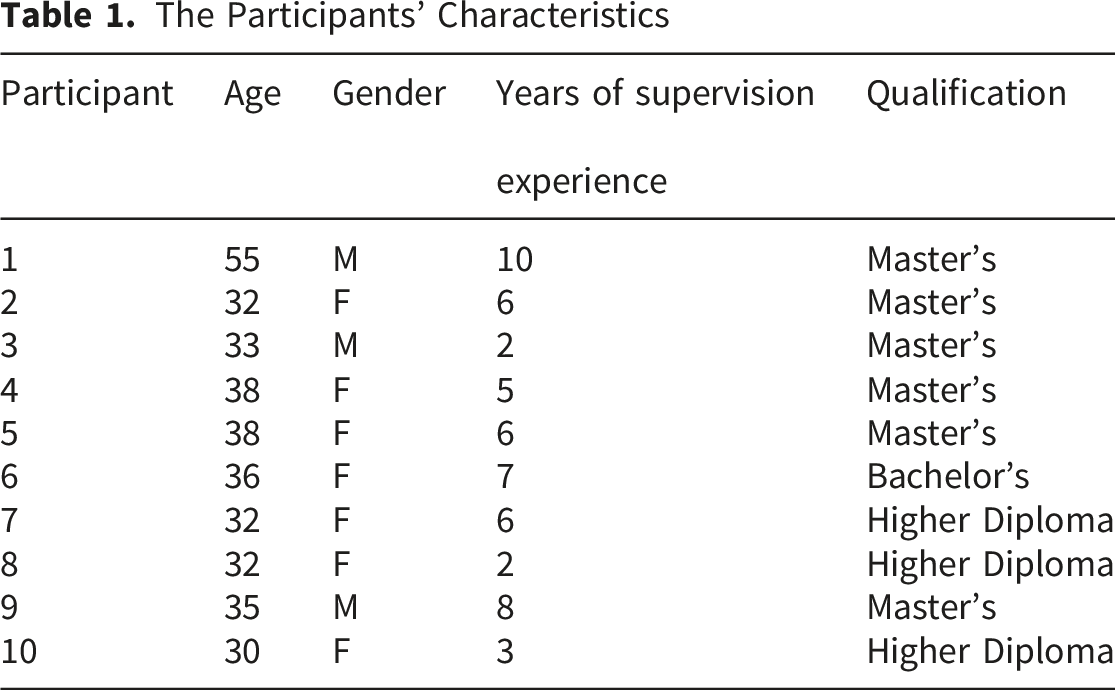
The Participants’ Characteristics
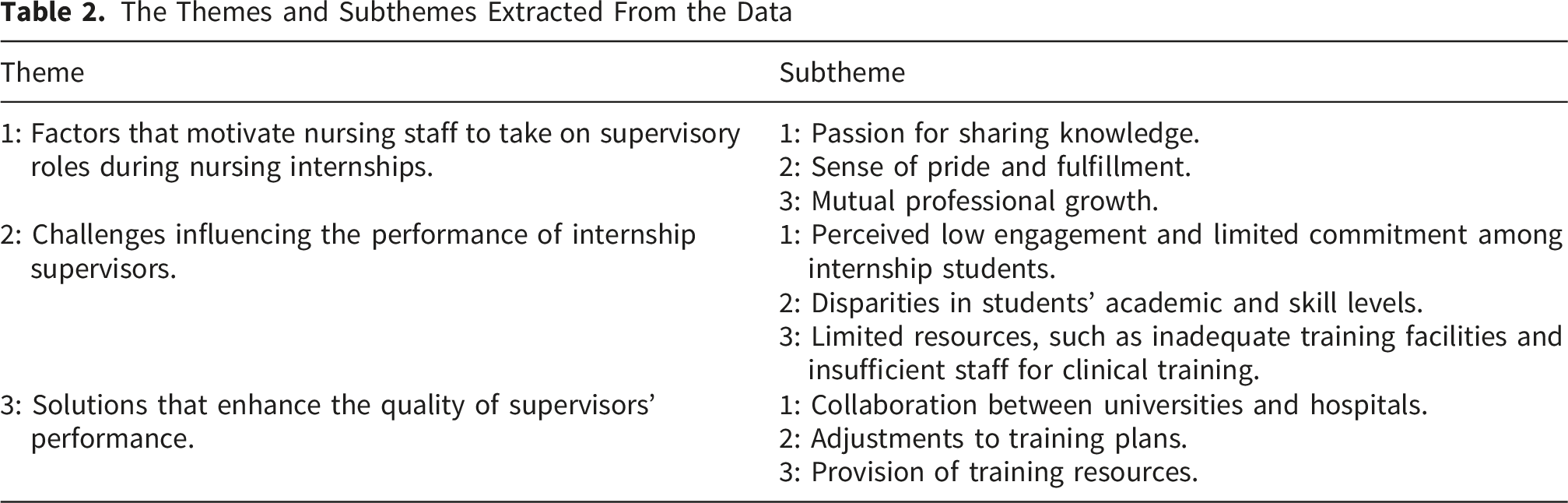
The Themes and Subthemes Extracted From the Data
Theme 1: Factors That Motivate Nursing Staff to Work as Supervisors for Nursing Internships
The participants identified several factors that motivated them to take on supervisory roles for nursing interns. These factors can be grouped into three main areas:
Subtheme 1: Passion for sharing Knowledge
Many participants expressed a deep passion for teaching and a strong desire to share their knowledge and skills with their students. They emphasized the satisfaction they derived from helping students understand clinical practices and grow professionally: I have a passion for education and sharing information and skills with others. If someone asks, I teach them immediately, help them, and sometimes sit with them for hours until they understand the information and can apply the skill correctly. (P2)
Subtheme 2: Sense of Pride and Fulfillment
Supervisors shared how mentoring students brought them pride, especially when they could identify students’ strengths and talents and thus align them with appropriate roles in their future careers. They also expressed pride in contributing to the building of a skilled workforce that seamlessly integrates into clinical settings: When training a group of nursing students, I feel a sense of appreciation and pride. It’s nice that, during our supervision, we can identify which students excel in areas like emergency care or the ICU. Later, when they become employees, we already know their strengths and where they fit best. (P5)
Subtheme 3: Mutual Professional Growth
The participants also highlighted how teaching internship students benefitted their own professional development. Engaging with students often led to learning new approaches and staying updated on current practices: Teaching students helps me learn about my specialty. Sometimes they share new information or approaches they have studied, which benefits me. This motivates me to continue learning and improving. (P10)
These findings highlight both intrinsic and extrinsic motivators for nursing supervisors. They were driven by their passion for teaching, the mutual benefits of knowledge exchange, and the collaborative support they received from their hospital teams, which fostered a positive learning environment for both supervisors and students.
Theme 2: Challenges Affecting the Performance of Internship Student Supervisors
This theme highlights the challenges the supervisors faced in training internship students. The challenges are categorized into four subthemes:
Subtheme 1: Perceived Low Engagement and Limited Commitment Among Internship Students
The supervisors highlighted that a lack of passion and commitment among internship students significantly hindered their ability to guide and mentor them effectively. They emphasized that students who viewed internships as merely a transitional phase rather than a crucial learning opportunity often exhibited poor engagement and lacked the drive necessary for skill development and professional growth. This behavior impacted the supervisors’ efforts to foster responsibility, punctuality, and adherence to work ethics in the students. One participant noted: Some students believe that internships are a rest period between study and employment. They do not appreciate the significance of this time and therefore lack enthusiasm. If they applied themselves during this stage, they would gain valuable experience. However, there are issues with their attendance, punctuality, and adherence to official working hours. (P6)
The supervisors also expressed frustration with the students’ reluctance to take responsibility and commit to professional standards, which diminished the effectiveness of supervision. As one participant observed: Most students do not want responsibility or commit to official work hours. I noticed that their lack of seriousness during the internship period had a negative or positive impact on their job performance at the beginning of their careers. (P8)
Another supervisor explained how this lack of focus created additional challenges in preparing students for high-demand clinical settings: Most students believe they are ready to work after completing their studies, but they need more focus and dedication to become proficient, especially in fields that require high efficiency. (P3)
The supervisors’ ability to provide meaningful guidance was therefore compromised when students failed to approach their internships with the necessary dedication, thereby limiting the potential benefits of the internship experience.
Subtheme 2: Differences in Students’ Academic Achievements and Clinical Competencies
The supervisors noted that, despite all students having completed a similar level of academic training, significant variations existed in their academic achievements and clinical competencies. Some students demonstrated strong theoretical knowledge but struggled with clinical skills, while others excelled in practical skills but lacked a solid understanding of underlying concepts. These disparities, coupled with variations in English proficiency, created challenges for the supervisors in providing effective guidance. The supervisors explained that they often needed to adjust their teaching methods to address these gaps, which added complexity and required additional time and effort. One participant highlighted the difficulty of addressing language barriers: One challenge we encounter in training is that students come with different levels of knowledge. I often use English to explain concepts. Re-explaining them in Arabic takes quite a bit of time and effort. (P2)
Another participant noted that some students struggle when learning certain skills: Some internship students might find certain skills a bit challenging when it comes to handling critical cases, so they really benefit from having the trainer review and help strengthen those skills. This can occasionally slow us down a bit when discussing other important topics, but it’s all part of the learning journey. (P3)
Yet another participant stressed the need to employ a variety of teaching methods: Many students prefer written materials (handouts) for studying. However, it’s important to learn to mix things up a bit! This can include reading, practicing, attending presentations, and exploring answers. This variety really helps in achieving a deeper understanding of the practice. (P10)
Subtheme 3: Limited Resources, Facilities, and staff shortages
Despite the availability of training spaces in hospitals, participants noted that these facilities are often inadequate for teaching and training: We need a space for lectures within the department. The department has a small room that is insufficient for all students, and using official hospital halls requires prior reservations, which are frequently unavailable. (P8) Providing adequate simulation labs is important for training in basic nursing skills, such as cardiac resuscitation and IV insertion. However, the current facilities are insufficient to meet these needs. (P1) University hospitals are better equipped with skill and simulation labs, providing a more interactive training environment compared to others. While there has been progress, it has not yet met our ambitions. (P3)
A shortage of nursing staff in hospitals often affects the quality of supervision and the time available for training students: The hospital occasionally experiences a shortage of nursing staff, causing the supervisor to prioritize patients over students. Moreover, the number of students often surpasses the hospital’s training capacity. (P4) Supervisors in ICUs are often occupied with patient care, resulting in minimal attention being given to training students. Students spend just two weeks in the ICU, which impacts their learning and confidence. (P2) The lack of full-time trainers presents a clear challenge. Supervisors often have additional tasks beyond training, which impacts the quality of the students’ clinical learning process. (P1)
Theme 3: Factors That Improve the Quality of Supervisors’ Performance
Participants highlighted several factors that could enhance the quality of supervision and training for internship students, including strengthening the collaboration between training centers in hospitals and nursing colleges, creating well-structured training schedules and incentive systems, and promoting the exchange of knowledge and resources between universities and training institutions.
Subtheme 1: Collaboration Between Universities and Hospitals
The participants noted strengthened cooperation between universities and hospitals, such as workshops and case discussions, as a critical factor in improving training outcomes: University doctors (academic staff) need to cooperate by attending workshops and meetings to discuss interns’ performance, express their viewpoints, and correct misinformation. This would help develop trainers and provide students with significant benefits, such as advanced courses or workshops for trainers. (P9)
Subtheme 2: Adjustments to Training Plans
Participants suggested revising training plans to ensure that students have sufficient time for practical learning. Some noted that the overlap between internship training and students’ preparation for the Saudi Commission for Health Specialties exam presented a challenge: The internship period at our hospital is the final stage of university learning. At the end of this period, students prepare for the Saudi Commission for Health Specialties exam and often wish to take a 10-day vacation. Therefore, the duration is insufficient for training and needs adjustment in coordination with the college. (P6)
Subtheme 3: Provision of Training Resources
An integrated training environment with access to updated resources, such as a digital library with educational materials, was seen as essential for improving both student and supervisor performance: Providing an integrated training environment—from a digital library to updated books and resources—greatly aids in developing practical skills. The stronger and more continuous the cooperation between the university and the hospital, the more effective and unique the students’ training will be. (P4)
Discussion
In its examination of the experiences of nursing internship supervisors, this study identified three overarching themes: (1) motivational factors for assuming supervisory roles, (2) barriers influencing supervisory performance, and (3) strategies for enhancing supervisory quality. Although a specific theoretical framework did not initially guide this study, the findings resonate strongly with self-determination theory (SDT), a well-established framework of human motivation that posits that the quality and sustainability of motivation depend on the fulfillment of three fundamental psychological needs: autonomy (the sense of volition and self-direction), competence (feeling effective and capable), and relatedness (experiencing supportive social connections).
22
(see Figure 1). Interpreted through this lens, the motivational factors expressed by the supervisors in our study—such as pride in teaching and mutual professional growth—reflect the satisfaction of autonomy and relatedness. In contrast, the reported challenges, including limited resources and unclear supervisory roles, indicate the potential frustration of competence. Application of Self-Determination Theory to Nursing Internship Supervision Note: This figure presents an interpretive synthesis of the study findings through the lens of Self-Determination Theory (SDT), applied post hoc following inductive analysis. It is intended as an illustrative framework and does not represent an analytically derived model or imply causal relationships between constructs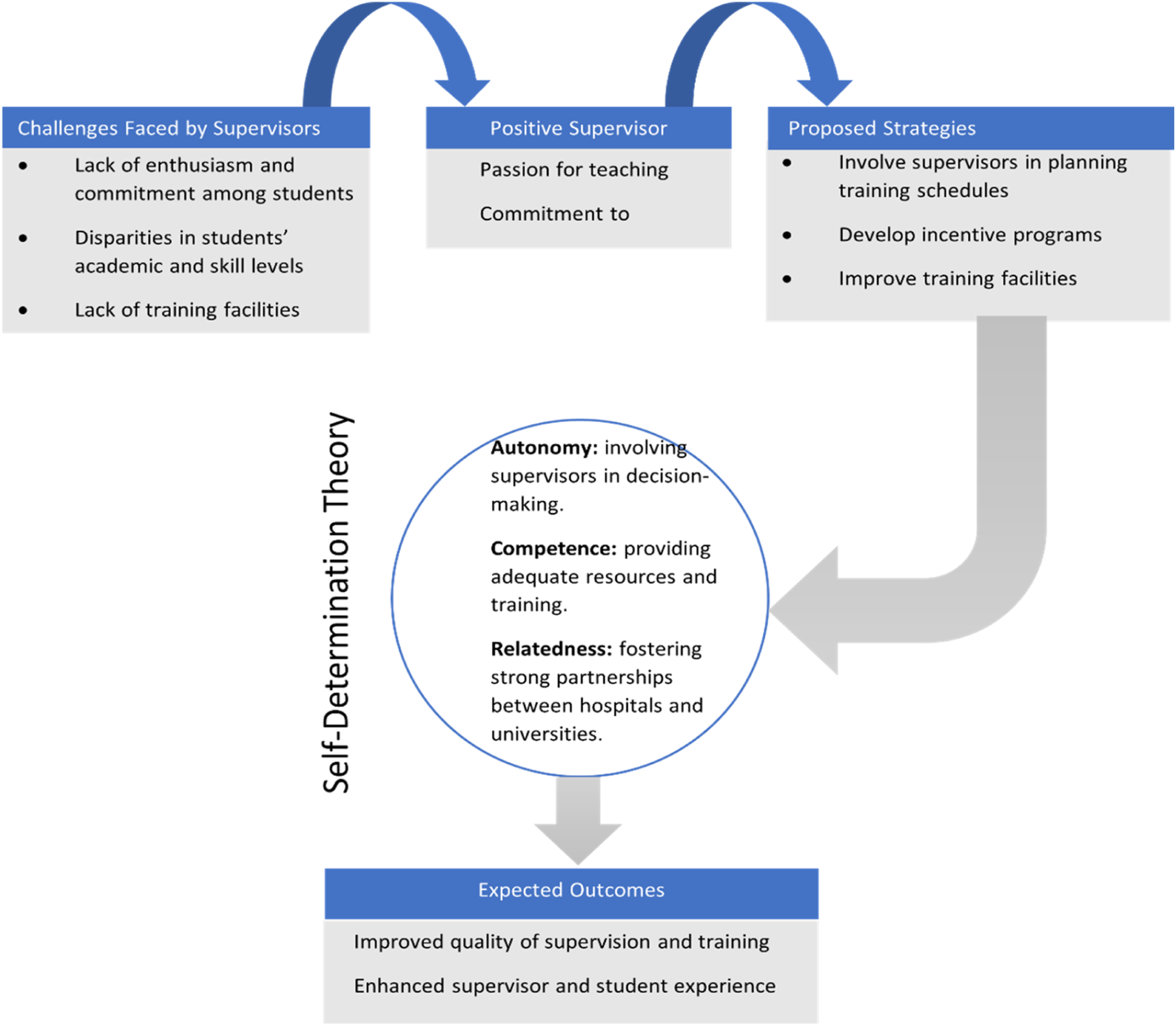
The supervisors in our study described intrinsic motivators such as the satisfaction of sharing knowledge with interns, pride in seeing students develop, and the opportunity for their own professional growth. This finding is consistent with previous research, the findings of which showed that clinical instructors’ intention to persevere in their role was positively associated with overall scores for motivation, perceived support, and job benefits, and negatively associated with amotivation.23,24
Interpreted through the lens of self-determination theory, these motivational factors reflect the satisfaction of the three core psychological needs. 22 Autonomy is demonstrated when supervisors choose to engage in teaching out of personal passion rather than obligation; competence is reflected in the pride and fulfillment they experience when students’ progress under their guidance; and relatedness is fostered through reciprocal professional growth and knowledge sharing, which create meaningful connections between supervisors, interns, and the broader clinical team. Collectively, these findings suggest that fulfilling these psychological needs sustains supervisors’ intrinsic motivation and strengthens the quality of internship supervision.
Despite strong intrinsic motivation, supervisors reported barriers such as inconsistent student commitment, differences in academic and clinical preparedness, and limited institutional resources. These challenges primarily undermined their perceived competence, which is a core psychological need in SDT. Inadequate preparation of interns and unclear competency assessment systems left supervisors feeling uncertain about their own effectiveness as educators. Shahzeydi et al similarly identified insufficient faculty presence, poor university–hospital collaboration, and overreliance on interns as supplementary staff as barriers to effective learning. 1 Alharbi and Alhosis also stressed that a lack of structured supervisory frameworks reduces consistency in clinical teaching. 12 International evidence echoes these concerns; for example, Lydon et al found that newly qualified nurses in Ireland perceived variations in supervision quality as a key factor affecting their transition. These parallels suggest that supervisory barriers are systemic and not limited to a single context, underscoring the importance of addressing structural and resource constraints. 3
This study also explored several challenges impacting the performance of internship supervisors, including perceived low engagement and limited commitment among students, variations in students’ academic and skill levels, limited training facilities, and a shortage of clinical staff. These findings align with previous studies highlighting the lack of adequate support systems, proper infrastructure, and well-structured internship facilities as significant barriers to successful internship programs.25,26 The lack of structural interventions in training centers, including limited facilities and unadjusted systems, impedes the performance of supervisors and diminishes the overall quality of nursing internships. Addressing these challenges is essential for fostering effective supervision and improving internship outcomes. Lower professional commitment is associated with increased stress and dissatisfaction and reduced engagement during internships, which can undermine the effectiveness of supervision. Conversely, satisfaction with course arrangements and internship experiences boosts commitment and, in turn, supervision quality.27,28 Motivation and self-efficacy are also crucial for fostering commitment. When students lack intrinsic motivation or feel pressured into internships, their commitment drops, which can undermine the effectiveness of supervision and the overall educational environment. 29
Nursing supervisors and faculty identify a lack of student commitment as a limitation in the supervision process, leading to reduced engagement, less effective learning, and increased difficulty in monitoring and supporting students during internships. 30 While higher academic achievement is associated with better clinical competence, the correlation is generally weak to moderate. This means that students with similar academic backgrounds can still differ substantially in clinical skills.31-33 A lack of real-life clinical scenarios, insufficient resources, and limited equipment hinder students’ ability to practice and master essential nursing skills, leading to less mature clinical abilities and gaps between theory and practice.34,35 A shortage of staff and supervisors means that students often perform routine ward activities instead of engaging in meaningful learning experiences, further restricting skill development.35,36
The supervisors in this study proposed targeted strategies to enhance supervision, including strengthening collaboration between universities and hospitals, developing flexible training plans, and ensuring adequate resources and faculty presence. These measures align with the three SDT needs: collaboration supports relatedness by fostering mutual trust between academic and clinical stakeholders; flexible training plans enhance autonomy by allowing supervisors to adapt learning activities to students’ competencies; and resource provision enhances competence by enabling supervisors to fulfill their educational responsibilities effectively. Alharbi and Alhosis emphasized the need for structured coordination between academic and clinical institutions, 12 while Shahzeydi et al recommended regular briefing meetings and clear supervisory guidelines to reduce student vulnerability. 1 Internationally, Olive et al emphasized that supportive research internship models succeed when mentorship is structured and adequately resourced, suggesting that similar strategies can be translated into clinical contexts. 37
The findings of this study align with recommendations from other authors who emphasize the importance of building supportive environments and positive relationships between training institutions and hospitals for the effective implementation of nursing internship programs. 38 Additionally, other inquiries into nursing internships have highlighted the importance of structured orientation programs and collaborations between faculty members and hospital staff to ensure program success. 39 However, the effectiveness of these structured programs relies heavily on the availability of educational and technological resources to support supervision, instruction, and the work environment.40-42 Improving resources and fostering collaboration between hospitals and nursing colleges can optimize the internship experience for both supervisors and students. Similar issues were discussed by Al-Moteri, who developed the Online Web-assessment Interface for Entrustment Decision (OWIED) as a digital platform to systematically track and validate nursing students’ competency. 43 While the current study identified gaps in resources, supervision, and collaboration, Al-Moteri’s work illustrates how structured digital systems can provide transparency, real-time monitoring, and standardized feedback to address such challenges. These findings underscore the need to combine motivational and organizational support with innovative digital tools such as OWIED to ensure high-quality supervision, consistent competency assessment, and smoother transitions from academic training to clinical practice.
Limitation
This study has several limitations that should be considered when interpreting its findings. First, the study was conducted within a specific geographical area, focusing solely on hospitals in the Taif Health Cluster, which may limit the generalizability of the results to other regions or healthcare systems. In terms of transferability, the findings are most applicable to contexts that share similar characteristics with the Taif Health Cluster: government-affiliated hospital settings in Saudi Arabia with SCFHS-regulated internship programs, supervisors holding comparable qualifications, and similar institutional structures. Contexts with substantially different healthcare systems, supervision models, or cultural norms regarding professional hierarchies may yield different findings. Second, the sample size, while sufficient to achieve data saturation, was relatively small and might not capture the full diversity of experiences among nursing supervisors across different healthcare settings. Third, the qualitative nature of the study, while valuable for exploring in-depth perspectives, is inherently subjective and may be influenced by the researchers’ interpretations during the data analysis.
Conclusions
This study identified both motivating and inhibiting factors that shape the performance of nursing internship supervisors. While supervisors were driven by intrinsic motivations such as a passion for sharing knowledge, professional pride, and growth opportunities, they faced considerable barriers, including a lack of passion and commitment among some internship students, notable disparities in academic and clinical competencies, and limited resources, such as inadequate training facilities and staff shortages. These challenges were perceived to hinder adequate supervision and could undermine the quality of clinical learning. To enhance supervisory performance, the findings underscore the need for stronger collaboration between universities and hospitals, flexible adjustments to training plans that reflect clinical realities, and improved provision of resources and support. Addressing these areas can help supervisors maintain their intrinsic motivation, as emphasized by self-determination theory, by reinforcing autonomy, competence, and relatedness. Ultimately, such targeted strategies will not only improve supervisory experience, but also foster the development of competent, confident, and professionally committed nursing graduates prepared for clinical practice.
Footnotes
Acknowledgments
The authors would like to acknowledge the Deanship of Graduate Studies and Scientific Research, Taif University for funding this work. We respectfully acknowledge the late Dr. Ahmad Alkarani, who served as the corresponding author and made significant contributions to the conception, design, and initial submission of this manuscript. Dr. Alkarani passed away shortly after the first draft of this manuscript. His intellectual leadership, vision, and dedication were foundational to the development of this work. We are honored to bring this research to publication in memory of Dr. Alkarani, whose legacy continues to inspire our scholarly efforts.

Ethical Considerations
Ethical approval for this study was obtained from the Ministry of Health under approval number 725, dated 15/08/2022. The IRB registration number with KACST, KSA, was HAP-02-T-067. Participant information sheets and informed consent forms were provided to all participants prior to their involvement in the study. Written informed consent was obtained from all participants prior to data collection.
Consent to Participate
Participants were informed of their right to withdraw at any time without consequence. During the interviews, the researchers ensured the confidentiality of all participants and adhered to ethical research standards.
Author Contributions
Conceptualization: FMA, FAA, JA, MA. Data curation: FMA, FAA, JA. Formal analysis: JA Funding acquisition: FMA. Investigation: FAA, JA. Methodology: FMA, FAA, JA, MA. Project administration: FMA, FAA, JA. Resources: FMA, FAA, JA, MA Software: JA, MA Supervision: FMA, FAA, JA. Validation: JA, MA. Visualization: FMA, FAA. JA Writing – original draft: JA& MA. Writing – review & editing: MA.
Funding
The authors disclosed receipt of the following financial support for the research, authorship, and/or publication of this article: This research was funded by Taif University, Saudi Arabia, Project No. (TU-DSPP-2024-282).
Declaration of Conflicting Interests
The authors declared no potential conflicts of interest with respect to the research, authorship, and/or publication of this article.
Data Availability Statement
Data are available on request from the authors.