







Abstract
Debriefing is a critical part of successfully implementing educational computer-based simulation games to maximize learning outcomes. Simulation game effectiveness, regarding exploring gaming characteristics and cognitive and affective impacts, has been thoroughly researched. However, debriefing is overlooked by some as time-consuming and unnecessary. Debriefing can be implemented as a process-based approach to increase experiential learning while facilitating educational simulation games. Minimal research has been conducted to identify approaches and components of successful debriefing communications and to gauge which aspects of the process are most impactful for learners. This article approaches planning debriefing interactions through a theoretical project management lens by applying a proactive, process-oriented, adaptive framework to develop a debriefing communications plan. Simulation games exhibit project characteristics, this framework is an appropriate and valuable approach to efficiently and effectively implement simulation games. Applying this theoretical framework with intentionality, integrating debriefing into educational simulation game facilitation, can contribute to favorable learning outcomes.
Introduction
The learning experience of playing computer-based simulation games, regardless of game characteristics, is complex. Games do not teach, on their own, in isolation. The process includes briefing before commencing gameplay, the action of playing the game, and debriefing after rounds and at the end of the game (Schwägele et al., 2021). Other key aspects of the learning process are required including instructional content, which is a predecessor for gameplay, and facilitator debriefing, which is has been named a successor to gameplay but also theorized as an ongoing process throughout simulation gaming, integral to learning outcome achievement as facilitators need fully understand the functionality, learning outcomes, and all possible scenarios within the simulation that learners may encounter before implementing in order to effectively facilitate the learning experience (Garris et al., 2002Schwägele et al., 2021). Debriefing is a critical component of the simulation game learning experience which has been called out as requiring further attention and research in the field (Crookall, 2010).
Due to the nature of the computer-based simulation game experience, educational games can be characterized as projects because they are temporary and unique endeavors with specific deliverables and objectives (Project Management Institute, 2017). Project management approaches today are adaptive and can be tailored to a multitude of types of projects (Turner & Cochrane, 1993). Therefore, a theoretical framework is provided set forth by Project Management Institute (PMI) for developing and applying a communications management plan and outlines the project management process (inputs, tools and techniques, and outputs), which can be applied to proactively develop a debriefing communications plan for optimizing the computer-based simulation game experience. A relational system map is set forth as a tool for educators to translate PM process aspects and traditional PM communications plan elements to develop debriefing communications plans. Additionally, considerations for developing and tailoring each component of the debriefing communications plan to specific simulation game experiences are outlined within the context of the communications management plan based upon common project management practices and author experiences in facilitating educational simulations. The project management concept of lessons learned is conveyed and guiding questions to enable the continuous improvement of debriefing are set forth. Proactively planning debriefing communications can offer a great deal of value for learners. Simulation games are utilized in varying contexts and disciplines. While the focus on this article is computer-based simulation games, there is a great deal of variation in the types of simulations and games that are utilized in learning. There is not a “one size fits all” approach but, rather a theoretical approach to viewing computer-based simulation games through a project management lens to proactively plan for various types of simulation games.
Background: Simulation Gaming and Game Attributes
Defining Computer-Based Educational Simulation Games
Due to the broad-spanning reach of the simulation and gaming discipline, there has been a great deal of variation over the last four decades regarding definitions of key terms in the field (Speed et al., 2015). The term “computer-based educational simulation game” is utilized to convey that simulations are completed on an electronic device with learning objectives. They have attributes of both of its sub-components, simulations and games, which are not necessarily mutually exclusive since they share similar attributes, such as interactivity, modeling of artificial constructs, algorithms for complex information processing, and specific goal achievement, but are not necessarily synonymous since not all games are simulations and not all simulations are games (Wilson et al., 2009).
Procedurality in Persuasive Computer-Based Simulation Games
As a medium, computer-based simulation games possess unique properties that, through the process of gameplay, persuade players to change their behaviors, resulting in increased learning and motivation, and have been proven effective in educational games across a wide variety of disciplines (Wilson et al., 2009; Klabbers, 2003). Bogost (2007) and Vee (2017) refer to computational literacy that makes crafting convincing and persuasive messages within varying disciplines, woven through computational code, unique to games as digital media. The unique capabilities of games as communication mediums, combined with attributes of games, are what make them popular choices among educators to engage learners and to increase favorable affective, skill-based, and cognitive learning outcomes (Wilson et al., 2009).
Computer-based simulation games are a powerful medium on their own and specific characteristics of games, such as rules/goals, challenges, fantasy, and sensory stimuli, have a significant impact on their educational effectiveness. Thus, it is important to explore proactively integrating debriefing as an external component to the game itself (its attributes, design, and procedurality) because debriefing is a key mechanism for much-needed feedback and reflection.
Theory: Simulation Game Research and Debriefing
Debriefing as a Component of Computer-Based Simulation Gaming
Researchers across disciplines have offered retrospectives into the history of the field, reviewing and synthesizing the breadth of literature about implementing and evaluating educational computer-based simulation games (Connolly et al., 2012; Crookall, 2010; Dukes, 1994, Wilson et al., 2009). Der Sahakian et al. (2015) describe debriefing as a fundamental step in the simulation process from the healthcare perspective. The facilitator plays a key role in the learning process, assuming multiple roles, requiring key competencies and facilitation capabilities, and have been referred to as the “unseen helmsman” capable of steering the learners through the game (Kortman & Peters, 2021; Jansen & Zelst, 2021).
Crookall (2010) makes the case for debriefing based upon the synthesis of research done in (seemingly) unrelated fields, building upon Garris et al. (2002)'s input-process-outcome game model. Many have discussed the significance of debriefing within that model as a critical link in the learning process that facilitates learning outcomes by bridging simulation experiences to real-world events, necessitating future application of learning (Schwaegele et al., 2021; Garris et al., 2002). Facilitating learning is a key component of effective implementation of computer-based simulation games and facilitation can be aided through crucial debriefing about students’ reflections and experiences to enhance learning effectiveness (Stainton et al., 2010).
Debriefing for Experiential Learning
As experiential approaches have gained in popularity, the prevalence of computer-based simulation games in classrooms has also increased over recent decades. Simulation games offer students the opportunity to “learn by doing.” According to Thatcher (1990), “since all games and simulations are a form of experiential learning, the learners or players are actually engaged in an experience” (p. 267–268). However, the experience alone is not enough because feedback is a critical component for proper learning following (and during) a simulation experience (Gentry, 1990). Scaffolding allows the facilitator to create lesson plans, provide feedback, and give support to learners through intentional communication and feedback and strategic points throughout the simulation (Chen et al., 2023). Although simulations provide opportunities for experiential learning within a risk-free, engaging environment that is complex enough to mirror real-life scenarios and a productive outlet for exploration and learning, it is the very nature of the game itself, as artificial and results-oriented, that necessitates the need for providing feedback during the critical reflection and generalization stages of Kolb's experiential learning cycle (Stainton et al., 2010). Kolb's (1984) experiential learning model sets forth four related parts: concrete experience, reflective observation (or reflection), abstract conceptualization, and active experimentation. Ideally, learners will navigate through all four parts or stages of the cycle to transform their experiences into knowledge. According to Thatcher (1990), debriefing is a crucial aspect of educational simulation learning processes because it facilitates reflective observation or reflection. Facilitators play a crucial, multifaceted role in supporting learners as they navigate through each of the four aspects of experiential learning and debriefing is one of many facilitation techniques to help students learn from their experiences (Kolb et al., 2014). Debriefing can be used as part of a scaffolding process and has been noted as an ongoing process (not just one at the end of a simulation experience) that is integral to ultimate transfer of knowledge (Schwaegele et al., 2021).
Debriefing History
We recognize that debriefing has been conceptualized in contexts outside of educational simulations, but we want to narrow our focus intentionally for the purposes of this article. First, briefing is communicating information about an event that has not yet happened (Halamek et al., 2019). The purpose of briefing is to provide context and reduce the risk of failure without giving hints or tips that would invalidate the learning experience. Conversely, debriefing occurs after an event has occurred. The purpose of this type of communication is to relate the experience back to the objectives, discuss any obstacles that were faced, and consider improvements for the future both in the simulation and in real-life application. To understand the significance of debriefing, it is valuable to explore its history in the context of simulation gaming because debriefing is an important step in the simulation process. Historically, debriefing is rooted in military activities, psychological studies, and educational settings and is utilized as a post-experience mechanism to aid in processing experiences, providing additional insight for those who may or may not have taken part in the activity or experience (Lederman, 1992). There have been many definitions of debriefing over the years. For example, Thatcher (1990) described debriefing as “the process by which the experience of the game/simulation is examined, discussed, and turned into learning” (p. 270). Similarly, Lederman (1992) defined debriefing as “learning through reflection on a simulation experience” (p. 147). Facilitators play an important role in guiding that reflection through debriefing (Kolb et al., 2014). Recently, Schwägele et al. (2021) conducted a review that analyzed the briefing, game-play debriefing sequence which has evolved to now evaluate the role and benefits of including feedback loops. This evolution of understanding the role of debriefing has led to this current proposed system model through a project management framework to emphasize the benefits of intentional communication and debriefing during the simulation.
Although many have defined debriefing within and outside of simulations, for the purposes of this article, educational debriefing is defined as “the stimulation of learning, reflection and transfer processes of the participants of a simulation gaming session” (Schwägele et al., 2021, p. 369). Schwägele et al.'s (2021) definition of debriefing was derived from their review of debriefing literature combined with their experiences, which affirmed their views that debriefing is a crucial aspect of facilitation. In our own experiences as educators, and educational simulation facilitators, we concur with their definition as well as their perspective on debriefing's critical impact upon learning, which solidifies the need for a proactive approach for planning the debriefing aspect of the simulation experience.
The Need for a Planned Approach to Debriefing
According to Crookall (2010), “debriefing should be a design consideration right from the start” because the learning happens during engaging sessions following gameplay (p. 908). Thus, the facilitator needs to be trained prior to commencing the computer-based simulation game on the intricacies of the simulation, expected outcomes, common errors, issues or concerns, and the type of learner and learner needs to expect to understand how to sandwich the active phase between the briefing and debriefing phases of the approach. The briefing phase should be framed in a manner that can be referred back to during the active and debriefing phases and could be planned as a pre-step in the systems map in section 6.2. Peters and Vissers outlined a classification model for debriefing depending upon purposes and contexts of the simulation game (Peters & Vissers, 2004). Kriz (2010) set forth a systemic-constructivist approach to computer-based simulation game facilitation and debriefing, including considerations such as the instructor's shifting role, techniques for reflection-oriented debriefing sessions, and exercises including reflecting teams, learning diaries, circular questions, and team sculptures. According to Johnson et al. (2014), educators play a key role in fostering cooperative learning by supporting reflecting teams’ conditions and internal dynamics such as group processing, which entails teams examining learning processes they are engaging in with the intention of maximizing their own and their team members’ learning through continuously improving. Due to the complexity of the simulation game environment, the variation of each game within its disciplinary context and goals, and the vast volume of variables to consider, combined with countless other constraints, there is concern that some educators may not be able to invest the time required for thoroughly planning and conducting the debriefing aspect of the learning experience. According to survey responses of hundreds of teachers, one of the highest reported barriers to integrating games and simulations in the classroom is a lack of time to plan and implement (Jean Justice & Ritzhaupt, 2015). Therefore, new ways of approaching planning the integration of simulations, including debriefing opportunities, could mitigate or remove some of those educator-perceived impediments to implementation.
Additionally, due to the pressure of events that occur during game play, some find it challenging to reflect upon what has just transpired (Fanning & Gaba, 2007). Therefore, the likelihood of learner reflection occurring naturally following the experience may be decreased and it is likely to be unsystematic. To address this potential deficiency, feedback can be provided by the facilitator at strategic natural break points within the simulation. Fanning and Gaba (2007) asserted that, “conducting a formal debriefing focuses the reflective process, both for individual participants and for the group as a whole.” (p. 117). Recently, Schwaegele et al. (2021) emphasized the necessity for intentional planning on the part of facilitators of computer-based simulation games but did not outline the nature of the plan or communications in detail. Therefore, a formal and proactive, such as through an intentional communication plan, rather than informal and reactive, approach to debriefing by educators is needed and may benefit simulation game participants, enhancing the likelihood of attaining simulation objectives. To realize the substantive impacts upon learning outcomes, it is also crucial for learners to perceive debriefing as valuable and their facilitator as able (Teach & Szot, 2019), which can be conveyed through a methodical, detailed approach to debriefing that is clearly communicated to learners.
Approaching Debriefing with a Project Management Framework
Compared to other gaming process components, such as game characteristics, gameplay results, changes in player behaviors, learning outcome attainment, engagement, and motivation, the debriefing element of computer-based simulation gaming has received far less attention in the field to date (Crookall, 2010). Even researchers discussing the layers of complexity in both designing and implementing games have recognized the importance of an interdisciplinary perspective but have not yet discussed in detail the element of debriefing as a key contextual factor (Wardaszko, 2018). Therefore, this approach fills a timely need to establish a framework by presenting a lens within which educators may proactively plan the integration of feedback and debriefing into the learner experience. Although it is necessary for facilitators to be adaptive and reactive to simulations as they are unfolding, as Joeri van Laere and others (2021) have recently set forth regarding on-the-fly facilitation, the power of proactively planning the who, what, when, where, and how of debriefing communications should not be overlooked. This article provides educators and facilitators a unique framework to create a formal debriefing plan, specifically within the context of effective project management processes, with the capability of enhancing the educational experience for simulation game participants and increase the quality of future debriefing research studies.
Method: Project Management and the Communications Management Plan
Simulation Games Are Projects
To lay the foundation for the application of the proposed framework, we must first draw parallels between projects and simulation games to solidify the relevancy for the application of project management practices to educators integrating the learning experience into their classrooms. According to Project Management Institute (PMI), a project can be defined as “a temporary endeavor undertaken to create a unique product, service, or result” (PMI, 2017, p. 4). A simulation game is, without a doubt, a project as it is temporary (has a definitive beginning and end) and utilized with the intention of producing a unique result with a specific set of objectives such as increasing cognition and affect. Although some simulations span only minutes or hours while some projects span a multitude of years, it is not the amount of time that defines a project. Simulations and projects share similar characteristics including a focus on the facilitator (project leader) leading and supporting individual learners (project team members) to work together to accomplish specific outcomes (project objectives) in a defined timeframe. Additionally, each simulation experience is unique with unique objectives and stakeholders just like every project is and, therefore, can benefit from thorough upfront planning including thoughtfully defined communication systems for engaging stakeholders throughout the project. Therefore, applying project management frameworks to planning and executing simulations can provide valuable insights through a systematic approach. The value in viewing simulations as projects is in the process itself because while the process may unfold in a variety of different ways, it is the communication that is key to everything that happens from the briefing to the debriefing in the simulation.
Project Management Processes and Communications Management
For decades, PMI has set forth a framework that outlines specific processes, or approaches, that project managers often engage in across the world to successfully lead projects and attain project outcomes (PMI, 2017). Historically, those processes for initiating, planning, executing, monitoring and controlling, and closing projects have spanned a number of knowledge areas, or skills, that adept project leaders deploy including areas such as scope, schedule, budget, resources, quality, risk, procurement, stakeholder engagement, and communications. In fact, one of the most critical skills for project managers is communication because it is crucial for project success. Leading project managers in the field spend approximately 90% of their time communicating with stakeholders (PMI, 2017).
The need for effective project communications is what demonstrates the clear need for the communications management knowledge area, which contains several processes outlined in the PMBOK Guide including the Plan Communications Management process which has its own unique inputs, tools, and techniques, culminating in an output referred to as the communications management plan (PMI, 2017). The value of developing a communications management plan early in any project's life cycle, and updating it as needed throughout the project, ensures that stakeholders have access to the right information, in the right way, at the right time, which engages them in the project while ensuring their requirements and the project's objectives, are met.
Anatomy of the Plan Communications Management Process
Each of PMI's processes, including the plan communications management process, contain inputs (information needed to complete the process), tools and techniques (methods utilized for completing the process), and outputs (deliverables or results of the process). Considering how components of the process and their respective project management elements can be applied and contextualized to simulation games for the purposes of planning debriefing communications are highlighted in Table 1 and discussed below.
Parallels Between Project Management Communication Process Aspects, Elements, and Simulation Game Communications.
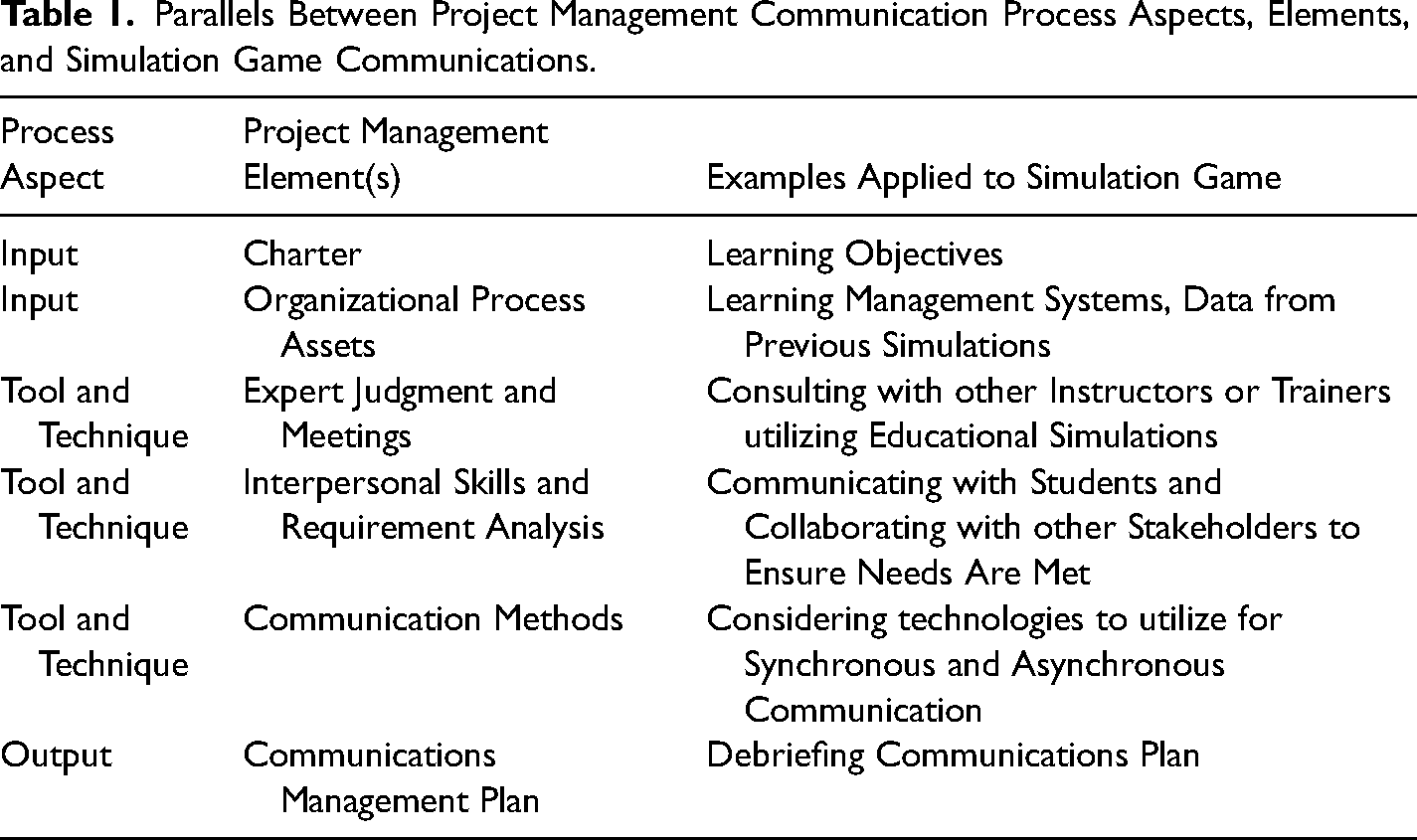
Inputs. The first critical input a project manager needs to develop the communications management plan is the project charter, which includes the project's high-level objectives and success criteria along with a list of key stakeholders and their roles and responsibilities. These inputs provide contextual factors along with guiding policies, procedures, systems, and objectives that may impact communications decisions for any project. In the case of developing a debriefing communications plan, considerations include the type of objectives for the computer-based simulation game (cognitive, affective, or skill-based), available course learning management systems and technologies, previous simulation game implementations data (what communications worked well and what could be improved), and any organizational approvals required (or organizational policies that must be adhered to) in order to move forward with the simulation game itself and the debriefing communications.
Tools and Techniques. Several tools and techniques are employed by project managers in the plan communications management process. Expert judgment is one of the most recurrent tools utilized throughout the PMBOK Guide and is particularly relevant for this process. Project managers benefit greatly from consulting individuals with expertise in topics that could impact effective project communications, such as those who are familiar with organizational politics, culture, policies, technologies, and stakeholders. Experts can shed light on communications requirements, which should be carefully analyzed to ensure stakeholders’ needs are met. For debriefing planning, it would be valuable to analyze simulation game stakeholders, especially simulation participants, and consult with other instructors or trainers who have implemented simulation games successfully in similar settings.
Communication models, communication methods, and communication technology are also tools and techniques utilized to develop the communications management plan. The communication model provides a valuable framework for planning that allows for consideration of various communication components that impact the delivery of the message from each stage in the process to the sender's original encoding of the message to its transmission, decoding, acknowledgement, and feedback. This model enables project managers to select the ideal method for communication, whether it is face-to-face, electronic, push, pull, or interactive communication. For the debriefing communications plan, it is valuable to consider the impact of the communication method upon each debriefing session as there can be value in incorporating both online and face-to-face methods.
Outputs. The major output for the communications management process is the communications management plan. This component mirrors the debriefing communications plan, which is tailored to the computer-based simulation game and its objectives, timeframe, mode of delivery, resources, stakeholders, and other contextual factors. According to PMI, “the communications management plan is a component of the project management plan that describes how the project communications will be planned, structured, implemented, and monitored for effectiveness” (PMI, 2017, p. 377). Although PMI sets forth several components for the plan, the most essential elements of the basic communications plan are the type of information to be communicated, timing and frequency of information distribution, senders and receivers of information (stakeholders), and methods or technologies for communications (Table 2).
Communications Management Sample Template.
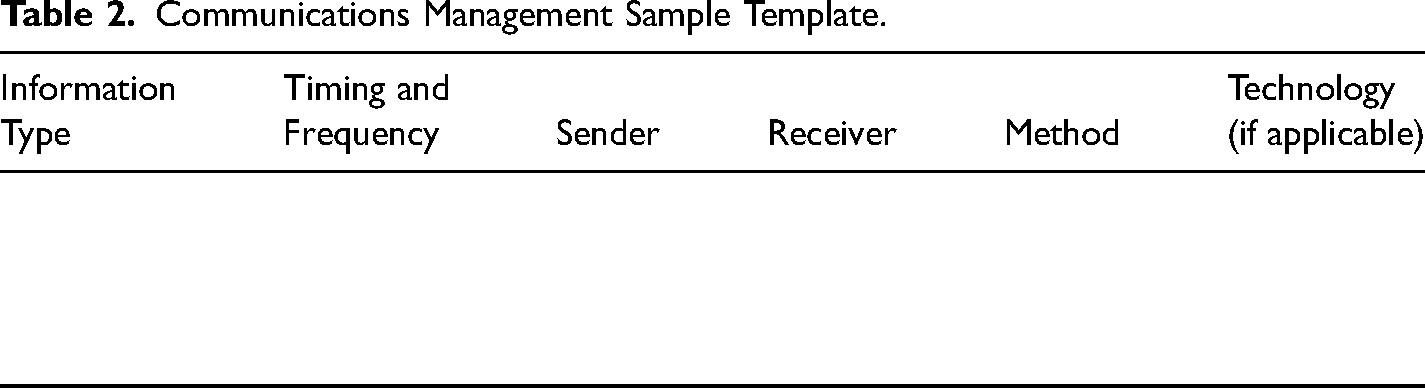
Each of these essential components is further discussed within the context of specifically developing the debriefing communications plan.
Debriefing Communications Plan Components
Debriefing is a key aspect of each simulation game project as it enables the educator (playing the role of the project manager) to communicate with and engage stakeholders (primarily, game participants), to ensure objectives (learning outcomes) are met. Thus, the approach to debriefing planning should be similar to a project manager approaching project communications planning, using the same process framework set forth by PMI. Facilitators should develop a communications plan by proactively considering aspects of the simulation game they are conducting along with their own unique context, objectives, stakeholders, and communication methods or technologies. This plan should be tailored to each unique simulation scenario, just as a project manager would tailor their plan to each unique project. Educators should also engage in iterative planning and make improvements or adjustments to future simulations based upon their reflections of previous iterations of simulation debriefing, so the plans are not static.
Results: Considerations for Developing the Debriefing Communications Plan Components and Example Plan
Information Type
A consideration in developing a communications plan is to determine the type of information shared. Lederman stated that it is crucial to communicate simulation objectives and learning outcomes (if they can be articulated without detracting from gameplay), in addition to sharing the anticipated knowledge and skills participants may gain, before commencing the simulation game so that participants have a clear understanding of expectations of performance and learning as part of the briefing phase (Lederman, 1992). Sharing this crucial information at the onset lays the foundation for future debriefing sessions (Verzuh, 2012).
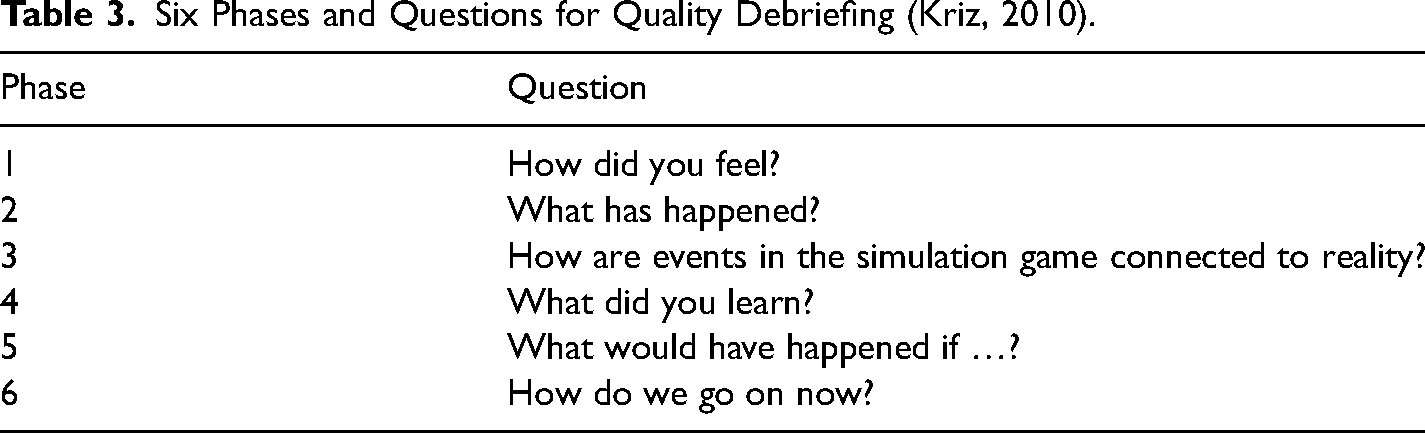
It is critical to share information about participants’ performance in the simulation game throughout the simulation perhaps after each round of a game so they may become aware of any deficiencies, reflect upon decisions they’ve made, and adjust their behavior to achieve the intended objectives. It is also important to consider the right amount of guidance to provide during gameplay. According to Fanning and Gaba, “elements of a good debrief included the use of open-ended questions, positive reinforcement, the use of cognitive aids, and good use of audiovisual capabilities” (Fanning & Gaba, 2007, p. 121). Kriz (2010) also outlines several phases and specific questions to facilitate a quality debriefing session and these questions (Table 3).
Six Phases and Questions for Quality Debriefing (Kriz, 2010).
At the conclusion of the gameplay, provide process feedback (how the outcomes resulted from actions) rather than outcome feedback (the results of the game, including performance metrics) and emphasize the value process feedback has upon learning (Gentry, 1990).
Senders and Receivers
In their debriefing model, Peters and Vissers (2004) established several considerations pertinent to establishing an effective communication plan and particularly relevant within the context of discussing senders and receivers of information. They propose that debriefing sessions should be customized to participants’ requirements, abilities, needs, and familiarities with one another. Facilitators can pre-plan an intentional communication process, but leave flexibility within that process to customize the content provided based upon individual and team needs. This is well-aligned with the project management philosophy of understanding stakeholder's needs and requirements and tailoring communications to meet their expectations and objectives (Larson & Gray, 2014), which, in the case of the simulation, is to increase learning amongst a group of diverse participants.
It is valuable for facilitators to consider their roles as experiential educators who need to balance “attention to the learner and to the subject matter while also balancing reflection on the deep meaning of ideas with the skill of applying them.” (Kolb et al., 2014). Effective debriefing requires facilitators to have both expert knowledge and skills in the learning outcomes and strategies that are woven throughout the game. Facilitators should also embrace learning about participants’ experiences so they may be receptive to adjusting the gaming experience to maximize favorable outcomes in the future.
Although exchanges between facilitators and participants are key for valuable feedback and debriefing, it is also beneficial to plan communications between participants because student-to-student interactions can be crucial for experiential learning (Gentry, 1990). If participants are working in teams, communicating internally between team members during gameplay can enhance learning opportunities. After competitive gameplay has concluded, participants can also benefit from communicating with teams other than their own to increase their opportunity for learning since reflective experiences may vary between teams based upon individual experiences (Oertig, 2010). It is also important to emphasize that communications are multidirectional because students can be senders of information to each other and the facilitator while the facilitator may also be the receiver of information, so the sender and receiver roles are dynamic as is the flow of information and feedback through the communication channels.
Timing of Communications
When considering how often debriefing should occur within the computer-based simulation-game learning experience, researchers have purported that specific and immediate feedback at various times, including before, during, and after gameplay, enhances favorable outcomes following the briefing, action, and debriefing process. Learners experiencing challenges with their simulation performance will likely not be able to rectify their deficiencies without this additional guidance throughout the course of the game. Reflecting upon what is and is not going well throughout the simulation experience is consistent with the project management concept of gathering and analyzing lessons learned. Lessons learned are positive and negative learning opportunities that should be reflected upon throughout and at the end of the project life cycle for improvement of current and subsequent projects (Larson & Gray, 2014). Additionally, it is key that debriefs are immediate, specific, and constructive to maximize educational benefits for improving understanding in addition to enhancing motivation and confidence (Wilson et al., 2009).
Methods of Communication and Technology
Communication methods enable project managers to share information with stakeholders and may consist of push, pull, or interactive communications (PMI, 2017). Debriefing sessions should be more than simply push communications, as in a lecture from the instructor, and pull communications, as in those accessed by learners via repositories or websites. Debriefing necessitates interactive communication and discussion from instructor to participants and from participant to participant.
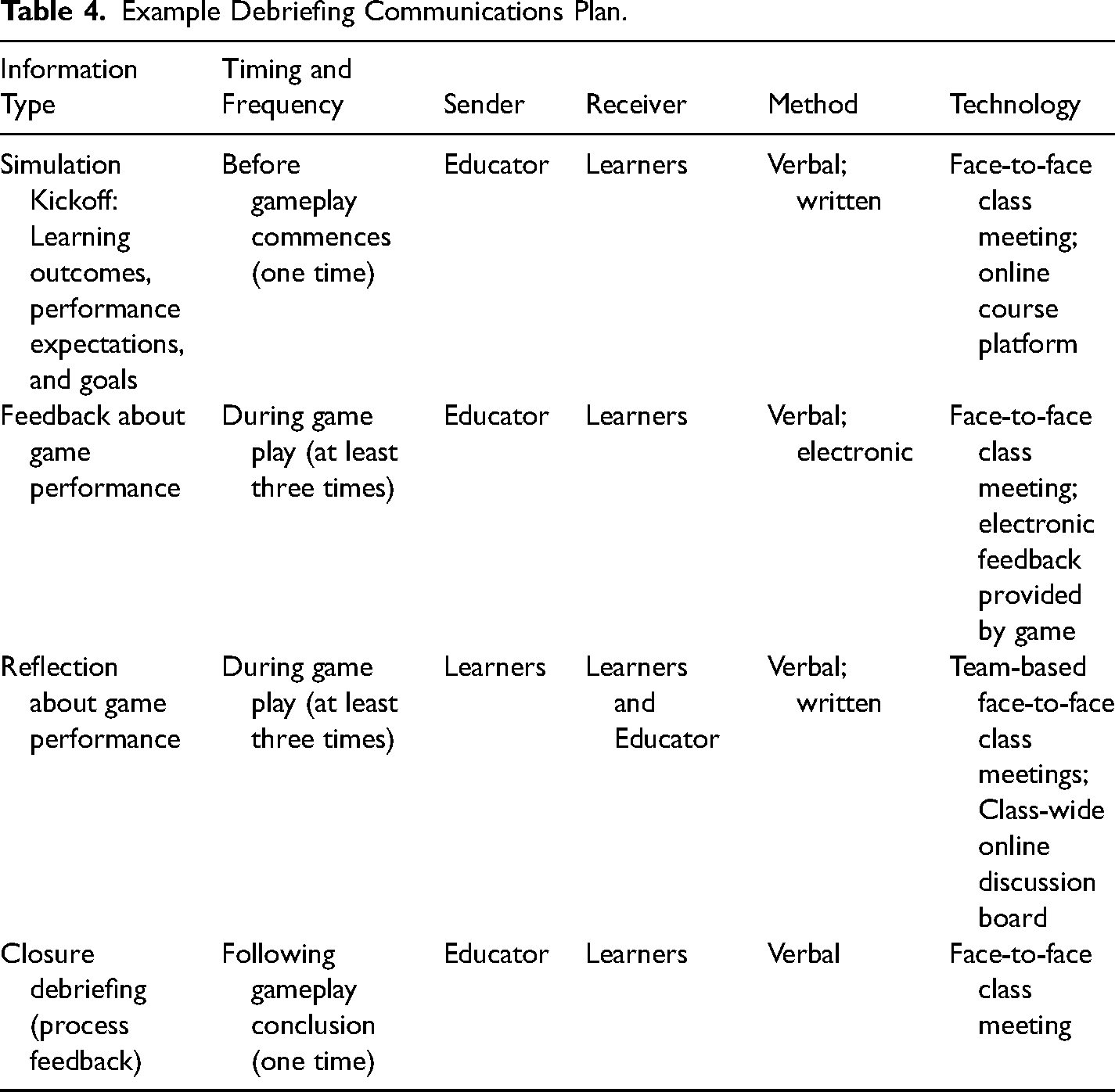
Many see value in interactive face-to-face modes of communication for debriefing, which allows for immediacy as message transmission and receiving feedback between the sender and receiver occur quickly (Asakawa & Gilbert, 2003). Since it is important all learners fully understand the game instructions prior to the simulation, a briefing session for questions and answers could also benefit learners (Shovityakool et al., 2019). Table 4 includes this and other examples of potential communications plan elements.
Example Debriefing Communications Plan.
Virtual communications such as emails and video conferencing are increasingly popular methods for project management communications but may present challenges due to lack of immediate feedback and visual cues such as body language (Meredith et al., 2014). Therefore, it is important to consider the advantages and disadvantages for varying communication methods and technologies, availability of resources and technologies, and stakeholder preferences and requirements during simulation debriefing communications planning (Wall, 2008).
Although potential challenges for implementing written debriefing exist, such as the amount of instructor time required for effective evaluation and interaction, written debriefing is one means of achieving experiential learning and simulation goals, so it may merit further time and exploration (Petranek, 2000). Many project managers and facilitators are integrating written communications. Some educators have found great value in incorporating electronic modes of debriefing communications, such as online discussion boards along with face-to-face discussions (Oertig, 2010). Others have advocated for student self-reflective communications in written-electronic form to aid in the reflective learning process. These might take the form of online blogs or hard-copy journals (Fanning & Gaba, 2007; Kriz, 2010; Petranek, 2000; Petranek et al., 1992). Therefore, facilitators should tailor their debriefing communications plan by selecting the ideal mixture of varying communication methods, modes, and technologies within the constraints of their simulation game, instructional modality, and access to resources or technology, but with the intention of achieving the objectives they have set forth for the simulation game experience.
Discussion
Significance
The significance of applying a project management communication approach to the process of facilitating an educational simulation is to demonstrate that by providing relevant and timely feedback, learners understanding and performance throughout the duration of the process improves. It can also lead to greater emotional investment of the learners as they take the time to understand the outcomes of their previous actions within the simulation and how those actions may impact future outcomes as the simulation progresses. For educators and trainers, it is helpful to understand how the facilitation approach to incorporating simulations into the educational experience impacts the learner. The psychological aspect of the learner experience is important to take into consideration because the factors that impact independent motivation and drive when working independently are similar to those needed when completing a simulation. Some people may feel lost or confused or lose the motivation to do well without interaction and feedback from others (Zhang & Hyland, 2022).
Additionally, the improved experience and positive outcomes that occur when having access to communication and feedback during a simulation can lead to a greater transferabilty of the skills and learning outcomes of the simulation (Young et al., 2014). The framework we have provided will enable educators to approach planning the debriefing aspects of simulations in a systematic way to improve efficiency and outcomes.
Systems Map and Tailoring Considerations
Although project management terminology refers to communications management planning as a process, it is worthwhile to relate the parts of that process as elements within a system, so that facilitators may approach their planning in a systematic way. For example, Figure 1 conveys how facilitators can relate the process aspects (i.e., inputs, tools and techniques, and outputs) to project management elements, and simulation game considerations. Due to the complexity of the learning environment and uniqueness of each simulation and variations of stakeholders, this article and figure are not exhaustive lists of examples for communications planning approaches. However, starting with these foundational aspects can save facilitators a great deal of time because systems are conducive to achieving efficiencies in ways of working and better enable educators and learners alike to achieve the educational objectives of the computer-based simulations by ensuring debriefing is planned intentionally and methodically. Ackermann and Alexander (2016) discuss the call for more research on project management methods within the context of casual mapping. The focus is on the need to incorporate human factors and variables when creating a map. Thus, this system map provides a broad overview that allows for customization and flexibility in adoption to a variety of different educational simulation situations.
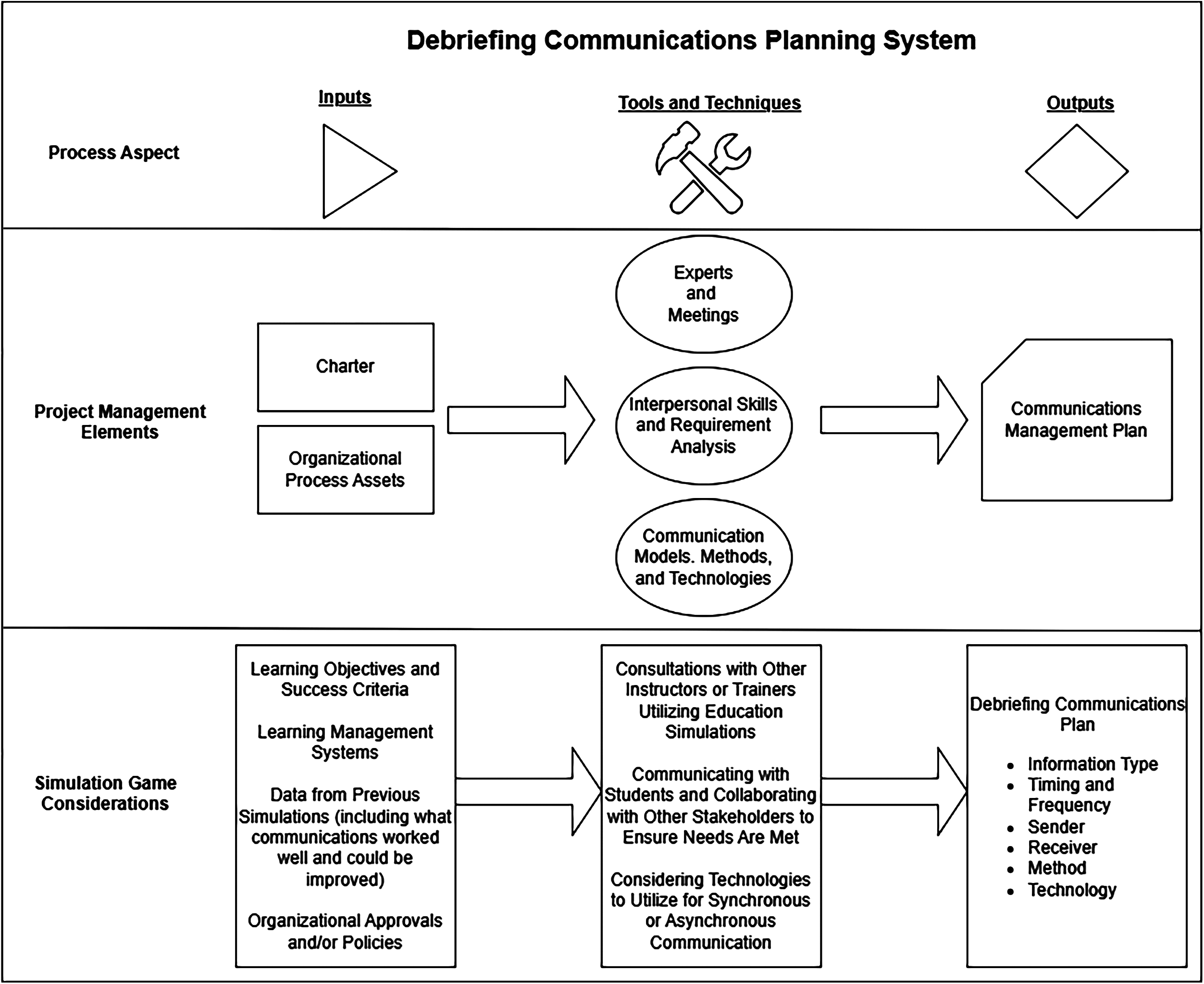
Debriefing communications planning system.
The culmination of the proposed theoretical concept of applying communication plans from project management to the implementation of educational simulations is the systems map shown in Figure 1: Debriefing Communications Planning System. This systems map provides a visual representation of the process aspect at a higher level, the project management elements and tools that can be adopted for simulations, and considerations that should be made during each phase of the simulation.
This systems map provides a high-level plan that is applicable in most educational/training and settings such as face-to-face, synchronous online, asynchronous online, and hybrid. However, it is important to note that every component of the debriefing communications plan requires thoughtful consideration and should be tailored to factors such as the game itself, the stakeholders, the learning environment, and organization or institution, just as a project manager would tailor the plan to each project and its’ context. Thus, the systems map in Figure 1 should be used as a tool suggested to help shape the planning process within each unique context. While the focus has been on computer-based simulation games, the theoretical application of a project management-based communication plan can be applied to many other types of simulation games. Allen and Hardin (2008) discuss the value of applying project management skills and tools when developing educational technology. This benefit can be taken a step further by applying those same tools and skills to the implementation of educational technology such as a simulation. Figure 2 is an example of how this project management framework can be translated into a communications plan applicable to educational simulations deployed in various settings and modalities. In this figure, the debriefing communications plan is broken down into the previously outlined components. Each plan component is broken down into considerations for that specific element within the context of simulation debriefing. These considerations were developed following a review of simulation debriefing literature in conjunction with the authors’ experiences in facilitating educational simulations and applied through the lens of PM communications planning. Although this is not intended to be an exhaustive list, it provides an excellent foundation to build upon and to tailor or revise, as needed, to plan debriefing for educational simulations.
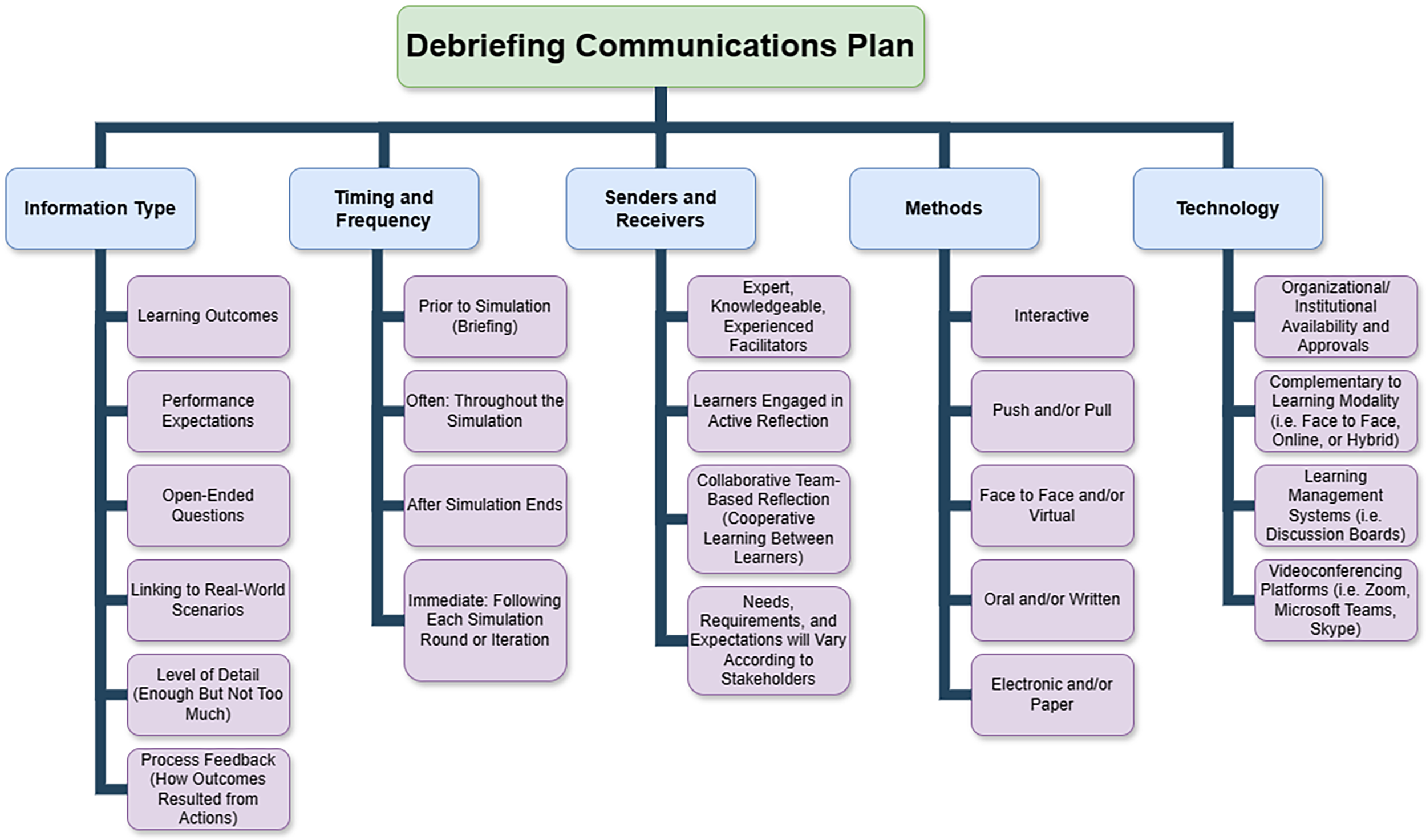
Debriefing communications plan: components and considerations.
The first category in the communications plan shows information type. This should include the learning outcomes and expectations about performance to be shared prior to the simulation during the briefing process. It should allow for considerations for the debriefing sessions which can include open-ended questions to facilitate reflection and link the simulation to real-world scenarios. The right amount of information should be provided so “correct” behaviors or strategies are not “broadcasted” to learners. Following the simulation, the focus should be on process feedback including how outcomes resulted from actions rather than outcome feedback such as performance metrics and game results. The next section focuses on timing and frequency. Debriefing should take place frequently throughout the simulation and after completion. Performance feedback should be immediate, so learners have opportunities to improve by adjusting behaviors as needed to meet learning objectives. In a communication plan, it is important to be clear about who is sending the information and who is receiving it.
The next component, senders and receivers, explains that debriefing facilitators should be experts who are knowledgeable and skilled in the area of the simulation and in facilitating links between the simulation and application. Communication mechanisms should be established for participant-to-participant debriefing opportunities to enhance reflection and encourage collaboration. Communication information, type and frequency, methods, and technology should be tailored to the needs, requirements, and expectations of stakeholders for both senders and receivers. The methods section is a place to consider how to implement interactive communication methods which are ideal but may be used in combination with “push” or “pull” methods. Although face-to-face communications are recommended by many, provide a mixture of communication methods such as oral, written, electronic, and face-to-face communications. Finally, in the technology section, one should explore the resource availability of technologies in your institution/organization and incorporate technologies that may complement or enhance the modality of learning (i.e., online, hybrid, or face-to-face courses).
Lessons Learned
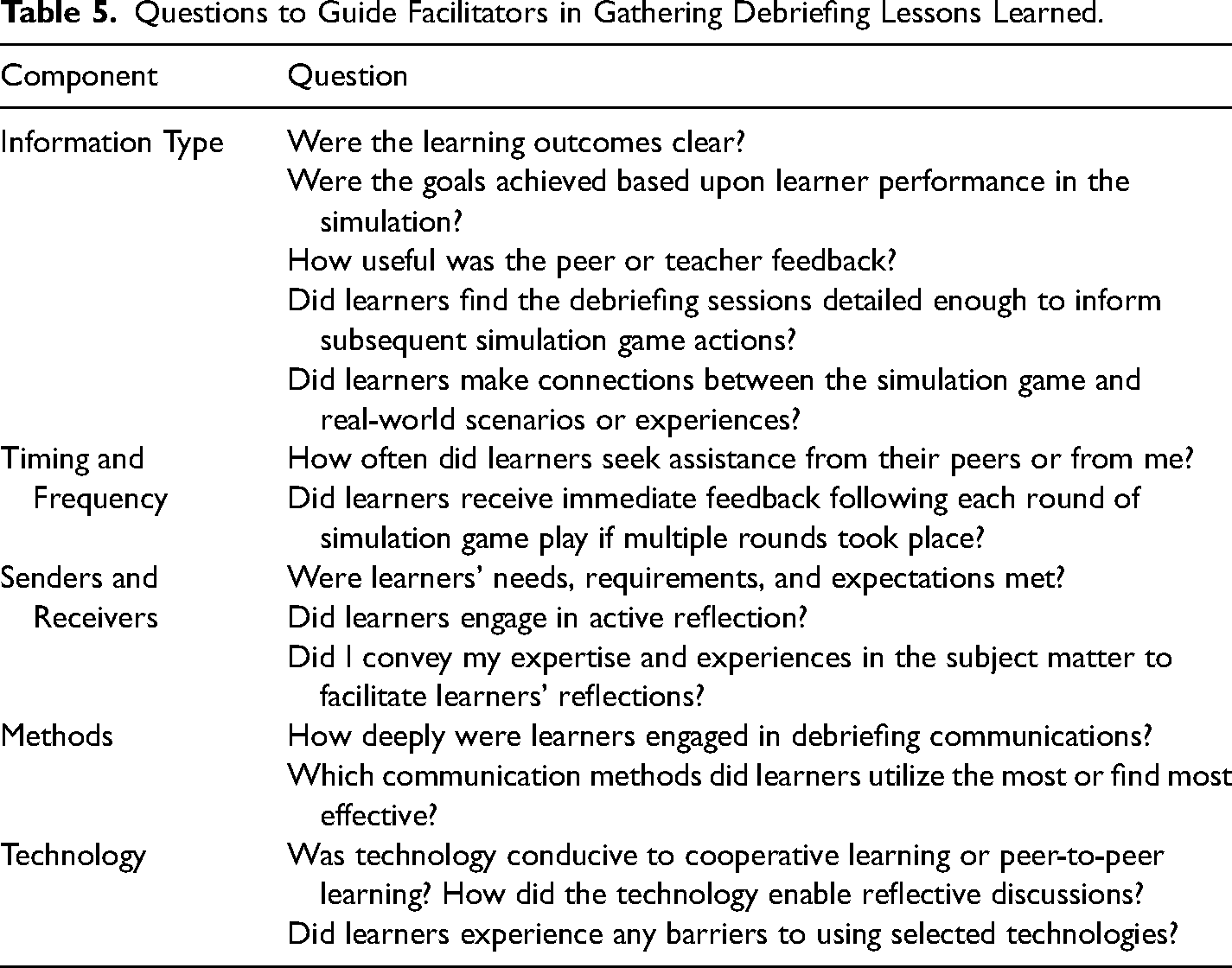
Just as learners should reflect upon the lessons they are learning through the simulation game process, which debriefing will enable them to do, facilitators may also engage in reflecting upon lessons learned during and following their implementation of a debriefing communications plan based upon their experiences, learner experiences, and learning outcomes. Table 5 conveys a series of questions that may guide the facilitator in developing their own lessons learned, which can then be utilized for improvement of their future simulation game debriefing communications. Guiding questions are linked to debriefing communications plan components and have been developed to reflect upon design considerations outlined in this article. Facilitators can maintain debriefing aspects that worked well and consider revising or eliminating aspects that were not effective.
Questions to Guide Facilitators in Gathering Debriefing Lessons Learned.
Limitations
Although this paper asserts one potential theoretical lens to approach debriefing, it is still valuable to consider incorporating other approaches, methods, and best practices. When a project management framework is applied to planning debriefing communications, it will likely result in many various interpretations and applications tailored to varying simulation disciplines and contexts because its intention is to be adaptive rather than prescriptive.
Future Research Directions
It will be valuable to conduct future research to determine the effectiveness between differences in communications plan variables, such as the type of information shared during the debriefing, the timing and frequency of debriefing, and the methods of debriefing communications, upon desired outcomes such as learning and motivation. Although further research will likely uncover ideal debriefing communications plan components, this article establishes a tried-and-true framework used by project managers around the world to approach simulation game debriefing as a project manager would approach communications for a project with a proactive, detailed, intentional, and deliberate plan, specifically tailored to the context and informed by lessons learned from past implementations.
Conclusion
The debriefing component of the computer-based simulation gaming process is clearly one aspect of learning that merits further emphasis, research, and attention, as many in the field have focused on the characteristics that have made games such an attractive and impactful educational method. However, simulation gameplay, on its own, will not result in the most favorable outcomes; games do not, in and of themselves, teach. Therefore, it is crucial to incorporate debriefing and feedback with a great deal of intentionality through a proactive approach that parallels the project management framework for developing a communications management plan. While the goals of computer-based simulation games and project management often differ, the cross-disciplinary communication approach utilized in project management can be an effective method for improving the understanding of learners using simulations. Although debriefing communications planning takes time, educators should see a return on their investment of that time as learning outcomes will likely increase with effective debriefing since it is a key aspect of active reflection in educational simulations. Knowledgeable, skilled debriefing facilitators will enhance the reflective learning opportunities that simulation games offer if they emulate the actions of successful project managers by communicating the right information to the right people, at the right time, and in the right way while fostering learner interactions to promote engagement, increase motivation, and enhance learning.
Footnotes
Declaration of Conflicting Interests
The authors declared no potential conflicts of interest with respect to the research, authorship, and/or publication of this article.
Funding
The authors received no financial support for the research, authorship, and/or publication of this article.
