







Abstract
The study investigated academics’ experience using multimedia technologies for online engagements in the era of the new normal in Nigerian library schools. The study adopted a quantitative method approach using a survey design. The sample was drawn using total enumeration, which included all of the 98 respondents (researchers – the lecturers in the library school) from the six library schools chosen for the study. The questionnaire used as the data collection instrument was adapted from “Optimizing Zoom Application for Virtual Research Presentation Questionnaire” (OZAVRPQ) which contained both the closed and open-ended format. Four research questions were answered in the study. The findings revealed that the majority of respondents are quite aware of the presence and importance of Multimedia technologies for virtual research presentation, and their attitude toward the usage of Multimedia technologies for online engagement is very positive. The majority of respondents describe Multimedia technologies as very interesting and highly satisfactory platforms for collaborations; they also note that using Multimedia technologies is much more convenient and cost-effective than a face-to-face presentation, especially when the research work is to be presented outside of the presenter's geographical location. The study noted technical difficulties, network issues, the cost of data subscription, a lack of information communication technology, ICT understanding, and a lack of training as challenges.
Keywords
Introduction
Unquestionably, multimedia technologies have contributed to a new era of globalisation and have emerged as crucial technologies for communication in the age of the new normal. We now face a new paradigm and challenge in the field of education as a result of this progress. We must adjust to a new approach to teaching and learning if we want to better educate future generations, such as those who are living in the Covid-19 era. The educational system changed as a result of the rapid development of multiple learning technologies in the second half of the twentieth century, according to academics. This is because these technologies may provide a proactive, useful, and comprehensive teaching and learning environment. To improve the use of cutting-edge technologies in teaching and learning processes globally, the Ministry of Education today offers a variety of facilities and training programmes. To give instructors the multimedia technologies they need to strengthen the educational system, a sizeable amount has been set aside. Despite their greatest efforts, academics in the majority of countries still fail to fully utilise the resources at their disposal (Suleiman et al., 2022).
Regarding many academic events that are held all around the world in academic settings and other industries like medicine, finance, agriculture, government parastatals, etc. The use of multimedia technologies for online interaction has become completely indispensable in all spheres of life. By incorporating several technologies into teaching-learning activities in the university system, the teacher can use a variety of instructional delivery modalities (media) with the flexibility of time and place (Fong et al., 2022). One solution to the current problem of how the educational system has to adapt to this new normal could be this method. One of the new, creative techniques of instruction that academics are now exploring is online engagement (Saha et al., 2022). Despite the restrictions of Covid-19, academics were urged to use multimedia technologies for a variety of academic activities like research, learning, partnerships and networking which led to all countries of the world conforming to the new standard. To reproduce the best experience, multimedia technologies must be highly well-designed and intelligent. The best design principles must be integrated with the different components of cognitive processes (Dorfman, 2022).
Multimedia technologies are used successfully by several institutions to carry out their duties. The benefits of employing multimedia technologies for online interaction for academics have also considerably increased. According to Lobe et al. (2020), the convenience and affordability of face-to-face interaction cannot be compared to online engagement, particularly when the research work is to be presented before a large geographic audience with the understanding that online methods can be used to complement, replicate, and improve the traditional method. Multimedia technologies, such as photo-sharing, video-publishing, and map-making programmes, can also be used by students to allow them to demonstrate their understanding of a concept and concurrently improve their reading abilities by having them create their content. Nearly all universities nowadays assert to have a plan in place for utilising the opportunities offered by the internet or other multimedia technologies to develop and broaden traditional education.
Only a small number of research, meanwhile, have focused on the use of multimedia technologies for online engagement in the context of Nigerian LIS academics. In contrast, several studies have looked at the use of Information Communication Technologies (ICTs) for creating virtual partnerships, such as (Lo laconic et al., 2016; Mercieca, 2021; Vinagre, 2016). Additionally, even though the majority of Nigerian academics are aware of various ICTs, they are not completely aware of their enormous potential as useful tools for online engagements. This could lead to the underappreciation and underuse of the technologies. Furthermore, there are still just a few studies on the use of multimedia technologies in Nigeria, which necessitates further research into an empirical examination of the most effective ways to use these technologies for online interaction.
Objectives of the Study
The study investigated academics’ experience using multimedia technologies for online engagements in the era of the new normal in Nigerian library schools
investigate the perception of Nigerian LIS academics’ in using multimedia technologies for online engagements in the new normal; investigate the perception of Nigerian LIS academics on the impact of using multimedia technologies for online engagements in the new normal; examine the preparedness of Nigerian LIS academics’ on using multimedia technologies for online engagements in the new normal; and determine the perception of academics on the envisaged challenges associated with using multimedia technologies for online engagements in the new normal.
Literature Review
A growing number of people are employing various multimedia technologies for professional and academic reasons as a result of the emergence of the Covid-19 pandemic. Researchers in library and information science have been compelled by this phenomenon to reevaluate and examine the use of these technologies, particularly for research and academic purposes, including Google Meets, Skype, Microsoft Team, Go to Meeting, Webex by Cisco, Adobe Connect, Teamviewer Meeting, TrueConf, Slack, and UberConference (Lata & Sonkar, 2020). One of the most significant variables influencing academic improvement is frequently listed as technological advancements. Technology-driven can take many different forms. For example, it might involve using advanced big-data analytics to find hidden statistical patterns and utilising virtual capacity techniques to retool information search, collection, organisation, and knowledge dissemination, to name a few. It might also involve leveraging mobile capabilities to increase data acquisition accuracy. Bottom line: Multimedia technologies are now used in a variety of fields to continue making an influence in the academic field (Stojan et al., 2022).
Due to how drastically the Covid-19 pandemic has changed the world, millions of individuals are now using numerous multimedia technologies for virtual engagements. A faster, simpler, and more entertaining way to stay involved than ever before, according to Ryn and Sandaran (2020). It enables people to develop and sustain connections with others by allowing group members to share information content and make themselves visible and vocal to others. These are web-based services that allow teams of professionals to create a semi-public profile within a constrained system, list the individuals they are connected to, and read and navigate both their own and other users’ lists of connections (Dhar et al., 2021). The majority of uses for this application are academic and professional, including online instruction, distance learning, and scholarly presentations. The Covid-19 outbreak-induced economic depression that organisations are currently experiencing has driven several institutions to aggressively pursue cost-cutting strategies like streaming the majority of meetings and academic activities online.
The amount of time spent online in Nigeria is rising quickly every day. Statistics from December 2013 show that 67 million people in Nigeria access the internet, with 6.6 million of the people using multimedia technologies (Internet World Stats, 2014). All age groups are adopting multimedia technologies at an increasing rate (Cerezo et al., 2021). Internet usage is particularly high among researchers and professionals, and 70% of them utilise multimedia technologies (Harrigan et al., 2021). The use of “multimedia technologies” for learning was popularised as a result of the Covid-19 pandemic, according to Nwangwu et al.'s (2024) explanation. Furthermore, many researchers spend time online with their colleagues to solve all types of academic issues and share all possible academic problems due to the benefits that come with these technologies, these include; allowing people to communicate and building an online community and facilitating easy and real-time learning. Through online engagement, multimedia technologies have enabled researchers to share professional ideas, increase research productivity and make collaboration easier and more agile.
Singh et al. (2020) emphasized that multimedia technologies are useful technologies for online engagement but sometimes they can be intimidating if it has never been used before. Thus, a researcher who wishes to make his research presentation online using Multimedia technologies should be familiar with the functionalities of the tool. Other concerns raised by the McMaster Research Ethics Board (2020) about Zoom use include the possibility of having uninvited guests as part of a meeting without the knowledge of meeting hosts; recordings made by Zoom can be stored on a publicly accessible cloud without the knowledge of meeting hosts; and non-encryption of information on the Zoom server. Despite these challenges, adopting Multimedia technologies for online engagement has numerous advantages over physical engagement in terms of use and efficiency (Pandey et al., 2021).
Rattanawan and Pakdee (2024) conducted another study on prospective teachers on zoom as a transformative teaching methodology. The study centred on the perspectives of teachers whose classes were held using Zoom web conferencing. According to the findings, many features, such as creating and managing break-outrooms, which could optimize learning, were not used by instructors. Participants expressed disappointment that they had not reaped the full benefits and experiences from the virtual meetings. This influenced their preference for in-person classes. The findings from the study discovered that survey participants preferred Zoom over Skype by reporting deficiencies in the platform. As many features such as creating and managing break-out rooms that could optimize learning and research, do not come with the platform.
Thunberg and Arnell (2021) conducted a study on the perception and experience of researchers and participants using Zoom video-conferencing for qualitative data collection. They investigated the use of information and communication technologies in research. The findings show that researchers encountered significant difficulties in establishing call connections with participants. Although the difficulties had no long-term impact on researchers’ and participants’ satisfaction with the technical quality of the call, as indicated by ratings of sound quality, video quality, and lags in the live feed. Rather, researchers discovered that the extended cooperative problem-solving process involved in the technical challenges sometimes resulted in unforeseen benefits in terms of creating rapport.
The adoption of Multimedia technologies for virtual research presentations has gained popularity amongst researchers in the field of Library and Information Science (LIS) and other professional backgrounds across the globe (Amin & Sundari, 2020). Perhaps, due to the advancement in the use of ICT technologies and the behaviour of researchers, the effectiveness of delivering virtual research presentations is lethargic (Salawu & Ajani, 2022). Regardless of Multimedia technologies’ acceptability, adapting to the technologies requires a certain level of skill, and most users are constrained by a variety of factors in their quest for effective tool use. In a study conducted by Purwanto et al. (2020), some of the challenges include not being familiar with the platforms, limited opportunity for use, low skills, negative attitude, lack of needed facilities and low level of virtual learning readiness of researchers.
According to Timotheou and Ioannou (2021) in this new social era, learning and innovation skills are vital. Researchers must seek and accept training and development to enhance academic excellence. Using Multimedia technologies for online engagements prepares learners for their future careers (Charbonneau-Gowdy & Cechova, 2020). Nonetheless, Getenet et al. (2024) demonstrated the effectiveness of digital technologies in increasing engagement and self-directed learning in their studies; however, they found no significant effect of digital technologies on students’ learning performance. While Multimedia technologies have altered the dynamics of virtual learning, the debate is whether incorporating Multimedia technologies into the online engagement process has a significant impact on teaching and learning quality and/or improves learners’ performance and experience. Their study also highlighted the significance of researchers in delivering structured and organised e-learning that can boost learners’ motivation, personal competency, and learning satisfaction.
Romadhoni et al. (2020) surveyed the acceptability of various forms of virtual learning by students during the pandemic Covid-19. The study's findings show that there are differences in student acceptance of virtual learning. Multimedia technologies have the advantage of incorporating the system into academic services for students, while some virtual platforms have quick and easy network access. According to the findings of the study, the use of various online platforms has an impact on a lecture on new forms of interaction.
In recent times, the impact of modern ICT is growing rapidly. It has become an integral part of the educational system, particularly in the educational process. Academic success has been deeply rooted in the use of new innovative ICT, and the new trend is the design of online exposure to virtual activities. Adeyeye et al. (2022) noted that academics and institutes of higher learning have diversified their system of operation operations in recent months through ICT systems such as Google-classroom, Microsoft Team, and Moodle, as well as a combination of traditional, face-to-face lectures and tutoring the Multimedia technologies.
Most institution of higher learning in Nigeria has hugely invested in these ICT resources and technologies to provide support for researchers and students. The use of Multimedia technologies for online engagements is becoming more common, and it is a growing tool that is now being used across all industries around the world. Amid the Covid-19 crisis and the need for social isolation, Multimedia technologies have significantly innovated and reshaped how lecturers engage with their students. It has also allowed researchers to maintain a sense of community gathering and promote wellness in a time when isolation has become a normal part of life. Multimedia technologies have the potential to be very useful in virtual learning.
Rafeeq and Ali (2021) discovered that due to advancements in ICT and the convenience of learning opportunities. Students prefer distance learning over face-to-face learning since it allows them to balance work and family life obligations. The study also concluded that online support technologies like Skype, Zoom, Microsoft Team and Google Meet enable students and academics to connect via online engagements from any convenient location, which is an effective use of technology to improve students’ engagement and success rates while minimizing the inconvenience of after-hours commitment for academics.
Despite the numerous advantages of employing Multimedia technologies, research indicates that there are challenges to their successful deployment and use. Bingimlas (2008) identified two types of impediments to using ICT in teaching and learning: teacher-level barriers and school-level barriers. Teacher-level hurdles include issues such as a lack of confidence in using ICT, a lack of competency, resistance to change, and negative attitudes about ICT use. While concerns such as lack of time, lack of appropriate training, lack of accessibility, and lack of technical assistance are reported to influence school-level ICT utilisation.
Davidson and Ezeh (2023) believe that a lack of time would make it difficult for instructors to study and prepare ICT resources for their courses, leaving them unable to fully utilise and integrate ICT into their lessons. Sahid and Akeredolu-Ale (2025) noted that the innovative use of Multimedia technologies has proven to be a promising tool for increasing social engagement and providing social and academic support for teachers. The results of a programme called the Virtual Senior Centre developed by Self-help Community Services revealed that online interactive classes reduced students’ feelings of isolation and disconnection while increasing self-reported health status and feelings of being very connected (Sun et al., 2024).
Despite the enormous benefit and promising future of ICT in improving virtual teaching and learning by altering how students experience their studies, the nature of teaching, particularly in institutions of higher learning, has not been effectively transformed by Multimedia technologies Mhlanga (2024) opined those Online engagements are more effective when there is an efficient interaction between humans and computers, such as combining face0to-face learning and online learning in a collaborative blended and flexible manner. As a result, the rate of discussion on current digital innovation is unprecedented and occurs at a faster rate than in previous decades (Vărzaru & Bocean, 2024).
Many higher education institutions, particularly in Africa, are struggling to keep up with the rapid pace of digital innovation. With the lack of consistency in Multimedia technologies for the teaching and learning process, there is little evidence for the possibility of virtual learning in the education sector (Oke & Fernandes, 2020). In a study conducted by Huang, Backman, and Petretto et al. (2021) on a student's attitude toward virtual learning in second life. The result indicated that dyslexic students experience several challenges associated with virtual learning use, including information overload, imperfect word processing technologies, inadequate search functions, and having to relate to more than one system at a time.
Similarly, Chibuwe and Munoriyarwa (2023) discovered in their study that, despite the use of smart devices and social media, teaching and learning remained virtually static, particularly in South Africa. Although the use of Multimedia technologies to promote virtual learning has been limited to digitization. Many technological breakthroughs lack exclusive and exclusive rights, meaning that their usage by academic institutions is unregulated (Mennella et al., 2024). On that note, the use of multimedia technologies for online engagements is critical. As a result, studying the experience of ICT use in online engagements can help researchers overcome obstacles and become successful technology users.
Methodology
Design
Population and Sample
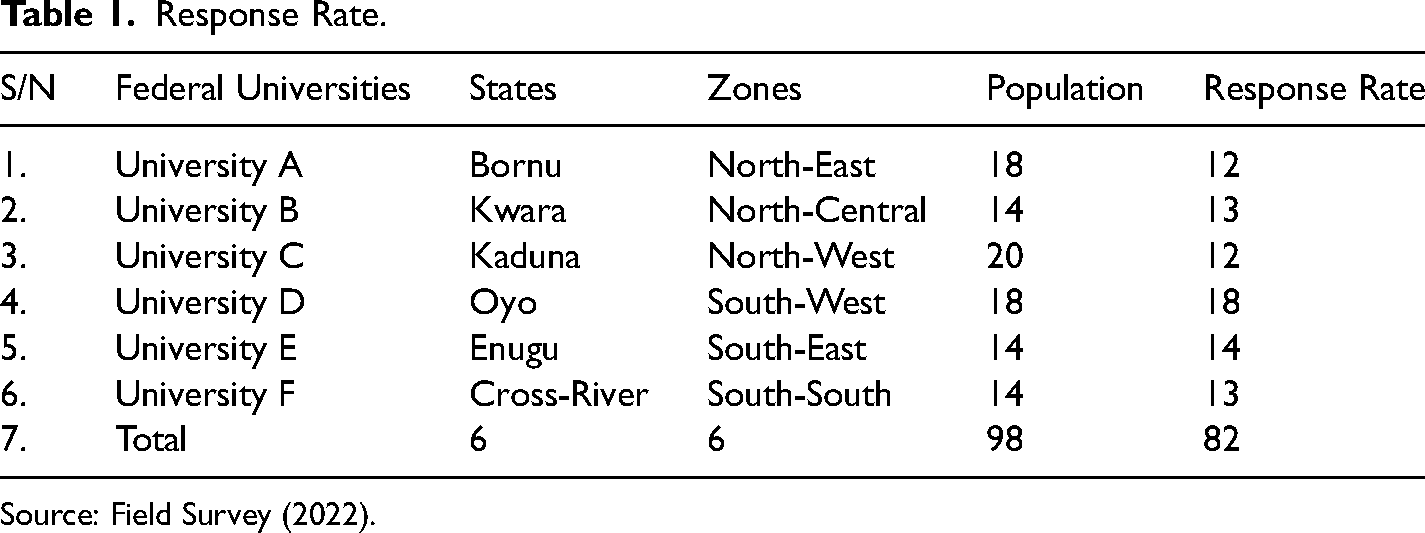
The study's population included researchers (Library and Information Science academics) from all of Nigeria's Federal Universities across the country's six geopolitical zones. Nigeria currently has 49 federal universities (NUC, 2020). Each of Nigeria's six geopolitical zones was represented by one Federal university, and the library schools at these universities were chosen. This brings the total number of library schools involved in the study to six. The sample was drawn using total enumeration of LIS academics in each of the six library schools. This gave a total of 98 respondents (researchers – the lecturers in the library school).
Instrument
The questionnaire used as the data collection instrument was adapted from Salawu and Ajani (2022) and was entitled “Optimizing Zoom Application for Virtual Research Presentation Questionnaire” (OZAVRPQ). The researchers created a questionnaire with items related to the study's four objectives. The questionnaire was divided into two sections (A and B). Section A required respondents’ demographic information while section B features the items. Section B was divided into FOUR parts. Each part concentrated on the study's objectives. Part 1 concentrated on the perception of Nigerian LIS academics on using multimedia technologies for online engagement in the New Normal. Part 2 covered nine items on the perception of Nigerian LIS academics on the impact of using multimedia technologies for online engagements in the new normal. Part 3 contained the perception Nigerian LIS academics on preparedness of using multimedia technologies for online engagements in the new normal. Lastly, Part 4 contained the perception of Nigerian LIS academics on the envisaged challenges associated with using multimedia technologies for online engagements in the new normal. The part 3 and 4 of the questionnaire adopted an open-ended response format. This allows the respondents opportunity to express themselves by providing detail explanation on their perception regarding preparedness of using multimedia technologies for online engagements and their perception of the envisaged challenges associated with using multimedia technologies for online engagements.
Administration Procedure
An online survey was created, reviewed by LIS experts and scholars, and piloted with a sample of the target audience before being implemented. Pre-survey e-mail invitations and survey confirmations were sent to approximately 98 per cent of researchers through Google-form from the six library schools chosen for the study. The survey was available on the internet for four weeks for respondents to complete and return their responses. At the end of the four weeks, 82 copies of the questionnaire had been properly filled out and returned. Due to the lockdown and corona-virus outbreak, the study's scope was limited to researchers at the six selected library schools. Due to the Covid-19, which tightly enforced social separation and the nation's security, face-to-face administration of the questionnaire and interview was not possible.
Data Analysis
Data was gathered in both quantitative and qualitative formats. The qualitative data was thematically analysed while the quantitative data was analysed using percentage and frequency counts then the results were represented in tables.
Results
(Table 1).
Response Rate.
Source: Field Survey (2022).
The purpose was to investigate researchers’ perceptions on optimizing Multimedia technologies for online engagements. However, respondents were asked to indicate their level of agreement and disagreement to achieve the goal.
Respondents expected to express their position of agreement and disagreement with this statement.
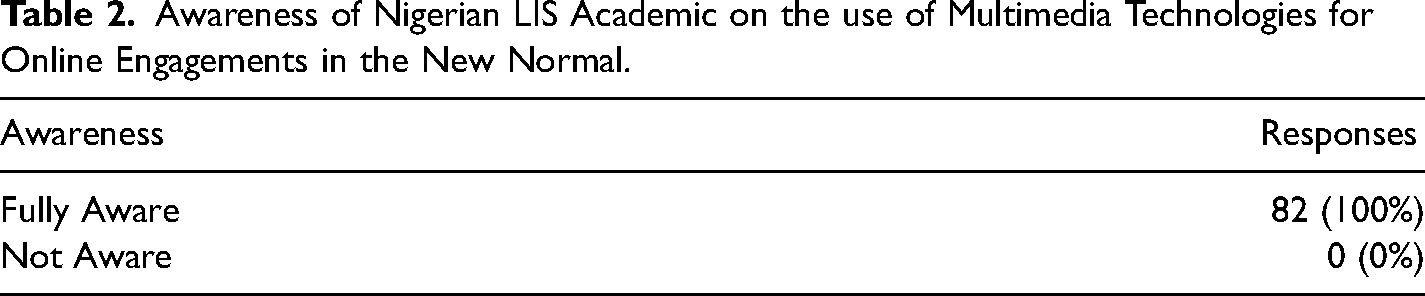
100% of respondents stated that they were acutely aware that Multimedia technologies are commonly used for online engagements around the world most especially during and after the Covid-19 pandemic.
(Table 2).
Awareness of Nigerian LIS Academic on the use of Multimedia Technologies for Online Engagements in the New Normal.
In addition to the responses gotten from the questionnaire, the findings from the open-ended survey and the interviewed buttressed the findings. For instance,
Responses of Participants B, D, E are summarised as thus:
During the Covid-19 pandemic, most institution of higher learning practically switched to online for them to be able to meet the mandate they are set out to achieve. However, multimedia technologies such as Zoom, Microsoft Teams, Google Meet, Webinar, Whatsapp and many moreare utilised for teaching students, set up meetings among academics. Therefore, even after the curb of Covid-19 pandemic, these online engagement via multimedia tools has come to stay.
According to Participant A:
Covid-19 pandemic is a curse at the same time it has brought so much opportunity to the realms of teaching and learning. Multimedia technology has recently gained so much popularity in many organisation. Many stakeholders now prefer to hold meeting online rather than to travel a long distance to fulfil their aims.
Another interviewed respondent mentioned that Multimedia technologies were commonly employed in academics during the Covid-19 pandemic. The technologies are primarily utilised for virtual presentations at seminars, workshops, and, most critically, for holding conference meetings among like-minded scholars.
Few respondents also mentioned that Multimedia technologies are utilised to organise meetings among groups of family members to express their ambitions and to stream live events.
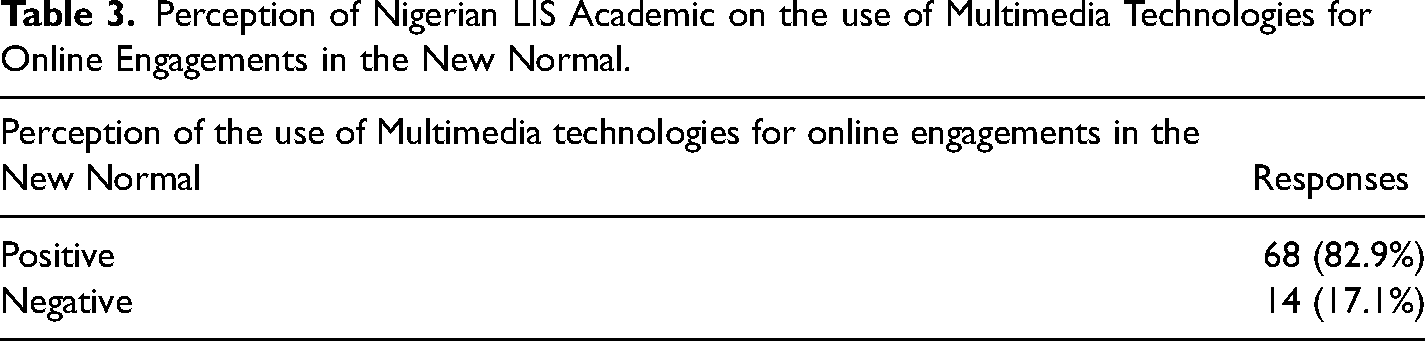
(Table 3).
Perception of Nigerian LIS Academic on the use of Multimedia Technologies for Online Engagements in the New Normal.
The multimedia technologies are formidable; They have practically changed the face of teaching and learning in the academics. Most especially, majority of respondents noted that Multimedia technologies gives the opportunity to collaborate with other professional colleagues, and they commented that they feel at ease. Whenever they are using it for research collaboration because it saves the cost and reduce the risk of moving from one place to another. In other words, it is a technology that has already taken the phase of all works of life due to its robustness and adaptability. To buttress these points
Participants C and F noted that:
They receive training opportunities from my work place via the multimedia technologies and I feel very comfortable using it because it has practically reduced the risk of travelling around to get professionally engaged with colleagues.
Participant D also added this:
Multimedia technologies is the among the best of technologies ushered in by the Covid-19. Because it alleviates and breaks the barriers of distance and stress of commuting to the meeting location.
Another participant from B specifically noted that:
I do not need to visit the conference location or meeting my students in the classroom before I could get knowledge impacted during and after the Covid-19 pandemic. Even after the pandemic, using multimedia technologies have become the new normal phenomenon where everyone get engaged with their colleagues, research team, students and fellow researchers to share academic experience. As a result, adopting multimedia technologies will enhance online engagement and strengthened collaborations among researchers in the new normal, especially to the researchers that are far from the meeting location.
Participants C and F also noted that: They preferred using multimedia technologies for online engagement to physical engagements because it's a new phenomenon that everyone is keying into. They further buttress that: No doubt, Covid-19 pandemic made it to become very popular but now we have seen the capabilities and opportunities these technologies offer beyond just communicating and all of the sectors and industries are already keying into using it. Therefore, I don’t see reasons why I should not also take part in engaging myself in using it. The possibilities of these technologies brought has grown beyond the capacity of what is ordinarily built for.
Participant F also noted that:
The only threats I see about the usage of the multimedia technologies is that it invalidates the traditional academic system. What I’m trying to say is that, there is this affectivity and feelings of belonging when you physically get engaged with your colleagues or mentees, now that the world is keying into using this technology, we all don’t have a choice other than to get adapted to its environment. But, for me, using the multimedia technologies poses a great threat to humanity and survival.
Based on the librarian perception; the result implies that the optimization of cloud computing technology for records management and archival services will take the archive to the next level by reducing human errors due to repetitiveness in archival tasks and at the same time, it might take their job role is care is not taken. This result is in line with the discussions of (Arlitsch & Newell, 2017) who concluded that AI is almost taken over every sector around the world, including libraries inclusive and if care is not taken, the consequence might lead to the loss of jobs and displacement of the labour force.
This study, on the other hand, reveals that researchers in Nigerian library schools have mixed feelings regarding the usage of Multimedia technologies because some of them were uncomfortable using Multimedia technologies for online engagements.
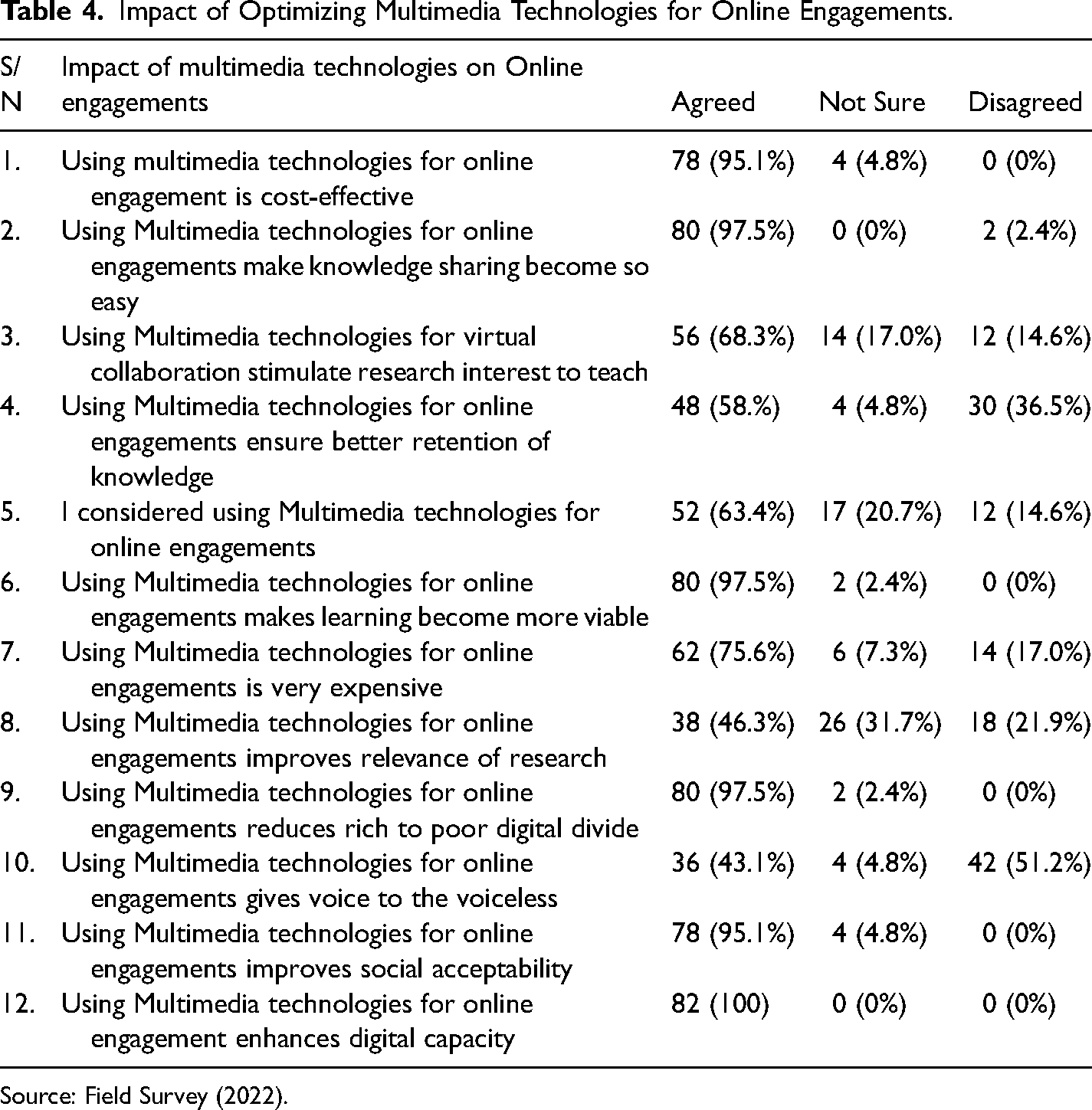
The objective was to look into the impact of using Multimedia technologies for online engagements. However, respondents were asked to express their level of agreement or disagreement to achieve the goal. Table 4 displays the outcome.
Impact of Optimizing Multimedia Technologies for Online Engagements.
Source: Field Survey (2022).
(Table 4).
The results in Table 4 reveal the perception of Nigerian researchers on the impact of the usage of Multimedia technologies for online engagements by researchers in Nigerian library schools. The findings from the study indicate that most of the researchers with a response rate of (95.1per cent) agreed that using Multimedia technologies for online engagements is cost-effectiveness, (97.5per cent) of the respondents agreed that using Multimedia technologies for online engagements makes knowledge sharing so easy, (97.5per cent) of the respondents indicate that using Multimedia technologies for online engagements makes learning to become more viable and (97.5per cent) of the agreed using Multimedia technologies for virtual research presentation reduces rich-poor digital divide. Also, (95.1per cent) of the respondent agreed that using Multimedia technologies for online engagements improves social acceptability while (75.6per cent) of the respondents agreed that using Multimedia technologies for online engagements is very expensive and (56per cent) of the respondents also disagreed that Using Multimedia technologies for online engagements give voice to the voiceless. This result, however, implies that Multimedia technologies is enhanced social acceptability, improve digital capacity and are cost-effective compared to face-to-face presentation, particularly when the research work is to be presented outside the geographical location of the presenter.
Based on their perception, the participants were asked to indicate whether Nigerian LIS academics are prepared to continue to use multimedia technologies for online engagement, and to describe what they consider as preparedness to use multimedia technologies. Table 5 shows the level of preparedness of the participants.
Level Preparedness of Nigerian LIS Academic on the use of Multimedia Technologies for Online Engagements in the New Normal.
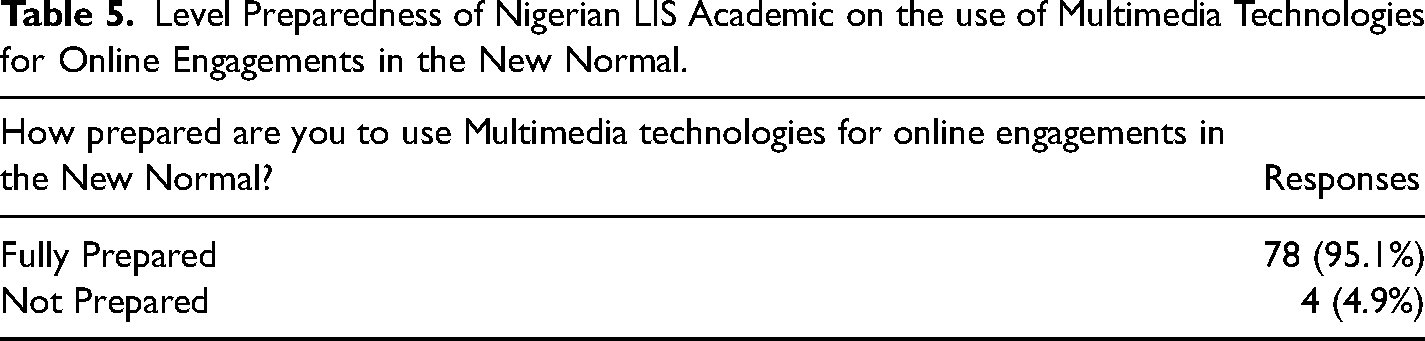
(Table 5).
Going by the results in Table 5, the majority of participants believed that Nigerian LIS academics are partially prepared to continue to use multimedia technologies most especially in the new normal, according to the findings. The respondents identified some factors that may possibly affect their preparedness towards the use of multimedia technologies. These are; high cost of data subscription, Time factor, epileptic power supply, institutional factor, poor ICT skills, fear of unknown. Few participants indicated that only a few Nigeria LIS academics are prepared to use these technologies. These is evident in their responses. While justifying the reason for their agreement, some explanations were offered. For instance, a respondent indicated that: “I can boldly say that Nigeria LIS academics are not prepared for the new normal, most especially using the multimedia technologies for online engagement. This is based on my understanding that most Nigeria LIS academics have partially accepted the changes that have currently taken shape in the Covid-19 pandemic era, you will find lots of academics still battling with common transitioning into digital environment by sending, not to now talk of using multimedia technology to deliver online lectures to their students. Majority of this lecturers preferred to share hard copy information materials to their students rather electronic information resources. This is shown in their expression of lethargic willingness to cope with the new change brought by the new normal.” “Yes, I think that libraries in Nigeria are not ready for the implementation of cloud computing technology for record management and archival services,” another respondent says in a similar vein. This is due to cost implication attached to the integration of ICT facilities” “Yes, but not all Nigerian archives are not ready to optimize cloud computing technology for their services; in fact, I would say that there are few university libraries in Nigeria that have put in place various techniques to manage their archive section. An example of this archive is the National archive located in the University of Ibadan and the University of Ilorin archive located in Kwara State. These named institutions have put in place some technologies as a show to convince the nation that they have a system managing their records and improving their services.” These libraries are equipped with various ICT facilities to improve the services rendered to the records users
Few respondents stated that Nigerian archives are ready to integrate cloud computing technology, but institutional factors are impeding progress; “few respondents stated that most archives have a conservative attitude toward embracing change in the archival system because the cloud computing technology may paralyse traditional archival practises”
The majority of respondents also stated that Nigerian archives are not ready to integrate cloud computing technology for records management except very few respondents noted that they are institutionally ready to optimise the technology. It is evident in the findings from the study that most archives in Nigeria are entirely automated, according to these respondents, except for a few archives that have attempted to integrate new technologies to improve their services.
As evident in the reviewed literature, many libraries in the US, UK, and Australia have put in place sophisticated technologies as a show of their readiness to optimize advanced technology in their operations and services. Others that have not are currently implementing other technologies such as social media platforms to their operations and services. In Africa, the report by Ocholla and Ocholla (2020) that Libby and Marketspace are now been used at the University of Pretoria in South Africa is a reflection of the fact that those academic libraries have gone far ahead of those in Nigeria. Moreover, Odeyemi's finding indicated that Nigerian libraries are partially ready to embrace any technological framework to offer information services.
The goal was to look into the problems involved with using Multimedia technologies for online engagements. To achieve the goals, respondents were asked to describe the challenges they face when using Multimedia technologies for online engagements. The challenges were divided into seven main categories and analysed using the Friedman test. Table 5 displays the results.
What Challenges do you Envisage in Optimizing Multimedia Technologies for Online Engagements?
Few respondents have this to say:Nigerian researchers in LIS schools will have to extra mile to use Multimedia technologies for online engagements.” The reason for this is that our issues are numerous. The first step is to provide researchers with orientation training. Most academics in Nigeria have a negative attitude toward online involvement; they prefer physical presentations to online engagements. As a result, I believe one of their key issues in adapting to the internet environment… "I would like to term it technophobia.”
Few respondents also explained that: “One of the key obstacles associated with the usage of Multimedia technologies for virtual research presentation is that the expense of data subscription is overwhelming,” which is compounded by the fact that the university internet connection is poor.Because the university internet service is so inadequate, many teachers grumble about having to utilise their money to subscribe for better internet access.
Few respondents noted that: “I view a lack of ICT awareness and a limited power supply as critical challenges related to the use of Multimedia technologies”. We have been hearing and reading about how many African researchers at library schools are falling behind in their use of modern ICT because faculties do not provide ICT training for researchers. However, power outages have been a serious impediment to theeffective use of Multimedia technologies for online engagements. When I use Multimedia technologies on my laptop, the electricity is frequently interrupted, and the energy backup on most laptops may not last as long.
Another respondent noted that:
Unfortunately, none of our library schools is equipped with a backup energy source, such as a generator or a solar inverter. “How can we sustain the use of Multimedia technologies for online engagements in Nigerian library schools if no alternate energy backups are available?”
This result shows that there are major problems involved with the use of Multimedia technologies for online engagements, as evidenced by the respondents’ reasoning and inferred in Table 5.
(Table 6).
Challenges Associated with Optimizing Multimedia Technologies for Online Engagements.
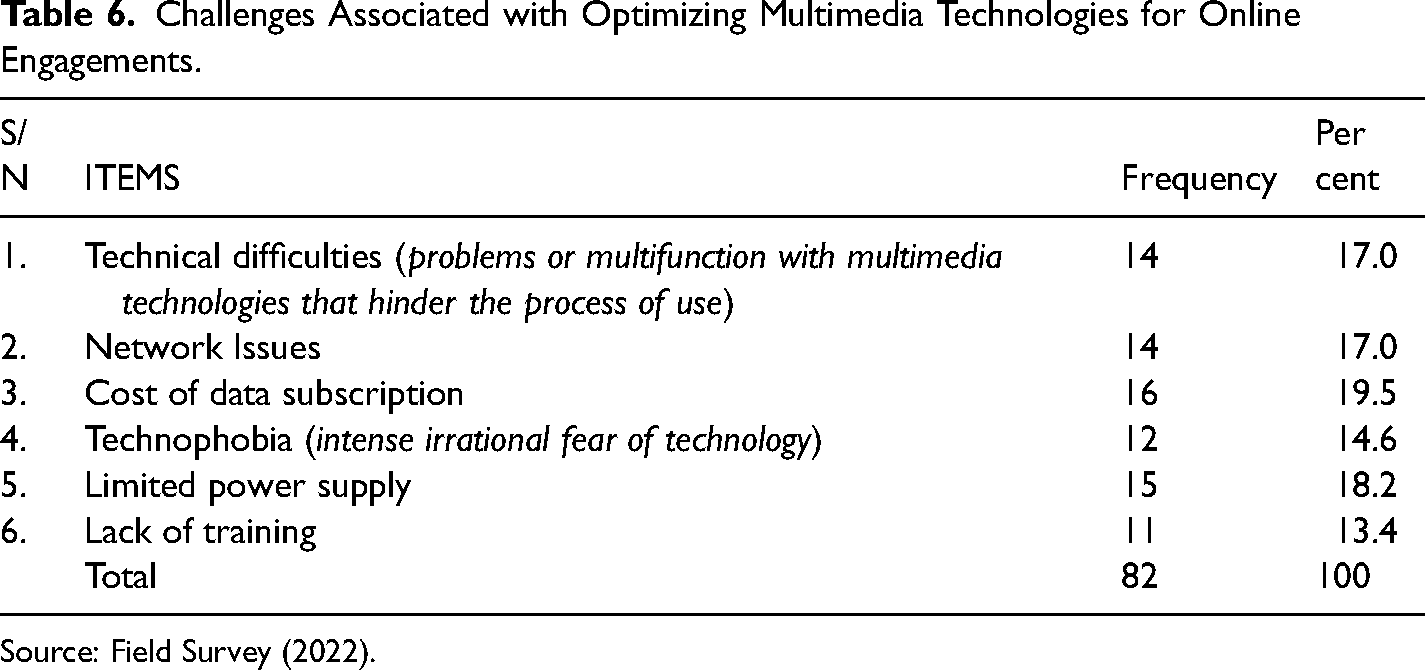
Source: Field Survey (2022).
Table 6 outlines the difficulties associated with using Multimedia technologies for online engagements in Nigerian library schools. The findings show that there are numerous challenges. They are technical know-how difficulties, cost of data subscription, network issues and lack of training users on how to use Multimedia technologies for online engagements.
Discussion of Findings
According to previous studies on Multimedia technologies, such as Archibald, et al. (2019), most researchers at Nigerian library schools are aware of the prevalence and importance of Multimedia technologies. The study found that participants recognized the importance of Multimedia technologies as an excellent and promising tool for online engagements; nonetheless, the platform was not preferred over face-to-face mode. Probably, the researchers’ readiness to continue using the face-to-face online presentation in this study reflects either their lack of digital abilities in the usage of Multimedia technologies or their prior unfamiliarity with the technologies. The findings of this study, which show that online engagement using Multimedia technologies is both convenient and cost-effective, are congruent with those of Lobe et al. (2020). The findings also show that the Multimedia technologies were innovative, pleasant, and extremely satisfying to the participants. Participants also agreed that as compared to face-to-face presentations, Multimedia technologies boost social acceptability and digital capacity. This conclusion is consistent with the findings of Lo Iacono et al. (2016), who got a similar reaction in their study. Although participants identified challenges such as the cost of data subscription, technical difficulties, network issues, low ICT knowledge, technical know-how difficulties, and a lack of training on the use of Multimedia technologies for online engagements, the cost of data subscription remains the most significant constraint to the use of Multimedia technologies. This result is consistent with the researchers’ observations during an online presentation of a research project by some graduating library school students that are not addressed by this study. Some students did not finish certain courses because they could not afford to pay for a data subscription, which prevented them from taking exams through Multimedia technologies. This is also one of the main reasons why some Nigerian higher education researchers do not attend webinars. Furthermore, this study demonstrates that the benefits of adopting Multimedia technologies for online engagement outweighed the drawbacks.
Conclusion
This study took into account researchers’ perspectives on optimizing Multimedia technologies for online engagement in Nigerian library schools. The study included 98 Nigerian Library School researchers through distributed questionnaires via online forums/platforms. The findings revealed that the majority of respondents are quite aware of the presence and importance of Multimedia technologies for virtual research presentation, and their attitude toward the usage of Multimedia technologies for online engagement is very positive. The majority of respondents describe Multimedia technologies as very interesting and highly satisfactory platforms for collaborations; they also note that using Multimedia technologies is much more convenient and cost-effective than a face-to-face presentation, especially when the research work is to be presented outside of the presenter's geographical location. The study noted technical difficulties, network issues, the cost of data subscription, a lack of ICT understanding, and a lack of training as challenges.
Recommendations
The following are suggested based on the study's findings. Training should be a major strategy for library schools in Nigeria to accommodate the teaching of the use of Multimedia technologies for online engagements. The training can take the following forms:
Integrate Training into the LIS Curriculum as Credit-Bearing Coursework. The training can include incorporating multimedia and digital literacy courses into the core or elective modules of the Library and Information Science (LIS) curriculum. Suggested course titles can include but should not be limited to digital media in libraries, multimedia tools for information service delivery, virtual engagement and content creation in libraries, credit value: 2 or 3 units, with both theory and practical components and there should be continuous assessment through project work, media content creation, and online engagement simulations. The training can also be in the form of Hands-On Practical Workshops and Bootcamps through organization of semester-based multimedia bootcamps where students engage in video editing and podcasting, live streaming techniques (e.g., Zoom, YouTube Live, OBS), use of design tools (Canva, Adobe Spark, InShot, etc., digital storytelling and infographics for library services, and involve industry experts and media professionals as guest instructors. Internship Placement with Digital and Multimedia Units. The ministry should revise internship (SIWES) placements to include exposure to ICT and media units of libraries or institutions. With this, students can work with virtual reference services, digital collections, or communication units to apply skills. Establishment of Multimedia Labs in LIS Departments. The LIS schools should be equipped with audio-visual studios, podcast recording booths, editing software and mobile media kits, labs should support both teaching and content creation, enabling students to experiment with real tools. Certification and Lifelong Learning Opportunities. There is a need to partner with platforms like Coursera, LinkedIn Learning, and UNESCO's Digital Literacy programs to offer micro-credentials and certificates in areas like multimedia production, digital engagement, online teaching tools, and encourage faculty and students to continuously upgrade their skills beyond the classroom. Research and Project-Based Learning. Final year projects and research topics should include themes on digital engagement, multimedia librarianship, and emerging technologies. Encourage student-led content like library YouTube channels, student-created virtual exhibitions, social media campaigns for literacy and outreach Continuous Faculty Development. It is important to train LIS lecturers on the pedagogy and use of multimedia tools so they can confidently teach and guide students. Organize annual train-the-trainer workshops in collaboration with the Nigerian Library Association (NLA) and media institutions. These suggestions aim to produce graduates who are media-literate, digitally skilled, and adaptable to emerging roles in modern libraries, especially within the dynamic landscape of the 5th Industrial Revolution.
The study indicated that Multimedia technologies are a more suitable platform for virtual presentation when compared to face-to-face or physical collaborations. Therefore, the government, through the Ministry of Education, should increase funding for academics to subscribe to dependable internet connections to maximise the use of Multimedia technologies for online engagements. However, if this is not forthcoming, authority of the individual university should rise to the occasion of making provision for multimedia technologies.
It is also suggested that technical difficulties associated with the use of Multimedia technologies for online engagement be addressed or reduced by providing written instructions before the presentation session.
Limitations and Future Research Directions
This study looked into researchers’ perspectives to optimise Multimedia technologies for online engagement in Nigerian library schools. The study focused on only six of Nigeria's many library schools across the country's six geopolitical zones. Extending the research to other library schools throughout the country will produce valuable and useful results that can be applied to all library schools in Nigeria.
Second, the study used a self-reported open and closed-ended instrument to collect data, and the sample size was limited to LIS researchers from six library schools where the instrument was administered. As a result, future research should explore doing a comprehensive qualitative study on optimising Multimedia technologies for online engagement in Nigeria. Future research should investigate additional possible areas of interest and gaps mentioned in the study.
Footnotes
Declaration of Conflicting Interests
The authors declared no potential conflicts of interest with respect to the research, authorship, and/or publication of this article.
Funding
The authors received no financial support for the research, authorship, and/or publication of this article.
