






Abstract
Although research on educational technology integration has expanded, limited attention has been paid to how digital technologies are integrated into teacher education. To address this gap, this study combines a macro-level bibliometric analysis of 546 Web of Science publications with a micro-level TPK-based content analysis of 41 studies on Integrated Technologies in Teacher Education (ITTE). The bibliometric findings show that ITTE research is concentrated in the USA, Australia, and the UK, and has evolved from distance education, classroom teaching, and collaborative learning toward digital technologies, online teaching, digital literacy, and technology supported learning environments. Among the studies examined, the content analysis indicates frequent use of multimedia tools, learning management systems, data analysis technologies, and collaboration platforms, whereas assessment tools and technologies supporting inclusive learning remain limited. The findings highlight the need to better align technology use with pedagogical goals and learner needs in teacher education.
Keywords
Introduction
The twenty-first century presents increasingly complex educational demands, requiring students to develop advanced skills such as critical thinking, problem-solving, collaboration, digital literacy, and creativity. Equipping students with these skills depends heavily on the quality of educational experiences provided within the learning environment, where teachers play a pivotal role by modeling effective technology integration and implementing pedagogical strategies that foster these abilities.
To fulfill this role effectively, teachers must be supported through targeted professional development that goes beyond mere technical proficiency with digital tools. This process demands that teachers possess both pedagogical and technological fluency to meaningfully align digital resources with learning objectives. When strategically integrated, digital technologies can foster engagement, collaboration, differentiation, and deeper learning experiences (Angeli & Tsaggari, 2016; Merchant et al., 2014; Msafiri et al., 2023; Sailer & Homner, 2020; Tsay et al., 2018; Yang & Wu, 2012).
This evolution demands the cultivation of digital literacy and pedagogical adaptability among both teachers and students within the teaching and learning process (Mishra & Koehler, 2006; Voogt et al., 2013). These changes call for systemic support: institutions must ensure robust digital infrastructure, equitable access to technology, and ongoing professional development opportunities (Asensio-Pérez et al., 2017; Baxter & Connolly, 2014; García-Morales et al., 2020). Teacher education programs, in particular, must evolve to prepare future educators to navigate complex digital environments, design innovative learning experiences, and facilitate learner-centered instruction.
The TPACK framework has been widely used to explain how teachers integrate technology into instructional processes and develop technology-enhanced teaching practices in teacher education contexts (Harris et al., 2009; Koehler & Mishra, 2009; Voogt et al., 2013). Building on Shulman's (1986) concept of pedagogical content knowledge, the framework emphasizes the dynamic interplay among technological, pedagogical, and content knowledge required for effective technology integration (Mishra & Koehler, 2006). Prior research suggests that approaches oriented toward practice and based on design can strengthen teachers’ confidence and capabilities in using digital technologies for teaching and learning (Chai et al., 2013). At the same time, contemporary educational contexts increasingly require teachers to support twenty-first-century competencies through technology-rich learning environments (Heine et al., 2024; Lee & Kim, 2014). Despite this growing emphasis, previous TPACK-related studies have primarily focused on teachers’ competencies, perceptions, and readiness for technology integration, while comparatively less attention has been paid to how specific digital technologies function pedagogically within teacher education contexts (Archambault & Barnett, 2010; Koh et al., 2015). From this perspective, the TPK dimension provides an appropriate analytical lens for examining how technological affordances interact with pedagogical strategies to support meaningful learning experiences.
Accordingly, this study extends prior TPACK and ITTE-related research by combining bibliometric mapping with a TPK-based content analysis to examine not only the evolution of the field but also the pedagogical functions of digital technologies within teacher education contexts.
While much research highlights the general benefits of technology integration in the teaching and learning process, there remains a lack of detailed, structured analysis of how specific digital technologies are integrated into teacher education and what pedagogical roles they fulfill. The present study addresses this gap by conducting a dual-phase investigation: (1) a bibliometric analysis to map the evolution and trends of Integrated Technologies in Teacher Education (ITTE), and (2) a content analysis guided by the lens of Technological Pedagogical Knowledge (TPK), a component of the TPACK framework to explore how digital technologies function pedagogically in the training of both pre-service and in-service teachers.
In combining these two phases, the study adopts a macro–micro analytical framework. The macro-level bibliometric mapping provides an overview of research growth and thematic development but remains limited in capturing the pedagogical depth and contextual realities of technology integration within teacher education (Xu et al., 2021). Therefore, a micro-level TPK-based content analysis was conducted to examine how digital technologies are pedagogically enacted within teacher education contexts. This layered design connects pedagogical practices in instructional settings with broader scholarly trends and highlights where conceptual developments diverge from instructional implementation, offering a more comprehensive understanding of technology integration in teacher education.
Literature Review
Digital Technologies in Teacher Education
The integration of digital technologies has fundamentally transformed educational practices by fostering learner-centered, interactive, and dynamic learning environments. These technologies empower both pre-service and in-service teachers as well as their students by promoting critical thinking, motivation, collaboration, and problem-solving skills (Fajari et al., 2020; Jou et al., 2016; Jonassen, 2003; Yeh et al., 2021). By bridging the gap between theory and practice, digital tools facilitate active and personalized learning experiences, often through multimedia content creation and adaptive engagement strategies (Kompen et al., 2019; Stevenson et al., 2019).
To harness these benefits effectively, teachers need to develop competencies in planning, designing, and implementing technology-supported instruction tailored to diverse learner needs and aimed at meaningful knowledge application (Claro et al., 2018; Sailer et al., 2021). When strategically integrated, digital technologies also promote continuous professional development and expand learning beyond traditional settings through informal communication, collaborative authoring, and networked knowledge sharing (Franklin & Van Harmelen, 2007). However, the effectiveness of these technologies largely depends on how they are pedagogically aligned with instructional goals, learner needs, and contextual classroom practices.
In response to these challenges, conceptual frameworks such as TPACK have been widely adopted to explain effective technology integration in educational contexts. Within the domain of teacher education, a wide range of digital platforms, from blogs and wikis to e-portfolios and media-sharing tools, play a pivotal role in supporting reflective practice, collaborative learning, and personalized professional growth. These platforms enable pre-service teachers to engage authentically with pedagogical concepts, experiment with instructional strategies, and interact with peers in meaningful ways (Deng & Yuen, 2013; Kale, 2014). They also create simulated classroom environments where future teachers can explore and refine their teaching approaches (Nilsson & Karlsson, 2019; Robin, 2008). Although these technologies have been associated with reflective practice and collaborative learning, prior research has often examined them as isolated tools rather than analyzing their broader pedagogical functions across teacher education contexts.
Building on these foundations, emerging technologies such as augmented and virtual reality, mobile learning environments, and comprehensive learning management systems extend opportunities for immersive, scalable, and experiential learning (Cabero et al., 2017; Dede et al., 2017; Fuentes-Cabrera et al., 2019). Moreover, coding environments and educational robotics are increasingly recognized for their potential to foster computational thinking and problem-solving, competencies considered essential for both twenty-first-century educators and learners (Balogun, 2024; Fanchamps et al., 2024; Giannandrea et al., 2020; Mason & Rich, 2019; Pellas et al., 2019).
Despite their potential, meaningful technology integration in teacher education remains challenging. Prior studies have shown that meaningful technology integration requires not only access to digital tools but also pedagogically informed instructional design and contextual adaptation (Ertmer, 2003). Furthermore, while many studies report positive outcomes related to technology integration, comparatively fewer studies critically examine how specific digital technologies function pedagogically within teacher education settings.
While TPACK provides a comprehensive framework for understanding teachers’ knowledge required for technology integration, this study specifically foregrounds the TPK dimension because its primary focus is not on measuring teachers’ overall competencies, but rather on examining the pedagogical functions and instructional affordances of digital technologies within teacher education contexts. In this respect, the TPK lens enables a closer analysis of how technologies are aligned with instructional strategies, learning activities, and pedagogical goals across diverse educational settings. By emphasizing the interaction between technology and pedagogy, the study aims to reveal how digital tools support differentiated instruction, active learning, collaboration, reflective practice, and higher-order thinking (Angeli & Valanides, 2009).
Accordingly, this study extends prior TPACK and ITTE-related research by combining bibliometric mapping with a TPK-oriented content analysis to examine not only the evolution of the field but also how digital technologies function pedagogically within teacher education contexts.
Gaps in the Literature and Need for This Study
Although research on technology integration within teacher education has grown significantly, important gaps remain. Existing reviews predominantly examine broad adoption trends or discipline-specific applications, often overlooking the pedagogical affordances of specific digital technologies and how they are enacted within instructional contexts (Yilmaz et al., 2022). Similarly, prior TPACK-related studies have largely focused on teachers’ competencies, perceptions, or self-reported knowledge levels, with comparatively limited attention given to the pedagogical roles and functional integration of digital technologies within teacher education practices (Archambault & Barnett, 2010; Chai et al., 2013).
In addition, existing bibliometric reviews have primarily focused on publication trends, citation structures, and research productivity, providing limited insight into how digital technologies function pedagogically within teacher education contexts (Baako & Abroampa, 2023; Xu et al., 2021). Given the growing yet fragmented landscape of ITTE research, macro-level patterns alone provide an incomplete understanding of how digital technologies are enacted in teacher education. Although bibliometric analyses can reveal conceptual emphases, influential scholars, and thematic shifts over time, they cannot fully capture the pedagogical depth, contextual nuances, and practical realities of technology use in instructional settings. Therefore, a complementary micro-level analysis is needed to examine the pedagogical functions of specific digital tools. Combining these perspectives enables a stronger connection between broad scholarly trajectories and concrete teaching practices, while also revealing where conceptual developments diverge from classroom implementation.
To address these gaps, the present study adopts a twofold analytical approach. First, it conducts a comprehensive bibliometric analysis of ITTE studies to map influential authors, journals, collaborative networks, and emerging thematic trends. Second, building on these findings, a TPK-based content analysis categorizes digital technologies according to their pedagogical functions within teacher education contexts. Unlike previous bibliometric reviews that primarily focused on research patterns and publication outputs, this combined macro–micro framework enables a more detailed examination of how digital technologies function as pedagogical enablers in teaching and learning processes. More specifically, the study explores how technological affordances intersect with instructional strategies, learner engagement, reflective practice, collaboration, and differentiated teaching approaches.
By integrating bibliometric mapping with a TPK-based pedagogical analysis, the study provides educators, researchers, and policymakers with a more comprehensive understanding of technology integration in teacher education. It offers both theoretical contributions and practical insights for designing teacher education programs that more effectively align digital technologies with pedagogical goals, learner needs, and evolving educational demands.
Ultimately, the study contributes to the ITTE domain by identifying emerging technologies and pedagogical approaches reflected in the Web of Science (WoS) database up to 2024, thereby informing future research and supporting more pedagogically meaningful technology integration in teacher education.
Research Questions (RQs)
What are the bibliometric characteristics of studies conducted in the field of ITTE?
Which digital technologies are integrated into teaching and learning processes through the lens of the TPK component of the TPACK framework, particularly in teacher education?
Method
This study employs a dual-phase research design integrating both quantitative and qualitative approaches to examine technology integration in teacher education. Bibliometric analysis provides a systematic approach for identifying publication trends, thematic developments, and collaboration structures within a research field (Donthu et al., 2021). Accordingly, the study adopts a two-level analytical framework consisting of a macro-level bibliometric analysis to map structural trends in the field and a micro-level content analysis to explore the pedagogical functions of specific digital technologies. This combined design links broad scholarly trends with classroom-relevant insights grounded in the TPK lens.
Macro-Level Phase: Bibliometric Analysis
For the quantitative component, 546 Web of Science articles were analyzed bibliometrically using R and VOSviewer. Following McBurney and Novak (2002), the analysis examined publication trends, national and institutional outputs, keyword co-occurrence networks, clusters, co-citation patterns, and citation bursts. This macro-level mapping highlights how ITTE research has evolved, identifying influential contributors, emerging themes, and the collaborative structure of the field.
Micro-Level Phase: TPK-Guided Content Analysis
The qualitative component involved a content analysis of 41 purposively selected articles to identify the digital technologies used within the scope of the selected studies on teacher education. Technologies were categorized into pedagogically oriented themes aligned with the TPK dimension of the TPACK framework. The frequencies reported in the findings refer to the number of studies in which each technology category or pedagogical theme was identified, rather than to the number of individual digital tools. Because each study could include more than one technology category or pedagogical theme, the categories were not mutually exclusive; therefore, the total frequencies may exceed the number of studies included in the content analysis. This micro-level analysis captured the pedagogical depth, contextual nuances, and practical enactment of digital technologies that macro-level findings alone cannot reveal. The coding process combined deductive and inductive approaches, focusing on how digital technologies supported instructional planning, delivery, assessment, collaboration, reflection, and learner engagement within teacher education programs.
Together, these complementary phases provide a holistic understanding of technology integration in ITTE. The bibliometric analysis reveals how the field has developed conceptually and structurally, while the TPK-guided content analysis uncovers how digital technologies are operationalized pedagogically in pre-service and in-service teacher education.
Data Collection Tools
In this study, Biblioshiny in R and VOSviewer were used as the primary bibliometric analysis tools. These software packages are widely employed for science mapping and bibliometric visualization analyses (Aria & Cuccurullo, 2017; van Eck & Waltman, 2010). Quantitative bibliometric techniques were applied to examine the development of research in ITTE over time. The tools facilitated the analysis of publication trends, thematic structures, collaboration networks, and the intellectual evolution of the field, while also enabling the generation of visual representations to provide a comprehensive overview of the literature.
Data Collection Process and Analysis
WoS was selected as the data source due to its extensive coverage of peer-reviewed literature. Data selection followed the Preferred Reporting Items for Systematic Reviews and Meta-Analyses (PRISMA) methodology for article retrieval and screening (Page et al., 2021), including the stages of identification, screening, eligibility, and inclusion (Figure 1).
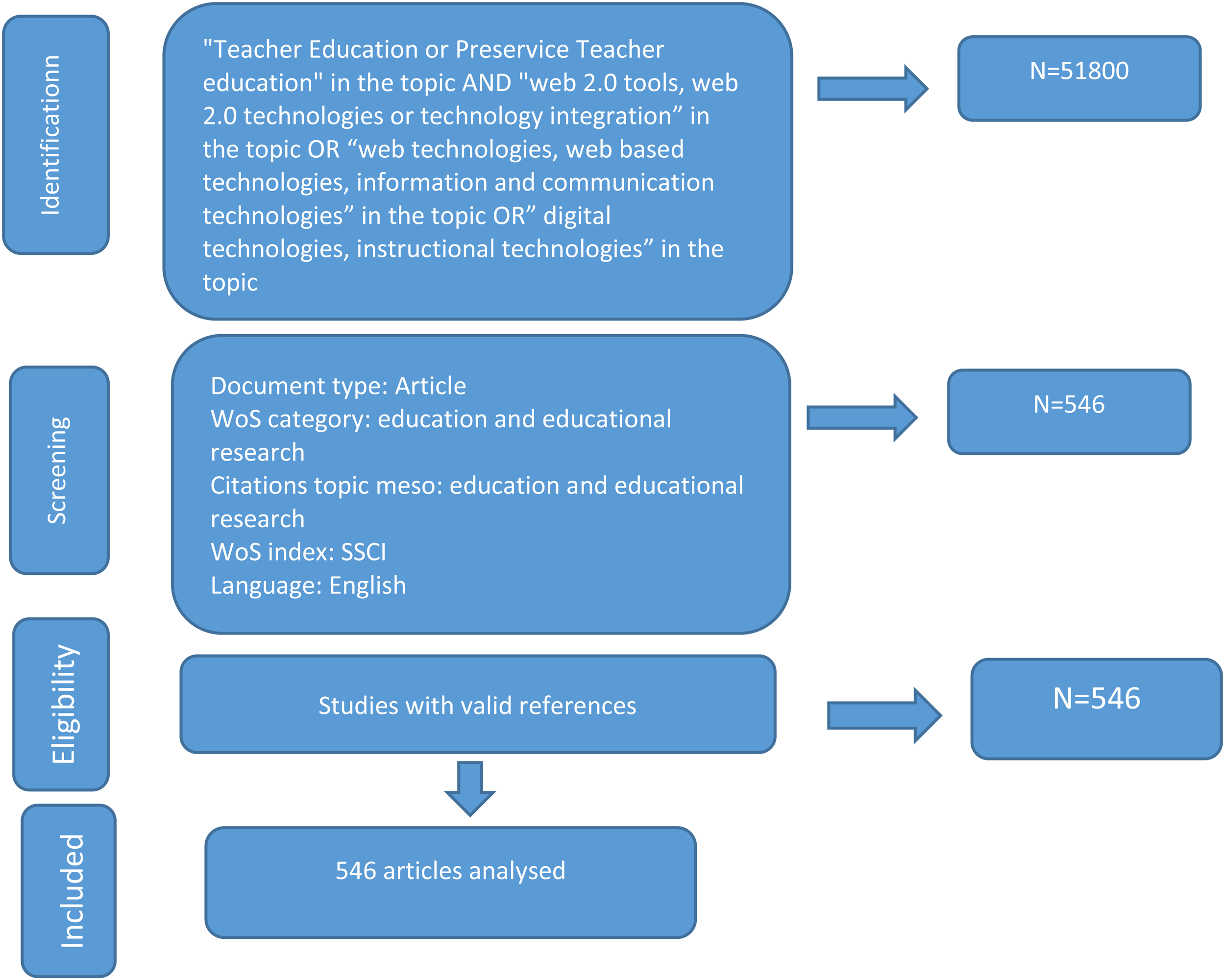
PRISMA guidelines followed.
The review focused on English-language literature addressing technology integration in teacher education available in WoS. The initial search required the terms “Teacher Education” or “Preservice Teacher Education” to appear in the article topic, combined with at least one of the following expressions: “web 2.0 tools,” “web 2.0 technologies,” or “technology integration” in the topic, OR “web technologies,” “web-based technologies,” “information and communication technologies,” “digital technologies,” or “instructional technologies” in the topic.
This search yielded 51,800 documents, including articles, books, book chapters, and conference papers. The screening process then applied successive filters: limited to articles only (33,557), within the WoS category Education and Educational Research (6,804), restricted to the citation topic Meso-Education and Educational Research (1,940), indexed in SSCI (594), and published in English, resulting in a final dataset of 546 articles.
Content Analysis
Building on the trends identified in the bibliometric analysis, the second phase examined 41 of the 546 articles that investigated the pedagogical integration of digital technologies in teacher education. Content analysis, defined as “a research technique for making replicable and valid inferences from texts” (Krippendorff, 2004, p. 18), focused on studies involving pre-service or in-service teachers who engaged in sustained technology integration over extended instructional periods rather than short-term or isolated interventions. Eligible studies required participants to actively use digital technologies as part of instructional planning, teaching, assessment, collaboration, or reflection processes, whereas studies involving passive, fragmented, or purely technical uses of technology were excluded.
Studies included in the qualitative content analysis were selected through purposive screening. Articles were included if they: (a) focused on pre-service or in-service teacher education, (b) examined the pedagogical integration or use of digital technologies, (c) provided sufficient detail regarding instructional practices or technology implementation, and (d) involved sustained technology use over extended instructional periods. Screening began with abstract review and continued with full-text analysis.
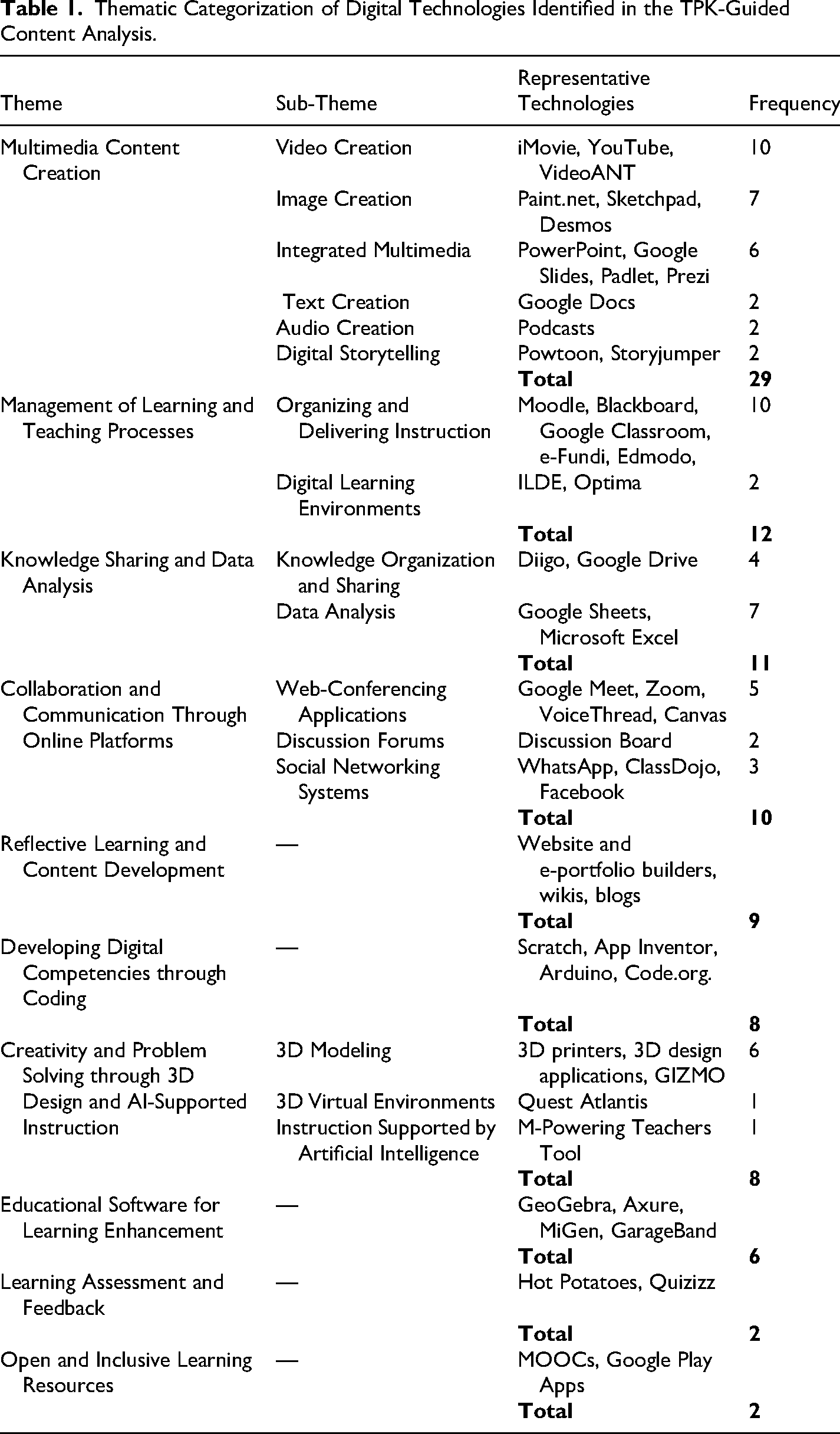
The coding process combined deductive and inductive approaches guided by the TPK dimension of the TPACK framework. During repeated readings of the selected studies, each article was examined in terms of the educational context, participants, type of technology used, duration of implementation, and the pedagogical purpose of technology integration. Technologies were coded according to how they supported instructional planning, content creation, collaboration, communication, assessment, reflective practice, problem solving, and learner engagement. Similar codes were then grouped into broader thematic categories based on shared pedagogical affordances and instructional purposes (see Table 1).
Thematic Categorization of Digital Technologies Identified in the TPK-Guided Content Analysis.
The inclusion and exclusion of studies for the content analysis were also guided by these criteria. For example, van der Westhuizen and Golightly (2015) were included because the study examined the semester long implementation of VideoANT and a learning management system in microteaching lessons for preservice geography teachers. This study was considered relevant because technology use was embedded in a teacher education context and supported pedagogical reflection and instructional practice over an extended period. In contrast, Pittalis and Drijvers (2023) were excluded because the study involved a brief tablet based Dynamic Geometry Environment activity rather than sustained pedagogical technology integration within teacher education contexts. Therefore, it did not sufficiently align with the focus of the present content analysis on pedagogically meaningful and sustained technology integration in teacher education.
After determining which studies met the inclusion criteria, the technologies reported in these studies were further categorized according to their dominant pedagogical affordances and instructional purposes. For instance, blogs, wikis, and e portfolio tools were categorized under “Reflective Learning and Content Development” because the reviewed studies showed that these tools supported reflective practice, self assessment, collaborative knowledge construction, and the development of digital learning materials. Similarly, tools such as Quizizz and Hot Potatoes were grouped under “Learning Assessment and Feedback” because their primary instructional function was related to formative assessment, feedback provision, and the monitoring of learners’ understanding. In this way, the thematic categorization focused not only on the names or types of digital tools, but also on how these tools were pedagogically enacted within teacher education settings.
To ensure coding reliability, Cohen's Kappa statistic (Cohen, 1960) was applied to measure inter-coder agreement, yielding a coefficient of 0.81, which indicates a high level of reliability between coders.
Findings
Macro-Level Bibliometric Findings on ITTE Research Trends
Nations, Institutions, and Journals
The United States leads with 83 articles, followed by Australia (67), the UK (64), China (44), and Spain (37). Most publications are single-country studies, with limited multi-country collaborations. Specifically, multi-country collaborative publications account for 14% in the USA, 13% in Australia, 16% in the UK, 27% in China, and 16% in Spain. In Turkey, all 27 publications are single-country productions. Figure 2 illustrates the geographical distribution of lead authors.
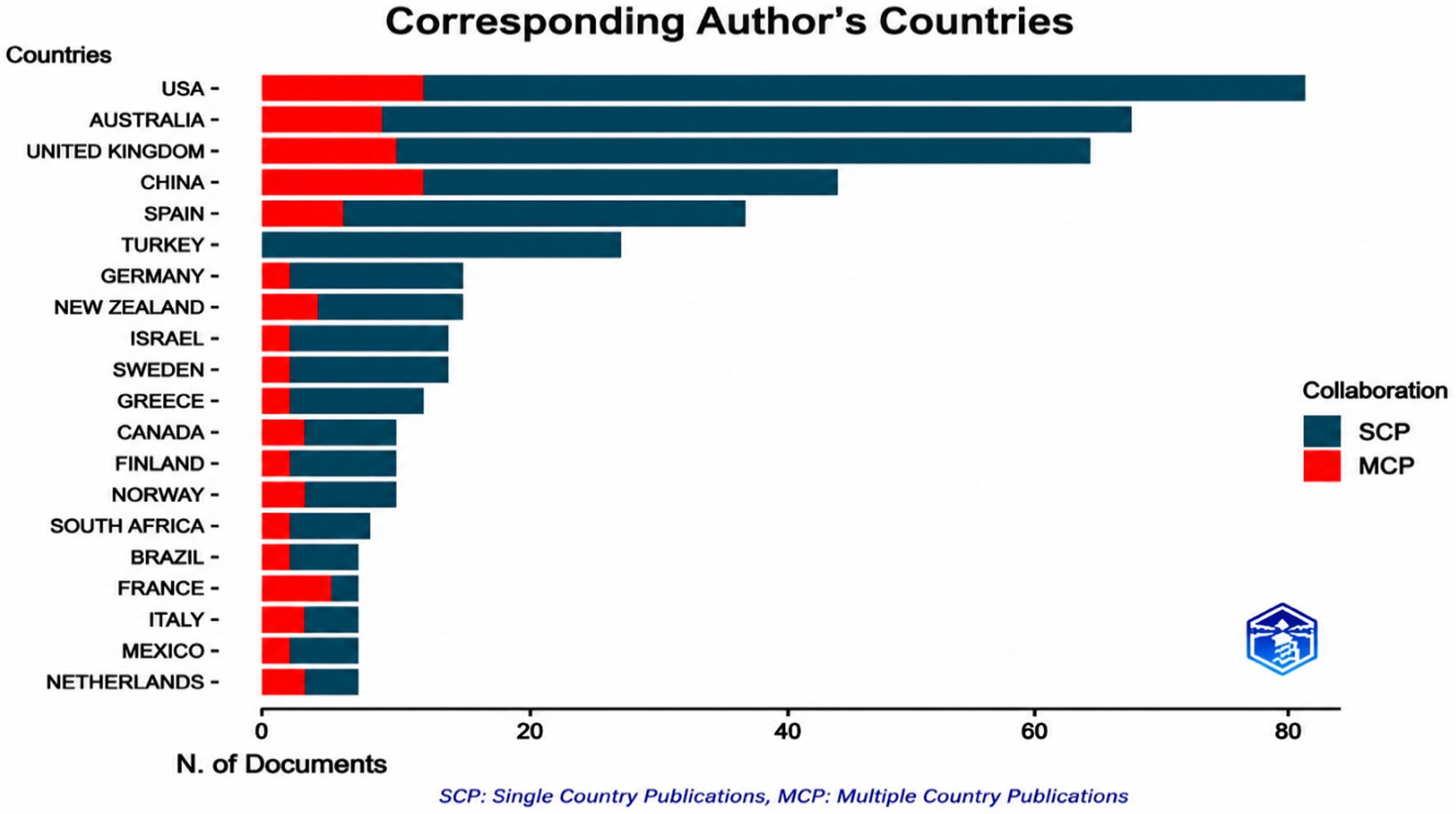
The number of articles on ITTE by country.
On the other hand, the combined number of publications from three countries with well-established research cultures, namely the USA, Australia, and the UK (totaling 214), is nearly equal to the total publications from all other countries combined (258). This underscores the concentration of research output within these leading nations.
In terms of academic institutions in ITTE research, the University of London leads with the highest number of publications at 23, followed by Monash University (20), Tecnológico de Monterrey (17), University College London (16), UCL Institute of Education (13), University of Hong Kong (10), and Deakin, Harvard, and Oslo universities (9 each). The majority of these publications (52 in total) are affiliated with UK universities, followed by Australian (29), Chinese (18), and US (9) institutions, underscoring the dominance of UK and Australian universities. In terms of the journals most active in publishing ITTE research articles, Education and Information Technologies leads ITTE publications with 39 articles, followed by the British Journal of Educational Technology (34), Computers & Education (31), Educational Technology and Society (22), and Technology, Pedagogy & Education (20). Among the top 10 journals, 6 are UK-based, 2 from the USA, 1 from Canada, and 1 from Taiwan, reflecting the dominance of UK journals in this field.
Relevant Authors, Their co-Authorship and top Cited Documents
In terms of contributions to ITTE research, Selwyn, N. stands out with ten publications, followed by Decuypere, M., Drijvers, P., Voogt, J., Escamilla, J., Hannafin, M. J., Hooper, S., Henderson, M., Hosseini, S., Newhouse, C. P., and Okoye, K., each with four publications. Additionally, Akkoyunlu, B. has contributed three publications to the field.
Figure 3 presents the most influential authors and their contributions to ITTE research over time. The earliest work is attributed to Hannafin and Hooper (1989), and publication activity increased significantly after 2008, reaching its highest levels by 2023. While Selwyn and Decuypere remain prominent long-term contributors, newer researchers such as Drijvers, Escamilla, Hosseini, and Okoye have emerged in recent years. These trends indicate both the continuity of established expertise and the growing scholarly interest in ITTE.
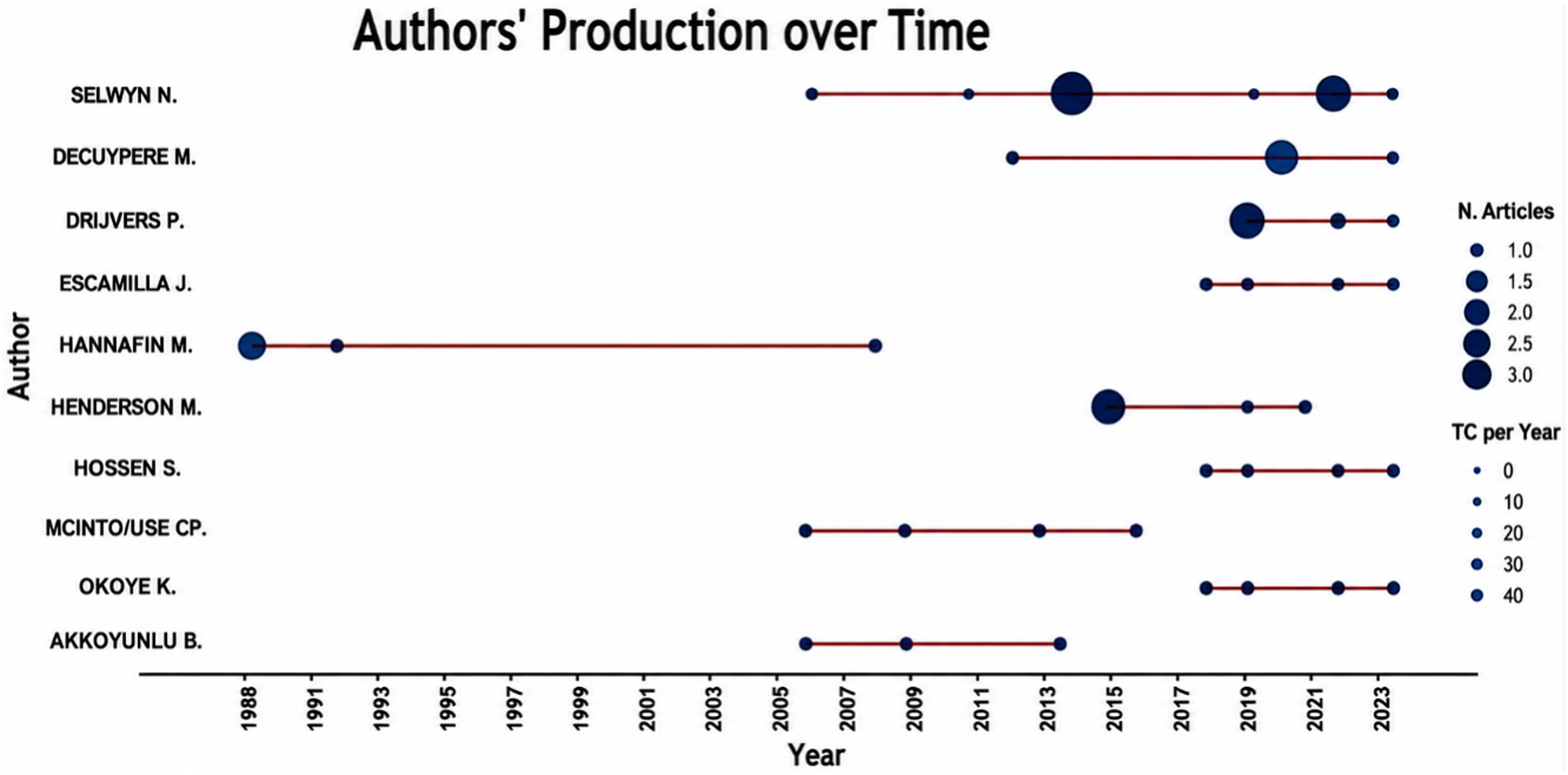
Author's production over time.
Figure 4 illustrates the interconnections between authors in ITTE. The analysis reveals very limited collaboration, with only weak links observed, for example between Hosseini and Escamilla, and between Shamir and Biau. Beyond these pairs, connections rarely expand, and no bridges link different clusters. This indicates that ITTE research is mostly produced by small, independent teams of two or three authors working within isolated groups. Such fragmentation highlights the need for stronger collaborative networks to support knowledge exchange and cumulative research development.
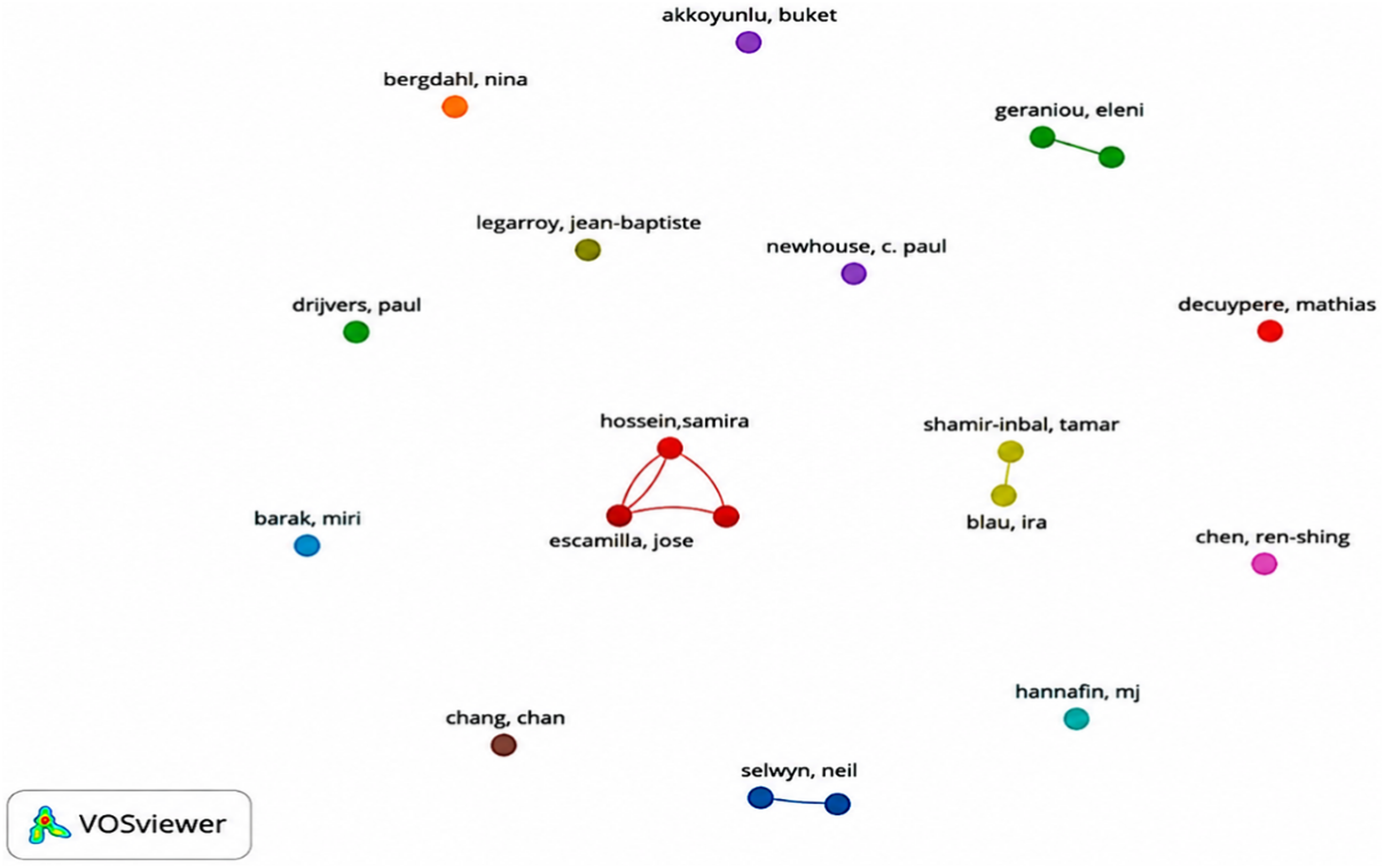
Co-authorship among writers.
In terms of the most frequently cited publications in ITTE research, the most cited study is by López-Pérez et al. (2011),” “Blended learning in higher education: Students’ perceptions and their relation to outcomes”, ranks first with 407 citations. Kirkwood and Price's (2014) critical review of technology-enhanced learning follows with 356 citations. The third most cited article is Dziuban et al.'s (2018) work on blended learning and emerging technologies, cited 326 times. The fourth is Henderson et al.'s (2017) study on students’ perceptions of useful digital technologies in university teaching and learning, which has accumulated 298 citations.
Footprints and Critical Transitions
Figure 5 illustrates how major research themes in ITTE have evolved over time across five periods from 1990 to 2024. In the earliest period, research was mainly associated with distance education, science education, collaborative learning, and pedagogical issues. Between 2011 and 2015, the field expanded toward education, improving classroom teaching, blended learning, teacher education, digital technologies, ICT, and e-learning. During the 2016–2020 period, digital technologies, e-learning, teacher education, blended learning, achievement, assessment, and technology became more visible, indicating a stronger emphasis on technology-supported teaching and learning processes. In 2021–2022, themes such as digital technologies, higher education, professional development, education, blended learning, and data gained prominence. The most recent period, 2023–2024, shows a further shift toward online learning, digital technologies, education, higher education, primary education, pre-service teachers, and learning engagement. Overall, the figure suggests that ITTE research has evolved from earlier interests in distance education and pedagogical issues toward a broader focus on digital technologies, online learning, professional development, and learner engagement.
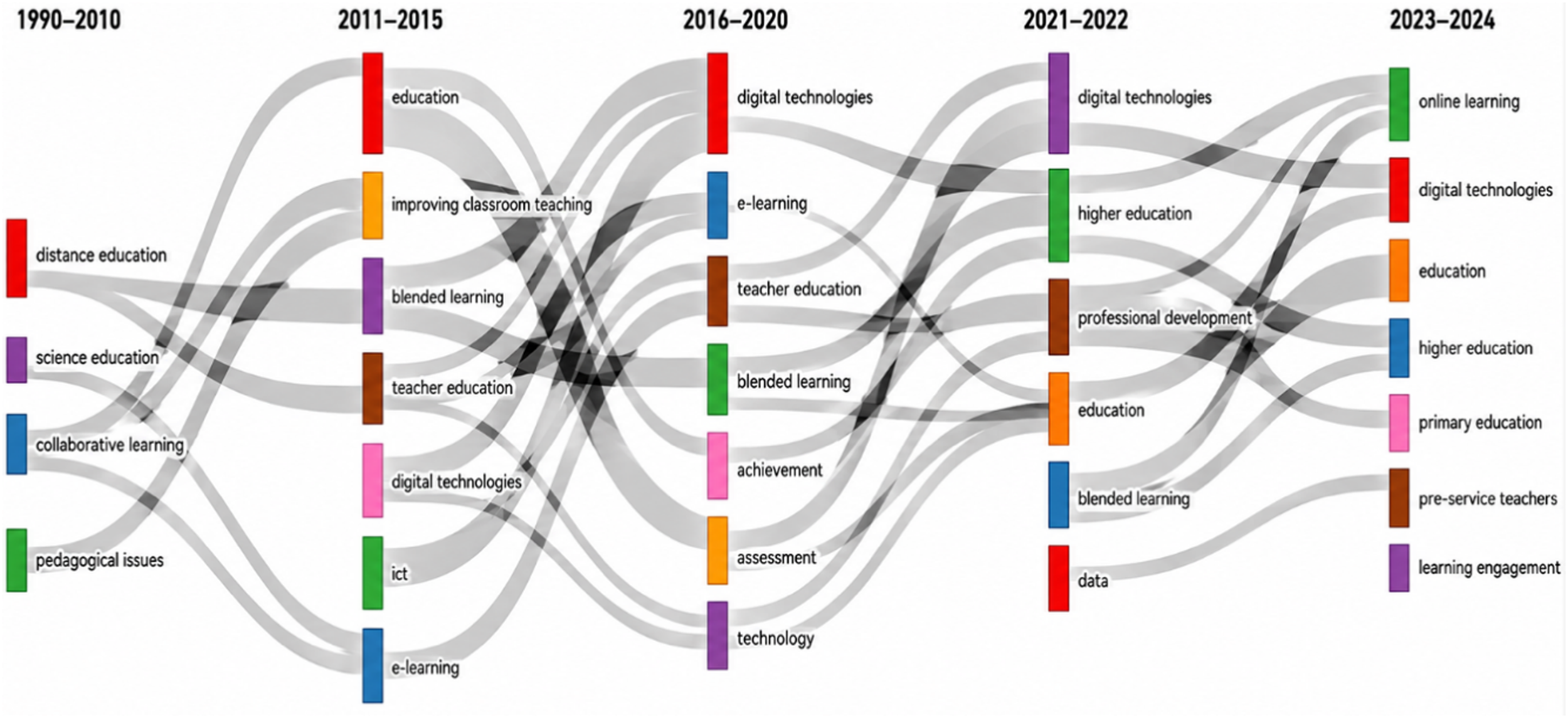
Milestones and pivotal shifts in ITTE research.
Emerging Patterns
Figure 6 highlights both established and emerging research areas in ITTE based on the average publication year of the keywords. Dark blue and green themes indicate topics that appeared more prominently in earlier periods, whereas yellow themes represent more recent areas of attention. The map shows that major themes in ITTE include digital technologies, higher education, blended learning, e-learning, technology, digital technology, information and communication technology, distance learning, improving classroom teaching, teaching and learning strategies, cooperative and collaborative learning, and digital literacy. Earlier themes were mainly associated with distance learning, collaborative learning, media literacies, learning strategies, and improving classroom teaching.
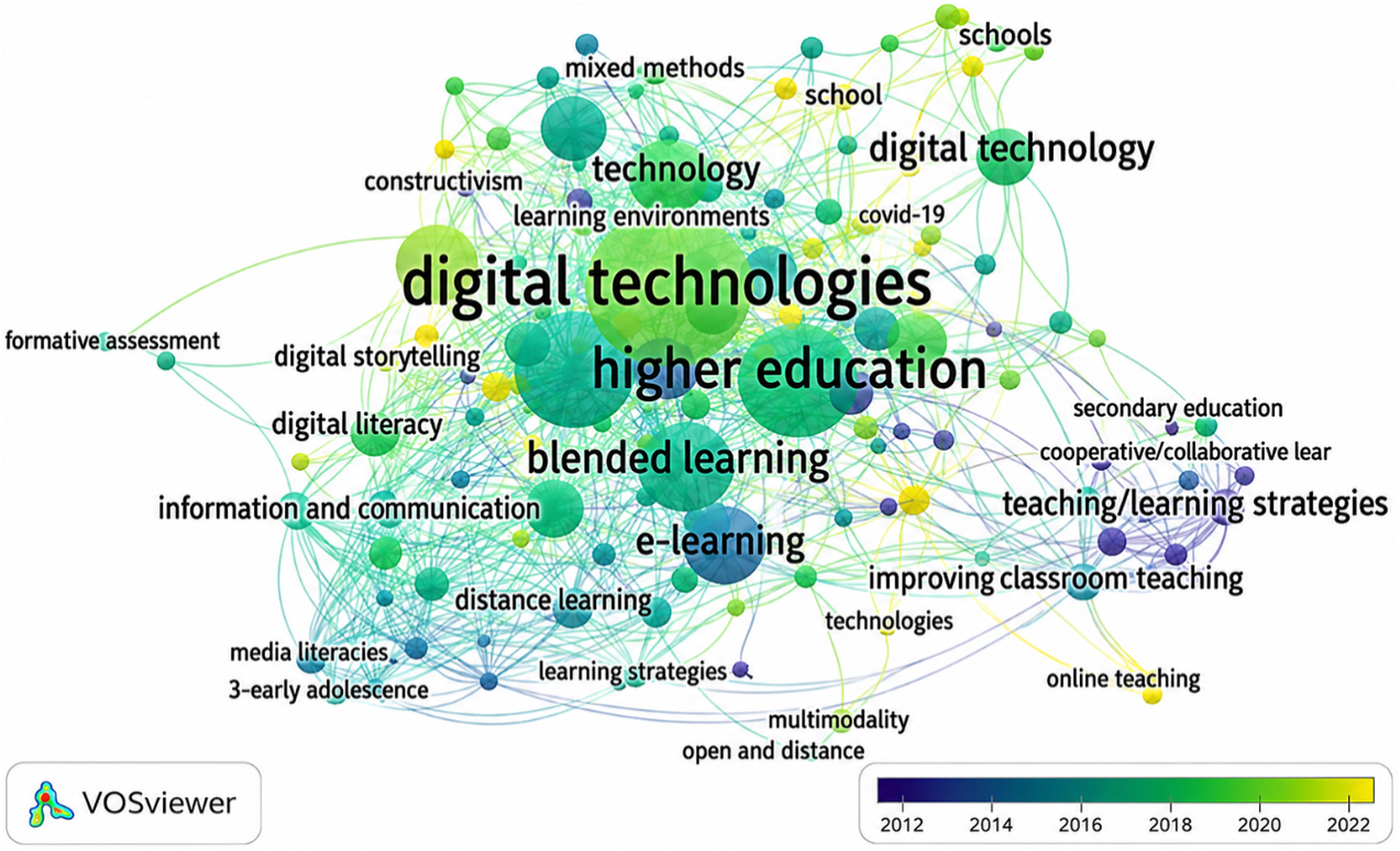
The evolution and distribution of topic popularity over the years since the mid-2010s.
More recent themes are linked to online teaching, COVID-19, schools, constructivism, digital storytelling, formative assessment, and digital technology. Overall, the figure suggests that ITTE research has evolved from earlier interests in distance education, classroom teaching, and collaborative learning toward broader concerns related to digital technologies, online teaching, digital literacy, and technology supported learning environments.
Micro-Level Content Analysis of Technologies in ITTE Research
Building on the trends and emerging topics identified in ITTE research, the second phase of this study adopts a micro-level content analysis to examine how digital technologies are pedagogically integrated among the selected ITTE studies. This phase focuses on 41 of the 546 studies involving pre service or in service teachers who engaged in sustained technology use over extended instructional periods, excluding short term or passive interventions.Through a TPK-guided thematic analysis supported by frequency counts, the identified technologies were categorized into ten pedagogically oriented themes, with representative tools presented under each category (Table 1). Rather than merely identifying commonly used technologies, the analysis highlights how these digital tools function pedagogically in supporting instructional planning, collaboration, reflective practice, assessment, learner engagement, and differentiated teaching approaches within teacher education. Table 1 presents the detailed thematic categorization of digital technologies identified through the TPK-guided content analysis, including their sub-themes, representative technologies, and frequencies.
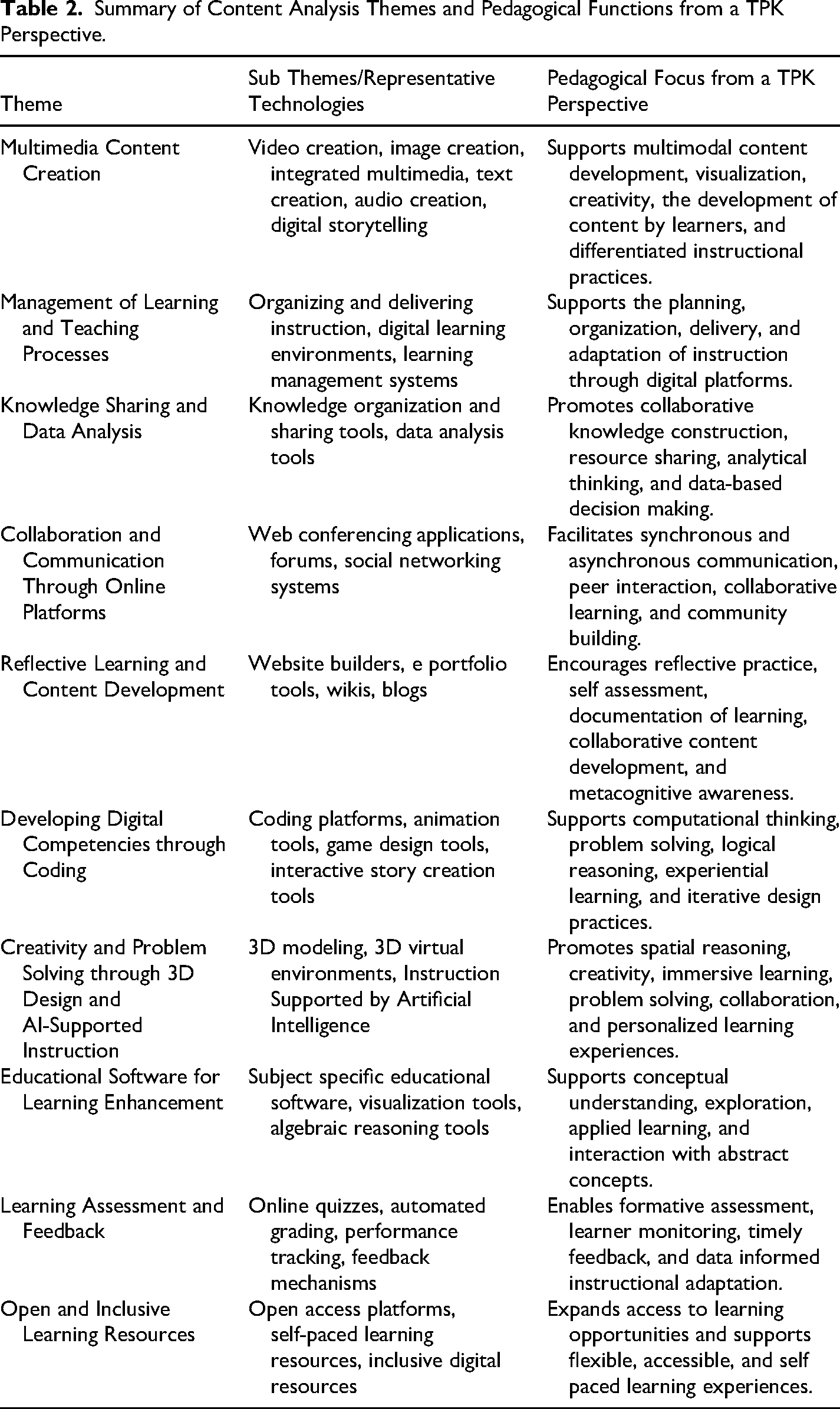
To complement this detailed categorization and provide a clearer overview of the key findings, Table 2 summarizes the main themes and their pedagogical functions from a TPK perspective.
Summary of Content Analysis Themes and Pedagogical Functions from a TPK Perspective.
Content Analysis Findings
Multimedia Content Creation
This theme (f = 29) comprises six sub-themes: Video Creation (f = 10), Image Creation (f = 7), Integrated Multimedia (f = 6), Text Creation (f = 2), Audio Creation (f = 2), and Digital Storytelling (f = 2).
Viewed through the TPK lens, this theme highlights the growing emphasis on multimodal and learner-centered instructional practices in teacher education. Video and image creation tools support visualization, scaffolding, and the communication of abstract concepts, while integrated multimedia environments enable interactive and differentiated learning experiences. Text, audio, and digital storytelling tools further promote reflective thinking, collaboration, creativity, and learner-generated content production. Collectively, these technologies demonstrate how multimedia-rich environments can support pedagogically meaningful learning experiences by aligning technological affordances with instructional goals and learner needs.
Management of Learning and Teaching Processes
This theme (f = 12) encompasses two sub-themes: Organizing and Delivering Instruction (f = 10) and Digital Learning Environments (f = 2). It focuses on digital tools and platforms that support the planning, implementation, and management of instruction.
From a TPK perspective, these technologies illustrate how digital platforms can support the organization, delivery, and adaptation of instruction in teacher education contexts. Learning management systems and digital learning environments enable teachers to coordinate instructional materials, facilitate interaction, conduct formative assessments, and support collaborative learning processes. Their integration also reflects an increasing emphasis on flexible, responsive, and learner-centered instructional design practices that align technological affordances with pedagogical strategies and diverse learner needs.
Knowledge Sharing and Data Analysis
This theme (f = 11) consists of two sub-themes: Knowledge Organization and Sharing (f = 4) and Data Analysis (f = 7). It encompasses digital platforms and applications that enable users to share resources, collaborate, and analyze data to enhance educational practices and learning processes.
Viewed through the TPK lens, this theme highlights the increasing emphasis on collaborative knowledge construction and data-informed learning practices within teacher education. Technologies supporting knowledge organization and sharing facilitate resource management, collaborative content development, and peer interaction, while data analysis tools promote analytical thinking, interpretation, and evidence-based decision-making. The integration of these technologies reflects a shift toward more inquiry-oriented and participatory learning environments in which teachers and learners actively engage with information, collaboration, and reflective analysis.
Collaboration and Communication Through Online Platforms
This theme (f = 10) includes Web-Conferencing Applications (f = 5), Forums (f = 2), and Social Networking Systems (f = 3). It emphasizes platforms that support collaborative activities, peer learning, and real-time interaction within teacher education contexts.
Viewed through the TPK lens, these technologies illustrate how digital platforms can facilitate both synchronous and asynchronous communication, collaborative knowledge construction, and socially mediated learning experiences. Web-conferencing applications provide interactive virtual environments for discussions, presentations, and collaborative activities, while discussion forums encourage reflective dialogue and sustained peer interaction beyond classroom boundaries. Social networking systems further support community building, communication, and participatory learning by enabling learners to share resources, exchange ideas, and collaborate on projects. The integration of these technologies reflects an increasing emphasis on interaction-rich and collaborative pedagogical practices within digitally supported teacher education environments.
Reflective Learning and Content Development
This theme (f = 9) encompasses digital platforms that support reflective learning and content development, including website and e-portfolio builders, wikis, and blogs. Website builders enable learners to create and organize digital content, while wikis facilitate collaborative knowledge construction and blogs encourage reflective communication and knowledge sharing within learner-centered environments.
Viewed through the TPK lens, these technologies highlight the growing emphasis on reflective and self-directed learning practices in teacher education. By supporting documentation, peer interaction, and iterative content development, these tools encourage learners to critically examine their learning processes and actively engage in knowledge construction. Their integration also reflects the pedagogical value of technology in promoting metacognitive awareness, collaboration, and authentic learning experiences within digitally supported instructional contexts.
Developing Digital Competencies Through Coding
This theme (f = 8) encompasses digital technologies that promote critical thinking, problem-solving, computational thinking, and logical reasoning. Coding platforms engage learners by enabling them to design and share animations, games, and interactive stories, making programming more accessible and meaningful within teacher education contexts.
Viewed through the TPK lens, this theme highlights the increasing emphasis on computational thinking and design-oriented learning practices in teacher education. Coding activities support experiential, inquiry-based, and collaborative learning by encouraging learners to test ideas, solve problems, and iteratively refine their work. The integration of coding technologies also reflects a shift toward interdisciplinary and authentic learning experiences that connect digital competencies with pedagogical and problem-solving skills relevant to contemporary educational contexts.
Creativity and Problem Solving Through 3D Design and AI-Supported Instruction
This theme (f = 8) consists of three sub-themes: 3D Modeling (f = 6), 3D Virtual Environments (f = 1), and Instruction Supported by Artificial Intelligence (f = 1). It emphasizes how these technologies support creativity, problem-solving, collaboration, and personalized learning experiences through immersive and interactive activities.
Viewed through the TPK lens, 3D modeling applications promote spatial reasoning, creativity, and problem-solving by enabling learners to manipulate and design virtual representations of physical objects. Three-dimensional virtual environments further support immersive and experiential learning by simulating authentic contexts that encourage interaction, collaboration, and exploration. Instruction Supported by Artificial Intelligence enhances pedagogical processes through automated feedback, grading, and content generation, reflecting the growing integration of intelligent technologies into teaching and learning practices. Collectively, these technologies demonstrate an increasing emphasis on immersive, design-oriented, and innovation-driven pedagogical approaches within teacher education contexts.
Educational Software for Learning Enhancement
This theme (f = 6) encompasses software applications designed to support conceptual understanding, iterative design processes, and algebraic reasoning across different learning contexts.
Viewed through the TPK lens, these technologies demonstrate how subject-specific educational software can support more interactive and conceptually focused instructional practices. Their integration reflects an emphasis on visualization, exploration, and applied learning experiences that help learners engage more actively with abstract concepts and problem-solving processes within digitally enriched educational environments.
Learning Assessment and Feedback
This theme (f = 2) focuses on digital platforms that assess learning outcomes and support instructional improvement through online quizzes, automated grading, performance tracking, and feedback mechanisms.
Viewed through the TPK lens, these technologies highlight the pedagogical value of timely assessment and data-informed instructional adaptation in teacher education contexts. Despite their relatively limited representation, assessment-oriented technologies support formative evaluation, learner monitoring, and responsive teaching practices by enabling educators to identify learning gaps and provide targeted feedback. The low frequency of this theme may also suggest that assessment and feedback technologies remain underutilized compared with content creation and communication-oriented tools in ITTE research.
Open and Inclusive Learning Resources
This theme (f = 2) highlights the role of digital platforms in providing large-scale, open-access educational opportunities. These platforms support self-paced learning while enabling interaction and collaboration among diverse learner groups.
Viewed through the TPK lens, this theme reflects the growing importance of accessibility, flexibility, and inclusive participation within digitally supported teacher education environments. Open and accessible digital resources enable educators to adapt instructional practices to diverse learner needs while expanding access to educational content beyond traditional classroom settings. However, the relatively limited representation of this theme may indicate that issues related to accessibility and inclusive technology integration remain underexplored within the broader ITTE literature.
Discussion and Suggestions
This study combines macro-level bibliometric analysis with micro-level content analysis to provide a comprehensive understanding of Integrated Technologies in Teacher Education (ITTE). While the bibliometric phase maps publication trends, thematic developments, and collaboration structures across 546 Web of Science publications, the content analysis offers a closer examination of how digital technologies are pedagogically enacted within teacher education contexts. By integrating these two analytical levels, the study connects broader scholarly trends with classroom-oriented pedagogical practices through the TPK dimension of the TPACK framework.
The bibliometric findings indicate that ITTE research remains concentrated primarily in the United States, Australia, and the United Kingdom. Although this concentration reflects strong research productivity and institutional capacity, it may also limit the diversity of perspectives represented within the field. Weak co-authorship networks and fragmented collaborations further suggest limited international and cross-institutional cooperation. Consistent with Scheiner et al. (2026), these findings imply that research agendas in ITTE continue to be shaped largely by the Global North, highlighting the need for more geographically diverse and collaborative research structures.
It should also be acknowledged that teacher education does not represent a uniform or stable structure across national contexts. Educational systems differ considerably in terms of curriculum policies, technological infrastructure, institutional support, and priorities related to digital technology integration. Consequently, the pedagogical implementation of digital technologies within teacher education may vary substantially across contexts. The concentration of ITTE research in a limited number of highly productive countries may therefore reflect particular institutional and policy perspectives that are not equally representative of global teacher education practices.
The thematic evolution identified in the bibliometric analysis demonstrates a shift from earlier emphases on distance education, classroom teaching, and collaborative learning toward broader research directions related to digital technologies, online teaching, digital literacy, and learning environments supported by technology. This transformation reflects the growing responsiveness of teacher education research to rapid technological and societal change. However, the content analysis indicates that these broader research directions are not yet widely translated into sustained pedagogical implementations within teacher education programs. This discrepancy suggests an ongoing gap between conceptual innovation and pedagogical implementation in teacher education settings.
From a TPK perspective, the findings show that multimedia-oriented technologies constitute the most frequently integrated category in teacher education contexts. The prominence of video creation, integrated multimedia, and digital storytelling tools suggests that teacher education programs increasingly prioritize multimodal communication, learner participation, and content creation practices. Similarly, collaboration and communication platforms reflect an emphasis on socially mediated learning environments that support peer interaction, reflective dialogue, and collaborative knowledge construction. The findings also reveal growing attention to coding, computational thinking, 3D design technologies and AI-supported instruction. These tools support inquiry-based, experiential, and design-oriented pedagogical practices that promote creativity, problem-solving, and authentic learning experiences. At the same time, technologies associated with assessment, feedback, accessibility, and inclusive learning appeared comparatively limited. From a TPK perspective, this imbalance may indicate that teacher education programs continue to prioritize technologies related to content creation, delivery, and interaction, while assessment-oriented and inclusive pedagogical applications appear to be comparatively less represented within ITTE research and practice.
The combined findings from the bibliometric and content analyses further illustrate how broader publication trends are reflected in pedagogical practices within classroom environments. Widely used technologies such as multimedia creation tools, data analysis systems, and online collaboration platforms mirror the dominant pedagogical priorities identified in the literature. At the same time, emerging practices involving coding 3D design technologies and AI-supported instruction suggest that innovative pedagogical approaches are beginning to influence teacher education contexts, despite their relatively limited representation in macro-level publication trends. The limited number of cross-country implementation studies and collaborative research networks also aligns with the scarcity of studies involving sustained pedagogical technology integration in authentic teacher education settings. This pattern highlights the need for more longitudinal, collaborative, and practice-oriented investigations.
The findings additionally extend prior TPACK-related research, which has largely focused on teachers’ competencies, perceptions, and self-reported technology integration skills (Chai et al., 2013; Voogt et al., 2013). Rather than examining teachers’ knowledge levels directly, the present study foregrounds the TPK dimension to examine how digital technologies function pedagogically within teacher education. The findings suggest that technology integration in teacher education is shaped not simply by access to digital tools, but by the alignment of technological affordances with instructional strategies, learner engagement, collaboration, reflection, and differentiated teaching practices. The comparatively limited representation of assessment-oriented and inclusive technologies further indicates that some pedagogical dimensions of technology integration remain underexplored within the broader ITTE landscape.
These findings are consistent with broader discussions emphasizing teachers’ evolving role within increasingly digitalized educational environments (Wohlfart & Wagner, 2023). Pre-service teachers should therefore be provided with sustained opportunities to engage with diverse digital technologies through authentic instructional activities rather than isolated technical exercises. Similarly, professional development initiatives for in-service teachers should prioritize collaborative learning communities, reflective practice, and pedagogically grounded technology use. Such approaches may help bridge the gap between theoretical understandings of technology integration and classroom implementation while supporting more equitable, inclusive, and learner-centered educational practices.
For future research, expanding bibliometric and content analyses beyond Web of Science SSCI indexed publications to include databases such as Scopus and ERIC may provide a broader evidence base and more diverse perspectives. Since the present content analysis focused on 41 studies that met the inclusion criteria, future research may examine a wider range of empirical studies across different disciplinary contexts, educational levels, and geographical regions. In addition, longitudinal and practice based investigations of sustained pedagogical technology integration may contribute to a deeper understanding of how digital tools support meaningful teaching and learning processes within evolving educational environments.
Limitations
Although this study provides valuable contributions to the ITTE literature, several limitations should be acknowledged. First, the findings are limited to SSCI-indexed articles retrieved from the Web of Science database up to August 15, 2024, and the selection process was guided by PRISMA procedures. Consequently, relevant studies indexed in other databases or published in languages other than English may not have been included.
Second, although the macro-level bibliometric phase examined 546 publications, the micro-level content analysis focused on a smaller subset of 41 studies. As a result, the content analysis may not fully represent the diversity of emerging digital technologies and pedagogical practices within teacher education contexts. Third, the study's emphasis on sustained technology integration by pre-service and in-service teachers led to the exclusion of short-term or experimental interventions that may also offer valuable insights into innovative technology use.
In addition, reliance on peer-reviewed publications may introduce publication bias by underrepresenting grey literature and context-specific implementations that are less frequently disseminated through indexed journals. Finally, although the TPK dimension provided a focused framework for examining pedagogical technology integration, incorporating complementary perspectives such as Technological Content Knowledge (TCK) or the broader TPACK framework may provide additional insights into disciplinary learning, instructional design, and technology-supported teaching practices.
Conclusion
This study provides a comprehensive examination of digital technology integration in teacher education by combining macro-level bibliometric mapping with micro-level content analysis grounded in the TPK dimension of the TPACK framework. By integrating these complementary perspectives, the study demonstrates how broader research trends intersect with pedagogical technology integration practices in teacher education. The macro-level analysis provides insight into the structural and thematic evolution of ITTE research, whereas the micro-level analysis reveals how digital technologies are pedagogically enacted within teacher education contexts.
The macro-level bibliometric findings reveal substantial growth and thematic diversification within ITTE research, particularly in areas such as online learning, digitalization, computational thinking, and coding. At the same time, research activity remains concentrated in a limited number of countries and is characterized by fragmented collaboration networks, highlighting the need for stronger international and cross-institutional cooperation. Although emerging technologies receive increasing conceptual attention in the literature, sustained implementations in classroom settings involving pre-service and in-service teachers remain comparatively limited.
The micro-level content analysis identified ten thematic categories reflecting the pedagogical integration of digital technologies in teacher education. Multimedia creation tools, collaboration platforms, learning management systems, and data analysis technologies emerged as the most commonly integrated categories, emphasizing multimodal instruction, collaboration, and learner engagement. In contrast, assessment-oriented, inclusive, and technologies supported by artificial intelligence appeared relatively limited, suggesting that some pedagogical dimensions of technology integration remain less represented in both research and practice.
From a TPK perspective, the findings reinforce the importance of viewing technology integration not simply as the use of digital tools, but as the meaningful alignment of technological affordances with instructional goals, pedagogical strategies, and learner needs. In this regard, teacher education programs should provide structured and sustained opportunities for pre-service and in-service teachers to engage with diverse digital technologies through reflective, collaborative, and practice grounded learning experiences.
The study contributes theoretically by extending prior ITTE and TPACK-related research through the integration of macro-level bibliometric mapping and micro-level TPK-guided pedagogical analysis. This combined framework provides a more comprehensive understanding of how digital technologies function pedagogically within teacher education contexts. Practically, the findings highlight the importance of curriculum designs that provide sustained and reflective opportunities for technology integration, while also emphasizing the need for ongoing professional development that supports pedagogically meaningful and learner-centered uses of digital technologies.
Future research should prioritize longitudinal investigations conducted in classroom settings and grounded in teaching practice to examine how teachers develop and enact TPK competencies over time. Expanding analyses across multiple databases and exploring the pedagogical implications of emerging technologies, particularly artificial intelligence, may further contribute to the development of more effective and pedagogically meaningful approaches to technology integration in teacher education.
Footnotes
Acknowledgements
Not applicable.

Ethics Approval
Ethics approval was not required for this study.
Authors’ Contributions
The authors declare equal contribution (50% each) to the conception, design, analysis, and writing of this manuscript.
Funding
The authors received no financial support for the research, authorship, and/or publication of this article.
Declaration of Conflicting Interests
The authors declared no potential conflicts of interest with respect to the research, authorship, and/or publication of this article.
Availability of Data and Materials
The datasets and materials used during the current study are available from the corresponding author on reasonable request.