







Abstract
The influence of the Internet on our social and economic life is well documented. However, few studies have been conducted to assess how travelers have adapted to the Internet over time. Using a series of national surveys conducted over the past 6 years (2007–2012), this study describes important changes taking place in the use of the Internet by American travelers. The results point to a number of key trends in travelers’ use of the Internet and suggest that there is a growing “bifurcation” between traditional online travelers, that is, those who use the Internet for standard travel products and those who are beginning to adopt alternative channels and products in search of deeper and more authentic experiences. This article discusses several important implications of these trends for both research and practice.
The Internet is the fabric of our lives. If information technology is the present-day equivalent of electricity in the industrial era, in our age the Internet could be likened to both the electrical grid and the electric engine because of its ability to distribute the power of information throughout the entire realm of human activity.
Introduction
As the Internet realizes its 20th year of commercialization, the nature of society has changed in many ways. Since its beginning there has been enormous effort to understand the impact of the Internet on our social and economic life. For example, Negroponte (1996) in his book titled Being Digital signaled the potentially transformational force of the Internet on both individuals and organizations. Following this, a number of conceptions about Internet technology has been proposed including the disruptive innovation (Christensen 1997), the network society (Barney 2004), and the world is flat (Friedman 2005), where observers marveled at the new technology and attempted to explain its meaning for an increasingly connected world. In recent years, the economic power of the Internet has grown and further reconfigured the world we live in. These changes have been framed with new concepts such as the long tail (Anderson 2007) and Wikinomics (Tapscott and Williams 2008). This discourse over the impact of the Internet has also permeated the field of travel and tourism. Early influential works include Poon’s (1993) Tourism, Technology and Competitive Strategies, Sheldon’s (1997) Tourism Information Technology, and Werthner and Klein’s (1999) Information Technology and Tourism—A Challenging Relationship. These works reflected the “new thinking” about the nature of change caused by the Internet and offered new conceptual frameworks or normative views regarding how the travel and tourism industry should progress to realize the benefits of this new technology (Buhalis 2000, 2003; Gretzel, Yuan, and Fesenmaier 2000).
Understanding how travelers have adapted to this change is essential in that technological development not only supports access to and use of information but also is driven by traveler needs and wants. Thus, there are important dialectic relationships within and between the sociotechnical systems wherein “actors” in these systems influence each other, which ultimately lead to changes in the structure of the system itself (Giddens 1976; Turkle 2011; Von Bertalanffy 1968). From a practical standpoint, understanding how travelers adapt to this change can serve as a critical foundation for travel and tourism businesses to identify and develop effective communication strategies. Since the beginning of the 21st century, there has been a plethora of studies seeking to understand consumer behavior in relation to information technology in travel and tourism. With technology continuing to advance, it is argued that an essential question is how (including the extent to which) travelers have changed their use of the Internet as well as their behavior. Therefore, the focus of this paper is to report the results of an ongoing study that captures key aspects of the use of the Internet for travel planning purposes among American travelers over the past six years (2007–2012). Arguably, this period represents a particular time during which the use of the Internet by the American population stabilized, many of the major online travel agencies have matured, and important technological developments such as social media and mobile systems emerged and grew to dominate the communication landscape (Gretzel 2010; Wang and Xiang 2012).
This article is organized into the following sections. First, a brief overview of the important technological developments on the Internet in the past two decades is presented. This is followed by a research framework delineating the basic processes driving the evolutionary changes in travelers’ use of the Internet. Following from this, the research methods used in the study are described and the main findings are presented. Finally, key trends in travelers’ use of the Internet are discussed along with their implications for research and practice.
Drivers of Change: The Internet and Its Impact on Travel and Tourism
Since its commercialization in 1995, the Internet has permeated into all facets of life. In the book “Being Digital,” Negroponte (1996) discussed the differences between bits and atoms, and predicted that almost all forms of information that were carried by materials made of atoms could eventually be represented as bits, that is, being digitized. Castells (2001) describes society as “a networked economy with an electronic nervous system” (p. 65) that affected “all process of value creation, value exchange, and value distribution” (p. 66). As such, the Internet can be seen as a platform that facilitates continuous technological innovations, fosters new business practices, and alters the competitive landscape of numerous industry sectors. Indeed, the impact of the Internet on this field has been profound and far-reaching. To understand the impact, it is posited that there are three “domains,” that is, technology, e-commerce, and the travel and tourism industry that have developed and evolved over the past 20 years. Figure 1 highlights events and Internet-based technologies that have had significant impact on hospitality and tourism.
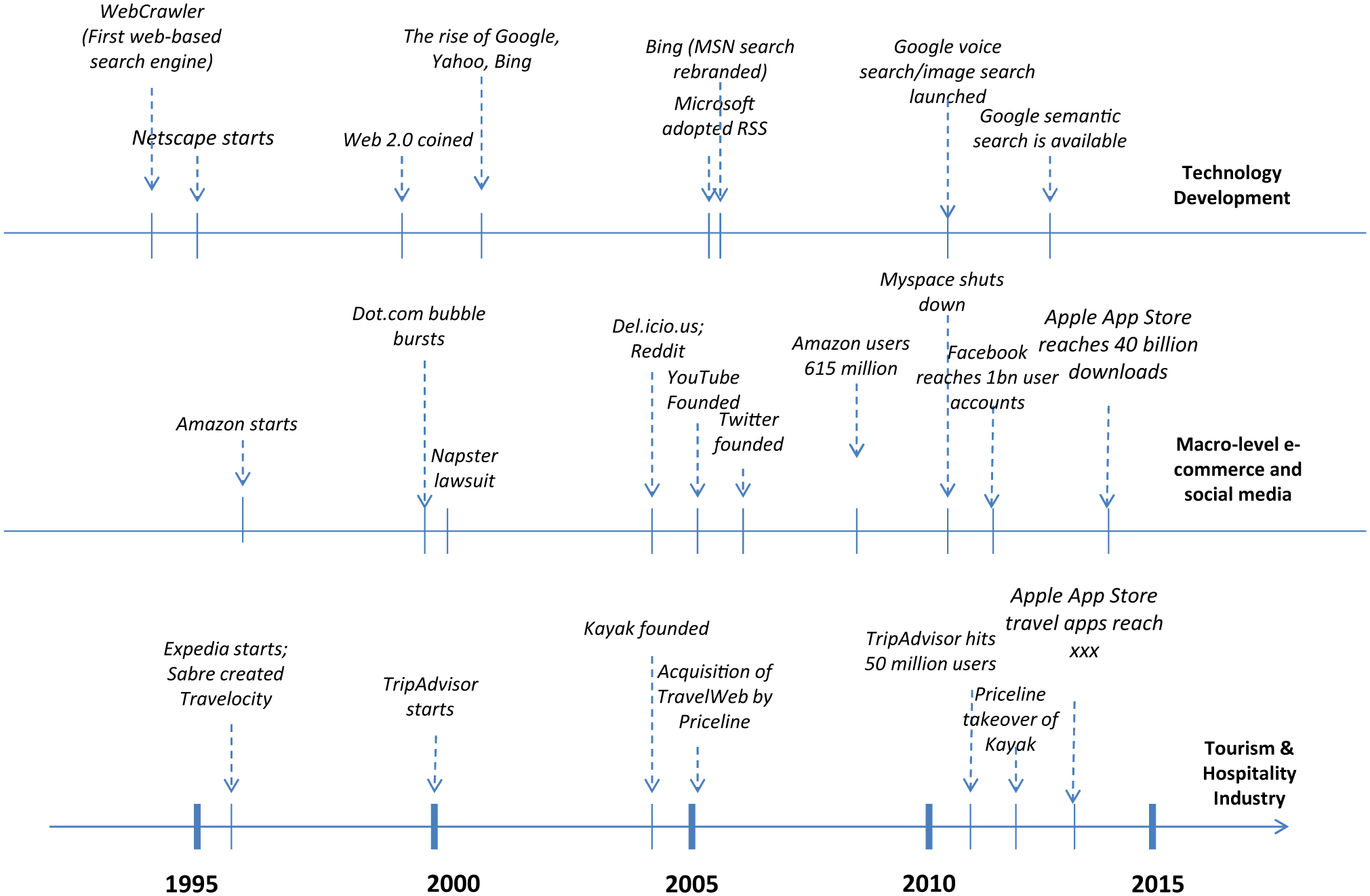
Important developments in the Internet.
As can be seen, the Internet has moved from a representational platform built on the HyperText Markup Language (HTML) to the so-called Web 2.0 as a platform that supports rich interactivity and content coproduction with technical tools such as RSS, Ajax, and Adobe Flex. For example, RSS (Really Simple Syndication) allows real-time updates of data flow and could turn “weblogs from an ease-of-publishing phenomenon into a conversational mess of overlapping communities” (O’Reilly 2007, p. 25). From a user point of view, the Internet used to be a digital information board of businesses accessible from anywhere with network connection (Constantinides and Fountain 2008). Now with Web 2.0 technologies, the Internet has changed from a “publishing-browsing-platform” to a “participation-interaction-platform.” Several other remarkable technological innovations have emerged that further changed information search and communication. For example, the tremendous amount of information led to the growth of search engines that crawl, index, retrieve, and represent information on the Internet. In the early 1990s, few search engines existed on the Web, and most of them were operated in computer labs. In 1994, the first “all-text” crawler-based search engine, WebCrawler, allowed users to search for any word on any webpage. Since 2000, the major commercial search engines such as Google, Yahoo!, and Bing have risen to prominence and have changed the manner of information search and business advertising (Ghose and Yang 2009). In 2011, Google introduced “Google Voice Search” and “Search by Image” features to enable users to search the Internet by speaking to the online interface and through posted images, respectively. Further in May 2012, Google introduced “Semantic Search” to facilitate a real conversation between users and the search engine that better reflects the needs or intention of the user.
The development of the Internet enabled new business models and fostered changes in social life. For example, Amazon.com started as an online bookstore in 1995 but has since grown to become the top online retailer with over 615 million users (in 2008), generating more than $60 billion in revenue in 2012. Social networks and online communities that support sharing of products reviews, photos, and videos have given rise to a new social DNA of the network society (Castells 2001). Facebook, officially launched in 2004, had more than one billion user accounts in 2012 and has become the largest social network in the world; and YouTube, a video-sharing website, has over one billion unique user accounts with 72 hours of videos uploaded to the site every single minute. Last, Yelp, a local business directory service and review site with social networking features that started in 2004, now has more than 100 million monthly unique visitors as of January 2013. Importantly, these new models of business and communication have changed many aspects of our social life, including how we learn, how we connect to our friends, how we make decisions, and even how we vote.
Since the mid-1990s, along with businesses in other fields, the travel and hospitality sector has actively adopted the Internet as a new distribution channel as well as advertising medium. Computer reservation systems (CRSs) and global distribution systems (GDSs) built in the 1960s, along with the deregulation of the airline industry in the 1970s, increased the volume of air travel. The adoption of the Internet provided the basis for the development of new systems linking consumers and CRSs/GDSs, which, consequentially, lowered the entry barriers to new players (Werthner and Klein 1999). Thus, in the late 1990s, a series of online travel agencies such as Expedia, PreviewTravel, Priceline, and TravelBids began to provide direct access to the travel products. Among these, Priceline and TraveBids developed innovative business models by combining together pricing flexibility and customer advocacy (Hagel and Singer 1999). These new intermediaries provided new benefits for both consumers and suppliers because they further reduced transaction costs, increased volume discounts for consumers, eliminated the coordination mechanisms from other sales channels, and limited spillover effects of price discounts (Werthner and Klein 1999).
Web 2.0 further transformed travel with tools such as fare aggregators, meta search engines, and new virtual communities. First, fare aggregators and meta search engines enable users to compare prices conveniently (Kracht and Wang 2009). Second, social media empowers consumers to not only interact with businesses but also to exchange opinions with other individuals online, which represents potentially valuable business assets. Indeed, TripAdvisor, established in 2000, developed an engaged customer base by helping them gather information, read and post reviews of travel products and attractions, and participate in interactive travel forums (O’Connor 2008). In the past decade, TripAdvisor has integrated a search engine and other social media models to leverage user-generated content. For example, in 2000, TripAdvisor launched the first vertical search engine (Tripwatch) to assist consumers to acquire relevant information. From 2006 to 2008, TripAdvisor added maps, wiki-like functionalities, and video uploading and sharing functions to realize the potential as an “ultimate web 2.0 travel mashup” (see http://www.tripadvisor.com/PressCenter-i2300-c1-Press_Releases.html).
These innovations in the travel and hospitality sector have been widely adopted by consumers. For example in 2012, Expedia had about 60 million unique monthly visitors (Zachs Equity Research, February 8, 2013) while Priceline was ranked as one of the 100 fastest growing companies, with US$4,584 million in revenue (Fortune, September 24, 2012). In 2012, Kayak.com averaged 10.51 million unique monthly visitors in the United States, and the unique monthly visitors of TripAdvisor.com increased from 1.3 million in 2001 to 50 million in 2011. Tourists’ embrace of online travel agencies (OTAs) and other business models are concurrent with the growth of activities such as online shopping and online social networking supported by iconic websites such as Amazon, Facebook, Twitter, and YouTube.
The Virtuous Cycle of Internet Development and Travel Planning
Travel planning as a specific type of consumer information search can be considered a fundamental component of trip experience in that a traveler often needs to obtain a substantial amount of information in order to develop a travel plan. Indeed, research shows that pretrip planning helps the traveler make decisions and build expectations for the upcoming trip (Gretzel et al., 2006; March and Woodside 2005). Further, these studies indicate that the information available to individual travelers has significant impact on various aspects of traveler’s decision making, especially when choosing a destination to visit (Fodness and Murray 1997; Vogt and Fesenmaier 1998; Gursoy and McCleary 2004; Jeng and Fesenmaier 2002; Bieger and Laesser 2004). Therefore, it is argued that in order to understand how travelers have adapted to the Internet, travel planning serves as a lens with which to understand a potentially wide range of travel behaviors.
Research on travel planning using the Internet has sought to identify the characteristics of the user, the process of planning, information sources, strategies of information search and processing, and the factors influencing this behavior (Gretzel, Hwang, and Fesenmaier 2012; Jang 2005; Pan and Fesenmaier 2006). A number of studies have been conducted to understand traveler characteristics, that is, who are the users of Internet for travel planning, including gender (Kim, Lehto, and Morrison 2006), educational level (Bonn, Fur, and Susskind 1998), college students (Bai et al. 2005), as well as general demographic profiles (Chu 2001; Ip, Lee, and Law 2012; Weber and Roehl 1999). Luo, Feng, and Cai (2005) examined the effects of demographic characteristics such as gender and household income and situational factors of trip purpose and travel party tourists’ choices of information sources, which were associated with their trip outcomes of accommodation types and expenditure. Jun, Vogt, and MacKay (2007) found that travel experiences influence travel information search and product purchase for certain travel products in the pretrip stage on the Internet. Morrison et al. (2001) and Pan and Fesenmaier (2006) examined the process by which travelers navigate the information spaces on the Internet for vacation planning and trip purchasing. More recently, there has been a considerable amount of research focusing on social media and its impact on travel planning (e.g., Gretzel and Yoo 2008; Sigala, Christou, and Gretzel 2012; Xiang and Gretzel 2010).
While this literature contributes to our knowledge about the use and impact of information technology within a travel planning context, little is known about how travel planning has evolved during a period of time. It is argued that the notion of the “virtuous cycle of technology use” can be used to describe the process of technology development and redevelopment (Figure 2). This framework is based on a number of conceptual underpinnings, including the systems theory and structuration theory whereby the traveler population as a whole can be seen as an open system that interacts with technological systems and the industry, resulting in continual evolution (Giddens 1976; Von Bertalanffy 1968). Another important conceptual underpinning of this process is the diffusion of innovation theory, which explains how and why new ideas and technology spread through societies (Rogers 2010). According to this theory, there are four main elements that influence the spread of a new technology: the innovation, communication channels, time, and the social system. Once the innovation is widely adopted and reaches a critical mass, it will become self-sustainable. Adopters can be described using five categories including innovators, early adopters, early majority, late majority, and laggards. Diffusion of innovations manifests itself in different ways in various cultures and fields and is highly subjective to the type of adopters and innovation-decision process. Thus, the virtuous cycle consists of three actors that form a feedback loop that begins with the development of Internet technology for use within a variety of everyday experiences; this use “spills over” to travel planning, enabling travelers to adapt their behavior so as to take advantage of the new channels, and in turn, leads to their evaluation of the experience (MacKay and Vogt 2012). The outcome of this evaluation process, then, either acts to reinforce or diminish their use of this technology in future travel.
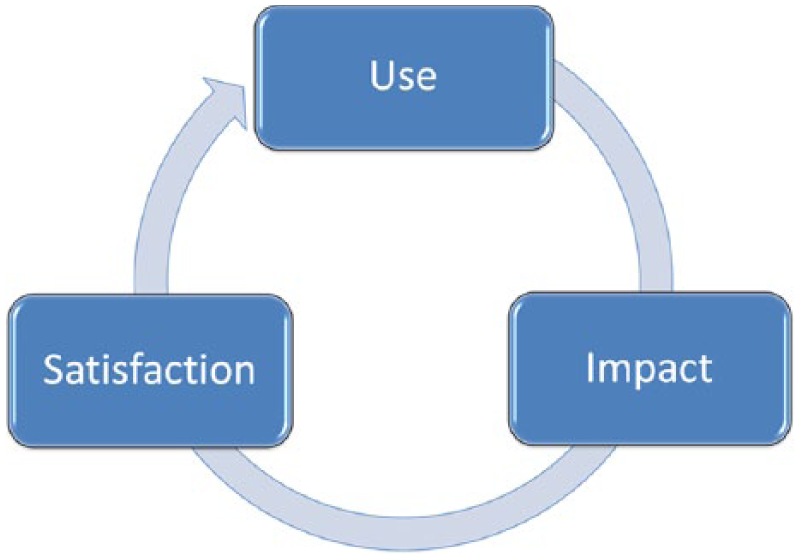
The Virtuous Cycle of Travel Planning Using the Internet.
In recent years there are a number of Internet-based drivers that have been shown to directly impact the nature of this evolutionary cycle of travel planning behavior (Xiang and Gretzel 2010). First, the Internet is now composed of a huge amount of information that essentially represents the “external memory” for many people (Sparrow, Liu, and Wegner 2011). Tools such as Google and other search engines provide instant access to this “galaxy” of information at one’s fingertips, and as a result, individuals have now become increasingly reliant upon it for everyday life (Xiang, Wöber, and Fesenmaier 2008). In travel and tourism, this unimaginable amount of information has been made available through destination portals and distribution channels such as global distribution systems (GDSs), online travel agencies (OTAs), and travel-specific search engines (e.g., Kayak) for promotional and transaction-related purposes. Second, the huge growth of social media including websites such as TripAdvisor and Yelp in recent years has changed the dynamics of online communications and the composition of the so-called tourism domain (Gretzel and Yoo 2008; O’Connor 2008; Xiang and Gretzel 2010). Research shows that travel-related social media now significantly influences travel information search and sharing behavior and, consequentially, mediates the way travelers perceive and interact with travel products and tourism destinations (Sigala, Christou, and Gretzel 2012; Tussyadiah and Fesenmaier 2009). Third, recent developments in mobile computing, particularly with the emergence of smartphones and their apps for travel, creates new locales for information search and use on the go whereby travelers’ situational needs for information and communication are becoming increasingly prominent and more effective in guiding travel decisions (Jansson 2002; Lagerkvist 2007; Wang, Park, and Fesenmaier 2012; Wang and Xiang 2012; White and White 2007).
Methodology
An Internet-based survey was conducted each January (either the second week or third week of the month) from 2007 to 2012 using a portion of an online panel of 300,000 American consumers maintained by Survey Sampling International (SSI). The numbers of respondents from each survey ranged from 2,436 (in 2007) to 1,041 (in 2012) and were post hoc weighted according to age, ethnicity, and gender in order to represent the American population. The differences in sample size reflect changes in the focus of the annual study on national–regional trends to national-only trends. Also, it is important to note that response rates are not appropriate as the survey response was limited to a specific sample size; in this case, the target N was based upon a target confidence limit of approximately ±1.0%.
The online survey included several sections and took approximately 10 to 12 minutes to complete. The first section asked respondents several questions regarding use of technology in their daily life. Then, a number of questions followed to ask about a variety of aspects related to their travel during the prior year including the purpose of the trip (business vs. leisure), number of trips, and information sources used for trip planning these trips. If the respondent had used the Internet for trip planning in the past 12 months, a number of questions followed to ask about the extent to which Internet was used, the trip planning experiences including types of websites used, information search activities, online reservation/payment activities, etc. The travelers were then asked questions related to the outcomes of using the Internet for travel planning, including the types of products purchased, channels used to make reservations, and the extent to which reservations/payments were made using the Internet. The next section consisted of several questions regarding travelers’ evaluation of their experience with the Internet, including the level of satisfaction and perceived usefulness. Finally, a set of questions were included to obtain basic demographic information, including gender, ethnicity, and ages of all members of the household, marital status, education level, and total household income.
Results
The statistical analyses used in this study are descriptive in nature and focus on addressing a number of key questions related to the framework described in Figure 2. As such, the findings of this study are reported in three sections (use, impact, and satisfaction), reflecting the important factors describing the impact of the Internet for travel planning.
Use of the Internet for Trip Planning
This study first asked a series of questions related to travelers’ general use of technology use, including the types of technologies they owned (Table 1). There are some interesting trends in the last six years. One contrasting trend was that ownership of the desktop computer was in decline, while that of the tablet computer and GPS was in sharp rise. This clearly indicates people are “moving away” from their desktop computers and becoming mobile when accessing the Internet via various devices. Also, ownership of the digital camera and cell phone has been relatively stable, which suggests that the penetration of these technologies among American travelers has reached a level of saturation.
Percentage of Travelers Who Owned a Certain Type of Technology.
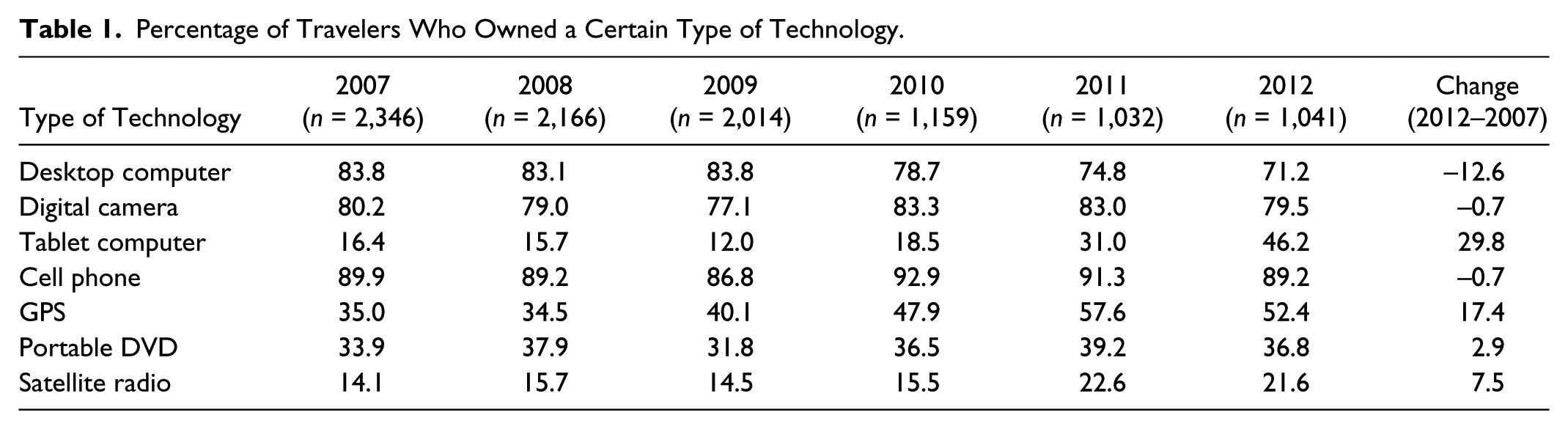
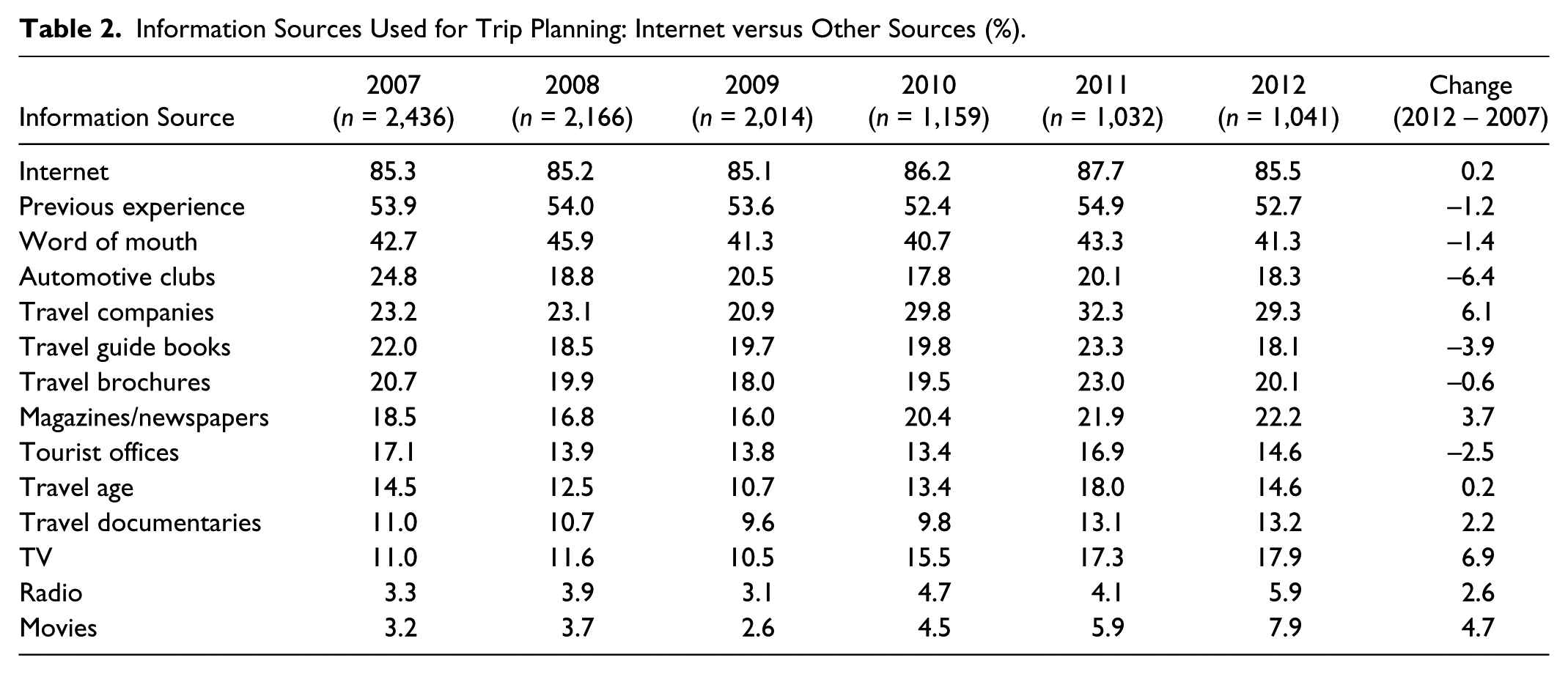
Table 2 shows the percentage of respondents who used the types of information sources including the Internet and a number of offline sources for travel planning in the past 12 months. As can be seen, the Internet has been ranked number one since 2007, indicating its predominant status as an information source for travelers seeking information. Interestingly, this percentage changed very little during the period from 2007 to 2012. This finding suggests that the adoption of the Internet has also reached a level of saturation. While the use of many of other information sources remained fairly stable, some of the “popular” sources such as automotive clubs and travel guide books are declining, while others such as travel companies, magazines/newspapers, TV, radio, and movies are increasing. This is particularly interesting because the traditional sources that were specifically developed for travel are being used less and less by travelers; however, those that are not specific for travel such as TV, radio, and movies are gaining grounds.
Information Sources Used for Trip Planning: Internet versus Other Sources (%).
Although the penetration rate of the Internet remained nearly constant, the percentage of respondents who answered that all of their travel planning was done using the Internet increased from 23.3% in 2007 to 35.4% in 2012, representing a nearly 50% increase. Also, the percentage of travelers who indicated that the majority (two-thirds to all) of their travel planning was done using the Internet increased from 29.0% in 2007 to 37.1% (this represents more than a 25% increase). Finally, the percentages of those in other categories (i.e., from half to two-thirds and less than half of travel planning was done using the Internet) all decreased considerably. This seems to suggest that within the traveler population who used Internet for travel planning, there was a structural change in that the new online environment is able to meet the majority of their information and purchasing needs.
Table 3 shows the types of websites for travel planning used during 2007–2012. Online travel agencies (OTAs), supplier sites, search engines, and destination sites were popular websites travelers used for planning. It appeared that OTAs had become more popular during this time period, with almost 9% increase between 2007 and 2012. The number of respondents who identified destination sites for travel planning declined during the last six years, with nearly a 13% decrease. The popularity of supplier sites and search engines remained fairly stable. It is interesting to note that newspapers or magazines were used by an increasing number of respondents. This mirrors the increased use of newspapers/magazines as offline sources of information discussed earlier.
Types of Websites Used for Travel Planning (%).
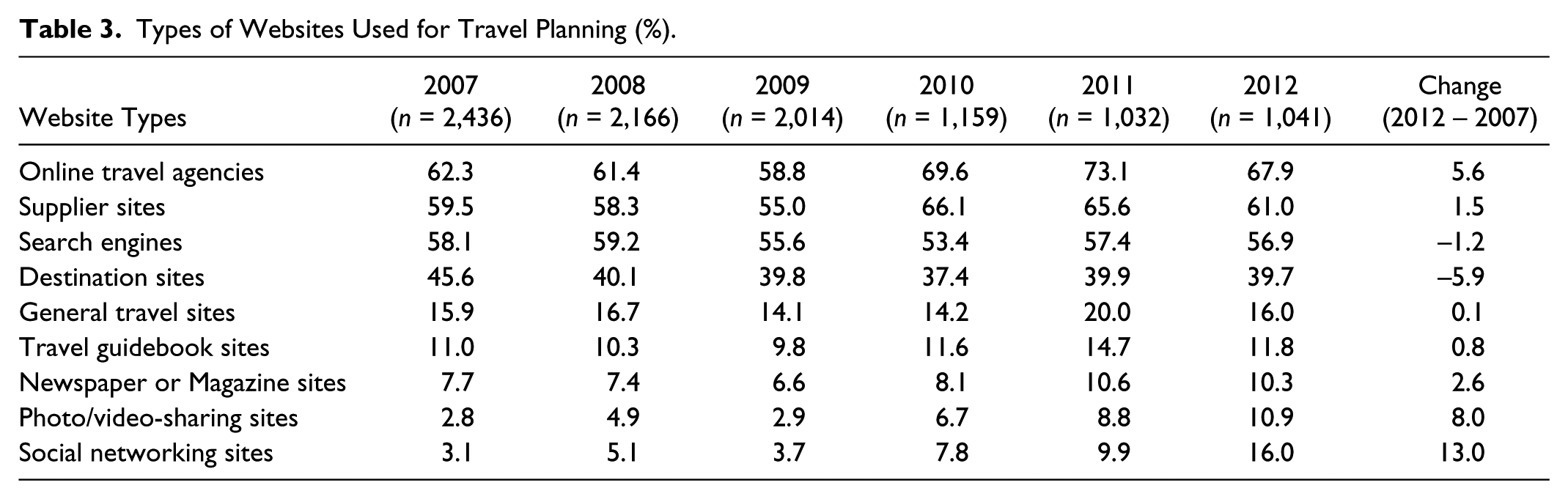
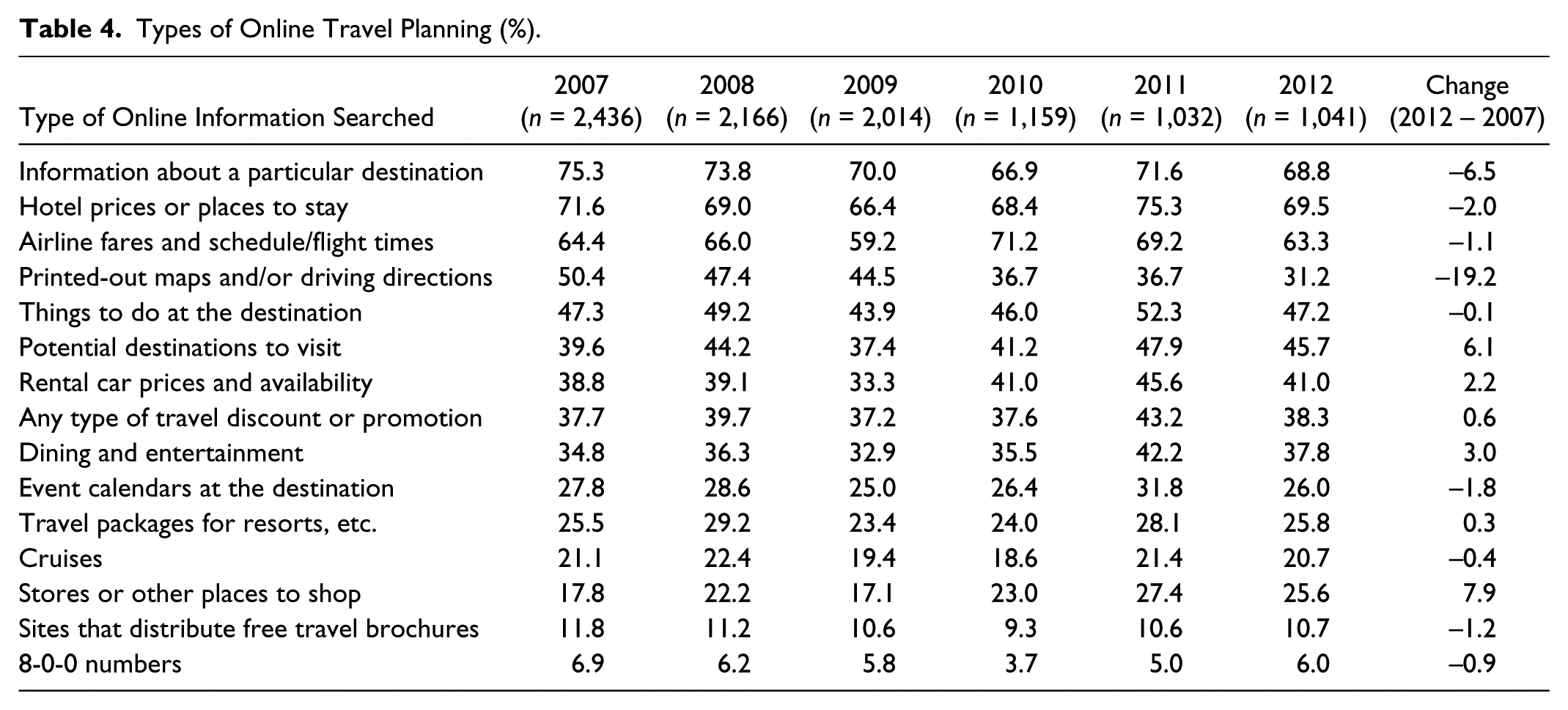
Table 4 shows the changes among the types of travel planning online (information searched) over that last six years. Searching for information about a particular destination was the most frequently conducted online planning activity in 2007; however, the percentage dropped from 75.3% in 2007 to 68.8% in 2012 (a 9% decrease). In comparison with the other destination-related planning activity, that is, searching for information about potential destinations to visit, this increased from 39.6% in 2007 to 45.7% in 2012. The trend was quite telling. Once a destination has been identified, it becomes less likely for the traveler to search for more information about that place. However, if the destination to visit remains undecided, it is more likely for the traveler to search for information about other potential candidates. The percentage of respondents who used the Internet to print out maps and/or driving directions has declined drastically from 50.4% to 31.2%, which represents a 38% decrease. This can be attributed to the growing adoption of Global Positioning Systems (GPSs) as well as smartphones with map functions. Also, the proportion of respondents who searched for dining and entertainment as well as stores or places to shop increased considerably during this time period.
Types of Online Travel Planning (%).
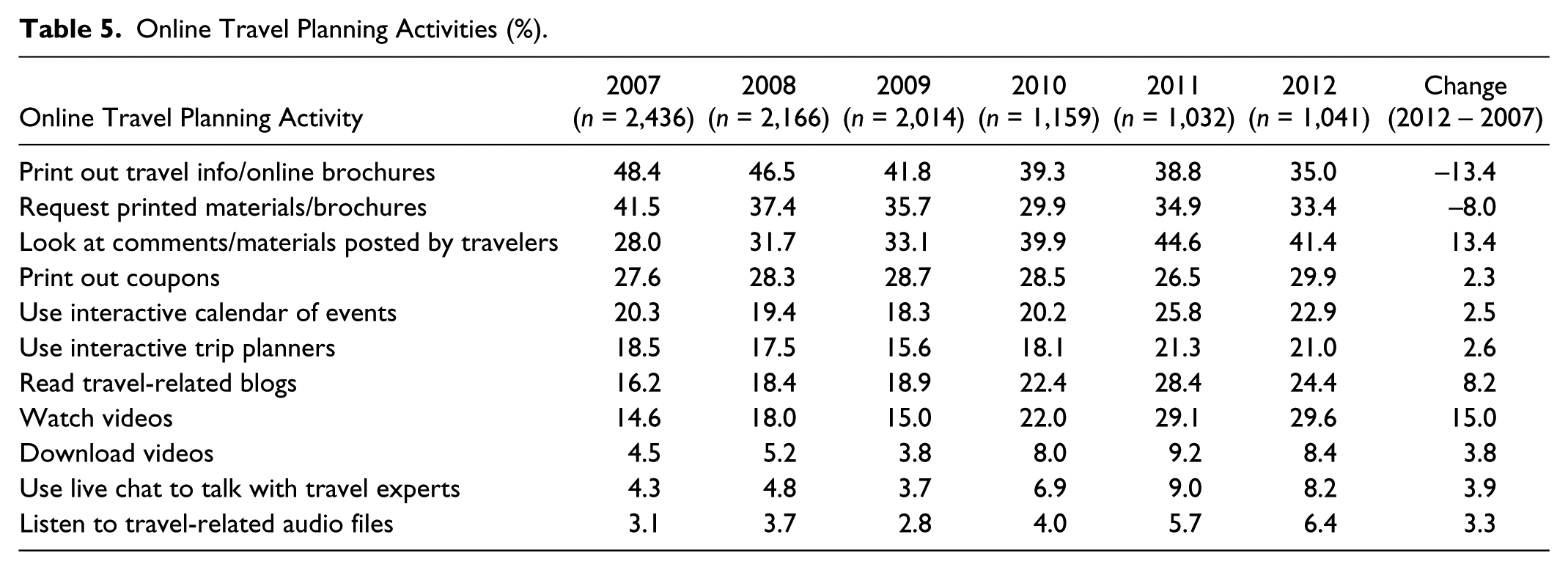
Respondents were asked a series of follow-up questions to indicate what they actually did when they used the Internet for planning purposes. As shown in Table 5, requesting/printing out travel information/brochures used to be the dominant activities. For example, in 2007, nearly half of the respondents claimed that they used the Internet to print out travel information or online brochures. However, these activities declined substantially during the course of the last six years. We can also note that respondents who claimed to use the Internet to print out travel information or online brochure decreased by 28%. Activities related to reading consumer-generated content, that is, looking at comments/materials posted by other travelers and reading travel-related blogs, had increased significantly. Both of these activities had grown by nearly 50% from 2007 to 2012. Other emergent activities such as watching/downloading online videos, using live chat and listening to audio files were also becoming increasingly popular.
Online Travel Planning Activities (%).
Impact of the Internet on Trip Planning Behavior
Another set of questions focused on the products purchased online as a result of trip planning. As can be seen in Table 6, lodging, air tickets, and rental car were predominant among all products purchased online. There was very little change over the last six years in the percentages of respondents who purchased these items online. This suggests that the adoption of the Internet as a transaction tool for these three product categories has also reached a level of saturation. People who would use the Internet to book a hotel, purchase air tickets, and reserve a rental car will continue doing so, and those travelers who do not use the Internet to purchase these products are less likely to switch. Interestingly, the use of Internet to purchase other products such as theme park tickets, travel packages, spectator sporting events, museum/festival/other events, and sporting activities has been on the rise during this period. Some of these purchases increased considerably from 2007 to 2012, particularly museum/festival/other events (51.0%) and theme park tickets (41.2%). Considering these products are “secondary” travel products, this may indicate that more products in the industry are being digitized and that these represent sectors where significant growth can be expected.
Types of Products Purchased Online (%).
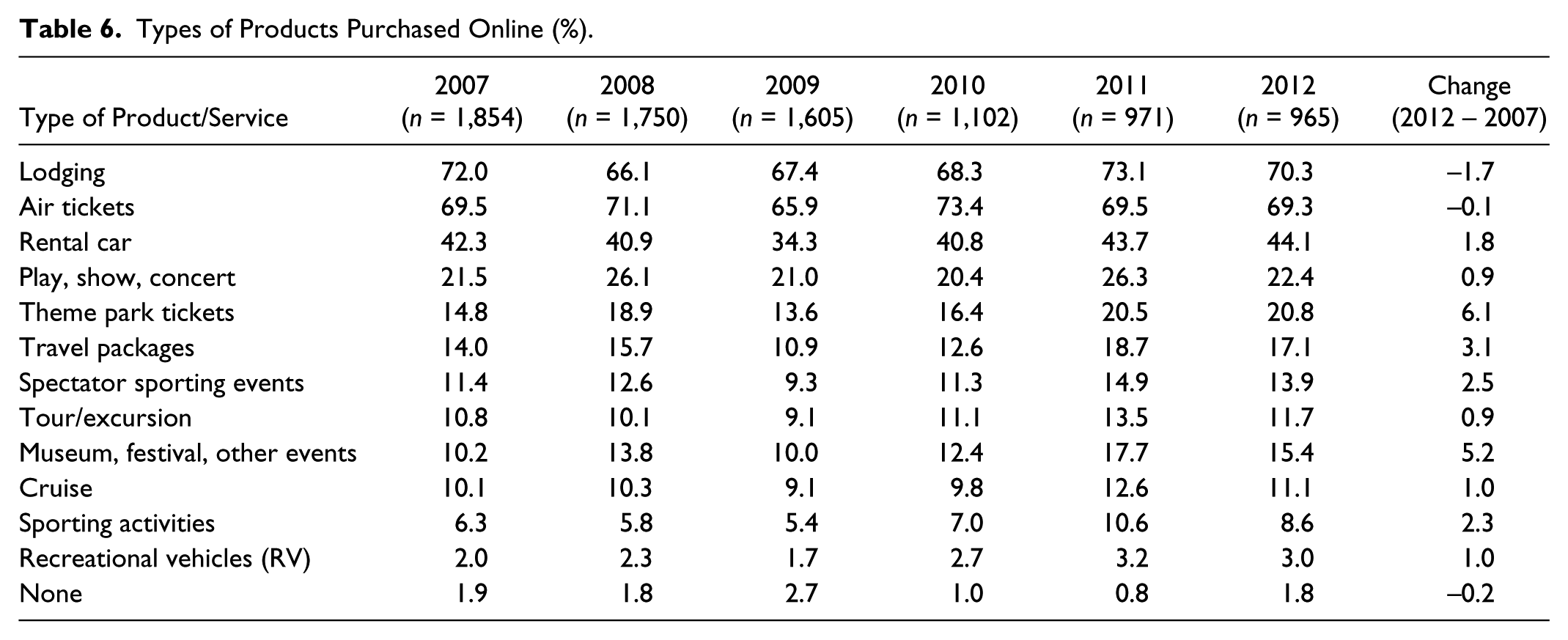
Table 7 shows the distribution channels travelers used to make purchases or reservations. In this table, “suppliers” refer to websites of industry brands such as Marriott.com or Southwest.com, while “OTAs” refer to online travel agencies such as Travelocity and Expedia. While around two-thirds of respondents indicated that their online reservations were made directly through suppliers, there was a strong trend that OTAs were gaining considerable grounds in their battle against direct distribution channels. This could be an important warning sign for suppliers.
Distribution Channels Used to Make Reservations (%).
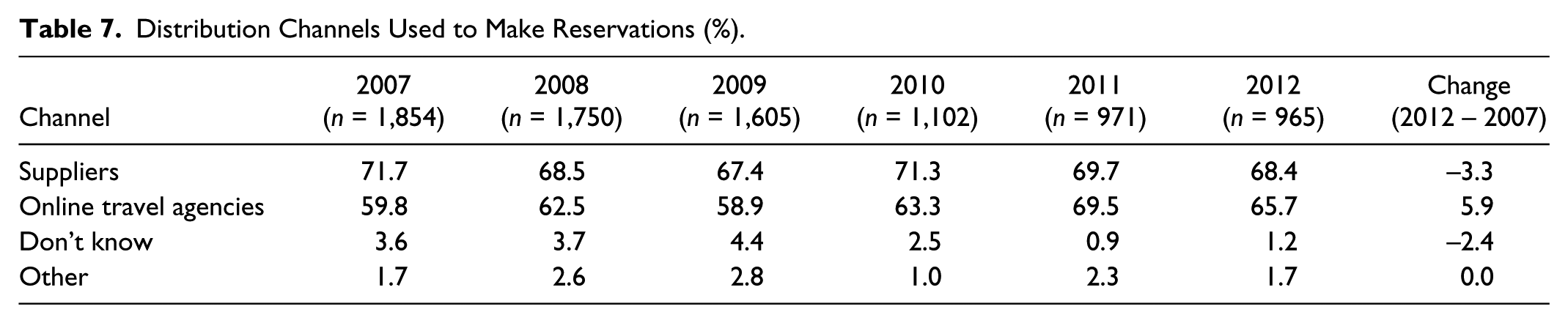
Table 8 shows impacts of using the Internet on travel planning in the past six years. The results are based on 12 individual questions that can be roughly grouped into two categories. The first group includes a range of behaviors associated with using the Internet for travel planning incorporating items such as “number of places/destinations considered or actually visited,” “amount of money spent,” and “extent to which to share travel experiences with others.” The second category includes the likelihood of using a specific information/distribution channel, such as calling a travel agency, calling to make hotel reservations, calling a rental car agency, and calling state/local tourism offices, as a result of using the Internet. A five-point scale was employed to represent respondents’ choice of responses from “decreased a lot” to “increased a lot.”
The Impact of Internet on Travel Planning (%).
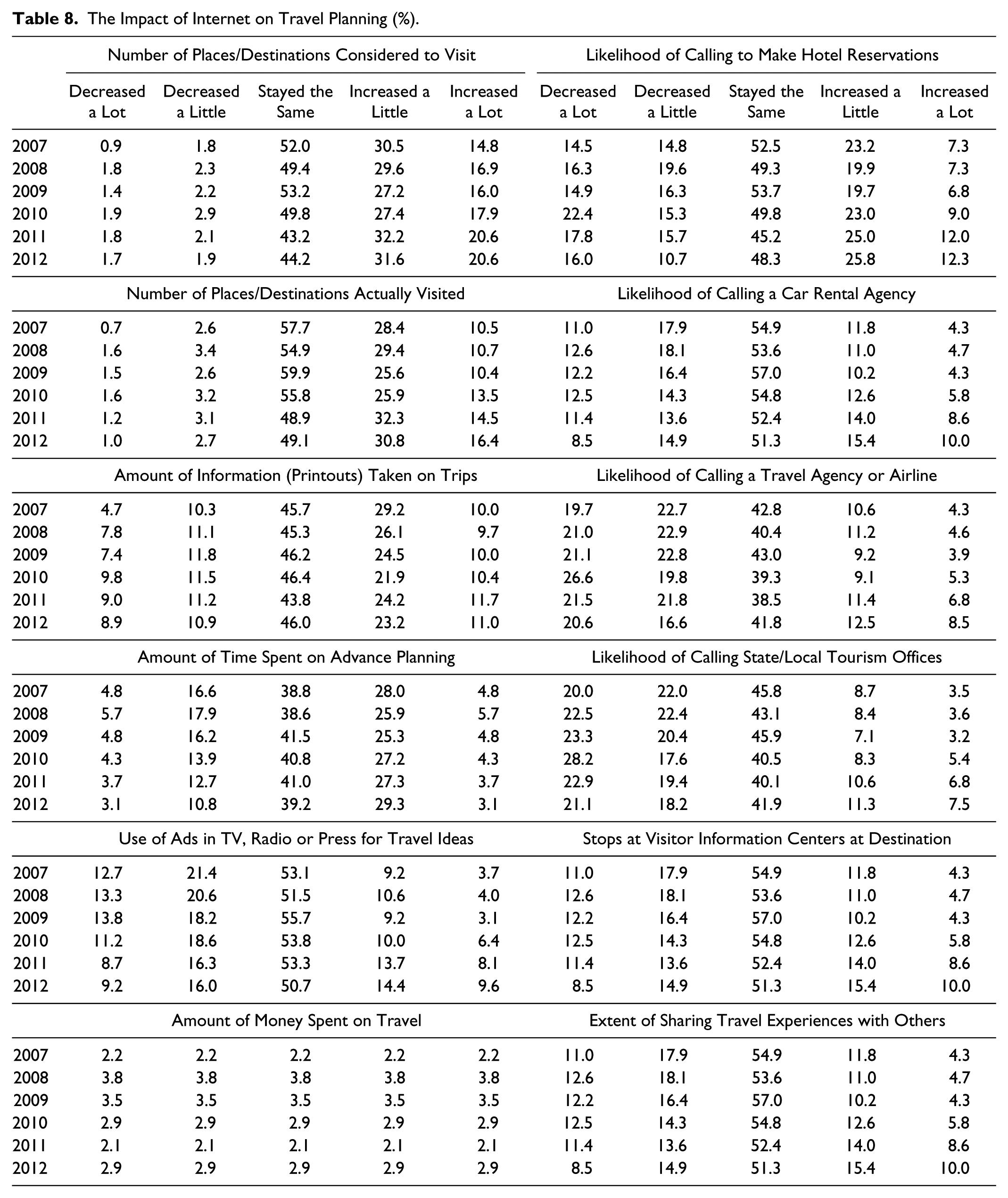
Among all these aspects of travel behavior and information access and use, a substantial proportion of the respondents remained unchanged (i.e., those who answered “stayed the same”). In the past six years, there were on average nearly half (47.2%) of all respondents who claimed their behavior had not changed because of using the Internet for trip planning, ranging from 38.5% to 59.9%. Considering the suggestion made earlier that the penetration of the Internet in the U.S. population had reached a level of saturation, this result might indicate that the group of respondents represent “early adopters,” that is, those who had adopted the Internet for travel planning for a relatively long time and were confident about using the Internet to find relevant information and good deals. It is interesting also to observe that there was an increase in the percentage of respondents who chose the “increased a lot” option except for the “amount of information (printouts) taken on trips.” A particular change to note from 2007 to 2012 was in the “Use of ads in TV, radio or press for travel ideas” (159%), “likelihood of calling a car rental agency” (157%), “stops at visitor information centers at destination” (132%), and “likelihood of calling state/local tourism offices” (112%). This seems to suggest that the more travelers use the Internet for trip planning, the more likely they will seek other information sources for personalized advice or to supplement or verify what they learn from online sources, or make direct reservations (e.g., rental car). The data also indicate that, as results of using the Internet, travelers tend to consider more places/destinations to visit, actually visited more places/destinations, and spent more money during the trip. Understandably, the only aspect of behavioral change that did not increase substantially was “amount of information (printouts) taken on trips.”
The survey results are also interesting in that there appear to be two types of change in the past six years indicated by respondents’ choice of the option “decreased a lot.” That is, there were several questions to which percentage of the respondents who chose this option increased from 2007 to 2012, while another set of questions showed declines. Questions that showed decreases include “likelihood of calling a car rental agency” (–6%), “stops at visitor information centers” (–23%), “use of ads in TV, radio or press” (–27%), “extent to which you share your travel experiences” (–34%), and “amount of time spent on advance planning” (–35%). The proportion of respondents who chose the option “increased a lot” grew from 2007 to 2012, while the percentage of respondents who chose the option “decreased a lot” declined. This suggests there was a general trend for the population to “migrate” toward a certain behavior such as not stopping at a visitor center.
On the other hand, there were several questions where the percentage of respondents who chose the option “decreased a lot” grew over the period in which the surveys took place. These included “likelihood of calling a car rental agency” (4.6%), “likelihood of calling a travel agency or airline” (5.5%), “likelihood of calling state/local tourism offices” (10.4%), “amount of money spent” (32.6%), “number of places/destinations actually visited” (32.6%), “amount of info (printouts) taken on trips” (90.5%), and “number of places/destinations considered” (93.2%). This means that while the percentage of respondents who chose the option “increased a lot” grew from 2007 to 2012, the proportion of those who chose “decreased a lot” also increased quite substantially for some question areas. This suggests that there could be a “bifurcation” trend where the impact of the Internet could be increasing or decreasing the likelihood of certain behaviors such as calling to make hotel reservations. This behavioral “migration” in the population is quite revealing and certainly represents an important research opportunity. Another important consideration in need of exploration here is the impact of the economic recession over the last several years. Categories of decrease like amount of money spent, number of destinations considered, and number of places visited could be linked to challenging economic conditions.
Satisfaction of Using the Internet for Trip Planning
There were substantially more respondents who chose the answer “extremely satisfied” or “somewhat satisfied” to the question “How satisfied are you with the Internet for planning trips or making reservations?” at the end of the time period. Specifically, respondents choosing “extremely satisfied” jumped from 46.5% to 63.9% (a 37.4% shift) and a 24.5% increase in those choosing “somewhat satisfied.” At the end of this period, more that 95% of respondents chose either “extremely satisfied” or “somewhat satisfied.” In general, travelers were satisfied with the Internet.
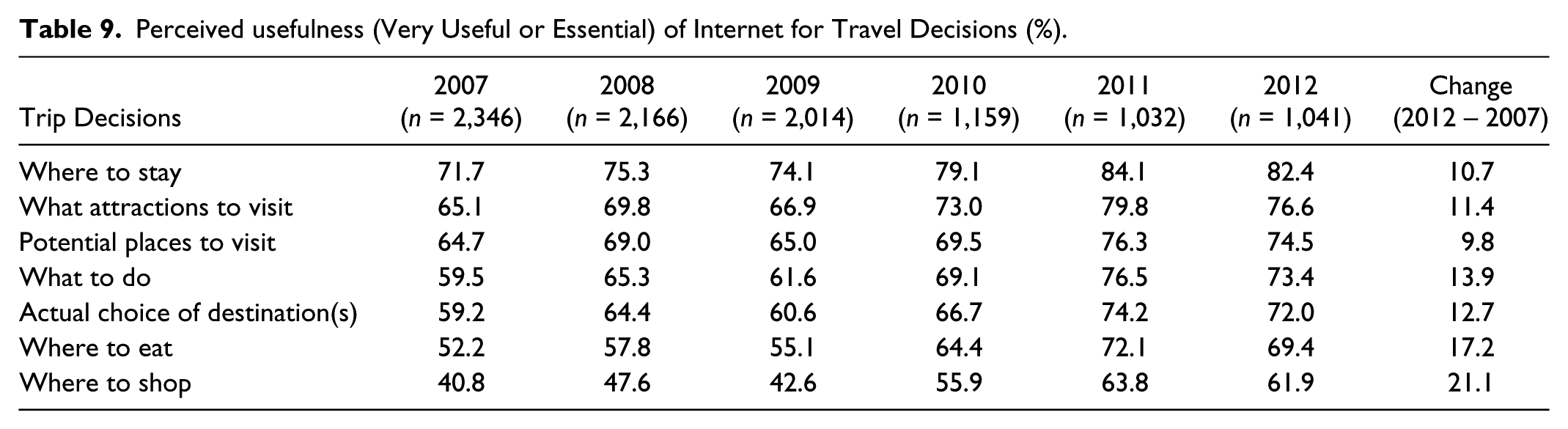
Table 9 shows the changes in perceived usefulness of the Internet in terms of various facets of the trip during the 2007–2012 period rank-ordered using 2007 as the base. The percentage represents those who indicated that the Internet was either very useful or essential in making decisions in their travel planning in the past six months and reflects respondents’ evaluation of the technology. As can be seen, there was a general trend across the board for the Internet to be perceived as considerably more useful by the end of this time period. There were substantial increases among those facets of trip listed at the lower half of the table, including “what to do” (23.4%), “actual choice of destination(s)” (21.5%), “where to eat” (33.0%), and “where to shop” (51.7%). While the Internet is perceived more useful with decision making related to the “traditional” products like lodging and attractions, it is becoming particularly helpful in travelers’ secondary decisions once the primary ones have been resolved.
Perceived usefulness (Very Useful or Essential) of Internet for Travel Decisions (%).
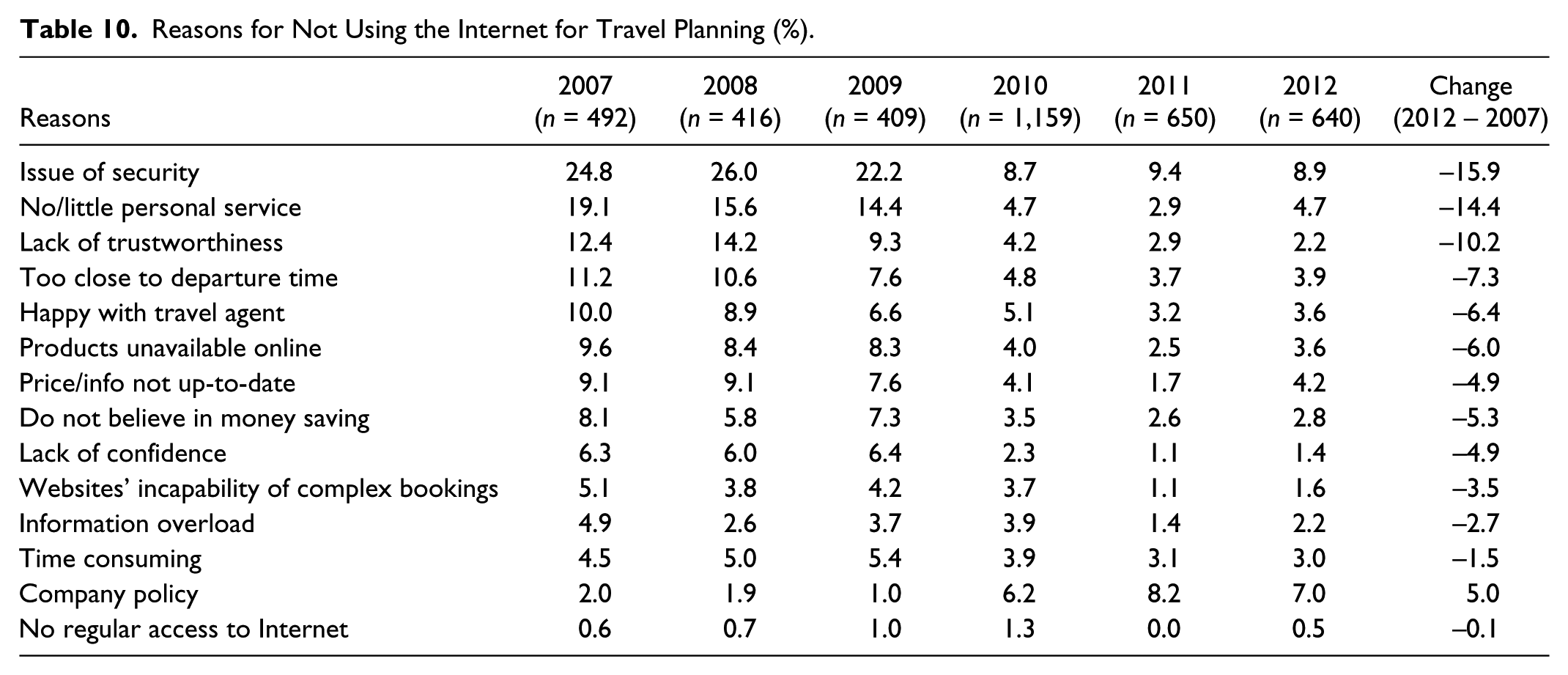
While it is important to see how travelers are satisfied with the Internet, it is equally important to obtain a sense of why they do not use the Internet for travel planning. As shown in Table 10, many of the issues identified as obstacles in 2007 were substantially mitigated at the end of the 2007–2012 period. For the three top issues in 2007 which were extensively reflected in the literature, that is, security, personalization, and trust, their role as major obstacles have dissipated especially in the cases of personalization and trustworthiness. Interestingly, all of these reasons for not using the Internet for trip planning diminished over the course of the past six years except “company policy.” This may reflect the growing control or regulation of companies and corporations over their employees’ business-related travel.
Reasons for Not Using the Internet for Travel Planning (%).
Discussion
This goal of this study is to identify the changes taking place during the 2007–2012 period in American travelers’ use of the Internet for trip planning based on the notion that there is a virtuous cycle linking the use, impact, and satisfaction of the Internet in trip planning. The findings indicate that there were several changes in online trip planning activities which have led to changes in the perceived usefulness of the Internet. Consequentially, these changes have led to more extensive and different uses of the Internet for trip planning. The following summarizes these changes in the form of five key trends.
Key Trend 1: Use of the Internet for Travel Has Reached a Level of Saturation
Findings in this study show that there has been no significant change from 2007 to 2012 in terms of the percentage of American travelers in the general consumer population who use the Internet as an information source for trip planning. This is an indication that while issues such as the digital divide still exists because of a variety of barriers for people to access the Internet (Minghetti and Buhalis 2010), adoption of the Internet as an information source for travel has reached a level of saturation among the American population. This study also shows that the Internet continues to be the number one source of information in trip planning, which suggests travelers are very technology dependent in seeking and preparing for their upcoming travel experiences. Traditional travel products such as air tickets, lodging, and rental car continue to dominate the online travel market as indicated by the findings on websites used for trip planning and products purchased online. These products usually constitute the core of total travel expenses and are, not surprisingly, always prioritized during trip planning and purchasing (Leiper 1990; Park, Wang, and Fesenmaier 2011; Smith 1994). However, as shown in Table 2, there has been essentially no change during the past six years in terms of information searched and products purchased online in these areas. This also indicates that online trip planning purchases related to these products have largely reached a level of saturation.
Key Trend 2: Travelers Are Fully Adapted to the Internet
The findings also indicate that a substantial portion of today’s travelers have finally adapted to the Internet as there are significantly more travelers who are “somewhat satisfied” or “extremely satisfied” in their experience using the Internet. This suggests that today’s Internet offers information with higher quality, higher economic value, and richer experiences for travelers. Usability issues, which had been extensively documented at the earlier days of the Internet, appear to have been addressed (Buhalis and Law 2008; Law, Qi, and Buhalis 2010; Morrison, Taylor, and Douglas 2005). This trend is also reflected in travelers’ perception of some of the subconstructs of usability of the Internet such as security, trust, and personalized services, which seem to have been improved in the past six years. Travelers now perceive the Internet as more useful in assisting decision-making activities related to destination choice, dining, and shopping as compared with other tools (note the sharp change in 2010). Generally speaking, these improved conditions, perhaps, could be attributed to information providers’ improved knowledge of website design, strengthened security measures, and increasingly sophisticated strategies to offer personalized products and services (Fesenmaier, Wöber, and Werthner 2006; Gretzel 2011; Werthner and Ricci 2004).
Key Trend 3: Searching for Experiential Products on the Internet
While using the Internet to search and purchase primary travel products such as lodging and air tickets has reached the level of saturation, there are indications that trip planning has increasingly changed to include products that are central to the tourism experience. The findings demonstrate that products such as museum tickets, shopping, and dining have gone through significant growth and inclusion in travel planning. As noted earlier, these are products that with perhaps less financial significance compared to air tickets and lodging can be considered more as experience goods (Klein 1998). This seems to suggest that the perceived economic value of the Internet has increasingly been shifted toward these products traditionally perceived as secondary (Smith 1994). Furthermore, some of these products such as museum tickets and tickets for certain events are those that can be conveniently digitized and distributed over the Internet. The growing adoption of the Internet for these products continues to support the notion that the Internet is a perfect platform for distribution and transaction of digitized products and products in the “long tail” (Anderson 2007; Lew 2008; Negroponte 1996; Pan and Li 2011).
Key Trend 4: Offline Sources Are New “Boutiques” for Travel
While the Internet has become the leading information source for travel, traditional media such as TV, newspaper/magazines, radio, and even movies remain relevant and some of them have grown to become more important in the past several years. From 2007 to 2012 there was more than 60% growth in TV, 70% in radio, and 140% in movies as information sources used for trip planning. This may suggest that because these channels are complementary to the Internet in many different ways, travelers now are consciously seeking a variety of information in order to form a more comprehensive, less biased judgment of the targeted travel products. On the Internet, newspaper or magazine websites have been growing considerably among all types of websites for travel planning. It is interesting to note that online videos are playing an increasingly significant role in supporting trip planning. In addition, use of the Internet for trip planning also has significant impact on channels of information used in the future, for example, the likelihood of calling tourism offices, rental car agencies, and travel agencies. This may indicate that travelers are consciously seeking product advice from these offline channels, which potentially create a “boutique” shopping experience.
Key Trend 5: Social Media and Mobile Technology Take Hold
Social media and other emergent forms of online communications are generating enormous influence on travel planning. Social networking sites and photo/video-sharing sites have become more popular as websites used for trip planning. Particularly during the online planning process, looking at comments and materials posted by other travelers has become one of the most important online activities. This finding corroborates a number of recent studies that emphasize the role of social media in online trip planning (e.g., Litvin, Goldsmith, and Pan 2008; Schmallegger and Carson 2008; Xiang and Gretzel 2010). Other types of communications such as watching/downloading videos, listening to podcasts, and live chats with travel experts are also becoming more popular among today’s travelers.
Because of the expansive growth of the Internet and increasing adoption of smartphones, the availability of the Internet anytime and anywhere has profound impact on travelers’ information search and planning behavior. Although this study did not specifically focus attention on the use of mobile technology, the findings suggest that the change in trip planning behavior is likely driven by this important technological development. As shown in Table 1, the use of the desktop computer has decreased significantly in the past six years, while there has been substantial growth in the tablet computer (near 200%) and GPS (approximately 50%) ownership from 2007 to 2012. Further, as shown in Table 5, an emerging general trend is the decline in the use of the Internet for “printed out maps and/or driving directions,” which is likely due to the growing adoption of GPS systems or location-based services on smartphone apps. These findings also reveal that searching for “information about a particular destination” has been one of the top priorities for American travelers in their travel planning activities in the past six years. However, this aspect of search too is declining in that there are fewer people searching for this type of information once a destination has been chosen. These trends suggest that travelers look for information about a specific destination during the trip rather than as part of the trip planning stage. Interestingly, this trend contrasts sharply with another indicating that there are an increasing number of people using the Internet to search for “potential” destinations to visit. Based on these findings, an argument can be made that traditional views of a rigid trip planning process has become much more open, fluid, and fragmented because of the ubiquity of the Internet and access to the social world (Zins 2009).
Implications
The conditions created by the Internet have been well documented (Barney 2004; Friedman 2005; Gretzel, Fesenmaier, and O”Leary 2006; Anderson 2007; Turkle 2011). Based on a survey of American travelers conducted from 2007 to 2012, this study describes how travelers are using and adapting to the Internet and confirms that use of the Internet for travel planning has stabilized whereby two dominant groups of users have emerged. Almost one third of the American travelers reported that they did not change the number of places considered/visited, the amount of money they spent, or the likelihood of calling to make reservations. This seems to suggest that there is a “core” of the American traveler population that has not fully integrated this new technology into their lives. For these travelers, it seems that the Internet is perceived not to create value such that it leads toward any significant behavioral change.
However, for the second group of American travelers, use of the Internet has affected a number of travel-related decisions (e.g., places/destinations considered or visited, amount of time/money spent on planning, use of ads in other media for travel inspiration) and the use of certain information/distribution channels (e.g., calling to make hotel/air reservations or state/local tourism offices). Indeed, the results of this study suggest that the impact of the Internet will likely increase for a considerable number of travelers over time and lead to more extensive use of the Internet, more information search with multiple channels, and reservations made and dollars spent. Further, these travelers are using the Internet to seek information and economic value via novel channels including social media, mobile devices, and boutique travel agencies.
These changes appear to represent a “bifurcation” among American travelers that substantially distinguishes those who have completely adopted the Internet and those who have not. The differences in these two evolutionary paths have many implications (Figure 3). First, use of the Internet for travel purposes has penetrated the U.S. population to a level of saturation whereby travelers’ online planning and purchasing activities involving primary travel products such as air tickets and lodging have “flattened out” over the past several years. For hospitality and tourism businesses, this suggests that competition on the Internet will become more intense, particularly in the areas traditionally occupied by primary travel products. However, the growth of secondary products such as dining, shopping, and ticketing services offers opportunities for businesses to identify and develop novel combinations of products in order to gain market share. New business strategies must also be identified to address the growing segments with the need for authentic products and experiences. In addition, businesses must consider alternative channels and media to connect with their prospective customers.
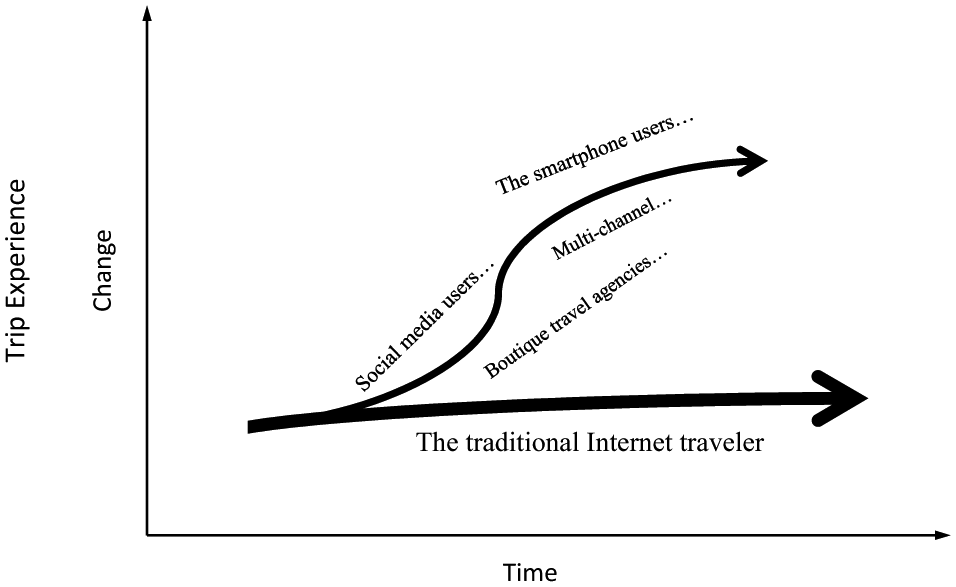
Bifurcation in the use of the Internet.
Second, while the battle between service providers (especially the lodging sector and OTAs) remains to be a focal issue in the online value chain of the hospitality and tourism industry, it seems that the latter continue to exert their power as a convenient user interface and one-stop shopping center with their connections with global distribution systems and thus dominate the online marketplace (Olsen and Moore 1998; O’Connor and Frew 2002; Pearce and Schott 2005). OTAs were not only increasingly important in the final outcomes of trip planning, that is, resulting in the reservation of a hotel or booking an air ticket, their importance was also reflected during travelers’ search process prior to booking. This finding may suggest that OTAs are gradually assuming the role of “gate keeper” to travel products and portents further commodification of the travel experience (Buhalis and Licata 2002; Ioannides and Debbage 1997) where OTAs continue to be a major challenge for many of the suppliers in the hospitality and tourism businesses.
Third, these trends pose significant challenges for destination marketing organizations (DMOs). As the liaison between the tourism industry and the visitor market, they play an important role in providing timely and relevant information for travelers planning their trip online (Wang and Fesenmaier 2006). However, while the Internet is perceived more useful for assisting destination choice, it does not mean DMOs will have higher impact in this process. According to the findings of this study, the importance of DMOs has been diminishing in that the use of destination websites is decreasing and, once a destination has been chosen, the likelihood for the traveler to look further for information about the particular destination will decrease. This is probably caused by the growth of other channels (e.g., OTAs and social media) and the availability of the Internet via mobile networks. It seems DMOs are now in a critical moment where they need to reestablish their online identity by offering more relevant and competitive services and/or shift their focus to supporting other businesses/organizations that directly connect to the visitor.
Although this study offers a broad perspective on recent changes in technological conditions that are shaping travel, there are two important limitations. The first lies in that it is a descriptive analysis of travelers’ use of the Internet for trip planning; arguably, the framework describing travelers’ adaptation to the Internet and the key trends identified in this study provide useful empirical grounds to develop explanations and new insights into the reconfiguration of the industry as well as behavioral changes driven by technology. Indeed, future research should focus attention on gaining a deeper understanding of the traveler segments that coevolve with technological change in different ways. Further, one might suggest that the first decade of the Internet era was more of an issue of technological adoption and diffusion and focused on the tourism industry while the last decade represents a “traveler-oriented” period during which new channels and information sources emerged and blossomed, online value chains reconfigured, and a new structural order took shape. With the continuing development of mobile technology, it is fair to say that we are now in a “post–Web 2.0” period wherein the ubiquitous availability of the Internet supersedes one of the significant outcomes of Web 2.0, that is, social media, and where it seems that the pace of change continues to accelerate.
A second limitation to the study is that it does not factor in the relationship between the significant economic changes that occurred in the nation during the period of data collection. At the beginning of the study, some of the most significant declines in expenditures and economic activity that had ever occurred in the United States were underway (McCully 2011), followed by a slow recovery that was beginning when the survey period was ending (Mataloni 2013). Also, changes were taking place in the use of technology and the Internet, but how it was specifically influenced by the changing economy is not a question addressed in this research. The relationship between use of technology by society at large and for travel, however, represents a very important issue.
Certainly, one would expect that as a new generation of technology emerges, the need for research focusing on how travelers adapt to these changes grows even more necessary as the industry struggles to catch up with even greater disruption. Indeed, the radical changes in travel and in the industry are now mirrored by a host of new tools in research methodology including text analysis, netnography, social network analysis, and a variety of customer-driven forecasting systems. These new approaches have been developed to take advantage of the inherent quality of travel—they are huge creators of data through the multitude of “touch points” within the trip whereby travelers leave “traces” based on product searches, reviews, and purchases, the sharing of experiences with family and friends, and from reports in the news (Gretzel, Hwang, and Fesenmaier 2012). Particularly, the networks that surround travelers in trip planning and their mobility encompass systems that capture and generate enormous amount of consumer data, and the so-called Big Data offer numerous opportunities and pose new challenges for tourism marketing. For example, destinations and tourism businesses are now engaged in brand and reputation management by tracking and monitoring consumer sentiments about their products and where brands in social media, search queries, and clickstream data can be used to make inferences about the visitor volume to a destination and even hotel revenues. Also, the emergence of “geo-location” data enables businesses to identify movement patterns, preferences, and levels of loyalty within a destination. Thus, the new systems supporting a variety of destination metrics enable marketers in tourism to better understand where and how potential and existing visitors live, the nature of information used to plan a trip, as well as with whom travelers share their experiences before, during, and after the trip. These business-analytic applications support this new information and knowledge paradigm by offering enhanced customer intelligence, improving business processes, and ultimately, enabling the development of emerging strategies for navigating an increasingly competitive environment (Yang, Pan, and Song, forthcoming).
The tourism industry has responded to the various forces of change by adopting a new paradigm that embraces innovation led by travelers’ cocreation activities. Once thought of as a “problem” that could not be controlled, it appears that many leaders within the industry now recognize the “brilliance” of this strategy through the extensive use of customer relationship management programs, the use of social media/user-generated media such as Facebook and TripAdvisor, videos, blogs, and tweets, and customer-driven innovation which are used to create new travel products such as the Quilt Gardens Tour in Northern Indiana (Lee, Tussyadiah, and Zach 2010). The Internet revolution over the past two decades appears to have taken hold, and now offers the means for both the traveler and the industry to realize a future only imagined a few years ago.
Footnotes
Declaration of Conflicting Interests
The author(s) declared no potential conflicts of interest with respect to the research, authorship, and/or publication of this article.
Funding
The author(s) received no financial support for the research, authorship, and/or publication of this article.