







Abstract
This study empirically investigates the dimensions of destination authenticity from the perspectives of outbound travelers from the United States. East Asian countries have invited Western tourists to their destinations by offering authentic, unique experiences of local life and culture. In response to this trend, this study examines the influences of destination authenticity on international tourists’ place attachment, destination satisfaction, and engagement on social media. Based on the literature, three facets of destination authenticity are investigated: conformity, realness, and transformation. The empirical findings indicate that conformity and realness lead tourists not only to be emotionally attached to a destination but, in social media, to also click the “like” buttons and leave comments on the postings about destinations. With the empirical results, theoretical and managerial implications are discussed with an emphasis on tourists’ perception of destination authenticity and online behaviors.
Keywords
Introduction
In consumer psychology and marketing (Spielmann, Babin, and Manthiou 2018), authenticity is considered a critical driving force that shapes tourists’ preferences and desires by surpassing quality “as the prevailing purchasing criterion” (Gilmore and Pine 2007, p. 5). Particularly, authenticity drives consumer consciousness, which then may be prominent in value propositions of destinations as well as products, services, and brands (Bryce et al. 2015; Napoli et al. 2014). Authenticity has an important role in cultural and nature tourism because tourists wish to experience a destination’s true essence (e.g., historical culture or ecosystem) (Jiang et al. 2017; Lu, Chi, and Liu 2015; Ramkissoon 2015). Because of cultural diversity and mass commercialization at a destination, however, tourists have wondered about the authenticity of their experiences with destinations (Fu 2019). If cultural and nature tourism fails to provide authentic experiences, destinations may not establish a unique image and identity among tourists, and therefore become less competitive (Park, Choi, and Lee 2019). Cultural and nature tourism contains the destination’s symbolic, sensory, and tangible components as well as contextual environments (e.g., interaction with locals) (Spielmann, Babin, and Manthiou 2018). As they do with products and/or services, tourists may evaluate the components and environments of the destination while traveling. This may lead the tourists to perceive multiple facets of authenticity based on perceived truth (e.g., purely original and unpolluted cultures/ecosystem) in the destination (Yi et al. 2017).
As an essential asset of cultural and natural destinations, authenticity is both related to tourists’ perceptions of a destination and its offerings, and associated with their emotional connection with (i.e., place attachment) and favorable behaviors toward the destination (i.e., destination loyalty). For example, authenticity may also lead tourists to formulate a richer sense of emotional attachment to a destination (i.e., place attachment) because they feel as if the destination’s authenticity achieves the intended meaning or existential desire that tourists wanted from the trip (Jiang et al. 2017). In addition, authentic experiences allow the tourists to find self-realization by freeing them from social constraints (Jiang et al. 2017). Such experiences may result in tourists recommending the destination to others and revisiting the destination in the near future (Yi et al. 2017).
Using structural equation modeling (SEM), tourism researchers have examined the influences of authenticity on destination image (Lu, Chi, and Liu 2015), place attachment (Jiang et al. 2017), destination satisfaction (Girish and Chen 2017), and/or destination loyalty (Bryce et al. 2015; Kolar and Zabkar 2010; Yi et al. 2017), separately. For example, Park, Choi, and Lee (2019) empirically investigated the impact of authenticity on destination loyalty through overall satisfaction. Fu (2019) studied the influence of authenticity on destination loyalty without any mediators. However, perceptions of the destination’s cultural and ecological assets affect emotional states (or place attachment and satisfaction) and subsequent behaviors according to cognitive theory of emotions (Lazarus 1991). Compared to other emotional factors, place-related concepts, such as place attachment, are particularly critical in the tourism industry because of their potential to interpret tourists’ favorable impressions of a destination (Chen and Dwyer 2018). Despite its importance, the impact of perceived authenticity on tourists’ behaviors through place attachment and satisfaction has not been thoroughly studied. Thus, this study highlights a need to examine the role of place attachment in the relationship between perceived authenticity and behaviors.
In addition, most previous studies have focused on tourists’ favorable behaviors for a destination within the boundaries of their own networks (e.g., recommending the destination to surrounding people, such as friends and family members), overlooking the greater impact of social media and Web 2.0. For example, more than one million photos and reviews of destinations are posted on social media platforms every day (Leung et al. 2013). More interestingly, the current trend in tourism is that tourists are more likely to use social media platforms (e.g., Facebook, Instagram, TripAdvisor, YouTube, etc.) to search for information about a destination and to share their travel experiences with both real and virtual friends (Leung et al. 2013). Likewise, tourists are more likely to believe thousands of comments on a destination generated by online users than “limited” comments on the destination from friends and family members (Hays, Page, and Buhalis 2013). Thus, from a destination marketer’s perspective, tourists are as collaborators, communicators, and information sources for the destination, meaning that the destination marketers no longer have final control over a destination’s image (Hays, Page, and Buhalis 2013). Consequently, the impact of destination authenticity on tourists’ online behavior warrants investigation for both the tourism industry and the literature.
Instead of emphasizing destination loyalty as an outcome, this study aims to investigate the influences of destination authenticity and place attachment on tourists’ favorable behaviors toward a destination on social media after visiting that destination. The main purpose of this study is to bridge a gap in the academic literature by empirically exploring how destination authenticity and place attachment increase tourists’ online engagement with a destination (i.e., liking destination postings with others and leaving positive comments on the postings). To do so, this study investigates the impacts of destination authenticity on destination satisfaction and place attachment. It then examines the influences of destination satisfaction and place attachment on two types of online engagement among tourists (i.e., liking and commenting) (see Figure 1). The empirical findings will also provide the tourism industry with insights in how to use authenticity in digital destination marketing.
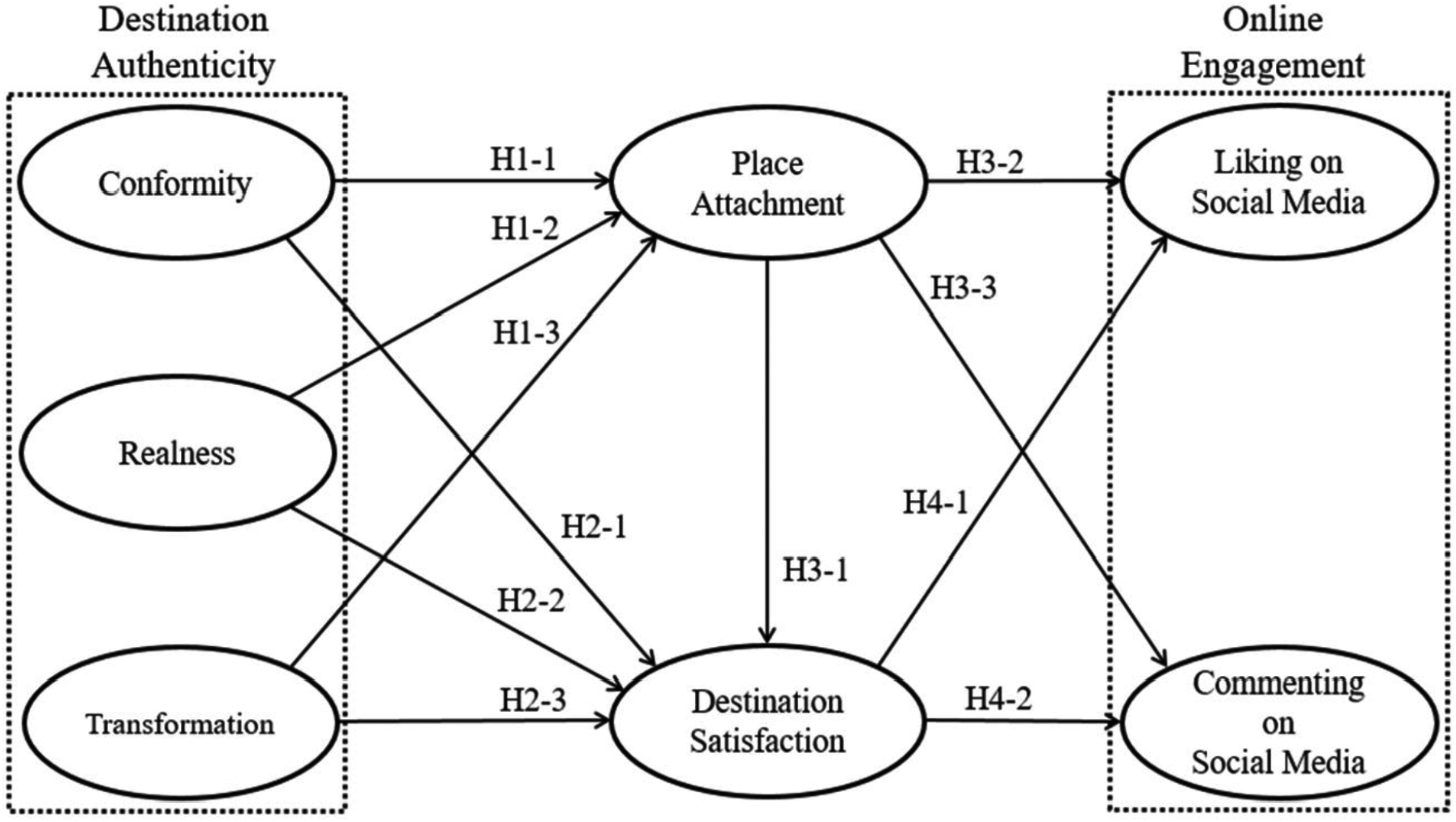
A research model.
Literature Review
Theoretical Background and Destination Authenticity
This study proposes that a tourist’s perception of destination authenticity is formed by schema congruity. A schema is defined as “an active organization of past reactions, or of past experiences” (Bartlett 1932, p. 201). As a stored framework of an individual’s cognitive knowledge, a schema represents information regarding a particular stimulus, concept, or topic that includes its components and their associations (Aggarwal and McGill 2007). Prior research has suggested that an individual’s assessments of new products are dependent on the degree of congruity between the product’s features and his or her own perceptual category schema (Meyers-Levy and Tybout 1989). The degree of congruity is based on how well the product’s features match his or her category schema (Aggarwal and McGill 2007). Congruity may lead individuals to form distinctive feelings about the products, such as frustration or satisfaction, based on their perceived fit between the products and schema carrying over the assessments of the products (Meyers-Levy and Tybout 1989).
Based on the principle of schema congruity, this study emphasizes testing a relationship between destination authenticity and emotional response to a destination. It is possible that the schema congruity effect occurs when tourists visit a heritage destination for the first time (i.e., new products in schema congruity). In this assumption, if there is a close congruity between the destination’s features and the tourists’ schema (Aggarwal and McGill 2007; Fu 2019), they are more likely to have a positive perception of the destination’s authenticity and formulate strong emotional responses to the destination (i.e., place attachment and destination satisfaction). Then, the perceived match of the features of the destination with the tourists’ schema may be stored, which leads to actual behaviors for the destination through positive emotions, even after the trip.
As a multidimensional construct, authenticity depends on consumers’ evaluation context (Beverland and Farrelly 2010; Park, Choi, and Lee 2019; Spielmann, Babin, and Manthiou 2018). Babin and Harris (2014) suggested that authenticity is “real and genuine and has a history of tradition” (285). According to Grayson and Martinec (2004), authenticity has personal, social, and object-related facets. Similarly, Richards and Wilson (2007) identified the components of the authenticity construct as experience, environment, culture, product, and sustainability. However, destination authenticity is a tourist’s “overall evaluation” of a destination’s genuineness (Lee et al. 2016; Park, Choi, and Lee 2019). In other words, a destination may interact with authenticity both at the place-related object and interpersonal and intrapersonal levels (e.g., interaction with the locals) (Lorentzen 2009; Quadri-Felitti and Fiore 2012) with regard to social performances and rituals, which are unique to the destination (Lin and Liu 2018; Quadri-Felitti and Fiore 2012). For example, the place-related object of a destination includes general ambience (e.g., colors and décor), activities, and original artifacts (Lee et al. 2016). Spielmann, Babin, and Manthiou (2018) used this idea to identify three dimensions of destination authenticity with a focus on heritage destinations: conformity, realness, and transformation.
While traveling, tourists may struggle to distinguish the real from the fake, because many heritage destinations have a variety of physical and symbolic attractions, ranging from products and architecture to activities and lifestyles (Lee et al. 2016; Lin and Liu 2018). In particular, cultural tourists may formulate their own perceived standard for confirmation in deciding what is genuine, true, authentic, and accurate in a destination they visit by relying heavily on the appraisal of experts (Jyotsna and Maurya 2019; Reisinger and Steiner 2006). Thus, the tourists’ engagement in destination authenticity allows them to index or master what they perceive to be character forming, or qualitatively, for “their own knowledge expansion” (Jyotsna and Maurya 2019; Spielmann, Babin, and Manthiou 2018). The indexical facets of destination authenticity come about when the destination conforms to tourists’ expectations, which then represent schema congruity (Valsesia, Nunes, and Ordanini 2015). According to schema congruity (Warlaumont 1997), perceived conformity serves as an image or symbol of a destination that cues tourists’ assessment of a destination. Therefore, the tourists’ perceived verification of reality and conformity to expectations can be one facet of destination authenticity.
The formulation of destination authenticity among tourists may depend on a destination’s representations that are derived from acquired information tourists experienced with the destination in the past (Park et al. 2018). Tourists tend to search for historical sources (i.e., past) and observable evidence (i.e., present) at heritage destinations in order to evaluate their genuineness and originality (Lee et al. 2016). Hence, tourists may be nostalgic about the past and long to relive previous experiences at a particular place or destination (Chhabra, Healy, and Sills 2003; Park et al. 2018). The destination or place consists of particular feelings of connections with community, place, culture, time, and others to be authentic (Spielmann, Babin, and Manthiou 2018). The destinations, therefore, reconstruct landscapes of nostalgia (Halewood and Hannam 2001; Zhou et al. 2018). These interactive feelings stimulate tourists’ desires for gaining and learning a greater understanding of a destination’s attributes and to acquire a genuine knowledge of the destination (Zeppel 2002; Zhou et al. 2018). Hence, destination authenticity is conceptually constructed and formulated from the desires of the tourists (Kolar and Zabkar 2010). Reproducing the destination’s past and accurate representations of associated scenes or places forms tourists’ experiences, which are beyond present reality (Park et al. 2018; Spielmann, Babin, and Manthiou 2018; Zhou et al. 2018).
Finally, the desire to learn and interact is related to tourist identity because the destination authenticity is involved in virtuous performance, self-identity, and self-making (Beverland and Farrelly 2010). For example, nature tourists search for destination authenticity by participating in activities at the destination, such as wilderness solitude, hiking, or camping (Wang 1999). The tourists’ efforts result in a connection to a transformed sense of identity as well as of the destination environment (Lynch et al. 2011). In particular, cultural tourists try to experience a destination in an extraordinary way by moving beyond mundane boundaries on both self-realization and perception (Husemann et al. 2016). Such experiences embrace a felt transformation that is beyond the mundane everyday self (Spielmann, Babin, and Manthiou 2018).
Place Attachment
As an emotional linkage or affective bond, place attachment ties a tourist to certain cities, places, or attractions (Yuksel, Yuksel, and Bilim 2010). A tourist’s place attachment tends to be formed by physical activities at a particular destination or place and/or virtual activities regarding the destination or place on the Internet (Eisenhauer, Krannich, and Blahna 2000; Lee and Shen 2013). Regardless of the context, the outcome of place attachment is the same: a positive relationship between the tourist and the destination (Manzo 2005). This is because the virtual and physical activities generate tourists’ complex experiences with a particular destination or place that produce an emotional attachment to the destination or place (Kyle et al. 2003). Place attachment has been assessed as place identity and place dependence (Lee and Shen 2013; Williams et al. 1992).
Place identity is based on a personal identity regarding a certain destination’s physical environment occurring through tourists’ complex experiences at that destination (Lee and Shen 2013). Place dependence is related to functional attachment of tourists to a particular destination, which, in turn, reflects the destination’s importance in providing necessary amenities for particular activities at the destination (Kyle et al. 2003). In addition to a destination’s physical environment, place attachment embraces tourists’ social bonding, and affective attachment to a particular destination and its environment (Kyle et al. 2004). Thus, the formulation of place attachment among tourists is based on the functionality, specificity, and emotionality of a destination (Bricker and Kerstetter 2000; Kyle et al. 2003; Lee and Shen 2013).
Destination Satisfaction
Satisfaction refers to a customer’s emotional response to the moment of purchase (Sahin, Zehir, and Kitapçı 2011). Based on this, Ganesan (1994) defined satisfaction as customers’ emotional reaction to the positive outcome of a prior experience. In other words, consumers’ satisfaction is formed, in part, by their prior experience and influences their purchase behavior (Ganesan 1994; Oliver 1980). From this standpoint, Oliver (1997) defined satisfaction as “the summary psychological state resulting when the emotion surrounding disconfirmed expectations is coupled with the consumer’s prior feeling about the consumption experience” (p. 27). However, satisfaction has also been defined as focusing on outcomes that result from sacrifices customers made in the consumption process (Lee, Back, and Kim 2009). From this perspective, satisfaction is defined as “the buyer’s cognitive state of being adequately or inadequately rewarded for the sacrifices he has undergone” (Howard and Sheth 1969, p. 18).
Based on the aforementioned notions of satisfaction, it has been suggested that satisfaction may result when consumers either confirm or positively disconfirm their prepurchase expectations regarding products and/or services, which subsequently result in certain levels of postpurchase emotion toward the experience (Lee, Back, and Kim 2009; Yuksel, Yuksel, and Bilim 2010). In this study, tourists may have a variety of experiences with restaurants, hotels, attractions, transportation, and the like, at a destination. Hence, destination satisfaction is a cumulative construct that encompasses tourists’ satisfaction with a destination’s specific services and/or products with a variety of experiences or transactions (Prayag and Ryan 2012). In other words, tourists may aggregate destination satisfaction while on the trip and update it after they have returned home (Jones and Suh 2000). Therefore, this study focuses on tourists’ overall satisfaction with a particular destination they visited.
Online Engagement
Tourism and hospitality organizations have used social media as a communication channel to engage with their existing and potential consumers as well as to promote their products and/or services (Kabadayi and Price 2014). The primary reason for organizations to engage with consumers on social media is that it leads to improvement in their business performance (Sashi 2012). More specifically, social media platforms allow the organizations to create their own websites and post anything about their products and/or services, thus spreading it to more than one billion Internet users. As a two-way communication channel, social media platforms allow users to engage with the products and/or services by following the organizations and commenting and/or liking the organizations’ postings regarding their brands, products, services, and/or business activities (Gummerus et al. 2012). The users’ behaviors on social media tend to strengthen their bonds with the organizations by converting them into engaged fans (Kabadayi and Price 2014). In addition, clicking the “like” button and leaving comments on social media help organizations to spread awareness and increase engagement among potential users (because the postings will appear on their profile pages, which their friends and others will see), which then positively contributes to better financial and social performance (Barnard and Knapp 2011). The users who are engaged with destinations are more likely to research tourism products and/or services on social media and continue spreading information about them to other users (Wallace, Buil, and de Chernatony 2012). Therefore, it is essential for tourism organizations to understand social media users’ engagement to establish and implement digital marketing strategies, thus enhancing their business performance.
Research Hypotheses Development
Based on cognitive theory of emotions, this study assumes that tourists’ place attachment and satisfaction form as a result of their cognitive appraisals of a destination (i.e., perceived authenticity of the destination) (Lazarus 1991). This is because the tourists may tend to perceive the cognitive and emotional aspects of the destination at the same time while traveling. However, there is a causal association between cognition and emotion. For example, a sudden noise in the middle of the night may evoke a cognitive evaluation (or threat) that creates a feeling of fear, although both cognitive and emotional states are reactions to the environment (Hoemann and Barrett 2019). Hence, this study extends cognitive theory of emotions by integrating cognitive (i.e., perceived authenticity) and emotional (i.e., place attachment and satisfaction) evaluations of a destination’s environment while traveling, which lead to increased online engagement among outbound travelers. Place attachment can have a significant role in marketing as a place-related emotion in the tourism industry (Chen and Dwyer 2018). This study may enable academics to formulate a more-sophisticated theoretical model for destination authenticity and online engagement.
In this study, cultural tourists tend to be attached to a particular destination because of the authenticity of the destination they visit (Jiang et al. 2017; Ram, Björk, and Weidenfeld 2016). For example, through perceived proximity to its cultures, destination authenticity results in cultural tourists’ greater self-esteem and fewer depressive symptoms related to a destination (Jiang et al. 2017; Wenzel and Lucas-Thompson 2012). In addition, by expressing a distinct identity to the tourists and connecting its inner self with the tourists, destination authenticity may help tourists to combat uncertainty and confusion about a destination’s unique cultures (Allen and Mendick 2013). When tourists perceive a destination as authentic based on the destination’s true self, the tourists tend to more establish social relationships, which help develop emotional bonds (or attachment) with the destination (Jiang et al. 2017). In addition, if tourists perceive a destination’s authenticity, they are more likely to trust the destination and form an emotional attachment to the destination (Vlachos et al. 2010). Based on the previous research, the following research hypotheses were proposed:
Hypothesis 1: Destination authenticity is positively associated with place attachment.
Hypothesis 1-1: Conformity is positively associated with place attachment.
Hypothesis 1-2: Realness is positively associated with place attachment.
Hypothesis 1-3: Transformation is positively associated with place attachment.
Compared to other types of tourists, cultural tourists tend to invest more efforts in finding a destination’s authenticity in terms of uniqueness, culture, and/or history to feel satisfied with it (Lee et al. 2016). This is because the goal of cultural travelers is to enrich their lives by experiencing the authenticity of a heritage destination (Poria, Butler, and Airey 2003). Hence, cultural tourists’ high level of perceived destination authenticity increases their levels of satisfaction with the destination, which leads them to revisit the destination (Tu and Su 2014). Also, Urry (1990) suggested that cultural tourists’ authentic experiences at a heritage destination creates a greater sense of destination satisfaction rather than just displaying the destination for their insight. Thus, positive perceptions of a destination among cultural tourists positively contribute to the overall evaluation of that destination (Russell and Russell 2010). Thus, the authors hypothesize:
Hypothesis 2: Destination authenticity is positively associated with destination satisfaction.
Hypothesis 2-1: Conformity is positively associated with destination satisfaction.
Hypothesis 2-2: Realness is positively associated with destination satisfaction.
Hypothesis 2-3: Transformation is positively associated with destination satisfaction.
Place attachment has been studied as a driver of satisfaction (Fleury-Bahi, Félonneau, and Marchand 2008; Scott and Vitartas 2008). If an individual feels a strong attachment to a particular place, he or she is more likely to feel satisfied with its services and products (Scott and Vitartas 2008). In other words, tourists who feel a strong emotional attachment to a destination they visit tend to consider the destination’s performance to be more satisfactory than others with less emotional place attachment do (Yuksel, Yuksel, and Bilim 2010). Thus, the following hypothesis is put forth:
Hypothesis 3-1: Place attachment is positively associated with destination satisfaction.
Prior research has indicated that place attachment leads tourists to behave in a particular manner for a destination after the trip, such as revisiting a destination, recommending it, and spreading positive word of mouth (Hung and Lee 2012; Lee and Shen 2013). More specifically, place attachment to a particular destination makes tourists’ levels of destination loyalty stronger and may make tourists resistant to other destinations for future trips (Alexandris, Kouthouris, and Meligdis 2006; Lee and Shen 2013; Yuksel, Yuksel, and Bilim 2010). In addition to resistance, place attachment to a particular destination increases tourists’ willingness to revisit the destination and recommend it to others (Williams et al. 1992). To date, prior research has studied the impact of place attachment on tourists’ behavioral intention and physical behavior after the trip (e.g., recommendation and revisit). However, the question about how place attachment affects tourists’ behavior on social media has not been addressed. Therefore, this study formulates the following research hypotheses to examine these relationships:
Hypothesis 3-2: Place attachment is positively associated with liking on social media.
Hypothesis 3-3: Place attachment is positively associated with commenting on social media.
According to Sahin, Zehir, and Kitapçı (2011), satisfaction results in the long-term orientation of relationships between two parties. Within this study, tourists’ destination satisfaction encourages them to behave positively toward the destination to establish and maintain a strong relationship with the destination. In this case, the tourists with strong destination satisfaction consider the destination a satisfactory partner in the relationship. For the satisfied partner, the tourists support the destination and influence other users on social media by freely clicking the “like” button and leaving positive comments on postings about the destination (Naylor, Lamberton, and West 2012). This results in relationship building between present and prospective tourists and between the tourists and the destination (Wallace, Buil, and de Chernatony 2012). Therefore, the following research hypotheses are proposed:
Hypothesis 4-1: Destination satisfaction is positively associated with liking on social media.
Hypothesis 4-2: Destination satisfaction is positively associated with commenting on social media.
Methods
Sample and Data Collection
The unit of analysis for this study was outbound travelers in the United States, who had visited any East Asian country (e.g., Japan, China, South Korea, Vietnam, etc.) in 2018. There are three reasons for this decision: (1) Asian countries are culturally different from Western countries, which may lead American travelers to visit them to experience completely different cultures; (2) Asian countries are popular as heritage tourism because of their long history and well-preserved architecture; and (3) place attachment to a particular destination may have already formed if the travelers were familiar with the places (i.e., enhancing the external validity of this study).
To collect data from appropriate samples, the authors conducted a web-based survey with a screening question on the first page (“Did you visit any East Asian countries in 2018?”). After finalizing the questionnaire, the authors hired a marketing research company that works primarily with travel agents. The marketing company distributed the online survey link to customers in January 2019. For sampling, the marketing company received a list of customers from the travel agents who had agreed to participate in this study. The online survey link was randomly distributed to 1,000 customers who had purchased any tourism products in 2018. Of the 1,000 participants who had visited any East Asian countries, 265 returned questionnaires that were used for data analyses, a usable response rate of 26.5%.
Measures
For the questionnaire development, multiple items were adapted and revised based on this study’s context to measure the proposed constructs. The main criterion for item selection was to be conceptually well developed and validated in a rigorous manner by previous research (see the procedure of the study of Spielmann, Babin, and Manthiou [2018] for scales development). By conducting a pilot test in December 2018, the authors improved the overall quality of the questionnaire before finalizing it. The pilot test resulted in some minor changes in wording for the outbound travel context and in the interpretation and flow of the questionnaire. Except for demographic characteristics, all items were measured on a 7-point Likert-type scale anchored by “strongly disagree” and “strongly agree.” Destination authenticity was operationalized as perception of what of a destination is real, true, and/or genuine, and was measured with 16 items (i.e., 8 items for conformity, 4 items for realness, and 4 items for transformation) that referred to Spielmann, Babin, and Manthiou’s study (2018). Place attachment was operationalized as tourists’ emotional attachment to a particular destination and its spatial settings, such as social, physical, and ecological environments. It was measured with 6 items from Prayag and Ryan (2012). The measures were well developed by the study through embracing two aspects of place attachment (i.e., place identity and place dependence), along with high levels of validity and reliability. Third, destination satisfaction was operationalized as cognitive and affective satisfaction with a destination based on expectation-disconfirmation and measured with 5 items from Lu, Chi, and Liu (2015). Finally, online engagement was operationalized as referring to their liking and commenting behavior on social media and was measured with 6 items (i.e., 3 items for liking on social media and 3 items for commenting on social media) from Kabadayi and Price (2014).
Results
Sample Characteristics
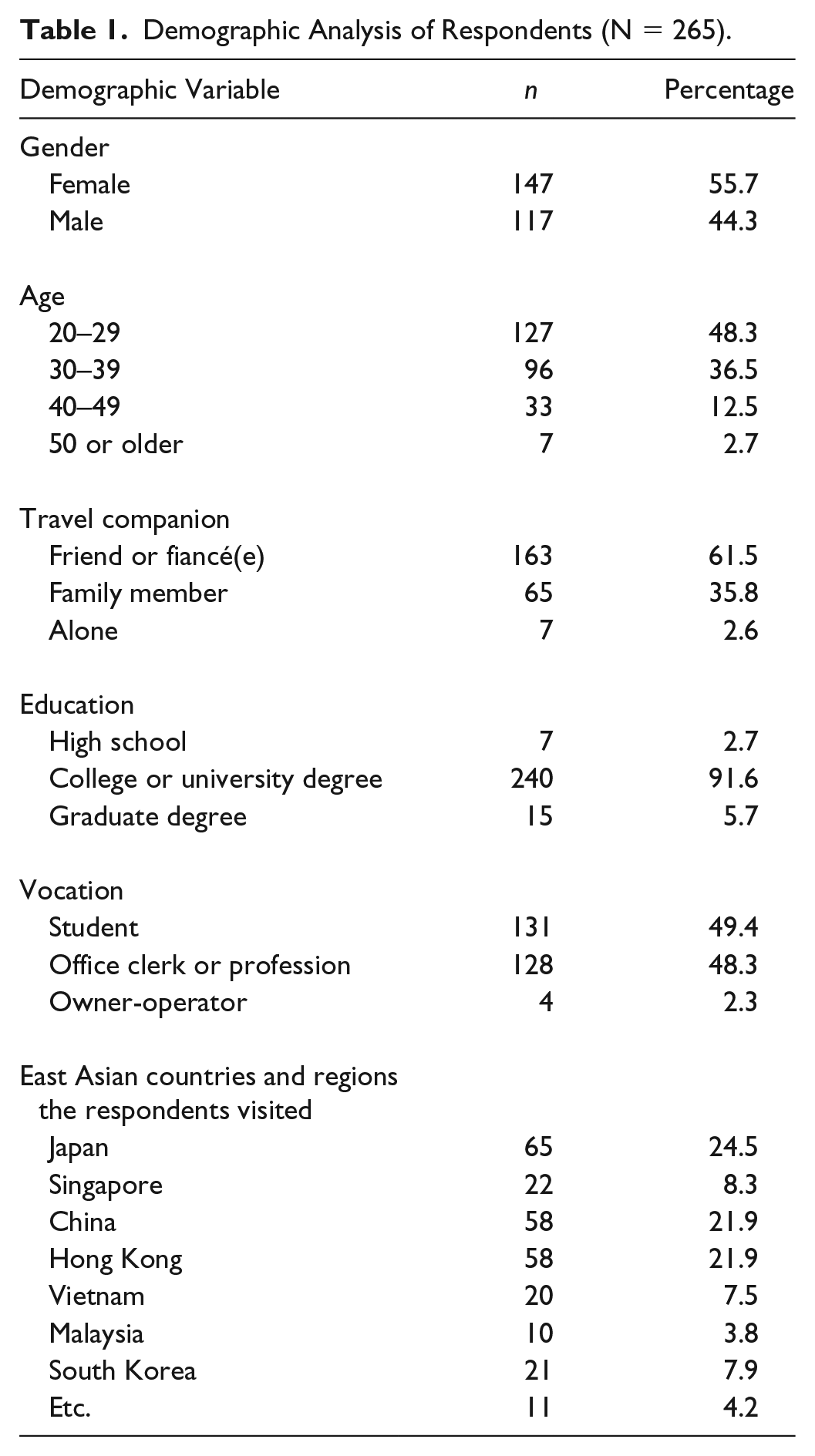
The demographic characteristics of participants are shown in Table 1 (i.e., gender, age, travel companion, level of education, vocation, and a list of East Asian countries and regions they visited). Of the participants, 55.7% were women and 44.3% were men. Age was categorized as 20–29 years (48.3%), 30–39 years (36.5%), 40–49 years (12.5%), and 50 years or older (2.7%). With respect to travel companion, 61.5% traveled with friends or a fiancé(e) and 35.8% were with family members. Most of the participants had college or university degrees (91.6%) and were students (49.4%) or office clerk or profession (48.3%).
Demographic Analysis of Respondents (N = 265).
Measurement Model
This study employed the two-step approach of Anderson and Gerbing (1992) to test the reliability and validity of all indicators that measured the seven constructs. As the first step, Cronbach’s alpha coefficients were calculated by SPSS 24.0 to check each construct’s reliability (i.e., Conformity = .883; Realness = .895; Transformation = .935; Place Attachment = .939; Destination Satisfaction = .973; Liking on Social Media = .927; and Commenting on Social Media = .914). Since exceeding .70 of the coefficient has been considered acceptable in the social sciences, the reliability of all constructs for this study was confirmed (Nunnally 1978). For the second step, confirmatory factor analysis (CFA) was performed with all indicators by AMOS 24.0 to rigorously test validity. During the CFA stage, six indicators were dropped because they did not have more than .50 of standardized factor loadings, which might reduce discriminant and convergent validity. The measurement model’s CFA results addressed acceptable fit indices, which are recommended by Hair et al. (2010): χ² = 477.290, d.f. = 278, p < .001, root mean square error of approximation (RMSEA) = 0.052, normed fit index (NFI) = 0.938, comparative fit index (CFI) = 0.973, Tucker–Lewis index (TLI) = 0.968. As indicated in Table 2, all indicators’ standardized factor loadings exceeded .60 (p < .01), signifying each construct’s convergent validity.
Measurement Model from Confirmatory Factor Analysis.
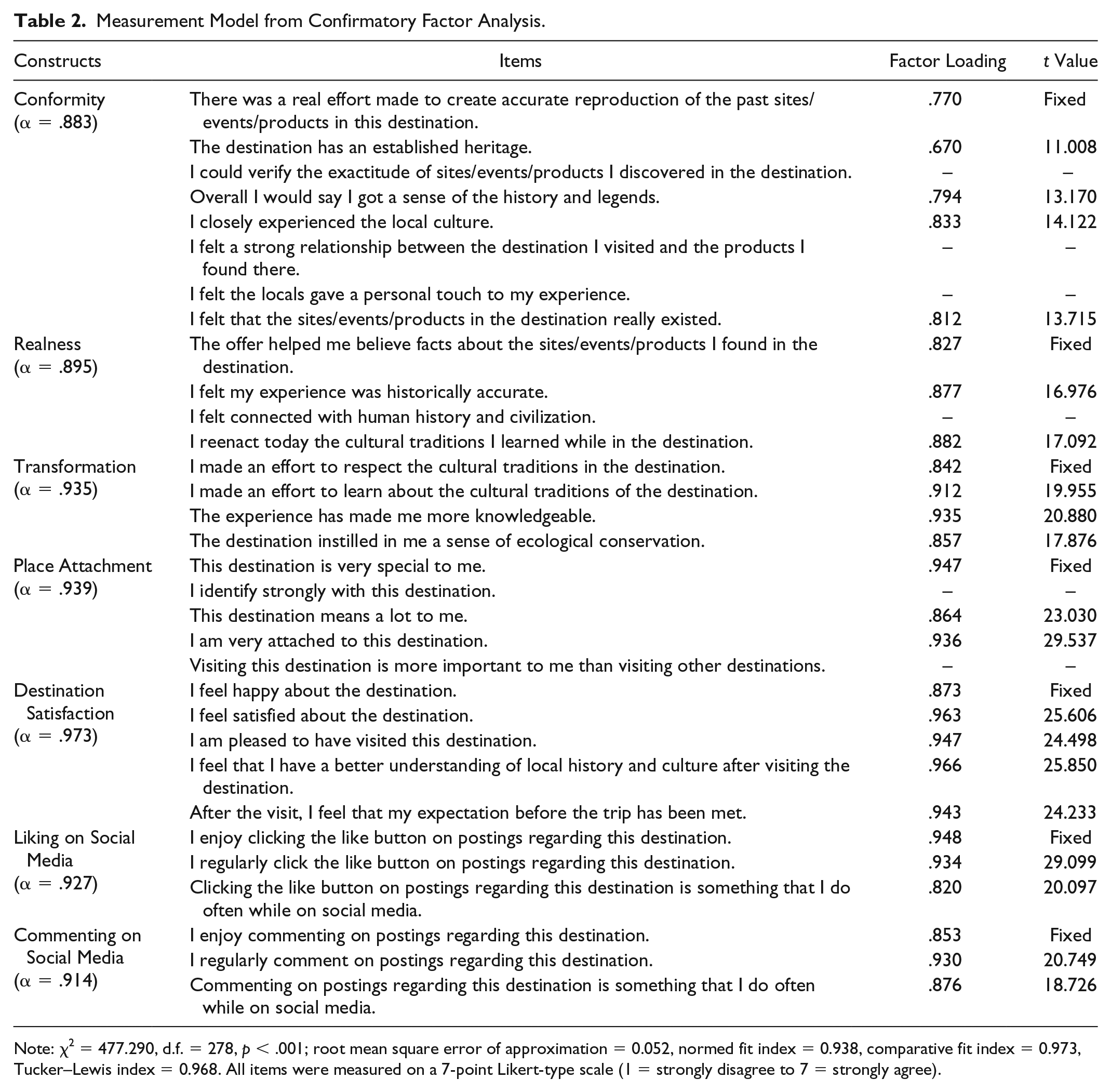
Note: χ2 = 477.290, d.f. = 278, p < .001; root mean square error of approximation = 0.052, normed fit index = 0.938, comparative fit index = 0.973, Tucker–Lewis index = 0.968. All items were measured on a 7-point Likert-type scale (1 = strongly disagree to 7 = strongly agree).
Based on the CFA results, the authors calculated all constructs’ proportion of average variance extracted (AVE) to test their discriminant validity. According to Fornell and Larcker (1981), the AVE value needs not only to exceed .50 but also to exceed respective squared values of each construct’s correlation coefficients. Table 3 demonstrates that discriminant validities of all constructs were confirmed.
Construct Intercorrelations (Φ), Mean, and Standard Deviation.
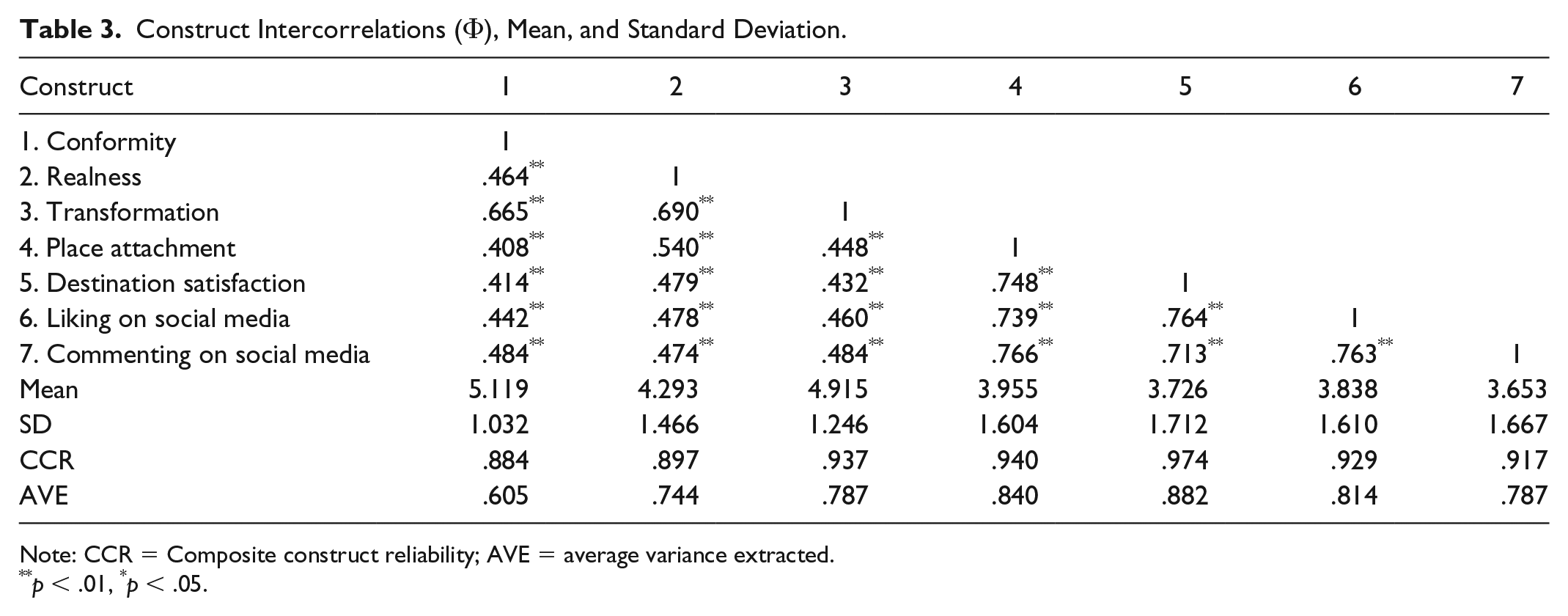
Note: CCR = Composite construct reliability; AVE = average variance extracted.
p < .01, *p < .05.
Finally, the authors checked common method variance (CMV) because the questionnaires measured the independent and dependent variables with the same survey participants. According to Bagozzi and Yi (1990), this approach of the survey method may produce a biased correlation between the variables. Based on the study of Podsakoff and Organ (1986), the authors conducted Harman’s one-factor test to statistically investigate CMV. The result of Harman’s one-factor test indicated: (1) chi-square = 477.290 with d.f. = 278 (the proposed model); and (2) chi-square = 3222.531 with d.f. = 299 (the one-factor model), meaning that the chi-square and d.f. of the proposed model are significantly better than those of the one-factor model. Therefore, the authors concluded that CMV might be generated in this study.
Testing of the Hypothesized Structural Model
Structural equation modeling (SEM) was conducted by AMOS 24.0 to assess each formulated parameter between constructs. The proposed model’s fit indices indicated the acceptable levels recommended by Hair et al. (2010): χ² = 497.769, d.f. = 284, p < .001, RMSEA = 0.053, NFI = 0.935, CFI = 0.971, TLI = 0.967. The maximum likelihood estimates for the research model’s parameters between constructs are demonstrated in Table 4 and illustrated in Figure 2.
Standardized Structural Estimates.
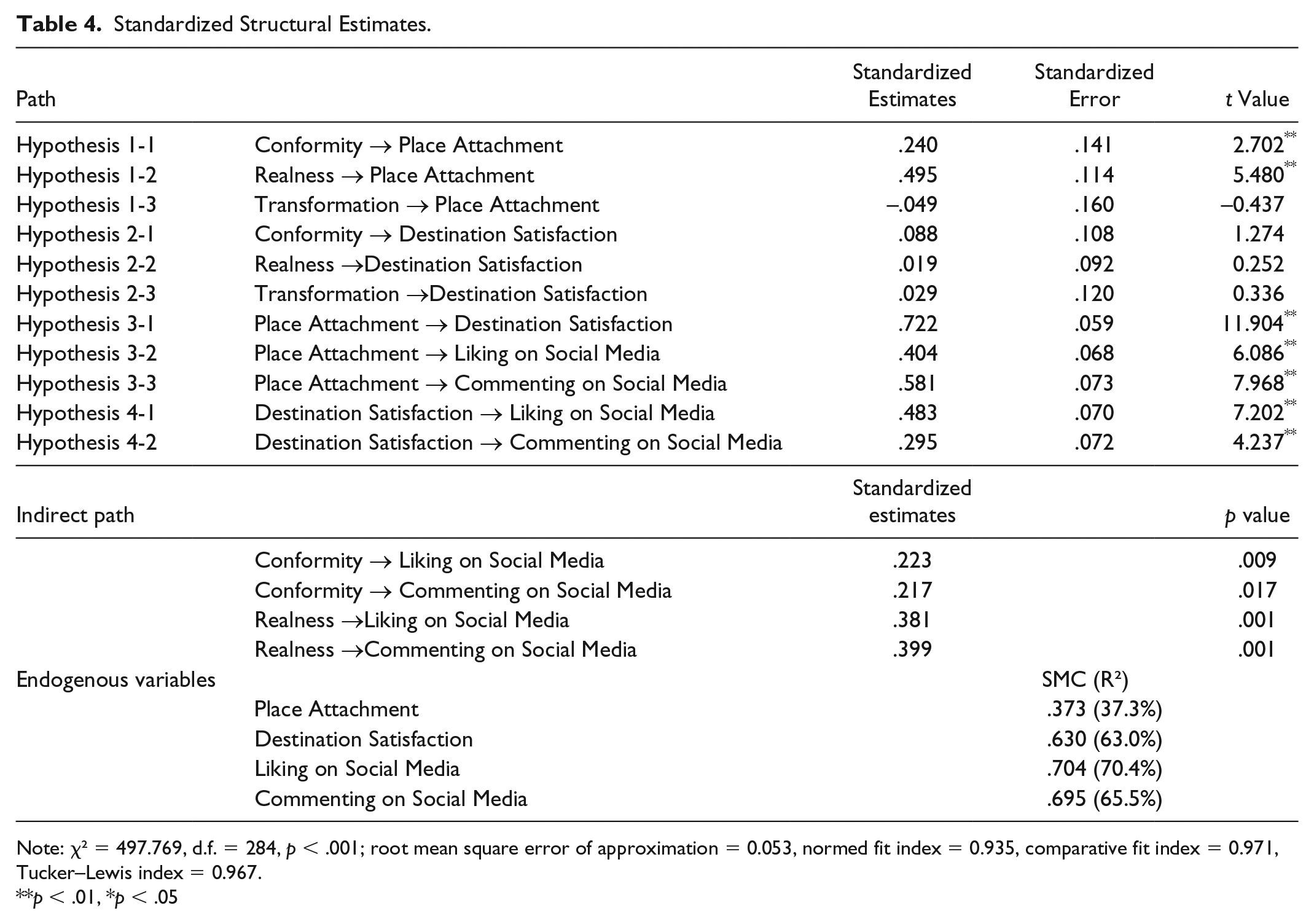
Note: χ² = 497.769, d.f. = 284, p < .001; root mean square error of approximation = 0.053, normed fit index = 0.935, comparative fit index = 0.971, Tucker–Lewis index = 0.967.
p < .01, *p < .05
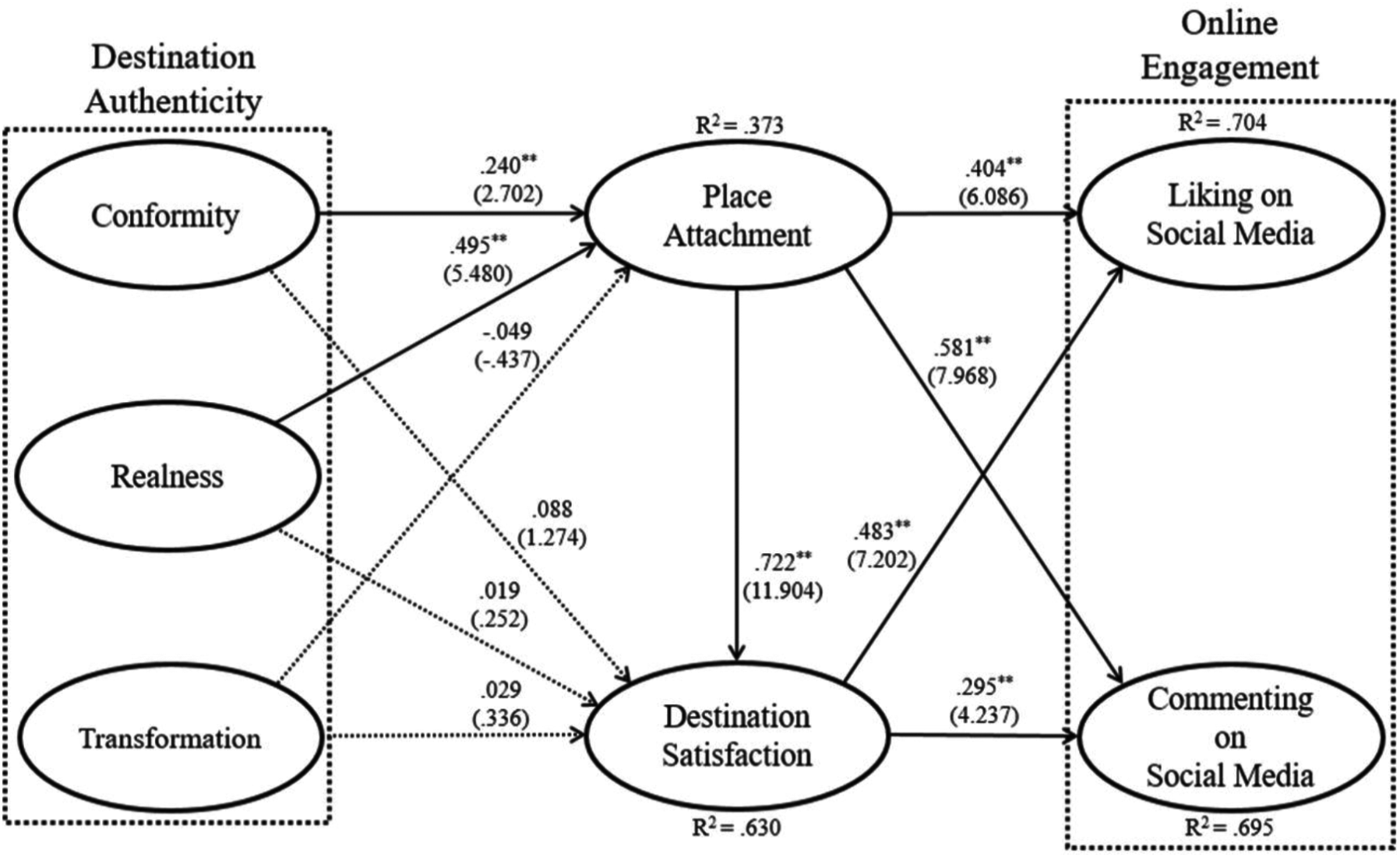
Estimates of SEM.
Hypothesis 1 speculated that travelers’ perception of destination authenticity would influence place attachment. The empirical findings showed that place attachment was significantly influenced by conformity (coefficient = .240, t value = 2.702, p < .01) and realness (coefficient = .495, t value = 5.480, p < .01), supporting hypotheses 1-1 and 1-2 (transformation: coefficient = −.049, t value = −.437, n.s.). Hypothesis 2 posited that travelers’ perception of destination authenticity would affect destination satisfaction. The results indicated that the three dimensions of destination authenticity had no significant influence on destination satisfaction. Hypothesis 3 predicted that travelers’ place attachment would influence destination satisfaction and online engagement. The findings addressed that place attachment had significant, positive impacts on destination satisfaction (coefficient = .722, t value = 11.904, p < .01), liking on social media (coefficient = .404, t value = 6.086, p < .01), and commenting on social media (coefficient = .581, t value = 7.968, p < .01), supporting hypotheses 3-1, 3-2, and 3-3. Finally, hypothesis 4 anticipated that travelers’ destination satisfaction would affect online engagement. The empirical results indicated that destination satisfaction significantly influenced liking on social media (coefficient = .483, t value = 7.202, p < .01) and commenting on social media (coefficient = .295, t value = 4.237, p < .01), supporting hypotheses 4-1 and 4-2.
Conclusion and Implications
This research seeks to understand the influences of diverse dimensions of destination authenticity on online engagement among Western travelers in the context of Asian cultural tourism. Kolar and Zabkar (2010), Bryce et al. (2015), Girish and Chen (2017), Yi et al. (2017), Jiang et al. (2017), and Spielmann, Babin, and Manthiou (2018) have suggested that understanding tourists’ perceptions of destination authenticity may better explain their emotion, attitudes, and behavior toward cultural and/or nature-based destinations. Thus, this research integrates several aspects of destination authenticity from the work of Spielmann, Babin, and Manthiou (2018) by hypothesizing that destination authenticity satisfies place attachment and destination satisfaction and that they are related to online engagement on social media, a powerful marketing tool for destination advertisements. The empirical findings of this research indicate that travelers are emotionally attached to a cultural destination when the destination is authentic with respect to conformity and realness. This study also provides evidence that place attachment and destination satisfaction play important roles in predicting travelers’ online engagement on social media. Since the advent of social media, hospitality and tourism organizations have been significantly influenced by online users’ behaviors, such as posts, opinions, complaints, and/or recommendations (Moro and Rita 2018). Their online behaviors might positively or negatively affect other users when they search for information about destinations and hospitality and tourism companies. Therefore, this study makes meaningful contributions to the extant tourism literature and offers practical implications for destination digital marketing management in cultural tourism.
From a theoretical perspective, this study formulates and tests a research model with an emphasis on broader aspects of destination authenticity as developed by Spielmann, Babin, and Manthiou (2018), which encompass a destination’s indexical authenticity, iconic authenticity facets, and existential authenticity facets all together. Prior research has examined the distinct influences of a destination’s existential authenticity facets (Jiang et al. 2017), intrapersonal and interpersonal authenticity (Yi et al. 2017), or object-based and existential authenticity (Bryce et al. 2015; Kolar and Zabkar 2010) on destination loyalty. However, the dimensions and scales of destination authenticity developed by previous scholars did not range from “the expectations of accurate representations to the necessary coherence between places and the products originating within and even a sense of realism” (Spielmann, Babin, and Manthiou 2018, p. 660). The new dimensions of destination authenticity (i.e., conformity, realness, and transformation) include tourists’ perceptions of representations of a destination’s past as well as their sense of its present and how seemingly authentic the past and present are to tourists. This study proposes that distinct destination authenticity facets enable tourists to form an attachment to a particular destination and provide a theoretical implication for scholars examining destination authenticity in cultural tourism.
Second, this study also identifies the significance of place attachment in the relationship between perceived authenticity and online engagement by expanding cognitive theory of emotions with an emphasis on outbound tourism (Lazarus 1991). From a theoretical standpoint, this study refines a model of destination authenticity by considering an emotional place-related construct, such as place attachment (Chen and Dwyer 2018). In other words, compared to prior studies focusing on cognitive aspects (Fu 2019; Park, Choi, and Lee 2019), this research integrates cognitive and emotional components to predict travelers’ favorable behavior for a destination because the travelers tend to experience both cognitive and affective aspects of the destination as a hierarchical order. Hence, theoretically, this study provides an overall flow of the creation of international travelers’ emotional attachment to a particular destination based on their perceptions of destination authenticity.
Unlike previous studies focusing on tourists’ boundary-limited behaviors for a destination (Bryce et al. 2015), this research examines the effect of perceived destination authenticity on engagement (or online behaviors) on social media platforms among outbound tourists. To date, tourism scholars have emphasized the importance of social media because of its powerful impact on actual and prospective tourists (Moro and Rita 2018). Responding to this trend in academia, researchers have investigated the influence of authentic information generated by users on social media about a destination on online engagement (Mura, Tavakoli, and Sharif 2017). However, the fundamental question may be “How can users generate authentic information about a destination on social media?” This study answers this question, by determining that the users can generate and deliver authentic information about a destination on social media only if they have experienced and perceived the destination’s authenticity while traveling. Moreover, tourists tend to behave in a favorable way for a particular destination or place if they feel connected or attached to it. The tourists’ favorable behaviors for the destination may be a defense against other users’ complaints about the destination (i.e., as an advocate) or spread good memory of the destination on social media (i.e., as a communicator). Thus, the distinctive aspects of destination authenticity and place attachment be explored further to predict various types of online behaviors related to destinations among travelers, which are powerful digital marketing tools (Moro and Rita 2018). This study provides an avenue to the extant tourism literature on authenticity and online engagement by examining the influences of destination authenticity (i.e., perceived by real experiences instead of virtual experiences via tourism websites among outbound travelers) on online behavior (i.e., clicking the “like” button and leaving comments on the posts about a particular destination).
From a managerial perspective, destination management organizations (DMOs) need to be committed to quality management of their past sites, events, and products as well as heritage. In addition, local residents can be one of the significant attributes of the destination that enable DMOs to understand the influences of destination authenticity on tourists’ place attachment and satisfaction with their destinations. Based on the findings of this research, DMOs may need to preserve local cultures as well as historical events, sites, and products as the core for authentic destination development. Although DMOs may need to invest large sums of money in the protection and preservation of destinations, this investment will allow international tourists to acquire emotional place attachment, which then brings long-term benefits to their destinations. In addition to preservation and protection, DMOs may need to encourage local communities to participate in tourism development planning to create historical, cultural, and ecological value of a destination in a more authentic manner. Interestingly, the findings indicated that travelers are more likely to “experience” a destination’s historical culture rather than “learn” about it while visiting it. Hence, DMOs may not need to focus on delivering information about their historical culture to tourists and heritage but to formulate ways to reach the tourists’ emotions. This is because the main purpose of Western tourists’ trips is experiencing the unique cultures of East Asian countries with the locals and events instead of expanding their knowledge (or learning) about East Asian countries’ cultures.
In today’s competitive tourism market, DMOs have tried to globalize their destination products to attract more international tourists to their destinations. However, the more important implication of this study is that residents at the destination may need to be educated to interact more emotionally with international tourists through language training and understanding of Western cultures. If DMOs are able to make the locals aware of direct and indirect benefits of tourism, local communities are more likely to be educated for economic growth. However, in this case, the DMOs and locals at cultural, historical, and/or ecological destinations must identify a carrying capacity threshold per attractions to prevent the delivery of inauthentic experiences to tourists and to maintain the historical and cultural integrity of each attraction.
Unlike domestic travelers, international travelers tend to spend more time, effort, and money when staying in a destination to escape everyday life and/or to have new and unique experiences in the destination (Kim and Prideaux 2005). When international tourists start becoming attached to the destination, they experience destination satisfaction and engagement in the destination on social media. The significant path from place attachment to online engagement among international tourists demonstrates that when tourists have an emotional attachment to a destination, they are more likely to express their engagement with the destination on social media via liking and commenting on the destination-related posts. In particular, this finding is crucial to DMOs because of the importance of social media as a marketing tool. DMOs cannot control the user-generated information about destinations on social media or the responses to it. If online users recognize that DMOs have attempted to control information on social media, existing and potential tourists may believe that their destinations and products are no longer authentic, and the users may start leaving negative comments on every activity pertaining to the destinations. For this reason, DMOs not only need to convey a high degree of destination authenticity to travelers but also help the travelers disseminate authentic information about their destinations on social media after the trip. For DMOs to do so, tourists’ emotional states, such as place attachment and destination satisfaction, formed by authentic cultures and locals at the destinations, need to be considered all together.
Limitations and Research Agenda
The aforementioned implications need to be carefully interpreted because of some limitations of this study. The first limitation would be related to the particular tourism context of East Asian countries, which might affect the generalizability of this study. For example, this study did not distinguish travelers who had visited Japan from those who had visited China or South Korea. Although East Asian countries share some common cultural characteristics, each country has its own heritage, history, and culture. This research setting might generate uncertainty about whether the tourists to different countries have similar experiences and perceptions of destination authenticity. Therefore, future research needs to be aware of cultural differences among destinations—and even within countries—and explore tourists’ perceptions about destination authenticity based on geographical characteristics. In other words, when studying perceived authenticity among travelers, scholars need to start from general destinations and then narrow them down to specific sites according to their culturally unique features. A second limitation is that the formation of destination authenticity among travelers might have been influenced by potential psychological factors, such as personality traits, personal values, and cultural motivations (Bryce et al. 2015; Kolar and Zabkar 2010). For this reason, future research models need to integrate other potential psychological factors as mediators and moderators to generate a more comprehensive decision-making process among tourists. The third limitation is that the sample was skewed toward people in their 20s and college or university degree holders. Young travelers prefer international travel because it requires more time and fewer companions than domestic travel (Kim and Prideaux 2005). This characteristic skewed the samples. Although this study did not find any significant differences between people in their 20s and others/student and nonstudent samples in all constructs’ means via an independent t-test, the skewness might have affected the empirical findings. Therefore, to improve external validity, future research needs to use more representative samples. Finally, in addition to structural equation modeling, a mixed method approach (i.e., combination of qualitative and quantitative methods) should be used to explore the mutual aspects of destination authenticity between tourists and locals at a destination. More specifically, although the work of Spielmann, Babin, and Manthiou (2018) tried to embrace all facets of destination authenticity, from a methodological perspective, their dimensions and scales may have had their own weaknesses. Therefore, future research should go beyond the methodological limitations by using a mixed method approach to study perceptions of destination authenticity and their influence on tourists’ attitudes to and behaviors for a destination.
Footnotes
Declaration of Conflicting Interests
The author(s) declared no potential conflicts of interest with respect to the research, authorship, and/or publication of this article.
Funding
The author(s) received no financial support for the research, authorship, and/or publication of this article.
