







Abstract
During a pandemic, tourism can inflict negative social costs on communities in tourist destinations. This study examines factors affecting residents’ responses to policies to mitigate the social costs of tourism during a pandemic. Two hypothetical scenarios are analyzed. Study 1 investigates framing effects on residents’ attitudes toward the effectiveness of policy measures; study 2 explores the impact of mental accounting on residents’ willingness to pay. Findings show that residents perceive policy measures as more effective if their positive outcomes of such measures are highlighted. Also, residents are more willing to fund social cost mitigation with unearned income, such as anti-pandemic bonds, than through their salaries. This article contributes to academic debate on the efficacy of public policies in combating pandemics and extends the literature on framing and mental accounting in tourism research. Policy implications of these findings are also discussed.
Introduction
Novel diseases continue to emerge because of urbanization and increased population mobility. When diseases spread across regions to become pandemics, they can bring considerable mortality and social costs to societies (Luo 2016). Tourism is one component of population mobility that may inflict social costs on destinations affected by a pandemic (Spiegel et al. 2008). Efforts are under way to evaluate and limit the negative impacts of the COVID-19 pandemic on society, economies, and the environment.
Infectious diseases spread rapidly through tourists’ movement during travel and via individuals’ interactions with local communities and each other (Apolloni et al. 2014). Large-scale movements in China generally occur during the Chinese New Year period, as people travel across the country to reunite with their families and/or visit tourist destinations (Li et al. 2016). One major risk of travel during Chinese New Year 2020 was its potential to accelerate the transmission of COVID-19, which broke out at the end of 2019. This travel period could have resulted in social costs, such as a shortage of necessities, pressure on local hospitals’ medical capacity, and public panic. Efforts were made to prevent or delay COVID-19 transmission by enacting mobility and travel restrictions, encouraging physical distancing, and closing public and business facilities (Epstein et al. 2007).
This article presents two main studies of hypothetical nonmedical interventions during a pandemic, including government policies to mitigate the social costs of tourism. In preparation for these main studies, a prestudy was conducted to capture residents’ descriptions of the precise social costs of tourism. Based on the prestudy results, the social costs of tourism refer to the risk of cross-infection and the difficulty of controlling COVID-19.
Authoritative information regarding the development of a pandemic and the measures being taken against it can reduce public anxiety (Harper et al. 2008). However, public policies are generally formulated under time pressure and often lack sufficient scientific evidence to support the intended policy outcomes. These shortcomings diminish the public’s confidence in such policies (Rosella et al. 2013). The framing of information, whether positive or negative, may strongly affect public trust in policies’ efficacy as well, further shaping public support. For instance, in announcing COVID-19 statistics, one could positively frame the situation by stating, “The number of newly confirmed cases in Hubei province declined on February 21, 2020.” Alternatively, one could negatively frame the information by stating, “The number of total confirmed cases in Hubei province increased on February 21, 2020.” These sentences communicate equivalent information. Study 1 in this research explores the effects of types of information framing on residents’ responses to policies implemented in hypothetical scenarios.
Other forms of positive and negative framing also exist. People may build various psychological accounts of entertainment or food when they assess the pros and cons of going out to dinner with friends. A positive frame could be to strengthen social connections, whereas a negative frame could be that the expenditure on dinner may exceed one’s daily food budget. If a respondent allocates this cost to her or his entertainment account, then she or he may prefer the positive frame. However, if the cost is assigned to the food account, then the person may prefer the negative frame. Framing and mental accounting were first proposed by Tversky and Kahneman (1981). Mental accounting denotes the psychological (mental) accounting that individuals perform when evaluating the advantages and disadvantages of an event. Mental accounting affects individuals’ choices and should be considered when examining people’s attitudes and behavioral intentions (Thaler 1999). In study 2, we examine the behavioral intentions of residents, based on different income sources, toward a possible policy measure to combat a pandemic. People perform mental accounting when deciding whether to donate on a particular occasion, and analyzing this phenomenon can improve our understanding of people’s willingness to fund the mitigation of the social costs of tourism during a pandemic.
This research has two subobjectives for evaluating the factors that influence residents’ responses to policies intended to mitigate the social costs of tourism in a pandemic. The first (study 1) is to examine the effect of framing on residents’ attitudes toward mitigation policies. Specifically, the study investigates how positive versus negative framing affects residents’ attitudes toward the effectiveness of policy measures to reduce the social costs of tourism during a pandemic. The second subobjective (study 2) is to examine the joint mental accounting and framing effects on residents’ behavioral intentions toward two types of mitigation policies. The study explores how payment size (low vs. high in value) and income source (earned vs. unearned income) influence residents’ willingness to pay to reduce the social costs of tourism during a pandemic.
Our research objectives are fulfilled by testing two hypothetical scenarios in three urban cities in China: Wuhan, Guangzhou, and Hong Kong. These cities receive a large number of tourists and have been affected by COVID-19. Analyzing and comparing the perceptions and behavioral intentions of residents in these cities can inform the development of policies to reduce the social costs of tourism. Wuhan has seen the largest number of confirmed cases and is the capital city of Hubei province in China. Guangzhou is the capital city of Guangdong Province, ranked the second most affected province in China. Wuhan and Guangzhou are each transportation hubs and usually experience a high volume of tourist movement. Hong Kong is next to Guangdong Province, and more than 80% of its tourists come from mainland China.
This research makes three contributions. First, it contributes to debates on the efficacy of public policies in combating pandemics. Public health researchers have used modeling techniques to evaluate the effectiveness of public policies in response to a pandemic, such as international travel restrictions (e.g., Bajardi et al. 2011; Epstein et al. 2007) and vaccinations (e.g., Luo 2016). However, there has been little investigation of tourist destination residents’ perceptions of policy efficacy in mitigating the social costs of tourism amid a pandemic. This aspect deserves close examination because local communities are more likely to support policies if they deem them effective. We surveyed residents who had been affected by the pandemic to obtain timely primary data on social costs from their points of view. Second, this research extends the literature on framing and mental accounting in tourism. Framing has been evaluated in tourism and hospitality contexts (e.g., Her and Seo 2017; Huang et al. 2016), whereas mental accounting has received scarce attention despite its usefulness in exploring consumers’ intentions to pay. This article considers the combined effects of framing and mental accounting on residents’ attitudes and behavioral intentions regarding public health policies to mitigate the social costs of tourism. Third, our empirical data can inform recommendations for government departments in pandemic-affected areas regarding ways to mitigate the social costs of tourism.
Literature Review
Social Costs of Tourism and Policy Responses during a Pandemic
Tourism contributes to destinations economically but also carries social costs. The social effects of tourism are varied, involving value systems, individual behavior, collective lifestyle, safety, and moral conduct (Ap 1990). Tourism can have negative effects, such as traffic congestion, employment fluctuations, price increases, noise, and litter (Duffield 1982). Tensions may also arise between visitors and locals (Wall and Ali 1977). Local communities are often concerned about changes to their way of life, increasing social disparities, and perceived harassment by tourists (Spiegel et al. 2008).
A typical social cost of tourism during a pandemic is disease transmission by travelers (Lee et al. 2012). In 2003, a Canadian tourist infected with the severe acute respiratory syndrome (SARS) virus during his stay in Hong Kong flew back to Toronto, Canada, and transmitted the virus to others (Varia et al. 2003). Anxiety or panic among destination residents and heavy burdens on the local medical system can differ drastically from the social costs of tourism in nonpandemic times. Tourism research has focused on the economic impacts of pandemics on tourism (e.g., Kuo et al. 2008; Yang, Zhang, and Chen 2020). Few studies have explored the social costs of tourism in a pandemic and how tourist destination residents respond to policies to reduce these costs. Steege et al. (2009) evaluated the impact of a pandemic influenza originating in animals on employment and socioeconomic activities in a tourist destination. They identified several negative impacts, such as “fear of job loss,” “lack of transportation,” and “discrimination and profiling” of farmworkers.
Pharmaceutical and nonpharmaceutical measures are used to combat pandemics (Oshitani 2006). Pharmaceutical interventions involve the development of medical treatments and vaccines. Nonpharmaceutical interventions can be classified as “administrative control measures” or “non-mandatory personal protective measures” (Raude and Setbon 2009, p. 339). Administrative control measures typically include isolating infected patients, quarantining individuals who have been in contact with confirmed patients, and border control (Oshitani 2006). Personal control measures often entail social distancing (i.e., school closures, public event cancelations, reduced public transport, and working from home) and increased personal hygiene, such as mask wearing and frequent hand washing (Lee et al. 2012). Nonpharmaceutical interventions are more useful in reducing the social costs of tourism in a pandemic. Travel exacerbates infection transmission, and government policies to control infectious diseases commonly involve mobility limitations to reduce travel from/to places with a large number of confirmed cases of infection (Bajardi et al. 2011). Travel restrictions may also “buy time” to implement other measures, such as purchasing and preparing medical equipment (Epstein et al. 2007).
Various studies have examined the roles of travel controls in combating a pandemic, yielding mixed results. Some scholars have confirmed the usefulness of air travel restrictions, whereas others have found no positive results from such policies (Epstein et al. 2007). The spread of influenza in the United States in 2001–2002 slowed for approximately two weeks as a result of air travel restrictions, which were imposed after the September 11, 2001, terrorist attacks in New York (Epstein et al. 2007). Mexico issued travel bans and strictly screened travelers at airports during the 2009 H1N1 pandemic; however, modeling based on demographic, mobility, and epidemiologic data showed that this control measure did not curb the international spread of H1N1 (Bajardi et al. 2011). Reduced air travel within Mexico may have been insufficient to prevent international spread of the virus. Thus, travel controls might only be effective in halting or limiting the spread of a disease if all countries collaborate in implementing the measure during a global pandemic or if a central government coordinates mobility restrictions across cities and regions. After the emergence of COVID-19 in Wuhan, the Chinese government established the Central Leading Group on Responding to the Novel Coronavirus Pneumonia Outbreak to oversee disease control. In study 1, we analyze how framing affects the perceived effectiveness of the national government’s policies in controlling the spread of COVID-19.
Framing Effects
Framing involves presenting “one of two different but equivalent value outcomes to decision-makers, where one outcome is presented in a positive or gain term, and the other in a negative or loss term” (Chang and Lee 2010, p. 197). When presenting a probabilistic outcome, positive framing could be “This medical procedure carries a 50% chance of survival,” and negative framing could be “This medical procedure carries a 50% chance of dying” (Donovan and Jalleh 1999, p. 614). Following Tversky and Kahneman’s (1981) development of framing effects, the concept has been applied in various fields, such as consumer behavior, health (D’Errico and Piñon 2005), and tourism and hospitality (Her and Seo 2017; Huang et al. 2016). Kim and Jang (2017) examined framing effects on consumers’ choice of the same chocolate cake. They discovered that consumers were more likely to purchase the cake when future-focused framing was used (“Life is long. Enjoy it forever, for a brighter future”) than when present-focused framing was used (“Life is short. Enjoy the moment, right now”). Attribute framing describes the phenomenon in which “two equivalent decision problems that are framed differently may elicit different responses” (DellaVigna 2009, p. 347). The valence (positive or negative) of an entity’s presentation can influence consumers’ attitudes and behavioral intentions toward the given item, event, or outcome (Gamliel and Peer 2010).
The effectiveness of framing has been frequently examined in the literature. Positive framing encourages optimistic evaluations, whereas negative framing promotes pessimistic evaluations (Levin, Schneider, and Gaeth 1998). Some researchers have found that the persuasiveness of positive frames is stronger (Levin and Gaeth 1988); others have noted that negative frames are more convincing (Ahluwalia, Burnkrant, and Unnava 2000). Levin and Gaeth (1988) offered a classic example of attribute framing: when samples of the same ground beef were displayed to consumers, the sample labeled “75% lean” (positive framing) was perceived as tastier than the sample labeled “25% fat” (negative framing). In an experiment involving a hypothetical immunization, participants who received positive framing (90% probability of no side effects) responded more positively to this immunization than those who received negative framing (10% chance of side effects) (Jalleh 1992). However, negative framing appears to affect consumers more in low-commitment activities, such as when attempting to change their attitudes toward brands (Ahluwalia, Burnkrant, and Unnava 2000). Some researchers have found that framing effects do not exist under certain circumstances, possibly because study participants did not perceive the valence of framing (Janiszewski, Silk, and Cooke 2003).
Processing motivation and receivers’ capacity largely determine persuasiveness. Negative framing tends to be more effective under a high processing motivation (Das, Kerkhof, and Kuiper 2008). The encoding and representation of information may result in positive framing, leading to a more favorable evaluation (Levin, Schneider, and Gaeth 1998). Positive framing also tends to evoke more positive associations with memories, leading to valence-consistent evaluation shifts (Levin and Gaeth 1988). In the earlier example involving ground beef, favorable evaluations of positive framing were associated with dimensions beyond the meat’s leanness, such as taste, greasiness, and quality (Levin, Schneider, and Gaeth 1998).
Attribute framing refers to the generation of frames based on different characteristics of the same object to influence the audience’s evaluation of the object (Pleger, Lutz, and Sager 2018). In addition to extreme “mirror image” frames such as the case of “75% lean vs. 25% fat ground beef,” studies have used more loosely styled frames to emphasize certain attributes. Scholars have designed frames with various characteristics based on their research purposes (Pleger, Lutz, and Sager 2018). People’s preferences or decisions have been investigated when a public policy was framed as a “bonus” versus a “penalty” (McCaffery and Baron 2005) or as a “carbon tax” versus a “carbon offset” (Hardisty, Johnson, and Weber 2010). Similarly, Her and Seo (2017) examined responses to the same dessert after it was described as either “tasty” or “healthy.” Study 1 applies attribute framing to the outcomes of the same policy.
The presentation of a policy measure can influence its public acceptance (Pleger, Lutz, and Sager 2018). People are more likely to accept spatial planning measures if the policy attributes are positively framed (Pleger, Lutz, and Sager 2018). Kuehnhanss and Heyndels (2018) found that low-income families prefer to receive a higher premium for having a child when it is framed as a benefit. Higher-income families prefer a higher premium when it is framed as a form of tax relief. However, research on framing effects in tourism remains limited compared with that in other fields: no studies have considered the effects of framing on policy perceptions in a tourism context.
Mental Accounting
Mental accounting is defined as “the set of cognitive operations used by individuals and households to organize, evaluate, and keep track of financial activities” (Thaler 1999, p. 183). People create various mental accounts, allocate their budget for each account, and manage their financial decisions by doing so. In the classic two-condition play scenario (Tversky and Kahneman 1981), people are more likely to pay for a US$10 ticket if they find that they have lost a US$10 bill when they enter the theater (lost money condition) than when they discover that they have lost a US$10 ticket (lost ticket condition). In this scenario, people create a “play account,” which refers to the cost of watching the play. In the play account, it costs US$10 in the lost money condition and US$20 in the lost ticket condition. People are more willing to pay in the former case.
Thaler (1999) summarized the three components of mental accounting. The first consists of outcome perceptions and decision evaluations. If a large toy previously cost more than a small toy but now costs the same, a consumer will buy the large toy after making a purchase decision evolution/calculation. The second component of mental accounting involves assigning activities to different accounts. Thaler offered the example of a friend donating a fixed amount to charity each year and deducting any perceived losses, such as the cost of “an undeserved speeding ticket,” from this “charity account”; such deductions reduced the pain of losses. The final component refers to the frequency (e.g., daily, weekly, or annual) of evaluating accounts in a narrow or broad scope, revealing the dynamism of mental accounting. These three components indicate that mental accounting influences choice and violates fungibility; money cannot be transferred between mental accounts (Thaler 1999).
Mental accounting is often evaluated together with framing (Soman 2004), and a common focus tends to be on the influence of mental accounting on the outcome of a framing decision (Henderson and Peterson 1992). People tend to prefer a frame when its monetary outcome is hedonically framed, such as featuring more financial gains or fewer losses. In the play scenario, people build a “mental” play account when facing two frames: the lost money condition and the lost ticket condition. The play account influences people’s decisions in that they are more willing to pay for the lost money condition than the lost ticket condition; the former seems less painful than the latter. When a choice involves outcomes that comprise gains and losses, certain principles apply, such as combining a smaller loss with a larger gain to maximize utility (Thaler 1999). The toy example aligns with this principle in that the consumer accepts a smaller loss (a cheaper cost than before) and a greater gain (a large toy) after the mental accounting process.
Mental accounting refers to a single transaction and an array of spending, income, and budget categories (Soman 2001; Sussman, Sharma, and Alter 2015; Thaler 1999). Spending expenses can be divided into accounts for food or entertainment, each of which is subject to budgetary constraints (Soman 2004). This article focuses on the income and budget categories.
Thaler (1999) classified income as either regular (e.g., monthly salary) or a windfall (e.g., winning an office football pool). People tend to spend a windfall immediately but not their regular income. Windfalls include unearned income, such as dividends and lottery prizes (Epley, Mak, and Idson 2006). Knowledge of the effect of earned or unearned income on behavioral intention is highly informative for policy makers and marketers (Imbens, Rubin, and Sacerdote 2001). Imbens, Rubin, and Sacerdote (2001) found that winning a prize of US$80,000 per year would increase people’s expenditures on cars and large homes. Heilman, Nakamoto, and Rao (2002) revealed that consumers’ unplanned spending on groceries increased after they received windfalls, such as shopping coupons.
Sussman, Sharma, and Alter (2015) divided budgets into two categories—exceptional (e.g., philanthropic purposes) or ordinary (e.g., necessity)—and noted that people establish mental budgets for philanthropic activities, such as charitable donations. People’s constrained budgets make it useful to research how mental budgets influence donation behavior (LaBarge and Stinson 2014). Budgeting comprises two steps, booking and posting (Heath and Soll 1996). Booking involves “record[ing] the expenses in their accounting system,” whereas posting entails assigning money to a specific account (Sussman, Sharma, and Alter 2015, p. 130). The framing and evaluation of budget categories can influence people’s spending and donation decisions. Although scholars have examined charitable giving, few have focused on donors’ or recipients’ mental budgeting processes (Sussman, Sharma, and Alter 2015).
Study Background—Public Policies to Combat COVID-19
We analyzed Chinese government policies in response to COVID-19 to develop the scenario designs of the two studies discussed in this article. Nonpharmaceutical measures to mitigate the identified social costs of tourism due to COVID-19 are summarized in Table 1. We conducted a document analysis of relevant national policies on Chinese government websites, including those of the Central Leading Group on Responding to the Novel Coronavirus Pneumonia Outbreak, the Organization Department, the National Health Commission, the Ministry of Culture and Tourism, and the Ministry of Transport.
Policy Measures to Minimize the Social Costs of Tourism.

Table 1 presents the main, generic, and subcategories of public policies. The main social costs of tourism associated with these categories, as perceived by local communities in a prestudy, are also presented. Mobility control and enhanced public and personal hygiene are the first and second main policy categories. They were enacted to reduce the risk of cross-infection and to cope with the difficulty of controlling the virus. The third main category concerns the maintenance of public order to prevent necessity shortages and reduce pressure on local medical facilities. The fourth main category refers to efforts to improve psychological health to assuage public panic.
The fourth main category includes communicating information to the public to minimize rumors and misinformation about COVID-19 and to encourage “positive energy” (Zheng Neng Liang). This term was selected as one of the top 10 new terms in China in 2012; it is defined as “transforming fatigue, stress, and fear into vibrance, strength, and love” (Orloff 2004, p. 1; Wang 2013). In the current pandemic, positive energy publicity refers to commending frontline medical staff and other workers combating COVID-19 and publicizing their achievements. It also involves strengthening positive dissemination and guidance to build people’s confidence that this pandemic will be overcome. The implication is that publicity with a positive tone is likely to improve people’s attitudes toward policy measures. However, there is little research on this topic. In study 1, a hypothetical scenario was presented to examine how residents responded to positively versus negatively framed policy measures to minimize the social costs of tourism in a pandemic.
Another critical measure is the call to the public to support COVID-19 control through monetary channels, such as donations and bonds. This measure is related to the third main category. In study 2, a hypothetical scenario was proposed to examine the effects of mental accounting and framing on residents’ willingness to pay to reduce the social costs of tourism. We intended to determine whether this willingness depended on the nature of the income source for the donation.
Research Design and Hypothesis Development
Research Design
This research contains two studies, each of which corresponds to a research objective. Each study was related to a hypothetical policy scenario. In study 1, we analyzed the effects of framing on residents’ attitudes toward government policies. In study 2, we examined the effects of framing and mental accounting on residents’ willingness to pay to lower the social costs of tourism during a pandemic.
Scenario and Hypotheses of Study 1
The first scenario tested the effects of framing on residents’ attitudes toward policy measures to mitigate the social costs of tourism during a pandemic. The hypothetical scenario was inspired by the National Health Commission’s daily presentations of statistics of confirmed COVID-19 cases. Aside from reporting the nationwide total of confirmed cases, the published figures contained places outside Hubei province. They indicated that on February 3, 2020, although the number of COVID-19 cases nationwide continued to increase, it declined outside Hubei. These figures showed that policy measures to combat COVID-19 had been effective, boosting public confidence. However, from February 11 to 12, the number of confirmed cases in Hubei jumped from 1,638 to 14,840 (Xin Hua Net 2020). To alleviate panic and doubt, China’s National Health Commission explained that the figure reported on February 12 included new clinically diagnosed cases and represented a cumulative figure rather than a daily increase. The effects on residents’ attitudes are likely to differ according to whether reporting is framed positively or negatively. Therefore, we developed a hypothetical scenario based on a design of positive versus negative terms, such as desirable versus undesirable attributes (Krishnamurthy, Carter, and Blair 2001).
All respondents first read the following hypothetical scenario description: The very infectious and harmful virus X has been detected in City C. In the past 2 weeks, there have been 10 and 40 newly confirmed cases of infection, respectively. Tourist mobility would accelerate the transmission of this virus, which would have a large negative social impact on the city. Thus, the relevant departments of City C have formulated measures, such as reducing tourist mobility, to enable the detection and isolation of infected tourists.
Next, each respondent was presented with either a positively or negatively framed outcome message. The two conditions were equivalent, a technique commonly used in attribute-framing studies (Thaler 1999). The positive framing condition read, “The outcome of these measures is that based on Week 1, the growth of newly confirmed cases has decreased by 50% and the number of newly confirmed cases has started to decline in the third week.” The negative framing condition read, “The outcome of these measures is that the number of confirmed cases has increased by 50% and the total number of confirmed cases is rising in the third week.” After reading the scenario, respondents were asked to rate their attitudes toward the effectiveness of these policy measures on a 7-point scale, ranging from “strongly agree” to “strongly disagree,” to indicate whether the outcome meant that the negative social impacts brought by tourism to City C would likely decrease. Respondents were told that there were no right or wrong answers and that the study was for research purposes only (Gamliel and Peer 2010).
When evaluating the performance of an object or event, positive framing typically induces more favorable judgments or decisions than negative framing (Levin, Schneider, and Gaeth 1998). Levin (1987) showed that basketball performance was rated higher when the percentage of shots taken was presented rather than the percentage of shots missed. Schoorman et al. (1994) found that a product division’s performance was rated higher when raters were told that the profits met target expectations than when they were told that the profits fell short.
Various moderators of framing effects have been examined, such as personal involvement (Garelik and Wang 2016). The effects of attribute framing can be mitigated by high personal involvement or personal relevance (Levin, Schneider, and Gaeth 1998; Pleger, Lutz, and Sager 2018). Therefore, people living in a city with more cases of infection may consider the number of infected people to be more relevant, and they may be less affected by attribute framing. Thus, they may perceive policy measures as less effective despite positive framing. People working in tourism-related industries may also be highly involved and less affected by positive framing. Accordingly, the following three hypotheses are proposed:
Hypothesis 1: Attribute framing (positive vs. negative framing) affects residents’ attitudes toward the effectiveness of policy measures to reduce the social costs of tourism during a pandemic. Residents who are exposed to positively framed messages perceive the measures as more effective than those who are exposed to negatively framed messages.
Hypothesis 2: The city of residence (Hong Kong, Wuhan, or Guangzhou) moderates the relationship between attribute framing and attitudes toward the effectiveness of measures to reduce the social costs of tourism during a pandemic. The effect of attribute framing on residents’ attitudes toward the effectiveness of policy measures is stronger if a respondent is a resident of a city with fewer confirmed cases (i.e., Hong Kong).
Hypothesis 3: Occupation (working or not in the tourism and hospitality industry) moderates the relationship between attribute framing and attitudes toward the effectiveness of government measures to reduce the social costs of tourism during a pandemic. The effect of attribute framing on residents’ attitudes toward the effectiveness of policy measures is stronger among respondents who do not work in the tourism and hospitality industry than among those who do.
Scenario and Hypotheses of Study 2
The second scenario examined whether mental accounting played a role in residents’ willingness to pay to mitigate the social costs of tourism in a pandemic. Specifically, we investigated differences in perceptions in terms of paying for the fight against COVID-19 with earned versus unearned income. The Organization Department of China called on members of the Chinese Communist Party to donate to the control and prevention of COVID-19, raising a total of 1.18 billion yuan. Later, the general public donated through various organizations, including the Red Cross. These donations also raised money and encouraged people to work together.
Other channels were used to raise money from the public for COVID-19 prevention and control as well. One was anti-coronavirus bonds, of which 13.5 billion yuan worth were issued by the China Development Bank, a financial institution directly controlled by the State Council (Xin Hua She 2020). The interest rate of anti-coronavirus bonds is much lower than that of other bonds, but these bonds are quite popular. Most people purchase them to help individuals and businesses affected by COVID-19. The interest difference between anti-coronavirus bonds and other traditional bonds represent what people forgo to combat COVID-19. This interest difference can be seen as a donation to help mitigate COVID-19.
Unearned income comes from sources other than active employment, such as bond interest, investment dividends, capital gains, social security benefits, alimony, and lottery winnings (Social Security Administration 2009; Su 2003). The main purpose of scenario analysis is not to replicate real life but to simplify what happens in reality by highlighting the intriguing parts while controlling the “noise” (Gomm 2004). Lottery winnings, which can be seen as a typical category of unearned income in scenario analysis, have been used to examine consumers’ behavioral intentions (e.g., Baker, Nagel, and Wurgler 2007). Therefore, in this study, we decided to use a lottery scenario rather than a bond scenario.
Based on designs from earlier studies of mental accounting (Thaler 1999) and in accordance with the aim of this study, we developed a hypothetical scenario with four conditions. All respondents first read the same scenario: The very infectious and harmful virus X has broken out in the city where you live, and many people have been infected. Tourist movement would accelerate the transmission of this virus, and each resident, including you and your family, has a high risk of infection. Charity A has set up a foundation to reduce tourist movement, provide disinfection and protective products, and detect and quarantine infected tourists. These measures can effectively block the dissemination of the virus and greatly reduce the number of infected people, reducing the social costs of virus transmission. (Note: Charity A uses this foundation effectively, reasonably, and transparently, and it is affiliated with relevant health services.)
Next, each respondent was presented with one of four willingness-to-pay message conditions. The first two conditions involved earned income in the form of low versus high payment. The first message (earned income–low payment condition) read, “If you earned 5,000 yuan (for HK, HK$10,000) as your salary, how likely would you be to give 25 yuan (for HK, HK$50) from your salary to this foundation?” The second message (earned income–high payment condition) read, “If you earned 5,000 yuan (for HK, HK$10,000) as your salary, how likely would you be to give 400 yuan (for HK, HK$800) from your salary to this foundation?” The other two conditions involved unearned income from a lottery prize in the form of low versus high payment. The third message (unearned income–low payment condition) read, “If you bought a lottery ticket and won 5,000 yuan (for HK, HK$10,000), how likely would you be to give 25 yuan (for HK, HK$50) of this money to this foundation?” The fourth message (unearned income–high payment condition) read, “If you bought a lottery ticket and won 5,000 yuan (for HK, HK$10,000), how likely would you be to give 400 yuan (for HK, HK$800) of this money to this foundation?” Respondents answered based on a 7-point scale ranging from “very unlikely” to “very likely.” Again, they were told that there were no right or wrong answers and that their answers were for research purposes only (Gamliel and Peer 2010).
The pretest questionnaire included a question about willingness to pay to reduce the social costs of tourism in a pandemic among the 407 Wuhan and Guangzhou residents. We found that most respondents were willing to donate within the range of 0–500 yuan in Wuhan and Guangzhou. Therefore, we set up a certain level of salary and asked respondents to indicate their likelihood of donating a specific amount with a low level of 25 yuan and a high level of 400 yuan. We also asked 100 Hong Kong residents to express their willingness to pay, which generated HK$50 and HK$800 as the low and high payment figures, respectively. Therefore, a low level of HK$50 and a high level of HK$800 were adopted in the scenario. Given that the income level in Hong Kong is roughly twice that of mainland China, we assumed that the salary and lottery winnings should be HK$10,000 in the hypothetical scenario.
People’s mental budgeting, including their tracking, allocating, and spending of monetary resources, affects their philanthropic decision making (LaBarge and Stinson 2014). People forecast costs based on their mental budgeting (Sussman and Alter 2012), and we can assume that they would have had different mental accounts for spending their salaries before the COVID-19 outbreak. Indeed, when people receive their salaries, they may not spend the salaries on donations to combat the virus, as the outbreak was unexpected and not incorporated into their mental accounts in advance. Conversely, people are more likely to budget for donations after they unexpectedly win a lottery ticket; as such, they should be more inclined to create a charitable account in the context of a pandemic.
Moreover, people are more likely to spend when they receive unearned income and purchase goods that they normally would not on receiving this income (Arkes et al. 1994; Milkman and Beshears 2009). Baker, Nagel, and Wurgler (2007) discovered that people who receive stock dividends consume more than those who do not. Thus, people will presumably be more willing to donate to the foundation if they win a lottery. People who reside in a city with more confirmed cases of COVID-19 should also be likely to pay more, as they will feel a higher sense of obligation to reduce associated social costs. Therefore, the following hypotheses are proposed:
Hypothesis 4: Residents are more willing to pay to reduce the social costs of tourism during a pandemic if the payment is low in value than if it is high in value.
Hypothesis 5: Residents are more willing to pay to reduce the social costs of tourism during a pandemic with unearned income framing than with earned income framing.
Hypothesis 6: The source of income for payment moderates the effect of payment size on residents’ willingness to pay to reduce the social costs of tourism during a pandemic. The effect of payment size on willingness to pay is stronger for residents in the earned income framing condition than for those in the unearned income framing condition.
Hypothesis 7: The city of residence (Hong Kong, Wuhan, or Guangzhou) moderates the interaction effects of payment size and source of income on willingness to pay. The interaction effects are stronger for respondents who currently reside in a city with more confirmed cases, such as Wuhan.
Method
Population and Sample
Residents of Wuhan, Guangzhou, and Hong Kong constituted our survey population. Study 1 included a formal sample of 1,542 usable surveys collected from the three cities, and study 2 consisted of 1,822 usable surveys from the three cities. Detailed data collection and analysis for each study are discussed in the following subsections. Two professional data companies, Wenjuanxing and Sunrise Marketing Research, were employed to administer the survey electronically to a random sample of the survey population from February 2 to 26, 2020. An average of 15 yuan was offered as an incentive for each respondent to complete the questionnaire.
Data Collection and Analysis of Study 1
To check the manipulation effectiveness of attribute framing, we conducted a pilot study with a sample of 189 respondents from Wuhan (n = 62), Guangzhou (n = 63), and Hong Kong (n = 64). All respondents were instructed to “identify the tone of the message as follows,” scored on a 7-point Likert-type scale (1 = “most negative,” 7 = “most positive”) (Chang and Lee 2010). Results indicated that respondents perceived the stimuli as intended (Mposframing = 5.89; Mnegframing = 2.48; t = 29.260, p = .000).
In the main study, all respondents were randomly assigned to one of the two conditions (positive vs. negative framing). The demographic information of the sample is listed in Table 2. Our sample contained 604 respondents from Wuhan, 418 from Guangzhou, and 520 from Hong Kong. Of them, 47.9% were men and 52.1% were women; 27% were 18–24 years old, 34.4% were 25–34 years old, 21.3% were 35–44 years old, 12.5% were 45–54 years old, and 4.9% were ≥55 years old. In terms of education level, 72.2% of respondents had a college degree and 20.1% did not. Finally, 87.4% did not work in the tourism or hospitality industry.
Demographics of Study 1.

Note: Income for Hong Kong refers to annual income (HK$); 1 = 0–149,999; 2 = 150,000–349,999; 3 = 350,000–499,999; 4 = 500,000–699,999; 5 = 700,000+.
Occupation: “Do you work in a tourism/hospitality-related industry?”
Relatives: “Have any of your relatives or friends been affected by the coronavirus pandemic?”
Data Collection and Analysis of Study 2
To check the manipulation effectiveness of payment size, we conducted a pilot study with a sample of 189 respondents from Wuhan (n = 62), Guangzhou (n = 63), and Hong Kong (n = 64). All respondents were asked to evaluate the statement “The donation is very small” on a 7-point Likert scale (1 = “strongly disagree,” 7 = “strongly agree”) (Kim and Jang 2017). Findings showed that respondents perceived the treatment as intended (Wuhan: Mhighpay = 2.97, Mlowpay = 6.05, t = 14.670, p = .000; Guangzhou: Mhighpay = 2.89, Mlowpay = 5.94, t = 15.350, p = .000; Hong Kong: Mhighpay = 2.59, Mlowpay = 5.73, t = 13.897, p = .000). To check the manipulation effectiveness of income source, all respondents in the pilot study were asked to evaluate the statement “The salary/lottery is a windfall” on a 7-point Likert scale (1 = “strongly disagree,” 7 = “strongly agree”) (Kim and Jang 2017). Results indicated that respondents perceived the treatment as intended (Msalary = 1.29, Mlottery = 6.26, t = 59.085, p = .000).
In the main study, all respondents were randomly assigned to one of the four conditions. Demographic information of the sample is summarized in Table 3. There were 604 respondents from Wuhan, 618 from Guangzhou, and 600 from Hong Kong. Given the difficulty of collecting data from Wuhan during the COVID-19 outbreak, we used the same sample for studies 1 and 2. The 1,822 respondents showed a balanced sex distribution: 47.9% were men and 52.1% were women. Regarding age distribution, 21.2% were 18–24 years old, 33.3% were 25–34 years old, 23.7% were 35–44 years old, 15.8% were 45–54 years old, and 6.1% were 55 years old or above. Finally, 67.1% had a college degree and 24.5% did not.
Demographics of Study 2.

Note: Income for Hong Kong refers to annual income (HK$); 1 = 0–149,999; 2 = 150,000–349,999; 3 = 350,000–499,999; 4 = 500,000–699,999; 5 = 700,000+.
Occupation: “Do you work in a tourism/hospitality-related industry?”
Relatives: “Have any of relatives or friends been affected by the coronavirus pandemic?”
Findings
Study 1 results
An independent t-test showed that residents’ attitudes toward policy measures to reduce the social costs of tourism differed significantly between the negative framing condition (M = 3.92) and the positive framing condition (M = 5.70), with a t value of 20.090 at a 95% significance level (p < .000). Hypothesis 1 was thus supported, indicating that respondents in the positively framed condition perceived the measures in the scenario as more effective than respondents in the negatively framed condition.
To test the moderating effect of city of residence (Hong Kong vs. Wuhan vs. Guangzhou) in the relationship between attribute framing (negative vs. positive) and attitude toward policy measures to reduce the social costs of tourism during a pandemic, we used Hayes’s (2013) PROCESS Model 1 to analyze the interaction effects between the two dichotomous variables. The estimation result appears in Table 4. Compared with negative framing, we found that positive framing could lead to a significantly more positive resident attitude toward the effectiveness of government measures (b = 2.3093, p = .000). Furthermore, the interaction effects between attribute framing and city of residence were significant when taking Hong Kong as the reference city (bFraming×Wuhan = −0.7433, p = .0002; bFraming×Guangzhou = −0.8529, p = .0001). Specifically, these negative interaction coefficients revealed that the attribute framing effect on residents’ attitudes toward policy measures (i.e., the mean difference between positive and negative framing) was much stronger (or larger) in Hong Kong than in Wuhan or Guangzhou.
Moderating Effect of City.

To better demonstrate the interaction effects between attribute framing and city of residence shown in Table 4, an interaction mean plot is depicted in Figure 1. The mean difference between the effects of negative and positive framing in Hong Kong (MP = 5.52, MN = 3.21; MDifference = 2.31) on residents’ attitudes toward government measures was much larger than in Wuhan (MP = 5.73, MN = 4.16; MDifference = 1.57) or Guangzhou (MP = 5.88, MN = 4.43; MDifference = 1.45). Hypothesis 2 was therefore supported, indicating that the effect of attribute framing was stronger for those residing in a city with fewer confirmed cases (i.e., Hong Kong) compared with those in cities with more confirmed cases (i.e., Wuhan and Guangzhou).
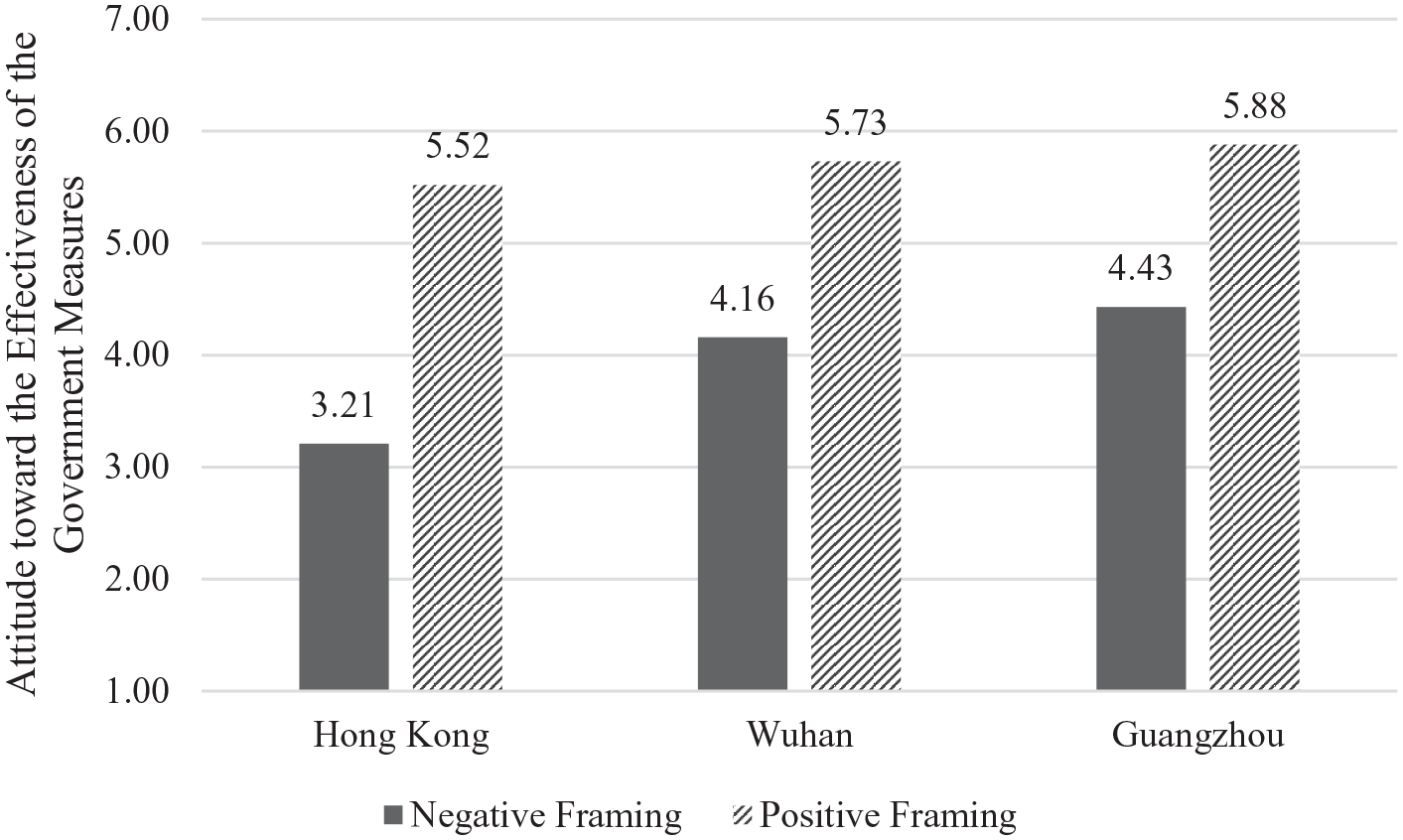
Interaction mean plot (Attribute Framing × City).
To test the moderating effect of occupation (working vs. not working in tourism-/hospitality-related industries) on the relationship between attribute framing and attitudes toward policy measures, we used Hayes’s (2013) PROCESS Model 1 again. The estimation result appears in Table 5, indicating that positive framing could significantly increase residents’ positive attitudes toward the effectiveness of government measures compared with negative framing (b = 1.8560, p = .000). Furthermore, the interaction effect between attribute framing and occupation was significant at the 90% level with the reference occupation as not working in tourism-/hospitality-related industries (bFraming×Occupation = −0.4800, p = .0701). The negative interaction coefficient implied that the effect of attribute framing (i.e., positive vs. negative framing) on residents’ attitudes toward the effectiveness of policy measures was much weaker among respondents working in tourism- and hospitality-related industries than among those who did not.
Moderating Effect of Occupation.

Note: non-T/H = tourism-/hospitality-related.
To demonstrate the interaction effect between attribute framing and occupation shown in Table 5, we created an interaction mean plot (Figure 2). The mean difference between the effects of negative and positive framing on the attitudes of residents working in tourism-/hospitality-related industries (MP = 5.83, MN = 4.45; MDifference = 1.38) was much smaller than on those not employed in these industries (MP = 5.68, MN = 3.83; MDifference = 1.85). Accordingly, hypothesis 3 was supported.
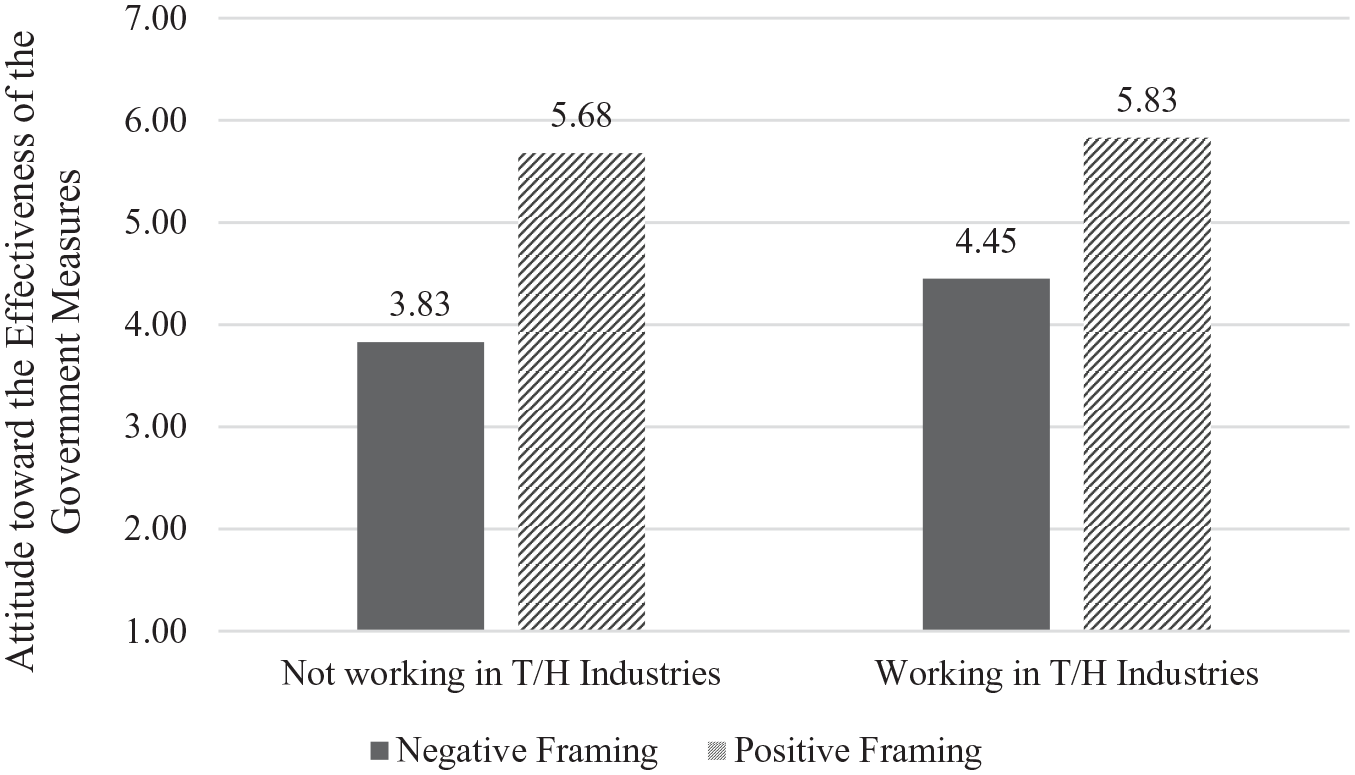
Interactive plot (Attribute Framing × Occupation).
Study 2 results
Similar to study 1, we used Hayes’s (2013) PROCESS Model 1 to analyze the 2 (payment size: low vs. high) × 2 (income source: earned vs. unearned) scenario-based survey. The estimation result is shown in Table 6. Compared with low payment size, high payment size could significantly decrease residents’ willingness to pay to reduce the social costs of tourism during a pandemic (b = −1.1177, p = .000). Findings also revealed that compared with earned income, an unearned income source could significantly increase residents’ willingness to pay (b = 0.4905, p = .000). Therefore, hypotheses 4 and 5 were supported. Furthermore, the interaction effect between payment size and income source (i.e., the moderating effect of source of income on the impact of payment size on willingness to pay) was significant at the 95% level with earned income as the reference source (bsize × source = 0.7414, p = .0000). The positive interaction coefficient indicated that the effect of payment size (i.e., low vs. high) on willingness to pay was much weaker for respondents using unearned income than for those using earned income.
Effect of Payment Size and Income Source on Willingness to Pay.

To demonstrate the above interaction effect between payment size and income source illustrated in Table 6, an interaction mean plot is presented in Figure 3. The mean difference between low and high payment sizes for the unearned income condition (MH = 6.26, ML = 6.64; MDifference = 0.38) on residents’ willingness to pay to reduce the social costs of tourism was much smaller than in the earned income condition (MH = 5.03, ML = 6.15; MDifference = 1.12). Hypothesis 6 was hence supported, demonstrating that the effect of payment size on willingness to pay was stronger for residents who could pay with earned income than for those who could pay with unearned income.
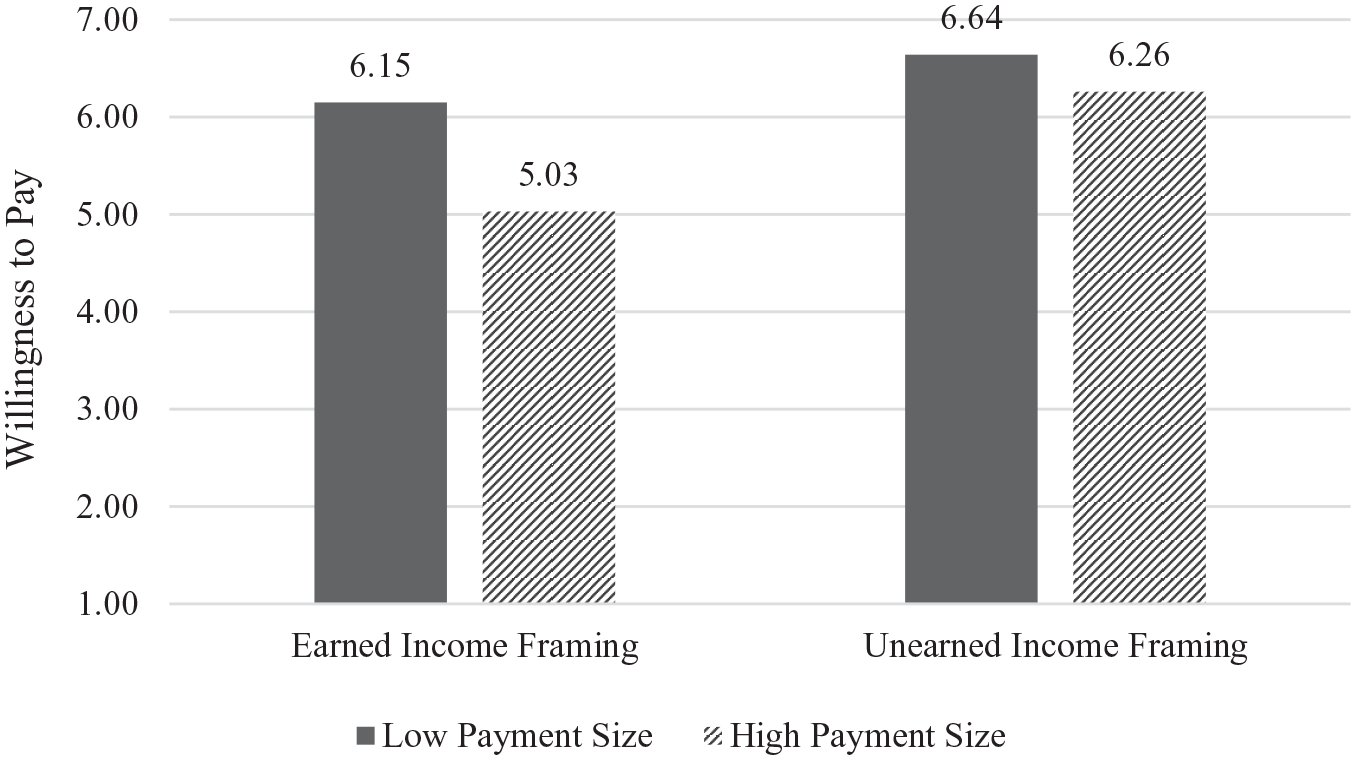
Interaction mean plot (Payment Size × Income Source).
Hypothesis 7 postulated a three-way interaction effect between payment size, income source, and city of residence on residents’ willingness to pay to reduce the social costs of tourism during a pandemic. We used Hayes’s (2013) PROCESS Model 3 to test this hypothesis. The results in Table 7 suggest significant main effects for payment size (b = −1.1255, p = .000) and income source (b = 0.6688, p = .000), along with a significant interaction effect for payment size and income source (bsize × source = 0.5409, p = .0000), all of which are consistent with the previous analysis. Compared with Hong Kong’s fewer confirmed COVID-19 cases, residents of Wuhan and Guangzhou were willing to pay more to reduce the social costs of tourism during a pandemic (bWuhan = 0.8182, p = .0000; bGuangzhou = 0.8917, p = .0000).
Effect of Payment Size, Income Source, and City on Willingness to Pay.

Regarding the moderating effect of city of residence on the interaction effect between payment size and source of income on residents’ willingness to pay (i.e., three-way interaction effects between payment size, income source, and city of residence), we noted that Wuhan had a significantly stronger interaction effect between payment size and income source than Hong Kong (b size × source × Wuhan = 0.6067, p < .05), whereas the interaction effect for Guangzhou did not differ significantly from that of Hong Kong (b size × source × Guangzhou = 0.0011, NS).
To better demonstrate the above moderating effect of city of residence on the interaction effect between payment size and source of income (i.e., three-way interaction effects) in Table 7, three simple slope plots corresponding to Hong Kong, Wuhan, and Guangzhou are shown in Figure 4. They demonstrate that the interaction effect between payment size and income source on willingness to pay to reduce the social costs of tourism was much stronger for residents of the city with the most confirmed cases, Wuhan. Hypothesis 7 was thus supported.
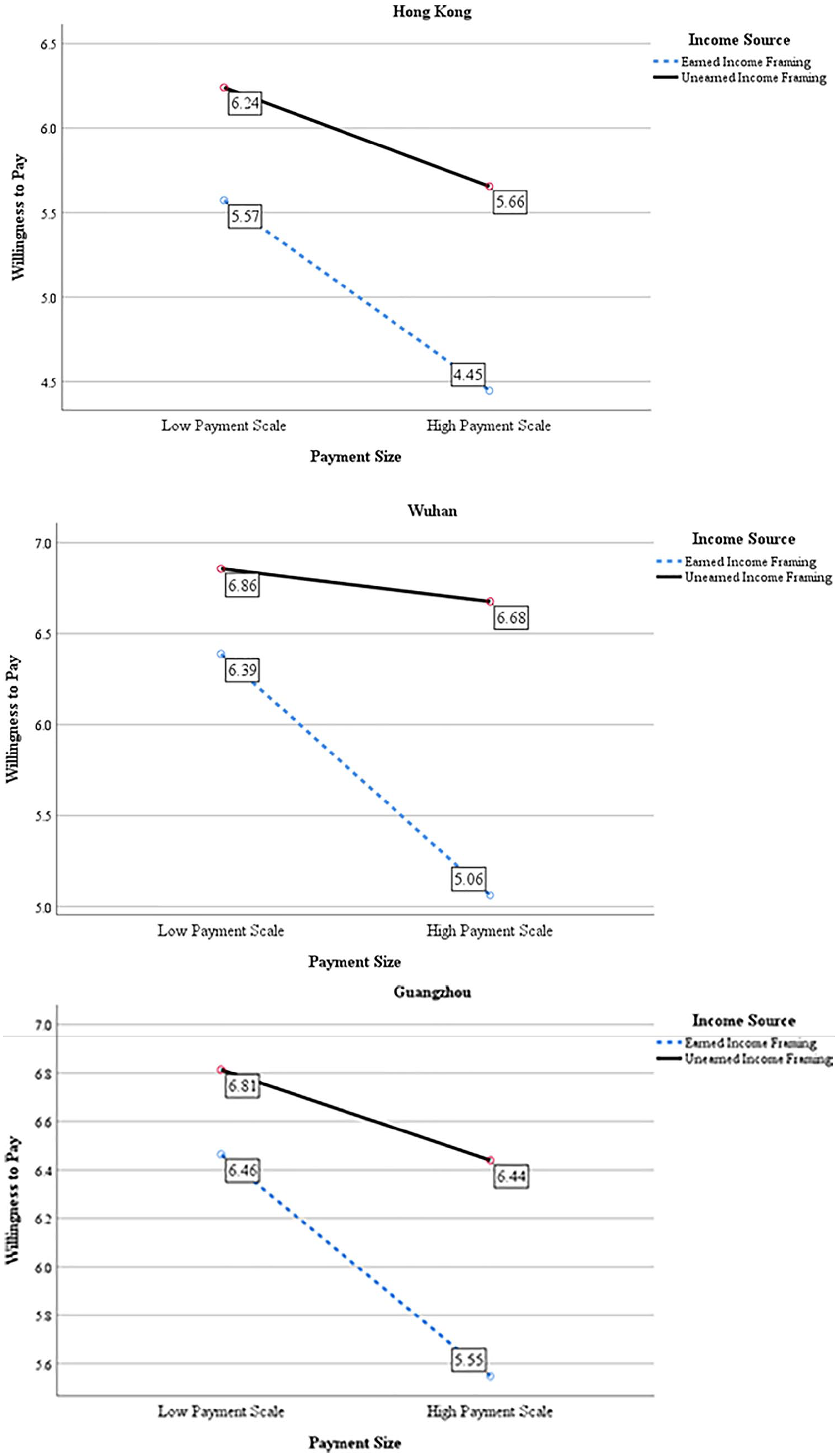
Simple slope plots for willingness to pay.
Discussion and Conclusions
Studies of pandemics in the tourism context have focused on the economic impacts of an outbreak on the industry (e.g., Kuo et al. 2008; Yang, Zhang, and Chen 2020) and tourist behavior (Lee et al. 2012). Comparatively few studies have evaluated the social costs of tourism during pandemics. The growth of tourism has increased the potential social costs on the industry for local communities. For instance, studies of the SARS outbreak (e.g., Varia et al. 2003) have confirmed that tourist mobility can spread infectious diseases quickly and widely. Governments use a range of pharmaceutical and nonpharmaceutical interventions to combat pandemics. Among them, nonpharmaceutical measures, such as travel control and quarantining infected tourists, can allay the social costs of tourism.
In this article, two studies examined residents’ responses to policy measures to reduce the social costs of tourism due to a pandemic. In study 1, we analyzed whether positive versus negative framing of policy measures affected residents’ attitudes toward their effectiveness. In study 2, we investigated the effects of mental accounting and framing on residents’ willingness to pay to reduce the social costs of tourism during a pandemic, focusing on policies calling for public donations and the purchasing of anti-pandemic bonds.
The results of study 1 align with the literature on attribute framing. Individuals tend to express more favorable attitudes toward objects that are framed positively than toward those framed negatively (e.g., Gamliel and Peer 2010; Levin, Schneider, and Gaeth 1998). In the case of this study, favorable associations with positive framing induced residents’ positive bias toward proposed policy measures over negatively framed messages. We also found that people working in tourism-related industries or residing in cities with more confirmed cases of viral infection perceived the policy measures as less effective. These results may be attributable to these residents’ close personal involvement with those suffering from COVID-19 or to the personal salience of the policies.
Findings from study 2 shed light on residents’ reactions to government policies that encouraged them to contribute financially to control and prevent a pandemic. Mental accounting was found to influence residents’ willingness to pay to reduce the social costs of tourism in a pandemic through donations. Residents were also more likely to donate to charitable foundations with unearned income than with their salaries. The mental accounting principle of hedonic framing may explain this finding. People tend to be happier and more willing to maximize utility if there is a joint outcome of a smaller loss and a larger gain. According to Imbens, Rubin, and Sacerdote (2002), respondents’ responses to lottery winnings are probably indicative of responses to other types of unearned income, such as bond interest. Gaining unearned income, such as a lottery win in the hypothetical scenario (or bond interest in the real situation), is perceived as a larger gain than receiving the same amount of money in the form of earned income. Therefore, residents who could pay with unearned income were more willing to donate. This finding corroborates prior studies indicating that people are more likely to spend unanticipated income than anticipated income on a gift (Epley, Mak, and Idson 2006).
Theoretical and Practical Implications
The findings of these studies extend the literature on pandemics and tourism. They also contribute to debates on the efficacy of different types of public policies to cope with pandemics. Several studies have evaluated the negative effects of pandemics on tourism (e.g., Kuo et al. 2008; Yang, Zhang, and Chen 2020). However, the social costs of tourism during a pandemic have not received sufficient attention. Thus, this article complements the extant literature by investigating residents’ attitudes toward the effectiveness of public policies and their behavioral purchase intentions.
This article also deepens our understanding of the behavioral economics concepts of framing and mental accounting regarding tourism during a pandemic. Specifically, it represents the first attempt to explore the joint effects of mental accounting and framing on tourists’ attitudes and behavioral intentions. The two studies demonstrate the usefulness of these behavioral economic concepts in tourism as well as the relationship between them. The first study explored the impact of framing on residents’ attitudes, and the second study investigated the effects of mental accounting on residents’ framing decisions. Therefore, this article enriches the literature on behavioral economics. Studies in this field have devoted more attention to the mental accounting of various types of spending on leisure, tourism, and necessities with less attention to different income categories (i.e., earned and unearned income). Our findings also advance a recently coined Chinese concept, “positive energy,” by revealing that positively framed descriptions generate more positive energy than negatively framed messages.
The findings of study 1 have important implications for public policy making and implementation in mitigating the social costs of tourism amid pandemics. If policy makers wish to increase public confidence in their policy measures to cope with the social costs of tourism, then they should positively frame information on the status of the pandemic in the media. They should also publicize the positive outcomes of such policies to the general public. This finding is consistent with previous studies, such as Krishnamurthy, Carter, and Blair (2001), who suggested that a healthcare provider should emphasize the chance of success when a patient must be persuaded to accept a proposed treatment. We found positive (vs. negative) framing to affect residents’ acceptance of policy measures, but the effect varied according to residents’ backgrounds. Positively presenting policy measures in response to the social costs of tourism should therefore be more effective in cities where there are fewer confirmed cases of viral infection. Places with fewer confirmed cases can emphasize the positive attributes of policy measures, such as more patients being discharged from the hospital due to mobile medical units and increased traveler safety due to the daily disinfection of public transport.
The results of study 2 imply that beyond calls for donations, approaches such as offering antipandemic bonds may be effective in persuading the public to financially support the reduction of the social costs of tourism in a pandemic. Thus, residents should be offered various options to pay to mitigate the social costs of tourism. Notably, the findings and implications discussed in this article are not limited to China and extend to other countries facing pandemics.
Limitations and Future Research
As with any social science research, the two studies in this article have some limitations. One limitation lies in the regional nature of our research. We focused on only three cities in China, and the generalizability of these findings to other regions is limited. COVID-19 is still spreading globally, and data continue to emerge. Future research should incorporate policy data from different cities, regions, and countries to compare how social costs of tourism are being managed during the pandemic. The two studies in this article also examined how sociodemographic attributes (occupation, and residential status) shaped residents’ attitudes toward pandemic control and prevention policies. We did not explore the mechanism of these effects from the perspectives of framing and mental accounting, which was beyond the scope of our research objectives. Future research should address this limitation.
Footnotes
Acknowledgements
The authors would like to thank Peixi Chen for her excellent research assistance.
Declaration of Conflicting Interests
The author(s) declared no potential conflicts of interest with respect to the research, authorship, and/or publication of this article.
Funding
The author(s) disclosed receipt of the following financial support for the research, authorship, and/or publication of this article: This work was supported by the “Mr and Mrs Chan Chak Fu Endowed Professorship fund”.
