







Abstract
Generation Z (Gen Z) has emerged as the largest and most challenging consumer group for destination marketers. This study investigates the varying effects of social media marketing activities (SMMAs) on Gen Z travel behaviors. A comparative analysis approach between Gen Z and other generations was used to assess the attributes of SMMAs and their role in tourism destination visits. Gen Z tourists were more susceptible to the four traits of SMMAs (entertainment, trendiness, interaction, and word-of-mouth) when choosing destinations and were more likely to pay a premium for visiting than their generational counterparts. Gen Z females were more likely to be influenced by SMMA customization and word-of-mouth features, while Gen Z males were more sensitive to the entertainment features of SMMAs. These findings deepens marketers’ understanding of Gen Z travelers’ preferences and behaviors so that they provide constructive directions for marketers to implement effective SMMAs strategies.
Keywords
Introduction
Due to the substantial increase in the number of social media users and the significant increase in user engagement, especially from Generation Z (Gen Z) (Duffett 2017), social media-based marketing activities (SMMAs) have become a widely used tool in tourism industries (Buhalis and Foerste 2015). Social media can be used to attract prospective customers and influence their travel behaviors (So et al. 2018). In a fiercely competitive marketplace, destinations have had to integrate SMMAs into their marketing plans, although destination marketing organizations (DMOs) have found it difficult to keep pace with social media marketing (Shao et al. 2016).
Tourist destinations face complex challenges in their attempts to leverage social media and information technology (Mistilis, Buhalis, and Gretzel 2014). In particular, DMOs often lack technological expertise and face funding, time, and capacity constraints, as well as less support from partners, including hotels, travel agencies, and government agencies (Gretzel, Yuan, and Fesenmaier 2000). However, once a destination overcomes these limitations, it stands to gain a significant competitive advantage. For example, marketing costs in terms of time, money, and labor can be significantly reduced, resulting in a higher return on investment (ROI) (Uşaklı, Koç, and Sönmez 2017). Destinations can glean valuable market insights and improve their ability to predict and react to industry trends. Destinations using social media effectively can also increase visibility and traffic, capture visitor engagement, and increase conversion rates (Mariani, Di Felice, and Mura 2016). Moreover, they can more easily implement communication and interaction with visitors, meet market demands more promptly, and build more long-lasting relationships with their target customers (Arlt and Thraenhart 2011).
The current Covid-19 pandemic has posed tremendous challenges to the tourism industry, including social distancing policies and lockdowns in some regions and destination spots. Destination managers and tourism agents had to adjust to these disruptive changes (Wang et al. 2020). Social media transcends the barriers of distance and connectiveness and plays an essential role in enabling the industry to increase its reach and continued engagement with existing and/or potential customers. Thus, adopting a successful social media marketing strategy is of great value to destinations to maintain their relationship with their customers and to promote their destinations continuously to the target market. This, in turn, will provide leverage for destinations to stay competitive in the post-Covid-19 period.
Although social media has been extensively discussed in academic studies (e.g., Önder, Gunter, and Gindl 2020; Pachucki, Grohs, and Scholl-Grissemann 2021; Uşaklı, Koç, and Sönmez 2017), the field of SMMAs is still in its infancy and has been primarily studied in branding literature (e.g., Liu, Shin, and Burns 2021; Seo and Park 2018; Zollo et al. 2020). While a handful of studies have explored SMMAs in the context of tourism (Lee et al. 2021; Leung, Bai, and Stahura 2015; Leung, Bai, and Erdem 2017), their effectiveness in destination marketing remains under-studied (Shao et al. 2016).
Gen Z represents a major challenge to destination marketers (Priporas, Stylos, and Fotiadis 2017). Gen Z is gradually entering the market and is set to become the youngest and largest consumer group (Euromonitor 2018). According to Knott (2019), Gen Z consumers surpassed millennials in 2019, accounting for a third of the global population. Gen Z is also accelerating certain trends started by millennials, including social media engagement (Bhargava et al. 2020). While they share many similarities with millennials, Gen Z displays its own unique characteristics about consumption behavior. For example, Gen Z consumers are both economic conservatives and social activists (Priporas, Stylos, and Kamenidou 2020); they are concerned with personal satisfaction but are also more sensitive to social impact than other cohorts (Abdullah, Ismail, and Albani 2018). They have more new perspectives, ideas, needs, and expectations for products than millennials, and pay greater attention to cost performance, personality, and quality, as well as consumer-centered online and offline services. Despite key similarities between Gen Z cohorts around the world (Rajamma et al. 2010), a study by OC&C Strategy Consultants revealed that China’s Gen Z had greater spending power compared with their cautious, conservative peers in the West (SD–Agencies 2019). To date, few studies have investigated the attitudes of Chinese Gen Z consumers toward destination SMMAs and the characteristics of their behavioral responses.
This study empirically investigated the effects of destination SMMAs, focusing on their varying effects on Gen Z travel behaviors. The contributions of this study were three-fold. First, this study contributed to the scarce DMO literature with a focus on SMMAs, especially in rural and urban destinations. Moreover, this study provided the foundation and direction for future DMO marketing strategies, which are still of great practical significance in the context of Covid-19 and can contribute to the sustainable development of tourism. Second, it considered the influence of generational differences and the differentiation of Gen Z tourists in the SMMAs model, which is conducive to a deeper understanding of the existing under-researched field of Gen Z tourism and SMMAs. Third, it provided empirical evidence of various consumption behaviors and attitudes among rural and urban tourists from Gen Z and other generations, which can serve as a valuable knowledge base for strategic planning by destination marketers.
Theoretical Background and Hypothesis Development
This study aims to investigate the varying effects of destination SMMAs on Gen Z travel behaviors. Elaboration likelihood model (ELM) theory holds that individual’s elaboration and evaluation of information will determine their attitudes and behaviors, which explains the effects of persuasive information on one’s attitudes and behaviors (Ho and Bodoff 2014). In the current study context, the persuasive information is the SMMAs information and the persuasion in ELM theory indicates that tourists’ evaluation of destination SMMAs predicts their preferences and willingness to pay premium (WTPP) to visit a tourist destination. Additionally, the generation theory (Strauss and Howe 1997) supports the hypothesis that there are differences between Generation Z and non-Generation Z in their attitudes and behavioral outcomes toward SMMAs. Thus, the theoretical framework proposed in this study is depicted in Figure 1. Detailed supporting arguments for the developed framework are elaborated in the following sections.
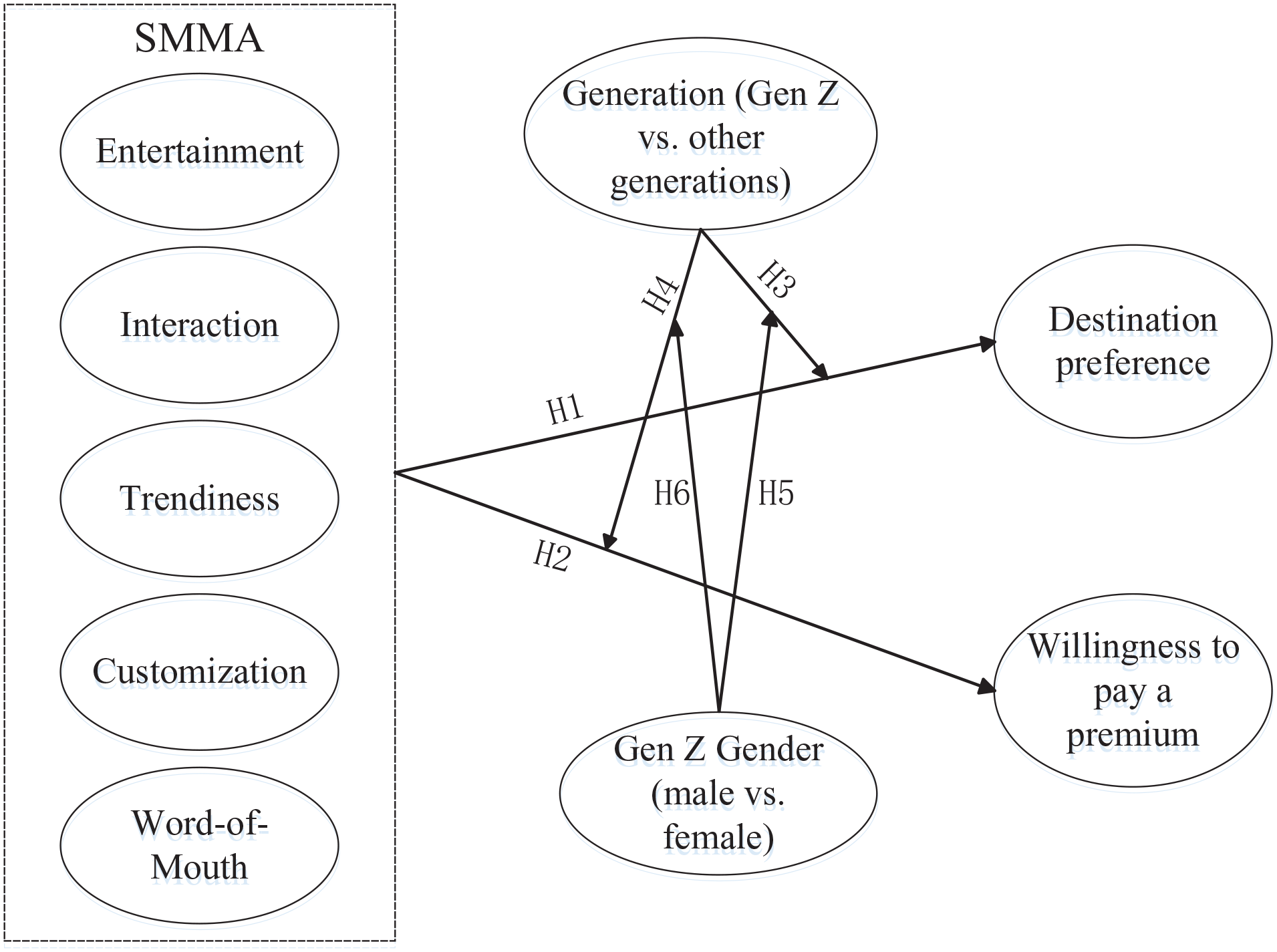
The proposed theoretical framework.
Social Media Marketing Activities (SMMAs)
According to Richter and Koch (2007), social media is defined as an online application, platform, or medium that can facilitate interactions, collaborations, and content sharing. In marketing, social media provides companies with potent opportunities to interact with customers and build relationships (Kelly, Kerr, and Drennan 2010). Previous studies have researched social media marketing in the context of the reasons for company participation in social media marketing (Braojos-Gomez, Benitez-Amado, and Javier Llorens-Montes 2015; Tsimonis and Dimitriadis 2014), social media marketing strategies (Önder, Gunter, and Gindl 2020), customers’ perceptions of social media marketing (Bruhn, Schoenmueller, and Schäfer 2012; Pöyry, Parvinen, and Malmivaara 2013), and the effects and influences of SMMAs (Liu, Shin, and Burns 2021; Seo and Park 2018).
Most of the existing empirical research on SMMAs is in the field of branding. Kim and Ko (2012) investigated the role of SMMAs in increasing the customer equity of luxury fashion brands and first identified five key constructs in SMMAs: entertainment, interaction, trendiness, customization, and word-of-mouth (WOM). This model has been empirically tested in subsequent studies. For example, Godey et al. (2016) and Zollo et al. (2020) examined the impact of SMMAs on the brand equity in various luxury brands. Further studies have also been carried out by Liu, Shin, and Burns (2021) and Chen and Lin (2019) to examine the impact of SMMAs on customer engagement and behavioral intentions, respectively. Accordingly, the previous validations of Kim and Ko’s (2012) SMMA scale led to the current study’s adoption of this scale as a well-established metric in the context of destination marketing.
In the field of tourism, social media-based marketing is also considered effective. For example, Shao et al. (2016) revealed the role of social media microfilm marketing in increasing the number of tourists and enhancing the image of the destination through a case study in China. These studies were based on the impact on the destination, and studies on the impact on tourists are relatively scarce. It is claimed that the application of social media, as a new online marketing strategy, is not aimed at sales support but is more focused on the development of a new interactive relationship with enterprises and consumers (Zeng and Gerritsen 2014). Therefore, it is necessary to explore the attitudes and behaviors of tourists caused by SMMAs. At present, only a few studies have empirically explored the relationship between the two. Limited research has examined the impact of social media marketing on customer attitudes toward hotel brands, booking decisions, and eWOM from the perspective of the customer’s social media experience (Leung, Bai, and Stahura 2015), the hotel’s social media information strategy to explore its impact on customers’ “likes,” comments, and shares (Leung, Bai, and Erdem 2017), and DMO social media postings and comments volume to evaluate its relationship with customers’ post and comment volume (Lee et al. 2021).
Based on the literature review, most studies using Kim and Ko (2012) models failed to examine the distinct impacts of each SMMAs feature on traveler behavior. There have also been limited discussions on SMMA outcome variables. Additionally, few studies in the tourism field explore the impact of SMMAs on outcomes from the perspective of tourists, and they do not directly measure SMMAs but rather the customer’s social media experience (Leung, Bai, and Stahura 2015) or the number of DMO social media postings and comments (Lee et al. 2021). To fill these literature gaps and extend previous research endeavors, this study applied Kim and Ko’s model to the tourism industry and examined how each attribute of SMMA predicts travelers’ destination preference and their WTPP to visit destinations. Furthermore, considering the uniqueness of Gen Z in the age of social media, this study also recognized and examined the uniqueness of Gen Z tourists through comparative analyses with other generations, as well as gender differences within Gen Z tourists.
Preference is an important prerequisite in tourists’ decision-making (Hsu, Tsai, and Wu 2009). Understanding tourists’ preferences can assist destinations in developing more economical and feasible marketing strategies (Lacher et al. 2013). Social media represents the ideal platform for finding information to develop product or brand preferences (Godey et al. 2016; Naylor, Lamberton, and West 2012); in the tourism context, different destinations can be compared and ranked to establish preferences. Customer ratings on social media, for example, have a significant impact on customers’ preferences when booking hotels (Xiang et al. 2017), and previous research has shown that SMMAs are positively related to satisfaction (Chen and Lin 2019). In behavioral economics, willingness to pay refers to the maximum amount a consumer is willing to pay for a product or service, and price premium is defined in traditional economic literature as the additional amount over the average price (Dwivedi, Nayeem, and Murshed 2018). This study examines the behavior of tourists’ WTPP, which denotes tourists’ willingness to pay more for a particular destination than for a comparable alternative destination, as it is one of the strongest indicators of tourist loyalty (Netemeyer et al. 2004) and helps guide destination pricing. When travelers are satisfied with a destination’s SMMAs, they may be willing to pay more to visit. In agreement with Godey et al. (2016), social media marketing efforts can influence a tourist’s WTPP. Thus, we proposed the first two sets of hypotheses:
Generation Z
In theory, a generation is a group of people born in a certain era that share a common geographic history (Strauss and Howe 1997). The group shares the important events of their time and contributes to the key developments of those events (Kupperschmidt 2000). In generational research, the year of birth is the most distinctive indicator of each generation. According to prior research (Bassiouni and Hackley 2014; Fister-Gale 2015; Priporas, Stylos, and Fotiadis 2017), Gen Z, also known as Centennials (Llopis-Amorós et al. 2019), is classified as young people born in 1995 or later. This generation is tech-savvy, innovative, and creative (Priporas, Stylos, and Fotiadis 2017) and more diverse and unique than any previous generation (Shatto and Erwin 2016). Other researchers have described Gen Z as “Generation Me” (Bennett, Pitt, and Price 2012), “the internet generation” (Ozkan and Solmaz 2015), or “digital natives,” “screen addicts,” “screenagers,” and “the iGeneration” (Williams and Page 2011). Gen Z is the first completely digitally native generation, widely exposed to the internet and social networks since birth. They have grown up with digital technology and are dependent on and familiar with its use (Ozkan and Solmaz 2015). As a result, they have become heavy users of social media platforms (Duffett 2017); a survey by the Kaiser Family Foundation (2010) showed that Gen Z spends more time on social media than any other activity except sleeping.
Gen Z is the youngest and largest future consumer group, with significant consumption power (Euromonitor 2018). Thus, Gen Z is the subject of intense focus and fascination among marketers. However, it also represents a major challenge to marketers because their life preferences and consumption patterns are so distinct from those of previous generations (Ozkan and Solmaz 2017). Unlike millennials, who are perceived as big spenders, Gen Z tends to be more conservative when it comes to money, and most of them research a product/service significantly before making a purchase, always (or almost always) looking for discounts, and paying greater attention to cost performance. Impulsive consumption behavior has also reduced significantly among Gen Z. Gen Z consumers are not willing to sacrifice quality for price (Kim et al. 2020); they are concerned with both personal satisfaction and social impact, preferring to explore new and meaningful experiences according to their own needs (Abdullah, Ismail, and Albani 2018).
Consumption has become a form of self-expression for Gen Z. Compared to millennials, Gen Z consumers are more likely to (a) attach importance to customized services and products that meet their individual needs; (b) prefer brands that show their individuality and uniqueness; and (c) pay higher prices in the process (Francis and Hoefel 2018). From experiences to personalized labels, they are more willing to spend money on things that enrich and give meaning to their daily lives. Because limited research has been conducted on Gen Z consumers, marketers do not find a lot of references to depend on when implementing strategies; thus, they struggle to capture the attention of Gen Z consumers, not to mention their loyalty. As a result, this study explored the uniqueness and differences of Gen Z’s attitudes toward SMMAs and can provide valuable insights for marketers to more effectively target their products and campaigns.
To date, studies on Gen Z have mainly focused on their work attitudes and professional lives as employees (e.g., Goh and Jie 2019; Goh and Okumus 2020; Iorgulescu 2016; Ozkan and Solmaz 2015). Limited researchers have studied Gen Z cohorts as consumers. For example, Priporas, Stylos, and Fotiadis (2017) explored Gen Z consumer perceptions and expectations of the smart retail industry. More recently, Llopis-Amorós et al. (2019) compared the differing influences of social media communication on brand equity between Gen Z and millennials. Their study investigated the moderating role of the generational cohort in the relationship of social media communication, brand equity, satisfaction, and behavioral intentions, based on a survey of live music festival participants in Spain. The relationship between user-generated social media communication and perceptions of service quality and loyalty was stronger for Gen Z than millennials, implying that Gen Z is more susceptible to the influence of social media.
According to the generation theory (Strauss and Howe 1997), different generations of tourists have different attitudes and consumption habits. Tourism practitioners and scholars have used generational analyses to study the effectiveness of tourism behavior; for example, Gardiner, Grace, and King (2014) studied the generational similarities and differences in the decision-making process of domestic tourists in Australia. Likewise, Chen, Ryan, and Zhang (2021) investigated the differences in residents’ attachment to local communities in different generations in New Zealand. Generational analyses related to social media identified key generational differences in the perceptions of positive content about destinations in social media (Luna-Cortés 2018) and in brand participation and searches in social media (Bento, Martinez, and Martinez 2018). Furthermore, generations play a moderating role in the relationship between social media communication, brand value, and behavioral intention (Llopis-Amorós et al. 2019).
As suggested by Parry and Urwin (2011), future academic research should seek to disentangle the generational effects of age, cohort, and period, while recognizing that generational analyses may be more appropriate for specific groups within cohorts. Based on the previous studies outlined above, the following hypotheses were proposed here:
Gender Analysis
In the study of consumer behavior, gender has generally been considered a factor that influences consumer decision-making and an important predictor of consumer behavior (Mclaughlin et al. 2020; Ribeiro et al. 2018; Wang, Qu, and Hsu 2016). Women have been thought to be more emotional (Yelkur and Chakrabarty 2006), more socially interactive (Ribeiro et al. 2018), and more relationship-oriented than men (Richard et al. 2010), while men have been seen as more easily irritated (Otnes and McGrath 2001), more utilitarian (Diep and Sweeney 2008), and more task-oriented (Eagly 1987). According to social role theory, evolutionary theory, and gender schema theory, gender differences significantly influence consumer behavior, including decisions, behaviors, dispositions, and attitudes (Han, Meng, and Kim 2017). In the tourism context, behavior studies have indicated that male tourists make decisions more quickly than female tourists and require less information (Kim, Lehto, and Morrison 2007), while women are more likely to seek out and exchange extensive information on social media (Okazaki and Hirose 2009). Female tourists generally have higher levels of satisfaction and loyalty than male tourists, which makes them more likely to choose a destination again (Han, Meng, and Kim 2017; Han and Ryu 2007). Moreover, women rely more heavily on WOM when researching and choosing potential travel destinations (Wang, Qu, and Hsu 2016).
Again, while the role of gender has been examined across many marketing studies, specific research on gender differences in SMMAs has been limited. Zhang, Abound Omran, and Cobanoglu (2017) examined gender differences as a popular topic in consumer behavior, yet there have been no investigations on gender differences within Gen Z consumers. To fill this research gap, the following hypotheses were proposed in the context of rural and urban tourism destinations in Gen Z:
Research Methodology
Research Site
Data collection took place in Wucun (Figure 2), a new high-end rural tourist destination built in the form of a “leisure village” in Zhejiang, China. As a tourist destination, Wucun manages its own social media channels, regularly posts promotional materials, and actively and inclusively interacts with existing and potential customers. For example, tourists can keep track of travel-related activities at any time and conduct online consultations on Wucun’s official WeChat account (Figure 3), and an online channel is open to gather tourists’ feedback and comments. One specific campaign, on the theme of “Returning to Grandpa’s Home: Wucun Parent-Child Summer Camp,” was promoted through Weibo and WeChat and received acclaim from millions of fans, as well as popular travel bloggers, attracting the attention and participation of many tourists.
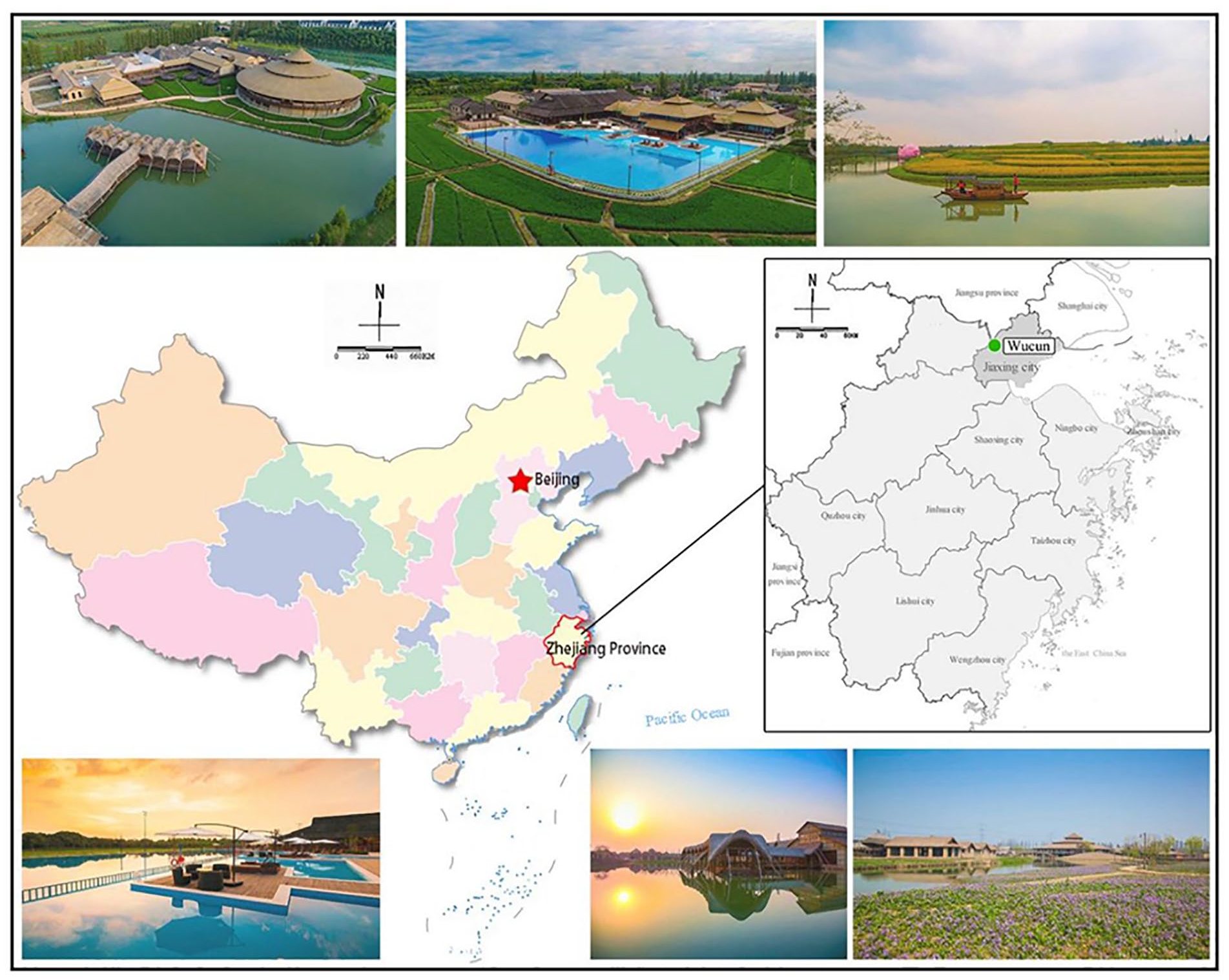
The location of the target destination.
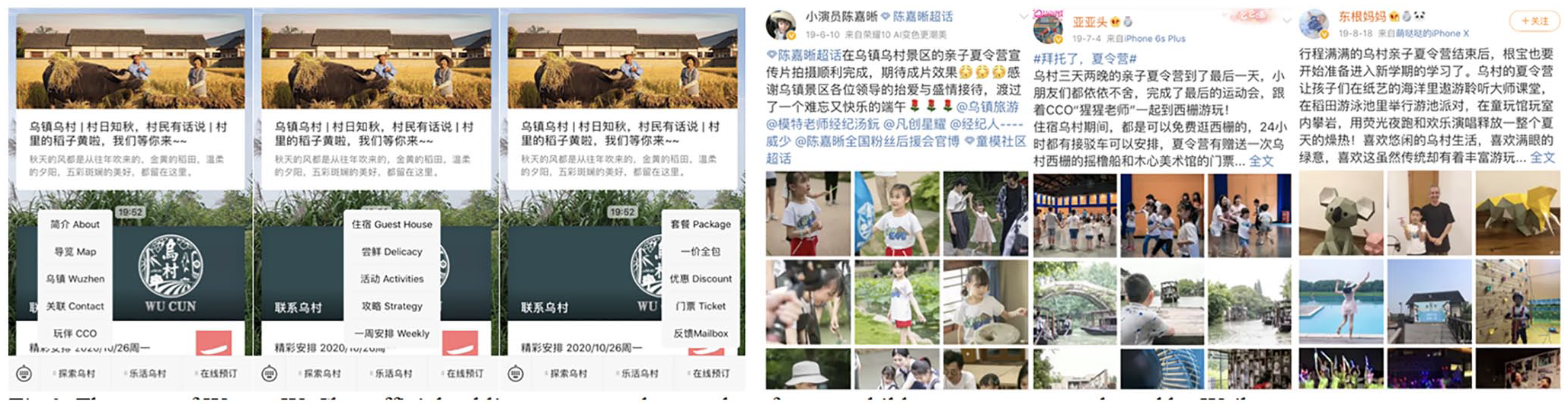
The page of Wucun WeChat official public account, and examples of parent-child summer camp evaluated by Weibo users.
Data Collection and Sample Profile
The research team conducted the field study in October 2019 using the convenience sampling method (Kim and Ko 2012). With the support of local authorities, tourists were approached with a hard-copy questionnaire at the end of their site tour. As screening criteria, respondents should follow and experience destination SMMAs. Eligible respondents completed the questionnaire in 10 minutes, on average. Participation in the study was voluntary, and respondents who completed the questionnaire were thanked with a small gift. A total of 735 valid responses were collected after the data cleaning procedure (eliminating incomplete and/or invariant responses, attention checks, etc.).
Of the 735 participants, 47.3% were male and 52.7% were female. Gen Z tourists (aged 18–24) accounted for 70% of the sample; the remaining 30% were from other generations. Most respondents (55%) had a college degree and had used social media platforms to browse travel-related information for more than three years (57.9%). More than 30% of respondents used social media every day, and more than 40% used it several times a week.
Measures
SMMAs were measured on an 11-item scale based on Kim and Ko’s (2012) five attributes (entertainment, interaction, trendiness, customization, and WOM). This scale has been widely adopted and validated by previous studies (Chen and Lin 2019; Godey et al. 2016; Zollo et al. 2020), which demonstrated its reliability and validity. Destination preference was measured with three items from the studies of Kim and Hyun (2011). WTPP was measured by three items adapted from Netemeyer et al. (2004). A 7-point Likert scale were used to measure all variables, ranging from 1 (strongly disagree) to 7 (strongly agree) (see online Appendix A for the questionnaire). All scales adopted in this study were validated in the literature and had a certain international statistical stability. The wording used in the scales was slightly modified to suit the research background of this study. Items originally developed in English were translated to Chinese by the researchers and then translated back into English to compare the accuracy. A full list of scales in the current study can be provided upon request.
Data Analysis
To test the proposed model, Partial least square structural equation model (PLS-SEM) was adopted via SmartPLS version 3. This approach has less restrictive assumptions (Hair et al. 2012). Furthermore, PLS-SEM does not require a normal distribution, as it uses bootstrapping to estimate the standard error for its parameter estimates (Gefen, Rigdon, and Straub 2011; Henseler, Ringle, and Sarstedt 2012). PLS-SEM also represents an advanced analysis technique applicable to multi-group analysis (MGA) (Henseler, Ringle, and Sarstedt 2016; Sarstedt, Henseler, and Ringle 2011). Moreover, PLS-SEM is not influenced by sample size (Reinartz, Haenlein, and Henseler 2009) and the sample size of Gen Z (516) and other generations (219) were considered adequate for the proposed analyses following Hair et al. (2014). Moreover, uneven sample distribution in multi-group analysis is common and has been validated in previous studies (e.g., Molina et al. 2017; Rasoolimanesh et al. 2017; Supanti and Butcher 2019), indicating that the sample imbalance between Gen Z and other generations should not cause an issue for the current analysis.
The measurement model was assessed by evaluating the reliability and validity of its constructs, and the structural model was assessed by evaluating the R2, path coefficient and the values of Standardized Root Mean Residual (SRMR), which is considered an approximate model fit for PLS-SEM (Henseler, Ringle, and Sarstedt 2016). Henseler’s MGA method (Henseler, Ringle, and Sinkovics 2009), the parametric test (Chin and Dibbern 2010), and the Welch-Satterthwaite test (Sarstedt, Henseler, and Ringle 2011) were then used for MGA to determine the significance of the differences between each group of estimated parameters. Prior to MGA, the measurement invariance was evaluated using MICOM (Henseler, Ringle, and Sarstedt 2016).
Results
Response and Common Method Bias
Before PLS-SEM analysis, response bias was tested using an independent t-test to compare the responses collected in the earlier and later periods. The results showed no significant difference (p > .05) between the two groups, indicating no response bias in the sample. Following Podsakoff et al. (2003), common method bias was addressed using Harman’s single factor test. The constructs in this study accounted for 81.74% of the total variance, and the variance of the first factor was 24.03%, which was less than 50% of the threat value (Chang, Hsu, and Lan 2019; Harman 1976). Consequently, the study was free of common method bias.
Measurement Model Assessment
To confirm the acceptability of the models (Hair et al. 2014), the reliability and validity of constructs in this study were assessed using factor loadings, Cronbach’s alpha, composite reliability (CR), and average variance extracted (AVE). All factor loadings exceeded the cutoff value of 0.7 (Table 1; Hair et al. 2010), CR values exceeded the recommended threshold value of 0.7, and AVE values were above the 0.5 benchmark (Hair et al. 2010; Nunnally and Bernstein 1994). Additionally, Cronbach’s alpha scores for all values were above 0.7. Thus, reliability and convergent validity were confirmed. Additionally, multi-collinearity between constructs was tested using the variance inflation factor (VIF), and the results showed that VIF values for all dimensions were lower than the threshold of 3.3 recommended by Hair et al. (2019), indicating no collinearity issues in the proposed model.
Assessment Results of the Measurement Model.
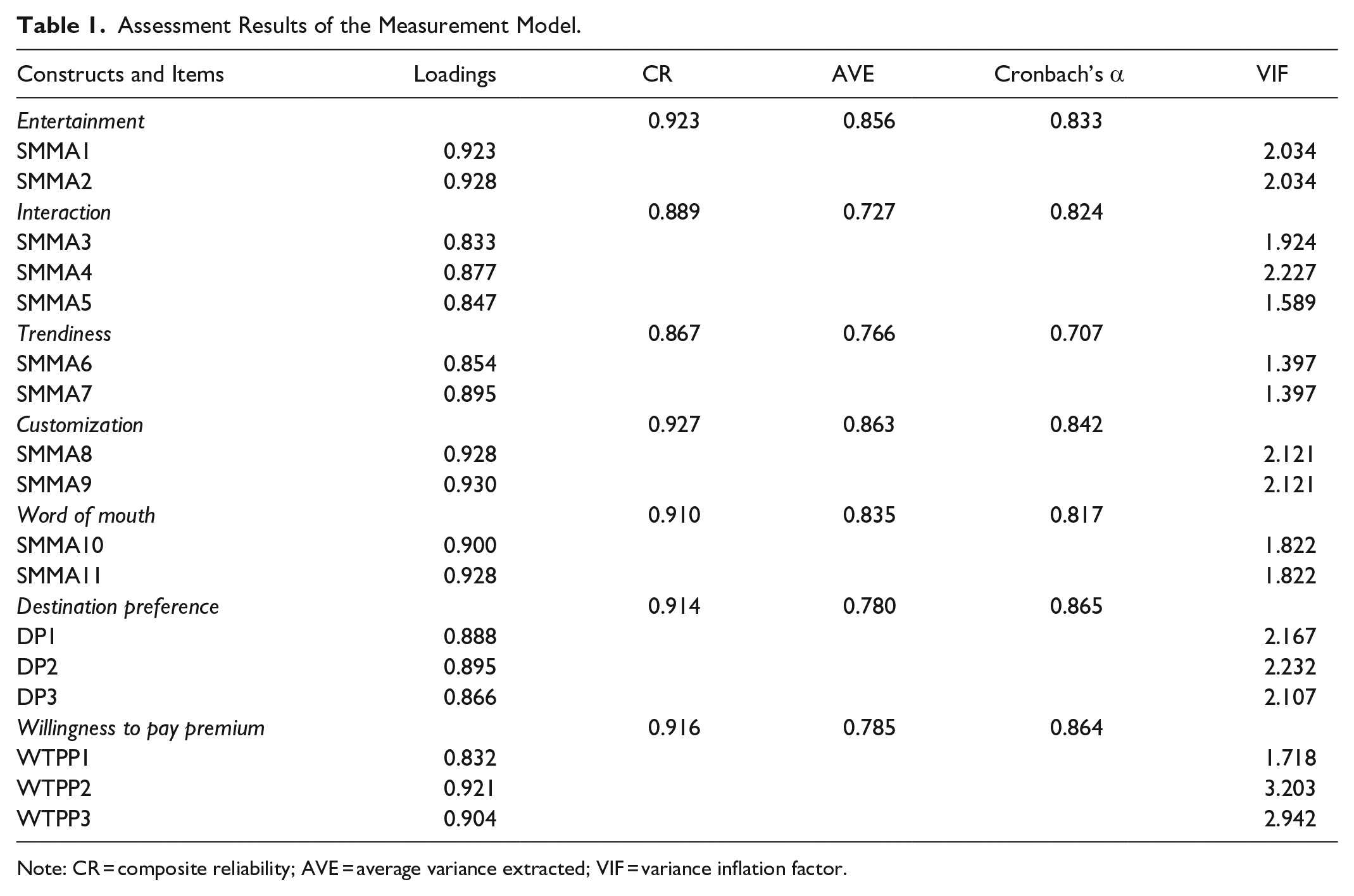
Note: CR = composite reliability; AVE = average variance extracted; VIF = variance inflation factor.
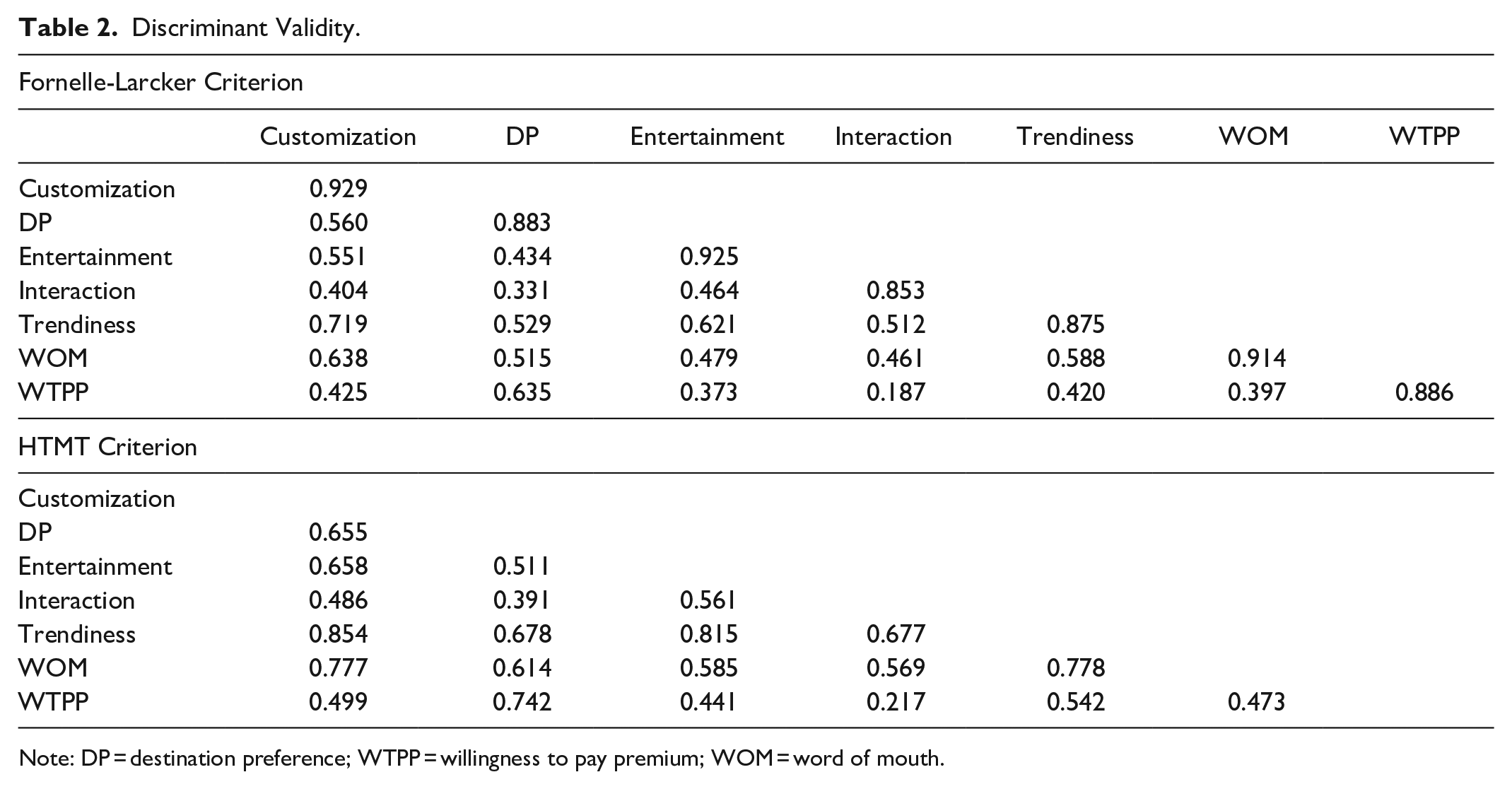
Discriminant validity was assessed using the Fornelle-Larcker criterion. The square root of each AVE was greater than its correlations with any other construct in the construct correlation matrix (Table 2; Fornell and Larcker 1981), implying adequate discriminant validity of the constructs. The heterotrait-monotrait (HTMT) ratio of correlations (Henseler, Ringle, and Sarstedt 2015) was also used, as it was recently established as a superior criterion compared to more traditional assessment methods, including the Fornelle-Larcker criterion (Rasoolimanesh et al. 2017). Henseler, Ringle, and Sarstedt (2015) proposed that HTMT has two different thresholds for establishing discriminant validity (0.85 and 0.9). None of the values violated the threshold value of HTMT.85, except one that was below the critical value of 0.9, confirming the discriminant validity.
Discriminant Validity.
Note: DP = destination preference; WTPP = willingness to pay premium; WOM = word of mouth.
Structural Model Assessment
To assess the structural model, this study calculated the R2 value of the endogenous constructs to evaluate the model’s explanatory power. An R2 value of 0.2 was relatively high and acceptable by behavioral research standards (Hair et al. 2014); for this study, the R2 values of destination preference and WTPP were 0.378 and 0.242, respectively, indicating that the structural model had a satisfactory explanatory ability.
The goodness-of-fit (GOF) index proposed by Tenenhaus et al. (2005) is a diagnostic tool used to indicate how well the collected data matches the proposed model. GOF was calculated by the geometric mean of the average communality and the average R2. For this study, the GOF value was 0.450, which was greater than the value of 0.36 proposed by Hoffmann and Birnbrich (2012), indicating that the model fit well. Furthermore, following Henseler, Ringle, and Sarstedt (2016), the SRMR values were calculated as the only approximate model fit criterion for PLS-SEM. An SRMR value lower than 0.08 is recommended for PLS-SEM (Henseler, Ringle, and Sarstedt 2016); the SRMR model fit value was 0.056, suggesting adequate model fit.
Measurement Invariance Testing
Academic consensus dictates that measurement invariance should be analyzed before MGA because it determines whether the same attribute is specified in the measurement mode under different conditions (Henseler, Ringle, and Sarstedt 2015, 2016). The measurement invariance of composite models (MICOM) proposed by Henseler, Ringle, and Sarstedt (2016) is a universal method to test measurement invariance and represents an appropriate method for PLS-SEM as a composite-based analysis technique (Rasoolimanesh et al. 2017). According to Henseler, Ringle, and Sarstedt (2016), MICOM comprises three steps: (1) configural invariance; (2) compositional invariance; and (3) composite equality. MICOM compares group parameters and determines whether there is no, partial, or full measurement invariance (Henseler, Ringle, and Sarstedt 2016). In this study, MICOM was implemented using a permutation algorithm. Partial or full measurement invariance was established for each of the two groups; therefore, MGA could be performed. Detailed results could be made available upon request.
Hypothesis Testing and Multi-group Analysis (MGA)
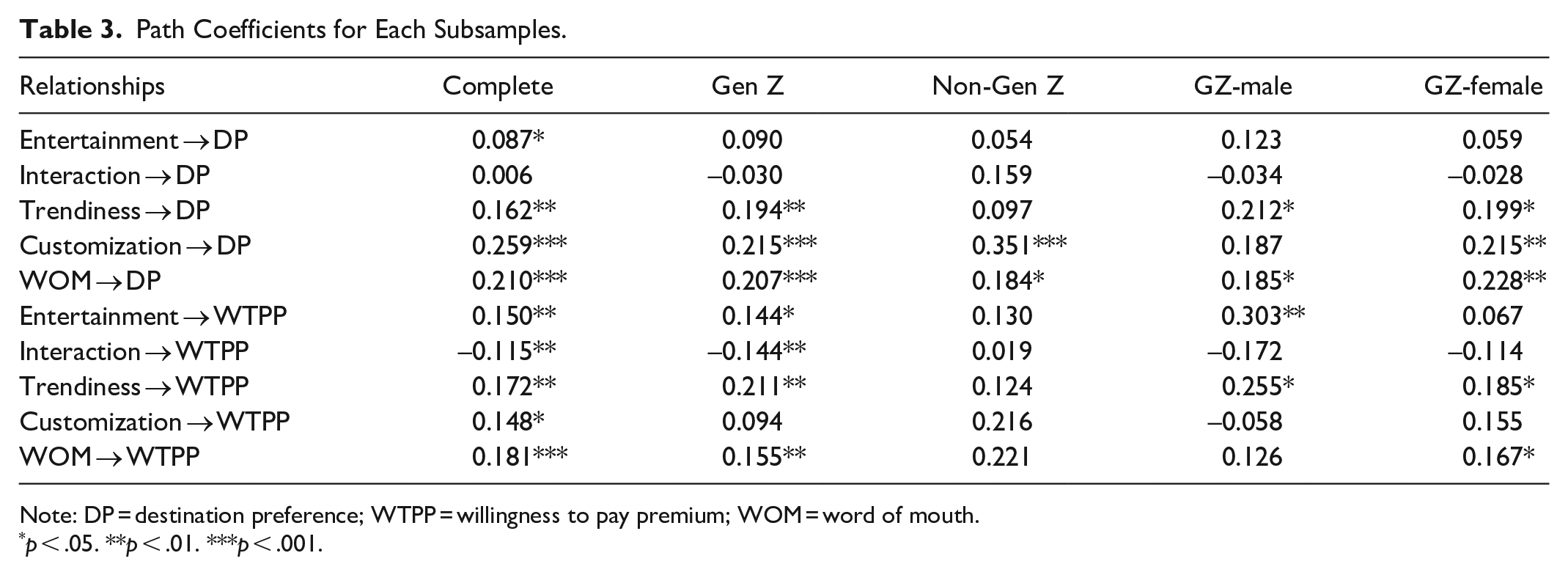
PLS-SEM was performed to test the proposed relationships between the five attributes of SMMAs (entertainment, interaction, trendiness, customization, and WOM), destination preference, and WTPP. The analysis was conducted for both the total sample and each subsample (Gen Z and other generations; Table 3).
Path Coefficients for Each Subsamples.
Note: DP = destination preference; WTPP = willingness to pay premium; WOM = word of mouth.
p < .05. **p < .01. ***p < .001.
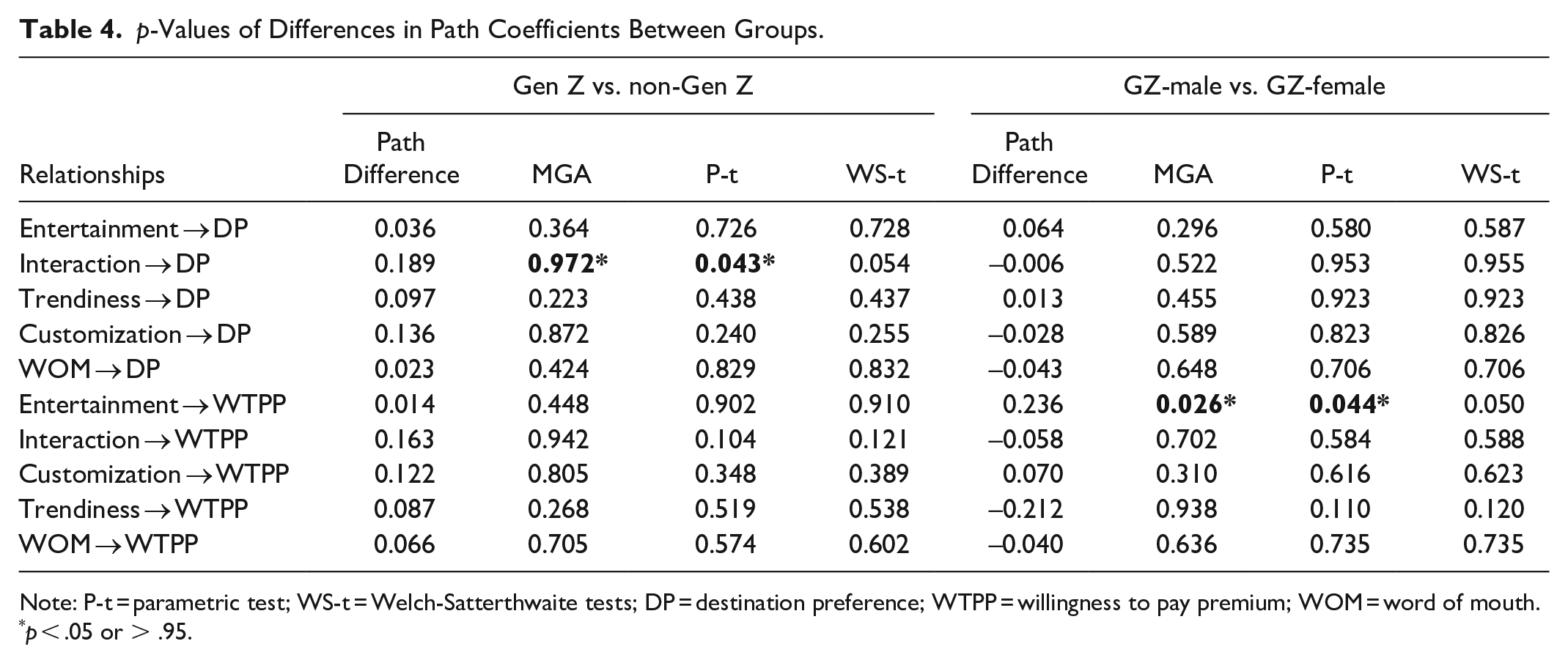
Henseler’s MGA was used to compare the path coefficients across groups to determine whether any differences in magnitude were statistically significant. Similarly, the parametric test and Welch-Satterthwait test were applied. In Henseler’s MGA, when the p-value between path coefficients is less than .05 or greater than .95, a 5% significance level is indicated across the two groups. However, the parametric test and Welch-Satterthwait test only show a significant difference at the 5% level when the p-value is less than .05 (Henseler, Ringle, and Sinkovics 2009; Sarstedt, Henseler, and Ringle 2011). Table 4 below displays the p-values reported by these methods for each of the two groups of comparisons.
p-Values of Differences in Path Coefficients Between Groups.
Note: P-t = parametric test; WS-t = Welch-Satterthwaite tests; DP = destination preference; WTPP = willingness to pay premium; WOM = word of mouth.
p < .05 or > .95.
Overall sample test
The model was first estimated for the total sample (see Table 3). The results of PLS-SEM estimation for the total sample indicated that entertainment (β = 0.087, p < .05), trendiness (β = 0.162, p < .01), customization (β = 0.259, p < .001), and WOM (β = 0.210, p < .001) had a significant positive influence on destination preference, while the path from interaction to destination preference was not significant (β = 0.006, p > .05). Therefore, the results supported the relationships proposed in
Comparison analysis between Gen Z tourists and other generations
The path coefficients between tourists from Gen Z and other generations were compared. Customization (β = 0.215, p < .001; β = 0.351, p < .001) and WOM (β = 0.207, p < .001; β = 0.184, p < .05) had significant and positive effects on destination preference for both Gen Z and other generations, while entertainment (β = 0.090, 0.054, respectively, p > .05) and interaction (β = −0.030, 0.159, respectively, p > .05) had no significant effects on destination preference (Table 3). There were generational differences in the impact of trendiness on destination preference; trendiness had a significant influence on destination preference for Gen Z (β = 0.194, p < .01), whereas the effect was not significant for other generations (β = 0.097, p > .05). Entertainment (β = 0.144, p < .05), interaction (β = −0.144, p < .01), trendiness (β = 0.211, p < .01), and WOM (β = 0.155, p < .01) all had a significant influence on WTPP for Gen Z; whereas for other generations, the effects were not significant (β = 0.130, 0.019, 0.124, 0.211, respectively, p > .05). In the total sample, the influence of interaction on WTPP was negative for Gen Z. Furthermore, customization was found to have no significant effect on WTPP in Gen Z (β = 0.094, p > .05) or other generations (β = 0.216, p > .05).
MGA was performed to identify significant differences between Gen Z and other generations in the influence of the five attributes of SMMAs on destination preference and WTPP. The p-value of Henseler’s MGA was .972, indicating that the path coefficient between interaction and destination preference in both Gen Z and other generations differed significantly (Table 4). A similar result was derived from the parametric test (p < .05). Therefore, the results supported the relationship proposed in
Gender analysis within Gen Z tourists
Two subsamples were formed—Gen Z men (GZ-male) and Gen Z women (GZ-female)—for testing and comparison (Table 3). GZ-males were significantly motivated by the trendiness (β = 0.212, p < .05) and WOM (β = 0.185, p < .05) of SMMAs regarding destination preference, and by entertainment (β = 0.303, p < .01) and trendiness (β = 0.255, p < .05) regarding their WTPP to visit the destination. Their GZ-female counterparts had slightly different attitudes; in addition to trendiness (β = 0.199, p < .05) and WOM (β = 0.228, p < .01), their destination preference was also significantly influenced by customization (β = 0.218, p < .01). However, their WTPP was significantly influenced by trendiness (β = 0.185, p < .05) and WOM (β = 0.167, p < .05).
Henseler’s MGA results (p = .026) indicated that only the effects of entertainment on WTPP were statistically different between the GZ-male and GZ-female subgroups, which was supported by the parametric test (p < .05; Table 4). Therefore, the results supported the relationship proposed in
Robustness Test
To increase the generalizability and robustness of the proposed model, the study was replicated and conducted in Shanghai, an urban tourism destination, to further examine the proposed relationships between SMMAs and travelers’ behavior. Detailed results could be made available upon request.
The research team conducted data collection in Shanghai in April 2021, and the data collection process followed the previous steps (Section 3.2). A total of 673 valid responses were collected. The demographic information of the participants was similar to the data from Wucun. Of the 673 participants, 47.5% were male and 52.5% were female. Gen Z tourists (aged 18–24) accounted for 62.6% of the sample; the remaining 37.4% were from other generations. Most respondents (55.7%) had a college degree and had used social media platforms to browse travel-related information for more than three years (51%), and nearly 30% of respondents used social media every day. An independent t-test (see online Appendix B) was conducted on the samples collected at the first time and second time, and no significant difference was found between the two samples, indicating that there was no significant difference in tourists’ perception of SMMA attributes before and post COVID-19.
Model Assessment and Measurement Invariance Testing
First, to confirm the acceptability of the measurement models in the urban destination sample, various indices, namely factor loadings, Cronbach’s alpha, composite reliability (CR), and average variance extracted (AVE), were adopted to evaluate the reliability and validity of the components. All assessed values were satisfactory according to the criteria (Hair et al. 2010; Nunnally and Bernstein 1994), thus confirming the reliability and convergent validity. The square root of each AVE was greater than its correlations with any other construct in the construct correlation matrix (Fornell and Larcker 1981), and none of the values violated the threshold value of HTMT0.85, except one, implying adequate discriminant validity of the constructs. Second, the R2 values of destination preference and WTPP were 0.383 and 0.244, respectively, indicating that the structural model had a satisfactory explanatory ability. The GOF value was 0.502, which was greater than the value of 0.36 proposed by Hoffmann and Birnbrich (2012), indicating that the model fit well. Furthermore, the model fit value of SRMR was 0.055, suggesting adequate model fit. Last, MICOM was implemented using a permutation algorithm, and partial or full measurement invariance was established for each of the two groups. Therefore, MGA could be performed.
Hypothesis Testing and Multi-group Analysis
Overall sample test
PLS-SEM was used to estimate the total sample. The results of PLS-SEM estimation indicated that entertainment (β = 0.119, p < .01), trendiness (β = 0.156, p < .01), customization (β = 0.234, p < .001), and WOM (β = 0.213, p < .05) had significant positive influence on destination preference, while the path from interaction to destination preference was not significant (β = 0.019, p > .05). Therefore, the results supported the relationships proposed in
Comparison analysis between Gen Z tourists and other generations
The path coefficients between tourists from Gen Z and other generations were compared. The results showed that customization (β = 0.199, p < .01; β = 0.299, p < .01) and WOM (β = 0.216, p < .01; β = 0.182, p < .05) had significant positive effects on destination preference for both Gen Z and other generations. Generational differences affected the influence of entertainment, interaction, and trendiness on destination preference; entertainment (β = 0.144, p < .05) and trendiness (β = 0.193, p < .05) significantly affected destination preference for Gen Z, whereas the effect was not significant for other generations (β = 0.039; 0.136, p > .05). Interaction had no significant influence on destination preference for Gen Z (β = −0.074, p > .05), but the effect was significant for other generations (β = 0.226, p < .01). Entertainment (β = 0.126, p < .05), interaction (β = −0.214, p < .01), trendiness (β = 0.246, p < .01), and WOM (β = 0.143, p < .05) significantly influenced the WTPP for Gen Z, whereas only customization had a significant impact on the WTPP of other generations (β = 0.316, p < .01). Thus, the path coefficient comparison between Gen Z and other tourist group generations was consistent with that in the rural destination.
MGA was performed to identify significant differences between Gen Z and other generations on the influence of the five attributes of SMMAs on destination preference and WTPP. Results shows that the p-value of Henseler’s MGA was .001, indicating a significant difference between Gen Z and other generations for interaction and destination preference. The results from the parametric and Welch-Satterthwaite tests were similar (p < .05). Therefore, the results supported the relationship proposed in
Gender analysis within Gen Z tourists
The effect of gender was also compared among Gen Z tourists. Results indicates that GZ-males were significantly motivated by entertainment (β = 0.198, p < .05), trendiness (β = 0.231, p < .05), and WOM (β = 0.244, p < .01) of SMMAs for destination preference and by entertainment (β = 0.248, p < .05), interaction (β = −0.313, p < .01), and trendiness (β = 0.324, p < .05) for their WTPP to visit a destination. In contrast, their GZ-female counterparts were significantly motivated by WOM (β = 0.215, p < .01) and customization (β = 0.197, p < .05). Their WTPP was only significantly influenced by customization (β = 0.196, p < .05).
Comparing Rural and Urban Data in the Model Testing Results
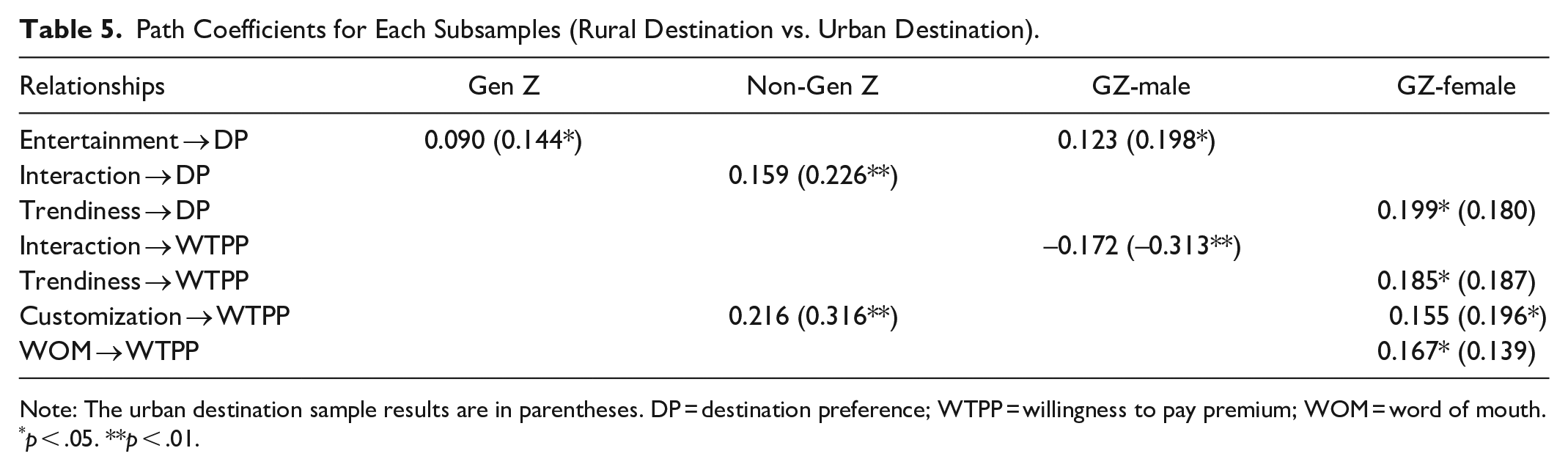
Most proposed relationships between SMMAs and tourism visiting behaviors were supported in both rural and urban tourism contexts. However, there were several differences (Table 5). For example, in the rural destination, the effect of entertainment on destination preference was not significant in Gen Z, while in the urban destination, the relationship was significant. Moreover, in the rural destination, the effect of entertainment on destination preference and the effect of customization on WTPP in other generations were not significant, while they were significant in the urban destination sample. Additionally, in the rural destination, the effect of entertainment on destination preference and the effect of interaction on WTPP were not significant in GZ-males, while in the urban destination, the two relationships were significant. Furthermore, in the rural destination, trendiness had a significant effect on destination preference in GZ-females but not in the urban destination sample. Furthermore, in the urban destination, among the influences of trendiness, customization, and WOM on WTPP in GZ-females, only the influence of customization was not significant, while in the urban destination, the results were the opposite. Finally, MGA showed that in the rural destination, only the influence of interaction on destination preference was significantly different in Gen Z and other generations, whereas the influence of interaction on WTPP was also significantly different in Gen Z and other generations in the urban destination sample. However, in the rural destination sample, the impact of entertainment on WTPP was significantly different between GZ-males and GZ-females, and this difference was not found in the urban destination sample. MGA results could be made available upon request.
Path Coefficients for Each Subsamples (Rural Destination vs. Urban Destination).
Note: The urban destination sample results are in parentheses. DP = destination preference; WTPP = willingness to pay premium; WOM = word of mouth.
p < .05. **p < .01.
In summary, the two destination samples reached the same conclusion on the relationship between SMMAs and tourist behavior in the overall sample test. Compared with other generations of tourists, the SMMA factors that make Gen Z tourists more susceptible when choosing their preferred destination or deciding to pay a premium to visit the destination were also consistent. Differences were observed when comparing Gen Z men and women; Gen Z women in the rural destination sample were more likely to be influenced by SMMA customization and WOM, while only customization was more likely to affect them in the urban destination sample. In the rural destination sample, Gen Z men were more likely to be influenced by entertainment features, while in the urban sample, they were more likely to be influenced by trendiness and interaction, in addition to entertainment.
Discussion and Conclusions
The purpose of this study was to test the uniqueness of Gen Z’s attitude toward social media marketing strategies initiated by destinations compared with other generations. Accordingly, this study proposed a relationship model between the five attributes of SMMAs (entertainment, interaction, trendiness, customization, and WOM), destination preference, and WTPP. The study also compared Gen Z tourists with other generations and analyzed gender differences within the Gen Z cohort.
This study revealed that most of the hypotheses of the relationship between SMMAs and tourist behavior were established in Gen Z, while only two relationships were established in other generations. This provided empirical support for the statement that Gen Z is more susceptible to the influence of social media. Additionally, this study indicated that Gen Z tourists are more likely to be influenced by entertainment, trendiness, interaction, and WOM, but not customization, than other generations when choosing their preferred destination or WTPP to visit a destination.
The study also found that Gen Z women were more likely to be influenced by customization and WOM in destination SMMAs when choosing their preferred destination and deciding WTPP to visit, while males were more sensitive to entertainment. Possible explanations may be that women are more likely to seek out and exchange extensive information on social media (Okazaki and Hirose 2009), and they are also more dependent on WOM (Wang, Qu, and Hsu 2016), making them more susceptible to SMMA customization and WOM. In contrast, men need less information and make decisions quickly (Kim, Lehto, and Morrison 2007), and having fun may help them make a choice.
Theoretical Implications
Through empirical investigations of SMMAs in the context of rural and urban tourism, this study enriched the knowledge of social media marketing in the tourism industry, strengthened the understanding and application of social media marketing, and contributed to the theory of social media marketing. Previous studies on the perceived influences of SMMAs have mostly appeared in literature on luxury brands (Godey et al. 2016; Kim and Ko 2012; Liu, Shin, and Burns 2021; Zollo et al. 2020), with little in the airline industry (Seo and Park 2018) and e-commerce (Yadav and Rahman 2017); the current study provides a comprehensive foundation that extends the theoretical interpretation of SMMAs to the tourism context. Furthermore, relevant studies in the field have mainly been conducted on social media platforms, such as the role of social media in marketing (Pachucki, Grohs, and Scholl-Grissemann 2021) and the use of social media by tourists (Amaro, Duarte, and Henriques 2016). This study applied the SMMA model proposed by Kim and Ko (2012) to tourism for the first time and reflects an important new direction for the study of social media marketing in the field. Past studies have shown that SMMAs have a significant role in predicting consumers’ behavior (Godey et al. 2016; Seo and Park 2018), but few studies have explored the impact of each attribute of SMMAs on consumer behavior. This study identified the different roles of each dimension of SMMAs in causing visitor behavior responses. Unexpectedly, not all dimensions of SMMAs received positive responses from tourists; interaction had no significant influence on destination preference, and the interaction effect on WTPP was negative. These findings supplement previous research and can also be used as a source of further managerial insights on tourist destinations.
Additionally, our comparative analysis of tourists’ attitudes toward SMMAs in Gen Z and other generations offers a significant contribution to the understanding of social media marketing strategies from a generational viewpoint. Previous research on SMMA did not consider generational differences, but it is generally believed that Gen Z is the first generation of fully digital natives, and their use and attitude toward social media are different from other generations. Therefore, it is of great value to investigate the particularities of Gen Z for social media marketing research. There were significant generational differences between SMMAs, destination preference, and WTPP in tourists from Gen Z and other generations. Specifically, in the relationship between SMMAs and destination preference, the relationship between trendiness and destination preference was only significant in Gen Z. In the relationship between SMMAs and WTPP, except customization, all other influences were found to be significant in Gen Z. These findings further confirmed the particularities of Gen Z observed in previous studies and enriched relevant research on social media marketing theory.
The present study proposed a model to describe the SMMA effect of tourist destinations to demonstrate how social media marketing of tourist destinations influences tourist behavior toward destinations, thus contributing to the previous DMO literature. Research on destination SMMAs and their effectiveness is still rare in the DMO literature, and empirical research is especially lacking, with most relevant studies relating to brand marketing (Godey et al. 2016; Zollo et al. 2020). This study addressed this critical shortcoming by evaluating the relationship between destination SMMAs and destination preference and WTPP, further expanding and enriching research on social media marketing in the field of tourism destinations. Moreover, the present study examined the moderatory role of generation and gender based on the consideration that segmenting the consumer market has long been regarded as an essential aspect of effective marketing strategies (Phua et al. 2020). Therefore, these findings could provide valuable insights into marketing theory and practices for tourist destinations.
This study contributed to the development of generational theory by examining the particularities of Gen Z tourists. According to generation theory, tourists from different generations have different attitudes, preferences, and behaviors. The emergence of digital communication technologies, such as social media, has also changed consumers’ behavior habits and consumption patterns. Considering the particularity of Gen Z to social media, this study attempted to understand the different attitudes of Gen Z toward SMMAs conducted by DOMs. While previous generation studies have focused primarily on baby boomers, Generation X, and, in particular, Generation Y (Gardiner, Grace, and King 2014; Zhang, Abound Omran, and Cobanoglu 2017), research on Gen Z is still in its relative infancy. Existing research mainly focuses on education or human resources, and the research objects tend to be students or employees (Goh and Okumus 2020; Shatto and Erwin 2016). To the authors’ best knowledge, no travel or marketing research has looked into the behaviors and attitudes of Gen Z as tourists or consumers, except for Priporas, Stylos, and Fotiadis (2017) and Llopis-Amorós et al. (2019) This study explored the uniqueness of Gen Z from the perspective of tourists in the hope of further enriching the existing generational literature. By considering Gen Z’s attitudes to SMMAs and their influence on destination preference and WTPP, this study enhanced the understanding of this generational group. The findings provided an empirical test for Gen Z tourists as consumers, highlighting the uniqueness of their attitudes and behaviors toward destination SMMAs. Moreover, as Parry and Urwin (2011) stated, recognizing generational analyses may be more appropriate for specific groups within cohorts; the majority of past generational research has ignored this important lens. In response, this study also examined gender differences within generational differences, adding to the nascent research on the subject and contributing to a deeper understanding of Gen Z tourists.
This study promoted the study of tourist behaviors and attitudes by examining the impact of SMMAs on the travel behavior of Gen Z. This study aimed to make an incremental contribution to the apparent lack of research on predicting tourist behavior and attitude from the perspective of tourists’ perceived SMMAs from destinations. In particular, destination preference and WTPP are vital to destination marketing strategies as robust indicators of consumer behavior and attitude. As social media grows in importance and influence, it will arguably become a non-negotiable factor in its influence on the behavior and attitude of consumers. These findings demonstrate that tourists’ attitudes toward SMMAs have a significant impact on their destination preference and WTPP, providing empirical data and valuable insights to literature on tourists’ behaviors and attitudes. Although the validity of generation theory to analyze travel behavior has been recognized by tourism practitioners and academics (Gardiner, Grace, and King 2014), research on the behavioral differences caused by the attitudes of different generations toward SMMAs is still lacking for destinations. This study responded to Pennington-Gray and Blair’s (2010) call for more research to record the attitudes and behaviors of different generations of tourists, and also made an incremental contribution to the existing research literature on consumer behavior.
Practical Implications
The findings of this study offered practical insights for destination marketers that may inform their future SMMAs as they seek to obtain higher destination preferences and WTPP among prospective visitors. First, the findings can provide direction for destination marketers to gage the effectiveness of SMMAs. Gretzel et al. (2006) claimed that tourism faces challenges of intangible asset assessment; in response, the results of this study can provide tour operators with evidence of destination preferences and WTPP and of the significant potential of SMMAs in influencing positive tourist behavior. In turn, destination marketers can assess tourists’ perception of SMMAs, as well as behavioral responses, including destination preference and WTPP, as a measure of effectiveness and quickly adjust their existing marketing strategies. Additionally, given the profound impact of COVID-19 on the travel industry, destination managers must adopt effective marketing strategies to adapt to and respond to the current disruptions. Social media marketing is an effective marketing strategy and plays an important role in destinations. Therefore, destinations should more actively use social media marketing to help them survive this crisis and identify more tourist preferences.
These findings can help destination marketers formulate social media marketing strategies that will directly affect destination preference and WTPP. Destination SMMAs that focus on entertainment, trendiness, customization, and WOM have positive influences on both destination preference and WTPP; destination marketers should focus their efforts on these attributes in their SMMAs to maximize positive tourist behaviors. The attributes of interaction should also be carefully considered, given that the results here show that its impact may either be insignificant (destination preference) or even negative (WTPP). Similarly, these findings can help destination managers understand the attributes of SMMAs that can promote tourists’ preference for destinations and increase tourists’ WTPP. Destination marketers can benchmark the results of this study to develop and revise their social media marketing strategies and more rigorously determine which attributes should be retained and which should be weakened, especially in the context of the COVID-19 pandemic. Thus, destination marketers can achieve more positive feedback from tourists.
This study also provided an opportunity for destination marketers to build multi-generational SMMAs and segmentation strategies. For example, a greater emphasis on customization and WOM in SMMAs would be favorable for tourists from Gen Z and other generations, thus promoting multi-generational destination preferences. Moreover, destination marketers should identify generational differences to develop better segmentation strategies. Each attribute of SMMA differs by generation to enhance destination preference and WTPP. Therefore, a competitive advantage could be gained by destination marketers who highlight specific SMMA attributes that resonate with each generation. For instance, the entertainment, trendiness, and WOM attributes of SMMAs have different effects on tourists from Gen Z and other generations. Identifying the relevant SMMA attribute(s) that will have the greatest influence on multi-generational visitor perceptions of and behavior toward SMMAs is an important contribution to destinations’ social media marketing practices.
This study is of guiding significance for destinations looking to engage with the potential of the future Gen Z market. Specifically, our results suggest that Gen Z is more susceptible—both in terms of destination preference and WTPP—to the influences of entertainment, trendiness, interaction, and WOM. Segmented by gender, Gen Z men placed greater emphasis on entertainment, while Gen Z women were more interested in customization and WOM. Based on these characteristics, destination marketers can formulate specialized marketing strategies for different tourism products or different marketing objectives to utilize more target markets. For example, Gen Z is heavily influenced by WOM in social media marketing. To gain access to the Gen Z market, destinations need to maintain customer popularity and high regard, while paying special attention to the relevance and uniqueness required to connect with Gen Z prospects.
Limitations and Further Research Directions
Any study of this type has its limitations. First, source data was restricted to rural and urban destinations in China. More comprehensive studies incorporating a wider range of destinations or destination types would yield a more meaningful generalization of the results and provide useful information to social media marketers in a wider range of industries. Second, from a research perspective, the site-specific scope could be expanded across different countries and regions, or across tourists from different cultural backgrounds. Past studies have shown that similarities between generations still arise, regardless of where they live (Rajamma et al. 2010) and despite local differences. Thus, a broader study of countries, regions, and cultures could provide marketers with more granular insights to improve market responsiveness and cultural sensitivity (Lazarevic 2012). Third, the influence of SMMAs considered here represent only the tip of the iceberg. Further research is needed to explore other consequences of destination SMMAs, including tourist engagement, visit intention, destination loyalty, and destination attachment.
Supplemental Material
sj-docx-1-jtr-10.1177_00472875221106394 – Supplemental material for Delineating the Effects of Social Media Marketing Activities on Generation Z Travel Behaviors
Supplemental material, sj-docx-1-jtr-10.1177_00472875221106394 for Delineating the Effects of Social Media Marketing Activities on Generation Z Travel Behaviors by Juan Liu, Chaohui Wang, Tingting (Christina) Zhang and Haohao Qiao in Journal of Travel Research
Footnotes
Acknowledgements
This research team appreciate the kind help from Professor Chaohui Wang’s postgraduate team members Chensong Tang, Daoyi Song, Peng Yin, Yuting Tao, and Yuhe Gao, for data collection, and Yifei Feng for technical guidance in drawing.
Declaration of Conflicting Interests
The author(s) declared no potential conflicts of interest with respect to the research, authorship, and/or publication of this article.
Funding
The author(s) disclosed receipt of the following financial support for the research, authorship, and/or publication of this article: This study was supported by a grant from the National Natural Science Foundation of China [grant no. 42171243].

Supplemental Material
Supplemental material for this article is available online.
Author Biographies
References
Supplementary Material
Please find the following supplemental material available below.
For Open Access articles published under a Creative Commons License, all supplemental material carries the same license as the article it is associated with.
For non-Open Access articles published, all supplemental material carries a non-exclusive license, and permission requests for re-use of supplemental material or any part of supplemental material shall be sent directly to the copyright owner as specified in the copyright notice associated with the article.
