







Abstract
The reproduction of social relationships in a rural tourism destination is examined through a micro-sociological lens that explores residents’ everyday interactions. Interaction ritual theory is adopted as the theoretical foundation. Zhinan, a mountainous village in Hangzhou, China, which initiated tourism in 2014, is the study site. Two rounds of focus groups and interviews were conducted with village residents. Qualitative inquiry shows that, under the influence of tourism, residents’ daily interactions consist of three interaction rituals, that is, rural living rituals, tourism operation rituals, and event and festival rituals. Due to the distinct ingredients, these rituals unfold differentially and engage different social actors. They complement each other in the co-construction of rural social relationships that have symbolic, emotional, collective, and normative connotations. This study provides in-depth, contextualized understandings of rural residents’ interactions and relationships, and draws practical implications for sustainable development of rural tourism destinations.
Introduction
Tourism development has fundamental impacts on rural communities. It enriches livelihood choices, reverses population outflow, and may transform social relationships within communities (Huang and Stewart 1996; Su et al. 2019). Considerable efforts have been made to understand the social impacts of tourism, albeit with divergent findings. Some maintain that tourism undermines familiar relationships, exaggerates economic and social inequalities, and causes conflicts among residents (Chen et al. 2020). Others believe that tourism can unite residents and enhance their pride in their community (Boley and McGehee 2014; Huang and Stewart 1996). Most of these studies focus on what the social impacts are, with a relatively few researchers exploring how these impacts emerge (Chen et al. 2020).
This study addresses the how questions. In line with the rethinking of community as comprised of communing and bonding actions (Cao and Wu 2020), the study investigates the social impacts of tourism through residents’ everyday interactions. It recognizes the heterogeneity of rural residents as a result of tourism and increased mobility, and examines how residents of diverse backgrounds participate in interactions and co-construct rural social relationships. The topic of resident interaction in rural destinations is important since it is an essential component of sustainable rural tourism development (Park et al. 2012; Yang et al. 2021). First, the manuscript highlights the active role of residents in participating in tourism and negotiating developmental outcomes, which ensures the self-sustenance of rural society (Hwang, Stewart, and Ko 2012; Qu and Cheer 2021). Second, micro-interactions among residents mobilize collective actions to overcome resource constraints and foster positive social transformation in rural areas (Jørgensen et al. 2021; Ying, Jiang, and Zhou 2015).
Theoretically, this study suggests that Collins (2004) interaction ritual theory is appropriate for the exploration of rural communities which face tourism development. This is because rural communities, especially those in Chinese contexts, feature intensive face-to-face interactions (Fei et al. 1992), which fits the micro-sociological focus of Collins’ theory. Zhinan, a village in China, is taken as an ideal location in which to examine the power of Collins’ theory and the how questions concerning tourism impacts on residents’ interactions and relationships. In Collins’ terms, everyday interactions among residents are interaction rituals consisting of different ritual ingredients. Recurrent enactment of interaction rituals generates and accumulates various ritual outcomes, including group symbols, emotional energy, group solidarity, and moral standards. We suggest that these ritual outcomes operationalize social relationships that simultaneously incorporate symbolic and emotional meanings of social groups, feelings of solidarity among group members, and moral principles that defend group interests. The specific research questions include: (1) What are the prominent interaction rituals among residents after tourism becomes a key livelihood? How do these rituals unfold and engage residents of diverse backgrounds? (2) How do different rituals and the involving actors shape rural social relationships?
The social relevance of this study lies in its community-based, micro-sociological lens that fits the requirements of sustainable rural tourism development. The study also contributes to the theoretical development of tourism research. First, it emphasizes the process through which social change happens in rural tourism destinations. Second, it advances understanding of residents’ interactions and relationships with Collins (2004) interaction ritual theory. Third, it adds to critical discussions of Collins’ theory by integrating micro- and macro-level analyses.
Literature Review
This section begins with an overview of contextual information of Chinese rural society. Then literatures on urban-rural migration and residents’ everyday interactions are reviewed, followed by an introduction to interaction ritual theory (Collins 2004), the theoretical underpinnings of the study.
The Foundation of Chinese Rural Society: Basic Structural Principles
Chinese society, especially in rural areas, has structural principles that distinguish it from other societies and cultures. Chinese rural residents have the strong tradition of “making a living from the soil” (Fei et al. 1992, 37), in contrast to city dwellers whose production and transaction activities are less strongly grounded. Such strong dependence on the soil has shaped the relatively fixed spatial pattern of Chinese rural society, that is, rural residents have usually lived in the same place from birth to death (Fei et al. 1992), which has further nurtured specific rural features, for example, the significance of interpersonal relationships and private morality. Although the introduction of new developmental opportunities (e.g., tourism) has contributed to more diverse livelihoods and increased mobility in the countryside, recent studies have confirmed that many traditional socio-cultural principles still have great influence in shaping how Chinese people interact with each other (Huang and Wen 2021; Xiong and Payne 2017).
Chinese rural residents live in an acquaintance society in which cultivating long-term social relationships is residents’ life-long project (Wu et al. 2022; Xiong and Payne 2017). This is because in such a society, rural residents meet and interact with each other repeatedly. They need to collaborate with the same group of people to complete their agricultural or forestry work. The failure to develop intimate social relationships indicates the likelihood of dwelling in the countryside in an undesirable manner (Chen et al. 2020). The traditional way of forming one’s network of social relationships in rural China is through kinship and neighborhood links (Fei et al. 1992). Under the influence of modernization, professional and business relationships (e.g., tourism business partnership) gain importance in constructing country people’s social networks (Xia et al. 2020). The situation in Chinese urban society is different. Featured by greater fluidity, many daily activities in urban society are co-performed by unfamiliar people who come and go (Fei et al. 1992). Thus, urban dwellers place less value and rely less on proximate strong ties than rural residents.
The governance of Chinese rural society largely lies in moral obligations which are defined by specific social relationships. To be a socially acceptable person in rural China requires the achievement of different responsibilities prescribed by personal relationships (Chen 2017; Chen et al. 2020). Reciprocity is one of the major moralities that ensures the fulfillment of collaborative needs in rural life. Traditionally, Chinese rural residents needed support from their relatives and neighbors to irrigate crops, celebrate weddings, and arrange funerals (Fei et al. 1992). After tourism development, rural residents feel obliged to work collectively to run tourism business, engaging in various supporting behaviors such as resource sharing and information exchange (Ying, Jiang, and Zhou 2015). Another example of private morality is trustworthiness among neighbors. Failure to keep promises will result in the loss of personal reputation in rural communities. In comparison, the order of Chinese urban society is maintained by general laws and rules (Fei et al. 1992). The power of private morality is confined to city dwellers’ intimate social relationships, which are small parts of their entire social networks.
The above texts summarize the structural principles of Chinese rural society, which provide the foundation for understanding social change in rural China.
Urban-rural Migration and its Social Impacts on Rural Destinations
Tourism development in rural destinations has stimulated large scale urban to rural migration that may reverse the declining rural population trend and resolve the “brain drain” problem of peripheral areas (McGehee, Knollenberg, and Komorowski 2015). The major actors involved in such counter migration include amenity migrants and return migrants (Buckley et al. 2020). Amenity migrants are affluent urban dwellers who move to the countryside in pursuit of natural scenery and a satisfactory lifestyle. It is commonly acknowledged that amenity migrants actively engage in various business, entrepreneurial, and social activities, and may therefore transform the social landscapes of a rural community, either positively or negatively (Mair and Duffy 2021; Moscardo et al. 2013; Ooi, Laing, and Mair 2015). On the one hand, researchers recognize significant differences between amenity migrants and long-standing residents in terms of interests, values, and accustomed practices, which may lead to tensions among different segments of community (Mair and Duffy 2021; Qin 2015). But the literature also documents positive social change when shared purpose, history, and affection are created between migrants and locals (Chen, Ryan, and Zhang 2021a; Matarrita-Cascante and Suess 2020).
Return migrants are those who originated from villages, left for better work opportunities in cities, and chose to return to their rural homeland due to the rise of new economic opportunities (e.g., rural tourism) in the countryside (Tong and Lo 2021; Wang and Sun 2021). Return migrants are normally knowledgeable and skillful, have good access to both local and external networks, and are likely to develop new perspectives on rural society (Iorio and Wall 2012; Qian, Wang, and Zheng 2016). Studies on return migrants are increasing. They, however, direct insufficient attention to the social dynamics that occur along with the influx of return migrants, with the assumption that return migrants, who have strong ties with the rural community, will integrate smoothly with long-term residents immediately after they return (Démurger and Xu 2011; Iorio and Wall 2012). This study contends that it is worthwhile to re-think such an assumption, given that the new experiences and practices return migrants engaged in while away may reshape their attitudes, values, and behavioral patterns (Chen, Ryan, and Zhang 2021b), and make them different individuals from the long-standing residents. This may result in social tensions. In addition, the substantial developmental opportunities brought about by return migrants (Iorio and Wall 2012) may also instigate the re-allocation of resources, and, hence, transform the structure of social relationships in rural society.
Therefore, this study positions the return migrants in relation to the whole rural community, with the aim of discerning the potential social impacts that come along with the introduction of tourism business and the influx of return migrants.
Everyday Interaction and its Role in Community-making
In understanding the social impacts of tourism, it is conducive to approach and investigate community members’ everyday interactions, which are the foundation for relationship-building and community-making (Cao and Wu 2020). Thus, this sub-section overviews studies that examine interactions among residents in rural tourism destinations (Hwang, Stewart, and Ko 2012; Ooi, Laing, and Mair 2015). The literature documents both small-scale, spontaneous interactions and large-scale, organized interactions. Spontaneous interactions among residents occur around operating tourism business and include information exchange, knowledge transfer, and mutual assistance (Hwang and Stewart 2017; Madanaguli et al. 2022). In addition, the common goal of developing tourism prompts the emergence of meetings, workshops, festivals, and tourism organizations, providing more diverse interaction opportunities that foster meaningful relationships and a shared identity (Hwang, Stewart, and Ko 2012; Jørgensen et al. 2021; Ooi, Laing, and Mair 2015). The content and frequency of these interactions influence the quality of social relationships in communities (Ying, Jiang, and Zhou 2015). For example, the erosion of cooperation and sharing systems is the indicator of negative social impacts (Boley and McGehee 2014; Xue, Kerstetter, and Hunt 2017), whereas continuous collaborative behaviors can unite different residents, especially long-standing residents and immigrants who do not share a common cultural identity (Huang and Stewart 1996; Matarrita-Cascante and Suess 2020).
It is worth-noting that although most studies mention various interactive activities, they do not fully portray how the interactive process unfolds and how it relates to different social outcomes. Neither do they systematically examine how different social actors participate in interactions. Thus, we refer to Collins (2004) interaction ritual theory to reveal the more in-depth micro-mechanism of residents’ daily interactions.
Interaction Ritual Theory
Interaction ritual theory (Collins 2004) provides a micro-sociological perspective for understanding the organization of social relationships. In seeking micro-level foundations of social realities, this theory treats situations in which people encounter each other as the primary unit of analysis (Bargeman and Richards 2020; Collins 2004; Goffman and Best 2017). According to Collins (2004), relationships, emotions, and meanings in social life are constantly reproduced, maintained, and renewed through chains of interaction rituals. The smooth occurrence of an interaction ritual entails a combination of four ritual ingredients: group assembly, barrier to outsiders, mutual focus of attention, and shared mood (Figure 1). The successful combination of these elements produces moments of collective effervescence that cultivate various ritual outcomes.
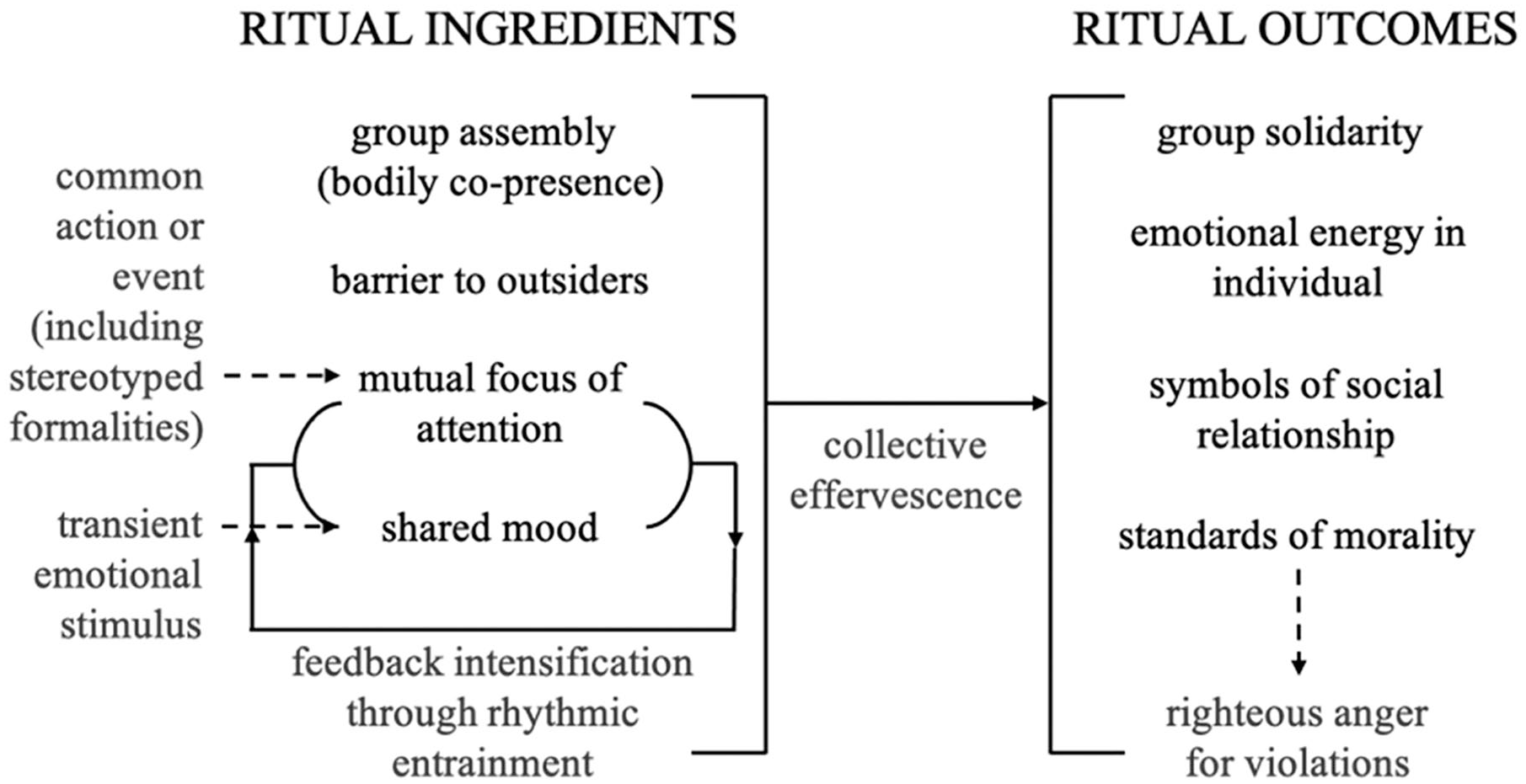
Interaction ritual: the mutual-focus/emotional-entrainment model (after Collins 2004, 48).
Among the four ritual outcomes, symbols of social relationships are defined as “emblems or representations that members feel are associated with themselves collectively” (Collins 2004, 49). Group symbols start from foci that receive joint attention in interactions and end when the foci are charged with emotional loadings and become “sacred objects” that are celebrated by all the participants. Emotional energy (EE), which refers to “a feeling of confidence, elation, strength, enthusiasm, and initiative in taking action” (Collins 2004, 49), are attached to group symbols and are aroused differently among individuals. EE is a continuum that ranges from an enthusiastic and proactive mood, through a middle ground of bland normalcy, to a depressed or exhausted mindset. Group solidarity is a sense of belonging and attachment to the group, and is parallel to emotional energy in terms of its varying intensity. Strong group solidarity prompts standards of morality that ascribe feelings of rightness in adhering to the group and defending its symbols. Standards of morality can be expressed either in “acts of altruism and love” (Collins 2004, 109) or in feelings of righteous anger and actions of punishment toward ritual violators.
Interaction rituals vary in the density of population involved. Sterchele (2020) classified interaction rituals into two groups: micro-scale and large-scale rituals. Micro-interaction rituals are ordinary interactions in small group settings (e.g., friendship) which are enacted frequently among personal networks but are of less momentary intensity. Large-scale rituals are extraordinary events or activities that are specially designed and planned, having the potential to attract mass audiences and arouse emotions in a short time. Different types and scales of rituals interweave and co-construct the social structure.
As a well-established theoretical framework in sociology, interaction ritual theory has attracted attention from a moderate number of tourism researchers. These studies primarily focus on one-off interactions that are enacted by unfamiliar people, such as hotel staff and guests (Xiang et al. 2022), craft producers and visitors (Wu et al. 2021), residents and tourists (Joo et al. 2020), and festival attendees (Sterchele 2020). This study applies interaction ritual theory in a Chinese rural context where the same groups of people encounter each other repeatedly every day, with an aim of exploring the mundane aspects of a rural tourism destination. This resonates with Collins (2004) stance of understanding “everyday sociability” (p. 50) through a micro-sociological lens.
It is argued that interaction ritual theory is particularly suitable for understanding residents’ interactions in our case. First, in recent years Chinese rural communities have undergone several transformations, such as the introduction of tourism business and the influx of return migrants. The ingredients of interaction rituals are able to capture the renewed interaction pattern resulting from the changing population and livelihoods. Second, interpersonal interaction in Chinese rural society is governed by strong moral obligations (Fei et al. 1992), which can be well explained by interaction ritual theory that emphasizes the normative connotation of ritual outcomes.
Research Methods
The Study Site
Zhinan village is located in the mountains 80 km northwest of Hangzhou city, eastern China. Tourism in Zhinan village started in 2014 when the local government widened and paved the winding road connecting the village with the outside world. The village has abundant natural and cultural resources, such as terraced landscapes, ancient maple and ginkgo trees, a scenic lake, ancient architecture, stone artifacts and iron coins. In 2016, the local government transformed the village into a “Red-leaf Town” and invested in various public services. Accordingly, a number of villagers who worked in the cities returned to the village and started to run tourism businesses. In 2020, over 100 out of the 170 households were involved in tourism business. The businesses included 78 B&Bs, nine rural boutique hotels, 23 local specialty stores, and six snack stores. Most accommodation businesses were small, ranging from four to fifteen rooms. In order to encourage communication and collaboration among tourism operators, a village-level tourism association was founded. In addition, cultural festivals, such as Tofu Cultural Festival and Red Maple Festival, were revitalized. Cultural shows were performed by the villagers every Saturday evening in the peak season, entertaining both tourists and residents. Due to the natural and cultural attractions, and the tourism businesses, the village received around 800,000 tourists in 2020 and over half stayed overnight (Wang and Cheng 2021). It has been voted as the most beautiful ancient rural village in East China (see images in Figure 2).
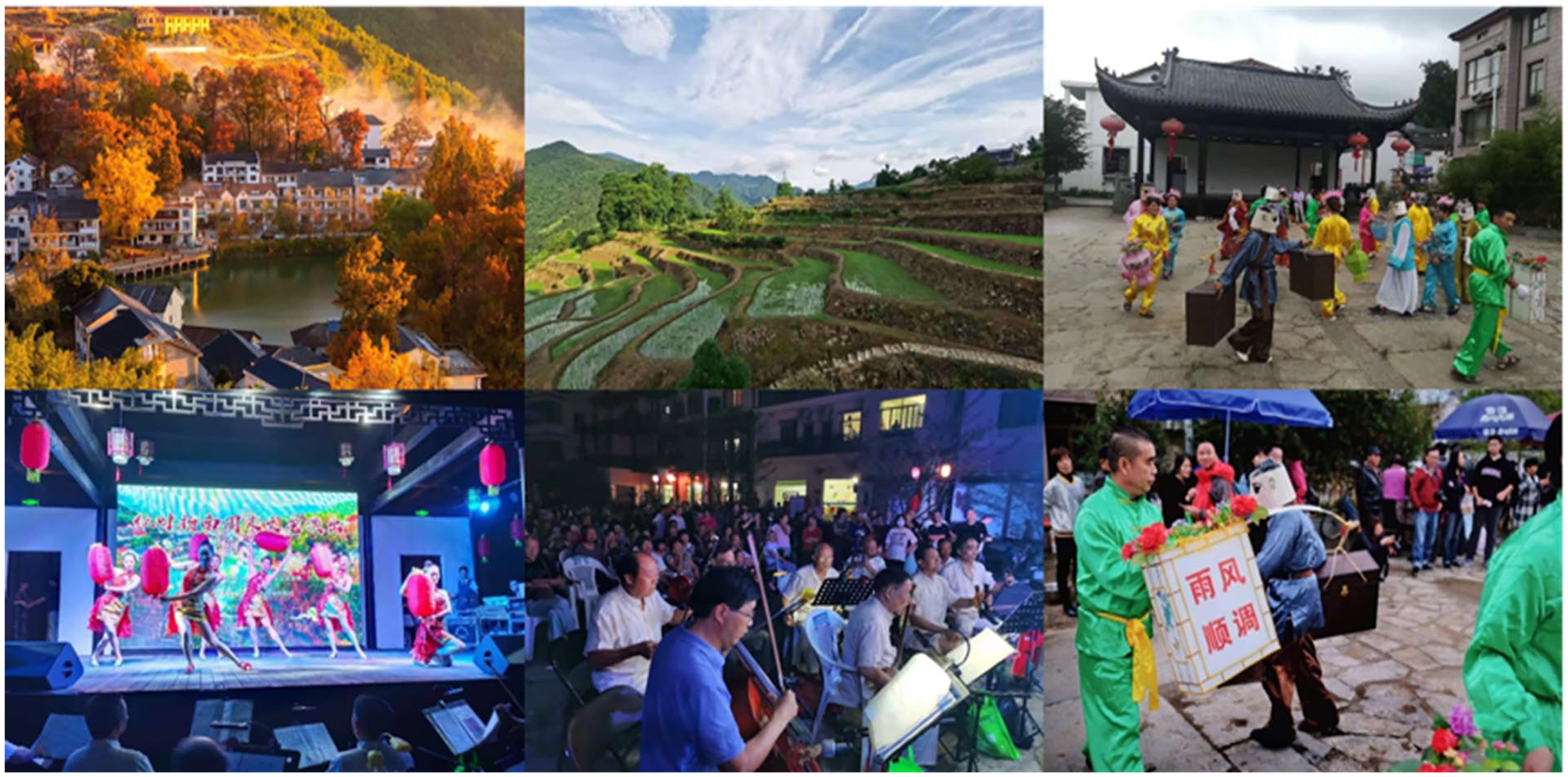
Images of Zhinan village.
The situation was different before tourism development. Located in mountains, the village was isolated with poor accessibility. Livelihoods depended largely on pecans, bamboo shoots, and tea. Only limited incomes could be generated, and young people were forced to move elsewhere to seek better educational and work opportunities, only returning during traditional holidays, such as Chinese New Year. Unpublished local statistics show that only 123 people resided year-round in the village in 2013, most of whom were the elderly or young children.
Improved access due to road works, beautification of the village, and tourism development enabled villagers to return home gradually to engage in tourism business. Living together again in the village, residents now have more time together, more common goals, and more interactions. This reunion, however, is accompanied by livelihood changes, and may have changed social relationships in the village. These changing relationships need to be examined in order to understand the social impacts of tourism.
Data Collection
The research team has been familiar with Zhinan village since July 2019. We have had many opportunities to observe residents’ interactions, to have short conservations with residents, and have shared experience of various activities (e.g., hanging around, chatting, and watching performances). The researchers thus gained entry into the rural society and obtained greater understanding of the research context. The methods of particular relevance to this study were two rounds of data collection using focus groups and interviews in 2020.
The first round of data collection occurred in the second week of August 2020, the peak season of tourism business in the village. This round of fieldwork was undertaken to understand how tourism impacts residents’ social life and how residents perceive and experience the social impacts. To explore this topic, a combination of two focus group discussions (coded as FG-1 and FG-2), comprised of eight and six villagers, and six semi-structured interviews (coded as I-1-I-6) was employed in an open-ended manner, free of presumed theories that might have biased the meaning-making process. The specific questions discussed include: (1) perceived changes in residents’ life after tourism development; (2) residents’ feelings and experiences toward social changes in their daily life; and(3) daily interactions among residents before and after tourism.
Focus groups were conducted first, since they are efficient in gaining a large amount of information from people of diverse backgrounds. Two focus groups took place in the meeting room of the village committee. Focus group respondents were recruited through the assistance of a village leader, who is familiar with the residents and was informed about the selection criteria. During focus group discussions, the principal researchers took on the role of moderator, explained the research purpose, and encouraged respondents to talk freely. Such an approach encouraged collective dialog among respondents, which, to some extent, reflected their daily interaction patterns. However, focus groups had pitfalls—they were sometimes dominated by active tourism participants, and may avoid discussion of sensitive topics. Therefore, semi-structured interviews were employed to supplement the focus groups. Six interviewees were approached randomly at the playground outside of the village’s administration building. The one-to-one interviews provided safer space for residents to fully express their opinions, especially on sensitive issues such as uncomfortable feelings about tourism and personal attitudes toward other social groups. The two focus groups lasted about 90 minutes each and the interviews lasted from 25 to 47 minutes.
Data from the first-round fieldwork reveal that in addition to micro-scale interactions, cultural events and weekly performances are important platforms for large-scale interactions that deeply impressed and closely unite the residents. This prompted the arrangement of the second-round fieldwork, which was conducted from 5th to 9th September 2020, during the Tofu Cultural Festival, a large cultural event. The aim of this round of fieldwork is to explore the detailed process through which tourism impacts residents’ social relationships. Additional attention was paid to detecting how festival-related interactions interplay with other ordinary interactions in producing social outcomes. In this stage, 19 semi-structured interviews (coded as J-1-J-19) were completed to explore residents’ embodied experiences. This approach gave respondents sufficient room to fully share their opinions. Collins (2004) ritual ingredients and outcomes served as sensitizing concepts (Blumer 1986) for us to conduct conversations with respondents. Specifically, we discussed: (1) how residents interact with others in ordinary life and during festivals (e.g., common topics/interests/purposes, who are included/excluded, actions/behaviors, and moods/affections) and (2) what these different interactions bring to them, in terms of their own mindsets and desires, social relationships, and connections with the village. Information saturation was reached on the 19th interview. These interviews lasted about 30 minutes.
In all, nearly one quarter of village households (39/170) in the village participated in this research. Villagers with different principal livelihoods and length of residence were all included in this research (see their profiles in Supplemental Appendix 1). Balanced consideration was given to tourism and non-tourism participants, as well as return migrants and long-standing residents. Respondents were evenly distributed by gender and aged between 30 and 90. All were familiar with the village both before and after the onset of tourism.
Data Analysis
The focus group and interview data were transcribed and coded manually. Data analysis followed Braun and Clarke’s (2006) thematic analysis, during which inductive and deductive logics of coding were applied flexibly. Three types of interaction rituals were identified inductively. Then a deductive logic framed by Collins (2004) interaction ritual theory was employed to reveal the specific ritual ingredients within these interactions. The investigation of ritual outcomes followed a deductive approach first, applying Collins’ idea of emotional energy, symbols of social relationship, group solidarity, and standards of morality as the major sensitizing concepts (Blumer 1986). This was followed by an inductive approach to further identify the specific attributes under these sensitizing concepts. Two researchers conducted the coding process independently. The definitive version of coding occurred when the two researchers achieved full agreement after discussion and continuous refinements of the codes.
The research team adopts the notion of reflexivity throughout the research, being aware of their positionalities that may affect data collection and analysis. The principal researchers who participated in the fieldwork grew up in rural areas and reside in a large city for better work and education facilities. They all specialize in tourism research and are familiar with the practices and policies of rural tourism in China. These biographies may have subtly influenced their interactions with respondents. Similar life histories may have facilitated interaction and empathy, and the researchers resonated with return migrants or tourism operators easily. However, they reminded themselves that the voices of long-standing residents or non-tourism participants should be heard to help the diverse respondents to be engaged in the research process, such as by encouraging all participants in a focus group to contribute their ideas. When interpreting the data, the researchers valued the differences among respondents and endeavored to “cooperate” fairly and to preserve even small differences among respondents.
Findings
The rejuvenation of Zhinan village has brought an improved rural environment and rising developmental opportunities, and has attracted groups of return migrants. These return migrants are knowledgeable and resourceful individuals who have rich work experiences in the hotel industry (I-3), retail (I-1; J-6), beauty industry (J-2), and construction (FG-1). Due to their past work experiences, return migrants are usually superior in customer communication, technology application, and resource acquisition than long-standing residents and are, thus, more likely to lead the developmental trend of tourism business.
The inflow of return migrants has ripple effects on the socio-cultural landscapes of rural society. It first contributes to the changing of population composition and livelihood strategies in the countryside. The successful business experiences of return migrants encourage more young people to consider returning home and more long-standing residents to participate in tourism. For example, “Having seen that I run successful tourism business in the countryside, more and more residents attempt to transform their properties into rural boutique hotels.” (I-3). This results in a renewed rural image with a growing number of young people and tourism operators, and a declining number of non-tourism participants. Meanwhile, the shifting population and livelihood composition facilitate new means of interaction in the countryside. These recently evolved interaction rituals intermingle with traditional rural interactions, contributing to the everyday reproduction of rural social relationships.
This study identifies three types of interwoven interaction rituals that penetrate rural residents’ daily life after tourism development. They are: rural living rituals, tourism operation rituals, and event and festival rituals. Different social groups (e.g., return migrants and long-standing residents, tourism and non-tourism participants) are involved differentially in rituals, which leads to distinctive social outcomes. Figure 3 draws attention to three interaction rituals, different actors, and the social outputs including symbols and emotions, group solidarity, and moral standards. These ritual outcomes represent different aspects of rural social relationships and will be discussed in detail.
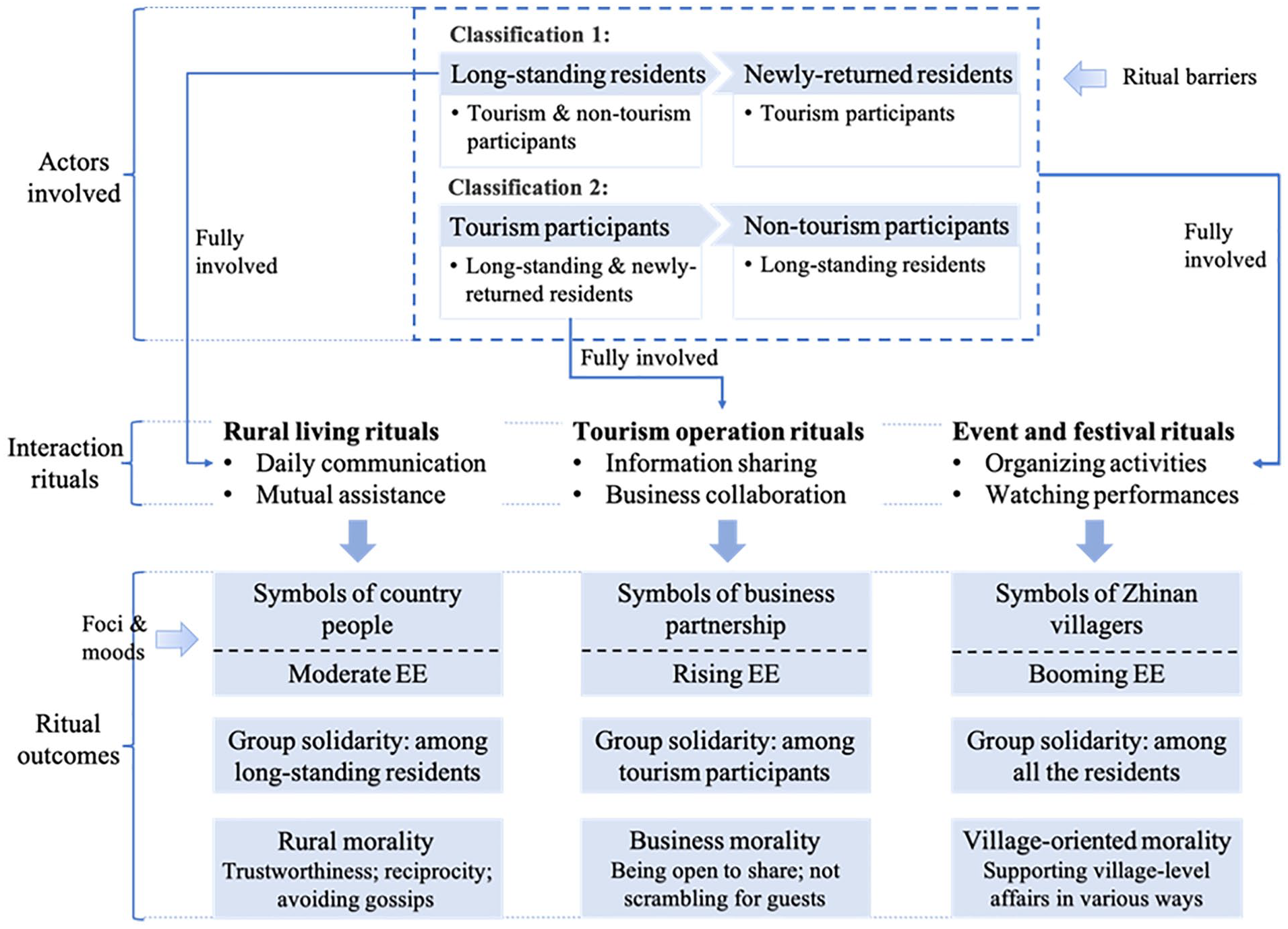
Three types of interaction rituals and ritual outcomes.
Rural Living Rituals
Daily communication and mutual assistance: long-standing residents as the major participants
Rural living rituals, including daily communication and mutual assistance, are essential components of rural life that existed long before tourism development.
Daily communication
Daily communication is residents’ accustomed way of socializing, through chatting, entertaining, hanging around together, and dropping into each other’s homes. This happens so naturally that whenever two or more residents are together, the rituals unfold: for example, “When the night comes, we gather around the benches outside and chat with the ones nearby.” (J-5) and “When we are free, we enjoy entertaining activities together, such as mahjong and karaoke.” (J-1). The mutual foci of attention shift with the seasonal cycle of agricultural production: “In these days when the pecans mature, we talk about how many kilograms of pecans we have harvested. If it was spring, we would talk about bamboo shoots and tea leaves.” (J-14). In addition, tourism business is another common language among tourism participants: “For us B&B owners, we chat casually about our business, such as how many guests we host today and when the next batch of guests will arrive.” (J-1).
Mutual assistance
The smooth operation of rural life requires extensive mutual assistance among residents. Folk traditions and rural activities, such as making seasonal delicacies (e.g., zongzi and maci) and preparing for weddings or funerals, stimulate the gathering of groups of residents to help each other to accomplish these activities: for example, “When we need to make maci (a local snack made from glutinous rice and other seasonal ingredients), we form a group of seven or eight ladies. We visit each other’s home and help accomplish the activities in order.” (J-1) and “We rely on each other’s assistance when preparing weddings or funerals. We go to others’ homes and help them prepare food, clean house, wash dishes, and serve guests.” (J-14).
The above rural living rituals are frequently enacted among long-standing residents. One barrier involved in such rituals is the high level of mutual familiarity that is derived from lifelong co-living experiences. The return migrants, who are less familiar with country ways, encounter problems in participating in these rituals. For example, a long-standing resident commented in a semi-structured interview: “We do not ask newly-returned residents for help because we are unsure about what they can do. But as time passes by, we gain knowledge of their capabilities, and are more likely to ask for their assistance.” (J-1). Another barrier that excludes the participation of return migrants is the lack of specific abilities to conduct rural affairs. A return migrant in her 30s stated: “The young generation like me lived outside the village for a long time and lack the abilities to perform the folk activities. Thus, the older generation needs to seek support from each other.” (I-3).
Ritual outcomes: Symbols of country people and their intimate social relationships
The ongoing rural living rituals, which are dominantly carried out by long-standing residents, produce symbols of country people, strong group solidarity, as well as moral standards that help to coordinate intimate social relationships. These outcomes are shared among long-standing residents.
Symbols of country people and the moderate EE
Symbols of country people—a shared identity among long-standing residents—are transformed from the foci of attention (e.g., agricultural products and folk tradition) in rural living rituals. These rural foci are mostly grounded in the soil, which has nurtured generations of rural residents (Fei et al. 1992). Therefore, the corresponding symbols also have strong “earthy” nature that are undervalued in modern society (Xue, Kerstetter, and Hunt 2017). Symbols of country people are evident in respondents’ words such as “our countryside” (e.g., J-12, J-19), “country folks” (e.g., I-1, J-9), and “peasants” (e.g., J-10, J-14). When talking about their shared identity, most long-standing residents demonstrate moderate emotional energy. They described their everyday encounters in the countryside as: “Nothing special. I feel just okay.” (I-1); “The life of us country people is simple and normal, with no extreme gladness or sadness.” (J-4). However, such moderate levels of emotional energy have little attractiveness to the young generation that has recently returned to the village. In fact, the newly-returned younger residents tend to differentiate themselves from the older residents and reject the rural identity: “Many young people including me do not like some of the customs in the countryside. The social relationships here are too close and complex. . . The older generation are mostly illiterate and sometimes difficult to communicate with.” (I-3).
Strong group solidarity among long-standing residents
Due to the lifelong co-living experiences, long-standing residents in Zhinan village have intimate social relationships and strong group solidarity. This is expressed as: “In the countryside, we know each other well and have intimate relationships. If someone is in need, we will give a hand immediately before being asked.” (J-12). “I spent all my childhood and adolescence in the countryside, seeing and interacting with my neighbors every day. I certainly have deep affection toward the place.” (I-5). However, when these residents indicated their face-to-face intimacy with others, they referred implicitly to those of similar age and shared life experiences. Less familiar younger people are not considered. “We have known each other from a very young age. We are all familiar except for the younger ones who lived outside the village for a long time.” (J-14). This hints at the limitations of rural living rituals: they only reinforce solidarity among residents who are already acquainted, but are less likely to involve newly-returned residents and invoke feelings of solidarity with them.
Feelings of morality
Governance of the acquaintance society requires moral standards that can leverage the power of intimate social relationships and avoid the accompanying pitfalls. In our case, residents felt morally obliged to be trustworthy, follow reciprocal rules, and avoid gossiping. These feelings guide and regulate their daily interactions. Many residents highlighted the value of trust and reciprocity: “Being trustworthy is of particular importance in the village. If I borrow money from other residents, I will manage to repay them at all costs. It will be difficult to live here if you always break your promises.” (J-9). “We need to help each other fulfill rural affairs. If you did not help them this time, then they would not help you next time.” (J-12). In addition, residents felt obliged to limit the contents of their daily communication to avoid potential conflicts: “I do not engage in gossip which may annoy others. Neither do I like anyone who gossips.” (J-10).
Tourism Operation Rituals
Information sharing and business collaboration: tourism operators as the major participants
This study identifies many instances of sharing and collaborating behaviors revolving around operating tourism business. These interactions gradually increased following the introduction and growing prosperity of small tourism businesses.
Information sharing
In Zhinan village, business information is exchanged in two main ways: spontaneous informal sharing among tourism operators and formal knowledge transfer organized by the tourism association. Rural residents share business information and learn from each other in their daily encounters. A B&B owner stated, “We communicate frequently about best practices and challenges in running a business. For example, we talked about the cancelled bookings caused by the COVID-19 outbreak and encouraged each other.” (FG-2). Beyond that, the tourism association arranged seminars and training programs to facilitate knowledge transfer among tourism operators or from external experts. “We have regular meetings and trainings, during which the excellent operators share their good experiences.” (FG-1).
Business collaboration
There is close collaboration in operating tourism businesses. Tourism operators recommended customers to each other when they were unable to satisfy a customer’s specific needs. These interactions were based upon reciprocal principles, for example, a specialty store owner stated, “If tourists come to me, not knowing where to have meals or stay overnight, I will ask for their preferences and refer them to an appropriate business. Many accommodation providers also recommend my products to their customers.” (J-9). Some B&B owners also mentioned, “If my rooms are fully occupied, I will introduce tourists to those having similar offerings as me.” (FG-1). Occasionally, non-tourism participants engage in business collaboration through offering casual labor to tourism operators during the peak season: “When B&B hosts need labor support, most of us are willing to assist because neighbors help each other. We can also get some income from the assistance.” (J-11).
Tourism operation rituals are carried out predominantly by tourism operators, including both newly-returned and long-standing residents. In these interactions, possession of business property is the barrier that excludes residents who do not engage in tourism. Such an exclusion happens in a nuanced and gradual way when tourism participants devote more and more efforts to running the business and, naturally, less and less time in communing with non-tourism participants. It is experienced by a non-tourism participant as: “They (tourism participants) are united as a group because they need each other’s help when conducting tourism business. We are different groups and have less common language.” (J-13). Nonetheless, the barrier is penetrable during peak seasons when tourism operators need non-tourism participants’ assistance in dealing with the surge in tourist demand. In these moments, non-tourism participants, though temporarily, become “partial tourism participants” whose foci of attention are congruent with those of tourism operators—both revolve around serving tourists and making money.
Ritual outcomes: Symbols of business partnership and extended yet segmented solidarity
Tourism operation rituals generate symbols of business partnership, enhance emotional energy, broaden group solidarity, generate small business circles, and develop business morality. Most of these outcomes are enjoyed by tourism operators who participate fully in tourism.
Symbols of business partnership and the rising EE
Symbols of business partnership denote a collective recognition of common interests and goals among tourism participants in Zhinan village. This is expressed in statements such as “Our interests are closely related. I’m happy to share my best practices in gardening. Together we make the village environment more pleasant and attractive.” (FG-1) and “All of us are business partners, belonging to a community with a common goal.” (FG-2). Such symbols are generated from the continuous enactment of tourism operation rituals in which all the participants share a common purpose of running business smoothly and pursuing a better life. The emotional energy attached to these symbols is quite high, with commonly observed senses of achievement and happiness. Strong identification with the group symbols is thus established. However, it is note-worthy that non-tourism participants are alienated from the symbols of business partnership and have few opportunities to experience the upward flow of emotional energy in daily life. The deficient fund of emotional energy induces low self-evaluation among some non-tourism participants. This is clearly expressed in interviews: “Those who run tourism business live a better life. We (non-tourism participants) are inferior to them.” (I-6).
Extended and segmented group solidarity
The scope of group solidarity is broadened when a large group of people return to the village and collaborate with each other to run tourism businesses. Representative comments include: “After returning to the village, I became more intimate with other residents. It feels like going back to our childhood when all the relatives, neighbors, and friends were ready to help each other.” (FG-2). Particularly, in the digital economy era, tourism operation rituals can strengthen bonding across generations, which are difficult to achieve through rural living rituals. This is evident in a conversation between return migrants and long-standing residents. A long-standing resident stated in a focus group: “Many things go online these days, such as orders from online travel agencies, guest registration, and issuing a tax invoice. We older ones had problems mastering these technologies. We appreciate that the young villagers offer us help or free training.” (FG-2). A return migrant responded as follows: “I’m happy to do that. In teaching the elderly residents about Internet and technology use, I get familiar with them and learn traditional skills and wisdom from them. The communication brings us together.” (FG-2).
The growth of tourism business facilitates the emergence of small business circles in Zhinan village. This is because the accommodation businesses are diverse and target different market segments. Those with similar market positioning have more common concerns and conversations (e.g., how to decorate their property and how to treat customers) and, thus, are more likely to co-enact tourism operation rituals such as sharing experiences and introducing customers. Group feelings among these sub-groups are stronger. Typical comments include, “The suggestions of other B&B owners are valuable to us because we all serve the senior market. The experiences of rural boutique hotels do not work for us.” (I-1); “The residents who are closest to me are also boutique hotel owners. Our businesses are relatively high-priced and our customers are younger.” (J-7).
Business morality
Symbols of business partnership are protected by residents’ tacit agreements on business morality, which aims at reducing conflicts and maintaining harmonious business relationships. The primary principle is not to scramble for guests in ways that impair others’ interests. Respondents commented, for example, that, “If some checked-in guests wander around and show interest in my property, I tell them firmly that I welcome them to revisit our village and stay in my property next time. However, I cannot accept them as my guests during their current visit.” (FG-2). Another moral principle is being open to share excellent business practices. This is expressed by a return migrant: “Closing the door and doing your own business is frowned upon in rural society. Being open and generous is appreciated. Both guests and villagers like my yard. I always keep my yard open and welcome visits, not worrying about others learning from my experience. I even help villagers order supplies that they like in my garden.” (I-3).
Event and Festival Rituals
Organizing activities and watching performances: inclusive to all residents
Event and festival rituals, including organizing festival activities and watching performances, are large-scale, extraordinary interaction rituals that are charged with high emotional intensity.
Organizing festival activities
Organizing festival activities is a process of mobilizing collective efforts to celebrate local traditions and culture. In Zhinan village, there are two kinds of festival activities: large cultural events that last for several days and regular live shows that take place every Saturday night. In these rituals, folk customs and local specialties are presented and performed to the public in an attractive manner. These rituals are initiated by active tourism operators who get abundant emotional and financial payoffs from tourism operation rituals. A successful B&B owner talked about how he organized the Tofu Cultural Festival: “I collaborated with five friends to organize the festival. We planned the live shows and invited residents to perform folk customs. We also rented many hanfu suits (a traditional Chinese costume) and encouraged residents to put them on to create a more engaging atmosphere.” (J-6). The smooth operation of festivals requires support from others who are willing and able to participate in folk performances. In Zhinan, the invited residents expressed shared moods of excitement and strong willingness to cooperate: “We were really excited about it. We offer our help as long as we are available. Some residents who work in cities even return to the village to join in the performances.” (J-9).
Watching performances
Attending and watching performances are the rituals that involve the largest number of residents and are of greatest momentary intensity. These rituals are the most inclusive, being open to all the residents. Particularly, elderly residents who are excluded from most tourism-related rituals are welcomed to participate in these rituals, thus enjoying the fruits of tourism development: for example, some aging non-tourism participants mentioned: “I am getting older. They will not invite me to perform anymore. But I love to watch the shows. It is on my must-do list.” (J-11). In these rituals, all the residents’ “flame has been ignited,” imbued with strong feelings of happiness and excitement. Residents commented that, “The shows were really exciting. Everyone laughed. I wish I could watch the live shows every day. I love the bustling atmosphere.” (J-1) and “When there is a live show at night, we will walk outside and tell everyone about it, feeling excited and saying, ‘Hah-hah-hah, the shows will be on again tonight!’” (J-11). Such good cheer sustains and extends to residents’ ordinary life when the shows are over, through residents’ daily communications as well as their anticipation of future events and performances: for example, “We keep talking about the fantastic performances in the following days.” (J-11) and “I always look forward to the coming of next Saturday evening when we can enjoy the live shows.” (FG-2).
Ritual outcomes: symbols of Zhinan villagers, increased collective consciousness, and merging boundaries
Event and festival rituals create symbols of Zhinan villagers, extend group solidarity, merge group boundaries, and generate feelings of morality toward the village. These ritual outcomes are embraced by all the residents.
Symbols of Zhinan villagers with booming EE
Symbols of Zhinan villagers refer to residents’ shared group identity after Zhinan became a popular tourism destination. The specific foci that constitute such symbols are the fantastic events and shows as well as the folk customs and local specialties on display. The booming emotional energy helps to improve residents’ identification toward the rural elements, which are the foundation of Zhinan-villager symbols. A return migrant mentioned: “Large festivals contribute to the revitalization of folk customs and culture. I am now more aware that local specialties such as maci are typical for us Zhinan villagers. We have special recipes. Many people come here to learn from us.” (FG-1). Most residents expressed strong feelings of pride toward their group identity as Zhinan villagers: “I am very proud of all the improvements our Zhinan village has made, being able to hold these traditional festivals and attract large audiences.” (J-9).
Extended group solidarity and merging boundaries
Infused with intense collective emotions, symbols of Zhinan villagers have great potential to attract those who work elsewhere to return to the village temporarily. The largest scale of group assembly is thus achieved, and feelings of group solidarity are evoked among a larger population, including those who are not always present in the village. A villager who returned to support the festival commented: “Every time I return, I communicate a lot with my neighbors to get updated information about their recent life and our village. It makes me feel that I have never left, and I am an important part of the village.” (J-19). In moments when diverse groups of residents co-present and are fascinated by a series of shared foci—shows and performances, local culture and customs, another important social dynamic emerges—group differences are laid aside, group boundaries become more permeable, and different residents start to develop a strong sense of collectivity. “We villagers, old and young, are the performers. We temporally forget our business and enjoy the wonderful events together.” (J-1). Notably, the strong collective emotion produced in these rituals can benefit non-tourism participants who are marginalized in most tourism operation rituals.
Moral standards toward the village
Event and festival rituals generate moral principles that transcend specific personal relationships and serve the whole village. These moral principles give residents strong impetus to support the village-level affairs in various ways. For example, such village-oriented morality gives the opinion-leaders a sense of righteousness in their devotion of time and resources to the organization of large events: “Tourism business in our village is likely to decline if we do not organize cultural events like this. Should that situation occur, all the Zhinan villagers would suffer. Therefore, we need to shoulder this responsibility.” (J-8). The moral standards also encourage those who work or study elsewhere to return and participate actively in festivals: “We need to come back and offer our help because it is the big event of our own village.” (J-19). In addition, positive word-of-mouth behaviors occur spontaneously out of residents’ moral obligations toward the village: “Every time when there is a festival in our village, I tell my friends and encourage them to visit. This is something I should do for my village.” (J-8).
Discussion
The development of tourism business in rural communities is accompanied by urban-rural migration, livelihood diversification, evolving social interaction, and, therefore, renewed rural social landscapes (Mair and Duffy 2021; Matarrita-Cascante and Suess 2020; McGehee, Knollenberg, and Komorowski 2015). This study recognized return migrants as the actors who add youthful energy to the aging population and promote tourism business as a decent livelihood in the countryside. This finding corroborates the ideas of previous studies that highlight the proactive role of return migrants in re-constructing rural landscapes (Démurger and Xu 2011; Iorio and Wall 2012; Qian, Wang, and Zheng 2016). Further, this study suggests that the change that return migrants can bring happens gradually in the everyday interactions of different groups of residents, including newcomers and old-timers, tourism and non-tourism participants. We therefore placed return migrants in relation to the whole community, and carefully examined residents’ daily interactions. We find that in addition to traditional rural interactions, the changing livelihoods and population in the village facilitate the occurrence of many tourism-related rituals, such as sharing information, business cooperation, organizing festivals, and watching performances. Similarly, the literature argues tourism provides opportunities for diverse social groups to form new communications and interactions (Jørgensen et al. 2021; Matarrita-Cascante and Suess 2020; Xue, Kerstetter, and Hunt 2017). Such new combinations of social interactions are the starting-point to the identification of how tourism and increased mobility influence different aspects of rural social relationships, including group symbols and emotions, group solidarity, and moral standards.
Group symbols and emotional energy, which are transformed from the shared foci and moods in rituals, define the symbolic meanings and emotional intensity of specific rituals, and hint at how and to what extent these rituals can unite rural residents. Symbols of country people represent traditional lifestyles, customs, and culture in rural communities. The uniting power of such symbols, which can be termed as traditional bonding, is strong among long-standing residents who are accustomed to and fully embrace the rural traditions. These findings concur with previous studies that emphasize the role of common cultural backgrounds (Huang and Stewart 1996) and shared narratives of the past (Cao and Wu 2020) in producing a resilient bond. A different conclusion is that most return migrants, who also have shared cultural roots in the rural community, tend to keep distance from the rural symbols. They are not impressed by the moderate emotional energy such symbols arouse. This implies the limitation of traditional bonding. In light of this, it is necessary to explore the shifting basis of bonding in an era with enhanced mobility and rapid transformations. Many studies recognize the role of economic bonding and the process of working for a common purpose (Chen, Ryan, and Zhang 2021b; Huang and Stewart 1996). This is verified in this study as symbols of business partnership can invoke high emotional energy among tourism operators and attract many return migrants. Importantly, these symbols help bridge the gaps between return migrants and long-standing residents. However, merely relying on economic bonding is not a sustainable solution for rural development (Chen, Ryan, and Zhang 2021b). Fortunately, this study identifies evidence of affective bonding that can supplement the role of traditional and economic bonding, as indicated in symbols of Zhinan villagers. Such symbols are created in events and cultural performances which engender short bursts of high emotional energy among a large population. Enhanced identification toward rural elements and strong affection toward the village are thus cultivated. This indicates that tourism has the potential to revitalize rural culture and enhance community identity (Hwang, Stewart, and Ko 2012; Xue, Kerstetter, and Hunt 2017). Similar affective bonding is documented in a New Zealand village, Raglan, where residents regard the place as their shared emotional home (Chen, Ryan, and Zhang 2021a).
Feelings of group solidarity grow with the creation of group symbols as the three interaction rituals unfold. Indeed, this ritual outcome closely intermingles with group symbols and emotions in the union of residents. To distinguish from the previous paragraph, here we focus on the changing scope of group solidarity by comparing the barriers and actors that are involved in the three rituals. In this way, this study reveals two related social dynamics, including social integration and social stratification issues. First, the study illuminates the path through which return migrants integrate themselves into the rural community. At the beginning, return migrants are prevented from participating in rural living rituals due to the low familiarity level and the lack of rural skills. They need to first be re-acquainted with the rest of the community, especially with those long-standing residents, through tourism operation rituals, before gradually stepping into rural living rituals to strengthen solidarity. This illustrates the social integration process of return migrants in the rural community, which is largely neglected by previous studies (Démurger and Xu 2011; Iorio and Wall 2012; Qian, Wang, and Zheng 2016). Second, the issue of social stratification arises as tourism business develops, which hints at the dark side of group solidarity (Collins 2004). Specifically, while the ongoing tourism operation rituals unite tourism participants, they exaggerate group differences between tourism and non-tourism participants (due to barriers in tourism operation rituals). They also generate sub-circles among tourism operators who are heterogeneous in terms of price and market position. Previous studies have warned that rural tourism may increase social gaps, and even cause tensions between residents who have different concerns and interests (Cornet 2015; Huang and Stewart 1996). An encouraging finding is that the delineation of social boundaries in Zhinan is mild, thanks to event and festival rituals that are inclusive to most residents. In such rituals, large groups of residents assemble and shift their foci of attention from personal life to the village-level events. These moments witness the blurring of group boundaries and the merging of individual residents into a communitas. This is what Sterchele (2020) called the “liminal dimension of rituals” (p. 2).
Morality standards are the ritual outcome that helps to defend group symbols and interests. This study shows that moral standards produced in micro-scale rituals revolve around cultivating long-term social relationships, either among neighbors and relatives, or among business partners. However, such a relationship orientation was never explicitly expressed as shared foci when residents recalled their interactions. It seems that in addition to the overt foci of attention that define the rituals of rural living and tourism operation, the incentive of cultivating and maintaining relationships serves as a latent focus that influences the content and outcomes of these interactions in an implicit way. This finding departs from previous studies that apply Collins (2004) framework to one-off interactions, wherein the purpose of morality is always congruent with the explicit foci of rituals, such as promoting social values (Sterchele 2020) and following COVID-19 prevention requirements (Xiang et al. 2022). The inconsistent conclusion is due to the particular research context of this study—an acquaintance society in which residents meet and interact with each other frequently and repeatedly (Fei et al. 1992). Though unconsciously, residents’ everyday interactions in this context are deeply influenced by prominent socio-cultural principles in an acquaintance society. They need to think about the long-term effects of their social behaviors and to consider the way to leverage the benefits of intimate relationships while avoiding the pitfalls (Chen et al. 2020; Wu et al. 2022). Another type of moral standards is nurtured in large-scale events and festivals when residents of diverse backgrounds converge and develop collective attention and emotions. These moralities are reflected in residents’ various efforts in supporting the village-level affairs. The purpose of these moral standards is congruent with the foci of events and festivals and is no longer about personal and relational concerns. This indicates that, under the influence of extraordinary experiences, the moralities are not necessarily confined to the private sphere, as informed by Fei et al. (1992). Instead, it is likely to transcend individual interests and serve the whole rural community.
Conclusion
This study investigates how tourism impacts rural social relationships with a micro-sociological lens, regarding residents’ everyday interactions as the basis for the reproduction of social relationships. Zhinan village, a Chinese rural community with a short history of tourism development, has been taken as a typical case. With the aid of interaction ritual theory (Collins 2004), the study finds that tourism and urban-rural migration facilitate the formation of new combination of interactions, including rural living rituals, tourism operation rituals, and event and festival rituals. Due to their different ritual ingredients, the three interaction rituals have distinct advantages and limitations; more importantly, they are complementary to each other and collaborate closely in uniting rural residents of different backgrounds (Figure 4). Rural living rituals facilitate traditional bonding, whereas tourism operation rituals and event and festival rituals strengthen economic and affective bonding respectively. Among them, collaboration 1 occurs between rural living rituals and two tourism-related rituals. Rural living rituals are the carrier of rural culture and traditions, which are the foundation of rural society. The content and principle of tourism-related rituals (e.g., sharing behaviors in business and cultural attractions in festivals) are formed based on these fundamental rural elements. Nonetheless, rural living rituals only invoke moderate emotional energy and are, thus, less attractive to the new audience. This is supplemented by tourism-related rituals which generate higher emotional energy and promote rural lifestyle, culture, and traditions. Collaboration 2 is between micro-scale and large-scale rituals. Two micro-scale interactions contain clear barriers that exclude the participation of certain social groups and add to group differences. This problem is somewhat resolved in large-scale events and festivals, which embrace openness and inclusiveness. Event and festival rituals, however, do not take place as frequently as micro-scale rituals. Thus, the prolongation of their impacts requires the support of the other more ordinary rituals. In our case, symbols of Zhinan villagers, once produced in event and festival rituals, became common topics of residents’ daily conversation, and circulated freely in rural living rituals where they were reinforced and recharged.
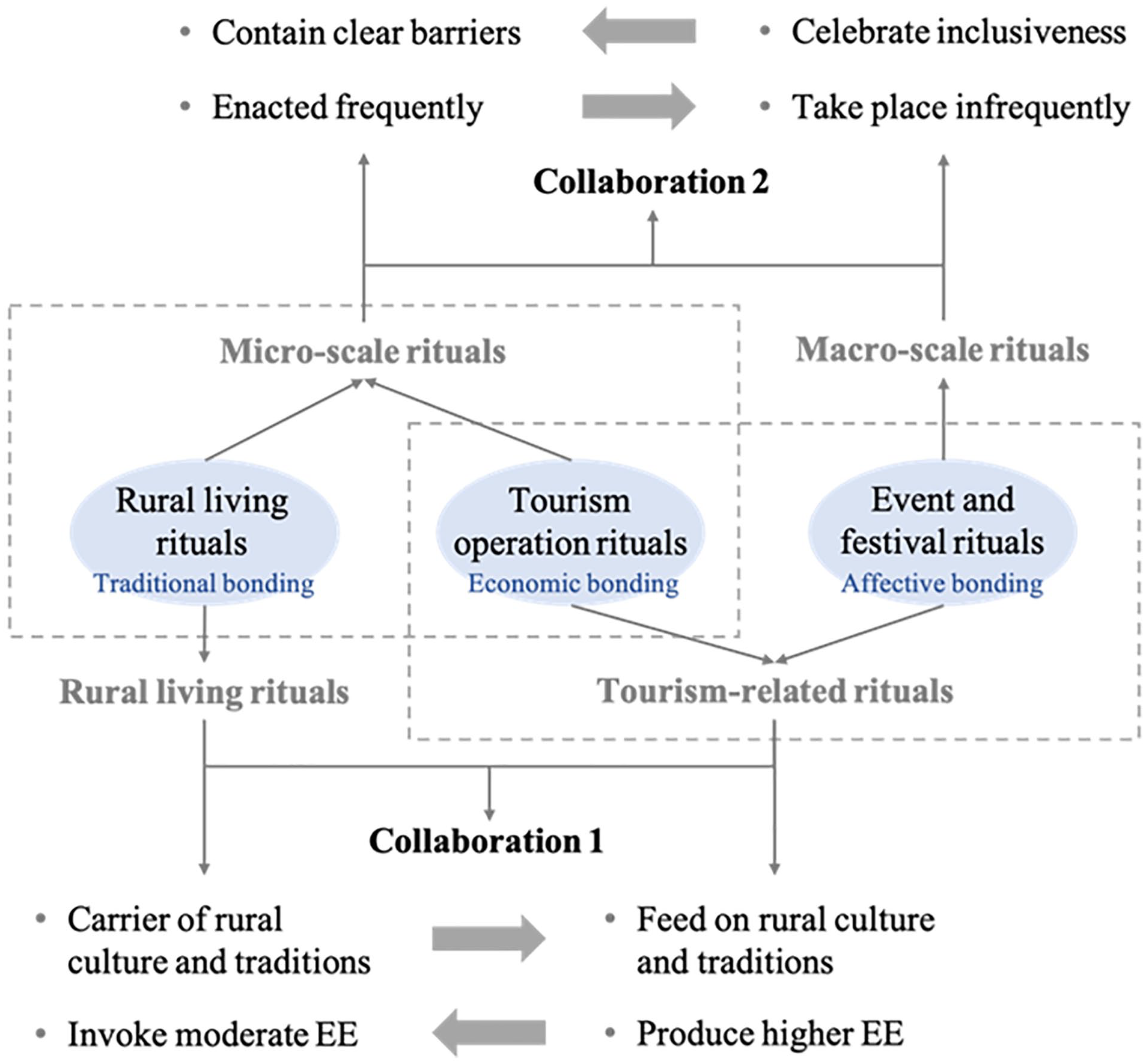
Two means of collaboration among rituals.
Theoretical Contributions
This study makes the following theoretical contributions. First, the study delineates the process of social change in a rural tourism destination. It recognizes the phenomenon of urban-rural mobility that accompanies tourism development and facilitates the changing of population, livelihoods, interactions, and relationships. Further, it places return migrants in relation to the whole community, integrating different social actors into the analysis and constantly comparing their roles and actions in everyday interactions. Such an effort coincides with recent process-based theories treating social transitions as emergent processes that involve the interplay of multiple actors (Shove, Pantzar, and Watson 2012).
Second, Collins (2004) interaction ritual theory is employed to facilitate the understanding of tourism impacts on residents’ interactions and relationships. The ritual ingredients proposed by Collins inform a fine-grained analysis of how everyday interactions unfold and how different actors behave in these interactions. The ritual outcomes in Collins’ framework operationalize the social relationship concept in a comprehensive manner. This helps us to be aware of the symbolic meanings, emotional intensity, social inclusiveness, and normative power of certain relationships. By comparing rituals with different ingredients and outcomes, this study draws attention to the different roles played by rural living activities, ongoing “everyday” tourism, and special events in the formation of social relationships.
Third, this study extends interaction ritual theory by integrating micro- and macro- level analyses. Collins (2004) framework prioritizes micro-situations where individuals encounter each other at a moment in time. This study suggests that, in addition to situational variations, momentary encounters are influenced by macro-level, socio-cultural factors that are easily omitted with micro-level perspectives. By demonstrating how rural cultural principles (relationship orientation) are embodied as latent foci and shape ritual outcomes (morality) in residents’ daily life, this study offers an example of tracking macro-level factors in a micro-oriented framework. This is of particular importance when investigating ordinary, routine, social interactions that are deeply shaped by tacit cultural rules.
Practical Implications
Practical implications of this study are threefold. First, findings suggest that social impacts in rural areas happen in an emergent and interactive process that involves multiple social actors. Policymakers and local governments who want to monitor local tourism development need to comprehend the micro-interaction mechanisms in rural areas. It is beneficial to recognize different social actors in advance and to consider how tourism influences their daily life. Since all the social outcomes identified in this study can be attributed to resident interactions, governments can intervene effectively in the specific interaction episode that is of concern when problems occur. For residents who suffer from the impacts of COVID-19, it is advisable to seek support from everyday interactions in the village and utilize the positive social outcomes to combat the hard times. Considering that people tend to seek support from their intimate social groups during a crisis period (Luu 2022), the community-level intimacy in face-to-face societies such as Zhinan village has the potential to empower the vulnerable human-beings if proper interactions are encouraged.
Second, the study recognizes the role of return migrants in the transformation of rural social relationships and emphasizes the social integration process that these migrants need to go through. This finding is useful since Chinese central government has been promoting return migration to facilitate rural revitalization in recent years. We suggest governments at all levels should think about ways to help return migrants better fit into the rural community. For example, municipalities and destination managers are advised to arrange seminars or workshops that encourage conversations among newcomers and old-timers. For return migrants, they should be aware of both opportunities and challenges when evaluating their return decisions. Only when they succeed in re-connecting with the whole community can they exert their own talents and influence.
Third, the study reveals that community-based festivals and events can help address feelings of disconnection and revitalize rural culture and traditions, which is conducive to sustainable rural tourism development. For local governments, they can establish and implement policies that empower local residents and facilitate collective actions in the village. For example, they can provide financial and intellectual support to those who want to better engage in festivals, events, or cultural performances. For individual residents, they need to realize their potential in participating in community-level affairs to improve their well-being and to perpetuate their culture.
Limitations and Future Research
This study has limitations that provide opportunities for future research. First, the current study concentrates on interactions among residents when analyzing tourism impacts on rural social relationships. In addition to return migrants, tourism also brings external stakeholders such as tourists, marketing agents, and government officials. The temporary and constant arrival of them exerts influence on the rural social landscapes. For example, sincere appreciation from tourists and frequent visits by local government officials enhance villagers’ pride and identity. Thus, future studies can include these external actors into analyses and explore how they enter into residents’ daily interactions and the extent to which they influence rural social relationships.
Second, this study focuses on village-level social outcomes that are brought about by tourism. Considering that family is the key building block of any society, future studies can investigate how tourism development and urban-rural migration generate family-level outcomes, such as family cohesion, family well-being, and family functioning. Researchers can also explore whether and how these outcomes vary across families of different life cycles. These topics are important since most small tourism businesses are family-owned, the performance of which largely depends on the relationship and functioning of family units.
Supplemental Material
sj-docx-1-jtr-10.1177_00472875221130495 – Supplemental material for Interaction Rituals and Social Relationships in a Rural Tourism Destination
Supplemental material, sj-docx-1-jtr-10.1177_00472875221130495 for Interaction Rituals and Social Relationships in a Rural Tourism Destination by Mao-Ying Wu, Yixuan Tong, Qiucheng Li, Geoffrey Wall and Xinfang Wu in Journal of Travel Research
Footnotes
Acknowledgements
The authors would like to thank Ms. Meiqi Zhang and Ms. Yi Wang, from the School of Management at Zhejiang University, for giving assistance in the field work. Thanks also go to the editors and reviewers for their constructive comments on the manuscript.
Declaration of Conflicting Interests
The author(s) declared no potential conflicts of interest with respect to the research, authorship, and/or publication of this article.
Funding
The author(s) disclosed receipt of the following financial support for the research, authorship, and/or publication of this article: This work is supported by the Cultural Project of Zhejiang Province (No. 21WH70080ZD).

Supplemental Material
Supplemental material for this article is available online.
Author Biographies
References
Supplementary Material
Please find the following supplemental material available below.
For Open Access articles published under a Creative Commons License, all supplemental material carries the same license as the article it is associated with.
For non-Open Access articles published, all supplemental material carries a non-exclusive license, and permission requests for re-use of supplemental material or any part of supplemental material shall be sent directly to the copyright owner as specified in the copyright notice associated with the article.
