







Abstract
Since the COVID-19 crisis has accelerated digital transformation around the world, one notable trend in the tourism industry is the emergence of long-stay tourism, such as workcation which combines working and vacationing. Although workcation travel displays unique experiential characteristics compared with traditional travel experiences, conceptual and empirical knowledge on the nature and dimensional structure of such experiences is lacking. To fill this gap, this research conceptualizes workcation travel experiences and develops a multi-dimensional scale to measure the degree of such experiences. Based on the analysis of qualitative interviews, four workcation travel experience dimensions are identified: relaxing, improvised, autonomous, and localized experiences. Building on this, two online surveys with workcation travelers were conducted to develop a multi-dimensional scale of workcation travel experiences. Lastly, the nomological network of the developed scale with workcation satisfaction and revisit intentions was investigated. Theoretical and practical implications are provided.
Keywords
Introduction
Digital transformation has driven the tourism industry to completely change the nature of travel experiences (Navío-Marco et al., 2018). Although a business framework for digital transformation has been proposed in a variety of ways (Ebert & Duarte, 2018; Matt et al., 2015; Westerman et al., 2014), most notably, it has innovated business operations which has led to a new ecosystem for products or services where existing operations and systems are substantially upgraded or changed (Gong & Ribiere, 2021; Mergel et al., 2019). In the tourism context, while the spatial division of the traditional tourism experience has been clear (Cohen, 2019), the boundary between the workspace and the tourism space can be blurred as the sense of place is lost due to digital transformation (Reichenberger, 2018; Törnberg, 2022). Consequently, a new type of travel, such as workcation (also called as “workation”), indicating an extended stay at destinations where travelers can fulfill their employment obligations and take a break from their regular working routine for travel and leisure activities, is emerging in this context.
The emergence of workcation was further accelerated due to the COVID-19 global health crisis. More specifically, COVID-19 spawned digital nomads, which refers to non-face-to-face remote workers in a digital environment (Hermann & Paris, 2020). The global remote work rate increased from about 15% before COVID-19 to about 70% in 2021 (Ozimek, 2022). Many global companies, such as Google, Twitter, Facebook, Netflix, and Hyre, are creating environments where their employees can travel freely while doing their assigned work by giving them flexibility in the selection of workplace (Birch, 2022; Kaya, 2021). In addition, most hospitality companies, such as Airbnb (“Live Anywhere on Airbnb” program), Marriott International (“Work Anywhere with Marriott Bonvoy”), and Hilton (“WorkSpaces by Hilton”) have also offered workcation travel packages to provide a range of benefits for remote workers. Several countries, such as India, UAE, Estonia, Barbados, and Costa Rica, have recently introduced remote visa programs for visitors to allow for a long-term stay for both vacation and work (Nezasa, 2021). A large number of global travelers (about 37% of global survey respondents) now consider booking a trip for workcation purposes (Booking.com, 2021). Although the increased demand for workcation during the pandemic will likely decrease in the post-pandemic age and a number of factors will influence the popularity and sustainability of workcation in the future (P. Kim et al., 2022), workcation is expected to continue to be a travel trend based on the on-going development of digital technologies and the growing adoption of remote working environments by businesses.
Along with the popularity of workcation, tourist needs are rapidly changing from visiting tourism to staying tourism. Nowadays, tourists prefer to stay in tourist destinations for a longer time to experience local life at a destination and immerse themselves in the local environment rather than just sightseeing (Ono, 2010; Xu & Wu, 2016). Consequently, the nature of the workcation travel experience may also appear different. For example, workcation travelers may have a more flexible travel schedule as they stay in a destination for an extended period. In addition, they may have more opportunities to experience local culture based on active interactions with local residents. Given that workcation is the latest trend in the travel industry, conceptual and empirical characteristics of the workcation travel experience is not fully understood yet. Thus, this study is designed to fill this gap by focusing on analyzing workcation travel experiences.
Understanding travel experiences has been a major concern of tourism research in the past decades. One efficient way to investigate travel experiences is to conceptualize the experience dimension and develop an empirical scale to systematically measure the experience. A body of tourism studies conceptualized various types of travel experiences and developed scales, such as memorable travel experiences (H. Kim & Chen, 2019; J. H. Kim et al., 2012), destination brand experiences (Barnes et al., 2014), emotional travel experiences (Hosany et al., 2015), and transformative travel experiences (Soulard et al., 2021). In addition, some research has focused on analyzing business travel experiences by using experience measures (e.g., Chen et al., 2018; Etherington & Var, 1984). However, such scales developed for visiting travel experiences are not adequate to understand the nature of the staying travel experience of workcation where travelers need to balance work responsibilities with vacation activities and manage their time effectively. These unique aspects of workcation travels may not be fully captured by traditional travel experience scales. By developing a dedicated scale for the workcation travel experience, it is possible to assess the impact of workcation travel on individuals, travel organizations, and destinations. Therefore, further research needs to focus on the conceptualization and empirical scale development of the workcation travel experience.
The purpose of this study is to conceptualize the workcation travel experience and develop a multi-dimensional scale to measure the levels of such travel experiences. In addition, this study will investigate the nomological network of the workcation travel experience by analyzing its consequences. To achieve this purpose, this research consists of two studies. In the first study, the attributes of a workcation travel experience are derived through the analysis of qualitative interviews with workcation travelers. After the conceptualization of the workcation travel experience in the first study, the second study is focused on developing a multi-dimensional quantitative scale of workcation travel experiences. In this stage, the process of workcation travel is further investigated to confirm its nomological network. This research will contribute to understanding the important new travel trend in the age of digital transformation and COVID-19 by providing conceptual knowledge and an empirical measurement tool of workcation travel experiences.
Literature Review
Emergence of Workcation
Digital transformation is leading innovation in the tourism industry. Importantly, automation and non-face-to-face travel services resulting from digital transformation are changing not only how travel products are marketed, but also how we travel (Durmaz & Efendioglu, 2016; Pacheco Pumaleque et al., 2021; Reichstein & Härting, 2018). For example, travelers can use a mobile app that provides them with forecasts for ticket price changes (Perelygina et al., 2022). In addition, tourists themselves choose and decide on tourism products through online travel information updated in real time (Sharma et al., 2020). Along with a growing demand for business interactions and communications, one important travel trend that has emerged through digital transformation is workcation, where travelers can work and travel at a destination using digital tools for a relatively long time. The operational definition of workcation is a period of time where an individual takes time off from their regular work schedule to work remotely while staying in a different location where they also engage in travel and leisure activities.
Before the emergence of workcation, business travel, which refers to travel that is undertaken by an individual or group of individuals on behalf of a company or organization for business purposes, has increased considerably over the past few decades (Dimitrova et al., 2020; Gustafson, 2012). Historically, a body of tourism research has focused on business travel, such as decision-making of business travelers (Chu & Choi, 2000; Kashyap & Bojanic, 2000; Yavas & Babakus, 2005), psychological or physical impacts of business travel on travelers (e.g., stress, well-being, physical health) (Becken & Hughey, 2022; Burkholder et al., 2010; Dimitrova et al., 2020; Ye & Xu, 2020), travel management (Gustafson, 2012), business traveler segmentation (Millán et al., 2016), and business travel experiences (Unger et al., 2016). In addition, a body of research analyzed the behavioral and experiential differences between leisure travelers and business travelers (e.g., Chu & Choi, 2000; Kashyap & Bojanic, 2000; Liu et al., 2015).
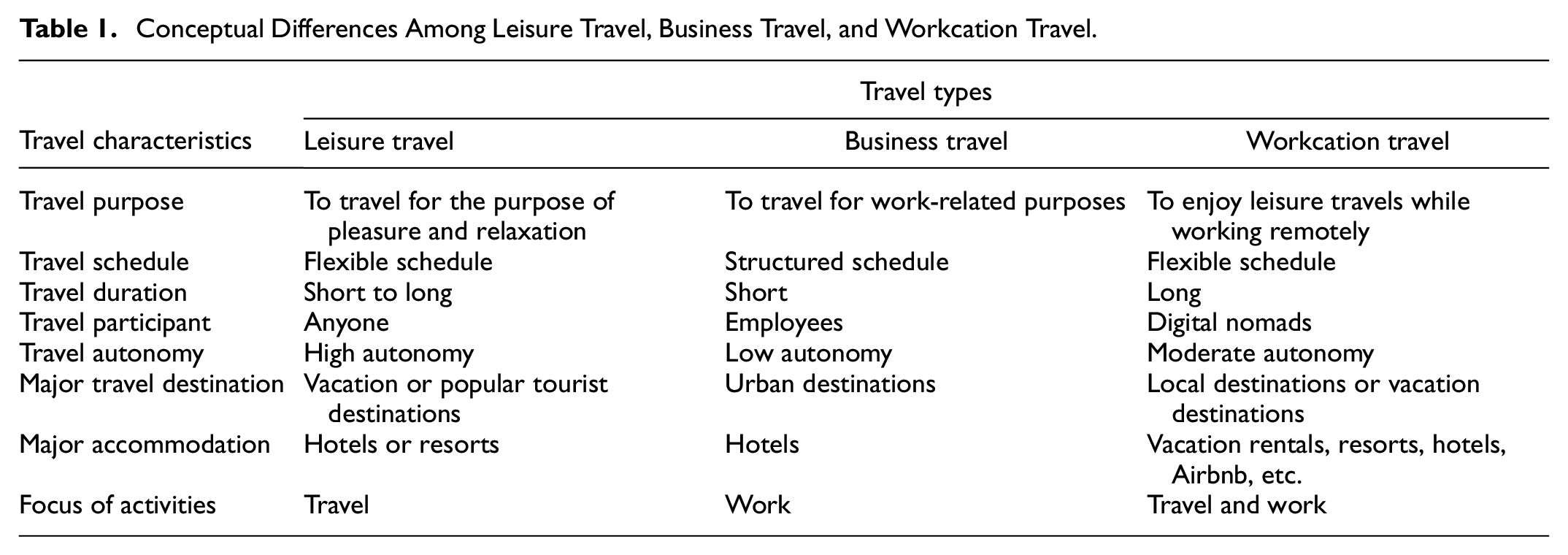
In understanding workcation travel, it is important to analyze the conceptual differences between workcation travel and other types of travel, such as leisure and business travel. In terms of travel purpose, leisure travel is purposed to have pleasurable and relaxing experiences while business travels are to achieve work-related purposes (Gustafson, 2012; Leiper et al., 2008). Workcation travelers can perform business and engage in leisure activities including travel while staying at a destination for a relatively long time (Matsushita, 2021; Thompson, 2019). Recently, leisure experiences and recreational activities have emerged as an important component of business travel, which is called “bleisure” (Unger & Uriely, 2022). Workcation travelers also have a flexible travel schedule since they stay in a destination for a long time whereas business travelers have a structured schedule as they need to accomplish work-related tasks during their short business trips (Unger et al., 2016). While major accommodation for leisure and business travelers are hotels or commercial accommodation properties, workcation travelers prefer to stay in vacation rental properties, resorts, Airbnbs, or some other accommodations where they can stay for a relatively long time (Elliott, 2021).
One more unique feature of workcation travel is that it is performed by digital nomads. The digital nomad represents workers, including those who work in tourist destinations, using digital tools (Aroles et al., 2022; Nash et al., 2021). The boundary between travel and work is becoming unclear for digital nomads who can work and travel while staying at a destination (Ono, 2010). Given its digital accessibility and flexible schedule, workcation travelers have considerable freedom to organize their work and travel have a relatively higher degree of autonomy compared with that of business travelers. Table 1 shows the conceptual differences between the three types of travel.
Conceptual Differences Among Leisure Travel, Business Travel, and Workcation Travel.
Workcation travels can also be compared with travels by expatriates. Expatriate travels, defined as the temporary or permanent residence of individuals in a foreign country, have been a subject of significant interest in academic literature. These travels provide expatriates with unique opportunities for personal and professional growth, cultural exploration, and cross-cultural learning (Chao et al., 2019; Scott & Ryan, 2017). Expatriate travels and workcation travels have some differences. First, expatriate travels involve longer-term relocations (>6 months) driven by employment or career opportunities (Chao et al., 2019; Lim et al., 2012), while workcation travels are characterized by relatively shorter durations and a combination of work and leisure activities. In addition, expatriate travels often entail a deeper level of cultural immersion as individuals relocate to foreign countries (Kempen et al., 2015), whereas workcation travels may not necessitate the same extent of integration, especially when workcation travelers choose destinations within the same country but in different regions. These distinctions highlight variations in duration, employment arrangements, and cultural immersion between expatriate travels and workcation travels.
Several benefits are expected from workcation. First, workcation creates a new local tourism demand and contributes to the revitalization of the tourism industry stagnated by COVID-19. For companies, workcation is known to contribute to the improvement of employee productivity and quality of life (Yagasaki, 2021). In addition, workcation is also evaluated to be a sustainable tourism product that can minimize various environmental and social side effects caused by temporary tourism (Pecsek, 2018). Acknowledging such benefits, a large number of global companies around the world are encouraging their employees to work remotely. For example, PwC (PricewaterhouseCoopers) encouraged their employees to have workcation and remote work for up to 8 weeks to improve productivity, employee well-being, and reduce overhead spending (Birch, 2022). In addition, Netflix created the cloud-based Netflix Workstation System where their employees can flexibly access work during workcation (Brenner, 2021). Lastly, a growing number of countries and cities are attracting workcation travelers by providing workcation places and digital support (Nezasa, 2021; Ozimek, 2022).
As such industrial trends indicate, workcation is likely to be one of the leading travel trends in the future. However, except for a few recent studies, academic research on workcation is still limited. For example, Yoshida (2021) analyzed that workcation enables travelers to enhance creativity, have effective learning, and build a closer relationship with local communities. Pecsek (2018) formulated a tourism-focused workcation concept and proposed six types of workcation travelers. While such studies analyzed the influence of workcation experiences on travelers, a clear definition of workcation travel experiences and associated empirical knowledge are not adequately developed.
Workcation Travel Experience
Experience refers to an individual response to a stimulus between a customer and a product, a company, or a part of an organization (Gentile et al., 2007). In the tourism context, travel experience refers to an attractive and memorable, subjective mental state that is formed according to an individual’s perception, behavior, and method of coping with the environment during tourism activities (Ellis & Rossman, 2008; Otto & Ritchie, 1996; Prebensen & Foss, 2011). Traditionally, experience is divided into two categories: individual and shared experiences (Schmitt, 1999). While individual experiences consist of sensations (e.g., esthetics and sensory characteristics), feelings (e.g., moods and emotions), and thoughts (e.g., analysis, imagination) (J. H. Kim, 2010), shared experiences consist of actions (e.g., motor and behavioral experiences) and relationships (e.g., social experiences) (Schmitt, 1999). More recently, travel experience is divided into emotional, cognitive, sensorial, and conative experiences in pre-visit, onsite, and post-visit stage (Godovykh & Tasci, 2020).
Travel experience has been a major concern of tourism studies in the past decades. Most previous studies conceptually analyzed different travel experiences and their impacts on destinations (e.g., travel demand, destination evaluation) and travelers (e.g., satisfaction, revisit intention) (R. C. Y. Chang et al., 2011; Heung & Leong, 2006; Saayman et al., 2018). Given that traditional tourism experiences are insufficient to fully understand the emergence of new travels (Sfandla & Björk, 2013), new conceptualization and empirical tools are necessary to understand workcation travel experiences. Workcation travel is different from traditional short-term travel in terms of traveler identity, level of interaction, and travel planning (Walia et al., 2021; Yoshida, 2021). During workcation, the identity of travelers may become unclear since travelers can both travel and experience life as local residents at the same time (Ono, 2010). In addition, it is possible for workcation travelers to build a closer relationship with the local community, which is difficult to accomplish with existing short-term travel activities. Lastly, workcation travelers may become more independent in travel design and planning as they may have enough time to do so. In order to develop the above discussions and expand the existing research on tourism experiences, this study aims to conceptualize workcation travel experiences and develop a multi-dimensional scale to systematically measure the diverse elements of the workcation travel experience promoted by digital transformation and COVID-19.
Hypotheses Development for Nomological Network Testing
Historically, tourism activity and experience satisfaction were the main concerns of tourism research (Agyeiwaah et al., 2019; Sangpikul, 2018). Through the tourism experience, tourists can engage in other cultural experiences, acquire knowledge, experience local daily life, and interact with local people, which can positively affect their vacation or travel satisfaction (Richards, 2015). The emotional and behavioral impacts of travel experience can be explained through cognitive appraisal theory, which refers to the psychological way individuals think about a situation or event that influences emotional and behavioral responses to it. The theory demonstrates the impact of travelers’ thoughts and evaluations of travel experiences on emotions and behaviors during travels (H. Choi & Choi, 2019; Lazarus & Folkman, 1984). Given that travel activities that can be performed during the workcation period are an important part of the overall workcation experience (Rainoldi et al., 2022), positive travel experiences during the workcation can improve the overall satisfaction of workcation experiences. In addition, flow theory also explains why workcation travel experiences lead to workcation satisfaction. Flow is a psychological state of total immersion in an activity, where individuals feel completely absorbed and in control (Csikszentmihalyi, 1990). Unlike other experiences, the hedonic nature of travel can allow travelers to enjoy their experiences, which can lead to a state of flow (Scott & Ryan, 2017). Given the pleasurable nature of travel, individuals are likely to experience a state of flow during their journeys. This phenomenon holds true for workcation travel as well, where travel experiences can significantly contribute to enhancing the overall satisfaction of the workcation experience. Therefore, this study proposes to test the relationship between the workcation travel experience and workcation satisfaction.
This study also analyzes the relationship between the workcation travel experience and revisit intention for workcation. According to the cognitive dissonance theory (Festinger, 1962; Harmon-Jones & Harmon-Jones, 2007), individuals strive for consistency and seek to reduce cognitive dissonance, which is the discomfort caused by holding conflicting beliefs or attitudes. In this regard, when people have a positive travel experience, they tend to develop a favorable attitude toward the destination they visited. To reduce the discomfort caused by conflicting beliefs or attitudes, individuals are more likely to express an intention to revisit the destination. In addition, expectancy-value theory (Wigfield, 1994) also suggests that people’s behavior is influenced by their expectations of achieving desired outcomes and the value they place on those outcomes. When individuals have a meaningful travel experience, they are likely to develop positive expectations and place value on revisiting the destination. Consequently, they anticipate similar positive experiences and the fulfillment of their travel goals, which increases their intention to revisit the place. Previous studies have demonstrated that the tourism experience has a significant effect on revisit intention (Mahdzar et al., 2015; Tan, 2017; Zhang et al., 2018). Thus, it is assumed that the tourism experience during the workcation period can also contribute to increasing the visitors’ will to visit the area again for workcation in the future. The following hypothesis is proposed.
Study 1
In the first study, the conceptual nature of the workcation travel experience and its dimensional structure are investigated through qualitative data analysis. Given that qualitative approaches combined with quantitative measurement development can further advance and strengthen the validity of the scale, we followed a scale development approach of qualitative explorations and quantitative validation through measurement development (e.g., Shin & Perdue, 2022a, 2022b; Soulard et al., 2021).
Samples and Data Analysis
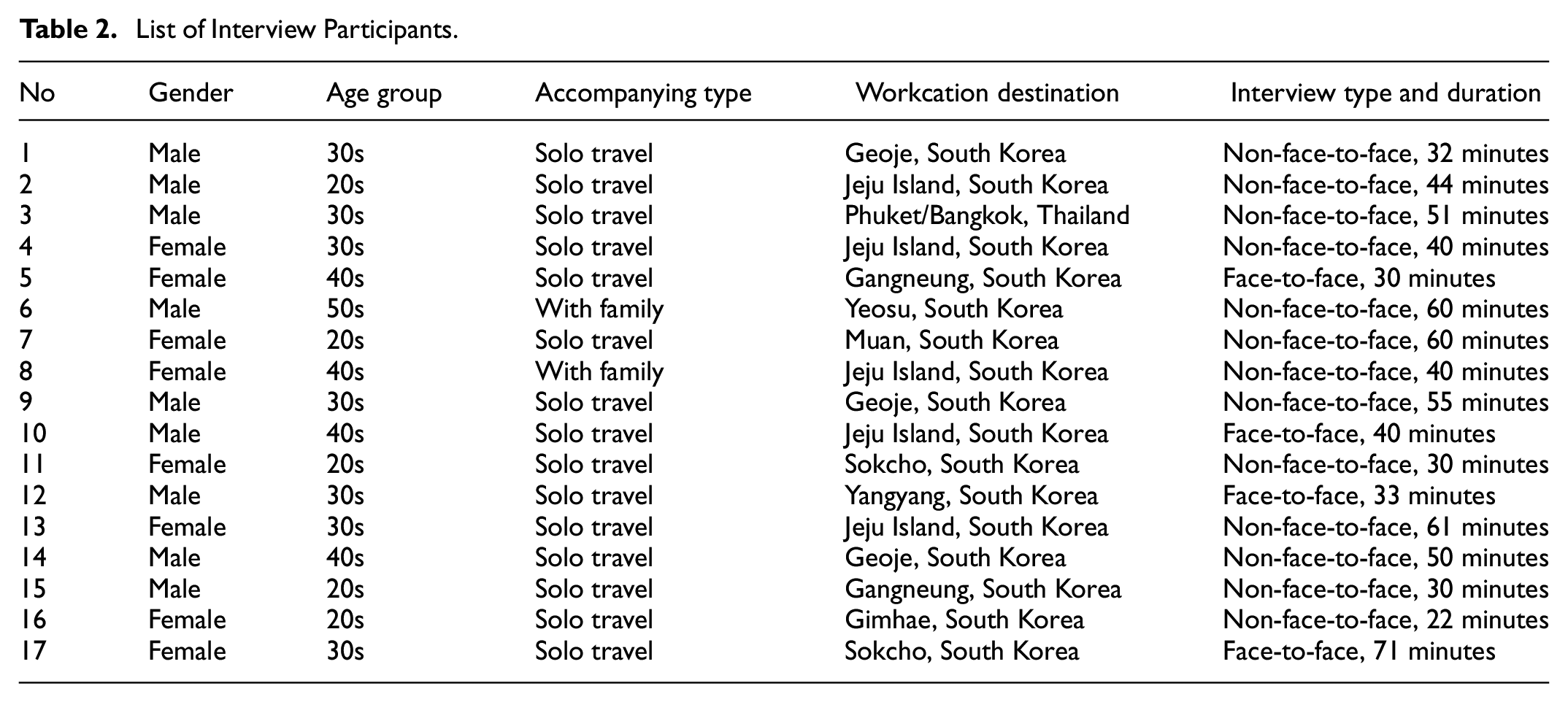
Qualitative interviews were conducted to conceptualize the workcation travel experience. We identified potential interview candidates by searching for individuals who had recently posted reviews on social media platforms such as Instagram regarding their workcation experiences in South Korea. Our search was restricted to reviews posted within the past 2 months from the time of the data collection and only included those that explicitly used the term “workcation” to describe their experience. South Korea was selected as the study context due to the high adoption rate of workcation throughout industries (Seo, 2022). Subsequently, we identified a pool of travelers who had recent workcation experience(s). In order to ensure that the chosen participants were representative of the population being studied, we inquired about their workcation experiences to verify that they accurately reflected the nature of workcations. The intention to accept the interview was confirmed through a personal message and a total of 17 interviewees who stayed in the destination for workcation from 2 weeks to 2 months were recruited (see Table 2). Given that qualitative studies require at least a sample size of 12 to reach content saturation (Vasileiou et al., 2018), a sample of 17 was determined to be adequate for data analysis. Interviews were conducted face-to-face or non-face-to-face format (by phone or video conference call) by one of the authors of this research from June 14 to July 1, 2022. Interviews ranged from 22 to 71 min. While new data or information on workcation travel experiences was no longer being generated from Participant #14, we additionally interviewed three more participants to further explore new information. The data were recorded through transcription on the interview day to preserve a sense of presence (e.g., emotions, feelings). All interviews were conducted through voluntary participation.
List of Interview Participants.
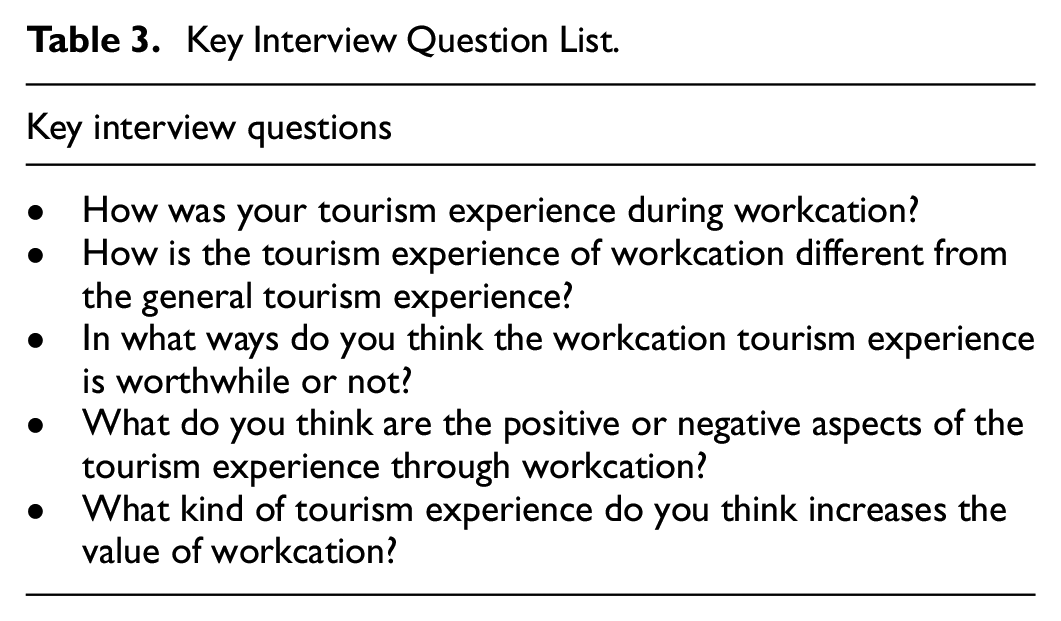
While a workcation experience consists of work and travel experiences, this study focuses on travel experiences to achieve the research purpose. The semi-structured qualitative interview questionnaire focused on the essence and value of the workcation tourism experience. That is, we developed initial interview questions to identify the difference between the existing tourism experience and the tourism experience through workcation and positive or negative aspects of the workcation travel experience to extract clear characteristics of the workcation travel experience. After an extensive review of the interview questions by the authors of this study, the questions were reviewed by three external experts with doctoral degrees in tourism management and who have published more than three qualitative research papers in top-tier SSCI tourism journals in the last 3 years. The expert review helped to secure the objectivity and clarity of the questions by reducing the ambiguity of the question (Nagel et al., 2015) (See Table 3).
Key Interview Question List.
Using the constant comparison method proposed by Glaser (1965), the qualitative interview data were reviewed and analyzed. First, the authors of this study repeatedly read the data and identified relevant themes. The initial data amount was 11,460 words. For thematic analysis, a three-step analysis method was performed (Corbin & Strauss, 1990; Williams & Moser, 2019). The initial step was to find common concepts with frequently mentioned words in the data. In this process, conceptualization was included as the same concept if the same or similar content was conveyed.
More specifically, researchers continued to take notes on the travel experience that reflects the unique characteristics of workcation travel. In this process, the initial concept was extracted from ideas mainly mentioned by interviewees. For example, the interview response “I can have a completely touristic experience without a guide” (Interviewee 15) was conceptualized as “independent travel.” Another example is that a response of “If I go to a general place that I just go to as a tourist, I feel like I am half a local” (Interviewee 4) was conceptualized as “localized travel.” As a second step, researchers assigned concepts to one or more of the categories or themes. In this stage, the process of linking different categories in consideration of the concept was carried out. Consequently, 32 sub-category concepts were created. The concepts were analyzed to identify similar themes between them and four super-categories of the workcation travel experience were created. In the third step, the validity of these categories was verified by repeatedly reading the collected data and analysis results. Coding was individually carried out by two coders and their results were compared. After that, Krippendorff’s alpha test was used to evaluate the agreement, which yielded a value of .79, exceeding the minimum threshold of .7. Lastly, researchers additionally looked for relationships between categories and discussed the findings of thematic analysis to ensure that the themes identified are robust and reliable by reducing the potential for individual bias or subjective interpretation.
Results
The analysis of qualitative interview data identified four dimensions of the workcation travel experience: relaxing travel experience, improvised travel experience, autonomous travel experience, and localized travel experience. Taking the first letter of each experience dimension, the RIAL model is developed as shown in Figure 1. A clear conceptual definition and the detailed description for each dimension follows.
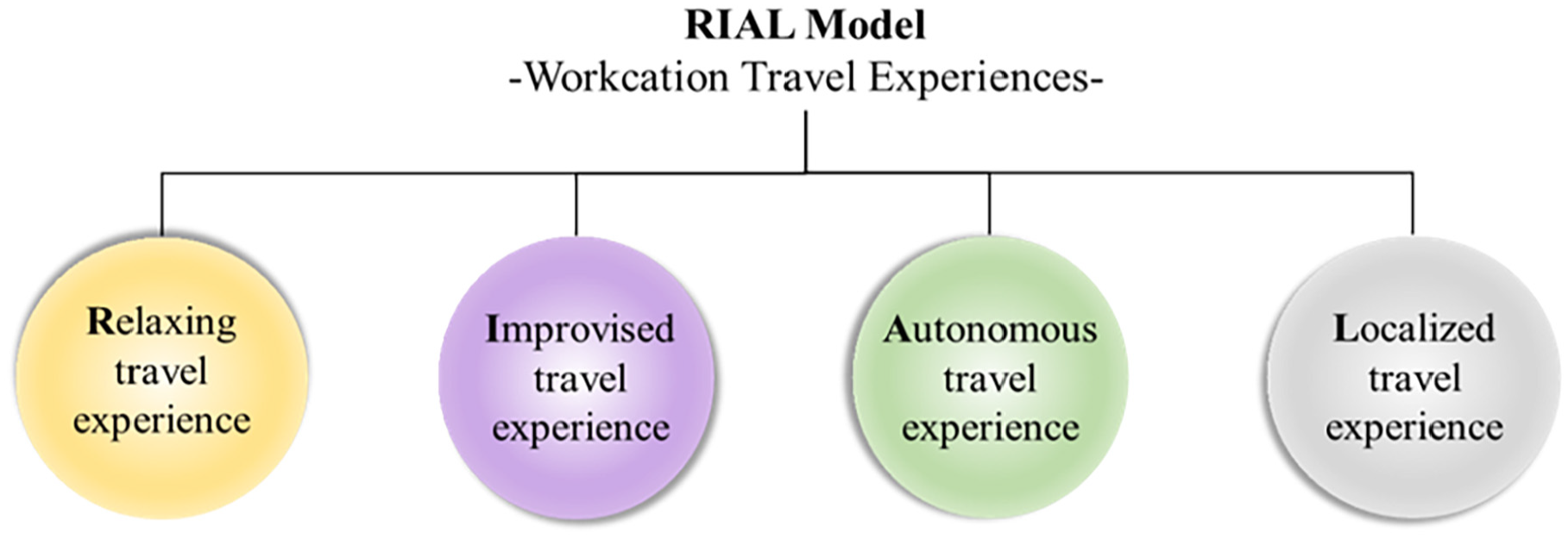
The model of workcation travel experience.
A relaxing travel experience indicates the experience of traveling without feeling physically or temporally constrained during the workcation period. The respondents stated that workcation enabled them to have relaxing travel experiences as they had much time to travel. This result shows the unique nature of workcation travel compared with general business travel which is associated with long working hours and tight travel schedules (Gustafson, 2006; Unger et al., 2016). Having a relaxing travel experience during workcation allows travelers to have more authentic and comfortable destination experiences as shown in the following accounts.
I think the big difference from existing travel is that the work trip is more relaxed. I have a lot of time, so I don’t have to rush to the places I need to go. It seems like a great value to be able to see tourist spots more leisurely and to visit many places around me (Interviewee 12).
I think I was able to look around slowly because I had a lot of time and was relaxed. I don’t have to leave right away if I’m a little bothered or tired, because I can go out tomorrow, so I think I was able to travel comfortably (Interviewee 8).
Improvised travel experience refers to the travel experience that allows travelers to spontaneously visit tourist spots without having to plan during the workcation period. Generally, travel requires extensive planning for acquiring both internal and external travel information, integrating the information, evaluating services based on the information, and making decisions (S. Choi et al., 2012). On the other hand, the following accounts reveal that workcation travelers visit destinations without careful planning and make improvised travel decisions.
When I go to a general destination, I plan everything. However, I could go without a plan during the workcation. I think it was a bit of a spontaneous trip (Interviewee 12).
Some respondents also pointed out positive aspects of improvised travels. They said they were able to visit new places that suit their needs by making spontaneous travel decisions. This aspect of experience demonstrates that workcation travelers can personalize their travels through flexible and prompt travel decision-making.
It feels good to be able to travel without a plan. You can discover new tourist attractions and travel places you want. In the past, I decided where I wanted to go and just went. During workcation, I could slowly look around and find a place that suits me (Interviewee 8).
Autonomous travel experience refers to the travel experience conducted with an autonomous and independent attitude during the workcation period. Respondents mentioned that they were able to take initiative in all decisions including travel during the workcation period. In particular, most solo travelers who stayed in a workcation place for a long time said they could become more independent in travel. Given that most individuals have self-determination to make their own choices and manage their own life (Deci & Ryan, 2010), this result indicates that workcation can allow travelers to have full control over their travel decisions.
I think I had the opportunity to fully plan travel while staying for a long time during the workcation period. And I had a lot of opportunities to think because I had many things to do alone (Interviewee 16).
They also said that having autonomous travel experiences without external interferences was more satisfying and enjoyable. This observation supports the view of self-determination theory in that individuals are likely to have higher levels of satisfaction and psychological well-being when they have the ability for self-determination in decision-making (Church et al., 2013).
I was able to fully enjoy the tourism experience the way I wanted to. I could take the initiative in planning and executing it on my own without external interference (Interviewee 15).
However, some respondents showed a negative view toward autonomous travel experiences in workcations. Since they had to work and travel at the same time, designing travels on their own exhausted them, especially when they had many work tasks to deal with. This shows that having autonomous travels during workcation can be a source of stress for some workcation travelers.
I had to work, but having to plan all the trips by myself was a bit difficult. I felt a bit stressed because I had to take care of everything myself, which I believe had a negative impact on my workcation experience.
Lastly, localized travel experience refers to the travel experience that focuses on visiting one local area with affection during the workcation period. The respondents stated that they were able to better understand the local culture around the workcation place since they stayed there for a relatively long time. In addition, they felt they integrated into the local population. While previous research proposed local travel experience as an important element of travel experience (J. H. Kim & Ritchie, 2014; J. H. Kim et al., 2012), this study showed that workcation can help travelers have highly localized travel experiences.
As I traveled around the area for a long time based at the accommodation, I got to better know the local area. I think I was able to understand the local culture better through the workcation trip than the previous trip. I felt that half of my identity was a local resident (Interviewee 4).
Some respondents emphasized the social value of localized travel experiences during the workcation. As workcation travelers, they were able to build a strong relationship with local people and make new friends. As travel can help travelers expand their social networks (Yang et al., 2023), long-term workcation travel can be an ideal format for building social connections with local residents.
The locals welcomed me warmly. So, I met a lot of really good people that I can keep in touch with even if I go back, and I think it’s good to be able to interact with the locals and be like friends (Interviewee 9).
Study 2
As Study 1 conceptualized the four dimensions of the workcation travel experience, Study 2 is purposed to quantitatively analyze the dimensional structure by developing a multi-dimensional scale of the workcation travel experience and analyzing its theoretical relationship with consequences.
Initial Item Development
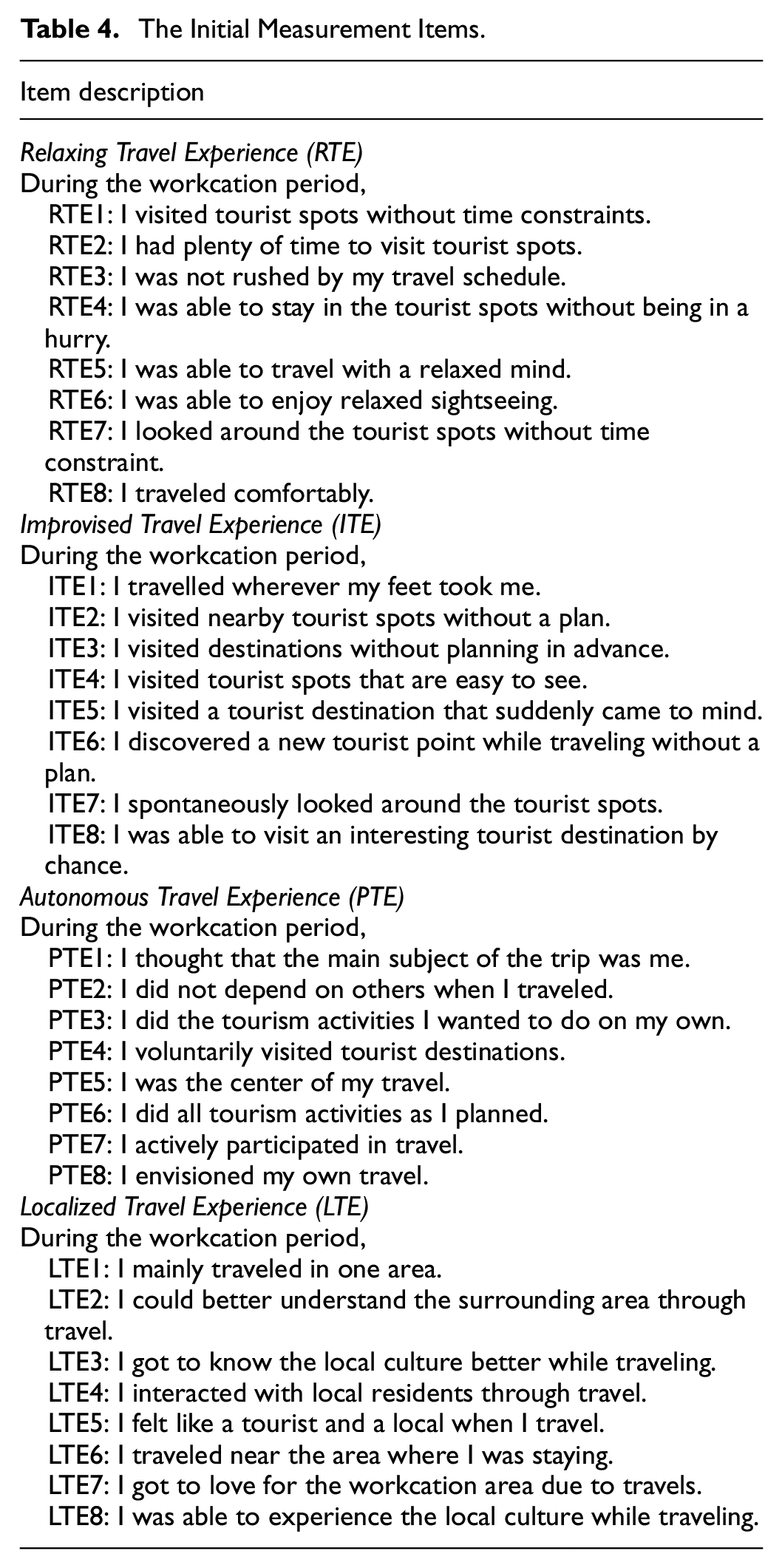
This study followed a widely accepted procedure for scale development (DeVellis & Thorpe, 2021; Worthington & Whittaker, 2006). In line with the process introduced by Crawford et al. (2022), authors of this research carefully reviewed the qualitative interview data for each experience dimension and developed an initial set of 32 items (8 items for each experience dimension).
Content Adequacy Assessment
In order to strengthen the content validity of measurement items, a content adequacy assessment was conducted (Hinkin et al., 1997; Shin & Perdue, 2022b). A total of 46 informed judges with expertise in tourism and other disciplines participated in the assessment. The judges include 12 researchers with Ph.D. degrees, 20 Ph.D. candidates, and 14 master’s students. While half of the judges were from the domain of tourism, the other half were from other disciplines, such as business, information systems, economics, and psychology, to enhance the general acceptance of the measurement items.
In the assessment, the judges read the definitions of the four experience dimensions and reviewed each item. After that, they provided their opinion about its association with the experience dimension. According to the standard-agreement index (Clemenz & Weaver, 2003), 24 items that received at least 80% of correct responses (at least 37 judges correctly associate the item with the experience dimension) remained without revision. The remaining eight items were revised based on the judges’ feedback and reassessed again with 30 judges. The revised items passed the second adequacy test. For some items, minor modifications of descriptions were made based on additional judges’ comments about clarity and expression. One of the authors of this study, who can both fluently write English and Korean, developed the initial items in both languages. After that, the translation of each item was reviewed and slightly edited by a professional proofreader who did not know the purpose of this study. The description of all initial items is shown in Table 4.
The Initial Measurement Items.
Questionnaire Development and Data Collection
Online surveys were collected in two parts. Following the format of a seven-point Likert scale, the first questionnaire consisted of the 32 initial items and was analyzed for the purpose of Exploratory Factor Analysis (EFA). To recruit participants for the survey, we utilized various online communities of business people. The authors of the study posted an advertisement on the community board inviting individuals to participate in the survey. We also directly messaged individuals who had used relevant hashtags (e.g., “workcation”) on social media (such as Instagram) to describe their workcation experiences in the past 6 months. Furthermore, we asked interview participants to share the survey code and recruitment message within their communities to help us secure additional participants. Adopting a similar approach, we tried to ensure that the survey participants were representative of the population being studied by using several screening questions (e.g., During your vacation, did you reside in a particular location while also traveling?) at the beginning of the surveys.
The initial survey was administered from August 5 to 13, 2022, and garnered a total of 234 responses. After excluding 20 careless responses, data analysis was conducted on 214 responses. Based on the analyzed results, the second survey was conducted with a revised questionnaire for the purpose of Confirmatory Factor Analysis (CFA). The second survey utilized the same recruitment method and was conducted from September 2 to 20, 2022, resulting in 455 respondents. To prevent overlap with the first survey, we used screening questions to ensure that participants who had already completed the initial survey did not participate in the second survey. After carefully scrutinizing the data from the second survey, we identified and eliminated 33 careless responses, resulting in a total of 422 valid responses for data analysis. A gift of $30 was awarded to 10 of the survey respondents by lottery.
Exploratory Factor Analysis
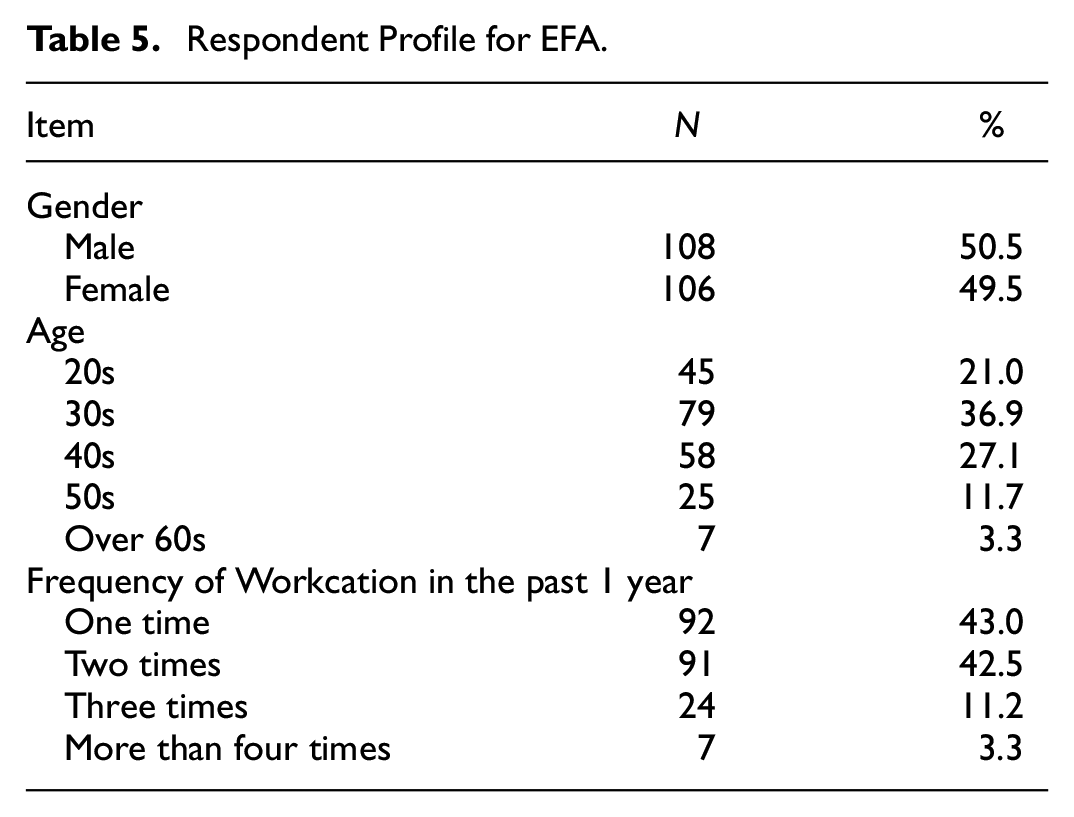
For exploratory factor analysis (EFA), data analysis of 214 responses was conducted. Of the respondents, 50.5% were male. In terms of age, the largest proportion were in their 30s (36.9%), followed by 40s (27.1%), and 20s (21.0%). The frequency of workcation in the past 1 year was one time (43.0%), followed by two times (42.5%) (see Table 5).
Respondent Profile for EFA.
In order to examine whether a common method bias was present, EFA was conducted using Harman’s single-factor analysis. The results indicated that the total variance accounted for by a single factor was 34.47%, which is below the 50% threshold. As a result, it can be concluded that the data was not influenced by the common method bias, according to S. J. Chang et al. (2010). The skewness and kurtosis values of all items were reviewed to test the normality assumption of the data. All items showed both values within the absolute value 1 except for the three items (PTE 7, LTE4, and LTE6). Since the values were slightly different from the cutoff, the data appeared to satisfy the normality assumption. In addition, Kaiser–Meyer–Olkin (KMO) measurement of sample adequacy and Bartlett’s sphericity test were performed to ensure the adequacy of the sample size (n = 214) and adequacy of the factor analysis. The KMO value was 0.873, and Bartlett’s sphericity test showed3,489.033 (p < .001). The results suggest that the dataset is appropriate to conduct the factory analysis (Tabachnick & Fidell, 2001).
Given that the developing scale consists of experience dimensions for workcation travel experience, the principal component extraction and Promax rotation were utilized to conduct EFA (Park et al., 2002). Four factors with eigenvalues greater than 1.0 were identified, accounting for 68.654% of the total variance. To purify items, first, items with cross loading were removed. Second, items with factor loadings lower than 0.6 were removed. Third, items with a commonality lower than 0.5 were removed. Fourth, items that negatively affect reliability (Cronbach’s alpha) were identified and removed. According to this criterion, nine items were deleted, and 23 items were composed. As a result of this process, four clear factors were found to explain 69.592% of the total variance. (See Table 6).
Exploratory Factor Loadings.
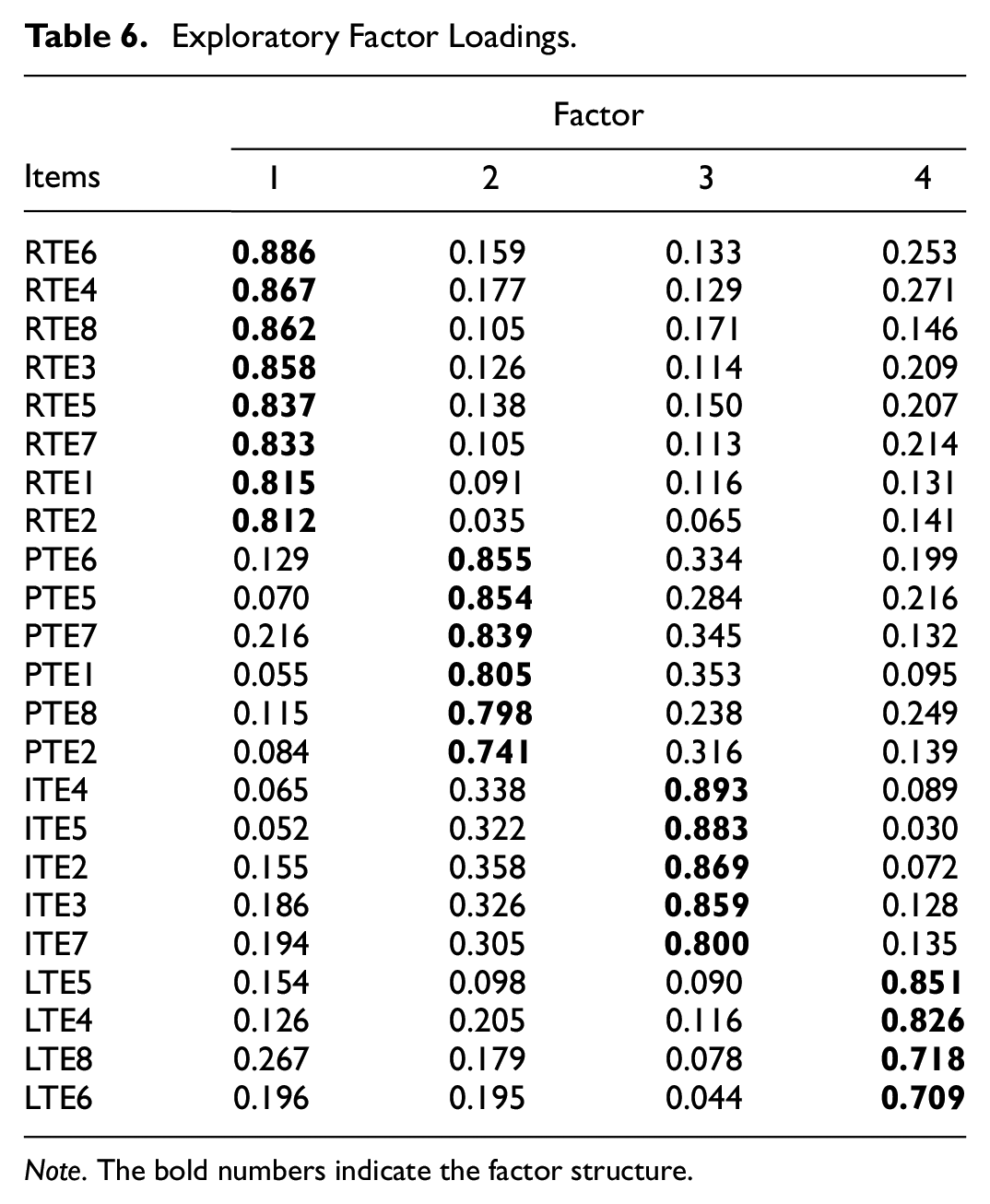
Note. The bold numbers indicate the factor structure.
Confirmatory Factor Analysis
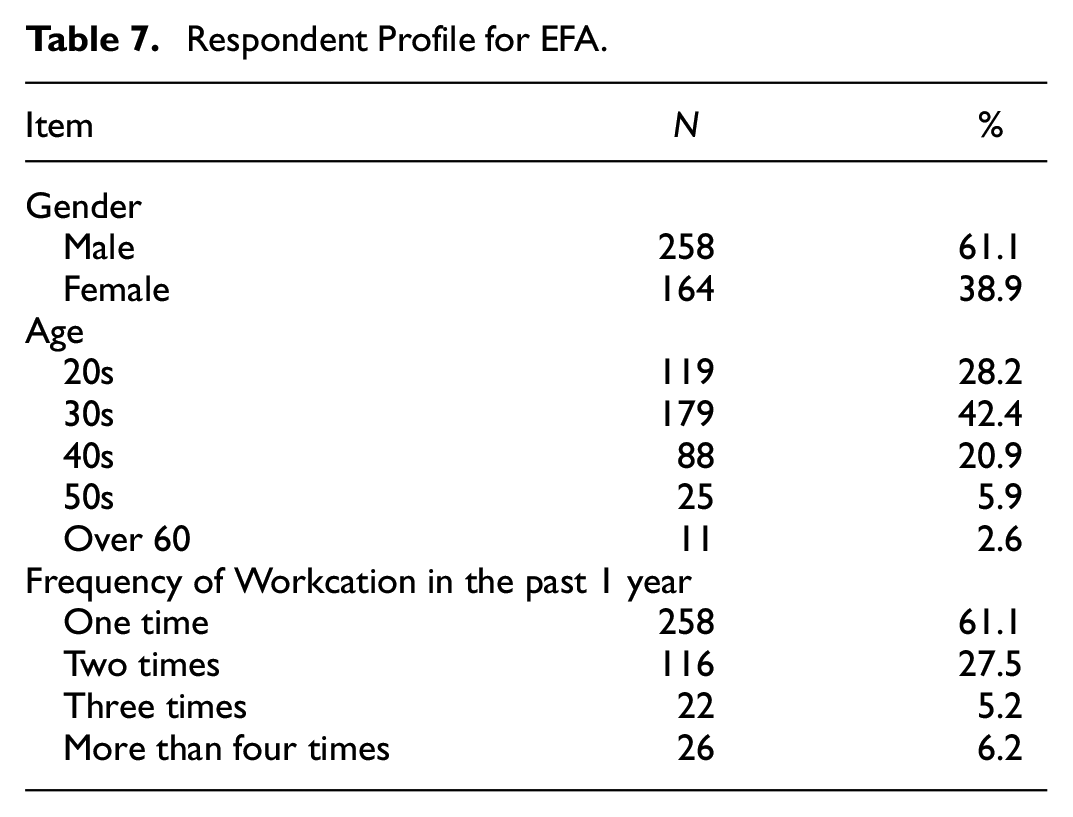
Building on the result of EFA, confirmation factor analysis (CFA) was conducted. For CFA, 422 responses were analyzed. Of the respondents, 61.1% were male. In terms of age, the largest proportion was in their 30s (42.4%), follow by 40s (20.9%), and 20s (28.2%). The frequency of workcation in the past 1 year was one time (61.1%), followed by two times (27.5%) (see Table 7).
Respondent Profile for EFA.
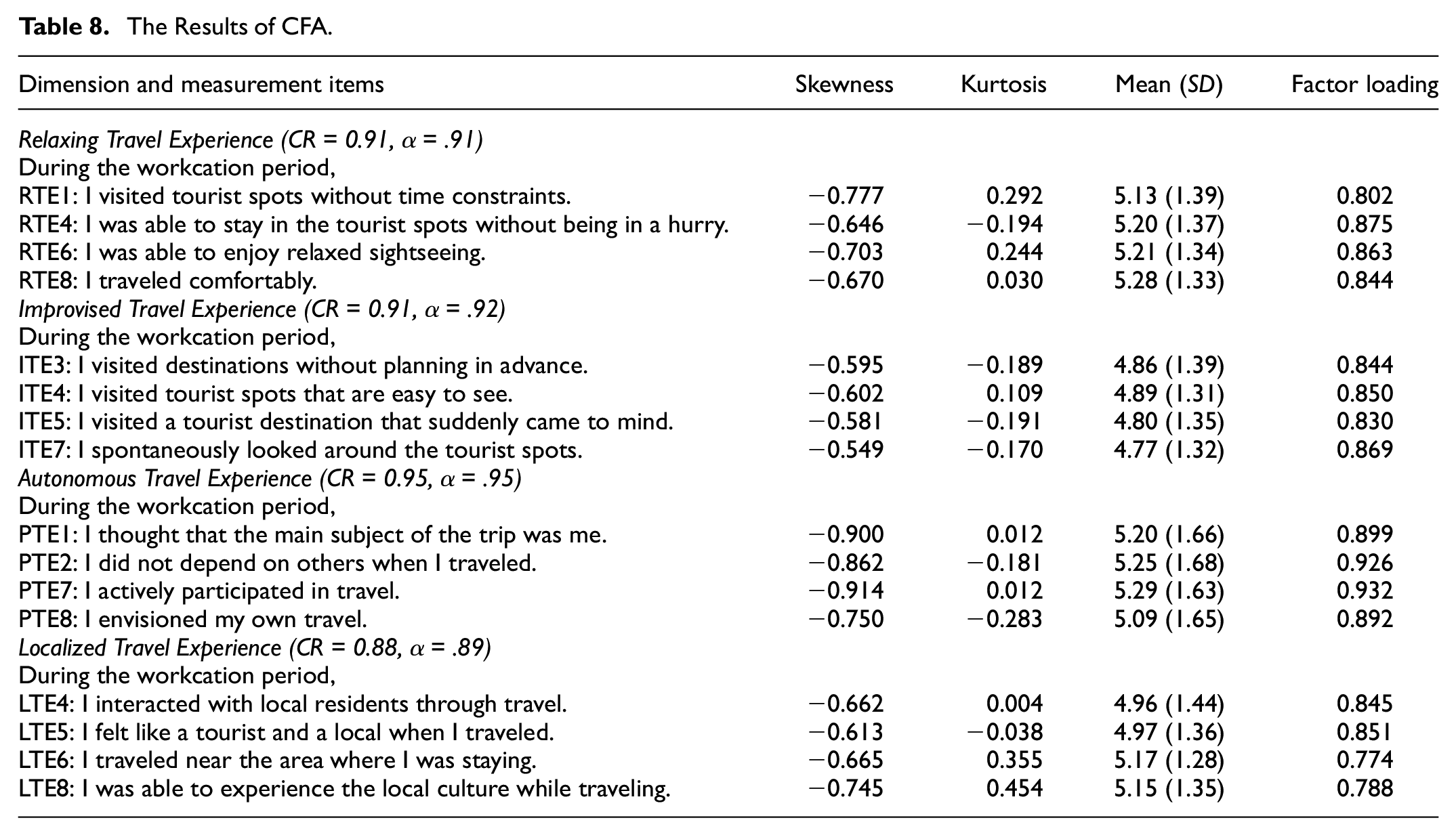
The data met the normality assumption since all items’ skewness and kurtosis values were within the cutoff value: ranging from −0.82 to 0.97 (Hair, 2009). The results of CFA showed the model fit result, and some indices were below the cutoff values: χ2 = 991.245, p < .001, Tucker Lewis Index (TLI) = 0.862, Comparative Fit Index (CFI) = 0.877, Goodness of Fit Index (GFI) = 0.816, Root Mean Square Error of Approximation (RMSEA) = 0.09 (Hooper et al., 2008). To improve the model fit, some items were deleted based on theoretical and statistical considerations. First, items with high residual covariance were removed since they can be the major source of low model fit (Anderson & Gerbing, 1988). Second, some items that showed similar text were removed to strengthen the content validity of each item (Shin & Perdue, 2022a, 2022b). This procedure resulted in the deletion of seven items which improved the model fit: χ2 = 137.086, p < .001, TLI = 0.991, CFI = 0.992, GFI = 0.961, RMSEA = 0.031 (Hooper et al., 2008). In addition, the standardized factor loading values for all items were greater than 0.6 (p < .001) and the four dimensions’ composite reliabilities (CR) were greater than 0.7. In terms of the Cronbach Alpha (α) coefficients, all dimensions showed high reliabilities (>.8). The results of CFA showed well-structured and highly reliable items (Hair, 2009). Table 8 represents the details of CFA results.
The Results of CFA.
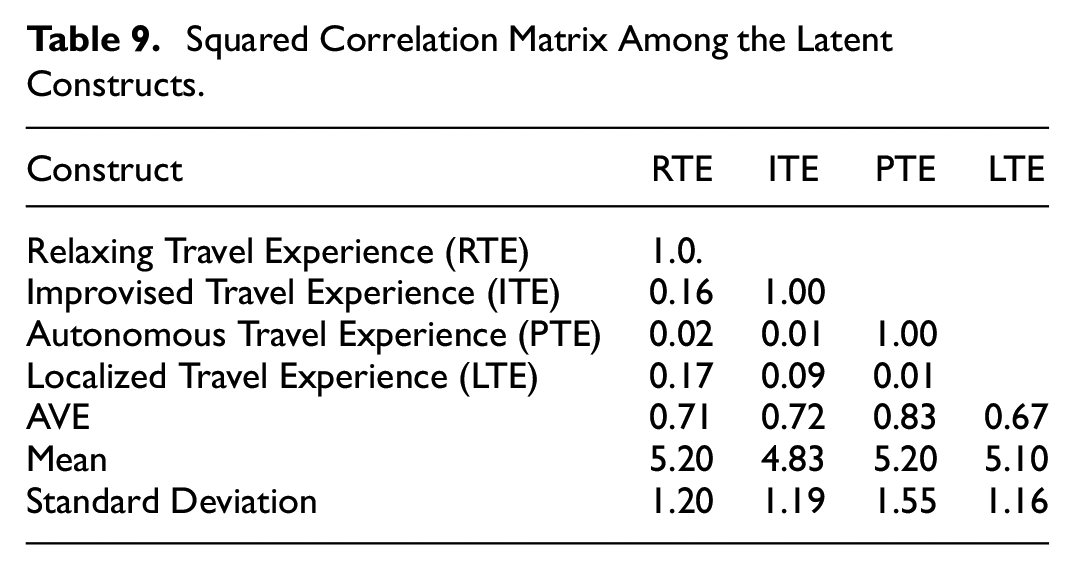
To assess convergent and discriminant validities of developed scales, average variance extracted (AVE) was calculated. All AVE values for the dimensions exceeded 0.5 confirming an acceptable level of convergent validity. In addition, the squared correlation coefficients between the dimensions and the AVE values were compared to assess the discriminant validity. The AVE values were greater than the squared correlation coefficient values, confirming discriminant validity. Table 9 shows details of correlation coefficients and AVE values for all dimensions.
Squared Correlation Matrix Among the Latent Constructs.
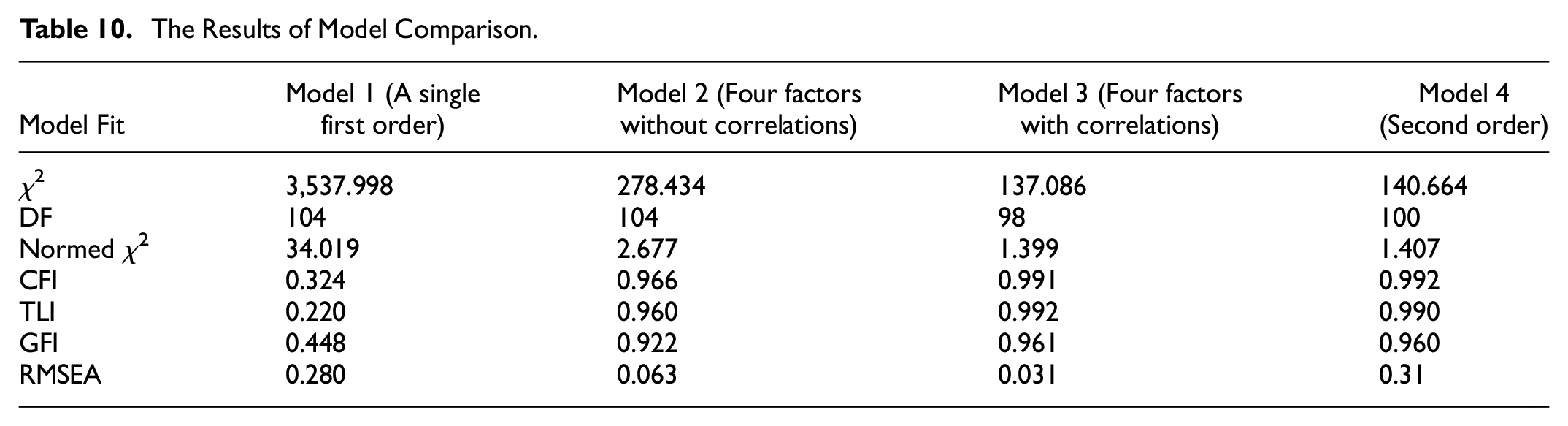
To further explore the structure of the scale, the fits of the four alternative models were calculated and compared. The first model estimated a single first-order factor model with all variables, the second model estimated the four-factor model without correlation among the four dimensions, the third model contained the four-factor model with correlation among the dimensions, and lastly, the last model estimated the second-order factor model with covariance among the four dimensions. As Table 10 shows, the first model showed unacceptable model fit results, while the second, third, and fourth models showed acceptable results of model fit. In particular, the model fit of the fourth model indicates that the developed scale can be operated as a second-order factor model.
The Results of Model Comparison.
Test of Nomological Network
In order to investigate the relationships of the workcation travel experience with theoretically relevant constructs, we tested the nomological validity of the developed scale using structural equation modeling (SEM). Following the results of mainstream tourism research, we proposed to analyze the influences of workcation travel experiences on workcation satisfaction (Hypothesis 1) and revisit intention for workcation in the future (Hypothesis 2).
The result of SEM showed acceptable model fit indices: χ2 = 335.065, p < .001, TLI = 0.968, CFI = 0.973, GFI = 0.928, RMSEA = 0.045 (Hooper et al., 2008). Among the four experiences, it was found that relaxing travel experiences (β = .240, p < .001), autonomous travel experiences (β = −.207, p < .001), and localized travel experiences (β = .281, p < .001) had significant impacts on workcation satisfaction. On the other hand, improvised travel experience did not significantly influence workcation satisfaction (β = .045, p = .400). In terms of the impacts of workcation travel experiences on the future revisit intention for workcation, both improvised and localized travel experiences had positive and significant influences on the revisit intention for workcation (β = .189, p < .001, β = .235, p < .001, respectively). However, no significant impacts were found for relaxing (β = −.030, p = .618) and autonomous travel experiences (β = −.081, p = .172). Accordingly, both Hypotheses 1 and 2 are partially supported. The dissimilar impacts of experience dimensions improved the theoretical and empirical knowledge on the value of workcation travel experiences (see Figure 2).
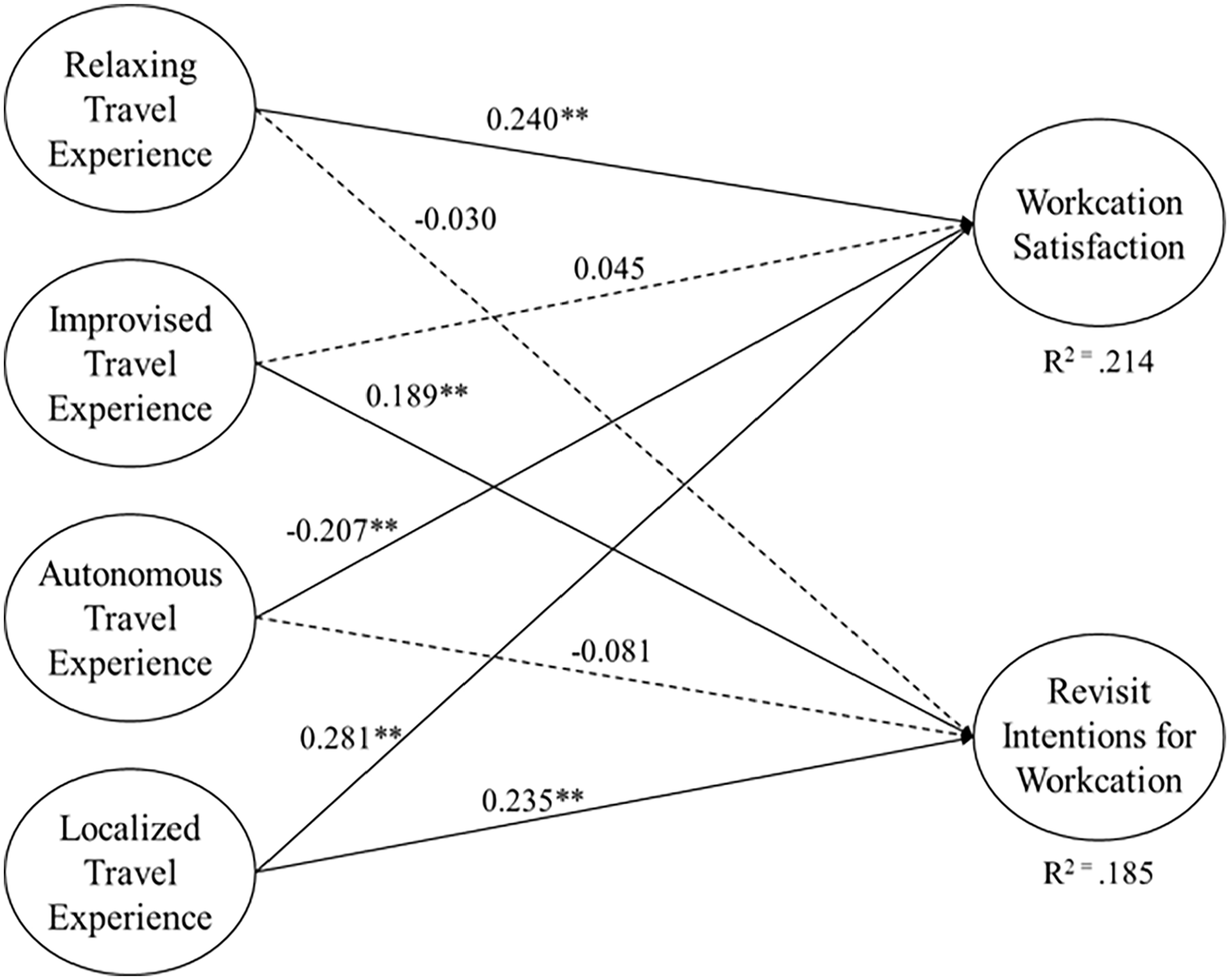
Nomological network of workcation travel experiences.
Additionally, the nomological network of the second-order structural model of the workcation travel experience was explored to analyze the predictive validity of the developed scale. The model fit was acceptable: χ2 = 221.425, p < .001, TLI = 0.992, CFI = 0.993, GFI = 0.953, RMSEA = 0.022 (Hooper et al., 2008). With all items being significantly loaded on their respective constructs, the results show that the workcation travel experience is a significant predictor of workcation satisfaction (β = .555, p < .001) and revisit intentions for workcation (β = .352, p < .001). Thus, the results provided important evidence that the workcation travel experience consisting of relaxing, improvised, autonomous, and localized travel experiences can be a determinant for the success of workcation.
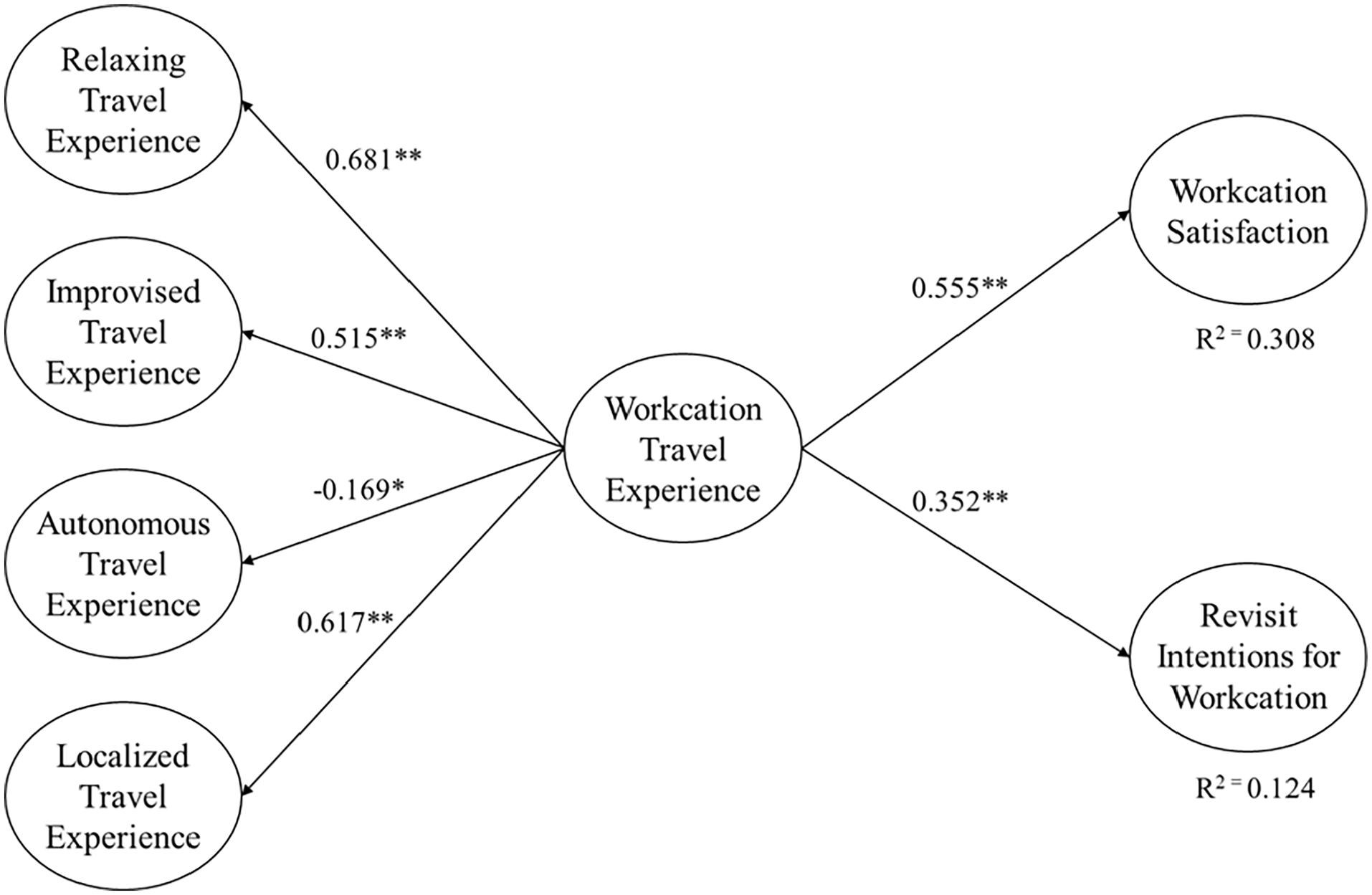
A second-order nomological network of workcation travel experiences.
Conclusion
In the past, leisure time and work time were clearly separated. However, a hybrid type of tourism has appeared in which the spatial division is uncertain between travel and work (Pecsek, 2018). Workcation, promoted by advances in digital technology and COVID-19, is transforming traditional visiting tourism into staying tourism by changing the existing paradigm of separation of work and travel. To further understand this social change, this study has identified the essence of workcation travel experiences and developed a multi-dimensional measure to capture the extent to which individuals have workcation travel experiences through quantitative and qualitative analyses. As an initial approach to systematically analyze workcation travel experiences, the specific theoretical and practical implications are as follows.
Theoretical Implications
First, this study is meaningful in that it approaches the concept of staying tourism by focusing on workcation travel. Although workcation is a new tourism trend (Seo, 2022), we have found no investigations of workcation travel from the perspective of travel experiences. While existing travel experience research studied subjects who visited destinations in the short-term (Ponsignon et al., 2021; Prebensen et al., 2014; Ritchie & Hudson, 2009), workcation travelers travel for a relatively long time so they can participate in both work and leisure travel. Although it requires a different mindset and approach than traditional leisure and business travels, our current understanding of the nature of workcation travel experiences where work and travel are mixed in the form of a long-term stay is limited. Notably, existing travel experience scales were mostly developed for leisure travel contexts (e.g., A. Y. P. Chang & Hung, 2021; A. Y. P. Chang et al., 2020; J. H. Kim et al., 2012), which makes it hard to capture the unique aspects of workcation travel. Thus, this study provides initial insight into workcation travel experiences.
While a body of research focused on the role of leisure and travel activities for expatriates, most of these studies investigated leisure or travel participation among expatriates (Chao et al., 2019; Slak Valek & Fotiadis, 2018), reasons or motivations for expatriate travel (Richardson & Mallon, 2005; Scott & Ryan, 2017), expatriate adjustment to a new environment (Kempen et al., 2015), and expatriates’ physical and psychological health issues (e.g., safety, stress, well-being) (Koveshnikov et al., 2022; Lim et al., 2012). Consequently, there has been limited knowledge on the nature and dimensions of travel experiences that expatriates or workcation travelers can have during their stay in other cultural locations. The identified dimensions of workcation travel experiences and measurement items contribute to a better understanding of how travel experiences are formed during the combination of work and leisure. In this regard, we believe we are offering theoretical and empirical insights into the experiential nature of workcation travels which can expand the view of travel experience theories.
Second, this study conceptually classifies four types of workcation travel experiences and presents an empirical measurement tool. More specifically, this study builds on existing travel experience dimensions (e.g., learning, enjoyment, escape, refreshment, novelty, involvement, local culture) (Soulard et al., 2021). The RIAL model was established through relaxing travel experiences, improvised travel experiences, autonomous travel experiences, and localized travel experiences. The model reflects the characteristics of leisurely travel, spontaneous travel, initiative travel, and region-oriented travel that can be experienced through workcation. The current study expands our knowledge of the tourism experience to the context of workcation. The scale of the workcation travel experiences presented in this study can help tourism researchers to measure the nature of workcation travel more accurately and systematically. Therefore, future researchers can use the scale to improve theoretical and empirical knowledge on workcation travels.
Third, while the workcation experience is composed of work and travel experiences, this study provides a significant theoretical and practical evidence that the workcation travel experience can play an important role in the success of workcation in terms of visitor satisfaction and revisit intention for workcation. This study shows that the satisfaction of workcation and revisit intentions for workcation may differ depending on the characteristics of the travel experience during workcation. Similar with most existing studies that found positive effects of travel experiences on tourism satisfaction (Agyeiwaah et al., 2019; Richards, 2015; Sangpikul, 2018), we also analyzed the significant and positive impacts of localized and relaxing travel experiences on workcation satisfaction. On the other hand, this study found that the autonomous travel experience during workcation had a negative effect on workcation satisfaction. This result shows that self-determined travel can negatively impact overall workcation experiences consisting of both work and travel. According to self-determination theory, autonomous travel experiences can be more satisfying and enjoyable for leisure travelers (Church et al., 2013). However, the study results may support that workcation travelers are likely to be exhausted due to high workloads during workcation. This indicates the unique experience structure of workcation that the greater the resource consumption for travel in workcation, the more negatively it can impact work, leading to the reduction of workcation satisfaction.
In addition, this study showed that localized and improvised travel experiences play an important role in creating sustainable travel demand for workcation destinations. Building on a large body of tourism research on travel revisit intentions (Mahdzar et al., 2015; Tan, 2017; Zhang et al., 2018), this result enhances the theoretical understanding of how workcation travel experiences contribute to enhancing revisit intentions for workcation in the future. The study demonstrates that workcation travelers are more likely to visit the same area again for workcation purposes when they go on regional-centric travel and have spontaneous travel experiences. In particular, the fact that the localized travel experience has a positive effect on both workcation satisfaction and re-visit intention shows the importance of the region-oriented travel experience in workcation.
Practical Implications
Workcation has recently been spotlighted as a means to solve various regional problems, such as a decrease in local populations and a lack of infrastructure. In that regard, the results of this study provide useful implications for workcation travel planners and practitioners. Above all, using the scale developed in this study, it is possible to systematically measure workcation travel experiences of workcation travelers and design successful workcation travel experiences.
To promote a relaxing and localized travel experience, which has been shown to have a positive effect on workcation satisfaction, various travel programs can be planned. For example, practitioners may consider developing a meditation program or a local experience program for workcation travelers. On the other hand, considering the fact that the autonomous travel experience has a negative effect on workcation satisfaction, some specific support is needed to assist workcation travelers with travel plans. By providing appropriate information in travel planning and design to help to minimize workcation travelers’ time and effort, the satisfaction of workcation can be enhanced.
Also, local marketers may consider paying attention to the form of promotions for workcation travel to increase workcation travelers’ revisit intentions. In this study, it was found that the improvised and localized travel experience had a positive effect on the revisit intention for workcation. Thus, local cultural exchange programs, interactive experience with local residents, and spontaneous travel events may attract more travelers to revisit the workcation place. To maintain the local bond formed through workcation travels, local marketers or workcation managers may consider operating online workcation communities to keep the relationships with workcation travelers.
Limitations and Future Research Opportunities
This study has the following limitations. First, while this study was carried out in South Korea, a country that has seen a surge in workcation travelers in recent times, further research should examine workcation travel in a wider range of cultural and geographical settings. Although this study did not distinguish between overseas and domestic workcation travelers, it is necessary to consider in future studies that travel experiences may appear differently depending on whether the workcation destination is overseas or domestic. Analyzing workcation travel in a broader context will enhance the external validity of the workcation travel experience outlined in this study. In addition, from a geographical point of view, it will be necessary to study how countries most affected by workcation have evolved over the years.
Second, in future research, it is necessary to examine the personal, environmental, and work-related factors that affect the workcation experience in more detail. For example, an individual’s travel propensity, travel motivation, reason for choosing a destination, the percentage of work and travel, workcation destination, employee position, work type, work hours, or work period may affect the workcation experience and job performance during workcation. While this study initially attempts to conceptualize workcation travel based on comparisons with other types of travel, further studies need to conceptualize and operationalize workcation travel by analyzing how workcation experiences are shaped by internal and external factors.
Third, the results of this research are hard to generalize due to the limitations of convenience sampling where participants were selected based on their availability and accessibility. Although this sampling method was used for the purpose of scale development, future research needs to use other sampling approaches, such as probability sampling or purposive sampling, to address the limitations of convenience sampling associated with sampling bias, limited generalizability, and lack of control.
Lastly, this study conducted analysis by proposing the satisfaction of workcation and the intention to revisit as a result of the workcation travel experience. The dissimilar impacts of the workcation travel experience on both indicates that future research needs to further analyze the consequences of the workcation travel experience. Further examinations of how the workcation travel experience influence workcation satisfaction and revisit intentions are necessary since workcation travel can distract travelers from accomplishing work-related tasks. In addition, the outcomes of workcation travel can be divided into personal results (well-being, place attachment, transformation) and managerial results (work involvement, job satisfaction, turnover intention). Therefore, it is necessary to conduct additional analyses to test the broader results of workcation travels.
Footnotes
Acknowledgements
None
Declaration of Conflicting Interests
The author(s) declared no potential conflicts of interest with respect to the research, authorship, and/or publication of this article.
Funding
The author(s) received no financial support for the research, authorship, and/or publication of this article.
