







Abstract
Online travel communities have been pivotal touchpoints for tourists to co-create nontransactional values with both platforms and other tourists. This study employed a mixed-method approach to examine the antecedents of tourists’ nontransactional value co-creation, including tourist-initiated and platform-initiated value co-creation, and its influence on the effective creation of knowledge value. The results of the quantitative study revealed both similarities and distinctions in the underlying mechanisms influencing tourist-initiated and platform-initiated value co-creation. These two forms of value co-creation also exhibited different impacts on the effectiveness of nontransactional value created in the co-creation process. The subsequent qualitative study further validated these similarities and distinctions while uncovering the underlying reasons. This study embodies the nature of bilateral participation from tourists and platforms in value co-creation, and provides theoretical and practical implications regarding nontransactional values in online travel communities, extending beyond transactional values, such as brand loyalty and purchase intention discussed in prior literature.
Keywords
Introduction
Online travel communities provide a social platform where tourists with similar interests congregate together, develop social connections, transmit tourism-related knowledge, and complete related transactions (Edwards et al., 2017; Zhou et al., 2020). Online travel communities play a critical role in the whole process of tourist travel and exhibit influential power in the tourism industry (Bowen & Whalen, 2017). Zhou et al. (2021) summarized that some online travel communities are self-organized by tourists, aiming to exchange information and build friendships; others serve as the platforms embedded in the company websites or supported by companies to help tourists seek information and connect with other users.
Accordingly, tourists and online community platforms (hereinafter referred to as platforms) are the entities that interact with each other online. Tourists, as the core actors, are voluntarily involved in online community activities and consequently generate various values for tourists and platforms. These values can be classified into transactional values (e.g., purchase intention and behavior, and loyalty) and nontransactional values (e.g., relationship, innovation, and knowledge value) (V. Kumar & Pansari, 2016; Shin & Perdue, 2022). Transaction values aim to increase sales and are directly related to performance, whereas nontransactional values increase soft power, which contributes to the improvement of competitive advantages and facilitates long-term growth (V. Kumar & Pansari, 2016). Most prior research focused on different dimensions of transactional values when discussing the values of customers or market segments (Shin & Perdue, 2023; Wang et al., 2020). However, nontransactional values, which form the foundation for sustaining transactional values, warrant increased attention (Bravo et al., 2021). The ignorance of nontransactional values may lead to the loss of transactional values (e.g., cash flow) in the long run (Verhoef et al., 2010). The growth of nontransactional values heavily relies on tourists’ participation in online travel communities (Shin & Perdue, 2023). Therefore, it is important for online travel communities to understand the antecedents of tourists’ participation in creating nontransactional values so as to enhance the tourist experience and maintain relationships with them.
Nontransactional values are co-created naturally, as tourists share their experiences, exchange information, and interact with other tourists and platforms (McLeay et al., 2019; Shen et al., 2020). Value co-creation has been a trending topic in tourism research and most literature highlights the role of tourists in value co-creation (Shen et al., 2020; Xie et al., 2021). However, value co-creation involves not only the unilateral participation of tourists but also the participation of platforms. The value co-creation initiated by tourists is referred to as tourist-initiated value co-creation, which serves various purposes such as sharing experiences or gathering information (Cambra-Fierro et al., 2021; Zwass, 2010). Tourist-initiated value co-creation occurs when tourists autonomously engage in activities independent of the platforms, such as sharing their travel itineraries (Zwass, 2010). In contrast, value co-creation initiated by the platforms is referred to as platform-initiated value co-creation, with the goal of engaging more tourists and strengthening their relationships with the platforms (Cambra-Fierro et al., 2021; Zwass, 2010). Platform-initiated value co-creation entails actions driven by the platforms’ initiatives, such as contests organized by the platforms (Zwass, 2010). To better understand the nontransactional values, it is imperative to examine the antecedents of tourists’ participation in tourist-initiated and platform-initiated value co-creation.
In addition to the antecedents of value co-creation, an understanding of the effectiveness of nontransactional value co-creation is equally important (Laud & Karpen, 2017; Xie et al., 2021). It is worthy to investigate whether the nontransactional value is functionally created in the value co-creation process. As online travel communities function as information hubs, knowledge value is co-created in the tourists’ participation process and is the primary nontransactional value that tourists seek in online travel communities (Park & Allen, 2013). Consequently, knowledge value exemplifies nontransactional values, and knowledge transfer effectiveness measures the outcome of nontransactional value co-creation in this study (Cooper, 2018; Edwards et al., 2017; Shin et al., 2020).
Therefore, to fill the identified research gaps, this study aims to examine the antecedents and outcome of nontransactional value co-creation. Specifically, the study addresses the following research questions: (1) What factors influence tourists to participate in nontransactional value co-creation in online travel communities? (2) How does tourists’ participation in nontransactional value co-creation influence tourism knowledge transfer effectiveness? (3) What are the different impacts of antecedents on tourist-initiated versus platform-initiated value co-creation, and what different impacts do these two types of value co-creation have on tourism knowledge transfer effectiveness?
This study is of significance to the value co-creation literature and the online community literature. First, this study focuses on tourists’ participation in nontransactional value co-creation in online travel communities, which determines the sustainable growth of online travel communities and has been understudied in previous studies. Second, this study divides value co-creation into tourist-initiated and platform-initiated value co-creation and explores the differences in the mechanisms between these two forms of value co-creation, thus emphasizing the interplay process of value co-creation and providing a comprehensive understanding of value co-creation. Finally, this study investigates the outcome of nontransactional value co-creation, that is, tourism knowledge transfer effectiveness, which empirically examines whether the nontransactional values are functionally created in the value co-creation process.
Literature Review and Hypothesis Development
Theoretical Perspectives
Social network theory
Social network theory adopts a relationship approach to understanding the impacts of interactions and relationships on people’s behaviors (Granovetter, 1985). Embeddedness, a core concept in the social network theory, describes the structure and quality of relationships among individuals within a group (Zukin & DiMaggio, 1990). Accordingly, it includes two dimensions—structural embeddedness and relational embeddedness. Structural embeddedness represents structural network characteristics, such as the number of relationships, network size, and network density, while relational embeddedness represents the strength of the relationship among community users (Lechner et al., 2006).
When it comes to online communities, social network theory has been increasingly applied to research user interactions and relationships (Liu et al., 2022). Users’ behaviors are influenced by their social networks, which manifests their social roles (Grayson, 2007). The level of embeddedness signifies the degree of user bond with the online community and other users. Existing research also demonstrated the relationship between embeddedness and users’ online activity (Chang & Chuang, 2011; Pan et al., 2015). For example, a large network leads to more viewing and posting activities (Koh et al., 2007). A strong relationship with other users facilitates knowledge contribution to the online community (Wasko & Faraj, 2005).
Social identity theory
While social network theory provides an explanation of how user behaviors are influenced by interactions on the individual level, social identity theory illuminates the collective efforts and consequences of interactions (Teng, 2017). Social identity theory proposes that people develop a collective identity with the group in which they belong (Bhattacharya et al., 1995). Given the social attributes of online travel communities, tourists gradually feel intimate with and committed to other tourists and online travel communities through personal interactions (Wang et al., 2002). Tourists create identification with effort invested in the communities where their perceived connections and recognition with the communities get enhanced (Kirk et al., 2015).
Social identity in the online travel community, also known as online community identity, refers to the recognition of community guidelines by community members and the perception that other community members regard it as a part of the community (Bagozzi & Dholakia, 2006). The construction of community identity involves continuous interaction between self and others, which is ignored by existing studies (C. X. Zhang et al., 2019). Users can recognize others’ identity and build trust via intragroup interactions with other users in the same online travel community. Consequently, the embedded relationships play a critical role in making social identification within an individual’s social network (Vernuccio et al., 2015). Embeddedness resulting from interactions can facilitate the generation of identity within the community and maintain their level of participation (Chiu et al., 2019). The motivation to maintain such identity strengthens users’ intention to actively participate in community activities (Jiang et al., 2016; Teng, 2017)
Hence, tourists’ behaviors are highly embedded in their relationship networks (Laud & Karpen, 2017), which allows tourists to play an empowered role in the networked society (Roma & Aloini, 2019). The empowered role actuates them to participate in value co-creation by interacting with other tourists and online travel communities (Cambra-Fierro et al., 2021; Kuo & Hou, 2017). The application of social network theory and social identity theory is suitable for investigating nontransactional value co-creation and provides empirical evidence on how intragroup interactions shape community identity in online travel communities. Therefore, this study will apply social network theory and social identity theory to explore the nontransactional value co-creation phenomena in online travel communities.
Nontransactional Value Co-creation in Online Travel Communities
The existing research focuses primarily on the improvement of transactional values such as customer loyalty and purchase intention (Pansari & Kumar, 2017; Xiang et al., 2017). Only limited studies have examined nontransactional values in online travel communities. For example, Xie et al. (2021) explored the experience value co-creation and claimed that transactional values, such as purchases and recommendations, can be implemented with the enhancement of experience. Shin and Perdue (2022) summarized five types of nontransactional values (i.e., experience value, relational value, influence value, functional value, and innovation/knowledge value) co-created from online community member engagement. Shin and Perdue (2023) further identified four dimensions of nontransactional values: influential-experience value, customer-to-business innovation value, relational value, and functional value, and examined their influences on brand attachment and brand loyalty. These studies primarily focused on the conceptualization of co-created nontransactional values, explored some of their motivating factors and claimed their importance in realizing the growth of transactional values (Shin & Perdue, 2023; Xie et al., 2021). However, the antecedents of nontransactional value co-creation and whether nontransactional values are functionally created remain under-investigated, laying the foundation for the realization of transactional values.
Value co-creation occurs in an interactive process where at least two actors participate in mutually beneficial cooperation and integrate resources to jointly create values (Lv et al., 2021; Vargo & Lusch, 2016), involving value-in-exchange and value-in-use based on goods-centered dominant logic and service-centered dominant logic, respectively (Vargo & Lusch, 2004). The former refers to the utility that is constantly inherent in a resource as a singular entity; the latter refers to the extent to which a customer feels better off (or worse off) by making use of a certain good or service (Vargo & Lusch, 2004). Value co-creation demonstrates customers’ active participation in service value chains as co-producers with the service providers (Vargo & Lusch, 2004). Due to the customer-focused and market-driven features of value co-creation (Sheth et al., 2000), online travel communities, as a structured surrounding, provide channels for tourists and travel companies to co-create values through interactions (Shen et al., 2020). Although an upsurge of academic research has explored value co-creation in tourism (Mohammadi et al., 2021), relatively few studies have focused on online travel communities, where tourist–tourist and tourist–platform interactions are dominant (Xie et al., 2021). Extant studies have emphasized that interaction is a precondition of value co-creation (Grönroos & Voima, 2013). For example, Shen et al. (2020) found that tourists’ value co-creation behavior was significantly influenced by online interactivity. Xie et al. (2021) reported that social capital has a positive effect on experience value co-creation. These studies mainly examined the unilateral role of tourists and their engagement in value co-creation. Yet the characteristic of value co-creation that involves both tourist-tourist and tourist-platform engagement has been neglected (Zwass, 2010).
Embeddedness and value co-creation
Embeddedness is positively related to the time and effort invested in maintaining relationships (Laud & Karpen, 2017). For example, when users spend much time and/or engage in numerous interactions in online travel communities, they have a high level of embeddedness in online travel communities. Users highly embedded in an online travel community are exposed to more resources due to a higher number of exchange partners and/or strong relationships with their partners (Sanz-Blas et al., 2021). Those users are willing and able to share their experiences and information, which are beneficial to their peers and the communities (Sanz-Blas et al., 2021). When they are thus embedded, users feel that they are a part of the social network and can access more resources, which promotes them to participate in co-creation activities (Laud & Karpen, 2017). In addition, relational strengths can highly influence shared information quality and quantity (Rishika & Ramaprasad, 2019). Users tend to share their experiences and information with closer friends rather than someone distant due to their connection and collective solidarity. Therefore, the following hypotheses are developed:
The mediating effect of online community identity
Community identity emphasizes the sense of belonging of community members and their commitment to establishing and maintaining community relationships (Bagozzi & Dholakia, 2006). Individuals develop an online community identity through their identification with social groups that they encounter online, stemming from interactions with others (Pegg et al., 2018). Users with high embeddedness tend to establish their community identity by interacting with numerous exchange partners and obtaining reliable information from their close partners (Chiu et al., 2019). The higher individuals’ online community identity in the online travel community, the stronger their emotional attachment and relationship commitment to the community and other members, the stronger their pride in the community’s identity, and the more important their image and status among community members become (Fielding et al., 2008). Users may develop a sense of communion with other users and actively engage in communication and interaction activities (Latif et al., 2020). Studies have indicated that community identity is a determinant of intention to participate in communities (Dholakia et al., 2004; Jiang et al., 2016). As users have strong motivations to identify themselves with other groups, they hold strong emotional attachment to the community (Teng, 2017). Such attachment drives them to participate in value co-creation activities in the online community. Therefore, the following hypotheses are developed:
The mediating effect of online community support
Social support is defined as the social resources that people perceive to be available or that are provided to them by non-professionals in the context of both formal support groups and informal helping relationships (Gottlieb & Bergen, 2010). In the online travel community context, it can be called online community support (Ye et al., 2015), which also represents the emotional care, understanding, or empathy from the community (Tajvidi et al., 2021). Users’ needs for understanding, orientation, and entertainment are satisfied when they access various resources, in other words, they are highly embedded in the online travel communities (Kim et al., 2019). Social support from a community encourages individuals to identify with that community (Hüffmeier et al., 2014), stimulating them to align their actions with the community norms and goals (Ihl et al., 2020). Consequently, users in online travel communities are inclined to share their experiences/thoughts and engage with other users in value co-creation activities. In turn, beneficial social support tends to emerge when individuals have a sense of social identification with a group (Haslam et al., 2005). The strong and positive relationship with other users prompts individuals to feel that users within an online travel community can provide support to them (Liang et al., 2011). When users perceive community support, they feel the care from the community and experience a sense of indebtedness (Ye et al., 2015). Repaying the support they obtain from the community, users are inclined to participate in value co-creation activities initiated by platforms or by themselves. Therefore, the following hypotheses are developed:
The mediating effect of psychological ownership
Psychological ownership represents a sense of possession that a target object belongs to me or is “mine” (Pierce et al., 2001). A sense of psychological ownership results in a user’s positive self-esteem, which reflects the affiliation and attachment of the user to a group (J. Lee & Suh, 2015). Users are motivated to maintain their relationships with other users in the same group and participate in value co-creation activities more actively. Hence, when users have a sense of ownership in the online travel community, it is easier for them to feel satisfied and willing to make contributions to the community due to the fulfillment of personal needs and enhancement (J. Kumar & Nayak, 2019). Therefore, the following hypotheses are developed:
Value co-creation and tourism knowledge transfer effectiveness
As tourists co-create values along with platforms by posting information and sharing travel experiences, they provide resources centered on their own information and knowledge during interactions with other tourists and/or platforms (Xie et al., 2021). On the other hand, platforms undertake initiatives pertaining to information provision, technology support, online community management, and online/offline event organization. Knowledge value as the primary nontransactional value is co-created in the iterative interaction process (Park & Allen, 2013).
Knowledge can be defined as an understanding of something and the ability to use that understanding through study and experience (Shaw & Williams, 2009). People obtain knowledge from their actual experiences (Thierauf, 1999), and knowledge is well-established and extended when it is utilized and shared (Takeuchi, 2001). Knowledge transfer refers to a process through which one learns from the experience and knowledge of another (Martinkenaite, 2011). In the context of online travel communities, knowledge transfer occurs when tourists acquire knowledge by sharing travel experiences or information through posting, asking, and answering questions and other interaction activities at any time (Chow & Chan, 2008). Edwards et al. (2017) studied the knowledge structure created by community residents and indicated that tourist knowledge is the collective intelligence of residents and tourists. The knowledge possessed by tourists can influence their travel decisions and behaviors (Sharifpour et al., 2014; Tassiello & Tillotson, 2020). The discrepancy of knowledge acquired in different phases also affects their decision on knowledge transfer (Bae et al., 2017). Extant studies have emphasized the important position of knowledge and knowledge transfer in tourists’ decision-making processes (Ayeh, et al., 2013; Edwards et al., 2017). However, knowledge value is essentially co-created by multiple entities (i.e., tourists and platforms) in online travel communities. It is necessary to elicit how knowledge value is co-created in different value co-creation activities (i.e., tourist-initiated value co-creation and platform-initiated value co-creation) and evaluate the outcome of value co-creation, which is equivalent to knowledge transfer effectiveness in this study.
Prior research supports that value co-creation enables the transfer of knowledge (Grover & Kohli, 2012). Tourist-initiated value co-creation or platform-initiated value co-creation is beneficial to the accumulation of shared knowledge. The knowledge shared in online travel communities serves as learning material for users who are learning about destinations and other tourism products or services, which can facilitate the communication between online users and the acquisition of knowledge (Edwards et al., 2017). The description of experiences also provides a template for other users to follow (Okazaki et al., 2017). In addition, when users participate in value co-creation activities, they can feel and express care and empathy, which provokes reciprocated behaviors and motivates future knowledge transfer and integration (Zhao et al., 2015) (Figure 1). Therefore, the following hypotheses are developed:
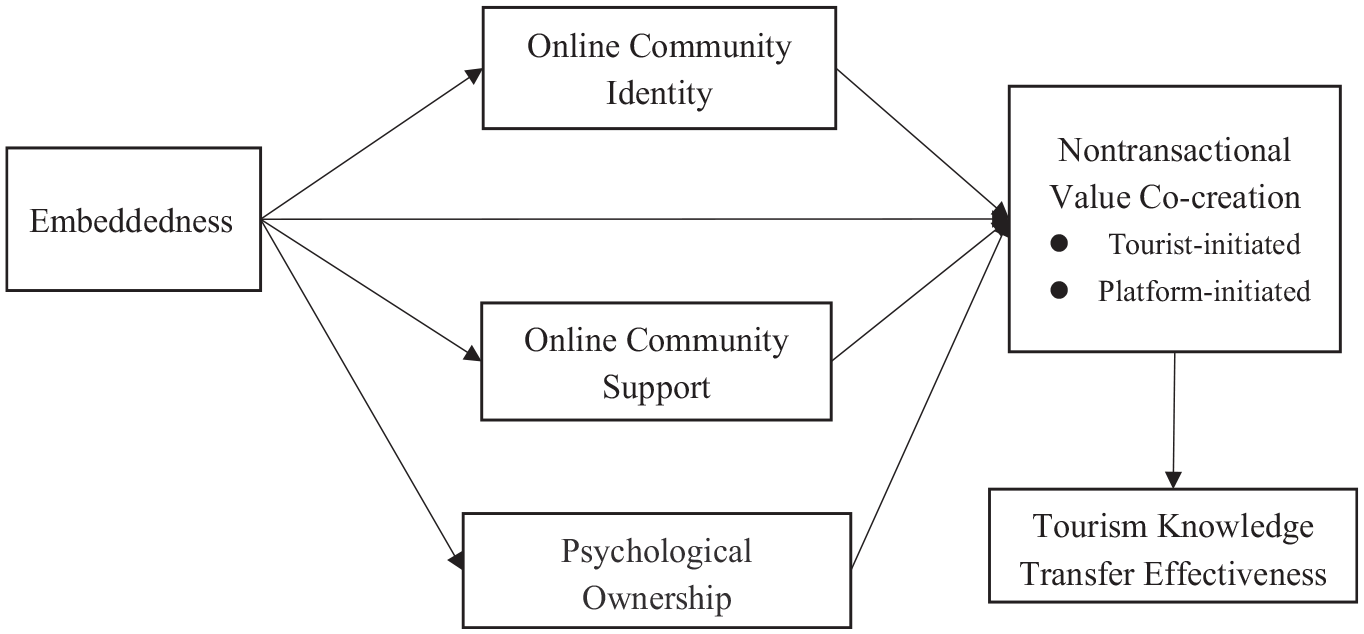
Conceptual model.
Method
This study used mixed methods that combine quantitative and qualitative approaches to strengthen the explaining power of each method and provide more accurate, holistic findings (Johnson & Onwuegbuzie, 2004). In this study, a sequential explanatory design was employed (Creswell et al., 2003), wherein a quantitative study was conducted first, followed by a qualitative study to further interpret the antecedents and outcome of value co-creation in online travel communities and enrich the understanding of value co-creation and knowledge transfer activities in this context. The mixed methods complement and expand the findings of quantitative and qualitative studies, as well as triangulating the convergent and/or divergent results (Truong et al., 2020).
Study 1. Quantitative Study
An online survey was distributed to users in major Chinese online travel communities in June 2021 by the Sojump platform, the largest online data collection panel in China (Lv et al., 2021). The respondents were recruited based on the following criteria: (1) people 18 years old or above; (2) people who use major Chinese online travel communities, such as Mafengwo, Ctrip, and Qunar. The final sample included 584 completed and useful responses.
Measures
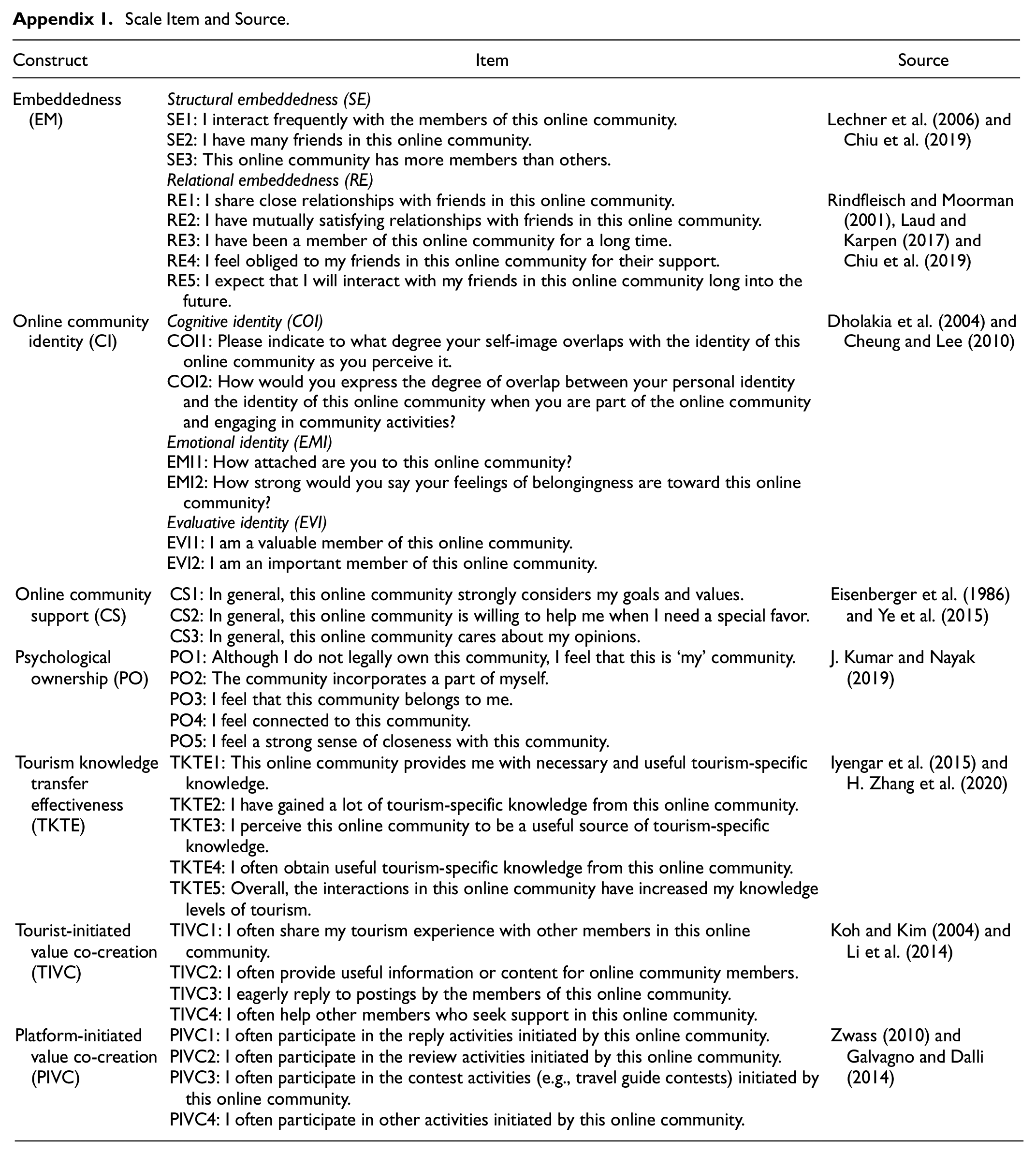
The questionnaire was originally developed in English and then translated into Chinese by the bilingual authors and then translated back into English to ensure the language equivalence and validity of the questionnaire. A 7-point Likert scale (1 = Strongly Disagree and 7 = Strongly Agree) for all items was used to measure each variable. Specifically, embeddedness (EM) was formed by two first-order constructs: structural embeddedness (SE) measured by three items (Chiu et al., 2019; Lechner et al., 2006) and relational embeddedness (RE) measured by five items (Chiu et al., 2019; Laud & Karpen, 2017; Rindfleisch & Moorman, 2001). Online community identity (CI) was measured by three first-order constructs: cognitive identity (COI), emotional identity (EMI), and evaluative identity (EVI), each construct measured by two items (Cheung & Lee, 2010; Dholakia et al., 2004). The measured items of online community support (CS) (Eisenberger et al., 1986; Ye et al., 2015), psychological ownership (PO) (J. Kumar & Nayak 2019), tourism knowledge transfer effectiveness (TKTE) (Iyengar et al., 2015;H. Zhang et al., 2020), tourist-initiated value co-creation (TIVC) (Koh & Kim, 2004; Li et al., 2014), and platform-initiated value co-creation (PIVC) (Galvagno & Dalli, 2014; Zwass 2010) were also adapted from existing validated scales based on the context of online travel communities (See Appendix 1). Demographic characteristics of the users were also captured.
Data analysis
Concerning the quantitative data analysis, the reliability and validity of the measurements were assessed first. Then the hypotheses were tested using partial least squares structural equation modeling (PLS-SEM), which better predicts the relationships between variables and has no assumptions about data distributions, compared to covariance-based structural equation modeling (CB-SEM) (Hair et al., 2020). Moreover, as the second-order formative constructs were included in the following analysis, PLS-SEM, capable of testing formative constructs, is more appropriate for this study (Boukamba et al., 2021; Hair, Hult, Ringle, & Sarstedt 2021). The skewness values of all items were within the recommended range of −2 and 0, and the kurtosis values of all items fell between −2 and 3, both of which are within the recommended range of −7 and 7 (Byrne, 2010; Hair et al., 2010). The skewness and kurtosis tests indicated each item had univariate normality. As univariate normality cannot guarantee the multivariate normality, Mardia’s multivariate skewness and kurtosis tests were used to examine the multivariate normality. The results indicated that the data did not follow the distribution of multivariate normality, as such, PLS-SEM was employed to examine the data (Hair et al., 2020). Specifically, a two-stage hierarchical component model (HCM) analysis was conducted first to evaluate the measurement model including the evaluation of all first-order constructs and the following evaluation of the second-order constructs (Hair, Hult, Ringle, & Sarstedt, 2021). Then the structural model was assessed. The SEMinR package developed for the R statistics environment was the software used to run PLS-SEM and examine the model based on bootstrapping with 5000 subsamples and a confidence interval at 95% (Hair, Hult, Ringle, Sarstedt, Danks, & Ray, 2021).
Quantitative findings
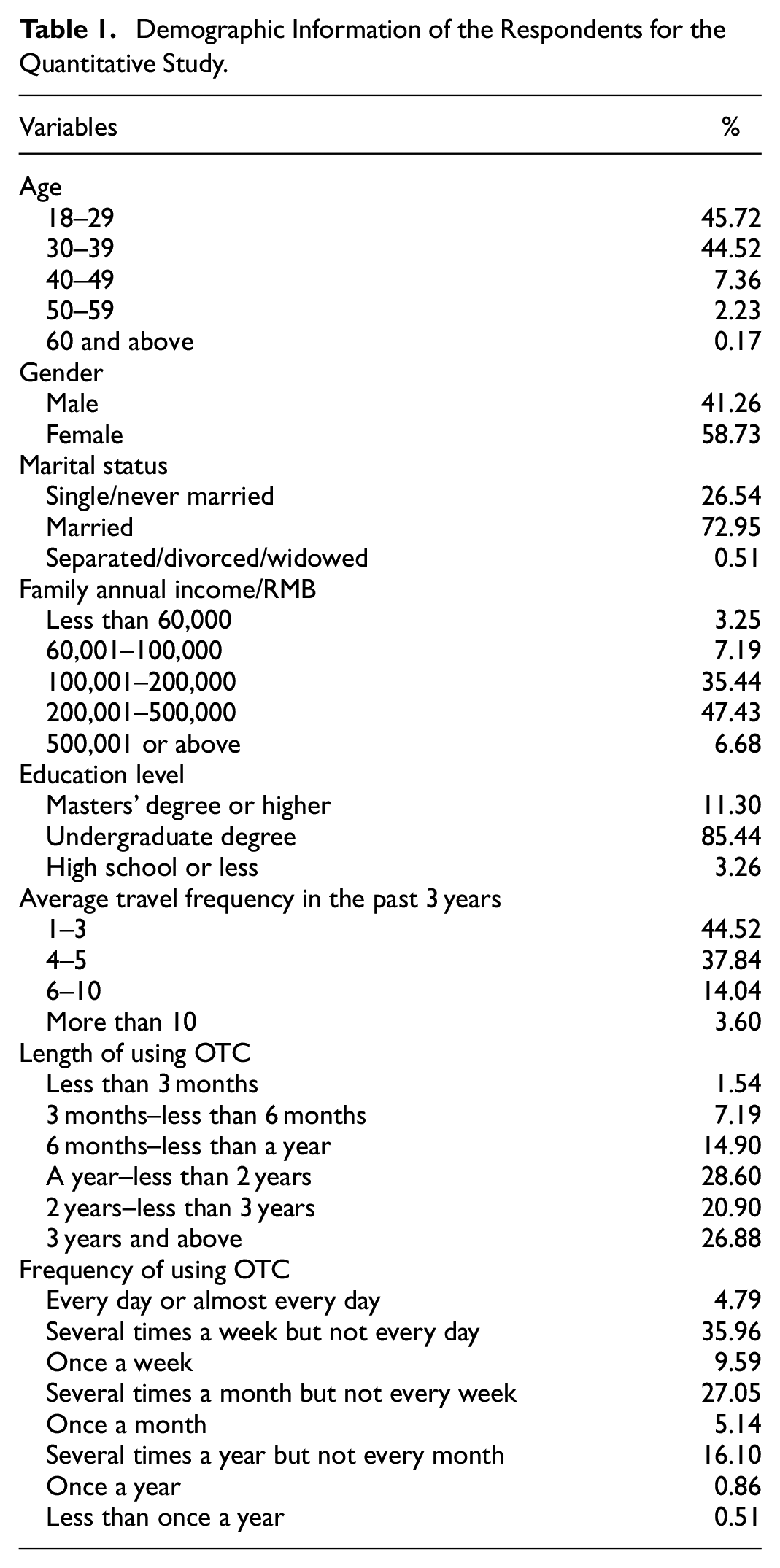
The sample comprised 41.26% males and 58.73% females. Most of the respondents were aged 18 to 29 (45.72%) and 30 to 39 (44.52%), with 85.44% of the sample having completed their undergraduate/junior college degree and 72.95% were married. In terms of the family annual income, 35.44% earned between ¥100,001 and ¥200,000 and 47.43% earned between ¥200,001 and ¥500,000. All demographic information of the respondents in the survey is shown in Table 1. Nearly half of the respondents traveled once to three times a year and about one-third had been using online travel communities for more than three years (26.88%) and several times a month but not every week (27.05%).
Demographic Information of the Respondents for the Quantitative Study.
Several attention-checking questions were randomly set throughout the survey to avoid invalid responses. To mitigate the common method bias, anonymity and confidentiality were promised to the respondents and all items were designed to be simple and clear to guarantee that the respondents could easily understand the meaning of each question (Podsakoff et al., 2003; Tasci et al., 2021). In addition, Harman’s single-factor test was conducted to assess the common method variance. The largest variance explained by a factor was less than 50%, which indicated there was no common method bias (Podsakoff et al., 2003).
Measurement model (outer model)—Lower-order reflective constructs
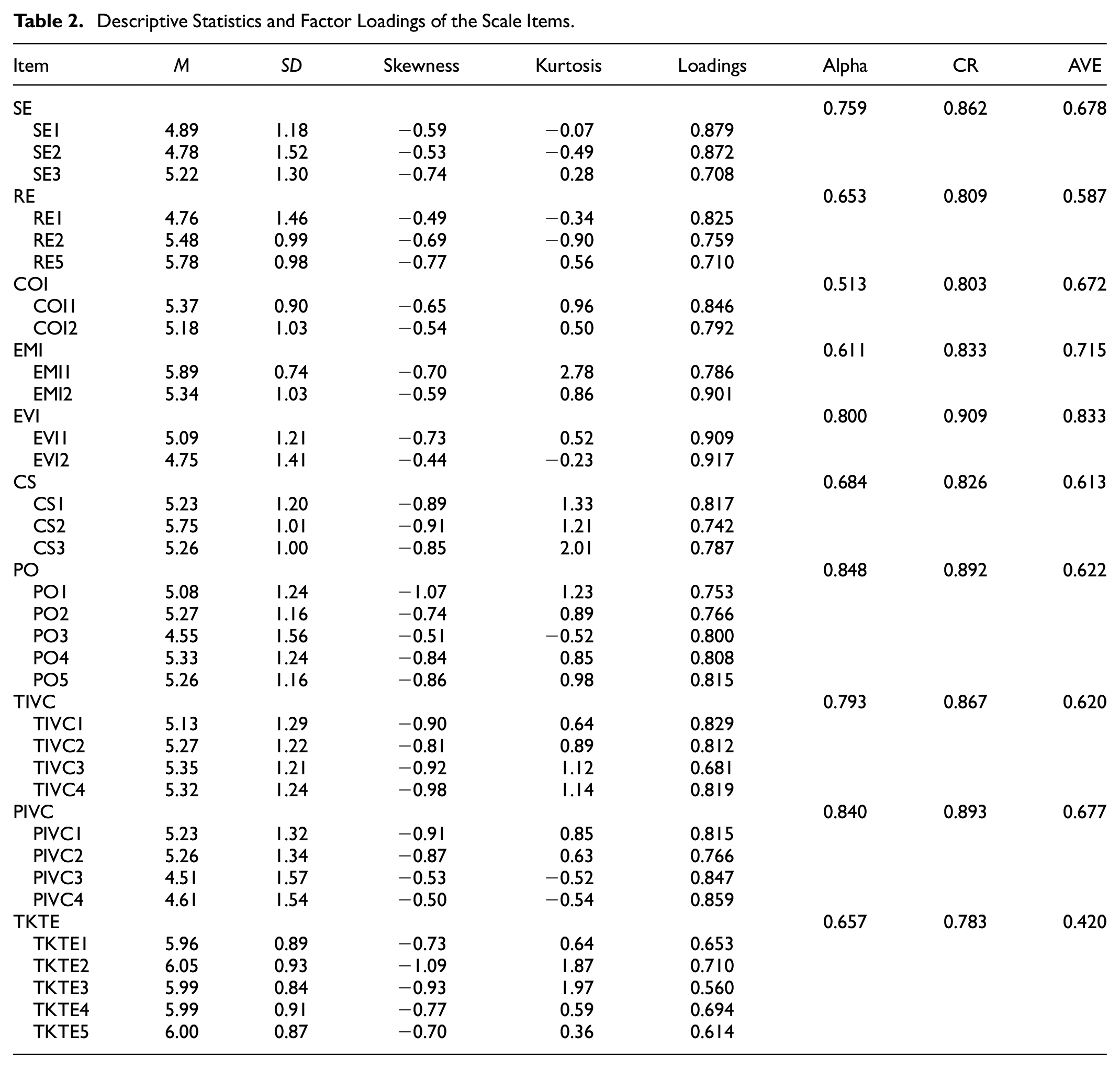
As the factor loadings of RE3 and RE4 were lower than the threshold value of 0.5 (Hair et al., 2020; Pham et al., 2019), RE3 and RE4 were removed from the model. All other factor loadings were above 0.5 (ranging from 0.560 to 0.917) and significant at the .05 level (See Table 2). Cronbach’s alpha and composite reliability (CR) were used to evaluate the reliability of the measurement models. The values of alpha for all constructs were above the threshold of .60 (Fornell & Larcker, 1981; Tasci et al., 2021), which ranged from 0.611 to 0.848, except that the alpha value of cognitive identity (COI) was .513. However, all the CR values ranged from 0.783 to 0.909, above the threshold of 0.60 (Fornell & Larcker, 1981; Tasci et al., 2021). As Cronbach’s alpha is sensitive to the number of items and assumes all items have equal outer loadings, CR is a better and more robust index to evaluate the reliability (Trizano-Hermosilla & Alvarado, 2016). Therefore, the combination of Cronbach’s alpha and CR indicated a satisfactory internal reliability of the lower-order constructs. The average variance extracted (AVE) ranged from 0.420 to 0.833. Only one construct (i.e., tourist knowledge transfer effectiveness) had a value below the suggested level of 0.50. However, as AVE is a more conservative estimate of the convergent validity and the CR of all constructs was well above the recommended level, the convergent validity was found acceptable (Fornell & Larcker, 1981; Lam, 2012). Fornell-Larcker criterion was used to check the discriminant validity (See Table 3). Since the square root of the AVE for each construct was greater than the correlations with other constructs, the discriminant validity is present (Fornell & Larcker, 1981).
Descriptive Statistics and Factor Loadings of the Scale Items.
Discriminant Validity Based on Fornell-Larcker Criterion.
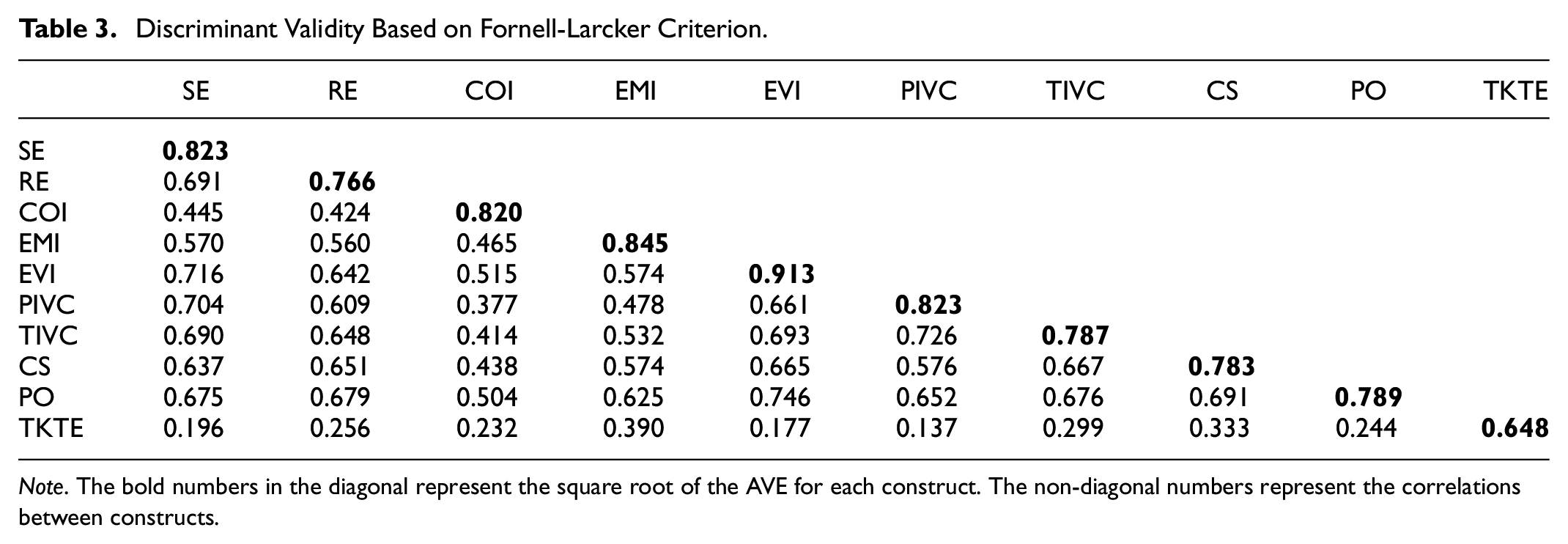
Note. The bold numbers in the diagonal represent the square root of the AVE for each construct. The non-diagonal numbers represent the correlations between constructs.
Measurement model (outer model)—Higher-order formative constructs
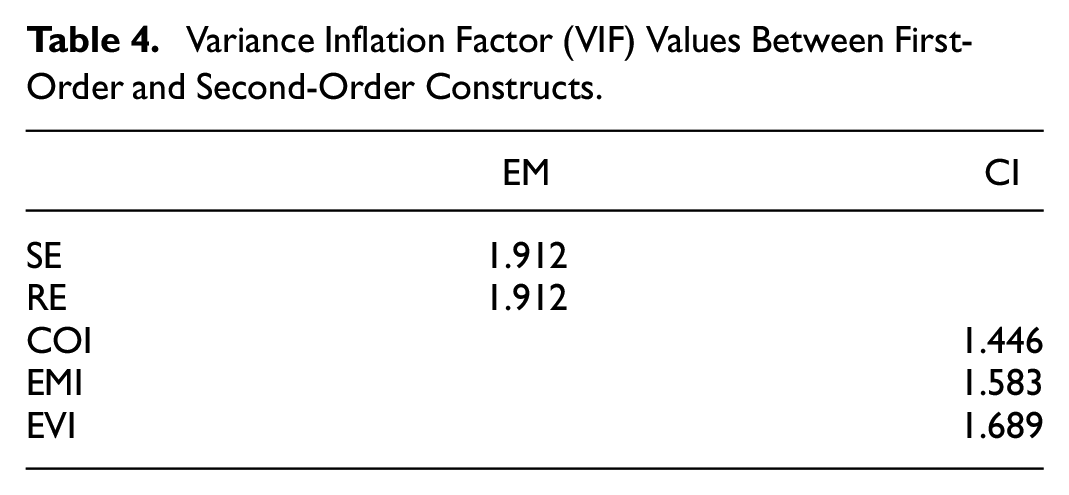
In this stage, the measurement quality of two second-order formative constructs, namely embeddedness (EM) and online community identity (CI), was assessed. First, the collinearity between first-order and second-order constructs was examined by variance inflation factor (VIF). The VIF values were less than the cut-off threshold of 5, suggesting there were no collinearity problems (Hair, Hult, Ringle, & Sarstedt, 2021). The results are shown in Table 4. Second, the contribution of each indicator to the second-order construct was assessed. Indicator loadings represented the absolute importance of one indicator to its construct (Cenfetelli & Bassellier, 2009). As Table 5 shows, all loadings were significant and higher than .5, implying that each indicator is important to its construct (Hair, Hult, Ringle, Sarstedt, Danks, & Ray, 2021). Then, indicator weights were measured to assess the relative contribution of each indicator to its construct (Cenfetelli & Bassellier, 2009). Except for COI, all other weights were significant and higher than .1, which indicated the strong relative importance of these indicators to their constructs (Hair, Hult, Ringle, Sarstedt, Danks, & Ray, 2021). Although the weight of COI was insignificant, its high and significant loading stated its important absolute contribution. All indicators were retained, otherwise the content validity may decrease (Cenfetelli & Bassellier, 2009; Hair, Hult, Ringle, & Sarstedt, 2021).
Variance Inflation Factor (VIF) Values Between First-Order and Second-Order Constructs.
Indicator Weights and Loadings of the First-Order Constructs on the Second-Order Constructs.
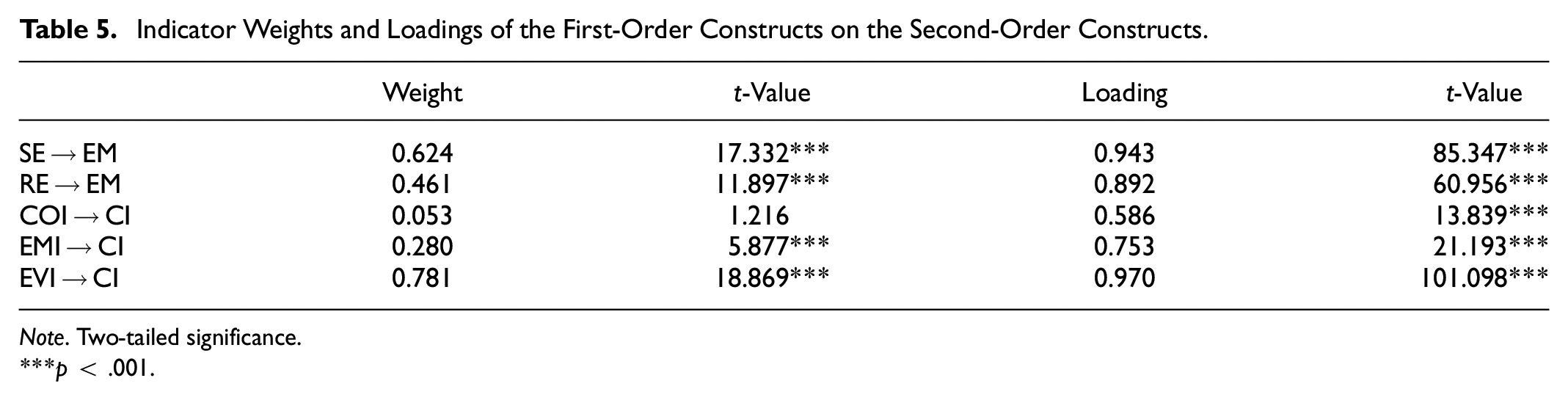
Note. Two-tailed significance.
p < .001.
Structural model (inner model)
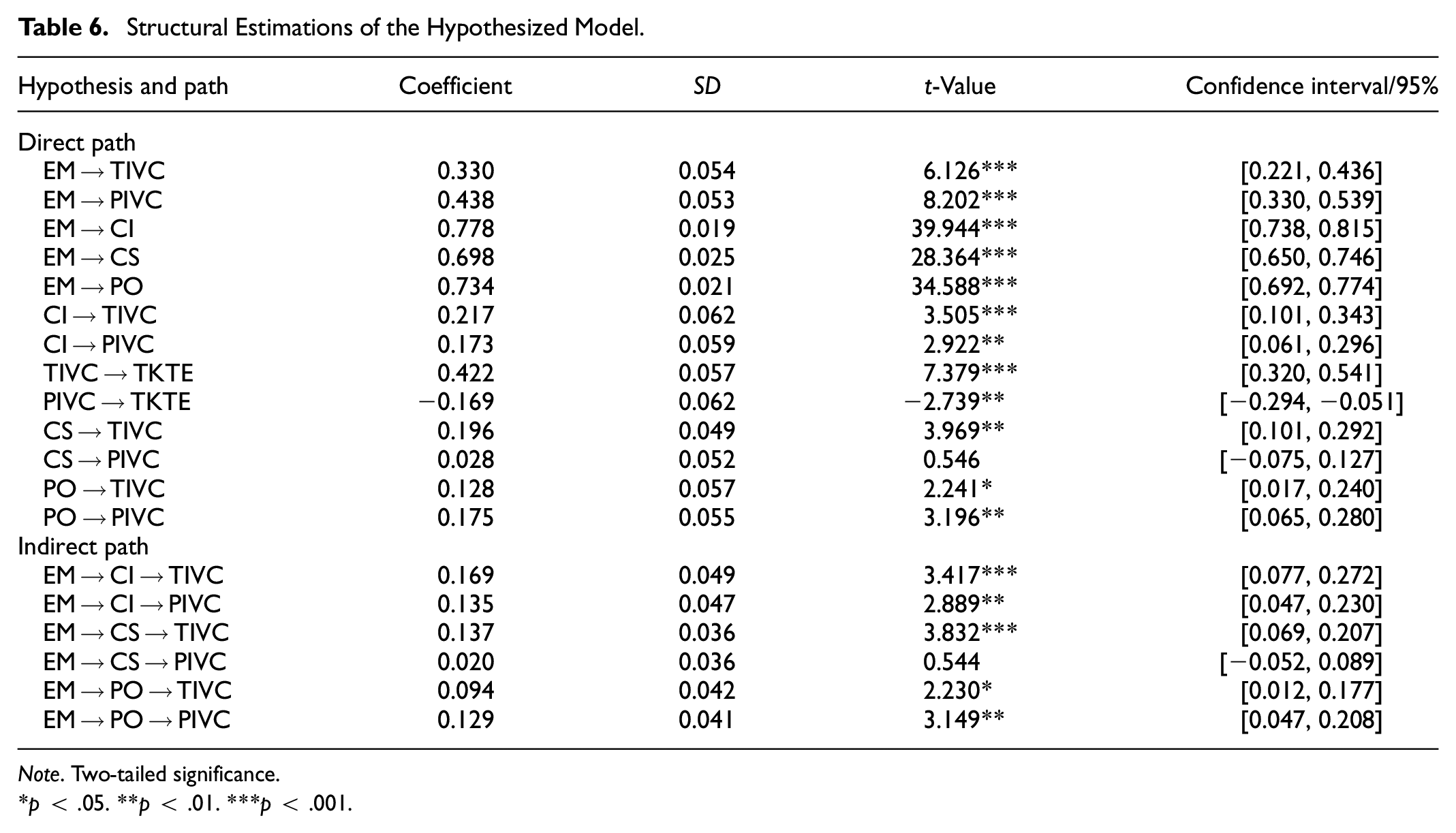
The results are presented in Table 6. Embeddedness had positive impacts on tourist-initiated value co-creation (β = .330, p = <.001), platform-initiated value co-creation (β = .438, p < .001), online community identity (β = .778, p < .001), community support (β = .698, p < 0.001), and psychological ownership (β = .734, p < .001). Online community identity had positive impacts on tourist-initiated value co-creation (β = .217, p < .001) and platform-initiated value co-creation (β = .173, p < .01). Likewise, psychological ownership also had positive influences on both tourist-initiated value co-creation (β = .128, p < .05) and platform-initiated value co-creation (β = .175, p < .01). Online community support was correlated only with tourist-initiated value co-creation (β = .196, p < .01). The influence of tourist-initiated value co-creation on knowledge transfer effectiveness was positive (β = .422, p < .001), but platform-initiated value co-creation had a negative effect on knowledge transfer effectiveness (β = −0.169, p < .01).
Structural Estimations of the Hypothesized Model.
Note. Two-tailed significance.
p < .05. **p < .01. ***p < .001.
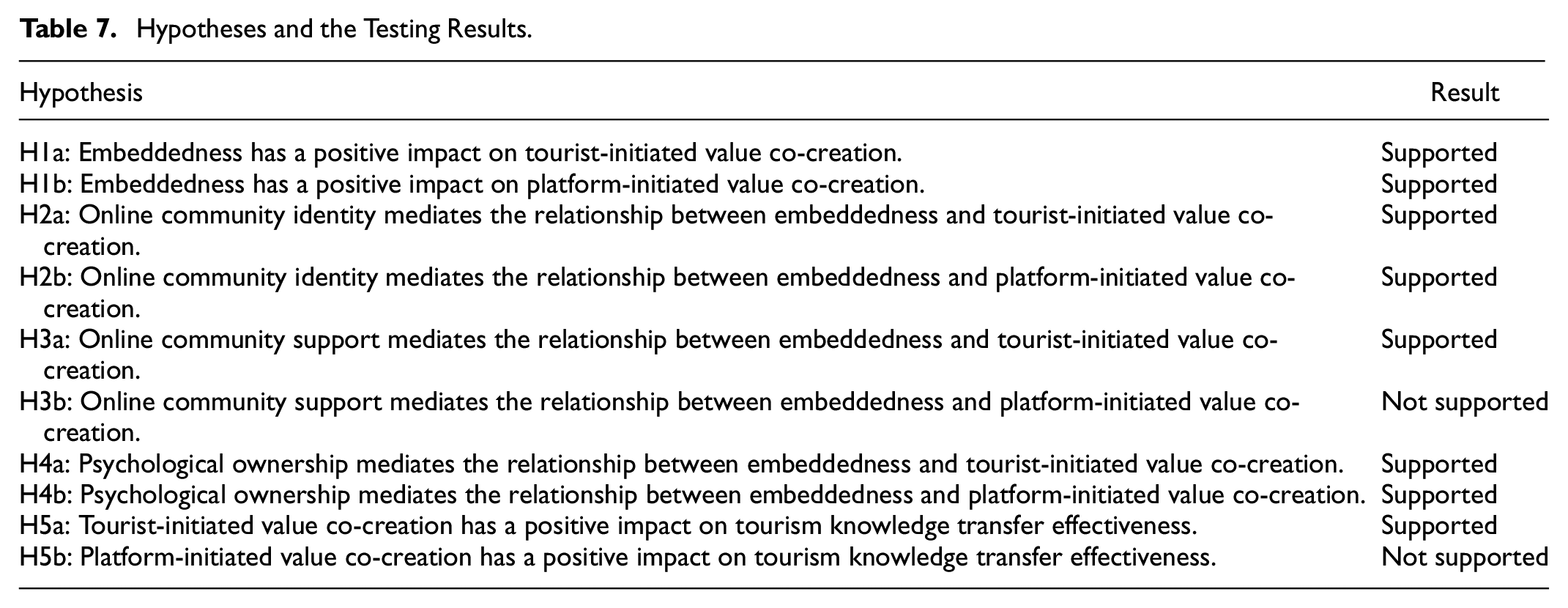
The results of mediation analyses are also shown in Table 6. Embeddedness had positive indirect effects on tourist-initiated value co-creation via online community identity (β = .169, p < .001), online community support (β = .137, p < .001), and psychological ownership (β = .094, p < .05). Embeddedness also had positive indirect effects on platform-initiated value co-creation via online community identity (β = .135, p < .01) and psychological ownership (β = .128, p < .01). Online community support did not demonstrate a mediating role in the relationship between embeddedness and platform-initiated value co-creation (Table 7 and Figure 2).
Hypotheses and the Testing Results.
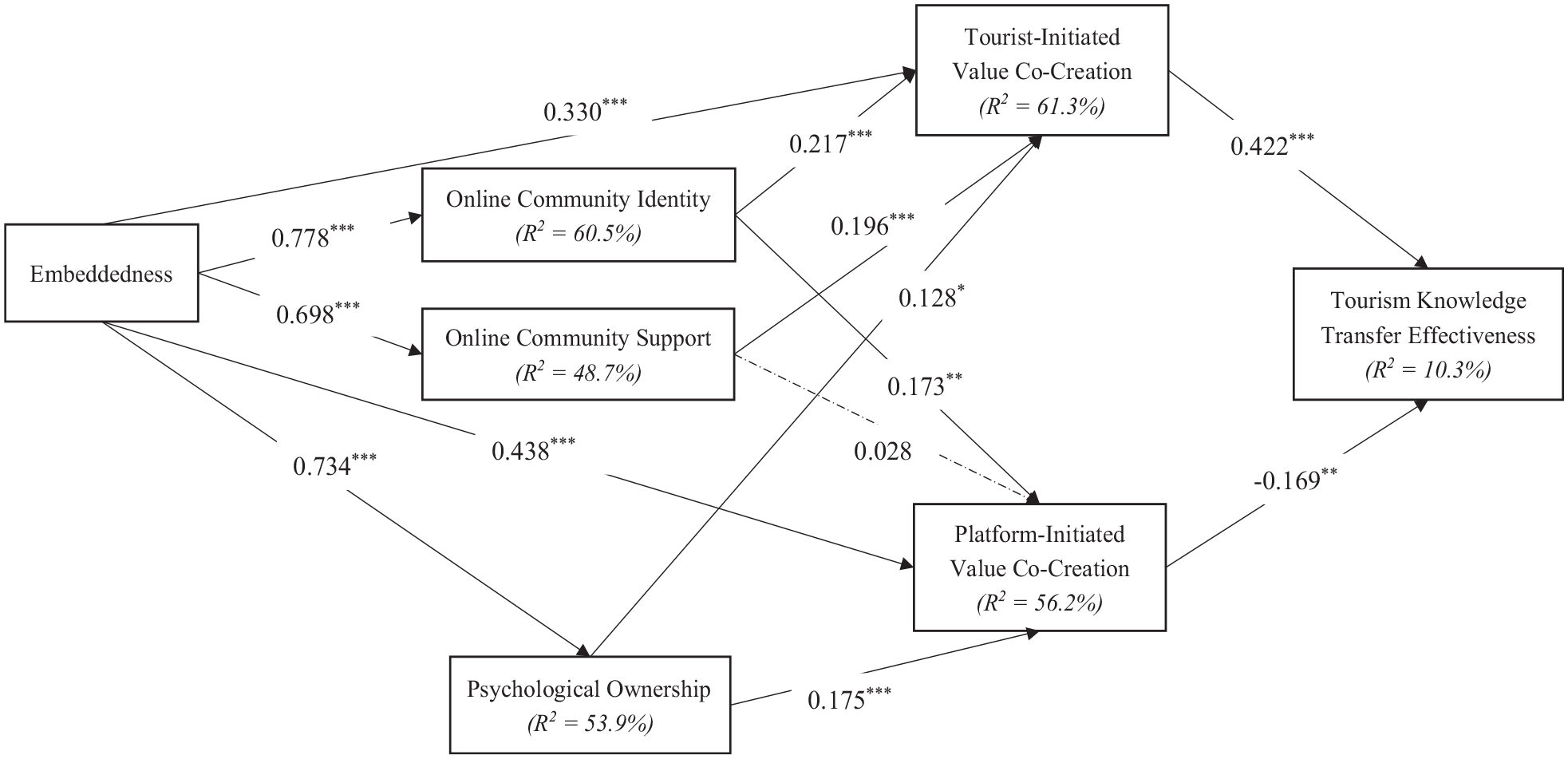
Path coefficients of the PLS-SEM.
Study 2. Qualitative Study
As demonstrated in the results of Study 1, tourist-initiated value co-creation and platform-initiated value co-creation shared some commonalities in their antecedents’ mechanisms, which is consistent with the literature (Laud & Karpen, 2017). For example, embeddedness positively affects both tourist-initiated value co-creation and platform-initiated value co-creation, and community identity plays a meditation role in their relationships. However, online community support presents different mechanisms for these two types of nontransactional value co-creation. The outcomes of these two types of value co-creation also differ. Tourist-initiated value co-creation boosts the knowledge transfer effectiveness, while platform-initiated value co-creation hinders it. To further explore these commonalities and differences and probe the underlying reasons, a subsequent qualitative study using semi-structured interviews was conducted. The interviews aimed to make up for the deficiencies of the quantitative study (Hammerschmidt et al., 2020; Johnson & Onwuegbuzie, 2004) and expand the understanding of the experience, opinions, and values (Rowley, 2012). Informants were recruited in the main online travel communities in China including Mafengwo, Ctrip, and Qunar in October and November 2021. Informants’ demographic information and their experience with online travel community usage were taken into consideration to ensure the variation among the research subjects. A total of 15 online interviews were conducted when data saturation was achieved, and no new substantive information emerged. Each interview lasted for 20 to 40 minutes and was audiotaped and transcribed. To reduce the bias and triangulate the data, notes were also taken during the interviews and information was checked by the informants. Finally, the interview transcripts were translated into English through the back-translation method and relevant themes were derived. Two researchers coded the themes separately and reached a consensus to generate the qualitative findings.
Qualitative findings
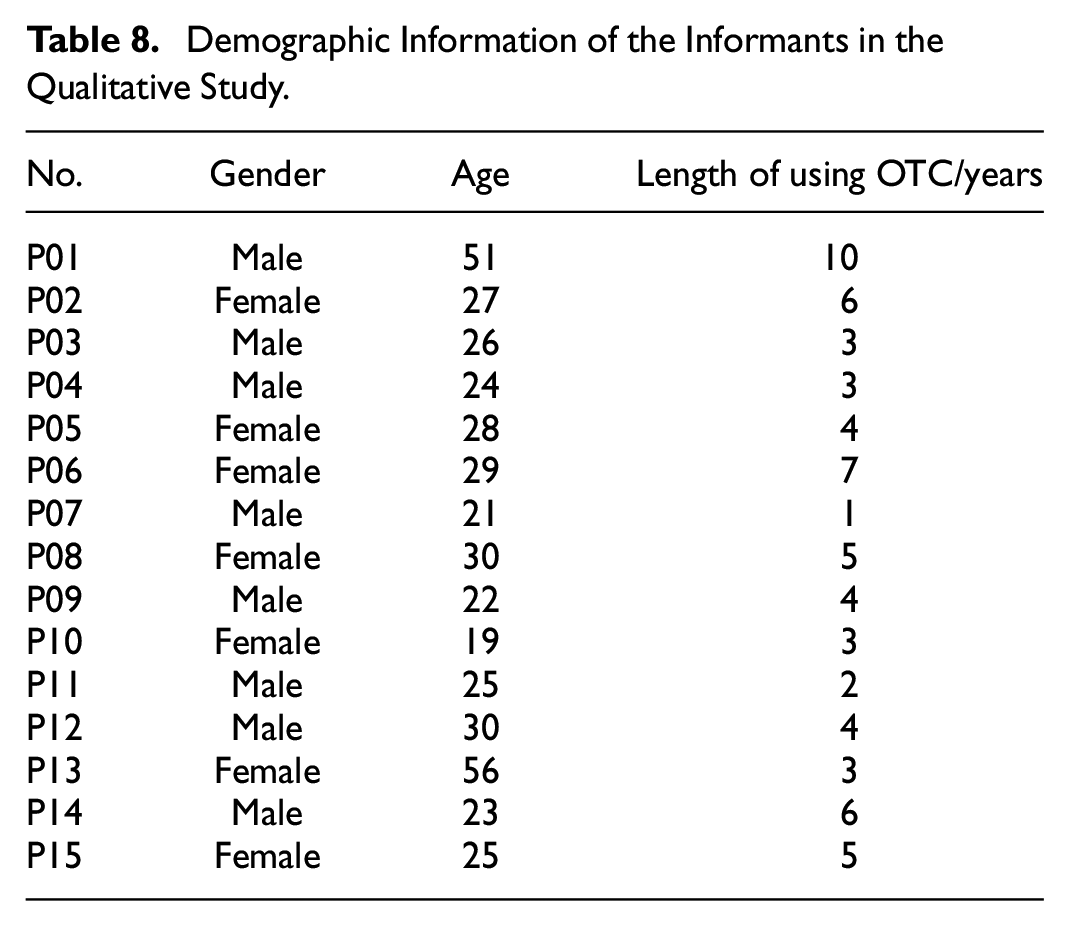
The qualitative study further confirmed and explained the results of the quantitative study, which increases the explanatory power of the results concerning the hypotheses. Table 6 shows the demographic profile of the 15 informants. The ratio of male informants to female informants was 8:7. The informants’ ages ranged from 19 to 56. The length of time using online travel communities ranged from 1 year to 10 years. Embeddedness is represented by both usage time and usage frequency, as well as the frequency of interaction with other users in online travel communities (Laud & Karpen, 2017). The longer the users have been using the online travel community, the stronger their embeddedness is (Table 8).
Demographic Information of the Informants in the Qualitative Study.
The commonalities in antecedents between tourist-initiated and platform-initiated value co-creation
The qualitative results indicated the commonalities in the antecedents between tourist-initiated and platform-initiated value co-creation, including embeddedness, online community identity, and psychological ownership, which validated the results of the previous quantitative study and provided explanations for this phenomenon.
Embeddedness and online community identity
Users share travel information and their own interests in online travel communities and make friends through online interactions. When tourists invest time in an online travel community, they are likely to establish/maintain connections and commit to the community (Zhou et al., 2021). The information generated and exchanged in this process assists tourists in their decision-making (Filieri & McLeay, 2014). Some informants indicated that the interaction with their online friends increases their willingness to participate in value co-creation activities. The social relations within an online travel community drive users to revisit it repeatedly (Yang et al., 2017). As one participant noted, This interactive relationship has a great positive impact. If I plan to travel somewhere, the first place I would seek information is here. I ask questions and find answers here. (P06)
Embeddedness emerges from the time and effort invested in maintaining relationships (Gnyawali & Madhavan, 2001). Due to the switch cost and inertia, a high level of embeddedness facilitates users in engaging more actively in value co-creation activities and strengthening community identity (Laud & Karpen, 2017), which results from the common interests in travel and sharing. High-embeddedness informants claimed that their shared interests with other users further enhanced the interactions and motivated them to actively participate in the online travel communities.
I participate in interaction activities on a daily basis when I am not busy working, like before going to work and after getting off work. It [answering questions in the community] has been a daily routine and hobby for me. (P01) We have the same interests, and we like the same things. This is very impressive. (P02) Our communication was more in-depth as we both liked the same movie, Kaili Blues. My interaction with other users makes me feel closer to this platform and feel significant belongingness. Because of other users, I stick to this online platform. (P03)
Psychological ownership
The ongoing connections with the online travel communities boost the informants’ feeling of ownership. Extant research has demonstrated that the state of psychological ownership in social media platforms influences users’ participation behaviors (Guo et al., 2016). Likewise, psychological ownership in online communities leads to users’ satisfaction, self-enhancement, and self-esteem (J. Lee & Suh, 2015; Mousavi et al., 2017). In turn, users felt that they have the responsibility to share information and maintain the community by participating in value co-creation activities (J. Kumar & Nayak, 2019). Our qualitative findings show that informants who spent a significant amount of time in online travel communities and/or visited them frequently (i.e., those highly embedded in the online travel communities) claimed that they developed a sense of psychological ownership, especially when their motives were satisfied. Consequently, they continued to actively participate in value co-creation activities to contribute to the online travel communities.
If I felt that I didn’t gain much or I didn’t take many photos on my trip, I wouldn’t post anything. I usually share things that I believe are fruitful and meaningful, and I really have the urge to share with others after the trip. This way I can interact more with other users and get some feedback from them. (P9) The selfless sharing tradition is passed to the next generation of users, that is, you received their selfless help in the past, and you now want to give your help to others. The tradition of sharing with others will influence the next generation of users and form a very good community culture. (P14)
The differences in the antecedent and outcome between tourist-initiated and platform-initiated value co-creation
Besides the commonalities, tourist-initiated value co-creation and platform-initiated value co-creation also had differences in their antecedent and outcome. This section provides details explaining these differences.
Antecedent: Online community support
Perceived support from an online travel community is associated with the extent to which the community facilitates the interaction between users, cares about its users, and appreciates users’ contributions (McWilliam, 2000). Users experience support when they feel cared for and helped by other members of the community (Doha et al., 2019). Consequently, the resulting benefits lead users to develop a sense of mutual obligation, encouraging their continued participation in the community (Molinillo et al., 2020). Informants felt the community support and it mainly came from the interaction with other users. Compared to the platform-initiated value co-creation activities, informants preferred tourist-initiated value co-creation activities, which in their opinion represented the core and critical contents of online travel communities.
When I asked a question during my trip, other users gave me accurate and comprehensive answers and clarified my doubts in a very timely manner, which further made me happier on that trip. This experience affected my evaluation of the online community. The higher my evaluation is, the more I stick to it. (P06)
The social support perceived by users in online communities includes various types, such as informational support and emotional support (Tajvidi et al., 2021). Informants indicated that they not only shared travel-related information in online travel communities, but also received psychological support from other users beyond travel issues. As the following informant stated, Sometimes I talk about things not related to tourism. For example, I had a breakup and planned to go on a “healing” trip. So I reached out to the community and shared my unhappiness. Some users chatted with me online, comforted me, and encouraged me. Even though they were all strangers, I felt the kindness from them… Some users found my information useful to them, and they sincerely thanked me for it. This experience motivated me to continue replying to others’ questions. Anyway, if someone reads it and gives his/her feedback, I have more motivation to do it. (P12)
Outcome: Knowledge transfer effectiveness
Knowledge sharing has been a research topic in the context of online travel communities (Zhou et al., 2021). Users serve as the creators of knowledge that is then consumed by other community members (Lalicic & Dickinger, 2019). All informants stated that they gained valuable information from online travel communities through tourist-initiated and platform-initiated value co-creation activities. Users acquired not only tourism-related knowledge, such as expertise in planning an itinerary and destination information but also photography techniques, culture, history, travelogue-writing tactics, media content creation skills, and many other aspects of travel. As some informants noted, I really had some insights to expand my horizons. Because of the COVID-19 pandemic, I was not able to travel to destinations, but I feel that I have been there, knowing the landscape and sites. (P03) I learned a lot from the online travel community. For example, I saw the scenery through the photos other people shared and learned some unique stories, local cultures, and customs. I even learned photo-taking techniques and copywriting skills. (P09)
Nevertheless, some informants mentioned that the shared contents may not be fully trustworthy. Especially, the platforms may even manipulate the content co-created by the users, which diminishes the users’ intention to participate in the platform-initiated value co-creation process. The lack of oversight regarding content quality poses a challenge to the transfer of tourism knowledge in online travel communities.
I believe that it is the platform that pushed these articles to users and then added some comments by themselves. Some of the contents are really untruthful. Since then, I have decreased my frequency of using this platform. (P08)
Discussion and Conclusions
Value co-creation determines the development of online travel communities and the experience of tourists (McLeay et al., 2019). The tourist–tourist and tourist–platform interactions are the crucially pertinent manifestations of value co-creation. Based on the integration of social network theory and social identity theory, this study divided value co-creation into tourist-initiated value co-creation and platform-initiated value co-creation, and explored the factors influencing tourists’ participation in the nontransactional value co-creation in online travel communities and how this type of co-creation influenced knowledge transfer effectiveness.
The findings showed that high embeddedness, represented by the existence of online friends and a high frequency of interaction, prompted tourists to participate in tourist-initiated and platform-initiated value co-creation activities. Tourists constructed community identity through constant interactions with others in online travel communities based on their mutual interests in travel and sharing. This community identity motivated tourists to participate in value co-creation activities. Similarly, high embeddedness fostered tourists’ perceived psychological ownership of online travel communities, which instilled an owner mindset in tourists and made them feel accountable to others and the whole community. Whereas online community support mediated the relationship between embeddedness and tourist-initiated value co-creation, it did not affect platform-initiated value co-creation. This could be explained by the support source. As tourists received support from other users via interaction in online travel communities, platforms exerted a subtle influence. Moreover, tourists acquired a variety of tourism knowledge from different tourist-initiated value co-creation activities. However, tourism knowledge transfer effectiveness was negatively impacted by platform-initiated value co-creation. This finding could be partially explained by the requirements of the reward system in platform-initiated value co-creation activities, such as the length of the text and the number of pictures, but the quality of the content was somewhat neglected.
Theoretical Implications
First, this study is one of the pioneering efforts focusing on nontransactional value co-creation in online travel communities. Previous research mainly focused on the deconstruction and improvement of transactional values (Shin & Perdue, 2023). Nontransactional values are the cornerstone of transactional values and are beneficial to the sustainable growth and long-term performance of firms (V. Kumar & Pansari, 2016). This study focused on the co-creation process of nontransactional values in online travel communities. The antecedents and outcome of tourists’ participation in nontransactional value co-creation were examined by applying social network theory and social identity theory, which enriches the holistic understanding of nontransactional values and provides empirical evidence to facilitate the effective generation of nontransactional values.
Second, this study divided nontransactional value co-creation into tourist-initiated and platform-initiated value co-creation. Nontransactional value co-creation in online travel communities is either initiated by tourists or by platforms, which embodies the nature of bilateral participation in value co-creation (Vargo & Lusch, 2016). However, existing studies mainly emphasized the unilateral role of tourists in value co-creation but neglected the potential influence of platforms (Xiang et al. 2017; Xie et al., 2021). The division and differentiation between tourist-initiated and platform-initiated value co-creation revealed the interplay process of nontransactional value creation. This study indicated that tourist-initiated value co-creation and platform-initiated value co-creation did not carry equal weight in online travel communities. They were affected differently by the factors influencing tourists’ participation in online travel communities. For example, online community support did not influence platform-initiated value co-creation in the same way that it influenced tourist-initiated value co-creation. Likewise, the impact of tourist-initiated and platform-initiated value co-creation on tourism knowledge transfer effectiveness was quite different. It is of theoretical significance to differentiate these two types of nontransactional value co-creation.
Third, this study examined the effect of nontransactional value co-creation on tourism knowledge transfer effectiveness, which extends beyond the transactional values, such as brand loyalty and purchase intention discussed in the extant literature. Prior studies have illuminated the effects of nontransactional value co-creation on transactional values (Cooper, 2018; Shin et al., 2020; Shin & Perdue, 2022, 2023; Xie et al., 2021), which assumed that nontransactional values are already functionally created but in fact it lacks empirical evidence. This study specifically addressed whether and how knowledge value, as one of the nontransactional values, is functionally generated (measured by knowledge transfer effectiveness) in the value co-creation process.
Fourth, this study employed a mixed method approach, in which a quantitative study was conducted and followed by a qualitative study to corroborate the antecedents and outcome of nontransactional value co-creation. Prior research either used a qualitative approach solely to conceptualize customer engagement associated with nontransactional value co-creation (Shin & Perdue, 2022), or employed a quantitative method to develop measurement scales for nontransactional value co-creation (Shin & Perdue, 2023) and explore the antecedents of nontransactional value co-creation (Xie et al., 2021). This study provides a more holistic and enriched understanding of nontransactional value co-creation from quantitative and qualitative approaches. The quantitative study tested the proposed structural model, which explicated that embeddedness influenced the tourist-initiated and platform-initiated value co-creation behaviors, with community identity, community support, and psychological ownership working as pivotal mediators. The qualitative study validated the results and provided further in-depth explanations for the similarities and discrepancies in the mechanisms between tourist-initiated and platform-initiated value co-creation.
Practical Implications
This study also provides several insightful practical implications for online travel communities to thrive and sustain their vibrancy. First, online travel communities need to collaborate with tourists to create and deliver their values. This study has demonstrated that both tourist–tourist and platform–tourist interactions play significant roles in the nontransactional value co-creation process. Online travel communities should motivate users to be involved in value co-creation activities by offering material and social rewards. For example, online travel communities have been awarding badges and points to users to acknowledge their contribution. Moreover, online travel communities can generate individual users’ quarterly/annual reports with statistics to demonstrate his/her travel preferences and performance (e.g., user activities, the frequency of posting, and the contribution value). Based on the performance statistics, excellent users can be awarded titles or badges by online travel communities. Additionally, the platforms should encourage users to not only view these reports but also to share them and discuss them with others, which helps spark dialogue with kindred spirits and promote a sense of community and interaction. Online travel communities can also design a range of merchandise related to their brands and allow users to exchange the merchandise with the points they earned, which may help build a sense of community and encourage users to participate in value co-creation activities.
Second, online travel communities can organize various online and offline activities (e.g., travel itinerary collection/sharing, receptions for expert/elite users) to increase the interaction among tourists as well as between platforms and tourists. These activities can encourage tourists to share their knowledge with others and help co-create the value of the platform. Tourists usually seek information help in online travel communities; however, the psychosocial support that tourists receive in this process generates a sense of support and belonging, thereby prompting them to participate in value co-creation activities. Online travel communities should care about their users’ opinions and serve as not only technical platforms but also spiritual hubs. For instance, online travel communities can create some groups or modules aiming to provide a place for tourists to share their moments (whether joyful or sorrowful) during their travels or even in their daily lives.
Third, users’ perceived support from online travel communities influences their nontransactional value co-creation behaviors. It is crucial for online travel communities to provide robust support for resolving users’ problems and ensuring their ease of navigation on the platform. Online travel communities can create modules to collect exceptional responses from tourists to frequently asked questions about destinations. They can also collaborate with experienced travelers to offer direct informational assistance to tourists. Moreover, these communities should place a high value on user feedback, as it aids in understanding users’ needs and aspirations while fostering a sense of community identity and belonging. For example, community managers can host live Q&A sessions to directly address users’ questions and concerns.
Fourth, as platform-initiated value co-creation has a negative impact on tourism knowledge transfer effectiveness, online travel communities should strengthen the quality of platform-initiated value co-creation activities to mitigate its perceived negative influence. For example, when calling for excellent travelogues or postings, online travel communities should attach more importance to the content of the activities rather than to the format. Furthermore, they should increase the scrutiny of the submitted works to avoid fabricated content. Online travel communities can bolster their moderation efforts by promptly addressing inappropriate or offensive content and effectively filtering out spam and irrelevant posts. This fosters a safer, more reliable, and more respectful environment where tourists feel comfortable sharing their experiences and seeking advice from peers. Artificial intelligence techniques should be used in this process to evaluate the quality of postings as well. Alongside content quality, it is paramount to prioritize user-friendly interfaces to ensure that users can easily access information and resources. Machine learning technologies can be harnessed to forecast trends and offer personalized recommendations to tourists.
Limitations and Future Research
This study has some limitations which can be addressed in future research. First, the data obtained in this study was cross-sectional, thus, any variation over the course of time was not taken into account. Future studies should investigate the nontransactional value co-creation in online travel communities in a longitudinal manner and compare the results at different time points from the perspectives of new and expert/elite users. Second, the data were collected in China and examined the Chinese online travel community users’ perspectives. The cultural differences between countries may influence the generalizability of the conclusions, especially considering that China is a relational society, which is different from other western countries (Shen et al., 2020). Future studies can conduct comparative analyses to examine the effects of cultural characteristics and identify the differences in nontransactional value co-creation behaviors across countries. Third, the data was collected during the COVID-19 period. How the pandemic influenced the nontransactional value co-creation in online travel communities is undetermined. Future research can delve deeper into non-transactional value co-creation dynamics in the post-pandemic era and undertake a comparative analysis with this study to assess the influence of the pandemic. Fourth, as the results showed that platform-initiated and tourist-initiated value co-creation had distinct effects in terms of the antecedents and outcome, future research should further verify the differences in these two types of nontransactional value co-creation. For example, it is worthwhile to examine the impacts of other potential factors on platform-initiated and tourist-initiated value co-creation and explore the impacts of possible mediators and moderators. Moreover, this study only takes knowledge value as an example of nontransactional values. Future studies should further investigate whether platform-initiated and tourist-initiated value co-creation have different effects on other transactional and nontransactional values. Lastly, since the online travel community contains a large volume of user-generated content, any secondary data, text analysis, and netnography (i.e., ethnography applied to the internet) can be used to further investigate the patterns of user interaction and value co-creation behaviors.
Footnotes
Appendix
Scale Item and Source.
| Construct | Item | Source |
|---|---|---|
| Embeddedness (EM) | Structural embeddedness (SE) | |
| SE1: I interact frequently with the members of this online community. | Lechner et al. (2006) and Chiu et al. (2019) | |
| SE2: I have many friends in this online community. | ||
| SE3: This online community has more members than others. | ||
| Relational embeddedness (RE) | ||
| RE1: I share close relationships with friends in this online community. | Rindfleisch and Moorman (2001), Laud and Karpen (2017) and Chiu et al. (2019) | |
| RE2: I have mutually satisfying relationships with friends in this online community. | ||
| RE3: I have been a member of this online community for a long time. | ||
| RE4: I feel obliged to my friends in this online community for their support. | ||
| RE5: I expect that I will interact with my friends in this online community long into the future. | ||
| Online community identity (CI) | Cognitive identity (COI) | Dholakia et al. (2004) and Cheung and Lee (2010) |
| COI1: Please indicate to what degree your self-image overlaps with the identity of this online community as you perceive it. | ||
| COI2: How would you express the degree of overlap between your personal identity and the identity of this online community when you are part of the online community and engaging in community activities? | ||
| Emotional identity (EMI) | ||
| EMI1: How attached are you to this online community? | ||
| EMI2: How strong would you say your feelings of belongingness are toward this online community? | ||
| Evaluative identity (EVI) | ||
| EVI1: I am a valuable member of this online community. | ||
| EVI2: I am an important member of this online community. | ||
| Online community support (CS) | CS1: In general, this online community strongly considers my goals and values. | Eisenberger et al. (1986) and Ye et al. (2015) |
| CS2: In general, this online community is willing to help me when I need a special favor. | ||
| CS3: In general, this online community cares about my opinions. | ||
| Psychological ownership (PO) | PO1: Although I do not legally own this community, I feel that this is ‘my’ community. | J. Kumar and Nayak (2019) |
| PO2: The community incorporates a part of myself. | ||
| PO3: I feel that this community belongs to me. | ||
| PO4: I feel connected to this community. | ||
| PO5: I feel a strong sense of closeness with this community. | ||
| Tourism knowledge transfer effectiveness (TKTE) | TKTE1: This online community provides me with necessary and useful tourism-specific knowledge. | Iyengar et al. (2015) and H. Zhang et al. (2020) |
| TKTE2: I have gained a lot of tourism-specific knowledge from this online community. | ||
| TKTE3: I perceive this online community to be a useful source of tourism-specific knowledge. | ||
| TKTE4: I often obtain useful tourism-specific knowledge from this online community. | ||
| TKTE5: Overall, the interactions in this online community have increased my knowledge levels of tourism. | ||
| Tourist-initiated value co-creation (TIVC) | TIVC1: I often share my tourism experience with other members in this online community. | Koh and Kim (2004) and Li et al. (2014) |
| TIVC2: I often provide useful information or content for online community members. | ||
| TIVC3: I eagerly reply to postings by the members of this online community. | ||
| TIVC4: I often help other members who seek support in this online community. | ||
| Platform-initiated value co-creation (PIVC) | PIVC1: I often participate in the reply activities initiated by this online community. | Zwass (2010) and Galvagno and Dalli (2014) |
| PIVC2: I often participate in the review activities initiated by this online community. | ||
| PIVC3: I often participate in the contest activities (e.g., travel guide contests) initiated by this online community. | ||
| PIVC4: I often participate in other activities initiated by this online community. |
Declaration of Conflicting Interests
The author(s) declared no potential conflicts of interest with respect to the research, authorship, and/or publication of this article.
Funding
The author(s) disclosed receipt of the following financial support for the research, authorship, and/or publication of this article: This work was supported by the Humanities and Social Sciences Project of Ministry of Education of China [grant number 22YJA630048] and the National Natural Science Foundation of China [grant number 72372164].
