







Abstract
A critical gap exists in the tourism marketing literature due to the lack of systematic evidence regarding the optimal matching of influencer types (human and virtual) with creative tourism subtypes (traditional and contemporary) to enhance tourist immersion and participation. This study conducted an electroencephalography experiment and two online surveys. Results confirm human influencers enhance effectiveness for traditional creative tourism, while virtual influencers perform better for contemporary creative tourism. These matches were associated with lower theta and alpha activity, a pattern consistent with more efficient processing and stronger engagement within the video-viewing context. Further, novelty perception is primarily driven by tourism content rather than influencer type, and creative self-efficacy negatively moderates the positive effect of immersion on participation intention. Practically, marketers should pair human influencers with traditional activities and virtual influencers with contemporary experiences. Furthermore, campaigns should use highly immersive content to engage tourists with lower creative self-efficacy.
Keywords
Introduction
As globalization and digitization advance, tourism has become an increasingly dynamic sector in the global economy. People grow more interested in creative tourism, which is an experiential travel form where visitors actively engage in authentic, skill-based, and co-creative activities, letting them co-produce personal meaning, develop new competencies, and connect deeply with local communities and cultures. This shift reflects the World Tourism Organization-identified “new generation of tourists,” who seek active involvement in destination life, pursue extraordinary and personally meaningful experiences, and prioritize self-development and transformative journeys (Perdomo, 2016).
Against this backdrop, while cities worldwide are investing in creative attractions (Booyens & Rogerson, 2015; P. Q. Li & Kovacs, 2024), research on creative tourism remains insufficiently segmented. Early studies merely defined it as a participatory experience (Richards & Raymond, 2000), and although recent scholars have proposed a preliminary classification into traditional (heritage-based) and contemporary (modern-integrated) types (Baixinho et al., 2021), existing research lacks a systematic analysis of how these subtypes differ in consumer preferences and marketing needs. For instance, Richards (2011) emphasized the role of cultural co-creation yet did not explore their distinct promotional requirements, which limits marketers’ ability to tailor strategies to specific contexts (X. S. Liu et al., 2024) and raises the question of how to promote these subtypes via influencer marketing effectively.
An increasing number of tourism sectors are turning to influencers to engage audiences (Mainolfi et al., 2022). For example, a “Discover Japan’s New Feel” campaign by Hong Kong key opinion leaders led to a 29-fold increase in tourist arrivals to Japan within 3 months (Japan National Tourism Organization, 2023). Such campaigns highlight how influencers can bridge cultural heritage and modernity, enhancing destination appeal (Vancia et al., 2023). Notably, the Z generation relies on social media influencers for trip planning, making influencer credibility and relevance pivotal to marketing success (Ghaly, 2023).
The emergence of Artificial Intelligence-driven virtual influencers adds a new dimension. The global virtual influencer market size, valued at USD 4.58 billion in 2023, is projected to grow at a Compound Annual Growth Rate of 38.9% and reach USD 45.82 billion by 2030 (Ali et al., 2025). Virtual influencers are increasingly used in tourism marketing, especially in Asia (Audrezet & Koles, 2023). The German National Tourist Board’s virtual influencer, “Emma” for instance, helps generate massive social media reach (Bhateja, 2024). Unlike human influencers, virtual influencers offer cost-effectiveness, 24/7 availability, and novel engagement (Franke et al., 2023; Sands et al., 2022), but they may lack authenticity and emotional resonance (Hernández-Méndez et al., 2026; You & Liu, 2024).
Previous research has primarily focused on influencer marketing within general tourism contexts (Kapoor et al., 2022) and on virtual influencers in brand promotion (Franke et al., 2023). Meanwhile, creative tourism inherently requires active participation and co-creation, making influencer-mediated audience engagement a central factor in its success. Nevertheless, research remains scarce on how different influencer types interact with subdomains of creative tourism. In particular, it is still unclear how human and virtual influencers can be effectively aligned with traditional and contemporary forms of creative tourism to enhance immersion and participation.
Addressing this gap is critical. Without understanding optimal influencer-content congruence, tourism marketers risk inefficient resource allocation and ineffective campaigns. This study examines the matching effects between influencer and creative tourism types by exploring the underlying psychological (authenticity, novelty) and neural mechanisms that drive tourist engagement. Methodologically, we employed a mixed-methods design combining an electroencephalography (EEG) experiment to capture real-time neural data with two online behavioral surveys. By analyzing these multimodal data via ANOVA and PROCESS macro models, the findings provide critical empirical and theoretical insights for fostering sustainable creative tourism development.
Theoretical Background
Creative Tourism
Creative tourism, a form of tourism centered on “creativity,” was first discussed by Butler and Pearce (1993) as a future trend, though without a clear definition. Richards and Raymond (2000) formally defined creative tourism as a type of tourism that enables visitors to develop their creative potential through active participation and experiential learning at their chosen destinations. Subsequently, United Nations Educational, Scientific and Cultural Organization (UNESCO) provided a more detailed definition, describing it as “a form of tourism that aims to provide participatory and authentic experiences, involving learning in areas such as arts, heritage, or local specialties, and connecting tourists with local people who create the living culture” (UNESCO Creative Cities Network, 2006).
Richards (2011) posits that creative tourism is an evolution of cultural tourism, incorporating innovative skills while emphasizing participation and authenticity. According to Horn and Salvendy (2006), the perception of a product’s innovativeness is subjectively determined by consumers, implying that the creative value of creative tourism depends on tourists’ personal experiences and evaluations. Grönroos and Ravald (2011) further highlight that tourists act as co-creators in creative tourism, actively contributing to value generation through their participation, which underscores its interactive and participatory nature. For instance, tourists act as co-creators by crafting personalized perfumes in Paris or designing unique textiles using tie-dye techniques in Yunnan, China.
Our study adopts a more detailed classification system proposed by Baixinho et al. (2021), which divides creative tourism into two primary categories: traditional and contemporary. Traditional creative tourism is rooted in cultural heritage such as handicrafts, music, and cuisine, as well as traditional customs including festivals, fairs, and feasts. In contrast, contemporary creative tourism integrates modern elements from creative industries and creative spaces.
Influencer Marketing in Tourism
Influencer marketing is a core tourism digital strategy, leveraging trusted individuals with influence from expertise, a sizable follower base, or solid reputation to convince target audiences of product and service quality and to shape destination image effectively (Nadanyiova et al., 2020). Destinations increasingly collaborate with influencers to boost potential tourists’ engagement (Aikaterini et al., 2024), and influencers notably sway travel decisions by sharing positive or negative destination experiences (Kapoor et al., 2022).
Prior research underscores that an influencer’s persuasive effectiveness hinges on several key factors. Central to this are intrinsic traits such as credibility, attractiveness, and expertise, a conclusion that aligns with the classic source credibility model (Hernández-Méndez & Baute-Díaz, 2024; Jaya, 2022; Nadlifatin et al., 2022). Beyond static traits, the dynamic relationship with followers plays a crucial role. For instance, Jang et al. (2021) tied interaction level to ad effectiveness and M. Song et al. (2026) identified emotional arousal as a mediator in virtual influencers’ effect on travel willingness. Influencers cultivate trust and engagement by fostering parasocial relationships through continuous interaction and emotional connection (Garg & Bakshi, 2024; Horton & Richard Wohl, 1956). Furthermore, the principle of congruence is paramount. Persuasive power is amplified when there is a strong alignment between the influencer and their followers’ values and lifestyles (Lou & Yuan, 2019), the information type presented (emotional vs. rational; SÖKMEN et al., 2024), and the influencer and the destination itself (Wang et al., 2025).
Despite abundant research on these determinants, a systematic investigation into different types of influencers remains scarce. Existing classifications often focus on follower counts (macro, micro, nano; Chen et al., 2024), while the recent emergence of virtual influencers has introduced new complexities. Virtual influencers challenge traditional notions of authenticity in marketing, leaving their trust-building capabilities and the impact of their non-human traits under-researched. The current debate on their effectiveness is inconclusive. Some studies suggest human influencers outperform virtual influencers in tourism marketing due to perceptions of higher authenticity (Hernández-Méndez et al., 2026). However, other research highlights virtual influencers’ unique advantages, finding that human-like virtual influencers can be more effective than cartoonish ones (Xie-Carson et al., 2023), that virtual influencers can enhance a destination’s uniqueness and visit intentions (Jhawar, 2026), and that they may even gain more trust if sponsored content is explicitly disclosed (Choi et al., 2024).
While both influencer types boost destination appeal in general tourism (Meng et al., 2025), research ignores creative tourism. Unlike conventional tourism where influencers merely showcase offerings, creative tourism requires them to facilitate hands-on, co-creative activities (Richards & Raymond, 2000). Although scholars have begun to explore the alignment between influencer type and marketing content (Wang et al., 2025), significant gaps remain in this new context. For example, human cultural experts may suit traditional creative activities like local dance learning, while virtual influencers could be better suited for contemporary experiences like virtual reality art installations. Consequently, it remains unclear which influencer type is more effective within the diverse contexts of creative tourism. This study aims to examine the congruence effects between influencer type and creative tourism type, as well as the underlying psychological and neural mechanisms driving their impact.
Human and Virtual Influencers
Human influencers are social media personalities who leverage their unique identities and carefully cultivated brands to shape consumer decisions. Their perceived expertise, trustworthiness, and physical attractiveness directly impact followers’ attitudes and purchasing intentions toward tourism products or destinations (Ong et al., 2022). For example, travel bloggers build strong emotional connections with audiences by sharing authentic travel experiences and cultural insights (Xie-Carson et al., 2023).
The emergence of virtual influencers, powered by artificial intelligence generated content (AIGC), represents an innovative frontier in digital marketing (Moustakas et al., 2020). These virtual personas, created by brands or as digital figures with existing followings, have distinct traits and identities (Buhalis et al., 2023; SÖKMEN et al., 2024). They fall into two categories: independent ones like Lil Miquela with organic followings (Franke et al., 2023), and ambassadors created by brands such as Germany’s Emma tailored for tourism promotion. Their adaptability and customizability let brands align them with marketing strategies, boosting tourism marketing effectiveness.
From a managerial perspective, virtual influencers outperform human influencers in cost-effectiveness (Kapitan & Silvera, 2016), 24/7 availability, no physical constraints (Drenten & Brooks, 2020) and easier control (Ozdemir et al., 2023), reducing scandal risks (Duffy & Hund, 2019). Moreover, the inherent novelty of virtual influencers creates unique opportunities for innovative marketing campaigns that capture audience attention (Franke et al., 2023; Robinson, 2020; Sands et al., 2022), and some studies find they match or exceed human influencers in interaction rates and credibility (Sorosrungruang et al., 2024).
Conversely, the primary limitations of virtual influencers stem from their non-human nature, particularly concerning authenticity and emotional resonance. They often exhibit weaker emotional engagement and are perceived as less authentic than human influencers, which can diminish their persuasiveness, especially for messages requiring personal testimony or high empathy (Ameen et al., 2024; Hernández-Méndez et al., 2026; You & Liu, 2024). This makes them potentially less suitable for promoting complex concepts like sustainable tourism (Nazir & Wani, 2025). The issue of human-likeness further complicates their effectiveness. While a more lifelike appearance can be perceived positively (Ju et al., 2024), hyper-realistic virtual influencers may evoke distrust due to the Uncanny Valley effect (Lou et al., 2023).
In summary, the inherent differences between human influencers and virtual influencers dictate that their effectiveness is highly context-dependent. This distinction becomes particularly critical in the context of creative tourism, which is fundamentally built on visitor participation, co-creation, and authentic cultural experiences (Richards & Raymond, 2000). The central question, therefore, is no longer whether virtual influencers are effective, but where and how their unique attributes can be best aligned with specific tourism experiences. While the importance of congruence is acknowledged in the literature (Wang et al., 2025), a systematic influencer-creative tourism matching framework remains unestablished.
Authenticity, Novelty, Immersion, and Creative Self-Efficacy
The formation of willingness to participate in tourism is influenced by multiple factors, including external environmental stimuli and individual psychological mechanisms.
Authenticity is a multi-faceted construct central to tourism research. For Internet users, authenticity represents the degree to which they assess information as valid (Beverland et al., 2008). In the context of influencer marketing, the focus shifts to perceived authenticity, defined as the audience’s assessment of an influencer’s sincerity and the truthfulness of their message (Lou & Yuan, 2019). For this study, authenticity refers to the extent to which potential tourists perceive an influencer and their promoted content as genuine and sincere. Research demonstrates that perceived authenticity is a pivotal driver of an influencer’s credibility and audience trust (Bulumulla et al., 2023). This trust is a significant antecedent to positive brand attitudes and engagement intentions in various contexts (Ma’arif et al., 2023). In creative tourism, where personal experience and cultural connection are paramount, the role of authenticity becomes even more pronounced. For instance, studies suggest that influencers who convey genuine emotional engagement with traditional crafts or cultural practices are perceived as more authentic, fostering a stronger connection between the audience and the destination (Lee, 2020; Yin et al., 2024).
In the field of marketing, novelty is conceptualized as an audience’s perception of the newness or innovativeness of an object or experience, which stimulates curiosity and enhances attention (Blomstervik & Olsen, 2022; Sthapit et al., 2020). In this study, novelty is defined as the degree to which potential tourists perceive influencer-promoted content as new, unique, or exciting. Compared to conventional advertisements, novel ads often capture the audience’s attention through unconventional content presentation or design concepts. Within influencer marketing, virtual influencers have been identified as a significant source of novelty, often being associated with brand innovation and generating substantial word-of-mouth (Sheinin et al., 2011). The role of novelty is particularly critical in tourism, as it is a key driver of satisfaction, loyalty, and the formation of memorable experiences (Blomstervik & Olsen, 2022; Toyama & Yamada, 2012). For example, recent studies confirm that the novel appearance of virtual influencers can enhance advertising attitudes and that novel elements in short-form videos can directly boost travel intentions by evoking surprise (Franke & Groeppel-Klein, 2024; Mao et al., 2023).
Immersion was first proposed by the American psychologist Csikszentmihalyi and Rathunde (1993), which describes the psychological state in which individuals are fully absorbed in an activity, leading to heightened emotional responses and a positive experience. In digital marketing, immersion is recognized as a critical mediator between user experience and marketing outcomes, such as trust and behavioral intentions (Chen et al., 2023; Morhart et al., 2015). This study defines immersion as a psychological state in which viewers become deeply engrossed in the influencer’s content, leading to a sense of presence and vicarious experience. Research shows that influencer characteristics and content quality are key antecedents of user immersion (Jung & Im, 2021; S. W. Liu et al., 2022). While its importance is acknowledged in general tourism, the specific role of immersion as a mediating pathway in the context of influencer-led creative tourism marketing remains an underexplored area.
Self-efficacy, originally proposed by psychologist Bandura, refers to “the degree of confidence in one’s ability to use one’s skills to accomplish a certain work behavior” (Evans, 1989). As a psychological trait, self-efficacy exhibits both individual differences and stability, providing insights into behavioral patterns across different contexts. Building on self-efficacy and creativity theories, creative self-efficacy refers to an individual’s belief in their capability to engage in creative activities within a specific domain (Tierney & Farmer, 2002). In this study, creative self-efficacy is defined as the belief of potential tourists in their ability to exercise personal creativity and engage in innovative activities during creative tourism experiences. While extensively studied in organizational behavior and education (Puozzo & Audrin, 2021), its application in tourism is nascent. Scholars argue that understanding tourists’ core needs, such as the pursuit of novelty and personalization, is essential for creative tourism research (Ameen et al., 2024; Maitland, 2008), and these needs are intrinsically linked to an individual’s confidence in their own creativity. Therefore, creative self-efficacy emerges as a highly relevant individual difference variable that could significantly influence behavioral patterns in the participatory context of creative tourism, yet its specific function within this domain is not well-established.
Hypothesis Development
The Match Effect of Influencer Type and Creative Tourism Type
The match-up hypothesis theory, or congruency model, formally proposed and validated by Kamins and Gupta (1994), emphasizes that endorsement effectiveness is enhanced when there is congruence between the celebrity and the endorsed product. This congruence manifests in the alignment between the endorser’s appearance, image, expertise, and the characteristics of the product, brand, or the content they promote (Pradhan et al., 2016). The greater the congruence between the endorser and the product, the stronger the impact on consumer brand attitudes, purchase intentions, and behaviors (Erdogan, 1999; Misra & Beatty, 1990). Previous research has demonstrated that virtual influencers generate more favorable consumer responses when paired with brands that adopt a modern narrative, whereas human influencers perform better when aligned with brands that emphasize historical narratives (Mo & Wang, 2025). Similar to product types, significant differences exist in advertising strategies for various types of tourism destinations and activities (Weng et al., 2021). Consequently, the alignment between endorsers and promotional content plays a critical role in tourism marketing effectiveness (Zhang & Xu, 2024).
The importance of congruence between endorsers and destinations has been extensively explored in tourism marketing research (Roy et al., 2021). For instance, research suggests that human influencers are more effective in promoting relaxing tourism activities and natural destinations, whereas virtual influencers are more persuasive when promoting adventurous or challenging tourism experiences (Meng et al., 2025; Wang et al., 2025). Given these findings, a similar match-up effect may also exist between influencer type and creative tourism type, influencing the effectiveness of tourism promotion. Specifically, human influencers are better suited to promote traditional creative tourism, whereas virtual influencers may be more effective in promoting contemporary creative tourism, leading to an enhanced willingness to participate. Based on these insights, the following hypotheses are proposed:
The Mediating Role of Authenticity, Novelty, and Immersion
The concept of immersion is central to understanding consumer engagement in digital environments. Prior research has consistently shown that an immersive experience, where individuals become deeply engrossed in online content, is a significant predictor of their subsequent attitudes and behavioral intentions (Chen et al., 2023; Morhart et al., 2015). Jung and Im (2021) found that influencer credibility significantly enhances consumer immersion in social media posts, which in turn led to more positive attitudes toward the product even in the absence of clear sponsorship disclosures.
In tourism marketing, immersion plays a crucial role in communication effectiveness, directly influencing travelers’ intentions. The interactivity exhibited by influencers may enhance viewers’ immersive flow experience. This state is characterized by viewers developing a psychological sense of presence and envisioning themselves participating in the activities, which has been shown to subsequently influence their willingness to participate (Jung & Im, 2021; S. W. Liu et al., 2022). We argue that the congruence between the influencer type and the creative tourism type is a key antecedent to this process. In our study, when participants viewed creative tourism content promoted by influencers, a successful match enhances message consistency, which is likely to heighten the viewer’s immersion. This immersive state, in turn, is expected to stimulate their interest and willingness to engage with the destination. Therefore, we propose the following hypothesis:
Construal level theory (CLT) posits that psychological distance is a key determinant of an individual’s cognitive processing. Psychological distance encompasses four dimensions: temporal, spatial, social, and hypothetical, shaping how individuals subjectively perceive a given stimulus (Trope & Liberman, 2010). When individuals perceive an object as psychologically distant, they tend to adopt high-level, abstract explanations based on core features. Conversely, when the object is perceived as psychologically close, they rely on concrete, peripheral features for interpretation (Trope et al., 2007). CLT suggests that consumers seek cognitive consistency in information processing, which includes their expectations of alignment between the influencer type and the tourism product. In the context of tourism marketing, previous research has found that human influencers are generally more effective in conveying authenticity than virtual influencers (El Hedhli et al., 2023; F. Liu & Lee, 2024). Conversely, virtual influencers are often associated with novelty and brand innovation, characteristics that significantly enhance brand word-of-mouth (Franke et al., 2023; Sands et al., 2022).
Authenticity is a critical factor in engaging consumers, shaping favorable brand perceptions, and driving purchase intentions (Andonopoulos et al., 2023; Zhang et al., 2024). It is also an important factor for engaging consumers and driving their intentions in tourism contexts. Increasingly, destinations leverage social media to attract potential tourists through video-based content. Specifically, viewers perceive authenticity when watching travel videos shared by social media bloggers (Zhu et al., 2022), and this perception is a key factor influencing their attachment and satisfaction with places (Rickly, 2022; Wellman et al., 2020). While both human and virtual influencers strive to cultivate authenticity in the eyes of their audience (Byun & Ahn, 2023), human influencers possess an intrinsic advantage in this domain. Their ability to share relatable, first-person experiences aligns naturally with the humanistic and culturally-rich nature of traditional creative tourism. Therefore, the congruence between an human influencer and traditional content is expected to specifically amplify the audience’s perception of authenticity, which in turn should foster a deeper sense of immersion.
Compared to conventional advertisements, novel ads are often perceived as exciting and engaging, drawing viewers in through unconventional content presentation or design conceptualization (Eisend, 2007; Yim et al., 2012). In the experience economy, leveraging novelty is crucial for tourism marketing success (Blomstervik & Olsen, 2022), and it has been shown that the novelty factor in TikTok short videos enhances viewers’ sense of surprise and increases their willingness to participate (Mao et al., 2023). Prior research has concluded that virtual influencers are perceived as more novel than human influencers. Scholars highlight that their unfamiliarity relative to known stimuli in the environment makes them more likely to capture consumer attention and elicit positive evaluations (Chu et al., 2018; Schoormans & Robben, 1997). This inherent novelty of virtual influencers is highly congruent with the innovative and technologically advanced nature of contemporary creative tourism. Therefore, we argue that the match between a virtual influencer and contemporary content will specifically heighten the perception of novelty, which then stimulates a more immersive experience.
We argue that human influencers provide a cognitive framework that aligns with consumers’ real-life experiences. When human influencers promote traditional creative tourism, they convey the cultural heritage and local lifestyle in an authentic manner, allowing potential tourists to vicariously experience the richness of traditional creative tourism. This heightened sense of authenticity fosters immersion, ultimately driving a stronger willingness to participate. Conversely, when virtual influencers promote contemporary creative tourism, they emphasize the innovative and cutting-edge aspects of the experience, enhancing consumers’ perception of novelty. This perception aligns with CLT’s notion that abstract information processing encourages openness to novel and non-traditional stimuli. Such novel presentations stimulate potential tourists’ curiosity and exploration tendencies, increasing their immersion in the content and, consequently, their willingness to participate. Thus, we propose the following hypotheses:
The Moderating Role of Creative Self-efficacy
Previous research has demonstrated that creative self-efficacy positively affects creativity and related behavioral outcomes (Newman et al., 2018; Ng & Lucianetti, 2016). Tan et al. (2014) categorized tourists based on their experiences with creative activities, highlighting their pursuit of novelty and personalized experiences. Similarly, Islam and Sadhukhan (2024) suggested that young creative tourists prioritize unique, self-curated experiences, aligning with the participatory nature of creative tourism and closely relating to creative self-efficacy. Individuals with strong creative self-efficacy are more inclined to embrace innovation, persist through challenges, and maintain a positive attitude during the creative process (Huang et al., 2016). Füller et al. (2011) found that tourists’ creativity positively correlates with their level of participation in co-creation processes. In the context of creative tourism, creative self-efficacy may influence the extent to which immersion translates into a willingness to participate. Tourists with high creative self-efficacy are more likely to convert immersive experiences from promotional videos into actual participation intentions. Conversely, those with low creative self-efficacy may struggle to develop strong participation intentions despite experiencing high immersion. Thus, we propose the following hypothesis:
Overview of Studies
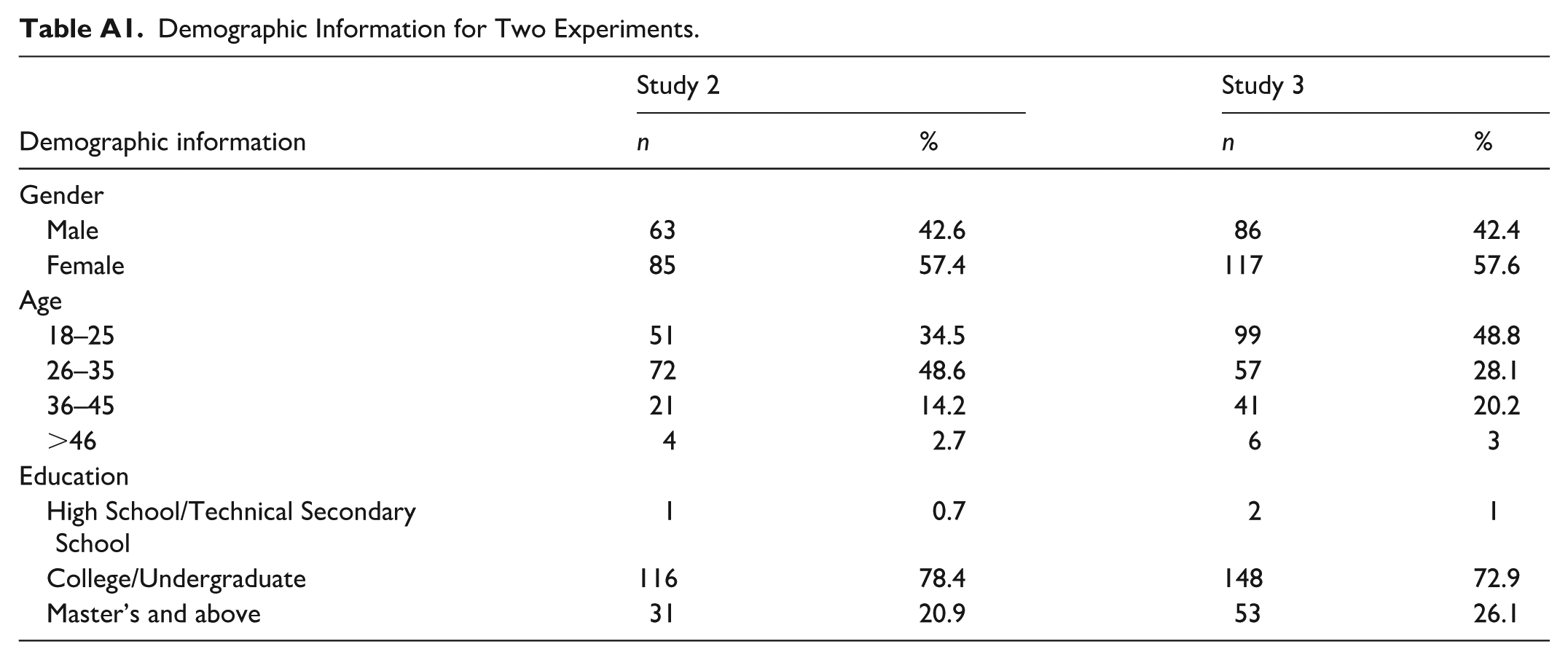
To test the proposed hypotheses (Figure 1 illustrates the research model), we conducted three studies: one electroencephalography (EEG) experiment and two behavioral experiments. Study 1 examined the effects of influencer type and creative tourism type from a neurophysiological perspective, revealing that the combination of human influencers with traditional creative tourism and virtual influencers with contemporary creative tourism significantly enhanced immersion and travel willingness, as supported by EEG data. Study 2 investigated the mediating roles of authenticity, novelty, and immersion in influencing travel intentions. The findings confirmed the congruence effect between influencers and creative tourism types, showing that when human influencers promoted traditional creative tourism, authenticity and immersion acted as chain mediators. However, the chain-mediation effect of novelty and immersion was only related to the creative tourism type, regardless of the influencer type, in the case of contemporary creative tourism. Study 3 explored the moderating role of creative self-efficacy in the relationship between immersion and travel intentions, focusing on individual psychological traits. Demographic information for both behavioral studies is summarized in Table A1.
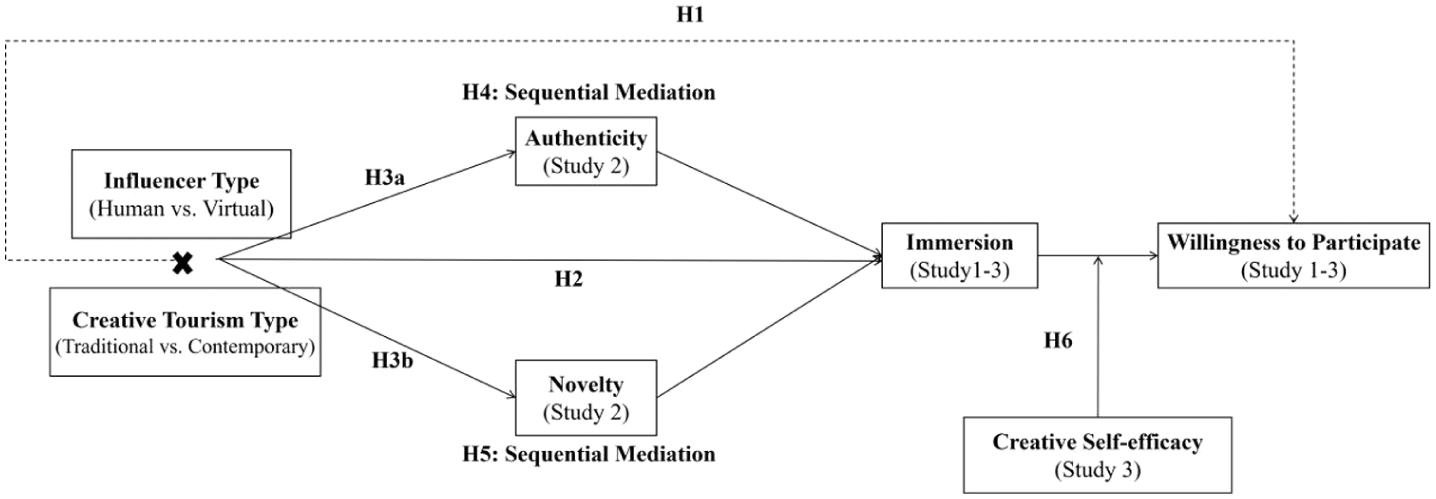
The research model.
To enhance the generalizability of our findings, we employed six different creative tourism cases in the experiments. Sample size was determined using GPower software (Faul et al., 2009), with statistical power set at 80%, an effect size f of 0.25, and a significance level of α = .05 (two-tailed). The analysis indicated that the EEG experiment (within-subjects design) required approximately 24 participants per group, while the behavioral experiments (between-subjects design) required a minimum of 124 participants, considering mediation and moderation effects. To ensure robust results, we appropriately increased the sample size. Participants received monetary compensation upon completing the study. The stimulus videos and full measurement scales are provided in the Supplemental Material.
Although common method variance (CMV) is generally less problematic in experimental research (Kock et al., 2021), we implemented precautionary measures to minimize potential bias. These included emphasizing questionnaire anonymity and clarifying that responses were not categorized as right or wrong, thereby reducing response bias (Ma & Li, 2023).
Study 1
To test H1, we first conducted an EEG experiment, aiming to address three key questions: (1) whether a match between influencer type and creative tourism type affects potential tourists’ travel willingness, (2) whether different promotional video content elicits significant differences in EEG rhythms, and (3) whether EEG rhythms reflect participants’ immersion when viewing different tourism content.
Method
In the determination of the influencer image, most of the current influencers are female, and thus, female was chosen as the stimulus material for the influencers in this study (Mirowska & Arsenyan, 2023). Referring to previous studies (Meng et al., 2025; J. Zhang et al., 2025) and excluding the influence of other factors, the appearance of human influencers and virtual influencers in this experiment, such as hairstyles and clothing, as well as gestures in the video, remained the same, except for the facial image. The materials for both traditional and contemporary creative tourism were carefully selected and designed by experts with experience and expertise in cultural tourism and professors in related fields. The UNESCO Creative Cities Network (UCCN) is dedicated to connecting creative cities in different regions of the world with different levels of income, capacity, and population, and a total of 14 creative cities in China have been included. Based on the experiences related to creative tourism in these cities within the network, and considering factors such as cultural representativeness, participation, and creativity, we identified the Hangzhou Wangxingji Folding Fan Creative Experience as the experimental material for traditional creative tourism and the Hangzhou International Animation Festival Voice Actor Creative Journey as the experimental material for contemporary creative tourism (both are in China). In video production, we comprehensively considered visual, auditory, structural, and emotional factors, including unifying the video resolution, composition, color brightness, and body language of the influencers, ensuring non-disturbing background music, fixing the script of the narration with a consistent timbre and tone, controlling the video duration and structure, as well as moderately displaying the emotion of the activity and maintaining overall stylistic coordination.
With the maturation of neuroscience methods, the combination of multimodal physiological sensing (such as eye tracking and heart rate) and self-assessment methods (Tauscher et al., 2019) has resulted in reduced measurement bias for immersion, allowing for more accurate predictions of the impact of immersion on marketing conversion. EEG technology captures in real time the brain waves generated by the synchronized activity of clusters of neurons in the brain, and the frequency and intensity of these waves reflect the functional characteristics of the brain in different states. We used EEG to record participants’ EEG activity to measure EEG rhythms associated with cognitive and emotional states. To analyze participants’ cognitive and emotional states in depth, we focused on three types of EEG rhythms: theta, alpha, and beta waves. Theta waves, with a frequency of 4 to 7 Hz, are associated with depth perception and cognitive-emotional processing, and are usually seen during deep thinking or memory retrieval (Dini et al., 2022). Alpha waves, with a frequency of 7 to 12 Hz, are associated with a relaxed wakefulness state, and are usually seen when resting with the eyes closed or during inattention (Sauseng et al., 2005). Beta waves, with a frequency of 12 to 30 Hz, are associated with focused attention. (Berends et al., 2013).
This experiment was conducted in the laboratory of a university. The experimental apparatus was the MindBridge-NaNo. The electrodes were located at 32 standard positions according to an extended version of the International 10 to 20 Electrode Placement System. The stimuli were presented on a 19-inch Liquid Crystal Display (LCD; 1,920 × 1,080 pixels, 60 Hz) screen. Before the start of the experiment, all participants were seated 70 cm from the front of the computer screen, basic demographic information was filled out, and baseline and resting brainwave measurements were taken to ensure data synchronization. The EEG task was programmed and presented using Python 3.8 software (see Figure 2). The experiment officially began with four videos appearing randomly once each to avoid sequential effects. For each completed video, participants were required to fill out a scale on immersion and willingness to engage once. In addition, participants were required to determine the type of influencer and the type of creative tour in that video, filling in whether they had any experience with that tour (all subjects indicated that they had not participated in the tour in the video). Each experiment lasted about 10 min. For immersion, we mainly referred to the scale developed by scholars Agarwal and Karahanna (Agarwal & Karahanna, 2000; Jung & Im, 2021); willingness to participate was adapted from Maghrifani et al. (2022)’s scale, which is a 7-point Likert scale, with 1 meaning “strongly disagree” and 7 meaning “strongly agree.”
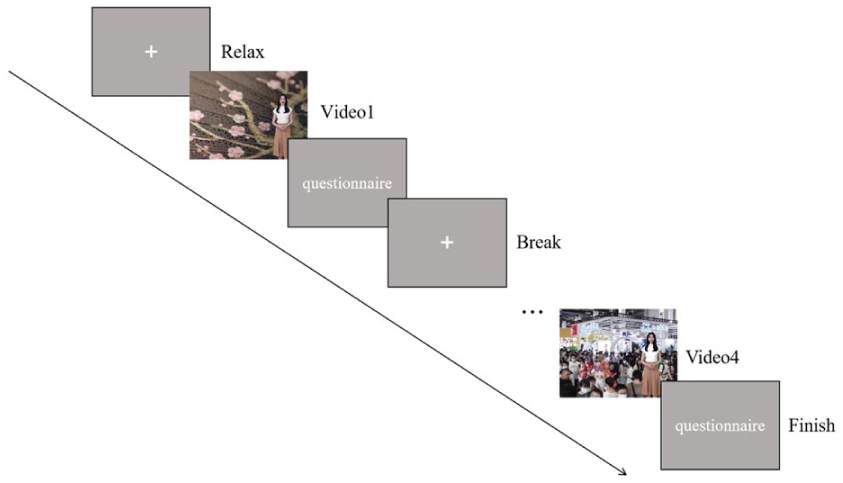
EEG experiment task flow.
We recruited 38 Chinese university students to participate in the experiment, which totaled 33 valid subjects (Mage = 21.52, 51.5% female) after excluding invalid subjects who failed to correctly determine the type of influencer and creative tourism. All participants were right-handed, had normal or corrected-to-normal visual acuity, and had no history of neurological or psychiatric disorders. None had previously participated in a similar experiment. Additionally, all participants were required to be well-rested and not take stimulants or psychotropic drugs. The study was approved by the Science and Technology Ethics Committee of this University (number: RLSSZYJ202412210048), and all subjects signed an informed consent form before the experiment and were paid a certain amount of money at the end of the experiment.
Questionnaire Results
We conducted a two-factor repeated measures Analysis of Variance (ANOVA) with type of influencer and type of creative tourism as the independent variables, and immersion and willingness to participate as dependent variables, respectively, and tested them using SPSS Statistics 26 software.
The results indicated that neither influencer type (F(1, 32) = 1.94, p = .174,
Interaction Effects of Creative Tourism and Influencers on Immersion.
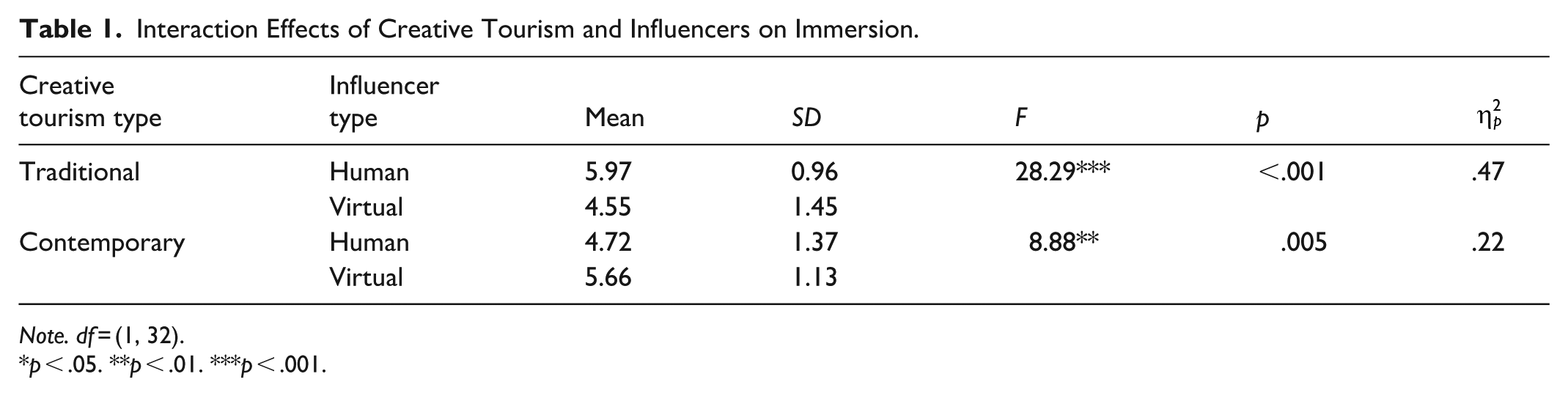
Note. df = (1, 32).
p < .05. **p < .01. ***p < .001.
Regarding willingness to participate, neither the main effect of influencer type (F(1, 32) = 0.55, p = .464,
Interaction Effects of Creative Tourism and Influencers on Willingness to Participate.
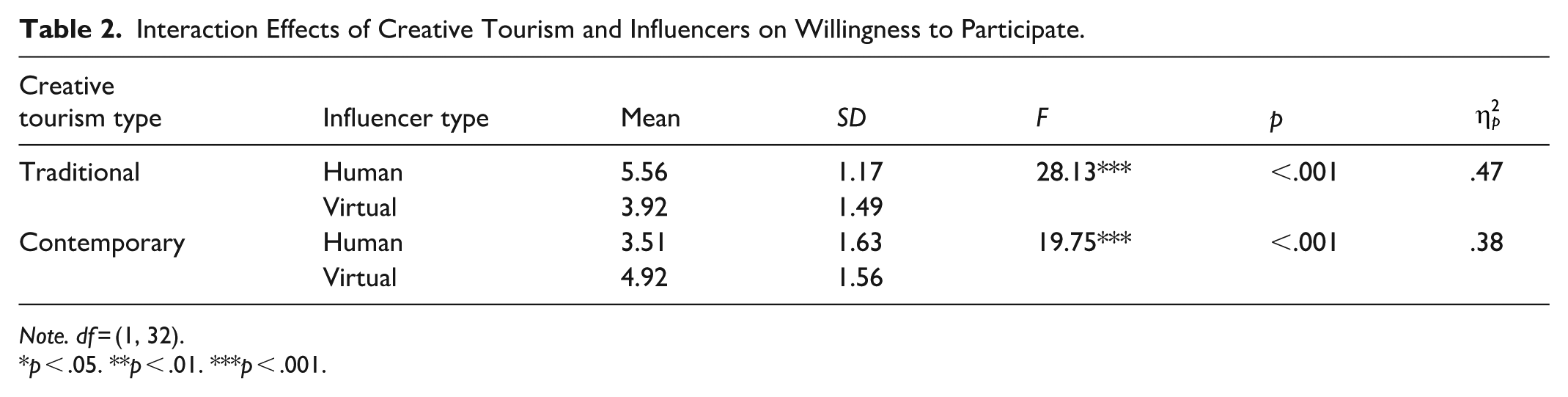
Note. df = (1, 32).
p < .05. **p < .01. ***p < .001.
EEG Results
During the experiment, EEG signals were recorded at a sampling rate of 1000 Hz, with bilateral mastoids (A1 and A2) used as reference electrodes. The impedance of each electrode was kept below 5 kΩ. Data preprocessing was conducted using the EEGLAB toolbox to obtain clean EEG data for subsequent analysis. First, the data were downsampled to 500 Hz to reduce computational load while preserving key information. Then, a bandpass filter (0.1–30 Hz) was applied, along with a notch filter to remove 50 Hz power line interference. Re-referencing was performed using whole-brain averaging, followed by independent component analysis (ICA) for artifact removal.
For power spectral density (PSD) analysis, 30-second EEG segments corresponding to the video playback period were extracted. The data were baseline-corrected to remove direct current (DC) offset, ensuring a more accurate representation of dynamic EEG activity. A sliding window approach (window length = 2 s, 50% overlap) was used to compute PSD values for the 12 electrode sites (F3, Fz, F4, C3, Cz, C4, P3, Pz, P4, O1, Oz, and O2), quantifying EEG activity across different frequency bands. A two-factor repeated measures ANOVA was conducted to examine the effects of influencer type and creative tourism type on EEG PSD values, and the data met the assumptions of normality and sphericity.
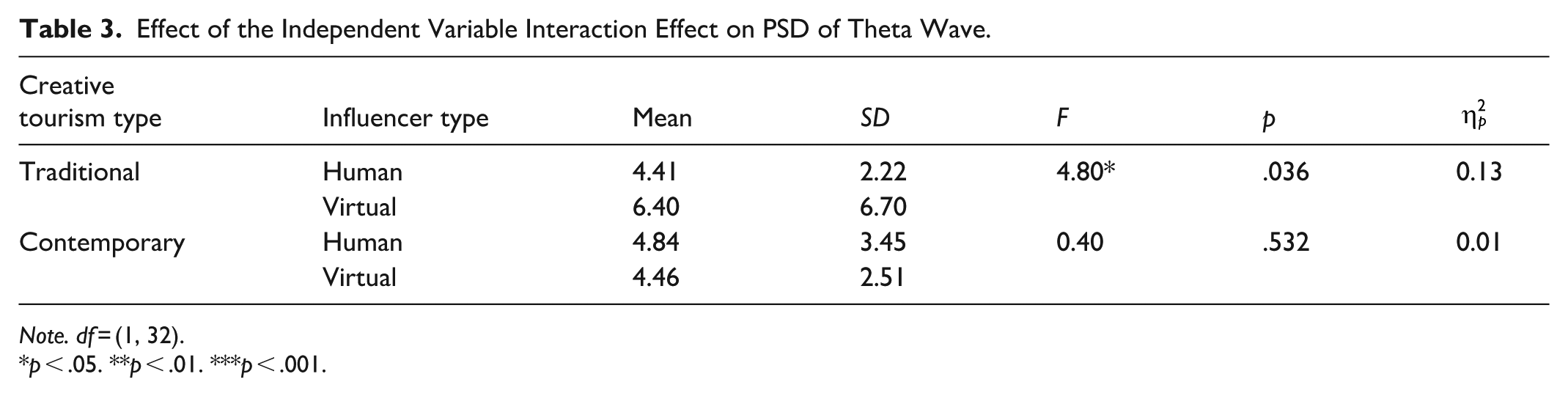
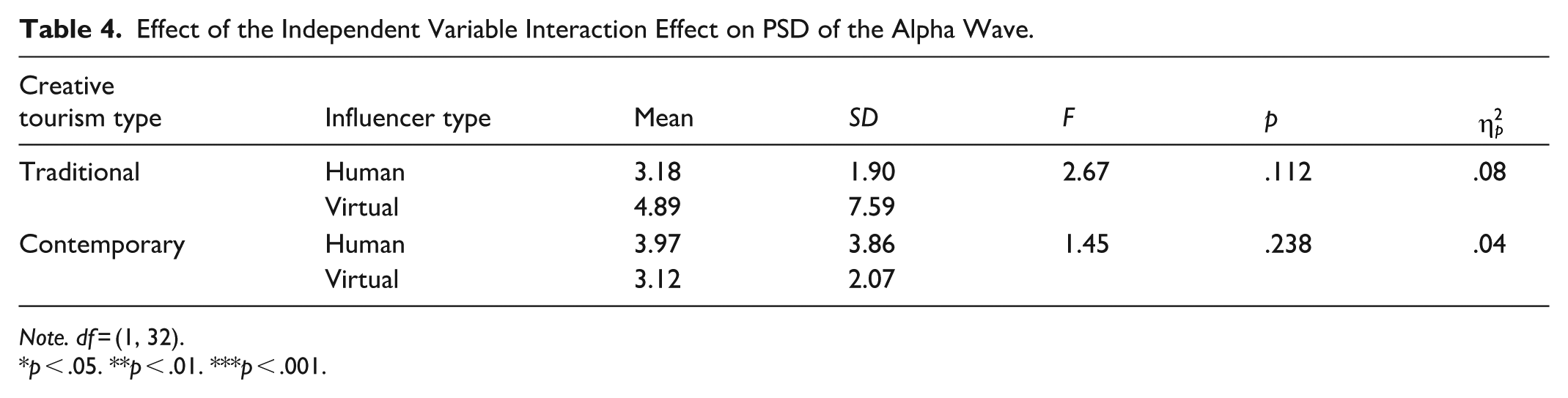
For theta and alpha waves, the main effects of influencer (F(1, 32) = 1.84, p = .185,
Effect of the Independent Variable Interaction Effect on PSD of Theta Wave.
Note. df = (1, 32).
p < .05. **p < .01. ***p < .001.
Effect of the Independent Variable Interaction Effect on PSD of the Alpha Wave.
Note. df = (1, 32).
p < .05. **p < .01. ***p < .001.
A bivariate correlation analysis was conducted to examine the relationships between EEG data and questionnaire responses. Theta wave and alpha wave were negatively, though not significantly, correlated with immersion and willingness to participate. Beta waves showed no significant correlation with immersion but were negatively correlated with willingness to participate (R = −.17, p = .046). Additionally, a strong positive correlation was found between immersion and willingness to participate (R = .67, p < .001).
Combining behavioral and EEG data reveals an interaction pattern where well-matched combinations (human-traditional, virtual-contemporary) exhibited a tendency toward lower alpha and theta power, although not all simple effects reached statistical significance. While EEG spectral changes are highly context-dependent, within this video-viewing task, these neural modulations appear to align with differences in information processing efficiency. Specifically, prior studies note that inconsistent stimuli often provoke increased theta activity due to cognitive conflict (Tang et al., 2013; Tang et al., 2021). Accordingly, the lower theta power observed in the matched conditions suggests that congruent pairings may facilitate smoother processing and reduce cognitive burden. Furthermore, the alpha wave is usually associated with a relaxed state of mind, but decreases when concentration is required (Sauseng & Klimesch, 2008; Sauseng et al., 2005). The decreased alpha activity in well-matched conditions may therefore reflect greater attentional focus. Conversely, mismatched pairings likely demand additional cognitive effort to resolve incongruent cues, contributing to the elevated EEG activity and the subsequent reduction in self-reported immersion.
Discussion
The findings indicate that human influencers paired with traditional creative tours and virtual influencers paired with contemporary creative tours significantly enhance immersion and willingness to participate. This matching effect was consistently observed in both behavioral and EEG data, providing strong support for Hypothesis 1 (H1).
Study 2
Based on Study 1, we found a strong positive correlation between immersion and willingness to participate. To further investigate the psychological mechanisms underlying participation willingness, Study 2 was conducted to examine whether authenticity, novelty, and immersion serve as mediating variables in influencing participation intention, thereby testing Hypotheses 2, 3, 4, and 5.
These hypotheses address two key questions: (1) whether watching video content elicits immersion in potential tourists, which subsequently influences their willingness to participate; and (2) whether different combinations of influencers and creative tourism formats affect immersion through two distinct perceptual pathways, authenticity and novelty, which in turn shape participation willingness. To test these hypotheses, we selected “Beijing Qucun Liuli Creative Tour” and “Beijing 798 Digital Creative Painting Tour” as traditional and contemporary creative tourism materials, respectively.
Method
Study 2 employed a 2 (influencer type: human, virtual) × 2 (creative tourism type: traditional, contemporary) between-subjects design. A total of 160 Chinese participants were recruited via the Credamo platform to take part in the experiment. The influencer types remained consistent with Study 1. To ensure that participants focused on the creative tourism experiences themselves, the videos did not explicitly mention Beijing as the destination (both are in China).
The questionnaire was structured in two sections. In the first part, participants were asked to understand the background of the experiment and the precautions to be taken, and to fill in basic information about themselves, including gender, age group, and education level. In the second part, subjects are randomly assigned to one of the four experimental groups and asked to imagine that they are browsing on social media when they stumble upon a travel video recommended by an influencer. After watching the video, participants were asked to determine whether they had participated in the tourism activity mentioned in the video and recall the type of influencer and type of creative tourism in the video before completing the scales of authenticity, novelty, immersion, and willingness to participate in tourism. Upon completion, they received a reward for their participation.
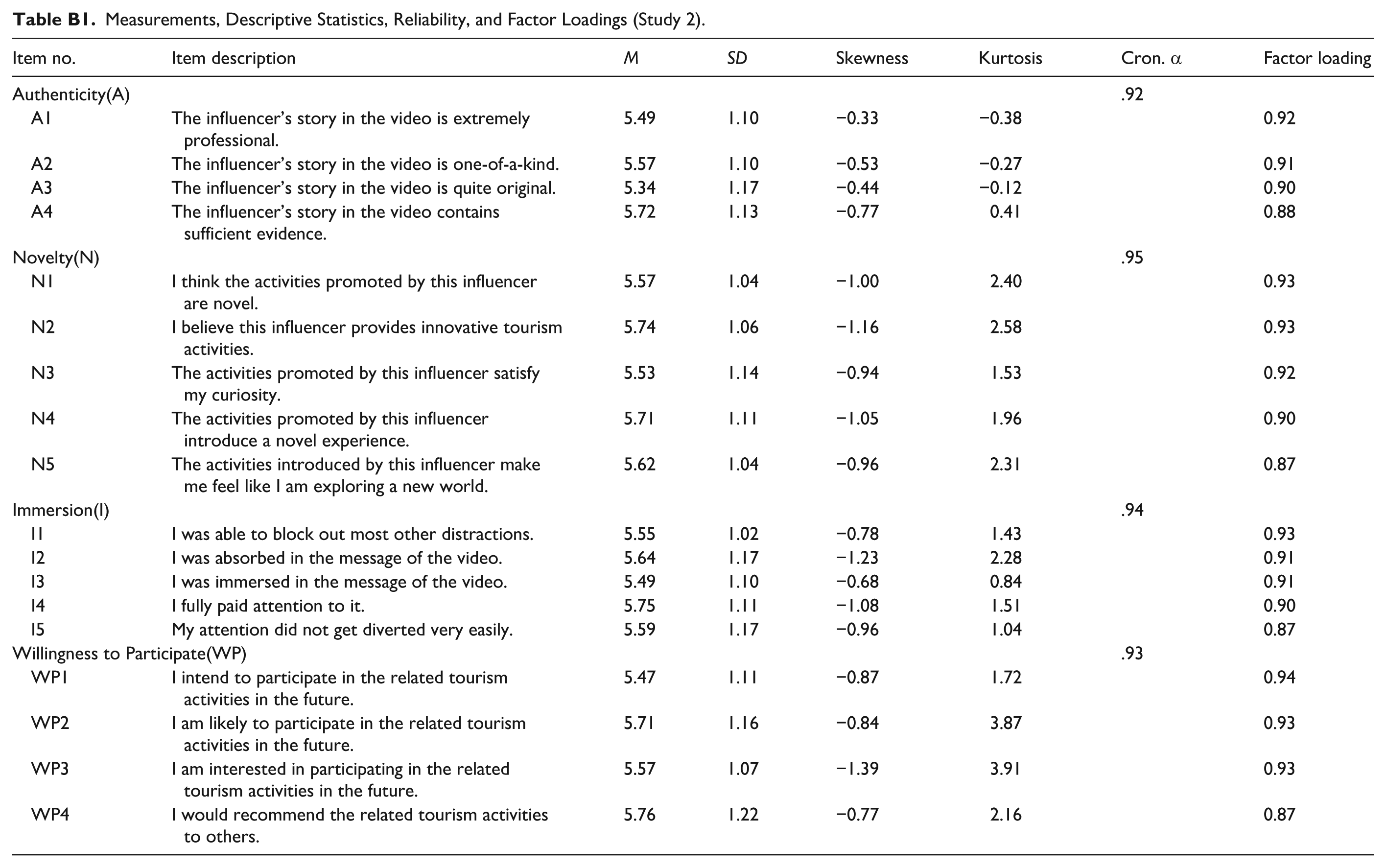
For variable measurement, Experiment 2 measured authenticity, novelty, immersion, and willingness to participate in tourism. The scales for immersion and willingness to participate in tourism remained the same as in Study 1, while authenticity was measured using a 7-point scale containing four items (Hyuck et al., 2020), and novelty was measured using Dang (2020) 7-point scale containing five items. Detailed measurement items, reliability, and factor loadings are reported in Table B1.
Results
Based on the results of the manipulation check, 10 participants (6%) were unsuccessful in recalling the influencer type and the creative tourism type. In addition, our study focused on the willingness of potential tourists to participate, so 2 participants who answered that they had participated in the tourism activities in the video were also excluded. The final valid sample consisted of 148 participants, with 57.4% being female.
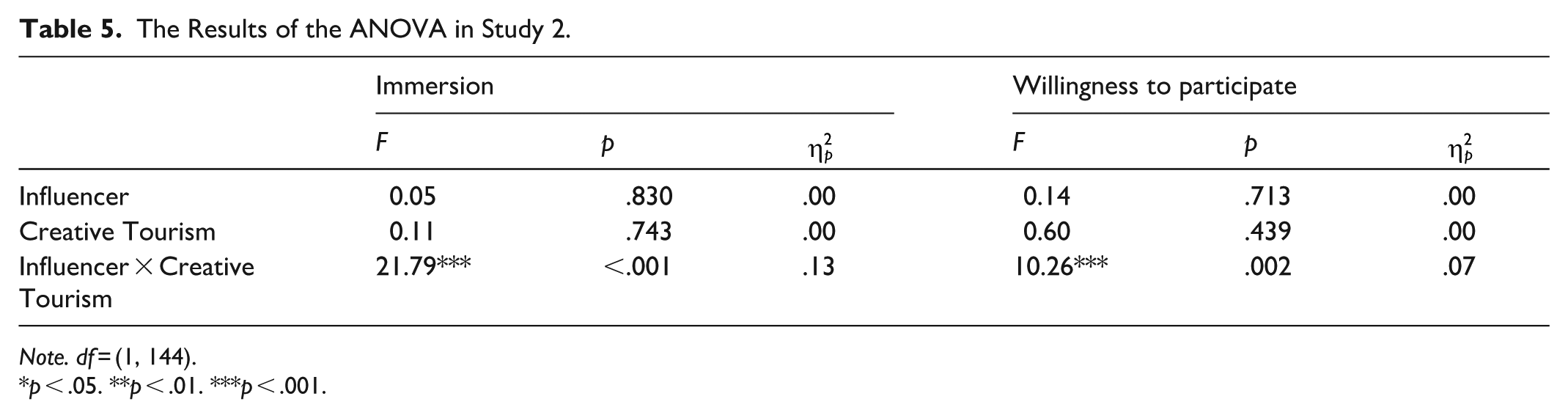
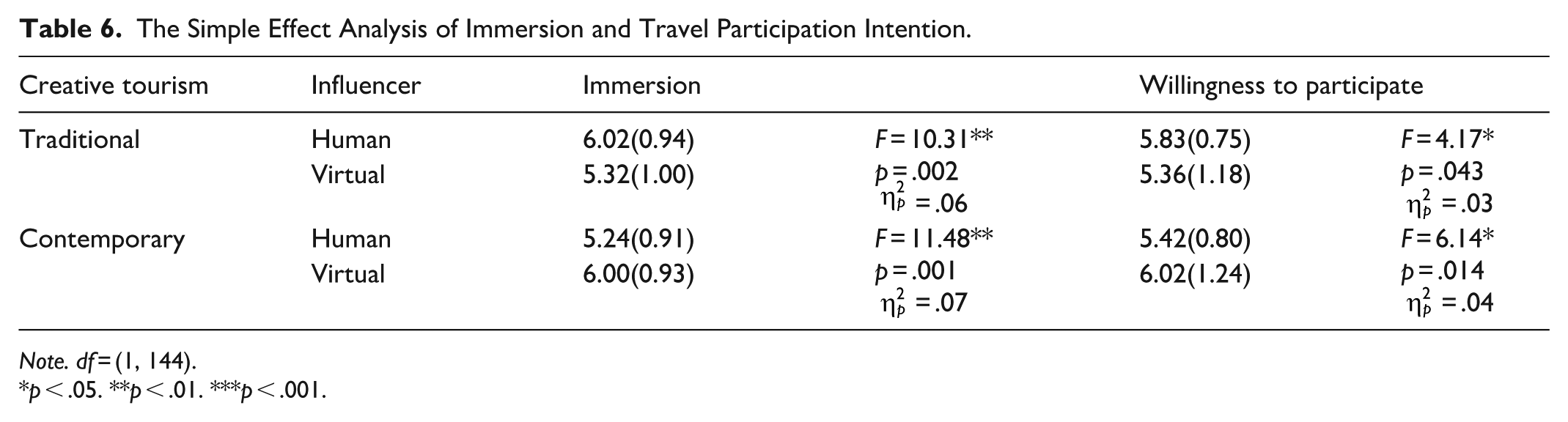
A two-way ANOVA was conducted to assess the effects of influencer type and creative tourism type on immersion, and willingness to participate. As illustrated in Table 5, the results showed that the main effects of both influencer type and creative tourism type were not significant, but the interaction between the two was significant for immersion (F(1, 144) = 21.79, p < .001, η2p = .13) and willingness to participate in tourism (F(1,144) = 10.26, p = .002,
The Results of the ANOVA in Study 2.
Note. df = (1, 144).
p < .05. **p < .01. ***p < .001.
The Simple Effect Analysis of Immersion and Travel Participation Intention.
Note. df = (1, 144).
p < .05. **p < .01. ***p < .001.
Moderated Mediation
Next, we used the SPSS Process v.4.2 macro (Model 8), coding creative tourism as the independent variable (Traditional = 0, Contemporary = 1) and influencer as the moderator (Human = 0, Virtual = 1), immersion as the mediator, and willingness to participate as the dependent variable. The results revealed a significant indirect effect of immersion (Index = 0.92, SE = 0.25, 95% CI [0.47, 1.44]). Specifically, as indicated by the negative sign, the human-traditional condition yielded higher willingness to participate than the human-contemporary condition by enhancing immersion (b = −0.49, SE = 0.16, [−0.83, −0.20]). Conversely, as indicated by the positive sign, the virtual-contemporary condition yielded higher willingness to participate than the virtual-traditional condition via immersion (b = 0.43, SE = 0.16, [0.15, 0.76]). Thus, Hypothesis 2 was supported.
Authenticity and Novelty
Further, we used Model 8 to test the mediating role of authenticity and novelty separately. Based on the same coding scheme, the results demonstrated that, as reflected by the negative coefficient, the human-traditional condition yielded higher immersion than the human-contemporary condition through increased authenticity (b = −0.34, SE = 0.14, 95% CI [−0.62, −0.09]), whereas this effect was not significant for the virtual influencer (b = 0.12, SE = 0.13 [−0.13, 0.38]), supporting H3a. Conversely, the positive sign confirms the virtual-contemporary condition led to deeper immersion than the virtual-traditional condition via novelty (b = 0.52, SE = 0.15 [0.26, 0.82]), supporting H3b. Therefore, H3 was supported. However, the human-contemporary condition also produced higher immersion than the human-traditional condition by triggering higher novelty (b = 0.36, SE = 0.13 [0.15, 0.64]). As visually depicted in Figure 3, the mean values of authenticity and novelty highlight these conditional patterns.
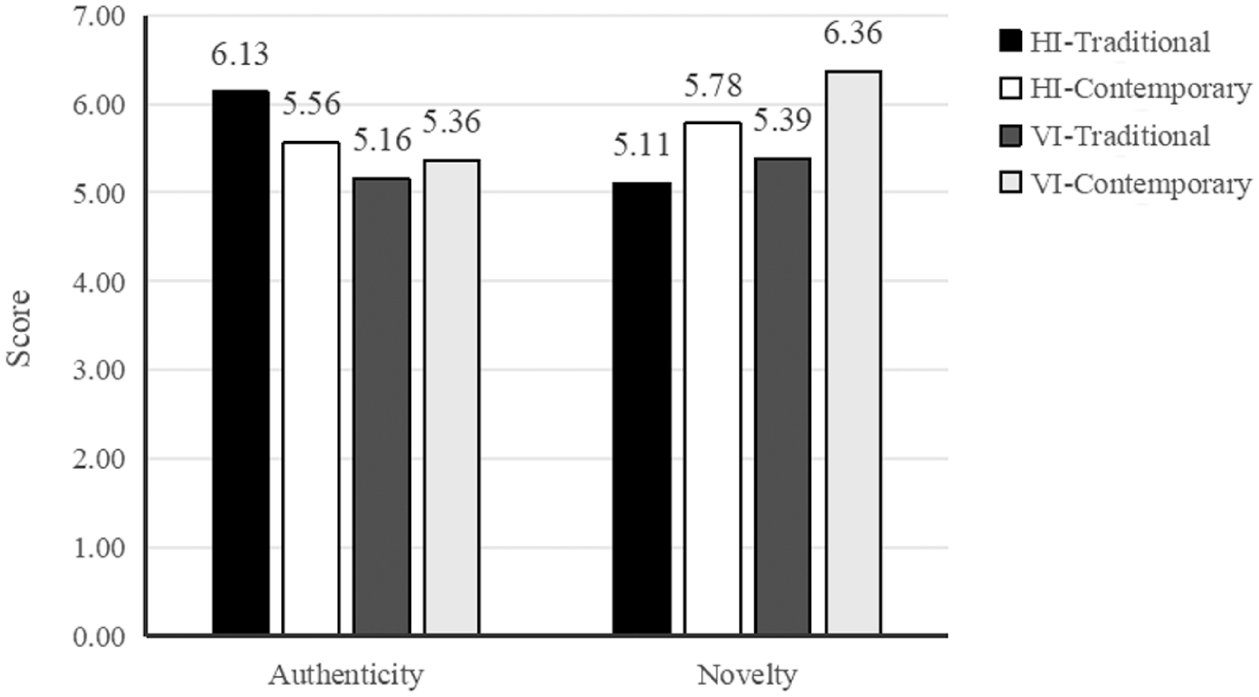
Mean values of authenticity and novelty for different groups.
Chain-Mediated Effects
Finally, we used model 85 to test H4. We specified creative tourism as the independent variable (Traditional = 0, Contemporary = 1), influencer as the moderator (Human = 0, Virtual = 1), authenticity/novelty and immersion as sequential mediators, and willingness to participate as the dependent variable. For the authenticity chain, the negative coefficient indicates the human-traditional condition yielded higher willingness to participate than the human-contemporary condition by enhancing authenticity and thus immersion (b = −0.16, SE = 0.09, 95% CI [−0.37, −0.03]), whereas the virtual influencer was non-significant (b = 0.06, SE = 0.07 [−0.06, 0.21]), supporting H4. For the novelty chain, the positive sign confirms the virtual-contemporary condition generated greater willingness to participate than the virtual-traditional condition by increasing novelty and thus immersion (b = 0.19, SE = 0.07 [0.07, 0.34]), supporting H5. Notably, the positive effect shows that the human-contemporary condition also produced higher willingness to participate via this novelty-immersion chain than the human-traditional condition (b = 0.13, SE = 0.06 [0.04, 0.26]). Figure 4 illustrates the comprehensive outcomes of the mediation model in Study 2.
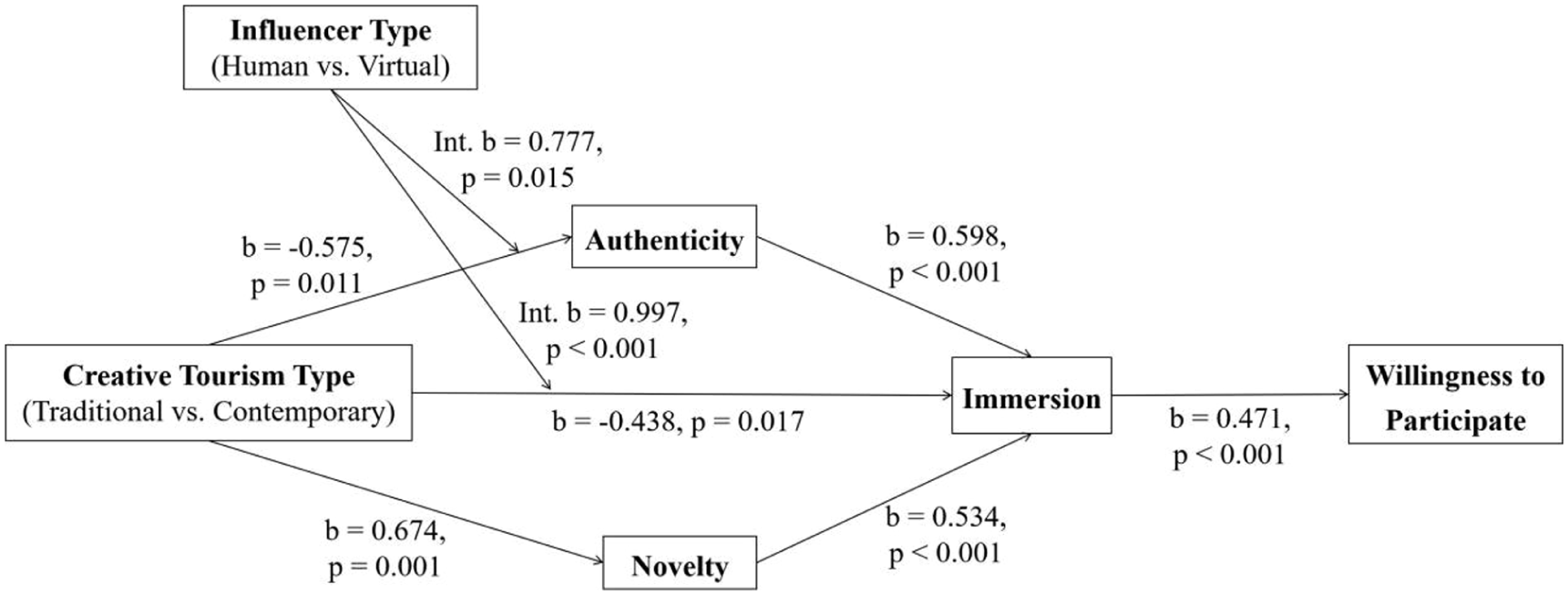
Outcomes of the mediation model in Study 2.
Discussion
The results of this study confirmed the mediating role of immersion in the influence of influencers and creative tourism types on participation intentions. Additionally, we identified a chain mediating effect of authenticity/novelty and immersion, and tested H2, H3, H4, and H5. Specifically, when human influencers recommend traditional creative tourism, authenticity enhances immersion and thus positively affects willingness to participate; when virtual influencers recommend contemporary creative tourism, higher novelty enhances immersion and positively affects willingness to participate. These results reveal how the match between creative tourism and influencers can effectively enhance participation intention through different perceptual mediation pathways.
We unexpectedly found that novelty is primarily content-driven rather than influencer-driven. This dominance of content novelty likely occurs because contemporary creative tourism features technology-embedded activity characteristics and highly participatory framing. The intense and immersive nature of these specific activities serves as a strong novel stimulus, making the innovative experience itself the primary driver of tourist appeal, regardless of the influencer type.
Study 3
In addition to external factors, intrinsic consumer characteristics may influence willingness to participate in tourism behaviors (Rehman & Al-Ghazali, 2022; Šostar & Ristanović, 2023). The important feature that differentiates creative tourism from general tourism activities is the highly participatory and personalized experience (Islam & Sadhukhan, 2024), amplifies the relevance of creative self-efficacy-an individual’s intrinsic belief in their creative capabilities. We propose that creative self-efficacy moderates the relationship between immersion and willingness to participate.
Method
Study 3 recruited 220 Chinese participants online to complete the experiment. Participants were randomly assigned to one of four conditions in a 2 (influencer type: human, virtual) × 2 (creative tourism type: traditional, contemporary) between-subjects design. The selected creative tourism activities, validated by experts, included “Jingdezhen Ceramic Creative Production” (traditional) and “Wuhan Zhiyin Immersive Theater Experience” (contemporary) in China. To minimize confounding effects, destination descriptions were omitted from stimulus videos to focus exclusively on activity characteristics.
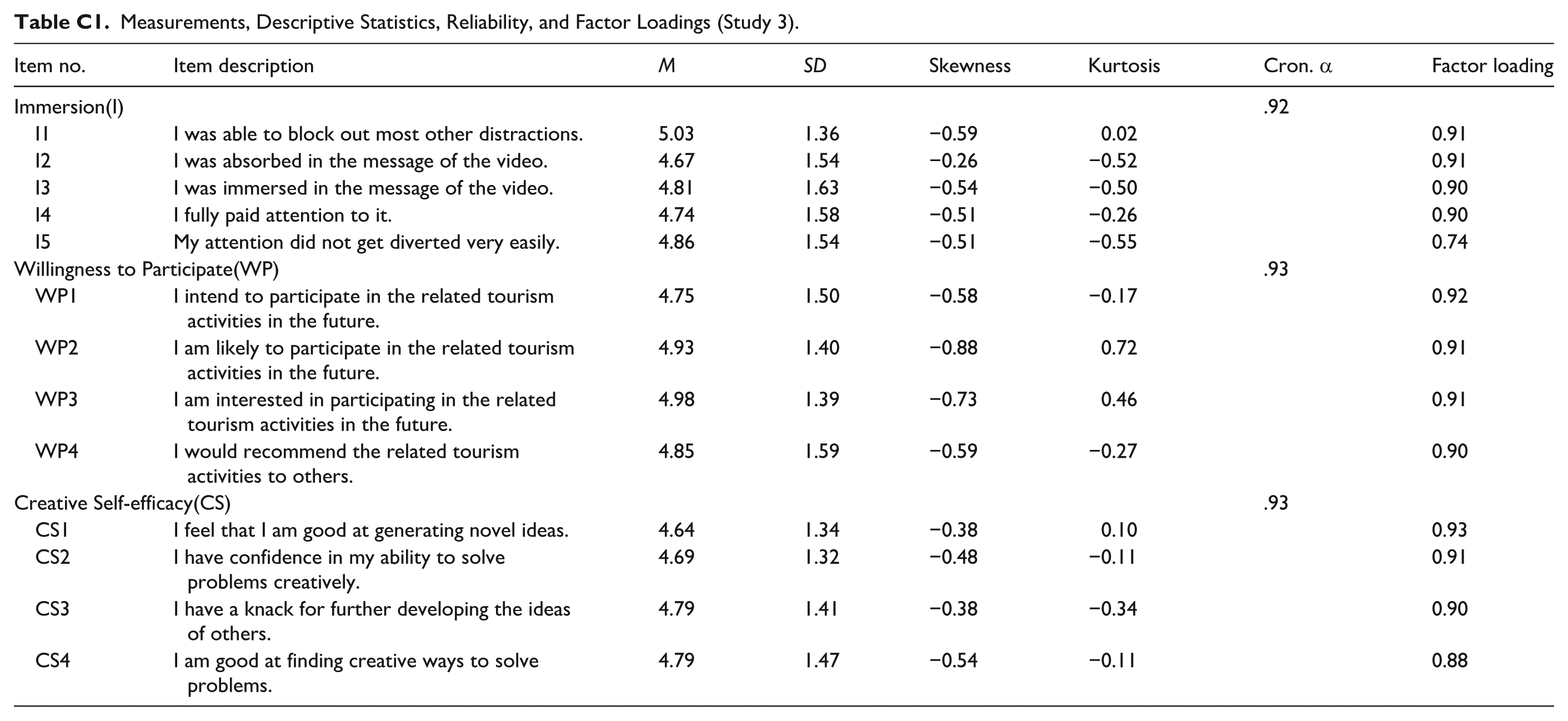
First, participants were instructed to imagine encountering an influencer-recommended travel video on social media and to answer the question of whether or not they had participated in the travel activity in the video after randomly watching a video. As a manipulation check, they were also asked to recall the type of influencer and the type of creative tour in the video; next they were asked to complete scales of immersion, willingness to engage, and creative self-efficacy. In addition, we counted the subjects’ basic information, including gender and age. Measures of immersion and willingness to participate were consistent with previous studies, while creative self-efficacy was measured using the Creative Self-Efficacy Scale developed by Tierney and Farmer (2002), which has four items, namely, “I feel that I am good at generating novel ideas,” “I have confidence in my ability to solve problems creatively,” “I have a knack for further developing the ideas of others” and “I am good at finding creative ways to solve problems.” The scale is scored on a 7-point Likert scale, with 1 being “strongly disagree” and 7 being “strongly agree,” with higher scores implying greater creative self-efficacy on the part of the individual. The measurement items, reliability, and factor loadings are presented in Table C1.
Results
Eight participants (3.6%) failed manipulation checks (influencer/tourism type identification) and nine reported prior experience with the activities, resulting in 203 valid responses. Two two-factor ANOVA were first performed. As comprehensively detailed in Table 7 and Table 8, the results were consistent with previous studies: the matching combinations (human-traditional and virtual-contemporary) significantly increased immersion and willingness to participate. Using Process’s Model 8 test (maintaining the identical dummy coding: Traditional = 0, Contemporary = 1; Human = 0, Virtual = 1), immersion was found to play a significant mediating role in the influence of influencer and creative tourism type on willingness to participate. Matched combinations increased immersion, positively affecting willingness to participate. As the conditional indirect effects show, the human-traditional condition yielded higher willingness to participate than the human-contemporary condition through enhanced immersion (indirect effect = −0.60, BootSE = 0.22, 95% CI [−1.03, −0.18]), while the virtual-contemporary condition yielded higher willingness to participate than the virtual-traditional condition through enhanced immersion (indirect effect = 0.65, BootSE = 0.20, [0.27, 1.06]), a result that reaffirms H2.
The Results of the ANOVA in Study 3.
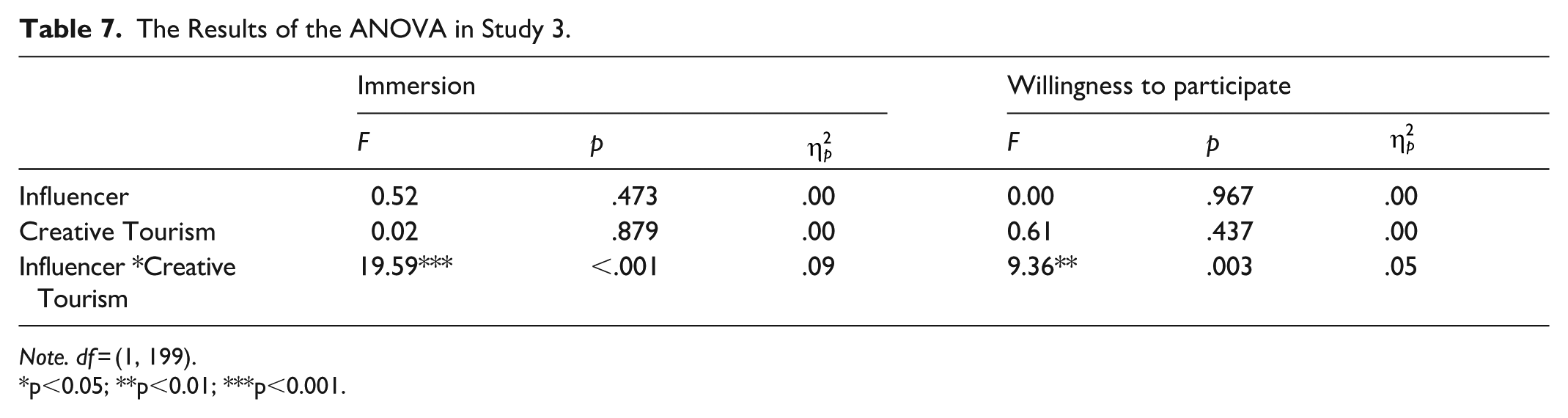
Note. df = (1, 199).
p<0.05; **p<0.01; ***p<0.001.
The Simple Effect Analysis of Immersion and Travel Participation Intention.
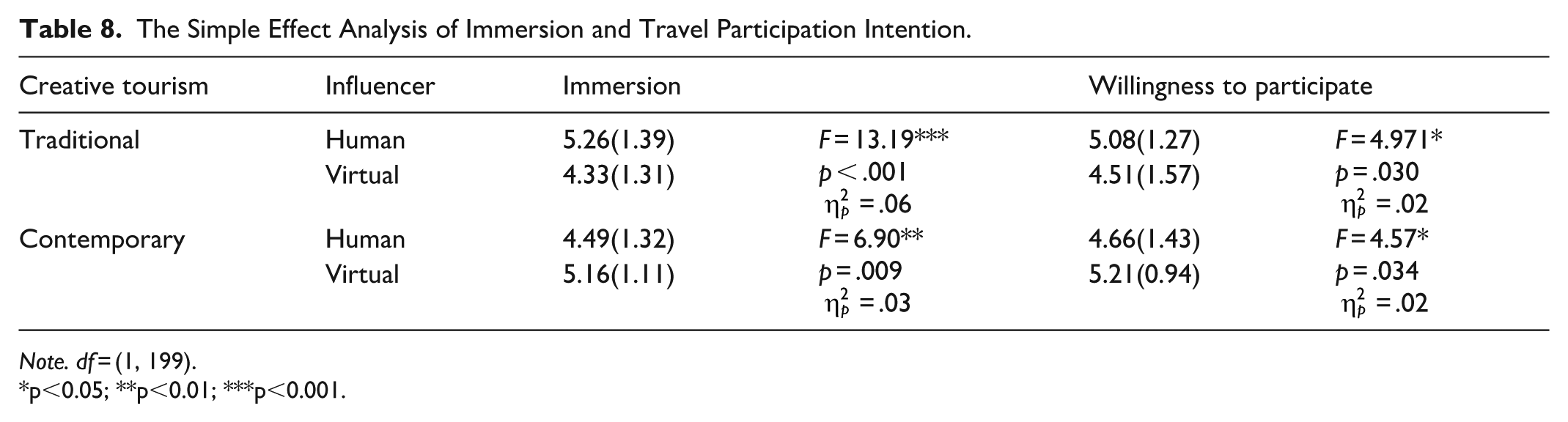
Note. df = (1, 199).
p<0.05; **p<0.01; ***p<0.001.
Moderation of Creative Self-Efficacy
We used Process Model29, maintaining prior coding for tourism and influencer, with creative self-efficacy as the second moderator, immersion as mediator, and willingness to participate as the dependent variable. The results showed that creative self-efficacy directly increased willingness to participate (b = 0.62, p < .001). However, as illustrated in Figure 5, the negative interaction coefficient reveals that it negatively moderated the immersion-willingness relationship (b = −0.08, p = .001), contrary to our positive hypothesis. As further detailed by the simple slope analysis in Figure 6, immersion yielded a stronger positive effect on willingness to participate when creative self-efficacy was low (b = 0.45, SE = 0.06, 95% CI [0.33, 0.56]) than when it was high (b = 0.23, SE = 0.06 [0.11, 0.36]). Therefore, H6 was not supported. Furthermore, to formally confirm the mechanism, the overall index of moderated mediation was significant (Index = −0.14, BootSE = 0.06, [−0.28, −0.03]).
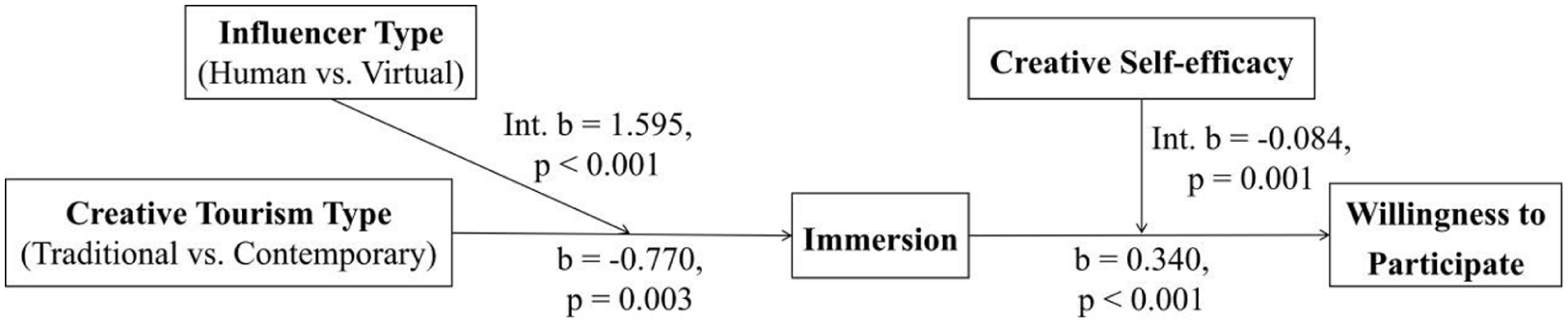
Results of the model in Study 3.
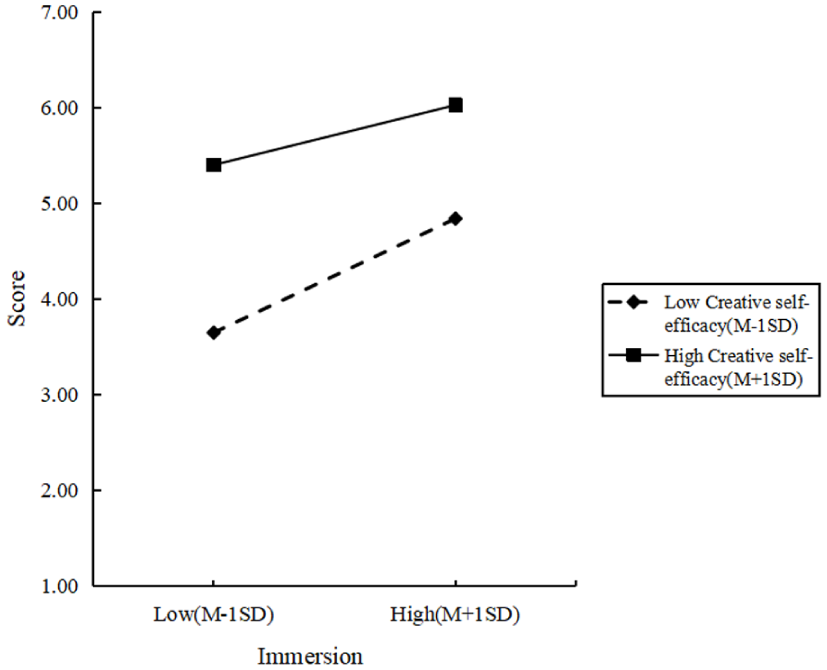
Simple slope analysis of creative self-efficacy.
Discussion
Study 3 confirmed the moderating role of creative self-efficacy but revealed a surprising direction: it negatively moderated the relationship between immersion and participation intention. In other words, immersion had a stronger effect on willingness to participate among individuals with lower creative self-efficacy, while this effect diminished among those with higher creative self-efficacy. This unexpected result underscores the importance of considering individual psychological traits when analyzing tourist behavior in creative contexts.
General Discussion
Influencer marketing is becoming increasingly prevalent in fields such as tourism (Guo et al., 2025), and the rise of creative tourism as a growing sector within the tourism industry is attracting significant attention (Baixinho et al., 2021; Oh et al., 2007). Determining which type of creative tourism is better suited to human versus virtual influencers is critical for government agencies and private enterprises aiming to broaden destination exposure, promote cultural tourism, and drive economic returns.
In this study, we systematically examined the interactive effects of influencer type and creative tourism type on potential tourists’ willingness to participate, using three experimental studies. We first identified two effective matching patterns that enhance immersion and participation intention:
Human influencers paired with traditional creative tourism,
Virtual influencers paired with contemporary creative tourism—a match supported by both physiological and behavioral data (Study 1).
In Study 2, we further demonstrated that these matches operate through distinct perceptual mechanisms: the human–traditional combination elicits a stronger sense of authenticity, while the virtual–contemporary combination enhances perceived novelty. Interestingly, we also found that the human–contemporary pairing could stimulate novelty perceptions, differing from prior findings suggesting that human influencers primarily affect willingness through the authenticity path (Wang et al., 2025).
Given the highly personalized nature of creative tourism, Study 3 explored the role of consumers’ creative self-efficacy in their decision-making. Results showed that individuals with low creative self-efficacy were more likely to rely on immersion during video viewing to increase their willingness to participate, whereas high self-efficacy individuals tended to base their decisions on more autonomous judgments.
These findings have important implications for both theoretical advancement and practical applications in tourism marketing.
Theoretical Contributions
Through a systematic series of experimental designs and multidimensional data analysis, this study provides novel insights into the role of influencers in creative tourism marketing.
First, we demonstrate that the influencer–content congruence effect is also applicable in creative tourism, a context largely overlooked in prior research. Existing studies on influencer-content matching mainly focus on product type (F. Liu & Lee, 2024), brand personality (J. Zhang et al., 2025), and narrative style (Mo & Wang, 2025) in commercial settings. Although some tourism scholars have examined the fit between influencer type and destination type (Hernández-Méndez et al., 2026; K. Zhang et al., 2025), applications in creative tourism remain scarce (Ye et al., 2021). To bridge this gap, we investigated the interaction between two types of creative tourism (traditional and contemporary) and two influencer types (human and virtual). The results revealed two optimal congruent pairings (human-traditional; virtual-contemporary), thereby extending existing congruence theory to a more participatory and cultural tourism context and clarifying the differentiated value of virtual influencers.
Second, we introduce EEG as a novel methodological tool to verify the congruence effect. Previous studies have predominantly used self-report measures (Jiang et al., 2024; Prayag et al., 2017), which are subject to recall bias and do not capture real-time cognitive responses. EEG, by contrast, offers non-invasive, high-temporal-resolution evidence of neural activity (Daliri et al., 2013; Morin, 2011). Our findings demonstrate an interaction pattern in which congruent combinations (human-traditional; virtual-contemporary) showed a converging tendency toward lower alpha and theta power. While acknowledging that EEG band power is highly context-dependent, within our experimental paradigm, these neural modulations are consistent with behavioral reports of stronger immersion and may reflect greater attention and smoother processing. In contrast, incongruent pairings likely demand higher cognitive load to resolve conflicting cues, as potentially reflected in the increased EEG activity. This integration of neuroscientific and behavioral data not only reinforces the reliability of congruence effects but also contributes a neurocognitive perspective to tourism marketing research.
We further revealed that for traditional creative tourism, authenticity and immersion sequentially mediated the effect of human influencers on willingness to participate, while for contemporary creative tourism, novelty and immersion mediated the effect of virtual influencers. Specifically, potential tourists’ novelty perceptions do not depend on the influencer but on the content of the endorsement: both human and virtual influencers elicit higher novelty perceptions when the type of recommendation is contemporary creative tourism. This result sheds light on the unique psychological mechanisms of different types of influencers when promoting different creative tours, complementing previous comparative influencer studies.
Third, our study offers an in-depth comparison of virtual and human influencers. While virtual influencers typically evoke higher novelty in standard retail settings by serving as the primary novel stimulus (Franke et al., 2023; H. Li et al., 2023; Yang et al., 2023), we found that in creative tourism, novelty is primarily content-driven. Both human and virtual influencers elicited higher novelty when promoting contemporary creative tourism. Unlike traditional product endorsements, contemporary creative tourism features high content intensity, technology-embedded activities, and participatory framing. This highly immersive environment overshadows the virtual avatar’s innate novelty, shifting tourists’ locus of attention from the influencer to the interactive experience. Consequently, content-driven novelty predominates influencer-driven novelty, clarifying the distinct mechanisms operating within experiential versus traditional marketing contexts.
Finally, our study incorporates individual psychological traits, particularly creative self-efficacy, into the influencer effectiveness model. While existing research mostly emphasizes external cues (He & Song, 2009; Y. Song et al., 2024; Zhou et al., 2024), our study reveals that creative self-efficacy negatively moderates the immersion-participation relationship. Drawing on the Theory of Planned Behavior (TPB), which posits that behavioral intention is influenced by attitudes, subjective norms, and perceived behavioral control (Ajzen & Driver, 1992), we interpret creative self-efficacy as a form of perceived control that influences how individuals convert attitudes into behavior. This extends TPB’s application to experience-based tourism and highlights the need to consider personal creativity beliefs in understanding tourist decision-making.
Managerial Implications
This study also offers practical insights for tourism marketers, particularly in influencer selection and content strategy.
First, influencer selection should follow the principle of time alignment as much as possible (Mo & Wang, 2025). For traditional creative tourism, such as traditional handicraft making or experiential activities of history and culture, marketers should prioritize human influencers because this high temporal alignment will give a sense of match. By showing real emotions and cultural heritage, human influencers can enhance tourists’ perceived authenticity and immersion of the tourism content, thereby increasing participation willingness. Conversely, virtual influencers are better suited for contemporary creative tourism, which includes activities such as virtual reality experiences and digital art exhibitions. Their inherently tech-driven nature aligns with contemporary themes, enhancing tourists’ perception of novelty. This precise matching can improve marketing effectiveness and enhance destination competitiveness.
Second, content innovation is crucial. Our findings show that contemporary creative tourism inherently generates novelty, regardless of influencer type. This finding implies that the appeal is driven more by the technologically rich and unique nature of the content itself, rather than by the type of influencer presenting it. Even human influencers can evoke novelty if promoting modernized traditional tourism. Therefore, in cases where it is difficult to find suitable human influencers, it is possible to infuse contemporary elements and expressions into traditional creative tourism to make it more innovative and attractive. Such innovative packaging can effectively enhance the novelty perception of tourists, which may lead to the same excellent marketing effect as human influencer promotion. Therefore, managers should invest resources in the contemporary expression of creative tourism activities, such as developing interactive tourism programs that integrate technology and culture, or designing creative tourism activities that meet the perception of new experiences today (Ketter, 2020). At the same time, marketers should emphasize these innovations in the promotion process and demonstrate the unique charm of tourism activities to potential tourists through multiple channels to stimulate their interest.
Finally, personalized marketing is key. Since creative self-efficacy negatively moderates the immersion-participation link, marketers should tailor strategies: For low creative self-efficacy tourists, emphasize immersive, emotional experiences through high-quality video content design, enhancing interactivity, and triggering emotional resonance, as well as emphasizing the cultural and emotional values behind tourism activities through storytelling. For tourists with a high sense of creative self-efficacy, the personalization, uniqueness, and innovativeness of tourism activities should be highlighted, with emphasis on their unique interactive scenes and high-tech special effects, as well as the design of links that allow tourists to participate in creative design, such as customizing their own ceramic works or taking part in the creation of theatrical roles. By thoughtfully segmenting target audiences based on tourists’ psychological traits (e.g., creative self-efficacy), marketers can optimize their promotional strategies to effectively enhance engagement and participation.
Limitations and Future Research
This study has limitations. First, we used female influencers due to their market dominance (Mirowska & Arsenyan, 2023). Although studies suggest gender does not affect influencer-content matching (Mo & Wang, 2025), consumer responses may vary. Furthermore, future research should account for other potential stimulus confounds, such as influencer attractiveness, video production quality, and participants’ prior familiarity beyond basic participation history.
Secondly, modern tourists increasingly seek personalization and novelty (Ketter, 2020). While we identified the negative moderating effect of creative self-efficacy, its underlying mechanisms remain unclear. Future studies could examine: How different tourist types engage with creative tourism content (Tan et al., 2014), Cross-cultural differences in self-efficacy’s moderating effect. Moreover, other factors such as companion types (e.g., family, friends; Vada et al., 2022) may also influence the moderating factors of creative tourism choices and are worth exploring in future research.
Finally, our controlled lab-based EEG setting and brief video exposures do not replicate the highly distracting nature of organic social media browsing or the complexity of actual participation decisions. Future field studies are needed to validate these findings in real-world environments. While we focus on influencer type and content, external factors like pricing and service quality also influence consumer decisions. Additionally, our sample and stimuli were limited to Chinese creative cities. Therefore, future research should build comprehensive models integrating these external factors and explore diverse cultural contexts to enhance the findings’ generalizability.
By addressing these gaps, future studies can further advance influencer marketing research in creative tourism.
Footnotes
Appendix A
Demographic Information for Two Experiments.
| Demographic information | Study 2 | Study 3 | ||
|---|---|---|---|---|
| n | % | n | % | |
| Gender | ||||
| Male | 63 | 42.6 | 86 | 42.4 |
| Female | 85 | 57.4 | 117 | 57.6 |
| Age | ||||
| 18–25 | 51 | 34.5 | 99 | 48.8 |
| 26–35 | 72 | 48.6 | 57 | 28.1 |
| 36–45 | 21 | 14.2 | 41 | 20.2 |
| >46 | 4 | 2.7 | 6 | 3 |
| Education | ||||
| High School/Technical Secondary School | 1 | 0.7 | 2 | 1 |
| College/Undergraduate | 116 | 78.4 | 148 | 72.9 |
| Master’s and above | 31 | 20.9 | 53 | 26.1 |
Appendix B
Measurements, Descriptive Statistics, Reliability, and Factor Loadings (Study 2).
| Item no. | Item description | M | SD | Skewness | Kurtosis | Cron. α | Factor loading |
|---|---|---|---|---|---|---|---|
| Authenticity(A) | .92 | ||||||
| A1 | The influencer’s story in the video is extremely professional. | 5.49 | 1.10 | −0.33 | −0.38 | 0.92 | |
| A2 | The influencer’s story in the video is one-of-a-kind. | 5.57 | 1.10 | −0.53 | −0.27 | 0.91 | |
| A3 | The influencer’s story in the video is quite original. | 5.34 | 1.17 | −0.44 | −0.12 | 0.90 | |
| A4 | The influencer’s story in the video contains sufficient evidence. | 5.72 | 1.13 | −0.77 | 0.41 | 0.88 | |
| Novelty(N) | .95 | ||||||
| N1 | I think the activities promoted by this influencer are novel. | 5.57 | 1.04 | −1.00 | 2.40 | 0.93 | |
| N2 | I believe this influencer provides innovative tourism activities. | 5.74 | 1.06 | −1.16 | 2.58 | 0.93 | |
| N3 | The activities promoted by this influencer satisfy my curiosity. | 5.53 | 1.14 | −0.94 | 1.53 | 0.92 | |
| N4 | The activities promoted by this influencer introduce a novel experience. | 5.71 | 1.11 | −1.05 | 1.96 | 0.90 | |
| N5 | The activities introduced by this influencer make me feel like I am exploring a new world. | 5.62 | 1.04 | −0.96 | 2.31 | 0.87 | |
| Immersion(I) | .94 | ||||||
| I1 | I was able to block out most other distractions. | 5.55 | 1.02 | −0.78 | 1.43 | 0.93 | |
| I2 | I was absorbed in the message of the video. | 5.64 | 1.17 | −1.23 | 2.28 | 0.91 | |
| I3 | I was immersed in the message of the video. | 5.49 | 1.10 | −0.68 | 0.84 | 0.91 | |
| I4 | I fully paid attention to it. | 5.75 | 1.11 | −1.08 | 1.51 | 0.90 | |
| I5 | My attention did not get diverted very easily. | 5.59 | 1.17 | −0.96 | 1.04 | 0.87 | |
| Willingness to Participate(WP) | .93 | ||||||
| WP1 | I intend to participate in the related tourism activities in the future. | 5.47 | 1.11 | −0.87 | 1.72 | 0.94 | |
| WP2 | I am likely to participate in the related tourism activities in the future. | 5.71 | 1.16 | −0.84 | 3.87 | 0.93 | |
| WP3 | I am interested in participating in the related tourism activities in the future. | 5.57 | 1.07 | −1.39 | 3.91 | 0.93 | |
| WP4 | I would recommend the related tourism activities to others. | 5.76 | 1.22 | −0.77 | 2.16 | 0.87 | |
Appendix C
Measurements, Descriptive Statistics, Reliability, and Factor Loadings (Study 3).
| Item no. | Item description | M | SD | Skewness | Kurtosis | Cron. α | Factor loading |
|---|---|---|---|---|---|---|---|
| Immersion(I) | .92 | ||||||
| I1 | I was able to block out most other distractions. | 5.03 | 1.36 | −0.59 | 0.02 | 0.91 | |
| I2 | I was absorbed in the message of the video. | 4.67 | 1.54 | −0.26 | −0.52 | 0.91 | |
| I3 | I was immersed in the message of the video. | 4.81 | 1.63 | −0.54 | −0.50 | 0.90 | |
| I4 | I fully paid attention to it. | 4.74 | 1.58 | −0.51 | −0.26 | 0.90 | |
| I5 | My attention did not get diverted very easily. | 4.86 | 1.54 | −0.51 | −0.55 | 0.74 | |
| Willingness to Participate(WP) | .93 | ||||||
| WP1 | I intend to participate in the related tourism activities in the future. | 4.75 | 1.50 | −0.58 | −0.17 | 0.92 | |
| WP2 | I am likely to participate in the related tourism activities in the future. | 4.93 | 1.40 | −0.88 | 0.72 | 0.91 | |
| WP3 | I am interested in participating in the related tourism activities in the future. | 4.98 | 1.39 | −0.73 | 0.46 | 0.91 | |
| WP4 | I would recommend the related tourism activities to others. | 4.85 | 1.59 | −0.59 | −0.27 | 0.90 | |
| Creative Self-efficacy(CS) | .93 | ||||||
| CS1 | I feel that I am good at generating novel ideas. | 4.64 | 1.34 | −0.38 | 0.10 | 0.93 | |
| CS2 | I have confidence in my ability to solve problems creatively. | 4.69 | 1.32 | −0.48 | −0.11 | 0.91 | |
| CS3 | I have a knack for further developing the ideas of others. | 4.79 | 1.41 | −0.38 | −0.34 | 0.90 | |
| CS4 | I am good at finding creative ways to solve problems. | 4.79 | 1.47 | −0.54 | −0.11 | 0.88 | |
Acknowledgements
The authors express their sincere appreciation to the editors and reviewers for their thoughtful guidance and constructive feedback.

Ethical Considerations
The study was approved by the Science and Technology Ethics Committee of Donghua University (number: RLSSZYJ202412210048) on Month 12, 2024, and all subjects signed an informed consent form prior to the experiment and were paid a certain amount of money at the end of the experiment.
Author Contributions
Chengkun Tang: Conceptualization; Data curation; Investigation; Project administration; Writing—original draft; Writing—review & editing. Li Wang: Data curation; Formal analysis; Investigation; Methodology; Visualization; Writing—original draft; Writing—review & editing. Ying Fang: Data curation; Writing—review & editing.
Funding
The authors received no financial support for the research, authorship, and/or publication of this article.
Declaration of Conflicting Interests
The authors declared no potential conflicts of interest with respect to the research, authorship, and/or publication of this article.
Data Availability Statement
The datasets generated during and/or analyzed during the current study are not publicly available due the protection of all subjects but are available from the corresponding author on reasonable request.*
Supplemental Material
Supplemental material for this article is available online.
Author Biographies
References
Supplementary Material
Please find the following supplemental material available below.
For Open Access articles published under a Creative Commons License, all supplemental material carries the same license as the article it is associated with.
For non-Open Access articles published, all supplemental material carries a non-exclusive license, and permission requests for re-use of supplemental material or any part of supplemental material shall be sent directly to the copyright owner as specified in the copyright notice associated with the article.
