







Abstract
In short videos, tour guides’ demonstration of sincerity is key to enhancing visitor interaction, though its underlying mechanisms remain underexplored. This study employed a mixed research design to uncover the dimensions of tour guide sincerity and its impact on tourist behaviors. Study 1 analyzed 28,717 reviews using grounded theory, identifying two core dimensions of tour guide sincerity: “sincere atmosphere” and “sincere quality”; it further constructed the “tour guide sincerity → sincerity experience → sincerity response” model. Study 2 validated this model using structural equation modeling through an online questionnaire survey. Results indicate that tour guide sincerity enhances word-of-mouth recommendations via the mediating effects of trust and tour guide attachment, while travel agency reputation positively moderates the influence of sincere atmosphere. This research not only deepens theoretical understanding of sincerity in tourism but also provides actionable guidance for tour guides and marketers to implement effective sincerity-oriented strategies.
Keywords
Introduction
In tourism services, tour guides play a crucial role (Yan et al., 2023). As the core bridge connecting tourists with destinations, their professional competence and service attitudes directly affect tourist satisfaction and word-of-mouth regarding the destination (Sengoz et al., 2025). In recent years, the rise of short video platforms has profoundly reshaped the landscape of tourism marketing. Videos lasting only a few minutes have become key channels for potential tourists to gain inspiration, evaluate destinations, and make consumption decisions (J. Liu et al., 2023). Against this backdrop, many tour guides have actively joined platforms such as TikTok, promoting destinations, sharing professional knowledge, and establishing direct connections with potential tourists through content creation, gradually becoming important influencers and key opinion leaders in tourism marketing (C. Hu et al., 2024). However, some tour guides, in an effort to attract traffic, overly rely on beautifying filters, exaggerated performances, homogenized packaging, or even false advertising, leading to a decline in tourist trust toward short video content (Li, Song et al., 2021). In this context, “sincerity” has gained attention as a communication strategy countering commercialization. For example, Xinjiang tour guide Xiao Qi earned widespread acclaim by demonstrating a sincere attitude and meticulous service in his short videos (CTNEWS, 2023). Zhu Ming, a tour guide with millions of followers, has built a trustworthy professional image amidst the tide of viral content by consistently delivering in-depth knowledge-based explanations and recording videos without beauty filters (CCTV News, 2024). These cases suggest that sincere short video creation by tour guides can not only cultivate loyal online fan communities but also reshape tourist trust in the guiding profession and the tourism industry at large, thereby contributing to the prosperity and development of tourism in the era of short videos.
Sincerity is a constructive concept that points to the process and relationships of interaction (Taylor, 2001). In contrast to authenticity, which emphasizes the inherent attributes of an object (such as a destination or product), sincerity focuses on whether individuals present themselves to others in interpersonal interactions with consistency and genuine engagement (Taylor, 2001). In the field of tourism research, sincerity is regarded as a positive signal that plays a significant role in shaping destination images, marketing corporate brands, and promoting tourism services and products (S. Chen & Wei, 2022; Y. Hu et al., 2021; Y. Liu & Sun, 2023). Extant literature has approached sincerity predominantly from two theoretical lenses: the trait perspective and the communication style perspective. The former views sincerity as a stable personality trait inherent in individuals or organizations, primarily discussing how destinations (Zhou, Li et al., 2024) or tourism enterprises (Sung & Lee, 2023) utilize sincere characteristics to attract consumers. The latter, however, regards sincerity as a contextualized communication method that can be designed and managed, examining how hosts (Li, Liu & Wei, 2021; L. Wu et al., 2024) and hotel service staff (Y. C. Wang et al., 2017) convey sincerity and promote positive interaction through behavioral cues such as smiling and emotional communication during face-to-face service encounters. Thus, sincerity is a complex and multidimensional concept (Taylor, 2001); it can manifest both as a deeply rooted, stable trait (Motoki et al., 2023) and as a contextualized communication strategy serving specific interactional goals (Pico et al., 2020). However, within the emerging digital service context of short videos, the unique connotations, dimensional structure, and functional mechanisms of tour guide sincerity have yet to be systematically deconstructed and explored.
Research in related areas still exhibits the following gaps. On the one hand, studies on sincerity in tourism have rarely focused on the tour guide group, and the connotative structure of tour guide sincerity remains unclear in digital contexts. Existing research has concentrated on entities such as destinations (Zhou, Li et al., 2024), tourism enterprises (Sung & Lee, 2023), or hosts (Taheri et al., 2018; L. Wu et al., 2024), examining how sincerity strategies are employed in traditional offline service settings like hotels, homestays, and scenic spots to influence tourist attitudes and behaviors (Li, Liu & Wei, 2021; Y. C. Wang et al., 2017). However, these studies have generally overlooked tour guides as key service providers. In reality, tour guides exert the most direct and profound influence on tourist experiences and behaviors (Yan et al., 2023), and sincere interactions between guides and tourists are common (Pu et al., 2022; Sengoz et al., 2025). Yet, when such interactions shift to digital contexts like short videos, the scale and frequency of interaction significantly expand, and the relationship transforms into a parasocial one characterized by weak ties (N. Zhang et al., 2025). This shift has led to frequent insincerity issues such as overly beautified content and the construction of fake persona (Meng et al., 2024). This differs markedly from the sincere interactions formed in physical settings, which are characterized by small scale, low frequency, strong ties, and multi-sensory engagement. Therefore, the connotation and structure of tour guide sincerity await systematic examination and construction within the digital context.
On the other hand, there remains a lack of theoretical explanation and empirical testing regarding the intrinsic mechanisms through which tour guide sincerity in short videos translates into tourists’ actual behavioral outcomes. Within tourism literature, limited studies have explored the impact of sincerity on tourist attitudes and behaviors, including environmentally responsible behavior (Li, Liu & Wei, 2021), destination image (L. Wu et al., 2024), and service recovery satisfaction (Y. Hu et al., 2021). However, these studies are largely confined to offline or traditional service encounter contexts, and thus provide an insufficient theoretical basis for understanding the behavioral transformation process of tour guide sincerity in digital contexts.
According to signaling theory and social exchange theory, in digital contexts such as short videos, sincerity functions as a high-quality signal that helps reduce communication uncertainty (Filieri et al., 2023; Spence, 1978). In turn, positive behaviors—such as liking, sharing, and recommending—can be understood as tourists’ reciprocal feedback to such signals (Homans, 1958; Wang, Yao et al., 2026). Unfortunately, very few studies have explained the conversion process from the signaling of tour guide sincerity to the corresponding positive behavioral responses of tourists, despite its critical importance to digital tourism service marketing. Therefore, current research urgently needs to uncover the intrinsic mechanisms by which tour guide sincerity translates into tourist behavior, thereby providing both theoretical explanations and empirical evidence for sincerity-based marketing in digital tourism contexts.
To address the aforementioned research gaps, this study shifts the research focus to the tour guide within the short video context, investigating the marketing utility of their sincere expression and its underlying mechanisms. This study specifically addresses the following research questions:
This study employs a mixed-methods approach combining qualitative and quantitative research. Specifically, study 1 employs a grounded theory methodology to analyze comments on 30 popular Douyin videos, identifying the dimensions of tour guide sincerity and the social exchange dynamics involved. Study 2 employs survey data from 557 tourists to examine the impact of sincerity on word-of-mouth recommendations. This research offers several contributions. It reveals that tour guide sincerity comprises dual dimensions—sincere atmosphere and sincere quality—and clarifies how sincerity elicits positive tourist reactions through a reciprocal social exchange process. Furthermore, it highlights the moderating effect of travel agency reputation. Practically, the study suggests strategies for fostering sincere digital interactions to enhance tour guide marketing effectiveness.
Theoretical Foundations and Literature Review
Sincerity Research in Tourism
Sincerity, a cornerstone concept in marketing, entails trustworthiness, vitality, and openness (Filieri et al., 2023; Sung & Lee, 2023). It correlates with enhanced word-of-mouth recommendations, heightened purchase intentions, and strengthened brand trust (T. Hu & Shi, 2020). In tourism, sincerity diverges from authenticity by prioritizing honest interpersonal interactions over mere product or destination characteristics (Jiang & Tu, 2023), making it critical for characterizing communication among diverse stakeholders (Taylor, 2001).
In tourism, sincerity serves as a critical signal that plays a significant role in shaping brand personality, fostering host-guest interactions, and enhancing tourist satisfaction (S. Chen & Wei, 2022; Y. Hu et al., 2021; Y. Liu & Sun, 2023). Relevant studies have explored this concept mainly from two perspectives: the trait perspective and the communication style perspective (see Table A1). From the trait perspective, sincerity is regarded as a relatively enduring quality rooted within individuals or organizations, primarily examining how tourism enterprises or destinations shape sincere brand personalities characterized by traits such as honesty, vitality, and empathy (Lee & Kim, 2018; Sung & Lee, 2023). For instance, destination sincerity has been conceptualized as encompassing personality traits including honesty, reliability, healthiness, and down-to-earthness (Zhou, Li et al., 2024). From the communication style perspective, related research views sincerity as a contextualized communication method that can be designed and managed, focusing on how service providers (e.g., hosts, bloggers) convey sincerity through specific behavioral cues (such as self-disclosure, tears, and smiles), thereby building trust and influencing tourist behavior (Nguyen et al., 2025; Pico et al., 2020; L. Wu et al., 2024). For example, hosts actively interacting with tourists can promote memorable experiences and enhance environmental responsibility (Li, Liu & Wei, 2021; Taheri et al., 2018). Research also indicates that different communication media (e.g., robotic voice versus human service) lead to variations in sincerity perception, subsequently affecting service outcomes (Y. Hu et al., 2021).
In summary, sincerity in tourism research possesses a dual attribute: it can manifest as a stable, intrinsic personality trait of organizations or individuals (e.g., kindness, reliability; Motoki et al., 2023; Zhou, Li et al., 2024), and it is also frequently conveyed and perceived through contextualized, observable communication cues (e.g., nonverbal signals, information disclosure; Pico et al., 2020; L. Wu et al., 2024). However, most existing literature still treats it as a unidimensional holistic construct, failing to systematically integrate and empirically examine trait-driven sincerity and context-driven sincerity within a unified framework. This study defines tour guide sincerity in the short video context as: the sincerity performance conveyed by tour guides through verbal content, interactive behavior, and contextual design, as subjectively perceived by tourists after watching short videos. This sincerity is reflected both in observable contextualized communication cues and in tourists’ perceptual inferences regarding the guide’s underlying stable traits.
Tour Guide Sincerity in Short Videos
Tour guides, as professionals leading tourists through attractions such as historical sites, scenic spots, and museums, play a vital role in providing cultural and natural insights in engaging ways (Sengoz et al., 2025). Since Smith’s (1961) early academic focus on guides, research has explored how attributes like humor, professionalism, and attractiveness influence tourist satisfaction and behavior (Banerjee & Chua, 2020; S. Li et al., 2022; Sengoz et al., 2025).
With the rise of short video platforms, many tour guides now use these channels to introduce attractions remotely and share travel experiences. Compared to long-form videos and livestreams, short videos (<5 min) reduce dissemination costs while enhancing efficiency and influencing user attitudes/behaviors (J. Liu et al., 2023). Tour guide content is categorized as information- or emotion-oriented (G. Wu & Ding, 2023). Information-oriented videos focus on route planning, pricing, and factual explanations, where authenticity and objectivity—hallmarks of sincerity—impact tourists’ information-seeking (Liu et al., 2023; Y. Liu & Sun, 2023). Emotion-oriented videos employ narrative storytelling to forge emotional bonds, demonstrating sincerity through personal charisma and fostering trust (G. Wu & Ding, 2023).
In previous literature on tour guides in digital environments, how to effectively showcase personal style and interact with tourists has become a hot topic of academic interest (Sengoz et al., 2025). Research indicates that the textual content, virtual avatars, gender information, moral expressions, and honest qualities displayed by tour guides in digital environments directly influence tourists’ perceptions and behaviors (Banerjee & Chua, 2020; Ye & Mattila, 2025). Scholars have noted that when tour guides demonstrate honesty and actively respond to audience feedback, they enhance tourists’ trust and the quality of their sincere experience (Manthiou et al., 2024; Nguyen et al., 2025). Thus, the sincerity displayed by tour guides can also be regarded as a prerequisite for tourists’ positive behaviors.
Overall, scholars widely acknowledge that sincerity serves as an effective means for tour guides to shape positive images and enhance marketing effectiveness in digital environments (Manthiou et al., 2024; Nguyen et al., 2025; Sengoz et al., 2025). However, no studies have yet revealed the underlying mechanisms linking tour guide sincerity in short videos to visitor responses. Empirical research on the conceptual dimensions and influence processes of tour guide sincerity remains relatively scarce.
Theoretical Framework
This study integrates signaling theory, social exchange theory, and parasocial interaction theory to systematically elucidate the influencing mechanism of tour guide sincerity on tourists’ behavioral intentions in the short video context. According to signaling theory, sending and transmitting reliable signals is an antecedent to reducing uncertainty and facilitating mutually beneficial outcomes (Spence, 1978; Xiao et al., 2023). Existing research has applied signaling theory to fields such as short video advertising (L. Hu et al., 2020), live-streaming e-commerce marketing (Luo et al., 2025), and influencer marketing (Myers et al., 2025), noting that reliable signals are crucial for mitigating uncertainty in online sales. Meanwhile, an effective signal must satisfy two conditions: (1) the sending cost must be sufficiently high to deter imitation by low-quality senders; and (2) the signal must clearly reflect the true quality of the signal source (Konuk & Otterbring, 2024; Xiao et al., 2023). Sincerity signals, due to their reliance on intrinsic traits (e.g., warmth, honesty) that are difficult to feign, possess high credibility and discriminative power (Filieri et al., 2023; Y. Liu & Sun, 2023). Accordingly, this study conceptualizes tour guide sincerity in short videos as a reliable signal.
However, signaling theory primarily focuses on the process of signal transmission and identification, offering an insufficient explanation of how signals trigger sustained interactive relationships (Wang, Yao et al., 2026; Xiao et al., 2023). To address this, we introduce social exchange theory to elucidate the social interaction process that unfolds after sincerity signals are received. Social exchange theory, originally proposed by Homans (1958), posits that social behavior is fundamentally based on the reciprocal exchange of valued resources between parties. These resources encompass not only economic resources such as money and goods but also socioemotional resources including affection, support, and trust (Foa & Foa, 1980). Significantly, the transmission of socioemotional resources (e.g., care, friendliness, assistance) can significantly enhance relationship quality and stimulate the recipient’s willingness to reciprocate positively (Wang, Yao et al., 2026). In this study, the sincere service displayed by tour guides in short videos—such as professional knowledge sharing and empathetic advice—can be conceptualized as a typical investment of socioemotional resources. According to the reciprocity principle (Blau, 1964), when tourists perceive the sincerity and value of these resources, they develop a psychological sense of obligation to reciprocate, which may subsequently manifest as positive behavioral intentions such as trust, recommendation willingness, or engagement behaviors (Li, Liu & Wei, 2021; Wang, Yao et al., 2026). Therefore, social exchange theory provides a valuable theoretical lens for explaining how tour guides’ sincerity signals establish beneficial reciprocal relationships with tourists.
Notably, in the short video context—a digital environment predominantly characterized by unidirectional and asymmetrical communication—the premise of bilateral interaction upon which social exchange theory relies faces challenges (Ahmad et al., 2023). Although platforms offer interactive features such as comments and likes, the sheer scale of the audience makes it difficult for creators to engage in deep, bilateral dialogue and exchange with each individual viewer (Sokolova & Kefi, 2020). Consequently, interaction in digital spaces relies more heavily on viewers’ unilateral, imaginary connections with creators, namely parasocial relationships (Sokolova & Kefi, 2020). Accordingly, this study introduces parasocial interaction theory as a complementary analytical framework. Originating from traditional media research, this theory explains the imagined social relationships and interactions between audiences and media personalities (Horton & Wohl, 1956; Shen et al., 2022). Although such relationships are unilaterally established by viewers, the emotional experiences and attitudinal influences they generate resemble those of genuine social bonds (Z. Deng et al., 2022; C. Y. Yang et al., 2025). In digital media environments, an influencer’s credibility, content authenticity, and self-presentation style are key antecedents that evoke such relationships (Sokolova & Kefi, 2020; Sun & Li, 2026). In this study, the sincere and professional image and service dedication displayed by tour guides through short videos constitute significant signals of credibility and attractiveness. These signals effectively evoke viewers’ imagined intimacy, causing unidirectional information to be perceived as socially and emotionally valuable resources, thus laying a theoretical foundation for constructing a tour guide sincerity perception model grounded in social exchange logic.
Study 1
Methods and Data Collection
This study adopts a constructivist grounded theory to examine the conceptualization of tour guide sincerity in short videos and the social exchange processes linking sincerity to tourist perceptions. The proliferation of produced travel videos by guides on Douyin underscores its emergence as a critical marketing platform for promoting tourism products (Wang, Zheng et al., 2026). For tour guides and travel agencies, Douyin has become a vital tool for attracting tourists, enhancing agency reputation, and boosting brand visibility (Sharma et al., 2020).
This study conducts a qualitative analysis of tourist comments posted beneath selected videos to deeply explore the tour guide sincerity perceived by tourists. Leaving comments on videos represents a public, social feedback behavior through which tourists directly express their attitudes toward both the video content and the tour guide. Data collection involved two stages: Step 1: Filter suitable short videos. Metrics such as likes, shares, and comments on videos created by tourism influencers (e.g., tour guides, spokespersons, travel bloggers) indicate tourists’ positive responses (Filieri et al., 2023). For this study, 10 prominent tour guides with over 1 million likes and followers on Douyin were selected. Three highly popular videos from each guide’s collection were chosen, totaling 30 videos (see Table A2). These videos covered informational content (e.g., scenic spot introductions, route planning) and emotional content (e.g., tour group stories, personal insights).
Step 2: Filter comment text. Using Python, the first 1,000 comments per video were extracted, sorted by popularity (likes and replies), and filtered for relevance and validity. After removing irrelevant content (emojis, numbers, @ mentions, etc.), 28,717 valid comments (378,164 characters) were retained. Grounded theory analysis was performed on 24 randomly selected videos, with the remaining 6 reserved to test theoretical saturation.
Data Encoding and Analysis
The study followed Strauss and Corbin’s (1990) methodology for constructivist grounded theory, using NVivo 11.0 for data coding. The process involved open coding, axial coding, and selective coding to identify components of tour guide sincerity and the mechanisms driving tourists’ sincerity reactions.
Additionally, to enhance the trustworthiness of the study, two coders independently coded all comment texts using NVivo software. Prior to coding, the researchers discussed and calibrated the coding boundaries and rules. Following independent coding, inter-coder reliability was assessed by calculating Cohen’s Kappa coefficients (Gamarra & Heron, 2025; see Table A3). Codes with low to moderate consistency were subjected to multiple rounds of discussion until consensus was reached. Ultimately, the Kappa coefficients for all codes ranged from 0.4511 to 0.9403, with percentage agreement ranging from 89.45% to 99.82%, indicating that the coding results possessed good consistency and reliability (Barton & Goh, 2025).
Theoretical Saturation Test
Theoretical saturation is a critical component of grounded theory research. Following Strauss and Corbin (1990), Saturation is confirmed when no new concepts or categories emerge from coded data. Analysis of the six additional videos designated for saturation testing revealed alignment between the logical relationships in Figure 1 and the original coding framework, confirming that the coding process achieved theoretical saturation.
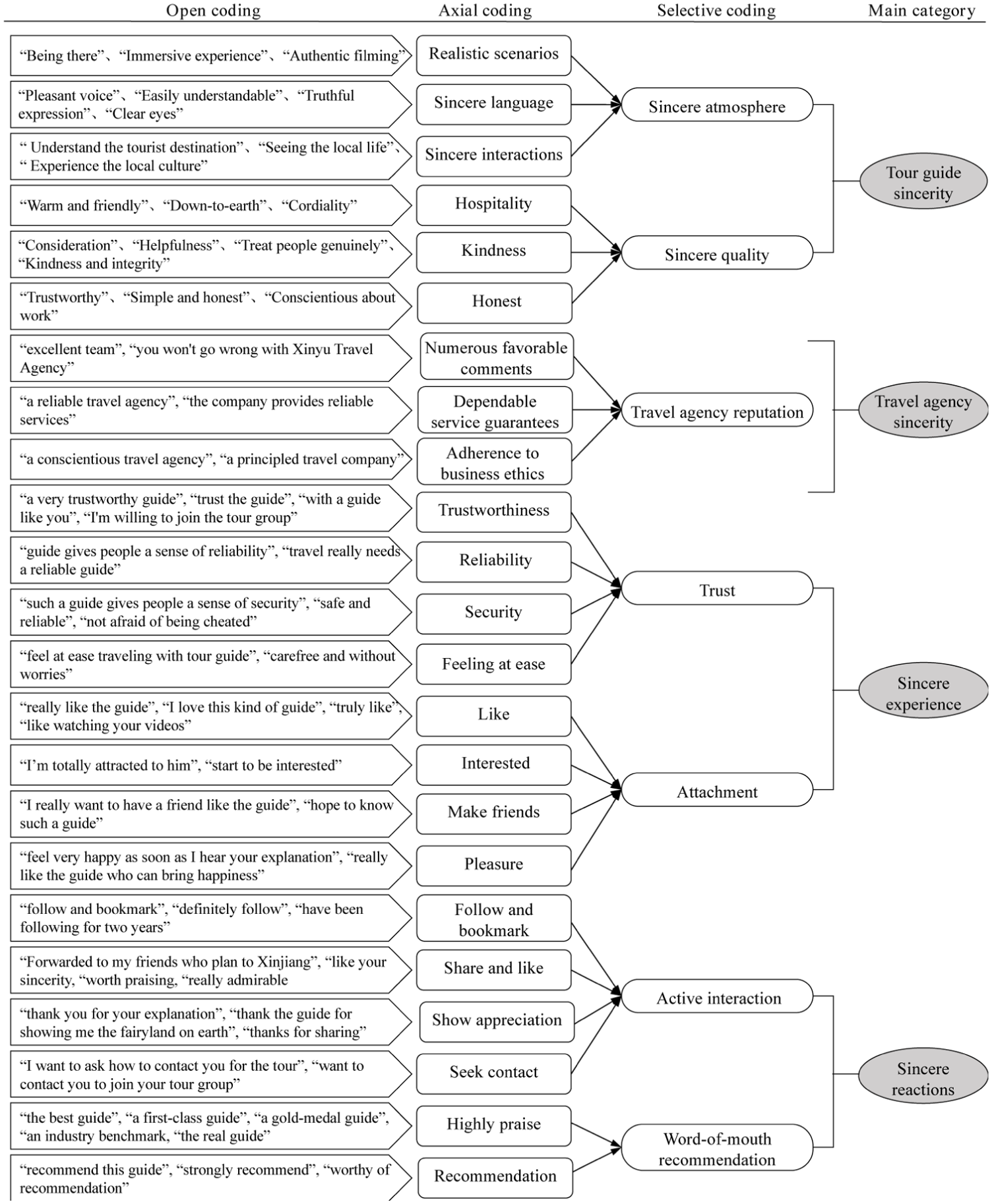
Three-stage coding results.
Study 1 Results
This study conducted a systematic three-level coding analysis of tourist comments. Through this process, two core dimensions of tour guide sincerity in short videos were identified: sincere atmosphere and sincere quality. Furthermore, a reciprocal response model of tour guide sincerity was constructed through a bottom-up approach. Specifically, tour guides send sincerity signals (signal transmission) through short videos. Tourists receive and perceive these signals, and then provide emotional and behavioral feedback (reciprocal response) based on social exchange norms, forming a chain reaction pathway: “tour guide sincerity → sincerity experience → sincerity response” (Figure 2).
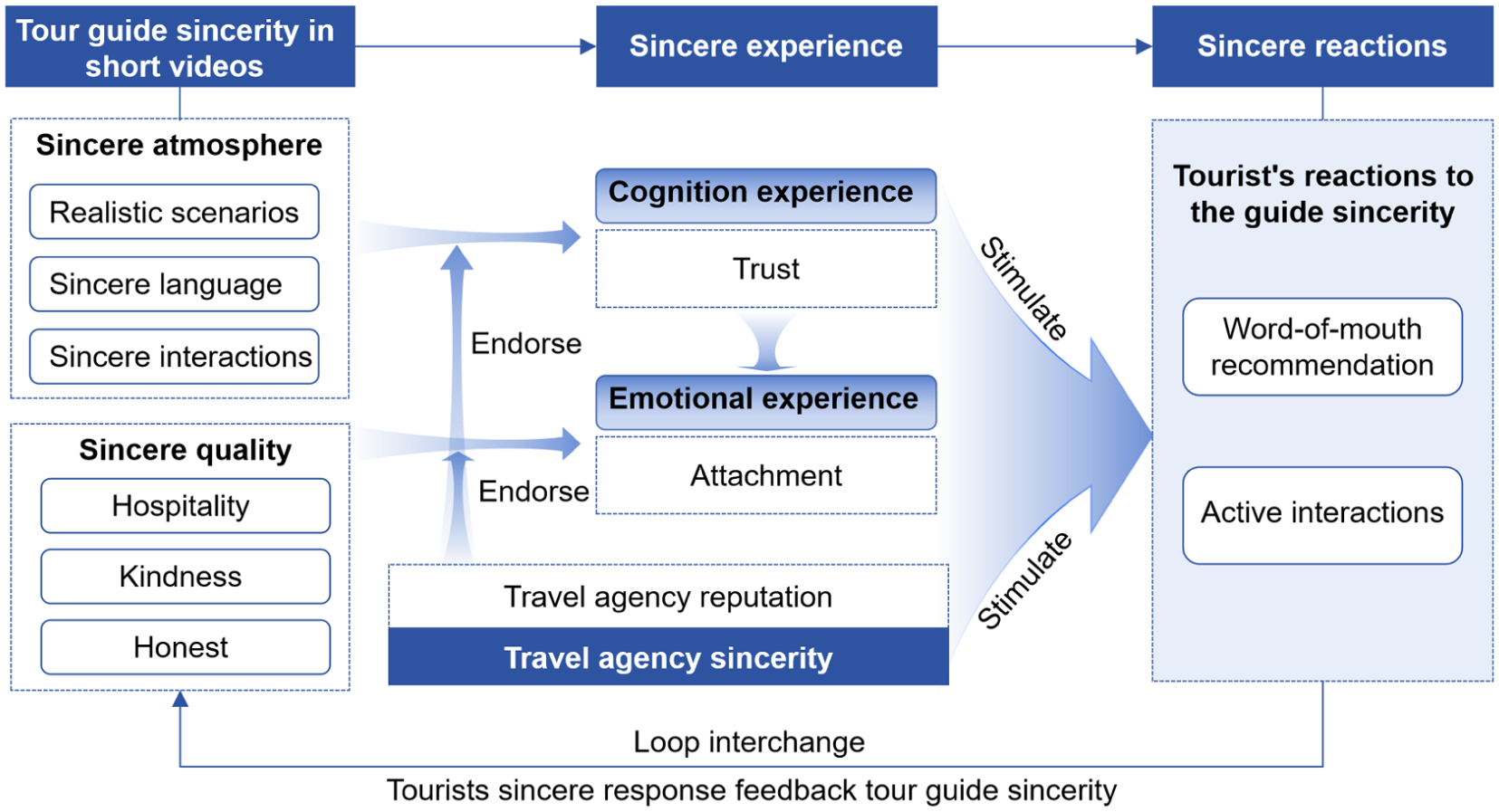
The sincere process of social exchange between guide and tourist.
The process encompasses three theoretical core mechanisms: (1) Tour Guide Sincerity as a Credible Signal: By cultivating an authentic atmosphere (e.g., warm interactions, genuine settings) and demonstrating genuine qualities (e.g., honesty, enthusiasm), tour guides transmit high-cost, difficult-to-imitate credible signals in the information-asymmetric short video environment, bridging psychological distance and establishing preliminary trust. (2) Perceived sincere signals trigger a social exchange cycle: Once tourists recognize and trust these sincerity signals, they develop emotional attachment (e.g., liking, identification) and behavioral reciprocation intent (e.g., liking, commenting, sharing) based on the reciprocity principle in social exchange, completing the transition from signal perception to reciprocal action. (3) The reinforcing effect of the signaling context: The travel agency’s strong reputation serves as a high-quality signaling backdrop, further enhancing the credibility of the tour guide’s sincerity signals and promoting more positive word-of-mouth recommendations.
Tour Guide Sincerity as a Credible Signal
From signal theory perspective, this study identifies that sincerity conveyed by tour guides in short videos can be categorized into two dimensions of credible signals: external sincere atmosphere and internal sincere quality. These signals play a crucial role in reducing uncertainty and building trust within the highly information-asymmetric context of short videos.
Sincere atmosphere, as an externally observable signal, refers to the genuine, warm, and welcoming overall environment intuitively perceived through video content. It manifests in three realistic scenarios, sincere language, and sincere interactions. First, realistic scenarios entail authentic depictions of destinations or storytelling environments, achieved by showcasing unfiltered travel scenes and sharing firsthand experiences. Such authenticity creates immersive experiences that mirror actual travel, as evidenced by viewer comments such as “I felt as if I were personally on the scene (V10, 13/03/2023, 18:03)” and “The video captures unfiltered scenery! (V25, 07/10/2023, 16:28).” Second, sincere language is conveyed not only through clear, relatable dialogue (e.g., “His voice and tone are comforting (V5, 14/12/2023, 19:03)”) but also via non-verbal cues, such as genuine eye contact that signals sincerity (e.g., “His eyes reveal sincerity (V27, 21/07/2023, 22:27)”). Finally, sincere interactions between tour guides and tourists foster a sense of connection by providing insights into local culture and real life, reflected in remarks such as “Only the guide’s explanation reveals Xi’an’s essence (V20, 21/04/2023, 17:41)” and “The herders’ simple life feels authentic (V26, 11/07/2023, 18:56).”
Sincere quality reflects the tour guide’s inherent, stable trait signals, including hospitality, kindness, and honesty. These traits, being deeply rooted in the individual, are difficult to deliberately fabricate, thus possessing high signaling value and discriminative power. Specifically, hospitality, demonstrated through warmth and approachability, fosters an inviting atmosphere, exemplified by the comment “Very down-to-earth (V15, 01/01/2023, 17:41)” and “I really like this warm-hearted tour guide (V28, 09/04/2023, 12:50).” Kindness reflects genuine care through considerate actions, as noted in “You perfectly embody kindness and integrity; gold shines everywhere (V27, 02/07/2023, 08:55).” Honesty is revealed through the tour guide’s integrity and trustworthiness, as well as a commitment to delivering authentic and responsible service. One satisfied tourist remarked, “A diligent and grounded tour guide (V28, 09/04/2024, 12:25)” and “Hei Dao (the guide’s nickname) is not ‘black’ [unscrupulous]; he is a responsible person (V1, 03/05/2023, 11:20).”
Trust, Emotional Attachment, and Behavioral Feedback
Tourists’ perceptions of tour guide sincerity expressed in their comments are frequently accompanied by a series of positive psychological and behavioral responses. On one hand, based on the observed sincerity manifestations, tourists express trust in the guide’s reliability and professionalism, as evidenced by comments such as “He is trustworthy (V3, 18/10/2023, 06:53)” and “He feels as reliable as a firefighter (V25, 10/07/2023, 23:20).” Simultaneously, tour guide sincerity evokes emotional resonance and fondness among tourists, for example: “A very sincere young man, I like him! (V27, 01/07/2023, 23:20),” reflecting positive affective connections at the emotional level. This indicates that when the sincerity signals transmitted by tour guides align with tourists’ deep-seated needs for genuine interpersonal relationships, they can evoke strong emotional resonance and connection. Furthermore, trust in tour guides further strengthens emotional bonds, as comments suggest: “Responsible tour guides are highly favored (V4, 07/12/2023, 18:02)” and “Sincerity earns trust; trust earns love (V27, 30/06/2023, 19:18).”
Building on the reciprocity norm of social exchange (Blau, 1964), tourists’ trust and emotional attachment manifest externally as positive behaviors such as liking, sharing, and recommending, exemplified by comments including “I’ll follow you (V19, 13/04/2023, 11:48),” “Liking your video (V8, 02/02/2024, 17:21),” and “Your sincerity touched me (V27, 10/07/2023, 13:34).” These feedback responses not only constitute reciprocation toward guides but also serve as positive reinforcement, strengthening guides’ motivation to maintain their sincere expression, thereby forming a virtuous cycle.
The Reinforcing Role of Signal Transmission Context
Travel agency reputation, as a pivotal contextual factor, bolsters tourists’ confidence in tour guides, thereby enhancing the likelihood that guides’ sincerity signals will be received. As evidenced by some comments, tourists’ perceptions and evaluations of guides are frequently associated with the reputation of the travel agencies to which they belong. For instance, comments such as “Choose Xinyu (travel agency name), and you’re guaranteed satisfaction with the guide service (V17, 23/07/2022, 08:41)” and “This company operates with integrity; all their guides are good (V27, 16/07/2023, 22:01)” suggest that reputable travel agencies provide a “halo effect” for their guides, leading tourists to be more inclined to trust the sincerity demonstrated by guides affiliated with them. Thus, by leveraging their accumulated brand image, quality resources, and stable customer base over time, travel agencies offer organizational endorsement and resource support for guides’ sincere expressions, rendering their sincere service more readily identifiable and acceptable to tourists.
Study 2
Study 1 identified the intrinsic dimensions of tour guide sincerity in short videos and highlighted the social exchange process between tour guide sincerity and tourists’ sincere responses. Study 2 employed a scenario-based questionnaire survey to further validate these relationships.
Hypotheses Development
Sincere Atmosphere of Tour Guide and Tourists’ Word-of-Mouth Recommendation
In marketing, ambiance or atmosphere is recognized as a critical tool for evoking customers’ emotions and influencing their consumption behaviors (Helmefalk & Hultén, 2017; Rayburn & Voss, 2013). Similarly, in tourism, the creation of a distinctive atmosphere serves as a strategic approach to attract tourists. This atmosphere encompasses external factors such as lighting, color, sound, and taste, which collectively shape tourists’ aesthetic experiences and their willingness to consume (Goulding, 2023; Moreno-Lobato et al., 2023). Moreover, research has highlighted the importance of a social atmosphere—characterized by joyful, friendly, and affable interactions within tourism services (Duursma et al., 2023; Rokka et al., 2023). Therefore, the physical ambiance (scenery, sounds, etc.) and social ambiance (interactions, etc.) created by tourism marketers can enhance consumers’ willingness to purchase and recommend. Based on this, we hypothesize that the sincere atmosphere cultivated by tour guides in short videos may increase tourists’ word-of-mouth recommendations.
Signal theory explains this relationship from the perspective of the information sender. This theory believes that in markets characterized by information asymmetry, signal senders convey their unobservable credible information through observable actions or attributes to influence the perceptions and behaviors of signal receivers (Connelly et al., 2011; Lu & Chen, 2021). In short video contexts, the sincere atmosphere cultivated by tour guides through on-site filming, sincere interactions, and candid communication constitutes a high-quality credible signal (Tóth et al., 2022). These atmospheric signals serve as reliable proxies for service quality and sincere intent, helping to enhance tourists’ trust and reduce perceived risk (L. K. Cheng & Huang, 2022; Choi & Kandampully, 2019).
From a social exchange perspective, when tourists perceive the genuine commitment and emotional value conveyed by tour guide sincerity through atmosphere creation, they regard it as an important social and emotional resource (Blau, 1964; Li, Liu & Wei, 2021). Guided by reciprocity norms, tourists are more likely to repay this through positive behaviors like word-of-mouth recommendations to maintain the balance and continuity of the exchange relationship (Przepiorka & Berger, 2017). Consequently, tourists are more inclined to respond through recommendations and purchasing behaviors (Li, Liu & Wei, 2021). Therefore, we hypothesize:
Sincere Quality of Tour Guide and Tourists’ Word-of-Mouth Recommendation
Signal theory indicates that conveying high-cost signals can effectively enhance recipients’ trust and social evaluation, thereby strengthening their behavioral intent (Konuk & Otterbring, 2024). Marketing research indicates that the personal attributes of influencers or service providers constitute key information for enhancing their persuasiveness (Konuk & Otterbring, 2024; Zhou & Lou, 2024). Particularly in the cluttered online environment, qualities such as sincerity and honesty often exert more lasting influence than external attractiveness, effectively fostering positive consumer responses (Filieri et al., 2023). Within the tourism sector, numerous studies have found that behaviors such as helping others, showing kindness, and ethical conduct can be perceived as high-cost signals, significantly influencing tourists’ consumption decisions and behavioral intentions (Aktan et al., 2024; Hanks et al., 2016; Xu et al., 2023). In this study, the qualities of warmth, sincerity, and reliability, displayed by tour guides through short videos, can be regarded as a typical high-cost, difficult-to-imitate credible signal. Such signals effectively reduce tourists’ perceived uncertainty and enhance their trust in the tour guide’s competence and goodwill (Connelly et al., 2011).
From a social exchange perspective, when tourists recognize and acknowledge the sincere quality conveyed by tour guides, they perceive it as a valuable resource. Based on reciprocity norms, they are more inclined to repay this value through positive behaviors such as word-of-mouth recommendations (Blau, 1964; Li, Liu & Wei, 2021). Therefore, this study posits that the sincere quality of online tour guides can promote tourist recommendation behaviors through dual mechanisms of signaling and social exchange. Therefore, we hypothesize:
The Mediating Role of Trust
Trust refers to an individual’s positive expectations and beliefs about the attributes of others, including competence, sincerity, and integrity (Lien & Cao, 2014). Against the backdrop of information asymmetry in short video contexts, the establishment of trust can be viewed as the key outcome of tourists’ successfully decoding and acknowledging the tour guide sincerity signals. According to signal theory, the sincerity signals conveyed by tour guides through short videos, including sincere atmosphere and sincere quality, fundamentally reduce tourists’ perceived uncertainty regarding observable behaviors (Connelly et al., 2011; Y. Liu & Sun, 2023; Ye & Mattila, 2025). When tourists recognize and endorse these signals, they establish preliminary trust in the tour guide’s professional competence and sincerity (Y. Liu & Sun, 2023). Therefore, when tour guides convey credibility by creating authentic and approachable service scenarios (i.e., demonstrating sincere quality through friendly interactions, enthusiastic engagement, and open communication), tourists perceive them as trustworthy entities (Y. Liu & Sun, 2023).
Signal theory further indicates that individuals’ perception of signals subsequently triggers behavioral intentions (Connelly et al., 2011). Existing research indicates that perceived trust effectively reduces tourists’ risk perception and anxiety, thereby enhancing their travel willingness and service evaluations (Seger-Guttmann & Gilboa, 2023; Williams & Baláž, 2021; S. B. Yang et al., 2019). Particularly in online environments, trust has become a key mechanism for promoting consumer word-of-mouth communication and positive behavioral intentions (Lien & Cao, 2014). Therefore, we hypothesize:
The Mediating Role of Tour Guide Attachment
Social exchange theory posits that successful and sustained exchanges can transform relationships from mere cost-benefit calculations into commitments infused with emotional investment (Cropanzano & Mitchell, 2005). Tour guide attachment represents precisely this emotional manifestation of relationship deepening, reflecting tourists’ enduring emotional connection and sense of intimacy with tour guides (J. C. Cheng et al., 2016). In unidirectional communication contexts such as short videos, the formation of emotional connections takes on distinctive characteristics due to the absence of bilateral interaction (L. Hu et al., 2020). According to parasocial interaction theory, audiences can engage in imagined interactions with media figures through the medium, establishing unidirectional yet authentic emotional bonds (Horton & Wohl, 1956). Accordingly, the sincerity signals transmitted by tour guides through short videos constitute the core content of audiences’ parasocial interactions. When receiving and interpreting sincerity signals, audiences do not engage in cold calculation; rather, they may experience emotional resonance, identification, and closeness, thereby gradually forming emotional attachment to tour guides (Lu et al., 2023).
Furthermore, such emotional attachment can be conceptualized as a high-level socioemotional benefit that transcends mere trust and represents an elevation of relationship quality (Blau, 1964). Once formed, attachment drives individuals to voluntarily engage in reciprocal behaviors aimed at maintaining this valued relationship (S. Li et al., 2022; Zhou, Wen et al., 2024). Relevant research has confirmed that both tour guide attachment in offline group tours (J. C. Cheng et al., 2016; Teng & Tsai, 2020) and celebrity attachment in short video contexts (Zhu et al., 2024) can effectively promote tourists’ positive behavioral responses, such as word-of-mouth recommendations. This study posits that in the short video context, the sincerity signals transmitted by tour guides (sincere atmosphere and sincere quality) can facilitate tourists’ word-of-mouth recommendation behavior by enhancing their emotional attachment to guides. Based on this, the following hypotheses are proposed:
The Chain Mediation of Trust and Tour Guide Attachment
A close progressive relationship exists between trust and emotional attachment. Several studies indicate that trust typically serves as the cognitive foundation for emotional connections, subsequently catalyzing deeper emotional investment (Y. Deng et al., 2025; Hou & Hou, 2024). For instance, in live-streaming contexts, viewers’ trust in streamers significantly enhances their emotional attachment to them (Hou & Hou, 2024); in the sharing accommodation sector, users who develop trust in the Airbnb platform tend to form strong attachment to both the platform and hosts (S. B. Yang et al., 2019); furthermore, interpersonal trust has been demonstrated to significantly enhance individuals’ emotional attachment to specific places (Ramkissoon, 2023). These studies collectively suggest that trust driving emotional attachment represents a stable psychological pathway with cross-contextual explanatory power. Additionally, the qualitative analysis corroborates this logic. As one tourist commented, “Sincerity earns trust; trust earns love (V27, 30/06/2023, 19:18),” which intuitively illustrates the progressive relationship from cognitive trust to emotional attachment, providing empirical support for the chain mediation pathway. Based on this, this study proposes that sincerity signals transmitted by tour guides through short videos can first trigger tourists’ cognitive trust, subsequently fostering their emotional attachment to guides, and ultimately driving the generation of word-of-mouth recommendation behavior. Therefore, the following hypothesis is proposed:
The Moderation of Travel Agency Reputation
Travel agency reputation reflects tourists’ evaluation of the agency’s reliability and service quality based on its track record and plays a critical role in competitive market positioning (Chang, 2015). Signaling theory posits that the effectiveness of signals depends not only on their observability and cost but also on the signaling environment in which they are embedded (Luo et al., 2025; Spence, 1978). In this study, the effectiveness of tour guides’ sincerity signals is likely strengthened or weakened by the contextual factor of their affiliated travel agency’s reputation. Specifically, a highly reputable travel agency itself functions as a powerful indirect signal or signal of assurance, providing credibility endorsement and certification for the individual signals emitted by its affiliated guides (Jin et al., 2016; Wei, 2021). When tourists perceive that a travel agency has a good reputation, they tend to attribute this organizational-level reliability to its employees, thereby reducing skepticism regarding the authenticity of guides’ individual signals and enhancing their trust in and acceptance of guides’ sincerity signals (Wei, 2021). Conversely, the context of a low-reputation travel agency may trigger tourist skepticism, potentially offsetting or diminishing the positive impact of guides’ individual sincerity signals (Jin et al., 2016).
Furthermore, relevant research indicates that reputable enterprises exert stronger persuasive influence and have a moderating effect between social responsibility motivations (e.g., sincerity and benevolence) and consumer behavior (Singh & Misra, 2021; Su et al., 2020). Accordingly, this study posits that when travel agencies have a high reputation, the sincere atmosphere and qualities exhibited by tour guides in short videos are more likely to encourage tourists’ social exchange behaviors, such as liking, sharing, and recommending. Therefore, we hypothesize:
The conceptual model diagram of this study is illustrated in Figure 3.
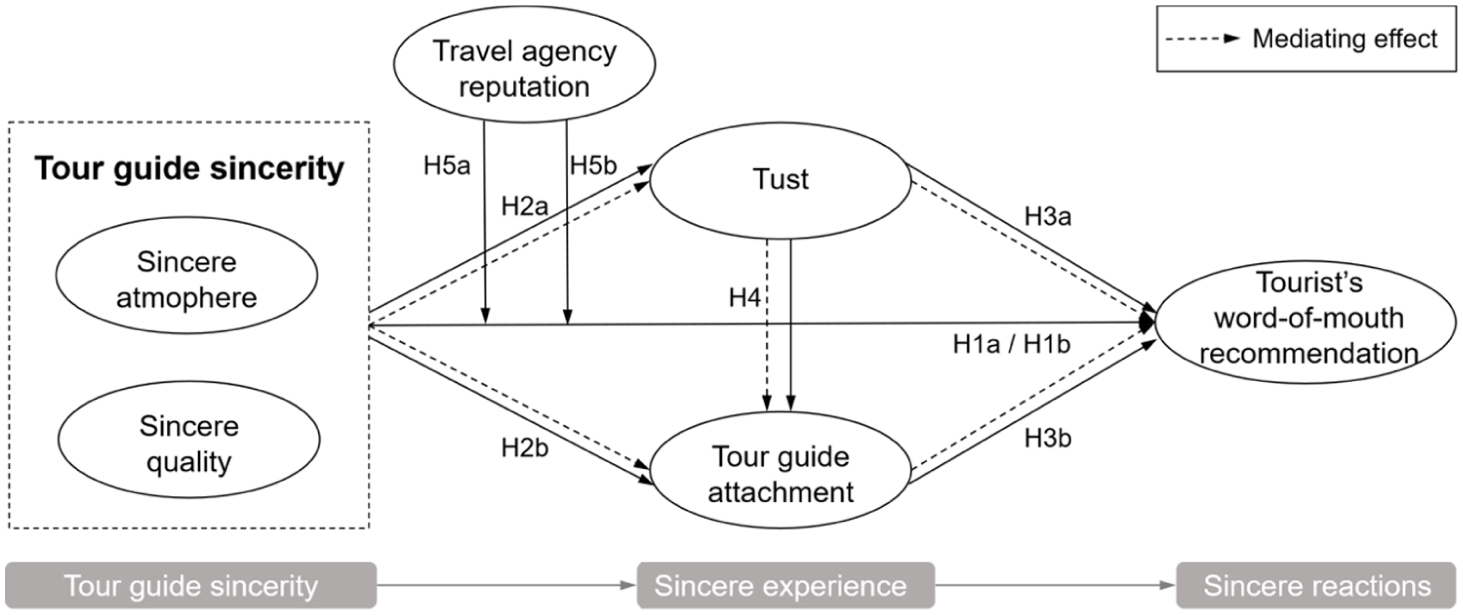
Conceptual model.
Methods
Questionnaire Design
The questionnaire developed for this study consists of two main sections. The first section includes scales to assess various constructs: tour guide sincerity, trust, tour guide attachment, travel agency reputation, and word-of-mouth recommendations in short videos. Tour guide sincerity is measured from two perspectives: sincere atmosphere and sincere quality. Building on the findings from Study 1, a sincere atmosphere encompasses three dimensions: realistic scenarios, sincere language, and sincere interactions.
The measurement for realistic scenarios was adapted from the Existential Authenticity Scale by Dong et al. (2023), sincere language from Fish et al. (2017), and sincere interactions from the Host Interactive Sincerity Scale by Taheri et al. (2018), comprising a total of 12 items. Sincere quality was similarly assessed through three dimensions: hospitality, kindness, and honesty, drawing from the Hospitality Scale by Mody et al. (2019), the Benevolent Behavior Scale by Canter et al. (2017), and the Internet Celebrity Honesty Scale by Y. Liu and Sun (2023), respectively. This scale also included 12 items.
Trust is measured by a 4-item scale developed by Hsu et al. (2013), while tour guide attachment is measured by a 4-item scale by J. C. Cheng et al. (2016). The travel agency reputation scale by Fang et al. (2023) consists of 4 items, and the word-of-mouth recommendation scale, adapted from L. K. Cheng and Huang (2022), features 3 items. All scales are measured using a 7-point Likert scale. The second section of the questionnaire captures demographic information, including gender, marital status, age, education level, occupation, and average monthly income.
To ensure the accuracy of translated scales, a rigorous back-translation procedure was employed. Two management academics and four doctoral candidates initially translated and verified the scales, refining the content by incorporating coded data from Study 1 to align with the context of tour guide services. Subsequently, five active Douyin users (each using the platform >1 hr daily) assessed the Chinese questionnaire’s clarity and comprehensibility. Finally, two independent collaborators back-translated items into English, confirming no significant discrepancies. All measurement items and sources are detailed in Table A4.
Pilot Study
To refine and enhance the scale items, a preliminary investigation was conducted in April 2024 via the Credamo platform (https://www.credamo.com). A total of 150 questionnaires were distributed, with 137 returned as valid, yielding an effective response rate of 91.33%. SPSS 24.0 was utilized to perform reliability and validity tests on the collected data. The results of the reliability analysis revealed that the Cronbach’s α coefficients for variables such as sincere atmosphere, sincere quality, trust, tour guide attachment, travel agency reputation, and word-of-mouth recommendation were all above .8, indicating a high level of internal consistency for the scale. The validity analysis showed that the overall Kaiser-Meyer-Olkin (KMO) value for the questionnaire was 0.964, with individual KMO values for each variable exceeding 0.7, suggesting that the scale possesses strong structural validity.
Data Collection
The formal study was conducted from May 6 to May 30, 2024. We posted a questionnaire link to tourists via Credamo. On the first page of the questionnaire, participants were shown a short video clip introducing Snow Country, narrated by a well-known tour guide, “Qi Qin.” Participants were asked to watch this 1-minute 50-second video in its entirety before completing the questionnaire.
Qi Qin is a tour guide who gained fame on Douyin in July 2023 for his “somewhat silly” but sincere service. His follower base grew from 600 to over 1 million within 24 hr, reaching 3.226 million followers and 4.249 million likes by March 2024. Therefore, we use Qi Qin as a case study to examine tour guide sincerity, enhancing the typicality and representativeness of research design.
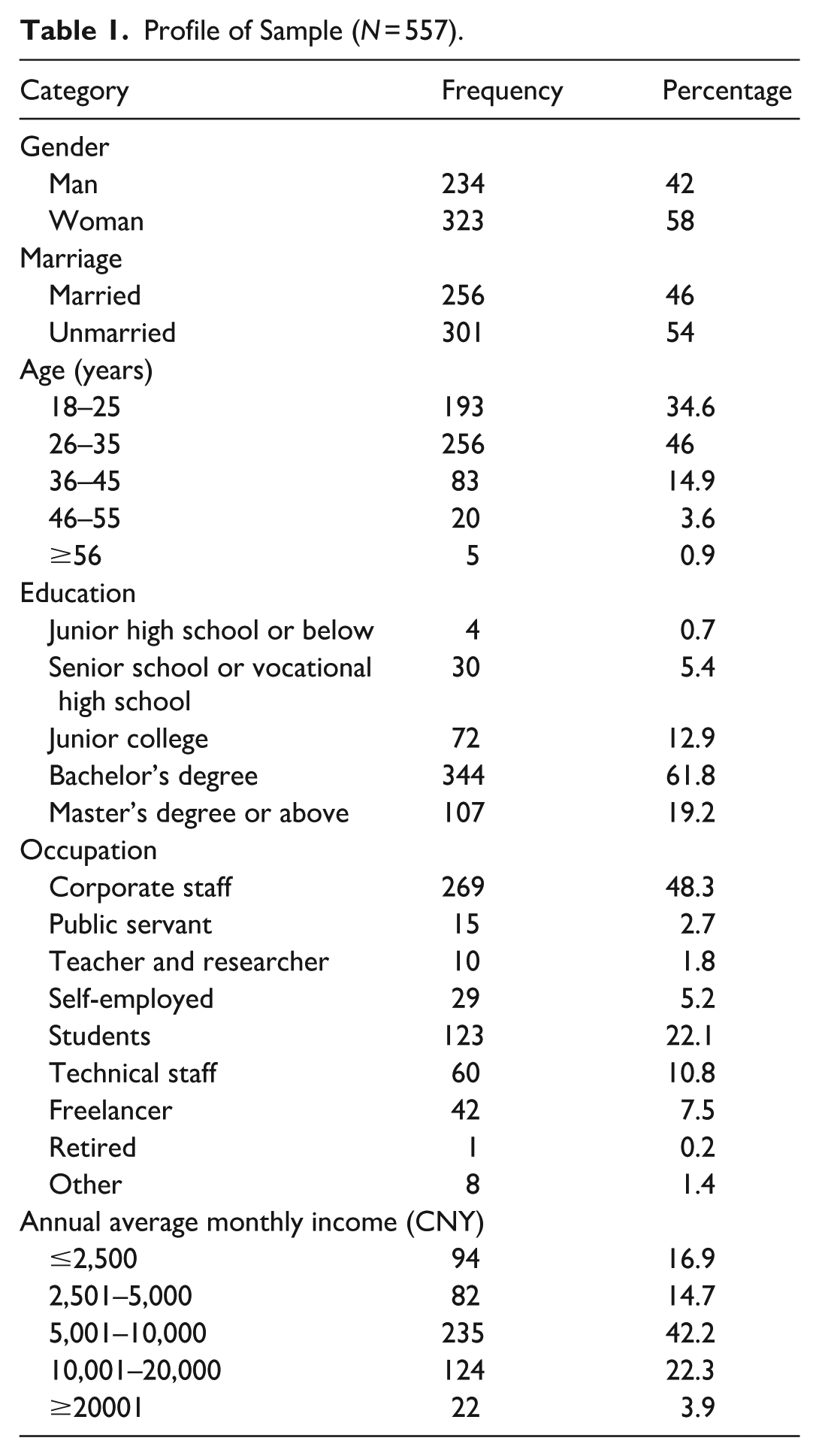
To ensure the quality of the questionnaire responses, the research team clearly communicated the purpose of the study via the questionnaire link, assured respondents of their anonymity, and emphasized that there were no right or wrong answers. During the formal data collection phase, 650 questionnaires were distributed, with 557 valid responses, resulting in an effective response rate of 85.69%. The demographic profile of the valid respondents is detailed in Table 1.
Profile of Sample (N = 557).
Data Analysis
Common Method Variance Test
This study controlled for common method bias through ex ante procedural controls and ex post statistical tests. First, regarding procedural controls, the study emphasized anonymity, confidentiality, and the restriction of data use to scientific research during data collection. Second, following Podsakoff et al. (2012), we conducted unrotated principal component factor analysis on all measurement items using Harman’s single-factor test. Results indicate a Kaiser-Meyer-Olkin value of 0.955, with the first principal component explaining 38.658% of variance, below the 40% threshold. This suggests that common method variance is not a significant concern.
Considering the limitations of Harman’s single-factor test, we employed the common latent factor approach to assess common method bias (Kock et al., 2021). The chi-square difference test between the zero-constrained model (χ2 = 623.258, df = 174) and the unconstrained model with a method factor (χ2 = 618.143, df = 171) was not significant (∆χ2 = 5.115, ∆df = 3, p > .05). This indicates that common method bias is not a pervasive issue in this study.
Reliability and Validity Tests
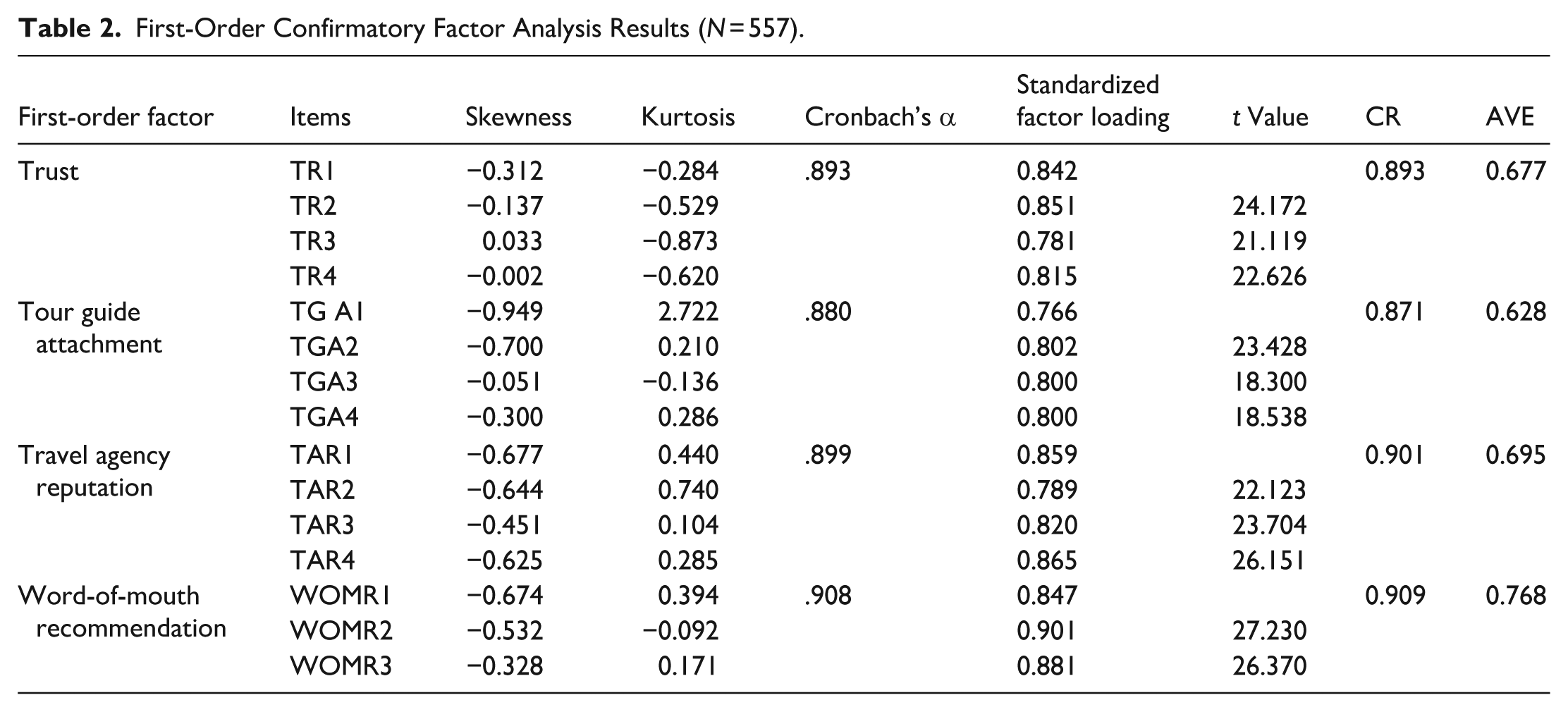
SPSS 24.0 and AMOS 26.0 were utilized to conduct reliability and validity analyses, with the results presented in Table 2. The Cronbach’s α values for all variables ranged from .880 to .908, all surpassing the .80 threshold, indicating strong reliability for the measurements. In confirmatory factor analysis, the fit indices for the first-order overall model were as follows: χ2 = 310.109, df = 83, χ2/df = 3.736(1,<,5), RMSEA = 0.07(<0.08), SRMR = 0.041(<0.05), GFI = 0.932(>0.9), CFI = 0.964(>0.9), NFI = 0.951(>0.9), RFI = 0.938(>0.9), IFI = 0.964(>0.9), TLI = 0.954(>0.9). These indicators all met the acceptable criteria for model fit (L. Hu & Bentler, 1999). Furthermore, the standardized factor loadings for the measurement items in each dimension were all above 0.5, the composite reliability (CR) values exceeded 0.7, and the average variance extracted (AVE) values were greater than 0.5, confirming that each variable demonstrated good convergent validity.
First-Order Confirmatory Factor Analysis Results (N = 557).
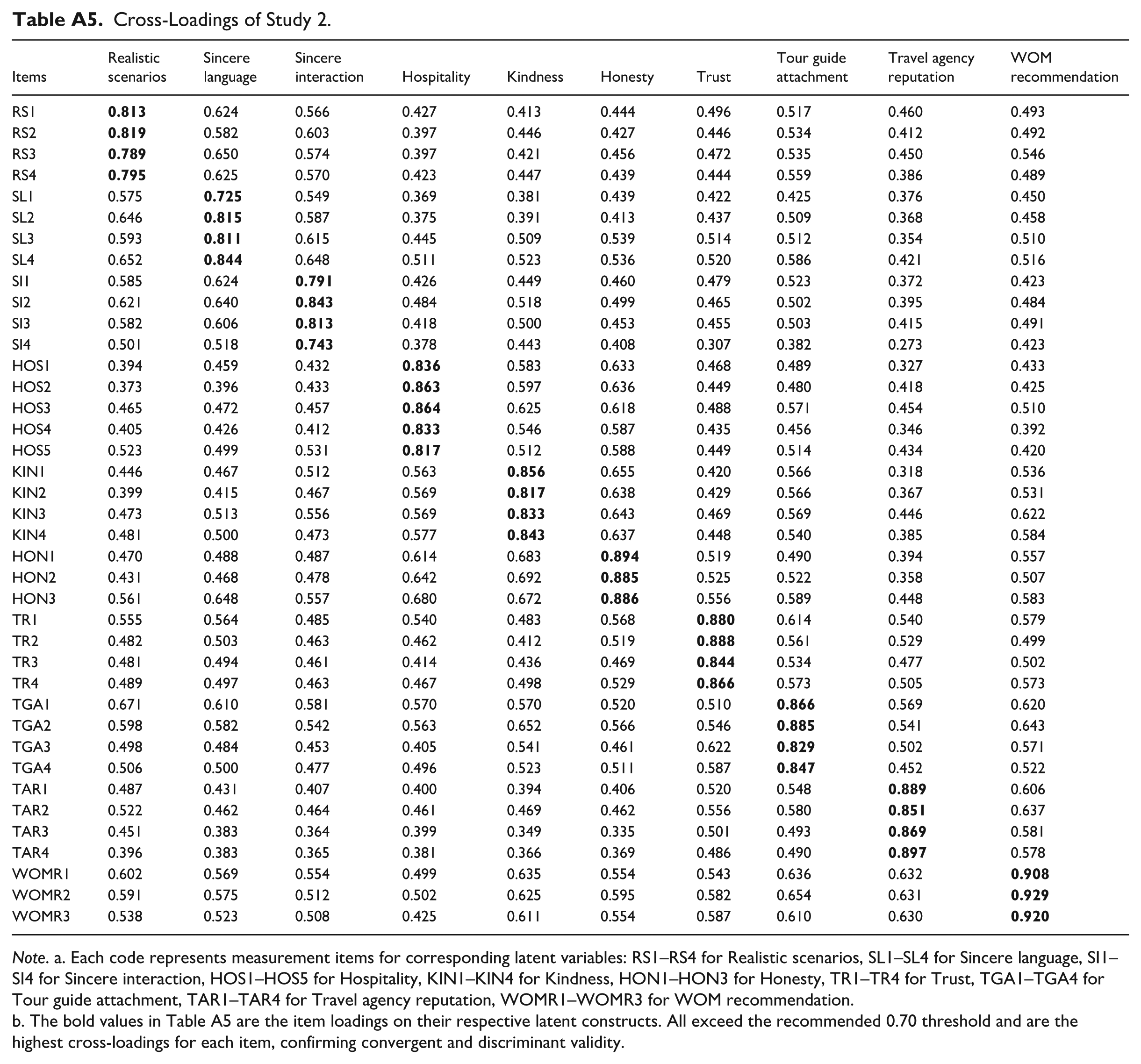
Building on the results of Study 1, tour guide sincerity is conceptualized as a second-order construct, consisting of two first-order dimensions: sincere atmosphere and sincere quality. A second-order construct typically represents the shared element among the first-order constructs, requiring a moderate to strong correlation between them (Chu, 2008). The results of the Fornell-Larcker criteria (Table 3) indicate that the square root of the AVE for all first-order variables exceeded their respective correlation coefficients with other variables. Furthermore, each variable exhibited higher loadings on its own construct than on other constructs (Table A5), demonstrating good discriminant validity. Meanwhile, the correlation coefficients among the first-order dimensions of tour guide sincerity ranged from 0.511 to 0.771, indicating moderate to high correlations across dimensions and meeting the criteria for establishing a secondary construct.
Discriminant Validity-Fornel-Larcker Criterion.
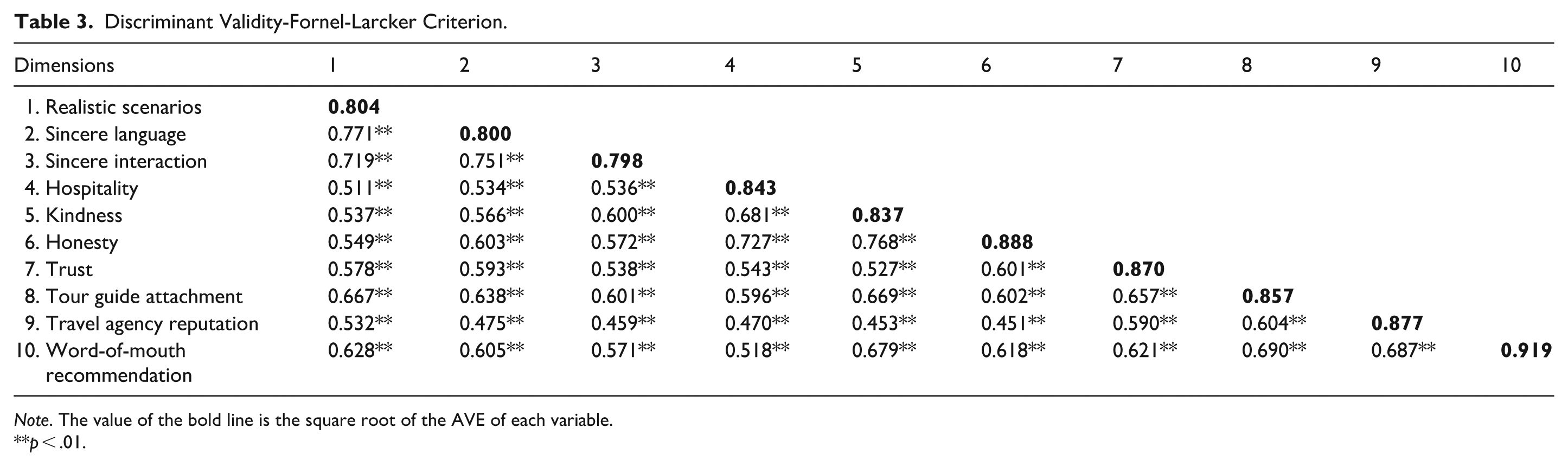
Note. The value of the bold line is the square root of the AVE of each variable.
**p < .01.
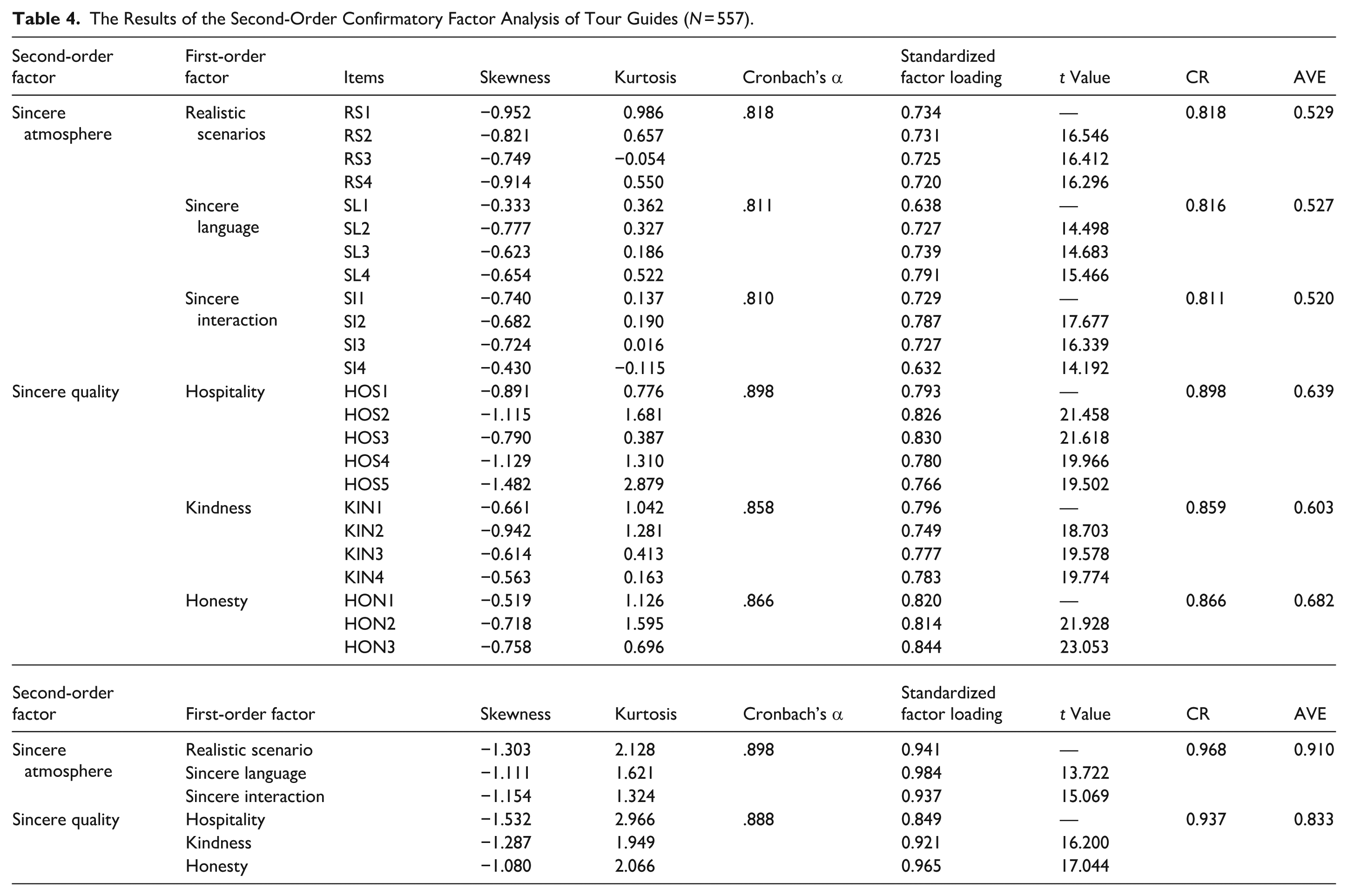
Next, the study tested the second-order model of tour guide sincerity using AMOS 26.0. The results showed that the fit indices for the second-order model (χ2 = 668.994, df = 245, χ2/df = 2.731(1, <, 5), RMSEA = 0.056(<0.08), SRMR = 0.039(<0.05), GFI = 0.900(>0.9), CFI = 0.948(>0.9), NFI = 0.921(>0.9), RFI = 0.911(>0.9), IFI = 0.949(>0.9), TLI = 0.942(>0.9)) were all within the acceptable range (Table 4). Additionally, the standardized factor loadings for all measurement items exceeded 0.5, the composite reliability values were all above 0.7, and the average variance extracted was greater than 0.5. These results confirm that the second-order model in this study demonstrates strong validity.
The Results of the Second-Order Confirmatory Factor Analysis of Tour Guides (N = 557).
Correlation Analysis
This study examined the discriminant validity by comparing the square root of the AVE of each variable with the correlation coefficients between variables. As shown in Table 5, all correlation coefficients were significant and the maximum value of the correlation coefficient was .691. The minimum value of the square root of the AVE was 0.774, which was greater than the maximum value of the correlation coefficient. Therefore, there was a good discriminant validity among the variables. In addition, the Heterotrait-Monotrait Ratio (HTMT) was used to test the discrimination of each variable in the model. The results showed that the HTMT values of all variables were less than the threshold of 0.85, demonstrating a good discrimination of the questionnaire scale (Henseler et al., 2015).
Correlation Analysis.
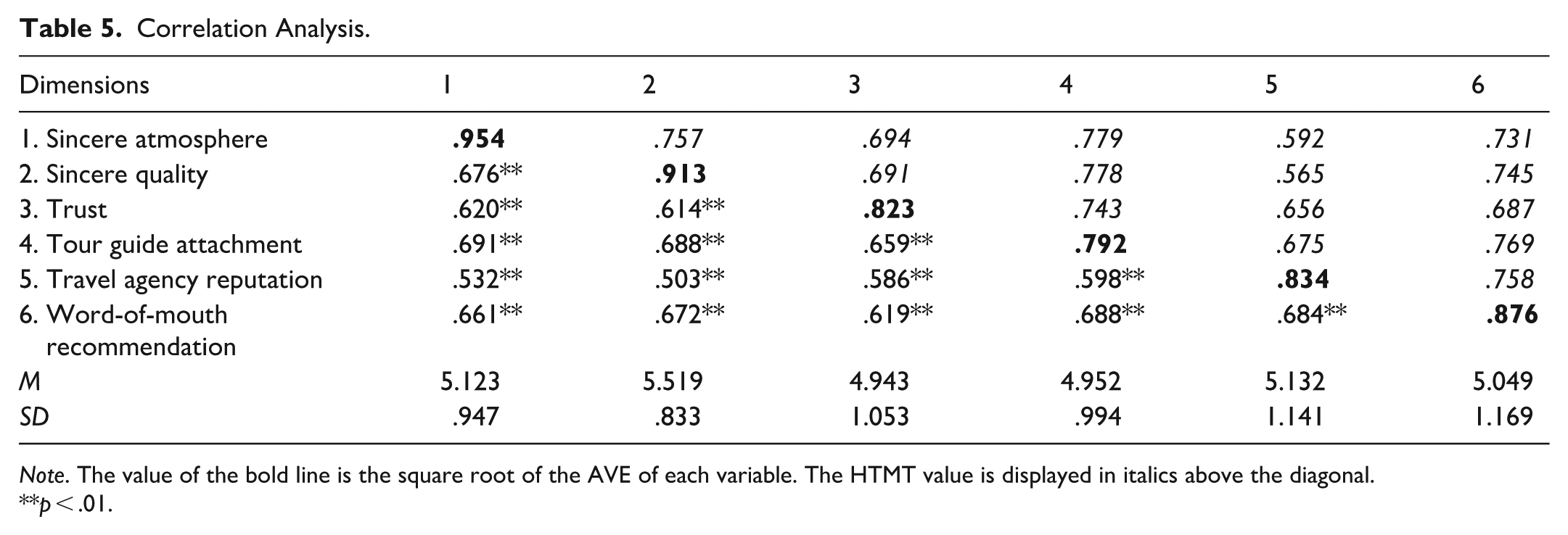
Note. The value of the bold line is the square root of the AVE of each variable. The HTMT value is displayed in italics above the diagonal.
**p < .01.
Hypothesis Testing
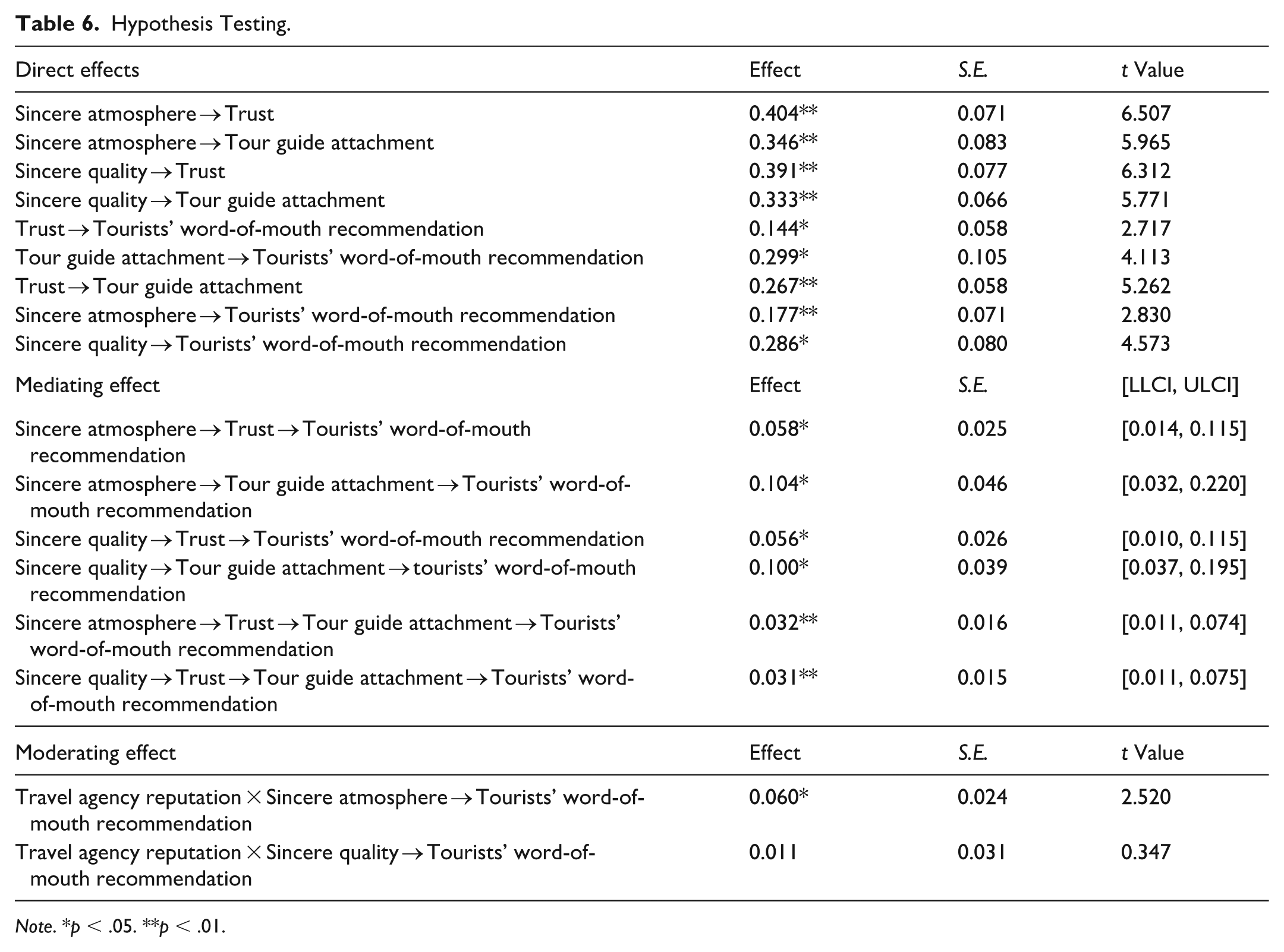
The measurement items in this study exhibited satisfactory normality with absolute skewness values below 3 and kurtosis values below 8, conforming to the standard thresholds for normal distribution (Kline, 2016) and meeting the fundamental assumptions for structural equation modeling. Accordingly, we employed AMOS 26.0 to construct the SEM framework, utilizing the bias-corrected non-parametric percentile bootstrap method for overall model estimation and mediation effect testing. Sampling was repeated 2,000 times to calculate the 95% confidence interval (Table 6). The model fit indices indicated that all fit criteria were met (χ2 = 507.277; df = 107; χ2/df = 4.471 (1, <,5); RMSEA = 0.079 (<0.08); SRMR = 0.038 (<0.05); GFI = 0.902 (>0.9); CFI = 0.947 (>0.9); NFI = 0.934 (>0.9); RFI = 0.917 (>0.9); IFI = 0.948 (>0.9); TLI = 0.933 (>0.9)), allowing for further testing of the research hypotheses.
Hypothesis Testing.
Note. *p < .05. **p < .01.
The results of the direct effect tests showed that both sincere atmosphere (β = .177, p < .01) and sincere quality (β = .286, p < .01) had a significantly positive impact on tourists’ word-of-mouth recommendation, supporting hypotheses H1a and H1b. Moreover, sincere atmosphere (β = .404, p < .01) and sincere quality (β = .391, p < .01) positively influenced trust, while sincere atmosphere (β = .346, p < .01) and sincere quality (β = .333, p < .01) also positively affected tour guide attachment. Trust (β = .144, p < .05) and tour guide attachment (β = .182, p < .05) were found to positively influence tourists’ word-of-mouth recommendation.
Subsequently, the results of the mediation effect tests revealed that trust had a partial mediating effect between sincere atmosphere (β = .058, p < .01) and sincere quality (β = .056, p < .01) and tourists’ word-of-mouth recommendation, thereby supporting hypotheses H2a and H2b. Tour guide attachment also demonstrated a partial mediating effect between sincere atmosphere (β = .104, p < .05) and sincere quality (β = .1, p < .01) and tourists’ word-of-mouth recommendation, confirming hypotheses H3a and H3b. Finally, the chain mediating effect of trust and tour guide attachment between sincere atmosphere (β = .032, p < .01) and sincere quality (β = .031, p < .01) and tourists’ word-of-mouth recommendation was established, supporting hypothesis H4.
The PROCESS Model 1 was utilized to test the moderating effect of travel agency reputation on the relationship between tour guide sincerity and tourists’ word-of-mouth recommendation. The results revealed that the interaction between sincere atmosphere and travel agency reputation significantly and positively influenced tourists’ word-of-mouth recommendation (β = .06, p < .05). In contrast, the interaction between sincere quality and travel agency reputation had no significant effect on tourists’ word-of-mouth recommendation (β = .011, p > .05). Therefore, hypothesis H5a was supported, while hypothesis H5b was not.
Following this, a simple slope analysis was conducted at both high (mean + 1 standard deviation) and low (mean − 1 standard deviation) levels of travel agency reputation. As shown in Figure 4, when the travel agency reputation was high, the effect of sincere atmosphere on tourists’ word-of-mouth recommendation was more pronounced. This indicates that travel agency reputation positively moderated the relationship between tour guide sincere atmosphere and tourists’ word-of-mouth recommendation.
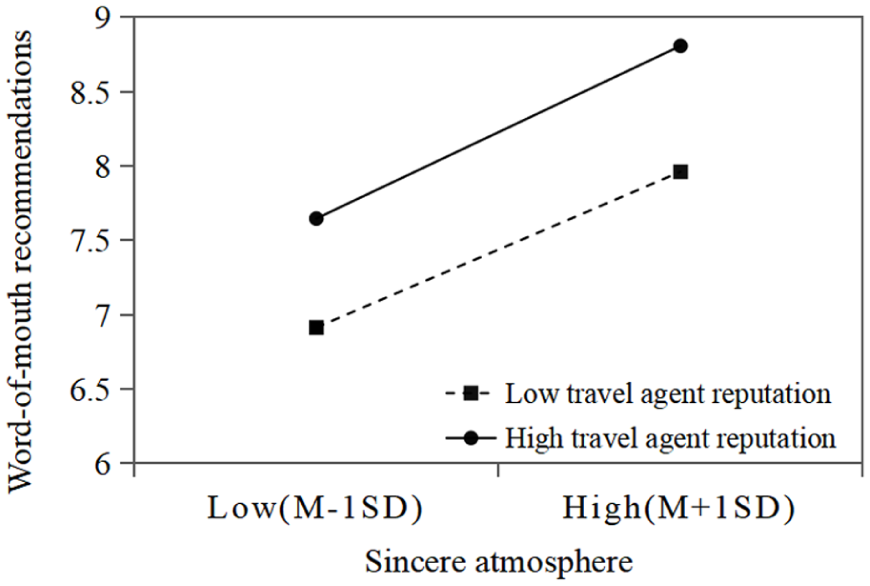
Moderating effects of travel agency reputation.
Discussion and Conclusion
Conclusion
This study integrated signaling theory and social exchange theory, adopting a mixed-method design to explore the conceptual connotation of tour guide sincerity in the short video context and its influencing mechanism on tourists’ word-of-mouth recommendation behavior. The main findings and discussions are as follows:
First, tour guide sincerity in short videos constitutes a second-order construct comprising sincere atmosphere and sincere quality. Previous research has primarily examined sincerity and its utility among entities such as destinations, brands, or hosts within traditional offline service settings including hotels and homestays (Lee & Kim, 2018; L. Wu et al., 2024; Zhou, Li et al., 2024). This study shifts the research context to short videos and focuses on tour guides as the subject, revealing that tour guide sincerity in digital media manifests as the dual dimensions of sincere atmosphere and sincere quality. This finding responds to Taylor’s (2001) proposition that sincerity occurs within the contact zone between subjects, and extends this contact zone to digital interaction scenarios, thereby reflecting how media characteristics reshape the modes of sincere expression.
Furthermore, traditional research has predominantly focused on two types of cues in tourism services: environmental cues (e.g., scents and image design; Y. C. Chen, 2025; Yi et al., 2025) and personal/service cues (e.g., providers’ appearance, gender, or service performance; Banerjee & Chua, 2020; Li, Song et al., 2021; F. X. Yang et al., 2022). This study extends this line of inquiry by integrating both cue categories within digital interaction contexts, thereby enriching the theoretical connotation of sincerity. Specifically, sincere atmosphere incorporates the theoretical perspective of environmental cues but concentrates on constructing credible digital interaction contexts, manifested through contextualized signals such as unfiltered content, on-location filming, and sincerity-conveying language (Y. Hu et al., 2021; Pico et al., 2020). Meanwhile, sincere quality transcends traditional personal cues’ reliance on surface-level characteristics, shifting toward conveying inner credibility through sustained, personified content expression, exemplified by warmth, hospitality, and positive value orientations (Lv et al., 2021; Thielmann & Hilbig, 2014). Therefore, this study not only contextualizes sincerity theory within the short video medium but also deepens the understanding of sincerity’s connotative structure in digital interactions by integrating dual pathways of contextual construction and trait transmission.
Second, the reciprocal response to tour guide sincerity constitutes a processual framework comprising “tour guide sincerity signals—tourist sincerity perception—positive behavioral feedback.” The grounded research reveals that tour guides transmit costly and difficult-to-imitate credible signals through sincere atmosphere and sincere quality, effectively reducing tourists’ perceived uncertainty in information-asymmetric environments. Tourists subsequently develop cognitive trust and form emotional attachment, leading them to reciprocate through likes, follows, and word-of-mouth recommendations based on the reciprocity principle. Throughout this process, travel agency reputation serves as an external contextual factor that further reinforces the credibility of tour guides’ sincerity signals. These findings align with signaling theory and social exchange theory (Homans, 1958; Spence, 1978), while also providing theoretical foundations for sincerity marketing in the digital era.
Quantitative analysis further validated that both sincere atmosphere and sincere quality exert significant direct impacts on word-of-mouth recommendations, with trust and attachment playing mediating roles in these relationships. This finding supports the dual efficacy of tour guide sincerity encompassing both rational persuasion and emotional mobilization, consistent with the perspectives of Seger-Guttmann and Gilboa (2023) and Sung and Lee (2023). Furthermore, travel agency reputation significantly strengthened the effect of sincere atmosphere on word-of-mouth recommendations, aligning with the logic that organizational endorsement enhances the credibility of contextualized signals (Su et al., 2020). However, the moderating effect of travel agency reputation on the relationship between sincere quality and word-of-mouth recommendations was not significant. A possible explanation is that sincere quality, as a stable personality trait of tour guides, derives its credibility primarily from the inherent attribute of long-term consistency between words and deeds. Such traits possess considerable independence and stability (Motoki et al., 2023) and may remain unaffected by fluctuations in travel agency reputation. In other words, sincerity signals rooted in personal traits may exert influence that transcends or even operates independently of organizational endorsement (Molyneux et al., 2018).
Theoretical Implications
Firstly, this study reveals the dual-dimensional structure of tour guide sincerity in short videos, advancing the conceptual understanding of sincerity in digital service contexts. Extant research has largely treated sincerity in service interactions as a vague, holistic construct, focusing on the effects of sincerity employed by tourism enterprises, destinations, and hosts within traditional service settings such as hotels and homestays (S. Chen & Wei, 2022; Taheri et al., 2018; Zhou, Li et al., 2024). However, existing studies have failed to address the multidimensional manifestations of sincerity in digital contexts, nor have they devoted sufficient theoretical attention to tour guides as a key service provider. Addressing these theoretical gaps, this study extends the research context to digital service scenarios such as short videos, shifts the research focus to tour guides, and proposes and develops the conceptual connotation of tour guide sincerity. Our research not only responds to Sengoz et al.’s (2025) call for greater attention to the tour guide population but also echoes discussions on environmental/atmospheric cues and personal/service cues in traditional service research (Chen, 2025; Li, Song et al., 2021; F. X. Yang et al., 2022; Yi et al., 2025). More importantly, by moving beyond generalized discussions of sincerity, this study provides a novel theoretical framework for future analyses of the diverse manifestations of sincerity in digital interactions and their corresponding effects.
Secondly, this study constructs and validates a reciprocal response model of tour guide sincerity in short videos, providing a theoretical framework and empirical evidence for understanding the effectiveness and underlying mechanisms of tour guide sincerity marketing. Previous research on sincerity has predominantly focused on its direct effects on tourist attitudes and behaviors (Y. Hu et al., 2021; Li, Liu & Wei, 2021; L. Wu et al., 2024). However, the processual mechanisms through which sincerity is perceived, decoded, and ultimately transformed into positive reciprocal behaviors in digital interaction contexts remain insufficiently theorized and empirically examined (Filieri et al., 2023; Li, Liu & Wei, 2021). Integrating signaling theory, social exchange theory, and parasocial interaction theory, this study comprehensively elucidates the process through which tour guide sincerity influences tourists’ word-of-mouth recommendations. It further examines the dual mediating roles of trust and tour guide attachment, and reveals the differential moderating effects of travel agency reputation on the pathways of sincere atmosphere and sincere quality. Accordingly, this study deepens the understanding of the processual mechanisms through which sincerity drives tourists’ reciprocal behaviors, thereby extending the theoretical depth of sincerity research within the domain of digital tourism marketing.
Practical Implications
This study focuses on individual tour guides on short video platforms, offering practical strategies for effectively conducting sincerity marketing and managing their digital image, while also providing references for travel agencies to leverage organizational reputation in enhancing sincerity signals.
For tour guides, constructing a digital sincerity image is fundamental to sincerity marketing, which can be advanced through two dimensions: sincere atmosphere and sincere quality. On one hand, tour guides should strive to create a sincere atmosphere by designing specific, transparent, and perceptible interactive contexts on platforms such as short videos to mitigate tourist uncertainty. Specifically, atmosphere construction can be approached through scene design, linguistic expression, and interaction methods. For example, when producing videos, prioritize using raw footage to present authentic destination scenes, avoiding excessive filters and beauty effects to enhance contextual authenticity. During video explanations, adopt lifelike and storytelling language to interpret history and culture, transforming professional terminology into everyday expressions easily understood by tourists, thereby enhancing linguistic sincerity. In comment interactions, pin practical information (e.g., ticket prices, itinerary details) and actively respond to tourist comments, fostering an open and candid communication atmosphere.
On the other hand, tour guides should focus on demonstrating intrinsic sincere quality, establishing a diligent and reliable personal image through content narratives and tags in short videos. Specifically, image construction can be pursued through dimensions such as approachability, kindness and integrity, and honesty and reliability. For example, in explanatory videos, proactively display key terms of travel contracts, clearly explain itinerary arrangements and service commitments, thereby reflecting the guide’s honesty, reliability, and professional competence. In personal showcase videos, incorporate authentic stories of interactions with tourists, recounting how one cared for and assisted tourists during unexpected incidents, thereby demonstrating the guide’s benevolence and warmth.
For travel agencies, strategically leveraging organizational reputation is key to amplifying the sincerity effects of tour guides. On the one hand, agencies should leverage their accumulated strengths in service quality, customer evaluations, and industry certifications, transforming these assets into easily shareable content resources. For instance, agencies can compile materials such as selected customer appreciation letters, which tour guides can draw upon when creating videos to foster a sincere atmosphere, thus enhancing tourist trust. On the other hand, agencies can implement differentiated endorsement strategies tailored to the specific sincerity exhibited by guides. When showcasing a guide’s sincere atmosphere, agencies may adopt a strong endorsement strategy—such as embedding agency logos within short video content—to enhance signal credibility. Conversely, when highlighting a guide’s sincere quality, a subtle endorsement strategy is recommended, wherein excessive institutional branding is minimized to allow the guide’s trustworthy image and value commitments to take center stage, thereby preserving the purity of the quality sincerity signal.
Limitations and Future Research
This study has several limitations. First, there are limitations regarding the sample. The data were sourced from a selection of high-performing Chinese tour guides on the Douyin platform and comments on their videos. Consequently, the generalizability of the findings to ordinary tour guides, other platforms, and diverse cultural contexts requires further validation. Future research could extend data collection to multiple platforms (e.g., Instagram Reels) and cross-cultural samples to investigate the influence of platform mechanisms and media formats.
Second, there are limitations concerning the data source. While the qualitative analysis of publicly available comment texts provides valuable insights into tourist perceptions, it cannot ascertain the extent to which commenters had consumed the videos in full. Moreover, this study primarily adopts the receiver’s perspective and does not directly examine the guides’ message construction process. Future research could integrate in-depth interviews, video content analysis, or eye-tracking experiments to more comprehensively explore the objective sincerity expression strategies employed by the senders (i.e., tour guides).
Third, the coverage of macro-level variables is insufficient. The proposed model focuses on sincere interactions between tour guides and tourists, without incorporating macro-level factors such as destination characteristics, video attributes, or platform algorithms. It also does not account for the roles of multiple stakeholders, including destination management organizations and platform operators. Future research could introduce multi-level moderating variables to further explore the boundary conditions of the effects of tour guide sincerity.
Footnotes
Appendix A
Cross-Loadings of Study 2.
| Items | Realistic scenarios | Sincere language | Sincere interaction | Hospitality | Kindness | Honesty | Trust | Tour guide attachment | Travel agency reputation | WOM recommendation |
|---|---|---|---|---|---|---|---|---|---|---|
| RS1 |
|
0.624 | 0.566 | 0.427 | 0.413 | 0.444 | 0.496 | 0.517 | 0.460 | 0.493 |
| RS2 |
|
0.582 | 0.603 | 0.397 | 0.446 | 0.427 | 0.446 | 0.534 | 0.412 | 0.492 |
| RS3 |
|
0.650 | 0.574 | 0.397 | 0.421 | 0.456 | 0.472 | 0.535 | 0.450 | 0.546 |
| RS4 |
|
0.625 | 0.570 | 0.423 | 0.447 | 0.439 | 0.444 | 0.559 | 0.386 | 0.489 |
| SL1 | 0.575 |
|
0.549 | 0.369 | 0.381 | 0.439 | 0.422 | 0.425 | 0.376 | 0.450 |
| SL2 | 0.646 |
|
0.587 | 0.375 | 0.391 | 0.413 | 0.437 | 0.509 | 0.368 | 0.458 |
| SL3 | 0.593 |
|
0.615 | 0.445 | 0.509 | 0.539 | 0.514 | 0.512 | 0.354 | 0.510 |
| SL4 | 0.652 |
|
0.648 | 0.511 | 0.523 | 0.536 | 0.520 | 0.586 | 0.421 | 0.516 |
| SI1 | 0.585 | 0.624 |
|
0.426 | 0.449 | 0.460 | 0.479 | 0.523 | 0.372 | 0.423 |
| SI2 | 0.621 | 0.640 |
|
0.484 | 0.518 | 0.499 | 0.465 | 0.502 | 0.395 | 0.484 |
| SI3 | 0.582 | 0.606 |
|
0.418 | 0.500 | 0.453 | 0.455 | 0.503 | 0.415 | 0.491 |
| SI4 | 0.501 | 0.518 |
|
0.378 | 0.443 | 0.408 | 0.307 | 0.382 | 0.273 | 0.423 |
| HOS1 | 0.394 | 0.459 | 0.432 |
|
0.583 | 0.633 | 0.468 | 0.489 | 0.327 | 0.433 |
| HOS2 | 0.373 | 0.396 | 0.433 |
|
0.597 | 0.636 | 0.449 | 0.480 | 0.418 | 0.425 |
| HOS3 | 0.465 | 0.472 | 0.457 |
|
0.625 | 0.618 | 0.488 | 0.571 | 0.454 | 0.510 |
| HOS4 | 0.405 | 0.426 | 0.412 |
|
0.546 | 0.587 | 0.435 | 0.456 | 0.346 | 0.392 |
| HOS5 | 0.523 | 0.499 | 0.531 |
|
0.512 | 0.588 | 0.449 | 0.514 | 0.434 | 0.420 |
| KIN1 | 0.446 | 0.467 | 0.512 | 0.563 |
|
0.655 | 0.420 | 0.566 | 0.318 | 0.536 |
| KIN2 | 0.399 | 0.415 | 0.467 | 0.569 |
|
0.638 | 0.429 | 0.566 | 0.367 | 0.531 |
| KIN3 | 0.473 | 0.513 | 0.556 | 0.569 |
|
0.643 | 0.469 | 0.569 | 0.446 | 0.622 |
| KIN4 | 0.481 | 0.500 | 0.473 | 0.577 |
|
0.637 | 0.448 | 0.540 | 0.385 | 0.584 |
| HON1 | 0.470 | 0.488 | 0.487 | 0.614 | 0.683 |
|
0.519 | 0.490 | 0.394 | 0.557 |
| HON2 | 0.431 | 0.468 | 0.478 | 0.642 | 0.692 |
|
0.525 | 0.522 | 0.358 | 0.507 |
| HON3 | 0.561 | 0.648 | 0.557 | 0.680 | 0.672 |
|
0.556 | 0.589 | 0.448 | 0.583 |
| TR1 | 0.555 | 0.564 | 0.485 | 0.540 | 0.483 | 0.568 |
|
0.614 | 0.540 | 0.579 |
| TR2 | 0.482 | 0.503 | 0.463 | 0.462 | 0.412 | 0.519 |
|
0.561 | 0.529 | 0.499 |
| TR3 | 0.481 | 0.494 | 0.461 | 0.414 | 0.436 | 0.469 |
|
0.534 | 0.477 | 0.502 |
| TR4 | 0.489 | 0.497 | 0.463 | 0.467 | 0.498 | 0.529 |
|
0.573 | 0.505 | 0.573 |
| TGA1 | 0.671 | 0.610 | 0.581 | 0.570 | 0.570 | 0.520 | 0.510 |
|
0.569 | 0.620 |
| TGA2 | 0.598 | 0.582 | 0.542 | 0.563 | 0.652 | 0.566 | 0.546 |
|
0.541 | 0.643 |
| TGA3 | 0.498 | 0.484 | 0.453 | 0.405 | 0.541 | 0.461 | 0.622 |
|
0.502 | 0.571 |
| TGA4 | 0.506 | 0.500 | 0.477 | 0.496 | 0.523 | 0.511 | 0.587 |
|
0.452 | 0.522 |
| TAR1 | 0.487 | 0.431 | 0.407 | 0.400 | 0.394 | 0.406 | 0.520 | 0.548 |
|
0.606 |
| TAR2 | 0.522 | 0.462 | 0.464 | 0.461 | 0.469 | 0.462 | 0.556 | 0.580 |
|
0.637 |
| TAR3 | 0.451 | 0.383 | 0.364 | 0.399 | 0.349 | 0.335 | 0.501 | 0.493 |
|
0.581 |
| TAR4 | 0.396 | 0.383 | 0.365 | 0.381 | 0.366 | 0.369 | 0.486 | 0.490 |
|
0.578 |
| WOMR1 | 0.602 | 0.569 | 0.554 | 0.499 | 0.635 | 0.554 | 0.543 | 0.636 | 0.632 |
|
| WOMR2 | 0.591 | 0.575 | 0.512 | 0.502 | 0.625 | 0.595 | 0.582 | 0.654 | 0.631 |
|
| WOMR3 | 0.538 | 0.523 | 0.508 | 0.425 | 0.611 | 0.554 | 0.587 | 0.610 | 0.630 |
|
Note. a. Each code represents measurement items for corresponding latent variables: RS1–RS4 for Realistic scenarios, SL1–SL4 for Sincere language, SI1–SI4 for Sincere interaction, HOS1–HOS5 for Hospitality, KIN1–KIN4 for Kindness, HON1–HON3 for Honesty, TR1–TR4 for Trust, TGA1–TGA4 for Tour guide attachment, TAR1–TAR4 for Travel agency reputation, WOMR1–WOMR3 for WOM recommendation.
b. The bold values in Table A5 are the item loadings on their respective latent constructs. All exceed the recommended 0.70 threshold and are the highest cross-loadings for each item, confirming convergent and discriminant validity.

Author Contributions
Yangdie Ou: Conceptualization, Formal analysis, Validation, Writing—original draft. Chaowu Xie: Conceptualization, Project administration, Supervision, Writing—review & editing. Jiangchi Zhang: D Author Contributionsata curation, Methodology, Validation, Writing—review & editing. Songshan (Sam) Huang: Conceptualization, Supervision, Writing—review & editing.
Funding
The authors disclosed receipt of the following financial support for the research, authorship, and/or publication of this article: Funding supported by the National Natural Science Foundation of China (Grant No. 4257010760, 42271243).
Declaration of Conflicting Interests
The authors declared no potential conflicts of interest with respect to the research, authorship, and/or publication of this article.