







Abstract
Residents have a profound and enduring impact on destination environmental sustainability, yet the emotional and trait-level factors of their pro-environmental behavior remain underexplored. Grounded in Broaden-and-Build theory, this study examines whether and how dispositional awe translates into Tibetan residents’ pro-environmental behavior intention. Through four complementary studies combining in-depth interviews (N = 15) and surveys (total N = 800), we demonstrate a consistently strong association between dispositional awe and pro-environmental behavior intention. Two survey-based studies incorporating both self-reported pro-environmental behavior intention and peer-reported pro-environmental behavior reveal that this relationship is partially mediated by connectedness to nature and place identity. By shifting attention from tourists’ momentary awe experiences to residents’ enduring dispositional awe, this research advances tourism scholarship on emotion and sustainability and offers novel insights for Broaden-and-Build theory.
Keywords
Introduction
Tourism destinations are highly sensitive to the quality of their ecological environments, which shapes destination attractiveness, competitiveness, and long-term sustainability (S. Wang et al., 2019; Y. Zhang et al., 2014). Environmental sustainability in destinations is influenced by multiple stakeholders, among whom residents play a particularly consequential role (M. T. Lin et al., 2022; Tonge et al., 2015; Wu et al., 2023). Unlike tourists, whose presence is temporary, residents continuously interact with local resources and environments through everyday practices (Confente & Scarpi, 2021; W. Liu et al., 2025; Wu et al., 2023; H. Zhang et al., 2025). Therefore, their repeated behaviors can accumulate into substantial environmental consequences (Pu et al., 2022; Safshekan et al., 2020; Wu et al., 2023; H. Zhang et al., 2025). Beyond direct impacts, residents’ pro-environmental behavior may also shape tourists’ sustainable practices by signaling local norms and strengthening the destination’s sustainable image (Confente & Scarpi, 2021; A. Liu et al., 2023; W. Wang et al., 2018). Understanding what motivates residents’ pro-environmental behavior is thus essential for advancing destination sustainability (W. Liu et al., 2025; S. Wang et al., 2019).
Despite growing interest in residents’ pro-environmental behavior, this stream of tourism research remains less developed than research on tourists’ pro-environmental behavior (W. Liu et al., 2025; S. Wang et al., 2019; H. Zhang et al., 2025). Existing studies have primarily emphasized cognitive antecedents, such as values and norms, which provide valuable but incomplete explanations of residents’ environmental engagement (W. Liu et al., 2025). Residents’ relationships with destinations are also emotionally grounded in their repeated encounters with local environments in everyday life (Junot et al., 2018; Kormos & Gifford, 2014; Nieto-García et al., 2024). Because emotions can guide behavior in intuitive and experiential ways, exploring emotional antecedents may offer a fuller understanding of residents’ pro-environmental behavior (Greene et al., 2023; Tezer & Bodur, 2019; White et al., 2019).
Among different emotions, awe is especially relevant in tourism contexts (Su et al., 2025; Yan & Jia, 2021; H. Zhang & He, 2025). Awe arises from perceived vastness and experiences that exceed one’s ordinary frame of reference, and it can appear both as a temporary emotional state and as a more stable disposition (Jiang et al., 2024; Keltner & Haidt, 2003; Shiota et al., 2007). Tourist destinations typically contain natural and cultural stimuli capable of evoking awe, such as sacred landscapes, rituals, and heritage sites (Jacobs & McConnell, 2022; Jiang et al., 2024; L. Wang & Lyu, 2019). As a self-transcendent emotion, awe can reduce narrow self-focus and orient individuals toward larger entities, including communities and the natural world (Jiang et al., 2024; Shiota et al., 2007; H. Zhang & He, 2025). This self-transcendent feature makes awe a promising emotional basis for motivating actions that benefit the environment beyond immediate self-interest.
However, tourism research has largely examined awe as a transient state emotion elicited by specific tourist experiences (Su et al., 2025; Yan & Jia, 2021; H. Zhang & He, 2025). This focus leaves an important gap. State awe can encourage immediate pro-environmental responses, but its influence is likely to weaken once the eliciting stimulus disappears (Hicks, 2018; Keltner & Haidt, 2003). For residents, environmental actions are embedded in everyday life rather than confined to short travel episodes. Thus, a stable tendency to experience awe may be more relevant than momentary awe. Dispositional awe refers to an enduring tendency to feel wonder, admiration, and amazement across contexts and over time (Shiota et al., 2007). Residents who frequently perceive awe in their surroundings may repeatedly experience broadened attention and a reduced self-focus, which can help build durable pro-environmental orientations (Jacobs & McConnell, 2022; Shiota et al., 2007; Y. Zhang et al., 2014). However, whether residents’ dispositional awe relates to pro-environmental behavior, and through which psychological pathways this relationship occurs, remains insufficiently understood.
Drawing on Broaden-and-Build theory, we examine two interrelated research questions: (1) Is dispositional awe associated with residents’ pro-environmental behavior intention? (2) If so, through which psychological pathways does dispositional awe translate into pro-environmental behavior intention? We examine these questions in Xizang, where abundant awe-eliciting natural and cultural environments coexist with strong sustainability pressures from tourism development (Pu et al., 2022). To provide a cumulative examination, we adopt a mixed-method, multi-study design that includes four complementary studies. Study 1 establishes the association between dispositional awe and pro-environmental behavior intention. Study 2 uses in-depth interviews to explore residents’ lived experiences and uncover candidate explanatory pathways, which provide insights that inform the mediation model. Study 3 then formally tests the proposed model in a larger survey sample, and Study 4 further examines the robustness of the findings using peer-reported pro-environmental behavior. This study contributes to tourism and sustainability research by shifting attention from tourists’ momentary awe experiences to residents’ dispositional awe, highlighting a trait-level emotional antecedent of pro-environmental behavior. It also extends Broaden-and-Build theory to resident behavior by identifying connectedness to nature and place identity as personal resources cultivated by dispositional awe. Finally, the study offers practical suggestions for destination managers seeking to encourage residents’ environmental actions.
Literature Review
Broaden-and-Build Theory
Broaden-and-Build theory provides a useful lens for explaining how positive emotions can produce durable psychological and behavioral consequences. This theory claims that positive emotions broaden individuals’ momentary thought-action repertoires and, over time, help build enduring psychological and cognitive resources that shape long-term behavior (Fredrickson, 2001). Unlike negative emotions that often narrow attention toward immediate survival concerns, positive emotions expand attention, increase cognitive flexibility, and encourage more flexible cognition and a more prosocial orientation (Bissing-Olson et al., 2013; Z. Lin et al., 2017; H. Zhang et al., 2024). This logic suggests that positive emotions may encourage individuals to move beyond narrow self-interest and consider broader collective and environmental concerns.
Tourism and environmental behavior studies have drawn on this theoretical logic to explain why positive emotional experiences may promote pro-environmental behavior. For example, daily positive emotions at work can predict employees’ pro-environmental behavior (Bissing-Olson et al., 2013), while restorative and positive tourism experiences can encourage visitors’ pro-environmental intentions by enhancing psychological resources such as wellbeing (H. Zhang et al., 2024). These studies support the view that positive emotions can motivate behaviors that benefit collective welfare, including environmentally responsible actions. However, Broaden-and-Build theory does not imply that positive emotions influence behavior only through immediate emotional reactions. Its central contribution lies in explaining how repeated emotional experiences may accumulate into more stable personal resources that shape subsequent behavior (Fredrickson, 2001).
Although the theory was originally developed to explain state positive emotions, its logic can also be extended to dispositional positive emotions. Individuals who are more prone to a specific positive emotion are likely to experience the corresponding broaden-and-build process more frequently and consistently across situations (Anderson et al., 2019; Cavanaugh et al., 2015; H. Zhao & Zhang, 2022). Over time, repeated emotional experiences may help build relatively stable orientations toward the self, others, and the natural world. This extension is particularly relevant to the present research because residents’ environmental actions are embedded in everyday life rather than limited to isolated tourism experiences. Applying Broaden-and-Build theory to this study can help clarify what kinds of psychological resources may be built by dispositional awe. Accordingly, we draw on this theory to explain how residents’ dispositional awe may translate into pro-environmental behavior.
Dispositional Awe
Awe can be understood both as a temporary emotional state and as a stable emotional disposition. State awe refers to a short-lived emotional response elicited by a specific stimulus (e.g., witnessing a stunning landscape) and typically fades once the stimulus ceases (Keltner & Haidt, 2003; L. Wang & Lyu, 2019). By contrast, dispositional awe refers to an individual’s stable tendency to experience wonder, admiration, and amazement across contexts and over time (Shiota et al., 2007). Individuals high in dispositional awe are more likely to notice beauty, vastness, and meaning in their everyday surroundings, even when others may take these experiences for granted (Anderson et al., 2019; Shiota et al., 2007; Z. Zhang & Li, 2024). This distinction is important because state awe may generate immediate behavioral responses, whereas dispositional awe may have more stable implications for behavior.
Existing tourism research has predominantly examined awe as a state emotion arising from specific tourism experiences. Studies have shown that state awe induced by natural or cultural tourism experiences can promote tourists’ or residents’ immediate pro-environmental behavior or intention (Su et al., 2025; Yan & Jia, 2021; H. Zhang & He, 2025; M. Zhao et al., 2022). This stream of research has generated valuable insights, yet its focus on momentary emotional experiences leaves two issues insufficiently addressed. First, state awe may fade after the awe-eliciting experience ends, making it less suitable for explaining sustained environmental behavior (Hicks, 2018; Keltner & Haidt, 2003). Second, residents’ relationships with destinations differ from tourists’ short-term encounters because residents repeatedly interact with local landscapes, cultural meanings, and environmental resources in everyday life. Therefore, residents’ pro-environmental behavior may be better understood through stable emotional tendencies rather than only temporary emotional states.
Dispositional awe is therefore a theoretically promising but underexamined antecedent of residents’ pro-environmental behavior. Prior research suggests that individuals higher in dispositional awe tend to display greater curiosity, humility, prosociality, and sustainable tendencies (Anderson et al., 2019; Jacobs & McConnell, 2022; Shiota et al., 2007). These findings indicate that dispositional awe may orient individuals toward entities larger than the self, including communities, places, and the natural world. However, tourism research has not yet systematically examined whether residents’ dispositional awe predicts their pro-environmental behavior intention. Addressing this gap can shift attention from tourists’ short-term emotional experiences to residents’ enduring emotional dispositions and their implications for destination sustainability.
Residents’ Pro-Environmental Behavior
Pro-environmental behavior refers to actions that conserve natural resources and maintain an environment’s ecological balance (M. T. Lin et al., 2022). In tourist destinations, such behavior includes saving water and energy, protecting wildlife, and advocating environmental initiatives (M. T. Lin et al., 2022; W. Liu et al., 2025). Because tourism development depends heavily on environmental quality while also placing pressure on local ecosystems, understanding the drivers of stakeholders’ pro-environmental behavior has become a central issue in sustainable tourism research (Confente & Scarpi, 2021; S. Wang et al., 2019; Wu et al., 2023; Zhang et al., 2014). Compared with tourists, residents occupy a distinctive position in destination sustainability (Confente & Scarpi, 2021; W. Liu et al., 2025; H. Zhang et al., 2025). Tourists are temporary users of destination resources, whereas residents are long-term actors whose everyday practices continuously shape the local environment (W. Liu et al., 2025; Safshekan et al., 2020). Even small daily behaviors among residents can accumulate into substantial environmental consequences over time. Residents may also influence tourists by signaling local behavioral norms and demonstrating acceptable ways of interacting with the environment (A. Liu et al., 2023; J. Wang & Wang, 2025; W. Wang et al., 2018). Thus, residents’ pro-environmental behavior is not only important for direct environmental protection but also for creating a broader sustainability climate within destinations.
Despite this importance, research on pro-environmental behavior in tourism has focused more extensively on tourists than on residents (Greene et al., 2023; M. T. Lin et al., 2022; W. Liu et al., 2025). Existing studies on residents’ pro-environmental behavior have contributed valuable explanations by emphasizing cognitive and normative antecedents, such as environmental values, beliefs, and personal norms (Confente & Scarpi, 2021; A. Liu et al., 2023; J. Wang et al., 2021; H. Zhang et al., 2024; Y. Zhang et al., 2014). These perspectives are useful, but they may not fully capture the emotional and experiential foundations of residents’ environmental engagement (White et al., 2019). Residents’ relationships with destinations are developed through repeated lived experiences and everyday interactions with local environments (Junot et al., 2018; Nieto-García et al., 2024). Accordingly, emotional factors may provide an important complementary explanation for why residents engage in pro-environmental behavior (W. Liu et al., 2025; Tezer & Bodur, 2019).
In this respect, dispositional awe offers a valuable lens for understanding residents’ pro-environmental behavior. From a Broaden-and-Build perspective, residents who are more prone to awe may build enduring psychological resources over time, which may support greater concerns for destination environments (Fredrickson, 2001). This argument responds to recent calls for greater attention to emotional and trait-level antecedents of residents’ pro-environmental behavior (W. Liu et al., 2025). Building on this reasoning, the present study examines whether dispositional awe is associated with residents’ pro-environmental behavior intention and then explores how this relationship can be explained.
Overview of Empirical Studies
Xizang’s ecological fragility and cultural reverence for nature make it an appropriate context for this research. Tibetan Buddhism emphasizes the interconnectedness of living beings and respect for the natural world, while the Tibetan Plateau is environmentally fragile and increasingly affected by climate change, tourism development, and broader modernization pressures (Pu et al., 2022). Xizang is also a rapidly developing tourist destination where many residents are directly or indirectly employed in tourism-related activities and interact with visitors through everyday host-tourist encounters. Preserving Xizang’s environment is therefore crucial not only for regional ecological stability but also for the long-term viability of tourism development. This setting provides a theoretically meaningful context for examining how residents’ dispositional awe may translate into pro-environmental behavior.
We adopted a multiple-study design because no single method could adequately answer both whether and how dispositional awe relates to residents’ pro-environmental behavior. The research design follows a cumulative logic in which each study addresses a specific theoretical or methodological need (Taheri & Okumus, 2023; Wellman et al., 2023). Study 1 served as the starting point by testing the focal relationship between dispositional awe and residents’ pro-environmental behavior intention (N = 194). Because dispositional awe has rarely been examined in tourism research, this initial survey was necessary to establish whether the proposed relationship existed in the target population. Study 2 then addressed the limited theoretical understanding of the mechanisms underlying this relationship. Grounded in residents’ lived experiences, Study 2 used semi-structured interviews (N = 15) to uncover candidate explanatory pathways that could subsequently be specified as hypotheses and tested quantitatively. The qualitative findings, together with Broaden-and-Build theory and prior literature, informed the development of a mediation model.
Study 3 formally tested the mediation model with a larger resident sample (N = 424). This study examined the direct and indirect paths from dispositional awe to pro-environmental behavior intention via the three candidate mediators: connectedness to nature, place identity, and place dependence. By estimating the relative contribution of each pathway, Study 3 moved beyond exploratory insights and provided formal evidence regarding which mechanisms were empirically supported. Study 4 further validated the robustness of the model by using peer-reported pro-environmental behavior as the outcome, thus reducing self-representation bias and addressing the intention-behavior gap. Tibetan student pairs (N = 182; 91 pairs) completed the same measures as in Study 3, with each participant’s pro-environmental behavior reported by a peer. Overall, the four studies are integrated through a sequential logic: Study 1 establishes the focal association, Study 2 explores candidate mechanisms, Study 3 tests the mediation model, and Study 4 validates the key findings using an alternative behavioral measure.
Study 1
Hypothesis Development
Awe is a self-transcendent emotion that promotes prosocial behaviors (Anderson et al., 2019). While direct evidence linking dispositional awe to pro-environmental behavior is limited, state awe has been shown to encourage such actions (Huang et al., 2026; Su et al., 2025; H. Zhang & He, 2025; Y. Zhang et al., 2025). According to the basic assumption of dispositional awe, dispositional awe should have greater cognitive or behavioral consequences than state awe (Shiota et al., 2007). Therefore, we argue that individuals with a tendency to feel awe would exhibit stronger pro-environmental behavior intention (Anderson et al., 2019). Given their regular ritualized interactions with awe-eliciting natural environments, Tibetan residents are likely to exhibit elevated dispositional awe, which further leads to higher pro-environmental behavior intention. Thus, we hypothesize:
Measures
The survey of this study comprised two sections: construct measures and demographics. The first section used well-established measures adapted to the Tibetan context. Dispositional awe was assessed with a 6-item measure from Shiota et al. (2006), and pro-environmental behavior intention with an 8-item measure from Olya and Akhshik (2019), both using 7-point Likert scales (1 = strongly disagree; 7 = strongly agree). Because the term “awe” in the dispositional awe measure may be unfamiliar to some respondents, we provided a brief definition immediately before the item. Specifically, respondents were instructed that “awe refers to a feeling of amazement and reverence when encountering something beautiful or powerful” (Keltner & Haidt, 2003). The adapted measures are detailed in Supplemental Appendix 1. Considering that some Tibetan residents speak Mandarin but may not read Chinese fluently, the survey underwent a rigorous translation process. After translating the English questionnaire into Chinese, back-translation was conducted for semantic accuracy. Bilingual Tibetan experts then translated the questionnaire into Tibetan and conducted a back-translation to ensure readability and cultural appropriateness. A pretest with 30 Tibetan students showed Cronbach’s alpha above .70 for all constructs, confirming the reliability of the adapted questionnaire.
Data Collection
Data were collected from Tibetan residents in October 2023 via the Wenjuan online platform (https://www.wenjuan.com). The questionnaire for Tibetan residents was available in both Chinese and Tibetan. An instructional attention check was embedded (e.g., To show you are paying attention, please select “1”). A total of 234 responses were initially collected from Tibetan residents. After excluding responses that failed attention checks, exhibited extreme values, or had IP mismatches (e.g., residents outside Xizang), 194 responses were retained.
Data Analysis
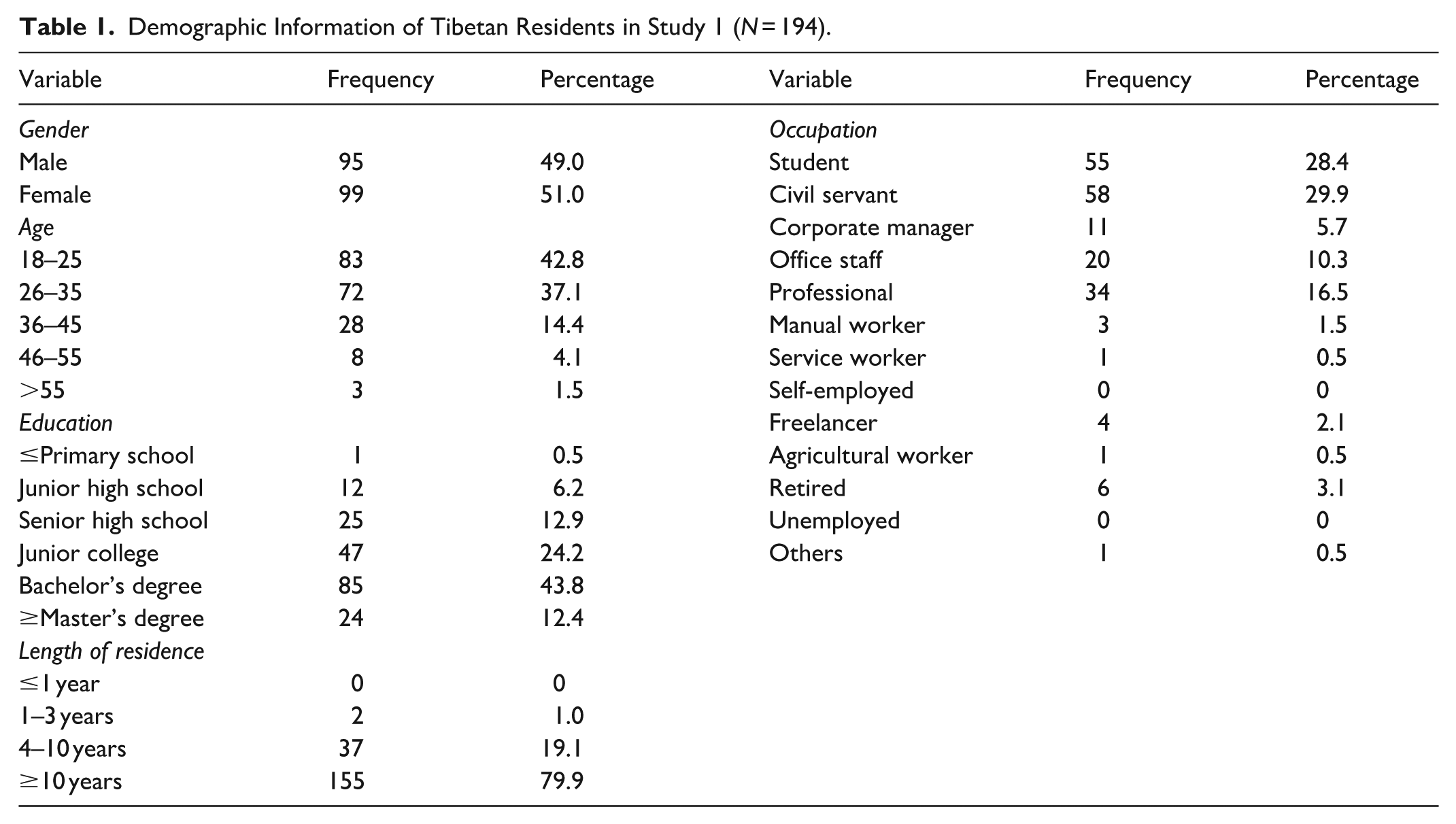
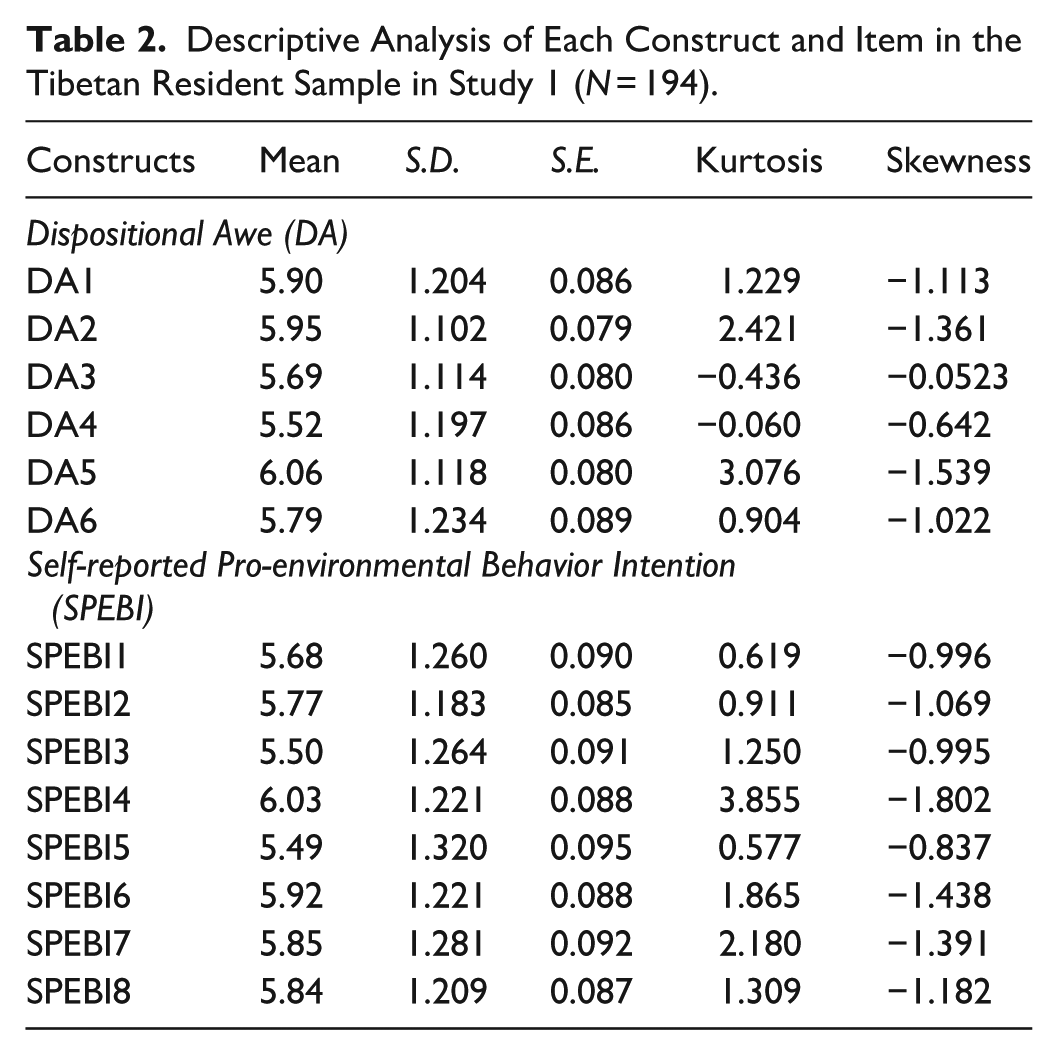
We first computed descriptive statistics (see Tables 1 and 2) and reliability coefficients using SPSS. To examine whether dispositional awe varied by length of residence, we computed a dispositional awe index by averaging the six items and compared the three residency groups. Given the highly unequal group sizes, we used Welch’s ANOVA. We then used partial least squares structural equation modeling (PLS-SEM) to assess both the measurement and structural models.
Demographic Information of Tibetan Residents in Study 1 (N = 194).
Descriptive Analysis of Each Construct and Item in the Tibetan Resident Sample in Study 1 (N = 194).
Results
Dispositional awe was numerically higher among long-term residents (Group 3, ≥10 years) than among the other groups: Group 1 (1–3 years; N = 2), M = 5.33, SD = 0.06; Group 2 (4–10 years; N = 37), M = 5.64, SD = 1.57; Group 3 (N = 155), M = 5.87, SD = 0.79. However, this difference was not statistically significant, Welch’s F(2, 3.50) = 3.81, p = .132. Games-Howell post-hoc comparisons also indicated no statistically significant pairwise differences: Group 1 versus Group 2 (p = .510, 95% CI [−1.12, 0.50]), Group 1 versus Group 3 (p = .238, 95% CI [−2.26, 1.19]), and Group 2 versus Group 3 (p = .568, 95% CI [−0.75, 0.31]). Considering the extremely small size of the “1–3 years” group (N = 2), these results should be interpreted as descriptive rather than conclusive evidence of residency-related differences in dispositional awe.
Item means of dispositional awe ranged from 5.52 to 6.06, while the standard deviation values ranged from 1.102 to 1.234. These results indicated that Tibetan residents generally exhibit a high level of dispositional awe, but variability still exists. The measurement model indicated good model fit: the standardized root mean square residual (SRMR) was 0.077 (below the 0.08 threshold), all item loadings were higher than 0.7. Moreover, Cronbach’s alpha and composite reliability values of both dispositional awe and pro-environmental behavior intention were above 0.8. Average variance extracted (AVE) values for both constructs were higher than 0.5. The heterotrait-monotrait (HTMT) ratio was 0.647, and the square roots of AVE exceeded inter-construct correlation (Hair et al., 2019). All variance inflation factor (VIF) values were below 5, indicating no multicollinearity concerns. In the structural model, dispositional awe explained 38.2% of the variance in pro-environmental behavior intention (R2 = .382). Dispositional awe was significantly related to pro-environmental behavior intention (coefficient = 0.618, p < .001), supporting Hypothesis 1.
Discussion
Study 1 supports the rationale that Tibetan residents are a theoretically and empirically valid population for studying dispositional awe and pro-environmental behavior. The findings showed that Tibetan residents have a relatively high level of dispositional awe and that dispositional awe positively predicts pro-environmental behavior intention among residents. However, existing literature has not provided sufficient insights into developing hypotheses about the mechanisms underlying the link between dispositional awe and pro-environmental behavior intention. Therefore, based on Study 1, we conducted Study 2 to explore why and how residents’ dispositional awe translates into pro-environmental behavior.
Study 2
Data Collection
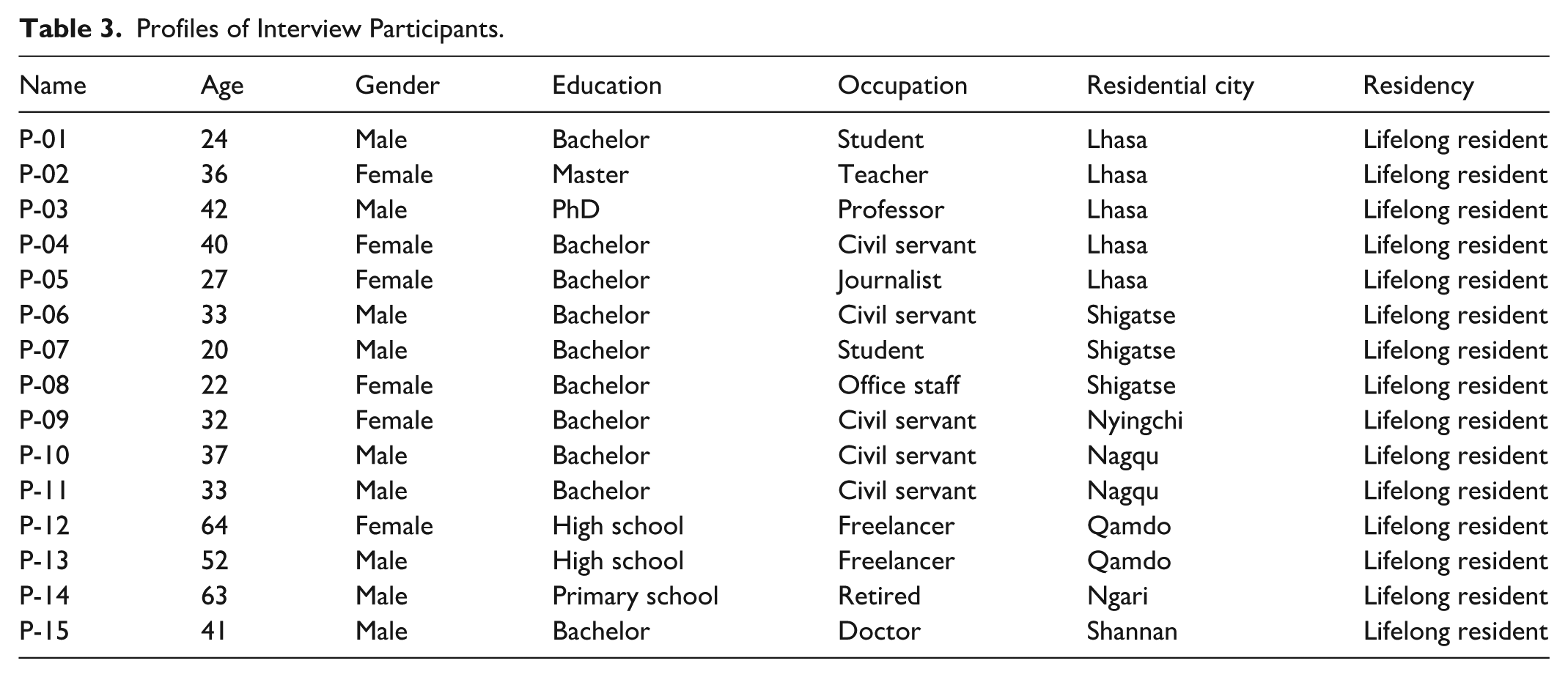
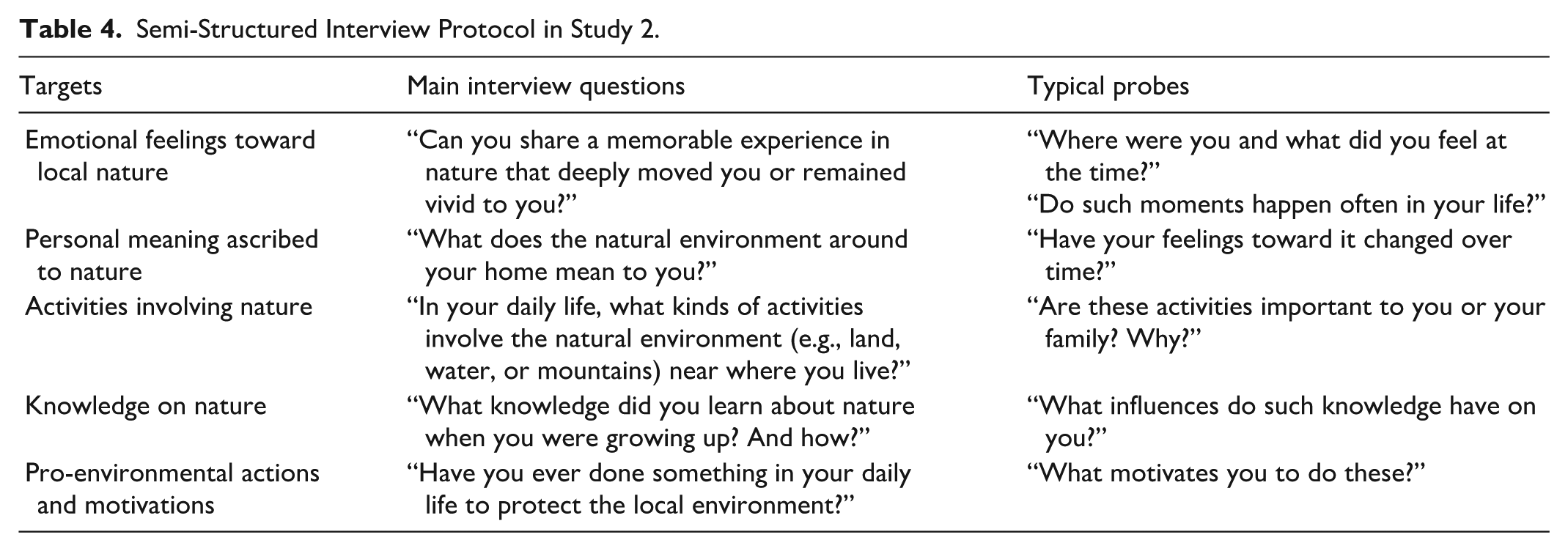
Purposive sampling was used to ensure a diverse participant pool in terms of age, gender, livelihood, and city of residence. Fifteen residents (9 males, 6 females; ages 20–64), all of whom had lived in Xizang for over 20 years, were recruited from both urban and rural areas, as well as from cultural and natural tourist destinations. Interviews were conducted between November and December 2023. Twelve interviews were held online and three face-to-face in Lhasa, each lasting 60 to 90 min. All interviews were audio-recorded and transcribed with participants’ consent. Data saturation was reached at the 15th interview since no new codes or themes emerged. Participant profiles are summarized in Table 3. We developed a concise interview protocol to guide the interviews (see Table 4). Because concepts such as “dispositional awe” and “pro-environmental behavior” are abstract, interview questions were designed to elicit participants’ narratives on daily experiences without using academic terminology. The protocol covered five experience-based topics: emotional feelings toward nature, the personal meaning ascribed to nature, activities involving nature, knowledge about nature, and pro-environmental actions and motivations. Participants were also invited to share and discuss their attitudes, daily practices, and knowledge concerning nature, as well as their past sustainable behaviors and future intentions. Open-ended probes were used throughout to elicit rich narratives.
Profiles of Interview Participants.
Semi-Structured Interview Protocol in Study 2.
Data Analysis
We used thematic analysis to analyze the interview transcripts, following the six-phase guideline proposed by Braun and Clarke (2006). The purpose of this qualitative analysis was exploratory. The interviews were used to generate candidate explanatory pathways for subsequent quantitative testing. This use of qualitative inquiry is consistent with mixed-method research design, in which qualitative findings can inform the development of constructs, relationships, and models that were later examined through quantitative analysis (Magrizos et al., 2020; Taheri & Okumus, 2023). Guided by our research question and Broaden-and-Build theory, the analysis followed an iterative process. In phase 1, transcripts were read in-depth for a thorough familiarization. In phase 2, initial codes were generated following a “data-driven” approach. As many initial codes as possible were generated to avoid missing important insights. In phase 3, codes were categorized into broader themes or sub-themes, guided by Broaden-and-Build theory. Phases 4 and 5 involved refining, defining, and linking themes. We focused on identifying concepts that can explain how dispositional awe translates into pro-environmental behavior, ensuring that only those directly relevant were retained. Links between finalized themes were identified. All themes were defined based on the data and the literature, each with sufficient supporting quotes. In phase 6, we generated a thematic map (see Figure 1) to show the coding structure and developed the hypotheses based on the qualitative findings and the literature. To minimize subjective bias, two researchers coded and identified themes independently. Any discrepancies were resolved through reflective discussion with a third researcher. This coding process was iterative, involving constant refinement and movement between the stages of analysis to ensure that emerging insights were both empirically grounded and theoretically meaningful.
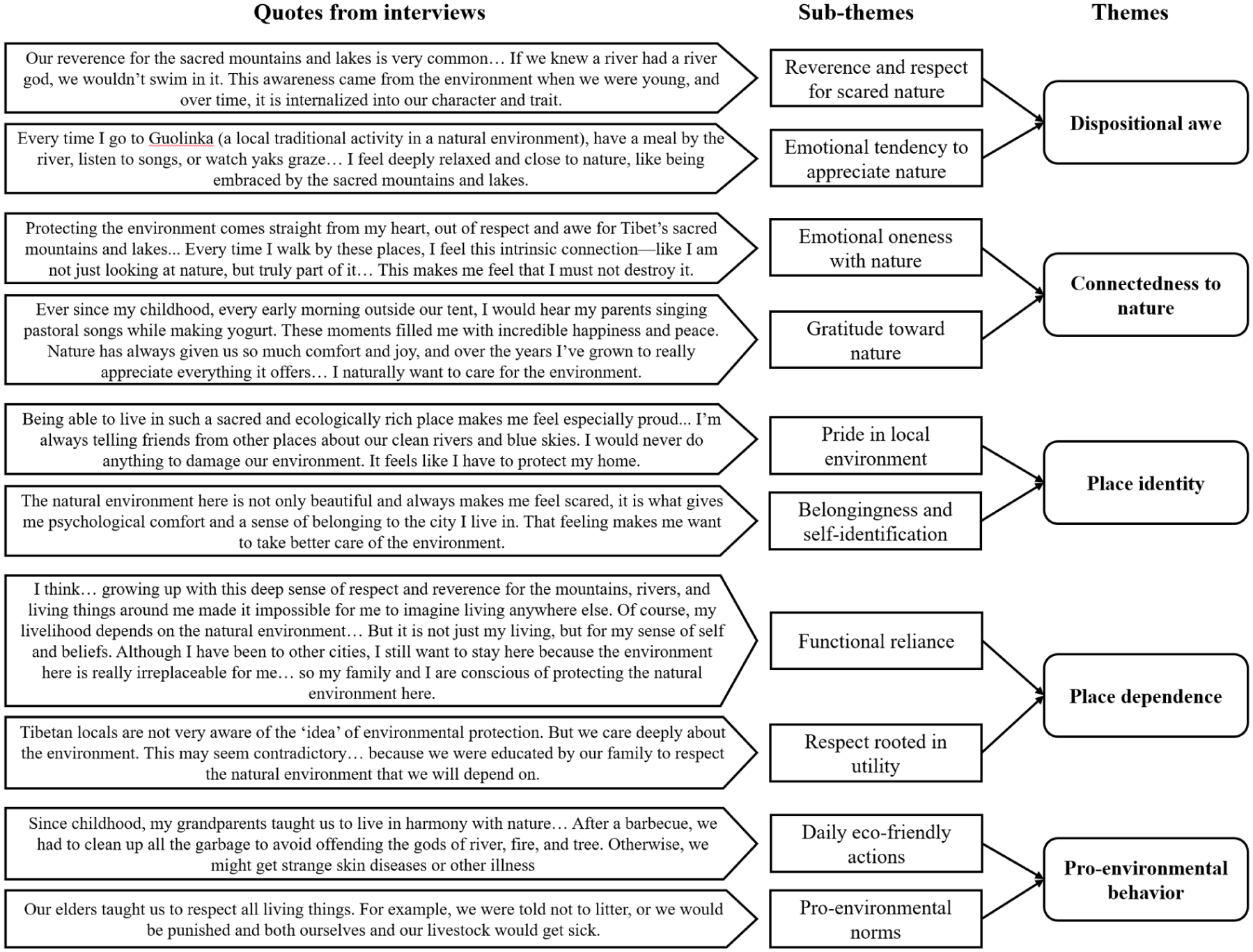
Thematic map describing the coding structure in Study 2.
Findings From Thematic Analysis
The qualitative findings confirm that dispositional awe is a salient and stable feature of Tibetan residents. Residents described dispositional awe as an enduring reverence for their homeland’s mountains, rivers, and sacred sites. For example, one participant (P-01) stated, “Our reverence for the sacred mountains and lakes is very common . . . This awareness came from the environment when we were young, and over time, it is internalized into our character and trait.” Similarly, another participant (P-04) described repeated awe experiences during ordinary encounters with nature: “Every time I go to Guolinka (a local traditional activity in a natural environment), have a meal by the river, listen to songs, or watch yaks graze . . . I feel deeply relaxed and close to nature, like being embraced by the sacred mountains and lakes.” These narratives highlight dispositional awe as intrinsic to both personal and cultural identity, aligning with Shiota et al.’s (2006) conception of dispositional awe as a stable tendency to appreciate nature’s beauty and vastness.
The findings further show that dispositional awe is closely connected with residents’ pro-environmental behavior. As one participant (P-01) stated: “The Tibetan epic ‘King Gesar’ describes how Tibetan people, over time, developed a value system of respect for nature. These stories were passed down through elders who taught us what to do and what to avoid to protect nature.” Such a narrative reflects the close relationship between dispositional awe and respect for nature. Dispositional awe originating from family education also motivates Tibetan residents’ daily sustainable practices: “Since childhood, my grandparents taught us to live in harmony with nature . . . After a barbecue, we had to clean up all the garbage to avoid offending the gods of river, fire, and tree. Otherwise, we might get strange skin diseases or other illnesses” (P-13). Similarly, another participant (P-02) recalled, “Our elders taught us to respect all living things. For example, we were told not to litter, or we would be punished and both ourselves and our livestock would get sick.”
Consistent with Broaden-and-Build theory, these findings suggest that repeated experiences of awe may broaden residents’ attention beyond the narrow self and help build enduring psychological resources that shape environmental cognition and behavior (Fredrickson, 2001). In particular, our participants connected repeated awe experiences with a broader sense of being part of nature, belonging to Xizang, and relying on the local environment for livelihood and valued activities. These narratives correspond to three theoretically meaningful resources: connectedness to nature as a relational and emotional resource, place identity as a cognitive and symbolic resource, and place dependence as a functional resource. We treat these resources as candidate explanatory pathways from dispositional awe to pro-environmental behavior. The proposed mediation model is shown in Figure 2.
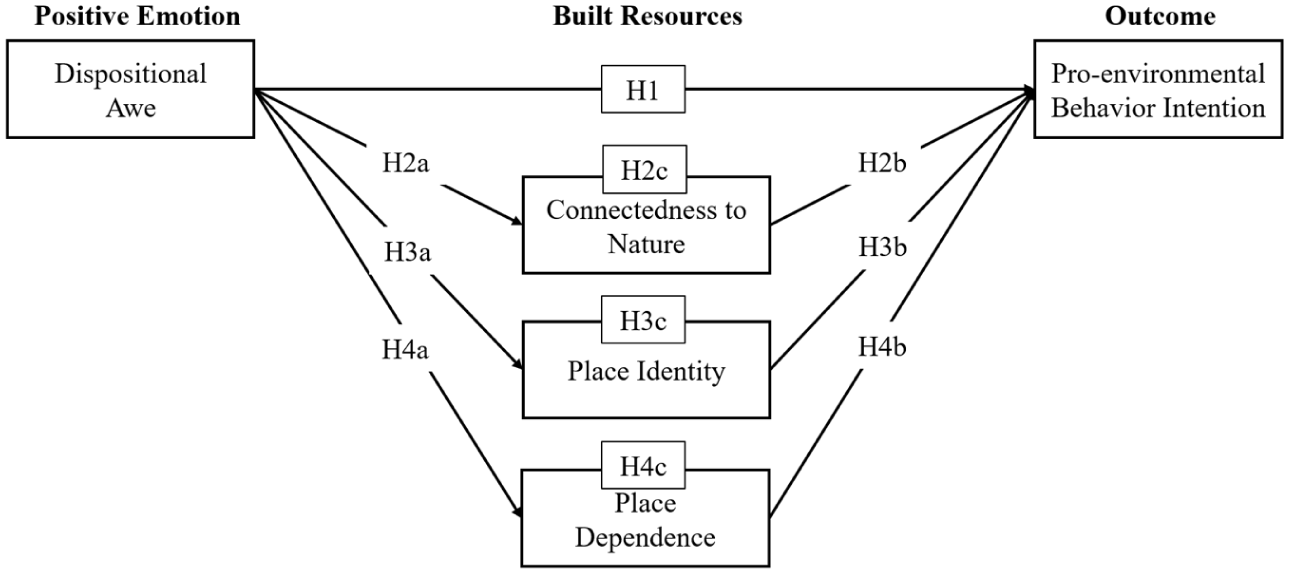
Proposed model.
Development of Research Hypotheses
Building on the qualitative insights, we conceptualize connectedness to nature, place identity, and place dependence as three resources through which dispositional awe may translate into pro-environmental behavior. Based on Broaden-and-Build theory, these resources represent different ways in which repeated awe may broaden residents’ attention and build enduring relationships with the destination environment. Connectedness to nature captures residents’ felt emotional “oneness” with the natural world, place identity reflects cognitive and symbolic identification with Xizang as “home,” and place dependence denotes the extent to which residents rely on Xizang to meet functional needs such as livelihood, wellbeing, and opportunities for valued activities.
Connectedness to Nature as a Mediator
A prominent finding is that dispositional awe cultivates residents’ connectedness to nature. This enduring emotional connection supports proactive sustainable behaviors. For example, one participant (P-04) described this internalized connection: “Protecting the environment comes straight from my heart, out of respect and awe for Xizang’s sacred mountains and lakes . . . I feel this intrinsic connection—like I am not just looking at nature, but truly part of it . . . This makes me feel that I must not destroy it.” Another participant (P-05) linked childhood memories of pastoral life with gratitude for nature: “Ever since my childhood, every early morning outside our tent, I would hear my parents singing pastoral songs while making yogurt. These moments filled me with incredible happiness and peace. Nature has always given us so much comfort and joy, and over the years I’ve grown to really appreciate everything it offers . . . I naturally want to care for the environment.” These narratives clearly illustrate that dispositional awe can foster a broad, trait-like sense of “oneness” with the natural world, rather than being limited to any particular village or city (Mayer & Frantz, 2004). This also distinguishes connectedness to nature from place identity, which centers on identification with Xizang as a specific symbolic “home.”
These qualitative insights are consistent with Broaden-and-Build theory, which suggests that positive emotions broaden individual’s attention beyond immediate self-interest and expand the self-concept to include nature (Fredrickson, 2001). For Tibetan residents who are dispositionally prone to awe, repeated encounters with awe-inspiring landscapes and culturally meaningful practices may gradually transform temporary feelings of awe into a stable sense of emotional oneness with nature. Trait Activation theory further supports this logic by suggesting that traits are expressed and reinforced when individuals repeatedly encounter trait-relevant cues (Tett & Guterman, 2000). In Xizang, sacred mountains, lakes, and religious-cultural practices provide repeated cues that may activate and consolidate residents’ dispositional awe.
Although limited, prior research also suggests that dispositional awe is associated with an expansive sense of interconnectedness with one’s surroundings (Z. Zhang & Li, 2024). In environmental contexts, this interconnectedness can take the form of connectedness to nature. As participants consistently indicated, perceiving oneself as fundamentally “part of the natural world” motivates environmental protection (Mayer & Frantz, 2004). This is further supported by empirical evidence showing that stronger connectedness to nature is associated with greater pro-environmental behavior (Hu et al., 2025; Jacobs & McConnell, 2022; Pearce et al., 2022). Therefore, we expect that dispositional awe can foster pro-environmental behavior by strengthening connectedness to nature. We hypothesize:
Place Identity and Place Dependence as Mediators
Our qualitative findings suggest that Tibetan residents’ dispositional awe helps cultivate both place identity and place dependence. Drawing on Broaden-and-Build theory, place identity and place dependence in this study represent different types of resources. Place identity is a cognitive and symbolic resource. Repeated awe may broaden residents’ attention from isolated natural objects to the symbolic meaning of Xizang as a “home,” such that the place triggers feelings of pride and belongingness (Halpenny, 2010; Junot et al., 2018; Qu et al., 2023). When residents identify strongly with the destination, protecting the local environment becomes a way to protect and affirm who they are. For example, one participant explained: “Being able to live in such a sacred and ecologically rich place makes me feel especially proud . . . I would never do anything to damage our environment. It feels like I have to protect my home” (P-07). A community manager (P-08) described river-cleaning as “cleaning our own courtyard,” indicating that environmental protection was understood as an extension of protecting home and community. Beyond sacred beliefs, place identity also appeared in tourism contexts where residents position themselves as destination representatives. A freelance tour guide shared, “I don’t want tourists to misunderstand us because of a piece of trash. Protecting Xizang’s image matters more to me than tips . . . It is my responsibility to protect the environment . . . almost instinctive as a local” (P-12). These narratives show that dispositional awe may cultivate place identity that motivates residents’ environmental protection because such behavior affirms who they are and what they want their community to represent.
By contrast, place dependence is a functional resource, representing the extent to which residents rely on environmental resources for livelihood or wellbeing. In the Tibetan context, place dependence is shaped not only by traditional nomadic and agricultural lifestyles but also by tourism-related employment and opportunities for recreational activities. In this sense, dispositional awe broadens residents’ appreciation of the environment’s role in sustaining everyday life. For example, one participant observed, “Tibetan locals are not very aware of the ‘idea’ of environmental protection. But we care deeply about the environment. This may seem contradictory . . . because we were educated by our family to respect the natural environment that we will depend on” (P-01). Many participants emphasized that their livelihoods and wellbeing depend on the local environment, which motivates them to protect it. A retired tour driver noted, “My income relies on tourists coming for our blue skies and clean lakes. If the roadside is full of trash, they won’t come back and I’d lose business. So I always carry garbage bags and even stop to pick up litter . . . I’m securing my own livelihood” (P-14). These accounts suggest that dispositional awe may heighten residents’ awareness of the functional value of the local environment and thereby motivate pro-environmental behavior.
However, the interviews also reveal that place dependence may operate in more ambivalent ways than connectedness to nature and place identity. Several participants described conflicts between environmental protection and immediate livelihood needs. For instance, a guest house owner acknowledged, “I always have a sense of awe for Xizang . . . You know that my guest house is near the snow-capped mountain and lake. I rely on the beautiful mountain and lake here to make a living since tourists come here for them. Every day, when I look up at them (the mountain and lake), I feel I am so small . . . But the reality is, during peak seasons, I set up more tents, dump wastewater, and sometimes even burn the garbage . . . I know it’s wrong, but if I stop, I will lose my income” (P-13). A civil servant (P-04) noted that some herders understood the value of rotational grazing but still increased livestock numbers because of urgent family financial needs. These accounts suggest that functional dependence can motivate environmental protection when residents perceive conservation as supporting long-term livelihood, but it may constrain such behavior when immediate economic pressures intensify.
Although empirical evidence is limited, prior work suggests that awe potentially induces place attachment (Arnould & Price, 1993; Hicks, 2018; Qu & Dong, 2026). This possibility is consistent with Broaden-and-Build theory, which argues that positive emotions broaden attention and help build enduring personal resources for coping with future challenges (Fredrickson, 2001). Through repeated broadening and building, residents’ dispositional awe may heighten their attention to both the symbolic meaning and the functional value of Xizang’s environment. These broadened perspectives may gradually build lasting psychological resources (i.e., place identity and place dependence) that enable residents to recognize and respond to potential environmental risks in Xizang’s fragile ecological context.
Prior literature generally supports a positive association between place attachment and pro-environmental behavior (Junot et al., 2018; Tonge et al., 2015; Y. Zhang et al., 2014). As key dimensions of place attachment, place identity and place dependence have frequently been found to positively predict pro-environmental behavior (Jiao et al., 2023; Junot et al., 2018; Xie & Wang, 2024). However, some studies report non-significant or even negative effects of place dependence (Halpenny, 2010; Ramkissoon et al., 2013; Tonge et al., 2015). For example, Tonge et al. (2015) found that place dependence did not significantly predict pro-environmental behavior, whereas place identity did. Ramkissoon et al. (2013) observed a significant negative association between high place dependence and high-effort pro-environmental behavior. These mixed findings are consistent with our interview evidence that place dependence may function as a double-edged resource for motivating pro-environmental behavior. Based on the qualitative insights and prior empirical findings, we expect that residents’ place identity and place dependence are both relevant pathways linking dispositional awe to pro-environmental behavior. However, given the inconsistent evidence regarding place dependence, we frame its role as a directionally positive relationship that requires empirical testing.
Discussion
Study 2 used a qualitative approach to explore how Tibetan residents’ dispositional awe translates into pro-environmental behavior. Extending Study 1, the interviews show that dispositional awe is a salient and stable trait rooted in long-term socialization, cultural narratives, and routine encounters with sacred sites. These findings support the relevance of dispositional awe in this context. More importantly, Study 2 provided insights into the possible mechanisms underlying the relationship between dispositional awe and pro-environmental behavior. The qualitative findings reveal how residents narratively connect their repeated awe experiences with environmental protection through three psychological resources: connectedness to nature, place identity, and place dependence. These insights informed the development of the conceptual model tested in subsequent Studies 3 and 4. Among the three candidate pathways, connectedness to nature and place identity appeared in participants’ narratives as relatively consistent motivations for pro-environmental behavior. By contrast, place dependence emerged as more ambivalent. Some residents viewed dependence on the local environment as a reason to protect it, whereas others described tensions between environmental protection and immediate livelihood needs. This qualitative ambiguity is theoretically important because it suggests that place dependence may not function as a uniformly positive driver of pro-environmental behavior. Study 3 therefore formally tests the relative roles of these three pathways in a larger survey sample.
Study 3
Measures
This study tests the proposed model using self-reported survey data. The questionnaire consisted of two sections: measurement of constructs and demographic information. Measures for dispositional awe and pro-environmental behavior intention were the same as those in Study 1. It is noteworthy that given the nature of the self-reported approach and intention-behavior gap, pro-environmental behavior intention used in Studies 1 and 3 is a proxy measure of concrete pro-environmental behavior (Nieto-García et al., 2024). Connectedness to nature was assessed using a 7-item measure adapted from Pearce et al. (2022), while place identity (6 items) and place dependence (7 items) were assessed using measures from Strzelecka et al. (2017). All items used a 7-point Likert scale (1 = strongly disagree to 7 = strongly agree). The adapted measures employed are detailed in the Supplemental File. As in Study 1, the questionnaire in Study 3 was strictly translated into Chinese and Tibetan to accommodate participants’ linguistic diversity.
Data Collection
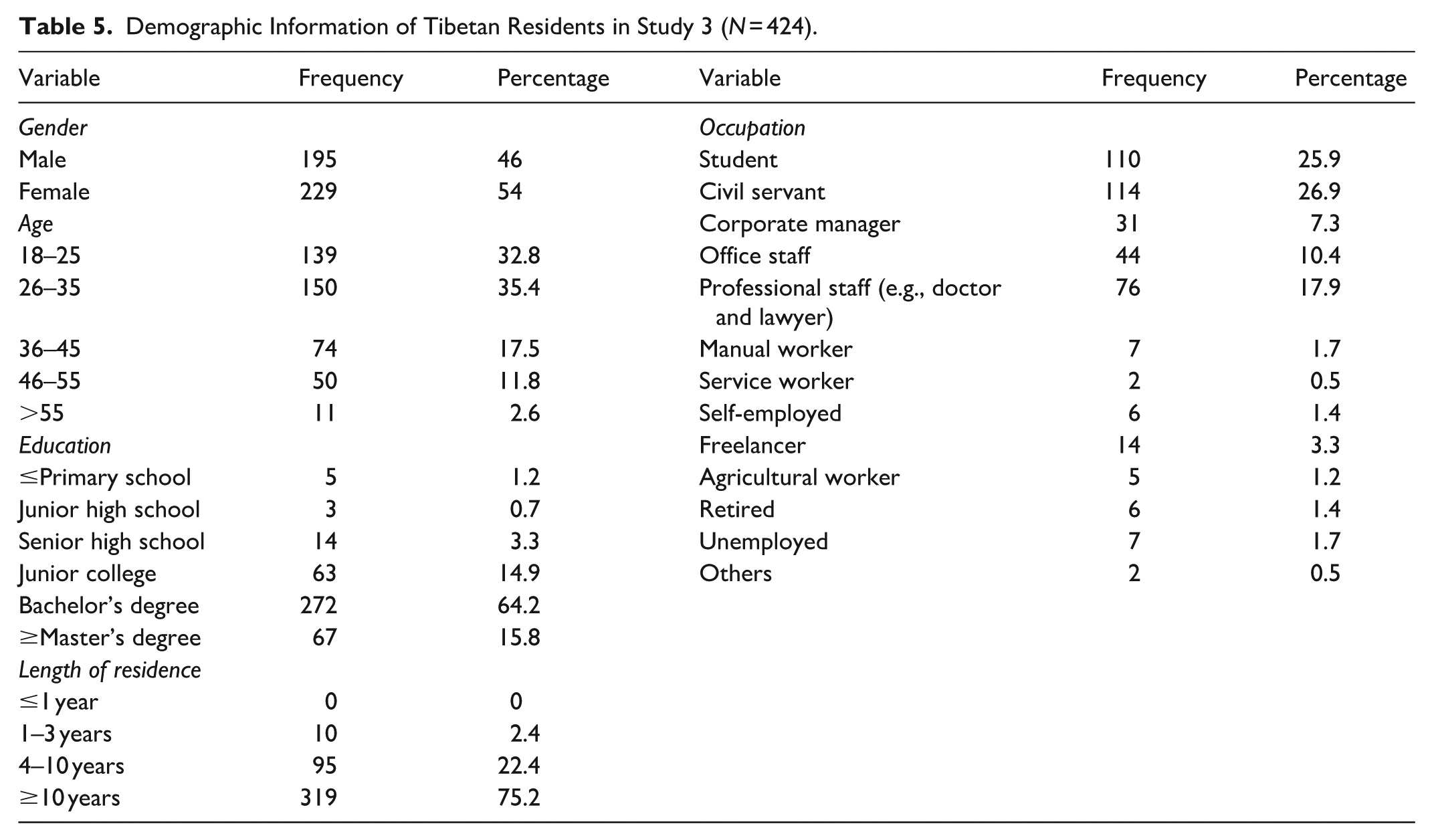
Data were collected from January to April 2024 using the Wenjuan online survey platform (https://www.wenjuan.com). To ensure data quality, we embedded the same instructional attention check as Study 1 and included reverse-coded items to detect inattentive or random responses. Of the 480 responses received, cases that failed attention checks, and responses from IP addresses outside Xizang were excluded, resulting in 424 valid responses. The sample had a higher proportion of female respondents (54.0%). Over 80% of participants had a higher education background, and 75.2% had lived in Xizang for over 10 years.
Common Method Bias
To mitigate common method bias, we implemented procedural and statistical remedies (Kock, 2015). We emphasized confidentiality and the academic purpose of the study to reduce social desirability bias. Key constructs, such as pro-environmental behavior intention, were not directly mentioned to minimize bias from participants’ perceptions of the research objectives. Reverse-coded items were included to enhance response quality. Statistically, all VIF values were below 5, indicating the absence of multicollinearity. Harman’s single-factor test revealed that the primary factor accounted for 48.856% of variance, below the 50% threshold, suggesting that common method bias was not a serious concern (Kock, 2015).
Data Analysis
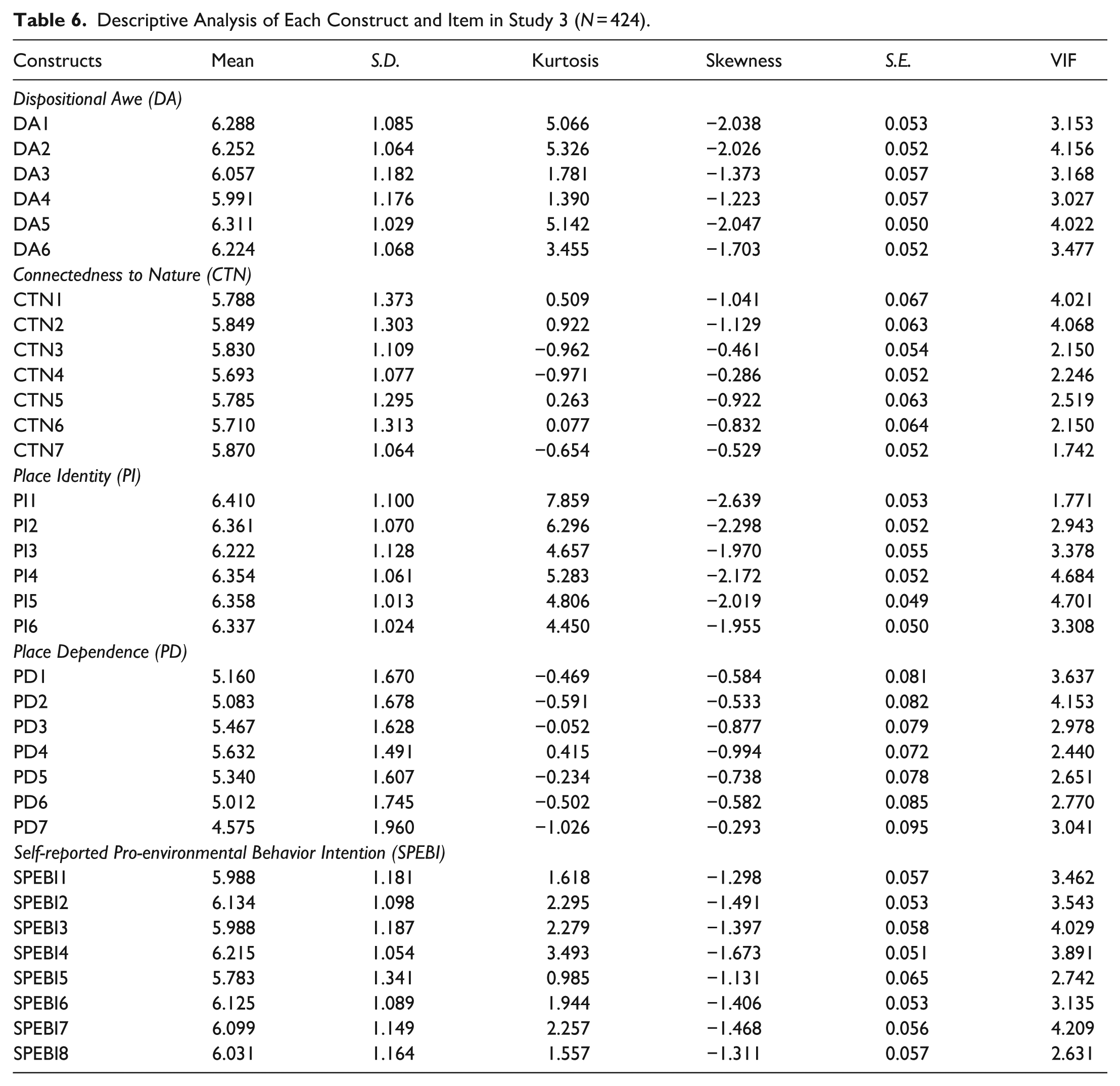
Descriptive analyses were performed in SPSS, with results presented in Tables 5 and 6. Reverse-coded items (CTN3, CTN4, CTN7) were adjusted before analysis. Consistent with Study 1, dispositional awe was compared across residency groups using Welch’s ANOVA given the unequal group sizes. Hypotheses were tested in SmartPLS 4, following standard procedures to evaluate both measurement and structural models (Hair et al., 2019). Construct reliability and validity were assessed prior to examining structural relationships among variables.
Demographic Information of Tibetan Residents in Study 3 (N = 424).
Descriptive Analysis of Each Construct and Item in Study 3 (N = 424).
Results
Group Comparison
Descriptive statistics again suggested that dispositional awe was numerically highest among long-term residents: Group 1 (1–3 years; N = 10), M = 5.48, SD = 1.26; Group 2 (4–10 years; N = 95), M = 6.15, SD = 0.92; Group 3 (≥10 years; N = 319), M = 6.22, SD = 0.92. However, the difference was not significant, Welch’s F(2, 23.43) = 2.14, p = .140. Games-Howell post-hoc comparisons were also not significant: Group 1 versus Group 2 (p = .209, 95% CI [−1.67, 0.33]), Group 1 versus Group 3 (p = .153, 95% CI [−1.73, 0.26]), and Group 2 versus Group 3 (p = .833, 95% CI [−0.33, 0.20]). The descriptive pattern is consistent with Study 1, suggesting that dispositional awe may be lower among shorter-term residents and comparatively higher among those with longer residence. However, the difference was not statistically significant and should be understood as speculative findings.
Measurement Model
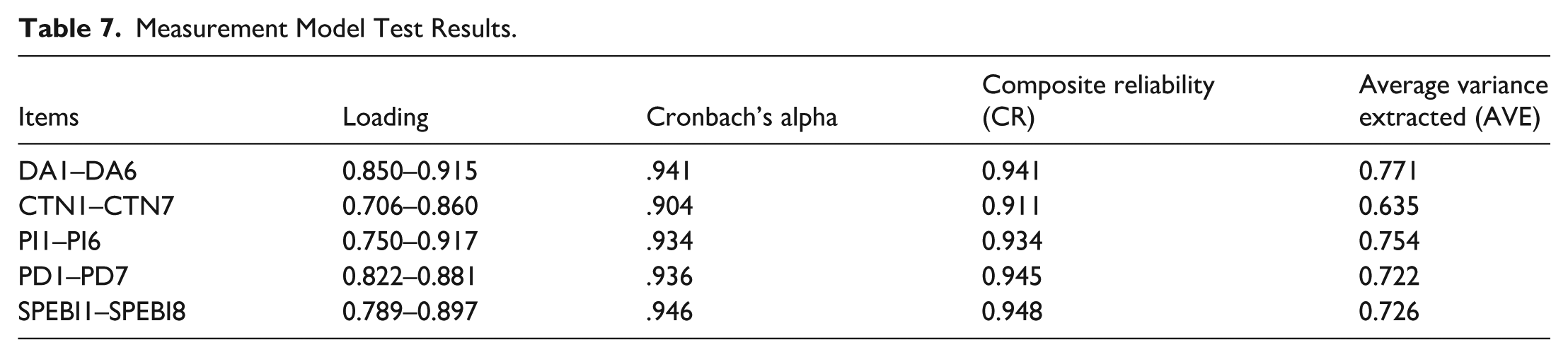
The measurement model demonstrated strong reliability and validity. All item loadings exceeded 0.7, indicating acceptable item reliability. The SRMR value was 0.065, below the 0.08 threshold, suggesting a good model fit. All constructs had Cronbach’s alpha and composite reliability values above 0.7, demonstrating high internal consistency. Convergent validity was confirmed with AVE values above 0.5 for all constructs (Table 7). Discriminant validity was evaluated using the Fornell-Larcker criterion and the HTMT. As illustrated in Table 8, the square roots of the AVE for each construct exceeded the inter-construct correlations, and all HTMT ratios were below 0.85, indicating adequate discriminant validity (Hair et al., 2019).
Measurement Model Test Results.
Discriminant Validity.
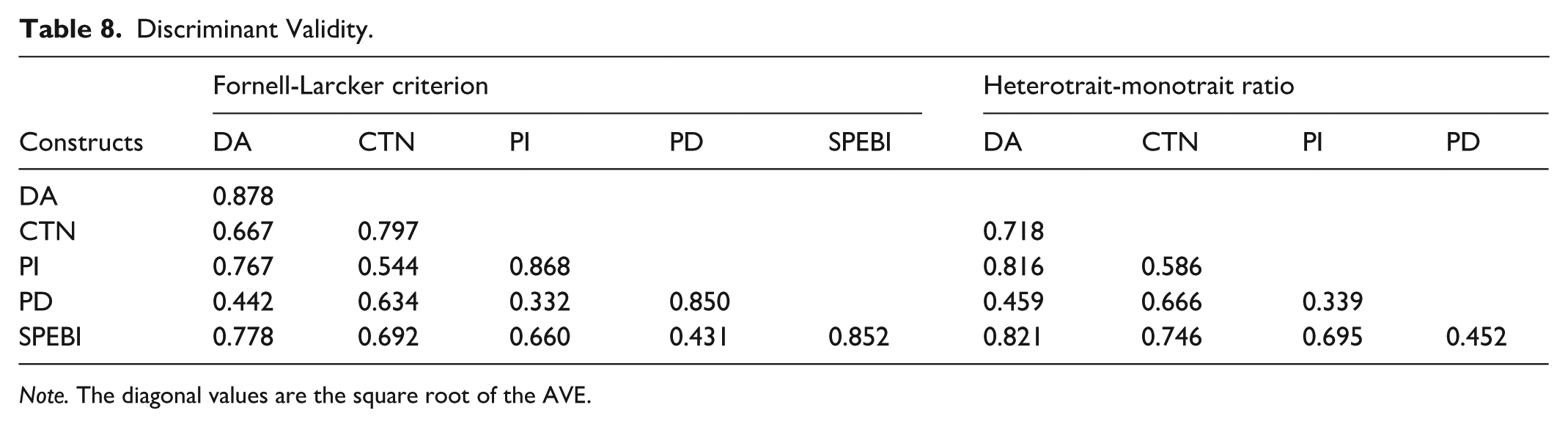
Note. The diagonal values are the square root of the AVE.
Structural Model
The structural model demonstrated strong explanatory power, explaining substantial variance in key constructs: connectedness to nature (R2 = .445), place identity (R2 = .588), place dependence (R2 = .196), and pro-environmental behavior intention (R2 = .667). All Q2 values were above zero, indicating sufficient predictive relevance (Hair et al., 2019). The direct effects are outlined in Table 9. Dispositional awe had a significant positive relationship with pro-environmental behavior intention (coefficient = 0.479, p < .001), confirming Hypothesis 1. Dispositional awe also had positive and significant relationships with connectedness to nature (coefficient = 0.667, p < .001), place identity (coefficient = 0.767, p < .001), and place dependence (coefficient = 0.442, p < .001), supporting hypotheses 2a, 3a, and 4a. Furthermore, connectedness to nature (coefficient = 0.320, p < .001) and place identity (coefficient = 0.127, p < .01) were positively related to pro-environmental behavior intention, supporting hypotheses 2b and 3b. However, place dependence was not significantly related to pro-environmental behavior intention (coefficient = −0.025, p > .05), so Hypothesis 4b was not supported.
Hypotheses Testing Results (n = 424).
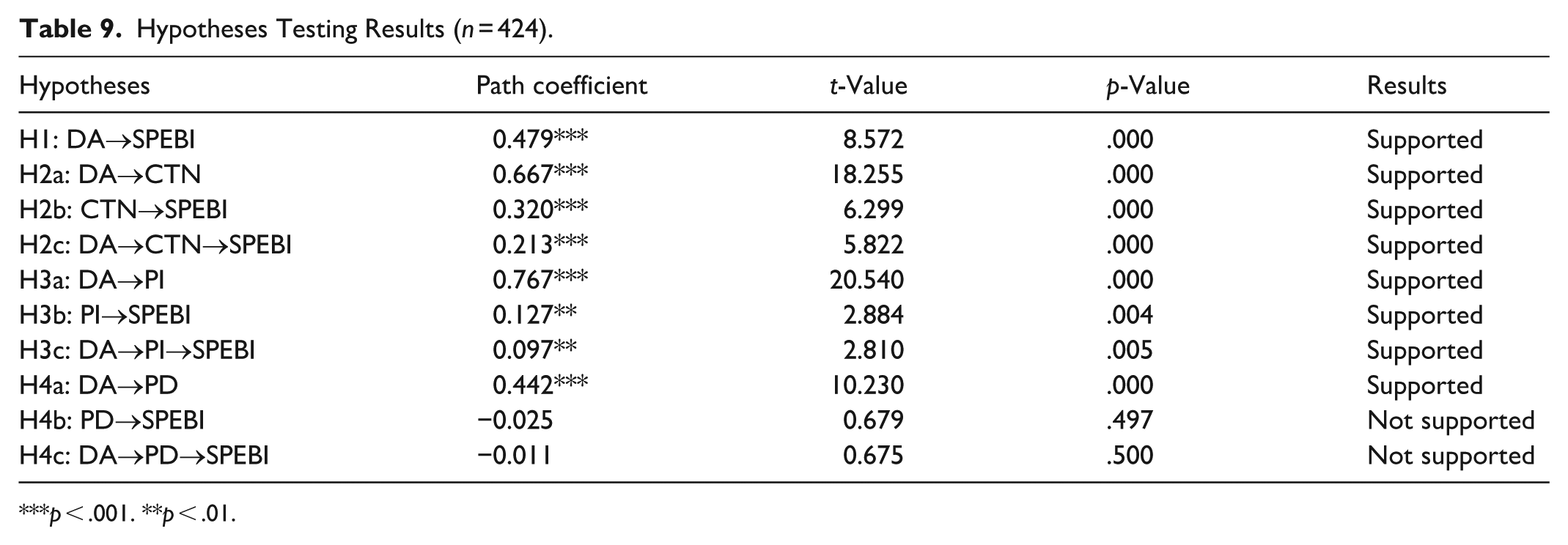
p < .001. **p < .01.
Indirect effects showed that connectedness to nature (coefficient = 0.213, p < .001) and place identity (coefficient = 0.097, p < .01) significantly mediated the relationship between dispositional awe and pro-environmental behavior intention. Therefore, hypotheses 2c and 3c were supported. However, place dependence did not show a significant mediation (coefficient = −0.011, p > .05). Thus, Hypothesis 4c was not supported. The presence of significant direct and indirect effects indicates that connectedness to nature and place identity partially mediate the relationship between dispositional awe and pro-environmental behavior intention (Figure 3).
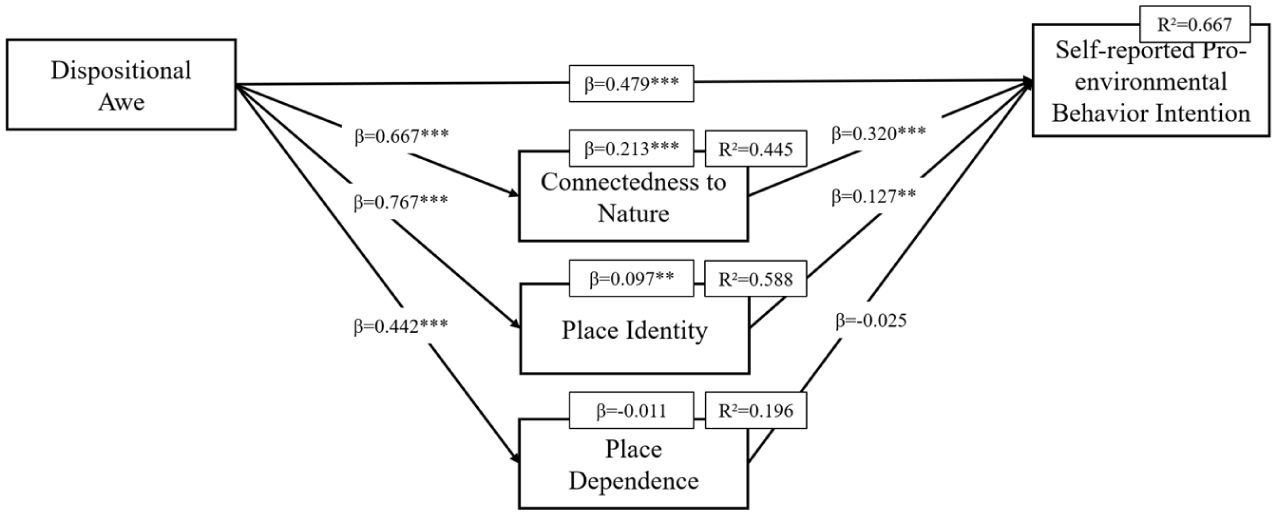
Model results of Study 3.
Discussion
Study 3 used a survey sample (424 Tibetan residents) to formally examine the model developed from Study 2. This design allowed us to assess which candidate pathways were empirically supported and to compare their relative explanatory power. Consistent with Study 1, Study 3 confirmed a positive relationship between dispositional awe and self-reported pro-environmental behavior intention. Furthermore, the study confirmed positive associations between dispositional awe and connectedness to nature, place identity, and place dependence. The findings also supported the positive links between connectedness to nature/place identity and pro-environmental behavior intention. However, place dependence did not significantly relate to self-reported pro-environmental behavior intention. This inconsistency highlights the complexity of place dependence as shown in prior studies and our qualitative insights (Ramkissoon et al., 2013; Tonge et al., 2015). Considering the potential self-report bias and the intention-behavior gap issue in Study 3 (Nieto-García et al., 2024), we adopted a peer-reported approach to measure observed behavior in subsequent Study 4 for further validation.
Study 4
Measures
The questionnaire in Study 4 comprised three sections: (1) participants’ own dispositional awe, connectedness to nature, place identity, and place dependence; (2) peer-reported pro-environmental behavior; (3) and demographic information. Measures for the first section were identical to those in Study 3. Peer-reported pro-environmental behavior was assessed by adapting the measures from Olya and Akhshik (2019) for participants to rate their friends’ observed pro-environmental behavior. For example, “based on my understanding, in daily life, he/she tries to protect local resources as much as he/she can.” Although the peer-reported approach is not fully objective, it has been widely used in sustainable behavior research as a quasi-objective indicator that reduces self-report bias (Kormos & Gifford, 2014). Consistent with Study 3, the questionnaires were rigorously translated and presented in both Chinese and Tibetan.
Data Collection
A total of 194 undergraduate students voluntarily participated in exchange for a monetary reward (approximately $0.7). To ensure accurate peer assessment, participants signed up in pairs of previously acquainted friends. Upon arrival at the designated classroom, each paired “friend group” was seated apart to maintain confidentiality and prevent influence during survey completion. The researcher introduced the study as an investigation on “cognition and behavior,” with informed consent obtained. Each participant assessed their own dispositional awe, connectedness to nature, place identity, and place dependence, as well as their friends’ pro-environmental behavior. Peer reports were then matched accordingly. This step allowed peer-reported pro-environmental behavior scores to be accurately aligned with each corresponding participant. Consistent with Study 3, an instructional attention check and reverse-coded items were included in the self-report survey. Cases with extreme values or failed attention checks were removed, resulting in 182 valid samples.
Data Analysis
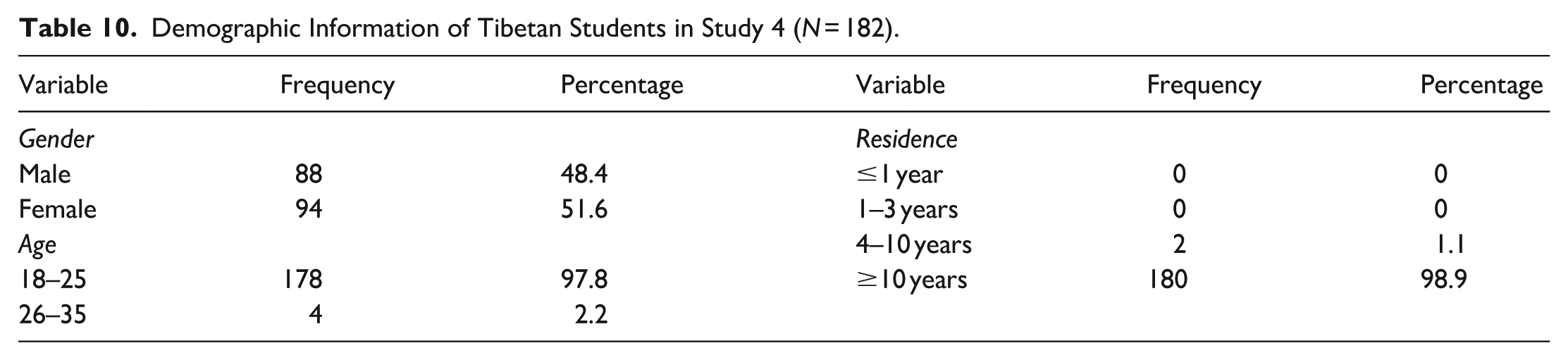
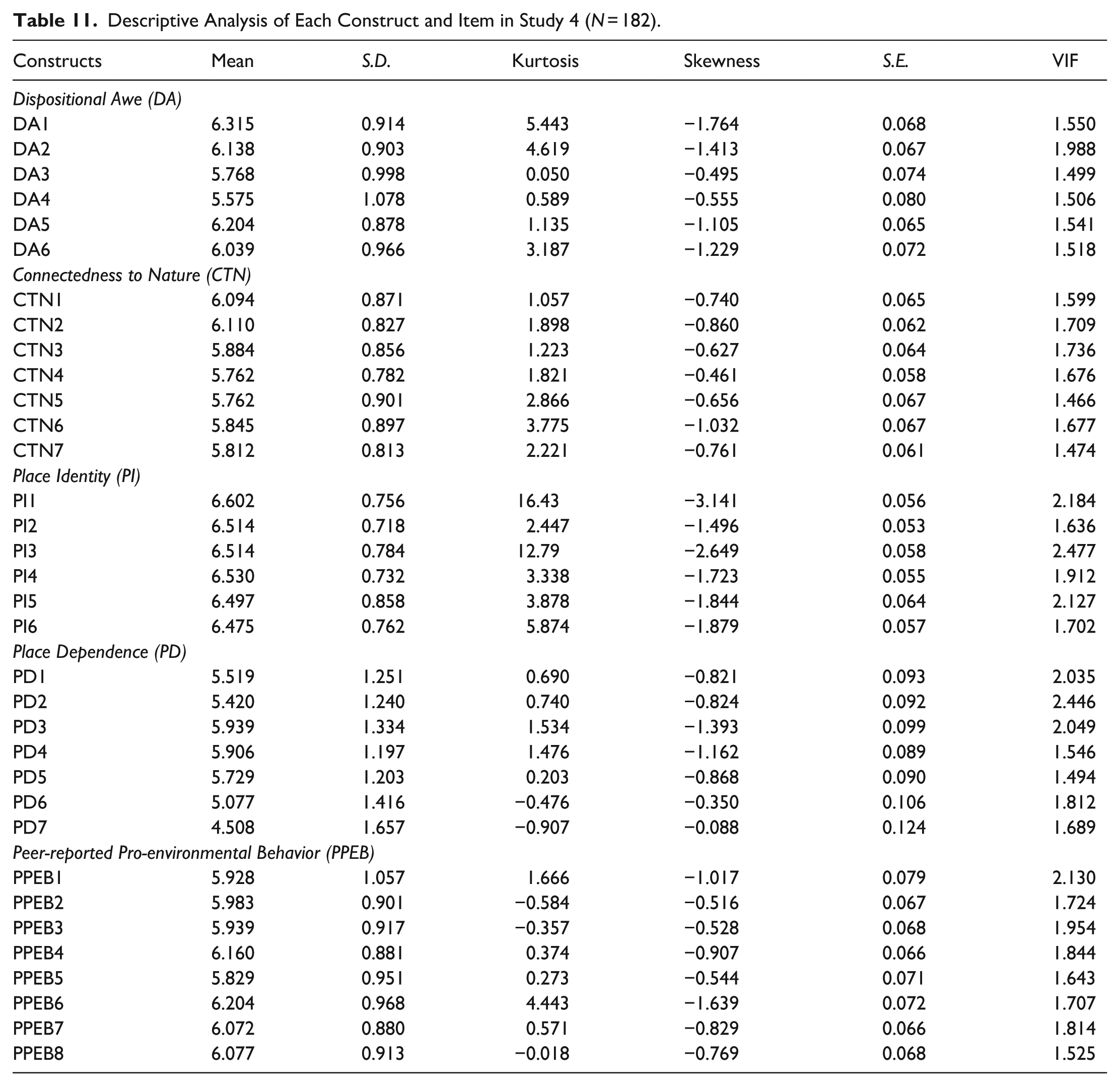
Data analysis for Study 4 followed the same process as Study 3. We did not conduct a group comparison by residency because the sample exhibited minimal variability in residence length (98.9% reported ≥10 years). Descriptive statistics were computed in SPSS after recoding reverse items (CTN3, CTN4, CTN7). The results are presented in Tables 10 and 11. SmartPLS 4 was used for hypothesis testing, evaluating both the measurement and structural models (Hair et al., 2019).
Demographic Information of Tibetan Students in Study 4 (N = 182).
Descriptive Analysis of Each Construct and Item in Study 4 (N = 182).
Results
Measurement Model
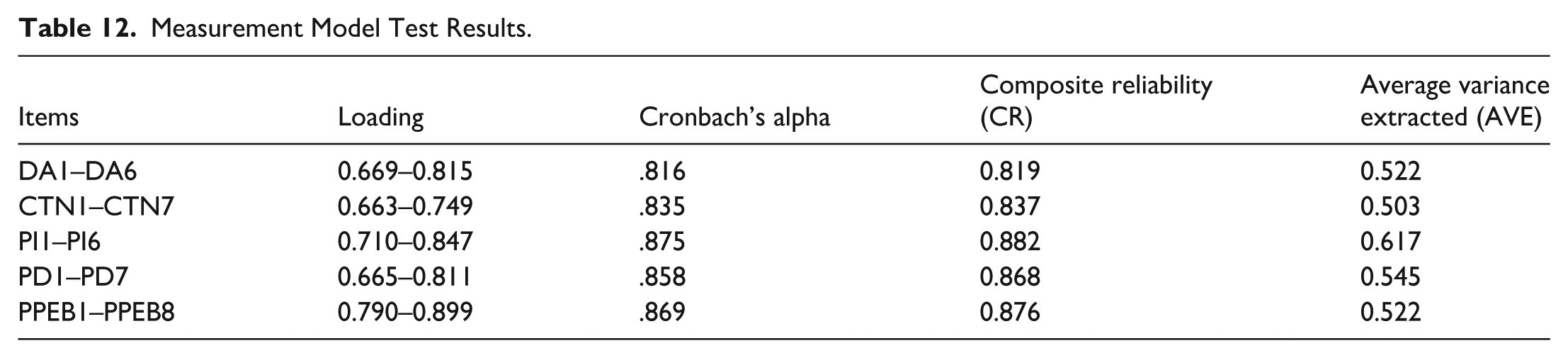
The measurement model demonstrated good overall fit, with an SRMR of 0.067. Most items displayed factor loadings above 0.7, confirming adequate item reliability. All VIF values were below 3, thus multicollinearity was not a concern. Internal consistency reliability was confirmed, with composite reliability (CR) and Cronbach’s alpha exceeding 0.8 for all constructs. Convergent validity was established, as AVE values for each construct exceeded 0.5. Discriminant validity was also established, as the square roots of AVE for all constructs exceeded their correlations with other constructs, and all HTMT ratios below 0.85 (Tables 12 and 13).
Measurement Model Test Results.
Discriminant Validity.
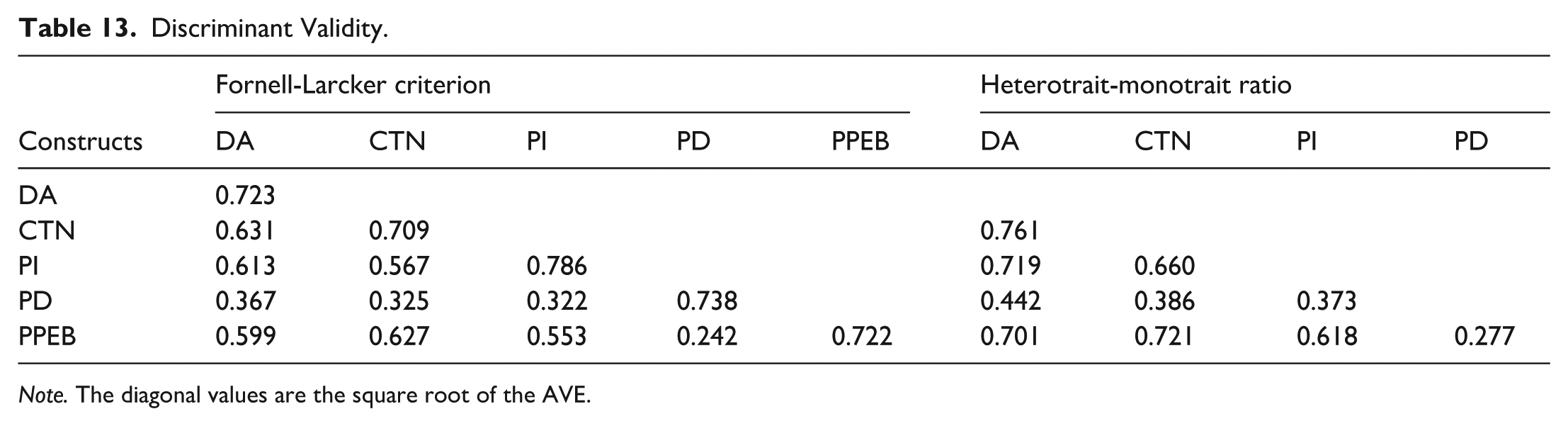
Note. The diagonal values are the square root of the AVE.
Structural Model
The structural model explained significant variance in connectedness to nature (R2 = .399), place identity (R2 = .375), place dependence (R2 = .135), and peer-reported pro-environmental behavior (R2 = .484). Predictive relevance was established, with all Q2 values above zero. Table 14 summarizes the hypothesis testing results. Dispositional awe was significantly linked to peer-reported pro-environmental behavior (coefficient = 0.264, p = .001), supporting Hypothesis 1. Dispositional awe also significantly predicted connectedness to nature (coefficient = 0.631, p < .001), place identity (coefficient = 0.613, p < .001), and place dependence (coefficient = 0.367, p < .001), thus hypotheses 2a, 3a, and 4a were supported. Connectedness to nature (coefficient = 0.358, p < .001) and place identity (coefficient = 0.199, p < .05) were both significantly linked to peer-reported pro-environmental behavior, thus supporting hypotheses 2b and 3b. However, place dependence did not show a significant relationship with peer-reported pro-environmental behavior (coefficient = −0.036, p = .589), so Hypothesis 4b was not supported.
Hypotheses Testing Results (n = 182).
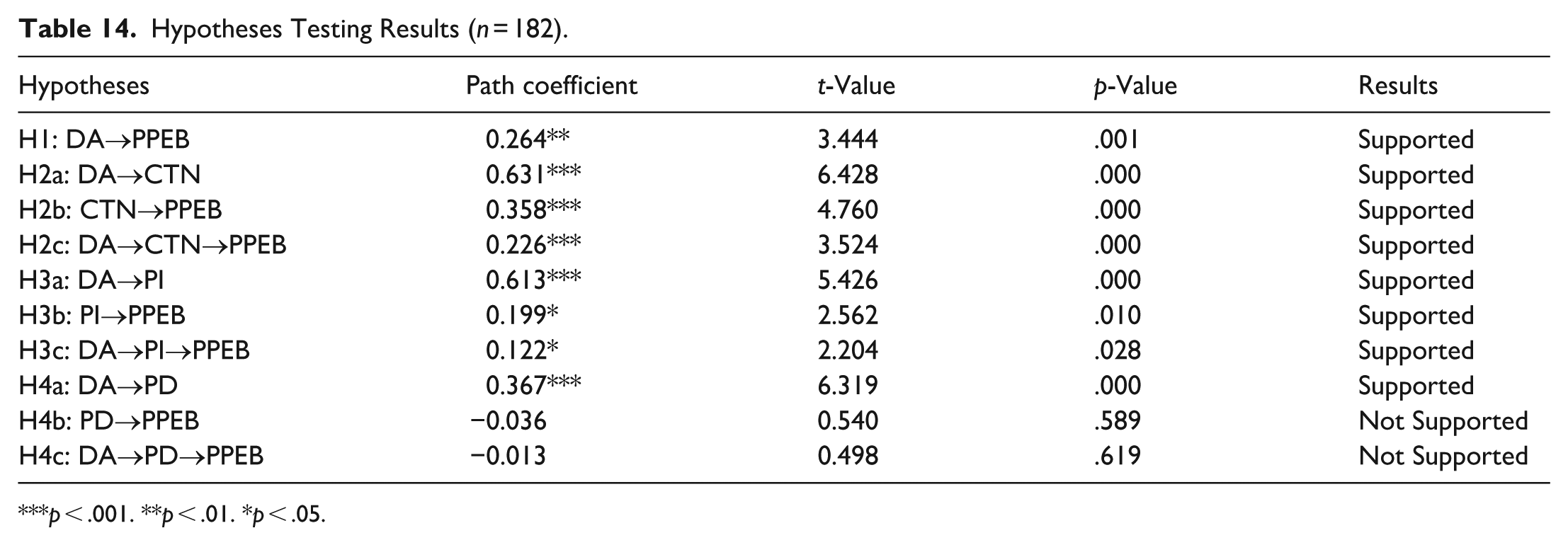
p < .001. **p < .01. *p < .05.
The mediation analysis revealed significant indirect effects of dispositional awe on peer-reported pro-environmental behavior through connectedness to nature (coefficient = .226, p < .001) and place identity (coefficient = 0.122, p < .05), supporting Hypotheses 2c and 3c. The indirect effect via place dependence was not significant (coefficient = −0.013, p = .619), thus Hypothesis 4c was not supported. Consistent with Study 3, connectedness to nature and place identity partially mediated the relationship between dispositional awe and peer-reported pro-environmental behavior.
Discussion
Study 4 provided a critical robustness check for Study 3 by replacing self-reported pro-environmental behavior with peer assessment, which reduces concerns about self-representation bias and intention-behavior gap (Kormos & Gifford, 2014). All results replicated the key findings from Study 3. While R2 values were modestly lower for peer assessment, they remained substantial and significant. Therefore, Study 4 further validated the robustness of the research model and confirmed the reliability of the observed mediation pathways (Figure 4).
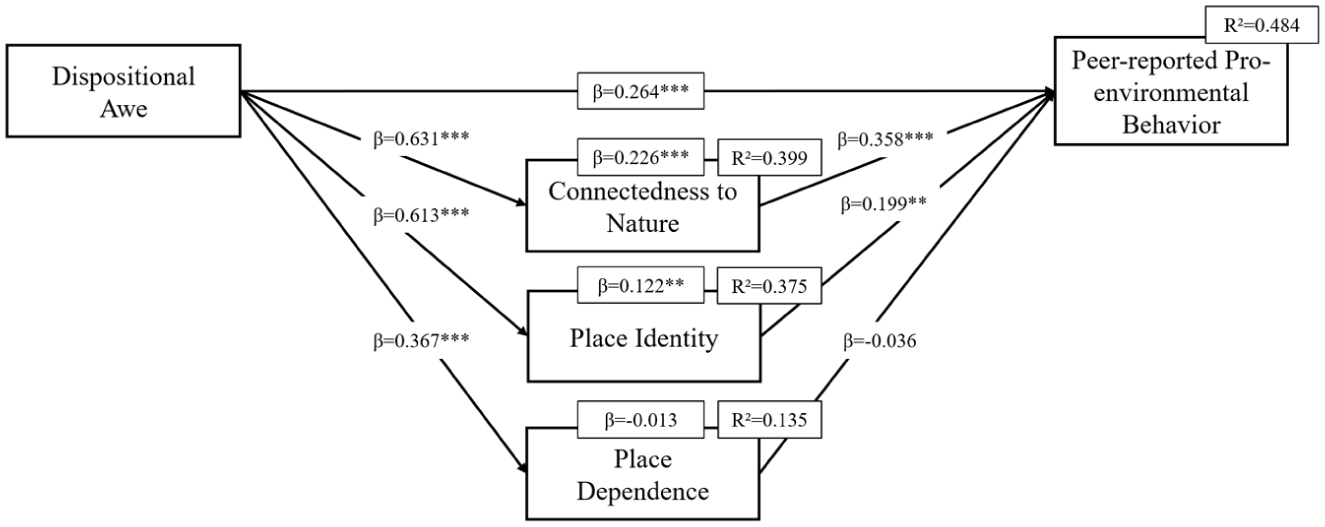
Model results of Study 4.
Conclusion and Discussion
General Discussion
This study examined whether and how dispositional awe relates to destination residents’ pro-environmental behavior intention. Across four complementary studies with Tibetan residents, we obtained cumulative evidence for this relationship and its underlying psychological pathways. Study 1 established the focal association between residents’ dispositional awe and pro-environmental behavior intention (whether). Study 2 used in-depth interviews to explore residents’ lived experiences of awe and environmental protection, thereby uncovering three candidate explanatory pathways: connectedness to nature, place identity, and place dependence (how). Building on these qualitative insights and relevant research, we developed a mediation model that was subsequently tested in Studies 3 and 4. Study 3 showed that residents’ dispositional awe predicted pro-environmental behavior intention directly and indirectly through connectedness to nature and place identity, whereas the indirect pathway through place dependence was not significant. Study 4 replicated these findings using peer-reported pro-environmental behavior, helping address self-representation bias and the intention-behavior gap.
A central finding is that residents higher in dispositional awe are more likely to engage in pro-environmental behavior. Prior tourism research shows that tourists’ momentary awe can promote pro-environmental actions (Su et al., 2025; Yan & Jia, 2021; H. Zhang & He, 2025). Our results extend this effect from a transient state to a stable trait by demonstrating that an enduring tendency to experience awe similarly predicts residents’ pro-environmental behavior intention. This finding provides empirical support for Shiota et al.’s (2007) theoretical proposition that individuals who frequently experience awe may adopt more pro-environmental actions. Dispositional awe can be particularly consequential for destination sustainability because it persists beyond a single awe-eliciting encounter and can support sustained behavior patterns (Anderson et al., 2019; Jacobs & McConnell, 2022; W. Liu et al., 2025; Shiota et al., 2007). This pattern is consistent with Broaden-and-Build theory, which suggests that repeated positive emotional experiences can broaden individuals’ mindsets and help build lasting psychological resources (Fredrickson, 2001).
Our evidence further consistently suggests that connectedness to nature is a key mediator linking dispositional awe and pro-environmental behavior intention. Although connectedness to nature has been broadly associated with pro-environmental behavior (Jacobs & McConnell, 2022; Pearce et al., 2022), little is known about whether dispositional awe relates to connectedness to nature. Previous theoretical inference suggesting that dispositional awe is associated with an expanded connectedness with one’s surroundings informed our hypothesis development (Z. Zhang & Li, 2024). Our findings provide robust empirical confirmation of this inference and further extend it to explaining residents’ pro-environmental behavior. We also observed a strong association between connectedness to nature and pro-environmental behavior intention, differing from Beery and Wolf-Watz (2014) who argued that generalized connectedness to nature does not necessarily translate into stronger pro-environmental behavior. One plausible explanation is that in our context, residents’ connectedness to nature reflects a trait-level sense of “oneness” that extends beyond specific natural features, which may make it more stable and enable it to exert a stronger effect on behavior.
Our findings also support the role of dispositional awe in cultivating place identity and place dependence, two dimensions of place attachment that capture residents’ cognitive and functional connections to Xizang’s environment. While empirical evidence linking awe and place attachment remains limited (Arnould & Price, 1993; Hicks, 2018), our findings align with Broaden-and-Build theory by suggesting that dispositional awe can build lasting psychological resources related to the surrounding environment (Fredrickson, 2001). More importantly, our research clarifies the distinct roles of place identity and place dependence in shaping residents’ pro-environmental behavior intention. Consistent with prior studies (Tonge et al., 2015; Xie & Wang, 2024), place identity emerged as a significant positive predictor. This finding helps address some inconsistencies in earlier research by highlighting the motivational power of strong cognitive and symbolic identification with a place (Junot et al., 2018; Tonge et al., 2015). By contrast, place dependence showed no significant effect across Studies 3 and 4. Together, these findings corroborate the conceptual distinction between place identity and place dependence and suggest that place identity is a more robust predictor of pro-environmental behavior intention (Tonge et al., 2015).
The non-significant role of place dependence contradicted our hypothesis and previous research (Jiao et al., 2023; Junot et al., 2018; Xie & Wang, 2024), but it is not surprising since our qualitative evidence and some prior research also noted its complexity and ambivalence (Ramkissoon et al., 2013; Tonge et al., 2015). Importantly, this finding does not imply that place dependence is irrelevant. Instead, our interview narratives illuminate a more nuanced, double-edged pattern that has not been fully explained by prior research. For many residents, functional reliance on the environment motivates protection, while for others the same reliance can create pressures to prioritize family survival or business income over environmental concerns. These insights gained through our mixed-method approach underline the value of examining the meaning embedded in place attachment, rather than treating it as a monolithic construct in tourism sustainability research (Tonge et al., 2015).
Theoretical Implications
First, this research shifts attention from momentary state awe to enduring dispositional awe, offering a novel perspective for understanding residents’ pro-environmental behavior in tourism research. Although prior tourism literature has robustly shown that tourists’ awe can influence pro-environmental actions (Su et al., 2025; Y. Zhang et al., 2025), this perspective is inherently limited by the temporary nature of state awe and tourists’ short stays (Hicks, 2018; S. L. Ng, 2024). By contrast, residents interact with the environment in more enduring and cumulative ways and may develop a more stable tendency to feel awe, with lasting implications for destination sustainability (Jacobs & McConnell, 2022; W. Liu et al., 2025). However, both the emotional and trait-level drivers of residents’ pro-environmental behavior remain poorly understood (W. Liu et al., 2025). Responding to this gap, we confirm that dispositional awe is a strong and reliable predictor of residents’ pro-environmental behavior intention, highlighting the theoretical value of dispositional awe (Shiota et al., 2007). More broadly, we argue that the role of awe in motivating sustainable behavior is not limited to momentary experiences and can also operate as a stable trait that consistently supports pro-environmental behavior (Jiang et al., 2024). This research encourages future research on how enduring dispositional emotions may foster durable, harmonious relationships between stakeholders and destination environments.
Second, this study clarifies how dispositional awe translates into pro-environmental behavior intention by identifying two primary psychological mechanisms. Across studies, connectedness to nature and place identity consistently mediated the relationship between dispositional awe and pro-environmental outcomes. These findings empirically support theoretical inferences that dispositional awe may potentially increase one’s connectedness to nature and that awe can strengthen place attachment (Arnould & Price, 1993; Hicks, 2018; S. T. Ng et al., 2023). Notably, these mediating pathways remained evident when pro-environmental behavior was peer-reported, highlighting their robustness. Furthermore, we also contribute to tourism literature on place attachment by offering a more nuanced explanation of the complex role of place dependence (Halpenny, 2010; Ramkissoon et al., 2013; Tonge et al., 2015). Our evidence suggests that place dependence can function as a double-edged sword that is sensitive to contextual conditions. Residents’ reliance on the destination environment may motivate protection, yet under economic pressure it may also shift priorities toward immediate needs. This interpretation helps explain inconsistencies in earlier research and signals that future tourism research should avoid treating place attachment as a monolithic construct when studying pro-environmental behavior.
Third, this research extends Broaden-and-Build theory by specifying the types of resources through which dispositional awe may support residents’ pro-environmental behavior intention. It was argued that each emotion may broaden and build through distinct pathways (Cavanaugh et al., 2015). Although the application of this theory has been extended from state emotions to dispositional emotions, it has not been fully leveraged to explain how dispositional awe translates into specific pro-environmental outcomes through broadening and resource building. We address this theoretical gap by demonstrating that dispositional awe broadens and builds in a distinctive manner. Specifically, connectedness to nature represents a relational and emotional resource, while place identity represents a cognitive and symbolic resource. Focusing on connectedness to nature and place identity also differentiates this study from previous work on tourists’ state awe, which emphasized mechanisms such as “small self” or norm-based processes (Kim et al., 2023; Su et al., 2025; H. Zhang et al., 2024; H. Zhang & He, 2025). By incorporating connectedness to nature and place identity into the repertoire of resources cultivated by dispositional awe, we expand the explanatory scope of Broaden-and-Build theory.
Practical Implications
This research offers practical insights for destination sustainability management. First, residents are central stakeholders whose pro-environmental behavior intention is shaped by their enduring tendency to experience awe. The consistent association between residents’ dispositional awe and pro-environmental intention, alongside peer-reported behaviors, suggests that destination environmental programs can be strengthened by targeting how residents habitually experience their surroundings. Managerial efforts may be more effective when they provide repeated opportunities for residents to routinely notice vastness, beauty, and sacred meaning, rather than relying on transient awe-evoking activities. Possible approaches include nature-immersion and interpretation programs, community festivals celebrating local landscapes, and educational workshops on the destination’s natural heritage.
Second, connectedness to nature and place identity appear to be the primary mechanisms through which dispositional awe translates into pro-environmental behavior. Accordingly, communicative and educational interventions should be designed to cultivate emotional closeness to the natural world and identity-based pride and belongingness in the destination. Examples include campaigns such as “protect what you are part of” and “protect your home.” Third, the non-significant effect of place dependence should not be interpreted as irrelevance. Our qualitative evidence suggests that residents’ functional reliance can motivate protection when they perceive a clear link between environmental quality and livelihood. However, when this reliance is paired with short-term economic pressure, residents may prioritize immediate survival or business operations over environmental protection. Therefore, destination managers should avoid relying solely on economic self-interest appeals and instead consider incentives or compensation that reduce the immediate costs of pro-environmental choices.
Finally, our research design offers a methodological implication with practical relevance for evaluating pro-environmental behavior interventions. Because self-reported measures of pro-environmental behavior may be affected by social desirability and the intention-behavior gap, combining self-reported and peer-reported behavior can strengthen validity. In practice, destination organizations can adopt a similar approach when evaluating interventions by supplementing self-reported intentions with peer assessments, community leader evaluations, or other corroborating indicators at the neighborhood level. This triangulated measurement strategy can improve confidence in intervention effectiveness and provide more realistic assessments of behavioral change.
Limitations and Future Research
This study has limitations that suggest directions for future research. First, because we focused on Tibetan residents, the generalizability of our findings to other contexts remains uncertain. Future research should examine whether the relationships observed here are consistent across various contexts, particularly more urbanized destinations. Second, while we measured pro-environmental behavior using both self-reported intentions and peer-reported behavior, we did not capture objective behavior. Future studies could incorporate longitudinal or observational indicators to better address the intention-behavior gap. Third, while we concentrated on dispositional awe, other enduring positive emotions like gratitude, elevation, or compassion might similarly promote pro-environmental behavior. Therefore, an exciting direction would be to compare the effects of different dispositional emotions, or test their combined effects. Fourth, length of residence was measured using broad categories, with “≥10 years” as the highest option, limiting more detailed comparisons among long-term residents. Future work could use continuous measures and include a “lived here all my life” option to examine variation across residency duration more precisely.
Supplemental Material
sj-docx-1-jtr-10.1177_00472875261459200 – Supplemental material for Dispositional Awe and Its Effect on Destination Residents’ Pro-Environmental Behavior Intention
Supplemental material, sj-docx-1-jtr-10.1177_00472875261459200 for Dispositional Awe and Its Effect on Destination Residents’ Pro-Environmental Behavior Intention by Kunmei Liu, Songshan (Sam) Huang, Zhicheng Yu, Zhiyong Li and Shanzhen Hu in Journal of Travel Research
Footnotes

Author Contributions
Funding
The authors disclosed receipt of the following financial support for the research, authorship, and/or publication of this article: This work was supported by The Research Project Founded by Xizang University for Ph.D. Candidates (to Kunmei Liu).
Declaration of Conflicting Interests
The authors declared no potential conflicts of interest with respect to the research, authorship, and/or publication of this article.
Supplemental Material
Supplemental material for this article is available online.
Author Biographies
References
Supplementary Material
Please find the following supplemental material available below.
For Open Access articles published under a Creative Commons License, all supplemental material carries the same license as the article it is associated with.
For non-Open Access articles published, all supplemental material carries a non-exclusive license, and permission requests for re-use of supplemental material or any part of supplemental material shall be sent directly to the copyright owner as specified in the copyright notice associated with the article.
