







Abstract
The World Health Organization reports that 0.62% of children have autism. Although positive travel experiences can alleviate symptoms of mental health disorders, existing research has paid little attention to the travel experiences of children with autism and their families. This study analyzes interview data from 24 families with autistic children, applying Family Resilience Theory and Flow Theory to explore the formation pathways of travel experiences in these families. The research derives four distinct types of travel experiences from the interview data: family redemption, healing, de-stigmatization, and re-socialization. It suggests that the formation of such experiences can be understood as following a developmental pathway of family resilience: through continuously mobilizing resources and adjusting strategies during travel, families move toward a match between challenges and capabilities, ultimately entering a state of flow experience and achieving a transition from disorder to order.
Keywords
Introduction
Author 1 was scrolling through their social media feed when their finger paused on a lengthy post. It was a mother’s account of her travels with her autistic daughter over three years, detailing a journey from initial breakdown and helplessness to the current state of calm enjoyment. The title read: “Travel: Our Most Difficult Yet Most Effective Intervention.”
Author 1 stared at the screen, falling silent. Instantly, numerous questions sprang to mind, accompanied by a sense of curiosity: “Isn’t traveling with an autistic child extremely challenging? How did this family persevere, and how did they even transform it into a healing and growth-oriented travel experience?”
Autism Spectrum Disorder, commonly referred to as autism, is a neurodevelopmental disorder that manifests in early childhood. Its primary characteristics include difficulties in social interaction, restricted interests, and repetitive, stereotyped patterns of behavior (Wing, 1993). These features not only profoundly affect the social integration and daily quality of life of autistic children but also pose significant challenges to the overall well-being of their families (Meadan et al., 2010). Globally, at least 78 million people are diagnosed with Autism Spectrum Disorder (Lord et al., 2018), representing countless families under substantial strain.
The social model of disability posits that the key factors limiting the participation of individuals with disabilities in social activities are not their physical or cognitive conditions per se, but rather external environmental and societal barriers, such as inadequate accessibility facilities, social prejudice, and a lack of supportive services (Shakespeare, 2006). Guided by this model, recent tourism research has gradually shifted its focus toward how to enhance the travel experiences of tourists with disabilities by fostering an inclusive social atmosphere and physical environment at destinations, thereby promoting their social integration (Qiao et al., 2022, 2026). Consequently, for autistic children, the inability to form satisfactory travel experiences is closely linked to the absence of an inclusive atmosphere and physical environment. Existing research on children’s travel experiences indicates that children are not passive recipients but active participants who can actively construct their travel experiences through social interaction and exploration of new things (Li et al., 2023). However, for autistic children, who are highly sensitive to external sensory stimuli and prone to stress reactions from environmental disruptions, the construction of their travel experience depends heavily on environmental controllability and sensory comfort (Sak et al., 2020; Stadler et al., 2021). Furthermore, they may struggle to comprehend social cues, gestures, facial expressions, or the concept of personal space during travel (Gessaroli et al., 2013). These challenges can lead to a sense of disempowerment and unequal treatment during journeys, preventing them from forming positive travel experiences, memories, and connections with those around them in the same way as children without disabilities (Jepson et al., 2024). They are also often unable to participate in the planning of the entire travel itinerary, instead becoming the primary focus of consideration during family travel planning (Burrow, 2022). These characteristics mean that autistic children typically require support from others when participating in tourism activities, making family-unit travel their predominant form of tourism (Conde et al., 2023).
Existing research on family travel involving autistic children has primarily focused on examining barriers to participation (Fazil et al., 2022). Guided by the social model of disability, most current studies on family travel for autistic children argue that unfair treatment from accommodation providers, staff, and other tourists (Freund et al., 2019), as well as inadequate tourism products for families with autistic children (Jepson et al., 2024), are significant reasons why such travel often fails to materialize. Furthermore, some studies have begun to address the travel experiences of families with autistic children (Sedgley et al., 2017; Stadler et al., 2021). Certain research suggests that the support of other family members is crucial in overcoming travel barriers and achieving positive travel experiences. However, this also places additional challenges and pressures on these members during travel planning and execution (Stadler et al., 2021). Other studies argue that, despite the stress and challenges for family members, travel can still provide a temporary respite from daily family life (Jepson et al., 2024), suggesting that families with autistic children may still achieve satisfactory travel experiences under current circumstances. While existing research acknowledges this, it has yet to thoroughly explore how family members and autistic children interact during travel to co-construct these experiences. Investigating this aspect not only helps expand pathways for the social inclusion of autistic children in unequal contexts but also contributes to enhancing relationships within families of autistic children.
Current research has found that families with autistic children face numerous challenges during travel, with the family unit being the smallest entity capable of mitigating these challenges (Stadler et al., 2021). Family Resilience Theory suggests that when the challenges faced by a family exceed its capacity, families mobilize new resources and adjust their travel strategies to achieve adaptation, ultimately aligning challenges with capabilities (Walsh, 1996). Although this theory can explain how travel experiences form within families with autistic children, it does not further analyze the nature of the experiences once this alignment is reached. According to Flow Theory, when challenges and capabilities are matched, families with autistic children enter a state of flow (Beard, 2014), during which they attain travel experiences unique to them.
Therefore, this study first conducts in-depth interviews with 24 families of autistic children to explore the types and formation pathways of their travel experiences. Second, non-participant observation is employed to further validate the rationality of autistic children’s travel experiences within the family context. The study addresses two main research questions: RQ1: How are travel experiences formed in families with autistic children? RQ2: What are the travel experiences of families with autistic children? The findings enrich theoretical perspectives in travel experience research and provide a new theoretical basis for developing tourism products tailored to families with autistic children. This will contribute to advancing a deeper understanding and further research on the travel experiences of special populations in tourism and related fields.
Literature Review
Family Tourism With Children With Autism
Two distinct characteristics of children’s tourism are intergenerationality and playfulness (Small, 2008). Based on the participants in tourism activities, children’s tourism can be divided into two main categories: “children-only tourism” and “family tourism” (Carr, 2011). Family tourism involving children generally has a clear motivation for learning. Family members tend to choose tourism activities with educational benefits and act as “teachers” in informal tourism education settings. This helps to reinforce past experiences, pass on family history, and promote a shared understanding (W. Wu et al., 2021). The learning experience in family tourism activities runs through the entire process of pre-travel, during-travel, and post-travel. Pre-travel tourism planning not only promotes children’s knowledge accumulation but also enhances their sense of participation and responsibility (Stone & Petrick, 2013). Interactions with the environment during travel can stimulate children’s spirit of exploration, innovative thinking, cognitive ability, and family interaction (Van Winkle & Bueddefeld, 2020; Y. Wang et al., 2021). The emotional, cognitive, and ability experiences formed during travel extend into daily life, leading to changes in children’s attitudes and thinking patterns (Bueddefeld & Duerden, 2022).
Due to the effects of autism, autistic children exhibit characteristics such as limited awareness, social difficulties, restricted interests, and repetitive, stereotyped behaviors (Wing, 1993). These traits result in challenges during travel, including difficulties with communication and social interaction, sensory sensitivities, and a strong preference for familiar environments (Stadler et al., 2021). Viewed from an individual-deficit perspective, solutions often focus on training autistic children to behave and think similarly to other children. However, the social model of disability posits that disability stems not from an individual’s physical or mental condition itself, but from a social environment that fails to accommodate such conditions (Shakespeare, 2006). Guided by this model, scholars have come to recognize that autistic children’s inability to enjoy travel activities as others do is attributable to the various barriers within the tourism environment, rather than being an inherent issue of the children themselves (Cerdan Chiscano, 2021).
Given their limited awareness, most travel activities involving autistic children occur within family trips. Consequently, existing tourism research on autistic children is predominantly conducted at the family level, with current studies mainly exploring the numerous barriers faced by these families during travel (Cerdan Chiscano, 2021; Conde et al., 2023). Schaaf et al. (2011) were among the first to investigate family travel with autistic children, revealing that the children’s difficulty in managing sensory stimuli is a primary challenge for families during trips. Yet this barrier alone does not capture the multiple obstacles autistic children face during travel. Building on this, Sedgley et al. (2017) further identified barriers such as insufficient information and unfair treatment at destinations. While prior research has examined various barriers, it often overlooked the heterogeneity among autistic children. Freund et al. (2019), through a quantitative study of 117 Spanish families with autistic children, found that the severity of the child’s diagnosis influences the travel limitations experienced by the family.
While earlier barrier-focused research primarily addressed the pre-, during, and post-travel stages, Sak et al. (2020) examined the issue from a tourism market perspective, finding a lack of satisfactory tourism products for autistic children, making it difficult for families to select suitable destinations. Other studies suggest that autistic children face multiple barriers in airport environments and advocate for staff training, priority access, and collective efforts from family members to help them achieve satisfactory airport experiences (Cerdan Chiscano, 2021). Synthesizing prior findings, Jepson et al. (2024) proposed a tri-level responsibility framework-involving government, tourism systems, and neurodiverse families-to analyze and help overcome travel barriers for autistic children.
Thus, existing research on family travel with autistic children has largely concentrated on analyzing barriers within static contexts such as destination environments and facilities, emphasizing external challenges like sensory overload, information gaps, and insufficient service support. However, helping families with autistic children overcome travel barriers and achieve fulfilling travel experiences by addressing external obstacles requires a protracted process. In contrast, fewer studies have focused on the dynamic interaction between autistic children and other family members during travel. This avenue represents the most effective pathway to understanding how families with autistic children can realize travel experiences in contexts where existing accessibility facilities and an inclusive atmosphere are still relatively scarce. This gap in perspective limits the design of tourism products in meeting the nuanced needs of both autistic children and their families and constrains a deeper understanding of family travel experiences in autism contexts.
Tourism Experience of Families With Children With Autism
Families with autistic children often face relational tensions (Bayat, 2007). Firstly, influenced by autism, autistic children frequently exhibit behaviors such as aggression and communication barriers. These not only directly hinder effective interaction with parents and siblings but are also more likely to trigger misunderstandings and physical conflicts within the family, keeping daily communication in a state of tension (Desquenne Godfrey et al., 2023). Secondly, the long-term costs of treatment interventions, special education expenses, and auxiliary services constitute a heavy financial burden. At the same time, parents typically need to invest far more time and energy in caregiving than usual, often having to adjust or even abandon their career development (Bayat, 2007). Furthermore, the effectiveness of these interventions tends to diminish with age (Zachor & Ben Itzchak, 2010).
Tourism is considered an activity that provides human and social experiences, integrating entertainment, leisure, and social and environmental interactions. It can serve as a key resource for achieving these dimensions, helping to increase well-being and reduce stress (Qiao et al., 2026). For families with autistic children, tourism can similarly become a means to promote and improve their quality of life (Conde et al., 2023). The essence of the travel experience lies in the deep, immersive interaction between tourists and their environment, which can bring a sense of renewal and refreshment, both physically and mentally (Xie, 2017). When families with autistic children immerse themselves in such experiences, the children can engage interactively with the environment, leading to positive therapeutic effects for themselves, while parents can temporarily relax and gain enjoyable physical and mental experiences.
In recent years, with the diversification of tourist groups and types, the concept of travel experience has been further refined to better meet the travel needs of different groups and contexts (Yousaf et al., 2018). The concept most closely related to the travel experience of families with autistic children is that of family travel experience with children. However, the family travel experience with children is a comprehensive experience gained by children through participating in travel activities within the family environment. It encompasses a range of positive impacts, including physical and mental health, cognitive improvement, emotional development, social skill cultivation, and the acquisition of general skills (Ballantyne & Packer, 2011; Van Winkle & Bueddefeld, 2020; W. Wu et al., 2021). This type of travel experience is characterized by “intergenerationality” and “playfulness” (Cullingford, 1995; Small, 2008).
For families with autistic children, however, the presence of the autistic child introduces numerous challenges in forming travel activities, leading to contradictions within the family (Zhao et al., 2023). The travel experience gained after jointly overcoming these challenges is not solely child-centered but also brings unique experiences to other family members. These characteristics mean that the general family travel experience cannot adequately explain the travel experience of families with autistic children. Moreover, existing research on family travel with autistic children has primarily focused on exploring the various challenges these families face during travel (Freund et al., 2019), with little attention paid to the formation process and types of their travel experiences. This gap has resulted in shortcomings in enterprise tourism product development, government policy formulation, and destination accessibility design, which fail to adequately support the formation of travel experiences for families with autistic children (Sak et al., 2020). Consequently, this situation is not conducive to aiding the recovery of autistic children, facilitating leisure activities for other family members, or effectively improving their overall quality of life.
Therefore, this study aims to explore the formation process and types of travel experiences in families with autistic children, thereby providing practical insights for better designing inclusive tourism products tailored to these families.
Family Resilience and Flow Experience Theory
Family Resilience Theory was initially introduced in Rutter's (1985) research, where it garnered academic attention as a contextual factor of individual resilience. With the development of Family Stress Theory and Family Systems Theory in the 1980s and 1990s, the family gradually transcended its “contextual” attribute and came to be regarded as an independent entity capable of generating resilience. Walsh (1996) defined family resilience as the family’s positive ability to rebound, endure crises, cope with challenges, and engage in self-repair mechanisms when facing adversity or crisis, ultimately leading to adaptive and positive outcomes. This theory has been primarily applied in tourism contexts to examine how businesses enhance their resilience to cope with crises, as well as in the study of family travel (Schwaiger et al., 2022). It explores how family members utilize resilience to overcome crises and conflicts during travel, thereby promoting an overall improvement in quality of life (Díaz-Aguilar & Escalera-Reyes, 2020; Dönmez et al., 2023). However, no research has yet applied this theory to analyze the travel activities of families with autistic children. Existing studies have employed this theory to explore how families with autistic children cope with significant stress upon initial diagnosis, achieve a match between family capabilities and challenges, and subsequently support the child’s development (Bayat, 2007). Influenced by ecological theory, scholars such as Henry et al. (2015) and Walsh (2016) further proposed that family resilience should not be viewed as a singular trait or static outcome, but rather should emphasize its contextual, dynamic, and interactive nature. In the context of family travel with autistic children, where families are removed from their habitual environment, they may face more frequent unexpected events, and the child’s emotions are more prone to fluctuation (Conde et al., 2023; Zhao et al., 2023). This compels families to develop new resilience strategies to achieve a balance between capabilities and challenges. Therefore, understanding the mechanism of family resilience in the travel process must consider the specific context and the dynamic interactions within the family. Although Family Resilience Theory systematically describes the process by which families transition from a “capability-challenge mismatch” to a ”match,” it does not explain the nature of the experience for autistic children in travel after reaching this matched state. To address this, this study introduces Flow Experience Theory as a further analytical framework.
Flow Experience Theory was proposed in the mid-1970s by the University of Chicago psychologist Csikszentmihalyi (Getzels & Csikszentmihalyi, 1976). Its theoretical model emphasizes the balance between task difficulty and individual skill level: when the two are matched, the individual is prone to enter a flow state; when task difficulty is too high or skills are insufficient, anxiety or boredom may arise (Beard, 2014). This theory has been widely applied in tourism research. C. H.-J. Wu and Liang (2011)found that factors such as tourists’ skills, activity challenge level, and enjoyment influenced the generation of flow experience in adventure tourism. K. Kim et al. (2018), in their study on ecotourism in Jeju Island, South Korea, further indicated that flow experience mediates the relationship between perceived value and satisfaction, as well as environmentally responsible behavior. Zhang et al. (2021) suggested that not all travel experiences can translate into flow experiences; for instance, deep engagement in tourism performing arts may facilitate the flow state. Huang et al. (2021), in their research on children’s virtual tourism, found that excessively long VR experiences might hinder flow generation and reduce excitement, extending the application of flow theory to children’s tourism studies. More recently, J. Wang et al. (2023) applied flow theory to museum settings, exploring how virtual technology and exhibition design can optimize visitor experiences.
Flow theory has been applied in diverse contexts such as adventure tourism, ecotourism, children’s virtual tourism, and museums, with the research subjects primarily being individual tourists. However, no existing studies have applied flow theory to family travel with autistic children, nor is there research on tourism flow experiences at the family-unit level. For families with autistic children, the challenges faced during travel are more pronounced. If they can achieve a match between capabilities and challenges by enhancing family resilience, it could facilitate the attainment of deeper flow experiences (Figure 1). Therefore, this study aims to integrate Family Resilience Theory and Flow Experience Theory to explore the formation process and types of travel experiences in families with autistic children, thereby deepening the understanding of the challenges they face and providing references for designing inclusive tourism products.
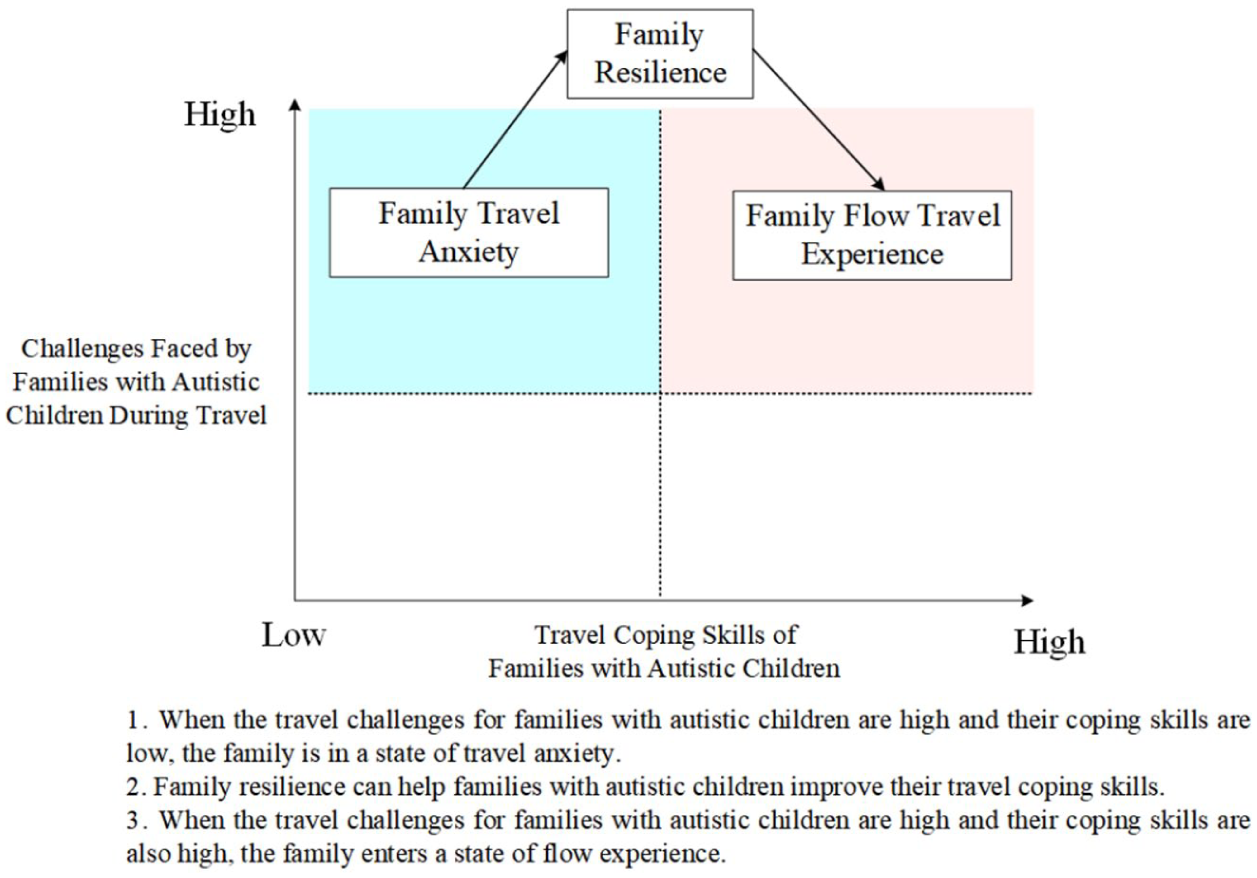
Family travel experiences of autistic children from the perspectives of family resilience theory and flow theory.
Study1
Research Design
This study consists of two parts, aiming to explore the constituent dimensions and formation pathways of travel experiences in families with autistic children. In Study 1, Grounded Theory was employed to collect interview data from parents of autistic children. Using a three-level coding approach, the constituent dimensions and formation pathways of such families’ travel experiences were constructed. However, the conclusions drawn in Study 1 were solely based on the parental perspective and lacked validation from the children’s viewpoint to ensure their reasonableness. Furthermore, due to strong parental resistance to interviewing autistic children, the communication barriers inherent in autistic children, and potential academic ethical risks, this study was unable to directly interview autistic children to obtain their perspectives on travel experiences. Therefore, in Study 2, a non-participant observation method was adopted to collect data on autistic children’s length of stay, emotional states, and behavioral actions at travel destinations. From the perspective of the autistic children themselves, this further validated the constituent dimensions and formation pathways of their travel experiences derived from the parental perspective in Study 1. Given the potential ethical issues involved in this study, approval was obtained from the Institutional Review Board (IRB) of the affiliated institution prior to its commencement. Throughout the research process, principles of privacy protection were strictly adhered to. All data were used solely for academic research purposes and not for any commercial applications. The researchers are committed to upholding the principle of neurodiversity inclusion in both the research and publication processes, respecting the agency and dignity of autistic children and their families.
Method
Given that research on the travel experiences of families with children with autism is still in its infancy, this study focuses on exploring this area. Initially, the grounded theory approach proposed by Corbin and Strauss (1990) for qualitative research was employed. Grounded theory emphasizes the construction of theory based on systematic data collection to identify the composition and formation pathways of travel experiences for families with children with autism (Fen & Wu, 2011).
Data collection
Participants were recruited through multiple channels, including social media platforms (e.g., Douyin, Xiaohongshu) and local autism-related support organizations in Hangzhou (Figure 1). On social media, we first screened for discussion content related to family travel with autistic children. By reviewing relevant videos and assessing their authenticity, brief research descriptions were sent to eligible families. Ultimately, 21 parents expressed preliminary interest, of whom 15 agreed to participate in interviews. Additionally, with the assistance of the Hangzhou Disabled Persons’ Federation, another 9 parents were invited for interviews. To accommodate participants’ geographical distribution and protect personal privacy, the study primarily used WeChat voice calls to conduct semi-structured in-depth interviews. All interviews were conducted between September 10 and October 10, 2024. Each participant read and signed an electronic informed consent form before the interview. Furthermore, if you experience any discomfort at any point during the interview, you are free to withdraw at any time. Interviews lasted approximately 30 to 60 min and were audio-recorded with participants’ consent. The study employed a constant comparative method for analysis, with coding conducted concurrently with data collection. When interviews reached the 20th to 24th families, no new concepts or themes emerged, indicating theoretical saturation (Braun & Clarke, 2019). In total, 24 families with autistic children completed the interviews. The audio recordings were transcribed verbatim and manually reviewed, resulting in over 150,000 words of text data for subsequent analysis.
Data Analysis
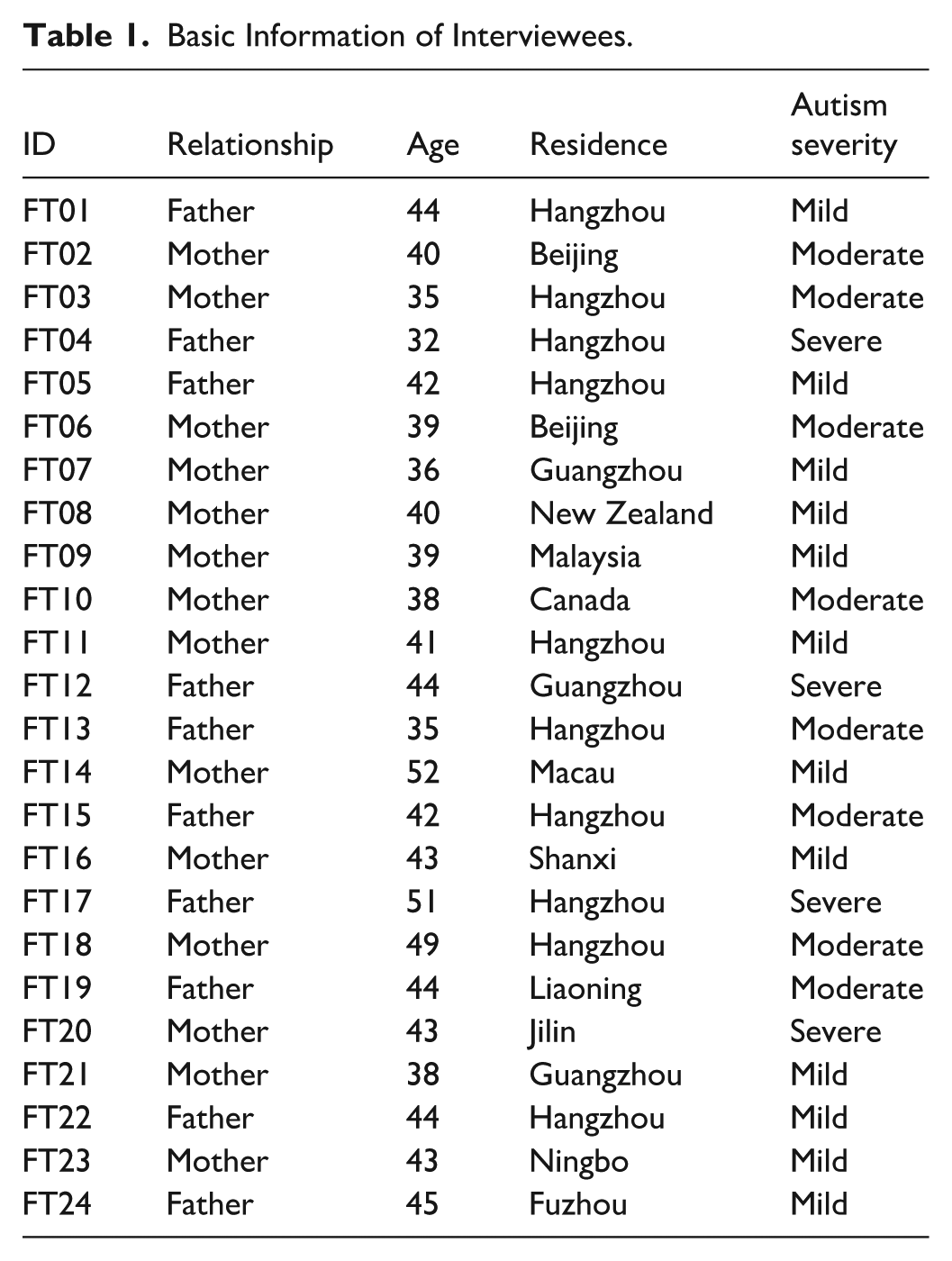
Table 1 presents information regarding the participating parents’ identities, the children’s ages, place of residence, and severity of autism. The study sample comprises 10 fathers and 14 mothers, residing across various regions globally, all of whom had recent travel experiences. Among the children, 12 were diagnosed with mild autism, 8 with moderate autism, and 4 with severe autism.
Basic Information of Interviewees.
Open Coding
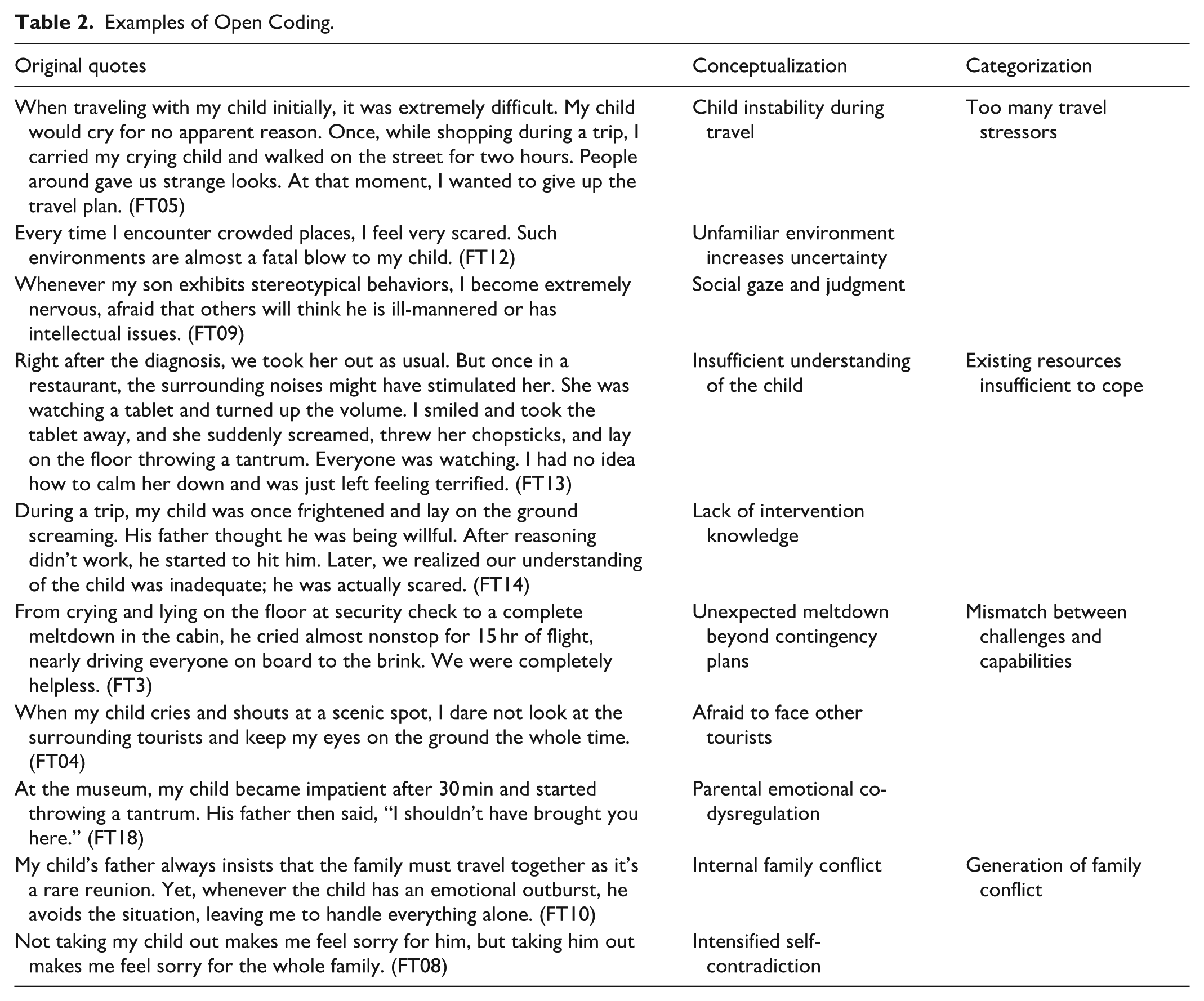
Based on the analytical framework of “defining phenomena—extracting concepts—deriving categories” (Y. Wang et al., 2022), this study first extracted the initial concepts. Through discussion, 70 initial concepts were ultimately derived. Finally, these coding results were further organized into 27 initial categories, with selected examples presented in Table 2.
Examples of Open Coding.
Axial Coding
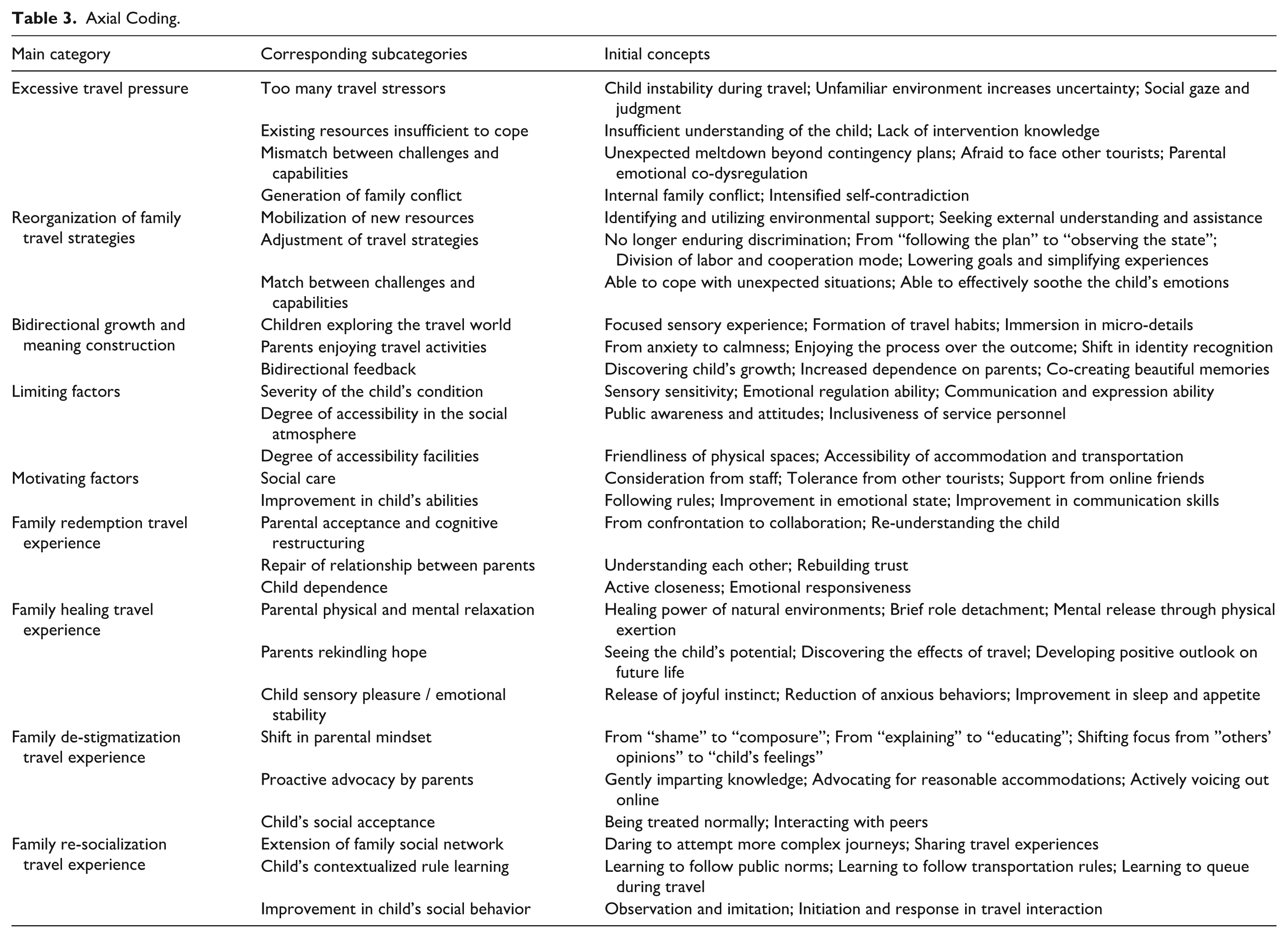
Based on logical relationships such as parallelism and causality, the 27 initial categories were further analyzed. Related categories were merged and synthesized into main categories, which were then named accordingly. Ultimately, the 27 initial categories were consolidated into nine main categories: Tourism Stress Assessment, Reorganization of Family Travel Strategies, Bidirectional Growth and Meaning Construction, Limiting Factors, Motivating Factors, Family Redemption Travel Experience, Family De-stigmatization Travel Experience, and Family Re-socialization Travel Experience (see Table 3).
Axial Coding.
Selective Coding
Selective coding builds upon open coding and axial coding by repeatedly comparing and analyzing the codes to identify core categories and clarify their relationships, thereby constructing a coherent narrative of the travel experience for families with autistic children (see Figure 2). Families with autistic children often face increased stressors during travel. These stressors are further influenced by factors such as the severity of the child’s condition, the degree of accessibility in the social atmosphere, and the level of accessibility facilities. This often results in a mismatch between the challenges encountered and the family’s capacity to overcome them, making it difficult for them to engage in travel activities. However, due to the various benefits that travel activities can offer, these families still aspire to undertake them. According to Family Resilience Theory, such families employ multiple strategies for adaptation and reorganization. During this process, social support and the child’s improved abilities during travel serve as motivating factors that encourage continuous adjustment by the family. As these strategies prove effective, the family gradually achieves a “challenge-capability match.” Subsequently, based on Flow Theory, when challenges and capabilities are matched, individuals are more likely to enter a flow state. In the context of family travel with autistic children, this state manifests as parents mastering the travel pace while the child explores the travel world. This creates a bidirectional feedback loop between them, enabling active engagement within the travel environment. Ultimately, this leads to the formation of four distinct travel experiences: Family Redemption Travel Experience, Family Healing Travel Experience, Family De-stigmatization Travel Experience, and Family Re-socialization Travel Experience.
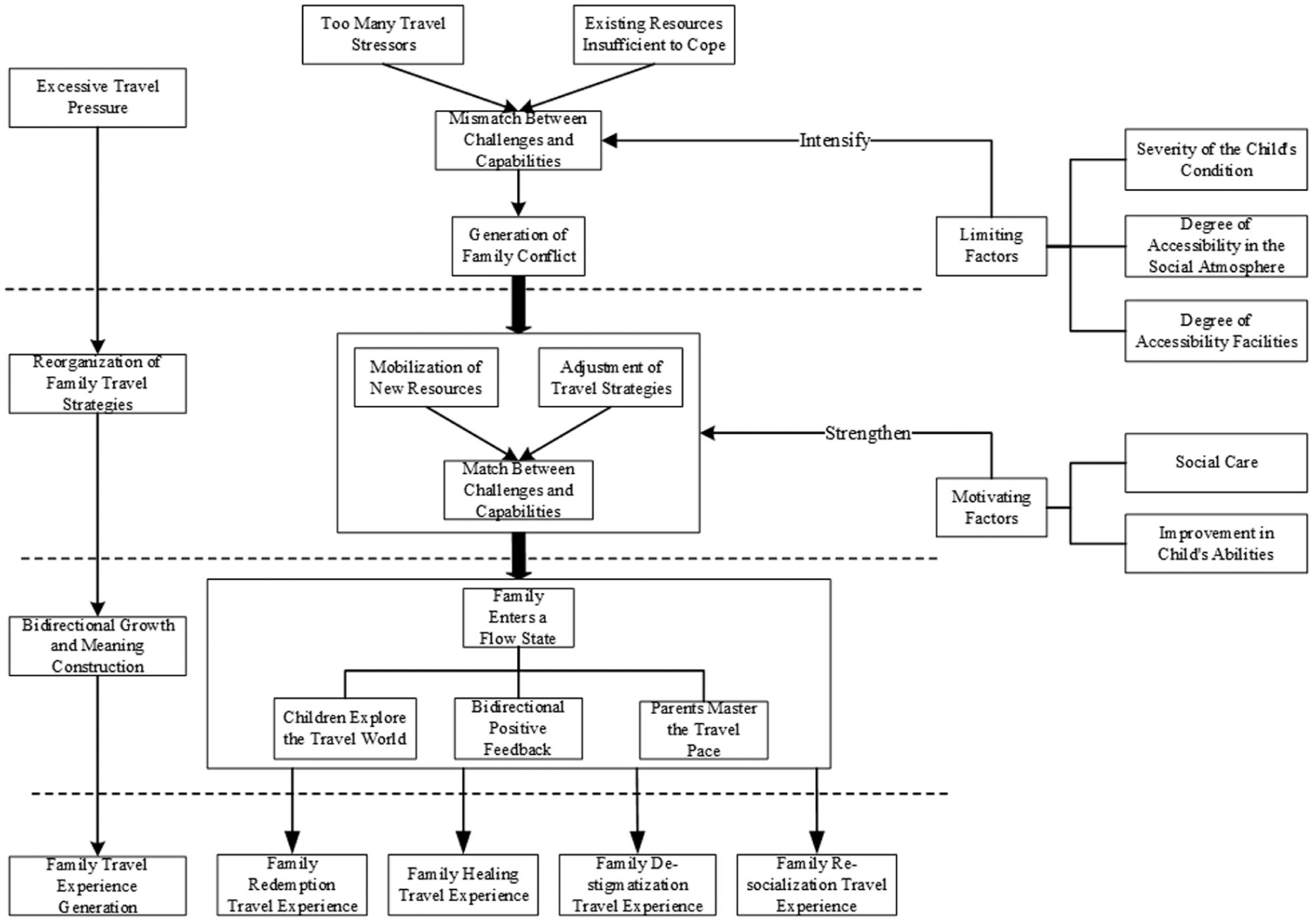
The formation pathway and constituent dimensions of the tourism experience for families with children with autism.
Research Quality and Trustworthiness
This study adopts a post-positivist orientation, assuming that rigorous and systematic procedures can approximate reliable knowledge of the phenomenon. To evaluate research quality, we follow the trustworthiness framework proposed by Schwandt et al. (2007), addressing four dimensions: positionality and reflexivity, confirmability, credibility, and dependability.
Positionality and Reflexivity. The research team consists of four authors who maintained critical reflection on their own positions throughout the research process. Although none of the authors are autistic themselves, they possess extensive experience in activities and research related to the tourism experiences of special populations, including direct involvement in numerous tourism activities with autistic children. All team members affirm the principles of neurodiversity inclusion, committing to represent the subjective experiences of autistic children and their families in research rather than framing them as carriers of “deficits” or “problems.” Throughout the entire research process—from interview design and data collection to coding analysis and theory construction—each author independently wrote reflexive memos, recording personal assumptions, emotional responses, and potential biases. The team held regular reflexive discussions to examine how these records influenced research decisions. The study adhered to the “do no harm” principle, respecting the autonomy and dignity of autistic children. All participating families signed informed consent forms and were informed of their right to withdraw from the study at any time without penalty.
Confirmability. Confirmability refers to the extent to which research findings derive from the data rather than researcher subjectivity, that is, objectivity. To ensure confirmability, all raw interview audio recordings, transcripts, coding records, and analytical memos were archived for independent audit. The second and third authors independently coded all 24 interview transcripts without prior discussion to calculate inter-coder reliability. Results showed a Cohen’s kappa of .89 and percent agreement of 94.2%, both exceeding excellent thresholds (McHugh, 2012). Disagreements were resolved through group discussion to ensure traceable and verifiable coding outcomes.
Credibility. Credibility refers to the extent to which research findings authentically reflect participants’ experiences,that is, internal validity. During the coding process, we submitted emerging categories and themes to three seminars for review and discussion with scholars in tourism and disability studies, revising and refining the coding structure based on their feedback. Additionally, we conducted member checks by presenting the findings-including the four types of travel experiences (family redemption, healing, de-stigmatization, re-socialization) and the formation pathway diagram (Figure 2)—to five participating parents. All parents confirmed that these categories and the pathway accurately reflected their families’ actual travel experiences.
Dependability. Dependability refers to the consistency, stability, and traceability of the research process, that is, reliability, with code credibility serving as its core manifestation. We documented the stepwise coding procedure (open, axial, selective coding), producing written records of the codebook, category integration logic, and concept abstraction at each stage to ensure transparent coding procedures. As noted above, inter-coder consistency (Cohen’s kappa = .89) provided quantitative evidence for coding reliability. To mitigate the influence of power differentials on coding consistency, the first author invited junior coders to speak first in discussions. Across 47 initial disagreements, junior coders’ alternative codings were retained in 39 cases (83%), indicating an equitable negotiation environment (Guba, 1981).
Findings
Excessive Travel Pressure: Causes of Difficulties in Family Travel
Although families with autistic children desire to participate in travel activities, they often perceive excessive stressors due to their child’s special needs. This suggests that travel stress is not merely a series of operational difficulties but also an “existential anxiety” embedded in public spaces, concerning the legitimacy of the family’s identity. FT05 stated: “At the beginning of traveling, it was extremely difficult. My child often cried for no apparent reason. Once on the street, I carried my crying child for two hours. The strange looks from people around almost made me want to give up all travel plans.” FT12 also mentioned: “Every time I encounter crowded places, I feel very scared. Such environments are almost a fatal blow to my child.” FT09 added: “Whenever my son exhibits stereotypical behaviors, I become extremely nervous, afraid that others will think he is ill-mannered or has intellectual issues.” These pressures primarily stem from the child’s emotional instability during travel, the uncertainty brought by unfamiliar environments, and the pervasive social gaze and judgment, collectively causing families to develop apprehension about traveling.
Furthermore, the inadequacy of existing resources intensifies parents’ sense of helplessness. FT13 recalled: “Right after the diagnosis, we took her out as usual. But once in a restaurant, the surrounding noises might have stimulated her. She was watching a tablet and turned up the volume. I smiled and took the tablet away, and she suddenly screamed, threw her chopsticks, and lay on the floor throwing a tantrum. Everyone was watching. I had no idea how to calm her down and was just left feeling terrified.” FT14 also admitted: “During a trip, my child was once frightened and lay on the ground screaming. His father thought he was being willful. After reasoning didn’t work, he started to hit him. Later, we realized our understanding of the child was inadequate; he was actually scared.” Due to a lack of understanding of autistic traits and limited intervention knowledge, parents often feel resource-poor and at a loss when facing unexpected situations.
Under the combined effect of multiple pressures and insufficient resources, families clearly perceive that challenges far exceed their capabilities. FT3 described: “From crying and lying on the floor at security check to a complete meltdown in the cabin, he cried almost nonstop for 15 hr of flight, nearly driving everyone on board to the brink. We were completely helpless.” FT04 also said: “When my child cries and shouts at a scenic spot, I dare not look at the surrounding tourists and keep my eyes on the ground the whole time.” These narratives indicate that families fall into a severe state of “challenge-capability” imbalance. The child’s sudden meltdowns often exceed pre-established contingency plans, and the pressure of external gazes further erodes parents’ confidence in their ability to cope.
Ultimately, sustained pressure may exacerbate family conflicts. FT08 remarked: “Not taking my child out makes me feel sorry for him, but taking him out makes me feel sorry for the whole family.” FT10 pointed out: “My child’s father always insists that the family must travel together as it’s a rare reunion. Yet, whenever the child has an emotional outburst, he avoids the situation, leaving me to handle everything alone.” Evidently, travel pressure can not only trigger disputes among family members but also intensify parents’ own psychological conflicts, placing greater burden on the family system under both internal and external strain.
Limiting Factors: Intensifying Risks in Family Travel
Family Resilience Theory posits that risk factors can exacerbate the vulnerability of the family system. In this study, limiting factors are structural conditions that intensify travel stress and hinder the family adaptation process. Acting together, these factors systematically transform neurodivergent differences, which are based on the individual, into an unequal social cost that families must bear in public spaces.
The severity of the autistic child’s condition directly influences the family’s experience of travel pressure. FT12 stated: “My child has severe autism. Taking her on trips is like executing a military mission: backup clothes, specific foods, comfort blankets-nothing can be missing. Any oversight could trigger a meltdown.” In contrast, another parent, FT01, said: “My child has mild autism. Before a trip, I make an agreement with him: if he feels nervous, he should pull my hand hard. Difficulties still exist, but because he can express himself, I can respond more easily and in a timely manner.”
The accessibility of the social atmosphere during travel, encompassing public awareness, social attitudes, and the inclusiveness of service personnel, profoundly affects the family’s travel experience. FT05 mentioned: “I understand my son’s neurodevelopment is somewhat different, but when surrounding tourists comment openly, I still feel the world is not friendly toward us.” FT21 also recalled: “Once on a plane, my child cried continuously. We explained the situation to the staff, but they repeatedly asked us to quiet the child, which made us feel extremely difficult and uncomfortable.”
Furthermore, the level of accessibility of physical facilities in tourism settings-including spatial friendliness and the convenience of accommodation and transportation-constitutes another key limiting condition. FT17 remarked: “My child completely cannot tolerate long queues. Therefore, we are very afraid of going to places that require queuing for entry.” FT15 also expressed: “During security checks, the echo of metal, conveyor belt noise, and staff shouts mix together, easily agitating the child. Without a green channel, long queues are torture for us.”
Reorganization of Family Travel Strategies: The Adaptive Role in Resilience
The reorganization of family travel strategies is a core manifestation of family resilience in action, marking a critical turning point from passive endurance to active adaptation. This process is not merely an accumulation of coping skills but also an “agentic practice” through which families reclaim the right to define the meaning and pace of their travel.
The mobilization of new resources is reflected in families proactively identifying and utilizing environmental support and seeking external understanding and assistance to mitigate the child’s emotional fluctuations and create conditions for travel. FT10 stated: “When I sense my child is about to lose control, I immediately find a quiet corner, put noise-canceling headphones and a stress ball on him, and play his favorite documentary to help him calm down.” FT12 also shared: “When encountering difficulties, we proactively explain the situation to staff. Once, the airport queue was very long. After communication, they allowed us to board first and provided identification stickers, which made us feel supported.”
The adjustment of travel strategies manifests as families flexibly altering their original approaches, adopting a state-oriented itinerary, practicing task division and cooperation, lowering expectations and simplifying experiences, while no longer silently enduring misunderstandings. FT06 said: “Initially, we strictly followed the planned itinerary, but the child couldn’t keep up at all. Now, we no longer preset the schedule; everything is based on the child’s condition and preferences.” FT11 explained: “When visiting museums, we divide tasks: Dad takes our older daughter to exhibitions she’s interested in, while I follow our younger child with limited patience.” FT13 admitted: “In the past, I always hoped she could ’normally’ enjoy trips like other children. Now I feel that as long as the trip helps her release energy and experience new things, it’s enough.” FT09 also emphasized: “Previously, I would just feel upset when facing strange looks. Now I proactively explain to promote understanding instead of silently enduring.”
The matching of challenges with capabilities reflects the sense of competence parents develop in coping with travel after effectively mobilizing resources and adjusting strategies. This is mainly demonstrated by the ability to handle unexpected situations and effectively soothe the child’s emotions. FT2 described: “The subway suddenly stopped due to a malfunction, lights flickering. My daughter immediately curled up on the ground screaming. I didn’t pull her up but sat down, encircled her, took out noise-canceling headphones and a vibrating massager, and calmly repeated, ‘We’re in the tunnel. Daddy is here.’ After five minutes, she gradually calmed down.” FT18 also noted: “After fully understanding my child, I can now quickly identify if he is nearing his emotional limit and intervene in time to regulate.”
Motivating Factors: Positive Feedback Reinforcing the Resilience Process
Within the framework of family resilience, mobilizing resources and adjusting travel strategies can buffer stress and facilitate the initiation of family travel activities. Motivating factors, in turn, provide positive feedback and impetus for this process, primarily encompassing social care and the child’s improved abilities. These factors transform isolated resilience practices into meaningful social actions that can receive external validation and internal affirmation.
Social care, as an external motivator, offers emotional support and a sense of social belonging to families. FT20 stated: “Every time we go to Disney, after understanding the situation, employees take us through the green channel. Character performers also interact positively. As a result, my child loves going there, and we are more willing to take her.” FT23 shared: “Once I forgot to bring noise-canceling earplugs. On the plane, my child became anxious due to noise, constantly humming and hitting the tray table. A woman in the next seat gently offered her own sleep earplugs. At that moment, I was deeply moved, feeling warmth still existed on the journey.” FT21 also mentioned: “I now proactively post travel information on social media, explaining my child’s situation. I often receive warm messages from other parents saying they are willing to let their children play together. These responses warm my heart.”
The child’s improved abilities serve as an internal motivator, directly enhancing the family’s sense of efficacy and meaningfulness during travel. FT12 said: “During travel, my child gradually learned to wait-waiting for trains, waiting to check in. His changes surprised our relatives.” FT15 observed: “After returning from the seaside, his emotions became more stable, and his stereotypical movements decreased.” FT16 also expressed with relief: “The child’s abilities have gradually improved. She has started to love traveling, and we can now simply communicate with her about preferred activities.”
Bidirectional Growth and Meaning Construction: The Flow State Following “Challenge-Skill Balance”
According to Flow Theory, individuals are most likely to enter an optimal experiential state characterized by intense concentration and enjoyment of the process when activity challenges align with personal skills. When families achieve a match between challenges and capabilities through strategy adjustment and resource mobilization, they enter the flow stage of bidirectional growth and meaning construction. This appears to reflect a shift in the experiential core of the family system from “coping with challenges” to “co-creating,” thereby transforming the travel situation into a unique “relational flow space.”
With family support, children begin to freely explore the travel world, primarily manifesting as focused sensory experiences, the formation of unique rituals, and immersion in micro-details. FT17 described: “He can sit quietly in a pottery workshop for an entire afternoon, carefully watching the entire process of making a teapot, without making a sound.” FT08 shared: “Riding the scenic train, she must sit in the last row every time. After getting off, she immediately goes to the front to see the train number. As long as this ‘ritual’ is completed, she can calmly observe all the trees flashing by along the way.” FT11 also said: “In the entire museum, he was only interested in the green exit lights and the hinges on fire doors. We accompanied him to look at each one-in his eyes, this isn’t a museum but a ‘magical world of doors and lights.”
On the other hand, as parents master the travel pace, they begin to enjoy travel activities, with their skills for coping with challenges continuously growing. This is reflected in the transition from anxiety to calmness, from pursuing outcomes to enjoying the process, and a shift in identity recognition. FT14 admitted: “I now feel much stronger, capable of taking her to many places and quickly handling unexpected situations.” FT05 reflected: “Previously, I thought a successful trip meant visiting all planned attractions. Now I feel that a smile from my child or their willingness to try a new food is the joy of travel.” FT09 remarked: “In the past, I felt like her ‘firefighter.’ Now, I feel that I am experiencing the world through her unique perspective. She is more like my ‘guide’ and ‘companion.’”
Consequently, a positive bidirectional feedback loop forms between parent and child. They immerse themselves together in the present activity, experiencing a profound sense of participation and meaningfulness. This process includes discovering the child’s growth, sensing the child’s increased dependence, and co-creating beautiful memories. FT12 exclaimed with surprise: “In an ancient town, he suddenly pointed at an old drainage stone carving and said ‘vortex,’ a word from his picture book. For the first time, I discovered he could connect abstract knowledge with reality.” FT11 recalled with emotion: “In crowds, he actively tightens his grip on my finger. In new environments, he looks back to meet my eyes for confirmation. This ‘being needed’ is completely different from the previous ‘fear of something happening to him’; it’s an entrustment of trust.” FT16 shared happily: “We now have a ‘secret map’ that marks not tourist spots but all the places where he crouched to watch ants, the station where he found the sound of wind pleasant, the restaurant that made pure white noodles for him. . . These places have become treasures belonging only to us. Travel is no longer about taking him somewhere but ‘what we discover together.’”
Family Redemption Travel Experience: Internal Relationship Repair and Value Recasting Post-Resilience
The Family Redemption Travel Experience embodies the repair of the internal family system and the recasting of meaning following successful resilience. It is primarily manifested in four aspects: parental acceptance and cognitive restructuring, repair of the relationship between parents, child attachment expression, and the budding of trust. This experience can be understood as a reconstruction of internal power dynamics and emotional contracts within the family, shifting from a management model centered on “problems” to a symbiotic model based on “connection.”
Parental acceptance and cognitive restructuring signifies a shift from “correcting the child” to “understanding the child,” and from “confronting obstacles” to “collaborating for growth.” FT18 stated: “In the past, I always tried to make him ’visit like other children’ at scenic spots. Now I follow his pace-if he watches ripples by the poolside, I watch with him. Travel is no longer ‘taking him somewhere’ but ‘discovering something together with him.’” FT05 also expressed: “After traveling to so many places, I truly understand he is not ‘throwing a tantrum’ but expressing the unbearable nature of the world with his body. This understanding transformed me from an anxious ‘manager’ to a calm ‘companion.’”
Repair of the relationship between parents is reflected in the process of jointly facing challenges, where spouses transition from mutual blame and unequal pressure-sharing to understanding, collaboration, and emotional support. FT03 mentioned: “In the past, when our child had a meltdown during travel, we tended to blame each other. Now we divide tasks in advance: one person is responsible for soothing, the other handles ticket refunds or asking for directions. Difficulties remain, but we both understand we are ‘facing it together,’ not ‘opposing each other.’” FT012 shared: “Once, when our child had an emotional outburst on the subway, my husband immediately and instinctively blocked the surrounding view, and I crouched down to soothe. Afterwards, we smiled at each other. That feeling of fighting side by side made our relationship stronger than before.”
Child attachment expression and the budding of trust manifest as, within a predictable and supportive travel environment, the child gradually exhibits more active closeness, physical dependence, or emotional responsiveness. FT06 said: “In the past, he would always run off on his own when going out. Now, in crowded places, he proactively grabs the hem of my clothes. That time on the high-speed train, he even leaned his head on my shoulder and fell asleep-at that moment, I knew he truly felt ‘being with me is safe.’” FT13 also discussed: “During trips, I intentionally give him small choices, like ‘left or right?’ Initially, he showed no response. Now he looks up at me and even points with his finger. Such subtle interactions signify trust slowly sprouting for us.”
Family Healing Travel Experience: The Release of Physical and Mental Stress and the Restoration of Positive Emotions
The Family Healing Travel Experience focuses on the direct restorative effect of the travel environment as a restorative setting on family members who are under prolonged stress. It constitutes a positive outcome in the dimension of physical and mental health when families enter a flow experience after achieving a match between challenges and capabilities. This highlights the restorative value of tourism as a “legitimate respite” for family systems that have long undertaken high-intensity caregiving responsibilities.
Parental physical and mental relaxation is reflected in parents temporarily shedding their state of high alert after being removed from the daily caregiving context, allowing them to recover emotionally and physically in natural or leisurely environments. FT08 stated: “Only when hiking in the mountains do I feel my breathing is deep and my shoulders are relaxed. There are no intervention training schedules in my ears, only the sound of wind and birdsong-for those three hours, I seemed to be just myself.” FT11 expressed: “My child can focus for a long time digging sand at the beach. Sitting beside him, I can finally let my mind wander. Although I still watch him with my eyes, the tightly wound string in my heart truly loosened for the first time.”
Parents rekindling hope refers to parents rediscovering the meaning of parenting and the possibilities for the future after witnessing the child’s positive responses or small progress during travel, countering the sense of hopelessness accumulated over time. FT09 said: “When he proactively pointed at eggs during breakfast at a homestay for the first time, I almost cried. Such a small action made me feel: maybe one day, we can go to more places together. Travel made me believe again that ‘change’ is possible.” FT14 mentioned: “I often take my child on trips and have found that travel truly has a therapeutic effect on him. Once after returning, during a children’s gathering, my niece was shocked, saying my child was completely transformed.”
Child sensory pleasure and emotional stability manifest as the child exhibiting relaxed, explorative, and even joyful states in suitable travel environments, with significantly reduced emotional fluctuations. This serves as the most direct healing feedback for the overall family atmosphere. FT11 discussed: “He particularly loves the texture of the carpet in the hotel hallway, walking back and forth barefoot, smiling while walking. Those were moments of pure joy rarely seen at home. Seeing him like this, our hearts melted.” FT08 noted: “In the forest, he didn’t cover his ears but instead looked up at the leaves for a long time. The natural environment seemed to naturally provide him with a soothing effect. That afternoon, he didn’t have a single tantrum.”
Family De-stigmatization Travel Experience: Reconstructing Social Identity and Discourse Through Resilience Practices
The Family De-stigmatization Travel Experience demonstrates the empowering process through which families actively challenge and change social prejudices during their travel resilience journey. This process is the concrete practice through which families translate their internally cohesive resilience into “micropolitical” interventions targeting external social attitudes.
A shift in parental mindset manifests as a transition from being sensitive and avoidant of external gazes to gradually establishing an internal evaluation system, prioritizing family needs over social judgment. FT13 stated: “In the past, whenever my child made sounds in public, I felt as if sitting on pins and needles, thinking everyone was blaming me. Now I tell myself: this is his way of expressing, and we have the right to be here.” FT09 said: “I no longer explain everything for him. Sometimes when others look twice, I simply smile back. My mindset changed, and I instead discovered that many people’s looks contain more curiosity than criticism.”
Proactive advocacy by parents is reflected in families no longer silently enduring but instead actively seeking understanding and reasonable accommodations through communication, explanation, or the use of external identifiers, thereby promoting micro-improvements in the environment. FT15 mentioned: “We now proactively communicate with restaurant servers, asking them to serve our child’s meal separately without sauce. Most people are very willing to accommodate. This makes me feel that asking for help is also a form of strength.” FT03 discussed: “I applied for a ‘Sunflower Lanyard’. At airports and scenic spots, staff proactively provide quiet access routes or extra assistance upon seeing it. This makes me feel we are not only adapting to society but society is also learning to see us.”
The child’s social acceptance refers to the child receiving positive responses and inclusion from those around them through their own behavior or family guidance during travel interactions, thereby experiencing “being treated normally” in real-world scenarios. FT11 said: ”On the train, a little kid proactively asked about the model of the toy train he was holding, and he answered very seriously. At that moment, he wasn’t treated as a ‘strange child’ but just a ‘boy who likes trains.’” FT15 expressed: “The homestay owner saw him continuously watching the fish tank at the front desk and didn’t urge him to leave. Instead, they brought a small chair for him. When leaving, the owner said, ‘Welcome back to see the fish next time’. That normal treatment is the best acceptance for us.”
Family Re-socialization Travel Experience: Expanding Social Capital and Capabilities Through Resilience
The Family Re-socialization Travel Experience manifests the function of tourism as a “social training ground” within the family’s flow experience. This signifies the family’s re-transformation from an “exception” excluded by social rules into a “proficient participant” capable of navigating and engaging in rule-making.
Contextualized rule learning refers to the child gradually understanding and adapting to social rules and public behavioral norms through concrete experiences rather than abstract instruction in authentic travel settings. FT09 stated: “At the scenic spot queue for the train, he initially always tried to push forward. Later, we always stood at the end of the line, telling him ‘the train will wait for us’. After repeating this a few times, he learned to wait because he witnessed with his own eyes that waiting was worthwhile.” FT11 expressed: “During security checks, I break down the process into ‘put bag – raise hands – turn around’ and do it with him. Now, at every security checkpoint, he proactively imitates my actions. Repetition in real scenarios is more effective than any social story.”
Improvement in child’s social behavior is demonstrated by the child spontaneously or with family assistance, exhibiting emerging social behaviors such as eye contact, simple responses, and joint attention during low-pressure, high-support travel interactions. FT06 said: “At the zoo, he pointed at a distant peacock and looked back at me for the first time, as if saying ‘Mom, look’. At that moment, I almost cried-he is not incapable of sharing; he just needs content engaging enough.” FT14 mentioned: “I’ve taken my child to Disney over 50 times. Initially, his interactions with Mickey Mouse were entirely passive. Now, every time we go, he actually starts to act coquettish, cute, and even poses for photos with Mickey. I am utterly amazed!”
Extension of the family’s social network signifies that through kind and understanding interactions during travel, families not only gain temporary support but also establish brief yet genuine social connections with fellow travelers, service providers, or other families, thereby breaking long-standing social isolation. FT07 discussed: “At a family restaurant, another mother of an autistic child proactively came over to greet us, and we exchanged contact information. That feeling of ‘so you’re here too’ made us feel less alone.“ FT15 expressed: “Every time we return from a trip, we bring back not just photos but also a few warm WeChat contacts-perhaps a homestay owner, or a parent we chatted with on the train. These faint connections have broadened our world.”
Study 2
Non-Participant Observation Design
Study 2 employed a non-participant observation method. Its aims were twofold: first, to provide supplementary validation from the subjective perspective of autistic children for the categories inductively derived from parent interviews in Study 1 (e.g., “Family Healing Experience,” “Re-socialization Experience”); and second, to observe the connection between family strategy adjustment and experiences analogous to the flow state.
The observation indicators were based on the two dimensions of emotional state and behavioral actions proposed by Cena et al. (2023). Additionally, incorporating the unique sensory-perceptual characteristics of autistic children and their influence on site selection (Case-Smith et al., 2014), “duration of stay” was introduced as an auxiliary indicator reflecting the child’s level of focus and sense of pleasure.
The observation site was an aquarium park in Hangzhou. Observations were conducted from 1:00 PM to 5:00 PM on October 3–5, 2024, totaling 12 hours. Nine families were observed, with three families participating each day. Each family wore a reflective identifier of a different color for easy recognition by observers. Three observers were positioned near the observation area without interfering with family members (positions A, B, and C as shown in Figure 3). The three observers respectively recorded each family’s arrival and departure times, the child’s emotional state, and family interaction behaviors and actions (Figure 4).
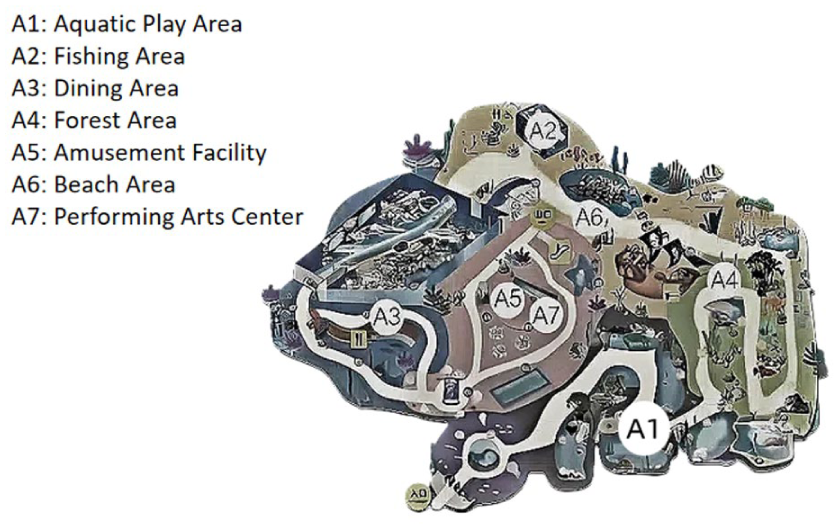
Map of the marine park.
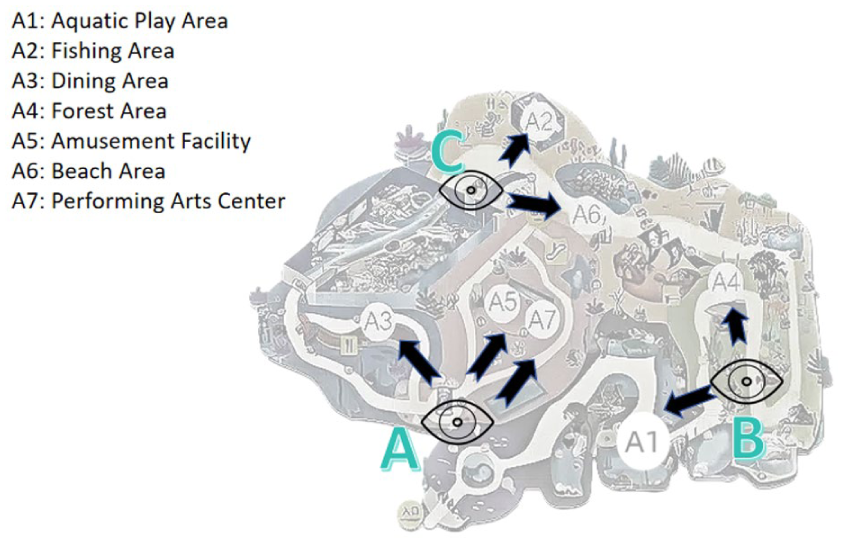
Observation site setup.
To ensure the observations could accurately capture the atypical emotional and behavioral expressions of autistic children and align with the theoretical framework of Study 1, we followed a multi-step process. First, we integrated existing research on autistic children’s sensory perception, emotional expression (which may manifest as internalization, somatization, or unconventional forms of excitement), and behavioral patterns (e.g., self-stimulation, avoidance, special interests). Second, we translated the positive behaviors (e.g., “quiet gazing,” “repetitive exploration,” “ritualized behavior”) and negative behaviors (e.g., “covering ears,” “screaming,” “withdrawal”) that were repeatedly described by parents in the interviews into concrete, observable behavioral indicators.
Subsequently, the three observers jointly watched and independently coded multiple online videos of autistic children’s family outings, which included both typical and atypical scenarios. This was followed by group discussions, during which a senior researcher (the first author of this paper) analyzed disputed cases and refined the evaluation criteria. Finally, to conclude the training, the two primary observers were required to independently code a set of test videos. Their results had to achieve an inter-coder agreement (similarity) of over 85% before they were permitted to participate in the formal observation sessions.
Ethical Reflection on Non-Participant Observation
The primary ethical challenge of non-participant observation lies in balancing the scientific need to record natural behavior with the moral obligation to respect the autonomy and well-being of vulnerable participants (autistic children). This study addresses this challenge from the following six aspects.
First, parental informed consent as the procedural foundation. Prior to the formal observation, all participating families read and signed written informed consent forms. Parents, as legal guardians, were fully informed of the following: observation content (duration of stay, emotional states, behavioral actions), observation method (three observers maintaining distance, no interaction), and data use (anonymized, for academic purposes only). Parents had the right to request termination of observation or deletion of their family’s data at any stage.
Second, maintaining transparency of observation without covert observation. This study was not covert observation. Each family wore a colored reflective identifier to indicate to both parents and observers that the family was part of the observed sample. The three observers maintained a distance of at least five meters at all times and did not follow families into private or sensitive areas (e.g., restrooms). Parents and children could readily notice the observers’ positions and presence throughout the observation period.
Third, recording all natural responses without actively inducing distress. This study aimed to capture children’s authentic behavioral and emotional responses to different environmental settings, including positive responses (e.g., focused attention, pleasure), neutral responses (e.g., quiet observation), and challenging responses (e.g., sensory overload, crying, withdrawal, meltdowns). Recording the full spectrum of responses is scientifically necessary-it helps identify which environmental features (e.g., the tactile experience of a fishing area, the high sensory load of a performance theater) promote calm and engagement, and which trigger distress. This allows the study to map the “challenge-capability match” proposed in the theoretical framework. However, researchers never actively induced or intensified any child’s distress. The observation was purely passive, with no form of intervention or stimulation by the researchers.
Fourth, establishing a pre-defined threshold for intervention to prevent substantial harm. While recording distress was part of the research design, this study established a threshold to prevent substantial physical harm. The specific criteria were as follows: If a child exhibited behavior clearly posing a risk of physical injury (e.g., severe self-injury, a prolonged uncontrollable meltdown accompanied by self-injury risk), observers would pause recording and, if requested by parents, assist in seeking on-site medical support. It is important to emphasize that routine distress responses without self-injury risk-such as crying, covering ears, screaming, or withdrawal-were not subject to intervention. These responses were faithfully recorded and used for subsequent analysis. This threshold was discussed and confirmed with all participating parents prior to observation. No such intervention was required during the observation period.
Fifth, strict anonymization and data protection. No video or audio recordings were made in this study. Observers used pre-designed forms to record behavioral data using only anonymized codes. All observation areas were public spaces within the aquarium park, and no private or sensitive locations were involved. Observation data were used solely for academic research and not for any commercial purposes.
Sixth, researcher positionality and the principle of neurodiversity inclusion. The research team is committed to upholding the principle of neurodiversity inclusion throughout the research and writing process. We do not frame autistic children in terms of “deficits” or “problems,” but rather view their neurodevelopmental differences as part of human diversity. In observation records, we used neutral vocabulary (e.g., “repetitive operation,” “focused gazing”) to describe children’s behaviors, avoiding pathologizing labels. At the same time, we respect the agency and dignity of autistic children and their families, prioritizing their well-being at all stages of the research.
Findings
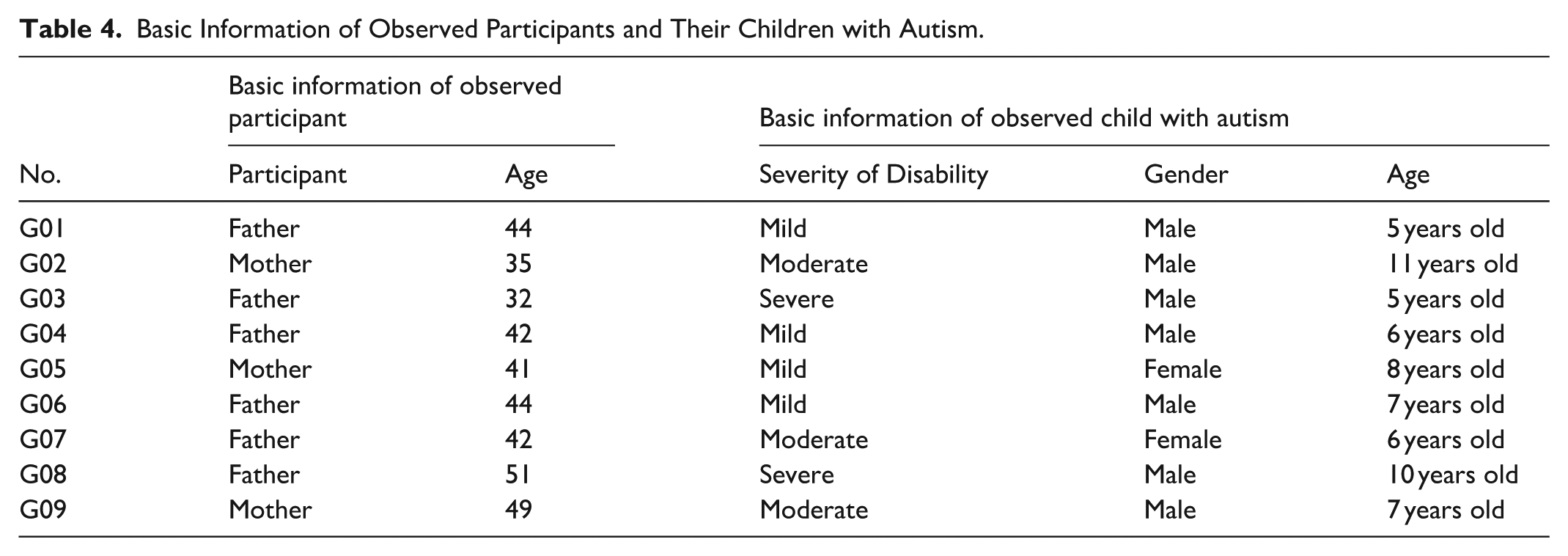
A total of nine families participated in the observation, with their demographic characteristics summarized in Table 4. In terms of autism severity, three children were mild, three moderate, and three severe. The children’s ages ranged from 5 to 11 years, including seven boys and two girls. Fathers accompanied the child during the observation in six families, while mothers accompanied in three families.
Basic Information of Observed Participants and Their Children with Autism.
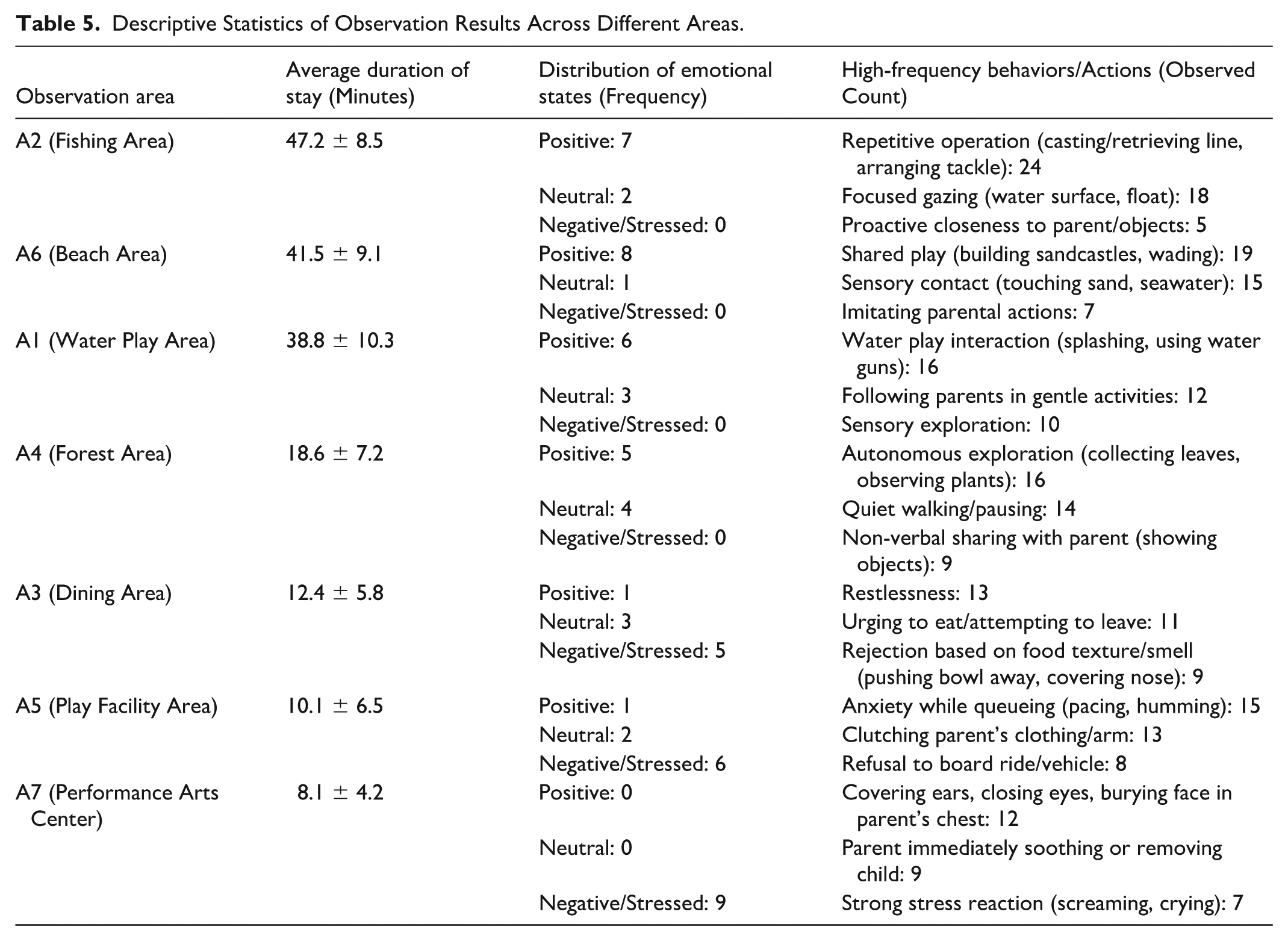
The behavioral manifestations of the nine families across different areas of the marine park provide contextualized behavioral evidence, from the perspective of the autistic children themselves, for the types of travel experiences derived in Study 1. The observational results are presented below in terms of the association between environmental characteristics and family coping modes, typical cases, exceptional cases, and the experiential features of different areas (Table 5).
Descriptive Statistics of Observation Results Across Different Areas.
Environmental Characteristics and Family Coping Modes: The Dynamic Dynamics of Challenge-Capability Match
The observational data reveal a systematic association between different environmental features and family response patterns. In areas where sensory stimuli were controllable and activities were self-directed (Zone A2 Fishing Area, Zone A6 Beach Area, Zone A1 Water Play Area), family experiences showed a high degree of alignment with the “Family Healing Experience” and “Bidirectional Growth and Meaning Construction” derived from Study 1. Children exhibited the longest durations of stay in these zones (A2: 47.2 min; A6: 41.5 min; A1: 38.8 min), with positive emotions predominating (A2: 7/9 groups; A6: 8/9 groups; A1: 6/9 groups). Concurrently, children displayed rich and focused positive behaviors, such as “repetitive operation” (24 instances) and “focused gazing” (18 instances) in the fishing area, “shared play” (19 instances) on the beach, and “water play interaction” (16 instances) in the water play area.
These behavioral features collectively delineate the behavioral contours of a “challenge-capability match” state. Taking “repetitive operation” in the fishing area as an example, this activity presents a well-structured, goal-clear challenge. The child’s “repetitive operation” is not meaningless stereotyped behavior but rather an active practice of a controllable skill in a safe environment. This observation echoes the finding from Study 1: when children find a controllable rhythm during travel, they are likely to enter a flow experience. Concurrently, parents predominantly adopted a “supportive observation” or “co-participation” mode rather than “directive instruction.” This suggests that when parents “master the travel pace,” they can transition from anxiety to calmness and from excessive intervention to process enjoyment-these are the behavioral manifestations of “parental physical and mental relaxation” and “child sensory pleasure” within the “Family Healing Experience.”
From the perspective of overall spatial distribution, Figures 5 and 6 further reinforce this pattern. Both figures consistently show that high durations of stay and positive emotions are highly concentrated in the fishing area, beach area, and water play area, while the performance center, play facility area, and dining area exhibit pronounced clustering of short durations and negative/stress emotions. This spatial differentiation indicates a stable correspondence between environmental characteristics and the quality of family travel experiences.
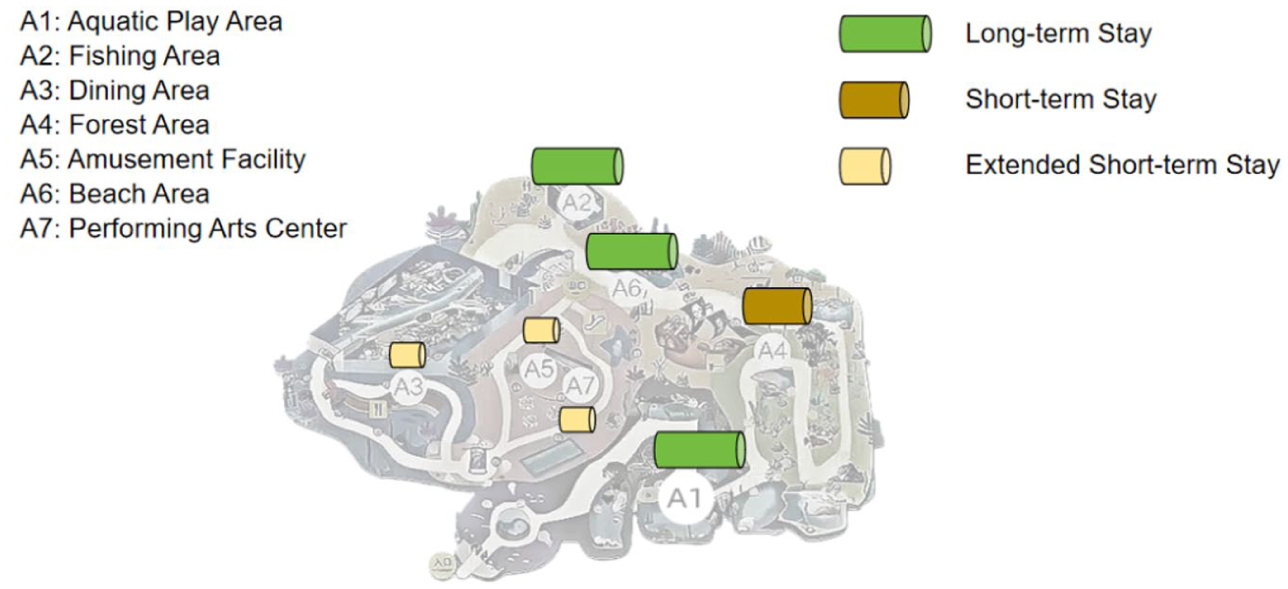
Heatmap of duration of stay.
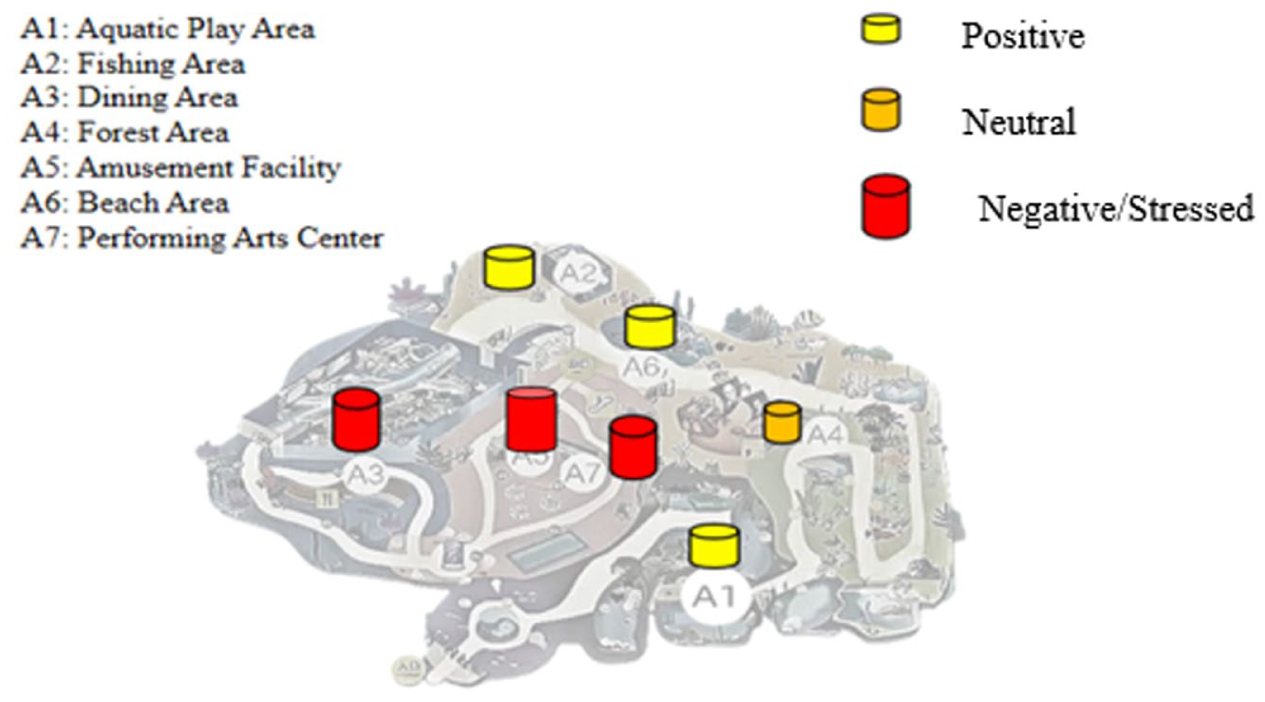
Heatmap of emotional states.
In contrast, in areas characterized by high sensory load, strong rules, or unpredictability (Zone A7 Performance Arts Center, Zone A5 Play Facility Area, Zone A3 Dining Area), the observational data clearly presented the “travel stress” challenges described in Study 1. These zones had the shortest durations of stay (A7: 8.1 min; A5: 10.1 min; A3: 12.4 min), with negative/stress emotions overwhelmingly dominant (A7: 9/9 groups; A5: 6/9 groups; A3: 5/9 groups). Children exhibited frequent avoidance and stress behaviors, such as “covering ears and closing eyes” (12 instances) and “intense stress reactions” (7 instances) in the performance center, “queueing anxiety” (15 instances) in the play facility area, and “restlessness” (13 instances) in the dining area. Concurrently, parents rapidly initiated “strategy reorganization,” most typically manifested as “immediate soothing or removal from the situation” (observed in 9 instances in Zone A7).
A Dynamic Case of Family Resilience
Although the Performance Arts Center (A7) was generally a high-pressure environment, the response process of Family G03 vividly illustrated the real-time operational mechanism of family resilience. When the stage lights suddenly dimmed and the sound swelled, the child immediately covered his ears, closed his eyes, and curled his body. Without verbal soothing, the father immediately lifted the child from his seat and moved toward the exit; the mother simultaneously retrieved noise-canceling headphones from her bag. In the relatively quiet area near the exit, after putting on the headphones, the child’s body gradually relaxed, and crying stopped. Although the child was still unwilling to return to the performance area, he began quietly observing the exit indicator lights with his parents’ accompaniment.
This process clearly demonstrates the real-time occurrence of “strategy reorganization” in Family Resilience Theory: through “immediate evacuation” (strategy adjustment) and “use of soothing tools” (resource mobilization), the parents transformed a situation that could have escalated into a complete meltdown into a controllable, neutral experience within minutes. This also explains why, despite the overall short duration of stay in the performance center (averaging 8.1 min), no more severe emotional collapse occurred-the family’s effective strategies shortened the stress exposure time, achieving a rapid adjustment from “challenge-capability mismatch” to “balance.”
Testing and Deepening Theory through an Exceptional Case
Beyond the general trends, an exceptional case provides important theoretical insights for understanding family travel experiences. In the generally high-pressure dining area (A3), one family (G05) was recorded as having a positive emotional state. Reviewing the observation notes revealed that this family’s coping strategies were significantly different from those of other families: before entering the restaurant, the parents showed the child photos of the restaurant environment and menu on a tablet (reducing uncertainty in advance); they chose a corner seat away from the food pickup counter, against the wall (actively controlling sensory load); and they brought the child’s own accepted foods and utensils (retaining familiar elements).
This exceptional case confirms, from a contrary perspective, the critical role of “environmental predictability” and “sensory controllability” in achieving a challenge-capability match. It suggests that when family strategies can effectively transform a “high-risk” environment, even in generally uncomfortable areas, it is possible to create a healing or positive experience. This finding complements the conclusion from Study 1: the effectiveness of family strategies depends not only on the strategies themselves but also on the precision of their match with specific environmental features.
Observational Corroboration of Travel Experiences
Synthesizing the above analyses, a clear correspondence emerges between the observational data and the theoretical categories derived from Study 1, providing behavioral evidence that corroborates the travel experience types identified from parental interviews. In low-sensory-load areas (e.g., fishing area, beach area, water play area), children’s sensory pleasure behaviors (e.g., focused gazing, repetitive operation) and parents’ supportive accompaniment patterns correspond to the “Family Healing Experience” identified in Study 1. The parent-child nonverbal coordination observed during trave-parents immediately crouching down to look when the child points to something, and the tacit interaction of the child’s autonomous exploration with the parent’s calm following—corroborates the “Family Redemption Experience” described in Study 1. Children’s queuing behaviors in queue areas and emerging social behaviors such as brief gazes toward neighboring children on the beach are consistent with the “Family Re-socialization Experience” identified in Study 1. During this observation, no typical situations directly related to the “Family De-stigmatization Experience” occurred (e.g., judgmental gazes from other tourists, inappropriate treatment by service staff). Therefore, the observational data did not record behavioral manifestations corresponding to this experience type.
Discussion and Implications
Discussion
This study once again confirms that families with autistic children face challenges during travel, including multi-sensory stimulation barriers, unpredictable new environments, and unprofessional service personnel (K. Kim et al., 2018; Sedgley et al., 2017). It also verifies that travel can bring numerous benefits to these families (Fazil et al., 2022; Sedgley et al., 2017). More importantly, using the family as the fundamental unit, this research further examines the four types of family travel experiences formed by autistic children and other family members during travel (see Table 3). Although family travel with children also encounters various obstacles, and positive travel experiences can be gained after overcoming them (S. Wang & Yoon, 2025), families with autistic children face more frequent and numerous obstacles in both daily and travel contexts compared to families with neurotypical children. This necessitates that their family members must exert greater effort and foster stronger unity to overcome these obstacles and successfully engage in travel activities, thereby developing unique travel experiences.
The study indicates that families with autistic children experience excessive travel pressure at the beginning of their journeys. They often face too many stressors, and existing resources are insufficient to cope, placing them in a situation where travel challenges do not match their capabilities. During this phase, the severity of the child’s condition, the degree of accessibility in the social atmosphere, and the level of accessibility facilities act as limiting factors, further exacerbating the mismatch between challenges and capabilities. This ultimately leads to the generation of family conflicts. According to Family Resilience Theory, families engage in a reorganization of their travel strategies. They employ methods such as mobilizing new resources and adjusting travel strategies to achieve a match between challenges and capabilities. During this phase, positive feedback from the child’s improved abilities in previous trips and the presence of social care can help them achieve this process more quickly. Finally, when challenges are high, capabilities are high, and challenges and capabilities are matched, according to Flow Theory, the family enters a state of flow experience. The child explores the travel world, the parent masters the travel pace, and a bidirectional positive feedback loop forms between them. The research also found that many families with autistic children who travel regularly over the long term report that travel activities serve as an excellent form of intervention. This further highlights that the formation of travel experiences for families with autistic children is not a short-term occurrence but the result of the family’s sustained and continuous efforts.
Study 2, through non-participant observation, provided contextualized and behavioral evidence from the perspective of children’s behavior and overt interactions to support the theoretical framework proposed in Study 1. The observation results confirmed: (1) Different environmental characteristics trigger distinctly different family coping modes and child responses, supporting the dynamic model of ‘challenge-capability match;’ (2) The focus, pleasure, and emerging social behaviors exhibited by children align with the connotations of experience types such as ‘Family Healing’ and ‘Re-socialization’; (3) The family’s application of strategies in situ (e.g., changing locations, using soothing tools) is a key link in transforming ‘stress’ into ‘growth’ and also reflects high parental competence. Additionally, the study further found that children with mild autism are more likely to exhibit exploratory behaviors and social willingness in structured, low-sensory-load environments. The travel experiences obtained by their families often carry dual significance: re-socialization and de-stigmatization. In contrast, children with moderate to severe autism are more sensitive to environmental changes. Their positive experiences depend more on sensory controllability, activity predictability, and high-intensity strategic support from parents. For these families, the value of travel is more prominently reflected in stress release and the repair of family cohesion.
Participation in tourism activities not only enhances the quality of life and well-being of family members but also promotes conflict resolution among family members and provides intervention-based therapeutic effects for the child. However, achieving these effects requires sustained and continuous effort, indicating a need for ongoing external research to develop strategies for improving their travel experiences. Simultaneously, this study aims to emphasize the importance of other family members in this process. As one parent stated: ”A child with autism is like a mirror. When our mindset as parents changes during travel, the reflection in the mirror changes.” These changes reflect transformations in both the child and the parents. Both parties achieve mutual elevation and bidirectional redemption throughout this process.
Theoretical Contributions
The primary theoretical contributions of this study lie in deepening the understanding of the nature of travel experiences in families with autistic children. This understanding helps us more profoundly grasp the flow travel experiences generated by this population as they face and continuously overcome challenges:
First, by integrating Family Resilience Theory and Flow Experience Theory, this study offers a conceptual framework for understanding the formation and types of travel experiences in families with autistic children. Previous research on these two theories has been relatively fragmented. While Flow Experience Theory in tourism emphasizes the travel experience that arises when challenges and capabilities are matched (Beard, 2014), it does not specify how to achieve this match. Conversely, Family Resilience Theory, although pointing out that family resilience can align challenges with capabilities under excessive stress (Bayat, 2007), does not address the experiential state reached after achieving this capability match. Therefore, this study combines them, providing a theoretical framework for analyzing how tourists facing high travel challenges but with lower capabilities can attain flow travel experiences.
Second, this study derives four types of travel experiences and their experiential pathways from the perspectives of families with autistic children. Although existing research acknowledges that these families can also gain positive travel experiences from tourism activities, current studies have mainly focused on exploring their travel barriers (Fazil et al., 2022; Sedgley et al., 2017). Moving beyond the mainstream medical bias that views autism as a family tragedy, and instead adopting a solution-oriented perspective where families create enabling environments to promote travel participation, this study opens up significant travel opportunities for these families. It confirms that although travel is initially difficult for families with autistic children, continuous mobilization of new resources and adjustment of travel strategies can still bring diverse and enriching travel experiences, many of which transcend the artificial limitations currently imposed on these families by society. The study also finds that for families with autistic children, travel is considered one of the best forms of intervention for their child.
Finally, the non-participant observation in this study provides the family travel experience from the perspective of the autistic child. Existing research on families with autistic children primarily relies on interviews with family members (Conde et al., 2023; Sedgley et al., 2017), with few studies able to gather data from the autistic children’s own viewpoint. This has led to conclusions that may not accurately reflect the true inner thoughts of autistic children. In contrast, this study, through non-participant observation, validates the family travel experience from the autistic child’s perspective, thereby offering a new methodological approach for researching the travel experiences of populations with communication barriers.
Practical Implications
The study demonstrates the potential for constructing a tourism market that includes families with children with autism, offering more inclusive experiences. To achieve this, it is essential to first overcome existing stereotypes about families with children with autism and establish a new understanding of how these families experience tourism. There also needs to be a broader recognition that families with children with autism have the right to participate in tourism experiences. This will require ongoing dialogue between governments, public sectors, families with children with autism, and tourism operators regarding policy-making and implementation to create a tourism ecosystem that supports this niche market.
The study also shows that other family members play a crucial role in shaping the travel experiences of families with children with autism. To fully realize the many benefits of travel for these families, other family members need to actively guide, support, and assist throughout the travel process. Specifically, they need to carefully plan the itinerary before traveling, taking into account the interests, habits, and needs of the child with autism to create a familiar and predictable travel environment. During the trip, other family members should constantly monitor the child’s emotional and behavioral changes, providing comfort and guidance to help them better adapt to new environments and situations. In addition, other family members should actively communicate with staff and service providers at the travel destination to seek more understanding and support, and together create an inclusive and comfortable travel experience for the child with autism. Through the joint efforts of other family members, travel can become an important way for families with children with autism to enhance emotional bonds and improve quality of life, and also provide strong support for the social integration and overall development of children with autism.
Lastly, based on interview and non-participant observation data, tourist attractions can use heatmap data to delineate high, medium, and low sensory load areas and clearly mark them on guide maps or apps. They can focus on optimizing the tranquil atmosphere of low-load areas, such as forest zones, and set up warning signs and quick evacuation routes at high-load areas, such as the entrances of performance centers. Additionally, providing noise-canceling earplugs and establishing sensory decompression rooms as adaptive facilities can better meet the travel needs of families with children with autism. Only through the close integration of environmental design, service support, policy guarantees, and family strategies can travel truly fulfill its value as a bridge for “bidirectional redemption” for families with children with autism, making every journey a hopeful trip that promotes growth, repairs relationships, and fosters social integration.
Limitations and Future Research
First, participants in this study were recruited through social media platforms and offline recruitment channels, with the sample covering families of children with autism from different regions and varying severity levels. However, the sample size in this qualitative study is relatively small, and the findings are intended to provide in-depth understanding rather than statistical generalization. Future research could incorporate quantitative surveys to examine the generalizability of the findings reported here. Second, due to the communication difficulties experienced by children with autism and parents’ concerns about direct interviews, this study was unable to directly obtain the children’s own narratives of their travel experiences through interviews. Although Study 2 provided corroborating evidence from the behavioral level using non-participant observation, children’s subjective experiences remain to be further explored. Future research could explore the use of augmentative and alternative communication tools or artistic expression methods to listen to the voices of children with autism in more natural, low-pressure contexts. Third, this study focused on single or short-term travel experiences and did not track the long-term trajectories of family travel experiences. The development of family resilience is an ongoing process, and the effects of travel on children with autism and their families may accumulate over multiple trips. Future research could adopt longitudinal designs, following the same families over time to examine the dynamic evolution of their travel experiences.
Footnotes

Author Contributions
Funding
The authors disclosed receipt of the following financial support for the research, authorship, and/or publication of this article: This work was supported by National Social Science Post-fund of China (22FGLB103)
Declaration of Conflicting Interests
The authors declared no potential conflicts of interest with respect to the research, authorship, and/or publication of this article.