






Abstract
Using the Avoid–Shift–Improve framework, this study examines how demographic factors and psychological, behavioral, and attitudinal drivers are associated with tourists’ low-carbon decision-making across mobility, consumption, and accommodation. Survey data were collected from 416 young Finnish travelers, and analyzed using correlation tests, repeated-measures ANOVA, and cluster segmentation to examine cross-domain and cross-strategy variation. Findings show that demographic factors have limited influence, whereas psychological, behavioral, and attitudinal drivers motivate sustainable choices. Shift dominant mobility decision-making, Avoid emergence in consumption, and Improve are most common in accommodation. Three adopter groups are identified as strong, moderate, and weak, reflecting different levels of engagement. Theoretically, the study advances low-carbon tourism research by empirically operationalizing Avoid–Shift–Improve as a domain-sensitive decisional framework. Practically, the findings support segmented policy and marketing strategies, emphasize benefit-oriented sustainability communication, and underscore the need for context-specific interventions to facilitate broader adoption of carbon-neutral travel choices.
Keywords
Introduction
Tourism contributes significantly to global sustainability challenges, accounting for approximately 8.8% of global CO₂ emissions (Gössling et al., 2024; Sun et al., 2024). Disregarding carbon neutrality, overusing natural resources, and neglecting cultural heritage contribute to unsustainable tourism practices that ultimately threaten destinations’ long-term sustainability (Agarwal et al., 2024; Becken, 2019; Bhati, 2022; Costa et al., 2021). In tourism, while technological solutions have often been central to discussions of sustainable practices, growing interest in demand-side approaches highlights their potential to alter consumer decision-making and reduce emissions more effectively (Dolnicar & Greene, 2025; Roy et al., 2021). In this regard, von Stechow et al. (2016) argue that demand-side solutions that focus on decision-making processes involve fewer environmental risks than supply-side measures such as technological interventions. Moreover, these solutions align with shorter-term sustainability goals, offering quicker and more tangible outcomes (Creutzig et al., 2018; Méjean et al., 2018). Demand-side solutions have also been shown to provide multiple co-benefits beyond emission reductions, as research indicates that these strategies can enhance well-being and quality of life, an essential factor in promoting the widespread acceptance of sustainability policies among individuals (Creutzig et al., 2018, 2021).
Despite increasing academic and policy interest in sustainable tourism, particularly in reducing carbon footprints, efforts to shift tourist decision-making toward more sustainable outcomes on the demand side remain limited (Esfandiar & Hadinejad, 2025). While extensive research has examined tourists’ pro-environmental decision-making and intentions, much of this work remains anchored in frequently used cognitive and rational frameworks such as the Theory of Planned Behavior, Theory of Reasoned Action, Value-Belief-Norm Theory, Stakeholder Theory, Motivation Theory, and Norm Activation Theory (Hadinejad et al., 2025). Although valuable, these models narrow analytical attention to individual attitudes and intentions, thereby constraining the capacity to apprehend the structural, contextual, and multi-dimensional dynamics through which low-carbon decisions are actually formed (Esfandiar & Hadinejad, 2025). Rather than discarding established psychological insights, this shift calls for reconfiguring how low-carbon decision-making is analytically structured across domains.
Recent scholarship has expanded to examine sustainability through reduction-oriented and anti-consumption perspectives (e.g., Garima et al., 2025; Inês & Moreira, 2025). Researchers have highlighted the diversification of sustainability research across anti-consumption, voluntary simplicity, degrowth, and systemic transition frameworks, reflecting growing recognition that environmental sustainability cannot be fully explained through attitudinal predictors alone. While these approaches provide valuable insights into motivational drivers of reduced consumption, they are typically centered on lifestyle orientations or ideological resistance rather than the systematic cross-domain enactment of low-carbon choices within specific sectors. The current study addresses this critical gap by extending the Avoid–Shift–Improve framework, originally developed in transportation and urban planning, to the tourism context. It conceptualizes low-carbon decision-making as an integrated, cross-domain process rather than solely an intention-based outcome. Specifically, this research operationalizes Avoid, Shift, and Improve actions across tourism mobility, consumption, and accommodation sectors, thereby examining how low-carbon decision-making unfolds across structurally distinct domains of travel activity.
This sectoral differentiation is grounded in tourism carbon-footprint and energy-use research, which consistently decomposes tourism demand into transport, accommodation, and other consumption components (Lenzen et al., 2018; Sun et al., 2024). Empirical evidence indicates that in high-income contexts such as Finland, transport, particularly aviation, accounts for a substantial share of tourism-related emissions, followed by accommodation and the emissions generated through optional leisure activities undertaken by tourists (Lenzen et al., 2018). Moreover, tourism activities are highly energy-intensive due to the use of fossil fuels and electricity across sectors (Dogan & Aslan, 2017). Accordingly, mobility refers to transport choices to and within destinations; accommodation to lodging decisions during the stay; and consumption to discretionary on-site choices such as food, shopping, and leisure services. Structuring the analysis at this decision level enables clearer differentiation among types of low-carbon choices within travel activity.
The Avoid–Shift–Improve framework provides an effective structure for understanding and examining the complexity of individual decision-making (van den Berg et al., 2019). The framework is an environmental sustainability approach designed to enhance efficiency by influencing and modifying individual decision-making (Mårtensson et al., 2023). The Avoid–Shift–Improve framework categorizes mitigation strategies into three dimensions—Avoid, Shift, and Improve—which involve avoiding unnecessary energy use, shifting to low-carbon alternatives, and improving the efficiency of existing technologies and systems (Creutzig et al., 2018).
Incorporating the Avoid–Shift–Improve into sustainable tourism research offers valuable insights into how individual actions, socio-economic factors, and structural conditions (e.g., infrastructure and the availability of low-carbon options) influence carbon-emission reduction (Mårtensson et al., 2023; Melkonyan et al., 2020). Given that tourism’s three key domains, mobility, accommodation, and consumption, represent the most emission-intensive components of the sector, collectively accounting for the majority of its carbon footprint (Gössling & Peeters, 2015; Sun et al., 2024), applying the Avoid–Shift–Improve framework across these domains provides a robust foundation for understanding and mitigating tourism-related emissions.
In addition to examining domain-specific Avoid–Shift–Improve, the study situates established psychological and demographic factors within this structured mitigation framework. These include moral obligation, awareness of positive and negative consequences, perceived behavioral control, experience of climate change, perceived availability of low-carbon options, and age and gender as demographic factors. Moreover, to capture the heterogeneity among travelers, they were categorized into three adopter groups - low, moderate, and strong – based on their overall engagement with Avoid, Shift, and Improve actions. This segmentation enables a more nuanced understanding of varying levels of commitment to low-carbon travel.
Although prior tourism research has extensively examined tourists’ pro-environmental decision-making and intentions using dominant cognitive and rational theoretical bases (Hadinejad et al., 2025), and scholars have called for extending the theoretical maturity of the field through applying alternative frameworks from parent sub-disciplines (Dolnicar & Greene, 2025; Esfandiar & Hadinejad, 2025), much of this work remains centered on attitudinal and intentional predictors at the individual level. While these studies have improved the understanding of what shapes pro-environmental intentions, they offer limited insights into how different mitigation strategies are enacted across domains of tourism activity. In particular, the cross-domain enactment of Avoid, Shift, and Improve decisions across mobility, consumption, and accommodation sectors remains insufficiently theorized and empirically examined.
Therefore, to advance the field’s theoretical development, this research integrates established behavioral drivers with the Avoid–Shift–Improve framework, positioning it as a complementary analytical lens for understanding low-carbon decision-making among young travelers in Finland. Specifically, the study focuses on three key domains of travel, namely mobility, consumption, and accommodation, where tourism-related CO₂ emissions are most concentrated. By examining how socio-demographic, psychological, attitudinal, and behavioral drivers relate to Avoid, Shift, and Improve mitigation strategies across these domains, the study provides a domain-sensitive perspective on low-carbon travel decisions.
Building on this framework, the study examines (1) associations between demographic factors and psychological, behavioral, and attitudinal drivers and Avoid–Shift–Improve mitigation strategies, (2) domain differences, and (3) adoption heterogeneity. Accordingly, the following research questions guide the analysis:
This study contributes to sustainable tourism research in several ways. First, this research advances tourism knowledge beyond existing descriptive and predictive theoretical foundations by critically examining the structural, contextual, and multidimensional dynamics underpinning low-carbon decision-making. Second, the study moves beyond a sole focus on motivational drivers of reduced consumption by examining the systematic cross-domain enactment of low-carbon choices through an extension of the Avoid–Shift–Improve framework. Specifically, the research critically investigates how differentiated low-carbon mitigation strategies operate across three key tourism domains: mobility, consumption, and accommodation. Furthermore, the study demonstrates how established psychological, attitudinal, and socio-demographic factors relate differently to Avoid, Shift, and Improve decisions. Lastly, by identifying distinct adopter profiles (strong, moderate, and weak), this research provides important insights for developing targeted interventions to encourage low-carbon travel practices.
Literature Review
Carbon Emissions in Tourism
Low-carbon decisions in tourism involve the process by which individuals integrate carbon emission considerations into travel-related choices, including destination selection, transport mode, accommodation, and activity participation, with the intention of reducing the overall greenhouse gas footprint of a trip (Juvan & Dolnicar, 2017). Research on the topic has evolved from macro-level emission accounting to micro-level analyses of consumer choice. Early work quantified tourism’s carbon footprint and consistently identified transport, particularly aviation, as the dominant source of emissions (e.g., Gössling et al., 2005; Scott et al., 2010). More recent research has expanded toward broader examinations of mitigation and adaptation strategies and low-carbon transitions in tourism systems (Hatamifar, et al., 2025a), thereby highlighting the growing importance of demand-side perspectives in tourism sustainability research. Drawing on Lancaster’s characteristics theory, subsequent studies conceptualized carbon performance as an attribute embedded in tourism products, demonstrating that travelers exhibit preferences and positive willingness to pay for lower-carbon alternatives (Brouwer et al., 2008; A. S. Choi & Ritchie, 2014; Song et al., 2023). Despite widespread expressions of environmental concern among tourists, the intention-behavior gap remains evident, since only a small proportion make substantive changes to their travel frequency, distance, or mode of transport (Dolnicar & Grün, 2009; McKercher et al., 2010). Psychological factors, including perceptions of climate change and underlying value orientations, together with socio-demographic characteristics, influence tourists’ mitigation intentions (Juvan & Dolnicar, 2017). More recent system-oriented approaches, including demand-mix optimization (Sun et al., 2020), suggest that segment-level reconfiguration may achieve greater carbon reductions than relying solely on individual moral responsibility. Based on the above discussion, the literature indicates increasing awareness of low-carbon considerations in tourists’ decision-making, yet provides limited evidence of substantive large-scale behavioral change. This highlights the need for integrative frameworks that link psychological drivers with wider structural conditions.
Avoid-Shift-Improve Framework
Initially designed for transportation and urban planning, the Avoid–Shift–Improve framework classifies mitigation strategies into three dimensions: Avoid, Shift, and Improve (Creutzig et al., 2018). The key principles of the framework include Avoid that focuses on reducing unnecessary energy consumption by redesigning systems and services to eliminate inefficiencies, ensuring that only the necessary energy is used to meet desired outcomes. Shift emphasizes transitioning to more efficient, low-carbon technologies and service systems that are already available, such as switching from private car usage to public transportation or from fossil fuels to renewable energy sources. Improve targets, enhance the efficiency of existing technologies, and improve energy use and performance (Creutzig et al., 2018). The Avoid–Shift–Improve framework has been applied in various sectors, including urban planning, transportation systems, and energy transitions, as a strategic approach to achieving sustainability goals (Mårtensson et al., 2023). It has been widely applied in system transitions and disruptive innovations, particularly in areas such as urban mobility and transport, where reducing carbon emissions and improving system efficiency are critical (Melkonyan et al., 2020).
Mårtensson et al. (2023) examined the potential effects of the Avoid–Shift–Improve framework on passenger car travel in an urban context in Stockholm, Sweden, highlighting how measures aimed at avoiding, shifting, and improving transport can interact with urban policies to influence travel demand, modal shifts, and overall emission reduction. Similarly, Khanna et al. (2023) have applied the Avoid–Shift–Improve framework to assess the technical potential and deployment feasibility barriers of demand-side innovations. Their research has shown that behavioral changes, such as energy-conscious actions, the adoption of shared mobility, and sustainable lifestyle choices, are crucial to realizing the full potential of low-energy demand innovations for decarbonization. Similarly, Some et al. (2022) have extended the application of Avoid–Shift–Improve to food waste and dietary choices, identifying 92 interventions and emphasizing that diverse, coordinated actions from multiple social actors are essential for achieving lasting behavioral change.
While the Avoid–Shift–Improve framework effectively captures systemic pathways for emission reduction, individuals differ significantly in how they adopt and engage with these behavioral domains. Previous research in different disciplines, such as electric vehicle adoption (Rezvani et al., 2015), solar energy diffusion (Palm, 2020), agricultural sustainability (Dessart et al., 2019), and consumer sustainable innovation behavior (Reinhardt & Gurtner, 2015), constantly highlights that individual decision-making varies based on how new practices or innovations are adopted. For instance, studies in these domains showed that early adopters tend to be more environmentally concerned, knowledgeable, and motivated by personal values or environmental commitments, whereas later adopters are more influenced by external factors such as financial savings or convenience (Dessart et al., 2019; Palm, 2020; Rezvani et al., 2015).
Moreover, Jansson et al. (2010) found that strong habitual behavior (e.g., routine car use) is a significant factor affecting the adoption of alternative and eco-innovative options, while weaker habits are associated with a higher willingness to adopt sustainable alternatives. Applying this reasoning to carbon-neutral tourism highlights the importance of recognizing different levels of adoption strength to understand individual contributions to low-carbon transitions. To address the shortcomings of current theoretical frameworks in tourism, this research builds upon the Avoid–Shift–Improve framework as a domain-sensitive analytical structure for classifying differentiated low-carbon travel decisions across distinct tourism domains. In particular, the Avoid–Shift–Improve framework is operationalized as an analytical structure to analyze the interplay of psychological, socio-demographic, and structural factors in avoiding carbon-intensive travel activities, shifting to lower-emission alternatives, and improving efficiency within current practices. Accordingly, the study categorizes travelers into three groups–weak, moderate, and strong adopters–identified through cluster analysis based on their overall engagement across the Avoid–Shift–Improve domains. This approach provides insights into how various interventions can influence travelers’ decisions and help reduce emissions, ultimately informing more effective policies and strategies to promote sustainable travel choices.
Sustainable Decision-making
Sustainable decision-making in tourism encompasses environmentally and socially responsible choices that are crucial for the development of sustainable tourism (Agyeiwaah et al., 2020; Pan et al., 2018). This concept guarantees that tourism remains sustainable indefinitely without harming the surrounding human and physical environments. Based on this shared understanding, sustainable tourism aims to balance the traditional “utility paradigm” with the new “environmental paradigm”, focusing on conserving resources and protecting the environment while supporting the well-being of communities for future generations (H. Choi & Sirakaya, 2005). In this regard, researchers argue that personal factors such as moral obligation, an individual’s internal sense of responsibility to act ethically toward the environment, directly influence pro-environmental decision-making (Raza et al., 2024; Wu et al., 2020). Such choices reflect how much individuals believe they can effectively engage in sustainable actions and have consistently been one of the strongest predictors of environmentally responsible travel choices (Wang et al., 2020). Similarly, MacInnes et al. (2022) have suggested another personal factor, habit, as a predicting factor of decision-making. In addition, prior research indicates that individuals’ perceptions of environmental harm can influence pro-environmental attitudes and behavior. For instance, X. Chen et al. (2012) found that perceived environmental harm positively affects pro-environmental behavior directly through attitudinal mechanisms, highlighting the motivational role of harm appraisal in environmental decision-making processes.
Among other factors influencing tourist decision-making is the personal experience of climate change, which heightens awareness of sustainability and reflects psychological adaptation to climate-related changes (Clayton, 2020; Clayton & Karazsia, 2020). Consequently, the perceived availability of low-carbon options influences behavioral outcomes by determining whether positive intentions can be practically translated into sustainable actions (Wongsaichia et al., 2025). Researchers have also confirmed the influence of psychological factors, such as awareness of the positive and negative consequences of behavior, on environmentally responsible choices, which relates to how individuals perceive the outcomes of their actions (Hatamifar, et al., 2025b; Sajid et al., 2023). Besides personal and psychological factors, demographic characteristics such as age and gender have also been shown to influence individuals’ sustainable decision-making, with younger travelers and women generally exhibiting greater environmental concern and more active participation in eco-friendly practices (Ágoston et al., 2024; López-Bonilla et al., 2019).
Overall, these findings suggest that low-carbon decision-making in tourism results from a complex interaction of psychological, socio-demographic, and structural factors rather than a single cause. This complexity underscores the need for an integrated framework that captures the various drivers of low-carbon choices and their relationships, ultimately supporting the achievement of sustainability goals in tourism. However, despite these advances, existing research remains theoretically and empirically fragmented. System-level mitigation frameworks such as Avoid–Shift–Improve have largely been applied at macro or sectoral levels, while tourism decision-making studies predominantly focus on individual psychological drivers without differentiating mitigation logics across domains of travel behavior. As a result, the empirical integration of structured mitigation strategies with individual-level drivers remains underdeveloped. Table 1 synthesizes the dominant theoretical streams and highlights the conceptual and empirical gaps addressed in the present study.
Overview of Research Gaps in Low-carbon Tourism Decision-making.
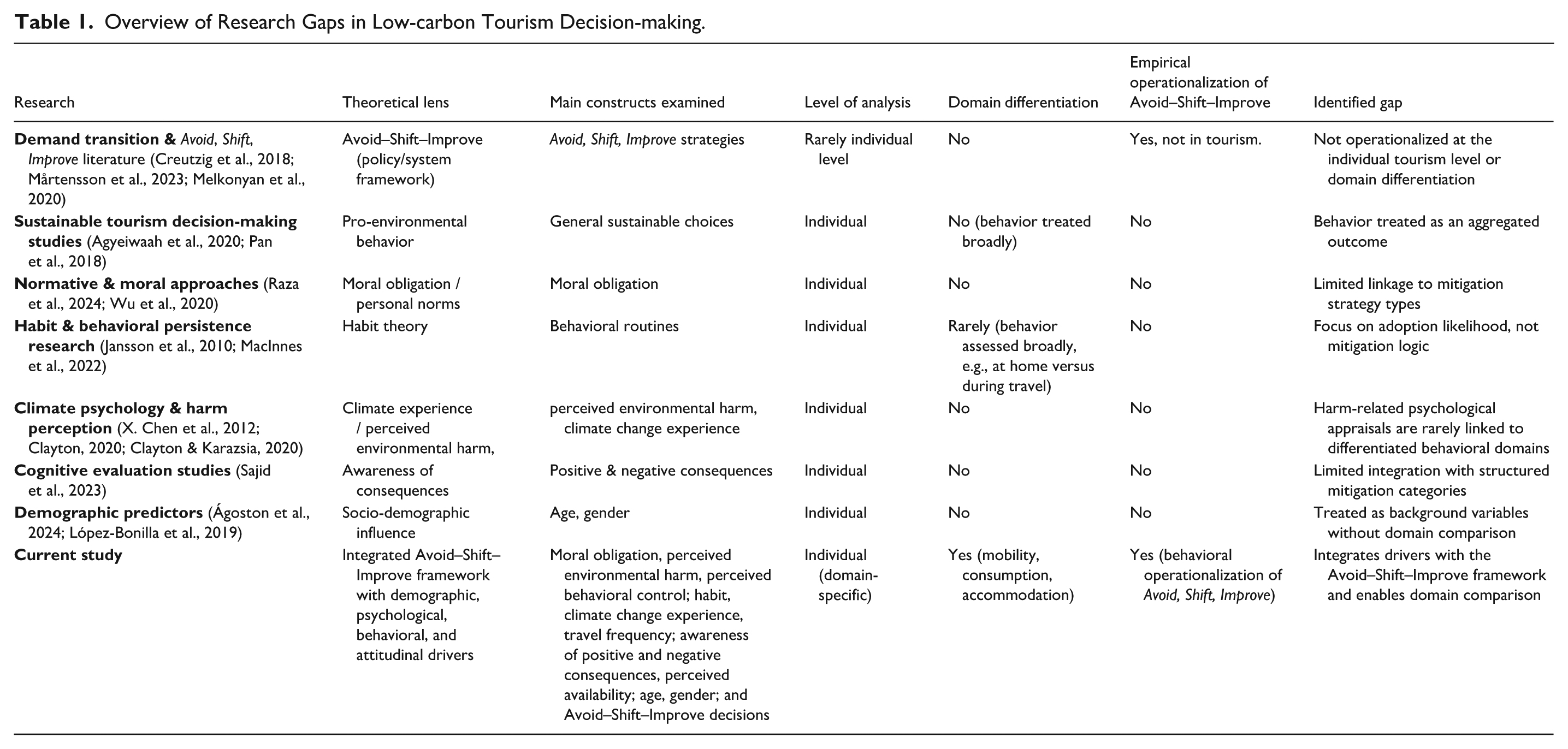
As shown in Table 1, prior research has either examined general pro-environmental choices without differentiating mitigation strategies or applied the Avoid–Shift–Improve framework without operationalizing it at the individual tourism level. This study bridges these gaps by integrating psychological, attitudinal, demographic, and behavioral drivers within a domain-specific operationalization of the Avoid–Shift–Improve framework.
The Avoid–Shift–Improve framework provides an integrated framework for understanding the complexity of travelers’ low-carbon choices, currently missing in the existing scholarship. This framework conceptualizes decision-making as a combination of actions that aim to Avoid unnecessary consumption, Shift toward lower-carbon alternatives, and Improve the efficiency of existing options. By linking individual, psychological, and structural factors, the framework provides a holistic perspective on how low-carbon decisions emerge and vary across tourism domains, including mobility, consumption, and accommodation. Building on the preceding discussion, Figure 1 presents the conceptual framework guiding this study.
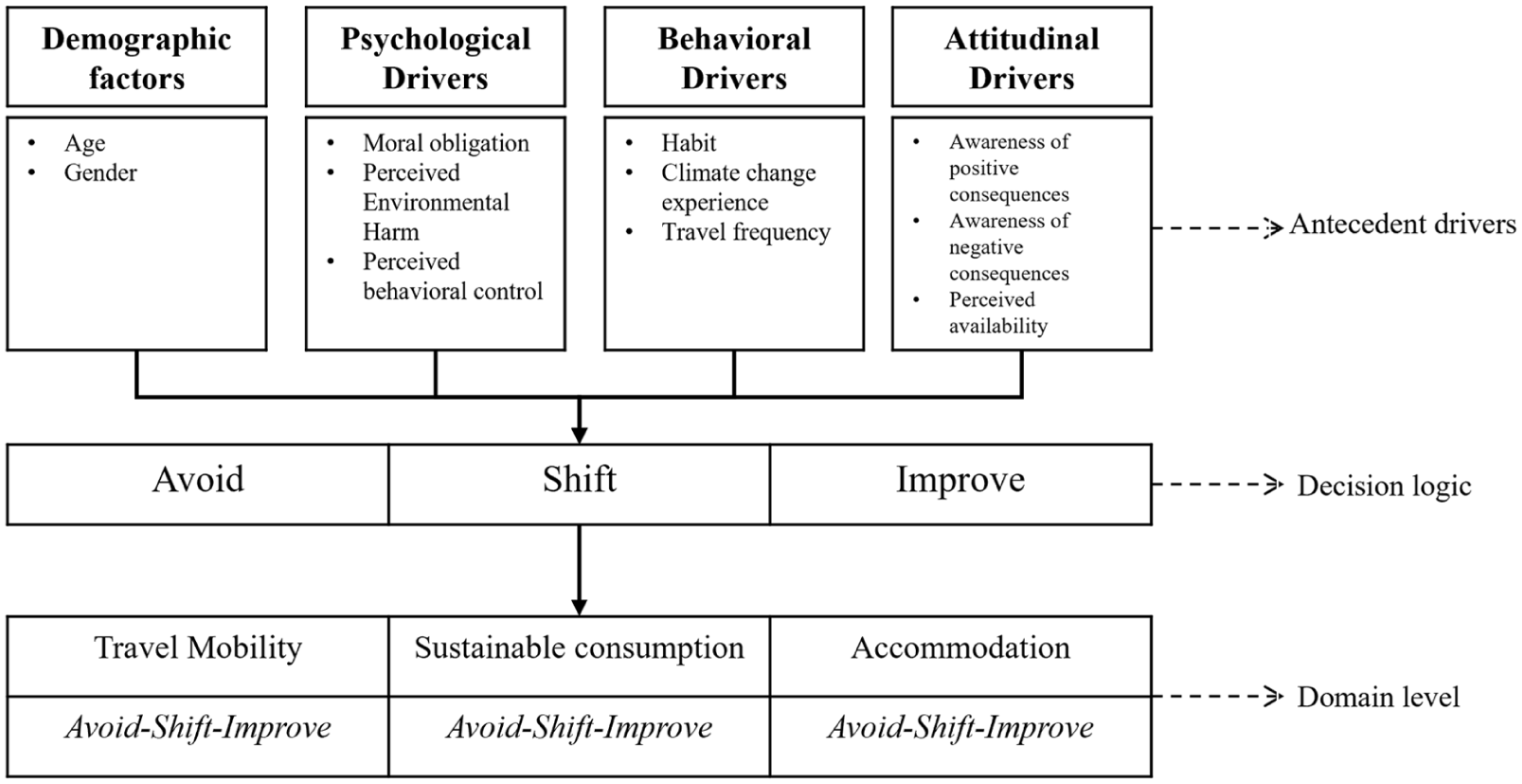
Conceptual framework of Avoid–Shift–Improve -based low-carbon decision-making.
Methodology
Study Sample
Data were collected from university students in Finland. Prior research suggests that university students constitute a relevant subgroup for examining pro-environmental behaviors, given the socially embedded and context-dependent nature of their behavioral patterns (Mehdizadeh et al., 2019). Students operate within institutional learning environments where norms, peer influence, and sustainability-related discussions are actively shaped and reinforced (D’Arco et al., 2023). Higher education contexts may also play a formative role in shaping environmental awareness and value orientations during early adulthood (Hansmann et al., 2012, 2020). Accordingly, the present study examines variation in Avoid–Shift–Improve-based travel decisions among a “university-based cohort of young adults” in Finland.
Finland provides a paradoxical yet insightful context: while globally acclaimed for its sustainability leadership (Rinne et al., 2013), it also records the highest ecological footprint among Nordic countries (6.7 global hectares per capita) and ranks ninth worldwide in consumption-based CO₂ emissions (Salonen et al., 2018). This discrepancy underscores the complexity of sustainability transitions and highlights the importance of examining behavioral patterns, particularly among younger generations, to better understand and address these contradictions.
Questionnaire
The questionnaire was initially created in English and later translated into Finnish by two native Finnish speakers who were fully proficient in English and well-acquainted with the study concepts. A back-translation method was employed to ensure linguistic accuracy and reduce misinterpretation (Brislin, 1970). Participants could respond in either English or Finnish. To minimize social desirability bias, which is common in sustainable tourism research (Juvan & Dolnicar, 2016), the questionnaire was structured to reveal as little information as possible about the research purpose. This approach helped reduce the risk of biased responses. Self-reported decision-making process was used because it enabled the investigation of a wide range of choices, providing direct insights into participants’ actions (Juvan & Dolnicar, 2017).
This study utilized an online questionnaire to collect data from students at the University of Oulu, Finland, using the Webropol Survey & Reporting platform. Data collection lasted approximately six weeks, from early March to early May 2025. A total of 453 responses were received. The survey link was opened 845 times; 549 respondents began the questionnaire, and 453 completed it in full, resulting in an 82% completion rate. Since this research focuses on young adults, 37 respondents born between 1950 and 1983 were excluded from the analysis. The final sample comprises 416 respondents, representing young adults born between 1984 and 2007.
Measurement of Variables
Psychological and attitudinal drivers were measured using single-item indicators capturing specific evaluations or perceptions related to climate-relevant travel choices. While multi-item scales are often recommended for complex and multidimensional variables (Diamantopoulos et al., 2012), single-item measures can be appropriate when focusing on specific, well-articulated aspects of a construct (Bergkvist & Rossiter, 2007; Wanous et al., 1997). Recent research supports the context-sensitive use of single-item measures when constructs are narrowly specified, concrete, and unidimensional, demonstrating acceptable validity and reliability performance in applied settings (Allen et al., 2022; Matthews et al., 2022). This approach is also supported in climate change research, where single-item assessments have been used to capture individual differences in climate concern and belief and show meaningful associations with related outcomes (Berger et al., 2025; Swim & Geiger, 2017). In tourism research, single-item indicators have also been used to capture key psychological drivers of pro-environmental behavior among travelers (e.g., Juvan & Dolnicar, 2017), supporting their use in large-scale survey contexts. In addition, prior administration of a longer multi-item version of the survey within the same population increased respondent burden and reduced completion quality, further supporting the use of parsimonious indicators. All items were measured on 5-point Likert scales with endpoints tailored to each construct.
The Avoid–Shift–Improve framework was utilized to measure low-carbon decision-making across three key areas: travel mobility, consumption, and accommodation. Items were adapted from Creutzig et al. (2021) and aligned with common decision-making processes related to carbon reduction in these domains. Participants rated the frequency of their environmentally sustainable decisions on a five-point Likert scale ranging from “Never” to “Always.” The Avoid–Shift–Improve framework originates as a strategic categorization of demand-side mitigation actions (Creutzig et al., 2021; Intergovernmental Panel on Climate Change [IPCC], 2022), distinguishing between demand reduction (Avoid), modal substitution (Shift), and efficiency improvement (Improve). In the demand-side mitigation literature, Avoid does not necessarily imply complete abstention from an activity, but rather a reduction in carbon-intensive demand relative to baseline practices. Similarly, Shift strategies refer to substitution toward lower-emission alternatives, and Improve strategies reflect efficiency gains that reduce emissions per unit of activity. The classification of items, therefore, follows the mitigation mechanism (i.e., emission intensity and reduction pathway) rather than the assumed underlying motivation.
Within each tourism domain (mobility, consumption, accommodation), the three items corresponding to the Avoid, Shift, and Improve strategies were averaged to construct domain-specific behavioral indices. The Avoid–Shift–Improve framework categorizes demand-side mitigation actions rather than reflecting a latent construct (Creutzig et al., 2021; IPCC, 2022). Accordingly, the items capture distinct behavioral strategies grouped according to mitigation logic (demand reduction, modal substitution, and efficiency improvement) rather than interchangeable indicators of a single latent factor. Because these indicators represent complementary behavioral actions rather than manifestations of an underlying construct, traditional dimensionality tests such as EFA or CFA are not conceptually required. To support validity and the adequacy of the behavioral indicators, a content validity assessment was conducted using an expert panel (n = 9). Experts evaluated the relevance of each item to the intended Avoid, Shift, and Improve mechanisms using a four-point scale following established procedures (Polit & Beck, 2006). Item-level content validity indices (I-CVI) ranged from 0.78 to 1.00, exceeding recommended thresholds. The scale-level content validity index (S-CVI/Ave) was 0.88, indicating good overall content validity. All survey items and the detailed results of the content validity analysis are presented in Appendix 1 (Tables A1 and A2).
Data Analysis
To address the research objectives, the relationships among psychological, behavioral, attitudinal drivers, socio-demographic factors, and Avoid–Shift–Improve choices across three domains, travel mobility, consumption, and accommodation, were examined. First, correlation analyses were conducted to examine the strength and direction of associations among the study variables, including psychological drivers (moral obligation, perceived environmental harm, perceived behavioral control), behavioral drivers (habit, climate change experience, travel frequency), attitudinal drivers (awareness of positive and negative consequences, perceived availability), socio-demographic factors (age and gender), and Avoid–Shift–Improve choices across the three travel domains. This approach is commonly applied in prior research to identify associations between pro-environmental decision-making and the factors that influence it (Whitburn et al., 2019).
Then, to compare the values of the Avoid–Shift–Improve framework elements across the three tourism domains and to compare the three domains across the Avoid–Shift–Improve elements, a 3 × 3 (domain × choice) repeated-measure analysis of variance (ANOVA), along with contrasts and post-hoc tests with Sidak corrected confidence intervals at 95%, was employed. As a follow-up to the significant results, separate within-subjects repeated-measures ANOVAs were conducted. Additionally, a mixed-model within-between-subjects design was employed for the variables of domain and choice, along with demographic variables to control for potential confounding effects by examining interactions with travel frequency, gender, and age, a common approach in tourism research (Whitmarsh et al., 2010).
Also, to compare different adopter groups–ranging from weak to strong engagement–across demographic, psychological, behavioral, and attitudinal perspectives, homogeneous subgroups were identified using a two-step cluster analysis. This method permits simultaneous analysis of demographic, psychographic, attitudinal, and (self-reported) decision-making variables and is particularly well-suited for segmenting complex survey data where both continuous and categorical predictors are present (Rundle-Thiele et al., 2015). This clustering utilized the log-likelihood distance measure and Schwarz’s Bayesian Information Criterion (BIC), based on the nine Avoid–Shift–Improve indicators across the three tourism domains.
To better understand the drivers of adoption, the extracted clusters were evaluated based on three psychological variables (perceived environmental harm, moral obligations, and perceived behavioral control), three behavioral variables (habit, experience of climate change, and travel frequency), three attitudinal variables (perceived availability of low-carbon options, awareness of negative consequences, and awareness of positive consequences), and two demographic variables (age and gender).
Group comparisons were performed using one-way between-subjects ANOVA with Tukey’s HSD post-hoc tests, a standard procedure for identifying significant mean differences across independent groups (Field, 2024). When the assumption of equal variances was violated, the ANOVA was replaced with the Brown-Forsythe (F*), followed by Games-Howell post hoc tests. For non-continuous categorical demographic variables, age, gender, and travel frequency, group comparisons were conducted using the Chi-square (χ²) test of independence, supplemented with phi symmetric measures and z-tests for comparing proportions with Bonferroni-adjusted p-values and adjusted standardized residuals to ensure robust statistical inference.
Results
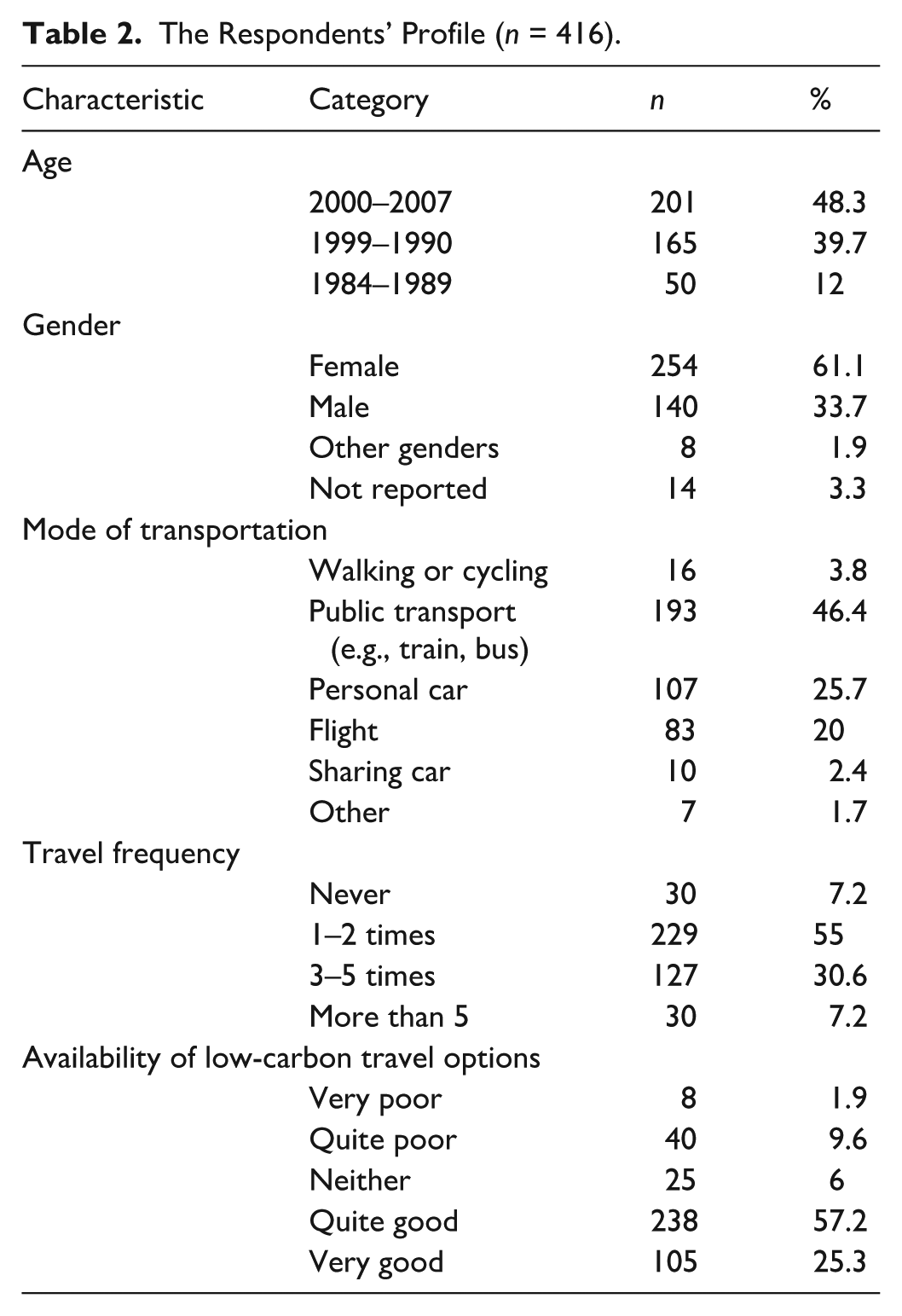
As shown in Table 2, the sample was predominantly female (62.2%), and most respondents traveled for leisure one to two times per year (55.1%). Public transport, such as trains and buses, was the most common mode of travel (46.1%), followed by personal vehicles (26.1%) and flights (19.9%). A large majority (82.5%) rated the availability of low-carbon travel options as good or very good. Participants also reported high engagement in sustainable choices (x̅ = 4.1), with more than 85% indicating they often or always engage in such actions.
The Respondents’ Profile (n= 416).
RQ1: Avoid-Shift-Improve Engagement Correlates
A bivariate Pearson correlation analysis was conducted to examine the relationships between socio-demographic, attitudinal, behavioral, and psychological factors and the Avoid–Shift–Improve choices for low-carbon travel mobility, as shown in Figure 2.
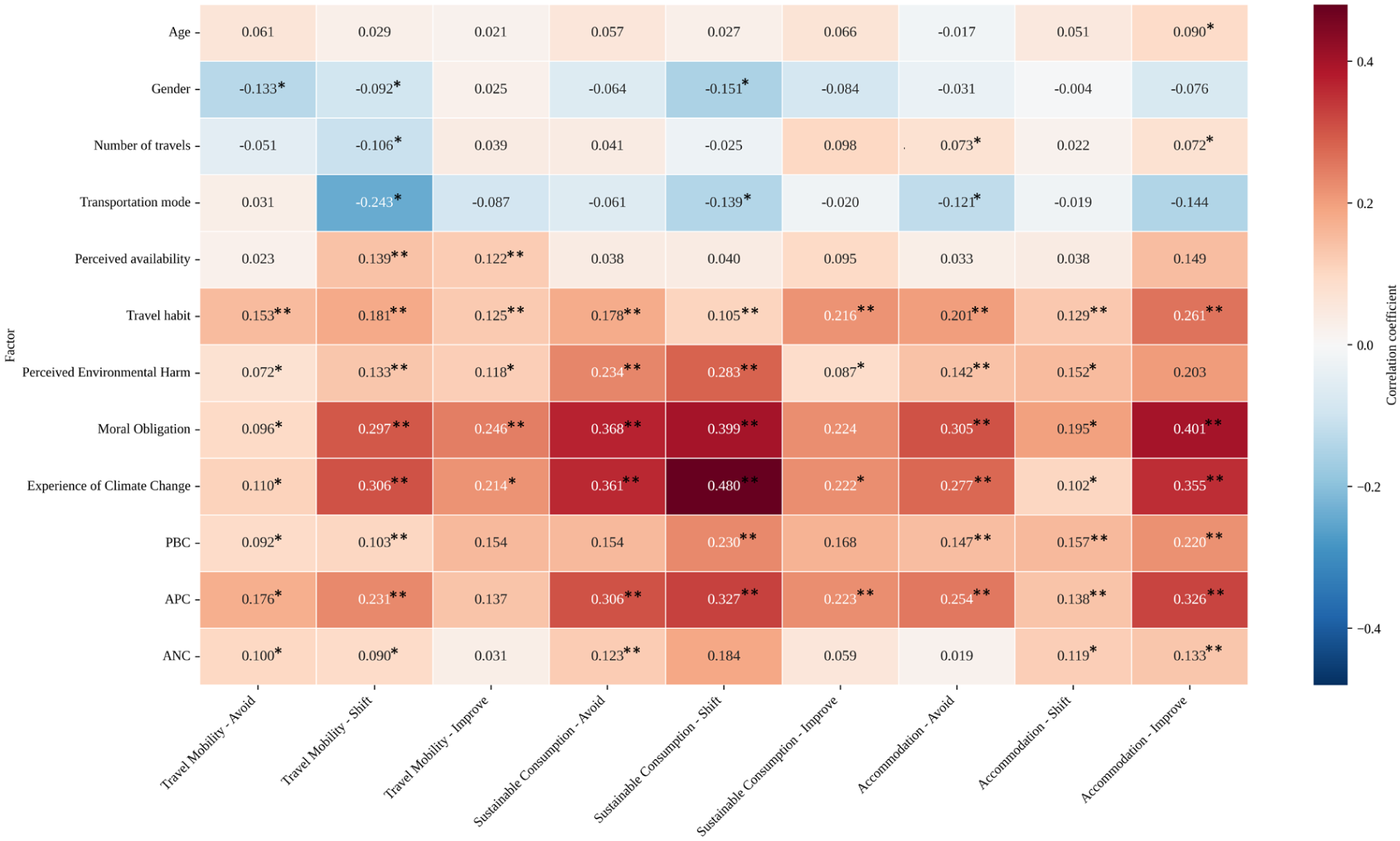
Summary of socio-demographic, attitudinal, behavioral, and psychological drivers of low-carbon travel decision-making across the Avoid–Shift–Improve framework.
Travel Mobility
Among demographic variables, age showed no significant association, while gender was negatively correlated with Avoid (r = −.133) and Shift (r = −.092). The number of trips and modes of transportation were also negatively associated with Shift choices, whereas perceived availability of low-carbon options was positively linked to both Shift and Improve actions. This suggests that structural and behavioral exposure factors may constrain substitution decisions, particularly when mobility patterns are frequent or mode-dependent.
Behavioral variables showed a consistent pattern: travel habits were positively associated with all three Avoid–Shift–Improve dimensions (Avoid: r = .153; Shift: r = .181; Improve: r = .125), underscoring the influence of past behavior on current mobility decisions. The persistence of habits across all three dimensions indicates that low-carbon mobility may be routinized rather than purely intention-driven. Among psychological constructs, climate change experience was significantly related to higher engagement across all three domains. Moral obligation was most strongly associated with Shift (r = .297), followed by Improve (r = .246), while its association with Avoid was comparatively weaker (r = .096). Finally, cognitive factors revealed an interesting pattern: awareness of positive consequences was more strongly related to all three mobility domains than awareness of negative consequences, the latter of which was only significantly associated with Avoid choice (r = .100). Awareness of negative consequences was not significantly associated with Shift (r = .090) or Improve (r = .031). This may indicate that awareness of negative consequences primarily activates reduction-oriented responses (Avoid), whereas substitution and improvement decisions require additional motivational mechanisms beyond risk cognition alone. Perceived behavioral control also showed positive correlations with Shift (r = .103) and Improve (r = .154) actions. It was also positively, though more weakly, associated with Avoid decisions (r = .092).
Sustainable Consumption
Patterns in the consumption domain closely reflected those observed in travel mobility. Gender again showed a negative association with Shift action (r = −.151). Travel habits remained a strong decision-making predictor, demonstrating significant positive correlations with all three Avoid–Shift–Improve dimensions (Avoid: r = .178; Shift: r = .105; Improve: r = .216). The comparatively stronger link with Improve choice suggests that sustainable consumption upgrades may be more easily integrated into existing routines than complete avoidance strategies. Among psychological factors, both normative and experiential drivers were salient, moral obligation was strongly associated with Shift (r = .399), and Avoid choice (r = .368), and climate change experience showed an even stronger correlation with Shift (r = 0.480). The prominence of moral obligation and experiential climate exposure in this domain indicates that consumption decisions may be particularly sensitive to internalized norms and personal climate salience. Perceived environmental harm was associated with greater engagement in Avoid (r = .234) and Shift (r = .283) choices. Finally, awareness of positive consequences was significantly associated with all three consumption decisions, underscoring the role of cognitive evaluation in shaping sustainable consumption choices.
Accommodation
Within the accommodation domain, transportation mode was negatively associated with Avoid and Improve choices, indicating that individuals who rely on high-emission travel options are less likely to compensate by choosing environmentally friendly accommodations. This suggests a potential spillover effect, in which high-emission mobility may reduce engagement in compensatory lodging choices. Travel habits remained a significant decision-making predictor, showing positive correlations with all three Avoid–Shift–Improve dimensions (Avoid: r = .201; Shift: r = .129; Improve: r = .261), reinforcing the central role of behavioral regularity in sustainable accommodation choices.
Psychological factors continued to play a significant role. Moral obligation was most strongly associated with Improve choice (r = .401), followed by Avoid (r = .305), while climate change experience and perceived environmental harm showed consistent positive relationships across all three Avoid–Shift–Improve dimensions. The particularly strong association between moral obligation and Improve choice suggests that normative motivations are especially influential when travelers can make relatively flexible, situational accommodation upgrades. Regarding cognitive factors, perceived behavioral control was positively correlated with Avoid (r = .147), Shift (r = .157), and Improve (r = .220) choices. Similarly, awareness of positive consequences was significantly related to all three domains as presented in Figure 2.
RQ2: Domain-specific avoid-shift-improve decisions
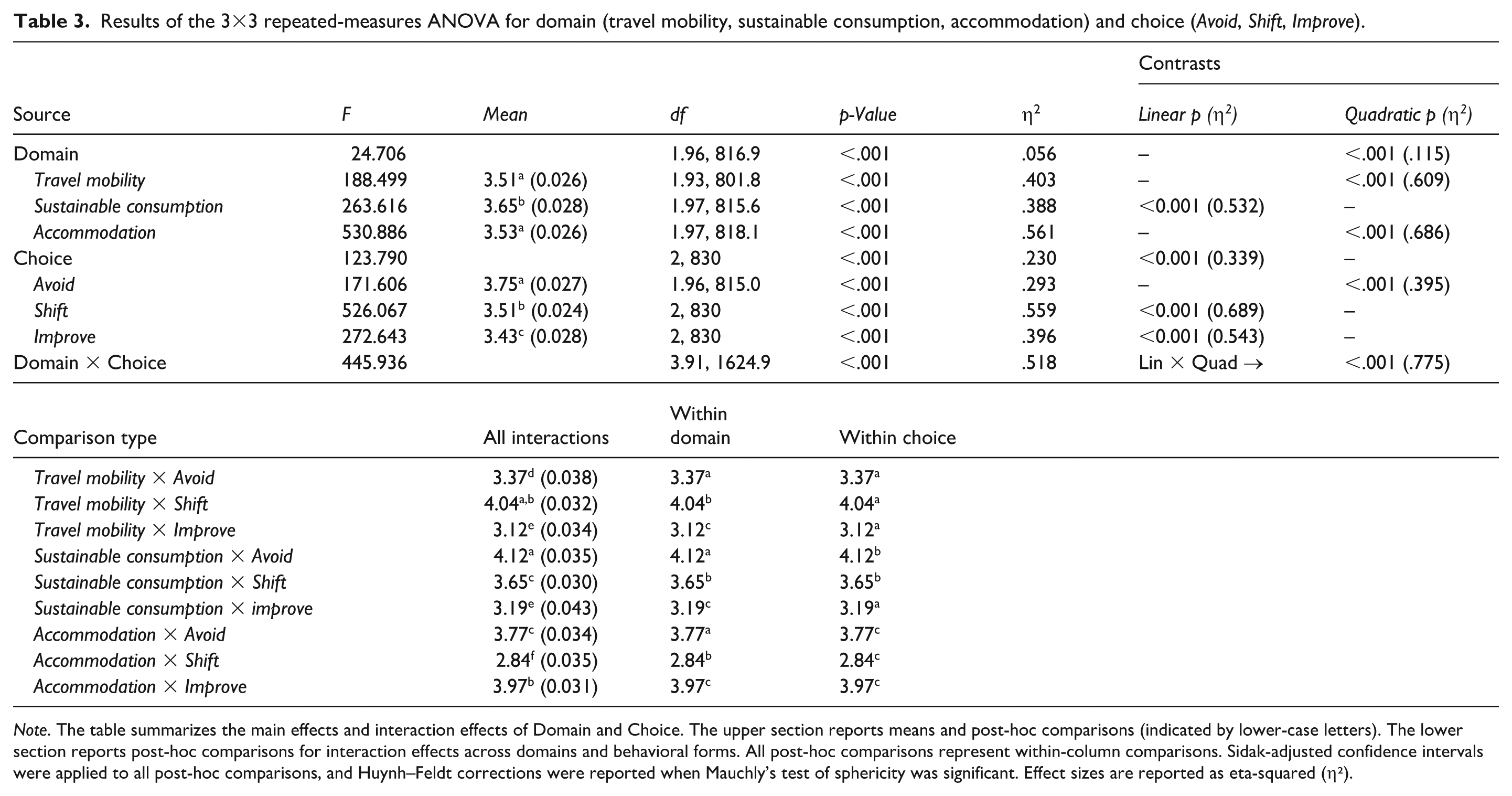
As shown in Table 3, a 3 (Domain: travel mobility, consumption, accommodation) × 3 (Choice: Avoid, Shift, Improve) repeated-measures ANOVA showed significant main effects of domain (F1.96, 816.9 = 24.706, p < .001, η2 = .056), and choice (F2, 830 = 123.790, p < .001, η2 = .230), qualified by a strong domain × choice interaction effect (F3.91, 1624.9 = 445.936, p < .001, η2 = .518).
Results of the 3×3 repeated-measures ANOVA for domain (travel mobility, sustainable consumption, accommodation) and choice (Avoid, Shift, Improve).
Note. The table summarizes the main effects and interaction effects of Domain and Choice. The upper section reports means and post-hoc comparisons (indicated by lower-case letters). The lower section reports post-hoc comparisons for interaction effects across domains and behavioral forms. All post-hoc comparisons represent within-column comparisons. Sidak-adjusted confidence intervals were applied to all post-hoc comparisons, and Huynh–Feldt corrections were reported when Mauchly’s test of sphericity was significant. Effect sizes are reported as eta-squared (η²).
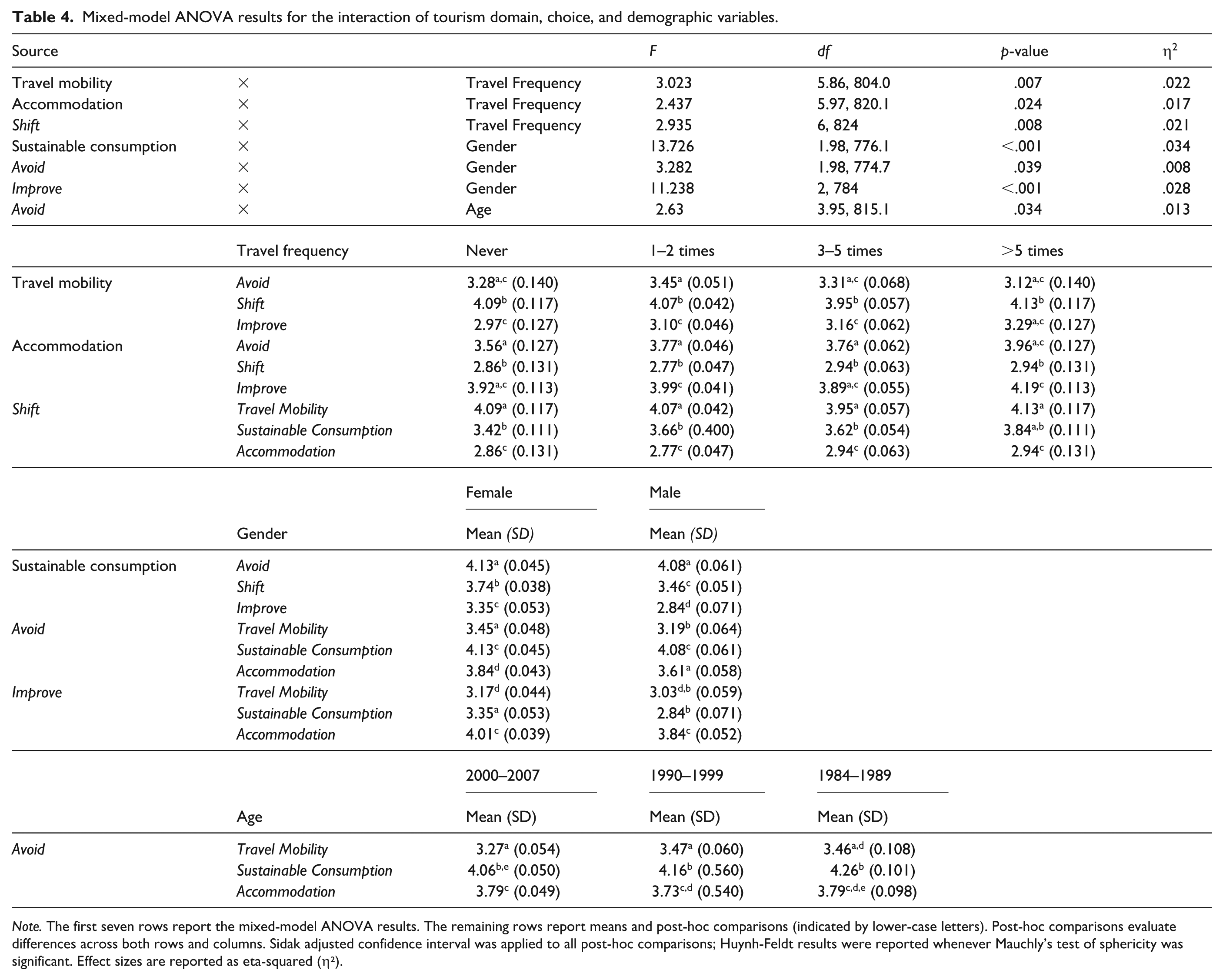
As depicted in Figure 3, significant associations emerged between individual and contextual factors and the adoption of the Avoid–Shift–Improve framework across tourism domains. In the travel mobility domain, Avoid–Shift–Improve elements followed an inverse-U pattern, with Shift choices most prevalent (x̅ = 4.04), followed by Avoid (x̅ = 3.37) and Improve (x̅ = 3.12) (F1.93, 801.8 = 188.499, p < .001, η2 = .403), all presented in Table 3. This pattern remained stable when accounting for travel frequency, although Avoid and Improve choices did not differ significantly, except for infrequent travelers (1–2 trips per year), for whom Avoid was more prominent than Improve (F5.86, 804.0 = 3.023, p = .007, η2 = .022), as presented in Table 4.
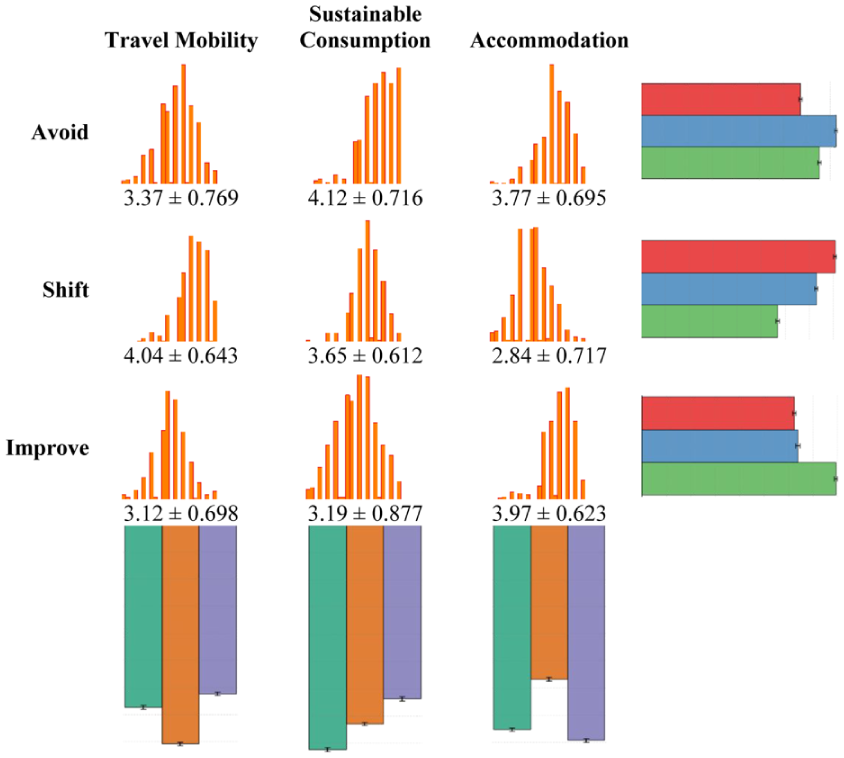
Interaction between the Avoid–Shift–Improve choices and tourism domains (means with standard errors).
Mixed-model ANOVA results for the interaction of tourism domain, choice, and demographic variables.
Note. The first seven rows report the mixed-model ANOVA results. The remaining rows report means and post-hoc comparisons (indicated by lower-case letters). Post-hoc comparisons evaluate differences across both rows and columns. Sidak adjusted confidence interval was applied to all post-hoc comparisons; Huynh-Feldt results were reported whenever Mauchly’s test of sphericity was significant. Effect sizes are reported as eta-squared (η²).
In the domain of sustainable consumption, Avoid–Shift–Improve elements followed a clear linear pattern of Avoid (x̅ = 4.12) > Shift (x̅ = 3.65) > Improve (x̅ = 3.19) (F1.97, 815.6 = 263.616, p < .001, η2 = .388), as presented in Figure 3 and Table 3. A significant interaction with gender was observed (F1.98, 776..1 = 13.726, p < .001, η2 = .034), in which females compared to males reported significantly higher levels of Shift (x̅ = 3.74 vs. 3.46) and Improve (x̅ = 3.35 vs. 2.84) choices, while Avoid choices did not differ between males and females (Table 4).
Within the accommodation domain, Avoid–Shift–Improve elements followed a U-shaped pattern, which is demonstrated in Table 3 and Figure 3, with Shift (x̅ = 2.84) being the least adopted choice and Avoid (x̅ = 3.77) being the most prevalent after Improve (x̅ = 3.97) (F1.97, 818.1 = 530.886, p < .001, η2 = .561). As shown in Table 4, Shift consistently remained the least adopted choice across all levels of travel frequency, while Avoid and Improve showed no significant differences except among infrequent travelers (1–2 trips per year), where Avoid (x̅ = 3.77) was less prevalent than Improve (x̅ = 3.99) (F5.97, 820.1 = 2.437, p = .024, η2 = .017).
RQ3: Cross-domain Profiles by Avoid–Shift–Improve Choice
As illustrated in Figure 3 and Table 3, the analysis next shifts from a domain-centric to a choice-centric perspective; hence, overall patterns of Avoid–Shift–Improve choice across the three tourism domains were examined, along with their interactions with demographic factors. Across domains, Avoid choice followed an inverse-U pattern, with sustainable consumption showing the highest engagement, followed by accommodation and travel mobility (F1.96, 815 = 171.606, p < .001, η2 = .293). Age-related differences revealed a consistent pattern: sustainable consumption remained the highest and travel mobility the lowest across all age groups. As shown in Table 4, accommodation occupied an intermediate position, overlapping with both - aligning closely with travel mobility among older participants and with sustainable consumption among younger ones (F3.95, 815.1 = 2.63, p = .034, η2 = .013). Gender also showed a significant interaction with tourism domains in relation to Avoid choice (F1.98, 774.7 = 3.282, p = .039, η2 = .008). While male and female participants reported similar levels of Avoid choice in the sustainable consumption domain, female scores in accommodation were significantly higher than those of males and even overlapped with female scores in travel mobility, which themselves exceeded male scores, as presented in Table 4.
As depicted in Figure 3, for the Shift choice, a linear pattern was observed across tourism domains, with travel mobility showing the highest engagement, followed by sustainable consumption and accommodation (F2, 830 = 526.067, p < .001, η2 = .559) (also shown in Table 3). This ranking remained consistent across all travel frequency groups except among frequent travelers (more than five trips per year), for whom travel mobility and sustainable consumption did not significantly differ, while accommodation (x̅ = 2.94) remained the least prevalent (F6, 824 = 2.935, p = .008, η2 = .021), which is presented in Table 4.
As shown in Table 3 and Figure 3, the Improve choice exhibited a linear pattern across tourism domains, with accommodation showing the highest engagement (x̅ = 3.97), followed by sustainable consumption and travel mobility (F2, 830 = 272.643, p < .001, η2 = .396). As Table 4 shows, gender showed a significant interaction with tourism domains in relation to Improve choice (F2, 784 = 11.238, p < .001, η2 = .028). While both genders followed the same overall pattern, females reported significantly higher Improve choice than males in the sustainable consumption domain.
RQ3: Drivers of Avoid–Shift–Improve Adoption
To analyze adaptive Avoid, Shift, and Improve low-carbon decision-making by travelers, a clustering approach was employed to examine adoption patterns across all Avoid–Shift–Improve choices. Among the nine criterion variables (3 Avoid–Shift–Improve elements × 3 tourism domains), the lowest contributing factor was Avoid choice in the travel mobility domain (40.1%). The top three contributors were Improve (100%) and Avoid (79.2%) choices in the sustainable consumption domain, and Shift choice (76.7%) in the accommodation domain. A silhouette measure of 0.3 indicated a fair clustering solution. Accordingly, three clusters emerged: strong adopters (n = 143, 34.4%), who scored above the median across all nine Avoid–Shift–Improve criteria; moderate adopters (n = 169, 40.6%), whose scores were close to the median; and weak adopters (n = 104, 25%), who scored below the median on all criteria as presented in Figure 4.
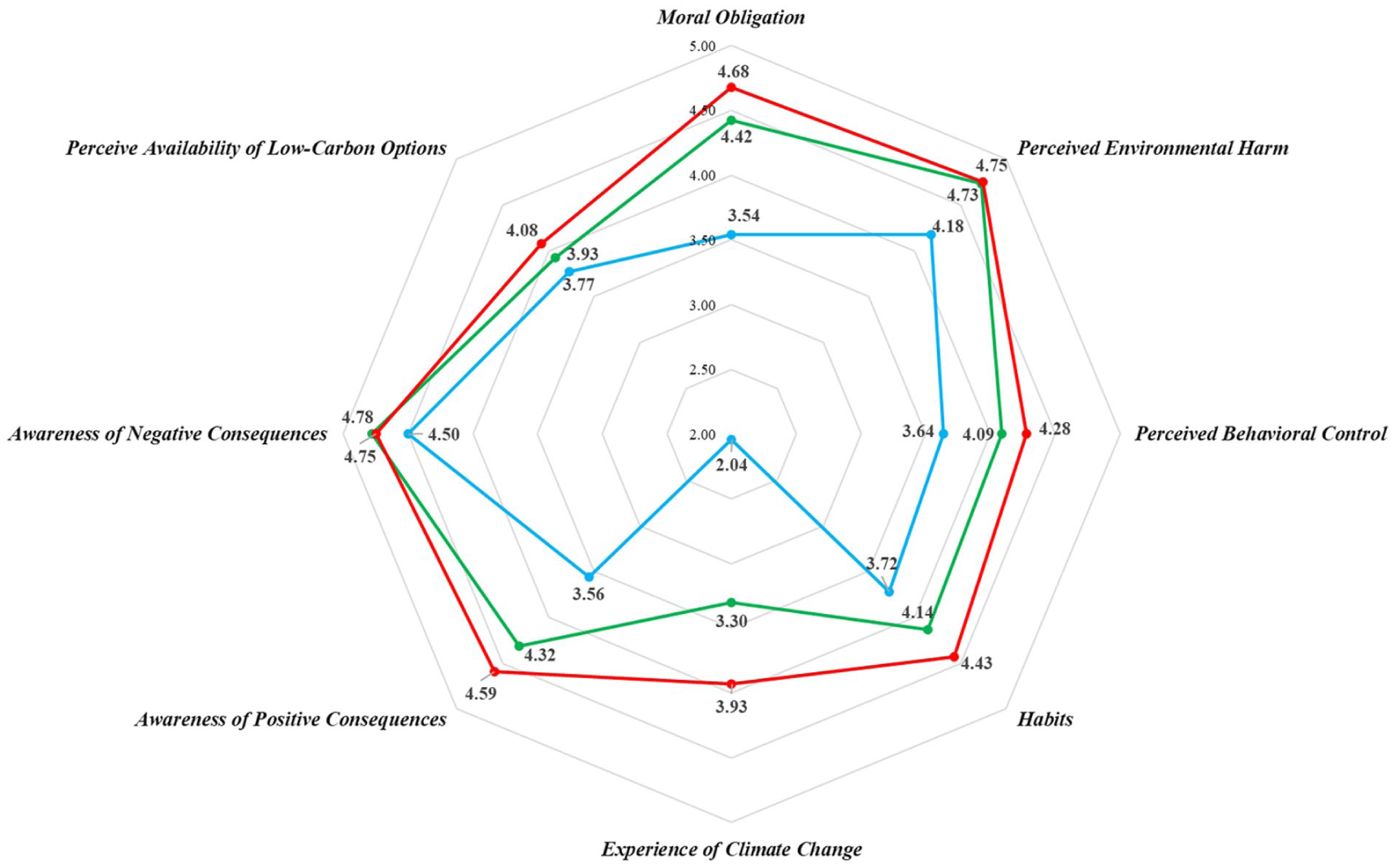
Clusters of adopters across psychological, behavioral, and attitudinal variables.
Differences between adopter clusters across psychological, behavioral, and attitudinal variables.
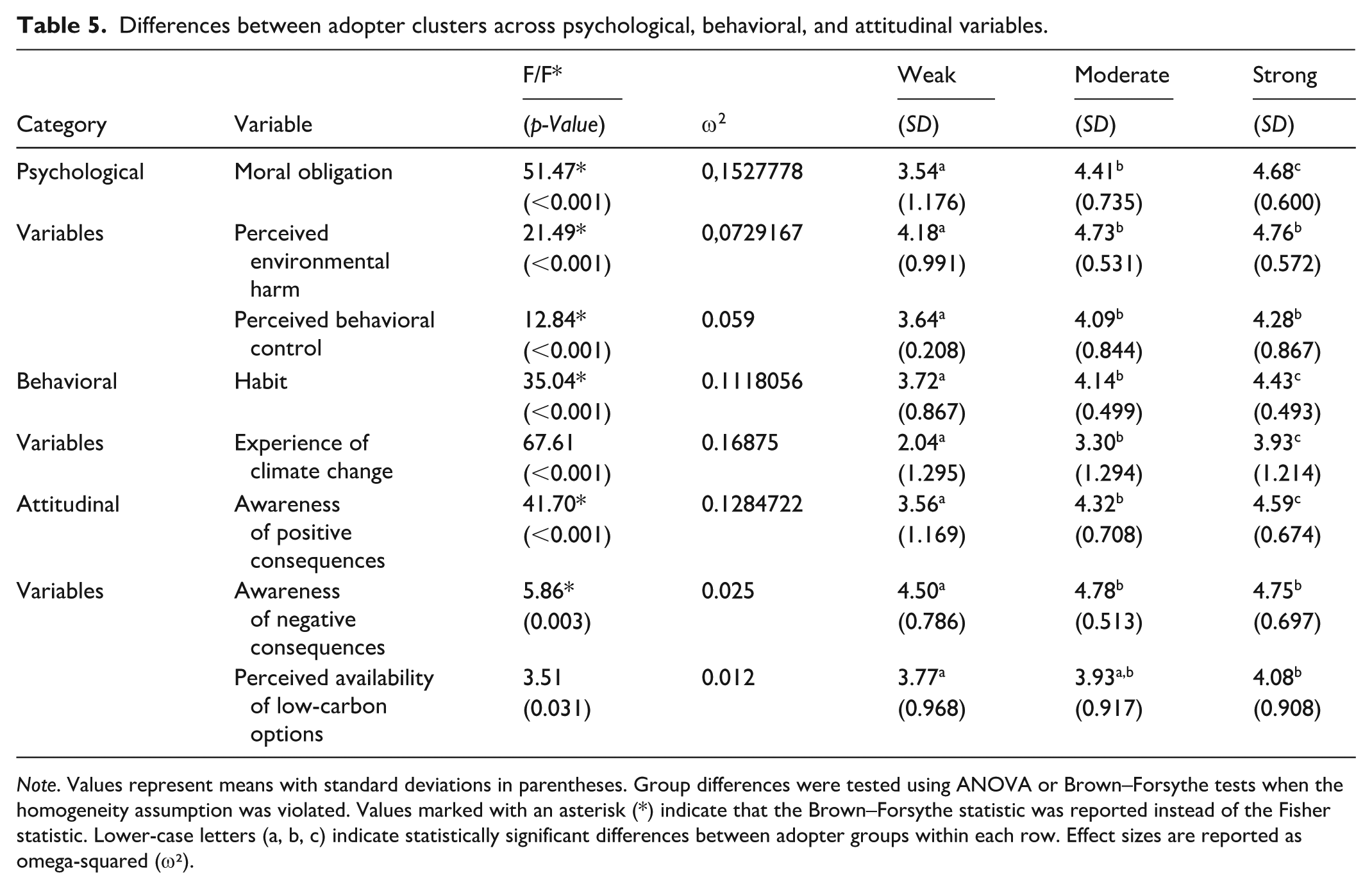
Note. Values represent means with standard deviations in parentheses. Group differences were tested using ANOVA or Brown–Forsythe tests when the homogeneity assumption was violated. Values marked with an asterisk (*) indicate that the Brown–Forsythe statistic was reported instead of the Fisher statistic. Lower-case letters (a, b, c) indicate statistically significant differences between adopter groups within each row. Effect sizes are reported as omega-squared (ω²).
As shown in Table 5, all three psychological variables - moral obligation (F*2, 221.98 = 51.47, p < .001, ω2 = .220), perceived environmental harm (F*2, 217.32 = 21.49, p < .001, ω2 = .105), and perceived behavioral control (F*2, 280.71 = 12.84, p < .001, ω2 = .059) - showed statistically significant differences across adopter clusters. Strong adopters reported the highest levels of moral obligation, followed by moderate and weak adopters. For perceived environmental harm, weak adopters (x̅ = 4.18) reported the lowest levels, while moderate (x̅ = 4.73) and strong (x̅ = 4.75) adopters did not differ significantly. A similar pattern was observed for perceived behavioral control, with weak adopters showing the lowest levels, and no significant differences between moderate and strong adopters, as shown in Figure 3.
Two behavioral variables - habit (F*2, 223.58 = 35.04, p < .001, ω2 = .161) and experience of climate change (F2, 413 = 67.61, p < .001, ω2 = .243) - showed statistically significant differences across adopter clusters, while travel frequency did not differ significantly (χ²(6) = 3.39, p = .758). Strong adopters exhibited the highest levels of habitual behavior, followed by moderate and weak adopters. As demonstrated in Figure 3, a similar pattern was observed for climate change experience, with strong adopters reporting the highest levels (x̅ = 3.93), followed by moderate (x̅ = 3.30) and weak adopters (x̅ = 2.04) (Table 5).
As shown in Table 5, all three attitudinal variables - awareness of positive consequences (F*2, 231.41 = 41.70, p < .001, ω2 = .185), awareness of negative consequences (F*2, 299.10 = 5.86, p = .003, ω2 = .025), and perceived availability of low-carbon options (F2, 413 = 3.51, p = .031, ω2 = .012) - showed statistically significant differences among adopter clusters. Awareness of positive consequences was highest among strong adopters, followed by moderate and weak adopters. For awareness of negative consequences, weak adopters exhibited the lowest levels, while moderate and strong adopters did not differ significantly from each other. In terms of perceived availability of low-carbon options, weak adopters scored the lowest (x̅ = 3.77), while strong adopters scored the highest (x̅ = 4.08), with moderate adopters (x̅ = 3.93) not differing significantly from either group, as presented in Figure 4 and Table 5.
Finally, results for demographic variables were mixed. Age did not differ significantly across adopter clusters, but gender showed a significant association (χ2(2) = 23.2, p < .001, ϕ = .243). Among strong adopters, females were significantly overrepresented (75.4%) compared with males (24.6%; |ε| = 3.2). Conversely, among weak adopters, males were overrepresented (54.5%) compared to females (45.5%, |ε| = 4.6). No significant gender differences were observed within the moderate adopter group.
Discussion
This study responds to emerging scholarly calls (e.g., Dolnicar & Greene, 2025; Gössling & Dolnicar, 2022; Hadinejad et al., 2025; MacInnes et al., 2022) to advance tourism sustainability research by extending the application of established cognitive models such as the Theory of Planned Behavior and Value-Belief-Norm Theory. While these frameworks remain valuable for explaining psychological determinants of pro-environmental decisions, they generally do not differentiate how mitigation strategies are enacted across domains of tourism activity. By operationalizing the Avoid–Shift–Improve framework as a domain-sensitive analytical structure, this study complements existing theory-driven approaches by examining how established behavioral drivers relate to distinct mitigation logics, Avoid, Shift, and Improve, across the domains of mobility, consumption, and accommodation. Also, this research is among the first to critically examine how established psychological, attitudinal, and socio-demographic factors differentially relate to Avoid, Shift, and Improve decisions.
The findings show that socio-demographic, attitudinal, behavioral, and psychological factors shape travelers’ low-carbon choices in distinct ways across mitigation strategies and domains. This provides a domain-sensitive perspective that enriches tourism sustainability scholarship by offering a more nuanced understanding of how tourists engage in Avoid, Shift, and Improve low-carbon decisions. These insights need to be interpreted within the socio-institutional context of young university students in a Nordic setting. This research indicates that young, university-educated groups tend to exhibit higher environmental awareness and make more pro-environmental choices, which is consistent with prior research (e.g., Moser & Kleinhückelkotten, 2017; Zhao et al., 2021). This is because higher education fosters sustainability norms and values (Hansmann et al., 2012, 2020), shaping baseline attitudes toward low-carbon decisions. Nordic countries such as Finland have strong environmental governance and a robust sustainability discourse (Neergaard & Ravnbøl, 2019), which further influences their low-carbon choices. The patterns observed here, therefore, reflect differences within an already environmentally conscious cohort, rather than generalizable tendencies across wider populations. This aligns with tourism research indicating that pro-environmental decision-making is strongly shaped by socio-cultural and institutional contexts (Gössling et al., 2013; Scott et al., 2010).
The results show that socio-demographic factors, such as age, gender, and the number of trips, as well as transportation mode, have only a limited influence on Avoid–Shift–Improve-based strategies. Gender shows small but significant associations, particularly for travel mobility-Avoid and sustainable consumption-Shift, indicating that women are slightly more inclined toward lower-carbon choices in these domains. These findings are broadly consistent with earlier research that found females tend to report higher engagement in low-carbon decision-making (e.g., Moser & Kleinhückelkotten, 2017; Zhao et al., 2021), although the magnitude of these effects here remains limited. Other variables, such as the number of trips and dominant travel mode, show similarly weak explanatory power, except for the negative relationship between travel mode and travel mobility Shift. This finding reflects behavioral rigidity among users of high-carbon transport, aligning with Ivanova and Wood (2020), who reported that high-carbon transport choices are strongly associated with higher-income groups and are harder to shift through behavioral interventions. These results suggest that while socio‑demographic characteristics contribute to shaping mitigation orientations, they are insufficient predictors of the differentiated logics of Avoid, Shift, and Improve choices.
The results were extended by incorporating the Avoid–Shift–Improve framework across the three domains of traveling to examine how low-carbon decision-making differs within and across tourism contexts. In the mobility domain, participants showed the strongest engagement in Shift, followed by Avoid. This means that travelers are more willing to switch to lower-carbon transport modes than to Avoid travel or make small efficiency changes. Such behavior aligns with Creutzig et al. (2021), who argue that structural factors, such as good transport services and infrastructure, make it easier for people to Shift toward sustainable mobility. However, this pattern varied by travel frequency. Among frequent travelers, Shift remained the dominant strategy, with Avoid and Improve seen as equally relevant, which means that these travelers tend to maintain their mobility while balancing it with either substituting their mode of transport (Shift) or making minor efficiency upgrades (Improve), rather than cutting trips altogether (Avoid). In contrast, low-frequency travelers showed a clearer preference for Avoid over Improve, likely because reducing trips aligns with their existing routines and requires minimal effort. For them, Avoid may serve as a symbolic or pragmatic choice, while frequent travelers lean on Shift and Improve to reduce impact without limiting mobility. This aligns with Higham et al. (2016), who found that travelers are hesitant to reduce their trips and prefer options that do not limit their freedom to travel.
In the sustainable consumption domain, travelers showed the highest engagement in Avoid actions, followed by Shift and Improve. This means they are more likely to Avoid unsustainable options, such as high-carbon meals or souvenirs, than to change or enhance their consumption habits. Gender differences were also observed, with women reporting higher levels of Shift and Improve choices, which is consistent with earlier research showing stronger pro-environmental tendencies among female travelers (e.g., Zhao et al., 2021). In the accommodation domain, Improve choices were the most common, while Avoid and Shift were less frequent. This suggests that travelers prefer making small adjustments, such as saving energy or reducing waste, during their stay rather than avoiding or changing accommodation types entirely.
Travelers who tend to Avoid unsustainable consumption are also more likely to Shift their transport choices and Improve their accommodation practices. This shows that different types of decisions drive each domain. The high Avoid scores in consumption differ from earlier studies (e.g., Dolnicar & Grün, 2009; Ramchurjee & Suresha, 2015) that found sustainable consumption often decreases during travel. One reason may be that simple actions, such as reducing food waste or saving water and energy, have become routine and easy to maintain while on holiday. This finding supports Bilynets & Cvelbar (2022), who showed that travelers often maintain the same environmentally friendly habits they practice at home. In contrast, Shift was most common in travel mobility, followed by consumption, and least in accommodation, suggesting a greater readiness to switch transport modes than other choices. This finding supports Creutzig et al. (2021), who noted that such changes are easier when alternatives like trains or bikes are available and socially accepted. Improve choices showed the opposite trend of Shift, with the strongest engagement in accommodation, moderate in consumption, and weakest in mobility. Overall, these differences show that flexibility varies by context: travelers are more willing to Improve what they already use and Avoid unsustainable choices than to limit travel or change where they stay. These insights highlight the need for policies that align with the level of effort travelers are willing to make in each domain. Earlier studies also show that tourists are generally unwilling to change their usual holiday patterns, even when such changes could support decarbonization (Gössling et al., 2013; Scott et al., 2010). Finally, the clustering approach revealed three distinct traveler types: strong, moderate, and weak adaptors of Avoid–Shift–Improve-based choices, with meaningful differences in psychological, behavioral, and attitudinal factors. Psychological factors were the most influential in shaping adaptation decisions. Strong adopters showed the highest levels of moral obligation, perceived environmental harm, and perceived behavioral control, supporting earlier research (e.g., M.-F. Chen, 2016) that highlights moral obligation as key to maintaining low-carbon decision-making. A strong sense of duty can help people overcome common barriers such as limited time or money. Moderate adopters also exhibited higher levels of these psychological factors, especially moral obligation, though to a lesser extent than strong adopters, suggesting they may have the motivation but lack the consistent behavior or confidence to act fully. In contrast, weak adopters consistently showed the lowest levels across all psychological dimensions, reflecting both lower motivation and reduced perceived efficacy, which could explain their limited commitment to low-carbon actions.
Attitudinal factors also played a significant role in differentiating adopter groups. Awareness of positive consequences was particularly influential, with strong adaptors reporting the highest level, followed by moderate and then weak adaptors. This supports earlier studies (e.g., Sajid et al., 2023), which found that seeing clear benefits motivates sustainable choices more effectively than focusing on negative outcomes. Awareness of negative consequences was lower among weak adopters, indicating a gap in recognizing harmful outcomes. While strong and moderate adopters are aware of the risks, weak adopters lack this engagement, contributing to disengagement.
Finally, regarding demographic factors, there was no statistically significant difference in age among adapters, which may be due to the study’s focus on young adults only. However, gender was significantly associated with cluster membership: females were overrepresented among strong adopters, whereas males were more common among weak adopters. This finding aligns with a substantial body of prior research reporting gender differences in pro-environmental behaviors, with women typically demonstrating stronger engagement than men (e.g., Kennedy & Kmec, 2018; Xia & Li, 2023). No gender differences emerged among moderate adopters, suggesting that this middle group is more demographically balanced and could be a key target for gender-neutral interventions.
Conclusion
This research makes several contributions to tourism scholarship. It advances knowledge on sustainable tourism decision-making by investigating travelers’ low-carbon choices through the Avoid–Shift–Improve framework. In addition, this research provides practical implications for tourism and destination managers seeking to promote travelers’ low-carbon choices.
Theoretically, this research responds to calls to apply new frameworks to advance sustainable tourism research (Dolnicar & Greene, 2025; Hadinejad et al., 2025; MacInnes et al., 2022) by operationalizing the Avoid–Shift–Improve framework as a domain-sensitive analytical structure for examining differentiated low-carbon tourism decision-making. This research advances existing knowledge on low-carbon decision-making by critically examining the structural, contextual, and multidimensional dynamics underpinning the Avoid–Shift–Improve framework. Specifically, this research provides three main contributions by; I) demonstrating how established socio-demographic, psychological, behavioral, and attitudinal factors manifest differently across Avoid, Shift, and Improve logics within distinct tourism domains, (II) comparing the impacts of those factors on Avoid, Shift, and Improve choices across three key domains of a trip: travel mobility, consumption, and accommodation, and III) Identifying three clusters (e.g., strong, moderate, and weak adopters) of travelers across Avoid, Shift, and Improve low-carbon choices.
This research contributes to sustainable tourism research by being one of the first to apply the Avoid–Shift–Improve framework to explore travelers’ low-carbon decision-making. Previous applications of the Avoid–Shift–Improve framework have focused on areas such as passenger car travel, food waste and dietary choices, and demand-side innovations to assess their effects on energy demand and emissions reduction (e.g., Khanna et al., 2023; Mårtensson et al., 2023; Some et al., 2022).
From a practical perspective, the study provides valuable insights for destination managers and policymakers on promoting low-carbon decision-making among travelers. Firstly, the identification of strong, moderate, and weak adopter groups underscores the importance of segmentation strategies, as targeted interventions can be designed to enhance engagement among moderate adopters and facilitate transitions from weaker to stronger adoption levels.
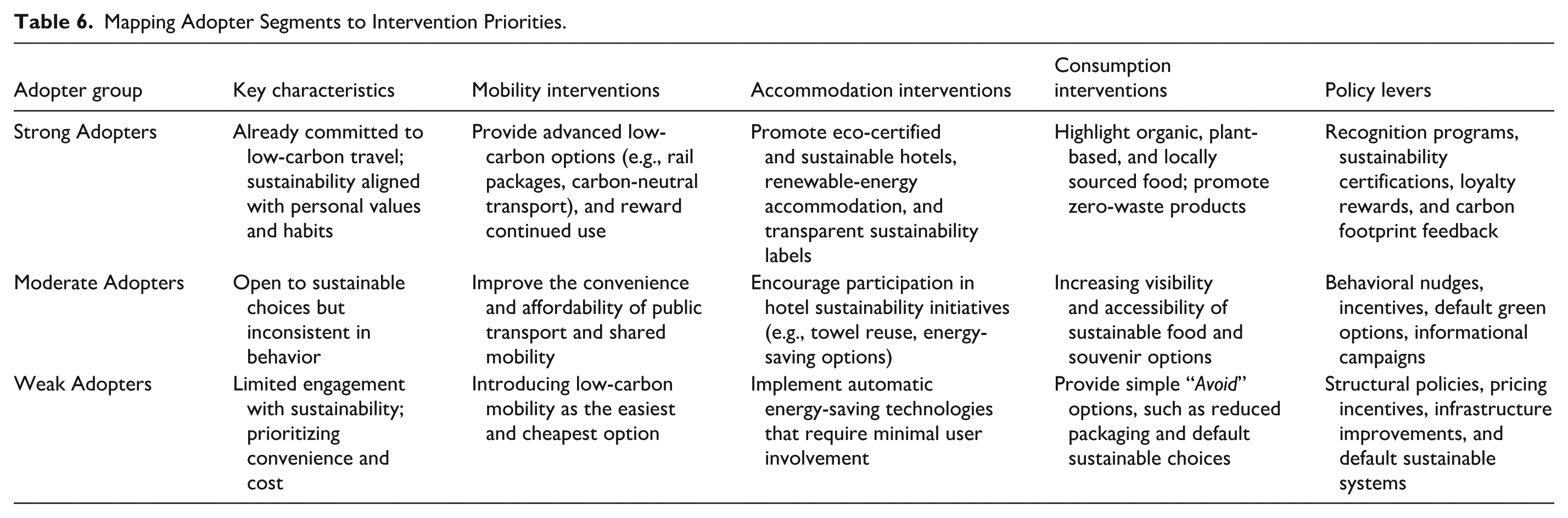
Secondly, the findings suggest that emphasizing the positive outcomes of sustainable initiatives is more effective than highlighting their negative consequences. Accordingly, communication campaigns should concentrate on benefits such as enhanced comfort, cost efficiency, and improved experience. Third, the gender-related patterns in adoption suggest that tailored interventions may be necessary, as women are more likely to be interested in participating in low-carbon practices. In contrast, men remain underrepresented among adopters who demonstrate significant engagement. Fourth, the stronger preference for Shift choices in travel mobility underscores the need to enhance the availability and appeal of public transportation and other low-carbon mobility options, rather than relying solely on strategies that encourage travelers to reduce trips. Fifth, high Avoid choices in sustainable consumption highlight the importance of accessible low-carbon food and souvenirs, reinforcing decisions travelers see as easy to adopt. Sixth, the dominance of Improve choices in the accommodation suggests that hotels and lodging providers should prioritize visible, and easy-to-implement sustainability practices, such as energy-efficient technologies, recycling systems, and resource-saving measures. Finally, the significant impact of habitual behaviors and climate-change-related experiences underscores the need to strengthen sustainable routines through initiatives such as loyalty programs, feedback mechanisms, and experiential learning. These strategies aim to connect individuals’ personal climate experiences with practices that promote low-carbon travel. To strengthen the practical value of these findings, the adopter segmentation can be translated into a set of targeted intervention priorities across tourism domains. Table 6 summarizes how different policy levers may be applied to each adopter group.
Mapping Adopter Segments to Intervention Priorities.
There are limitations to the study; first, the empirical sample consisted of university students within a single higher education context. Although this cohort is theoretically relevant for examining pro-environmental decisions during early adulthood, the relatively homogeneous age structure and educational setting limit the generalizability of the findings beyond similar university-based populations. Future research should test the Avoid–Shift–Improve framework across more heterogeneous age groups, educational backgrounds, and socio-demographic contexts. Second, the study focused on a single national context, Finland, which may limit cross-cultural transferability. Future studies could enhance external validity by applying the Avoid–Shift–Improve framework in different geographical and institutional contexts. Third, data collection relied on an online self-report survey, which may introduce social desirability bias and limit the capacity to capture actual behavior. Future research could incorporate behavioral tracking methods or experimental designs to reduce this limitation. The use of single-item indicators for selected psychological constructs does not allow estimation of internal consistency and may limit the assessment of measurement reliability. However, the constructs were narrowly specified, concrete, and operationalized in line with prior methodological, climate-related, and tourism research supporting the context-sensitive use of single-item measures in applied survey settings. Future research may employ multi-item measures or directly compare single- and multi-item operationalizations to further evaluate measurement robustness. Finally, individual differences were not examined in depth. For example, prior research suggests that gender differences may influence emotional expression and behavioral responses (Kashdan et al., 2009). Future studies may extend these findings by incorporating more fine-grained psychological and personality-related variables.
Footnotes
Appendix 1
Acknowledgements
We would like to express our sincere gratitude to Professor Eeva-Kaisa Prokkola and Dr. Kaarina Tervo-Kankare for their generous support throughout this research, particularly for their assistance in translating the questionnaire from English into Finnish and for their insightful feedback throughout the research process. We also extend our appreciation to Professor Teemu Makkonen and Dr. Joanna Pearce for their careful evaluation, constructive feedback, and valuable suggestions, which significantly improved the quality of this work. Finally, we would like to thank the editor and reviewers of the Journal of Travel Research for their thoughtful comments and constructive guidance throughout the review process.

Author Contributions
Funding
The authors received no financial support for the research, authorship, and/or publication of this article.
Declaration of Conflicting Interests
The authors declared no potential conflicts of interest with respect to the research, authorship, and/or publication of this article.