






Abstract
This study examines how health and sustainability principles shape tourists’ everyday lifestyles and vacation choices across three destinations. Cluster analysis identifies a substantial consumer segment inclined toward healthy and sustainable lifestyles. The findings suggest that sustainable consumption has evolved into a broader lifestyle that links environmental concerns with community engagement, social justice, personal growth, and well-being. Results from a discrete choice experiment show that this segment does not place a significantly higher premium on vacation attributes related to health and sustainability than other segments do when choosing a vacation, suggesting that these features have become a baseline expectation rather than a distinguishing factor. Results further indicate that destinations recognized for their established sustainability practices are more positively evaluated by this lifestyle-inclined group. Key implications include promoting sustainability as an integrated strategy to enhance quality of life and encouraging destinations and tourism providers to incorporate health and sustainability into experience design.
Keywords
Introduction
Consumer psychology has extensively examined the factors that motivate individuals to purchase environmentally friendly products and engage in various forms of green consumerism (Sachdeva et al., 2015). Green consumer behaviors are becoming increasingly important for raising environmental awareness and lowering per capita greenhouse gas emissions as global temperatures rise and natural resources dwindle (Trudel, 2019). Environmental behavior is commonly defined by its effects, namely the extent to which decisions are made to reduce harm or to benefit the environment (Stern, 2000). Green consumerism and sustainable consumption are often considered interchangeable. However, another perspective is that sustainable consumption represents a more advanced stage of green behavior: while green consumerism promotes individual responsibility through ethical or eco-friendly purchases within the current market system, sustainable consumption aims for a deeper transformation in consumption habits, addressing structural and ecological limits to growth (Akenji, 2014): green consumerism modifies behaviors within the existing system, whereas sustainable consumption seeks to reshape those systems.
Sustainability-related considerations are increasingly shaping consumer choices (McKinsey & Company, 2023). In this context, lifestyles oriented toward health and sustainability represent a more advanced, holistic expression of sustainable consumption, integrating healthy living with sustainable consumption practices. It is grounded in a strong framework of principles that significantly influence individual behavior and is characterized by adherence to core values that integrate social and ecological ethics and morality with healthy living habits. Research has shown that these consumers are highly focused on personal, emotional, and mental well-being, as well as environmental concerns (Sung & Woo, 2019). This new market segment, initially labeled as “Cultural Creatives” (Ray & Anderson, 1998), is now known as the “Lifestyles of Health and Sustainability” market segment.
In contrast to consumers who are solely environmentally conscious, these consumers embrace a broader set of values that reflect their commitment to sustainable living across multiple dimensions, including spiritual growth, personal development, and social justice (Pícha & Navrátil, 2019). These individuals integrate these principles into their daily routines through activities and products that nurture mind, body, and soul, positioning themselves as more than just environmentally conscious consumers: they embody a holistic lifestyle that integrates sustainability, personal and societal well-being, ethical values, spiritual development, and physical wellness (Choi & Feinberg, 2018). According to the Natural Marketing Institute, this segment constituted 19% of the total US population in 2007 (Natural Marketing Institute, 2008). More recent research suggests that this segment comprises approximately one-third of American adults (Cognizant, 2022). Some market studies show that an increasing number of consumers are changing their needs and behaviors and adopting this lifestyle (Headwaters MB, 2016; Mobium Group, 2017). The existence and precise size of the segment remain uncertain, as these estimates vary significantly and are not based on scientifically rigorous or transparent methods.
Although health and sustainability issues have gained popularity, little research has focused on this market segment. The lifestyle of health and sustainability, often referred to as LOHAS, has not achieved widespread recognition either as a label or, more importantly, as a distinct consumer group. Therefore, the primary goal of this study is to determine whether a distinct, comparable segment of consumers oriented toward health and sustainability can be identified across various destinations. To do this, a cluster analysis is employed to identify and profile consumer groups based on their behavioral patterns and health and sustainability priorities. This paper contributes to the existing literature on green consumerism and sustainable consumption by addressing the first research question.
Despite the increasing importance of this market segment, research within the tourism industry remains limited. A discrete choice experiment is employed to assess the significance of health and sustainability attributes in a hypothetical vacation at the same destination. The discrete choice model estimates reveal whether there is a general interest in health- and sustainability-related features, using a multi-destination approach. In addressing the following research question, the study aims to contribute to the existing literature on sustainability in hospitality and destination management.
Additionally, the paper addresses two research questions concerning distinct moments in the vacation cycle: the pre-travel stage, when individuals select their next vacation, and the post-travel stage, when they evaluate the current vacation.
Extensive research examines inconsistencies in sustainable behaviors at home and while traveling. Dolnicar and Grün (2009) found that most tourists behave less sustainably during their vacations than at home. Several studies have identified a behavioral gap in hedonic contexts, such as tourism (Barr et al., 2011; Stanford, 2008). However, the extent to which this disconnection matters not only to responsible consumers but also to consumers deeply committed to health and sustainability values remains underexplored. The analysis of individual model estimates further reveals whether involvement with a health- and sustainability-oriented lifestyle influences tourists’ preferences for health- and sustainability-related vacation attributes. The novelty of this work lies in its exploration of these discrepancies within a new market segment and a lifestyle grounded in strong values and beliefs. A one-way ANOVA of DCE parameters was conducted across clusters of health- and sustainability-oriented consumer profiles. The following is the third research question.
The final step of the analysis, concerning the post-travel stage, helps determine whether tourists’ health- and sustainability-related values influence their perceptions of destination competitiveness, thereby offering practical insights for destination managers and policymakers. A one-way ANOVA is used to test for statistically significant differences in destination attribute evaluations across clusters of health- and sustainability-oriented consumer profiles in the three destinations. Consequently, this leads to the following research question.
A key contribution of this study is that it is tested across multiple destination sites. Three destinations were selected for their diverse geographic, institutional, and socioeconomic characteristics: Riva del Garda, a lake destination in Northern Italy; Brunico/Bruneck, a mountain destination in the Italian Alps located in the autonomous province of South Tyrol, Italy (governed by a unique statute that grants substantial legislative and administrative autonomy); and Hua Hin, a coastal destination in Thailand, a developing economy, with different regulatory frameworks and socioeconomic dynamics. This comparative analysis enhances our understanding of how consumers behave and perceive sustainability in different tourism settings, thereby increasing the relevance of the findings.
The study’s research framework is shown in Figure 1.
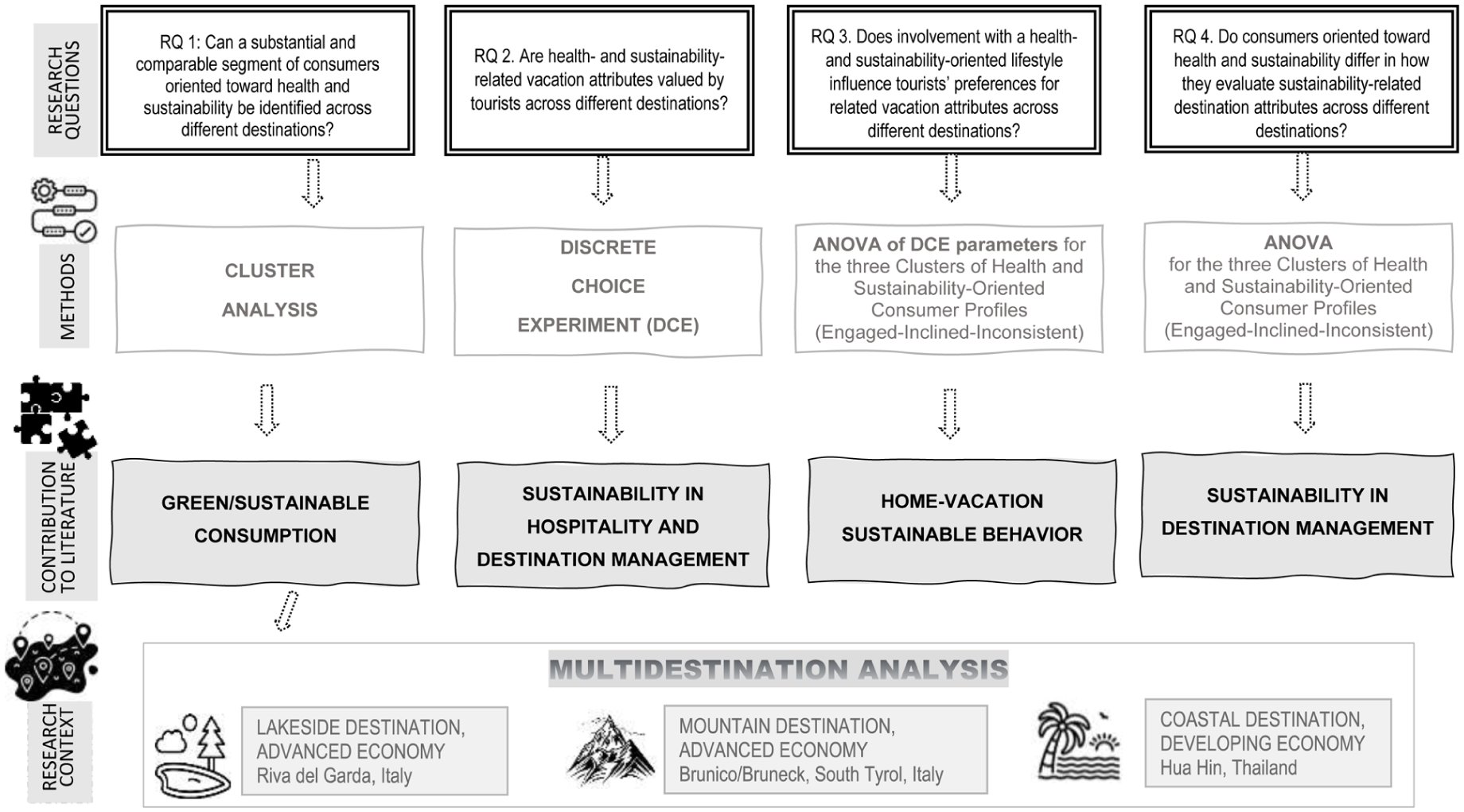
Research framework.
The cluster analysis shows that a significant segment of consumers (about one-third) inclined toward a healthy and sustainable lifestyle emerged across the destinations. DCE results show a generally high interest in vacation attributes related to health and sustainability. However, compared to other groups, this segment does not assign a higher premium to these attributes when choosing a vacation, suggesting that sustainability has shifted from a differentiating factor to a baseline expectation shared across tourist segments.
This paper is organized as follows. Section “Theoretical Framework” presents the theoretical framework. Section “Research Design” explains the empirical analysis and methodology. Section “Results” outlines the main results. Section “Discussion” discusses the findings and their theoretical and practical implications.
Theoretical Framework
Health- and Sustainability-Oriented Behaviors and Values
Evidence suggests that personal well-being cannot be separated from external factors, including social relationships, lifestyle, and environmental and sociocultural conditions (Brown & Kasser, 2005; Larsen, 2022). The terms health, wellness, and well-being are often used interchangeably because they are, to some degree, interconnected. Wellness and well-being are frequently used as synonyms; in Latin languages, a single word captures both concepts (Portuguese: bem-estar, Spanish: bienestar, Italian: benessere). The relationship among well-being, sustainability, and behavioral mindfulness has attracted scholarly attention (Ericson et al., 2014). Jacob et al. (2008) identified a notable link between sustainable behavior, spiritual/meditation experiences, and subjective well-being, indicating that there is a connection between personal and planetary health; based on their findings, the authors argued that for some consumers, what benefits personal health also benefits the health of the world.
A recent lifestyle based on this principle focuses on health and sustainability. Although a few scales have been created to assess attitudes toward health and sustainability-oriented lifestyles (Choi & Feinberg, 2018; Lendvai et al., 2022; Natural Marketing Institute, 2008; Pícha & Navrátil, 2019; Sung & Woo, 2019), none has become a widely accepted standard.
A key trait of these consumers is their preference for recyclable products and materials from renewable resources, as well as for renewable energy (Natural Marketing Institute, 2008). The rising interest in sustainability and growing concerns about environmental degradation have significantly boosted the popularity of eco-friendly and eco-certified products and services (Gupta et al., 2019). These consumers also show a strong preference for eco-certified or eco-labeled products (Choi & Feinberg, 2018). They choose environmentally friendly transportation whenever possible and are deeply committed to reducing the environmental impact of their purchases (Natural Marketing Institute, 2008). They emphasize the importance of recyclability and biodegradability of materials (Choi & Feinberg, 2018). Additionally, they prefer to purchase fair-trade goods that ensure that producers are paid above standard rates, that no children are exploited in manufacturing, and that there is no gender-based pay discrimination (Pícha & Navrátil, 2019).
They tend to purchase a variety of natural and organic products that support physical well-being, including food and personal care items (Kim et al., 2013). Organic and natural foods are viewed as healthier, and health is a significant reason for buying organic (Jose & Kuriakose, 2021). Other motivations include environmental concerns and distrust of the traditional food industry (Irene Goetzke & Spiller, 2014). Those prioritizing healthy and sustainable lifestyles often prefer locally sourced or organic foods because of their environmentally friendly farming practices and potential health benefits (Wan et al., 2015). They are eager to try new eco-friendly products and brands driven by environmental concerns. As argued by Pícha and Navrátil (2019), they can be considered “early adopters,” as they prefer to be among the first to try innovative eco-friendly products and sustainable brands. They show a strong preference for purchasing goods from businesses that share their social ideals. They value companies that identify as sustainable, fair-trade, ethical, and responsible, and they also value being the first to review new products. They support companies that prioritize workplace equity, human rights, and the welfare of children, women, marginalized groups, and vulnerable minorities (Urh, 2015). Another key feature is that they not only avoid unethical products from companies they see as socially irresponsible, but also boycott those companies and their products (Natural Marketing Institute, 2008).
Regular participation in physical exercise, including functional foods or dietary supplements as part of a balanced diet, is common among people who live a health-conscious, sustainable lifestyle (Choi & Feinberg, 2018). Those who follow such lifestyles often incorporate spiritual practices and products into their daily routines, such as yoga and meditation, to promote personal growth and development (Kettemann & Marko, 2012). Meditation is popular among these individuals as a way to calm the mind, relax the body, reduce stress, and support spiritual growth (Matko & Sedlmeier, 2019). Nearly one in five Americans practices meditation, and the number of practitioners has more than tripled in recent years (US Department of Health and Human Services, 2018). Ethical values also influence these consumers’ behaviors. They often participate in charitable activities (Szakály et al., 2017). They are particularly concerned with the well-being of the planet and society, focusing on issues such as poverty reduction and social justice (Natural Marketing Institute, 2008). This type of consumer shows increased social and environmental awareness (Pícha & Navrátil, 2019) and has a strong interest in the social impacts of their purchasing decisions (Sung & Woo, 2019).
Based on the literature reviewed, 14 attributes related to health- and sustainability-oriented values and behaviors practiced in everyday life were selected for the empirical analysis in this study.
In the tourism domain, the absence of a validated measurement scale for this lifestyle stems from the lack of empirical studies on this market segment. When translated into tourism, the lifestyle of health and sustainability manifests in preferences for eco-friendly, locally owned accommodations, reflecting tourists’ growing interest in environmentally conscious (Warren et al., 2018) and culturally authentic experiences (Ye et al., 2019). The quality of local food and the availability of organic and natural food capture the intersection between sustainability awareness and health-conscious consumption (Salehi et al., 2025; Teixeira & Rodrigues, 2021). The interest in eco-friendly local transport reflects this consumer segment’s commitment to reducing its environmental impact, particularly given tourism’s significant environmental footprint, and strategies like free public transit help reduce emissions (Gronau, 2017). Wellness is an essential component of this market segment, and during vacations, access to meditation and wellness centers is crucial for maintaining physical and mental health (Y. Li et al., 2023; Nguyen, 2025). Finally, this lifestyle is rooted in a strong interest in preserving the natural environment and cultural heritage.
Collectively, these attributes capture the core expression of health- and sustainability-oriented lifestyles in tourism and are incorporated into a discrete choice model to examine how health, sustainability, and well-being are integrated into travel decisions.
An example of a choice card is displayed in Figure 2.
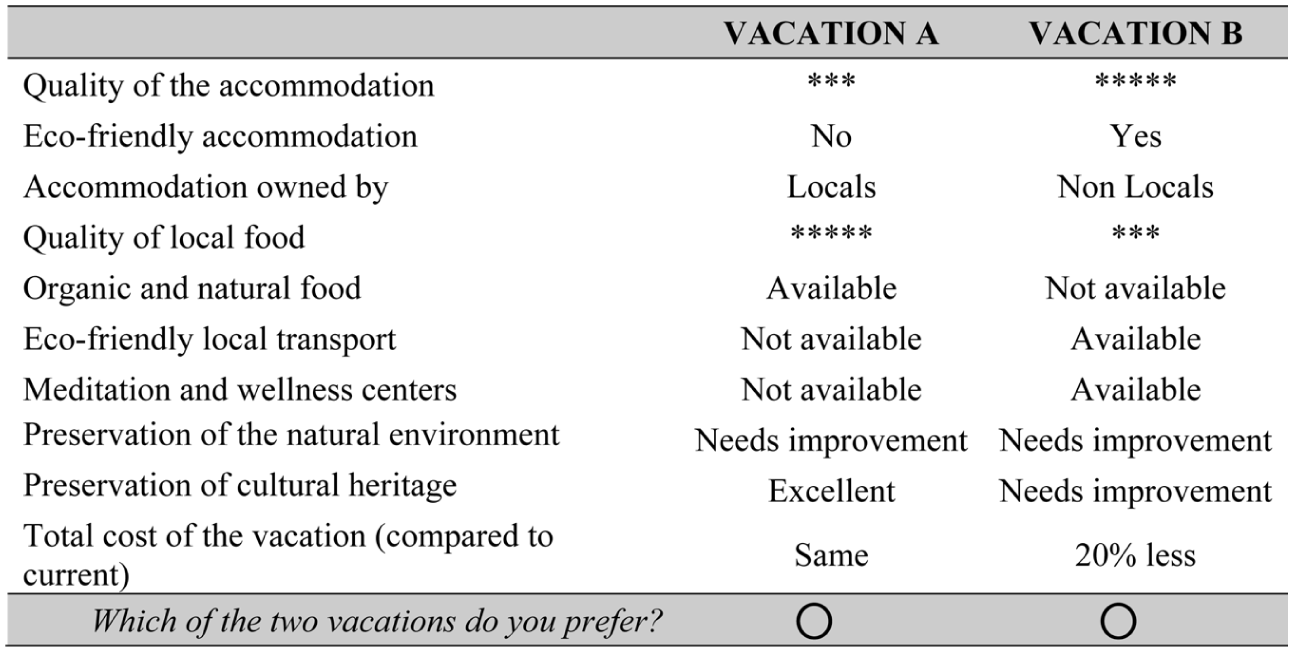
Example of a choice card.
The Behavior Gap in Sustainable Tourism
Despite widespread pro-environmental behavior in daily life, tourists often discontinue sustainable practices while traveling, creating a so-called behavioral gap. Several behavioral shifts have been observed during vacations. Dolnicar and Grün (2009) found that people tend to exhibit lower engagement in pro-environmental behaviors while on vacation. The study further revealed that both pro-environmental actions and moral adherence to such behaviors are comparatively lower during holidays than in typical residential settings. Other studies have shown that during vacations, individuals usually consume food with a greater negative environmental impact than in their regular dietary habits (Gössling et al., 2011). According to Coles et al. (2016), tourists often refrain from recycling while traveling. People also use more water while on vacation than at home (Gössling et al., 2012). According to de Bruijn et al. (2014), the carbon footprint of Dutch tourists is twice as high when they travel.
The main theoretical approaches for understanding environmental behavior in tourism include the Theory of Planned Behavior (TPB), Norm-Activation Theory (NAT), and the Value-Belief-Norm (VBN) Theory (J. Li et al., 2024). TPB posits that behavior results from attitudes, subjective norms, and perceived behavioral control (Ajzen, 1991), whereas NAT (Schwartz, 1977) posits that awareness of consequences and responsibility attribution activate personal norms, which then drive pro-environmental actions. VBN (Stern, 2000) builds on NAT by suggesting that biospheric values and beliefs trigger personal norms that motivate pro-environmental behavior. However, despite widespread use, these three frameworks have limitations in explaining tourism behavior. While they can predict intentions fairly well, turning intentions and values into actual actions often falls short in tourism settings. Juvan and Dolnicar (2014) observed that even environmental activists tend to show less sustainable behavior during vacations, despite holding strong values and positive attitudes, highlighting what tourism research increasingly calls the “attitude-behavior gap.”
Understanding why traditional theories yield inconsistent results in tourism contexts requires examining alternative theoretical mechanisms that account for the systematic breakdown of attitude-behavior consistency. Cognitive Dissonance (Festinger, 1957) has been used by Juvan and Dolnicar (2014) to explain tourists’ experiences when their environmental values conflict with their vacation behaviors. It occurs when individuals hold contradictory beliefs or when their actions conflict with their values, creating psychological discomfort. To resolve this psychological tension, tourists employ various dissonance-reduction strategies: they minimize personal responsibility, deny the severity of the consequences, or contextualize their values. However, while cognitive dissonance theory explains the psychological processes tourists experience when faced with behavioral inconsistencies, it does not address the underlying reasons for these gaps. Understanding why these behavioral gaps emerge requires examining the deeper mechanisms that create the conditions for dissonance.
Moral Licensing Theory explains a key mechanism behind behavioral inconsistency. It occurs when past good behavior creates a psychological “license” for subsequent questionable actions (Merritt et al., 2010). In tourism contexts, this appears as tourists justifying unsustainable vacation behaviors based on their sustainable habits at home (“I recycle at home so that I can indulge on holiday”). Habit Discontinuity Theory (Verplanken & Wood, 2006) offers another perspective on this issue. Sustainable behaviors at home often become habitual, driven by stable contextual cues that automatically trigger appropriate responses. Tourism settings present significant environmental discontinuities, disrupting these cues that typically support sustainable behaviors. Lastly, the hedonic aspect of tourism experiences can be understood through the Push-Pull Motivation Theory (Crompton, 1979; Dann, 1977). This framework distinguishes between internal “push” factors motivating travel (escape, relaxation, novelty-seeking) and external “pull” factors that attract tourists to specific destinations. Push motives primarily influence overall travel intentions, while pull motives guide destination choices. In sustainable tourism, this hierarchy suggests that hedonic push motives—such as escape, relaxation, and novelty—often take precedence over pull attributes, including a destination’s sustainability profile. Although sustainability can enhance a destination’s appeal, it usually does not override the more fundamental hedonic motives that drive travel decisions.
These theoretical perspectives collectively explain behavioral gaps through various reinforcing mechanisms that systematically undermine the conditions supporting sustainable behavior in tourism contexts.
Research Design
The Study Context
The research was conducted in three destinations: Riva del Garda, Italy; Brunico/Bruneck, South Tyrol, Italy; and Hua Hin, Thailand. Riva del Garda is located in the province of Trento, in the northwestern part of Lake Garda, and has a population of 17,190. Riva del Garda is a highly popular tourist destination on Lake Garda, ranking 32nd among Italy’s most visited destinations (Istat, 2018). Although Lake Garda is sometimes underestimated within the broader Italian tourism panorama, when all its destinations are considered together, it ranks as the second most visited area in the country after Rome (Goffi et al., 2020). Lonely Planet included Lake Garda among Europe’s top 12 lakes for summer vacations (Lonely Planet, 2025). Its appeal lies in a rich mix of cultural heritage, scenic landscapes, and diverse activities, from beach holidays to outdoor and water sports. These unique features make it a hard-to-substitute destination, especially for German tourists, who account for almost half of overnight stays and are predominantly repeat visitors.
Brunico/Bruneck is situated in the autonomous province of South Tyrol, with a population of 16,357, predominantly speaking German. It is the principal town of the Kronplatz holiday region in the Dolomites, known for winter alpine and ski tourism and summer hiking. Tourism is a significant driver of South Tyrol’s economy, accounting for 8.2% of the local gross domestic product (Eurac Research, 2020). South Tyrol ranks first in Italy for green and active holidays, thanks to its vast, unspoiled mountain territory (Italian Touring Club, 2019). One-quarter of the South Tyrol area is currently protected (Eurac Research, 2020). One-third of the hotels in Italy with the “European Ecolabel for Tourist Accommodation Services and Campsite Services” are located in the Trentino-South Tyrol region (Avvenia, 2018).
Hua Hin, a coastal town with a population of 63,000, located approximately 200 km southwest of Bangkok, is a rapidly growing tourism destination in Thailand. Promoted by the Government as the “Thai Riviera,” Hua Hin offers a distinctive blend of city life and seaside charm, featuring attractions such as long, white-sand beaches, a rich gastronomic tradition, cultural sites, and affordable accommodations. Historically, a royal summer retreat, it has been perceived as a safe and pleasant destination. Its growing popularity, especially among retirees, is linked to its warm climate, high quality of life, and low cost of living. However, rapid growth has led to rising urbanization, traffic congestion, and overcrowding during peak times, which place pressure on local resources and the overall tourist experience (Goffi et al., 2021).
Survey Instrument
A survey was designed and administered to European tourists visiting Brunico/Bruneck, Riva del Garda, and Hua Hin. Trained interviewers approached tourists at primary tourist spots, employing a convenience sampling method. The research in the three destinations was conducted during the summer season (June-August in Brunico/Bruneck, March-April in Hua Hin) to minimize any potential differences in sample composition. Visitors were individually contacted, and if their holiday period was nearing its conclusion, they were given a questionnaire.
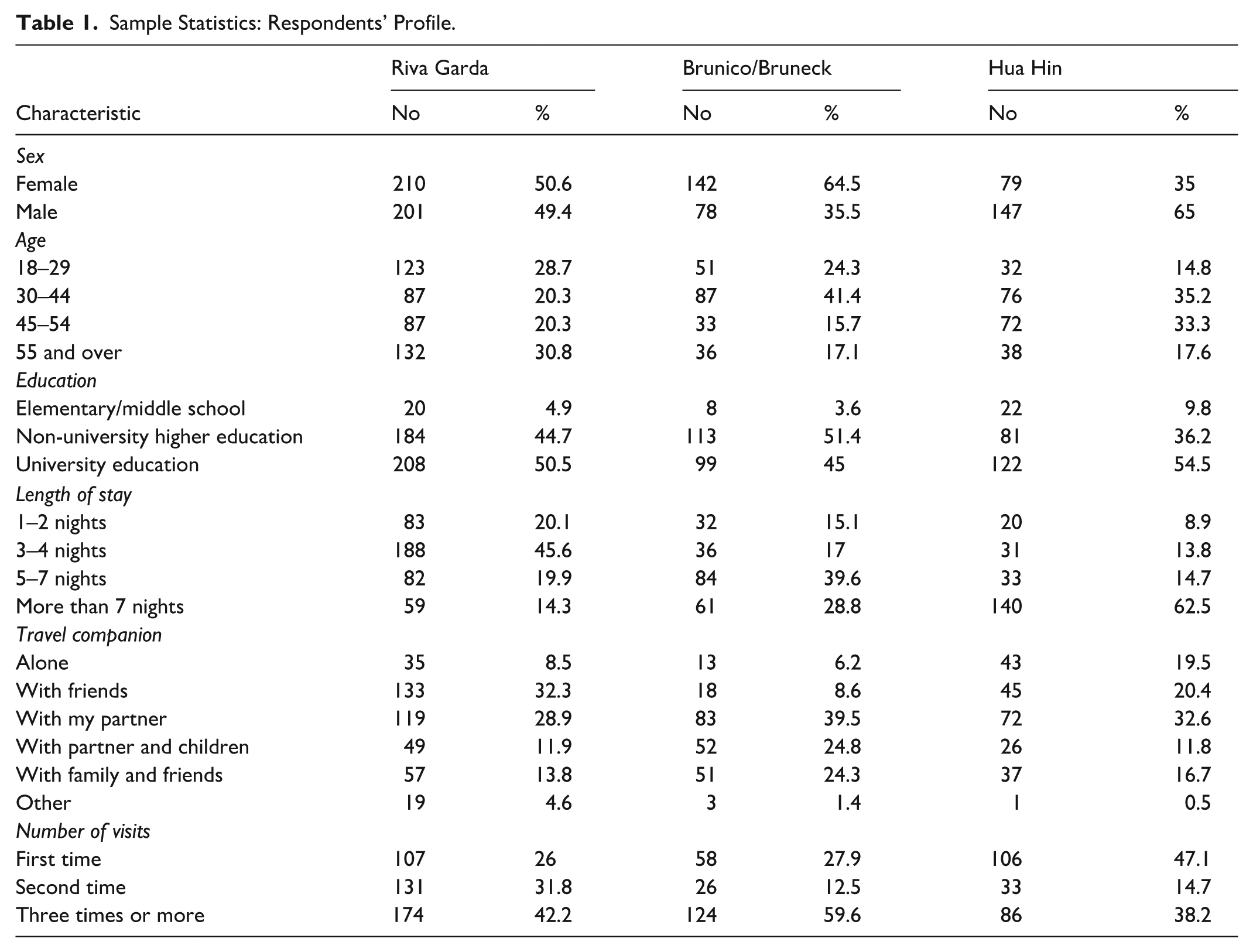
A total of 412 tourists answered the survey in Riva del Garda, 213 in Brunico/Bruneck, and 226 in Hua Hin. Table 1 shows that the gender distribution is balanced in Riva del Garda, predominantly female in Brunico/Bruneck (64.5%), and male in Hua Hin (65%). Respondents in Hua Hin are predominantly 45 or older (50.9%), whereas in Brunico/Bruneck the population is substantially younger (41.4%; 30–44 years old). Riva del Garda has a more even distribution across age categories. The sample is almost evenly distributed across education levels (university vs. non-university degree) in the three destinations. Brunico/Bruneck has the highest repeat-visitor rate, with 59.6% of visitors returning three or more times, followed by Riva del Garda at 42.2%. In contrast, 47.1% of the respondents in Hua Hin are first-timers (26%–27% in the other two destinations). Hua Hin stands out with a significantly higher proportion of extended stays: 62.5% of respondents stayed more than seven nights, compared to 28.8% in Brunico/Bruneck and just 14.3% in Riva del Garda. It also has the highest share of solo travelers (19.5%), whereas this group accounts for only around 7% in the other two destinations. In contrast, Riva del Garda is characterized by shorter stays, with the majority (45.6%) staying three to four nights. Brunico/Bruneck, meanwhile, attracts more couples (39.5%) and families (24.8%).
Sample Statistics: Respondents’ Profile.
The questionnaire consisted of two parts. In the first part, participants were asked to evaluate how well they incorporate healthy and sustainability principles into their everyday lives using a 5-point Likert scale (e.g., “In your daily life, how focused are you on . . .”). They were also asked to rate key attributes related to the destination, including natural and cultural attractions, as well as the quality of food and accommodations. Additionally, they were asked to evaluate attributes reflecting the three pillars of sustainability: environmental and cultural preservation, and the availability and quality of local products. The final version of the questionnaire was administered in a pilot survey among tourists to confirm its clarity and to gather preliminary information on their preferences.
The second part of the questionnaire included a discrete choice experiment aimed at eliciting tourist preferences for future trips to the same place (“Imagine coming back to this region—staying in an accommodation of the same category—which one would you choose between the vacations A and B with the following hypothetical characteristics?”). The discrete choice model incorporates several attributes describing a hypothetical vacation at the same destination that tourists were asked to evaluate. The study encompasses 10 vacation attributes, including one monetary (total cost) and one standard attribute (accommodation quality), while the remaining focus on health and sustainability. Unlike conventional rating or ranking methods, discrete choice experiments require respondents to trade off multiple attributes simultaneously. This type of experiment allows for more effective modeling of real-world decision-making than direct preference surveys. This approach aligns more closely with individuals’ actual decision-making processes, especially in the tourism industry, where decisions often involve evaluating combinations of factors, such as price, accommodation, food, and sustainability attributes.
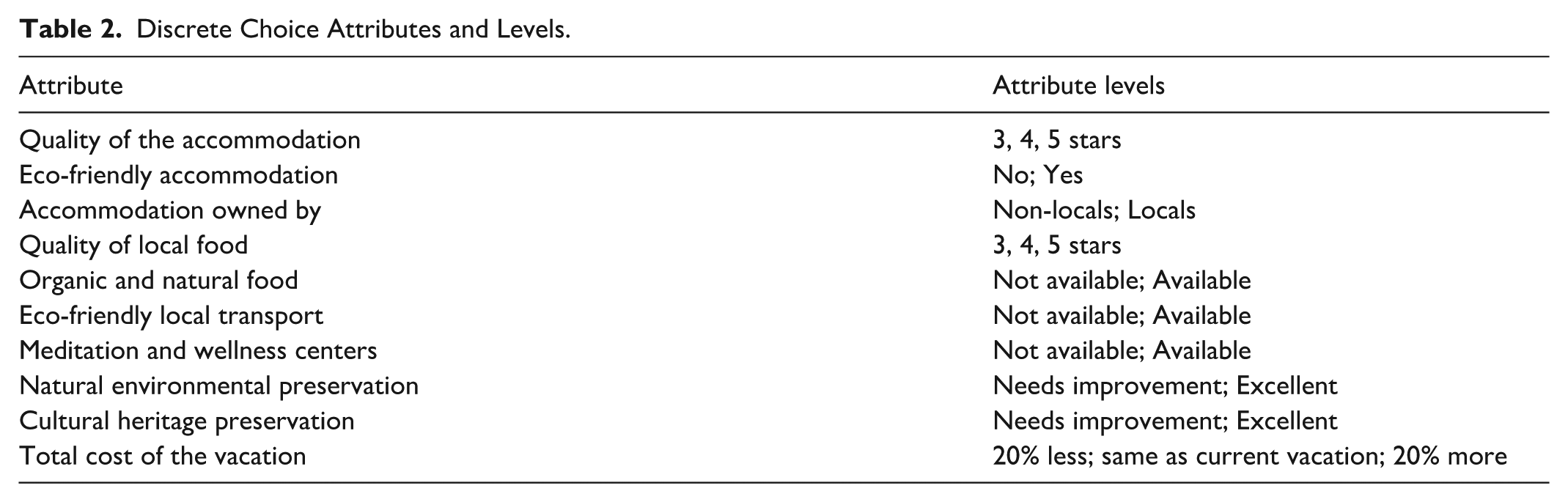
Consistent with the conceptual background outlined in the previous section, hypothetical vacations were created by combining attributes related to health and sustainable features of the destination (Table 2). A fractional factorial design was initially used to generate 12 choice sets, which were employed in the pilot survey. A D-efficient experimental design was then developed using preliminary model results estimated from the stated preference data collected during the pilot survey. Figure 1 illustrates an example of a choice task. To minimize respondent fatigue, the 12 choice sets were divided into two blocks of six choice tasks each and administered randomly to respondents.
Discrete Choice Attributes and Levels.
Methodology
To address the first RQ, cluster analysis was conducted to classify respondents based on their daily behaviors related to healthy lifestyles and sustainability. Fourteen items reflecting health- and sustainability-focused lifestyles were used as input variables, derived from previous studies (Choi & Feinberg, 2018; Lendvai et al., 2022; Natural Marketing Institute, 2008; Pícha & Navrátil, 2019; Sung & Woo, 2019). A two-step clustering method was applied. First, a hierarchical Ward’s method was used to determine the optimal number of clusters by examining the agglomeration schedule and emphasizing interpretability. Three clusters were selected for each destination based on the distances between them. Next, a non-hierarchical k-means technique was used to assign respondents to the final clusters. Differences in mean values were assessed using one-way ANOVA. When statistical significance was detected (p < .10), Tukey’s post hoc test was used to identify which groups differed significantly.
To answer the second RQ, a discrete choice experiment is conducted to assess respondents’ stated preferences for attributes related to health and sustainability in hypothetical holiday destinations. Following the random utility theory framework (McFadden, 1974), the stated preferences collected from respondents across the three different destinations are pooled and used to estimate a random parameter logit model. In particular, the utility of respondent n associated with the vacation option j in the choice task s is defined as follows:

Where the random component (εn) of the utility is assumed to follow an extreme value type-1 distribution, which leads to the logit model. The systematic utility (Vnjs) is specified as follows:
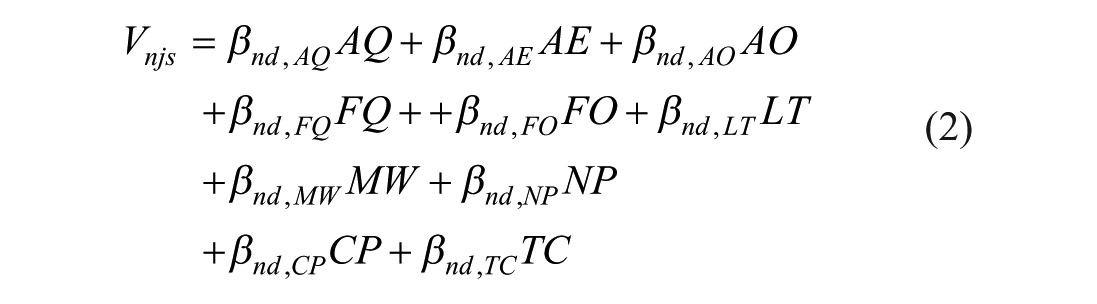
Where the coefficients βs express the marginal utility associated with respondent n and destination d for the attributes characterizing the hypothetical vacation, namely accommodation quality (AQ), eco-friendly nature of the accommodation (AE), accommodation owned by a local (AL), food quality (FQ), availability of organic and natural food and beverages at the destination (FO), availability of eco-friendly local transport (LT), availability of meditation and wellness centers at the destination (MW), rating of natural (NP) and cultural (CP) preservation, and total cost of the vacation (TC). The statistical significance of the differences between destination-specific (d) mean estimates is tested as follows:
To account for preference heterogeneity, the random parameter logit model assumes a continuous density for any given random coefficient βndk, typically a normal (N) distribution (McFadden & Train, 2000), so that βndk ~ N(βdk, σdk). Hence, the specification of a random coefficient reveals the presence of random preference heterogeneity (σdk) around the mean (βdk).
Given the specification of random parameters and taking into consideration that each respondent faced multiple-choice tasks (s = 6), the choice probability associated with alternative i is defined as follows:

The integral in Equation 3 has no closed form and is approximated through simulations. Hence, the model coefficients are estimated through the simulated maximum-likelihood method by using 1,000 Halton draws (Train, 2009).
The specification of a random-parameter logit model allowed estimation of individual-specific parameters by deriving individual choice probabilities and applying Bayes’ rule (Hensher & Greene, 2003). To answer the third RQ, these individual-level utility coefficients were then compared across the three consumer groups identified through cluster analysis of respondents exhibiting daily behaviors reflecting sustainable and healthy lifestyles. To examine whether tourists who strongly embrace health and sustainability in their daily lives also prioritize these attributes when choosing vacations, the estimated individual parameters for each attribute were extracted from the random-parameter logit model and used as inputs for one-way ANOVA tests. The analysis compared the mean coefficients across the three clusters to assess statistically significant differences in attribute preferences.
To answer the fourth RQ, mean evaluations of destination attributes were compared across the three consumer clusters using one-way ANOVA tests to determine whether differences among the consumer groups were statistically significant. This step aimed to verify whether tourists with different levels of commitment to healthy and sustainable lifestyles evaluate destination attributes differently across destinations.
Results
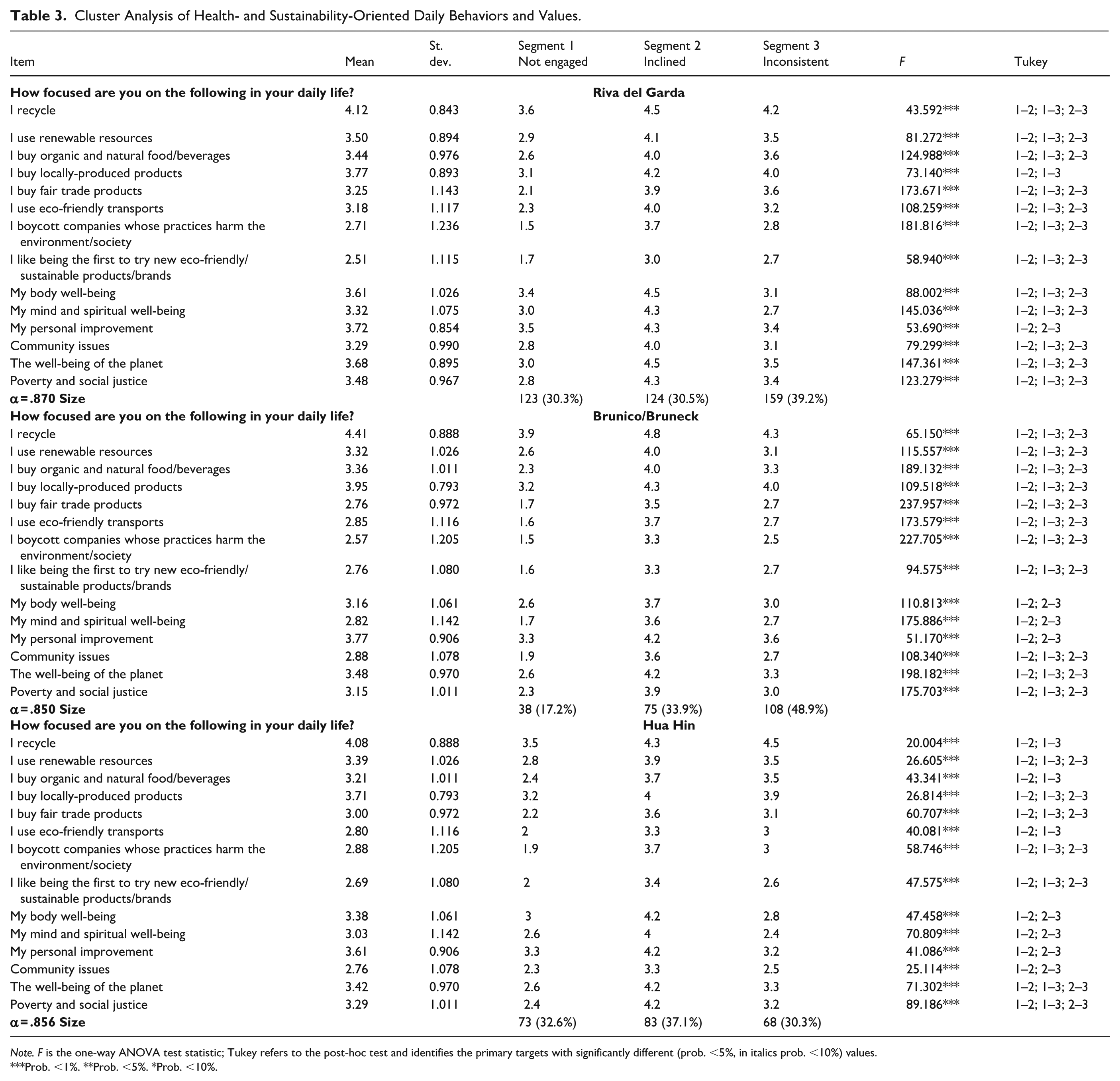
As displayed in the first column of Table 3, recycling ratings are particularly high across the three destinations (Riva del Garda: 4.12, Brunico/Bruneck: 4.41, Hua Hin: 4.08), followed by the purchasing of local products (3.7/4). Respondents also focus on their personal development, with an average score of approximately 3.7. “I boycott companies whose practices harm the environment/society” and “I like being the first to try new eco-friendly/sustainable products/brands” show the lowest scores in the three destinations (2.5/2.8), along with the use of eco-friendly transportation (2.8 in Brunico/Bruneck and Hua Hin, 3.2 in Riva del Garda). The other variables related to sustainable behavior, well-being, and ethical values generally receive slightly more than moderate engagement. Hua Hin exhibits more variability across nearly all items.
Cluster Analysis of Health- and Sustainability-Oriented Daily Behaviors and Values.
Note.F is the one-way ANOVA test statistic; Tukey refers to the post-hoc test and identifies the primary targets with significantly different (prob. <5%, in italics prob. <10%) values.
Prob. <1%. **Prob. <5%. *Prob. <10%.
To address RQ1, three separate cluster analyses were conducted in Hua Hin, Brunico/Bruneck, and Riva del Garda, identifying three consistent tourist segments across the destinations: non-aligned, inclined, and inconsistent. These clusters differed in their commitment to sustainable and health-related behaviors and ethical values. The Tukey post-hoc test indicated that the differences among the three clusters were statistically significant. To assess the internal consistency of the 14-item LOHAS scale used in the cluster analysis, Cronbach’s Alpha was computed separately for each destination. The resulting values—Riva del Garda (α = .870), Brunico/Bruneck (α = .850), and Hua Hin (α = .856)—all exceed the widely accepted threshold of .70 (Nunnally, 1978), confirming satisfactory reliability of the scale across all three contexts. Table 3 presents the ANOVA results for cluster validation.
This group represents 28% of the total sample (30.3% in Riva del Garda, 17.2% in Brunico/Bruneck, and 32.6% in Hua Hin). It exhibits the lowest scores in sustainable behaviors, well-being practices, and ethical values, with most scores below neutral across the three destinations. They lack a commitment to green consumerism and may engage in eco-friendly practices solely when convenient or required. Recycling appears to be the only sustainable practice in which respondents of this group are fully engaged. According to the “Recycling Rates by Country 2025” report (World Population Review, 2025), Europe is the global leader in recycling, with Germany and Austria at the forefront, recycling over 60% of municipal waste (European Environment Agency, 2024). It is essential to recognize that the sample comprises European tourists, and their behavior is likely influenced more by compliance with European regulations than by intrinsic motivation.
This cluster comprises about a third of the total sample (30.5% in Riva del Garda, 33.9% in Brunico/Bruneck, and 37.1% in Hua Hin). This group focuses on promoting sustainable behaviors, ethical consumption, and the pursuit of personal and planetary health. Their high scores on sustainability and well-being indicators suggest a general alignment with a lifestyle that prioritizes health and sustainability. This group reports higher engagement in environmentally conscious activities, including using renewable resources, recycling, purchasing organic and locally produced food, and buying locally produced products. Furthermore, it demonstrates a strong commitment to physical and mental well-being and to meaningful engagement with issues related to planetary well-being, poverty, and social justice.
This group comprises the largest proportion of respondents (39.2% in Riva del Garda, 48.9% in Brunico/Bruneck, and 30.3% in Hua Hin) and shows limited alignment with a health- and sustainability-focused lifestyle. While these individuals share some traits with the previous cluster, such as recycling and buying locally produced products, their commitment to sustainability is neither deep nor consistent. They report moderate engagement in certain behaviors, such as purchasing organic food and utilizing renewable resources, as well as some attention to personal well-being and environmental health. They often lack value-oriented actions, such as the early adoption of sustainable products, the use of sustainable transportation, boycotting companies that harm the environment, or robust involvement in spiritual, community, and social welfare initiatives. Their environmental activities appear to be shaped by external factors, such as legislation or societal norms, rather than internal motivation. Although they engage in some sustainable behaviors, their participation is moderate and selective. The term “inconsistent” indicates their ambivalence and incomplete assimilation of these values.
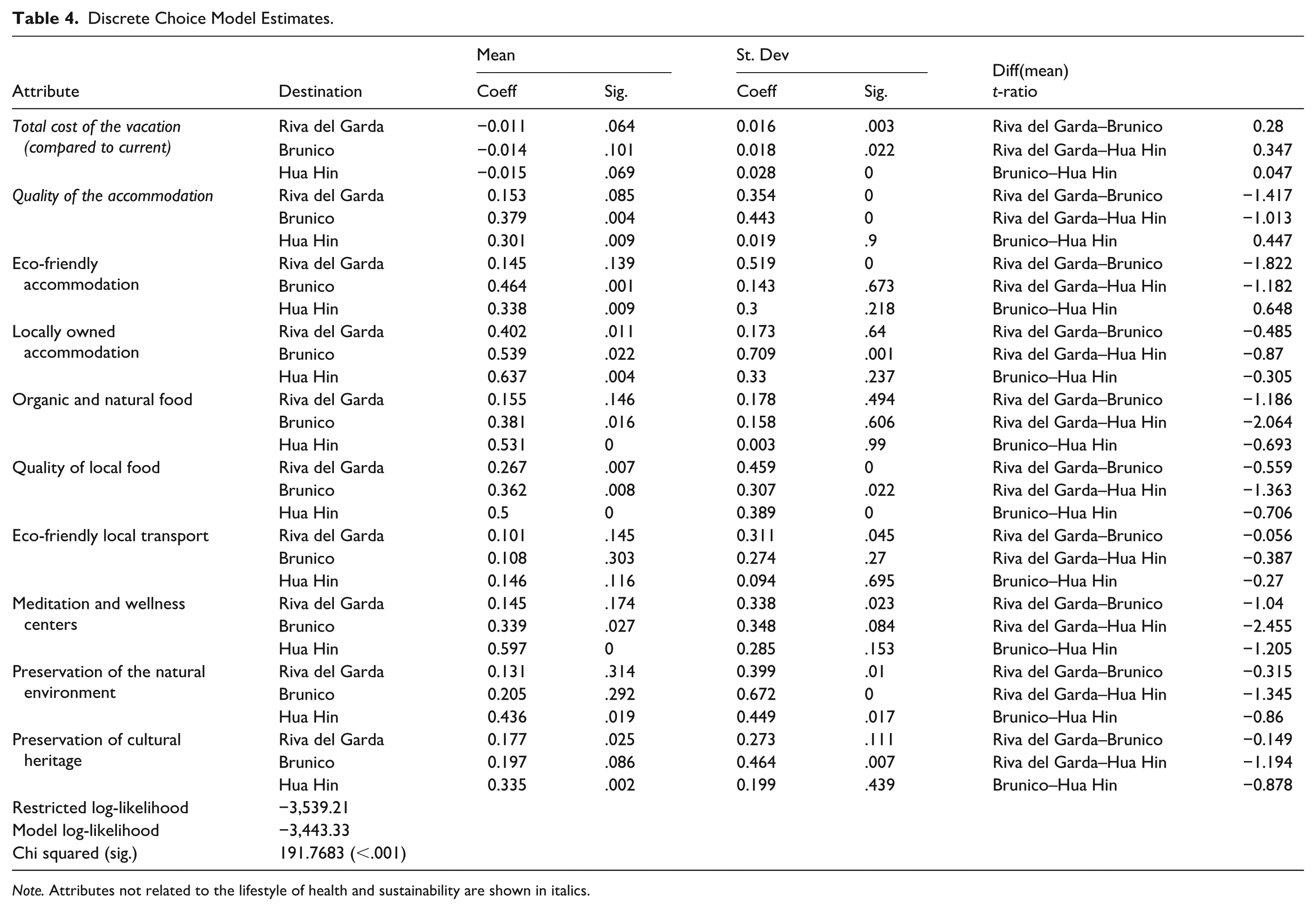
In response to RQ2, which asks whether the health and sustainability attributes of a vacation generally interest tourists across different destinations, a DCE was conducted. The results obtained from the discrete choice model estimation are displayed in Table 4. The model specifies random preference heterogeneity for each attribute.
Discrete Choice Model Estimates.
Note. Attributes not related to the lifestyle of health and sustainability are shown in italics.
The pooled random-parameter logit model reveals a broadly consistent pattern of preferences across the three destinations, with only limited evidence of statistically significant cross-destination variation. The interaction tests indicate that the only statistically significant difference concerns the attribute “organic and natural food” between Riva del Garda and Hua Hin (t-ratio = −2.064), while all remaining cross-destination comparisons register t-ratios below the conventional threshold for statistical significance. These findings suggest that preferences for health- and sustainability-related vacation attributes are relatively stable across different tourism contexts. Overall, most non-monetary attributes included in the choice experiment yield positive, statistically significant marginal utilities, confirming a general appreciation for tourism experiences associated with health and sustainability.
In Hua Hin, all non-monetary attributes are significant except eco-friendly local transport, whereas in Brunico/Bruneck all attributes reach significance except eco-friendly local transport and preservation of the natural environment. Compared with the other two destinations, fewer sustainability-related attributes reach statistical significance in Riva del Garda (locally owned accommodation, accommodation quality, local food quality, and cultural preservation), suggesting a more selective evaluation process among respondents. The significant standard deviation parameters estimated for several attributes in Riva del Garda indicate substantial heterogeneity in respondents’ preferences.
Locally owned accommodation emerges as the strongest attribute in each destination, recording the highest average marginal utility in Hua Hin (.637), Brunico/Bruneck (.539), and Riva del Garda (.402). This result suggests that tourists consistently value accommodation ownership rooted in the local community. Eco-friendly accommodation ranks second in Brunico/Bruneck (.464), while in Hua Hin locally owned accommodation is followed closely by meditation and wellness centers (.597), organic and natural food (.531), and local food quality (.500), whereas in Riva del Garda local food quality emerges as the second most valued attribute (.267).
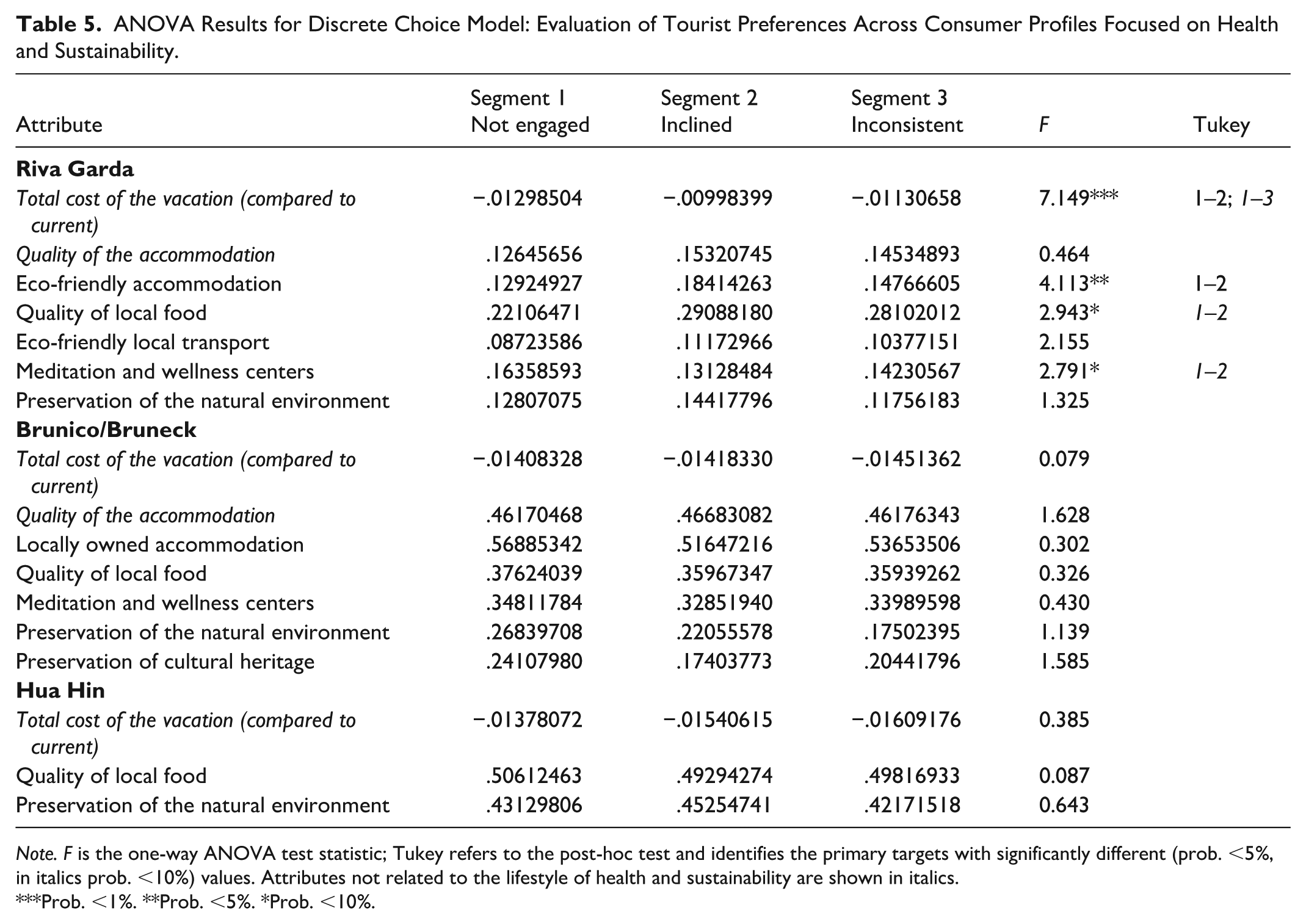
To address RQ3, which focuses on the pre-travel stage—when individuals select their vacation—parameters for each significant random coefficient were retrieved and one-way ANOVA tests were performed to determine if there were statistically significant differences among the three segments. Post-hoc Tukey tests were then used to identify specific pairwise differences among the segments.
The ANOVA results reveal few statistically significant differences in vacation preferences among the three health- and sustainability-related segments across the destinations. Table 5 reports only the coefficients for which significant heterogeneity was detected. In Hua Hin and Brunico/Bruneck, no significant differences were found in any of the health- and sustainability-related attributes. In Riva del Garda, the non-engaged segment values eco-friendly accommodation and high-quality local food less than the inclined segment and shows a higher preference for wellness facilities, likely due to less familiarity with these experiences, which may be perceived as novel.
ANOVA Results for Discrete Choice Model: Evaluation of Tourist Preferences Across Consumer Profiles Focused on Health and Sustainability.
Note.F is the one-way ANOVA test statistic; Tukey refers to the post-hoc test and identifies the primary targets with significantly different (prob. <5%, in italics prob. <10%) values. Attributes not related to the lifestyle of health and sustainability are shown in italics.
Prob. <1%. **Prob. <5%. *Prob. <10%.
In relation to RQ4, which aims to evaluate how tourists assess destination attributes during their current vacation, Table 6 shows that the sustainability-related characteristics of the three destinations predominantly received moderate to high ratings, with Brunico/Bruneck distinguishing itself as the best-performing destination across each indicator, including the three directly associated with sustainability (environmental and cultural preservation, and the availability and quality of local products).
Comparative Analysis of Health- and Sustainability-Oriented Consumer Profiles: Evaluation of Destination Attributes—ANOVA Results.
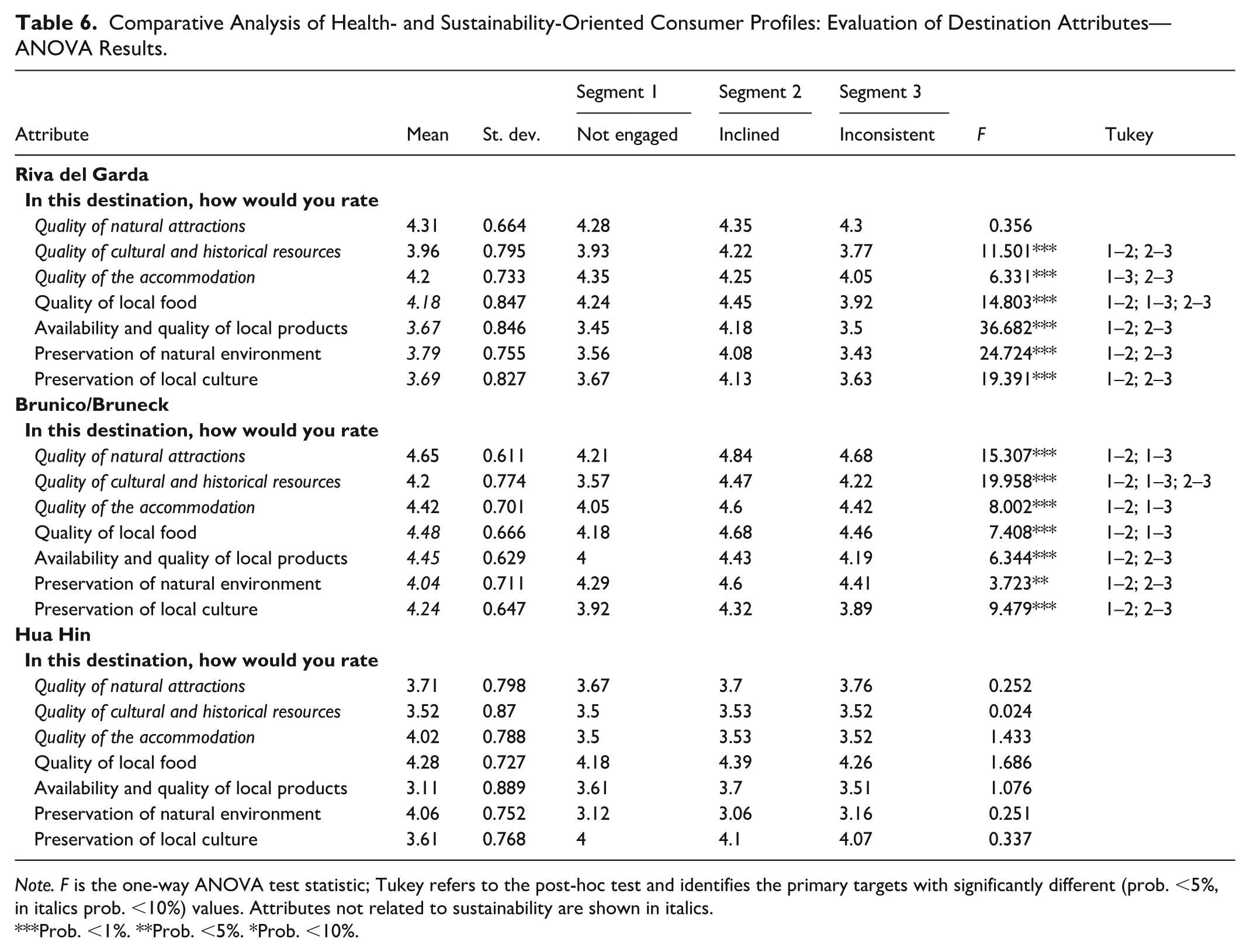
Note.F is the one-way ANOVA test statistic; Tukey refers to the post-hoc test and identifies the primary targets with significantly different (prob. <5%, in italics prob. <10%) values. Attributes not related to sustainability are shown in italics.
Prob. <1%. **Prob. <5%. *Prob. <10%.
The ANOVA results indicate statistically significant differences in ratings of destination attributes across the three consumer profiles identified through k-means clustering. Specifically, in Riva del Garda and Brunico/Bruneck, the inclined segment assigns significantly higher ratings to sustainability-related destination attributes than the not engaged and inconsistent segments. These differences were statistically significant and were further supported by the Tukey post hoc test. Conversely, in Hua Hin, although average ratings for sustainability-related features are relatively high, differences across segments are not statistically significant, suggesting a more uniform assessment of the destination.
Discussion
Summary of Findings
This study examines (1) whether a substantial and comparable segment of health- and sustainability-oriented consumers can be identified across destinations, (2) whether health- and sustainability-related vacation attributes are generally valued, (3) whether involvement with this lifestyle influences tourists’ vacation preferences, and (4) whether consumers oriented toward health and sustainability differ from other segments in their evaluation of sustainability-related destination attributes. The analysis is conducted across three destinations that differ in geography, morphology, level of development, and type of tourism.
Addressing RQ1, a key observation is the formation of a stable three-cluster solution—“not engaged,”“inclined,” and “inconsistent”—across destinations with different socioeconomic and cultural characteristics. A substantial, health- and sustainability-oriented consumer cluster emerged across the three destinations, accounting for nearly a third of consumers, confirming prior market research on this segment. Among individuals inclined toward this lifestyle, the findings indicate considerable engagement in daily activities such as recycling, using renewable resources, buying organic food, and purchasing locally made products. This segment also demonstrates a strong focus on personal development, physical and mental well-being, and planetary health, with moderate to high levels of involvement in boycotting companies that harm the environment, using environmentally friendly transportation, and addressing community issues.
Regarding RQ2, the estimates from the discrete choice model confirm the importance of the selected health- and sustainability-related attributes in explaining preferences for different vacation options. Statistically significant mean marginal utilities were found for most of these attributes, indicating broad appeal. While there is some variation across destinations, the overall demand for these attributes seems widespread. Tourists consistently show preferences for environmentally friendly accommodations, locally owned lodging, high-quality local food, organic and natural products, wellness facilities, and the preservation of cultural heritage in Brunico/Bruneck and Hua Hin, and for locally owned accommodations, high-quality local food, and cultural preservation in Riva del Garda. These findings demonstrate that health- and sustainability-focused tourism features are not limited to niche markets but are increasingly becoming part of mainstream tourism expectations.
Concerning RQ3, based on the coefficients from the discrete-choice model used in the cluster analysis, the ANOVA results showed few statistically significant differences in vacation preferences among the three consumer segments and destinations. Most health- and sustainability-related attributes were found to be statistically non-significant across the three destinations. The lack of significance within individual segments suggests that respondents inclined toward health and sustainability do not display a clear preference premium for these attributes when selecting their vacation compared to the other two segments. Overall, the findings show a broad preference for tourism experiences that combine authenticity, well-being, and sustainability, suggesting that these features are now expected rather than perceived as distinctive advantages.
Regarding RQ4, notable differences among consumer groups were identified in Brunico/Bruneck and Riva del Garda, where health- and sustainability-focused individuals rated the destinations’ sustainability attributes higher than those who were not engaged. Conversely, no significant differences were observed in Hua Hin.
Theoretical Contributions
Our research contributes to the ongoing discussion of a new consumer segment focused on health and sustainability. This study advances the field by exploring the connection between personal well-being, societal well-being, and sustainable consumption. The findings suggest that sustainable consumption has shifted from an environmental focus to a broader lifestyle approach that encompasses personal growth and well-being, concern for poverty and social justice, and community engagement. The results support the idea that health- and sustainability-oriented consumers are an expanded version of the traditional green consumer, representing also an evolution of conventional sustainable consumption concepts. Cluster analysis indicates that modern sustainability-focused consumers prioritize not only environmental issues but also personal well-being, community concerns, and social justice. This suggests that today’s sustainability-oriented consumers adopt a more cohesive value system, shifting from environmental actions toward a holistic perspective encompassing health, sustainability, well-being, and social ethics (Ruby et al., 2020).
An additional theoretical insight involves identifying a relevant segment across the three destinations, labeled “inconsistent” in health- and sustainability-driven lifestyles. These consumers participate in only a few health- and sustainability-related behaviors. Their engagement appears to be mainly influenced by external pressures (e.g., recycling laws) or personal convenience. This segment emerges as the largest, indicating that many consumers engage in healthy, sustainable daily behaviors, but often inconsistently or driven by external factors rather than intrinsic motivation. Substantial empirical evidence shows that individuals exhibit considerable inconsistency in their engagement with various forms of pro-environmental behavior (Dolnicar et al., 2016; Gatersleben et al., 2002). The findings suggest a lifestyle that incorporates sustainability and health to some extent, though it primarily emphasizes low-effort, habitual actions. Participation in these behaviors tends to occur when they are low-cost, routine, and/or personally rewarding, further supporting the idea that many consumers practice sustainable behaviors when it is convenient for them.
By choosing destinations that vary in natural features (lake, mountain, and coastal), economic development levels (developed vs. developing economies), and institutional settings (such as South Tyrol’s autonomous region), this study contributes to understanding whether health- and sustainability-focused behaviors and attitudes are globally consistent or dependent on context. This enables analysis of how these values manifest across various social and economic contexts. This comparative approach improves the literature by suggesting that internalized psychographic traits might influence sustainability-focused lifestyles more than geographic or institutional factors. Therefore, it strengthens the theory by highlighting the cross-contextual consistency of these behavioral patterns. The findings indicate a universal typology of daily behavior that remains stable across different settings. Health- and sustainability-focused consumer profiles are influenced more by underlying psychographic traits than by local environments, supporting the idea that health and sustainability values reflect a global lifestyle trend.
Furthermore, the study extends existing research on health- and sustainability-oriented behaviors to tourism contexts. Its importance to tourism has been overlooked. This study shows how these health and sustainability values are generally incorporated into vacation preferences. This introduces a new aspect to the current literature on the subject.
This study also provides new empirical evidence that contributes to the ongoing discussion of the behavioral gap in sustainable tourism. It extends current research on sustainable behavior during holidays relative to at-home contexts, providing a theoretical extension of the home–vacation behavioral consistency model. Past studies on responsible behavior at home and on vacation have shown that tourists’ behavior on vacation differs from their behavior at home (Holmes et al., 2019) and that tourists tend to act less sustainably when on vacation (Barr et al., 2010; Carr, 2002; Dolnicar & Grün, 2009; Miao & Wei, 2013; Stanford, 2008).
These results show that health and sustainability attributes matter in general, as they have positive, often significant utilities for everyone; however, respondents inclined toward health- and sustainability-oriented lifestyles do not assign significantly higher evaluations to related vacation attributes than other respondents. A stronger inclination to practice these habits in everyday life does not considerably influence the importance assigned to these attributes when these individuals evaluate hypothetical vacation alternatives.
The health- and sustainability-inclined segment remains distinct in its daily behaviors and value orientation, but not in its stated vacation-choice trade-offs. These individuals do not consistently assign a premium to these features when choosing their next vacation, compared with other segments. At the point of vacation choice, the differences across segments seem to disappear. The findings reveal a somewhat unexpected misalignment between the behaviors and values expressed by the different consumer groups in everyday life and their stated preferences in a hypothetical vacation-choice context.
Established theoretical frameworks would have predicted stronger differentiation. In particular, VBN theory posits that individuals with stronger biospheric values and personal norms are more likely to engage in pro-environmental behaviors (Stern, 2000), suggesting that respondents more strongly oriented toward health and sustainability should also display systematically different vacation-choice preferences and assign greater importance to the related attributes. However, the present findings show only limited differences in the valuation of health- and sustainability-related vacation attributes across the consumer profiles, and this pattern emerges consistently across three destinations characterized by different geographic, socioeconomic, and tourism development contexts.
Rather than reflecting a failure of values to translate into behavior, this convergence may indicate that sustainability-related features have become normalized within tourism consumption. In this sense, well-being and sustainability may no longer operate primarily as a differentiating attribute valued by a committed niche, but instead as a baseline expectation embedded in the broader tourism experience across consumer groups. Health- and sustainability-related features appear to have been absorbed into the broader set of characteristics tourists expect from a vacation, regardless of lifestyle orientation, revealing a degree of behavioral convergence among tourists with different levels of sustainability commitment. This is consistent with the idea that the market for health and sustainable tourism has matured from a niche into a broad expectation.
Practical Implications
These findings support the idea that health- and sustainability-related attributes are common consumer values rather than niche interests. This lifestyle includes values and principles related to sustainable economics, healthy living, healthcare, personal development, ecological concerns, and societal issues. The results indicate that the clear separation between “health” and “environment” in consumers’ views has blurred. As Kotler (2011) stated, this market is growing, and producers should make more informed decisions about product types, production methods, distribution, and advertising, while researchers need to understand its broader significance. Over time, the term “green” has been used less in marketing in favor of broader sustainability messages, which often failed to provide customers with a clear emotional or personal benefit. This study highlights that promoting sustainability as a sacrifice is inappropriate; instead, it should be presented as a comprehensive strategy to enhance quality of life. The new cultural narrative should be embodied, holistic, and integrated. Lifestyles emphasizing health and sustainability are key to revitalizing green marketing.
This study also has important implications for the tourism and hospitality industry, particularly for the strategic integration of health and sustainability features into tourism experience design and destination branding. When developing a sustainability plan, health- and sustainability-oriented features should be considered a strategic and vital component of the overall sustainability strategy. Our results offer additional direct managerial implications. Destination management and the hospitality industry should expand their efforts beyond traditional sustainable practices. A survey of hospitality managers in South Tyrol showed a relatively low awareness of the importance of the health- and sustainability-focused market segment (Osti & Goffi, 2021). In contrast, our findings emphasize the importance of these attributes and provide practical insights for incorporating them into destination management and policy. Hotel managers should reconsider their strategies, recognizing the vital roles of physical, mental, spiritual, and wellness factors, as well as sustainable practices. To meet the growing demand among tourists for personal physical, mental, and emotional well-being (Lehto & Lehto, 2019), the hospitality industry should develop well-being-focused experiences for guests. Various services and amenities can be offered to support tourists’ physical and psychological well-being, ensuring comprehensive care from arrival (Chi et al., 2020). Implementing nature-based solutions in hotels can boost tourists’ mental and emotional well-being (Han & Hyun, 2019): increasing interior and outdoor greenery significantly improves perceptions of mental health, emotional well-being, and loyalty.
The results also show that destinations recognized for their established sustainability practices, such as Riva del Garda and Brunico/Bruneck, receive greater appreciation from health- and sustainability-focused consumers, highlighting a strong link between supply and demand. Brunico/Bruneck and Riva del Garda are located in the Trentino-Alto Adige/South Tyrol region, recognized as Italy’s top destination in sustainability indicators (Cerved, 2022; Ernst & Young, 2020; Fondazione Impresa, 2014; Istat, 2018; Legambiente, 2023). This finding indicates that destinations that demonstrate clear and credible sustainability efforts elicit greater appreciation and satisfaction among tourists who are particularly attentive to environmental and sustainability issues. Therefore, destinations deeply committed to sustainability and active tourism require more targeted strategies that account for individual preferences. The results suggest a marketing challenge for sustainability-focused destinations: simply offering sustainable options may not be enough unless these features are effectively promoted as enhancing comfort, enjoyment, or authenticity within the overall tourism experience.
Limitations and Future Research
There are several limitations to the current study. First, the sample is a convenience sample and does not represent the broader population of tourists visiting the analyzed destinations. Second, it only measures hypothetical vacation behaviors. Future research should examine real-world behaviors through field experiments. Third, the use of self-reported data on home behaviors may be influenced by social desirability bias, which cannot be completely ruled out, as survey respondents may tend to provide responses they believe others will view favorably. Future studies should incorporate more objective measures, such as behavioral tracking or third-party reports, to minimize bias and increase accuracy. Fourth, the study does not thoroughly explore the psychological, social, or cultural factors that affect the alignment between home and vacation behaviors. Future work should include qualitative methods, such as interviews or focus groups, to understand the underlying motivations and barriers to sustainable tourism choices. Additionally, the cross-sectional design limits causal inference. Future research should adopt longitudinal approaches, following participants over time to see how sustainability preferences change before, during, and after vacations. Moreover, the attributes used to measure health and sustainability orientation in daily life and during vacations were adapted from previous studies; however, no validated scale has been identified. The items are used here as clustering variables to segment tourists based on their health- and sustainability-oriented daily behaviors and values. The study does not propose to validate a new measurement instrument. A full-scale validation exercise, however, is an important avenue for future research. Lastly, while the study considers key variables, future studies should gather more detailed demographic and psychographic data.
Footnotes

Author Contributions
Funding
The authors received no financial support for the research, authorship, and/or publication of this article.
Declaration of Conflicting Interests
The authors declared no potential conflicts of interest with respect to the research, authorship, and/or publication of this article.