






Abstract
Dark tourism visits to atrocity memorials produce simultaneous distress and profound meaning, yet mediating psychological mechanisms remain inadequately theorized. This study introduces ethical scrutiny—a temporally and functionally delimited specification of post-visit moral-evaluative cognition, not a wholly independent construct—within an integrated framework of Cognitive Dissonance Theory, Emotion Regulation Theory, and Moral Psychology. A three-wave longitudinal design (N = 385) at Auschwitz-Birkenau employed Covariance-Based Structural Equation Modeling and Random-Intercept Cross-Lagged Panel Model. Moral reflection prospectively predicted ethical scrutiny (β = .350), enhancing cognitive fulfillment alongside emotional engagement. Both educational and voyeuristic motivations activated cognitive reappraisal as adaptive regulatory pathways; the ethical ambiguity of voyeuristic motivation at this site is explicitly preserved and unresolved by these data. Random-Intercept Cross-Lagged Panel Model revealed 55% to 63% of variance reflecting stable between-person dispositions; within-person discomfort suppressed recommendation intention. All findings are site-conditioned; cross-spectrum generalizability requires independent empirical demonstration.
Keywords
Introduction
Former concentration camps, genocide memorials, disaster zones, and battlefields attract visitors whose motivations span a complex continuum—from earnest historical engagement to a more visceral fascination with mortality and authentic evidence of tragedy (Biran et al., 2011; Saha & Husain, 2025). This motivational plurality generates an inherent tension: visitors simultaneously occupy a morally sanctioned role as historical witnesses and a more ambiguous position as consumers of human suffering. That dual positioning frequently produces cognitive dissonance—an uncomfortable psychological state arising when incompatible cognitions demand resolution (Festinger, 1957). Understanding how visitors navigate this tension matters not only for dark tourism scholarship but also for the broader study of transformative travel experiences.
A substantial body of research has consistently identified negative affect—grief and distress—alongside meaning-making as simultaneous products of the same atrocity-site experience (Hosany et al., 2020; Zhang et al., 2023), yet a central explanatory puzzle remains unresolved: through what specific psychological mechanisms do visitors transform encounters with documented mass atrocity into something described as personally meaningful? Prior work has referenced Cognitive Dissonance Theory, Emotion Regulation Theory, and Moral Psychology individually without articulating the functional architecture that must connect these traditions—a gap that leaves the field identifying outcomes without adequately explaining the processes linking antecedents to those outcomes.
A persistent methodological limitation compounds this explanatory gap. Cross-sectional designs capture only a single post-visit moment and are structurally incapable of detecting how psychological processing evolves over weeks or months (Iliev, 2020; Nawijn et al., 2015). If the meaning-making that resolves moral dissonance unfolds gradually after the visit, cross-sectional designs systematically miss the very processes they seek to explain. Recent meta-analytic evidence has explicitly called for longitudinal designs that track within-person psychological change (Hosany et al., 2020; Zhang et al., 2023). Three interconnected theoretical gaps motivate the present study.
First, no unified process model specifies why Cognitive Dissonance Theory, Emotion Regulation Theory, and Moral Psychology must be structurally integrated rather than simply applied in parallel. Second, no construct operationalizes the cognitive state that emerges when a visitor moves from immediate on-site moral distress toward structured post-visit evaluation of the moral, historical, and political dimensions of witness-bearing, leaving the explanatory middle ground between shock and outcome theoretically underpopulated. Third, existing longitudinal tourism studies have largely relied on traditional cross-lagged panel models, which produce biased estimates when stable between-person differences are not explicitly partitioned from within-person change (Hamaker et al., 2015).
To address these gaps, this study introduces and operationalizes ethical scrutiny—presented as a theoretically motivated specification rather than a claim of wholesale novelty; its conceptual adjacency to moral reflection is acknowledged throughout—as the temporally delayed, structured, and reflective cognitive state in which visitors critically examine the moral dimensions of the dark tourism experience, including the site’s representation of tragedy, the ethics of commemoration, and their own responsibilities as witnesses to history. A three-wave longitudinal design at the Auschwitz-Birkenau Memorial and Museum tests this mechanism using covariance-based structural equation modeling and a Random-Intercept Cross-Lagged Panel Model.
The study’s contributions are threefold. Theoretically, it provides a unified integration of three theoretical frameworks as functionally interdependent and operationalizes ethical scrutiny as a temporally and functionally specified extension of moral reflection within high-intensity dark tourism contexts, explaining how distressing visits yield meaningful outcomes through a mechanism with demonstrable empirical consequences. Substantively, it documents that voyeuristic motivation can activate adaptive regulation within this specific institutional context, while explicitly preserving the ethical ambiguity that attaches to curiosity-driven engagement at sites of this moral gravity. Methodologically, it demonstrates the empirical value of separating between-person trait stability from genuine within-person change, providing a methodological template whose cross-spectrum applicability requires replication. All contributions are explicitly bounded by the singular contextual conditions of Auschwitz-Birkenau and should not be extrapolated to lighter or less morally saturated forms of dark tourism without cross-spectrum replication. Connections to transformative experience theory (Pine & Gilmore, 1999; Tung & Ritchie, 2011) are offered as theoretical propositions rather than established empirical claims.
Literature Review and Hypothesis Development
An Integrated Theoretical Architecture: Engine, Mechanism, Content
The three theoretical traditions mobilized in this study address different but structurally nested aspects of a single psychological event. Their functional interdependence—rather than mere co-presence—justifies their integration as a unified architecture rather than a parallel citation strategy. Cognitive Dissonance Theory (Festinger, 1957) functions as the engine: it accounts for the motivational impetus that makes emotional coping necessary. At a dark tourism site, this dissonance is structural rather than incidental—the desire to witness authentic evidence of suffering exists in objective tension with the social norms that atrocity sites mandate reverential, educationally oriented behavior (Harmon-Jones, 2019; McGrath, 2017). Emotion Regulation Theory (Gross, 1998) operates as the gear system: it specifies the coping mechanisms deployed to manage the emotional sequelae of dissonance. Antecedent-focused strategies such as cognitive reappraisal reconceptualize the emotional meaning of a situation rather than suppressing its affective output (Webb et al., 2012). Moral Psychology (Haidt, 2001; Rest, 1986) supplies the evaluative content through which regulatory strategies operate when distress is ethically tinged rather than merely personally uncomfortable.
These three traditions are functionally interdependent in a specific architectural way that distinguishes the present framework from prior work treating them as parallel. Dissonance is the engine: it supplies the motivational pressure that makes emotional regulation necessary. Emotion regulation is the gear system: it channels that pressure into specific cognitive strategies. Moral psychology determines the content and character of those strategies when distress is ethically rather than merely personally loaded. A model invoking only dissonance has no mechanism for explaining how dissonance resolves; a model of regulation without dissonance lacks an explanation for why regulation is needed; moral psychology without either fails to account for the motivational dynamics that generate and direct moral distress. This engine–mechanism–content architecture underlies all hypotheses developed below.
Ethical Scrutiny and Its Distinction From Moral Rumination
This differentiation is presented with explicit acknowledgment that the two constructs share theoretical proximity. Both belong to the broader family of post-visit moral-evaluative processing; their empirical distinction is supported but not conclusively established by the available data, and future research should continue to refine the boundary conditions separating adaptive scrutiny from maladaptive ruminative processing. Among the most theoretically consequential design decisions in this study is the conceptual differentiation of ethical scrutiny from the adjacent—but functionally distinct—construct of moral rumination. This distinction is not cosmetic; it determines whether post-visit moral engagement constitutes an adaptive regulatory pathway or a risk factor for sustained psychological burden.
Two bodies of literature raise the possibility that structured post-visit moral engagement may intensify rather than attenuate negative affect. First, research on moral injury demonstrates that sustained engagement with perceived moral transgression—particularly when the individual cannot escape a sense of culpability or complicity—amplifies rather than attenuates distress over time (Currier et al., 2014; Litz et al., 2009). Second, the rumination literature establishes that cyclical, backward-focused, and purposeless engagement with negative affect is associated with prolonged emotional disturbance, depressive symptomatology, and impaired behavioral functioning (Nolen-Hoeksema et al., 2008; Treynor et al., 2003). Both processes could plausibly be triggered by repeated post-visit contemplation of atrocity—making explicit specification of the adaptive–maladaptive boundary essential.
The present study argues that ethical scrutiny differs from both moral injury processing and ruminative engagement along three theoretically independent dimensions that constitute the boundary conditions of its adaptive function. These dimensions are theoretically specified rather than independently validated in the present dataset; future independent validation is warranted.
First, structural organization distinguishes ethical scrutiny from rumination. Moral rumination is characterized by cyclical, self-referential processing that returns repeatedly to the same distressing content without resolution or forward movement (Nolen-Hoeksema et al., 2008). Its functional signature is purposelessness—the individual loops rather than progresses. Ethical scrutiny, by contrast, is organized around evaluative questions with identifiable endpoints: Did the site represent suffering with appropriate fidelity? Did my presence as a visitor constitute a form of commodification? What obligations does bearing witness impose upon me as a historical actor? These questions are answerable, if not fully resolvable, and their pursuit generates a sense of moral agency rather than entrapment. This structural property aligns ethical scrutiny with Gross’s (1998) category of antecedent-focused regulation—strategies that operate on the appraisal of a situation before the full emotional response has crystallized—rather than with response-focused strategies that attempt to modulate already-activated affect. The practical consequence is that ethical scrutiny transforms distress from an indication of being overwhelmed by moral complexity into evidence of one’s genuine responsiveness to it (Folkman & Moskowitz, 2000).
Second, temporal orientation distinguishes ethical scrutiny from the backward fixation characteristic of rumination. Ruminative processing is retrospectively anchored—it re-examines what occurred without directing cognitive resources toward future-oriented meaning or agency (Treynor et al., 2003). Ethical scrutiny, as operationalized in this study, is forward-oriented: items explicitly reference the visitor’s evaluation of their ongoing responsibilities (Since my visit, I have critically evaluated the ethical implications of touring a site of such tragedy; In the days following my visit, I questioned my own role as a visitor witnessing others’ suffering). This temporal directionality is the mechanism through which emotional content is reconstituted as a source of moral agency rather than moral burden. The distinction maps onto established models of adaptive versus maladaptive coping in the grief literature, where prospective meaning-making is consistently associated with better long-term adjustment than retrospective counterfactual dwelling (Bonanno & Kaltman, 2001; Park, 2005).
Third, institutional scaffolding distinguishes the conditions under which ethical scrutiny can emerge from those that produce unresolved rumination. Auschwitz-Birkenau provides an unusually dense interpretive infrastructure: professional commemorative framing, unambiguous moral consensus regarding perpetration and victimhood, high documentation density, and survivor testimony resources. This scaffolding converts diffuse affective distress into structured evaluative questions. The implication is that the adaptive function of ethical scrutiny is not intrinsic to moral engagement per se but is conditioned by the interpretive environment in which that engagement occurs. At sites lacking such infrastructure—contested battlefield landscapes, fictionalized disaster attractions, or informally managed conflict sites—the reflection-to-scrutiny pathway may not be activated, or may produce ruminative rather than evaluative processing. This constitutes a testable boundary condition for the model’s generalizability across Stone’s (2006) dark tourism spectrum.
The mechanism through which ethical scrutiny may reduce the long-run behavioral cost of discomfort is meaning-based coping (Folkman, 2001)—a process in which positive psychological states emerge not despite but through sustained engagement with adversity. Ethical scrutiny does not eliminate emotional discomfort; it reframes it as morally informative rather than merely aversive. The empirical implication—confirmed by the positive concurrent association between ethical scrutiny and emotional discomfort at Wave 2 (β = .356)—is that deeper moral engagement co-occurs with stronger emotional responses, not weaker ones. This prediction distinguishes the present framework from suppression-based accounts of regulation.
Motivations, On-Site Moral Reflection, and the Conditions for Ethical Scrutiny
Dark tourism motivation research has consistently identified educational significance—deliberate, reflective engagement with historical and pedagogical dimensions of a site—as the normatively sanctioned impetus for atrocity-site visitation, with voyeuristic curiosity—affectively immediate interest in unfiltered evidence of suffering—positioned as its problematic counterpart (Biran et al., 2011; Dalton, 2019; Saha & Husain, 2025; A. V. Seaton, 1996; Sharpley & Stone, 2009). This binary framing has structured the motivational literature for two decades and carries implicit normative weight: educational visitors are implicitly positioned as legitimate heritage consumers, voyeuristic visitors as morally suspect spectators.
The present study challenges the assumption that voyeuristic curiosity necessarily precludes adaptive outcomes within this specific institutional context, without claiming that such motivation is ethically equivalent to educational engagement. The ethical dimensions of curiosity-driven atrocity-site visitation at Auschwitz-Birkenau remain genuinely contested; this study makes no claim to resolve them. What the empirical data address is the narrower psychological question of whether voyeuristic motivation, once present, can activate regulatory processes associated with adaptive outcomes within the specific conditions of Auschwitz-Birkenau.
The challenge to the deficit-model hierarchy proceeds in two steps. First, motivational plurality at atrocity sites is not an anomaly but a structural feature: the simultaneous presence of educational and voyeuristic motivation creates the precise conditions—incompatible cognitive orientations within a normatively regulated social context—that generate the dissonance the engine component of the framework predicts (Festinger, 1957; McGrath, 2017). Second, it is the resolution of this dissonance—not its absence—that produces adaptive regulatory outcomes. Studies of battlefield tourism (Baldwin & Sharpley, 2009), Holocaust memorialization (Buda, 2015), and genocide tourism (Robb, 2009) consistently demonstrate that meaningful post-visit moral change depends less on motivational purity than on the quality of post-visit cognitive processing—a finding consistent with the present framework’s emphasis on ethical scrutiny as the temporally delayed mechanism through which distressing encounters yield personally transformative outcomes.
Moral reflection is characterized by its immediacy, affective loading, and diffuseness—the cognitive-affective shock of moral confrontation before structured processing has organized the experience into evaluable components. The present study proposes that moral reflection serves as the raw material for a subsequent, more structured process: ethical scrutiny. This temporal sequencing—shock before scrutiny—is architecturally consistent with dual-process accounts of moral judgment (Evans & Stanovich, 2013; Haidt, 2001) in which System 1 intuitive-affective responses precede System 2 deliberative-evaluative processing, and with the temporal structure of meaning-making following stressful life events (Park, 2005; Tedeschi & Calhoun, 2004).
Coexisting Motivations and Cognitive Reappraisal
Alongside ethical scrutiny, visitors employ cognitive reappraisal—the deliberate reconceptualization of an emotionally provocative situation to alter its emotional impact (Gross & John, 2003; Webb et al., 2012). The present study hypothesizes that both educational significance and voyeuristic curiosity activate reappraisal, but through distinct pathways rooted in the engine–mechanism–content framework. For educationally motivated visitors, reappraisal functions as an integrative framing strategy: the visitor connects emotional weight to historically instructive lessons, increasing the perceived value of negative affect as a vehicle for learning (Jeon et al., 2022). This pathway operates through System 2 deliberative processing—analytically scaffolded by the visitor’s pre-existing educational orientation and supported by the site’s institutional interpretive infrastructure (Evans & Stanovich, 2013).
For voyeuristically motivated visitors, reappraisal may operate as a legitimizing strategy: visitors reframe their interest in unfiltered evidence as a morally necessary dimension of bearing authentic witness rather than as mere spectatorial consumption (Dalton, 2019; Saha & Husain, 2025). The theoretical mechanism is motivated reasoning (Kunda, 1990): voyeuristically curious visitors, confronted with social norms demanding reverence at Auschwitz-Birkenau, experience the most acute form of the dissonance the engine generates, and this heightened pressure produces precisely the regulatory effort that educational visitors deploy more automatically. This legitimizing function does not render voyeuristic motivation morally unproblematic; it describes a psychological process available within the specific institutional conditions of this site. Whether the activation of such a process constitutes an appropriate visitor response is a normative question that the present data cannot answer.
Longitudinal Dynamics: Between- and Within-Person Effects
Standard cross-lagged panel models conflate two fundamentally distinct sources of variance: genuine within-person change and stable between-person differences. When these are not separated, cross-lagged estimates may reflect trait-level associations masquerading as dynamic causal processes (Hamaker et al., 2015). The Random-Intercept Cross-Lagged Panel Model addresses this by estimating a random intercept for each individual—representing their stable, trait-like mean—and partitioning this component before estimating within-person cross-lagged paths (Mulder & Hamaker, 2020). The resulting within-person effects represent how a deviation from an individual’s own typical level at one time point predicts a subsequent deviation on another variable, independent of who that person is.
In the present study, this distinction is theoretically vital: the question is not whether more distressed visitors are less likely to recommend the site—a between-person comparison reflecting stable trait differences—but whether a visitor who experiences more discomfort than is personally typical subsequently becomes less willing to recommend the site than is personally typical for them.
Figure 1 presents the conceptual framework and full research model.
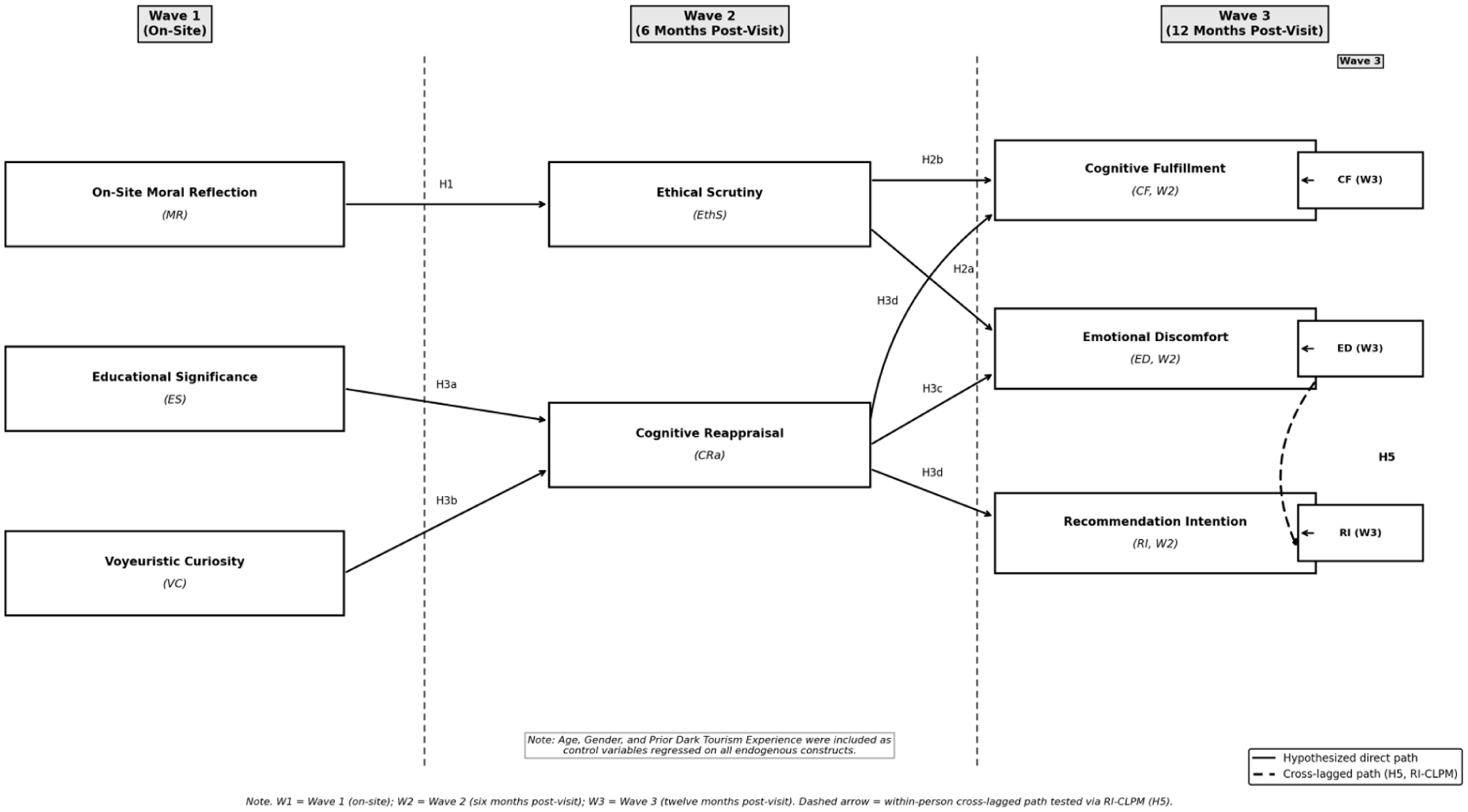
Conceptual framework and research model.
Method
Participants and Procedure
A three-wave quantitative longitudinal survey was conducted with international visitors to the Auschwitz-Birkenau Memorial and Museum in Oświęcim, Poland—a site that occupies the most morally saturated position in Stone’s (2006) dark tourism spectrum. Institutional review board approval was obtained before any data collection, and all participants provided written informed consent before completing any survey materials. The study followed the Declaration of Helsinki guidelines for research involving human participants.
Wave 1 data were collected via systematic random sampling at the primary visitor exit across two consecutive weeks. Research assistants approached every third visitor departing between 10:00 a.m. and 4:00 p.m. Eligibility required participants to be aged 18 or older and to be non-Polish-resident international visitors. Of 680 individuals initially approached, 512 agreed to participate (response rate: 75.3%). Surveys were administered on tablets within minutes of the visitor exiting the site, capturing responses in what the literature terms a hot cognitive state (Kang et al., 2012). Wave 2 and Wave 3 surveys were administered via encrypted email links at 6 and 12 months post-visit, respectively.
One important measurement timing consideration warrants acknowledgment. Motivations were assessed at Wave 1, immediately post-visit rather than pre-visit. These self-reports therefore capture activated motivational salience in the immediate post-visit state—the motivational configurations that were cognitively most prominent as visitors processed the experience—rather than purely anticipatory pre-visit intentions. Particularly in a normatively regulated context like Auschwitz-Birkenau, some degree of post-hoc motivational reconstruction cannot be ruled out (Kunda, 1990). Causal interpretations of motivation-to-outcome paths are accordingly treated as prospective associations within the longitudinal design rather than experimental causal claims. A pre-visit measurement wave would more precisely isolate motivational antecedents and represents a priority for future research.
Two independent sets of attrition analyses were conducted to assess whether participants who completed all three waves (n = 385) differed systematically from those who dropped out after Wave 1 (n = 127). First, demographic comparisons on age, gender, and education revealed no statistically significant differences (all p > .05). Second, comparisons on Wave 1 Emotional Discomfort and Moral Reflection—the constructs most theoretically likely to motivate selective dropout—also showed no significant differences (Emotional Discomfort: t(510) = 1.34, p = .181; Moral Reflection: t(510) = 0.89, p = .374). Little’s Missing Completely at Random test (χ2 (Chi-Square Statistic) (245) = 258.7, p = .281) confirmed that the missing data pattern was consistent with complete randomness. The final analytic sample comprised 385 participants.
Measures
All constructs were assessed with three-item scales using a 5-point Likert-type response format (1 = Strongly Disagree, 5 = Strongly Agree). This format was selected deliberately to preserve comparability with the foundational instruments from which scales were adapted (Gross & John, 2003; Watson et al., 1988). Reliability indices across all constructs exceeded established thresholds (Cronbach’s α > .80; composite reliability > 0.86; average variance extracted > 0.63). To reduce social desirability bias, voyeuristic curiosity items were framed around authentic, unfiltered historical evidence rather than morbid curiosity (Fisher, 1993). All scale items are reported in Appendix A.
On-site moral reflection (Wave 1) was adapted from Tangney et al. (2007) and Nawijn et al. (2015). Educational significance (Wave 1) was adapted from Biran et al. (2011) and Kang et al. (2012). Voyeuristic curiosity (Wave 1) was developed from Sharpley and Stone (2009) and Dalton (2019). Ethical scrutiny (Wave 2) was developed for this study following MacKenzie et al.’s (2011) scale development procedures, informed by Rest (1986). All ethical scrutiny items explicitly reference temporal distance from the visit (Since my visit . . .; In the days following my visit . . .), establishing their post-hoc, evaluative character. The heterotrait-monotrait ratio for ethical scrutiny against moral reflection was 0.61, meeting the conventional threshold for discriminant validity below 0.85. This value indicates meaningful empirical differentiation between the constructs, though it also reflects their theoretical adjacency as related stages in a moral processing sequence; future research should continue to refine the conceptual boundary. Cognitive reappraisal (Wave 2) was adapted from Gross and John (2003). Cognitive fulfillment (Waves 2 and 3) was adapted from Buda (2015). Emotional discomfort (Waves 1, 2, and 3) was adapted from Watson et al. (1988); item ED3 was revised to ensure unambiguously affective rather than cognitive content (revised wording: I felt emotionally unsettled when thinking about what I witnessed at the site). Recommendation intention (Waves 2 and 3) was adapted from Panchapakesan et al. (2021).
Analytical Strategy
All analyses were conducted using covariance-based structural equation modeling, appropriate for confirmatory hypothesis testing with complex longitudinal designs (Hair et al., 2014). The analysis proceeded in three stages. In Stage 1, confirmatory factor analysis assessed the measurement model: internal consistency (Cronbach’s alpha and composite reliability >.70), convergent validity (average variance extracted >0.50), and discriminant validity (heterotrait-monotrait ratio <0.85; Henseler et al., 2016). In Stage 2, a structural path model tested Hypotheses 1 through 3f. Age, gender, and previous dark tourism experience were included as covariates predicting all endogenous constructs. Indirect effects were tested using bias-corrected bootstrapping with 5,000 resamples. Model fit was evaluated against established criteria: Comparative Fit Index ≥0.95, Tucker-Lewis Index ≥0.95, Root Mean Square Error of Approximation <0.06, Standardized Root Mean Square Residual <0.08 (Hu & Bentler, 1999). In Stage 3, a Random-Intercept Cross-Lagged Panel Model (Hamaker et al., 2015; Mulder & Hamaker, 2020) tested Hypotheses 4 and 5. The two-variable specification reflects sample-size constraints (N = 385) rather than any claim that the full motivational-regulatory process is unsuitable for this approach; future studies with larger samples should attempt more comprehensive within-person modeling.
Results
Results Overview
Within the specific institutional conditions of Auschwitz-Birkenau, on-site moral reflection cultivated post-visit ethical scrutiny, which co-occurred with emotional engagement while enhancing cognitive fulfillment—providing an empirical resolution to the paradox of how distressing encounters with atrocity produce personally meaningful outcomes. Both educational and voyeuristic motivations independently activated cognitive reappraisal, generating comparable regulatory benefits regardless of motivational profile. The Random-Intercept Cross-Lagged Panel Model revealed that 55% to 63% of variance in key outcomes reflects stable individual dispositions—not situational dynamics—and that within-person fluctuations in discomfort prospectively suppress subsequent advocacy.
Participant Characteristics
The final analytic sample comprised 385 participants: mean age 38.72 years (Standard Deviation = 12.48), 54.8% female, 74.3% holding a bachelor’s degree or higher, and 65.7% reporting no prior visit to a major atrocity memorial site. Full demographic details are presented in Table 1.
Demographic Characteristics of Participants (N = 385).
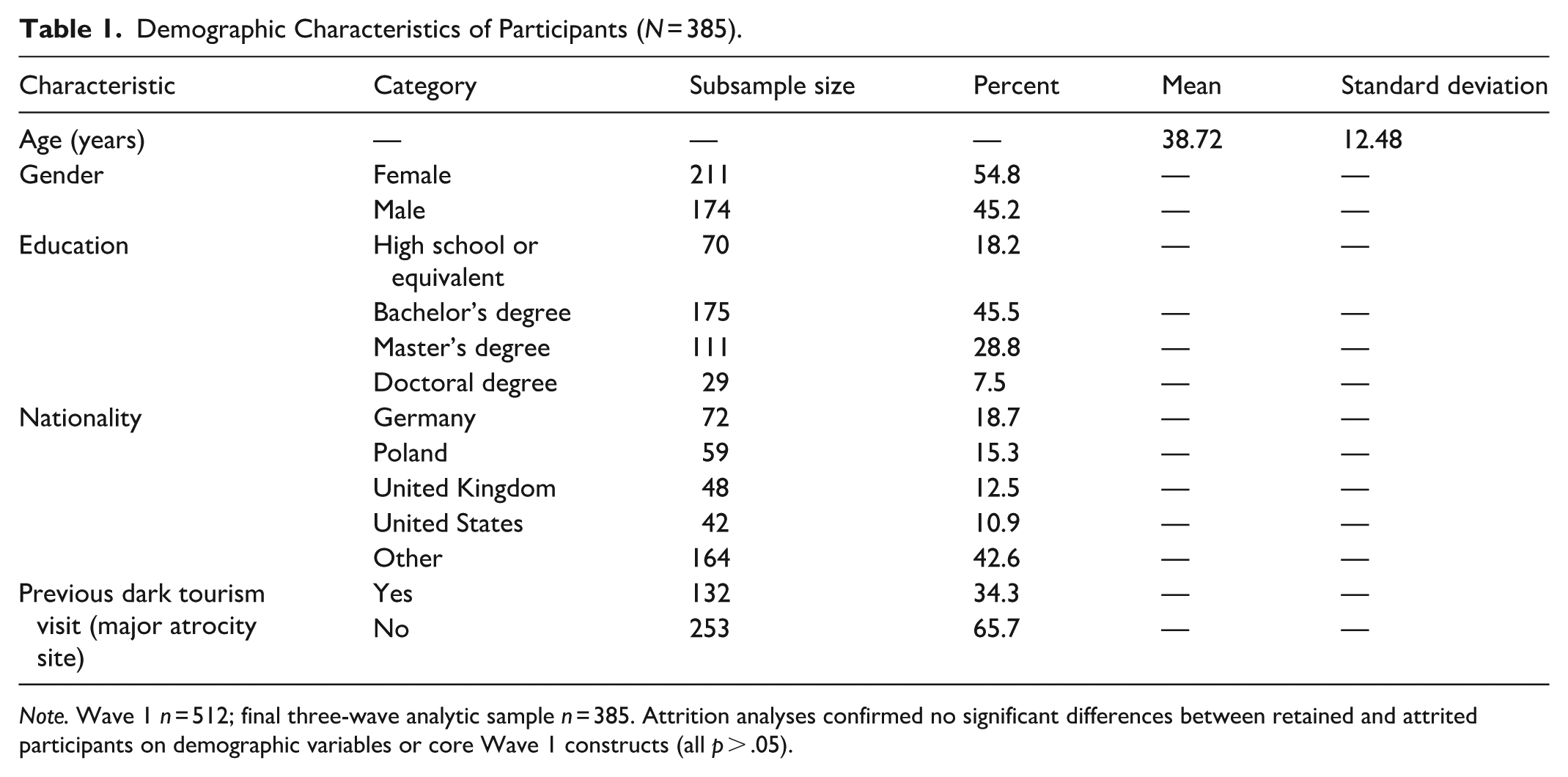
Note. Wave 1 n = 512; final three-wave analytic sample n = 385. Attrition analyses confirmed no significant differences between retained and attrited participants on demographic variables or core Wave 1 constructs (all p > .05).
Descriptive Statistics and Correlations
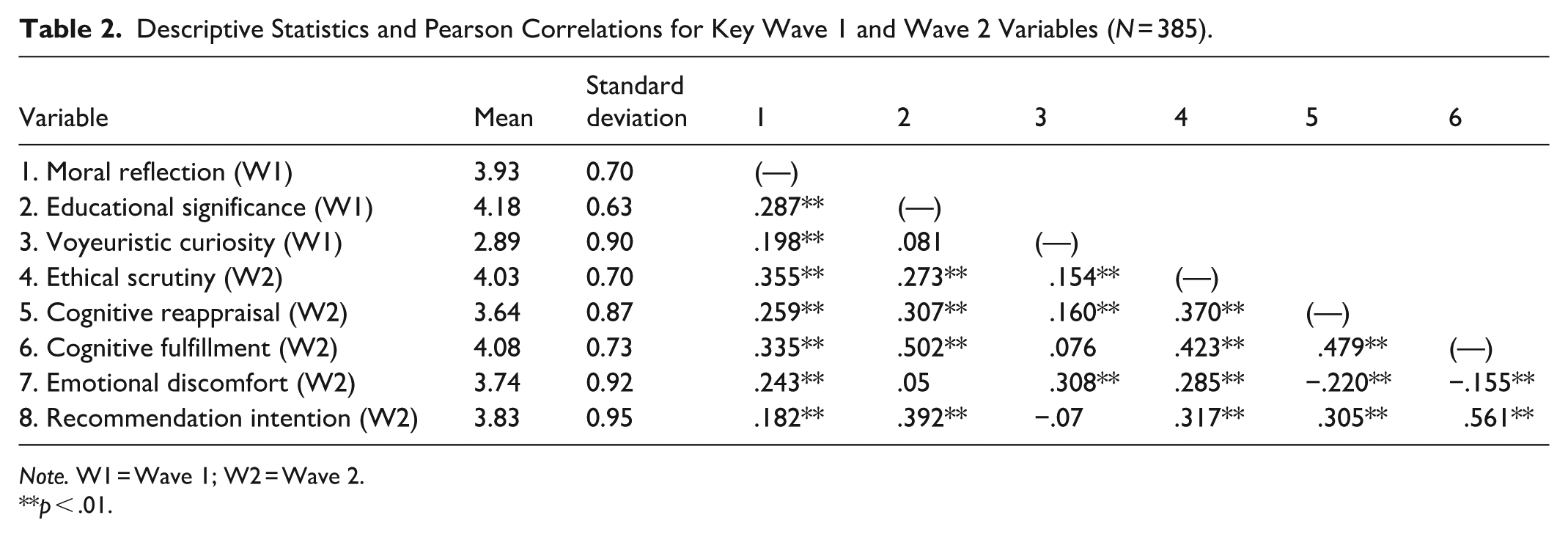
Table 2 presents descriptive statistics and Pearson correlations. Participants reported high mean scores for educational significance (Mean = 4.18, Standard Deviation = 0.63) and moral reflection (Mean = 3.93, Standard Deviation = 0.70), consistent with prior dark tourism research at high-intensity memorial sites (Nawijn et al., 2015). Emotional discomfort was notable in magnitude (Mean = 3.74).
Descriptive Statistics and Pearson Correlations for Key Wave 1 and Wave 2 Variables (N = 385).
Note. W1 = Wave 1; W2 = Wave 2.
p < .01.
Two correlation patterns require direct interpretation rather than treatment as anomalies. The near-zero correlation between educational significance and emotional discomfort (Pearson Correlation Coefficient = .05, p = .305) is theoretically expected: educational motivation channels experience toward meaning-making rather than distress, with its effects on outcomes operating through cognitive reappraisal. This indirect pathway is consistent with the engine–mechanism–content architecture described in Section “Literature Review and Hypothesis Development.” The non-significant negative correlation between voyeuristic curiosity and recommendation intention (Pearson Correlation Coefficient = −.07) reflects a mediated rather than direct relationship, both patterns being confirmed in the structural analysis.
Measurement Model
All item loadings exceeded 0.78. Composite reliability ranged from 0.865 to 0.941, all above the 0.70 threshold. Average variance extracted exceeded 0.63 for all constructs, satisfying the convergent validity threshold. The heterotrait-monotrait ratio for the Moral Reflection–Ethical Scrutiny pair was 0.61, meeting the conventional threshold; theoretical adjacency of the constructs is acknowledged. An Heterotrait-Monotrait Ratio of 0.61 reflects genuine theoretical proximity—these constructs share membership in a broader family of post-visit moral processing—while the structural path coefficient (β = .350) is sufficient to indicate predictive relevance and sufficiently below unity to rule out empirical redundancy. Global fit was excellent: χ2 (Chi-Square Statistic) (231) = 412.55, χ2/df = 1.78, Comparative Fit Index = 0.974, Tucker-Lewis Index = 0.968, Root Mean Square Error of Approximation = 0.045 (90% Confidence Interval [0.038, 0.052]), Standardized Root Mean Square Residual = 0.039. Full measurement model details are presented in Table 3.
Measurement Model Assessment (N = 385).
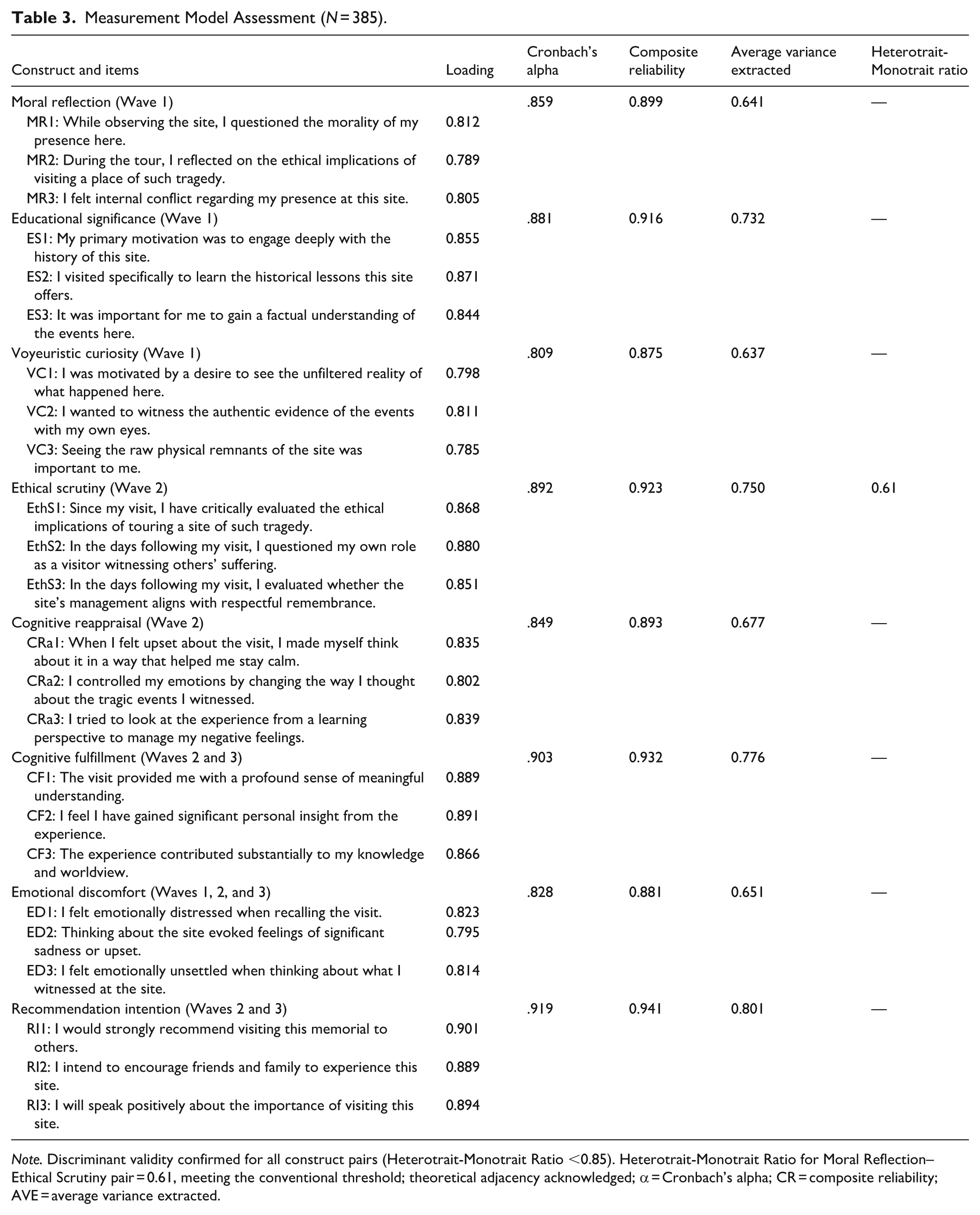
Note. Discriminant validity confirmed for all construct pairs (Heterotrait-Monotrait Ratio <0.85). Heterotrait-Monotrait Ratio for Moral Reflection–Ethical Scrutiny pair = 0.61, meeting the conventional threshold; theoretical adjacency acknowledged; α = Cronbach’s alpha; CR = composite reliability; AVE = average variance extracted.
Structural Model
The core theoretical story is best understood before the coefficients are examined. Moral reflection, generated by the dissonance inherent in atrocity-site visitation, sets in motion a temporally extended evaluative process—ethical scrutiny—that unfolds in the days following the visit. That scrutiny, functioning as a meaning-based regulatory strategy, simultaneously sustains emotional engagement and produces cognitive fulfillment. In parallel, both educational and voyeuristic motivations redirect visitors toward cognitive reappraisal, an antecedent-focused regulatory mechanism that reduces discomfort and enhances fulfillment. Table 4 presents path estimates and mediation results. Model fit was excellent: χ2 (Chi-Square Statistic) (345) = 589.42, Comparative Fit Index = 0.968, Tucker-Lewis Index = 0.962, Root Mean Square Error of Approximation = 0.043, Standardized Root Mean Square Residual = 0.048. Figure 2 presents the full structural path model with standardized coefficients.
Structural Model Assessment and Mediation Analysis (N = 385).
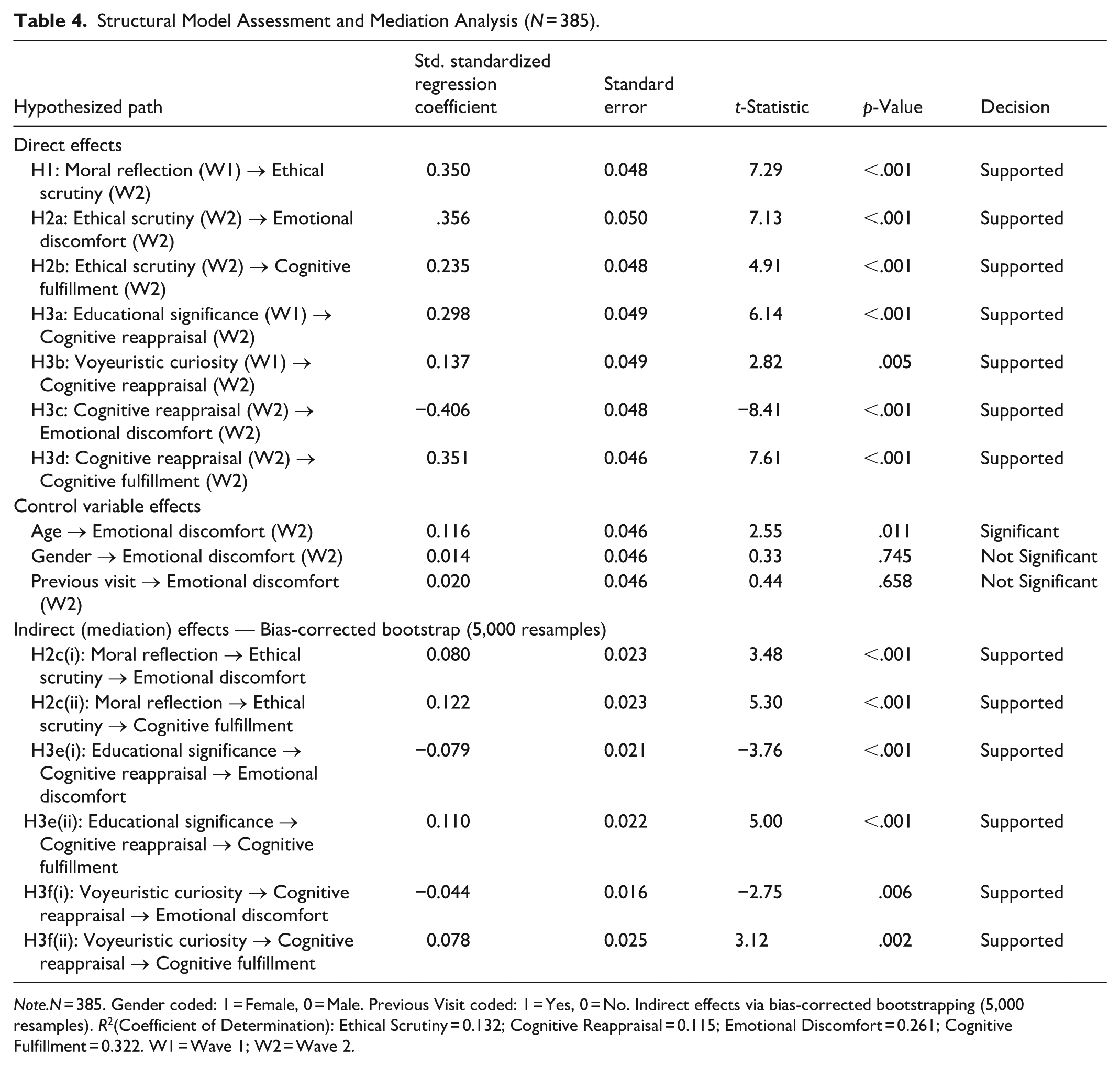
Note.N = 385. Gender coded: 1 = Female, 0 = Male. Previous Visit coded: 1 = Yes, 0 = No. Indirect effects via bias-corrected bootstrapping (5,000 resamples). R2(Coefficient of Determination): Ethical Scrutiny = 0.132; Cognitive Reappraisal = 0.115; Emotional Discomfort = 0.261; Cognitive Fulfillment = 0.322. W1 = Wave 1; W2 = Wave 2.
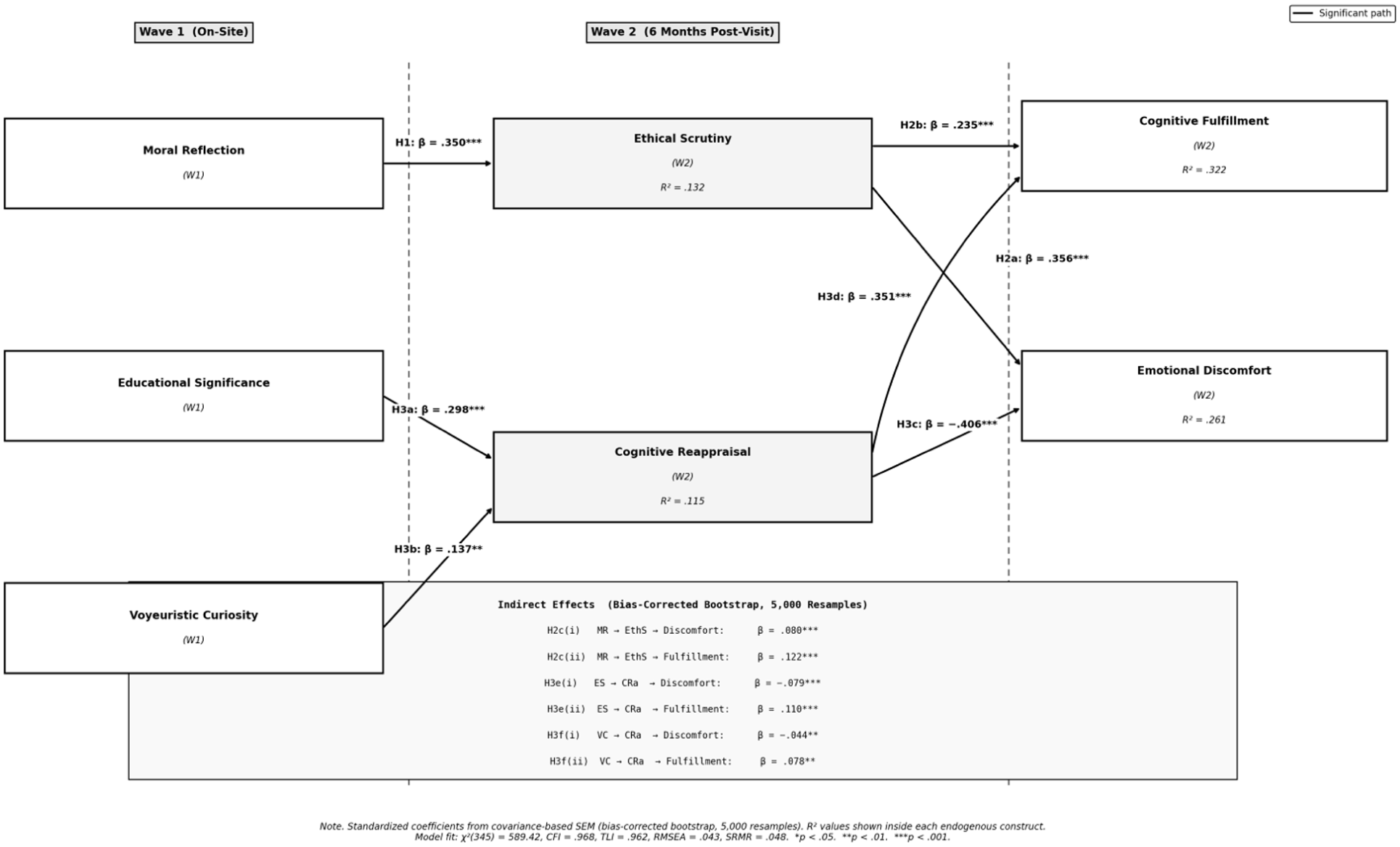
Structural path model with standardized coefficients (N = 385).
Hypothesis 1 was supported: moral reflection at Wave 1 was positively associated with ethical scrutiny at Wave 2 (β = .350, p < .001). Hypotheses 2a and 2b were both supported: ethical scrutiny carried a positive association with emotional discomfort (β = .356, p < .001) and significantly enhanced cognitive fulfillment (β = .235, p < .001). The positive association between ethical scrutiny and emotional discomfort reflects within-wave co-occurrence consistent with meaning-based coping (Folkman & Moskowitz, 2000): visitors who engage more deeply in structured moral evaluation also retain stronger emotional responses. Both indirect effects were statistically significant via bootstrapping (Hypothesis 2c). The model accounted for 13.2% of the variance in ethical scrutiny and 32.2% in cognitive fulfillment.
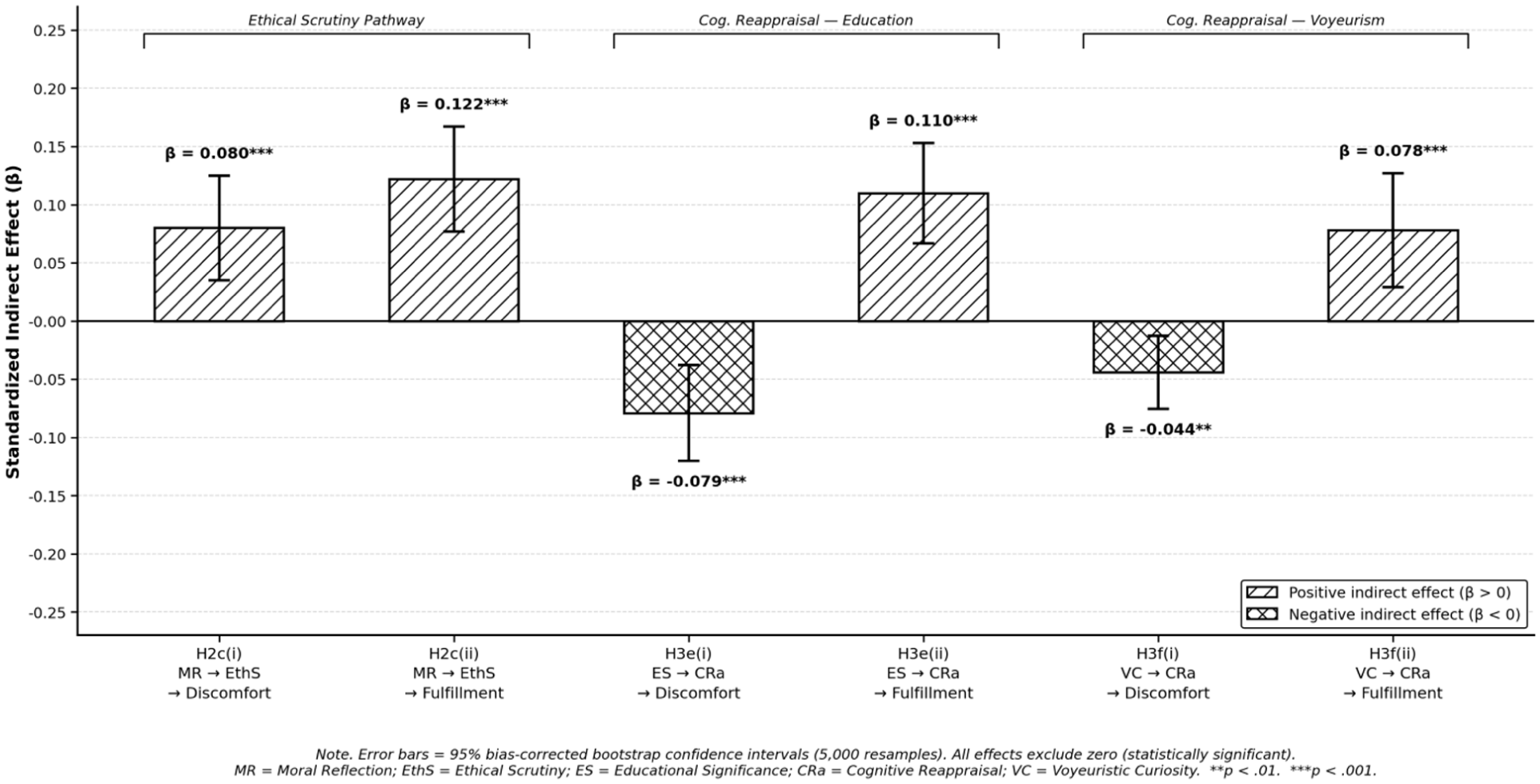
For Hypotheses 3a and 3b, both educational significance (β = .298, p < .001) and voyeuristic curiosity (β = .137, p = .005) were significantly associated with cognitive reappraisal. The stronger path from educational significance reflects deliberate System 2 processing (Evans & Stanovich, 2013). The significant voyeuristic curiosity path confirms the motivated reasoning prediction (Kunda, 1990). The ethical ambiguity of voyeuristic motivation is not resolved by this finding; the data describe a psychological process, not a moral valence. Cognitive reappraisal significantly reduced emotional discomfort (β = −.406, p < .001) and enhanced cognitive fulfillment (β = .351, p < .001), with all four indirect effects confirmed via bootstrapping. Age predicted emotional discomfort (β = .116, p = .011); gender and prior dark tourism experience were non-significant. Figure 3 presents all six bootstrapped indirect effects with 95% bias-corrected confidence intervals across the three mediation pathways.
Bootstrapped mediation: Standardized indirect effects with 95% confidence intervals (N = 385).
Random-Intercept Cross-Lagged Panel Model Results
The Random-Intercept Cross-Lagged Panel Model provided significantly superior fit compared to the traditional cross-lagged panel model (Chi-Square Difference (Δχ2) (3) = 28.45, p < .001), establishing that decomposing between-person stability from within-person change is empirically necessary for these data. Table 5 presents model fit comparisons.
Model Fit Comparison: Cross-Lagged Panel Model Versus Random-Intercept Cross-Lagged Panel Model.
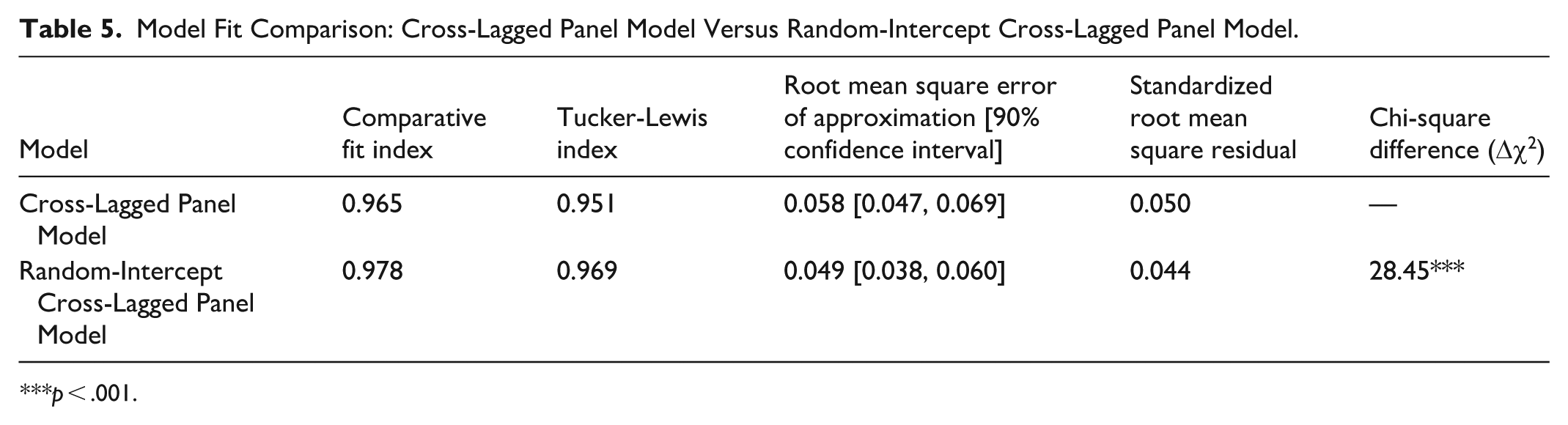
p < .001.
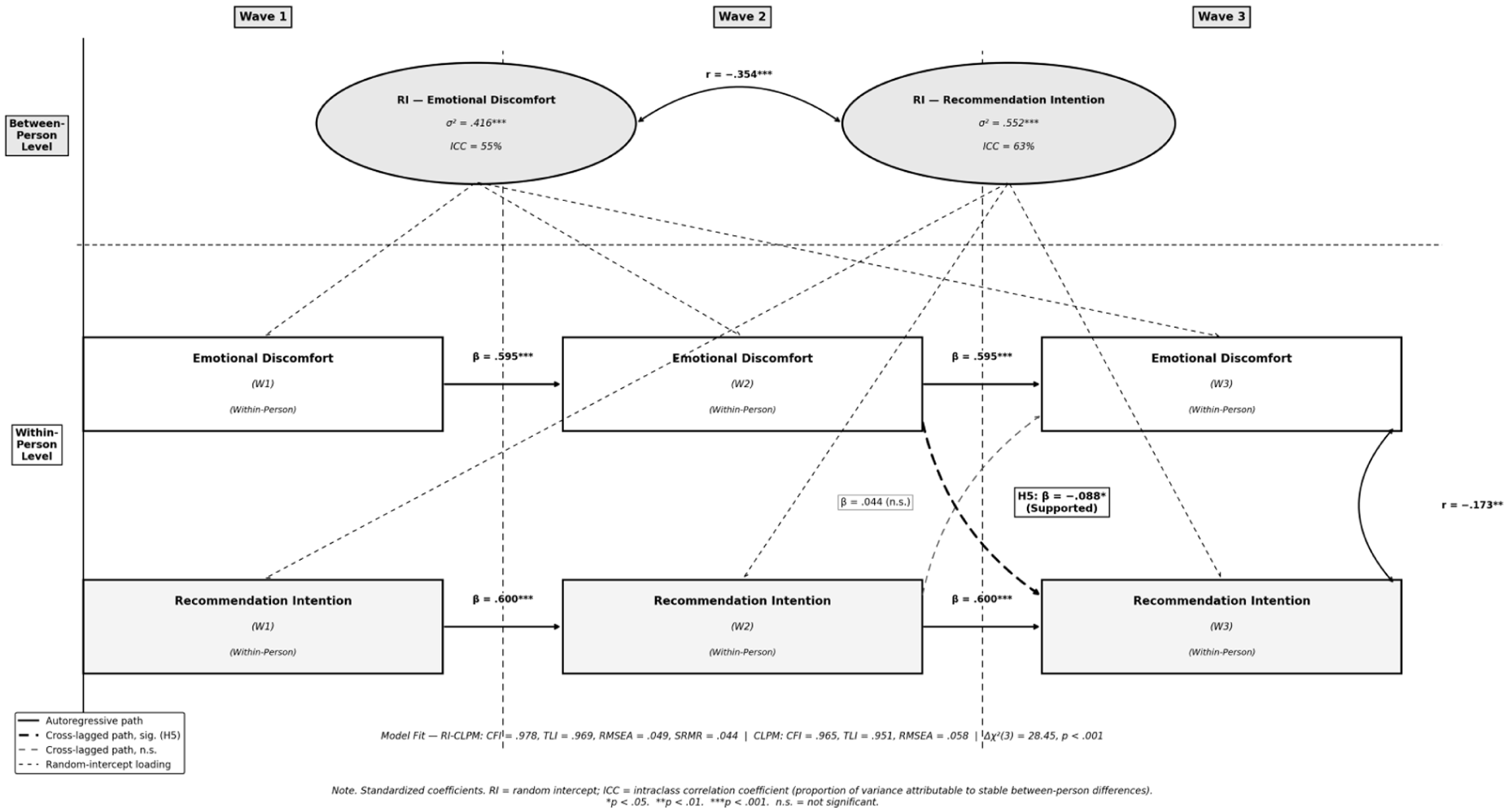
Supporting Hypothesis 4, between-person variance components were significant for emotional discomfort (σ2(Variance) = 0.416, p < .001) and recommendation intention (σ2(Variance) = 0.552, p < .001), with intraclass correlation coefficients of 55% and 63%, respectively. More than half to nearly two-thirds of what appears as variance in visitor responses across time actually reflects stable individual characteristics predating the visit. Designs not partitioning between-person stability do not measure the effects of the visit—they measure stable personality traits. Figure 4 presents the full Random-Intercept Cross-Lagged Panel Model path diagram with standardized within-person and between-person parameter estimates.
Random-Intercept Cross-Lagged Panel Model; N = 385.
Supporting Hypothesis 5, the within-person cross-lagged path from emotional discomfort at Wave 2 to recommendation intention at Wave 3 was significant and negative (β = −.088, p = .039). When a visitor experiences more discomfort than is personally typical at 6 months, they subsequently exhibit lower-than-personally-typical advocacy at 12 months. The reverse cross-lagged path was not significant (β = .044, p = .328), confirming directional specificity. A negative contemporaneous correlation at Wave 3 (Pearson Correlation Coefficient = −.173, p = .001) further confirmed the within-occasion discomfort–advocacy association. Full parameter estimates appear in Table 6.
Parameter Estimates From the Random-Intercept Cross-Lagged Panel Model (N = 385).
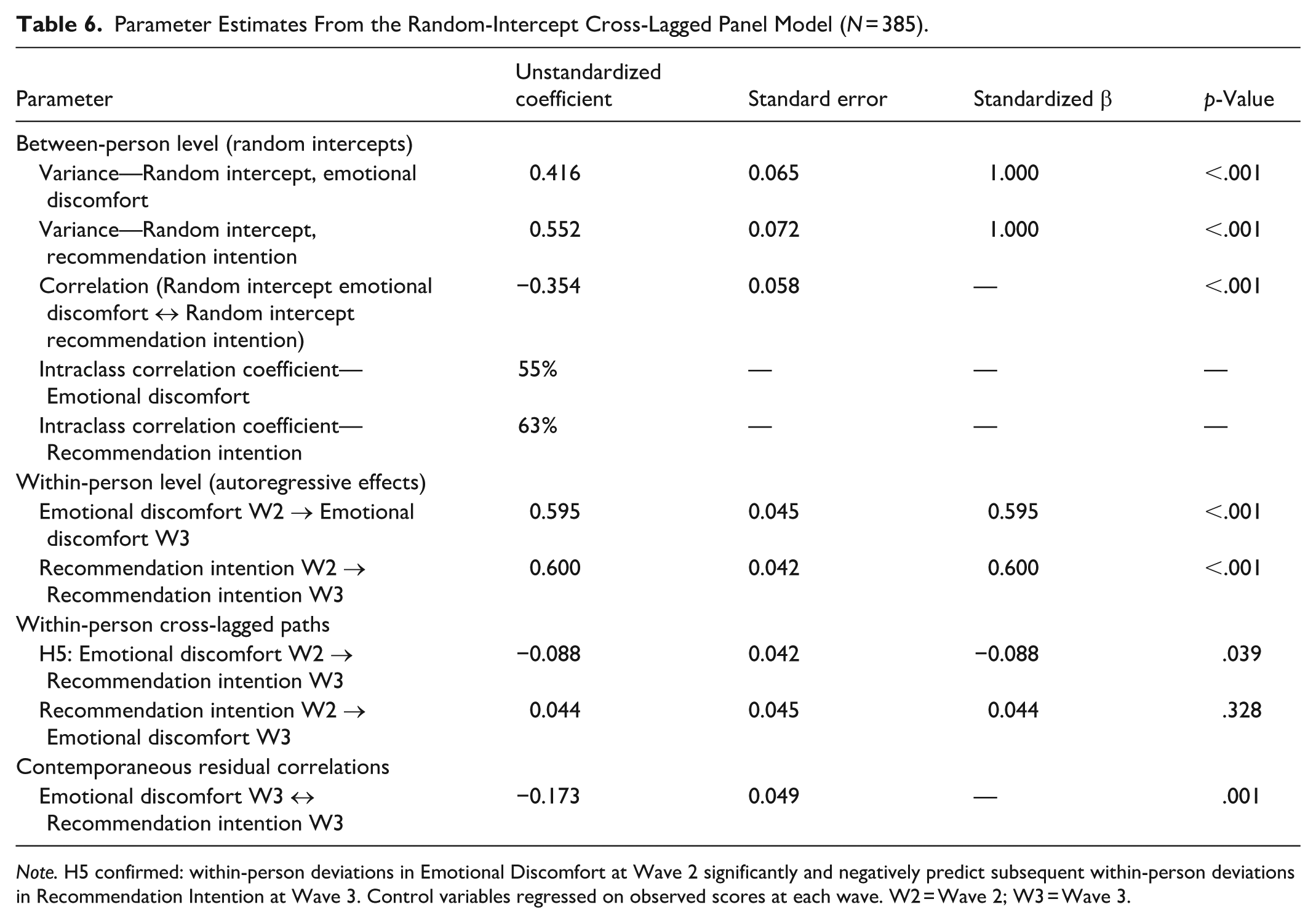
Note. H5 confirmed: within-person deviations in Emotional Discomfort at Wave 2 significantly and negatively predict subsequent within-person deviations in Recommendation Intention at Wave 3. Control variables regressed on observed scores at each wave. W2 = Wave 2; W3 = Wave 3.
Discussion
Ethical Scrutiny as a Site-Conditioned Mechanism in Heritage Tourism
The finding that moral reflection prospectively predicts ethical scrutiny (β = .350) invites reconsideration of post-experience cognition as a generative rather than reactive process in heritage tourism—but this reconsideration is explicitly bounded to the institutional conditions of Auschwitz-Birkenau. Heritage tourism research has largely treated post-visit cognition as a passive residue of on-site experience—something that fades or persists but does not itself constitute a distinct form of engaged meaning-making (Sharpley, 2022; Tung & Ritchie, 2011). Within the specific site conditions of the present study, these data challenge that framing directly: ethical scrutiny represents post-experience cognition as a generative rather than reactive process, one that carries demonstrable consequences for whether the encounter ultimately yields personally transformative outcomes.
A critical competing hypothesis warrants direct engagement. If post-visit moral engagement deepens rather than resolves discomfort, the introduction of ethical scrutiny as an adaptive construct may be circular—a label applied to what is, in reality, a delayed stress response or a form of moral injury. The moral injury literature (Currier et al., 2014; Litz et al., 2009) documents precisely this pattern: sustained engagement with perceived moral transgression amplifies rather than attenuates burden when the individual cannot escape a sense of culpability or complicity. The rumination literature (Nolen-Hoeksema et al., 2008) similarly establishes that cyclical, backward-anchored processing of negative affect produces prolonged disturbance rather than resolution. Both constitute credible competing pathways given the inherently ambiguous moral position of atrocity-site visitors.
The present study addresses this challenge at three levels. At the theoretical level, the distinction between adaptive ethical scrutiny and maladaptive moral rumination rests on the three dimensions elaborated in Section “Ethical Scrutiny and Its Distinction From Moral Rumination”: structural organization (scrutiny is organized around answerable evaluative questions; rumination is cyclical and purposeless), temporal orientation (scrutiny is forward-directed toward moral agency and responsibility; rumination is backward-anchored in self-referential counterfactual processing), and institutional scaffolding (Auschwitz-Birkenau’s commemorative infrastructure supplies the interpretive architecture that channels diffuse distress into structured evaluative questions). These distinctions generate an empirically discriminable prediction: if ethical scrutiny is genuinely adaptive, its positive association with emotional discomfort at Wave 2 should not translate into suppressed advocacy, because the regulatory reconstitution of distress as morally meaningful should interrupt the discomfort-to-avoidance pathway.
At the empirical level, the positive concurrent association between ethical scrutiny and emotional discomfort at Wave 2 (β = .356) is reinterpreted within an engagement-based rather than suppression-based regulatory framework. Visitors who process the experience more deeply also feel more—this co-occurrence is precisely what the engine–mechanism–content architecture predicts. The crucial empirical question is whether this co-occurrence produces the same long-run behavioral consequences as unregulated discomfort. The Random-Intercept Cross-Lagged Panel Model data indicate that it does not: the within-person pathway through which discomfort suppresses advocacy operates at the level of unresolved, baseline-exceeding emotional burden—not at the level of scrutiny-mediated engagement.
The institutional scaffolding dimension makes the adaptive function of ethical scrutiny contingent on site characteristics specific to Auschwitz-Birkenau. At dungeon attractions, fictionalized exhibits, or narratively contested battlefield sites lacking comparable commemorative infrastructure, unambiguous moral narrative, and documentation density, the reflection-to-scrutiny pathway may not be activated; diffuse distress may produce ruminative rather than evaluative processing. This is a theoretically motivated cross-spectrum prediction for future empirical testing. Connections to transformative experience theory (Pine & Gilmore, 1999; Tung & Ritchie, 2011) and post-traumatic growth literature (Park, 2005; Tedeschi & Calhoun, 2004) are offered as theoretical propositions supported within the present site conditions; their generalizability to lighter or more commercially oriented dark tourism contexts requires empirical investigation.
Voyeuristic Curiosity as a Potential Catalyst for Adaptive Regulation: Ethical Boundaries and Empirical Limits
Three qualifications are required before any interpretation of the voyeuristic curiosity pathway. First, voyeuristic curiosity was operationalized around authentic, unfiltered historical evidence rather than morbid fascination; this framing may have recruited a less ethically problematic variant than broader operationalizations would capture. Second, Auschwitz-Birkenau bears obligations to survivor communities and collective memory that the present data cannot adjudicate; the ethical question of whether voyeuristic visitors should visit, and on what terms, remains beyond the scope of empirical survey research. Third, the finding that psychological adaptation is available to voyeuristically motivated visitors does not constitute grounds for endorsing such motivation as desirable or equivalent to educational engagement. The ethical questions surrounding curiosity-driven atrocity-site visitation are not resolved by these psychological data.
That voyeuristic motivation can activate adaptive regulation (β = .137) challenges the motivational hierarchy that has structured dark tourism scholarship for two decades. That literature has consistently positioned educational significance as the morally acceptable motivation and voyeuristic curiosity as its problematic counterpart—a hierarchy that implies voyeuristic visitors are less likely to derive meaningful outcomes from atrocity sites and may contribute to the commodification of suffering (Dalton, 2019; Sharpley & Stone, 2009). The present data complicate that binary without dissolving its ethical dimensions.
The theoretical mechanism is motivated reasoning (Kunda, 1990): voyeuristically curious visitors, confronted with social norms demanding reverence at Auschwitz-Birkenau, experience the most acute form of the dissonance the engine generates, and this heightened pressure produces precisely the regulatory effort that educational visitors deploy more automatically. The legitimizing form of cognitive reappraisal—reframing curiosity about unfiltered evidence as a morally necessary dimension of authentic witness-bearing—is not morally equivalent to the integrative framing deployed by educationally motivated visitors, but it produces comparable regulatory benefits: reduced discomfort (β = −.406 for the reappraisal–discomfort path) and enhanced fulfillment (β = .351). This legitimizing function does not render voyeuristic motivation morally unproblematic; it describes a psychological process available within the specific institutional conditions of Auschwitz-Birkenau.
Future research should distinguish conditions under which voyeuristic curiosity produces adaptive regulation versus morally disengaged spectating, and examine how these pathways vary with site intensity and institutional scaffolding across Stone’s (2006) dark tourism spectrum.
Between-Person Stability and the Within-Person Cost of Unresolved Discomfort
The finding that 55% to 63% of the variance in emotional discomfort and recommendation intention is attributable to stable between-person differences demands reconsideration of how the field models visitor responses. The methodological point extends beyond a statistical preference for the Random-Intercept Cross-Lagged Panel Model over the conventional cross-lagged panel model. What the between-person variance magnitude establishes is that the vast majority of what prior longitudinal studies have measured as a dynamic response to the visit is actually pre-existing personality variance that was present before the visitors arrived. A conventional cross-lagged panel model applied to these data would conflate trait-level associations with situational dynamics—a systematic measurement error, not a minor methodological preference.
Three dimensions of empirical non-triviality distinguish the within-person finding from a merely confirmatory result. First, the within-person effect survives rigorous decomposition of between-person trait variance. The Random-Intercept Cross-Lagged Panel Model partitions 55% and 63% of total variance in discomfort and recommendation intention, respectively, to stable individual dispositions before estimating the within-person cross-lagged path. That the within-person effect remains statistically significant (β = −.088, p = .039) after this decomposition means the effect is demonstrably operative at the level of genuine intra-individual change—not an artifact of who those visitors are as persons. Second, the effect is directionally asymmetric. The cross-lagged path from emotional discomfort to advocacy is significant (β = −.088, p = .039); the reverse path from advocacy to discomfort is not (β = .044, p = .328). In a domain where reverse causation—anticipated advocacy intentions retrospectively shaping emotional reports—is a plausible competing explanation, this asymmetry provides evidence of directional specificity. Third, the magnitude of between-person stability itself challenges situational accounts of dark tourism response—accounts that treat visitor responses as primarily determined by the characteristics of the site and visit experience rather than by dispositional factors predating the visit. This reorientation has fundamental consequences for intervention evaluation: designs using between-person outcome comparisons primarily measure trait variance, not intervention effects; within-person repeated-measures designs are necessary for unbiased evaluation.
The adaptive-versus-maladaptive processing distinction elaborated in Sections “Ethical Scrutiny and Its Distinction From Moral Rumination” and “Ethical Scrutiny as a Site-Conditioned Mechanism in Heritage Tourism” provides a theoretical framework for interpreting the within-person suppression pathway. When within-person emotional discomfort exceeds an individual’s own typical level at six months post-visit, it signals that post-visit psychological processing has been insufficient to reconstitute distress as morally meaningful—that the regulatory mechanisms of ethical scrutiny or cognitive reappraisal have not successfully converted the affective content of the encounter into a sense of moral agency. The behavioral consequence—suppressed advocacy at 12 months—is the downstream signature of failed regulation at the individual level. This interpretation remains appropriately bounded to the site conditions studied.
Conclusion
The dark tourism experience does not end when visitors exit the gate. Within atrocity sites of exceptional moral intensity, this study has offered an empirically grounded account of how profoundly distressing visits yield personally meaningful outcomes through a construct—ethical scrutiny that positions post-visit cognition not as a passive residue of on-site experience but as a generative, adaptive process with real psychological consequences. Four principal conclusions emerge, each explicitly bounded by the singular institutional and moral conditions of Auschwitz-Birkenau.
First, within this specific site context, on-site moral reflection triggers post-visit ethical scrutiny—a structured, temporally delayed evaluative process that enhances cognitive fulfillment and co-occurs with emotional engagement rather than suppressing it. This finding reconceptualizes post-experience cognition in heritage tourism as an active rather than passive process, though the mechanism may be generalizable beyond atrocity sites only where similarly dense institutional scaffolding and unambiguous moral narrative are present.
Second, within the institutional conditions of Auschwitz-Birkenau, both educational and voyeuristic motivations activate cognitive reappraisal—establishing that adaptive emotional regulation is available to motivational profiles historically regarded as morally problematic. This finding challenges the deficit model of voyeuristic curiosity while explicitly preserving the ethical ambiguity that attaches to curiosity-driven engagement at sites of this moral gravity. Motivational frameworks should separate psychological consequences from ethical valence, while recognizing that the former cannot resolve questions about the latter.
Third, 55% to 63% of the variance in visitor emotional and behavioral responses is attributable to stable individual differences rather than the visit itself. This challenges field practices treating visitor responses as primarily situationally determined, and establishes the Random-Intercept Cross-Lagged Panel Model as a methodologically informative diagnostic approach for longitudinal tourism research, whose replication at other sites and with other constructs would strengthen this methodological claim.
Fourth, a within-person dynamic links elevated emotional discomfort to subsequent suppression of recommendation intention—a genuine intra-individual behavioral consequence of insufficient post-visit regulatory processing that prior cross-sectional and conventional longitudinal designs could not detect. Collectively, these site-conditioned findings advance a process-oriented, person-specific, and ethically informed account of dark tourism experience at the most morally saturated end of the spectrum, and provide a methodological template whose cross-spectrum applicability remains an important open question.
Implications
Theoretical Implications
All three contributions below are explicitly bounded by the site conditions of Auschwitz-Birkenau and should be understood as site-conditioned findings rather than claims of unrestricted generalizability.
First, ethical scrutiny—as a temporally and functionally specified extension of moral reflection within high-intensity dark tourism contexts—resolves an explanatory gap that the dark tourism literature has documented but not adequately addressed. Prior research has consistently identified the paradox of meaningful distress at atrocity sites but has referenced Cognitive Dissonance Theory, Emotion Regulation Theory, and Moral Psychology in parallel without specifying the functional architecture through which these traditions must connect (Hosany et al., 2020; Zhang et al., 2023). The engine–mechanism–content framework provides this architecture, and ethical scrutiny names the temporally delayed, evaluatively structured mechanism through which dissonance pressure is converted into meaning-based outcomes. The construct’s theoretical adjacency to moral reflection is acknowledged; its discriminant validity is supported rather than conclusively established. Future research should refine the conceptual boundary and test whether the reflection-to-scrutiny pathway replicates at sites of varying moral intensity. This requires revision of models treating moral engagement as a simple, undifferentiated response to emotionally intense sites: on-site moral reflection and post-visit ethical scrutiny are empirically distinct constructs (Heterotrait-Monotrait Ratio = 0.61) operating through different temporal and functional logics, and conflating them produces systematically incomplete accounts of the experience trajectory. The introduction of ethical scrutiny also requires a revision of the boundary within which Folkman’s (2001) meaning-based coping framework has been applied in the tourism literature. Prior applications have emphasized meaning-making as a response to loss or crisis within tourism contexts (Morgan & Pritchard, 2005; Pritchard et al., 2011). The present study extends this framework to voluntary atrocity-site visitation and demonstrates that the conditions for meaning-based coping are reproducible through institutional design—specifically, through the combination of sufficient moral salience and adequate interpretive scaffolding. This extension is conditional on site characteristics rather than intrinsic to voluntary tourism encounters more broadly.
Second, the reconceptualization of voyeuristic motivation as a potential activator of adaptive regulation within this specific context challenges the normative hierarchy embedded in the dark tourism motivation literature. The deficit model of voyeuristic curiosity—which positions curiosity-driven engagement as morally suspect and less likely to produce meaningful outcomes—requires empirical revision. The motivated reasoning account (Kunda, 1990) provides a more precise theoretical prediction: voyeuristic visitors are precisely those most motivated to deploy legitimizing reappraisal, because they experience the most acute dissonance between their motivational configuration and the normative demands of the site. This prediction is confirmed by the significant voyeuristic curiosity → cognitive reappraisal path (β = .137, p = .005) and its downstream consequences for discomfort and fulfillment. The field requires motivational frameworks that separate the ethical valence of a motivation from its psychological consequences, since the present data demonstrate these are not identical. The present data do not constitute grounds for endorsing voyeuristic motivation as an acceptable or equivalent form of engagement. The relevant policy question shifts from who should visit to what institutional conditions produce adaptive versus maladaptive outcomes across motivational profiles, and this shift requires cross-spectrum empirical investigation before it can be treated as established.
Third, the demonstration that between-person trait variance constitutes 55% to 63% of total variance in key constructs carries direct consequences for how the field interprets its own longitudinal literature. Standard cross-lagged panel models—the methodological workhorse of longitudinal tourism research—cannot separate stable trait associations from genuine within-person change. The result is a literature that measures trait-level personality associations while interpreting them as evidence of situational effects, visit impacts, and intervention outcomes. The Random-Intercept Cross-Lagged Panel Model is not primarily a novel technique; it functions as a methodological diagnostic that reveals the extent of this confound in specific datasets. The present demonstration—that applying it to longitudinal dark tourism data reveals a between-person variance magnitude of 55% to 63%—establishes a benchmark against which the field can evaluate the severity of the confound in other datasets. Whether these intraclass correlation coefficient figures are characteristic of longitudinal dark tourism research broadly or specific to this site remains to be established through replication.
Managerial Implications
Four site-conditioned implications follow for high-intensity memorial site management, each grounded in the specific empirical finding that motivates it.
First, because moral reflection prospectively predicts ethical scrutiny (β = .350) and ethical scrutiny in turn predicts cognitive fulfillment (β = .235) at this site, interpretive infrastructure should extend beyond the physical site visit. Concluding panels, exit spaces, or guidebook sections that ask visitors what responsibilities bearing witness places upon them—and that explicitly name post-visit reflection as a valued form of engagement—can catalyze the specific cognitive process through which meaning is constructed. Operationally, this could involve structured reflection prompts at exit spaces, downloadable post-visit guides, or partnerships with educational institutions that assign post-visit writing tasks to group visitors.
Second, because cognitive reappraisal is activated by both educational (β = .298) and voyeuristic (β = .137) motivational profiles within this context, interpretive programming may benefit from designing reframing opportunities accessible to motivationally heterogeneous visitor populations. Interpretive staff may benefit from awareness of the legitimizing reappraisal pathway—not to endorse voyeuristic motivation but to be prepared to redirect curiosity-driven questions toward the moral and historical significance of bearing authentic witness. This is a facilitative rather than an endorsing function.
Third, the within-person finding that a wave-specific elevation in emotional discomfort at six months prospectively suppresses advocacy at 12 months (β = −.088) points to the practical value of post-visit outreach timed to the period when emotional processing is most vulnerable. Memorial sites could deploy follow-up communications at the 2-to-4-week mark and at 3-month intervals—not for marketing purposes but as curated resources connecting visitors to survivor testimonies, academic readings, human rights organizations such as the USC Shoah Foundation, and contemporary relevance content—explicitly framing discomfort as morally significant rather than as evidence of a poor tourism choice.
Fourth, the large between-person variance (intraclass correlation coefficients = 55%–63%) argues against one-size-fits-all interpretive approaches. Memorial sites with digital infrastructure could offer tiered interpretive tracks calibrated to visitor characteristics: a historical documentation track emphasizing archival evidence; a survivor testimony track centering human narrative and personal witness accounts; and a contemporary relevance track connecting historical events to present-day human rights issues.
Limitations and Future Research
Most importantly, this study is derived from a single site of exceptional moral intensity. Auschwitz-Birkenau’s formal commemorative infrastructure, unambiguous moral narrative, and extensive historical documentation create conditions unlikely to characterize the dark tourism spectrum broadly. The ethical scrutiny mechanism, the voyeuristic reappraisal pathway, and the magnitude of between-person variance are all contingent on these site conditions. The present findings should not be generalized to lighter, more commercially oriented, or more narratively contested dark tourism sites without cross-spectrum replication. Future research should systematically examine the model’s applicability across Stone’s (2006) full dark tourism spectrum, using multi-site comparative designs that vary site intensity, interpretive infrastructure, and narrative clarity. Cross-spectrum replication is the single highest-priority methodological direction for this research program.
Second, measuring motivations at Wave 1—immediately post-visit—means the study captures activated motivational salience in the immediate post-visit cognitive state rather than pure pre-visit intentions. A four-wave design incorporating a pre-visit measurement wave would substantially strengthen causal inference regarding the motivation-to-regulatory-process pathways, and would allow examination of whether anticipatory motivations differ systematically from post-hoc motivational reports in normatively regulated atrocity-site contexts.
Third, the Random-Intercept Cross-Lagged Panel Model was parsimoniously specified given sample-size constraints. Future research with larger samples could extend this model to include the full motivational-regulatory process, examining whether ethical scrutiny itself shows meaningful within-person fluctuation over time and whether its regulatory benefits are sustained or attenuated at 12 months. Latent Profile Analysis could identify distinct visitor typologies defined by motivational configurations, enabling more precise matching of interpretive interventions to visitor profiles. Qualitative longitudinal designs could capture the phenomenology of ethical scrutiny in ways that survey methodology cannot. Future scale development work should also consider whether the conceptual boundary between moral reflection and ethical scrutiny can be further sharpened through independent validation studies, including qualitative longitudinal methods that track the developmental trajectory from on-site moral shock to post-visit structured evaluation.
Footnotes
Appendix A
Acknowledgements
This study was supported by Kunshan YiZhiDao Consulting Co., Ltd., Kunshan, which provided funding for the research and facilitated the collection and organization of the data used in this investigation. The authors express their sincere gratitude to the company for its generous financial contribution and logistical assistance, without which this work would not have been possible.

Author Contributions
Funding
The author disclosed receipt of the following financial support for the research, authorship, and/or publication of this article: This study was supported by Kunshan YiZhiDao Consulting Co., Ltd., Kunshan, China, which provided funding for the research.
Declaration of Conflicting Interests
The author declared no potential conflicts of interest with respect to the research, authorship, and/or publication of this article.