






Abstract
This study investigates how host–guest interactions drive sustainable innovation in small tourism businesses (STBs) amid rural destination evolution. Grounded in the value co-creation theory and the tourism area life cycle framework, the research draws on 40 in-depth interviews and field observations (2018–2024) to explore how STBs and guests collaboratively generate innovations. This study indicates that STBs can strategically leverage host-guest interactions to navigate contemporary challenges in various stages of development. Findings highlight the pivotal role of value co-creation—encompassing co-production and value-in-use. Specifically, co-production integrates resources from STBs and guests to foster innovative operational practices, while value-in-use leverages relational dynamics to tailor context-sensitive offerings. These insights challenge passive views of resource-constrained STBs in sustainable innovation. It advances theoretical understanding of businesses’ sustainable innovation, value co-creation theory, and tourism area life cycle framework. It offers practical guidance for STBs and destination management organizations within evolving rural destinations.
Keywords
Introduction
Rural tourism promotes sustainable development in rural areas. However, as rural destinations progress through their life cycles (Butler, 1980, 2025; Su et al., 2024), they increasingly encounter complex sustainability challenges—many of which stem from the growing volume of tourist arrivals and the associated intensifying pressures on local resources and communities (Yang et al., 2021). While extant research on sustainable behavior has predominantly focused on tourist perspectives (Dolnicar, 2020), the critical role of small tourism businesses (STBs) in addressing sustainability challenges remains relatively underexplored (Font et al., 2016; Sampaio et al., 2011). This research gap is particularly salient given that the service provision in rural tourism is largely dominated by STBs—typically employing fewer than 50 people—including bed and breakfasts (B&Bs), bars, restaurants, and farm stays (Maziliauske, 2024). Beyond delivering essential tourism services, these STBs are also influential actors capable of shaping and encouraging more sustainable behaviors among visitors (M.-Y. Wu, Tong, et al., 2022).
As self-sustaining organizations within highly competitive markets, these STBs face considerable challenges in aligning sustainability initiatives with the need for financial viability (Fraj et al., 2015; Ye et al., 2018). To navigate this tension, sustainable innovation has emerged as a strategic pathway with significant potential (Buijtendijk et al., 2018; F. Liu et al., 2026). In the context of STBs, sustainable innovation refers to their ongoing efforts to develop new or improved products, services, and operational processes that advance environmental, social, and economic sustainability, while responding to the dynamic challenges of destination development. These efforts are critical, because STBs’ sustainable innovation enhances their own competitiveness—through reduced costs associated with sustainability practices and increased profitability of their service offerings (Font et al., 2016; Maziliauske, 2024). Furthermore, by diffusing innovative practices, technologies, and capabilities, STBs’ sustainable innovation generates positive environmental externalities and fosters knowledge spillovers that benefit neighboring businesses, thereby amplifying their impact beyond the individual enterprise (Sharma et al., 2020).
Previous research on corporate sustainable innovation indicates that successful innovation is contingent upon on access to key resources, including skilled labor, creative knowledge, social capital, financial capital, and advanced technology (Kallmuenzer, 2018). Benchmarking with large corporates, STBs generally have limited access to these resources. STBs are characterized by intensive and ongoing interactions with their guests (Sharpley, 2014; Shin et al., 2019; Tao et al., 2024). Earlier studies highlight that such host-guest interaction can greatly shape tourists’ green behavior (S. Li et al., 2021; Wang et al., 2018). Building on this, this study argues that host-guest interaction can play a pivotal role in shaping STBs’ sustainable innovation—an inherently collaborative and value-co-creation-oriented process.
Nevertheless, this co-creation process is highly context-dependent and likely to vary across different stages of tourism destination development. To account for this contextual variability, this study adopts the Tourism Area Life Cycle model in conjunction with value co-creation theory as its theoretical foundations. The overarching aim is to investigate how hosts and guests jointly co-create sustainable innovation at distinct phases of a rural destination’s evolution.
This study makes several contributions to the sustainable tourism literature. First, it develops a dynamic host-guest value co-creation model for STBs’ sustainable innovation, situated within the context of the rural destination life cycle. This study indicates that, despite resource constraints, STBs can access critical innovation inputs and mobilize innovation systems through strategic host–guest interactions at specific stages of destination evolution. Second, the research highlights the strategic value of tourists’ embedded resources and relational capabilities within the co-creation process, revealing how these elements empower small firms to innovatively tackle sustainability challenges. By illuminating the mechanisms through which social interactions drive sustainable innovation, the study offers practical implications for sustainable destination management, emphasizing the active role of tourists and the potential of relational engagement in fostering long-term resilience and innovation within rural tourism contexts.
Literature Review
This study integrates the tourism area life cycle model and value co-creation theory to examine small tourism business (STB) sustainable innovation across destination evolution. The tourism area life cycle model (Butler, 1980, 2025) contextualizes the study by highlighting stage-specific sustainability challenges, framing sustainable innovation as a dynamic, context-dependent strategy. Value co-creation theory (Prebensen et al., 2013; Vargo & Lusch, 2007) conceptualizes innovation as a collaborative process driven by host–guest interactions. Together, these frameworks elucidate how STBs and tourists co-create sustainable innovation to address evolving challenges at different stages of destination development.
Sustainability Challenges During the Tourism Area Life Cycle
Sustainability in tourism is commonly framed through the triple bottom line, encompassing environmental, social, and economic dimensions (Bramwell & Lane, 2011). Within the tourism area life cycle (Butler, 1980, 2025), sustainability challenges—defined as complex issues arising across these three dimensions— vary notably by destination stage. As visitor volumes fluctuate and destinations approach or exceed carrying capacity, distinct challenges emerge: early stages may see minimal impacts, while later stages—such as development, consolidation, and stagnation—are often marked by environmental degradation (e.g., waste, pollution), social tensions (e.g., community opposition), and economic inefficiencies (e.g., income leakage; Su et al., 2024; Yang et al., 2021).
In response to these challenges, earlier mainstream research usually identifies rising visitor numbers, particularly in under-resourced destinations, as a primary driver of these pressures (Butler, 2025; Rodríguez et al., 2008). Mitigation strategies commonly emphasized visitor quotas and the promotion of tourist responsible behavior (Qiu et al., 2022; J. Wu et al., 2022). While these approaches are useful, they often overlooked the potential for tourists to be positive agents of change.
Recent studies on the transformative power of sustainable tourism call for the return of tourism to the principles of hospitality and connection, advocating for the creation of stakeholders’ positive impacts rather than merely minimizing negative ones (Akhoundoghli & Boluk, 2025; Fennell, 2014, 2018; Sørensen & Jensen, 2015). It particularly emphasizes leveraging tourists’ positive influence and social connections to enhance sustainable capacity of local stakeholders (Higgins-Desbiolles & Bigby, 2022). The transformative power of sustainable tourism highlights three thematic areas: localizing, socializing, and regenerative tourism (Akhoundoghli & Boluk, 2025); the circular economy in tourism (Tomassini et al., 2024); and tourism sustainability ethics (Fennell, 2018). The stream of localizing, socializing, and regenerative tourism emphasizes fostering social encounters, building meaningful connections and constructing reciprocal relationships through travel practices and experiences, thereby enhancing the sustainable capacity of local communities and businesses. Specifically, localizing tourism places an emphasis on the rights and capacities of local communities. Socializing tourism advocates that tourism be responsive and accountable to the societies where it operates within. Regenerative tourism deepens the relationality of actors to improve well-being and enhance the environment of the places where tourism occurs. The stream of circular economy in tourism emphasizes the collaborative efforts of suppliers and tourists to redesign processes, recycle materials, and minimize waste (Tomassini et al., 2024). It can be understood as a disruptive paradigm capable of enacting local regenerative processes for places, natural assets, and living creatures through a multiplicity of novel connections and networks among stakeholders. Circular economy highlights that sustainable behavior is not solely about individual practices but requires stakeholders’ collaboration of resource management. The stream of tourism sustainability ethics provides the normative foundation for these transformative practices. It reframes the challenge from a technical or managerial problem to a moral one. Fennell (2018) argues that the various challenges inherent in tourism development are, in essence, ethical dilemmas arising from complex relational dynamics. Sustainability ethics in tourism calls for an ethical framework that aligns with both present and future existential needs, emphasizing the importance of managing relationships with contemporaries, future generations, and nature. This ethical turn involves seeking meaning in relationships and practicing virtues within the embedded destination community, necessitating to find the right type of ethics aligning with both present and future existential needs.
These studies, though with different emphasis, all indicate that addressing sustainability challenges requires more than managing visitor demand. It demands coordinated engagement among diverse stakeholders, including local governments, residents, and tourism businesses (Su et al., 2024; J. Wu et al., 2023; Yang et al., 2021), underpinned by the transformative principles of regeneration, circularity, and ethics (Akhoundoghli & Boluk, 2025). Despite this conceptual framing, limited scholarly attention has been paid to the potential of small tourism businesses (STBs) to serve as micro-level agents of such transformative change, particularly through the lens of their everyday host-guest interactions. While M.-Y. Wu, Wu, et al. (2022) have highlighted STBs’ engagement in community citizenship behavior, the potential for these firms to drive sustainability practices through proactive, relational, and ethically interactions remains a critical yet neglected area.
Small Tourism Business Sustainable Innovation
Sustainable innovation refers to intentional organizational changes—driven by pro-environmental and pro-social values—that enhance service offerings and operational practices to advance environmental, social, and economic goals while maintaining economic viability (Buijtendijk et al., 2018; Sharma et al., 2020). For small tourism businesses (STBs), it involves aligning day-to-day operations and service design with sustainability imperatives (Z. Liu, 2003; Tyrrell et al., 2012). Environmental goals focus on reducing ecological footprints through resource conservation (Sampaio et al., 2011). Social goals emphasize community well-being, cultural heritage protection, and meaningful host–guest interactions (Maziliauske, 2024). Economical goals highlight the long-term business resilience and equitable stakeholder benefits (Bramwell & Lane, 1993). Achieving these outcomes requires critical reflection on resource use and market norms, as well as creative problem-solving to address interconnected sustainability challenges (Bramwell & Lane, 2011). Common practices include adopting sustainability certifications, offering eco-friendly experiences, reducing waste (e.g., food, water, energy), reusing materials, and fostering fair labor and community development initiatives (Garay et al., 2018; Z. Liu, 2003; Tzschentke et al., 2008).
Sustainable innovation in tourism is driven by a combination of internal business-level factors and external stakeholder-level influences (Farooq et al., 2021; Koch et al., 2020). Internally, key drivers include economic motivation (e.g., cost savings, improved profitability, and brand reputation), access to resources (e.g., financial capital, sustainability knowledge, and training), organizational capabilities (e.g., management expertise, entrepreneurial orientation, and learning capacity), and social-psychological factors such as personal values and a sense of responsibility among staff (Font et al., 2016; Fraj et al., 2015; Garay et al., 2018; Wang et al., 2018). These factors are frequently examined through established theoretical lenses, such as resource-based view, dynamic capabilities, and motivation theory. These studies use quantitative methods (e.g., SEM, cluster analysis) to assess their relationship with innovation outcomes (e.g., Font et al., 2016).
Externally, stakeholder influences—such as government policies, laws and regulations, community norms, media attention, and industry standards—play a pivotal role in promoting sustainable innovation, particularly by reinforcing compliance, legitimacy, and normative expectations (Kornilaki & Font, 2019; Radwan et al., 2012). For instance, government policies have been shown to directly improve environmental practices (Radwan et al., 2012), while community and industry norms influence owner-manager attitudes and behaviors (Kornilaki & Font, 2019). These studies often rely on qualitative methods, particularly in-depth interviews, to capture how external pressures translate into internal motivations and practices (Kornilaki et al., 2019).
Despite extensive research on these drivers, the role of host–guest interactions—a central and recurring feature of STBs—in fostering sustainable innovation remains underexplored. This highlights a significant gap, particularly in understanding how relational, co-creative processes contribute to sustainability outcomes at the business level.
Host-Guest Interactions in Small Tourism Businesses
Host-guest interactions are a defining feature of tourism, characterized by the dynamic interplay between transient guests and relatively stable hosts (J. Li et al., 2024; Pearce, 2005; Sharpley, 2014). In STBs, these interactions are central to the visitor experience, as guests seek authentic, personalized encounters and hosts deliver tailored services (Pearce, 2005). Occurring within limited timeframes and shared physical spaces, they encompass both verbal exchanges—such as conversations, service interpretations, and feedback—and nonverbal cues, including gestures and shared activities like photography (Maoz, 2006). Beyond face-to-face contact, digital platforms have expanded the scope of host–guest interaction, enabling continuous engagement before, during, and after travel through online reviews, bookings, and user-generated content (M.-Y. Wu et al., 2017; Zhao & Agyeiwaah, 2024). Both face-to-face and online interactions shape the perceptions, attitudes, experiences, and behaviors of hosts and guests, making them a critical area of study in tourism research (Maoz, 2006).
The impact of host-guest interactions in STBs has been widely examined. Previous studies demonstrate that such interactions positively affect sales performance (Maoz, 2006), social control (Di Domenico & Lynch, 2007), and prosocial behavior (X. Li et al., 2022). Notably, the reciprocal nature of host-guest interactions has been found to promote the adoption of sustainable practices. Hosts often adopt pro-environmental behaviors to meet guest expectations, aiming to enhance green consumption experiences (J. Liu et al., 2024; Wang et al., 2018). For instance, Wang et al. (2018) found that rural hosts can positively shape tourists’ green behavior through interpersonal strategies such as humor, social approval, and concerns for “face.” Similarly, Y. Liu et al. (2024) demonstrated that tourists have a stronger intention to conduct pro-environmental behavior in destinations where hosts behave pro-environmentally, with perceptions of pro-environmental atmosphere and moral inspiration as the mediating factors.
Despite this growing body of work, the role of host–guest interactions in driving sustainable innovation within STBs remains underexplored. While prior studies emphasize their impact on individual attitudes and behaviors, few investigate how these dynamic exchanges stimulate innovative, sustainability-oriented practices at the business level. This research addresses that gap by exploring how host–guest interactions contribute to the co-creation of sustainable innovation in STBs.
Value Co-Creation Theory: Linking Host-Guest Interactions and Sustainable Innovation
Value co-creation is a well-established concept derived from service-dominant logic, originating from the marketing literature and emphasizing that consumers are active participants to value creation rather than passive recipients (Vargo & Lusch, 2004, 2007). This perspective has been widely adopted in tourism research to explore stakeholder interactions (Cabiddu et al., 2013; Lin et al., 2017), consumer behavior (Assiouras et al., 2019; Font et al., 2021), and business innovation (Carvalho & Alves, 2022; Chen et al., 2017). For example, Assiouras et al. (2019) demonstrated that value co-creation, comprising co-production and value-in-use, positively influences consumer citizenship behavior in tourism settings. Similarly, Chen et al. (2017) developed a theoretical framework linking co-creation dynamics, service innovation, and competitive advantage. These insights position value co-creation as a valuable lens for analyzing host–guest interactions and their potential to drive sustainable innovation in STBs. From this perspective, collaborative exchanges between hosts and guests can generate novel opportunities to co-develop and implement sustainability-oriented innovations within rural tourism contexts.
Value co-creation comprises two key elements: co-production and value-in-use (Assiouras et al., 2019; Ranjan & Read, 2014). Co-production occurs during service delivery, where consumers actively contribute to value creation by integrating operand and operant resources (Font et al., 2021). Operand resources refer to physical resources (e.g., goods, money, land, raw materials) on which actions are performed to generate value (Vargo & Lusch, 2004). Operant resources, such as knowledge, skills, and competencies, are the intangible assets that act upon operand resources to create effects (Vargo & Lusch, 2004, 2007). In the context of co-production, consumers contribute both types of resources through three key mechanisms: knowledge sharing, equity, and interaction (Assiouras et al., 2019; Ranjan & Read, 2014). Knowledge sharing involves the exchange of expertise between service providers and customers. Equity reflects the mutual willingness to share control during collaborative processes. Interaction serves as the enabling interface where these resources are integrated to co-create value (Assiouras et al., 2019; Ranjan & Read, 2014).
Value-in-use extends beyond co-production to the consumption stage, where value is not embedded in the product or service but emerges through the customer’s subjective experience (Vargo & Lusch, 2007). Rather than being inherent to the offering, value is dynamically constructed during usage, shaped by the customer’s perceptions and interactions. Value-in-use is shaped by three elements: experience, personalization, and relationship. Experience refers to the multifaceted—physical, cognitive, and emotional—connection formed through engagement with a product or service, which determines its perceived utility. Personalization reflects the degree to which the value derived is uniquely tailored to individual preferences and needs. Relationship involves the ongoing interaction and dialogue between consumers and providers, enabling collaborative meaning-making and co-development during the consumption process (Assiouras et al., 2019). Collectively, these elements underscore the inherently relational and experiential nature of value creation in service contexts.
Despite the growing interest in host-guest interactions and value co-creation, there is a notable gap in understanding how these dynamics contribute to sustainable innovation in small tourism businesses (STBs). Besides, most of existing studies rely on cross-sectional data, overlooking the temporal and evolutionary nature of sustainable innovation (Dolnicar, 2020; Maziliauske, 2024). In reality, sustainable innovation is a dynamic, context-dependent process that unfolds over time, shaped by the evolving sustainability challenges and opportunities inherent in the tourism area life cycle. As destinations transition through successive stages, STBs need to navigate shifting pressures—such as resource constraints, heightened environmental concerns, and changing visitor expectations—while striving to maintain relevance and resilience (Perkins & Khoo-Lattimore, 2019).
To fill this gap, this research examines how host-guest interactions co-create sustainable innovation across the tourism area life cycle. Specifically, it aims to understand the following research questions: (1) how do the sustainability challenges faced by STBs vary across different stages of the destination life cycle? (2) How do hosts and guests integrate resources through interactions to co-produce sustainable innovation during the destination evolution? And (3) how do hosts adapt their sustainable innovation practices in response to evolving guest experiences and destination conditions?
Research Method
This study adopted a qualitative approach, including semi-structured interviews and field observations to explore the co-creation of sustainable innovation through host–guest interactions. Data were collected in a Chinese rural tourism destination, the Shuikou Tea Culture Scenic Area. It was selected for its representative features of rural tourism development, covering all stages in the tourism area life cycle. It thus offers an ideal context to examine how sustainability challenges and innovation practices unfold in practice.
Study Site
The Shuikou Tea Culture Scenic Area (hereafter referred to Shuikou) is located at northern Changxing County, Zhejiang Province, covering three villages with an area of 16.8 km2. It is within 1 to 2 hr drive from Shanghai City and Jiangsu Province, some of China’s most economically prosperous provinces. Renowned for its association with the Zen Tea and the world’s first “Tea Classic,” authored by the Tang Dynasty tea saint LU Yu in 780 AD, the area holds significant cultural and historical value. Key attractions include the Tang Tribute Tea House and Shousheng Temple, which anchor the local tourism experience. In addition to the tea culture, the area is cool in summer time, with an average temperature of 22.5℃.
Villagers started to adopt tourism as a livelihood choice in 2000. After 25 years of development, the area hosts around 600 locally operated bed-and-breakfast (B&B) establishments, offering more than 22,000 beds and 25,000 dining seats. Most of B&Bs are family-run, with owners utilizing their own houses to provide affordable accommodation and meals. The area primarily attracts price-sensitive retired elderly visitors from the neighboring Shanghai City and Jiangsu Province, who seek for low-cost wellbeing vacations. Many of these visitors visit the area every summer with their friends and relatives, and stay for a week to a month, similar with the snowbirds in north America. In 2023, Shuikou received 5.3 million visitors, generating 1.46 billion CNY (approximately 201.2 million USD) in revenue. Figure 1 displays the evolutional process of Shuikou, following Bulter’s tourism area life cycle framework.
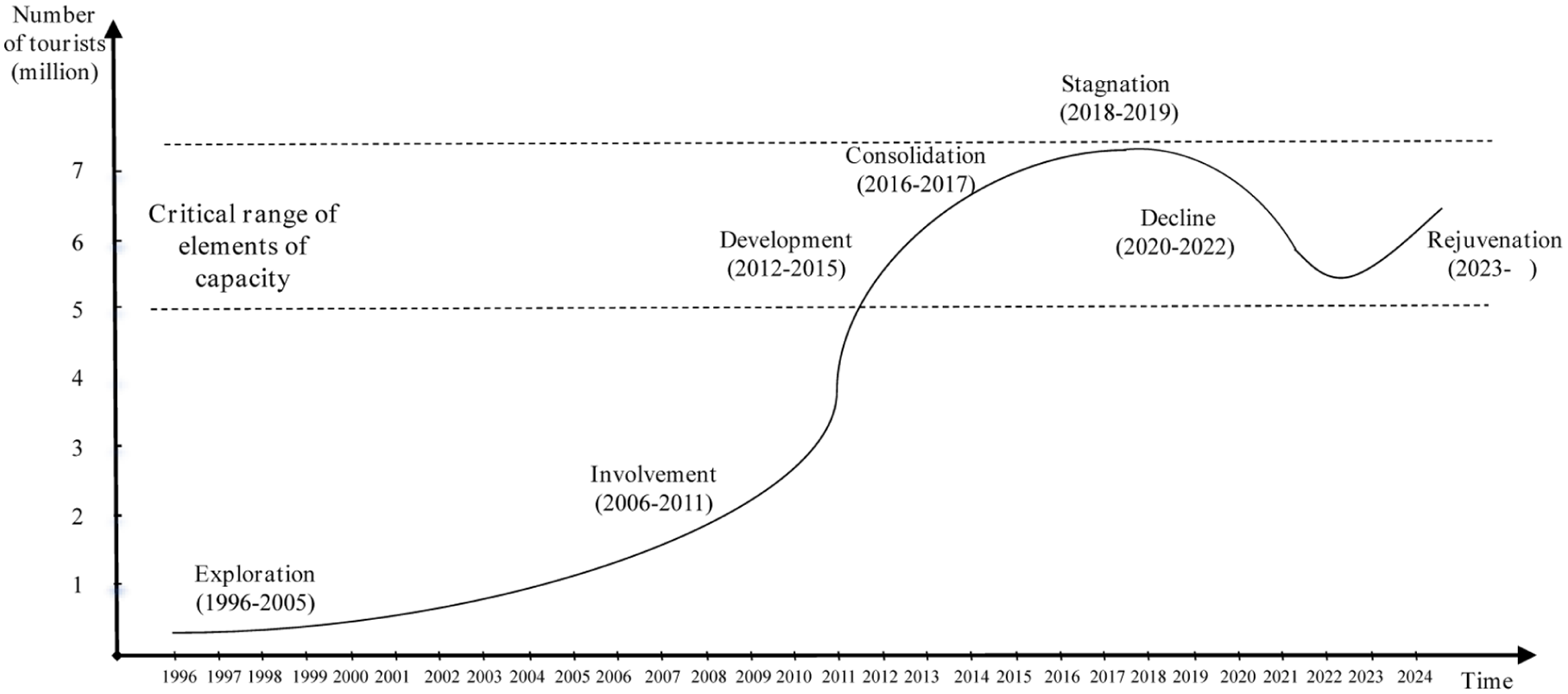
Destination life cycle of Shuikou.
It is worth noting that local hosts experience a dynamic shift in livelihood profiles across the destination life cycle. At the exploration stage, tourism emerged as a supplementary activity to traditional farming and casual urban employment. As the destination progressed through involvement and development, tourism livelihoods gained prominence. However, at the unexpected decline stage triggered by COVID-19 pandemic, which restricted cross-provincial travel, the online sale of local specialties emerged as a critical livelihood strategy. The livelihoods profile is changing, effectively respond to the external environment. It is however noted that rural resources and traditional livelihoods always serve as important roles for STBs’ sustainability innovation.
Instrumentation
Data were collected through semi-structured interviews and field observations conducted between 2018 and 2024. While interviews were used as the primary method, field observations were used as method triangulation to enhance the credibility of the research. Both the interview and observation guidelines were designed to explore the overarching themes aligned with the research questions. They were informed by the theoretical insights from the tourism area life cycle (Butler, 2025), value co-creation (Assiouras et al., 2019; Font et al., 2021), and sustainable innovation (Wang et al., 2018; J. Wu et al., 2023) to ensure conceptual alignment and thematic depth. Key theoretical constructs—including co‑production, value‑in‑use, stage‑specific sustainability challenges, host–guest interactions, service innovation, and operation innovation—were translated into structured yet open‑ended items to ensure conceptual consistency and theoretical sensitivity.
The interview guide (see Supplemental Appendix 1) was developed to capture multi‑perspective insights from hosts, tourists, destination government officials, and tourism association representatives. Rural hosts were asked about the sustainability-related challenges they encountered across different stages of the destination life cycle, as well as how they engaged with guests to co-create innovative sustainability-oriented practices. Guest interviews focused on their experiences with sustainability-related interactions, particularly those involving environmentally or socially conscious behaviors during their stay. Preliminary items were drafted to explore the thematic blocks: (a) the evolution of sustainability challenges perceived by small tourism businesses across destination life cycle stages; (b) types, ways, and changes of host–guest interactions related to sustainability; (c) processes and outcomes of resource integration, knowledge sharing, and mutual influence; (d) specific sustainable innovations in services, operations, and business models derived from such interactions. All the questions were open-ended, allowing participants to elaborate on their experiences, perceptions, and interpretations in their own words, thereby facilitating detailed and reflective responses.
The field observation schedule was developed to systematically record behavioral and contextual evidence of value co‑creation and sustainable innovation. The observation schedule focused on consistent themes, such as host-guest interactions, challenges faced by small tourism businesses, and emerging sustainable innovations. In detail, four key dimensions were focused on: (a) the types and nature of host-guest interactions (Wang et al., 2018; M.-Y. Wu et al., 2017), (b) the specific sustainability-related challenges encountered within the destination context (Butler, 2025), (c) the effects and outcomes of these interactions on innovation processes (S. Li et al., 2021), and (d) the settings in which sustainable innovation (e.g., operation innovation and service innovation) occur (J. Wu et al., 2023; see Supplemental Appendix 2). The observation schedule included structured fields for recording time, location, participants, interaction content, basic information of STBs, and environmental conditions, as well as open sections for reflective notes. During the design stage, the observational dimensions were discussed and revised by the research team to ensure they could capture both co‑production and value‑in‑use processes during guest experience and service delivery.
Data Collection
Semi-Structure Interviews
In all, 40 semi-structured interviews were conducted face-to-face with 13 STB owners, six guests, and three governmental officials or local tourism association leaders, ranging from 30 min to 2 hr. Some of them were interviewed twice or three times across the years to gain the evolutionary perspectives (see profiles Table 1). Governmental officials and local tourism association leaders were interviewed to have a more holistic picture of the destinations’ life cycle. They were also invited to cross-verify information gained from the hosts to enhance the validity of the research. For example, select comments from hosts (e.g., H-1, H-4) regarding visitor feedback—such as complaints about traditional cooking methods—were validated through follow-up discussions with local tourism association leaders and destination government officials. Due to the high mobility of tourists, interviews of tourists were conducted as one-time interactions. However, these interviews were strategically timed to capture diverse perspectives across different seasons and stages of the destination life cycle.
Profile of the Interviewees.
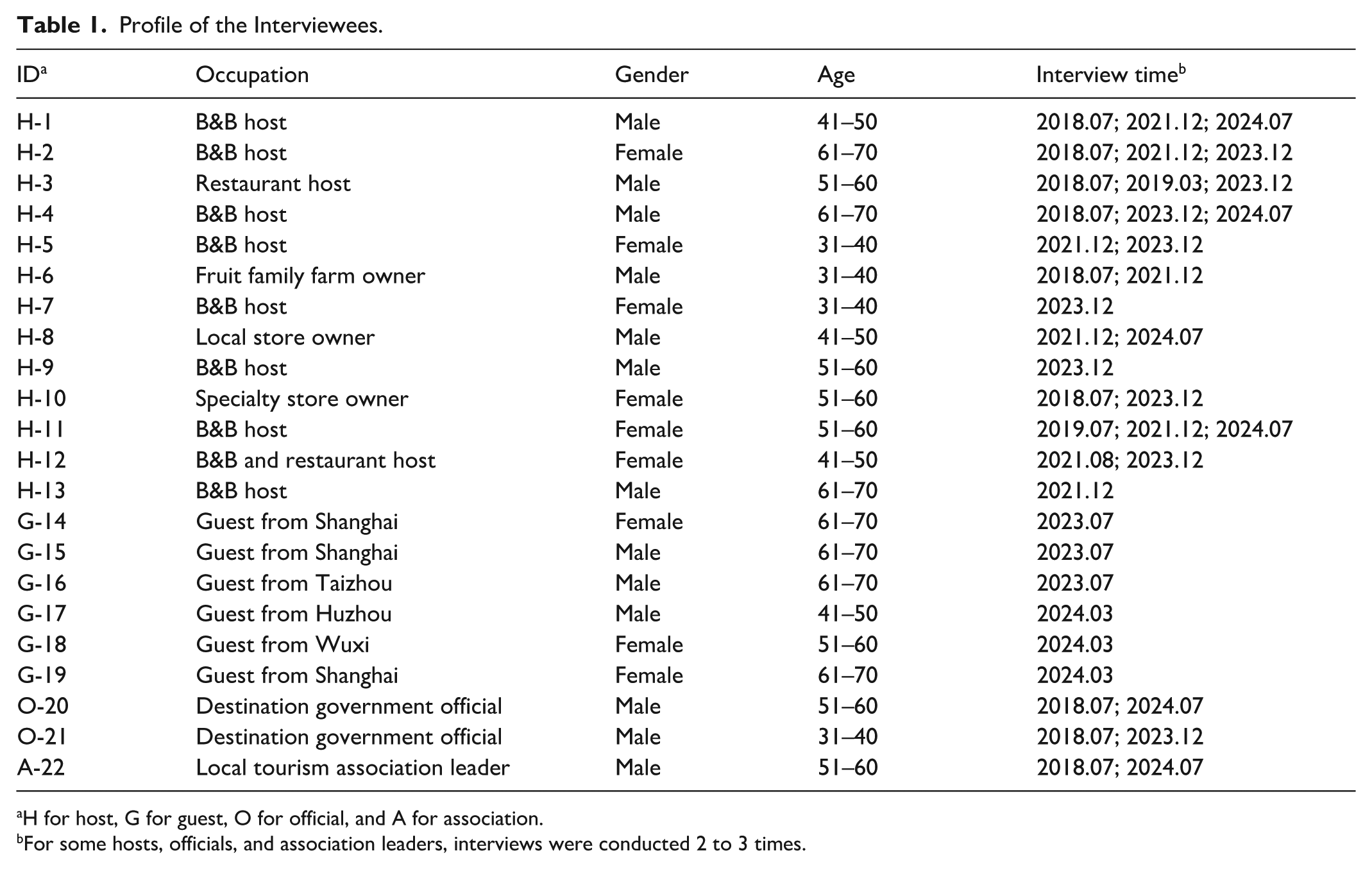
H for host, G for guest, O for official, and A for association.
For some hosts, officials, and association leaders, interviews were conducted 2 to 3 times.
Information saturation was reached because no more information emerged at the last few interviews. Audio recordings were obtained for 17 interviews with participants’ consent and subsequently transcribed for further analysis. For those who preferred not being recorded, field notes were taken by the first author.
Field Observations
Observation of hosts’ service delivery process and host-guest interactions within diverse STB settings enabled the systematic documentation of guest-driven contributions to sustainable innovation in STBs. During these observations, field notes and photos were taken to document service routines, host–guest interactions, and contextual dynamics. In all, 22 pieces of field notes and 39 pieces of photos were taken.
Filed observations were primarily carried out by the first author, a native of Shuikou and an experienced researcher in sustainable rural tourism. His insider status—rooted in local language proficiency, longstanding community ties, and familial connections to several STB operators—facilitated trusted and in-depth access to hosts, many of whom were willing to openly discuss their perspectives on sustainable innovation. This relationship enabled the collection of nuanced, context-rich insights through regular visits approximately once or twice per month, allowing for close observation of ongoing host–guest interactions. To address potential biases associated with insider familiarity and reduce the risk of overlooking critical details, the second author participated in field observations on three separate occasions—in May 2018, June 2022, and April 2024—providing an outsider lens and contributing to reflexive discussions. These collaborative reflections helped ensure interpretive balance, enhance the credibility of observations, and mitigate the limitations of single-perspective fieldwork.
Data Analysis
The collected data, including in-depth interviews and field notes, were analyzed using manual coding guided by a combined inductive and deductive approach to thematic analysis (Braun & Clarke, 2006; Fereday & Muir-Cochrane, 2006). This approach allowed for the identification of both emerging patterns and predefined theoretical concepts, while remaining responsive to the data (J. Wu et al., 2023). We followed the key steps proposed by Braun and Clarke (2006) include familiarizing with data, generating initial codes, searching for themes, reviewing and refining themes, and defining themes.
For deductive coding, the researchers used preconceived sensitizing concepts from value co-creation theory (e.g., co-production, value-in-use, experience, knowledge sharing, interaction, relationship; Assiouras et al., 2019) and the tourism area life cycle (e.g., exploration, involvement, development, consolidation, stagnation, decline, and rejuvenation). These concepts provided a theoretical lens to guide the initial organization of the data. Meanwhile, inductive reasoning was adopted to further refine these codes by identifying attributes and benchmarks for each sensitizing concept.
To enhance analytical rigor and validity, investigator triangulation was adopted. Two native Chinese researchers coded the data independently and refined the themes repeatedly over several weeks. This process led to the emergence of new sub-categories, including pandemic risk, market seasonal fluctuation, market confidence, interesting stories, and servicescape, which were subsequently added to the codebook.
Results
Guided by value co-creation theory, this research reveals how hosts and guests co-create sustainable innovation as destinations evolve through different stages of the tourism area life cycle (Butler, 1980). The co-creation process is presented at different stages of the tourist area life cycle—exploration, involvement, development, consolidation, stagnation, decline, and rejuvenation. The results synthesize the primary sustainability challenges faced by STBs’ at each stage, alongside the corresponding sustainable innovation strategies that emerge through co-production and value-in-use in host-guest interactions. Figure 2 offers a concise picture of the findings, and the detailed findings are presented below.
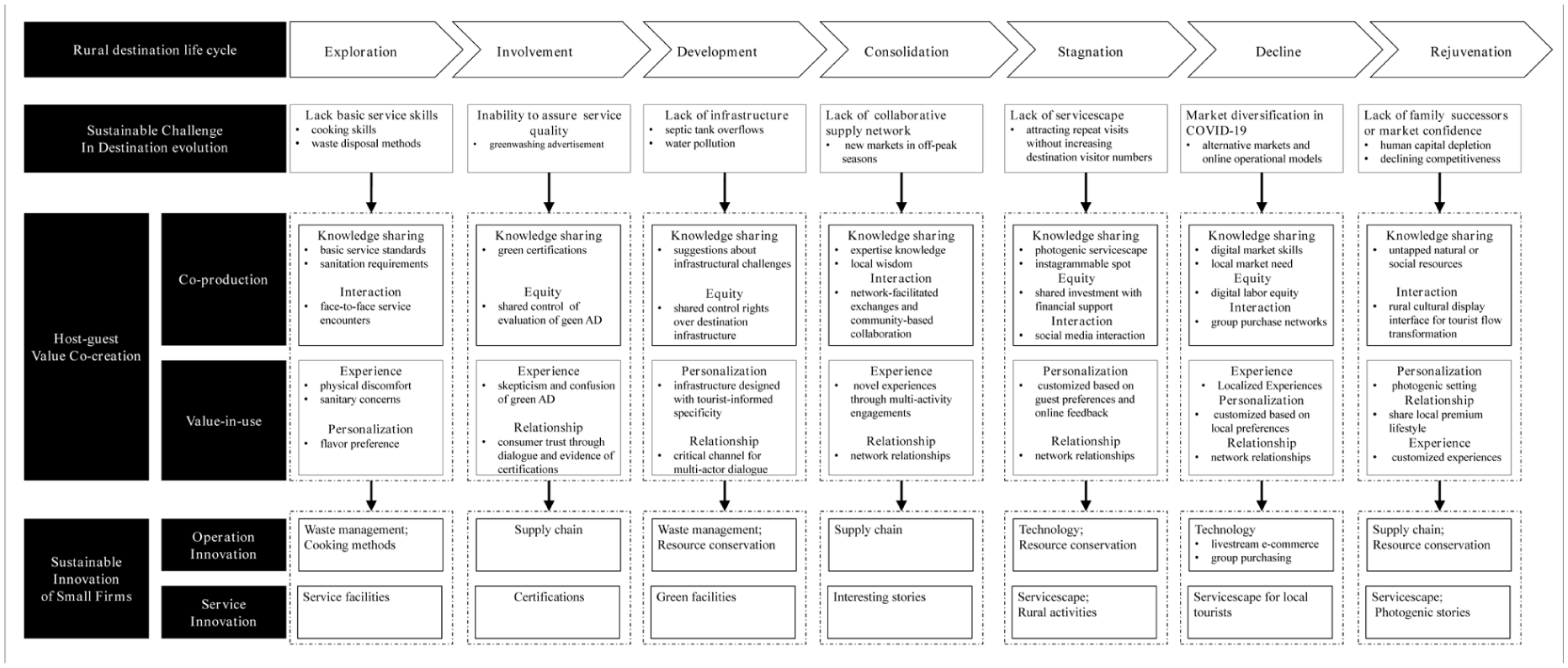
Host-guest value co-creation in shaping sustainable innovation of STBs during destination life cycle.
Exploration Stage: Co-Improving Basic Service Skills and Traditional Sustainable Practices
The exploration stage is characterized by low visitor volumes and minimal, often informal, tourism infrastructure (Butler, 1980; Getz, 1992). In Shuikou, early guests were primarily Shanghai senior tourists, attracted by the beautiful natural environment—notably the bamboo forest. Initial interactions between the hosts and guests, coupled with the use of basic local facilities, encouraged some rural households to explore tourism as a new livelihood strategy. This shift marked a transition from traditional agricultural activities—such as tea and bamboo farming—to the provision of simple tourism services, including Bed and Breakfast (B&Bs) and restaurants. A key sustainability challenge at this stage was the lack of basic service skills among the hosts, which limited their abilities to meet the expectations of incoming visitors. In face of the livelihoods’ diversification opportunities, the hosts needed to acquire new knowledge and skills related to hospitality, sanitation, and customer service, areas previously outside their experience.
Analysis of the data illustrates that host–guest interactions played a formative role in this adaptive process, mainly through knowledge sharing and interaction. For example, G-14 recalled visiting a local restaurant in 2005 and providing feedback on poor sanitary conditions and cooking practices. She noted, “My advice improved their service skills for attracting Shanghai tourists. As an old friend, I often bring my relatives to this restaurant.” This account was corroborated by a B&B host (H-2), who emphasized that such direct feedback from early guests was instrumental in exposing the shortcomings of traditional practices and catalyzing initial improvements in service quality. Government officials (O-20) also stated, “early guest interactions served as a critical feedback mechanism. They prompted hosts to reflect on and adapt their practices and facilities in response to guests’ expectations.”
Owing to long-term farming lifestyle, rural hosts underestimated the value of guests’ knowledge and insights, often recognizing their insights only in response to specific complaints encountered during face-to-face service encounters. These complaints frequently highlighted structural flaws in service provision, particularly in relation to sustainability practices—most notably waste disposal methods and food preparation processes. For example, the former vice president of the B&B Association (H-13) recalled, “In 2004, when my neighbors and I began to run rural B&Bs, we received a lot of guest complaints. Urban guests were particularly critical of our traditional practices. For example, hosts often cooked food without washing their hands.” Such feedback revealed critical gaps between local customs and guests’ hygiene expectations.
Furthermore, guest experience and personalization play pivotal roles in driving service innovation. The value-in-use feedback derived from host-guest interactions provides the most direct and authentic impetus for a critical re-examination of conventional practices and facilities. One example pertains to traditional rural sustainability practices, such as the collection and use of human waste as organic fertilizer. While deeply rooted in agrarian traditions and historically effective within closed-loop farming systems, these practices became a source of social and environmental tension in the context of rural tourism. This practice was deemed unhygienic and unpleasant by urban visitors, provoking frequent complaints. H-1, a B&B host, explained, “We traditionally stored human excreta in corners of our yard or wooden toilets to later apply on cultivated fields. The smell in courtyard prompted many guests’ complaints.” Meanwhile, tourists also indicated that the accumulation and improper containment of waste would result in groundwater contamination, posing risks to both environmental quality and public health. In response to this feedback, hosts began prioritizing hygiene and sanitation improvements, such as installing flush toilets. These changes not only enhanced guest satisfaction but also contributed to broader environmental sustainability goals, including the eventual development of improved public sewage infrastructure, often supported through destination-level funding. Together, these examples illustrate how value-in-use insights from host–guest interactions can catalyze innovations that reconcile traditional practices with modern sustainability and service expectations.
Crucially, interactions with urban tourists, especially those from regions with greater exposure to modern sanitation infrastructure, provided valuable experiential knowledge that prompted hosts to reconsider and adapt their practices. These exchanges underscore the role of host–guest interactions as a catalyst for sustainable innovation, driving the adoption of modern waste management systems and other service improvements in response to evolving sustainability demands.
Involvement Stage: Co-Enhancing Sustainable Service Quality to Address Guest Skepticism
The involvement stage is characterized by a noticeable increase in tourist arrivals, driven by targeted promotional efforts, alongside a corresponding rise in the number of STBs offering services tailored specifically to tourists (Butler, 1980). In Shuikou, this stage saw the emergence of environmentally themed advertising aimed at attracting urban visitors. Some STBs also put up billboards promoting eco-friendly offerings, such as organic produce and free-range poultry. While environmentally oriented advertising can enhance a destination’s appeal, its effectiveness and sustainability depend on the genuine implementation of corresponding sustainable practices. However, as the economic benefits of such marketing became evident, some STBs—seeking to capitalize on the growing market—resorted to greenwashing or false eco-advertising as a low-barrier entry strategy.
This practice contributed to a complex and often confusing marketplace, where visitors were often confronted with exaggerated sustainability claims. Thus, the primary challenge during this stage was ensuring the quality and authenticity of these green products and services. There was a tension between marketing-driven growth and the need for genuine sustainability practices in destinations undergoing early-stage commercialization. A B&B host (H-9) indicated, “Almost every shop set up big wooden billboards of eco-friendly advertising to attract visitors. However, the limited production capacity in rural society could not meet the growing number of visitors. Some businesses sold fake eco-friendly products just to make a profit.”
The proliferation of eco-friendly advertising by STBs during the involvement stage also gave rise to growing skepticism among visitors regarding the authenticity and credibility of sustainability claims. Urban tourists, increasingly exposed to green marketing, often questioned the truthfulness of environmental assertions and the underlying motives of tourism operators. These doubts frequently surfaced during host–guest interactions. Some guests, who had marketing expertise, informed the hosts to apply for tangible proof, such as sustainability certifications or verifiable credentials. H-6, a fruit family farm owner, noted, “Eco-friendly grapes are more profitable in the village. But tourists from Shanghai often doubt whether small farms can genuinely produce eco-friendly grapes unless we show sustainability certifications issued by local governments. One of the guests, who used to work in the agricultural department, told me the procedure of green certification application and encouraged me to have a try. With guests’ guidance, we started to apply for the certification. In fact, we learnt the standardized eco-friendly practices through the certification process, which is beneficial for our long-term development.” Similar comments were also provided by H-10 who runs a specialty store. She adopted guests’ suggestions and presented her products in a more sustainable and credible way. This kind of host-guest interaction guided local STBs to apply for certification systems, which can serve as tools for building consumer trust and also as mechanisms for upskilling producers in sustainable production methods.
Knowledge sharing disseminates the value of green certifications. Equity granting stakeholders (such as tourists, small businesses, and industry associations) “shared control of evaluation” to establish an equitable assessment mechanism, thereby preventing self-referential claims by STBs and enhancing credibility. Local tourism association leader (A-22) noted, “Host-guest interactions not only facilitate the transfer of specialized knowledge related to green certification but also integrate urban standards with rural environmental conditions and cultural contexts. Daily host-guest conversations effectively lower the cognitive barriers that STBs face when adopting green certification. This process encourages upstream supply chain firms (such as poultry farms and tea producers) to develop green production models.”
The hosts’ response, as mentioned above, fully illustrate how sustainability claims in tourism marketing, while effective in attracting initial interest, must be substantiated through credible evidence to foster consumer confidence and support genuine sustainable practices. The demand for transparency ultimately incentivized STBs to pursue formal recognition, thereby aligning marketing claims with verifiable sustainability performance. A B&B host (H-7) who also sell green tea noted, “my family strengthened consumer trust in green certification by reviving Tang Dynasty planting sites and techniques based on records in the Classic of Tea. Through displaying the ancient text, conducting on-site explanations of conservation practices, and opening the tea garden for tourist picking activities, we effectively responded to visitors’ dual demands for cultural authenticity and ecological sustainability.”
Development Stage: Co-Improving Sustainable Infrastructure Through Guest Suggestions
The development stage is characterized by a significant surge in visitor numbers, which places considerable pressure on local infrastructure and utility systems (Butler, 1980). In rapidly evolving rural tourism destinations, the growing influx of tourists often exceeds the capacity of community- and household-level infrastructure, leading to pressing environmental and service-related challenges. O-20, a male destination government official, recalled, “In 2006, we witnessed an unexpected growth of tourists’ volume. We entertained over two million tourists in the year. The influx of tourists however brought great challenges to our infrastructures, who was built for farmers’ living. Notably, issues such as septic tank overflows, wastewater mismanagement, and water pollution emerged as key environmental concerns. Our priority at that time was to support the destination and businesses to cope with increased demand.” This was confirmed by H-4, a B&B host. He indicated, “I installed flush toilets in every room. The biofiltering and septic systems in our rural sewage networks, however, could not handle the wastewater generated by rising visitor numbers. The local government responded quickly. My B&B was relocated to a newly developed area where the government had already invested in ecological infrastructure. We also upgraded to energy-efficient appliances and equipment in the redesigned servicescape.” This illustrates how infrastructure renewal, including the development of modern sewage systems, energy-efficient facilities, and purpose-built tourism zones, became essential to sustaining both business operations and environmental quality.
In addition, it is worth noting that guests, particularly some loyal guests, contributed their knowledge through intensive and equal knowledge sharing with hosts and sometimes local government. Further, the constructive inputs derived from the diverse lived experiences and perspectives of tourists, are effectively articulated through host-guest interactions, contributing tacit knowledge from unique perspectives. O-20, a local government official elaborated, “Through direct feedback and observations, tourists communicated concerns related to functionality, safety, aesthetics, and capacity. These feedback informed government-led investments in sustainable infrastructure upgrades, such as the construction of public leisure facilities, road improvements, and the development of ecologically integrated landscape designs. Such interactions enabled us to align infrastructure planning with both the operational needs of STBs and the expectations of visitors, thereby enhancing both service delivery and the overall visitor experience.” Similarly, a B&B host (H-2) indicated, “In 2015, some retired professors and senior officials from Nanjing revisited our village. On viewing the challenges we faced, they provided forward-looking suggestions to local governments regarding water resource protection and sewage system upgrades. Their input led to the removal of inappropriate constructions and the reconstruction of ecological landscapes, with investments exceeding 80 million yuan (approximately US$12 million). Tourists’ active participation in the renewal of public infrastructure reflects consumers’ growing emphasis on environmental protection, which in turn motivates us to prioritize the upgrading of green service facilities. These public space renewals have significantly benefited our business.”
Consolidation Stage: Co-Forging Sustainability Cooperation During Off-Peak Seasons
During the consolidation stage, destinations often experience stagnant or minimal visitor growth (Getz, 1992), accompanied by heightened challenges related to seasonality and market saturation. Empirically, in Shuikou, most STBs by this stage developed competent service skills and upgraded their properties, while the destination’s tourism infrastructure functioned reliably, supporting the consistent delivery of core tourism services with limited disruption. Owing to the heavy investment and reliance on rural tourism as their major livelihoods, achieving sustainable innovation requires addressing the persistent issue of low off-peak demand, which strains the cash flow and operational viability of STBs.
To mitigate seasonality impacts, hosts actively leveraged their guests’ social network. For example, H2, a B&B host, noted, “Daily fixed costs such as chefs’ and cleaners’ salaries remain during the low season. I proactively invited influential tourists and tour guides to stay for free. I offered discounts to the friends and relatives they brought. This strategy worked well. Sometimes, I referred overflow guests to my relatives’ businesses.”
Knowledge sharing and host-guest interaction also fostered supply chain collaboration. Tourists contributed external perspectives that inspired service innovation, while hosts shared local knowledge (e.g., production techniques and ecological wisdom) to enhance cultural authenticity and regional uniqueness. The interplay of these knowledge flows enriched product depth and strengthened regional branding. For example, H11 redesigned tea-drinking spaces inspired by a retired professor’s insight into Zen tea culture, integrating tea tasting, storytelling, and hands-on workshops to create immersive, culturally meaningful experiences.
Furthermore, frequent guest interactions facilitated collaborative tourism activities through community networks. Host H7 noted, “In face of limited tourists in later Autumn and Winter, some guests suggested me to work closely with surrounding tourism attractions and family farms. We thus offered distinctive activities each day, repeating on a weekly basis. Many of the leisure activities were offered by my friends and relatives in the area. In this way, the guests were happy and we had income in the off season.” Similarly, H8 transitioned from B&B operations to an eco-retail store after guests highlighted its market potential, enabling him to sell local produce and support fellow farmers.
Despite these innovations, challenges such as greenwashing, where businesses falsely market non-sustainable offerings as “eco-friendly,” persist, complicating consumer trust. In response, hosts drew on social capital and traditional knowledge to differentiate their offerings and build credibility.
Overall, hosts in the consolidation stage harness visitor expertise, social networks, and indigenous knowledge to address seasonality, enhance resilience, and co-create sustainability-oriented collaborations that extend from individual businesses to the broader community.
Stagnation Stage: Co-Designing Sustainable Servicescapes Through Both Onsite and Online Interactions
The stagnation stage occurs when a destination reaches its’ carrying capacity and peak visitor numbers. In this phase, one of the foremost challenges to sustainable innovation is attracting repeat visits when the destination is no longer perceived as fashionable or unique. To address this, many STBs, following advices from their guests, turn to servicescape renewal as a strategic pathway for differentiation and value creation. Servicescape, defined as the dynamic interplay between tourism services and physical environments (Kaminakis et al., 2019), encompasses three key dimensions: ambient conditions (e.g., noise, air quality, and temperature), spatial functions (e.g., equipment, facilities, room layout, and aesthetic furnishing), and signs and symbols (e.g., house decorations, cultural artifacts, and interesting signage). In the context of rural tourism, servicescape renewal often involves targeted updates such as interior design, equipment upgrades, garden landscaping, and the integration of eco-friendly or culturally resonant features that enhance both aesthetic appeal and functional experience.
Nevertheless, STBs face significant barriers to servicescape innovation, particularly due to limited financial and human resources. As noted by a local tourism association leader (A-23), “Upgrading servicescapes requires substantial financial investment and business expertise. Renovating a B&B may cost around one million RMB, covering structural improvements, eco-technology integration, and cultural enhancements. It also demands specialized knowledge in place-based aesthetic design, such as courtyard landscaping.”
Analysis of the interview data indicates that guest feedback and social media contents were highly relevant with hosts sustainable innovations, particularly in servicescape design. The host-guest interactions provide STBs with critical yet naturally scarce resources, including aesthetic insights, consumer preferences, and emotional capital, that inform and enable servicescape innovation. For example, visual content shared by previous guests—such as photos and videos—serves as a key source of inspirational knowledge, helping hosts understand emerging trends and design preferences. This often leads to imitative innovation, whereby hosts incorporate visually appealing and culturally symbolic elements into their servicescapes to encourage user-generated content and social media visibility. H-2, a B&B host, noted, “My daughter-in-law frequently uses photos shared by tourists as references for our interior design plans. The preliminary drafts are then shown to in-house guests for feedback. After renovation, my son places promotional signage with curated text and his contact information at the most photogenic, ‘Instagrammable’ spots to attract future visitors.”
In some cases, strong interpersonal trust and emotional bonds lead guests to provide direct financial support for servicescape upgrades. H-5, a female B&B host, explained that loyal visitors, often returning annually, offer interest-free or low-interest loans to help modernize business spaces. She elaborated, “Guests like new eco-friendly experiences. Some long-term guests even support our upgrades through low-interest loans. I regularly collect ideas from tourists—like using wood-fired stoves or creating tea rooms for conversation.”
Beyond face-to-face interactions, hosts also draw inspiration from guests’ digitally mediated experiences shared on platforms like WeChat Moments. H-12, targeting a premium, family-oriented market, observed, “I focus on how to encourage guests to pay more for eco-friendly services. By observing their travel stories and images from other destinations, I’ve introduced a range of nature-based activities for families with children—like a children’s playroom with a slide and ball pit, an outdoor play zone, and experiential tours such as creek-water play, grape-picking, insect-watching, and rock painting. These activities have made our B&B very popular with families and increased our income.”
Field observations further confirm that sustainable innovation was deeply embedded in the social capital cultivated between hosts and guests. Regular visitors often took an active role in co-designing and co-consuming rural tourism experiences. Beyond participation in activities like fishing, tea-making, and cultural workshops, guests frequently offered practical suggestions and voluntary assistance. For instance, the research team observed a tour group leader encouraging peers to conserve energy by turning off air conditioners upon leaving rooms (Fieldnote 12). Similarly, guests with expertise in tea culture voluntarily shared knowledge and advised hosts on how to better present local tea traditions (Fieldnote 13).
In summary, the intensive host-guest interactions co-created value, which not only enhanced the experiential quality of the destination but also reinforced its long-term sustainability. By nurturing deeper guest attachment and repeat visitation, these interactions form a foundation for ongoing, collaborative innovation.
Decline Stage: Co-Innovating Sustainable Service Delivery During the COVID-19
The COVID-19 pandemic triggered an unprecedented decline in global tourism, leading to a near-total disappearance of cross-provincial urban visitors and a gradual shift toward localized tourism. The interactions between hosts and cross-provincial guests however were not stopped, but in a new way. They co-created online marketing channels (e.g., livestream e-commerce and group purchasing), to expand the market reach of traditional rural tourism offerings. H-9, a B&B host indicated, “The beginning of COVID-19 coincided with the peak season of Chinese New Year. Owing to the strict lockdown, our guests were stuck at home with limited food supply. At the same time, we prepared considerable organic food, such as organic vegetables, winter bamboo shoots, and bacon, to entertain guests. On seeing the food shortage that our guests faced, we offered our food to our loyal guests for free. In return, they expressed deep gratitude and later became leaders of online group-buying in their suburb.” With the support from their loyal guests, many STB owners turned to portfolio entrepreneurship, selling local products through social media and the efficient delivery service for urban customers. This emerging livelihood strategy greatly helped alleviate the economic pressure caused by the COVID-19 pandemic.
Though faced with the strict control of cross-provincial travel, local travel was permitted during the COVID-19 pandemic in China. To attract local visitors, many STB owners adopted sustainable and localized service strategies. These included offering home-style dining, eco-tourism activities, and hosting weddings or cultural events. A high-end B&B and restaurant host (H-12) shared, “during COVID-19, most of my guests were local. They were not interested in accommodation; they preferred local delicacies. So, I converted three guest rooms on the first floor into spaces for local cuisine, and turned another into a tea room for calligraphy and Chinese painting.” This adaptive strategy was echoed by multiple respondents (e.g., H-2), who followed their guests’ preferences and observed similar shifts toward local culinary experiences and cultural engagement as key drivers of local tourism recovery.
Rejuvenation Stage: Sharing and Co-Utilizing Assets by Guests and Hosts
The rejuvenation stage is characterized by the introduction of new attractions, either newly developed human-made sites or the renewed use of previously untapped natural or social resources, to revitalize destinations that have experienced decline (Butler, 1980). In this context, some STBs successfully adapt by targeting niche markets and enhancing experiential appeal to attract new or returning visitors. For example, H11, a high-end B&B host, strategically catered to discerning clientele, mainly the high-income young markets, by focusing on their preferences. During the pandemic, the host upgraded the tea garden and courtyard to ensure photogenic appeal both indoors and outdoors. These efforts led to guests’ widespread social media sharing. After the pandemic, these high-value connections yielded unexpected opportunities: local government officials recommended the B&B to a national-level TV filming crew, resulting in national exposure. The host noted, “News coverage from CCTV (the most established Chinese TV channel) has been a tremendous source of pride and has greatly strengthened my confidence in our future growth.”
However, not all STBs successfully navigate the transition to rejuvenation. Some enterprises, particularly those facing prolonged decline, weak market confidence, or lack of family succession, respond by withdrawing from direct tourism operations and adopting asset-retention or cost-minimization strategies. H-4, a B&B owner, explained, “Location advantages are extremely important. The B&B business in our region isn’t as competitive as in central areas. We get only a few visitors, even in the peak season. With such limited income, my sons chose to work in the city instead of returning. My wife and I run the B&B ourselves when we have guests. In the off-season, we work as tea farmers or take part-time jobs. Some neighbors have leased their properties to non-locals for long-term leases. I’m also considering renting mine out, either to urban visitors or other tourism businesses.” This reflects a strategic shift toward asset retention and cost minimization, rather than active reinvestment in tourism innovation.
Moreover, sustainable innovation in STBs often relies heavily on the involvement of younger generations who bring new ideas, digital skills, and long-term commitment (Q. Li et al., 2022; Memili et al., 2017). The absence of family succession, however, leads many owners to exit tourism or adopt asset-light strategies that minimize investment while maintaining some level of engagement with the industry. For instance, H-1 invested heavily in pandemic-era refurbishment, including an elevator for accessibility, but expressed concerns about future market volatility and intergenerational transition. He noted, “My daughter has a stable career in the city with a high income. It’s impossible for her to return. Running a B&B today requires constant upgrades to stay competitive. After the COVID-19, I’m more cautious about heavy investment. I chose lighter investments—like growing and selling orchids. I sell them to my guests and resort to high-end B&Bs to sell rare varieties to more affluent visitors.” Similarly, H-9 described transitioning to non-core tourism activities, such as agritainment, niche product sales, or collaborative branding with better-positioned businesses. Overall, declining family succession and market uncertainty have led many STBs to withdraw from direct service provision, instead pursuing alternative livelihoods, adopting asset-sharing models, or implementing low-capital strategies that allow continued, but less intensive, engagement with tourism.
Discussion
Summary of the Research
While sustainable innovation in small tourism businesses (STBs) has received growing attention (Font et al., 2016; Garay et al., 2018), empirical studies on its dynamic formation throughout the destination life cycle remains rare (Butler, 2025). Previous studies often portray resource-constrained STBs as having limited agency in sustainable innovation, especially when compared with medium and large-sized enterprises (Buijtendijk et al., 2018; Sharma et al., 2020). Using a longitudinal qualitative approach, this study emphasizes the active role of STBs in sustainable innovation. It highlights that much of this innovation is achieved through intensive host-guest interaction. It further investigates how STBs engage in sustainable innovation through host-guest interactions within the evolving context of rural destinations. STBs in the Shuikou Tea Culture Scenic Area, an iconic Chinese rural tourism destination, serve as the case study.
Based on value co-creation theory and destination life cycle framework, this study first reveals the key sustainable challenges STBs face across various life cycle stages, from the exploration to the rejuvenation phase. These challenges lead to variations in the types of guest resources and relational capabilities mobilized through co-creation. Specifically, the identified sustainability challenges include gaps in community skill development, infrastructure provision, waste management, and supply chain resilience. Furthermore, the study examines sustainability challenges induced by the COVID-19 pandemic and digital technologies, which have significantly altered the traditional destination area life cycle and which are ultimately mitigated through novel host-guest value co-creation.
Facing these sustainability challenges, this study demonstrates that, even resource-constrained, STBs can leverage host-guest value co-creation to address stage-specific sustainability challenges and foster dynamic sustainable innovation. For instance, in the exploration stage, value co-creation often begins with knowledge sharing and experience feedback, helping hosts adopt more sustainable practices and improve service skills. In the consolidation stage, it shifts toward memorable interaction and customized services, where hosts creatively integrate local culture and environmental narratives into their offerings.
Analysis of the host-guest value co-creation at different stages indicates that the transformative potential of these interactions is grounded in the interactive processes of co-production and value-in-use. Co-production is realized through knowledge sharing, relational equity, and reciprocal interactions that integrate both operand (tangible) and operant (intangible) resources—such as sustainability-related knowledge, creative ideas, and financial support. Value-in-use highlights experiential and relational dimensions of guest experiences, including personalization and relationship-building, which enable STBs to mobilize relational capabilities in designing and implementing customized sustainable innovations. Together, co-production and value-in-use not only enhance operational practices and service quality, but also cultivate meaningful host-guest relationships, thereby supporting the long-term sustainability of STBs. Figure 3 offers the concise summary of the key findings.
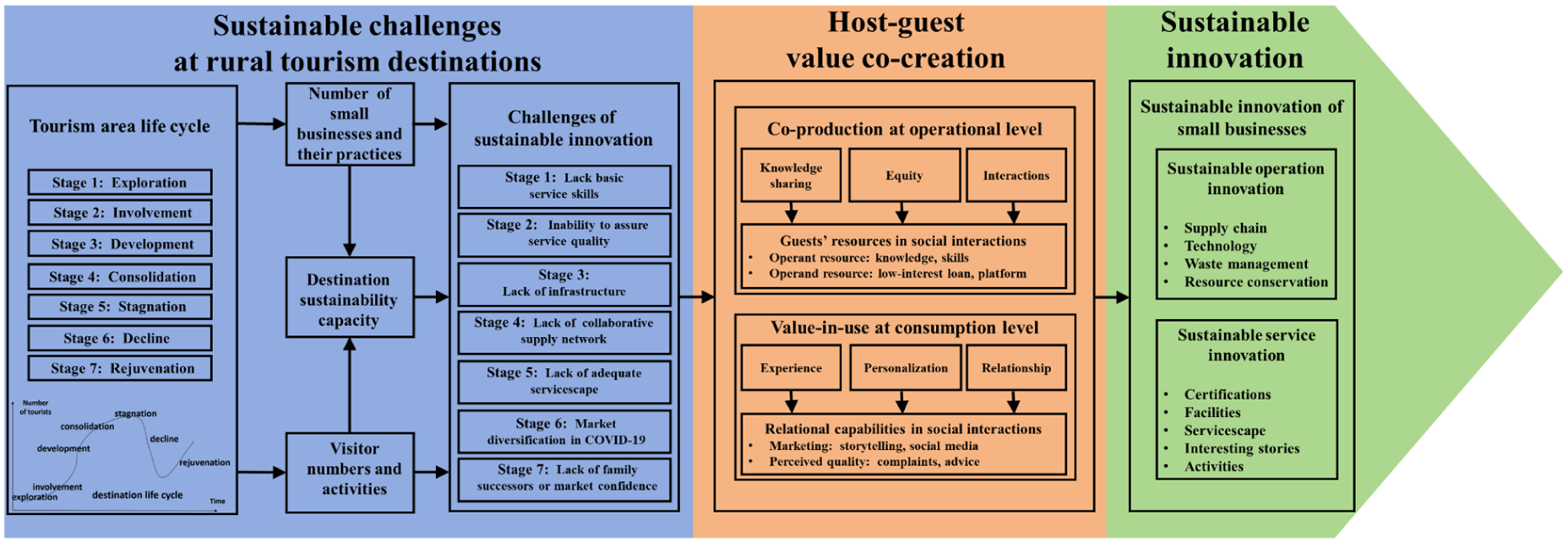
The process model of STBs sustainable innovation.
Theoretical Contributions
This research makes three primary theoretical advancements. First, this study deepens insights into transformative power of sustainable tourism, through highlighting the overlooked roles of small tourism businesses (STBs). Challenging conventional perspectives that frame tourist volume control as the primary mechanism for mitigating sustainability challenges (Bramwell & Lane, 2011; Rodríguez et al., 2008), this research aligns with the transformative paradigm by emphasizing tourism’s proactive capacity to foster relationships, regenerate environments, and reshape community well-being. Drawing on evidence from STBs in rural destinations, our findings demonstrate that they function as active agents in sustainability solutions through deliberate host-guest interaction. We argue that these meaningful social collaborations facilitate the emergence of localized, socialized, and regenerative tourism models (Akhoundoghli & Boluk, 2025). Through intensive interpersonal engagement, a foundation of reciprocity, respect, and mutual connection is established. Consequently, principles of the circular economy (Tomassini et al., 2024) and sustainability ethics (Fennell, 2018) are not merely taught but are relationally transmitted, becoming embedded within the operational logic of STBs.
Second, this study extends value co-creation theory in two ways. First, by examining how host-guest co-address stage-specific sustainability challenges and foster dynamic sustainable innovation, this study challenges static conceptualization of value co-creation found in much of the existing literature (Carvalho & Alves, 2022; Chen et al., 2017). It thus emphasizes the need for continuous learning, adaptation, and contextual responsiveness. Such dynamic co-creation processes are particularly vital in rural tourism, where each destination exhibits unique cultural, social, and environmental conditions that require tailored innovation pathways. Second, this study transcends value co-creation’s dominant functionalist framework and reconceptualizes host-guest interaction as an ontological ethical practice. While prevailing literature often treats value co-creation as a transactional outcome focused on resource integration and service delivery (Vargo & Lusch, 2007), our findings illustrate that value can emerge immanently from the reciprocal encounter itself. The study shows that interactions, especially during crises, move beyond commercial transactions to construct relationships grounded in care, empathy, and mutual becoming. This process involves a generative collision between distinct epistemologies: the indigenous wisdom of communal reciprocity and the reflexive modernity of tourist environmental awareness. Consequently, value co-creation is elevated from a technical process of resource integration to a lived, ethical practice. This shift emphasizes that the essence of value generation lies in the quality of the relationship formed through concrete, localized encounters, thereby positioning value co-creation as a dynamic, ethically charged process rather than a static, utilitarian exchange.
Third, this study also makes contribution to the Tourism Area Life Cycle (TALC) framework by pioneering the empirical elaboration of dual-sided effects of exogenous shocks on destination evolution. While Butler’s (1980, 2025) traditional model conceptualizes ideal development as a stage-based progression driven by internal capacity limits, our findings demonstrate that external disruptions, specifically the COVID-19 pandemic, can fundamentally interrupt this trajectory. Such shocks, however, do not merely cause a temporary decline; they can also reconfigure value co-creation processes through digitally networked connections. Paradoxically, the physical lockdown accelerated digital penetration, forcing a shift toward online interactions and non-accommodation experiences. By documenting how pandemic-induced changes reshaped visitor profiles (e.g., increased local tourism) and triggered new sustainability challenges, this study calls for further research that incorporates nonlinearity, digital transformation, and emergent value co-creation models to explain how destinations navigate abrupt disruptions and foster resilient recovery.
Practical Implications
The study underscores that sustainable innovation is not a one-size-fits-all concept but a dynamic process requiring tailored strategies for STBs and Destination Management Organizations (DMOs).
For STBs, the research highlights that they cannot rely on static business models; instead, they must adapt their innovation strategies to the specific challenges of each destination life cycle stage. For example, in the exploration stage with low visitor numbers and limited infrastructure, STBs should focus on building foundational capabilities. This involves utilizing low-cost digital tools (e.g., social media groups, QR code-based feedback cards) to gather real-time customer insights. This feedback loop allows hosts to refine basic service skills and establish early sustainable practices without heavy capital investment. When in the consolidation stage with market growth and increasing competition, the strategic priority shifts to differentiation through storytelling. STBs should leverage their unique local knowledge to create symbolic capital. By weaving environmental narratives and cultural heritage into their services, hosts can transform functional accommodations into meaningful experiences that command premium value. When it comes to the stagnation stage with declining novelty and market saturation, STBs’ innovation should focus on immersive servicescape redesign. STBs can engineer multi-sensory experiences, such as incorporating the scent of wildflowers, the sound of natural streams, or curated local culinary tastings, to evoke guests’ nostalgia and emotional engagement. Crucially, STBs should view guests not as consumers but as co-creators, leveraging their feedback to redesign practices.
For STBs, special attention should also be paid to cultivating reciprocal ethical relationships. Beyond commercial transactions, micro-care practices (e.g., handwritten cards, sharing local produce) are suggested to build genuine emotional connections. Meanwhile, in the digital era. STBs, especially those run by senior villagers, are encouraged to bridge the digital divide through attending age-appropriate training to enhance digital literacy, enabling them to co-produce digital environments with guests.
For DMOs, the focus should shift from tourist control to proactively generating positive value. Rather than focusing solely on controlling tourist numbers to minimize damage, DMOs should facilitate positive value creation. This involves establishing streamlined, multi-level feedback mechanisms that connect tourist comments directly to enterprise learning and official governance responses. Owing to its destination management roles, DMOs can act as brokers between tourists and locals, and between younger hosts and older hosts. For example, they can organize knowledge-exchange workshops where urban tourists share modern environmental values and e-commerce skills, while hosts impart indigenous ecological wisdom. Workshops covering different generations can also be held. In this way, younger operators can assist elderly hosts with digital tools, while preserving crucial community social capital. Further, DMOs can utilize public platforms (e.g., rural bulletin boards or official social media channels) to showcase stories of positive host-guest interactions. By publicly celebrating acts of reciprocity and care, DMOs can help convert episodic ethical behaviors into the durable cultural DNA of the destination.
In summary, the practical implication is a shift from a top-down, regulation-heavy approach to a distributed, relationship-based model of sustainable tourism management, where innovation emerges from the meaningful interactions between hosts and guests at every stage of the destination’s evolution.
Limitations and Future Research Directions
This study has some limitations that present opportunities for future inquiry. First, the study is situated within the context of rural tourism context in China, where the majority of STBs are locally operated B&Bs. While the findings offer valuable insights for promoting STBs’ sustainable innovation, the generalizability of the proposed framework warrants testing across different types of STBs (e.g., bars, and hotels) and diverse destination contexts (e.g., western China, urban China, and other countries).
Second, given that this study represents an initial effort to address the underexplored relationship between host-guest value co-creation and sustainable innovation in the context of destination evolution, a qualitative longitudinal approach was deemed appropriate for theory development. To rigorously assess the hypothesized positive influence of host–guest value co-creation on the innovation trajectories of STBs, future research can consider employing quantitative methodologies. For instance, cross-sectional data collected from destinations at different life cycle stages could be analyzed to uncover the antecedents and outcomes of value co-creation and its linkages to sustainable innovation.
Third, although the current framework centers on the role of host-guest interactions in driving sustainable innovation, it is essential to acknowledge that innovation processes are embedded within broader tourism ecosystems that involve multiple stakeholders. Future research could extend the framework by integrating the roles of industry associations, local governments, training institutions, and online service platforms. For instance, network theory could provide a useful lens for examining how multi-stakeholder collaborations influence value co-creation and innovation throughout different stages of the destination life cycle. Furthermore, the ongoing digital transformation of the tourism sector presents a promising avenue for future research. Future studies might investigate how digital platforms and technologies, such as social media, virtual technology and AI-driven recommendation systems, facilitate or disrupt value co-creation and innovation in STBs.
Supplemental Material
sj-doc-1-jtr-10.1177_00472875261463249 – Supplemental material for Host-Guest Value Co-Creation and Sustainable Innovation in Small Tourism Businesses: Evidence From Rural Destination Evolution in China
Supplemental material, sj-doc-1-jtr-10.1177_00472875261463249 for Host-Guest Value Co-Creation and Sustainable Innovation in Small Tourism Businesses: Evidence From Rural Destination Evolution in China by Jianxing Wu, Mao-Ying Wu, Alastair M. Morrison, Yingzhi Guo and Haywantee Ramkissoon in Journal of Travel Research
Footnotes

Author Contributions
Funding
The authors disclosed receipt of the following financial support for the research, authorship, and/or publication of this article: This study was supported by grants from the National Social Science Fund of China (to Jianxing Wu) (No. 23BGL176).
Declaration of Conflicting Interests
The authors declared no potential conflicts of interest with respect to the research, authorship, and/or publication of this article.
Supplemental Material
Supplemental material for this article is available online.
Author Biographies
References
Supplementary Material
Please find the following supplemental material available below.
For Open Access articles published under a Creative Commons License, all supplemental material carries the same license as the article it is associated with.
For non-Open Access articles published, all supplemental material carries a non-exclusive license, and permission requests for re-use of supplemental material or any part of supplemental material shall be sent directly to the copyright owner as specified in the copyright notice associated with the article.
