






Abstract
Food insecurity prevails when the availability of sufficient nutritious and safe food is threatened. This article examines conditions in Bundelkhand’s Banda district and analyses the reasons behind the conditions of food insecurity prevalent there. On the basis of household-level primary data, body mass index (BMI) and 24-hour dietary recall (24-HDR) have been used to measure the chronic and transitory dimensions of food insecurity. The overall sex specific prevalence of chronic energy deficiency (CED) shows that both males and females are passing through a critical situation with respect to their nutritional status, with females being more underprivileged. Nearly two-fifths of the households remain hungry and are consuming calories less than the recommended dietary allowance (RDA) of 1,890 calories, with wasted children being the biggest sufferers of CED. Persistent drought conditions combined with the unavailability of assured means of irrigation and faulty implementation of government systems and services, have ensured that Banda district remains in a state of chronic food insecurity.
Introduction
Food insecurity prevails when the availability of sufficient nutritious and safe food is threatened and/or the opportunity to acquire foods that are socially acceptable are unsure (Radimer, 2002; Shakeel, 2018a). This article examines conditions in Bundelkhand’s Banda district and enquires about the reasons behind food insecurity that are prevalent there. Bundelkhand is a geographical region located in north and central India that covers portions of Uttar Pradesh and Madhya Pradesh and Banda specificaly is located in north-eastern Uttar Pradesh. As far as environmental factors are concerned, over the past decade this region has been in the news because it has seen consecutive periods of extended droughts followed by unseasonal rainfall and hailstorm (Dogra, 2016a). The National Institute of Disaster Management (2014) in a report said that 18 out of the last 30 consecutive droughts caused by climate change have severely affected the lives of 21 million people in Bundelkhand, all of them poor and marginalised.
The area is faced by several challenges, including economic, political and ecological which collectively lead to food insecurity. Incessant droughts have pushed farmers to resort to begging and poverty: battered by mounting loans taken from banks and private money lenders and the subsequent debts have forced many to embrace death (Shakeel et al., 2012). Socially, this area has witnessed human trafficking too and mortgaging of women as indebted farmers have been compelled to sell their wives and daughters to battle the ravages of drought: some wives have been forcefully carried off by moneylenders, to be returned only when they have got their money back (Siddiqui, 2009). The administration’s and political apathy towards this region forms part of a vicious circle of neglect. Bundelkhand’s disposition to drought and consequent poverty has led to a low density of population. Being represented by smaller numbers of MLAs (Members of Legislative Assembly)in the state assembly has meant a weaker political voice pushing for development in the region. Shortage of drinking water, increasing deaths caused by hunger, abandoned farmland and dairy animals, land loss, distress sales and related migration, all have had serious implications on the region’s food insecurity (Dogra, 2016b). The reasons behind this food insecurity are multidimensional and this article seeks to specifically capture the chronic and transitory dimensions of food insecurity on the basis of body mass index (BMI) and calorie consumption (24-HDR).
Methodology
The study is based on household-level primary data, but secondary data has also been used in order to support the analysis. The selection of villages has been made through a multi-stage stratified sampling. Out of 682 inhabited villages, 16 villages have been selected from 8 development blocks, that is 2 villages from each block. This research concentrated on villages as a unit of study leaving urban blocks as a majority of the district’s population is rural (84.70 per cent). The district is also dominated by underprivileged castes and other backward classes as can be seen in the large number of farmer’s suicide (Shakeel et al., 2017). As far as stratification is concerned, it has been performed by taking the population as a basis of strata in each block. Further, from each village 15 households have been randomly selected for the survey which means a total of 240 households have been surveyed. Interviews and Focus Group Discussions (FGDs) have been conducted, especially with the elderly in the sampled villages to get a better understanding of the local physical and social setting of the village and to understand the problem of food insecurity in a comprehensive way.
International Classification of Body Mass Index (BMI) for Adults

Source: Adapted from WHO (1995), WHO (2000) and WHO (2004).
In this analysis, the BMI for adults has been computed using the following standard equation given by the World Health Organization: BMI = weight (kg)/height (m2) and it has been divided into four categories for adults ( Table 1 ). When the BMI in adults is lower than 18.5, the respondent is chronic energy deficient (CED) (Khongsdier, 2005). The BMI of children and adolescent is age and sex specific because of their nature and different rates of growth which is why they have been calculated separately using the reference standard CDC 2000 (Centre for Disease Control and Prevention) growth charts that have been developed by the NCHS (National Centre for Health Statistics).
Calorie consumption has been calculated on the basis of 24-hour dietary recall (24-HDR). This has been chosen for analysis because it has less chances of error in recalling the food eaten during the last 24 hours and is also less tiresome for respondents (Steyn et al., 2006). Queries relating to household calorie acquisition over (24-HDR) have been asked from the household’s principal caregiver who in any Indian scenario is normally a woman. On the basis of calorie availability, households have been categorised into three groups that is, secure (consuming calories above 2,400), moderately insecure (consuming calories between 1,890 and 2,400) and hungry (consuming calories below 1,890).
Study Area
Banda district located in Bundelkhand region ( Figure 1 ) has a hot and semi-humid climate with high variability seeing droughts in summer, floods in the monsoon season and sometimes even frost during winter. The main problems of this region are largely related to its physiography. With irregular uplands marked by rocky outcrops intermingling with lowlands, impermeable rocky layers are often found here at shallow depths. The runoff of both rainwater and soil is therefore high making the study area prone to both droughts and floods (Singh & Shukla, 2010). The annual precipitation in Bundelkhand region is also very low (60–140 cm) and extremely irregular, severely affecting the peasant communities (Shakeel, 2018b). With these physical variations, the soils also exhibit great differences, ranging from highly impoverished, shallow, low water retentive and less productive red soil to highly productive, deep and good water retentive black soil (Census of India, 2011). Over the last decade, the Bundelkhand region has witnessed a decline in foodgrain production by 58 per cent, raising concerns about its agriculture-based economy and society. Crop failure has become a cyclical phenomenon (Jain, 2009) and very poor productivity (1.4 times lower than other parts of central India) has been reported from this region.
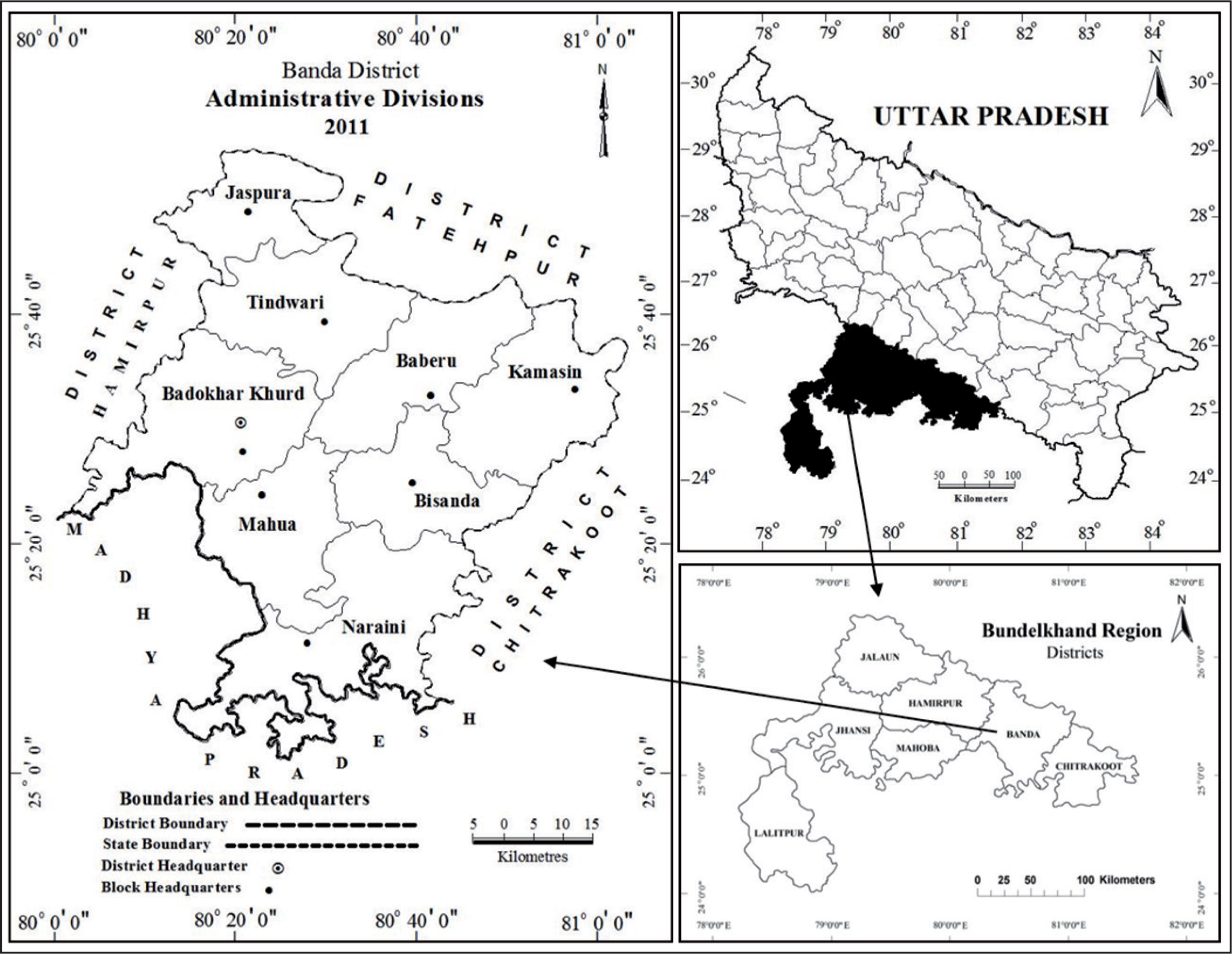
Source: District Census Handbook (2011), Government of India.
Results and Discussion
Anthropometry: Body Mass Index (BMI) of Adult Population
The study has revealed that 36.91 per cent of the total sampled adult population in Banda district is underweight, suffering from chronic energy deficiency ( Table 2 ). Madhwara and Ghoori villages have the largest chronic energy deficient population because of a low-calorie intake, monotonous diet and extremely low dietary diversity. With green chillies and onion unavailable because of depleted incomes, people have been eating chapattis (unleavened wheat bread) with salt and water. Pulses and vegetables are a real luxury which an overwhelming majority of families just cannot afford. Though pulses are a drought-resistant crop and a major source of protein for many in India (Hashmi & Shakeel, 2012), the farmers of Banda are unable to cultivate pulses because of prolonged drought conditions. The presence of fruit and meat is negligible and these food groups are consumed only during festivals and marriages. Dietary diversity is extremely low and more than 80 per cent of calories consumed by people here are derived from cereals and a small proportion by pulses.
Village-wise Body Mass Index (BMI) of Adult, Adult Male and Adult Female Population
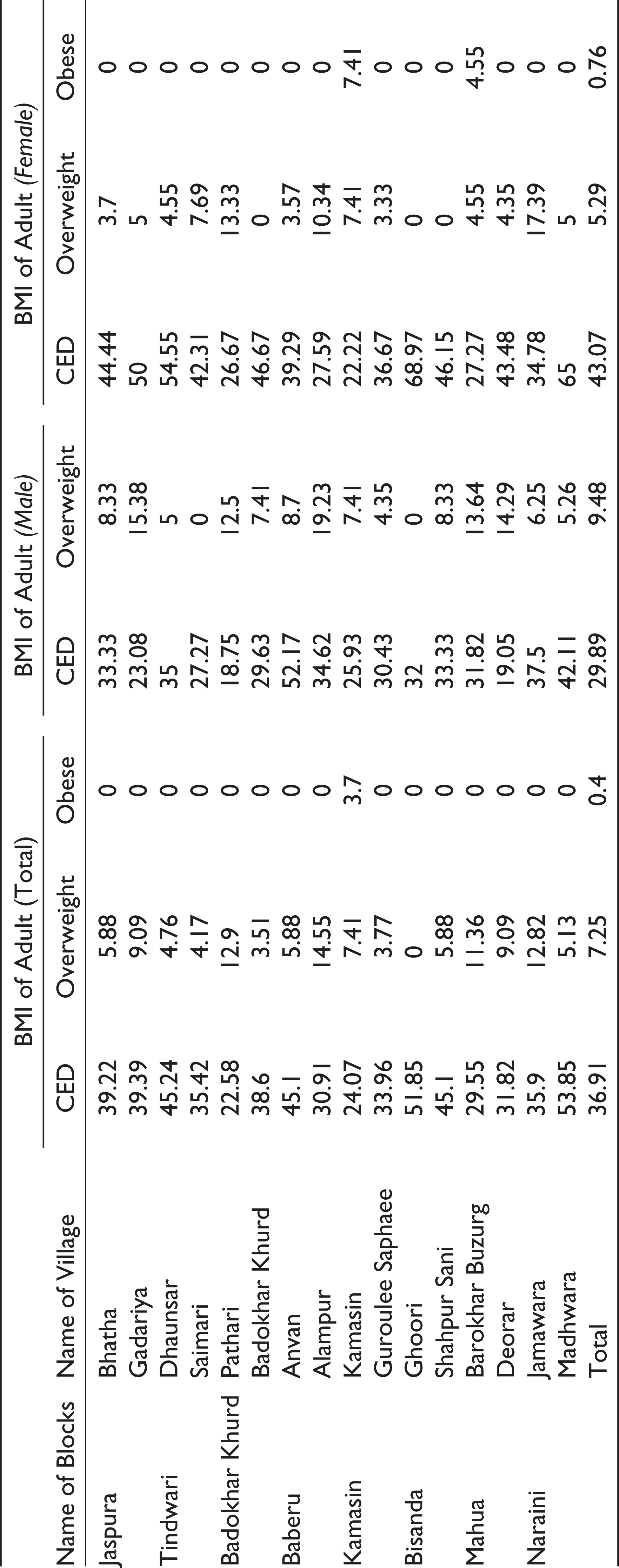
Source: Based on Primary Survey.
Further 78.6 per cent of sampled households have responded that they do not eat breakfast and lunch separately: they straight away have brunch (a meal eaten late in the morning before noon combining breakfast and lunch) between or around 10:00 to 11:00
Body Mass Index of Adult Male and Adult Female Population
At a disaggregate level, 29.89 per cent of the adult male population has been suffering from chronic energy deficiency ( Table 2 ). The households of Anvan, Madhwara, Jamawara and Dhaunsar villages have a low monthly income and a high proportion of underweight population. Only 13.33 per cent of households in Madhwara have a monthly income above ₹5,000, while there is not even a single household in the remaining three villages which has an income above that. Though these villages have a high BPL (below the poverty line) population, they ironically also have the lowest number of BPL (white) card holders. So despite being poor and eligible for subsidised foodgrains issued through the PDS (Public Distribution System) they cannot access food.
Our survey has revealed that two-thirds of the households in Anvan’s have been living below the poverty line, but only one-fifth of have BPL (white) cards and 40 per cent have had no cards at all ( Table 3 ). The conditions are even more stark in Madhwara and Dhaunsar because in both villages 80 per cent of the households fall below the poverty line and not even one household has a BPL card revealing that the PDS was in shambles. Many genuine and needy people who are eligible for BPL/Antyodaya (AAY) (pink) cards are unable to get their subsidised ration. A low income coupled with a poor food distribution system has led to low food accessibility and low-calorie consumption making people CED.
Distribution of BPL Households and Village-wise Accessibility to PDS through Different Ration Cards
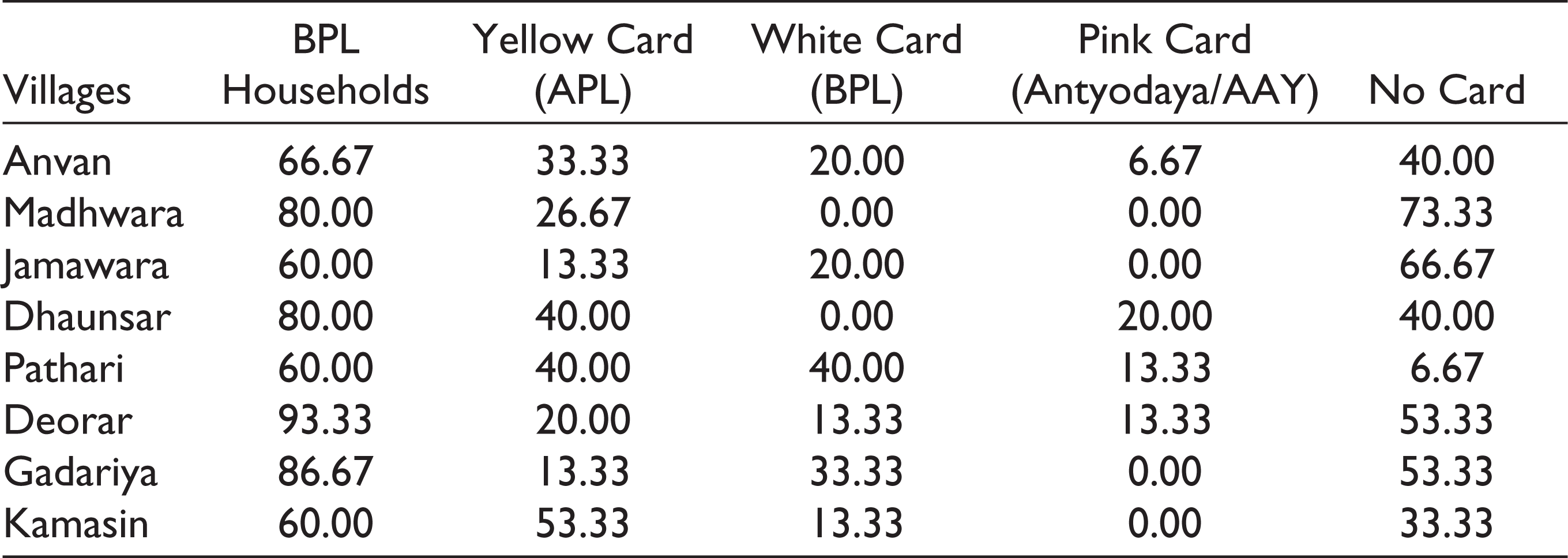
Source: Generated through field Survey. BPL population calculated on the basis of the Tendulkar Committee’s methodology.
Pathari, Deorar, Gadariya and Kamasin villages have the lowest CED adult male population ( Table 2 ). Interestingly, Pathari has the highest proportion of poverty-stricken households on the one hand as well as the lowest underweight population, on the other. The reason behind this is that 53.33 per cent of the village’s households have been availing of the PDS (40.0 per cent households have BPL and 13.33 per cent have AAY cards) and thus they can access subsidised rations) ( Table 3 ). Secondly, Pathari, which is located near the block and district headquarters of Banda, means that people from this village can commute daily for their livelihood, earning better wages than the other villages. Village Kamasin has 60 per cent BPL households, but only 13.33 per cent of them own BPL cards and 33.33 per cent do not have any type of card at all. Moreover, 53.33 per cent households in Kamasin own APL (above poverty line) cards, revealing that APL cards have been issued even to those who are actually eligible for BPL cards. This data shows an improper implementation of the PDS in identifying eligible households in various categories. In spite of this weak implementation, the proportion of the underweight population is low at 25.93 per cent because Kamasin is situated near the district headquarters of Chitrakoot in the east, implying that people from these villages can commute daily for their livelihood. Nevertheless, life is not that easy for them as they are highly dependent on migrant labour for their survival. Respondents did say that commuting on a daily basis is tough for them, but without that commute and the wages thereof they cannot survive. People from Gadariya and Deorar have reported that due to their being located in the interiors it is difficult for them to commute daily as transport facilities are extremely poor. Thus, they work nearer their homes mostly under the National Rural Employment Guarantee Act (NREGA). But such jobs are few and earnings from these jobs are not sufficient to sustain families. Respondents also state since their intake of a low quantity of food is spread over many days, they are weak and cannot undertake physically rigorous work.
The villages with the lowest proportion of adult female population suffering from chronic energy deficiency are Kamasin, Pathari, Barokhar Buzurg and Alampur ( Table 2 ). Barokhar Buzurg and Pathari have the lowest proportion of adult female CED. Because of their proximity to the block and district headquarters of Banda the male members of the household are able to get temporary employment. Alampur is mostly inhabited by Muslims and most male members of the family have migrated to other states, even to other countries to earn their livelihood. In Alampur, out of 33.33 per cent of the BPL households almost 20 per cent households have BPL cards. Since most families have indicated that one or two male members are working abroad their economic condition seem comparatively better with their womenfolk having low levels of chronic energy deficiency. High levels of chronic energy deficiency in females has been found in villages like Ghoori followed by Madhwara, Dhaunsar and Gadariya. High poverty levels have combined with a poor PDS which is the main reason why in all four villages more than three-quarters of households are living below the poverty level. Only 33 per cent households in Gadariya and 20 per cent households in Dhaunsar are getting subsidised food through the BPL and AAY card scheme and the remaining households have no access to any type of cards and no food through the PDS.
Other reasons for the high rate of underweight women were seen through the FGDs. The discussions have shown that the conditions of women have become more severe because of the poor implementation of certain features of the NFSA-2013 (National Food Security Act) such as the Integrated Child Development Scheme (ICDS). According to the NFSA, free meals are to be provided to pregnant and lactating women through local anganwadis (courtyard shelter), followed by a monthly maternity stipend of ₹1,000 to be given after childbirth for a period of 6 months. But as the FGDs have revealed, most women have been deprived of this benefit with some exceptions. Anganwadis have functioned poorly at several places and have failed to meet people’s expectations. Corruption in the Mahatma Gandhi National Rural Employment Guarantee Act (MNREGA) too has been a major problem, including misuse of funds on a massive scale meant for the development. The survey has found that MNREGA has been providing employment for only 20 days or less per year. Most respondents did not even seem to have a job card because of false entries made by local administrative officials. Such failures in the system have had serious repercussions on women’s health in Banda. A high proportion of women suffering from low BMI and chronic energy deficiency inevitably results in foetal malnutrition and a low birth weight of babies. This can be seen in the 64.43 per cent of children in Banda who have been suffering from wasting.
This study suggests that the condition of females is more worrying than males as typically in an Indian rural family it is the menfolk who eat first, followed by children and then finally women who eat last and the least (Shakeel & Shazli, 2020). The phenomenon known as maternal buffering in which the mother deliberately eats less in order to ensure that her child, who has recently started eating food, has enough to eat. And as the study reveals no one else other than the mother resorts to this practice. Since they eat last and the least, are busy in household work throughout the day and are the ones to bear children, the mothers are often seriously deficient in iron leading to anaemia and other diseases. Under such conditions, obesity is something that is impossible for women in Banda. The proportion of obese women stands out at 0.76 per cent with only 5.29 per cent women are overweight. The women who are overweight are mostly found in the villages of Alampur and Jamawara which have a high proportion of Muslims who consume a diverse diet that includes meat and other nutritional foods; they also have a comparably higher household income. Other important factors which favour the better health of males in the study area are that the households feed its working members at the expense of its non-working members which comprise mostly children and women. Moreover, rural women bear the burden of a ‘double day’, fulfilling their work compulsions as well as their domestic needs. In other words, rural women perform household work, such as cooking, washing, taking care of infants and children as well as undertaking the farming workload. They also sleep less, eat less and worry more. This shows that rural women work extremely hard which seriously affects their weight. In Banda, 43.07 per cent of the adult females are underweight and suffer from chronic energy deficiency.
Age-wise Body Mass Index of the Adult Male and Adult Female Population
The age-wise BMI of the adult male and female population shows that as the age group increases, the proportion of the population suffering from chronic energy deficiency decreases (Table 4). In case of the adult male, the proportion of the underweight population has decreased from 64.29–39.22 per cent for the age group 15–30 and 31–45; it has further declined to 18.58 per cent for the age group 46–60. But in case of the adult female, the proportion of underweight population has first declined from 69.23 to 26.67 per cent for the age group 15–30 and 31–45, and then it again rises to 43.12 and 50.33 per cent for age group 46–60 and 61 and above. The reason for this decline in the proportion of females in the age group 15–30 to 31–45 is that females are in their later reproductive age and chances of getting pregnant declines with age within this age group. Moreover, the proportion of underweight females in age group 15–30 is high because of two reasons: first, this age group includes girls from 15 to 20 years which is normally the age of physical growth and second, this age group also includes girls between 20 and 30 years, the age of marriage in the Indian context (largely in rural villages). Most women in this age group go through pregnancy and lactation. With the intake of food being poor within households and females requiring more energy during pregnancy and lactation, which they are unable to receive, their chronic energy deficiency increases. In the case of adult males, there is an increase in underweight in the age group 60 and above from 18.58 to 34.62 per cent because the eating capacity of the elderly is low; thus to maintain good health they need a more balanced nutritionally rich diet rather than only a carbohydrate and fat-rich diet, high in calories. With households in the study area short of food and with little diet diversity, the elderly have not been receiving nutritionally rich diets and diets with sufficient calories.
Age-wise Adult’s Chronic Energy Deficient (CED) Population in District Banda
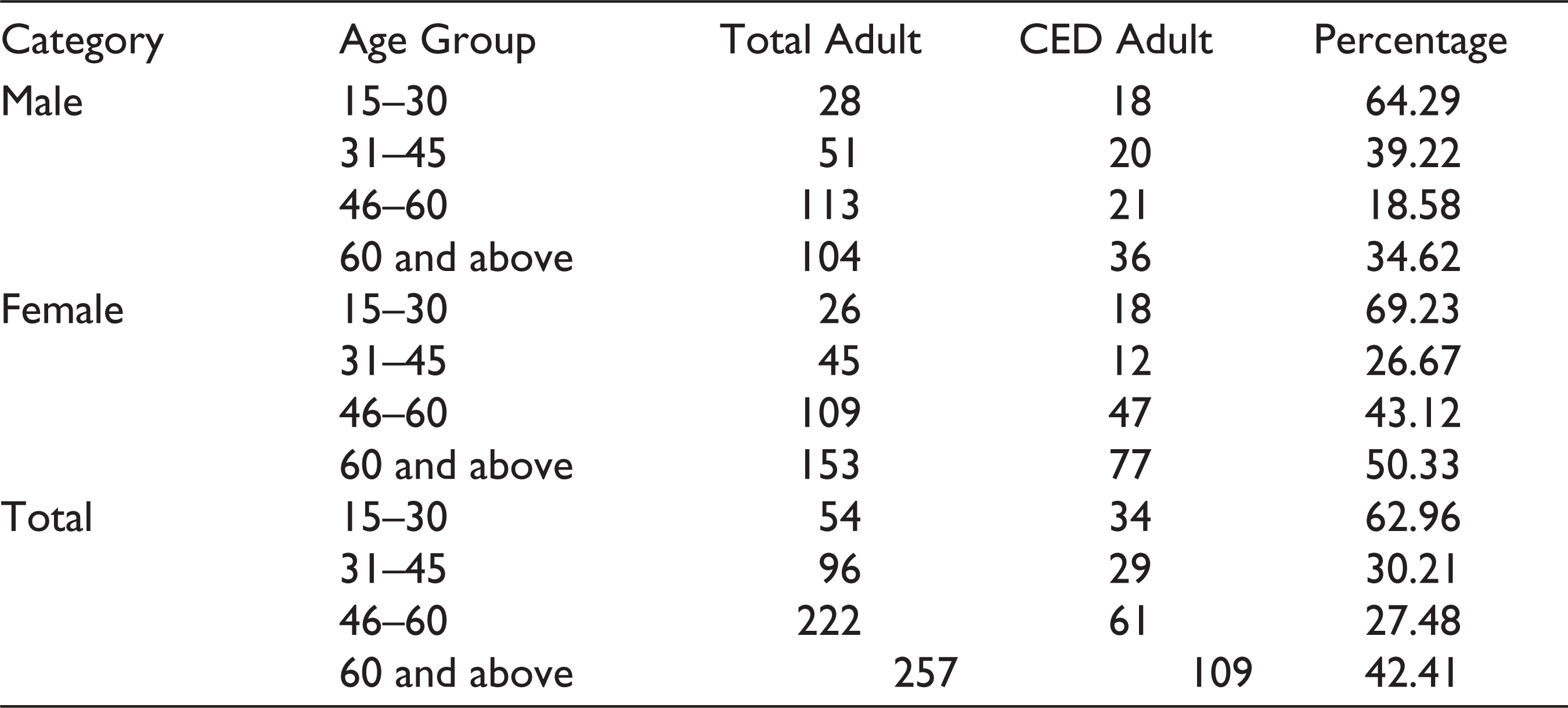
Source: The author.
Wasting in Children (Low BMI for Age)
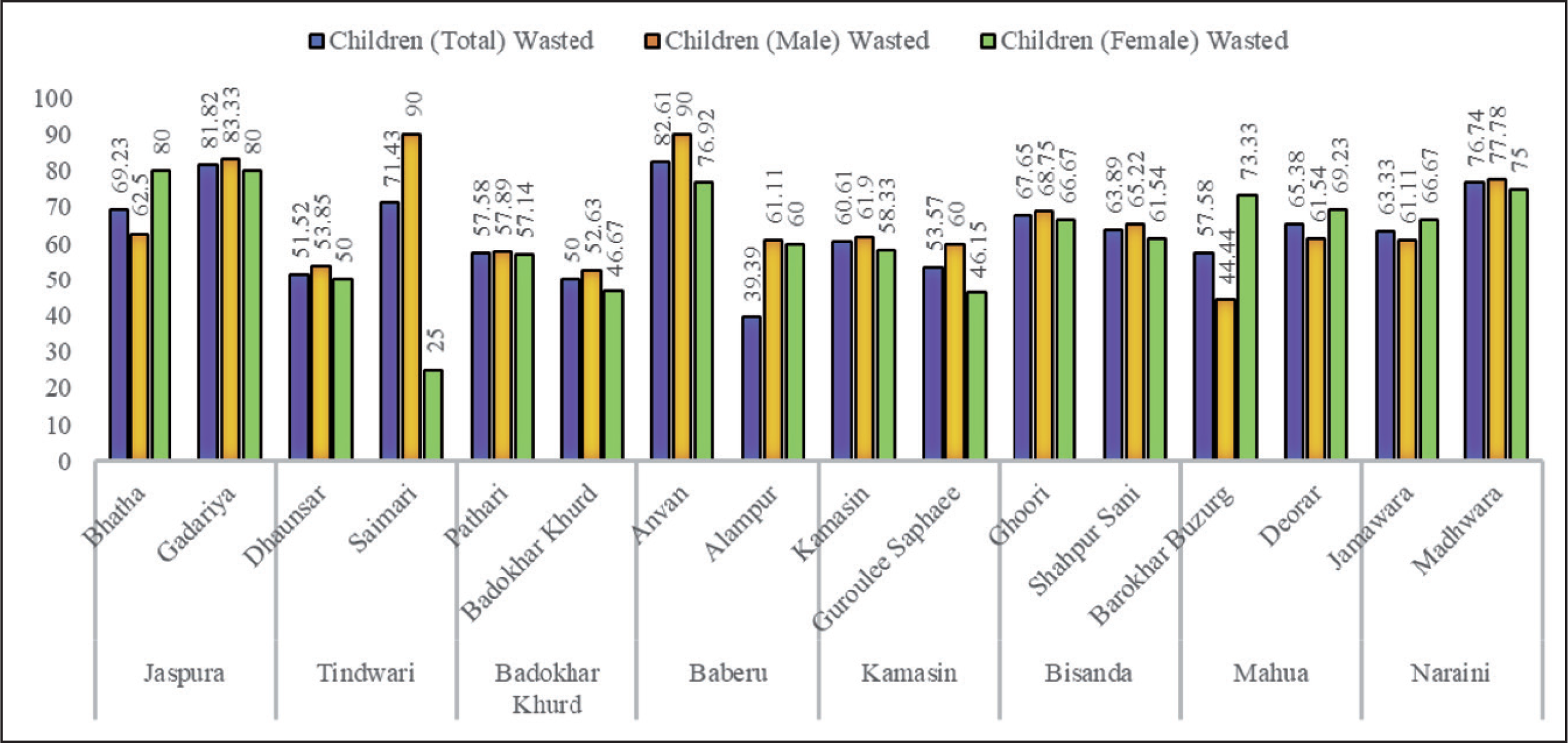
The BMI of children is more important than that of adults because the early years of a child determines her future growth and development. Those children suffering from low BMI are referred to as wasted, which is also a height-to-weight ratio similar to the BMI of adults, but calculated separately for children in the age group of 0–14. Wasting among children has been calculated on the basis of the CDC’s (Centre for Disease Control) growth chart developed by the National Centre for Health Statistics (NCHS). In Banda, more than half the children are wasted and the actual values for the district as a whole goes up to 64.43 per cent ( Figure 2 ). The most striking feature which the data shows is that, in all the sampled villages of Banda, more than half the children sampled are wasted with only Alampur village proving to be the exception. The reason behind such a high proportion of wasting is that in this age group, children are mostly dependent on liquid food, such as milk, for their growth. But in Banda, the drought has forced people to sell or abandon their livestock which has seriously affected the availability of milk and milk-related products (curd, cheese, butter and so on) for the household level.
The availability of livestock for milking has been declining from 38 livestock/000 population in 1993 to 21.87 livestock/000 population in 2007 to 20.31 livestock/000 populations in 2012. During the FGDs, it was observed that farmers were forced to sell their livestock because of fodder shortage, and this seriously affected milk availability and consumption leading to high rates of wasting among children. The survey shows that more than 80 per cent of calories consumed by children (even though inadequate) come from cereals and pulses. This results in two things: first, children cannot consume more cereals to make up for their calorie deficiency because of its sheer monotony of the staple, and it also lacks energy density, and second, in the absence of fats, milk, eggs and iron children are being starved nutritionally.
Source: The author.
The poor education of women also adds more to wasting in children as it leads to poor breast-feeding practices, inadequate complementary feeding practices and an unawareness about the nutritional needs of infants and children. The rural female literacy rate in Banda on the basis of sampled population is 46.60 per cent which is much lower than the state’s rural female literacy rate (53.7 per cent). The study also finds that as the level of education increases the proportion of females at each level decreases due to fewer school dropouts. The proportion of females who have been educated up to the primary level at the time of the survey was 53.0 per cent and as the level increased from primary to secondary, the proportion decreased to 31.1 per cent. Only, 10.4 per cent and 5.5 per cent of the females were able to complete their education up to the secondary and graduate level, respectively. There are studies which show positive relations between female literacy and food security (Quisumbing et al., 1996; Smith et al., 2000). This study also finds a positive relationship between female illiteracy and food insecurity (r = 0.0162). In Banda, households with poor female literacy are also more food insecure.
The study also finds that in district Banda, the Mid-Day Meal (MDM) Scheme has not been working properly. Most schools have been serving low quantities of food with inferior quality and some schools have not been providing MDM at all. School-going children have reported that no milk is served in schools, adding that they have only got poor quality rice with lentils occasionally accompanied with vegetables. Children go to school from 8:00
Wasting Among Male and Female Children
We now look at wasting of children at a disaggregate level. About 65.85 per cent of the sampled male children are wasted, which is slightly higher than total wasted children ( Figure 2 ). The condition of male children is poorer than female children with respect to wasting. The proportion of male children suffering from wasting in the study area ranges from 90.0 per cent in Saimari to 44.44 per cent in Barokhar Buzurg. With Alampur an exception, the other 15 villages show more than 50.0 per cent of its male children are wasted, affecting their growth. If this grave problematic condition is not tackled soon then it will have serious implications. In the later stages of their life, these children, instead of being independent and productive, will become dependent and a liability, hampering the country’s socio-economic development. Further, out of the 16 villages studied, 13 have more than 50.0 per cent of its female child population wasted among which Bhatha has the largest and Saimari has the lowest proportion of wasted female child population. On an average, Banda has 62.61 per cent of the total female child population wasted which is lower than that of the male child ( Figure 2 ). Girls too suffer from severe wasting because of their reproductive biology, marriage at an early age low social status, poverty and a lack of education. Moreover, in a country like India girls are treated differently in terms of access to healthcare, food and education. Nutritional deficiencies and high wasting among children are responsible in part for poor school enrollment, absenteeism, early dropouts and poor classroom performance, all leading to a loss in productivity during adulthood.
Age-wise BMI of Adult Male and Adult Female Population
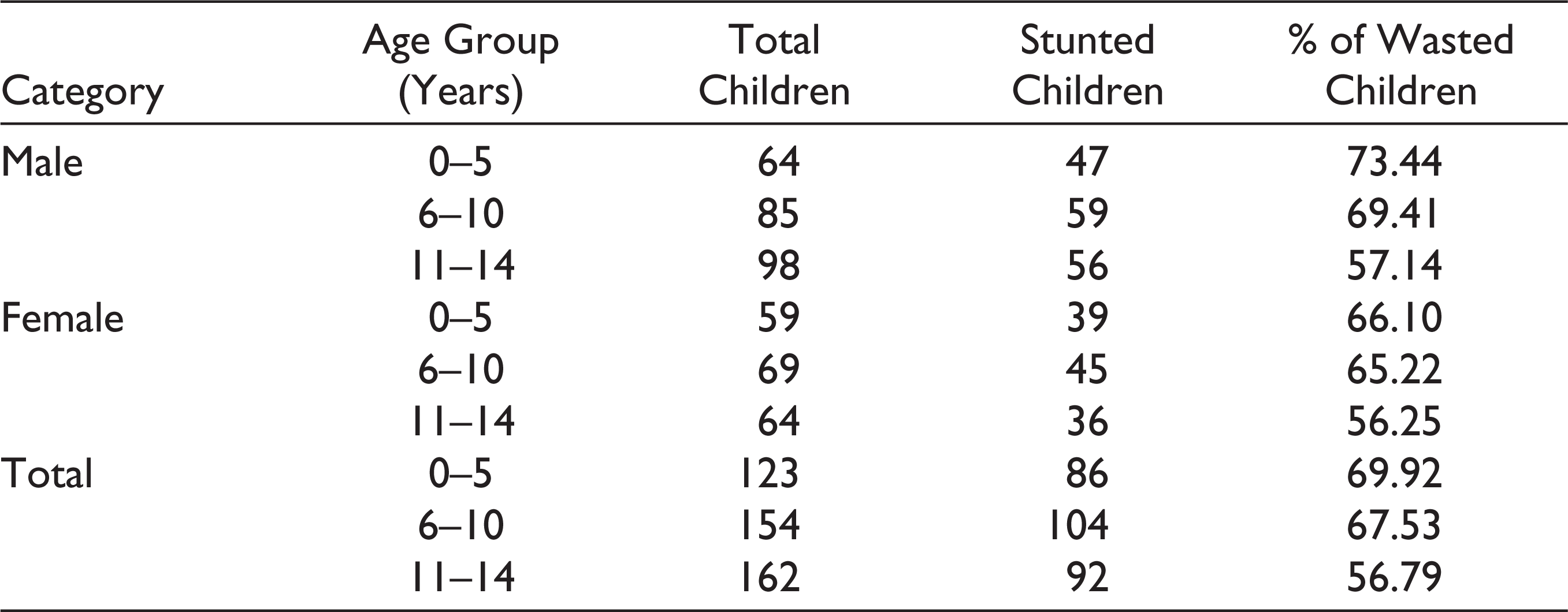
The age-wise BMI of children shows that a maximum percentage of wasted children are found in the early age group of 0–5 for all three categories of male, female and total ( Table 5 ). It has also been observed that as the age group increases the proportion of wasting declines. With low milk availability within households high wasting is apparent in the 0–5 age group. The data has revealed that 178 (75 per cent) households out of the total number of sampled households (240) did have milk available within households while the rest 62 (25 per cent) did not have milk at all. On the face of it, the figure seems satisfactory but if one focusses on the quantity of milk available the scenario changes. Out of the 178 households which have milk, about 87 (48.8 per cent) have one or less than 1 litre; 57 households (32.02 per cent) have between 2 to 3 litres followed by only 34 households (19.10 per cent), which have 3 litres of milk or more. Though average availability of milk per child (470 gm) and per consumption unit (200 gm) in Banda district seems to be high, but at the household level 25 per cent do not have milk at all and almost half the households have one or less than 1 litre for household consumption. Moreover, in the age group 6–10 and 11–14 the proportion of wasting declines (but still is severe because more than 55 per cent male and female children both are wasted). The study does find that the MDMs served in the schools were of low quantity and quality, but still they provided some number of calories to children.
Age-wise Percentage of Male Female and Total Wasted Children
Source: The author.
Conventionally, one expects that the proportion of the male child suffering from wasting will be lower than that of the female child because in India it is the male child who is given preference over the female child with respect to food, education, clothing and all types of nurturing. But in Banda the situation is different: the proportion of the wasted male child is higher than that of the female child, a conclusion that is similar to a study undertaken by Khongsdier, et al. (2005) in the Northeast. The reason behind this is that a cultural preference given to the male child takes place in those regions where resources are plenty or at the very least where getting two meals a day is not a matter of great concern. But in a situation of scarcity when getting even one meal a day is difficult, the son-preference culture vanishes and providing something, actually anything, to eat for both the male and female child becomes a necessity. The reason for a slight low wasting among female children in the study area is because of the difference in their genetic and biological makeup, with female children being biologically stronger and less susceptible to disease than male counterparts (Naeye et al., 1971; Waldron, 1983).
Calorie Intake (24-Hour Dietary Recall)
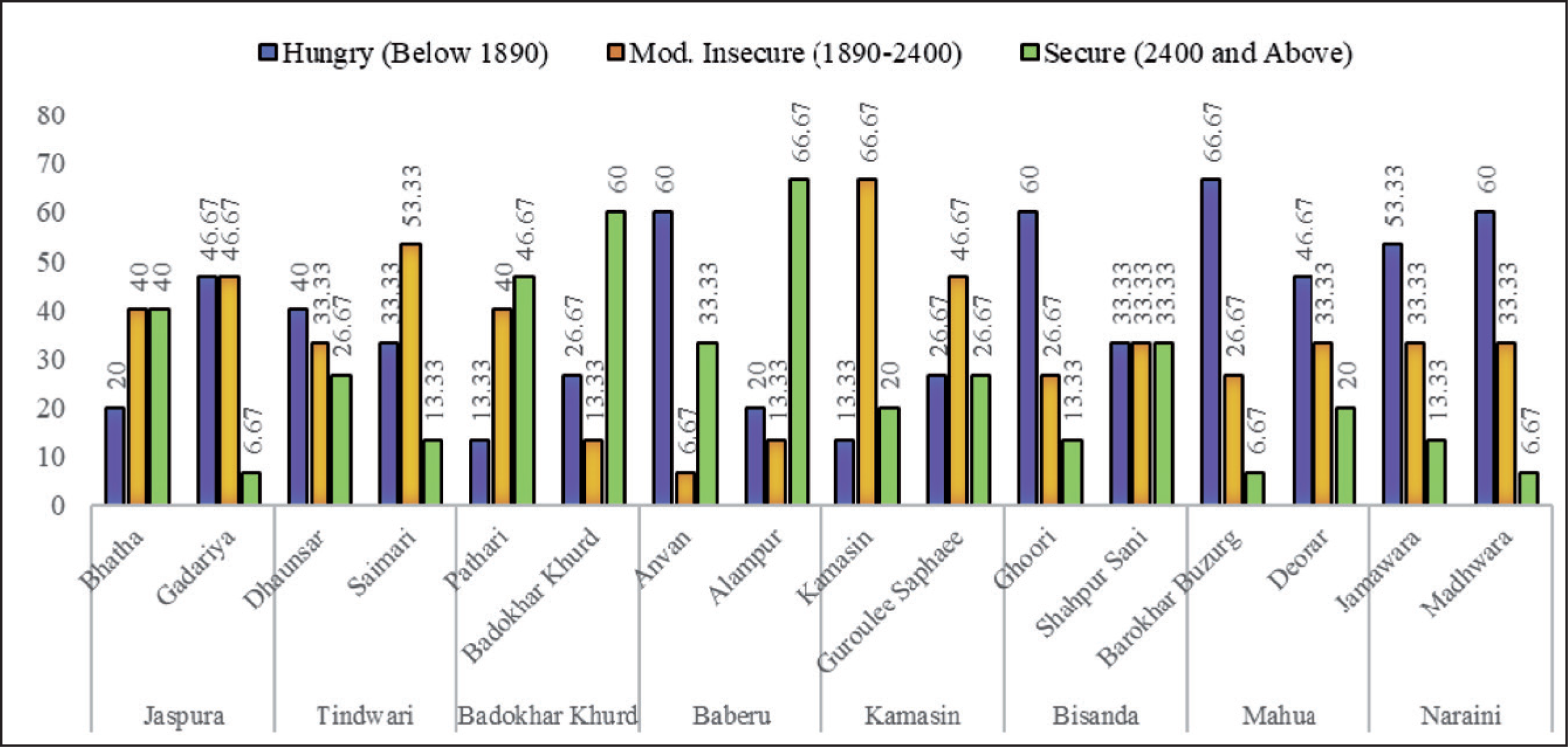
Here we identify food insecure households on the basis of calorie consumption. Out of the total sampled households, 72.92 per cent have been found to be food insecure at an aggregate level ( Figure 3 ). But at the disaggregate level, 38.75 per cent were hungry, consuming calories less than the recommended dietary allowance (RDA) of 1,890/cu/day and 34.17 per cent of the household were moderately insecure consuming calories between 1,890 and 2,400/cu/day. Moreover, out of the total sampled households only 27.08 per cent are food secure and consuming calories above the RDA of 2,400/cu/day. The reason behind such a high instance of household food insecurity is drought which has destroyed almost 80 per cent of the standing crops leading to low availability of food during 2014–2015 (at the time of survey) and has also increased the cost of cultivation. Secondly, the majority of the population in Banda has no means of income other than agriculture.
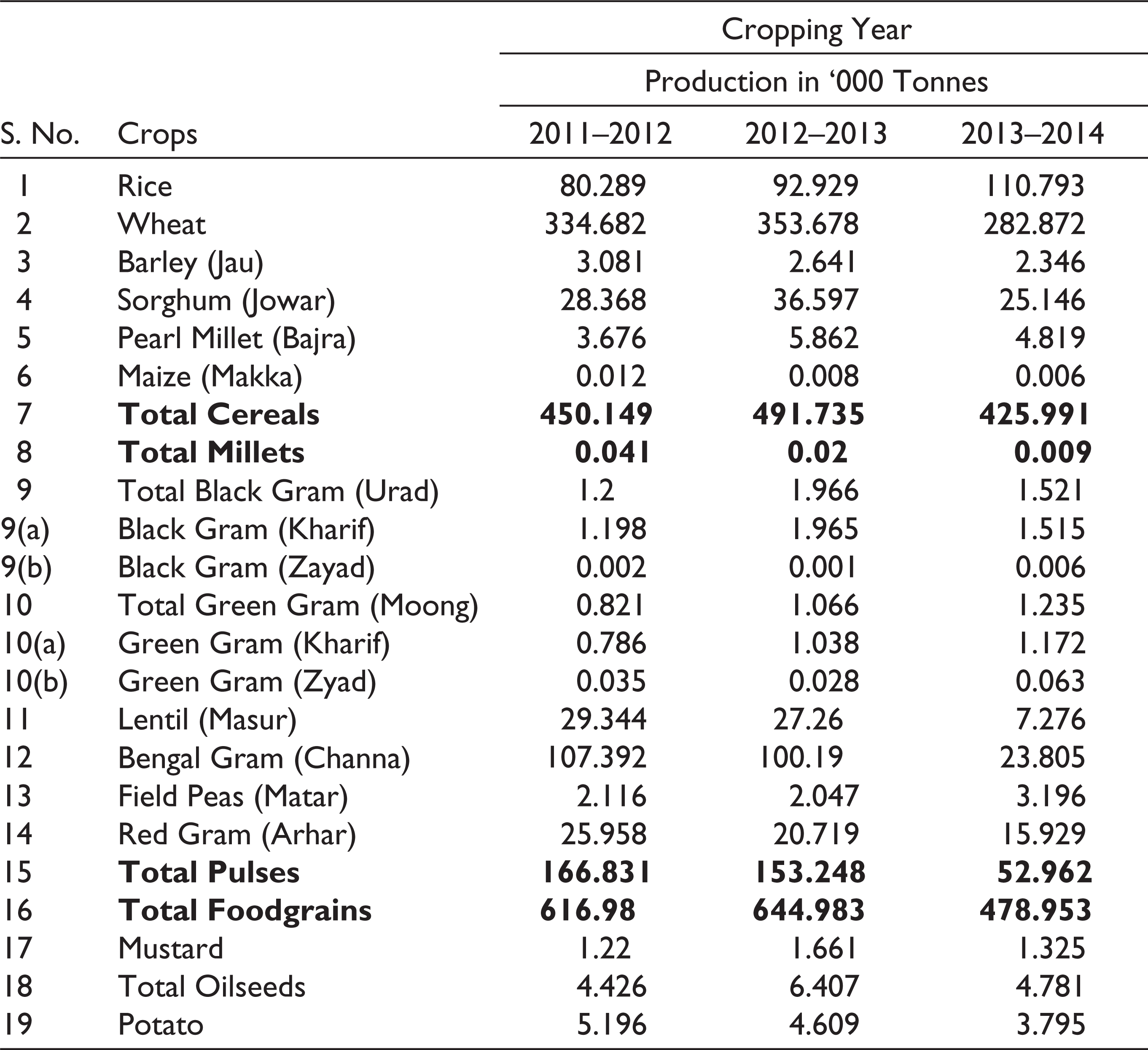
Table 6 has provided a snapshot of agriculture performance of two years before (2011–2012 to 2012–2013) and during the survey period (2013–2014) in order to analyse the effects of drought on agriculture. Calorie consumption within households in villages is largely determined by agricultural production. If production declines the households experience a shortage of food leading to low calorie availability. This leads to a low income which means they are unable to purchase food from the market. The survey for the present study has been carried out during December 2014 to January 2015. The study area has also experienced drought during 2013–2014 which is clearly reflected in agricultural production. At the aggregate level, total foodgrain production has declined from 616.98 thousand tonnes to 478.9 thousand tonnes during 2012–2013 to 2013–2014, respectively. At a disaggregate level rabi crops such as wheat, barley, lentil and mustard have experienced a decline because of frost experienced during the rabi season of 2013 as reported by respondents in Banda ( Table 6 ). During the kharif season of 2014 the crops which experienced a decline in their production because of drought were sorghum, pearl millet, maize, gram, black gram and red gram. The effect of drought during 2014 kharif season has been severe thus drought resistant crops,such as pulses which require less water to grow, also have experienced a decline in production from 166.8 thousand tonnes to 52.9 thousand tonnes during the cropping year 2011–2012 to 2013–2014, respectively. The reason for the poor performance of pulses has been a lack of basic irrigation. The total area under pulses cultivation in Banda during 2013–2014 has been 155.88 thousand hectares of which only 4.45 thousand hectares has been under irrigation, which accounts for only 2.86 per cent ( Table 7 ). An important point to be noted is that even after the drought during kharif 2013–2014, the production of rice has increased from 802.8 thousand tonnes to 110.7 thousand tonnes during 2011–2012 to 2013–2014, respectively, because rice is cultivated only in those areas where assured means of irrigation is available. Table 7 shows that the total area under rice cultivation during 2013–2014 (a drought year during kharif) has been 53.03 thousand hectares and the total irrigated area under rice has been 98.09 per cent. From 2011–2012 to 2014–2015, the area under assured irrigation for rice has never been less than 97.0 per cent. Thus, even during drought, the production of rice has maintained stability in production. Potato, a kharif crop, too has experienced a decline in production due to drought.
Source: The author.
Production of Various Crops in District Banda (During 2011–2012 to 2013–2014)
Source: Directorate, Ministry of Agriculture, Department of Statistics and Economics, Lucknow, Uttar Pradesh, India (
Total Cultivated Area and Total Irrigated Area Under Main Cereal Crops

Source: Directorate, Ministry of Agriculture, Department of Statistics and Economics, Lucknow, Uttar Pradesh, India (
Distribution of Hungry People

Source: Based on Figure 3 .
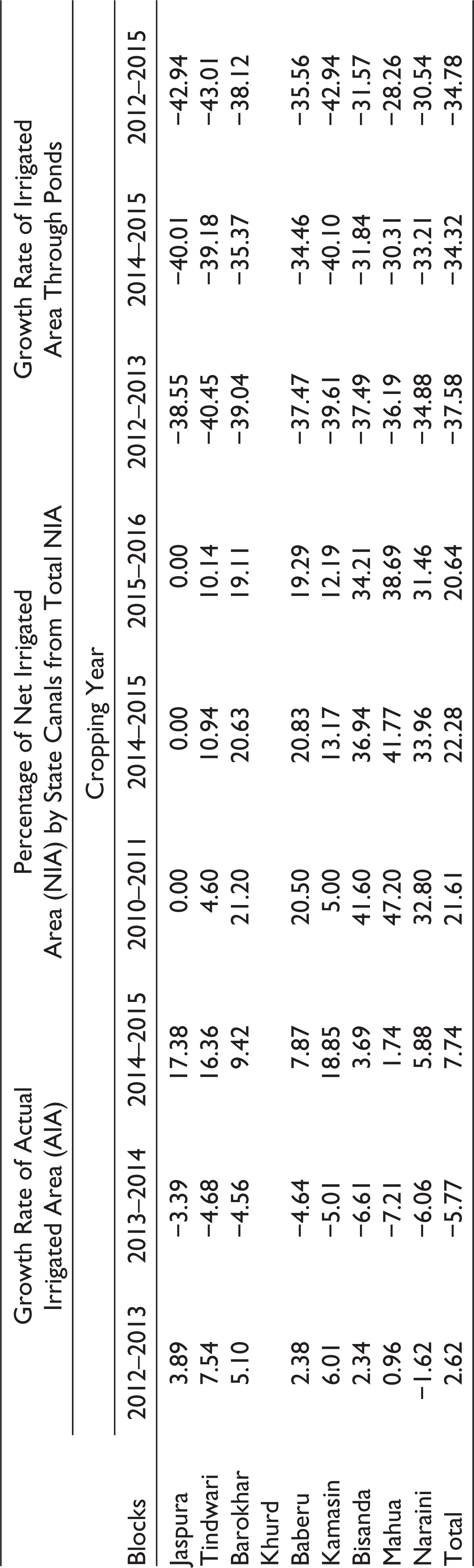
Table 8 shows that the highest distribution of hungry people can be found in the villages of Barokhar Buzurg, Anvan, Ghoori, Madhwara and Jamawara because of the prevailing drought and shortage of water for irrigation. Underground water has not been recharged because of the drought and water in canals has also been scanty, which has severely affected the productivity of food crops. During the cropping year 2012–2013, all development blocks except for Naraini have experienced a slow though positive growth rate in actual irrigated area (AIA) ( Table 9 ). But during the cropping year 2013–2014, all development blocks have experienced a negative growth rate and rapid decline in AIA. The growth rate of AIA in district Banda during the period 2012–2013 has been 2.6 per cent which has declined to −5.8 per cent during 2013–2014. In between the cropping year 2012–2013 to 2013–2014, the development blocks in which the village Barokhar Buzurg, Ghoori, Madhwara and Jamawara are located have recorded a maximum decline in the actual irrigated area ( Table 9 ). The development block of Mahua, which contains the villages of Barokhar Buzurg has recorded a maximum decline in AIA with a growth rate of −7.21 per cent, followed by Bisanda with Ghoori village, and Naraini with Madhwara and Jamawara villages showing a growth rate of −6.61 per cent and −6.06 per cent, respectively. The reason for this decline has been a late and deficient rainfall during the 2013 kharif and rabi season and drought during the 2014 kharif season. During 2014–2015, the AIA has increased with a growth rate of 7.7 per cent due to sufficient rainfall. The high intensity of drought in combination with the absence of timely irrigation has drastically affected the yield of drought resistant crops such as pulses. The yield of pulses declined from 1,058 to 193 kg/hectare during 2011–2012 to 2014–2015, respectively.
Block-wise Irrigated Area and Percentage of Net Irrigated Area by Canals from Total Net Irrigated Area
Source: District Statistical Handbook of Uttar Pradesh (various years) (
In district Banda at the block level, there is a large variation in the percentage of the net irrigated area (NIA) by canals from total NIA. Bisanda block, where village Ghoori lies, has experienced a phenomenal decline in the share of NIA by canals; from 41.60 to 34.21 per cent during 2010–2011 to 2015– 2016 (Table 9). Similarly in Mahua block, where the village of Barokhar Buzurg lies, there has been a decline in NIA from 47.20 to 38.69 per cent during 2010–2011 to 2015–2016. Baberu block, with Anvan village, and Naraini block, with Jamawara and Madhwara villages, have also experienced a meagre decline. The FGDs have revealed that only economically sound farmers have been able to use tube wells for irrigation while the land of poor farmers has been left fallow. This is the reason why the area under tube well irrigation has experienced a meagre increase in almost all the blocks ( Table 9 ) also affected the sampled villages. During 2012–2013 and 2013–2014, the area under tube well irrigation has increased by only 0.35 per cent. The decline in irrigated area under canal has also been accompanied by a decline in irrigated areas through ponds. During 2011–2012 to 2012–2013, the area irrigated through ponds in district Banda has declined with a rate of −37.58 per cent which again has experienced a decline during 2013–2014 to 2014–2015 with a rate of −34.32 per cent ( Table 9 ). Thus, a drought and lack of artificial irrigation facilities in the study area has seriously affected agricultural productivity and production of foodgrains.
A majority of the population in the study area are marginal and small farmers followed by agricultural labourers making the shortage of food within households even more grim. A handful of farmers have been undertaking extensive agriculture, producing largely for their own household consumption: they have no foodgrains kept in storage other than few kept as seed. Livestock in these villages are important because they were used as sources of support in times of emergency. But in Banda, people have been selling their livestock due to the unavailability of fodder and these conditions have lead to a further serious shortage of calories at household level.
The lowest proportion of the hungry have been found in the villages of Badokhar Khurd, Guroulee Saphaee, Bhatha, Alampur, Pathari and Kamasin. The economic conditions of the households in these villages have been better than the rest due to their proximity to block and district headquarters. People in these districts have been able to commute daily for work as casual labour and some adult males have also migrated to other parts of the country to earn a better livelihood. Apart from environmental, social, economic and ecological problems leading to food insecurity the political factors too have played a major role in intensifying the condition of food security with respect to calorie availability (Shakeel, 2018c).
Conclusion
This 24-HDR study has concluded that three-fourths of the population in Banda is food insecure and consuming calories below the RDA. Food insecurity examined on the basis of BMI shows that the nature of food insecurity in the study area is chronic because people have been eating less food over a sustained period which has led to a reduction of physical weight of the body leading to chronic energy deficiency. The present study has documented a high prevalence of under-nutrition in terms of CED in adults and wasting in children making the condition of food insecurity deplorable. The state of food insecurity in study areas is not transitory but is chronic as drought conditions are a common phenomenon. Drought conditions followed by the unavailability of artificial or an assured means of irrigation are the main cause of food insecurity in Banda district. It has affected the productivity and availability of food at the household level. When productivity declines the income of farmers also declines leading to food inaccessibility even when food is available in the market. It is necessary that the government focusses on developing infrastructure related to irrigation because even during times of drought if timely irrigation is provided then the loss of crops can be minimised. Our survey has highlighted that government schemes and systems have also not been properly implemented on the ground. Some people have misused the benefits of BPL cards in order to access subsidised foodgrains under NFSA and TPDS. Anganwadis have also failed to meet the expectations of people and have been unable to provide the maternity benefits before and after childbirth.
Footnotes
Acknowledgements
The author is thankful to to the Indian Council of Social Science Research, New Delhi for providing a Post-Doctoral Fellowship and the Department of Geography, Aligarh Muslim University, Aligarh for providing the necessary facilities to undertake this present study.
Declaration of Conflicting Interests
The author declared no potential conflicts of interest with respect to the research, authorship and/or publication of this article.
Funding
The author received no financial support for the research, authorship and/or publication of this article.